Avere vent’anni (1978)

It’s so strange how we find movies today.

There’s a copy of To Be Twenty that’s on Films & Clips, a YouTube channel that has lots of hard to find Italian movies. And if you watch that one, well, you may think that this is a fun loving comedy. And I’m here to sadly inform you that while that’s the movie I wish this was, it is certainly not the movie that it is.

That’s because the original version — the one that the director, Fernando Di Leo preferred — is 98 minutes long and the first 90 minutes will not prepare you for the last eight. The version that was cut and played in theaters after that one failed — and was dubbed for America — is 85 minutes and all sexual hijinks and fun.

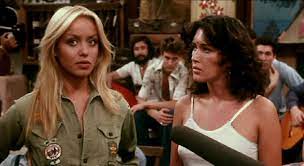
Lia (Gloria Guida, who went from Miss Teenage Italia 1974 to starring in commedia sexy all’italiana films like Monika and La minorenne; she’s also in Bollenti spiriti and La casa stregata) and Tina (Lilli Carati, the runner-up of Miss Italia 1975; she’s in four Joe D’Amato movies —  La Alcova, Christina, The Pleasure and A Lustful Mind — and acted in adult films in the late 80s and was also addicted to cocaine and heroin. She retired from public life in 1990 but returned to acting to play an occultist in Violent Shit: The Movie, which was dedicated to her as she died before it was released). They’re two young and, frankly, gorgeous women who decide to hitchhike to Rome and experience the world of free love.

As the girls say, We’re young, we’re beautiful, and we’re pissed off.”  That takes them to a commune where they hope to find the pleasure that they’ve heard of and the leader, Nazariota (Vittorio Caprioli), allows them to stay as long as they sleep with the members. It sounds exactly like what they want, but every man in the place is either asleep, high, smells or a combination thereof. Tina does finally find Rico (Ray Lovelock) while we get to know the other members, who include a clown called Arguinas (Leopoldo Mastelloni) who has been meditating for three months and a single mother of three named Patrizia (Daniela Doria).

This episodic movie finds our two heroines taking part in a documentary where Lia shares how she grew up in a church orphanage and Tina reveals that her rich parents only cared about keeping her pure, which caused her to rebel. They also sell encyclopedias which leads them to meet all manner or strange people, all before the cops bust the commune — Arguinas is even accused of being in the CIA — and the ladies are told if they don’t go back home by dark, they will be arrested.

Now, depending on the cut you watch, that’s the movie. Unless you want to see the director’s cut. And if you care about the girls, you won’t.

On their way home, they stop to eat and dance while a jukebox plays. Several men take notice and follow them outside and take their turns assaulting them, beating them and leaving them for dead. The movie closes on their nude and destroyed bodies.

I mean, this is a sex comedy that also has readings from the Skum Manifesto and hippies portrayed as morons around ten years after their shelf date. But Di Leo drops the floor out from under you as until now, this has all been played as a humorous sex film. You are unprepared for what happens and I don’t think he was trying to make a point about the way men treat women. It feels like he’s punishing Lia and Tina for using their bodies and enjoy all the sex they’ve had.

At once, it’s a movie with goofy dialogue like “As you already know, all the ideologies and religions man has invented over the centuries have all failed. But it finally reached this unbearable level when Christianity, Marxism and psychoanalysis created general and personal conditions that are conducive to schizophrenia” and an ending that feels like a snuff film.

The director also made Blood And Diamonds, Naked ViolenceSlaughter HotelCaliber 9Madness — it’s all making sense now — and Naked Violence. I wish that I had just stuck to the America cut, but sometime we need to expose ourself to things and learn from them. I wish this was a message movie, like I said, but I think it’s a message I don’t agree with.
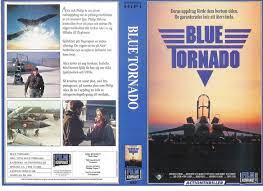
Blue Tornado (1991)

This movie is everything I love about Italian exploitation films.

It’s logo looks exactly like Top Gun while the title refers to Blue Thunder.

It has a cast partly made of American TV actors — Dirk Benedict and Ted McGinley — and international stars like Patsy Kensit and David Warner.

It’s directed by Antonio Bido, who also made The Bloodstained Shadow and Watch Me When I Kill, who co-wrote it with Gino Capone, who also wrote Conquest.

It stars as a ripoff of Top Gun and somehow has some amazing shots of real jets in action instead of stock footage. Obviously, Bido got access to some Italian military bases and uniforms to make this look good. So when it starts like any flyboys against the establishment movie, you may be fairly shocked — spoiler warning — when aliens show up.

As they work on new flight maneuvers, Colonel Alex Long (Benedict) — he’s Maverick but his call sign is Firebird — and Philip (McGinley) — he’s Goose but answers to Thunder — see mysterious lights. After being warned off, Phillip wants to see exactly what it is and flies directly into the light, disappearing and his plane showing up the next day. Alex is accused of sabotaging his friend’s plane and making up the UFO tall tale. He’s finally able to convince his commander (Warner) to take another trip which costs NATO several more jets. Finally, he becomes friends with a UFO expert named Isabella (Kensit) and prepares to find Phillip by climbing a mountain, guided by Phillip’s dad who just so happens to be a mystic mountaineer.

I thrilled to Lieutenant Starbuck (or Templeton “Faceman” Peck) being best friends with Jefferson D’Arcy. The best part is when Alex gets to the mountain’s peak, his friend is just standing there, backlit by a UFO and they just leave. That’s the ending. Pals, walking down a mountain, after literally finding aliens, no words need be said, I guess.

In Aenigma: Lucio Fulci and the 80s, Bido claimed that Fulci saw a private screening of this movie, then got up on stage and said, “Nobody in Italy would have been able to do something like that.” This does not seem like something Fulci would do or a movie he would like.

How wonderful is it that this movie ends with the quote  “There’s life on every star” from Goethe?

You can watch this on YouTube.

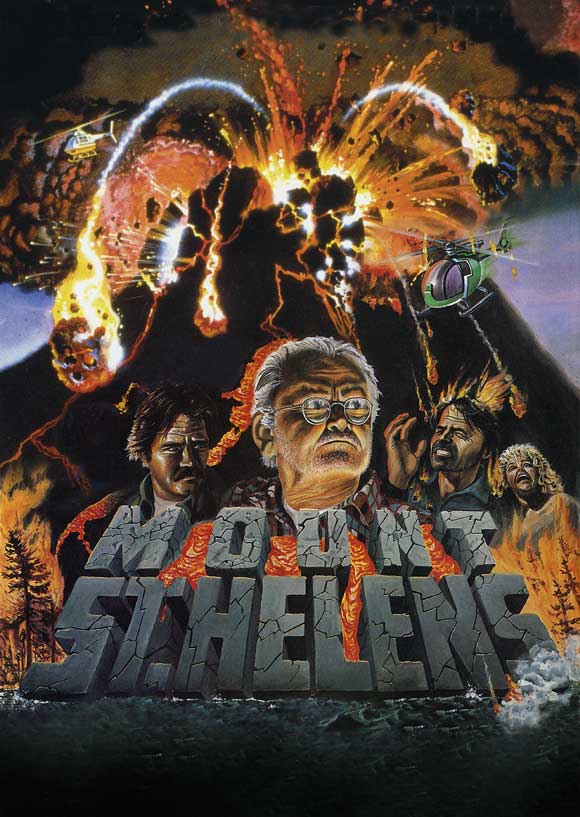
St. Helens (1981)

Directed by Ernest Pintoff, written by Peter Bellwood and Larry Ferguson and based on a story by Michael Timothy Murphy and Larry Sturholm, St. Helens aired on HBO on May 18, 1981, a little more than a year after the real eruption.

St. Helens begins on March 20, 1980 with an earthquake measuring 5.1 on the Richter scale being unleashing by the volcano, the first activity in more than a hundred years. It causes Otis Kaylor (Ron O’Neal) to nearly crash into some loggers as he makes an emergency landing.

United States Geological Survey volcanologist David Jackson (David Huffman) soon shows up to learn more. He’s actually playing someone very close to David Johnston, a scientist who died in the actual volcanic eruption. His parents were angry that not only was her son portrayed as a daredevil but also how much the movie got wrong about the science. Before the movie aired, 36 scientists who knew Johnston signed a letter of protest against the film, saying that “Dave’s life was too meritorious to require fictional embellishments” and that he “was a superbly conscientious and creative scientist.”

He soon becomes friends with a waitress and single mom named Linda Steele (Cassie Yates) and upsets her boss Clyde Whittaker (Albert Salmi) and the locals at Whittaker’s Inn about the danger of the eruption, all while Sheriff Dwayne Temple (Tim Thomerson) tries to keep law and order.

Watching this movie in 2024, it’s amazing how MAGA the people of the town are. It’s no accident that Bill McKinney from Deliverance is one of them. The loudest is the owner of the Mount St. Helens Lodge, Harry R. Truman (Art Carney), who refuses to leave the blast radius and becomes so famous for his stand that he basically can’t leave if he wants to live up to the character that he has created for himself. His sister, Gerri Whiting, served as a historical consultant for the film. According to her, Harry Truman and David Johnston were friends.

At 8:32 a.m. PDT on May 18, 1980, David hikes to find a massive bulge that has been growing on the north face of the mountain while Harry goes fishing in Spirit Lake. As David promised to the locals, they are both annihilated by a force similar to a nuclear bomb going off in their faces.

Sadly, the David who played David — David Huffman — died a sad death as well. He was only 39 years old when he was stabbed twice in the chest while fighting with a would be car thief. He died near instantly.

Why would I watch a movie so surrounded by death and sadness? Because it’s the first Hollywood movie scored by Goblin. Let me tell you, there’s nothing that says the Pacific Northwest more than Italian prog rock.

You can watch this on YouTube.

Laura non c’è (1998)

“Laura non c’è” (“Laura Is Not Here”) was a pop-rock song written and performed by Italian singer Nek. It achieved a huge success in Italy, Europe and Latin America, as well as an entry in the Sanremo Music Festival 1997. It’s about the longing for someone you can no longer connect with and the pain that comes from losing a person.

In 1998, director Antonio Bonifacio (Olga O’s Strange Story, Scandal in Black) and writers Gianfranco Clerici (Murder Rock) and Daniele Stroppa (Delitto Passionale) took that song and made a movie out of it.

Lorenzo (Nicholas Rogers) is a comic book artist whose creations seemingly live in his head, as we see action in a bar — man that music sounds a lot like “Smack My Bitch Up” by The Prodigy — that is later realized by his pencil and brushes. He hears an argument outside his apartment — which has more fog in it than Fulci’s Conquest — and saves a girl from three thugs. She’s Laura (Gigliola Aragozzini), the doomed lover of the song, but he doesn’t know that yet.

Every time it seems like Lorenzo is getting close to Laura, she disappears. There’s a moment in a neon cross filled cemetery where she’s visiting the graves of her parents and tells him that she believes in reincarnation. Our comic book protagonist follows her everywhere, even getting kicked out of her apartment by several men, one of them who he thinks is her pimp. He finally succeeds in a night of romance with her, but wakes up to see track marks all over her arms, which causes him to be the one who disappears.

Little did he know that she was a diabetic and that the pimp was her doctor and that the man who kicked her out was her brother (Amadeus, an Italian DJ and television host). He’s told that she’s died from diabetes and that any time he spent with her was probably a fantasy. But oh wow — a cat that he meets on the street is Laura and the entire time, we’ve been in the world of another comic book. And guess who was drawing it? Nek.

The movie closes with Nek and Laura meeting as the song that inspires this movie plays.

This is honestly a strange film. It’s made by filmmakers with a background in giallo — cinematographer Silvano Tessicini shot Murder Rock, Sensazioni d’amore and Luna di sangueand it has some of that but it’s also a pop song-based movie. I’m kind of amazed that it’s a real movie.

You can watch this on YouTube.

Kreola (1993)

Kreola (Demetra Hampton, who played comic book character Valentina in the Italian TV series) has come to Santa Domingo to see her photographer husband Andy (Teodosio Losito). He’s already worried about her having eyes for Marco (Marco Carbonaro), but then the real trouble happens. Marco is looking for Iris (Cristina Rinaldi, P.O. Box Tinto Brass), who has fallen under the spell of a craggy old seafarer named Leon (John Armstead, Errore Fatale).

Kreola is supposed to try and lure the old man into her arms so that Andy can take back Iris, but she ends up falling in love with the sea captain too. As Jo Ann (Cinzia Monreale, probably pleased to be in a movie where Lucio Fulci or Joe D’Amato isn’t killing her), a writer, explains, the islands are where foreign women lose all inhibitions and leave their men.

Sadly, after two movies of Antonio Bonifacio that I really liked — Olga O’s Strange Story and Scandal In Black — I was let down by this. It seems to really go nowhere and I was hoping for at least some turn to the giallo after seeing that Daniele Stroppa wrote it. Instead, it’s lifeless.

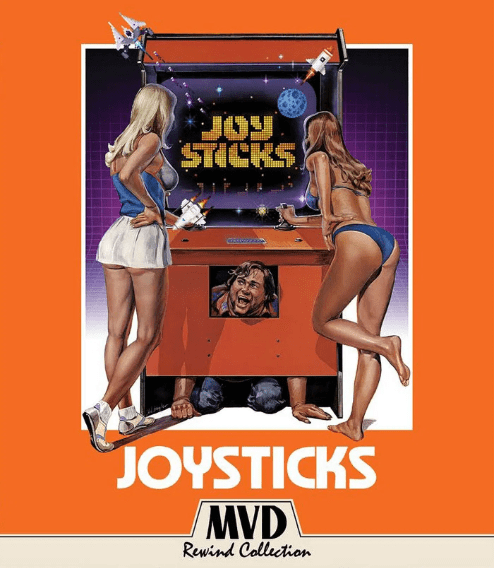
MVD REWIND COLLECTION BLU RAY: Joysticks (1983)

Jefferson Bailey (Scott McGinnis, Star Trek III: The Search for Spock) owns the hottest of all businesses in 1983: a video arcade. It’s driving local business tycoon Joseph Rutter (Joe Don Baker, a man whose name I screamed into the ear of a sleeping girlfriend once, which is a long story I should really get to sometime) nuts, so he gets his two nephews and plans on shutting down the arcade. Mean! Unfair! No!

Bailey’s too smart for Rutter and has two pals named Eugene Groebe (Leif Green, Davey Jaworski from the legendary bomb Grease 2) — who is molested by swimsuit girls before he even gets to the arcade — and McDorfus who are ready to deal with this affront.

This movie was such a big deal that Midway allowed the image of Pac-Man to be used as well as their new game Satan’s Hollow and the as-yet-unreleased Super Pac-Man during the big showdown at the movie’s end.

Corinne Bohrer, who is pretty much teen movie royalty thanks to appearances in films like Surf IIZapped! and Stewardess School shows up, as does John Voldstad who played “my other brother Daryl” on TV’s Newhart.

There are two real reasons to watch this movie. One is the theme song, which has beeps, boops and promises “video to the max” and “totally awesome video games!” This song will infiltrate your mind and not leave, trust me.

The other big reason is John Gries, who completely owns every scene he appears in as King Vidiot, a punk rock maniac surrounded by punker girls who only communicate in video game noises when they’re not all riding around on miniature motorcycles. In a more perfect world, King Vidiot would be the star of the film. Every other person pales in comparison to his greatness. Gries would go on to steal the show in plenty of other films like Real GeniusNapoleon DynamiteFright NightThe Monster Squad and TerrorVision.

This all comes from Greydon Clark, who directed The Uninvited — a movie where George Kennedy does battle with a house cat — Without Warning and Wacko, as well as appearing in movies like Satan’s Sadists.

The saddest part of this movie was that even though the good guys win, arcades would be dead by the mid-1980’s. So really, the bad guys did win. King Vidiot? Well, no one knows what happened to him.

The MVD Rewind Collection release of Joysticks has a 2K scan and restoration from 35mm film elements, new fan commentary featuring MVD Rewind Collection’s Eric D. Wilkinson, Cereal at Midnight host Heath Holland and Diabolik DVD‘s Jesse Nelson, audio commentary by director Greydon Clark, an interview with Clark and a fake trailer for a movie called Coin Slots directed and written aby Newt Wallen and starring Mr. Lobo and Eric D. Wilkinson.  It all comes in incredible retro packaging, as well as reversible artwork, a collectible 2-sided mini-poster and more.

You can get it from MVD.

CLEOPATRA/MVD BLU RAY RELEASE: The Black Mass (2023)

Set over a 24-hour period in 1978 Florida, this movie has a man named Ted (Andrew Sykes) shoplifting and trying to get with someone, anyone and always getting shot down. Director and writer (with Eric Pereira and Brandon Slagle) Devanny Pinn buries the lead quite well, even if I knew who Ted was, knew what would happen next and have seen the story so many times. This is a very different take and if you want to be surprised, well, stop reading.

One night, Ted goes out drinking, following some sorority girls, but he gets too drunk, he comes on too strong and he gets thrown out. Yet he can still follow those girls home and instead of trying to pick them up, he becomes a destroyer, wiping them out one by one because he’s Ted Bundy and this is his story.

There’s a solid cast on hand — Jeremy London from Party of Five, Kathleen Kinmont from Halloween 4, Lisa Wilcox from Nightmare On Elm Street 4 and and Eileen Dietz from The Exorcist amongst other talented actors.

Unlike so many true crime stories, this puts you in the world of the victims, letting you get to know them before the inevitable. It’s very effective and quite disquieting, as the violence doesn’t let up.

You can get this on DVD or blu ray from MVD.

Non aprite all’uomo nero (1990)

Don’t Open the Door to the Man In Black is a TV movie directed by Giulio Questi, who made some of the oddest giallo films ever, Death Laid an Egg, as well as Arcana and one of my favorite Westerns, Django Kill…If You Live, Shoot! It was written by David Grieco.

Francesca (Claudia Muzii) is a fragile woman undergoing treatment, which has been recommended by her friend Lorenza (Aurore Clément). The root of her depression lies in a failed relationship with a man who also dated her mother, a famous actress who died before her time. Yet there’s more to it when Francesca is found dead as well.

While this is a basic TV movie, it’s still nice to see the face of Giuliano Gemma (A Pistol for Ringo). By the late 80s and early 90s, most Italian genre directors had moved to the small screen to tell their stories. This is a fine tale but not anything that needs to be hunted down.

You can watch this on YouTube.

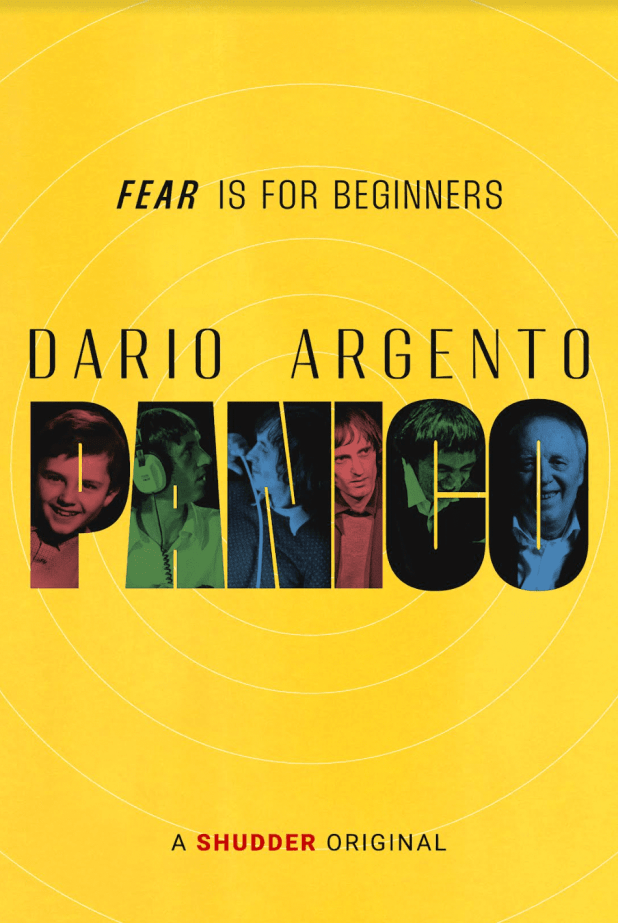
SHUDDER EXCLUSIVE: Dario Argento Panico (2023)

In this film, Dario Argento explains the difference between fear and panic (the panico that gives this its title). He claims that fear is like a fever of 100.5 F, one that has you terrified. Panic is just a degree higher, something that takes you beyond to a place that you can’t control.

If you’ve read Argento’s book Fear, he often speaks of writing his scripts isolated in a hotel room. In this documentary, the director finds himself returns to the place where he completed his latest script and speaks as part of an intimate interview, all while being followed by a film crew documenting his life for a movie about his illustrious career.

He’s joined by friends, collaborators and fans — many of whom are today’s most important filmmakers — to discuss the story of his life and films.

Director Simone Scafidi made Fulci For Fake in 2019, a film that attempted to explain the movies of Lucio Fulci. In that effort, he didn’t have true access to Fulci. Here, he has Argento speaking to his greatest successes and why he makes movies, as well as some of the most essential people in his life, including his daughters Fiore and Asia, his first wife Marisa Casale, Claudio Simonetti of Goblin, Lamberto Bava, Michele Soavi, Luigi Cozzi and current directors Nicolas Winding Refn, Guillermo del Toro and Gaspar Noé.

Del Toro speaks most effectively on the power of what Argento can do and how he’s “getting high off his own supply.” He makes a case that Deep Red presents a world where anything at any time can happen and that you must accept that — “here’s is a killer doll, alright” he laughs — and that it’s also full of ancient evil waiting on the outside of the frame, a film where no one is safe.

There’s a lot more that I’d like to have heard about, such as the time in American making Dawn of the Dead and Inferno, as well as what inspired his later films. This skips quite a bit — sorry fans of Dracula 3D and Mother of Tears — but it’s impossible to get a multiple decade career into a short running time. What does emerge is that even when people have had rough relationships with Dario — such as actress Cristina Marsillach, the star of Opera — they feel as if they have learned from the time they spent with him. It makes for an interesting companion to his aforementioned autobiography, as you only hear his side of the story, where Asia presents a more nuanced vision of him, including a surprising moment of tenderness and vulnerability.

It’s very hard for me to be objective on this film’s subject, as his movies form the nucleus of so much of my love for cinema. I am pleased with the results, as it gives me as much as I need to know and I could honestly listen to Soavi, Bava and Cozzi speak for hours.

As a film nerd, I am beyond happy that this mentioned The Card Player. As you may know, my parents’ first date was to see The Bird with the Crystal Plumage and for years they used it as a barometer of films they hated. I think my gialli addiction started in those formative film discussions as a form of rebellion. Also: Yes, I did cry when they showed the Louma crane from Tenebrae.

You can watch this starting February 2 on Shudder.

To commemorate the release of Dario Argento Panico, Shudder and the IFC Center will present Panic Attacks: The Films of Dario Argento, a series of films celebrating the works of the Giallo horror maestro, revealing his profound impact on horror and his lasting influence on cinema.

The series screens January 31 to February 8 (Full schedule here) and will feature the following films:

Suspiria (1977) dir. Dario Argento

Deep Red (1975) dir. Dario Argento

Dario Argento Panico (2024) dir. Simone Scafidi

The Cat o’Nine Tails (1971) dir. Dario Argento

The Bird with the Crystal Plumage (1970) dir. Dario Argento

Opera (1987) dir. Dario Argento

Vortex (2021) dir. Gaspar Noé

Four Flies on Grey Velvet (1971) dir. Dario Argento

The Mother of Tears (2007) dir. Dario Argento

Inferno (1980) dir. Dario Argento — on 35mm

Tenebrae (1982) dir. Dario Argento

Phenomena (1985) dir. Dario Argento

Dracula 3D (2013) dir. Dario Argento

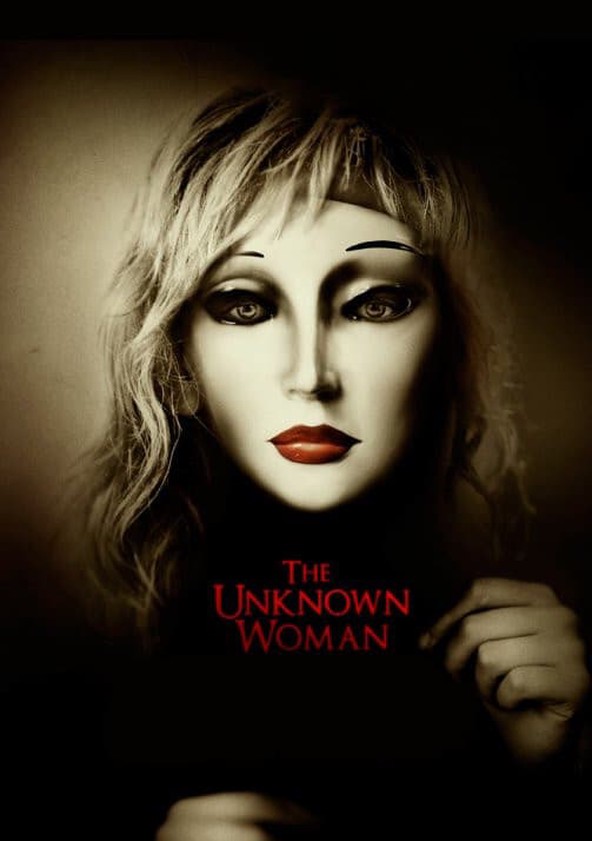
The Unknown Woman (2006)

Irena (Kseniya Rappoport) is a Ukrainian sex worker who is looking for a job in fancy Italian apartment building and starts by cleaning the stairs, even though she already has money. Her plan is to get closer to the Adacher family who lives there, starting by becoming friends with the nanny, Gina (Piera Degli Esposti). And then, when that au pair is crippled by a fall — that Irena may have caused — she’s hired for the same role and takes care of Thea (Clara Dossena).

There’s a reason behind her madness. She has given birth to nine children whose theft was the final dignity that she could not bear in her horrific life. Stabbing her pimp, she has come to Italy as she believes that Thea is her child. And if she has to stage a crash that kills the girl’s mother Valeria (Claudia Gerini), that’s just a means to the end. Bad luck follows Irena as the pimp remains alive and wants the money she took from him. Even though she takes care of him and it seems that she will move into the new motherless house with Thea and her father Donato (Pierfrancesco Favino), the police arrest her.

In jail, she refuses to eat. Thea visits her and feeds her, which gives her an urge to survive. Many years later, we see her finally leave prison behind and a fully grown woman is waiting for her. It is Thea.

The Unknown Woman, unlike many giallo, was a huge success. It won David di Donatello awards for Best Actress – Leading Role for Kseniya Rappoport, Best Cinematography for Fabio Zamarion), Best Director for Giuseppe Tornatore, Best Film and Best Music for Ennio Morricone.

Tornatore is best known for Cinema Paradiso and Massimo De Rita may have written an award-winning movie here, but under the name Max von Ryt he wrote Blastfighter and as Max De Rita he penned Blood Link. Actually, his career stretches back into the 1960s with his first credited script being War of the Zombies.

This was Italy’s official submission to the 80th Oscars Best Foreign Language Film category. It lost to The Counterfeiters.

Regardless of high class this is, it’s heart beats yellow blood.

You can watch this on Tubi.