Bleeding Skull’s Top 50 (July 7 – 13) The middle-brow champions of low-brow horror, Bleeding Skull has picked out some of their favorites from the SWV catalog. They neglected to put I Drink Your Blood or EEGAH!on the list, but I think I can forgive them since they included Ship of Monsters.
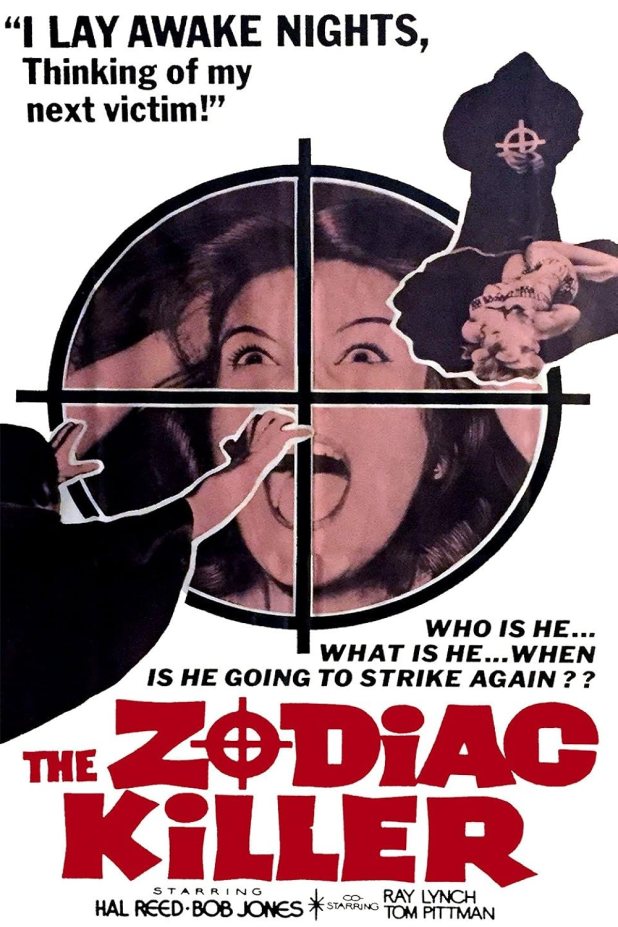
Zodiac Killer is just as much an attempt to catch the never arrested real-life Zodiac Killer as it was to cash in as an exploitation movie.
On its opening night on April 7, 1971 at the RKO Golden Gate Theater in San Francisco, audience members were asked to write their answers to the question “I think the Zodiac kills because …” and drop their entries into a large box. They were told that they could win a Kawasaki motorcycle, but they were also having their handwriting being tested by experts against the actual handwriting of the killer. Members of the cast were waiting to grab and interrogate anyone whose penmanship was suspect.
I don’t see David Fincher doing that.
In the first half of this movie, Grover (Bob Jones) bemoans his life. He’s a drunk and balding tow truck driver who can’t even see his daughter whenever he wants to. He takes her hostage and decides to tell the cops that he’s the Zodiac. She runs away and he gets the due process of being shot a whole bunch of times, his body falling into a swimming pool.
The truth, as shown in the second half, is that the Zodiac is Grover’s friend Jerry (Hal Reed). He’s a Satanist who hates humanity when he isn’t delivering their mail. He blames his crimes on the fact that his father is mentally ill, then his closing voiceover warns the audience that he will never been caught and that there are others just like him.
Along with Another Son of Sam, Zodiac Rapist and even Dirty Harry, the Zodiac was all over 70s cinema. This film’s director Tom Hanson — according to Mental Floss— “had found his niche as the owner of several Pizza Man franchises and a handful of Kentucky Fried Chicken locations.” He spent $13,000 of his money making this movie, which was less about making a good film and more about luring the Zodiac to the theater. He believes that he met the Zodiac at the urinal, when a man next to him said, “You know, real blood doesn’t come out like that.” As for his research, at least Hanson met with reporter Paul Avery, who also gave this quote that started some prints of this movie: “The motion picture you are about to see was conceived in June 1970. Its goal is not to win commercial awards but to create an “awareness of a present danger”, Zodiac is based on known facts. If some of the scenes, dialogue, and letters seem strange and unreal, remember – they happened. My life was threatened on October 28, 1970 by Zodiac. His victims have received no warnings. They were unsuspecting people like you.”
They may have missed the killer despite their plans, as co-writer Ray Cantrell was hiding inside a freezer to watch audience members. He nearly passed out and as he was being rescued, someone left a card that said, “I am the Zodiac, I was here.” No one was able to see who left that message.
There was a documentary called The Zodiac Killer Trap that discussed how Hanson spent years keeping up on the man who he met in the bathroom, who was still alive as of 2019.
As for the movie, it’s as good as $13,000 and amateur filmmaking will allow. It does have Doodles Weaver in an absolute freakout of a performance, ranting and snarling dialogue like “I like ’em plump and juicy and dumb!” A member of Spike Jones’s City Slickers band, a writer for Mad Magazine, the uncle of Sigourney Weaver and a frequent cameo and guest star actor, his full name was Winstead Sheffield Glenndenning Dixon Weaver. You’ll wonder how life led him to be in this movie.
EDITOR’S NOTE: Micki & Maude was on the CBS Late Movie on February 17, 1989.
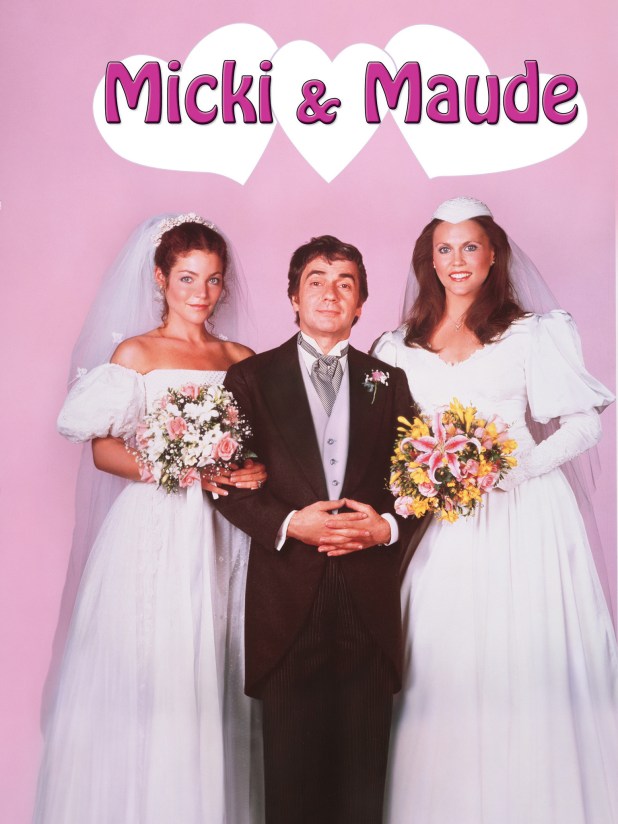
Rob Salinger (Dudley Moore) is happily married to lawyer Micki (Ann Reinking, who is mostly known for her dancing career). He wants a child but she wants a career. While interviewing cellist Maude Guillory (Amy Irving), he falls in love and gets her pregnant. Her father, pro wrestler Barkhas Guillory (Hard Boiled Haggerty), is beyond happy and starts to plan their wedding.
Our protagonist plans to tell Micki that he wants a divorce, except that she’s pregnant and kept the child for him. With help from his boss Leo (Richard Mulligan), Rob has a wife at day and at night. They may never have found out the truth if they didn’t both go into labor on the same day, in the same floor of the same hospital.
Yet somehow, these women become friends and kick Rob out of their beds. They both go on to great careers, but by the end of the film, it’s revealed that Rob has had several children with both of them.
Directed by Blake Edwards and written by Jonathan Reynolds, this film had Moore win a Golden Globe for Best Performance by an Actor in a Motion Picture – Comedy/Musical. And for those who love pro wrestling, this has appearances by Gene LeBell, Chief Jay Strongbow, Jack “Wildman” Armstrong, Big John Studd and Andre the Giant.
If you enjoy Edwards’ sexual screwball films — this is very close to The Man Who Loved Women and Skin Deep— you’ll enjoy it. And while Wallace Shawn is in the cast, he and Andre didn’t do any scenes together. You’ll have to watch The Princess Bride for that.
EDITOR’S NOTE: Kansas City Bomber was on the CBS Late Movie on September 11, 1975; December 6, 1976 and February 10, 1978.
Barry Sandler wrote Making Love, the first mainstream American film to deal with homosexuality and Crimes of Passion. His film script — written as his Master’s Degree thesis at UCLA — was for this movie. He always had Raquel Welch in the lead and said, “”Raquel was a huge star at the time — kind of like the pop culture goddess. I just thought it would be great to see her as a roller derby queen; it seemed like a perfect meshing of pop culture with that role.”
Sandler personally delivered the script to her house and her husband Patrick Curtis bought the script for their production company, Curtwel Productions.
The original idea changed somewhat, as Sandler told Stone Cold Jeff, “It was a dark, gritty, character piece, more in the vein of Requiem for a Heavyweight. It’s about this young woman from Kansas City who goes out to Hollywood dreaming of fame and fortune, making it in the movies, and she’s really not good enough to do so, but she’s desperate to make her name and to get attention. She struggles and struggles, and never makes it, and then one day, she meets this kind of beat up, bruised up, burnt-out ex roller derby queen who kind of takes her under her wing and coaches her, and tries to get her involved in the roller derby. It sort of shows her becoming a roller derby star, and the irony is that she makes it in the roller derby, but as a black-trophy … as a bad girl who gets hissed at, beat up, and spit on every week. The irony is that she is able to find the stardom she desperately yearned for, but not as a movie star–as a star on the roller derby track getting booed at and spit at every week. And so it’s kind of dark, and much grittier and different, kind of almost along the lines of Midnight Cowboy.”
It was originally to be made at Warner Brothers and he believed that they would have stayed true to what he wrote: “Warner Brothers was a much more adventurous studio at the time. They were making The Devils and A Clockwork Orange, Performance. They stuck with those kinds of movies. MGM wanted to sell Raquel Welch in a tight roller derby jersey, running around the track. Listen, they weren’t stupid, they were smart to do that. It certainly made them a lot of money, and it would have been a much riskier project to go the other way. They weren’t sure whether Raquel could pull it off. I think she could have, but they wanted to play it much safer and go with a much more straight-on roller derby story.”
Roller derby used to be a totally different sport than it is today. Imagine if pro wrestling won over women and they decided to do it for real. That’s exactly what happened with roller derby.
The sport has its origins in the banked-track roller-skating marathons of the 1930s. It became a competitive sport thanks to Leo Seltzer and Damon Runyon. Yes. The short story writer.
In 1940, more than 5 million spectators watched in about 50 American cities. Eight years later, Roller Derby debuted on New York television and by the 1960s, it aired on several national networks. Of the competitors to Seltzer — who owned the name roller derby — Roller Games was started by Herb Roberts and bought by Bill Griffiths Sr. and Jerry Hill.
By the mid 1960s, Roller Games had teams in Baltimore, Chicago, Cleveland, Detroit, Philadelphia, Florida and Hawaii, with leagues in Canada, Mexico, Australia and Japan. The biggest team — and where the TV was taped — was in Los Angeles with the L.A. Thunderbirds. It was such a big deal that in 1972, an interleague match between the Thunderbirds of Roller Games and the Midwest Pioneers set a roller derby attendance record of 50,118 at Chicago’s Comiskey Park.
Yet by 1975, Roller Games disbanded and many of the skaters started local circuits, kind of like how pro wrestling has survived the ups and downs of popularity. In the late 80’s, RollerJam and RollerGames both aired on television, but the revival didn’t take except with people that remembered watching the original games on UHF TV.
Welch understood what the sport was all about, telling the New York Times, “The game is almost show business, it’s a carnival atmosphere, but I can understand its popularity. Most of the spectators are basic people and there’s something cathartic about watching people get dumped. The yelling creates a certain kind of intensity. The type of violence draws you in, makes you involved. The skaters are tough but I think all women are tough. The skaters aren’t any tougher than most of the women in the world, underneath. Skating is a batchy, sweaty, funky life. I don’t want to do another film about it. I’ve done my number. But I enjoyed it.”
Welch played K.C. Carr, who has just left her team in Kansas City to start life all over again in Portland to skate for the Loggers. It’s all because their owner, Burt Henry (Kevin McCarthy), wants her. She dates him without knowing how he manipulates the team, like sending her best friend and roommate Lovey (Mary Kay Pass, Nurse Sherri) to another team and gets the crowd to drive “Horrible” Hank Hopkins (Norman Alden) crazy after he realizes that the older player has a crush on K.C. He has a plan to get out of Portland and go to Chicago, bringing her along. He sets up a match between her and Jackie Burdette (Helena Kallianiotes), which will lead to her leaving, just as she lost a match at the start of the movie with “Big Bertha” Bogliani (Philadelphia Warriors skater Patti “Moo Moo” Cavin) but by this point, she knows he’s a liar and instead of throwing the fight, she wins. The actual fight got out of hand between Welch and Kallianiotes, with the sex symbol getting punched in the face. She also suffered bruised knees, a spasm in her trapezius, hematomas on her head, several headaches and a broken wrist that delayed filming for two months.
The most harrowing scenes are when K.C. stops in Fresno to visit her two children who live with her bitter mother (Martine Bartlett). Her son Walt (Stephen Manley) refuses to speak with her, as he worries about her getting hurt. Her daughter Rita is a young Jodie Foster. And when Hank confides that he hates riling up the crowd and confesses how beat up he is, it made me think of the many aging heels I’ve met through wrestling.
The battles between K.C. and Jackie make up most of the film, including one battle where they tumble down a hill and are nearly hit by a train before being saved by team coach Vivien (Jeanne Cooper, Katherine Chancellor from The Young and the Restless). Kallianiotes earned her Golden Globe nomination for this movie.
Real roller derby venues in Kansas City, Fresno, and Portland were also used for key scenes and stars Judy Arnold (the captain of the Philadelphia Warriors and the skating double for Welch), Ralph Valladares (the holder of every important scoring, speed and endurance record in the history; “The Living Legend” was a member of the T-Birds as a player, coach and manager for 38 years), Danny “Carrot Top” Reilly, T-Bird Ronnie “Psycho” Rains, T-Bird and later New York Bomber Captain Judy Sowinski, one of the best jammers in the game “King” Richard Brown, “The Body Beautiful” Tonette Kadrmas, announcer Dick Lane and John Hall, a former skater who became the in-field manager for the Detroit Devils.
Director Jerrold Freedman mainly worked in television, directing TV movies like A Cold Night’s Death, Unholy Matrimony, The Boy Who Drank Too Much, The Comeback and The O.J. Simpson Story(as Alan Smithee). He also helmed episodes of The X-Files and Night Gallery. Oh yeah — he also wrote and directed the Charles Bronson movie Borderline. The script was written by Thomas Rickman (Coal Miner’s Daughter) and Calvin Clements Sr. (who wrote 66 episodes of Gunsmoke) from Sandler’s story.
Perhaps most odd, Phil Ochs was originally approached to write a theme song for this movie. His song was rejected but A&M Records released it. He hoped to publicly debut the song at the Olympic Auditorium during a Roller Games television taping at Los Angeles’ Olympic Auditorium. Thunderbirds owner Bill Griffiths Sr. said no thanks.
Welch claimed that this was the first of her movies that she liked. She isn’t always the heroine in this and despite her looks, she comes off as tough. I wish she’d made more films like this.
Roger Corman found out this was getting made and created his own roller derby film, Unholy Rollers. It’s very similar to this movie but has the benefit of Claudia Jennings as its star. She’s even wilder than Welch and ends the film attacking the entire audience and flipping off the cops. It’s great.
EDITOR’S NOTE: The Kirlian Witness was on the CBS Late Movie on August 13, 1986 and July 20, 1987.
“For the first time on the screen a strange thriller that takes you into the psychic world of plants.”
Yes, in 1979, people were talking to their plants, using biofeedback devices to hear from them and even singing to them. For everyone obsessed with the 80s, let me tell you, the 70s were way better.
Director Jonathan Sarno did post-graduate work in playwriting and directing at the Yale School of Drama under directors Arthur Penn, George Roy Hill, Elia Kazan, Roberto Rosselini and novelist Jerzy Kozinski. He’s an artist and yet here he is, making a horror movie about psychic plants, but life is great that way. Sarno wrote this, along with Lamar Sanders, and also produced the movie and acts in it.
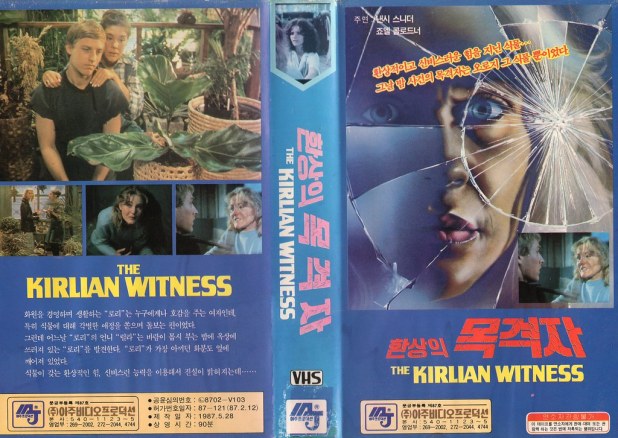
I don’t even know where to start with this movie. I mean, the phrase Kirlian is because the photographer detective at the heart of this movie, Rilla Hart, has a photo in this style that represents the energy field of the exotic plant that her sister Laurie owned before her death. And oh yeah, her sister could literally talk to that plant.
An occult low budget movie about talking plants and a psychic named Dusty who brags about how he has surpassed human existence and is one with the plants despite mainly working the night shift loaded trucks and also knows the exact moment that they will expire? What could make this better? How about a cameo by Lawrence Tierney as a police detective? Yeah, that’ll do it.
There’s another release of this called The Plants Are Watchingthat cuts a fair amount of footage, so go for this one. It’s so twisty and oddball that it could pretty much be classified as an American giallo, what with its dream logic and ending which reminded me of The Cat o’ Nine Tails. It’s a relatively sexless journey through the same end of the world New York City as Driller Killer, but you know, with plants.
Honestly, this movie is way better than it has any right to be. In a perfect world, it would have been the first film that Sarno turned into a cult film and we’d be celebrating everything he made afterward instead of him going into making travel videos. There’s honestly nothing else like it.
Oh yeah, one more thing.
In the credits, it thanks the owner of Day of the Triffidsfor the use of a scene from that movie. That man? Philip Yordan, whose strange movie Night Train to Terror is a nexus point in my strange film obsessions. Much like how the Church of Satan connects The Car, Tippi Hedren’s Roar and Jayne Mansfield, that movie is the crux of so many of the pathways that researching weird films has led me down.
Here’s a drink for this movie.
The Plants Are Drinking
1 oz. Midori
1 oz. vodka
1 oz. white rum
5 oz. lemonade
Stir the first three ingredients in a glass with ice.
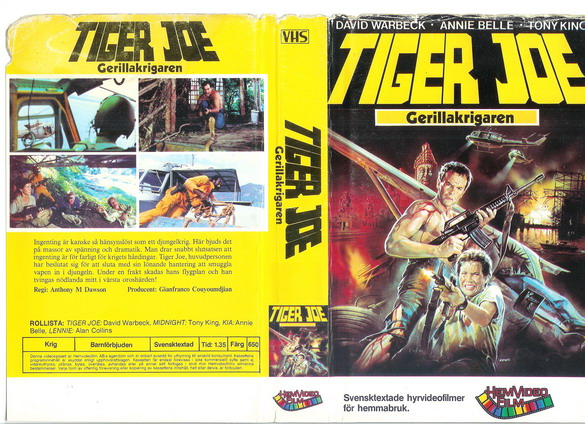
EDITOR’S NOTE: Tiger Joe was on the CBS Late Movie on September 7 and November 30, 1988.
Known as Fuga dall’arcipelago maledetto (Escape from the Cursed Archipelago) in Italy, this Antonio Margheriti-directed and Tito Capri-written film stars David Warbeck as Tiger Joe, a former US Army Special Forces Vietnam Veteran who works with “Midnight” Washington (Tony King, Atlantis Interceptors) and Lenny (Luciano Pigozzi) to airlift all sorts of cargo but mostly guns.
When he gets shot down, he joins up with Kia (Annie Belle, who started her acting career appearing in Jean Rollin’s Lips of Bloodand BacchanalesSexuelles; she’s in so many movies by directors and personalities I’m obsessed with: Deodato’s House On the Edge of the Park, D’Amato’s Absurdand L’alcova, the supposed Emmanuelle Arsan-directed Forever Emmanuelle, Marco Antonio Andolfi’s Cross of the Seven Jewels and the Cannon film Nana) and her companion Datu (Abadeza) to get out of the jungle alive.
This has a lot of cast, crew and shots from the much better The Last Hunter, but I just love Antonio Margheriti. He brings something extra to every movie. Sadly, cinematographer Riccardo Pallottini lost his life in a plane crash while filming the final shot of the film.
May I never ever get tired of seeing bamboo huts in the Philippines blow up. If you want more Margheriti in the jungle, check out Tornado: The Last Blood, Code Name: Wild Geese, The Last Hunter, Commando Leopard, The Commander, Indio and Indio 2: The Revolt.
Join CFF as we take a journey into the longer side of short cinema. One of the many joys of presenting our festival in a hybrid format is that it allows us to include so many amazing films that our time limitations during our in-person days wouldn’t allow, and it also gives us the freedom to program more short work with running times 15 minutes and above. It can be challenging for festivals to make longer short films work when space in blocks is limited, and we’re grateful that our two-volume Fun Size Epics block gives us a chance to share an exceptional group of films that pack more world-building and storytelling in their run times than some features can manage.
Spiral to the Center (2023): It feels like this movie was made just for me. Rick Danford (co-director, co-writer and musician Scott Ampleford) reviews records on his web channel. When he discovers a band he’s never heard of before called Raven’s Knowe, he soon learns that there’s an entire label of this strange music and twelve more records, as well as a history of people who have lost their minds in the search for all of this occult powered vinyl.
Ampleford created all of the music for this — which you can listen to here — saying that he “steeped myself in the music of the 1970s, listening to Prog Rock, Krautrock, New Age and beyond.” By the time the story gets to its close — with the director (Alisa Stern, who co-wrote and co-directed) of the documentary within the movie begging Rick to give up — you’ll wish this was a full-length film.
Go out of your way to find this movie. It’s incredible. If you’ve ever hunted for bands or sought out something that no one else knows, you’ll feel all of this.
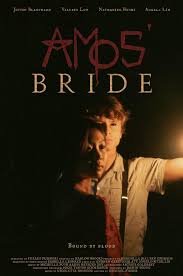
Amos’ Bride (2024): Directed by Yukako Fujimori and written by Harlow Brooks, this is the story of Rebecca (Valerie Loo), a sixteen-year-old girl who wants to escape her hometown. The difference between her and nearly every other young woman is that she was born and raised in the Chosen Colony, a cult that worships the prophet Amos. She’s in love with Amos’ son, but when she’s selected to be the prophet’s latest bride, they both decide to escape. The problem? Amos has already possessed her. This looks and plays great with a folk horror vibe that demands to be revisited with a full-length film.
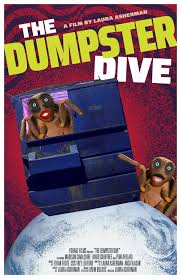
The Dumpster Dive (2023): Directed by Laura Asherman, who wrote it with Anca Vlasan, this has cockroach news hosts Howard Scourge and Madison Von Vermin reporting on how microplastics could have dire consequences for the human race. A mix between sketch comedy and documentary, this has experts reporting on how we got to where we are with microplastics, illustrated by puppets, animation and — yes, you knew it — live cockroaches. It’s a spoonful of sugar to get down the bitter pill that is the way that we’ve decimated the environment.
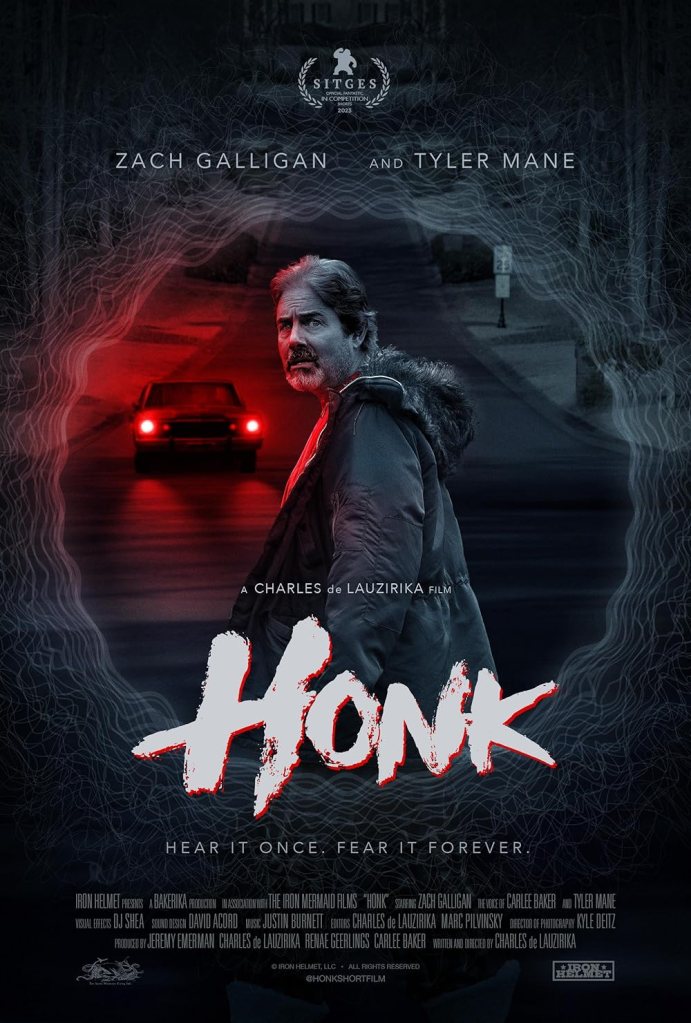
Honk (2023): Directed and written by Charles de Lauzirika, this film has Zach Galligan and Tyler Mane in it, which ups the star power. That wouldn’t matter if it didn’t tell a strong story and it totally does. Reluctant divorcee Bill (Galligan) is awakened before dawn by a mysterious car horn in his normally quiet neighborhood. He tries to find it yet starts to uncover something even more horrifying. This film — while short — gets across the power of grief and how hard it is to let go. I didn’t particularly like the ending, but when everything up until that point was of such a high quality, I didn’t dwell on it. I’d love to see how this could be expanded.
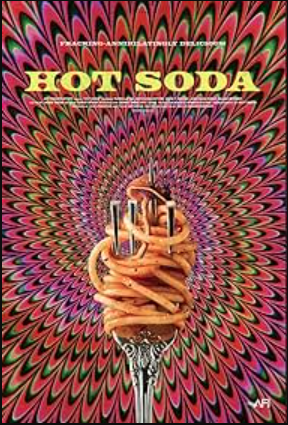
HOT SODA (2023): Outraged over the approval to double the fracking operations devastating her hometown, Meg (Tuisdi Layne) is forced by her sick father Jack (Aeron Macintyre) to serve the fracking company owners Todd and Leonard (John T. Woods and Jonathan Wiggs). Instead of letting this opportunity go, she serves them spaghetti and soda that’s been laced with drugs. Soon, the pasta has come to life and may change the future of this small town and the restaurant that has been a part of it. Directed and written by Nello DiGiandomenico, this hit home for me, literally. My small Western Pennsylvania hometown has been torn to pieces by fracking and I also grew up miles from East Palestine, OH, another small place screwed up by big business. Well made! You can learn more at the official site.
Redcoat (2023): A young, recently widowed mother-to-be named Christine (Mallory Ivy) — living in the midst of the Revolutionary War — makes a deal with the enemy to escape her abusive brother. Directed and written by Michaela Hounslow, this has such a gorgeous look and gets so much done in its twenty minute running time. I loved that this film took a time in history that hasn’t been much explored in recent film and created a female-centric story about survival and persisting in the face of male oppression. Jonathan Bouvier and Allen Harbold are quite good in this and the scenery is nearly a character in and out of itself, making this feel as if you really are part of the past.
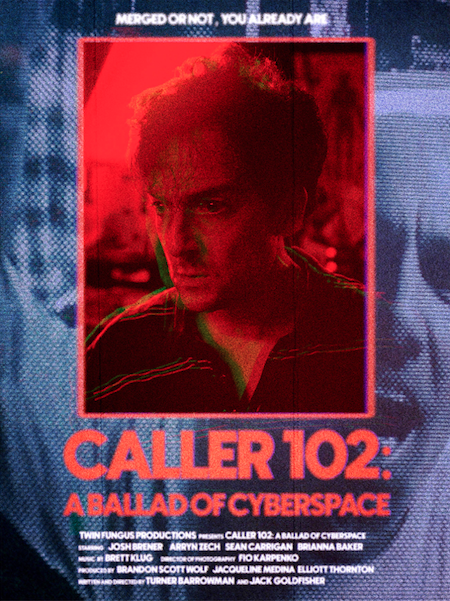
Caller 102: A Ballad of Cyberspace (2023):When Kevin (Josh Brener) hacks his way into a radio contest, he gets hit with a power surge. That isn’t an accident. He soon discovers that everything he believes about the new cyberspace world of the future (which is today) is true. Directed and written by Turner Barrowman and Jack Goldfisher, this does so much with sound design and imagination, making your mind fill in some of the gaps where the budget can’t go. I love that this starts with trivia contest and ends with near armageddon. I’d love to see more of this world. Where else can it go? I hope that this filmmakers find out and share with us.
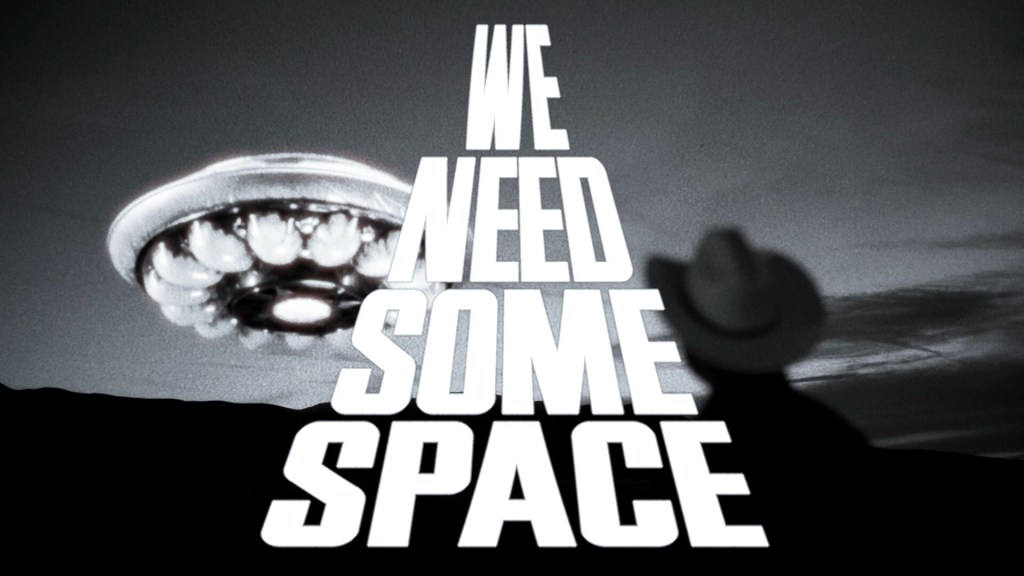
We Need Some Space (2023): Can an invasion from space be the metaphor for a breakup? This movie says absolutely. A young, dysfunctional couple struggles to define the future of their relationship — we need some space never seems to end up positive, does it? — all while being followed by a UAP. Directed and written by Ian Geatz and Antonio Zapiain Luna, this reminds me that the only thing more frightening than being probed is falling out of a relationship.
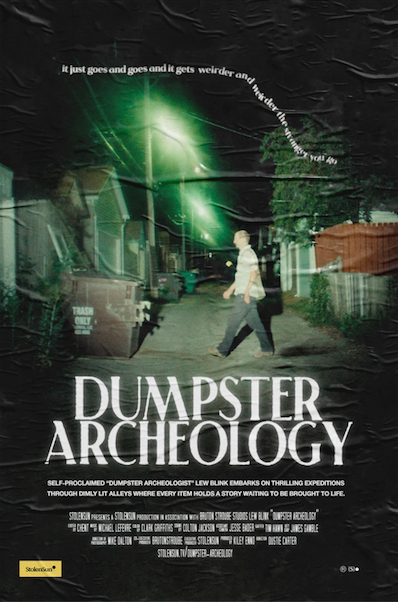
Dumpster Archaeology (2023): Self-proclaimed “Dumpster Archeologist” Lew Blink goes dumpster diving and finds the true stories that have been left in the trash. He alone is able to connect the dots and put together the puzzle in the refuse. To you, this is garbage. To him, this is a mystery made up of material possessions that people decided they no longer wanted. Directed by Dustie Carter, this doc makes me wonder how much of this is stalking or an invasion of privacy, but then when you spend a few moments with Lew through this film, you start to understand and love his outlook. I wonder what Lew would think of my life by looking through my trash? You can learn more about Lew on his official site.
Seraphim (2022):When Jude’s (Erin Reynolds) family is chosen to carry out a suicide bombing for the biblically-accurate angel that they are harboring in their attic and her sister Gloria (Aspen K Somers) is chosen as a modern day prophet, Jude struggles with the ramifications of what it really means to be an agent of God. Directed by Oscar Ramos and written by Joanna Fernandez, this has an angel that is just as frightening in vision as the ones in the actual Bible. This is such a strong idea and I loved every moment. It’s true horror with the idea that an instrument of God doesn’t want peace but instead commands its followers to sacrifice others.
Cotton Candy Sky (2023): Directed and written by Michael Curtis Johnson, this feels like a slice out of Southern modern gothic life. It actually feels a lot like my Western Pennsylvania hometown, a place where there’s not much to do but drink, if you’re lucky, or get into drugs if you’re not. The longer I’m away, the more I see it in a much rosier way. But that’s also because I live far away and only experience it in moments and not a lifetime. This movie hit me because of that. It feels real.
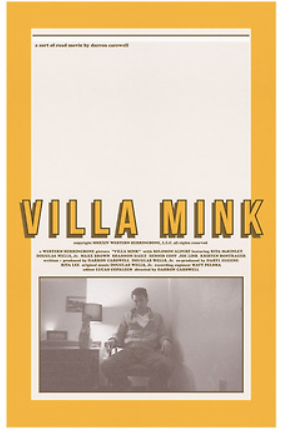
Villa Mink (2024): Directed by Darron Carswell, who wrote the script with Douglas Wells Jr., this is “at once a study of time and space, penetrating examination of distorted male identity, and visual exploration of the enduring legacies of the mythical Western frontier.” It traces Rudy Ford as he drives across the vast exteriors of the Kansas landscape, exploring the flatlands and a roadside motel, waiting to find others in dives and bring them back for a moment of some physical connection despite feeling emotionally away from the world. As Modest Mouse once said, “This Is A Long Drive For Someone With Nothing To Think About.”
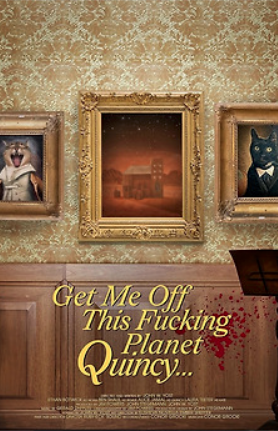
Get Me Off This Fucking Planet Quincy: A pair of land barons from 19th century Mars find themselves the brunt of a cosmic joke after the sudden suicidal Rapture of their slave workforce who has just learned that Heaven is on Earth. Shot in a way that feels like a sitcom, this short by director and writer John Yost is just plain obtuse and I mean that in a very nice way. It spends more time world building than most full length movies. But man, it’s weird for me so imagine what that entails.
CFF ended a few weeks ago and I’m still getting caught up. You can visit my Letterboxd list of watches to see what else I’ve covered.
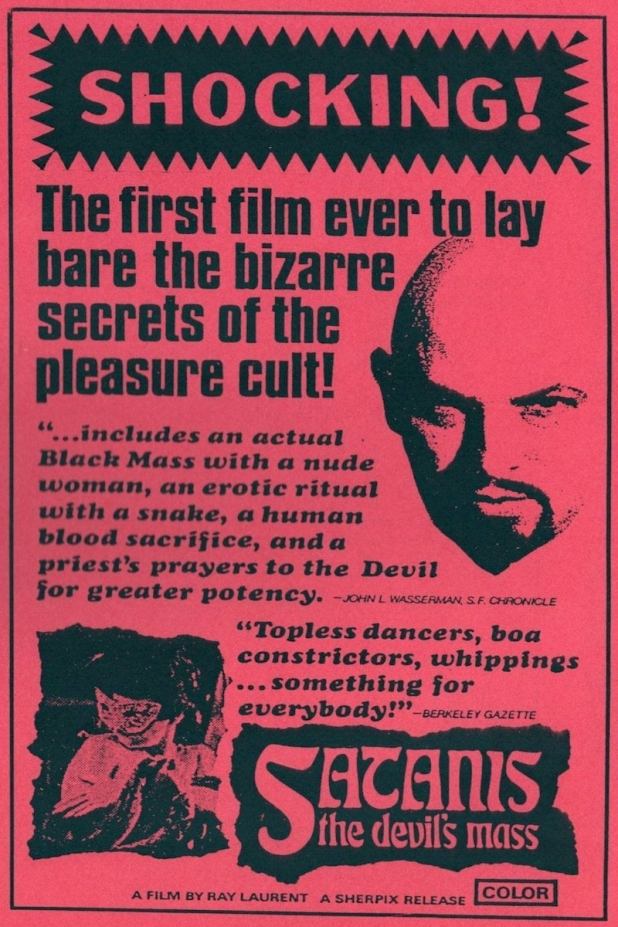
This 1970 documentary about Anton LaVey and the Church of Satan that was directed and produced by Ray Laurent, whose only other credits involve editing some films, including one of the Lemon Grove Kids films that Ray Dennis Steckler directed. Within this movie, there’s plenty of ritual footage, as well as interviews with LaVey, his family, church members and then his somewhat annoying neighbors and some priests and Mormon missionaries.
It’s really interesting to see how the people living next to LaVey saw things, less concerned about the people coming in and out than the upkeep and shingles of the Black House. This is a rare opportunity to see actual rituals of the early Church and hear from its members.
Also, the Church is very ahead of the cultural mores of the time — and even today — commenting on how they don’t tolerate homosexuality in the Church of Satan. Instead, they go further: “To tolerate is to infer they are different or less than, we just accept them as normal people because that’s exactly what they are.” Keep in mind this was made in 1970.
“Well, I had a man come to me the other day and he said that it was just terrible, when he joined the Satanic Church, he was masturbating just about every day, and now he’s masturbating two, and sometimes three, times a day, and he’s very happy, much happier than he’s ever been before.” – Anton Lavey
Director Ray Laurent also edited The Lemon Grove Kids Meet the Monsters and Body Fever and was the editorial consultant on Sappho Darling.
This had an X rating, probably for the nudity in the Black Mass scene.
Bleeding Skull’s Top 50 (July 7 – 13) The middle-brow champions of low-brow horror, Bleeding Skull has picked out some of their favorites from the SWV catalog. They neglected to put I Drink Your Blood or EEGAH!on the list, but I think I can forgive them since they included Ship of Monsters.
Made in Huntington, West Virginia, Teen-Age Stranger was directed by Ben Parker (Thunder Mountain, Invisible Avenger) and written by Clark Davis, who also wrote the songs “Yipe Stripes” and “Willows Wept” that are in this.
Huntington may be the second largest city in the state and the home of 1950s TV icon Dagmar, game show host Peter Marshall and Brad Dourif, but it does not seem large enough to have a giallo-style killer wandering the streets, tying women up with their stockings and leaving lipstick X marks all over their young dead bodies.
Jimmy Walton (Bill Bloom) is a dirtbike racing rebel new in town. Everyone thinks he could be the strangler, even if his brother Mikey (John Humphries) and his secret love Betty (Jo Canterbury) know it can’t be him or any of his gang, the Fastbacks even if the killer is wearing one of their jackets.
This is the kind of movie where a hamburger restaurant can have a band called the Huntington Astronauts just jump up and start playing and yet there’s a sexually motivated killing machine bringing death to this Leave It to Beaver black and white world.
The real hero is Mikey, who might be the biggest goofball in the history of movies. Between his brother taking the blame for things he’s done, being so annoying that his brother kicks him in the face and being unable to ride a bicycle without an accident, he cries in nearly every scene. If this really were a giallo, he would have to be the killer.
John Humphries later revealed that he thought that Jo Canterbury was a professional actress. She was really an airline hostess. When she got wilder with her performance, he thought she was a pro, so he did the same thing.
This played theaters and drive-ins as late as 1985 due to its great title. It became better known after Mystery Science Theater 3000 played it on their show. It does a lot in 61 minutes. Those West Virginia kids are unshakeable. Betty nearly gets killed by the villain — who is not a teenager, but Janitor Choker is a worse title and a spoiler, sorry — and then has a cop shoot a bullet right at her that hits the killer and he dies inches from her, she goes right back to the malt shop. Montani Semper Liberi!
You can watch this on Tubi with or without riffing.
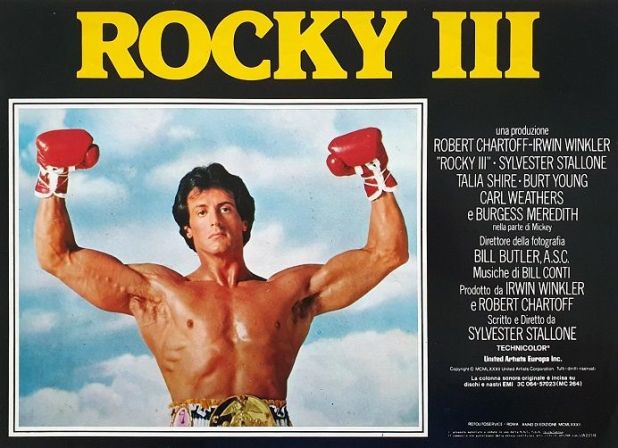
EDITOR’S NOTE: Rocky III was on the CBS Late Movie on September 29, 1989 and October 26, 1990.
Rocky III did more than just extend the franchise. It boosted the careers of two nascent superheroic characters, Mr. T and Hulk Hogan, as they made their way into the 1980’s cultural zeitgeist and even a titanic team-up at WrestleMania. Yet here, they’re just enemies for Rocky to gather his wits and eventually defeat. 1,200 people auditioned to be Clubber Lang, but there couldn’t be anyone else but Mr. T in this role.
Stallone went hard to get into shape for this movie, getting his body fat percentage down to his record low of 2.8%. He did that by eating only ten egg whites and a piece of toast a day, with fruit every third day, along with two miles of jogging, two hours of weight training, eighteen rounds of sparring, two more hours of weight training and swimming every single day.
Rocky has held the heavyweight championship for five years and defended it ten times, leading to fame, wealth and celebrity. In fact, he’s even moved into boxing versus wrestling matches against opponents like Thunderlips (Hulk Hogan). But his manager, Mickey (Burgess Meredith) knows that James “Clubber” Lang (Mr. T) is the man who can beat him.
While unveiling a statue of himself, Lang shows up and challenges him to a title match, claiming that Rocky has been hiding from him. That turns out to be true, because unbeknownst to our hero, Mickey has been keeping Rocky away from anyone who would hurt him as badly as Apollo Creed did. He goes on to tell him that Lang is hungry and that Rocky will never last three rounds with him because he’s become civilized and lost the eye of the tiger.
The training montage here shows that Rocky is distracted while Lang has risen from the Chicago streets and is very much like a younger Balboa, save that he’s cocky and brutal. When the two first meet, it erupts into a brawl that causes Mickey to suffer a heart attack before the match even starts. After the fight — a second round KO title win for Lang — Rocky tells his mentor that the fight is over and that it ended in the second round. He doesn’t tell him that he lost and his father figure dies happily.
Rocky slips into a deep depression that is only stopped when Apollo Creed (Carl Weathers), his former arch enemy, offers to train him in exchange for a favor. Along with Tony “Duke” Evers (Tony Burton), Apollo brings Rocky into his Tough Gym, giving him the footwork, style and speed that he lacked, finally becoming the gladiator that he was born to be.
The fight between Lang and Rocky is different the next time — Rocky destroys him in the first round, then allows his opponent to batter him in the second, taunting Land and claiming that he can’t put him away. This is all a ruse, as Rocky defeats him in the third, finally finding, as the song sings, “The Eye of the Tiger.”
Apollo’s favor? One more rematch, this time in private at Mickey’s gym. Now the men have become friends and finally are on the same level as the film ends.
When Mr. T took his mother to the premiere, she angrily walked out, upset at the lurid way that he yelled at Rocky’s wife Adrian (Talia Shire), saying “I did not raise you to talk to a lady like that.”
As always, Stallone knows where his characters ended up. He saw Clubber Lang as later becoming a born-again Christian and a ringside announcer.
This would be the last time that Rocky would battle for the title. Now, it would be time to go to Russia and then back to the streets.
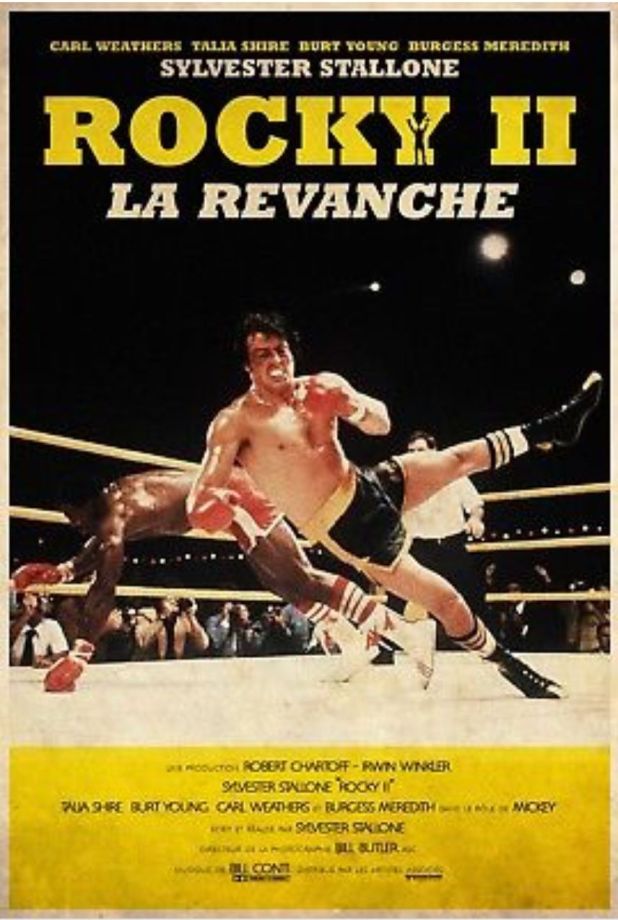
EDITOR’S NOTE: Rocky II was on the CBS Late Movie on November 18, 1988.
After the success of Rocky, the producers were eager to make a sequel. While Sylvester Stallone would write the script and star again, John G. Avildsen was tied to Saturday Night Fever (a script disagreement led to him being removed from the film three weeks before shooting started; he was replaced by John Badham). Stallone went all out to get the job, just like he did to get the starring role in the original film. Producers Irwin Winkler and Robert Chartoff understood how much of the success of the first film came from Stallone and helped him get the job.
The film begins immediately at the close of the last movie: world heavyweight boxing champion Apollo Creed (Carl Weathers) has defended his title against Rocky Balboa (Stallone), yet his promise of no rematch is rescinded the moment reporters surround the two men. Their private moments are much different then public; when Rocky goes to Apollo’s hospital room, he asks if he gave his all. The champion agrees that he did.
Rocky decides to retire after learning that he has a detached retina and that one punch could blind him. He has a new life now, one of endorsements and agents, but also one of true love as he marries Adrian and they expect a child.
Apollo is on a different path, as he’s now obsessed with a rematch. Rocky is the only mark on his perfect career. Despite everyone close to him telling him to drop it, he demands a rematch, smearing the good name of Rocky even in retirement.
Rocky’s inexperience with money and inability to read basically reduces his life to pure pain. Even a job at a slaughterhouse doesn’t last as the film compounds the boxer’s tragedy, moment by moment. Rocky begs Mickey to take him back and train him, but the older boxer refuses until he sees the way Apollo is taunting him.
Adrian has gone back to working at the pet store and refuses to support Rocky’s need to fight one more time. She goes in labor early and while their child is healthy, she remains in a coma. Rocky blames himself and stops training, but days before the fight, she awakens and tells him to win.
Apollo boasts that he will beat Rocky in no more than two rounds to prove the first match was a joke. Yet Rocky fights right handed instead of left, taking an even more brutal encounter into the fifteenth round, yet Apollo is way ahead on points. Rocky switches back to southpaw — leaving his bad eye open to damage — and takes out the champ with a massive punch that takes both to the canvas. Luckily, he rises in victory.
According to John G. Avildsen, another reason he didn’t do this film was because he didn’t like the story. He was, however, excited to do the third movie, where Rocky would have been elected mayor, only to be caught in a scandal when Paulie stole from the treasury. Rocky would take the blame and end up back in his old neighborhood. Notably, a similar plot occurs — spoiler warning — in the movie Stallone and Avildsen did collaborate on, Rocky V.







 B&S About Movies
You must be logged in to post a comment.