EDITOR’S NOTE: Cinematic Void will be playing this on Friday, Jan. 17 at 7:30 PM at the Frida Cinema in Santa Ana, CA with Short Night of Glass Dolls (tickets here). For more information, visit Cinematic Void.
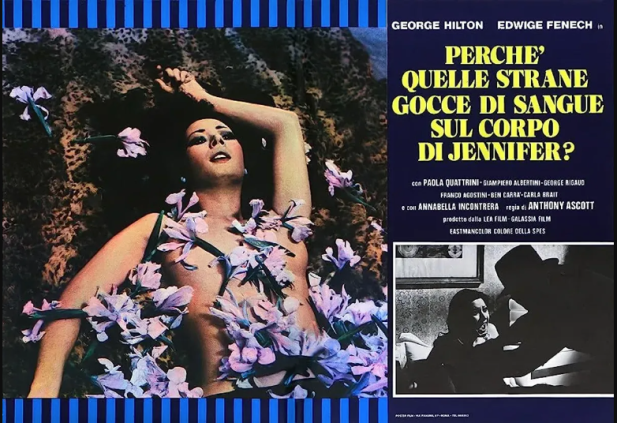
1970’s The Bird with the Crystal Plumagebecame a worldwide hit, bringing giallo to the world. But by 1972, in its native Italy, the films had already become self-aware parodies of the genre. Witness 1972’s The Case of the Bloody Iris (originally titled Why Are There Strange Drops of Blood on Jennifer’s Body?), directed by Giuliano Carnimeo (Exterminators of the Year 3000).
We start with the hallmark of this style: a beautiful woman slashed to death by a masked killer in a public location — this time an elevator in a modern high-rise. That body is discovered by a black exotic dancer — well, she’s more of a wrestler who challenges men in the crowd to fight her on stage — who soon becomes the next victim in a bathtub drowning with a killer that references the look of the killing machine behind Bava’s Blood and Black Lace.
That leaves us with two models, Jennifer Lansbury (Edwige Fenech, Your Vice is a Locked Door and Only I Have the Key, Strip Nude for Your Killer and many more — she even had a cameo in Hostel 2) and Marilyn Ricci, who become friends with Andrea Barto, the architect of the building (George Hilton, All the Colors of the Dark) and move into the vacant room of the first victim. Nevermind that the police believe that Andrea is the killer!
Meanwhile, Jennifer’s ex-husband, Adam, used to use her for strange group sex rituals — we see a flashback of him giving her communion and initiating her into the group. He’s been stalking her, trying to get her back. Turns out he could make love to anyone he wanted and was the jealous type. “You’re not any man’s special girl because any man can take you,” he tells her. She tells him that she wants to belong to someone special. He replies by attacking her in an alley and tries to inject her with a needle. She escapes and he exclaims that she will “come crawling back on her knees.”
The cops bumble their way through the investigation, more concerned with naked women than they are with the case itself. Oh yeah — Marilyn fakes her death in the same tub the black victim died in, driving Jennifer crazy. And also — Andrea is afraid of blood. And then again there’s that nosy old Mrs. Moss who keeps showing up to find the bodies and has a subscription to Killer Man comics. And another red herring — Adam tries to kill Andrea. Whew — so much to keep track of!
Here comes another one — the murderer keeps showing up in the window of the apartment, scaring Jennifer. And then Adam shows up to attack her. Running from her apartment, she finds refuge at her neighbor Sheila Heindricks’ place. However, Sheila turns out to be a lesbian — with a violin playing dad — who wants to molest her. She runs back to her place to find a blood stained orchid and Adam’s dead body.
There is some good news. Even though the police think Andrea is the killer, Jennifer still falls in love with him. They make love while the police watch. The next day, Marilyn says hello to someone in the street and is stabbed in front of the world. She falls into Andrea’s arms, covering him in blood before dying in Jennifer’s arms. Covered in gore, the blood freaks out the architect, who runs into the streets to hide.
Wow — like I said, this film almost becomes a parody of giallo convention as it piles on things. Why does the old man play violin all night long? Why is Andrea afraid of blood? Why are the police so incredibly stupid? Oh! I forgot about Arthur, the camp gay pornographer!
Turns out that Mrs. Moss has a scarred up son that lives in her place. He attacks Jennifer when she sneaks in, then Mrs. Moss calls her a whore around 19 times in 2 sentences. When Jennifer brings the police, the son is nowhere to be found.
The killer starts luring Jennifer all over the place, from a junkyard to the basement — along with her lesbian neighbor. A blast of steam decimates the next door sister of Sappho and the lights go down, leaving our heroine trapped. Turns out Andrea has been following her since the junkyard and demands Jennifer follow him in a way that reminds her of her horrifying ex-husband.
So whodunnit? Do you really want to know? Well, it wasn’t the old lady. And it wasn’t the architect. And it wasn’t our heroine. So that leaves…the violinist! He blamed the women of the world for turning his daughter to sin, taking her from him. He also killed the old woman’s son. He dangles Jennifer over a big stairwell, but she’s saved at the last minute by Andrea. A battle ensues, leaving blood all over his face, which gives us a flashback of his father dying in a car crash, bleeding all over his face as he was a child. Luckily for all concerned, Jennifer used the reel to reel in the violinist’s apartment to record his confession.
Whew. Your head is going to spin when you watch this one, trust me. That said — if you haven’t really gotten your brain trained toward giallo, you may want to skip this. I can never really figure out what other folks are going to like! But if you enjoy murder, models and murky plots, well, this one is for you.
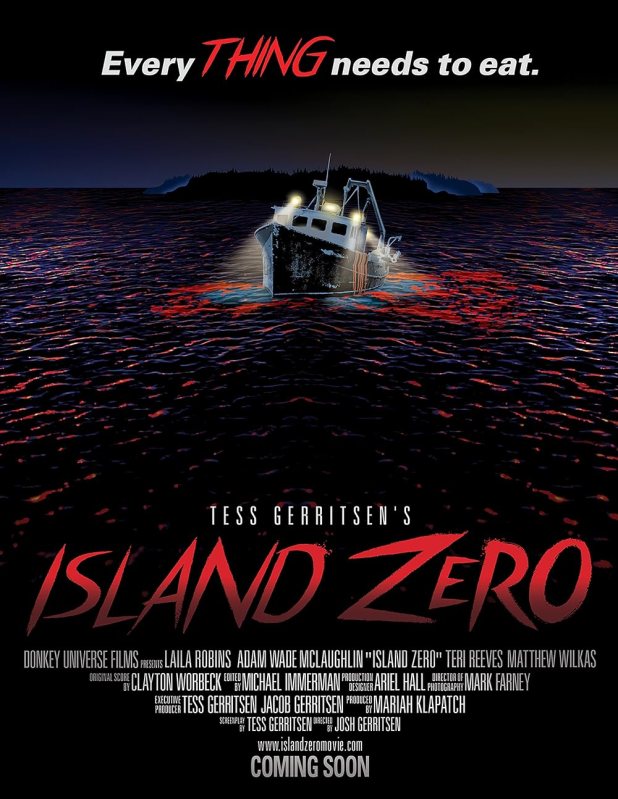
Director Josh Gerritsen delivers a fun, well-crafted creature feature in the independent offering Island Zero, a made-in-Maine movie that is destined to surprise viewers. Though elements of Stephen King, H.P. Lovecraft, and 1950s monster movies are evident, the film builds a dread-filled world all its own.
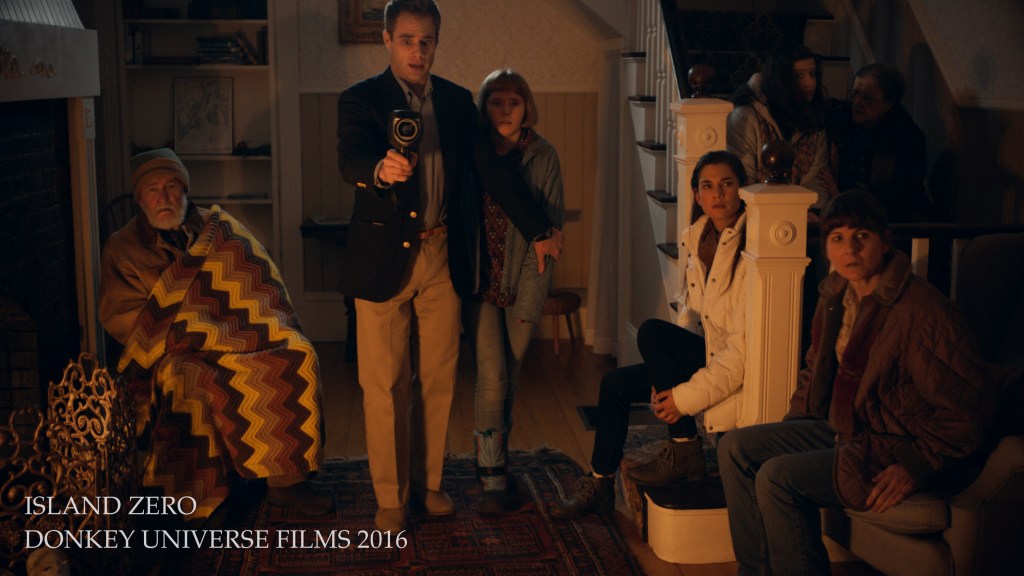
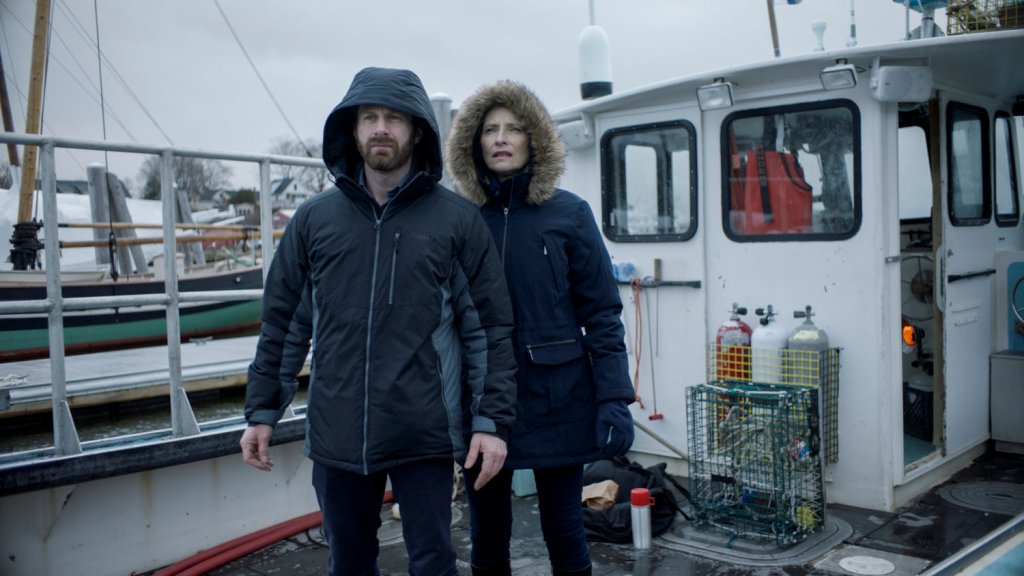
On a remote island about 40 miles off the coast of Maine, a group of locals, seasonal employees, and a visiting author prepare to return to the mainland. Unfortunately, the ferry they are waiting for never arrives, part of a mysterious pattern in which local fishermen and boaters disappear, their vessels sometimes discovered with bloodstains. As the island residents and guests are further cut off from the outside world because of power outages, the mysterious situation escalates as horrendous deaths begin occurring on land, as well.
Working from a screenplay written by his mother Tess Gerritsen, helmer Josh Gerritsen has crafted a suspenseful monster movie that offers characters and relationships in which viewers can become fully invested. The situations, dialogue, and performances feel naturalistic, so that when victims are being stalked and the ugly truth behind the incidents comes to the forefront, viewers have plenty of reason to be invested in characters and whether or not they will see the occurrences through.
The sizeable cast is solid throughout, including Adam Wade McLaughlin as marine biologist Sam, whose obsessive interest in following up on his late wife’s research is causing strife between him and his girlfriend Lucy (Terri Reeves), and Laila Robbins as Maggie, a doctor working temporarily on the island, who suppresses a tragic past that may actually help with the group’s survival. The supporting players give performances that range from spot-on to downright endearing.
Alisha Cratty’s makeup work and Eric Anderson’s special effects are commendable, and while body parts and the red stuff are on fine display in Island Zero, the film focuses more on psychological tension and an ever-building sense of dread. Mark Farney’s cinematography captures the gloomy greys of the isolated island and its surroundings marvelously, complementing the foreboding atmosphere.
One area where monster movie fans might be disappointed is the lack of screen time for Island Zero’s beasties, but I feel that Josh Gerritsen and crew did a clever, admirable job of presenting them considering the film’s budget. What makes the attack scenes work is the investment of the actors, the dynamics between their characters, and a good story.
Island Zero is a taut suspenser that creature-feature fans should find to be a fantastic discovery.
Artist, filmmaker, writer, actor, curator, theatre director, performer, lecturer, founder, conceiver, and artistic director of monochrom, an international art and theory group and film production company, Johannes Grenzfurthner has accomplished so much in his time in this reality. He started as a zine publisher, with monochrom emerging as a zine that used art, technology, and subversion to react to the rising conservatism in cyber-cultures, while also exploring the Austrian punk and antifa movements.
He also developed what he calls “context hacking,” which “…transfers the hackers’ objectives and methods to the network of social relationships in which artistic production occurs, and upon which it is dependent. In a metaphoric sense, these relationships also have a source code. Programs run in them, and our interaction with them is structured by a user interface. When we understand how a space, niche, scene, subculture, or media/political practice functions, we can change it and ‘recode’ it, deconstructing its power relationships and emancipating ourselves from its compulsions and packaging guidelines.”
I discovered his work when I saw his film Masking Threshold at a festival. It was disturbing, but in the best possible way, waking up parts of my mind. I’m beyond excited that we had the chance to have a rambling, insightful conversation, which I’ve edited into the multipart article you’ll find below.
B&S About Movies: I’ve picked something up from watching your films, especially your new film, Solvent. That’s the idea that we won’t always get the future we want or were promised. Movies have led us to believe that we are getting this post-apocalyptic or Orwellian future and that what we have is what we have. You’ve spent a lot of time in the U.S. lately. Did you feel that?
Johannes Grenzfurthner: It’s always been this way, but it feels more obvious now—the growing sense of people being controlled by powerful forces. The shift after recent elections really highlights it.
I visit the U.S. regularly, two or three times a year, and this trip has personal roots as well. My first horror film, Masking Threshold, is set in a small town in Florida, a place I’ve been visiting since my parents bought a condo there in the early ’90s. It’s near Orlando—cheap, warm, with minimal hurricane risk. I’ve spent a lot of time there, and it’s a town called Apopka, which serves as a bedroom community for Orlando workers. That’s the base for my protagonist in Masking Threshold. All the products and settings used in the film come from what I learned over decades of visiting. My first trip to the U.S. was actually around the time RoboCop came out, which is a film I think brilliantly satirizes the ’80s and its political climate. It imagines what would happen if you turned the issues of that time up to 1000%, and, looking around now, it’s clear we’re living in that RoboCop world.
B&S: Other than in RoboCop 3, where he leaves the force and fights for the common man.
Johannes: I don’t think that would ever happen. I think RoboCop would stay within the police and within this structure. (laughs)
B&S: The film’s end is shot right beside where I live. On the commentary track, Nancy Allen says it’s the shittiest town she’s ever been to.
Johannes: I actually like Pittsburgh! It’s a gritty city, but it’s one of the few in the Rust Belt that managed to transition from an industrial economy—steel and coal—to a knowledge-based economy. It’s not doing badly compared to other Rust Belt cities, and the shift to universities, tech companies, and Google’s campus helped a lot. I lived there for about half a year during the coldest, darkest part of the year. I stayed near the Boulevard of the Allies, and it was so cold and bleak. I used a Panera Bread place as my office. Comfortably dystopian! The person I was living with didn’t realize how bad the cold could get. We had this basement bathroom, and she didn’t know the toilet water could freeze. Well, she ended up being stuck with it frozen for three months! (laughs)
B&S: A Pittsburgh potty.
Johannes: I really like Pennsylvania. I was driving through Pennsylvania after a film festival and made my way through Amish country near Lancaster. We ate Thanksgiving dinner at a place that was very German. I was very pleasantly surprised to learn that not only are the Amish very German, but they also have long German names. I’m obsessed with the Amish! I feel like there are not enough Amish horror movies out there. I think a Rumspringa horror film would be interesting.
B&S: There’s like an American term, like once someone’s off the farm, how do you get them back on?
Johannes: They’re scared out of their minds, I think. It’s fascinating reverse psychology. The Amish let their children experience a year of freedom, a kind of “Rumspringa,” where they can do whatever they want—drink, party, try drugs like snorting Coke—and live without rules. But after that taste of the outside world, they often can’t deal with it. The sudden exposure to all that excess and freedom is overwhelming for many. In the U.S., you still feel the weight of that Puritan culture everywhere, especially when it comes to the judgment of vice and the role of morality in everyday life. It’s an ingrained aspect of American society.
Growing up in Austria, I had a different experience. It’s not something I’m particularly proud of, but I had my first alcohol poisoning when I was 14. It wasn’t unusual to get exposed to vices early in life, whether it’s alcohol or tobacco. You grow accustomed to these things at a younger age. It’s part of the culture, especially when it’s treated casually, and it’s viewed as part of growing up. I went through that phase too, but eventually, I moved past it, got it out of my system, and didn’t feel the need to keep pushing those boundaries.
The Amish, though, they get no preparation for that kind of transition. When they go out during their Rumspringa year, they are thrust into this intense and unregulated freedom with no prior experience to help them navigate it. It’s a sudden and overwhelming immersion, and for many, it’s just too much.
Adding to that, the Amish education system is extremely limited. They only go to elementary school, and once they hit a certain age, their education stops because they are taught not to believe in things like evolution, or modern science, which they consider at odds with their faith. This lack of education limits their opportunities if they choose to leave the community. If you leave the Amish, your prospects are somewhat grim—you can work in a gas station or perhaps a simple manual labor job, but there’s not much else beyond that unless you go back and inherit the family farm. It’s a stark choice, really, between staying within the community and working the land or stepping outside and finding yourself without the skills or qualifications to thrive in the modern world.
That said, they are extraordinary craftspeople. They excel at traditional trades, like raising roofs and constructing barns with precision and care. Despite the limits on technology in their everyday lives, they do use cell phones, but only for work and only under specific conditions. They might use them in the barn or the stable, but not in their homes. It’s a funny juxtaposition: they are isolated from the modern world in so many ways, but they also need these tools to make a living and maintain their farms.
Some Amish communities even set up little phone booths outside their homes, where young people can sit and make calls to the outside world. It’s almost as though they’re physically separate from the modern world, but in small ways, they’re allowed these tiny points of contact.
And then there’s this strange detail: Amish kids can use roller skates or inline skates to go to school. But here’s the catch—they can only use them for transportation, not for fun. It’s bizarre, isn’t it? They’re allowed the tool, but the purpose is strictly functional, with no room for recreation. It’s a weirdly strict line they walk between the permissible and the forbidden, one that’s hard to fully understand unless you experience it.
And the issue of buttons… it’s something that’s always fascinated me. The Amish avoid buttons because they associate them with military uniforms. During the time when the Amish community was formed, they were fleeing the German military draft, and buttons were seen as a symbol of the military and the state’s control. Instead of buttons, they use pins to fasten their clothes. It’s a small, subtle rebellion against the imposition of the state, a way to maintain their cultural identity in the face of outside forces that they see as a threat to their way of life.
B&S: You mention the U.S. being puritanical. Now we have younger Film Twitter complaining about sex scenes in movies.
Johnnes: I’ve been teaching at a university for many, many years, until I just got to the point where I said, “I’m done with that shit. I don’t want to do it anymore.” And looking back, I always felt like it should have been the other way around. I felt like I was the one constantly shocking my students with what I was teaching, but shouldn’t it be the students who come up with crazy ideas to shock me? Isn’t that how it should work? The role of the teacher is supposed to be one of guidance, but there’s something unsettling when the younger generation seems to be less willing to push boundaries, when they seem more concerned about protecting their comfort zones. It’s almost as if they’re not challenging societal norms but instead reinforcing them.
And this “new normcore,” as I like to call it, it’s a strange phenomenon we’re witnessing today. There’s this term in Germany and Austria—Biedermeier—and I’m not sure if it’s as commonly known outside of these countries, but it really helps explain what I’m seeing in today’s younger generation. Biedermeier refers to a period that followed the 1848 revolutions, which failed miserably across Europe, particularly in Austria and Germany. These revolutions were largely driven by the bourgeoisie, the rising middle class, who were fed up with the aristocracy and the old imperial system. The revolutions were anti-clerical and anti-imperial to varying degrees, and they were hoping for more civil rights, social reform, and political change.
But, as we know, the revolutions failed. In Austria and Germany, many were executed, and the reforms they sought never materialized. The revolutions didn’t have the same success as the French Revolution, for example, where there was a much clearer dismantling of the old order. In the case of Austria and Germany, the rebellion fizzled, and nothing truly changed. The political and social structures remained in place, and people were crushed for having participated in these movements.
So, after these revolutions failed, there came a period of stagnation, of quiet retreat into the private sphere. For about 15 to 20 years, those who had been part of the revolutions didn’t speak out publicly anymore. Instead of meeting in public spaces to continue their political or philosophical debates, they retreated into their homes. It was as if the state was always lurking, ready to punish them for any sign of dissent, so they began meeting in secret. All the ideas, the discussions, the controversial materials that could have sparked real change were now happening behind closed doors—among friends and intellectuals in their living rooms. This period of silence and hiding, where the public space was stifled and everything became private, was called Biedermeier.
Now, a friend of mine, a historian who’s doing a lot of research on popular culture, has pointed out something interesting. He argues that we are experiencing something similar right now. He believes that we’re living through our own 21st-century version of Biedermeier. The COVID-19 pandemic has altered our social landscape in such profound ways that, just like in the past, we’ve retreated into our homes. Instead of gathering in bars or going to parties, young people today are meeting in private, either in their own homes or virtually. The very concept of social interaction has become fundamentally different. It’s not about the public space or the collective experience anymore; it’s about staying at home, often in isolation, with limited socialization.
Take, for example, the situation with kids today. A friend of mine’s child, who is only nine years old, hardly ever sees his friends in person. But here’s the strange part—he’s constantly connected to them, just not in the traditional way. The moment he gets home from school, he turns on Zoom, and that’s how he stays in touch with his friends. They might not even talk to each other, but they’re still “together,” in a way. They keep the Zoom call going until it’s time to go to bed, and then they say goodnight before closing the connection. It’s like they’re together, but not truly hanging out. It’s as though they’re physically separate but emotionally tethered through this invisible connection, like an umbilical cord that keeps them grounded in each other’s lives.
This digital connection is very different from how we used to think about friendships or relationships. It’s not about shared experiences or hanging out in the traditional sense. It’s almost like a strange social periphery—where you’re in touch, but you’re also distanced in a way that’s hard to explain. It’s not the same as meeting in person, where you can read body language, have spontaneous interactions, and physically share space. Instead, these interactions are more controlled, more structured. They’re mediated by technology, and while they keep people connected, they also create a barrier that can feel isolating in its own right.
In some ways, it’s a bit disturbing. It’s like we’re reverting to a more privatized way of being, where social interactions are happening behind closed doors, shielded from the broader, messier world. And just like the Biedermeier period after the failed revolutions, it feels like the interesting, controversial, or boundary-pushing stuff isn’t happening out in the open anymore. It’s happening in private spaces—whether that’s in a Zoom call or behind closed doors at home—where there’s less risk of confrontation or disruption from the outside world.
It’s all very strange, this shift from public spaces to private spheres, and it makes me wonder if we’re entering a kind of cultural cocoon. Just as in the past, when people were hiding their revolutionary ideas from the state, today it feels like we’re hiding our true selves, our desires, and our pushback against societal norms from the outside world, and confining it to the safety of private, digital spaces. We’re connected, but we’re also more isolated than ever before.
B&S: An umbilical cord. But I worry they won’t have a shared culture like our generation. We’ve just met, but we’ve already had a few cultural touchstones that allowed us to get to know one another.
Johannes: I’ll be 50 in 2025, so we’re from the same generation, and I can really relate. We’ve both witnessed the growth of the internet, from fax machines and bulletin board systems (BBS) to the digital world we live in now. I remember using a 1,200 baud modem when I first went online—slow, screeching connections, but it felt exciting to be part of something new.
monochrom, my art group and film production company, started on one of those early BBSs. We used text-based forums to connect with like-minded people and collaborate on projects. Back then, the net was a niche, raw space for building communities without the social media platforms we have now. It was about exchanging ideas, making real connections, and forming friendships across the globe. Looking back, it’s fascinating how the shift from analog to digital has transformed how we interact. We went from in-person communities to digital ones, yet the core desire for connection has stayed the same. Even with all the changes, the excitement of those early days remains—a time when we were building the internet brick by brick.
B&S: You were tying up your parents’ phone line.
Johannes:Yeah, I was definitely tying up the phone line, but that’s actually how I met Franky Ablinger, with whom I later founded monochrom. Back then, I was looking for others who shared my interest in creating a punk rock fanzine. Most of the other fanzines I found were all about people getting drunk or partying, which, honestly, was boring to me. I wasn’t into that scene. I was a bit of a nerd, really—more into RoboCop, tinkering with electronics, soldering things together, and reading science fiction. I was more of a cyberpunk kind of guy.
Franky and I were from different worlds—he was 23, I was 17—but we clicked instantly. We started collaborating, and two years later, we published our first fanzine together. That’s when monochrom was born. It was a slow process at first, but we were passionate. We didn’t just want to do a fanzine; we wanted to create something unique, something different from what everyone else was doing.
You know, it was so different back then. When you took an analog photo, you’d have to go to the supermarket, drop off the film, and then wait a week for the prints to come back. It was frustratingly slow for someone like me, who was eager to see results right away. So I bought a Polaroid camera. Sure, it was past its prime by then, but the beauty of it was that I could take a picture and see the result instantly. That instant gratification was something I craved.
And then, I was the first in my friend circle to get a laser printer. People would line up to come to my house just to print things out, and my mom, she was so sweet about it. She’d open the door and ask, “Are you coming here to print something?” (laughs) It became this little hub where people could get things done. It was an exciting time. It felt like everything was moving so fast, and we were part of something new, something emerging.
B&S: When you think of zines then — and movies — they again promised a future that we may not have received.
Johannes: Yeah, when I think of zines and movies from that era, it’s true—they promised a future we may not have gotten. As an example: If you look at the current Star Wars franchise, it’s kind of sad. Everything is so reduced, and they’re all forced to adapt or copy this strange retro aesthetic from the mid-70s. It’s like that’s the standard now, that’s how the universe is supposed to be presented. Even though they have things like hyperspace drives and advanced technology, it’s all framed in this pixelated, low-resolution style, like they’re stuck in a 320×200 display. It’s as if they’ve taken this vision of the future, but instead of pushing boundaries or imagining something new, they’re just regurgitating what came before, hoping that nostalgia will carry it. It’s a weird, backward-looking future. In many ways, it’s almost as if the promise of what we could achieve, in terms of technological or artistic progress, just hasn’t materialized.
B & S: If Jodorowsky’s Dune had been made, would we have a different lexicon for what science fiction is? It’s always weird to me that Star Wars is the tent pole it all became.
Johannes: Well, there could definitely be worse tentpoles, I’ll give Star Wars that. The first two, at least, were really good. They have a kind of grittiness that was unique for its time—almost like a space Western. They’re rough around the edges, not all shiny and polished like the typical futuristic visions of the past. In that sense, they kind of broke the mold. That grittiness informed other films too, like Alien and Blade Runner. These films depict a future that’s not all utopian and sleek but rather run-down, where the idealism of earlier sci-fi is replaced with something more realistic and less optimistic. The sci-fi of the 50s and 60s, by contrast, was all about sleek, shiny futures—this belief that we were heading towards some sort of utopia. Even films like Logan’s Run, with their dark undertones, still showed a future where everything was glossy and perfect. But Star Wars marked a shift. It’s like the future wasn’t necessarily bright or utopian anymore; it was gritty, flawed, and full of imperfections.
The problem is when retro aesthetics, like those from Star Wars, define the boundaries of what we can imagine for the future. We’re stuck in a nostalgia loop, unable to project truly original visions. Mainstream sci-fi has become a stale copy of a copy of a feeling, rather than a space for innovation.
In the next chapter, we’ll go deeper into Johannes’ films while still making the time to have this interview go anywhere and everywhere.
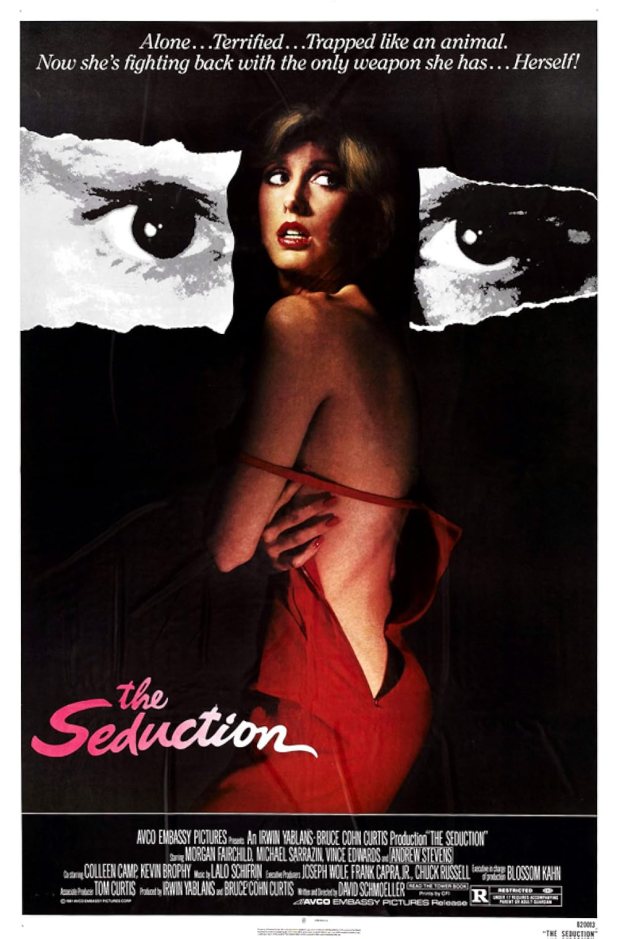
The Seduction is director and writer David Schmoeller’s follow-up to Tourist Trap. While that film exists in its own strange universe, where Chuck Connors just so happens to have psychic powers, this is based in the real—well, not always—world of Los Angeles. According to star Morgan Fairchild, Schmoeller was inspired by a story about a viewer stalking a TV reporter.
Jamie Douglas (Fairchild) has finally broken through and become an anchor on the local nightly news. Things are good — people like her — and she has a boyfriend named Brandon (Michael Sarrazin). The problems start when she begins to receive calls, letters and gifts from a man named Derek (Andrew Stevens, preparing to own the 1980s erotic thriller genre but not before he’d go from being a psychosexual deviant to chasing one with Bronson in 10 to Midnight). Soon, he also bothers her friend Robin (Colleen Camp) and drops by work to bring chocolates; Jamie, if anything, is too friendly and gently turns him down.
After he doesn’t stop calling her, Jamie learns that Brandon- a photographer- lives next door. He walks right in and starts taking photos of her. Her boyfriend beats him bloody, and when they talk to a cop named Maxwell (Vince Edwards), they learn that there’s not much they can do. As for Derek, he’s already bothering Robin, demanding that she talk to Jamie for him.
A doctor tells her that Derek is infatuated but to a degree that makes him psychotic. Would you say, mental enough to hide in the closet and go one-handed while she takes a bath? Oh Derek, can’t you see that a model named Julie (Wendy Smith Howard) is in love with you? Why did you tell her that you’re engaged?
Jamie starts to realize that Derek could be the Sweetheart Killer, a serial murderer that she’s been reporting on. He goes so far as to change her teleprompter while she’s on the air, leading to her having a breakdown in front of the entire city. Brandon tries to comfort her in the hot tub, but he’s soon killed by Derek mid-coitus; as our killer buries him in his front yard, the cops put Jamie on hold. On hold! Who is working there, Father Tom from Amityville II?
This is when Jamie goes full-final girl, blasting at Derek with a shotgun and starting to stalk him right back, repeatedly calling him and telling him how bad she wants him. As he comes back to the house to attack her, he runs into Julie, who tearfully announces that she knows that Jamie doesn’t really love him. He blows right past her — he has murder and sexual assault to do — before she turns the tables and becomes aggressive with him, begging him to have sex with her, revealing his impotence. Angered beyond all hope, he attacks her, just in time for Julie to announce that she’s seen Lipstick and wasn’t that part cool where the rapist got shotgunned?
This has a decent horror pedigree, as it’s the third film produced by Irwin Yablans (Halloween) and Bruce Cohn Curtis, who also made Roller Boogie and Hell Night.
The Seduction is a scuzzy film; I have no complaints. Yet it still has a theme song, “Love’s Hiding Place,” sung by Dionne Warwick! This song was written by the film’s composer, Lalo Schifrin. He may have written the Mission: Impossible theme but got no respect from the credit crew on this, as they spelled his last name incorrectly.
It left me wondering how so many early 80s American Giallo movies have the only nude appearances by major actresses. I’m looking at you, Blind Date, with Kirstie Alley going bare. I was shocked to see multiple nude scenes by Fairchild in this with nobody double being used. Bonus points for the script, which has Colleen Camp’s character declare, “Art, fart!”
Double word score for Lucan star Kevin Brophy appearing, Tom DeSimone’s brother Bob being in the cast as a shutterbug, and Fairchild’s sister Cathryn Hartt as a teleprompter person.
Triple overall score for this being the last Avco Embassy Film.
IMDB BS footnote for this one: “Apparently, veteran actress Bette Davis really liked this movie, and after viewing it on cable television, she allegedly sent the movie’s star, Morgan Fairchild, a congratulatory letter complimenting her work on the film.”
EDITOR’S NOTE: Cinematic Void will be playing this on Friday, Jan. 31 at 7:30 PM at the Little Theater in Rochester, NY (tickets here). For more information, visit Cinematic Void.
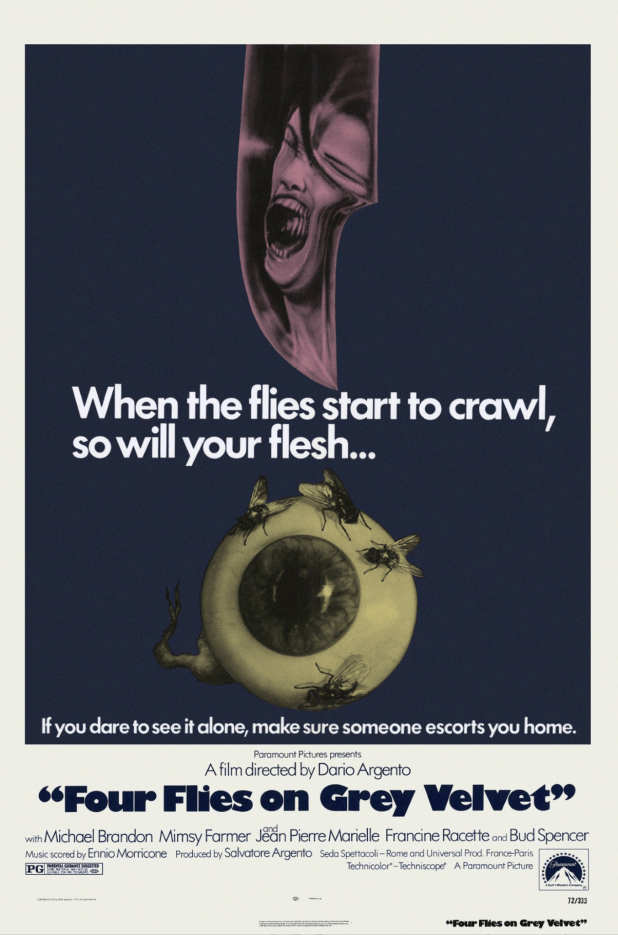
After The Bird with the Crystal Plumageand The Cat o’Nine Tails, Argento had one more movie left in his “Animal Trilogy.” Luigi Cozzi (Starcrash) would both write and assistant direct the film and the results are…interesting. It’s a lot funnier than his other giallo and was considered his swan song to the genre until his movie The Five Days failed at the box office.
Rock drummer Roberto Tobias is being stalked and as he finally catches up to his pursuer, the man pulls a knife. A struggle ensues and Roberto accidentally stabs the man while another masked figure laughs and takes photographs.
The next day, Roberto reads about the man’s death — Carlo Marosi — and gets a letter with a photograph of him murdering the man. He begins having reoccurring dreams that he’s being decapitated. Even worse, he wakes up to a masked man attacking him, who tells him that he won’t kill him because he isn’t finished with him.
Roberto’s wife Nina (Mimsy Farmer, Body Count, Autopsy) returns home and he confesses the murder to her and tells her that he can’t go to the police to stop the harassment. He does turn to his artistic friend “God” Godfrey (Bambino from They Call Me Trinity) and a con artist named the Professor (Oreste Lionello, The Case of the Bloody Iris and the Italian voice for Woody Allen) for help.
Whoever is behind Roberto’s stalking and harassment is a troubled soul who had a horrific childhood and spent some time in an insane asylum. Roberto’s maid Amelia knows who it is, but she pays for it with her life, as the killer uses a straight razor to slice her apart.
Later that night, Dalia (Francine Racette, Donald Sutherland’s wife, so well done Donald) comes to stay with Nina and Roberto, despite him wanting her not to be there. It also turns out that our hero never really killed Carlo, who has been working with his blackmailer, who dispatches him with razor wire.
Roberto then hires Arrosio, a flamboyant investigator who has never solved a case, but hopes that this is the one that he will solve. Amelia’s murder has been discovered and the cops are on the case, so Nina says that she’s leaving town, feeling unsafe in her own house.
It turns out that Dalia has always loved Roberto, so they have sex. As you do. Look, it’s a giallo. Other strange things are afoot, like Roberto’s cat getting kidnapped and beheaded, Nina getting an inheritance, strange photos of Nina and Dalia’s family and more nightmares.
That’s when giallo science intrudes: the killer was in a mental institution called Villa Rapidi, where they were considered dangerous until their father died. This knowledge — and discovering the killer’s identity and finally cracking a case — leads to Arrosio’s death.
Dalia then notices that Roberto and someone in a photo with his wife look quite similar. Just as she puts it all together, she’s stabbed and killed.
Ready for more giallo science? The police perform an optographical test that takes a photo of the retina to show the last image that Dalia saw before she died. Even Argento — a man who made a movie about a girl who can physically speak to insects and becomes friends with an orangutan — thought this idea was stupid until Carlo Rambaldi showed him how the special effect would look.
The last image that Dalia saw? Four flies on grey velvet. No one knows what this means.
Roberto waits for the killer to come for him but then Nina arrives. He tries to get her to leave because the killer is coming when he notices her necklace: a fly. As it swings, he sees it: four flies. In true giallo fashion, the killer is someone who we obviously didn’t ever consider.
A fight breaks out and she repeatedly shoots her husband as she explains how she was placed in the asylum by her abusive stepfather — who raised her as a man — and was only cured when the man died. When she met Roberto, what she felt wasn’t love, but the madness that her stepfather caused within her. She finally would get her revenge by using Roberto as the replacement for the man she couldn’t get back at.
Nina runs away as Godfrey arrives to save Roberto, but she rams the back of a truck. She’s decapitated as the car explodes.
Deep Purple almost did this movie (several members of the Beatles were considered for the role of Roberto), but their schedule didn’t allow it to happen. Ennio Morricone, who worked with Argento on The Bird with the Crystal Plumage worked on the film, but had a huge argument with the director about the score. Goblin would come in and work with Argento for the first time here. Morricone and Argento finally reconciled and worked together on The Stendhal Syndrome.
This film wasn’t commercially released for the home market until 2009, other than an incredibly hard-to-find French VHS version. That’s because the rights to this film in America are owned by Paramount Pictures, which had chosen not to release it. Shameless did put out a UK release that is all region a few years back.
This is one strange giallo. The ending car crash took twelve cars to get right and combined with the music in the scene, it’s really unsettling. This is also one of the first movies to use high speed cameras to shoot bullet time, years before Hong Kong movies and The Matrix. I love the killer’s rant at the end of the film, particularly because big chunks of it are still in Italian! This might be hard for you to find, but it’s worth tracking down.
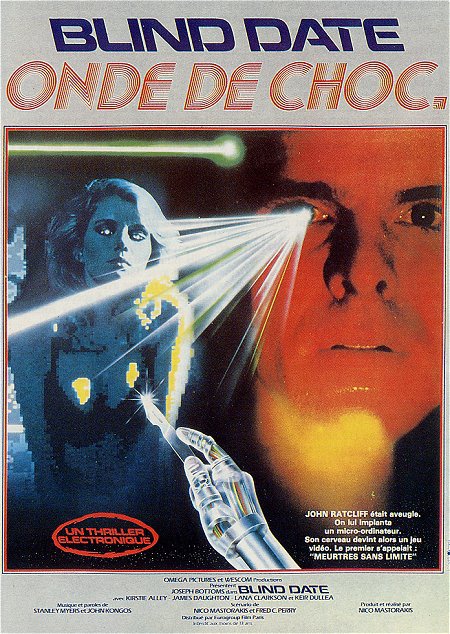
“The ultimate high tech thriller,” this Nico Mastorakis-directed movie — he also wrote it with his regular script partner Fred Perry — succeeds in getting one part of the Giallo genre right: its science is absolute bullshit.
Jonathan Ratcliff (Joseph Bottoms) is an ad exec working in Greece who should be happy with his life and his current flame, Claire (Kirstie Alley). Yet one day, he thinks he sees Marien (the doomed in real-life Lana Clarkson), a woman from the past who went insane after being assaulted by multiple men. He drops everything and starts to stalk her, even after discovering her name is Rachel. And then, the movie is flipped around when Jonathan loses his sight. Helpless to protect Rachel from a knife-wielding point of view, Giallo’s gloved psychosexual murderer — the Scalpel Killer — runs wild through the dark nights of Athens; he has Dr. Steiger (Keir Dullea) create a medical miracle: a small unit that allows his eyes to see Atari 5200-style graphics of the real world. If he uses it too much, he’ll fry his brain. The killer might get him before that.
The Scalpel Killer makes his way through several victims, starting with Antigone Amanitou, who goes from her shower directly to being drawn on and operated without the benefit of any painkillers. His second victim is a pre-Star Trek: TNG Marina Sirtis, back in the days when she was stuck being the victim of Michael Winner in Death Wish 3 and The XXX Lady. There’s some wonderful stalking POV here, making this feel closer to Italy than Greece. The Scalpel Killer changes his M.O., taking out a married couple, played by Kathy Hill and Louis Sheldon, before finding one more single lady in the tub, played by Noelle Simpson.
While Ratcliff may not be the most compelling hero, the film introduces some unique elements. The concept of headphones that transform sound into visuals is fascinating, as is the scene where Ratcliff accidentally unplugs the headphones, rendering himself blind and in danger as he’s being stalked on the edge of a building.
Masorakis knows how to make these video store-era movies. Sure, they can get overloaded and too long, but he also hires gorgeous actresses, somehow convinces them to disrobe (this is Alley’s only nude scene) and also has some genuinely good moments amongst the silliness, such as when the killer sits at Rachel’s bedside and silently watches her sleep. If it had more gloss and fashion, it’d be close to the Italian model mid-80s Giallo that I am obsessed with, but for what this is, I’m satisfied. Ladies, I wish you had a more interesting protagonist, but this definitely matches the genre’s need for enticing victims.
The credits promised a sequel that never arrived, Run, Stumble and Fall.
Editor’s note: Cinematic Void will be playing this movie on January 6 at 7:00 p.m. at the Music Box Theater in Chicago, IL. You can get tickets here. It is also playing January 18 at 7:30 PM ET at The Sie Film Center in Denver and will be hosted by Theresa Mercado of Scream Screen. You can get tickets here. For more information, visit Cinematic Void.
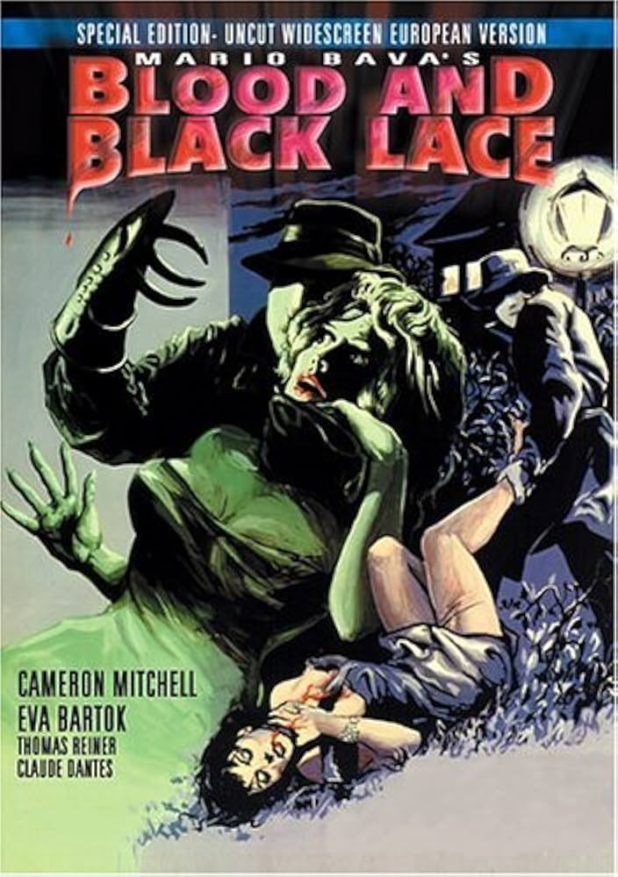
There’s no way to calculate the influence of Blood and Black Lace. It takes the giallo from where Bava started with The Girl Who Knew Too Much and adds what was missing: high fashion, shocking gore and plenty of sex. The results are dizzying; it’s as if Bava’s move from black and white to color has pushed his camera lens to the brink of insanity.
Isabella is an untouchably gorgeous model, pure perfection on human legs. But that doesn’t save her as she walks through the grounds of the fashion house and is brutally murdered by a killer in a white mask.
Police Inspector Sylvester takes the case and interviews Max Morlan (Cameron Mitchell!), who co-manages the salon with his recently widowed lover, Countess Christina Como. Soon, our police hero discovers that the fashion house is a den of sin, what with all the corruption, sex, blackmail, drugs and abortions going on under its roof. Isabella was murdered because she had kept a diary of all the infractions against God that happened inside these four walls.
Nicole finds the diary and tells the police she will deliver it, but it’s stolen by Peggy. As she arrives at the antique store her boyfriend Frank owns, the killer appears and kills her with a spiked glove to the face. The killing is shocking. Brutal. And definitely the forerunner to the slasher genre.
Even after the cops arrest everyone in the fashion house, the murders keep on piling up. Peggy claims that she burned the diary, so the killer burns her face until she dies. Greta is smothered to death. And Tilde is killed in the bathtub, then her wrists are slit open, spraying red into the water and marking her as a suicide.
So who is it? Come on. You’re going to have to watch it for yourself.
The success of Black Sunday and Black Sabbath had allowed Bava to do anything he wanted. His producers thought this movie would be a Krimi film, like an Edgar Wallace adaption. Instead, Bava gave more importance to the killings than the detective work, emphasizing sex, violence and horror more than any film in this form had quite before.
Blood and Black Lace was a failure in Italy and only a minor success in West Germany, the home of Edgar Wallace. And in America, AIP passed on the film due to its combination of sex and brutality. Instead, it was released by the Woolner Brothers with a new animated opening.
Today, Blood and Black Lace is seen as a forerunner of body-count murder movies and the excesses of later Giallo films. It’s a classic film, filled with Bava’s camera wizardry and love of color. There is everything perfect about movies.
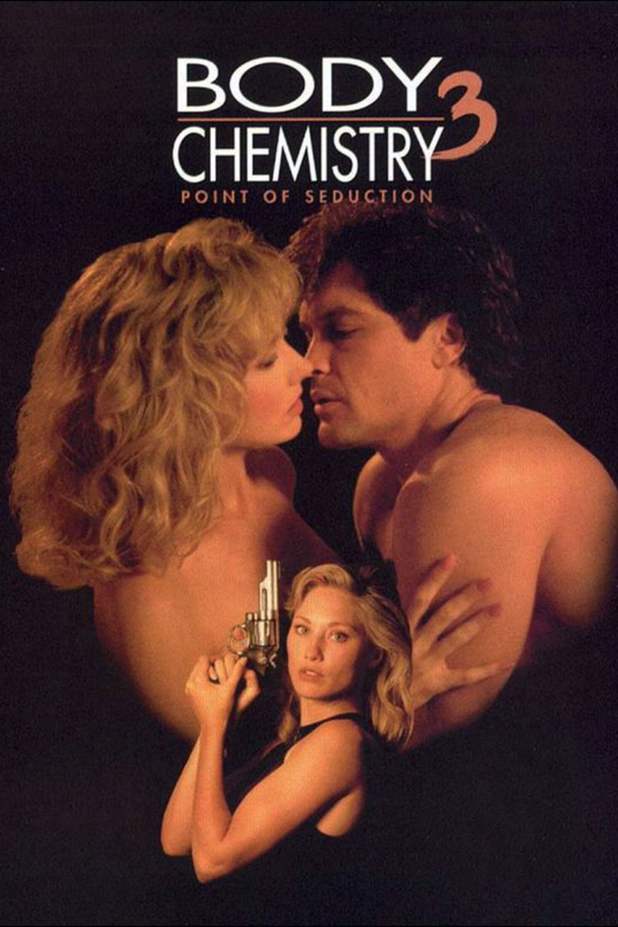
Jackson Barr is back to write the third in the Body Chemistry series, along with director Jim Wynorski, who seems perfect to make this movie. There’s also a new actress playing sexpert Dr. Claire Archer, as Shari Shattuck (star of two Cannon films, The Naked Cage and Number One With a Bullet, as well as video store classics like Arena, Uninvited and Death Spa) takes the reins — literally — from Lisa Pescia.
The not-so-good doctor has come back to Los Angeles, where Freddie Summers (Chick Vennera) is trying to make the movie of her life, along with studio boss Bob Sibley (Robert Forster) and producer Alan Clay (Andrew Stevens). Clay wanted his wife, Beth (Morgan Fairchild), to play the role of Claire, but there’s a problem. The sexologist knows Summers from her past — he was a character in the first movie — and only agrees to make the film if Clay has an affair with her.
It’s nice that Andrew got his mother Stella a part, even if this is softcore pornography. She doesn’t get nude, but Delia Sheppard and Becky LeBeau sure do. And hey, this starts with Robert Forester physically attacking two nude sex workers in a frenzy, a fact that is forgotten after it happens, kind of like the real Hollywood.
All Alan wanted to do was make nature films. Now he’s making exploitation movies and stuck between two gorgeous blondes. That doesn’t sound like the worst life. Despite having a successful online show — in 1994! — and being a best-selling writer, Dr. Claire Archer still needs to wrap men around her wizard’s sleeve and use people because she’s evil. Yes, a woman in charge of her sexuality, who knows how to use it to get ahead and has become popular because of it, has to be a harridan.
I prefer Pescia in the role, but this has enough for me to enjoy, including the filmmakers grabbing a crew member to play Morton Downer Jr. in a flashback.
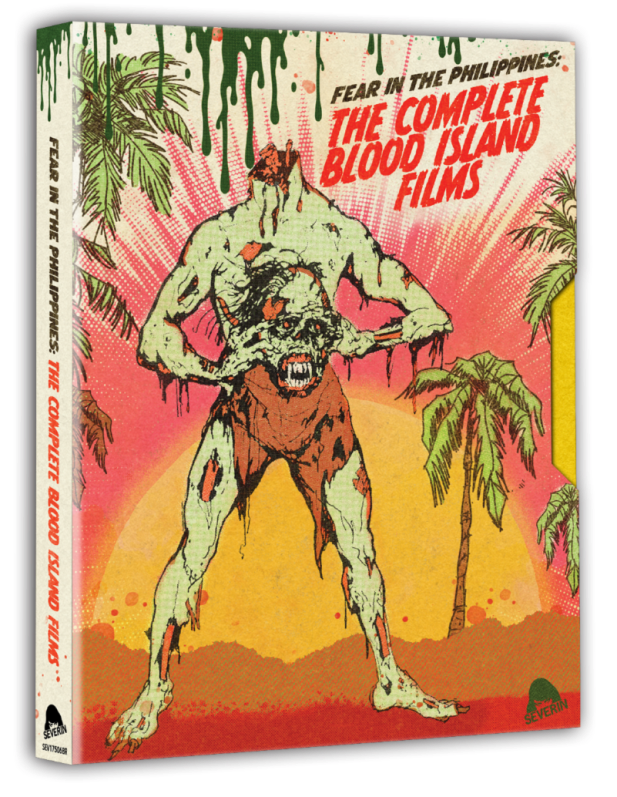
From 1959 to 1971, Filipino filmmakers Eddie Romero and Gerry de León —along with Hemisphere Pictures marketing consultant Samuel M. Sherman—booked flights for drive-in audiences to Blood Island. This dark den of zombies, medical experiments, wanton women and terror would last four movies that fans of exploitation films have obsessed over ever since.
I’ve loved these movies ever since I first discovered them when Severin’s first re-releases came out a few years ago. I was so lucky to see many of them at the drive-in.
Now, Severin is re-releasing all of them – scanned uncut in 4K with improved color and audio plus over 8 combined hours of special features – in a new box set that you can get directly from the Severin Films Webstore.
Terror Is a Man (1959): Call it Blood Creature, Creature from Blood Island, The Gory Creatures, Island of Terror, Gore Creature, or its most well-known title, Terror Is a Man, but what you should really call it is the first of the Blood Island films. These movies, produced by Eddie Romero and Kane W. Lynn, include Brides of Blood, The Mad Doctor of Blood Island and Beast of Blood. You can also consider The Blood Drinkers a Blood Island movie.
This movie was in theaters for nearly ten years—until 1969, when distributor Sam Sherman re-released it as Blood Creature with a warning bell that alerted the audience to impending gore.
William Fitzgerald (Richard Derr, who was almost The Shadow in a TV pilot that was turned into a movie called The Invisible Avenger) is the lone survivor of a ship that has crashed on Blood Island. Also, there are Dr. Girard (Francis Lederer, whose Simi Hills home is considered a landmark residence), his frustrated wife Frances (Greta Thyssen, who was in three of the Three Stooges shorts and Cottonpickin’ Chickenpickers) and his assistant Walter Perrera.
Much like The Island of Dr. Moreau, Girard is making half-man, half-animals like the panther he’s been experimenting on that tends to attack villagers. Of course, the doctor’s wife falls in love with the protagonist, and the beast gets loose and kills all sorts of people, including his creator. But hey — that mummy-like cat-eyed fiend seems to survive at the end, as a small island boy sends him away on a rowboat.
Gorgeous natives. Strong men. Crazy doctors. Werecats in bandages. Blood Island. Indeed, this one has it all.
The Severin release includes extras such as interviews with Samuel M. Sherman, co-director Eddie Romero, Pete Tombs (co-author of Of Immoral Tales), and critic Mark Holcomb, a trailer, and a poster and still gallery.
Brides of Blood (1968): This movie, which was originally known as Island of Living Horror, was rereleased with Count Dracula’s Great Love. The former was retitled Cemetery Girls and the latter was renamed Grave Desires.
Much like all of these Filipino horror films, it’s completely bonkers.
The tropics are the place for three Americans to find, well, complete insanity.
Dr. Paul Henderson, a nuclear scientist investigating nuclear bomb tests, is played by Kent Taylor. He was once a major star, playing the title role in fifty-eight Boston Blackie movies. His name is also half the inspiration for Superman’s alter ego (the other star is Clark Gable).
He’s married to the gorgeous but always ready-to-cuckold Carla, Beverly Powers. Beverly was once the highest-paid exotic dancer in the world before becoming an actress and starring with Elvis in Speedway, Kissin’ Cousins and Viva Las Vegas. She also pretty much played herself in Breakfast at Tiffany’s. After all that acting, she became a minister with The Living Ministry in Maui, Hawaii.
Then there’s Jim Farrell, a young Peace Corps member played by John Ashley. Ashley was an AIP star who appeared in Dragstrip Girl and sang his song “Let Yourself Go Go Go” in Zero Hour! He was also a regular in their beach movies, appearing at Beach Party, Muscle Beach Party, Bikini Beach, Beach Blanket Bingo, and How to Stuff a Wild Bikini.
After living in Oklahoma for a while, Ashley produced these movies with Hemisphere Pictures, living in the Philippines for part of the year and helping to create these little bits of madness.
Our protagonists soon learn that Blood Island is cursed. It’s now a place that has been irradiated by nuclear fallout from those bomb tests, with vines that attack people and butterflies that bite. There’s also a beast in the jungle that tears women apart to get off because, hey, why not?
Carla learns that the beast is one of the villagers, Esteban, but it comes at the price of her own life. She’s an early “sex and people who want sex must be destroyed” casualty decades before this type of destruction de rigeur.
Between carnivorous trees eating Carla’s remains and the movie ending in a vast orgy, this is probably unlike any other film you’ve seen before. You can say that about every single film from this studio.
The press book for the movie suggested that all female theatergoers would get the chance to become Brides of Blood and receive a free engagement ring. There was even the idea of giving away fake marriage certificates, but legal concerns prevented that.
Extras on the Severin release include commentary from Samuel M. Sherman; interviews with co-director Eddie Romero, Sherman and Beverly Powers; the alternate Brides of Blood Island title sequence and a Jungle Fury title card; a teaser; a trailer and a poster and still gallery.
Mad Doctor of Blood Island (1969): We’re back ten years after we first got to Blood Island. Eddie Romero and Gerardo de Leon have returned in the directing chair, and this time, they’ve brought even more blood, beasts and boobs than they did in their last effort, Brides of Blood.
This film was syndicated to TV as Tomb of the Living Dead and is also known as The Mad Doctor of Crimson Island because, in some states, like Rhode Island, the word “blood” wasn’t allowed in movie advertising.
After Brides of Blood, John Ashley discovered that the film was so well-received that distributors asked him to make more. He moved to the Philippines and got to work.
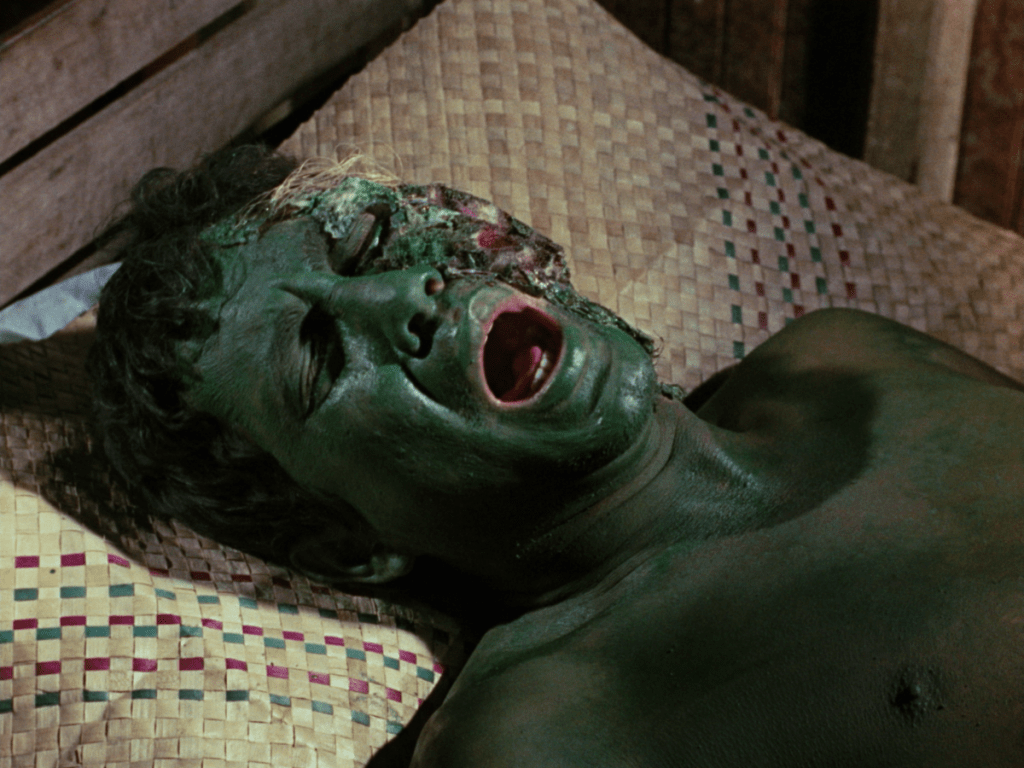
The film starts with an initiation, as at some theaters, you are given a packet of green liquid and asked to recite the oath of green blood so that you can watch the unnatural green-blooded ones without fear of contamination. Years later, Sam Sherman said that he came up with this idea, and he got incredibly sick when he drank one of the packets. The film’s other gimmick is rapidly zoomed in and out, like Fulci on speed, whenever a monster appears. That was to cover the harmful special effects, but it made plenty of theatergoers sick. Man — destructive green liquid and frequent pans and zooms. It’s as if they wanted kids to puke!
A woman runs naked through a jungle before a green-skinned monster kills her. Yes, that’s how you start a movie!
Then we meet our heroes, like pathologist Dr. Bill Foster (Ashley), Sheila Willard (Angelique Pettyjohn, who was famously in the Star Trek episode “The Gamesters of Triskelion” and early 80s hardcore films like Titillation, Stalag 69 and Body Talk) and Carlos Lopez (Ronaldo Valdez, who would become the first Filipino Kentucky Fried Chicken Colonel).
The ship’s captain, who got them there, tells them how the island is cursed and how its people bleed green blood. Everything falls apart — Sheila’s dad, who she hoped to take home, is now a drunk. And Carlos’ mother refuses to leave, even after the mysterious death of her husband.
It turns out that Dr. Lorca has been experimenting on the natives, who just want to be healthy. Instead, they’re becoming green beasts that murder everything they can. Look out, everyone! I hope you’ve drunk your green blood before this all began!
Angelique Pettyjohn claimed that the love scene with John Ashley was not simulated. Seeing how Severin finally found the uncut film, and I haven’t seen any penetration, I think she’s full of it. But who am I to doubt her?
To make this even better, the American trailer of this is narrated by Brother Theodore!
Extras on the Severin release include commentary by Nathaniel Thompson and Howard S. Berger and a second commentary with Samuel M. Sherman; interviews with Pete Tombs, Mark Holcomb and Eddie Romero; a trailer and a poster and still gallery.
Beast of Blood (1970): All good things must end. This is the final of the Blood Island films and the last movie that Eddie Romero would make for Hemisphere Pictures.
As Dr. Bill Foster (John Ashley), Sheila Willard, her father and Carlos Lopez escape from Blood Island, this movie’s Beast gets on board and goes buck wild, killing everyone he can and blowing up the ship. He survives and heads back to the jungle while Dr. Foster spends months recovering. Everyone he knew or loved is now dead.
Of course, he’s going back to Blood Island.
Dr. Lorca (Eddie Garcia), who apparently died at the end of the last movie, is still alive but horribly scarred. He controls the beast, which can live without its head and even talk and control its own body from afar.
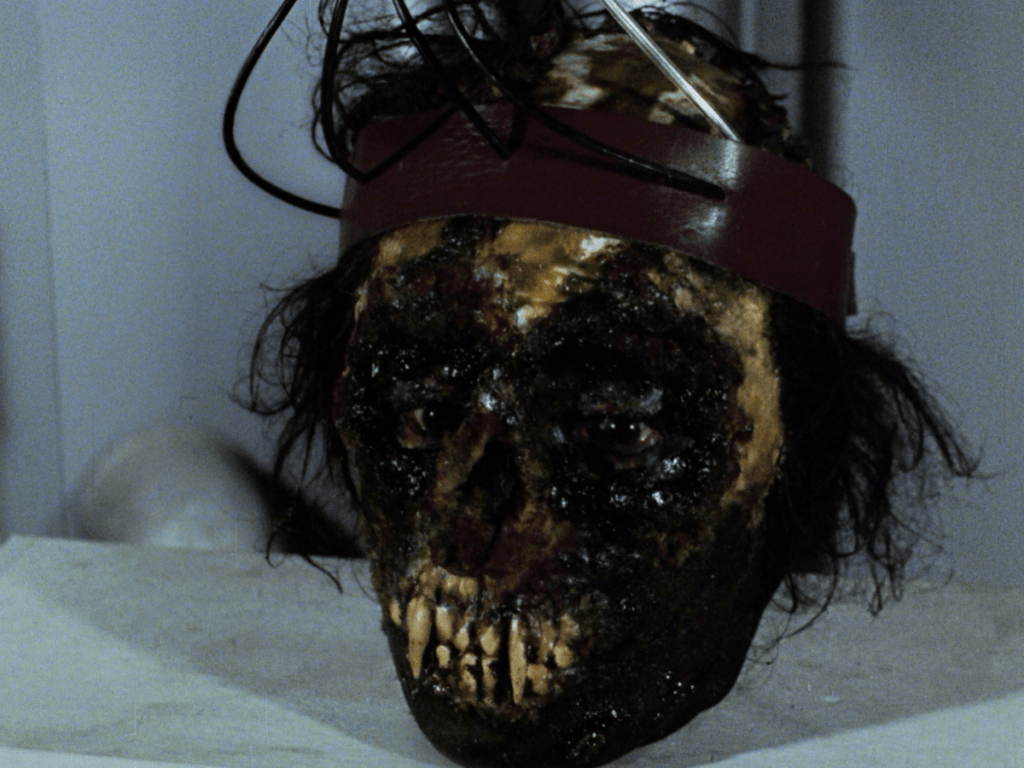
This is less of a narrative movie for me and more a collection of magical images, as bodies squirt blood and beasts have swampy faces and make strange noises while their heads rot inside beakers and lab equipment.
To promote this one, which played a double bill with Curse of the Vampires, the producers printed counterfeit 10 bills that folded in half, with the other side revealing a poster for the film. Those fake sawbucks were scattered all around the neighborhoods where this movie played.
Extras on the Severin release include commentary by Samuel M. Sherman, interviews with Celeste Yarnall and Eddie Garcia; a Super 8 digest version; a trailer; a radio spot and a poster and a still gallery.
Yes, I did watch Body Chemistry 3 and then Body Chemistry 2, while never seeing the first movie, in which Dr. Claire Archer (Lisa Pescia) teaches a man named Tom (Marc Singer) what it’s like to go from The Beastmaster to The Beastbottom. Sure, she’s cosplaying as Alex Forrest, but this is a cheap Concorde cash-in, and you may already know how much I love those.
Pescia returned as the good doctor for the second film and became a radio show host in a small southwestern town. She’s here to replace shock psychologist jock Dr. Edwards (John Landis), who fights with every caller. Her boss? Big Chuck (Morton Downey Jr.). And her real goal? I want to get with former LAPD officer Dan Pearson (Gregory Harrison, former Dr. Gonzo Gates on Trapper John M.D.) despite him reconnecting with high school love Brenda (Robin Riker, Alligator). He’s keeping a secret that he’s been kicked off the most violent police force in the world because he was too brutal, as well as the fact that he was sexually assaulted as a child — or maybe he just saw his dad treating a woman like he was Rocco Siffredi — which makes him crave rough sex as an adult. Are you coming to an erotic thriller for an authentic examination of how people are imprinted with their sexual desires? Or are you here to see bare breasts? Good news. American Emmanuelle Monique Gabrielle shows up and shows out.
For the ladies? Clint Howard as a criminal and Jeremy Piven as a small-town police officer.
Director Adam Simon almost made the first film but chose Brain Dead instead. He also directed Carnosaur and created the TV show Salem. The script was written by Jack Canson (who used the same stage name, Jackson Barr, to write the first movie, Subspecies, Trancers II, Bad Channels and Mandroid) and Christopher Wooden (Kiss Me a Killer, Dinosaur Island).
Why should you spend time watching this? Former “Zip it!” talk show host Downey Jr. is handcuffed, forced to wear a wig and forcibly taken against the glass of a radio studio until he has a heart attack. I didn’t see that one coming.





 B&S About Movies
You must be logged in to post a comment.