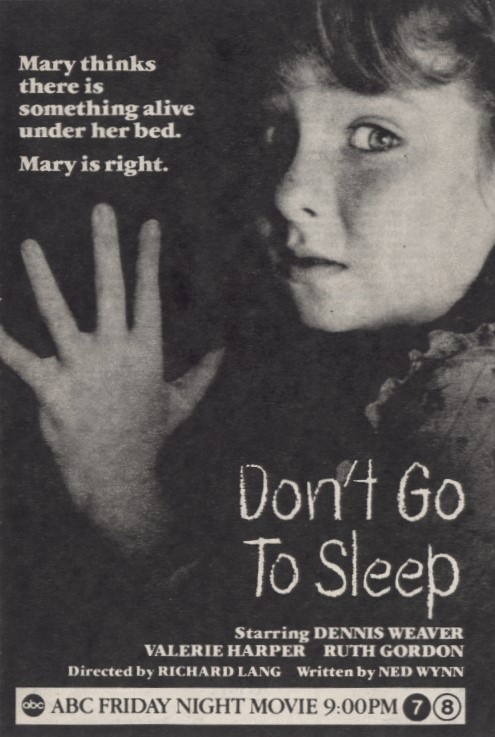
This Aaron Spelling produced TV movie originally aired on ABC on December 10, 1982. It’s a star-studded affair, with Valerie Harper, Dennis Weaver and Ruth Gordon in the main roles. It’s also a great example of when TV movies ruled the world.
Plus, you get Oliver Robins as one of the kids. He’s the only surviving child actor from the Poltergeistfilms.
Phillip and Laura (Weaver and Harper) are the parents of Kevin and Mary, but they once had a daughter named Jennifer who died in a car accident. They move back north after that tragedy and the loss of Phillip’s job to move in with Grandmother Bernice (Gordon), who gets along with no one.
Mary begins hearing the voice of her dead sister under her bed, which soon catches on fire. Even when her brother tries to be nice to her, Mary reacts with violence. She hides under her bed and starts chanting “Kill me” when her dead sister shows up and offers to take care of things.
Soon, everyone dies. Grandma gets frightened by Kevin’s iguana and has a heart attack. Kevin falls off the roof. Phillip is electrocuted in the bathtub.
Then, we learn why. Kevin and Mary disliked their sister, thinking she was always treated better than they were. So they did an innocent prank and tied her shoes together, but after the car accident, this kept her from being able to get out of the car.
This is a fun TV movie ghost story, told well and acted decently. Director Richard Lang was all over 1970’s TV, directing the pilot of Fantasy Island and the movie Night Cries.
Sadly, like so many TV movies, it’s not available on DVD or streaming.
Little Ghost
2 oz. Malibu rum
1 oz. vanilla vodka
2 oz. coconut cream
1 oz. half and half
4 oz. lemon-lime soda
Shake up rum, vodka, cream and half and half with ice in a shaker until fully mixed.
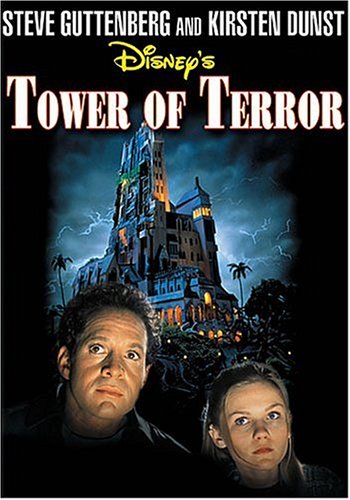
Donald James “D.J.” MacHale is a writer, director and executive producer that is probably best known for the show Are You Afraid of the Dark? and for creating two different young adult book series, Pendragon and Morpheus Road. He would write and direct this Disney Channel exploration of another Disney attraction.
This movie paved the way for the success of Pirates of the Carribean, which also turned theme park rides into movies, as well as Mission to Mars, The Haunted Mansion and The Country Bears.
It’s surprisingly way better — and more emotional — than I thought it would be when we purchased the DVD.
Buzzy Crocker (Steve Guttenberg) was fired from the Los Angeles Banner when a story turned out to be fake. His ex-girlfriend Jill (Nia Peebles) still works there and wants to try to get him back, but now he writes for The National Inquisitor with the help of his niece Anna (Kristen Dunst).
An old woman named Abigail Gregory (Amzie Strickland) tells Buzzy that on Halloween 1939, she saw the incident that forever closed the Hollywood Tower Hotel and caused the disappearance of child star Sally Shine (Lindsay Ridgeway from Boy Meets World), singer Carolyn Crosson (Melora Hardin, who was both Jan on The Office and Monk’s deceased wife), nanny Emeline Partridge, actor Gilbert London and bellhop Dewey Todd (John Franklin, Isaac from Children of the Cornand Cousin Itt in the 1990’s version of The Addams Family), who were all on their way to a party at the Tip Top Club.
To discover what really happened, Buzzy and Anna get the help of Chris “Q” Todd, the hotel caretaker and grandson of the aforementioned bellhop Dewey. If the truth is revealed, Chris will inherit the hotel if an explanation.
There are twists, turns and no small amount of tears and emotion, way more than you would think would be possible in a Disney Channel movie.
Most of the tower footage in the film was shot at the actual Tower of Terror attraction at Disney’s Hollywood Studios.
MacHale would bring back Dewey Todd in his Pendragon books. He appears in The Never War and in The Pilgrims of Rayne, it’s revealed that he disappeared in the Hollywood Tower Hotel.
The Park Is Mine is a Canadian-American drama based on the 1981 novel of the same name by Stephen Peters and directed by Steven Hilliard Stern. The film focuses on Vietnam War veteran, Mitch (Tommy Lee Jones), who takes forceful control of Central Park to remember those who served and died in the Vietnam War and draw attention to veterans’ issues. As this wonderful book review by Grady Hendrix points out (beware, plot spoilers): You’ll see elements of other “urban blight” dramas, such as Death Wish (1974), Taxi Driver (1976), The Warriors (1979), Al Pacino’s Crusing (1980), and First Blood (1982), which this was obviously made to cash-in on the runaway success of 1985’s Rambo: First Blood Part II.
But make no mistake: ThePark Is Mine is not some cheapjack Rambo rip-off of the Cirio H. Santiago variety (we love you, Cirio!). This Tommy Lee Jones-led film is, quite frankly, one of the best TV Movie of the ’70s and ’80s ever produced, ranking alongside Richard Crenna’s The Case of the Hillside Strangler (Sam review, R.D Francis review) and Michael Gross and David Soul’s In the Line of Duty: The F.B.I Murders.
The soft and hard cover versions of the best-selling source novel.
In addition to featuring New Zealand-born and Canadian-bred singer Gale Garnett (best known to U.S AM radio listeners for her self-penned, 1964 Grammy-winning folk hit, “We’ll Sing in the Sunshine“), the film also features mainstay Canadian actors Lawrence Dane (1976’s The Clown Murders, top-billing with Hal Holbrook in 1977’s Rituals, 1981’s Scanners and Happy Birthday to Me, 1983’s Of Unknown Origin, and 1987’s Rolling Vengeance), as the ulterior motive-driven Commissioner Keller, and Peter Dvorksy (Harlin the cable tech in 1983’s Videodrome and Dardis in The Dead Zone), as Dix, the sniveling Deputy Mayor. Co-starring with Jones are Yaphet Kotto (Alien) and fellow Canux-actor Helen Shaver (the redneck-trucker romp High-Ballin’ and The Amityville Horror).
Mitch attends the funeral of his former war buddy who jumped from the roof of the veteran’s hospital. Returning to his motel room (his wife, played by Gale Garnett, recently kicked him out of their apartment), Mitch discovers that prior to his friend’s suicide, he mailed him a letter containing a key. The key gives Mitch access to a makeshift ammunition dump in a warehouse, then to another ammo dump in an abandoned sewer grate: his friend spent the last year planning to take over Central Park to raise awareness of Veterans’ issues; however, realizing his war-related cancer was too far advanced and he’d be unable to carry out the attack, he killed himself and “recruited” Mitch for the job.
Mitch accepts and an all Rambo-hell breaks loose in New York. If Travis Bickle had access to explosives and the intelligence to wire-up Central Park—and Tommy Lee’s character had driven a cab—you’d have a Michael Bay-styled action film. If Mitch had taken over a bank, you’d have Dog Day Afternoon (1975). One could also say that if John Carpenter directed, you’d have a pseudo-sequel to Assault on Precinct 13 (1976).
Shaver is the persistent, pain-in-the-ass reporter (think Patricia Clarkson’s Samantha Walker from the 1988 Dirty Harry sequel, The Dead Pool) who sneaks into the park for the “exclusive,” regardless of Mitch’s “message,” while Yaphet Kotto’s Eubanks is the sympathetic, ex-war vet S.W.A.T commander who wants to bring Mitch in before two mercenaries sanctioned by the more-concerned-about his-career deputy mayor go into the park to kill Mitch.
Courtesy of Stern’s understated hand, what we do get: a real, humanized version of Rambo that, unlike Rambo, sells its introspective story regarding the plight of America’s Vietnam veterans—and other “voiceless,” forgotten Americans. It’s all about Stern intelligently toning down the Rambo’d cartoon violence and emphasizing the political angle of the story. Thus, we get a Stern-directed story that’s as good as any of those previously mentioned, New York-set “urban blight” tales.
The film was released in 1985 on VHS by Key Video. It had originally been released on DVD overseas, but not in the United States, outside of grey market VHS and DVD imprints. However, on December 13, 2016, Kino Lorber released the first official Blu-ray Disc and DVD. They also released Jones’s Black Moon Rising and The Executioner’s Song, and Stern’s Death Wish-inspired hicksploitation trucker romp, Rolling Vengeance. Prior to entering the world of film restoration and distribution as part of the Kino International family, and their The Criterion Collection series serving film aficionados, Lorber was part of 20th Century Fox Studios. As Fox Lorber Features, the studio shingle released their debut film, A Matter of Degrees, in 1990.
One of — if not the most — popular of our “Exploring” features.
Other works in Stern’s superior TV movie oeuvre (on U.S TV and cable; in Canada, they ran as theatrical features) are the James Brolin-starring The Ambush Murders (1982), the pre-stardom Tom Hanks-starring Mazes and Monsters (1982), and the Ned Beatty-starring (Ed and His Dead Mother) Hostage Flight (1982).
The Park Is Mine is the sixteenth soundtrack album released by Tangerine Dream and their forty-second album overall. As with The Keep, its release came years later after its recording, not seeing release until 1991. All of the tracks were composed by Edgar Froese, Christoph Franke, and Johannes Schmoelling.
As a You Tube-commenter pointed out regarding the soundtrack: “. . . One of the best ‘80s soundtracks I’ve ever heard. These guys will always be the kings of electronic music.”
Indeed.
You can watch the full film on You Tube. As the lead commenter on the video’s comment section declares: “I remember watching this on HBO (and we all do!) back in the ’80s. This has got to be Tommy Lee Jones’s best acting role.”
In addition, Sam and I share a mutual love of Tangerine Dream. Be sure to surf on over to our collaborative reviews of Tangerine Dream’s Top 10 scores with “Exploring: Ten Tangerine Dream Film Soundtracks.” The full soundtrack upload for The Park is Mine comes and goes so, hopefully, this You Tube link still works.
We sadly lost actor Peter Dvorsky in March 2019. Steven Hilliard Stern passed away in June of last year.
About the Author: You can read the music and film reviews of R.D Francis on Medium and learn more about his work on Facebook. He also writes for B&S Movies.
DAY 28. A LORELESS YARN: One based on a true story.
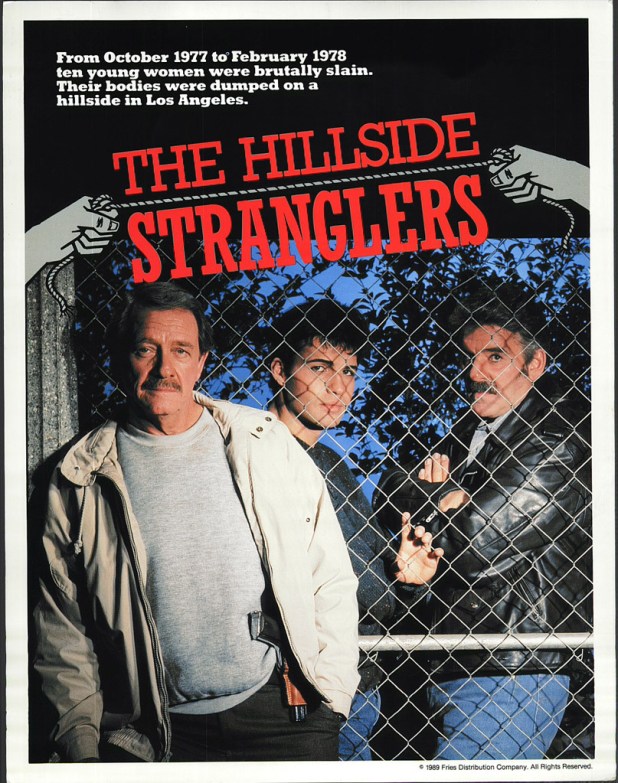
Based on Two of a Kind: The Hillside Stranglers by Darcy O’Brien, this was the first Hillside Strangler movie to ever be made. It stars Dennis Fraina, acting against type as Angelo Buono and Billy Zane in an ill-looking hairstyle that one suspects is a wig as Kenneth Bianchi.
It was written and directed by Steve Gethers, who pretty much made message movies throughout the 70’s and 80’s, like Billy: Portrait of a Street Kid and A Circle of Children.
Opposing the duo are the heroic men and women of the LAPD, foremost amongst the Sgt. Bob Grogan, played by Richard Crenna. I must confess that every time Grogan did something smooth within this movie or, well, really anything, I’d yell, “Crenna!” Watching movies with me would probably drive you insane.
It originally aired April 2, 1989 on NBC and probably upset a fair share of people. The principals are pretty wonderful, plus seeing James Tolkan from Masters of the Universe and Back to the Future is always a welcome thing.
Prior to the advent of cable television and direct-to-video movies, there were the TV Movies of the ‘70s and ‘80s produced by the “Big Three” television networks: ABC, CBS, and NBC. And we love those TV Movies.
However, in spite of those gallant efforts, there’s that one lost TV Movie we missed, such as these two productions from rock ‘n’ roll television guru Don Kirshner. Lone before ersatz-rockers Black Roses, Sammy Curr, Billy Eye Harper and Headmistress, Holy Moses, Sacrifyx, and Tritonz possessed our VCRs with their rock ‘n’ horror tales, there was the forgotten, horrific chronicles of ex-Jeff Beck Group vocalist Kim Milford and his real-life band, Moon, on our TV sets.
After his success with TV’s The Monkees and The Archies, Don Kirshner began working as the creative consultant and executive producer of ABC-TV’s late-night answer to NBC’s better known The Midnight Special. In Concert began airing with two monthly shows in November and December of 1972. The shows not only doubled the ratings of The Dick Cavett Show that previously held the time slot, it also beat NBC’s The Tonight Show Starring Johnny Carson in some markets. At that point, In Concert became a bi-weekly series beginning in January of 1973.
Ever-evolving and innovating, Kirshner left In Concert to start his own syndicated program, Don Kirshner’s Rock Concert, which premiered on U.S. television on September 27, 1973. The final In Concert episode aired in 1981, as MTV, a nascent music video network—created by Michael Nesmith, one of Kirshner’s Monkees—was on the rise and Kirshner’s vision was rendered obsolete.
However, even though Kirshner surrendered In Concert to make his own way in the late-night rock television world with Rock Concert, he kept his production deal with ABC. Based on his past success for the network, ABC provided Kirshner with an opportunity to produce a pair of music-oriented movies.
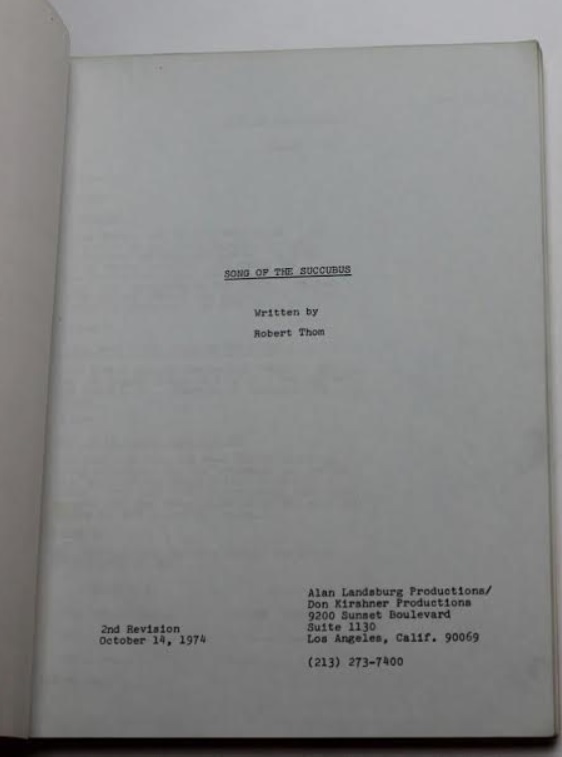
Those two films—highly-coveted and impossible-to-find rock flicks starring Kim Milford (of the sci-fi romps Laserblast and Wired to Kill )—are 1975’s Song of the Succubus and, its sequel, Rock-a-Die Baby.
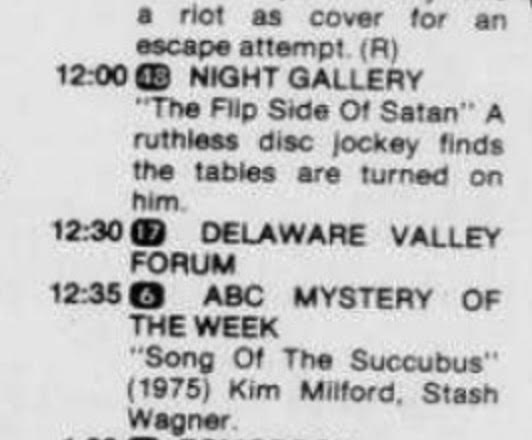
Both films aired as part of ABC’s The Wild World of Mystery, a 90-minute late night mystery and suspense anthology series that ran on the network from 1973 to 1978 and aired in the overnights at 12:30 AM—after the rock program Kirshner started: In Concert. Both films, as did all of ABC’s films, also replayed as part of their Mystery of the Week and Wild World of Entertainment movie series, which aired in the weekday overnights into the late seventies (as shown in the image from a Wednesday, July 6, 1977, television listing for Song of the Succubus airing at 12:30 AM). (NBC’s website currently streams the September 1971 Night Gallery episode, “The Flipside of Satan.” Wow. Watch it. It’s a hoot-and-a-half.)
Courtesy of NBC.com.
Song of the Succubus, the first part of the slasher-horror saga of Moon, was concerned with the ghost of a Victorian-era musician stalking the band, which they accidentally conjured through the rearrangement and recording of an old, discovered song. Its sequel, Rock-a-Die Baby, concerns the psychic premonitions of one of Moon’s fans—as the members of the band begin to die at the hands of an unseen force.
Other than that, there’s not much known about the through-line between the two films or any additional plot details. Former teen fans of the films recall Moon was on the road running away from the evil they conjured or they’re chasing the evil released through a song’s incantation. Others recall it was an “evil version” of the late Seventies U.S. television series Highway to Heaven—with demons instead of angels and the Victorian-era musician was a heavy-metal Jack the Ripper. Others recall it was a rock ‘n’ roll, live action version of the animated Saturday morning series, Scooby-Doo, Where are You?, as a rock band investigates evil.
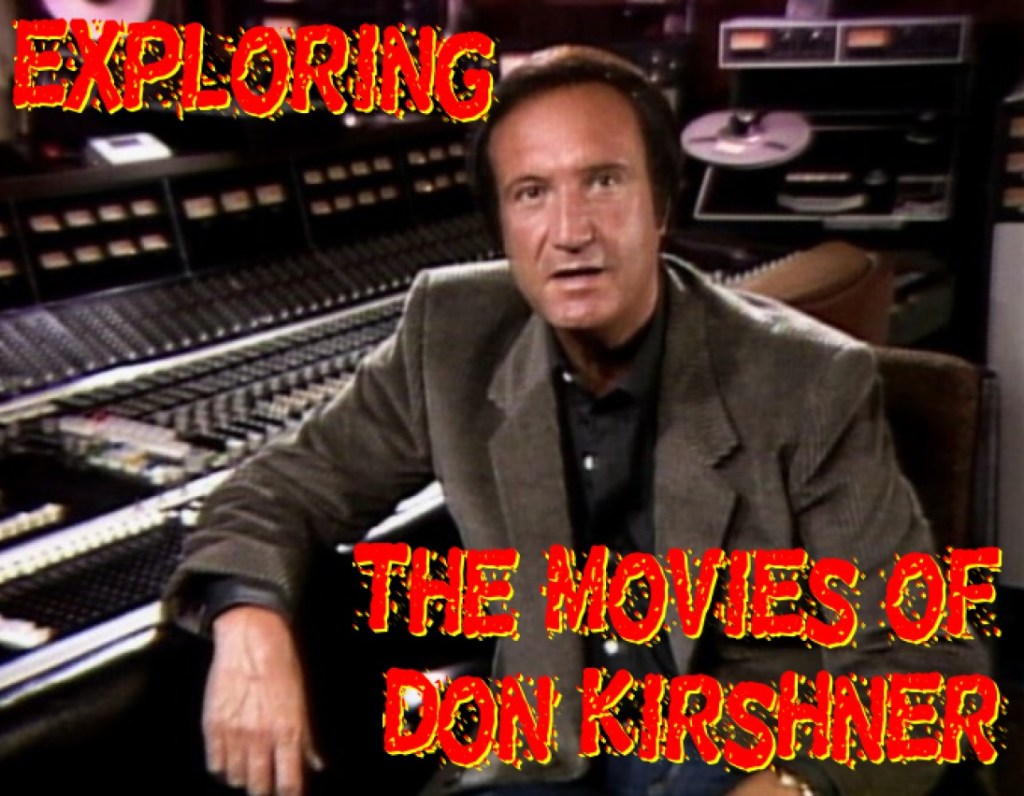
Learn more about the movies of Don Kirshner with our “Exploring” featurette.
According to the IMDb, the last airing of Song of the Succubus occurred through a 1990 Australian broadcast—and the only known surviving print of the film is held at the U.S Library of Congress; the LOC has no copy of Rock-a-Die Baby. Meanwhile, Rock-a-Die Baby was reissued in the U.K and Europe as a TV movie (possibly theatrical) under the title Night of the Full Moon. Sadly, in the midst of the home video boom of ‘80s, with shelves hungry for product, neither of these rock films was reissued as VHS titles. (But someone taped a post-VCR airing of the films, as noted by the two performance film clips included with this review.)
Brooke Adams (of the horror films Dead Zone, Invasion of the Body Snatchers, and Shock Waves) makes her leading-lady debut as two characters in Song of the Succubus: musician Olive Deems, and Gloria Chambers, the “lost love” embodiment of the Victorian musician-antagonist slasher conjured by Moon. Succubus and Rock-a-Die Baby both star Richard Schaal (Kurt Vonnegut’s Slaughterhouse Five) as the band’s manager, along with Kim Milford (Chief Druid and Warlock) and his band Moon, using their real names as character names: Gaille Heidemann (Bewitching Witch; vocals), Stash Wagner (Mystic Magician; bass), Mike Baird (Demon Drummer), and David Foster (Cadaver of the Keyboard). The unseen member of the group, was Don Kirshner’s go-to producer, Jeff Barry.
While not remembered as such, the membership of Moon, aka Full Moon, is, in fact, a “supergroup,” one of the many that proliferated during the 1970s (either formed by Kim Milford or ad-hoc and piecemealed by Kirsher and Barry). At the time, Kim — fresh from his stage work on the rock musicals (see our review of Jonathan Livingstone Seagull that delves into the genre) Hair and The Rocky Horror Show — was briefly the lead singer of the Jeff Beck Group (those live recording come and go from You Tube). Gaille Heidemann was a studio musician working for film studios who dubbed Patty Duke’s vocals in Valley of the Dolls. Stash Wagner came from the Little Feat precursor, Fraternity of Man, a band noted for the pro-pot song, “Don’t Bogart That Joint,” which appeared on the soundtrack to Easy Rider. Mike Baird was not a member of any notable group at the time, but after the demise of Moon, he joined ’70s popsters Daryl Hall and John Oates for their fourth album, appearing on that band’s first Top 40 and Top Ten hit, “Sarah Smile”. David Foster — who appears with the band in performance but does not act in the film — came from the Canadian band Skylark, which had a Top Ten hit in 1973 with “Wildflower”. Jeff Barry’s extensive, previous resume includes work with the Monkees and the Archies (Milford wrote material for the latter) and dates back to his earliest hits “Do Wah Diddy Diddy” and “Da Doo Ron Ron” under the tutelage of Phil Spector.
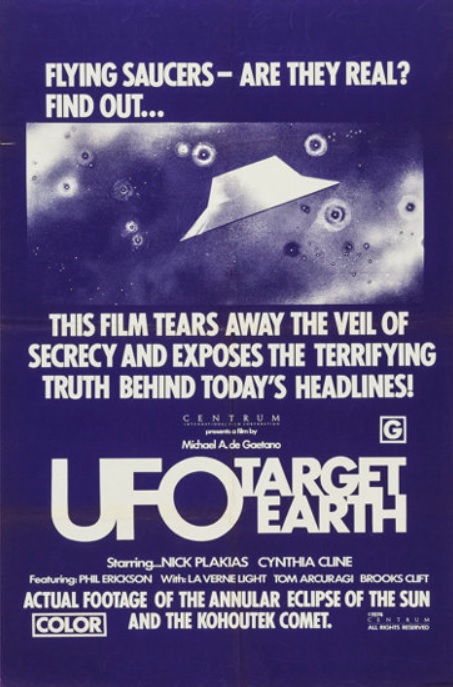
Prior to Moon, Milford formed the bands Eclipse (whose music appeared in 1974’s UFO: Target Earth), with members of Polydor and Capitol recording artists Ten Wheel Drive, then 7th Heaven with Trace Harrill, formerly with Terry Reid (know you Cheap Trick history) and the solo band of ex-Byrds’ Gene Clark. Heidemann became a much-sought studio vocalist and voice artist for animated and video game projects; when Mary-Kate and Ashley Olsen transitioned into music, she wrote the material. Stash Wagner sessioned, wrote music and toured with the likes of Blues Image, Chicago, Linda Ronstadt, Frank Zappa, and Warren Zevon. Baird’s session, membership and touring gigs led to work with Rick Springfield, Richard Marx, and Journey, just to name a few. David Foster’s later songwriting and production work led to a shelf filled with 16 Grammys by way of albums for The Tubes, Earth Wind and Fire, and Chicago. Foster and Baird also worked together in the band Airplay, which provided “After the Love is Gone” to Earth, Wind and Fire; fans of ’80s AOR (think Night Ranger) will remember the band for their song, “Stranded“.
So, will these two lost TV movies of the ‘70s ever see a release on DVD or Blu-ray through a specialty retro-imprint, like Arrow Video?
A company by the name of SOFA Entertainment & Historical Films recently acquired the rights to ABC-TV’s Rock Concert from the late-Kirshner’s estate for a box-set release on DVD. Hopefully, SOFA purchased not only Rock Concert, but Kirshner’s entire TV program catalog, which included the non-rock telefilms: The Savage Bees (1976; film), The Night They Took Miss Beautiful (1977; film), Terror Out of the Sky (1978; film), and The Triangle Factory Fire Scandal (1979; film). Each appeared as theatrical features in overseas markets, as well as the U.S VHS home-video market and low-powered UHF television station replays. Kirshner made his first theatrical feature film proper with the Olivia Newton-John-starring Toomorrow (1970).
Why Kirshner never rolled out Song of the Succubus and Rock-a-Die Baby beyond their initial TV showings, as with his other films, is anyone’s guess. A legal, educated guess is that it’s an ancillary rights issue regarding Kim Milford’s song catalog, or possibly a legal snafu with the estate of the late of Kiss, Billy Squire, and Billy Idol manager Bill Aucoin, who also managed Kim’s solo career and as a member of the Jeff Beck Group.
Both films are truly, it seems, lost forever. We did, however, discover You clips of Kim performing in the films HEREand HERE. You can listen to two song from the films, below.
If you would like to know more about the music and acting career of Kim Milford—overflowing with pictures and music regarding his work on stage, screen, television, and record—visit his career retrospective on Medium: “Kim Milford: Rocky Horror, Jeff Beck, Corvettes and Lasers.” More of Kim’s music can be found with this You Tubeplaylist.
Do you need more rock ‘n’ roll horror? Then check out B&S Movies’ tribute “No False Metal Movies.” All ye hail the Prince of Darkness, for he rocketh. Oh, and don’t forget our “Rock ‘n’ Roll Week I” and “Rock ‘n’ Roll Week II” tribute weeks, overflowing with rock flicks.
We’ve since reviewed Kim’s second film score: his band Eclipse provides “Between the Ceiling and the Sky” as the theme song to this 1974 film.
Update, December 2021: Stash Wagner, a member of Moon who starred in the film, uploaded full copies of both films — Song of the Succubus and Rock-a-Die Baby — to his You Tube account.
* Screenplay image courtesy of The Movie Wizard/eBay.
About the Author:You can read the music and film reviews of R.D Francis on Medium and B&S Movies, and learn more about his work on Facebook.
Day 27 Special Presentations: Made for TV movies from the ‘70s, classic era of the bronze screen
The writing is so fast n’ furious at B&S Movies for “Slasher Month” and the “Scarecrow Challenge” that Sam and I had a communication snafu and we both ended up writing reviews for this fantastic TV movie. He reviews it for “Day 28: A Loreless Yarn: One based on a true story.” It’s a slasher. It’s a TV Movie. It’s based on a true story. And it’s a friggin’ Richard Crenna movie . . . all rolled into one!
My three-for-one review of Gene Roddenberry’s post-Star Trek series pilots Genesis II, Planet Earth, and Strange New World (1973 to 1975) would have been perfect for “Scarecrow Challenge Day 27,” but I reviewed them for B&S Movies’ “Post-Apocalypse Month” (see our September “Dustbin” roundups Part 1 and Part 2). If you’re a frequent visitor to B&S Movies, you know we’re always jonesin’ for a fix of the “Big Three” over-the-air U.S television network movies from the good ‘ol days before the VHS and cable television boom. B&S Movies’ love for the now network-eschewed format is obsessive to the point that it took three tribute weeks: “Lost TV Week,” “Week of Made for TV Movies,” and “Sons of Made for TV Movies Week,” to contain it.
I’ve chosen a movie for Day 27 that was on my shortlist for “Day 17 Evil in Broad Daylight” (I reviewed 1988’s In the Line of Duty: The F.B.I Murders with David Soul and Michael Gross as serial-killing bank robbers) that, in my opinion, is one of the finest TV movies ever made. And it stars Richard Crenna. And, as with the entire In the Line of Duties series, this was also made by NBC-TV, the undisputed kings of TV Movies. So, double bonus. Now, let’s get on with the show.
As with ex-Army Rangers Bill Matix and Mike Platt terrorizing the streets of Miami, Florida in 1986, with their eventual murder of two F.B.I agents, Angelo Buono (Dennis Farina of TV’s Law and Order) and Kenneth Bianchi (Billy Zane of The Titanic and The Phantom) were blatant, cruel, and just didn’t give a fuck as they cut a swath through Los Angeles between October 1977 to February 1978 with the murders of 10 women. It wasn’t until a disagreement between the two cousins that led Bianchi to go out on his own, that their spree began to unravel.
While I’ve watched this telefilm every time it pops up on TV, the same can’t be said for the two tried-to-be-grittier direct-to-video attempts trying to improve upon what the Richard Crenna-version did to perfection.
It was the tutelage of C. Thomas Howell (The Outsiders) and Nicholas Turturro (brother of John, the current on-the-air U.S TV series Chicago P.D) starring as Bianchi and Buono that led me to rent The Hillside Strangler (2004). Regardless of its claims of being “a more accurate portrayal,” the stellar quality of Crenna’s 1989 TV movie left me feeling this Howell-fronted version worked as a fiction piece plotted around two (dark) historical figures.
The second attempt was the even lower-budgeted Rampage: The Hillside Strangler Murders (2006). It starred the very competent and always deservingly working character actors Tomas Arana (The Dark Knight Rises) and Clifton Collins (Pacific Rim, HBO’s Westworld) as Buono and Bianchi. I’ve seen the DVDs tossed in the $5.00 bins at Walmart, and it’s never been on cable, as far as I can tell; so I’ve never seen it. However, based on its 4.2/10 IMDb rating, it sounds like Rampage’s use of the ‘ol killer-tells-his-story-in-flashback-to-a-prison-psychologist (female, natch) didn’t work out so well.
The scribe behind the Crenna-version: Steve Gethers, writing in television since the mid-‘50s for The Kraft Theatre and The DuPont (Network) variety shows, along with a Jackie Kennedy TV movie and LaVar Burton’s (Star Trek: TNG) Billy: Portrait of a Street Kid (1977) amid his long list of credits.
Gethers intelligently took the high road from the flinching reality depicted in true crime novelist Darcy’ O Brien’s best-selling non-fiction document of the case, Two of a Kind: The Hillside Stranglers (1985), and decided to go for the psychological and not the shocking. It is Gethers character-subjective approach to the material that allows us to see inside the minds of the killers instead of being objectively-bludgeoned to numbness watching their deeds—and that makes Buono and Bianchi ‘s deeds all that more shocking. And it’s accomplished without any blood or actual murder or rape shown.
Also replacing the bloodshed: In addition to seeing into the minds of the killers, we see the affect the killers not only have on the families of the victims, but the personal affect it has on Crenna’s Sgt. Bob Grogan (and that’s a personal touch you don’t see in the big-studio cop vs. serial killer romps Cobra and D-Tox). And that’s what this 1989 telefilm version has that the 2004 and the 2006 direct-to-videos do not: Showing us the “humanity” of those affected by the “inhumanity” of others is what heightens the fear and dread.
Do you need more Richard Crenna TV movies? In addition to his work as Sgt. Bob Grogan, he portrayed Frank Janek in a series of films: Double Take (1985), Internal Affairs (1988), Murder in Black and White (1990), Murder Times Seven (1990), Terror on Track 9 (1992), The Forget Me Not Murders (1994), and Janek: The Silent Betrayal (1994). You can watch The Case of the Hillside Stranglers, which looks like they’re the post-VHS DVD rips issued by MGM, on You Tube HERE and HERE.
Don’t be duped. It’s a completely different movie.Oh, why, Maria? Why?
About the Author: You can read the music and film reviews of R.D Francis on Medium and learn more about his work on Facebook. He also writes for B&S Movies.
DAY 27. SPECIAL PRESENTATIONS: Made for TV movies from the ’70s, classic era of the bronze screen.
John Carpenter was hired by Warner Bros in 1976 to write a script based on the true story of a woman who had been spied on inside her Chicago apartment. The script, High Rise, ended up become a TV movie that Caroenter was also given the chance to direct.
“I thought it was a really, really good idea,” said Carpenter. “So I had my first experience with television. And my first union experience. I got into the Director’s Guild through that. I had a real good time on it, I have to tell you. I met my wife.”
This eighteen-day shoot allowed Carpenter to test many of the techniques that he’d use weeks later when he started work on Halloween.
Originally airing on November 29, 1978 on NBC, this movie concerns Leigh Michaels (Lauren Hutton), who has moved to Los Angeles to escape New York City. As she begins her new career at television startion KJHC with new friend Sophie (Barbeau) and a relationship with college professor Paul Winkless (David Birney, who went on to be quite the reader of audio books).
However, she’s soon dealing with phone calls and strange gifts from Excursions Unlimited. She calls the police, but there’s nothing she can do except wait for the voyeur to come to her.
Fans ofHalloween take note: Charlie Cyphers shows up as a cop.
Shout! Factory released this on blu ray last year, replacing the four movie multipack that I used to watch this on, where it sat alongside Eyes of a Stranger, Deadly Friend and The Hand.
Day 17 Evil in Broad Daylight: Scary stories aren’t just for the night time
Tracy Keenan Wynn is the gold standard in screenwriting and teleplays. Look at that resume: The Glass House (1972; TV’s Alan Alda, Vic Morrow of Message from Space and Clu Gulager of Hunter’s Blood), the platinum standard of football—and prison movies—The Longest Yard (1974; Burt Reynolds), The Quest (1976; Kurt Russell and Tim Matheson), The Drowning Pool (1975; Paul Newman), and the Peter Yates-directed ocean adventure, The Deep (1977).
And Wynn wrote a film that—if it had been shot and released as a theatrical feature film in the U.S (it was a theatrical in Europe), it would have swept the floors with Oscar nods (even wins) for David Soul, Michael Gross, and Ronnie Cox. So, do yourself a favor: beg, borrow and steal to watch director Dick Lowry kicking ass with the greatest series of continuing-storyline franchises in TV history. There isn’t a theatrical franchise that holds a candle:
In the Line of Duty: A Cop for the Killing (1990)
In the Line of Duty: Manhunt in the Dakotas (1991)
In the Line of Duty: Street War (1992)
In the Line of Duty: Ambush in Waco (1993)
In the Line of Duty: The Price of Vengeance (1994)
In the Line of Duty: Hunt for Justice (1995)
In the Line of Duty: Blaze of Glory (1997)
And, if you need another great football comedy from the man who knows his pigskins: Search out the TV Movie Pigs vs. Freaks (1984) fronted by the stellar character actor, Eugene Roche. Then there’s the teen drug movie Angel Dusted (1981), with the always reliable John Putch (Jaws III, 1983).
I know, “What the hell R.D? Enough with squeezin’ the Charmin over some screenwriter dude. Get back on the tracks and tell us about the movie already.”
I was living in Dade County, Florida, during the time this movie chronicles, and trust me when I tell you: we were scared shitless in broad light to the point that people were afraid to go inside banks. If you saw an armored car (which the antagonists of this film were hitting) in the front of a bank or strip mall, you kept on driving. Back in the undeveloped days of South Florida, a body turning up in The Everglades with two taps to the head or missing limbs was a once a month occurrence. Ted Bundy dumped his bodies down here. In my misguided punk adventures as a bassist, we wrote the songs “Serial Killer Alligator Alley” and “Serial Killer Express.”
Also putting bodies into the Glades were two ex-Army Rangers by the name of Bill Matix (Michael Gross; TV’s Family Ties, Tremors franchise), and Mike Platt (David Soul; TV’s Starsky and Hutch, Magnum Force). They were blatant, cruel, and just didn’t give a fuck: Matix, to get out of his Ohio-based marriage to marry his girlfriend: he murdered his wife, collected the insurance, and moved to Florida. When Platt’s “payday” of fixing and selling pinball machines goes sour, well, the guy who sold the machines regrets it. And their clueless family believes all the mystery “cash” is the spoils of their (fantasy) joint C.I.A. drug-covert ops. “We take out the dealers and the agency lets us keep the money,” Matix the wife-killer tells his love—and not nicely.
Another harrowing scene (criminally cut from the 2005 DVD reissue): When the agents get a jump on Matix and Platt in a stolen gold Monte Carlo bunkered in the Everglades, Mike Platt causally sighs: “Let’s go to work,” as he mounts up his weapon. They’re going to kill more people, and they are just causally “going to work,” like it’s a normal, sane job.
It was on April 11, 1986, when South Florida’s TV and news radio outlets broke from regular programming with a story regarding a bloody shootout in a quiet Miami neighborhood. The drug wars connected to Castro’s Mariel Boat Lift were so bad at the time; everyone assumed it was rival drug gangs.
The images on the news and in the papers the next day told a different story: Two F.B.I agents were dead. There were multiple wounded. Cars were crashed and scattered everywhere, pockmarked with bullets in a scene lifted from a Cirio H. Santiago post-apocalyptic romp. Madix and Platt were adrenaline-drunk and determined to escape the authorities and went the Bonnie and Clyde route—times 10. They would not go down. And if they did, they were taking everyone with them. Watch it for yourself (spoiler alert!).
As I said: The cast on this is Kiss-double platinum: Ronny Cox (Deliverance, 1972) as Bureau Chief Benjamin Grogan, Bruce Greenwood (Commander Christopher Pike in the Star Trek reboots) as Agent Dove, and the supporting actors portraying the rest of the squad—along with their wives—aren’t superfluous; all are fully-character arc’d and your heart sinks when the shootout goes down. And David Soul and Michael Gross—we know them most intimately from their respective TV series and they completely shed those roles and absorb themselves as, what is best described as two serial killers with a bank robbery fetish.
Yes. When it came to the golden age of “Big Three” TV Movies, NBC never disappointed. Ah, but caveat emptor movie collectors: Watch the online VHS rips of the home-taped original/first-run version of the film. The 2005 DVD from Platinum Disc is criminally edited and missing scenes. Why a reissues company would execute any cuts and shorten an already short TV movie at one hour thirty-two minutes insults Wynn’s painstaking scripting in creating sympathetic characters to heighten the impact of the film’s harrowing conclusion:
— A scene of dialogue during an F.B.I beach party that occurs before they all take a group picture with the greenhorn agents they’ve welcomed into the family: Losing this scene diminishes the impact: you know that’s the last they’ll be together.
— A scene in the shooting gallery where Grogan is asked if he’s good with the gun without wearing glasses: It’s a chilling piece of foreshadowing of Grogan’s fate that we know, but he doesn’t.
— A crucial, seat-gripping scene when an agent loses his revolver after drawing it from the holster during the vehicle chase and placing it between his knees. During the subsequent crash, he loses it out the door and is unable to recover it during the gun battle.
So watch the uncut VHS TV-taped rip on You Tube either HERE or HERE. The DVDs are available at Amazon and Barnes and Noble if you want a digital copy for your permanent, home movie collection. This is one time where I’ll support a grey market DVD-R rip of a VHS recording of Lowery’s original 1988 cut.
It has to be mentioned: David Soul had two #1 singles: 1976’s “Don’t Give Up on Us Baby” in the U.S and “Silver Lady” in the U.K. He’s been on the road for years throughout Europe, where’s he’s a respected, sellout solo artist. Definitely check out David in the excellent U.S TV movies (overseas theatricals) The Fifth Missile (1986; full movie/You Tube) and World War III (1982; full movie/Archive.org). If you pick up Mill Creek Entertainment’s Prime Time Crime: The Stephen J. Cannell Collection, you can watch all eight episodes of David’s excellent and criminally cancelled F.B.I procedural, Unsub (1989; the one Stephen J. Cannell produced-TV series that flopped).
About the Author: You can read the music and film reviews of R.D Francis on Medium and learn more about his work on Facebook. He also writes reviews for B&S Movies.
Any time people wonder why women keep pushing harder and harder for their inalienable rights, you should force them to watch this movie, which shows how far our society has come since 1978. There’s a scene in here that literally made us start yelling at the TV set because of how insane it is. Yet forty years ago, this type of thinking was commonplace.
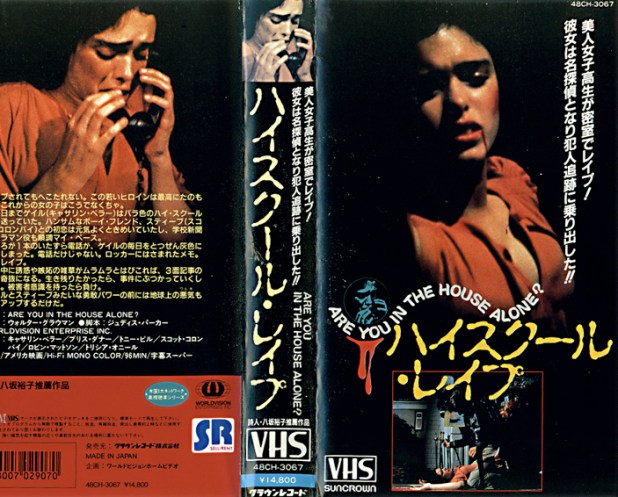
Originally airing on CBS on September 20, 1978, Are You In the House Alone? is based on the 1976 novel of the same name by Richard Peck.
Gail Osborne (Kathleen Beller, Dynasty) is a high school student dealing with all the pressures of being sixteen, such as discover her skills as a photographer and dealing with boys who only want sex. Her family has moved away from San Francisco to a new town to escape the dangers of the big city.
She starts dating a guy named Steve (Scott Colomby, Tony from Caddyshack), despite her overprotective parents (Blythe Danner and Tony Bill). Despite this young love flowering, Gail keeps getting threatening letters and calls from a man who laughs at her. She asks her principal for help and is basically told that it’s all probably her fault for a way that she’s treated one of her male classmates.
Gail’s life is pretty much falling apart. Her parents constantly fight, her dad’s back off the wagon and he gets fired from his job without telling anyone. The letters and calls start to increase and we have a red herring dangled in our snooping noses in the person of way too involved photography teacher Chris Elden (played by the incredibly named Alan Fudge who was in Galaxis, My Demon Lover, and Brainstorm).
Surprise — it ends up being her best friend Allison’s (Robin Mattson, who was in Candy Stripe Nurses and a film that this is remakably similar to, Secret Night Caller) boyfriend Phil (Dennis Quaid, who is so young it’ll blow your mind). He attacks her while she’s babysitting the children of Jessica Hirsch (Tricia O’Neil, Piranha II: The Spawing), a lawyer who just happens to be dating the aforementioned Mr. Elden.
The shocking part we mentioned above is that when Jessica becomes Gail’s lawyer, she tells her that there’s a chance no one will put Phil in jail because she’s not a virgin anymore. The world may be a mess these days, but man, in 1978, it was a real mess.
While not technically a slasher — there’s no body count to speak of — the hallmarks of the genre, such as a babysitter being stalked and constantly threatened by a maniac, are all here.
Also — what was it with 1970’s made for TV movie houses and plants? Every single home in this movie is abundantly lush with vegetation. Every plant is green and thriving, despite no sunlight in any of these homes. How did they do it?
Want to watch it? Good news. It’s on Amazon Prime and I’ve embedded the full movie from YouTube below. You can also buy it from Shout! Factory on a double disk with The Initiation of Sarah. I wish they had put out more TV movies like this!
Middletown, U.S.A. is the biggest show on TV. Sure, it’s controversial, but the ratings are through the roof. The only problem is that every time a major villain gets any traction, they end up dying for real.
Last year, we interviewed Amanda Reyes from Made for TV Mayhem. She recommended this film and it’s been on our list for awhile. Trying to get in sixty slashers that aren’t all that well-known for October gave us the perfect opportunity to watch it. If you’d like to read Amanda’s take on the movie, check out her site.
Director William Wiard was also behind This House Possessed, a fine example of made for TV horror. Here, he’s working from a script by David Levinson, who also worked on that film.
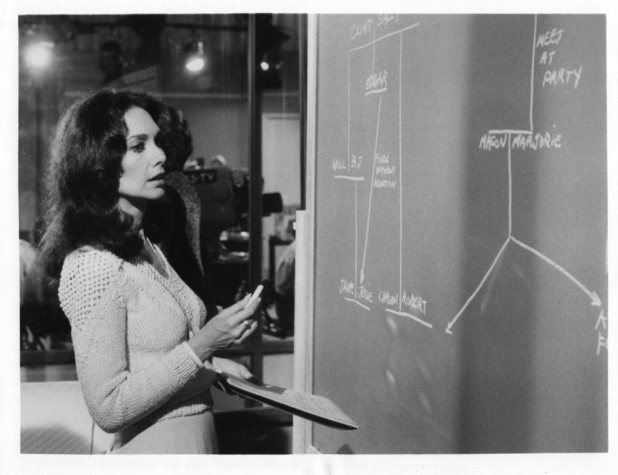
Suzanne Pleshette plays Carla Webber, who after being left by her husband decided that she’d become an independent woman. After watching daytime soaps, she soon learned that she was pretty good at writing for them, which leads to her running the biggest soap around. Barry Newman from Vanishing Point shows up as her love interest, plus Robert Vaughn is the slimy network president.
While this film doesn’t have much gore, it doesn’t skimp on the murders. It’s close to giallo territory with a humming killer only seen from their own POV, as well as a duplicitous identity and mental disorders at the end.
It’s not perfect, but Pleshette is. It’s fun to see her fully embracing a leading role after so many only knew her as Newhart’s wife. I know that Lifetime exists now to create movies similar to this, but there’s just something missing in a world that no longer has made for TV movies quite like this. Sure, TV is going through a golden age now, but give me the 1970s and 1980s past.






 B&S About Movies
You must be logged in to post a comment.