Don’t Open the Door to the Man In Black is a TV movie directed by Giulio Questi, who made some of the oddest giallo films ever, Death Laid an Egg, as well as Arcana and one of my favorite Westerns, Django Kill…If You Live, Shoot! It was written by David Grieco.
Francesca (Claudia Muzii) is a fragile woman undergoing treatment, which has been recommended by her friend Lorenza (Aurore Clément). The root of her depression lies in a failed relationship with a man who also dated her mother, a famous actress who died before her time. Yet there’s more to it when Francesca is found dead as well.
While this is a basic TV movie, it’s still nice to see the face of Giuliano Gemma (A Pistol for Ringo). By the late 80s and early 90s, most Italian genre directors had moved to the small screen to tell their stories. This is a fine tale but not anything that needs to be hunted down.
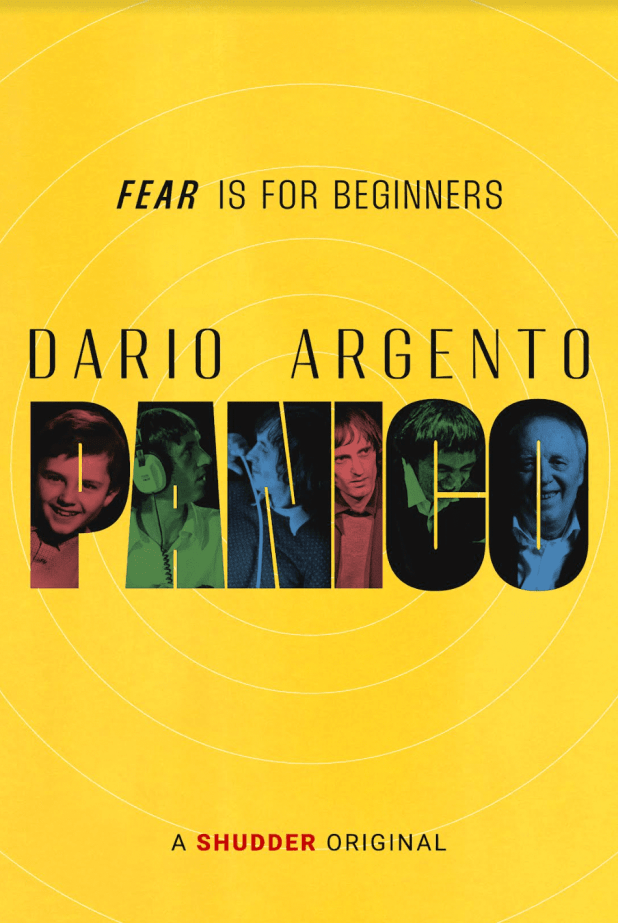
In this film, Dario Argento explains the difference between fear and panic (the panico that gives this its title). He claims that fear is like a fever of 100.5 F, one that has you terrified. Panic is just a degree higher, something that takes you beyond to a place that you can’t control.
If you’ve read Argento’s book Fear, he often speaks of writing his scripts isolated in a hotel room. In this documentary, the director finds himself returns to the place where he completed his latest script and speaks as part of an intimate interview, all while being followed by a film crew documenting his life for a movie about his illustrious career.
He’s joined by friends, collaborators and fans — many of whom are today’s most important filmmakers — to discuss the story of his life and films.
Director Simone Scafidi made Fulci For Fake in 2019, a film that attempted to explain the movies of Lucio Fulci. In that effort, he didn’t have true access to Fulci. Here, he has Argento speaking to his greatest successes and why he makes movies, as well as some of the most essential people in his life, including his daughters Fiore and Asia, his first wife Marisa Casale, Claudio Simonetti of Goblin, Lamberto Bava, Michele Soavi, Luigi Cozzi and current directors Nicolas Winding Refn, Guillermo del Toro and Gaspar Noé.
Del Toro speaks most effectively on the power of what Argento can do and how he’s “getting high off his own supply.” He makes a case that Deep Red presents a world where anything at any time can happen and that you must accept that — “here’s is a killer doll, alright” he laughs — and that it’s also full of ancient evil waiting on the outside of the frame, a film where no one is safe.
There’s a lot more that I’d like to have heard about, such as the time in American making Dawn of the Dead and Inferno, as well as what inspired his later films. This skips quite a bit — sorry fans of Dracula 3Dand Mother of Tears — but it’s impossible to get a multiple decade career into a short running time. What does emerge is that even when people have had rough relationships with Dario — such as actress Cristina Marsillach, the star of Opera — they feel as if they have learned from the time they spent with him. It makes for an interesting companion to his aforementioned autobiography, as you only hear his side of the story, where Asia presents a more nuanced vision of him, including a surprising moment of tenderness and vulnerability.
It’s very hard for me to be objective on this film’s subject, as his movies form the nucleus of so much of my love for cinema. I am pleased with the results, as it gives me as much as I need to know and I could honestly listen to Soavi, Bava and Cozzi speak for hours.
As a film nerd, I am beyond happy that this mentioned The Card Player. As you may know, my parents’ first date was to see The Bird with the Crystal Plumage and for years they used it as a barometer of films they hated. I think my gialli addiction started in those formative film discussions as a form of rebellion. Also: Yes, I did cry when they showed the Louma crane from Tenebrae.
You can watch this starting February 2 on Shudder.
To commemorate the release of Dario Argento Panico, Shudder and the IFC Center will present Panic Attacks: The Films of Dario Argento, a series of films celebrating the works of the Giallo horror maestro, revealing his profound impact on horror and his lasting influence on cinema.
The series screens January 31 to February 8 (Full schedule here) and will feature the following films:
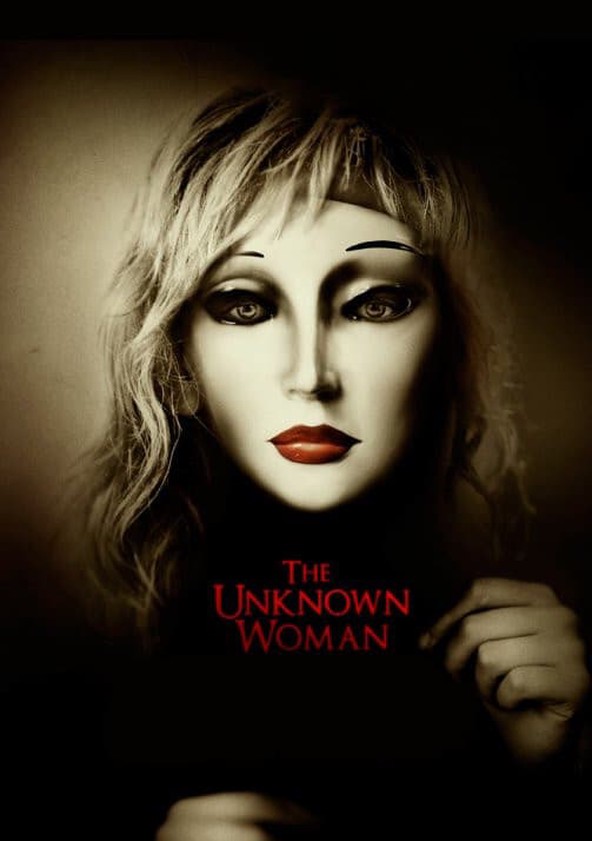
Irena (Kseniya Rappoport) is a Ukrainian sex worker who is looking for a job in fancy Italian apartment building and starts by cleaning the stairs, even though she already has money. Her plan is to get closer to the Adacher family who lives there, starting by becoming friends with the nanny, Gina (Piera Degli Esposti). And then, when that au pair is crippled by a fall — that Irena may have caused — she’s hired for the same role and takes care of Thea (Clara Dossena).
There’s a reason behind her madness. She has given birth to nine children whose theft was the final dignity that she could not bear in her horrific life. Stabbing her pimp, she has come to Italy as she believes that Thea is her child. And if she has to stage a crash that kills the girl’s mother Valeria (Claudia Gerini), that’s just a means to the end. Bad luck follows Irena as the pimp remains alive and wants the money she took from him. Even though she takes care of him and it seems that she will move into the new motherless house with Thea and her father Donato (Pierfrancesco Favino), the police arrest her.
In jail, she refuses to eat. Thea visits her and feeds her, which gives her an urge to survive. Many years later, we see her finally leave prison behind and a fully grown woman is waiting for her. It is Thea.
The Unknown Woman, unlike many giallo, was a huge success. It won David di Donatello awards for Best Actress – Leading Role for Kseniya Rappoport, Best Cinematography for Fabio Zamarion), Best Director for Giuseppe Tornatore, Best Film and Best Music for Ennio Morricone.
Tornatore is best known for Cinema Paradiso and Massimo De Rita may have written an award-winning movie here, but under the name Max von Ryt he wrote Blastfighter and as Max De Rita he penned Blood Link. Actually, his career stretches back into the 1960s with his first credited script being War of the Zombies.
This was Italy’s official submission to the 80th Oscars Best Foreign Language Film category. It lost to The Counterfeiters.
Regardless of high class this is, it’s heart beats yellow blood.
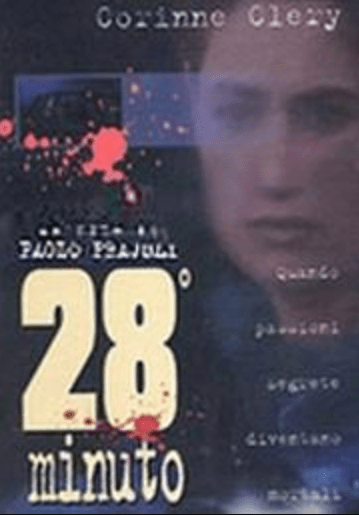
28° minuto is the story of the Monster of Florence, which has also been the plot of The Killer Is Still Among Us and Il mostro di Firenze. It’s directed and written by Paolo Frajoli and Gianni Siragusa.
As the city of Florence deals with the serial killer, Fabrizio (Christian Borromeo) and Patrizia (Antonella Sperati) have just been engaged and are ignoring the danger. There’s also a police officer, Mauro Poggi (Marzio Honorato), who is in charge of catching the killer. He’s also dealing with a love story, yet his is much longer and sadder with Paolo (Corinne Cléry), who is still in love with him despite being married. He works with a criminologist (Paul Muller, Nightmare Castle) and they discover that the Monster once watched him mother cheat on his father, which made him want to kill any couples that he finds steaming up the windows of cars on lover’s lanes.
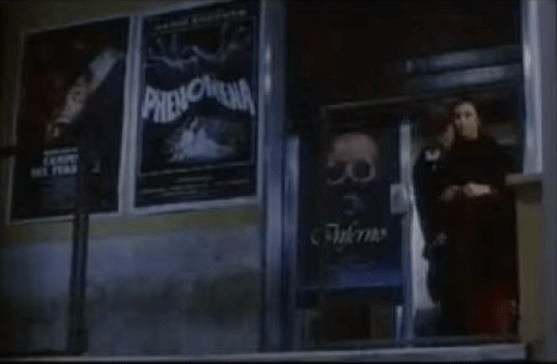
This was originally shot back in 1986, as Siragusa started the film and was blocked by the legal actions of the relatives of the serial killer’s victims. For some reason, five years later, this was no longer a problem. Frajoli finished the film and if numerous web sites are to be believed, he used scenes from Bakterion — the couple watches it when they go to the theater, which has posters for Phenomena, Inferno and Body Count — and some moments from The Killer Is Still Among Us along with his footage.
Also released as Tramonti fiorentini (Florentine Sunsets) and Quel violento desiderio (That Violent Desire), this even has the killer dress in a motorcycle outfit, as if somehow it wants to remind us that it’s trying to be as shocking as Strip Nude for Your Killer. Sadly, by 1991, it seemed as if so many gialli — even those based on actual killings — were sadly bloodless.
ABOUT THE AUTHOR: Jennifer Upton is an American (non-werewolf) writer/editor in London. She currently works as a freelance ghostwriter of personal memoirs and writes for several blogs on topics as diverse as film history, punk rock, women’s issues, and international politics. For links to her work, please visit https://www.jennuptonwriter.com or send her a Tweet @Jennxldn
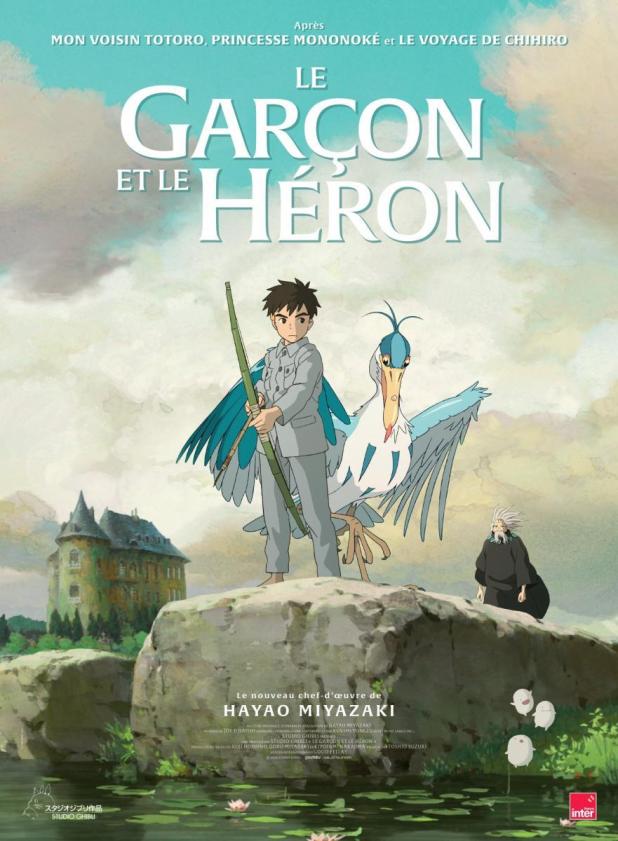
The Japanese title of The Boy and The Heron translates to “How Do You Live?” The title of one of Miyazaki’s favorite books, although this film has nothing to do with that story.
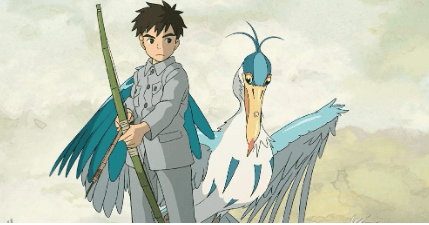
After his mother passes away in a fire during WW2, 12-year-old Mahito finds it difficult to adjust to life in a new location following his father’s re-marriage. After he is bullied in school, he self-harms to avoid going to class.
Mahito is visited by a talking heron who tells him his mother is still alive. He takes Mahito to an abandoned tower which serves as the portal to another realm. There, Mahito searches for his mother and meets all manner of mystical characters including a younger version of his mother.
The Boy and The Heron is Hayao Miyazaki’s most personal and abstract film to date. He made it for his grandson. It’s about the old and the young and loss and acceptance.
It feels like classic Miyazaki with a bit of David Lynch thrown into the mix. Visually, there’s so much detail, even in the quieter moments where nothing is happening, that it’s a film that will take most people more than viewing to absorb and unpack the meaning of everything on screen.
The possible interpretations are limitless. Is this a warning about perceived power in alternate realities i.e. the internet? Is it showing us the human side of militaristic societies like the ones that sprung up in WW2? Is it a Buddhist parable involving the realms of the gods (deva), the demi-gods (asura), humans (manuṣa), animals (tiryak), hungry ghosts (preta) and hell denizens (naraka)? I honestly don’t know. And I like it that way.
I’m fairly certain the granduncle, who lives in isolation with his pencil is Miyazaki. A man who neglected reality in favor of the worlds he created. It’s well-known that following the success of Nausicaa of the Valley of the Wind, Miyazaki threw himself into his work so much so that he neglected his wife and son Goro, with whom he has a strained relationship to this day. There’s also a lot of Miyzaki in Mahito, who grew up during and after WW2.
At one point, the grand uncle in the other realm taps 13 building blocks with his pencil and indicates a desire for a successor to all he has created. I’ve heard it suggested that the number 13 represents Miyazaki’s films, but this theory holds no water. There are only currently 12 films if you count the feature length works and if you count the shorts directed for exclusive screenings at the Ghibli Museum in Mitaka Japan, there are substantially more than 13. I saw the short, titled Mei and the Kitten Bus at the museum (the official sequel to My Neighbour Totoro) and it was delightful, even if there were no English subtitles. Totoro’s first appearance in a crowd of creatures carrying his umbrella solicited substantial “ooohs” and “ahhhs” from the audience, owing to how beloved this character is in Japan.
Whether Miyazaki-sensei makes another short or feature, it seems likely that The Boy and The Heron will be studied by future film scholars as one of his most important films. It’s rare that an aging director produces something this interesting.
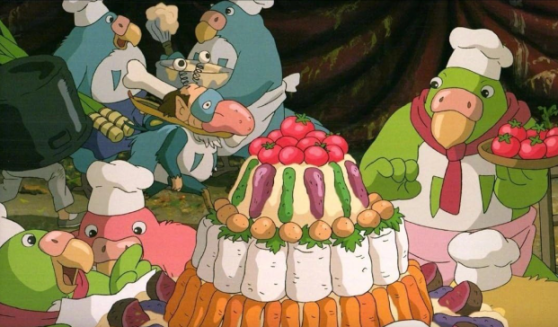
For example: In the other realm, there parakeets. These birds are fascist militaristic, but they also love their families. Notice, in the adorable image below, the parakeets cuddling their unborn young? Clearly, the parakeets aren’t really the “bad guys.” They’re just like humans. They have merely fallen prey to the flock mentality and follow their king – who resembles Mussolini- blindly. Once the flock crosses over into “reality” they are rendered harmless.
Will it be his last? Time will tell. He’s “retired” several times before, but it seems as if creating the worlds in his mind is what keeps him going. Just like Granduncle.
The film ends with a new beginning. Mahito is free to create his own stories. There is no “The End” as appears in all his other works, so I’m betting there will be at least one more short or a partial feature that goes into production before Miyazaki-sensei departs this earthly realm. If it turns out to be his last, I consider myself extremely lucky to have shared this reality at the same time as this master storyteller.
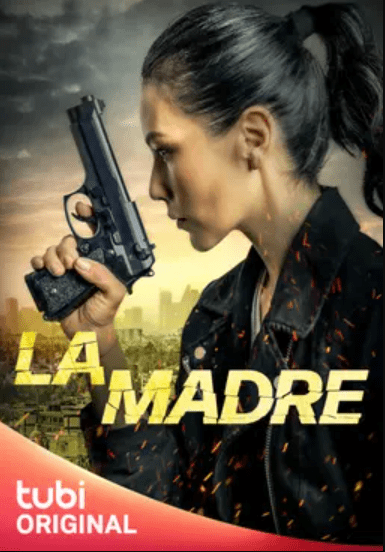
Martha (Tamara Mazarrasa) has raised her daughters Raquel (Lucía Tinajero) and Eva (Giovanna Reynaud) well, but they don’t know that the mother who runs a boutique and is putting them through college used to run with one of the most dangerous gangs in town.
When Eva is taken by El Chacal (Alex Guerrero) and his gang, Martha learns that the police may have good intentions but they aren’t able to get the job done. To save both of her daughters, she’ll have to go back to the woman she was before.
Directed and written by Mitchell Altieri, this is exactly the type of revenge movie that you’d expect. Then again, the sneak attack where the gang releases Eva and has her so drugged up she dies a few days later — all the doctors and tests in the hospital couldn’t see that coming, I guess — is pretty out there and I like that the cop who helps Martha, Juan Cinderos (Javier Dulzaides), doesn’t become her lover. It’s got a strong heroine who doesn’t just stop when she defeats the gang but also tries to offer support and a future to the women they kidnapped. She finds closure by being who she was always meant to be: a mother.
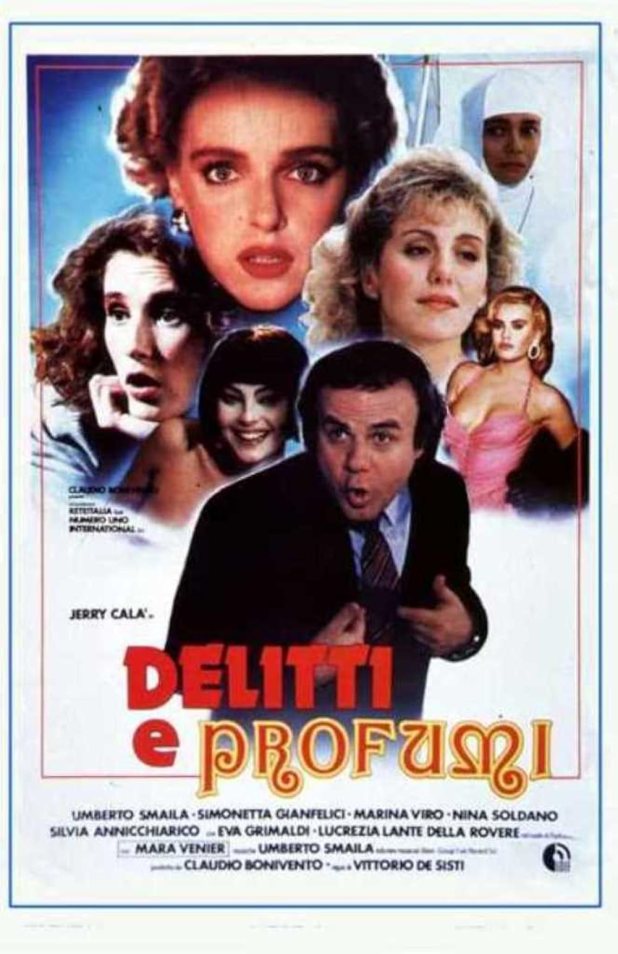
Secrets and Perfume was directed by Vittorio De Sisti and written by Francesco Massaro and Franco Ferrini, based on the story “Scarlet” by Oreste De Fornari and Carlo Alberto Bonadies. It starts when store detective Eddy (Jerry Calà) and shopgirl Barbara (Lucrezia Lante della Rovere) get engaged and then perfume that she has been given by a secret admirer causes her to burst into flames. Working with Inspector Turroni (Umberto Smaila), he starts to look into the murder and learns that a sex worker named Portia (Eva Grimaldi) was also killed, also because of the same strange perfume. It turns out that both girls also had a piece of a picture taken years ago when they were childhood friends at a summer camp along with Mariri (Marina Viro) and a mysterious other girl, all watched over by Sister Melania (Mara Venier). Well, it must be this place, this horrible place, because the U.S. doesn’t have a copyright on summer camp accidents that cause revenge murders.
For some reason, this comedy giallo worked for me. I was in a good mood when I watched it and the idea that store lights would set a woman ablaze was so outrageous that I just had to watch and figure out where this would end up.
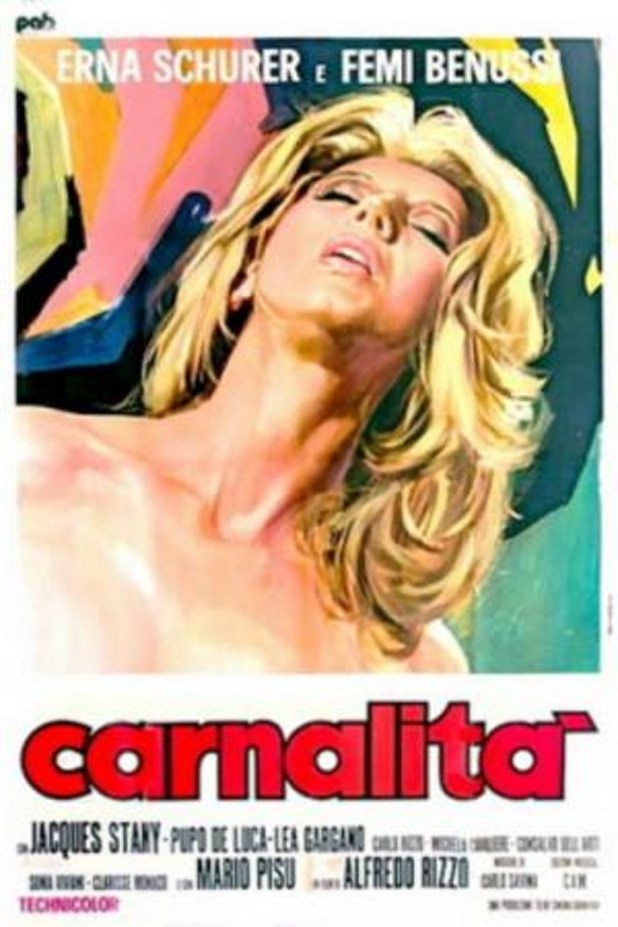
Professor Gabriele Luciani (Jacques Stany) has a pretty good scam going, as his wife Elisabetta (Fiorella Galgano) is bedridden in their gigantic castle. He’s already with her nurse Anna (Femi Benussi) but that’s not the only woman he’s cheating with, like his secretary Angela (Sonia Viviani). But when he finally poisons his wife for good and marries another lover named Roberta (Erna Schurer), he learns that she’s the daughter of the man who he stole the castle from in the first place.
Also known as Naked and Lustful, this was directed by Alfredo Rizzo, who also made The Bloodsucker Leads the Dance, another giallo-esque film that has a version with and without hardcore scenes. That also has Femi Benussi in it and was filmed at Castello Piccolomini, the same location as Lady Frankenstein and Black Magic Rites. He directed eight movies but appeared in more than 110 films as a character actor.
The oddest thing about this is that its supposed to be some revenge when Roberta makes love to the villain to death. Most Italian men would see that as the best of all little and big deaths.
Luca (Luis La Torre) and Mirna (Erna Schurer, Deported Women of the S.S. Special Section) have broken up and he leaves for the island of Ostuni to recover. But he’s sure she’ll follow him, but he’s wrong, as she’s already moved on. But he soon forgets, as two gorgeous young women, Claudia (Monica Strebel) and Stefania (Lorenza Guerrieri, Naked You Die), are already fighting over him. Luca and Stefania hook up on the beach and she encourages him to fulfill his roughest fantasies, throwing her all over the beach, pinning her with her arms behind her back and even choking her. Then she disappears and he gets blackmailed with the photos that were taken of their violent tryst in the sand. Why is his ex Mirna blackmailing him? What does Claudia know? And where did Stefania go?
Snapshot of a Crime isn’t a giallo that many recall or speak of here in America. It’s structure is a big odd, as it has flashbacks and scenes repeated throughout the movie. Director Ezio Alovisi — working as Arthur Saxon — was making his first movie, so he really went for something perhaps beyond his reach. But you know, we should celebrate that. He took it over from Mario Imperoli, as it was started in 1970 and finished in 1974.
The scenery is gorgeous, the trio of actresses is even more beautiful and this feels like a Lenzi giallo. The best part? The soundtrack by Franco Bixio. I have no idea why more people don’t celebrate his work. He recorded this soundtrack with the British/Italian band The Motowns and it’s a fuzzed out dream.
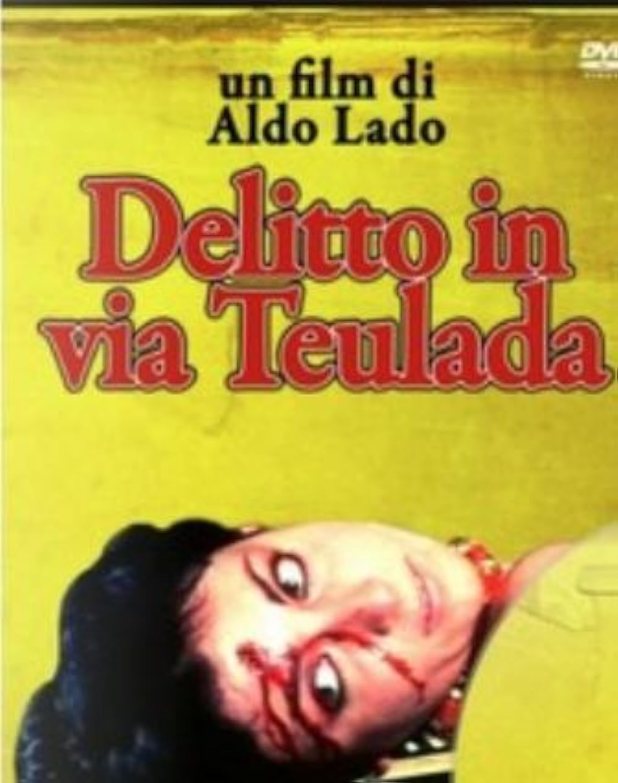
Crime in via Teulada was originally broadcast in 1979 on television as 15 segments of 5-minutes each. It was called Striped Mystery and the show aired before RAI’s Variety. It was an attempt to mix reality and the world of the movie, as it was also shot at RAI’s studios in Rome. The original version was called Giallo A Striscio.
In 1980, it was released in theaters as a 61 minute long movie.
The huge Rai building is filled with activity as so many shows are being made, including a crime film, a historical drama, a musical program called Discoring and the variety show Domenica In. In the midst of all this craziness, an actress named Diamante (Mariarita Viaggi) is killed and one of the RAI employees, Ely (Margherita Sestito), finds the body where film reels are stored. When security comes to help her, the body is gone.
Two of Ely’s co-workers, blind switchboard operator Lia (Auretta Gay) and production assistant Sandro (Pietro Brambilla), take over the case when a dancer named Annie (Barbara D’Urso) are murdered and — spoiler warning — Ely are killed. There are also some actors playing themselves, such as Pippo Baudo, Domenico Modugno, Nanni Loy, Filippo Albertazzi, the Tessler Twins, Renato Rascel and Corinne Clery wandering about and anyone could be killed next. Everything seems to point to an actor named Enrico (Branko Vatovec), who is also Lia’s brother, but the killer really could be anybody. And by that, I mean someone with ties to all of the victims from their past.


 B&S About Movies
You must be logged in to post a comment.