25 DAYS OF CHRISTMAS CHALLENGE and CLEOPATRA DVD RELEASE: Silent Bite (2024)

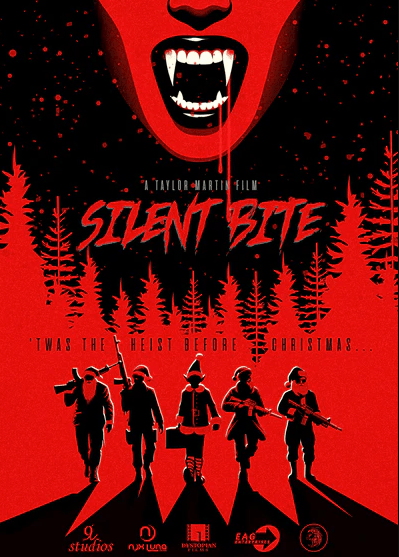
Directed by Taylor Martin from a script by Simon Phillips — I just reviewed his movie The Bouncer — this starts with the aftermath of a bank robbery committed by a gang of holiday named criminals, including Father Christmas (Phillips), Prancer (Luke Avoledo), Grinch (Nick Biskupek), Rudolph (Dan Molson) and Snowman (Michael Swatton).

They’ve made it to the Jolly Rancher Hotel, but they don’t know that vampires — Mother (Sayla de Goede), Lucia (Louisa Capulet), Victoria (Kelly Schwartz) and Selene (Sienna Star) — are also there, ready to feed on college girls and initiate their new recruit Genie (Camille Blott). Meanwhile, the hotel’s clerk, Colin (Paul Whitney), is playing everyone against one another.

This is a very Tarantino-influenced movie, right down to the DJ (Chad Ridgely) giving us the story of the robbery that we don’t see, as well as someone who planned the heist that we never see, as well as the shift into horror when this starts as a crime film. It’s well done and makes the most of its budget, as well as giving innovative ways to fight vampires, like silver spoons and flash grenades.

Also: Stay tuned for a vampiric Santa.

You can get the Cleopatra DVD release of this movie from MVD.

VISUAL VENGEANCE ON TUBI: Sinister (2011)

EDITOR’S NOTE: Did you know that Visual Vengeance has a ton of movies on Tubi? It’s true. Check out this Letterboxd list and look for reviews as new movies get added. You can find this movie on Tubi.

No, not the 2012 movie Sinister, but instead the 2011 Steve Sessions film.

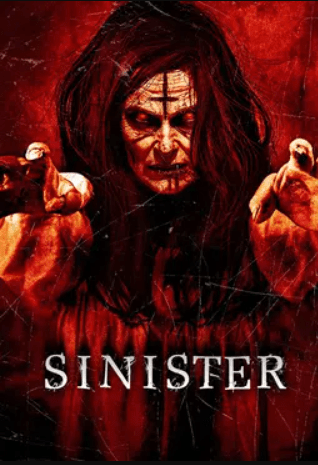
Gerard Prewitt (Lucien Eisenach) starts this movie by slowly possessing a woman (Isabelle Stephen) who gets nude in a bathtub, then has her mind and body taken over before being drowned. Then, Prewitt selects his second victim, Emily (Donna Hamblin), a career woman who has no time for her brother Sam (Donny Versiga).

Yet she needs him — and an expert in witchcraft (Luc Bernier) — when she starts to believe that she’s being haunted by the ghost of her mother. The truth is that Prewitt has picked her as his next victim, using the body of a dead serial killer to stalk her and an animated skeleton to chase her from room to room of her small home.

The slow burn nature, as well as the look and feel of this movie point to a film more rooted in the 70s weirdness that is the kind of place that I like to soak in, like that first bath scene without me having to take off my clothes. Also: How about that golden hearse the bad guy drives?

So many reviews claim this is too slow, that nothing really happens, that so much happens in real time, that it’s more about mood than being scary. Were they trying to sell this movie to me? Because in their effort to leave low scores, they somehow made me love this even more.

Born a Ninja (some year between 1978 and 1988)

Ninjas. “Life means nothing to them,” says Mister Tanaka, a man who shows up in this wearing an outfit like my dad in the mid 80s, a striped red polo and short shorts.

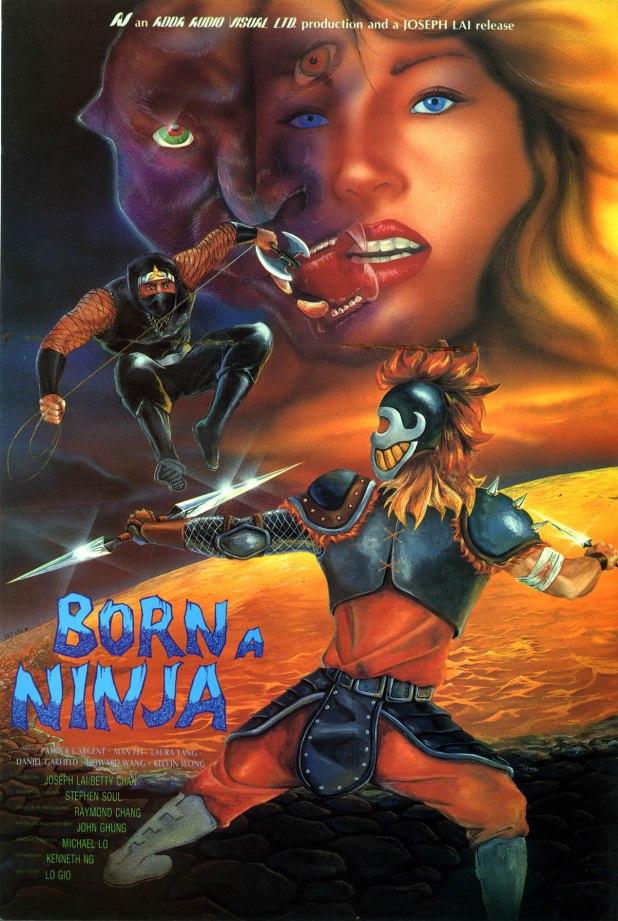
If you ask IFD what this Joe Law directed and written movie is about, they’d say, “A Japanese scientist tries to conceal a deadly formula, but an undead ace and his ninja devils are determined to use it to cause mischief and mayhem. It is up to Lung, a master of the lost art of Hocus Pocus, to keep evil at bay and prevent mass destruction on a global scale.”

Sure, maybe.

IMDB lists the director as Chi Lo, who used the name Joe Law to make Crippled Masters and Lo Ke to direct Deadly Hands of Kung Fu.  Seeing as how this was produced by Joseph Lai and Betty Chan, all bets are off.

Or maybe this is the same movie as American Commando Ninja and combines a Taiwanese TV show, another movie called Born a Ninja and the kind of dialogue that only can come from a 1980s dubbed into incomprehension ninja movie can give you. Or it’s Silent Killers. It could have so many titles and it would still be hard to tell you what happened.

Let me try.

Mister Tanaka has a secret formula from World War II that just could destroy the world. That much is true. Two women want the formula and they are Becky, who wears a yellow vest and Confederate flag shorts, but I think that means she’s into late 70s and early 80s redneck trends in America a little too late as they move across the globe and isn’t racist like my neighbor who wears short shorts and throws away all his kids toys after his wife took them and also has a huge Southern Cross up on his garage wall despite being an Italian man in Southwestern Pennsylvania. Did I go on a tangent? Becky is joined by Brenda, who loves denim so much she’s wearing it on the top and bottom. They’re joined by master of the hocus pocus style, Larry, which involves your everyday kung fu but also the ability to shoot fire out of his fingertips.

As for the bad guy ninja, that’s Meng Fei, who was also in the Ninja Death trilogy, Night Orchid, Everlasting ChivalryThe Sun Moon Legend and Middle Kingdom’s Mark of Blood. He’s pretty amazing in the last fight scene.

Anyways, Mister Tanaka keeps dreaming of dead people that were killed by this secret back in the war and the secret is a mirrored mustache that you put on a devil mask. There’s also a white ninja named David who battles Larry before they decide to be friends, get a room and drink beer and eat fried cabbage.

Or maybe that was the last movie? Have years of drinking, substances and Godfrey Ho movies dulled my reason and when confronted by this synth-scored shot on video wonder my mind just wanders in between different martial worlds, unsure of all the things I’ve seen, all the ninja deaths I’ve felt as if they were my own? In truth, the only important thing is that ninjas can become straw men and that you can swallow a sword in the middle of a fight and live.

I do know one thing. When David sees Larry hanging out with the two ladies, he says, “Two chicks? You one animal!” That’s exactly how I felt.

You can watch this on Tubi.

25 DAYS OF CHRISTMAS CHALLENGE: A Doggone Christmas (2016)

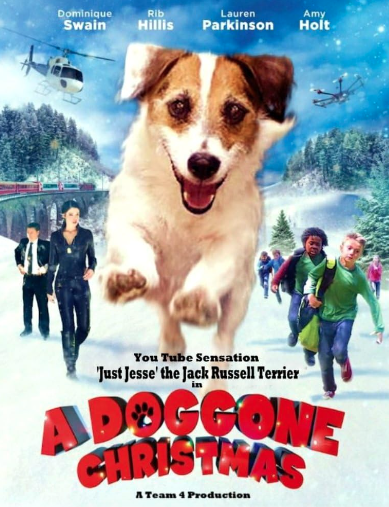
Starring YouTube star Jesse the Jack Russell Terrier — who would go on to be in two sequel, A Doggone Hollywood and A Doggone Adventure — this is the holiday story of Murphy, a telepathic dog that has been taken by the CIA. Yes, the government is ready to liquidate these children in order to get back their secret weapon, a small dog who is so cute when he’s sleeping.

Now, you may ask, Sam, why did you choose this movie for your Christmas challenge?

Two words: Jim Wynorski.

Even with the assignment of make a cute dog movie for the holidays, Jim goes above and beyond and casts Dominique Swain — yes, Lolita — as a researcher, Gail Thackray (Hard to Die) as a woman on a train and Lauren Parkinson (Snow White from Avengers Grimm: Time Wars and you know I watched the fuck out of that, Merry Christmas) as an agent dressed in skintight leather for the entire movie.

Wynorski understands the idea of something for daddy.

This is the man that made Chopping Mall and here he is, still working, making films for kids to be babysat by via streaming services while they’re on Christmas break. He just made Murderbot last year, so he’s still out there. During the most merry time of the year, let him into your home. If it’s cold outside for you, it’s cold outside for Jim Wynorski.

You can watch this on Tubi.

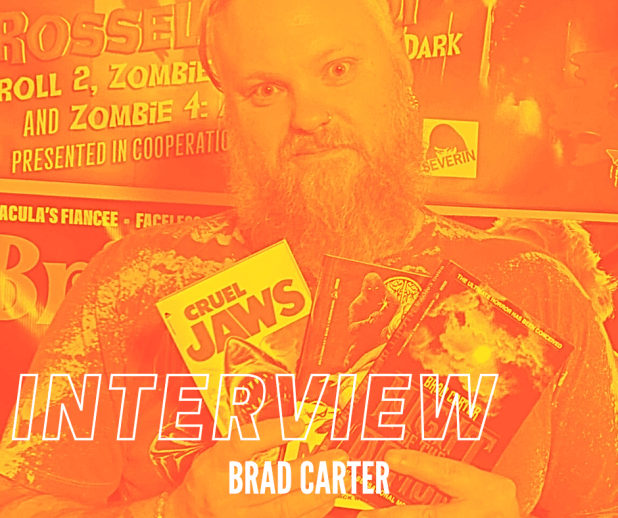
EXCLUSIVE INTERVIEW WITH BRAD CARTER, AUTHOR OF SEVERIN’S RATS AND VIRUS NOVELIZATIONS

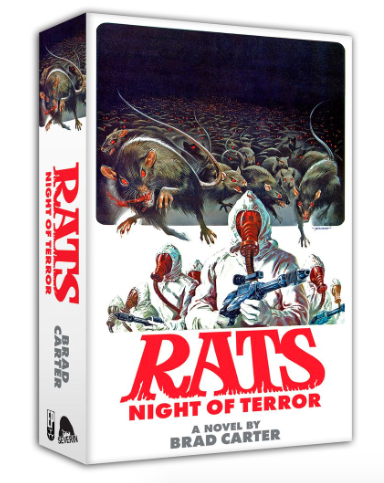
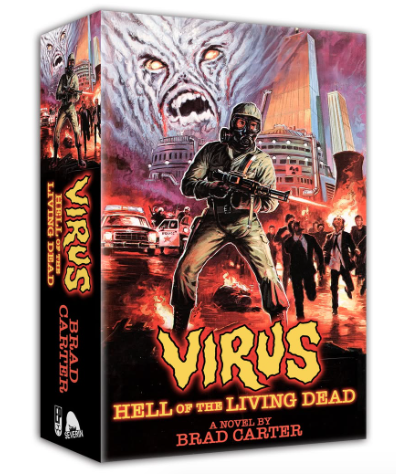
Editor’s note: Two of the coolest things in the Severin Black Friday sale were the paperback novelizations from author Brad Carter based on director Bruno Mattei’s ‘80s Italian genre classics Hell of the Living Dead (aka Virus) and Rats: Night of Terror.

I had the opportunity to discuss these books with Brad, as well as his love of horror films, what movies he’d like to adapt and so much more.

B&S About Movies: What’s your background in writing?

Brad Carter: My first novel, The Big Man of Barlow, was published in 2012. I worked at a steady clip after that, writing a novel per year until 2019, when the publisher I’d been working with went under. My other novels are (dis)Comfort Food, Saturday Night of the Living Dead, Only Things, Barlow After Dark, Uncle Leroy’s Coffin, and Human Resources. My goal for 2025 is to get those back in print. As far as film novelizations go, I’ve done Cruel Jaws, Night of the Demon, and Mardi Gras Massacre for Severin, as well as an as-yet-unpublished Phantom of the Mall. That last one got held up in some irritatingly boring bureaucratic red tape. Hopefully, 2025 might be the year it finally sees the light of day.

Before that, I majored in Creative Writing at the University of Arkansas. It was a great program, but not very open to genre fiction. Although I sort of resented that at the time, I appreciate it now, because it taught me to write without my usual crutches of blood and gore, ghosts and goblins. Now I’m free to write all the exploitative trash my heart desires.

B&S: Were you always a fan of Italian films?

Brad: I’ve been a horror fan for as long as I can remember, but I was in my teens before I got serious about exploring horror movies as works of cinematic art. That coincided with my discovery of Italian horror. My favorite movie was (and still is) George Romero’s Dawn of the Dead, so seeing Dario Argento’s name in the credits led me to Suspiria. From there, I discovered Lucio Fulci. Then I went down the rabbit hole, and I’m still tunneling my way down. There’s an otherworldly quality to lots of Italian films that fascinates me. From the zombie gut munchers to giallo to cannibal movies, I love so many movies from that golden age of Italian genre film. Happily, there’s about a million of them. Every time I think I’ve reached the finish line, I discover another gem.

B&S: What was it like to get to see the original scripts for Rats and Virus, then have the chance to bring them to life?

Brad: Well, I never actually saw the full scripts. I’m not really sure if they even exist anymore. What I worked with was the original film treatments as remembered by Claudio Fragasso and Rossella Drudi. We corresponded pretty extensively about the original ideas for the movies, which were considerably larger in scope than what ended up on the screen. Had they been given a Hollywood budget, the movies would have been nearly indistinguishable from the final product. That’s why the books are so different from the films. Calling them film novelizations is almost inaccurate, because they bear little resemblance to the films. The ideas Rossella and Claudio conveyed were very broad and open-ended, so I had lots of room to expand on them and add in new material. It was a fun process. There were genuine sparks of creativity flying around.

B&S: Claudio Fragasso and Rossella Drudi, if they are known to Americans, are mostly remembered for Troll 2, which is seen as a joke at best. Has your experience of working on these books changed your opinion of their abilities?

Brad: If there’s a single searing indictment of the dire state of the American education system, it’s that kids these days don’t know more about Claudio Fragasso and Rossella Drudi. There is so much more to them than Troll 2.

Working on these books didn’t change my opinion of their abilities, because I never held them in low esteem to begin with. As far as Troll 2 is concerned, I challenge someone to make a film under similar circumstances and have it fare much better. Language barriers, a nonexistent budget, an amateur cast…not exactly an ideal situation for anyone involved. And say what you will about the movie, but it’s entertaining. For me, the cardinal sin in filmmaking is to be boring and unremarkable. There are loads of films that can be viewed as competent and even good by the standard metrics, but the vast majority of those films are also forgettable. I’d much rather watch Troll 2 than some Merchant Ivory snoozer or Avengers Part 100: Captain America Changes His Drawers or whatever the Marvel movie of the week is.

Believe it or not, Troll 2 wasn’t my introduction to Claudio and Rossella’s filmography. I came to know their stuff through their collaborations with Bruno Mattei first, and then movies like Zombie 4: After Death and Robowar. I didn’t get to Troll 2 until much later. I had the opportunity to meet Claudio and Rossella some years ago at a horror convention, where they were Severin’s special guests. Claudio was a bit annoyed that people only wanted to talk about Troll 2, so Severin’s head honcho, David Gregory, introduced me to Claudio and Rossella, saying, “This is Brad. He’s seen nearly all your movies.” A few hours later, I was sitting with them for a screening of Zombie 4: After Death. For me, it was one of those moments where I needed to pinch myself to make sure I wasn’t dreaming.  

So the short answer is no. I went into the project as a genuine admirer of Claudio and Rossella’s work, and if anything, that admiration has only deepened. Their filmography is like the cinematic equivalent of music by The Melvins or Napalm Death: it’s completely out of left field and truly compelling.

B&S: Without giving too much away, what’s something in the books that fans of the original movies will be surprised by?

Brad: I think they’ll be surprised by how completely different the novels are from the films that inspired them. I think they could more accurately be called “re-imaginings” rather than “film novelizations.” But I’d like to emphasize that the source material for the books is the same source material for the films. I definitely put my own spin on things and blew the storylines up to ridiculous proportions, but I stayed true to the spirit of what Claudio and Rossella originally intended. I’d like to think that the books stand on their own. Someone with no knowledge whatsoever of the films

However, I sincerely hope that fans of the movies appreciate the books as well. They were written by someone with a deep love for the material.

B&S: What was the biggest challenge when it came to writing the books?

Brad: The challenge with any film novelization is capturing the spirit of the source material without simply regurgitating the screenplay in a different format. People who’ve read my prior novelizations know that I’ve always had a pretty long leash when it comes to additions, changes, and expansions to the films. My approach has always been to consider what the filmmakers might have done had budget not been a factor in any of their decisions. So my Cruel Jaws is bigger than what Spielberg could have filmed. Night of the Demon and Mardi Gras Massacre also would have required much larger budgets if they had been filmed as I wrote them. This isn’t to say my versions are necessarily better, but a novel doesn’t really have budgetary restrictions. I don’t have to make the same concessions that filmmakers have to make. 

For these two books specifically, I saw my work as a kind of redemption for what Claudio and Rossella were forced to compromise. They had an epic vision, so I wrote a couple of epic novels. The only reservations I had involved how readers might react to something so different from the films. Ultimately, I had to put those fears aside and focus on writing something that would make Rossella and Claudio proud. If everyone but them hates what I’ve done, I’ll still feel good about my work. Of course, I’ll feel a hell of a lot better if loads of other people enjoy them too. Any writer who claims to not enjoy that sort of validation is a goddamn liar. But aside from my own ego, I’d love for these books to lead to other similar projects, and the only way that can realistically happen is for Virus and Rats to be somewhat successful. Encyclopocalypse and Severin both put a lot of faith in me by publishing these huge books without demanding any cuts. I hope the public’s reaction proves that their faith wasn’t unfounded.

B&S: Do you have a dream movie to novelize?

Brad: I’d love to have a crack at a big horror franchise like Evil Dead, Phantasm, or Friday the 13th. I’m not sure that’s a very realistic goal, however. After writing Virus and Rats, I’ve actually thought about how I might approach another entry in Mattei Fragasso Drudi Cinematic Universe. I could really do something with Zombie 4: After Death or Shocking Dark. Lots of folks in the Severin Films family have joked about me novelizing The Sinful Dwarf. To me, it’s not so much a joke as a challenge. In the end, my dream is to keep writing these sorts of books. It’s incredibly fun and the reactions to my novelizations thus far has been overwhelmingly positive. I’m grateful for any opportunity to keep doing what I love.

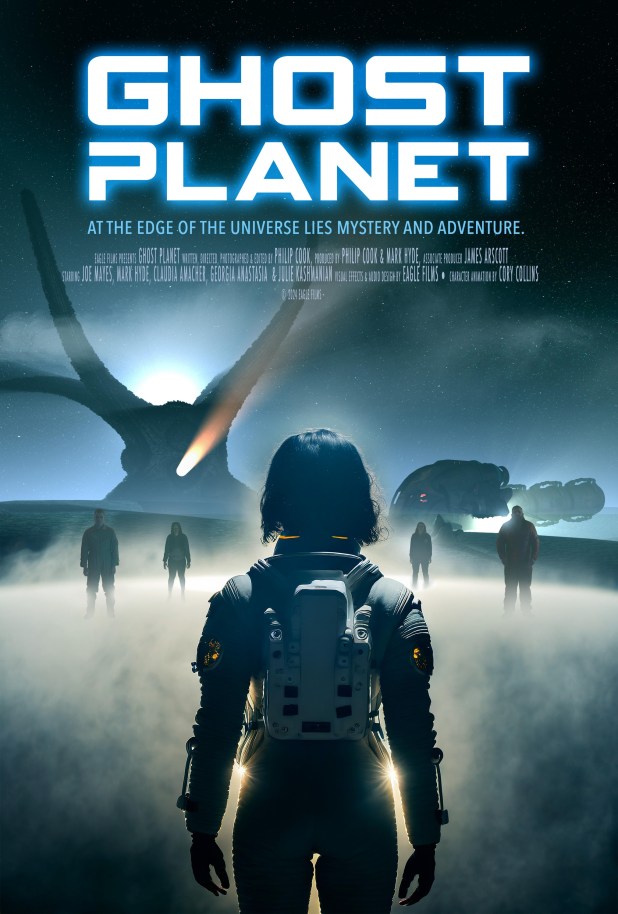
Ghost Planet (2024)

I’m a big fan of the films of Philip J. Cook, starting with Invader and Beyond the Rising Moon. Recently, Visual Vengeance put out Despiser, one of his movies that I was lucky to get to record a commentary track for. Since then, he’s made Outerworld, the Malice series of films and web series, Pungo: A Witch’s Tale and now this film, Ghost Planet.

All of Cook’s films share a unique look, as he pushes himself to develop his own special effects, and an interesting take on their stories, which eschew traditional Hollywood narratives.

Max Stone (Joe Mayes), his lawyer sister Julia (Claudia Troy) and their soldier half brother George (Mark Hyde, Despiser) are space rogues and archaeologists, looking for the technology left behind by the Tesserans. The ships that they find are beyond our understanding, but they have found an entire base full of them, just as a solar flare forces them to run.

A year later and things haven’t worked out so well. George has cancer, acquired on one of the many worlds where he was forced to do shadow ops, and the loan that Max took to pay for new body parts can’t be paid back, leading to repo men coming to take them back by force. They’re nearly killed before a mysterious woman named Trudy (Georgia Anastasia) saves them, killing a man and putting them in prison, where Julia is able to get them released.  Soon, they find out why they were able to get away. Trudy is an android owned by John Moesby (Ulysses E. Campbell), who wants them to go back to space and find the Tesseran technology for him.

This brings them to the titular Ghost Planet, a haunted world where the only living person is a young girl named Naiad (Julie Kashmanian), while being hunted by space pirates who want the same tech that they do. However, Naiad gives the Stones the edge they need, as she knows how to communicate with the Tesseran machinery.

I’ve read some reviews that take this movie to task for how it looks and I honestly wish these people had just an ounce of imagination. Cook has created several worlds here from sound stages, green screen, CGI and miniatures. It doesn’t always feel real, but you have to realize that he’s making this movie with the budget of a few days of the catering of a blockbuster. The trade off is that this is rich with ideas and heart.

What you get is a movie that looks and feels like nothing else, other than a Philip J. Cook movie. And that’s exactly what I wanted this to be. I mean, spaceships guided through the galaxy by bubblegum? Incredible.

You can learn more on the official site and watch this on Tubi.

See No Evil (1971)

Poor Mia Farrow.

It feels like she could never catch a break, whether that’s in movies or real life.

In See No Evil, she plays the recently blinded Sarah, who is staying with her uncle and aunt. As she goes on a date with Steve (Norman Eshley), she avoids being killed like everyone else. The next day, she has a carefree day in this manor home while the rest of her family is dead all around her, unseen thanks to her loss of vision.

The gardner, Barker (Brian Rawlinson), is somehow still alive. Well, not for long, but before he fades out, he tells her that the killer is coming back to find a bracelet they lost that has their name on it. We don’t see their face, but do get to see some distinctive boots as Sarah runs blindly into the woods before she’s saved by gypsies.

Tom (Michael Elphick), the leader of the gypsy family, sees the bracelet, which has the name Jack. He believes that it belongs to his brother, who was dating Sarah’s cousin Sandy (Diane Grayson). He tells Sarah that he’s taking her to the police, but instead, he’s locked her in a shed so that his family can escape.

I’m not going to reveal the killer, but Sarah is forced to fall down muddy hillsides before being saved and even then, she must endure one more near-death experience as she’s attacked while in the bath tub.

Writer Brian Clemens wrote the script on spec and Columbia Pictures told him “‘Well, if Mia Farrow plays the lead, we’ll buy it.” You can imagine what happened. He also wrote The Golden Voyage of SinbadAnd Soon the Darknes, Dr. Jekyll and Sister Hyde and directed and wrote Captain Kronos – Vampire Hunter.

This was directed by Richard Fleischer, whose career encompasses everything from blockbusters like Fantastic Voyage and 20,000 Leagues Under the Sea to magnificent disasters like Doctor Dolittle and The Jazz Singer and odd efforts like Amityville 3DConan the DestroyerRed Sonja and Mandingo. As the son of Max Fleischer, he was chairman of Fleischer Studios, which handles the licensing of Betty Boop and Koko the Clown. That’s why his last screen credit was creative consultant for The Betty Boop Movie Mystery in 1989.

Originally, this movie’s soundtrack was by Andre Previn, who was married to Farrow at the time. They wanted Previn to further change the music, but he was in Russia, which is why they tossed his music. Of course, Previn has a different story. The real one, probably, is that producer Leslie Linder disliked his score and hired David Whitaker to write a new one, which he also hated, and then Elmer Bernstein wrote the music. This helps in the ad campaign, as the movie was compared to Hitchcock.

Also known as Blind Terror, this starts with a walk past several marquees. While the movies Rapist Cult and The Convent Murders aren’t actual films, Torture Garden is playing on a TV.

See No Evil is a good suspense film that is better thanks to Farrow, who seems constantly on the verge of cracking. She’s so good at being an actual person when surrounded by the fantastic and the deadly, this being yet another great example of her abilities.

You can watch this on Tubi.

25 DAYS OF CHRISTMAS CHALLENGE: The 12 Disasters of Christmas (2012)

Not only is this a holiday movie, it’s a Mayan calendar movie. Yes, in the moments before Jacey’s (Magda Apanowicz) grandmother is killed by a gigantic icicle, she gives her a mystical ring and tells her that she’s the chosen one who will stop the end of the world on December 21, 2012.

Before you laugh at that, let me tell you this: Jacey was born right on Christmas in a town named Calvary, her parents are named Joseph (Ed Quinn) and Mary (Holly Elissa) and the song “The 12 Days of Christmas” isn’t just annoying, it explains each of the different disasters about to befall the human race. It was also written by the Mayans!

Directed by Steven R. Monroe — yes, the same guy who made the remake of I Spit On Your Grave — and written by Sydney Roper (Independence Daysaster, End of the World) and Rudy Thauberger (Snowmageddon), this is like The Dome plus The Mist plus every SyFy armageddon movie you’ve ever seen, plus a magic ring and special effects that include shaking the camera to make it seem like there’s an explosion.

Christmas lights come to life, birds unlife themselves, a mist freeze and kills people and only five golden rings can save everyone. There’s also a geomantic Mayan compass that everyone has to use to make their way to find them. There are also super religious people who want to sacrifice Jacey to save the world but she ends up figuring it all out.

You can watch this on Tubi.

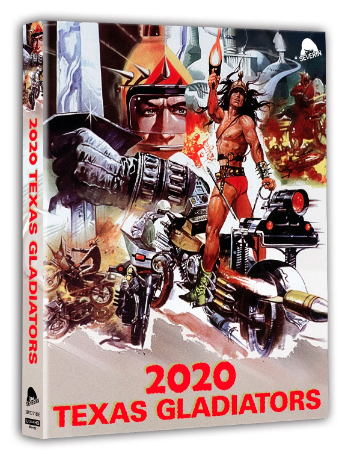
SEVERIN 4K UHD RELEASE: 2020 Texas Gladiators (1982)

Severin is releasing this to retail on November 26, 2024. Until now, it has only been available on their site.

The most elusive, requested and unapologetically unhinged Penne Post-Apocalypse epic of all is finally available, uncut and uncensored on disc for the first time ever from Severin. Directed by Joe D’Amato, written by George Eastman and assistant directed by Michele Soavi, this stars Al Cliver, Peter Hooten, Sabrina Siani, Geretta Geretta and Donald O’Brien in an all-star — in my world — end of teh world bit of insanity.

It’s scanned in 4K from the original negative with new and archival special features, including interviews with D’Amato, Soavi, Eastman, Cliver and Geretta; a trailer and the soundtrack by Carlo Maria Cordio.

You can get it from Severin.

A film with many AKAs — Anno 2020: I Gladiatori del Futuro (Year 2020 Gladiators of the Future), Futoro, 2020: The Rangers of Texas, 2020: Freedom Fighters and Sudden Death — the film we’re going to call 2020 Texas Gladiators starts with a long battle after the end of the world, bringing you in before there’s even any story. Who even cares if there’s a story? People are getting killed left and right!

Also: Smarter people than me would call that in media res. I just call it in the middle of stuff.

We have five heroes here and they are Nisus (Al Cliver, EndgameWarriors of the Year 2072), Catch Dog (Daniel Stephen, War Bus which is a totally different movie than War Bus Commando)Jab (Harrison Mueller, She), Red Wolfe (Hal Yamanouchi, Rat Eater King from 2019: After the Fall of New York) and Halakron (Peter Hooten, the original Dr. Strange and the man who said, “I got molested in the little boys room.”).

They have to save a monastery, but they just sit and watch as more people get attacked, like a priest who gets crucified and a nun gets so upset over everything that she grabs a piece of glass to slice her own throat What are they waiting for? Are they just going to watch everyone die?

Then, to make them look like they care even less — or are less inept — Catch Dog tries to rape one of the survivors! You guys are the heroes? Well, at least they kick him out after that. And that unfortunate woman is Maida (Sabrina Siani, Oncron from Conquest!), who hooks up with Nisus. Years later, they’re all settled down, the rest of the guys have gone their own way and Catch Dog has started an evil gang. Just like your friends from college or those high school people from Facebook who have the back the blue flag as their icon. Except that Catch Dog hasn’t forgotten anything.

His gang attacks the town where Nisus lives with his family. Surprisingly, they fight back the invaders, but then a vaguely Nazi army attacks and defeats our hero, shooting him across the forehead. Then the army kills and rapes everyone and everything, taking the town apart.

The leader of this army, Black One (Donald O’Brien, Dr. Butcher M.D. himself!) tells everyone that he’s in charge. They then take Nisus and force him to watch his wife get raped. This movie has more violent sex than — oh, Joe D’Amato and George Eastman directed it? Yeah. It figures. Never mind.

In one of my go-to reference guides to Italian exploitation, Spaghetti Nightmares, D’Amato says that Eastman “didn’t feel confident enough in the action scenes and so I dealt with those, leaving him to the direction of the actors. But in this case, the name recorded at the Ministry (director’s credit) was mine.”

Later in that book, Eastman pretty much makes anyone who likes these movies feel bad about their choices: “These (post-atomic) films, which were made in the wake of the various Mad Max movies, were decidedly crummy. The set designs were poor….and the genre met a swift and well-deserved death. I only wrote these awful movies for financial reasons….no attempt at originality was made at all.”

So what happens with our hero? He attacks one of the guys and gets shot a hundred times and dies. Is that the end of the movie? Nope. Instead, his old friends Halakron and Jab find Maida, who has been sold to a gambler, and Halakron wins her in a game of Russian Roulette. They all get busted for a bar fight, where they get tortured in salt mines. Luckily, Red Wolfe comes to save them.

Catch Dog’s gang attacks, but our heroes fake their deaths. They also meet up with a gang of Native Americans. Jab has to defeat one of them in battle to get them to join with our heroes. Of course, he wins. He’s Jab, bro.

Maida gets to kill Catch Dog, but Jab doesn’t make it. He dies in his friend’s arms because this is an Italian movie and even the heroes can die. Luckily, Halakron gets to kill Black One with a hatchet. So there’s that.

Halkron, Red Wolfe and the Native Americans win the day, save everyone and then ride off into the sunset, because post-apocalyptic Italian movies are just spaghetti westerns with shoulder pads. Italy is Texas. Texas is Italy. Even the end of the world is never the end.

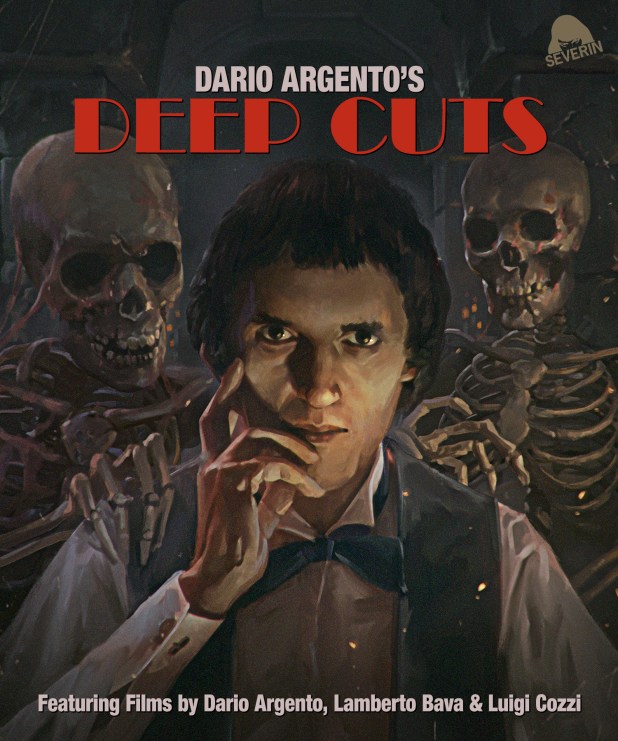
SEVERIN BLU RAY RELEASE: Dario Argento’s Deep Cuts (1973, 1987)

Severin is releasing this to retail on November 26, 2024. Until now, it has only been available on their site.

At the peak of his cinematic triumphs, horror legend Dario Argento created projects for RAI TV that broadcast his singular vision of terror into millions of Italian homes: Door Into Darkness was the top-rated 1973 anthology series produced and hosted by Argento. This set has three of the four episodes sourced for the first time from the original 16mm negatives. Argento’s popular 1987 variety/talk show Giallo has stories directed by Argento, Luigi Cozzi and Lamberto Bava, as well as behind-the-scenes tours from Tenebrae, Phenomena and Opera, and guests that include Anthony Perkins, David Gilmour, Nick Mason, and Fiore Argento newly digitized from broadcast masters.

This Severin set also has over 8 hours of new and archival special features, including commentary by Nathaniel Thompson and Troy Howarth, Dario Argento: My CinemaDario Argento: Master of Horror and interviews with Argento, Cozzi, Bava, Dardano Sacchetti and Antonella Vitale. 

You can order this from Severin.

Here’s an overview of what you’ll find:

In 1973, Dario Argento was invited to RAI television and delivered Door Into Darkness, a show that he would host and even guide some of the episodes. Argento says, at the start of one of the episodes (translated into English) “As for Door Into Darkness, which is the title of the series, you will wonder what it means. Well, it means many things: opening a door to the unknown, to what we don’t know and which therefore disturbs us, scares us. But for me it also means other things. It can happen, and it has happened once, even just once in a person’s life, to close a door behind them and find themselves in a dark room… looking for the light switch and not finding it… trying to open the door and not being able to Do. And having to stay there, in the dark… alone… forever. Well, some of the protagonists of our stories have closed this fatal door behind them.”

The first episode, Il vicino de casa (The Neighbor) was the second directing job for Luigi Cozzi, who had debuted with Il tunnel sotto il mondo (The Tunnel Under the World). It’s the tale of a young couple by the names of Luca (Aldo Reggiani) and Stefania (Laura Belli). They arrive at their new home late at night with their infant child and barely meet anyone, other than knowing they have a neighbor (Mimmo Palmara) but otherwise, they live in a very isolated neighborhood.

On one of the first evenings they are there, as they watch Abbott and Costello Meet Frankenstein, they start to see a stain in the corner of the ceiling that starts to leak from upstairs. What is it? And should they tell the neighbor they have never met? When they go up there, no one is home. However, they soon find the dead body of their neighbor’s wife just in time for him to come back and tie them up.

This story was also written by Cozzi and it has plenty of tension, such as the couple hiding in the dark and then realizing that the husband has dropped his lighter in the killer’s room. It also has a dark non-ending that doesn’t give you much hope, as well as an Argento cameo as a hitchhiker.
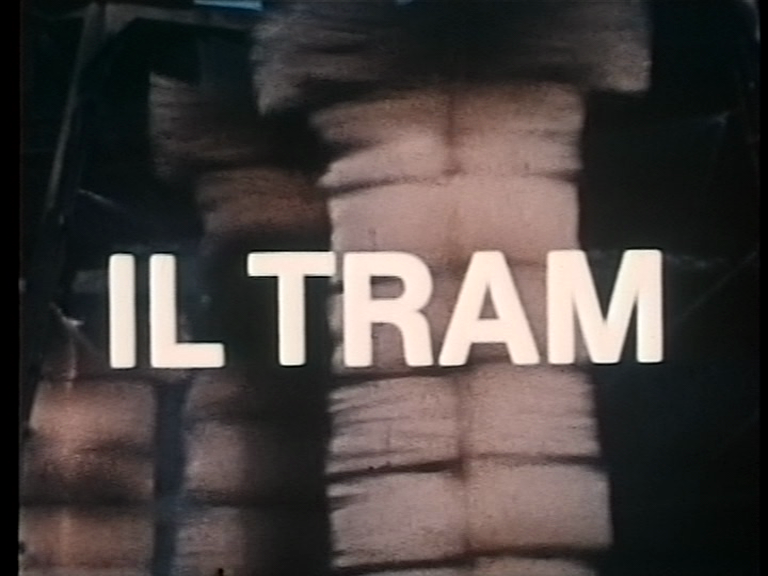
For the second episode of Doorway to Darkness, Dario Argento himself would direct and write. Il Tram (The Train) under the name Sirio Bernadotte (thanks to the incredible Italo Cinema).

A young woman is murdered on a train in the seconds that the lights go out and before they return. The murder baffles everyone except for Commisario Giordani (Enzo Cerusico) who seeks to solve it. He thinks that it has to be ticket taker Roberto Magli (Pierluigi Aprà), except that he’s never satisfied. It seems too simple. That’s when he brings his girlfriend Giulia (Paola Tedesco) to ride the train and try to lure out the true murderer.

A very Hitchcock-influenced story, this moment was originally going to be part of The Bird With the Crystal Plumage but it took away from the story. Argento would return to the dark mystery of a train and how frightening it can be in probably the best sequence of his post-Opera films in Sleepless. This may not have the insane energy and madness of his usual style, but the story is well-told and I loved how the hero must overcome his own shortcomings — he’s too cocky, which may be because of his youth — if he wants to save his lover and solve the mystery.

There’s also a striking scene where the killer chases Giulia through the train and into a station and down an immense hallway, all POV, all with her staring back at us. It’s incredible.
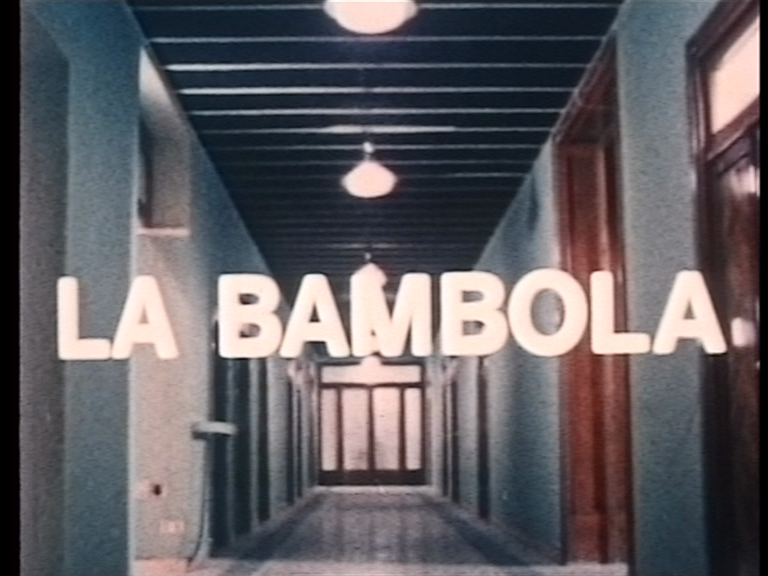
The third episode of Doorway to Darkness was directed by Mario Foglietti (who wrote the original story for Four Flies On Grey Velvet) and Luigi Cozzi and was written by Foglietti and Marcella Elsberger.

Argento informs us, in his introduction, that someone has escaped from a sanitarium, saying “…a sick mind wandering a small town, apparently normal, in matter of fact incandescent… Its aim: to kill.” That sick mind may be Robert Hoffman, who has checked into a hotel with an attache case before wandering the streets. One redhead is already killed when he meets Daniela Moreschi (Mara Venier) and follows her back home.

This feels like ten minutes of story shoved into an hour and sadly doesn’t work. But hey — Erika Blanc is in it and if the worst thing you do is watch a giallo with her in it, your day isn’t all that bad. Foglietti gets the look of Argento but doesn’t have the same ability to make art out of a flawed script.

Directed by Roberto Pariante (who was the assistant director for Argento on The Bird With the Crystal PlumageThe Cat o’Nine Tails and Four Flies On Grey Velvet) and Dario Argento, who wrote the script with Luigi Cozzi, Testimone oculare is my favor episode of Doorway to Darkness. It’s so simple and yet succeeds as an example of giallo.

Roberta Leoni (Marilù Tolo, Las trompetas del apocalipsis) is driving on a dark and rainy night when she sees a woman dive in front of her. She doesn’t hit her, but does find her dead body. She’s been shot in the back. That’s when she sees the glint of a gun and runs through the storm to a diner where she breaks down. The police, led by Inspector Rocchi (Glauco Onorato), take her back to the crime scene but there’s no body and no blood.

Everyone treats Roberta like a hysterical woman, including her husband Guido (Riccardo Salvino), even after someone breaks into their house while they’re out for their anniversary and the next day when someone tries to shove his wife into traffic. Then the phone calls start and never seem to stop.

One night, while all alone, the killer calls and says that they will finally kill Roberta. Guido comes home just in time and says that instead of leaving — the killer cut the phone line — they are going to wait for them and he will shoot whoever is after her. As you can imagine, this isn’t the way things end up happening.

Sometimes, a simply told mystery is exactly what you need. That’s what this episode gave me. Supposedly Argento disliked the work that Pariante did and went back and filmed a lot of this himself — the tracking of the killer by footsteps is definitely him — and then not putting his name on it.

Gli incubi di Dario Argento (Dario Argento’s Nightmares) was a TV series created and directed by Dario Argento that was part of the RAI TV show Giallo by Enzo Tortora. He’s probably most famous for the show Portabello that had viewers call in to buy or sell things, present ideas or try and look for love. And if they could get the parrot who was the show’s namesake to say his name, they would win a prize. He was also arrested in 1983 and jailed for 7 months as it was thought he was a member of an organized crime family, the Nuova Camorra Organizzata. It was a case of mistaken identity and he got out of ten years in jail thanks to the Radical Party. They offered him a candidacy to the European Parliament, which he won in a landslide. He was cleared of all charges the year this show ran and brought this show — on which he discussed unsolved murder cases — and Portabella to RAI.

The main draw of these episodes are nine new mini-movies made by Argento. They’re three-minute shorts shot on 35mm that show off some wild effects but one of them, Nostalgia Punk, so upset viewers that it has rarely been shown since. The stories are:

La finestra sul cortile (The Window on the Court): This is Argento’s tribute to Alfred Hitchcock and Rear Window. After watching the film, a man named Massimo watches his neighbors fight. He runs down with a knife to stop them, but falls on his own weapon and is blamed by the police for killing the woman. If you recognize the music, it’s part of the Simon Boswell score from Phenomena.

Riti notturni (Night Rituals): This is also missing from some online versions of the film, but has a maid conspire with a voodoo coven to murder and devour the couple that she works for.

Il Verme (The Worm): A woman who goes by the name of Bettina is reading Dylan Dog (the comic book that Cemetery Man comes from) when she overhears a story about parasites that go from cats to humans. As she explores her nearly nude body in a mirror, she notices a worm has grown out of her eye, which she stabs out.

Amare e morire (Loving and Dying): Set to Michael Jackson’s “Bad,” this story has Gloria assaulted and left for dead. As she recovers, she believes that the man who raped her is one of three neighbors. She sleeps with each in an attempt to learn who it is and get her bloody revenge.

Nostalgia punk: The most controversial segment, this has a woman’s water become poisoned. She begins to vomit multicolored liquids and then parts of her body before she finally tears her own body to pieces and her organs rain out of her destroyed carcass. It got so many complaints that Argento was told to settle down in future segments.

La Strega (The witch): Using Morricone’s score from The Bird With the Crystal Plumage, this has Cinzia’s party guests playing a game called “The Witch” that ends with children screaming and holding a bloody head.

Addormentarsi (Falling asleep): A man is possessed by a demon just before he falls asleep and then devours his dog. This uses “Anarchy in the UK” by the Sex Pistols.

Sammy: Sammy is a young girl who is frightened when Santa enters her room. Then Santa removes his face and reveals a monster. It’s simple but it really works.

L’incubo di chi voleva interpretare l’incubo di Dario Argento (The Nightmare of the One Who Wished to Explain Dario Argento’s Nightmare): A young man comes to REI to be part of this series and when he stays at a hotel, he soon learns he’s in a room with foreigners who steal everything he has and then threaten to kill him. It turns out that it’s all a set-up by Argento.

At the beginning of every episode, Argento appears, often with Coralina Cataldi-Tassoni (Demons 2Il Bosco 1Opera) all gothed out and acting as his starry-eyed assistant.

Argento also created another segment for GialloTurno di notte (Night Shift), which was about what happens to cab drivers at night. Episodes were also directed by Lamberto Bava and Luigi Cozzi. He also shared how he filmed several big moments in his most famous movies, such as the Loma camera sequence in Tenebrae; the bird attack in Opera, the transformation scenes in Demons 2 and how he directed Goblin to create the score for Suspiria. These scenes are worth watching and also appear in the Luigi Cozzi-directed Dario Argento: Master of Horror.

While this is by no means necessary watching for those with a passing interest in Italian horror, for devotees of the form and Argento, it is required viewing. It’s the chance to basically get nine new stories even if they are very short.