Master of Horror Mick Garris and writer A.L. Katz crafted this, the third of the premiere episodes of the sixth season of Tales from the Crypt. It’s a deeply meta narrative, where Rolanda (Rita Rudner), an artist for the Tales from the Crypt comic book, grapples with an abusive boss, Vern Caputo (Richard Lewis). He dismisses her, she retaliates, andthe police end her life. But the horror doesn’t end there. She awakens in her bed, forced to relive the same day over and over, trapped in a nightmarish cycle.
“Looks like it’s curtains for me kiddies. Then again, maybe the Venetian blinds would look better. I don’t know. When I started this little makeover, I was pretty excited. I thought a little Slaytex paint, some new scream doors, maybe even some scare conditioning. I could turn my little doomicile into a regular pied-à-terror. But, I tell ya, kiddies, between the dust and the ghost overruns, your pal the Crypt Keeper’s going out of his mind! Which is kinda like the woman in tonight’s terror tale. It’s about a comic book artist who’s about to experience a terrible case of déjà boo. I call it “Whirpool.””
As the episode draws to a close, a startling revelation emerges. Rolanda is, in fact, Vern’s superior, and the entire narrative is a product of his comic book. He’s ensnared in a time loop, experiencing the same abuse he once inflicted on her. It’s a jarring role reversal that plunges us deeper into the twisted world of EC Comics.
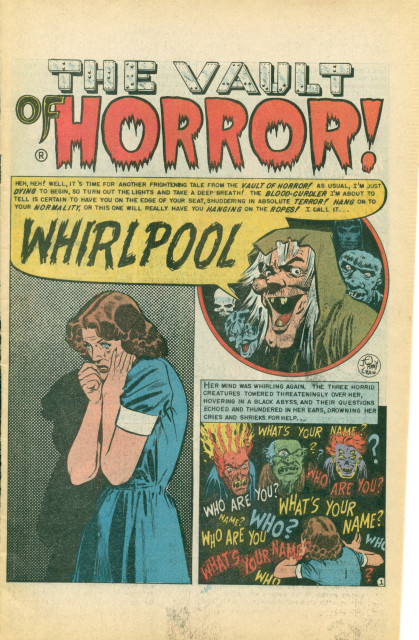
This is based on “Whirlpool” from Vault of Horror #32, written by Al Feldstein and William Gaines and drawn by Johnny Craig. In that story, a woman is trapped in a world of unending horror, which may or may not be all in her mind.
Deeds not words! Megaforce has come from the 1980s to fix what’s wrong. They’re going to do it by blowing up their own vehicles and wearing skintight suits and yeah, maybe, they’re going to be sexist. But they’re going to do it.
EDITOR’S NOTE: Cinematic Void will be playing this on Monday, Jan. 20 at 7:00 p.m. at Los Feliz 3 in Los Angeles, CA (tickets here). For more information, visit Cinematic Void.
Umberto Lenzi, come on down! We’re eager for you to shock us, titillate us, and perhaps even thrill us a bit. Oh, and you’ve brought Carroll Baker with you! Please, show us the tale you’ve crafted!
Released in Italy as Orgasmo, this was released as one of the first X-rated movies in the U.S., which was definitely played up in all of the ads especially because it had Baker in the movie. She had left America a single mother with two children and her prospects weren’t great in Hollywood. In Italy, despite making movies that she said “What they think is wonderful is not what we might,” she found a career. Later, she would admit that it showed her an entirely different world and brought her back to feeling alive again.
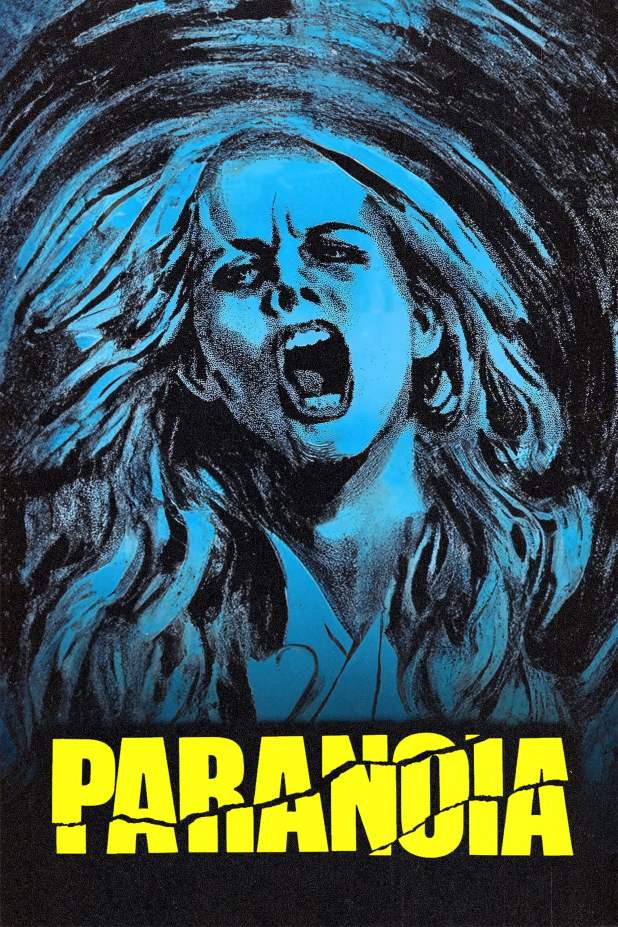
What’s confusing is that Lenzi’s next movie was released as Paranoia in Italy and A Quiet Place to Kill in America.
I love this interview that she did with Tank Magazine, answering if she ever did any avant-garde projects: “Some of the films in Europe, of course, but a lot of them I haven’t even seen. The one I’m curious about is called Baba Yaga; it was a really far out, wild, cartoonish sort of thing. I play the title character, a 1,500-year-old witch, and all my sisters were witches, too. I didn’t have to be completely naked, but in every Italian film, there was a scene where you had to show your breasts. Usually, I was talking on the telephone or reading a book. One day they announced a nude scene – I couldn’t believe it. But the make-up artist and hairdresser were already there, dying the other girls’ pubic hair to match the hair on their heads.”
In this story, Kathryn West (played by Baker) is a glamorous American widow who moves to Italy just weeks after her wealthy older husband’s death. She settles into a huge villa, but her life feels lonely and boring until Peter enters the picture. His free-spirited nature shakes her out of her rut, and soon he moves in with his sister, Eva. However, things aren’t what they seem—they are not actually siblings, and their relationship evolves into a complicated love triangle. When Kathryn tries to break free from this arrangement, Peter and Eva keep her prisoner, constantly keeping her under the influence of drugs and alcohol while playing the same haunting song on repeat, driving her to the brink of insanity and suicidal thoughts. That’s what happens when you get gaslit and everyone is feeding you pills. Don’t worry — everyone pays for their sins by the end.
If you appreciate melodramatic twists, layered narratives, and visually striking sex scenes, then it’s time to indulge in this film. You can find it as part of The Complete Lenzi/Baker Giallo Collection set from Severin, which also has So Sweet…So Peverse, A Quiet Place to Kill and Knife of Ice.
Also known as Thy Neighbour’s Wife, Sex Attraction and Poison, this stars Kari Wuhrer, who from 1988-1989 was the it girl on MTV’s Remote Control (but not the first or the last; the show has Marisol Massey in season 1, Wuhrer was replaced by Alicia Coppola and the last episodes had Susan Ashley in the role). By 1999, she’d been on the Swamp Thing TV show and appeared in several horror movies. By the time she was added to the cast of Sliders and had an album on Rick Rubin’s American Records, Shiny, she was at the top of the world.
This led to a disaster of an appearance on Conan O’Brien’s first talk show. It started when she insulted comedian Stephen Wright, and it only got worse from there.
She’s still acting — doing voice work often — but she never achieved those heights of the late 90s again, where man’s magazines like FHM and Maxim — remember those? — fawned over her. And hey, she’s in many of my favorite movies of that era, like The Adventures of Ford Fairlane and Beastmaster 2: Through the Portal of Time. But after that? The Prophecy sequels, the Hitcher sequels, movies where she fights spiders and erotic thrillers.
Yes, back in 2000, this was a viable career path. If you had the internet, you had dial-up. Cable and video store softcore was still a thing.
Wuhrer is Ann Stewart, whose husband, Chris (Larry Poindexter), has burned out at work. When he doesn’t get the promotion he feels he is owed, well, he kills himself. Am I supposed to be like the kids and say he unlived himself? And this is after she slept with an old man named Ian McMillan (Michael Cavanaugh) just to ensure that he finally made a sale!
After her husband drives his car off the road to Deathsville, she becomes Anna Johnson and takes over as the live-in au pair for Nicole Garrett (Barbara Crampton), the woman who took her husband’s promotion. Will she turn daughter Darla (Melissa Stone) against her mother? Well, that’s already been done, but yes, she does. She also scuffs her knees in the laundry room pleasuring teen son David (Seth Adam Jones) and has her sights set on husband Scott (Jeff Trachta). Yes, if she has to sleep with every member of the family to get revenge, she will. After all, she had already killed the big boss, Mr. Slider (John Henry Richardson).
Even the way that she got this job comes from revenge. Ann wanted to kill Nicole and accidentally murdered their housekeeper, Karina (Peggy Trentini). This creates a job opening and a way for her to get close to her enemy, who doesn’t even know she is one.
Jay Andrews directed this, but come on, that’s Jim Wynorski, the same as co-writer Noble Henry. He’s joined by writers Sean O’Bannon (Mom’s Outta Site and Mom, Can I Keep Her?) and Al Sophianopoulos, who also write Interlocked: Thrilled to Death. I could be convinced that he’s also Wynorski. Just like the Giallo that inspired these erotic thrillers, they have filmmakers who have plenty of other names and come in so many titles.
However, I am not sad. Why wouldn’t I want to watch Kari Wuhrer and Barbara Crampton fight one another one more time? Isn’t that one of life’s simplest pleasures?
Maybe Ann/Anna did Nicole a favor. The last housekeeper, Karina, was about to bone out Scott. Perhaps these two women are close to being one another, and it will take a near-death experience to finally understand her daughter, who is a vacuous cipher of a character.
This is the movie your grandmother would have bought you for Christmas if you asked for The Hand That Rocks the Cradle. She would say, “I don’t know all those erotic thrillers you kids are into today.”
EDITOR’S NOTE: Cinematic Void will be playing this movie on Thursday, Jan. 16 at 9:00 PM at The Plaza Theater in Atlanta, GA (tickets here) and January 25 at midnight at The Belcourt in Nashville, TN (tickets here). For more information, visit Cinematic Void.
A monkey. A girl who can talk to bugs. Donald Pleasence. All directed by Dario Argento. If you don’t immediately say to yourself, “I’m in,” you’re reading the wrong website.
Within the movie’s first two minutes, you realize you’re watching an Argento film. A tourist misses her bus somewhere in the Swiss countryside before she is attacked by an unseen person and then beheaded.
Fast forward a bit, and we catch Jennifer (Jennifer Connelly, Labyrinth, The Rocketeer) arriving at the Richard Wagner Academy for Girls — did I tell you this is an Argento movie? The head of the school, Frau Brückner (Dario Nicolodi, Argento’s wife (at the time) and mother to his daughter Aria, who also co-wrote Suspiria and appeared in Deep Red, Inferno, Tenebre and Opera, amongst other films), already sets up an air of menace. Even her roommate offers no relief, telling Jennifer how much she wishes she could have sex with the heroine’s famous actor father. At this point, Jennifer relates a horrifying story about how her mother left her — it’s a moment of pure pain in a film that hasn’t led you to expect it. That’s because it’s a true story. The true story of how Dario Argento’s mother left his family.
Jennifer tends to sleepwalk, which leads her through the school and up to the roof, where she watches a student get murdered. She wakes up, falls and runs from the murderer, ending up in the woods where she’s rescued by Inga the chimp — again, did I mention this is an Argento film? Inga works for forensic entomologist John McGregor (Pleasence). Argento was inspired by the fact that insects are often used in crime investigations to learn how old a body is and worked that into this film. McGregor knows that Jennifer can talk to the bugs.
After returning to the school, things go from bad to worse. Jennifer’s roommate is murdered, and a firefly leads our sleepwalking protagonist to a glove covered by Great Sarcophagus flies, which eat decaying human flesh, which can only mean that the killer is keeping his body — again, Argento.
At this point, Phenomena pays tribute to Carrie, with the other students making fun of her regarding her love of bugs. She calls a swarm of flies into the building, and it collapses, which leads to Frau Brückner recommending her to a home for the criminally insane. Luckily, Jennifer runs to McGregor, who gives her a bug in a glass case that she can use to track the murderer. Again, you know who. The bug leads Jennifer to the same house we saw at the film’s beginning.
Meanwhile, McGregor is killed after Inga is locked outside. True fact: the chimpanzee who played Inga, Tanga, sounds like she was uncontrollable. She ran away for an entire evening of the shoot and nearly bit off one of Jennifer Connelly’s fingers.
Let me see if I can sum up the craziness that ensues: Jennifer calls her father’s lawyer for help, who ends up bringing Frau Brückner back into this mess, who tries to poison Jennifer and then knocks her out with a piece of wood. She then KOs a cop before Jennifer escapes, going through a dungeon and a basement until she falls into a pool that is packed with maggot-ridden corpses. This is the point in the film where you may want to stop eating because it gets rather intense from here on out. As Jennifer escapes that watery tomb, she hears someone crying. That someone is Frau’s son, who was born from a rape. Jennifer asks him why she thinks he’s a monster, to which he turns to face her and scares the fucking shit out of her. Seriously, it’s jolting — the kid has Patau Syndrome, a real chromosomal abnormality (it’s makeup in the film, but looks quite true to life). He then chases Jennifer into a motorboat, but at the last second, she calls a swarm of flies to attack him. He falls into the water, and the boat explodes, and he dies, and…whew.
I know this film is 32 years old, but I will leave some spoiler space here because what happens next is crazy.
Jennifer reaches the shore just as her father’s lawyer arrives. All well, all good and then, out of nowhere, Frau cuts the dude’s head clean off. Plus, she’s already killed the cop, and she goes absolutely shithouse.
“He was diseased, but he was my son! And you have… Why didn’t I kill you before? I killed that no-good inspector and your professor friend to protect him! And now… I’m gonna KILL YOU TO AVENGE HIM! Why don’t you call your INSECTS! GO ON! CALL! CALL!”
At this point, Inga, the chimpanzee, comes out of nowhere and kills Frau with a razor. Keep in mind that this is not just one cut. This is a simian who knows how to get the murder business done.
Jennifer and Inga hug. Roll the credits.
Phenomena was the last Argento movie to get significant distribution in the U.S., thanks (or no thanks) to New Line Cinema, which played it here as Creepers. This version is 33 minutes shorter than the original and has so many scenes shuffled that it makes little or no sense. Also, unlike other Argento films, Goblin only has two songs in this, as modern bands like Iron Maiden and Motörhead are featured.
I love this movie. It makes little sense, but you don’t walk into an Italian horror film expecting narrative structure. You hope to see some crazy gore, some interesting death scenes and maggots — all things that this film more than delivers. I’m not the only fan of this flick — the Japanese video game Clock Tower is an homage to this film, even featuring a heroine named Jennifer.
BONUS: We did a podcast all about this movie, and you can hear it here:
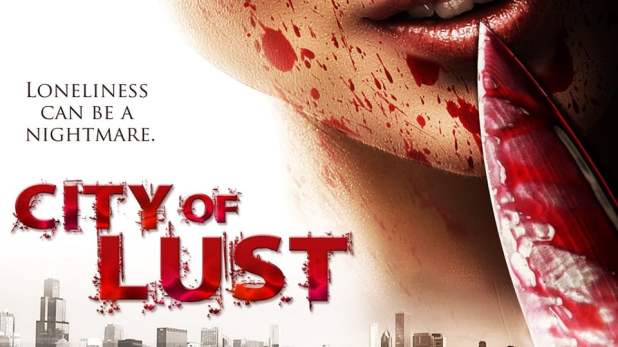
Directed by David A. Holcombe, who co-wrote the script with Rory Leahy and Nick Reise, this film, initially titled Yellow, draws inspiration from Giallo films. In America, it was rebranded as City of Lust, a title that perhaps doesn’t fully capture its essence. The film delves into themes of escape and identity, a journey that unfolds against the backdrop of a beauty salon.
Ariana (Margaret Grace) has a life she wants to escape, working in a beauty salon for Lyla, who seemingly abuses her at every opportunity. Her only friend is Renee (Kyle Greer), a trans woman who stands up for her and takes her to the clubs, where Ariana feels even more lost. When she returns home, themaintenance man Nikos (Antonio Brunetti) almost assaults her.
But when she gets to her bedroom, she finds escape through anonymous phone sex lines, looking for women to speak to. That’s where she meets Jackie (Jill Oliver), a woman who takes her into her bed and starts to fix her life. Well, I say fix in a way that means everyone who has done Ariana wrong shows up dead while our heroine appears near the bodies with no idea how she got there, clutching a tooth or a part of the person who has been killed. Ariana isn’t even her name. She changed it to escape her obsessed brother Danny (Derek Ryan Brummet), who has finally found her. And as you figure out how disturbed Ariana is, you also learn that he is the reason why.
This was sold as “a modern Giallo,” but besides the constant yellow lighting and a mask on the killer, it only has some of the familiar parts of the genre. I liked Grace’s acting, and I wanted to get behind her character as she gets over being closeted and gives herself over to someone else despite death being all around her. And yet the movie wants to be a workplace comedy and a slasher by the last half an hour, always unsure of what it needs to be. It knows the basic idea of a Giallo, but its heart does not beat for the genre; it’s just a tagline placed on a film to get people like me to watch it.
EDITOR’S NOTE: Cinematic Void will be playing this film on January 27 at 7:00 PM PT at Los Feliz 3 in Los Angeles, CA. For more information, visit Cinematic Void. For tickets, visit this site.
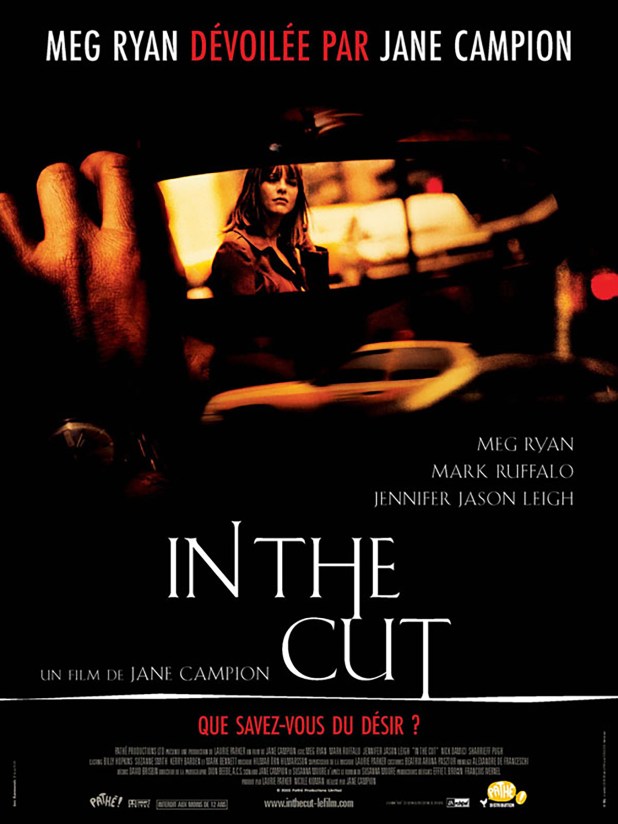
Wikipedia refers to this movie as an “American psychological thriller film,” while it was sold as a detective story and derided by critics as an erotic thriller. You know what that means: it’s a giallo.
It’s also way more profound than anyone gave it credit for.
Its heroine, Frannie Avery (Meg Ryan), is a complete and rich character, at once introverted and attracted to danger. The New York City that she lives in is also filled with both violence and sex, even in her students. One of them, Cornelius (Sharrieff Pugh), believes that John Wayne Gacy wasn’t guilty of his crimes because he was a victim of desire. Moments later, Frannie watches a couple engaged in oral sex in public. And on the subway, every ad seems to be a poem written directly to her.
That violence gets close, so close, to her that a severed limb is found in her garden. That’s when the men — and police — intrude on her life. Detective Giovanni Malloy (Mark Ruffalo) is so forward when he questions her that she’s excited by him. Yet, as animalistic as he seems, he feels nobler than the others, like his partner Richard Rodriguez (Nick Damici), who isn’t even allowed to carry his gun after trying to kill his wife.
Frannie also notices that Malloy has a 3 of Spades tattoo, which she saw on the man getting pleasured in public. It’s because he’s in a secret society and can’t tell her anymore. Later that night, she’s attacked while walking home and he comes to her rescue. They have sex, and when she wakes up, she realizes that some of her jewelry is missing.
But when going over the details with her sister Pauline (Jennifer Jason Leigh), Frannie starts to wonder if Malloy is the killer as well as the masked man who stalked her. Her student Cornelius is questioned — his term paper was written in his own blood — and she has to tell her ex, John (Kevin Bacon), that she thinks she’s having panic attacks. It doesn’t let up, as she soon finds the severed head of her sister.
And when Malloy has her jewelry and a key to her sister’s apartment, it all seems to come together. Or does it? Like in all Giallo, can we even trust our narrator?
Jane Campion and Laurie Parker spent five years developing the film. Nicole Kidman also received a producer credit. She was initially cast as Frannie but dropped out after her divorce from Tom Cruise, wanting more time with her children.
I like what Jordan Searles said about the film, as it describes why it works so well for me: “Shots depicting Frannie being watched mainly serve to highlight how women have to navigate the world under the gaze of men. Frannie is always looking over her shoulder, constantly assessing her surroundings. She knows she is being watched, yet continues to pursue pleasure on her own terms. In the end, once Frannie has faced her worst fears, In the Cut rewards that bravery.”
It’s a rare film that can subvert the male gaze without falling into it. It also isn’t afraid to show depictions of sex that don’t seem alien from the early 70s heyday of Italian psychosexual murder films. I always passed on this movie, a victim of how it was sold and reviewed, and now I know I was wrong.
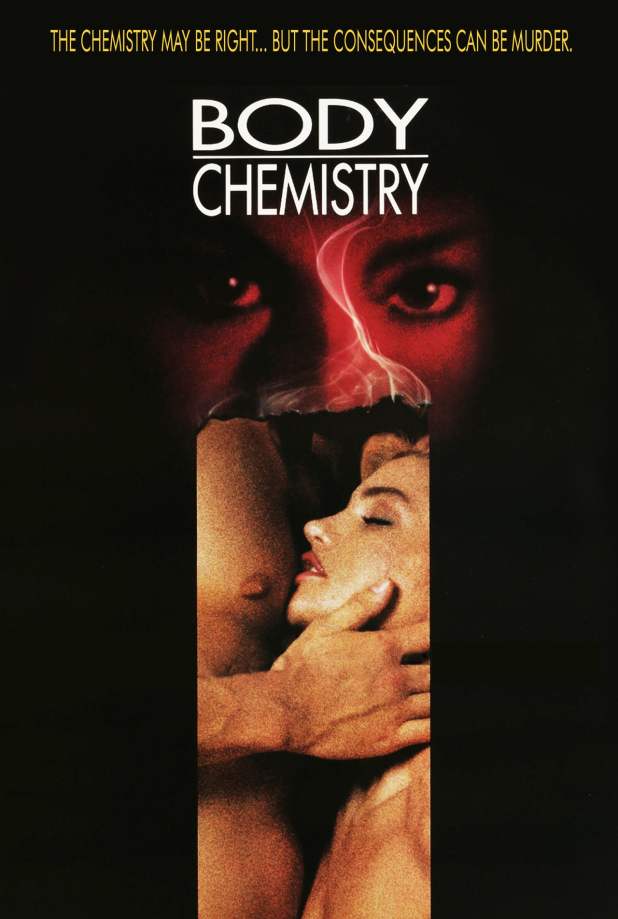
Kristine Peterson was a member of the staff at Zoetrope Studios during the filming of Apocalypse Now before making the kind of movies that I love, like Deadly Dreams and Critters 3, as well as being an assistant director on Exterminator 2, Chopping Mall, The Supernaturals and Tremors. The script comes from Jackson Barr, who is really Jack Canson. He used that name to write the series’ second and third movies, Seedpeople, Subspecies and Trancers II. Peterson worked with Thom Babbes to push the script further, as this was a direct-to-video cash-in on Fatal Attraction. They went for the carnal content to be darker and dirtier than what played on big screens.
Tom Redding (Marc Singer) is a human sexuality researcher living a blessed life. He’s rich from his work; he has a great wife named Marlee (Mary Crosby), and might be the next director of the clinic he works for.
Then, he meets Dr. Claire Archer (Lisa Pescia).
Her theory is that sex is all about power, and she can prove that by breaking down all of Tom’s defenses and seducing him, dominating him, unlike every other woman he’s ever been with. As you’d expect, Tom wants this affair to end and for him to be able to go back to his safe family life. Dr. Claire is willing to send porn to his house as a first salvo before things eventually reach her using propane tanks to nuke his home.
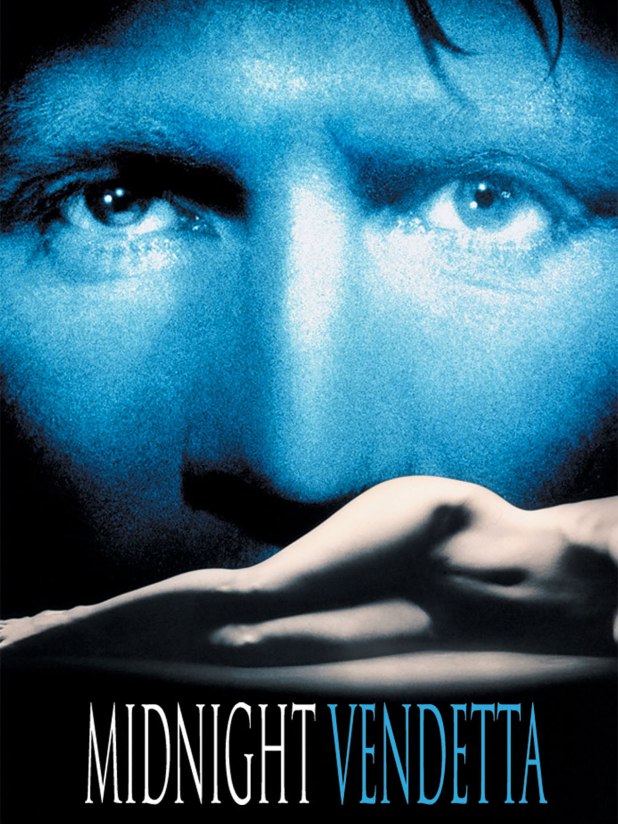
For as much as Fatal Attraction and Basic Instinct — a movie similar to this one, coming out two years after — are seen as the movies from which the well of erotic thrillers springs from, Body Chemistry establishes the template from which many films would copy. Saxophone and fog-filled love scenes, evil women who introduce fallen men to a world of dirty love, and good women who want their man back in their safe vanilla beds. What they miss is the kink that this has, including a shower scene that makes it appear that Dr. Claire is taking Tom from behind, supplanting his role as the male dominant partner. That’s pretty wild for today, much less nearly thirty-five years ago.
EDITOR’S NOTE: Cinematic Void will be playing this on Saturday, Jan. 25 at midnight at the Coolidge Theater in Brookline, MA (tickets here). For more information, visit Cinematic Void.
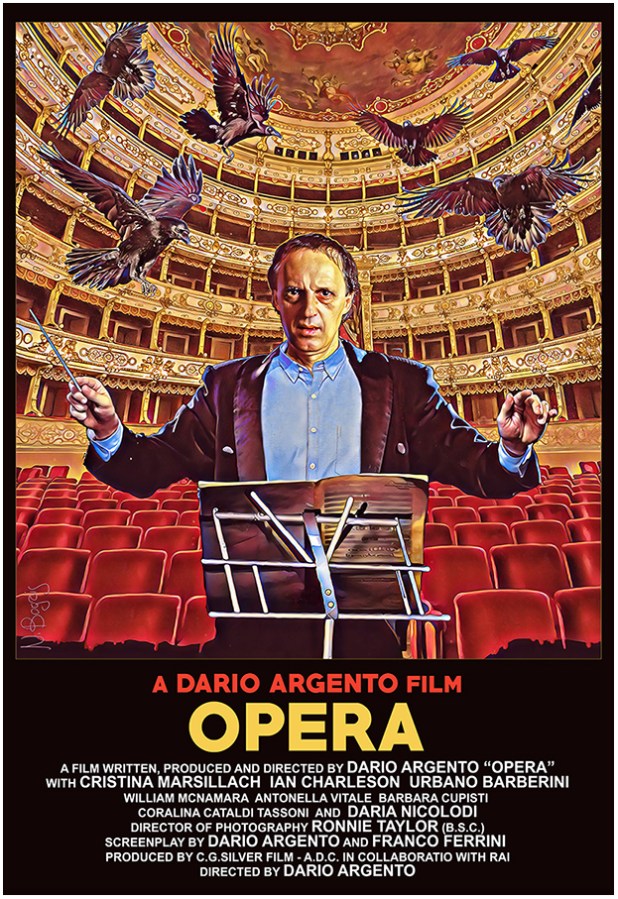
Mara Cecova is a diva and the star of a new way of performing Verdi’s Macbeth. But when she’s hit by a car as she argues with the director in the middle of the street, her role goes to her understudy, Betty. Ironically, in his book Profondo Argento, director Dario Argento claimed that the person playing the role of Betty, Cristina Marsillach, was the most challenging actress he would ever work with.
Despite her initial worries, Betty succeeds instantly on her opening night. At the same time, a black-gloved killer sneaks into one of the boxes to watch before murdering a stagehand with a coathanger. Everyone, grab your barf bags and motion sickness pills; Argento is behind the camera!
Of all the powerful shocks in Opera, perhaps the one that means the most to the viewer is that we share Betty’s torture — she’s repeatedly gagged, tied up and forced to watch the killer at work again and again as he tapes needles under her eyes. They’ll be shredded if she blinks too long or shuts her eyes. It’s like Fulci’s wettest dream ever. In the same way, we are nearly complicit with the crimes we are forced to watch, mainly because they get more and more artfully composed.
Throw in the fact that Betty believes that the hooded killer is the same person who murdered her mother; she follows the Giallo path for a protagonist and confides in someone else rather than the police. Her reason? The killer may know who she is.
Inspector Alan Santini (Urbano Barberini, Demons) is on the case because there are so many clues, like the fact that the producer’s pet ravens were found dead after the show. As for Betty, she runs from the police and calls her agent Mira (Daria Nicolodi, Argento’s former wife and the writer of Suspiria and star of Shock) for advice.
Betty’s costume gets cut to ribbons, so she asks the wardrobe girl for help. While she works on the dress, they find a gold bracelet they can almost read. But here comes the killer and his needles again, forcing her to watch him kill one more time. The wardrobe girl accidentally swallows the bracelet, so of course, we watch as the murderer slices her throat open to get it back.
Betty runs back to her apartment, where Santini is waiting. He promises to send a detective named Soavi to watch over her (yep, The Church director Michele Soavi), but she doesn’t trust the man and leaves her apartment. That’s when her agent answers the next knock on the door by looking through the peephole. What follows is the grandest kill in the entire film — which is saying something — as we follow the bullet POV-style out of the gun and directly through her eyeball. Again, Fulci is somewhere wringing his hands.
Nicolodi had just ended a long relationship with Argento and did not want to be in this film. However, the shocking and complicated murder of her character changed her mind, even if she had to deal with an explosive device being put on the back of her head to achieve the final shot.
Betty escapes the killer again and runs to the opera house, convinced there is a connection between the murderer and her long-dead and abusive mother. The next night, as she performs, the producer unleashes what is left of his ravens, hoping they’ll find the killer. Oh, they do alright — tearing his eyeball out of his head — FULCI ARE YOU THERE, IT’S ME DARIO — and rewarding you, the viewer, with POV shots that threaten you with vertigo. I’m getting dizzy even typing this.
I don’t want to give away the killer or even the second ending where the killer isn’t dead. I want to talk about the sheer Argento-ness of the final scene, where Betty wanders into a field and releases a lizard, giving him his freedom. Argento claims that Thomas Harris’s Red Dragon inspired this ending. Of interest is that the director does NOT like the Michael Mann movie Manhunter. Me? Well, I love that movie. But I’d love to see Argento’s take. There was also a thought to another ending where Betty would fall in love with the killer.
Your enjoyment of this film comes down to how much you like shocking bloodshed and Argento’s arty side. He based the movie on his own failed staging of Macbeth, basing the role of the nervous producer on himself. And the idea of pins under the eyes? It comes from a joke about how Argento hated it when people looked away during the death scenes in his films.
Believe it or not, Orion Pictures planned on releasing an R-rated version of this in the US called Terror at the Opera with eleven minutes of mayhem removed and the Swiss Alps epilogue. Argento refused, and Orion lost money at a fast clip, so the movie only saw a limited video release.
Opera is something else — filled with style and brutality. I loved it, but remember my warning about how much you can handle.
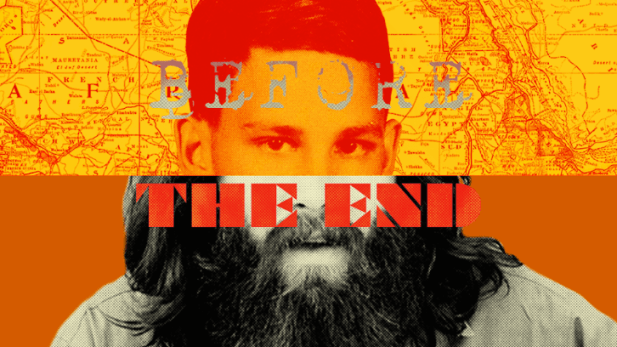
I got the notice for this movie in my email and my curiosity instantly was alerted: “Before the End transcends “rock doc” in the same sense that Jim Morrison was more than a rock star. Featuring unprecedented content, from shocking corroboration about Morrison’s early life to harrowing revelations about his stardom and fresh evidence that contradicts his professed death, Before the End: Searching for Jim Morrison is proudly unauthorized because it “seeks the unvarnished truth.””
Jeff Finn has spent nearly forty years seeking out what the true story of Jim Morrison is, beyond the expected — the Oliver Stone movie that everyone saw in the 90s, Danny Sugerman’s No One Here Gets Out Alive that was part of the burnout starter pack in my hometown — and has gone more profound than, well, just about anyone else. He’s conducted more than a thousand interviews, more than a hundred on video, as he’s tried to figure out not just who we know who Jim Morrison is, but who he really was, from people who actually knew whoever he was at a specific moment of time, whether that’s family, high school friends, college roommates or film school classmates, Lovers, band mates, just about anyone who had a moment that they connected with Morrison, Finn has met them and learned something from them.
Where so many are content to move forward from Morrison’s birth — like how we never know what happened to Jesus from childhood to when he was an adult, a fact that has to delight Morrison, wherever he is, to no end — to the sex, drugs, rock and roll, public indecency and leather-clad Lizard Kill era of Morrison fronting The Doors. Yet Finn knows this is just part of the story and just one destination on a long midnight drive.
This doc came into my life at the right time, as I consider that I have aged past when I needed rock to tell my truth, or so adults would like me to believe. I worry for today’s youth that they will have no mysterious superstars to become obsessed about like I did in my teen years, devouring pre-internet conspiracy books about Morrison. Did he really die? Why did he use codenames like Mr. Mojo Rising? How many bands got some fame just by playing with the notion that Jim Morrison didn’t fade away? Those stories will take you down some excellent rabbit holes — Jim still has a photo ID on record at the Bank of America, he was a military MK Ultra experiment, and even he was a clone. Some of these stories strain your grasp of reality, but when the actual story is that he went to Paris and died, with no one seeing the body, how can you not expect mythology to fill in the gaps when reality is so sloppily constructed?
Told in three parts, each a little over an hour, Finn’s film has a strange impact on you. The more you listen to his deep voice, the longer you watch the interviews, and you start to follow him through the journeys down, as he says, the rabbit holes and the deeper warrens beyond those rabbit holes. By the time he introduces you to a source named “Mr. X,” who may or may not be Morrison — I don’t even know if the filmmaker is sure — you’ll be hooked. You may not become a true believer, but even if you walk away from this questioning the story about who Jim Morrison is — or was — he’s achieved his goal. It’s just as much reinventing the Jim that you believe you know and getting a more richly realized portrait of him as a human being, not just an artist. Someone who may have gone through childhood abuse, someone who moved often, someone who may have even been neurodivergent when we didn’t have the words yet to explain what that meant.
This has led me to consider who we all are. We all have a different story for each person we meet. The goal of any documentary is to inform you of a point of view, but it’s also to get you to think more critically. Before the End succeeds because it made me think of the idea that each person is only who every other person experiences them as. The difference here is that Morrison remains well-known years after his death. Supposed death, right? Each person here knew a moment in his life, and Finn knows all of their stories and the research he’s done for decades. What emerges is one of the richest pictures of Morrison I’ve seen in any media.
Before the End is streaming in the US, Canada, UK, and Australia on Amazon Prime Video, AppleTV, Google Play and YouTube TV. You can learn more at the official Facebook page.



 B&S About Movies
You must be logged in to post a comment.