Lost somewhere Burt Reynolds’s White Lighting (1973) and Peter Fonda’s Dirty Mary, Crazy Larry (1974) is this hicksploitation passion-cum-vanity project that served, not only as Jack Conrad’s lone acting effort, but his lone feature film writing and directing effort. Perhaps if his negotiations with a then up-and-coming and hot Jeff Bridges and Robert Blake — both who made inroads with their early, southern-fried films The Last American Hero and Corky, respectively (both 1973) — hadn’t broken down to the point that Jack had no choice but starring himself, maybe we’d remember this ersatz-Bonnie and Clyde (see Fabian in A Bullet for Pretty Boy) beyond its inclusion on Mill Creek’s Drive-In Movie Classics 50-film pack.
Hey, Jack, being on a Mill Creek boxer ain’t a bad place to be.
Jack Conrad is a name you know as rolling in the credits of The Howling as a producer: he was originally slated to serve as the project’s writer and director. After his dust-ups with the studio cleared: John Sayles — a two-time, future-nominated Academy Award Winner — was given the job of adapting Gary Brander’s novel of the same name. Joe Dante sat in the director’s chair (and, if you are keeping track: Dante and Sayles previously worked together on Piranha).
So goes the life of a then twenty-something film school graduate fresh of the prestigious USC Film School, one who got his first job as a second unit director on an 1870s-era drama called West Texas (1970), in addition to editing a psychological horror film called Moonchild (1972) that starred Victor Buono and John Carradine.
While Jack isn’t exactly Bridges-Blake (or even Fonda) magnetic, he’s certainly serviceable in the role of the fresh-out-of-prison, ne’er-do-well-to-inept bankrobber-cum-garage mechanic Bobby Lee Dixon. What saves the picture is the presence of well-worn, southern fried character actor Dub Taylor (Bonnie and Clyde and Bridges’s Thunderbolt and Lightfoot) in his lone, leading-man role as Bobbie Lee’s boss, J.J “Jumpy” Belk. Adding to the need-to-stream is the presence of equally “southern” character actor David Huddleson with one of his rare, marquee roles.
Rednecks, Vampires, and Richard Burton? We ain’t hatin’!
On a low-budget and in Tallahassee, Florida (although we are in “Georgia”) — and certainly done better, by others — Jack Conrad shoots it all on location as he opens with great shots of a local stock car mudtrack where he serves on Jumpy’s pit crew — trying to go straight. But Bobby Lee’s tired of the poverty — and he’s in love with Jumpy’s daughter: his married daughter. So, to impress Ruthie by making a better life for himself in Mexico, he returns to robbing banks — and she goes the “bad boy” route to become his “Bonnie” for the inevitable, bloody shootout.
Considering Jack Conrad was two years out of school and on his first film (around the same time, George Lucas put together THX 1138; John Carpenter assembled Dark Star), Country Blue isn’t great, but it’s not a disaster, either. Sure, there’s sound issues (not the print itself from which Mill Creek copied, but in the film itself) and a few awkward shots, some which looks like too-long, lingering filler to pump the running time. For the most part, Conrad captures everything with a decent, competent against-the-budget skill set (as you can see below: the film’s car chase set piece is well done).
Country Blue is a decent B-Movie from the mosquito-strewn, bygone drive-in days of yore. Watch it on You Tube HERE and HERE or own it as part of Mill Creek’s Drive-In Movie Classics 50-film pack that we’re reviewing all this month. And here’s all the car crashes cut as one easy-to-use clip.
Be sure to check out our rundown of hicksploitation and redneck cinema delights from the ’70s and ’80s with our “Top 70 Good Ol’ Boys Film List.”
UPDATE: Our thanks to The CultWorthy website for the comments below, on Country Blue, and for Day of the Panther. It’s great to talk film with you in a positive way. Guys like you keep me QWERTY’ing against the odds!
About the Author: You can learn more about the writings of R.D Francis on Facebook.He also writes for B&S About Movies.
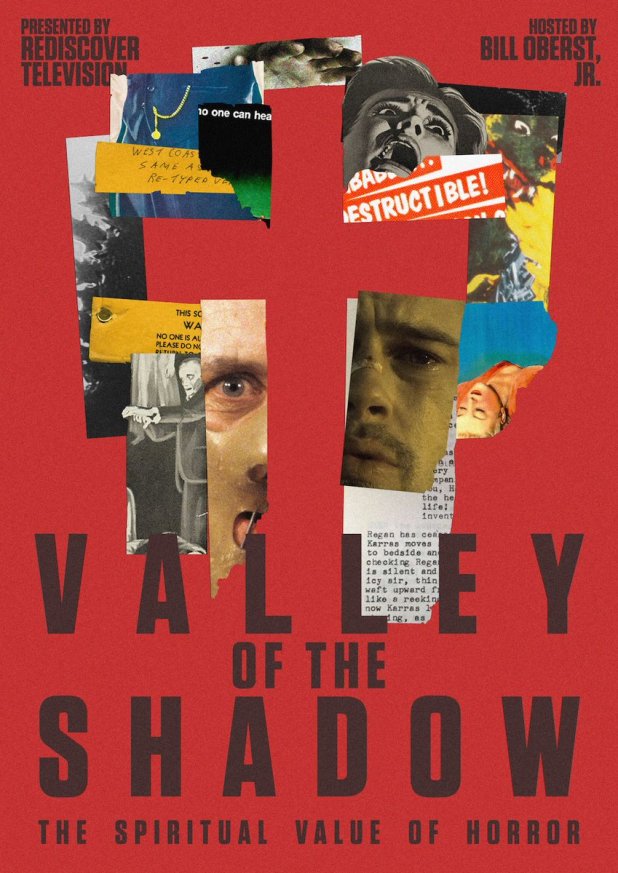
Horror is a film genre that has been seen as having no social value at best and as dangerous and Satanic at worst by the Christian community. In this documentary, director Tyler Smith (who also co-wrote the film with Reed Lackey) and host Bill Oberst, Jr. explore the world of scary movies, finding the psychological, emotional and spiritual complexities within the genre.
I was expecting something very different than what this film delivers, as it is quite even-handed and really explores nearly every facet and subgenre of horror. We had the opportunity to speak with Oberst Jr. last year — check out the interview — and found him to be both kind, open minded and incredibly knowledgeable about horror. There’s an insightful moment at the beginning of this where he discusses the divide between a career of playing monsters and a life of faith.
Smith also made Reel Redemption, another open-minded faith effort that even defended the slasher genre against the position of Siskel and Ebert.
While concentrating mostly on American film, there’s plenty of time discussing the faith and lessons one can learn from films that outright challenge belief, including Silver Bullet and The Exorcist. Unlike many of the talking head documentaries on horror, this focuses on The script at hand and Oberst Jr. is perfect at keeping the pace and energy right where it demands to be. This isn’t someone breaking in to tell you that this sequel is their favorite one in the series. This is a film with something critical to say about how horror can be a part of a faithful life and not a secret sin.
Depending on your own personal spiritual life or lack thereof, I recommend this film. Watch it with an open mind and — at worst — you can appreciate the breadth of movies that it covers.
Valley of the Shadow: The Spiritual Value of Horror is currently available on the ReDiscover Television streaming platform and on demand on Vimeo.
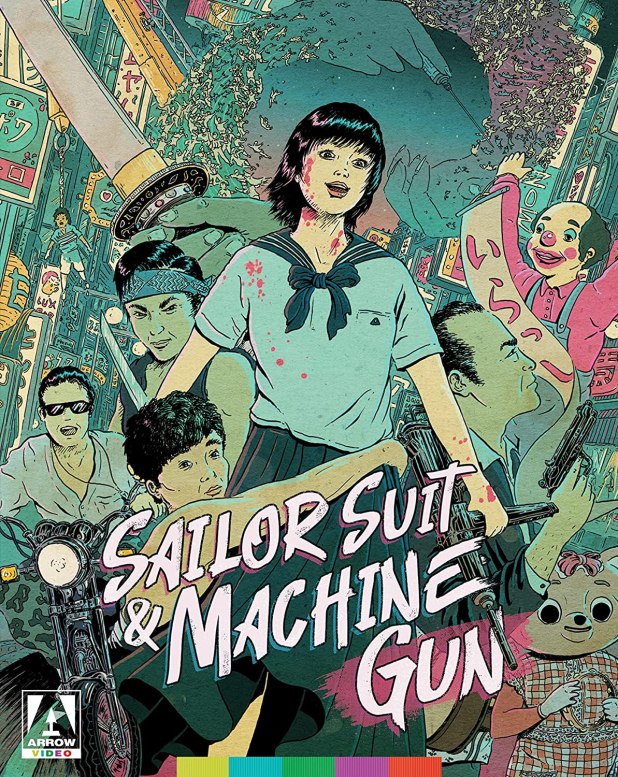
Shinji Somai (Typhoon Club, Wait and See, Moving) is an influential filmmaker whose work has rarely been seen in the U.S. That’s changing with the Arrow release of one of his best-known movies, Sailor Suit and Machine Gun.
A combination of Japan’s unique idol and yakuza films with the traditional coming of age story, this film is centered on Hoshi Izumi, an innocent young girl who suddenly finds herself the leader of her great-uncle’s organized crime clan.
Hiroko Yakushimaru, who plays Hoshi Izumi, achieved icon status thanks to this movie and its theme song “Sailor Fuku to Kikanjū.” The song stayed at number one in the charts for five straight weeks and was the second highest-ranked song of 1982.
In truth, Hoshi’s father should have led the group, but he died in an accident before they could find him. Beyond inheriting the title of oyabun, she also is given her father’s secret lover Mayumi Sandaiji.
The kobun, or followers, refuse to take the young girl seriously and also seem to think that their attack against their rivals has to be successful. Faced with leading a gang that doesn’t want her and who will also enact a suicide pact if forced to disband, Hoshi must give up on her childhood and take the titular gun in hand if she wants to make her new life a success.
Despite its origins as a teen novel and the fact that its idol actress had such a major song out of the film, this is more arthouse than you’d expect. While its influence may be small in the U.S., the other films — and media — it inspired all flow from this original river.
The Arrow Video Sailor Suit and Machine Gun blu ray has both the original theatrical version and the 1982 complete version (kanpeki-ban) re-issue of the film, restored by Kadokawa Pictures from a 4K scan of the original negative. Plus, there’s a new documentary Girls, Guns and Gangsters: Shinji Somai & Sailor Suit & Machine Gun, trailers and TV spots, and a sleeve with original and newly commissioned artwork by Michael Lomon. The first pressing comes with an illustrated collector’s booklet featuring new writing on the film by Aaron Gerow and Alex Zahlten, and a discussion between the film’s star Hiroko Yakushimaru and acclaimed director Kiyoshi Kurosawa, who was an assistant on the film.
On November 15, you can also stream this movie on the Arrow player. Visit ARROW to start your 30-day free trial. Subscriptions are available for $4.99 monthly or $49.99 yearly. ARROW is available in the US, Canada, the UK and Ireland on the following Apps/devices: Roku (all Roku sticks, boxes, devices, etc), Apple TV & iOS devices, Android TV and mobile devices, Fire TV (all Amazon Fire TV Sticks, boxes, etc), and on all web browsers at https://www.arrow-player.com.
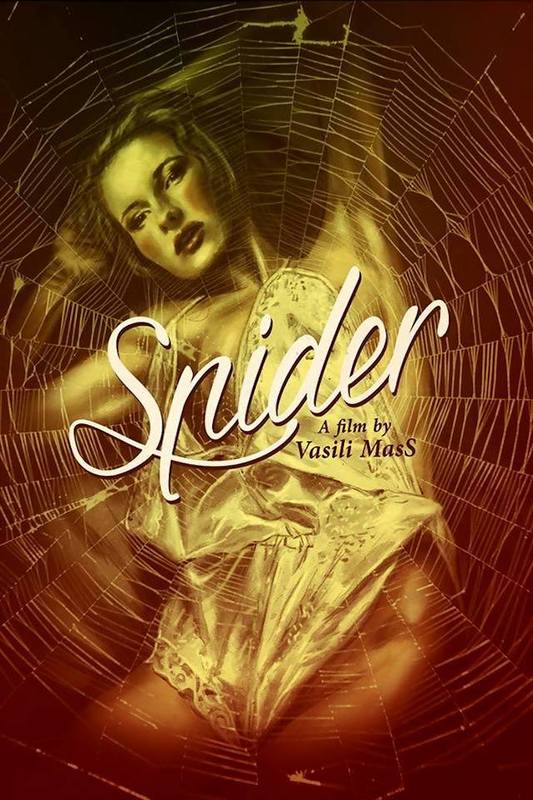
An artist needs a model to paint the Virgin Mary — and as you do — asks a local pastor to recommend him a model. The holy man decides on Vita, who the artist soon has obsessed and haunted, have dreams and waking nightmares of spiders, even when she’s sent away.
I read a review that argues that Vita suffers from Stendhal Syndrome — no, not the Argento movie — the very real affliction that causes people to become lost in works of creativity. During one of these visionary moments, the artist attempts to assault her and she runs home, passing out and having a vivid dream of giving herself to a spider and then wakes up covered in bites.
Shot in Latvian and in the Russian language, this is a movie that feels like it escaped from the formerly restrictive and hidden part of the world.
There’s also a drug in film form scene in which Vita wanders through Hieronymus Bosch’s The Last Judgment and it’s astounding to see every piece of that painting become real and alive.
This film fits right in with the world of women discovering their first sexuality through the supernatural — Valerie and Her Week of Wonders, Lemora: A Child’s Story of the Supernatural, Laurin and Alice or the Last Escape are other examples — and all of those movies have their own unique take, as does this. In any hands other than director Vasili Mass, this may have been straight-up exploitation. Instead, it emerges as a horrific thing of beauty.
March 2022 Update: Uncork’d Entertainment has announced Reed’s Point will be released to DVD and Digital platforms on April 12, 2022. You can follow the project’s ongoing developments on its Facebook and Instagram pages. In fact, you can now watch Reed’s Point as a free-with-ads stream on Tubi.
Advanced Release News:
You’ve enjoyed the work of director Dale Fabrigar and producer Suzanne DeLaurentiis (got her start as an actress in the ’80s slasher Evil Judgment; produced Academy Award-winning writer Bobby Morceso’s 2006 mob flick, 10th and Wolf) with the Lance Henriksen-starring D-Railed (2018). The duo returns — with 310-credits strong acting warhorse Joe Estevez (Hell Asylum) — in a tale about New Jersey’s mythical Pine Barrens, a legend that’s fed the narratives of horror films dating back to one of the first found footage mockumentaries, The Last Broadcast (1998).
In a tale co-penned by DeLaurentiis, a vehicle crash in the Pine Barrens leads to a missing teen and stirs the once forgotten conspiracy theories regarding the infamous Jersey Devil legend. On the anniversary of the crash, Sarah Franklin (Sasha Anne), convinced her cousin Kelsey is still alive somewhere in the Jersey woods, returns to the crash site with Alex, Kelsey’s boyfriend (Evan Adams). They soon come to discover what’s lurking in the barrens. . . .
In addition to Joe Estevez, the film co-stars — in her first feature film role — lymphoma survivor and social media influencer, Sasha Anne (Instagram, TikTok, You Tube). The film also stars Anthony Jensen, whose work we recently reviewed in Jared Cohn’s fun shark fest, Swim (2021). Since we’re huge fans of director David DeCoteau — to the point we watch his Lifetime movie offerings (A Christmas Cruise and A Husbandfor Christmas) — we recognized Evan Adams, here, who made his acting debut in DeCoteau’s most recent holiday offering, The Wrong Valentine.
Currently well-received on the festival circuit, Reed’s Point will become available to streaming platforms in early 2022. Our thanks to Sasha Anne for the opportunity to allow B&S About Movies to be the first to review the film prior to its distribution. And don’t forget to check out Anthony Jensen in Swim and Evan Adams in The Wrong Valentine!
We wish actress Sasha Anne and producer Suzanne DeLaurentiis all the best of success in their joint efforts. Do stream Reed’s Point — and look for the Wild Eye Entertainment DVDs at your favorite retailers where hard media is sold.
Our Post-Release Review
So, to expand upon what we learned about the film in the pre-release press kit: After we watch an effective opening titles sequence — complete with news report voiceovers regarding a series of missing person cases in the Pines Barrens — we meet three high school friends on their last day of school and first day of summer vacation. Yes, it’s time to cut loose before heading off to college. So Uncle Greg decides to take his daughter, Kelsey (Madison Ekstrand), niece Sarah (Sasha Anne), and Kelsey’s boyfriend Alex (Evan Adams), on vacation.
Yep, cue the errant deer in the headlights. In the middle of the Barrens. And let lose The Jersey Devil. And reveal the within-a-dream flashback: one where Sarah is tortured by her witnessing the death of her uncle (in a decent, in-camera effect: he’s clubbed with his own torn-off arm) and Sarah being dragged off into the woods by a Bigfootesque creature. Sarah knows what she saw. She’s convinced Kelsey is still alive. The cops stopped searching or caring. She knows people thinks she’s crazy. . . .
A year later: Sarah and Alex are journalism students working on a story about the legend (there’s a long-standing feud between two backwoods families in the area, natch) for the school newspaper. Their editor, reluctantly, lets the duo run with the story, under one condition: do not go into the woods for research.
Yep. They go into the woods. And there is no Jersey Devil. Nope. There is a plot twist. There is a Jersey Devil.
Look, we won’t sugar coat: IMDb’ers and digital film critics haven’t been kind to this film. As usual: streamers are placing A-List filmmaking comparisons against a low-budget horror film released on the Uncork’d Entertainment direct-to-stream-DVD shingle. So why is everyone expecting an A24 or Blumhouse “shock scares” summer tent pole — or a retro-Paramount Friday the 13th knock off — for that matter. The streaming machine (Hey, Tubi) needs product — and Reed’s Point is a solid product where your streaming coin isn’t wasted.
As I watched, I found all the disciplines, well, on-point. The cinematography is crisp and well-framed, the acting — which everyone seems to take issue with — is what you’d expect of the Lifetime “damsel in distress” variety. Reviews I’ve read take issue with Sarah’s personal appearance: she’s not attractive, therefore, she can’t act? Balderdash! Shelley Duvall doesn’t trip my trigger (that’s my hang up), but there’s no doubt Ms. Duvall is stellar in Stephen King’s The Shining. And I was already a fan of Evan Adams’s effective work in The Wrong Valentine. If anyone is a weak link in the thespin’ department, here, it’s Joe Estevez with his crazed, warning-the-meddling-kids-Scooby Doo shtick. But he is supposed to be the crazy and irrational local, so. . . .
When Reed’s Point was officially released to streaming platforms five months later after our advance review, we gave this debut project from actress-producer Sarah Anne another look/new take on April 15, 2022 — in addition to my own take, now added to this review. As is the case with films — and you know how funny they can be — I enjoyed this low-budget take, more so than my contemporary, as an advanced screener.
The original festival trailer, courtesy of Sasha Anne.
The new theatrical trailer issued by Uncork’d Entertainment and OC Trailers.
To learn more, you can visit Uncork’d Entertainment on their website or Facebook page.
You can also learn more about Suzanne’s production career with our June 2021 interview regarding her Amazon Prime horror series, Saturday Night Scares.
About the Author: You can read the music and film reviews of R.D Francis on Medium and learn more about his work on Facebook. He also writes for B&S Movies.
If you’ve spent any amount of time amid the digitized realms of B&S About Movies, you know us good sons of the “City of Bridges” Spider Man-swing off the steel girders over The Three Rivers for the VHS ’80s resumes of Fred Olen Ray and David DeCoteau — so much so that we make it a point to follow the newest phases of their long careers in providing “damsel in distress” flicks and holiday-centric romance films for Hallmark and Lifetime. If I must be “chick flicked” into watching a Christmas movie, the cottage industry of made-for-streaming and small network Christmas movies flowing down the Ray-DeCoteau confluence is my cup o’ muddy Allegheny River water.
Okay, so how did we end up, here . . . beyond having David DeCoteau behind the lens? Why are we reviewing a Valentine’s Day-centric flick released this past February on Lifetime — just after Halloween on the cusp of Thanksgiving? Well, Sasha Anne, the star of the upcoming Reed’s Point, reached out to B&S About Movies about her new film — and we noticed that Evan Adams, her co-star, stars here — with Vivica A. Fox. Yeah, it’s those “Six Degrees of David DeCoteau” that we live for in our cramped cubicle farm along the Allegheny shores.
Yeah, as you look over David DeCoteau’s “Wrong” franchise, you’ll notice a second common denominator in the franchise: Vivica A. Fox — yes, Vernita Green from Kill Bill: Volume 1** and Jasmine Dubrow from Independence Day — is the franchise producer, as well as starring in 22 of the films. About her work in the made-for-TV series franchise, she told Jennifer Moos in The Wrap:
“I get to cast myself in characters that normally Hollywood wouldn’t even give me an opportunity to play. I’ve played a detective, a principal, a mom. The only thing David DeCoteau, the director, won’t let me play is the villain, because I’ve always got to deliver that catchy phrase: ‘Well it looks like you’ve got the wrong cheerleader’ or ‘You’ve got the wrong Valentine’ or ‘You’ve got the wrong Mr. Right.’ And people are like, ‘I can’t wait for her to deliver the line.’ . . . I’m doing good producing and starring . . . we film them in 10 days, so that’s why we are able to do so many.”
Vivica, if you’re reading this: no offense intend. You’re wonderful, and we know you’re “bringing the guys to Lifetime,” and this is stone cold truth. However, the B&S staff are movie dorks and we’re coming for the David DeCoteau fix. And that’s (our) squishy-body soft-as-veal truth.
Yes. We have this box set. Why? David made ’emall!
Okay, let’s unpack this gushy “chick flick,” shall we?
Also starring Mariah Robinson and Michael Bergin (J.D Davis from TV’s Baywatch and a few of DD’s Lifetime X-Mas and “Wrong” flicks; he’s a college admissions professor, here), this dark holiday offering tells the story of an about-to-graduate high school senior, Emily (Robinson) who, after grieving over the death of her father, decides to love again . . . and the fact that her birthday falls on Valentine’s Day isn’t helping. A bright student under the wing of her History Club teacher, Ms. Connelly (Fox), she find the courage to date David (Evan Adams), the “new boy” in school and member of the scholastic club. Oh, you know it: David is the heartthrob from hell. His screws aren’t just loose: they’re missing. And it’s not just that he’s nuts: there is an ends to his sociopathic means. As with any socio-Lothario: Emily can’t date anyone else, but David can date whomever he wants . . . including Emily’s best friend, Michelle (Jacqi Vene, effective in what is sure to be her first of many Lifetime romps).
As is the Lifetime model: The houses these kids live in — complete with single moms (we delve into that narrative milieu with our recent “Slasher Month” review of Seduced by a Killer) — are amazing, like British royalty-rock star-A List actor amazing. The school campus (not rivaling the use of Stadium High School in Tacoma, Washington, in 10 Things I Hate About You, but still. . .) is amazing. (You should have seen the dump I spent the four “best years” of my “real” lifetime. The college campus wasn’t much glamour-better.)
Yeah, sure, the people are perpetually perfect and physical stunning (even the guys), the locations and homes are over-the-top glamorous. So, yes, one could dump on the not-so-reality production of The Wrong Valentine. As Vivica told The Wrap: these films are shot in ten days. Sure, DeCoteau is stock-raiding his other Lifetime efforts for various (familiar?) establishing shots. Sure, maybe scripts, with slight tweaks, are equally-familiar recycled. Well, you know what: so were Roger Corman’s, as were DeCoteau’s old Full Moon boss, Charles Band’s films. It’s the same ’60s drive-in to ’80s VHS/cable business model: shoot ’em quick and shoot ’em cheap. It’s said that Roger Corman “never lost a dime on a movie” (well, outside of the Warren Oates-starring Cockfighter; that’s another review for another time). The only change is the distribution model of lower-tier cable channels (Lifetime is the “new” USA Network*˟ in these ‘ere parts, padre) and streaming platforms.
To this “wrong” installment’s credit: there’s a decent twist-ending you don’t see coming. Yeah, you may have seen it before, in other films of yore, sure: but you don’t see it coming, here, not this time. Yeah, you’ll also hear Vivica’s iconic one liner: “It looks like you had the wrong ________.” that makes us jump with “You go girl” glee.
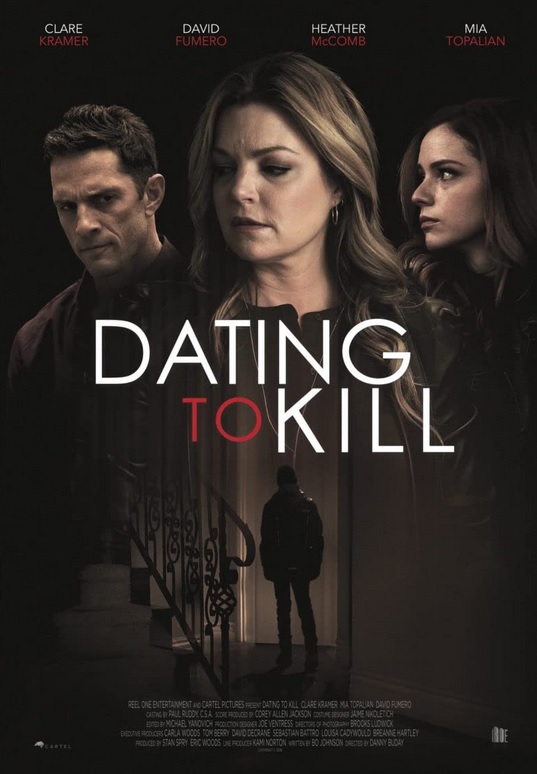
Another recent Lifetime “slasher” we’ve reviewed: Dating to Kill, aka Seduced by a Killer.
Sure, I’m partial to David DeCoteau’s oeuvre and that may be disrupting my critical radar, but I enjoyed this Lifetime entry. It’s well-shot and DeCoteau pulls the best from his actors. The acting debut of Evan Adams (who could pass for Young Sheldon actor Montana Jordan, aka Georgie, who passes for a young Patrick Swayze) is thespian solid. He goes from sweet and warm to creepy-cold on a dime. And when he goes dark, he keeps it in his pocket: nothing is frantic over-the-top, as is the case with most obsessive-hubby films — especially those major studio features where those A-List actors are going for the Oscar gold. I see a bright future for Adams, as he certainly kept me engaged . . . like those days of seeing Matt Dillon for the first time in Over the Edge (1979). An actor is, of course, only as good as their script. Screenwriter Robert Dean Klein (Dark Ride), whose work we recently reviewed as part of our “Salem Horror Fest October 2021” week of reviews with the film 6:45 — and in his eighth-overall “Wrong” entry — provides Adams a well-arced character of depth . . . that eventually comes to elicit sympathy.
A great job by all concerned.
* David’s “Wrong” Flicks Resume The Wrong Roommate – 2016 The Wrong Child – 2016 The Wrong Student – 2016 The Wrong Crush – 2017 The Wrong Man – 2017 The Wrong Cruise – 2018 The Wrong Friend – 2018 The Wrong Teacher – 2018 The Wrong Stepmother – 2019 The Wrong Boy Next Door – 2019 The Wrong Mommy – 2019 The Wrong Tutor – 2019 The Wrong Cheerleader – 2019 The Wrong House Sitter – 2020 The Wrong Wedding Planner – 2020 The Wrong Stepfather – 2020 The Wrong Cheerleader Coach – 2020 The Wrong Real Estate Agent – 2021 The Wrong Fiance – 2021 The Wrong Mr. Right – 2021 The Wrong Prince Charming – 2021 The Wrong Valentine – 2021 The Wrong Cheer Captain – 2022 The Wrong High School Sweetheart – 2022 The Wrong Blind Date – 2022
All of David DeCoteau’s non “Wrong” and Christmas flicks — with things such as Bloody Blacksmith and Swamp Freak — can be found on his VOD RapidHeart.TV platform on Vimeo. You can learn more about his recent, direct-to-streaming offerings of Knock ’em Dead and Immortal Kiss at Rapid Heart Pictures. Fellow WordPress blogger Will Sloan sat down for an interview with David in July 2021.
About the Author: You can read the music and film reviews of R.D Francis on Medium and learn more about his work on Facebook. He also writes for B&S Movies.
ABOUT THE AUTHOR: Benjamin Merrell lives in Seattle, WA. You can check out his blog at cestnonunblog.com and follow him on Letterboxd.
Diana ‘TNT’ Jackson (Jeannie Bell), one bad mamma jamma, heads off to Hong Kong to, I guess, tell off her brother, Stag Jackson after he didn’t respond to the letter that she sent him to, um, tell him off. “He asked me to send him some money, instead I sent him a piece of my mind. I just want to know if he got it.” I guess some “Screw you” messages have to be delivered in person. But, unbeknownst to her, brother dearest was actually killed by drug dealers during the opening credits. Now TNT is out for revenge!
…Or something like that. TNT Jackson, the character and the movie, aren’t really overly concerned with things like a logical plot progression or proper character motivations. The movie suffers from a flimsy, paper thin plot about double-crossing drug dealers that feels like it was slapped together and invented solely to give TNT something to do until she discovers which one of the drug dealers killed her brother. It stresses style over substance, but thank God the movie at least has some style.
After leaving the airport TNT takes a cab to the bad part of town. You know it’s bad because the very first thing we see is a woman getting raped in the middle of the street. On the plus side, someone does immediately come to the woman’s rescue, however his ass is swiftly kicked by the rapist, who then leaves, presumably to try and finish what he started. TNT asks around for directions, which goes over about as well as you think it will, and thus she draws the attention of a gang of muggers. TNT isn’t screwing around though. She mops the floor with them pretty easily and even has a fun fight with a mugger who likes showing off his two ridiculously massive butterfly knives.
Conveniently, one of our main characters, Elaine, (a “government agent” working undercover with the drug dealers as leader Sid’s girlfriend) happens to witness the fight and offers TNT a ride, which leads to one of my favorite dialogue interactions of the entire film. Elaine wants to know more about why TNT is in town but TNT, who has thus far only dealt with people who wanted to rape, mug or kill her since she got into town, is having none of it. “Look lady,or whoever you are…I accepted a ride to Joe’s Haven and that’s all you need to know about me.” To which, Elaine simply replies, “Bitch.”
Joe’s Haven is Stag Jackson’s last known address, a nightclub/strip club/dojo owned by Hong Kong local Joe, who TNT very unself-consciously asks, “Who’s ever heard of a Chinaman named Joe? … They call me TNT.” Joe is the one who tells her that Stag never got her “screw you” letter, and then later informs her that Stag was actually killed during the opening credits. Meanwhile, Elaine sends their enforcer Charlie to the club to check TNT out and figure out what her deal is. And since TNT is the only fly black chick with a killer afro on Hong Kong island (her afro is indeed spectacular), he immediately takes a liking to her. Little do either of them know at the time, but Charlie is actually the one who killed TNT’s brother. I’d like to say that was a spoiler, but again, this was the very first thing that happened in the movie.
We never end up finding out why TNT was angry at her brother or what was in the nasty letter she wrote him or even why exactly Charlie wanted to kill him, because the plot immediately shifts its focus to the double-crossing drug dealers. Someone in Sid’s gang is leaking info about their drug buys and stealing their heroin shipments, so everyone naturally assumes it has something to do with TNT, despite the fact that she literally just got there and has no idea who any of these people are. (Sid is played by Ken Metcalfe, who apparently also did some rewrites on the script. Was Ken responsible for making the writing better or worse? We may never know.) Weirder still, they all suspect her of being the rat, when in reality literally half the gang is working behind Sid’s back to betray him.
The other major gang figure we haven’t gotten to yet is Ming, the guy with the hookup with their supplier, whom you’re supposed to suspect is the one stealing the drugs, despite the fact that he may actually be the only loyal soldier in Sid’s gang. But we, the audience, don’t like him, because he doesn’t like how cozy Elaine and Charlie are getting with TNT. And of course to make us really hate him there has to be a scene where Ming and his henchmen corner TNT in her room and threaten her with torture and rape. TNT has to fight them off, topless naturally, clad only in her panties, so we the audience can enjoy some quality slow-motion jiggling, er, fight choreography.
There are actually quite a few fun fights in this movie, especially at the end when everyone starts Kung Fu Fighting like they’re in a Carl Douglas song. The fight choreography in general is pretty well put together, especially considering a lot of the fight scenes were shot over the shoulder, covering up for the fact that most of the Western actors clearly lack any sort of actual prior martial arts experience. Jeannie Bell in particular has a very expressive brand of chopsocky that does a stellar job of selling that TNT is a kung fu master badass, despite Jeannie obviously not having any clue as to what she’s doing.
TNT Jackson isn’t a great film, but fans of blacksploitation and chopsocky kung fu flicks can probably find enough nudity, blood, gore and most importantly fun here to keep them entertained for its blissfully short 74 minute runtime.
TNT Jackson was produced by American International Pictures and directed by Filipino Blacksploitation pioneer Cirio H. Santiago, who is probably best known for 1981’s Firecracker (seriously, check out Firecracker. It’s fantastic.) Written by Dick Miller (yeah, that Dick Miller), with martial arts instruction by J.Lo (unfortunately not that J.Lo).
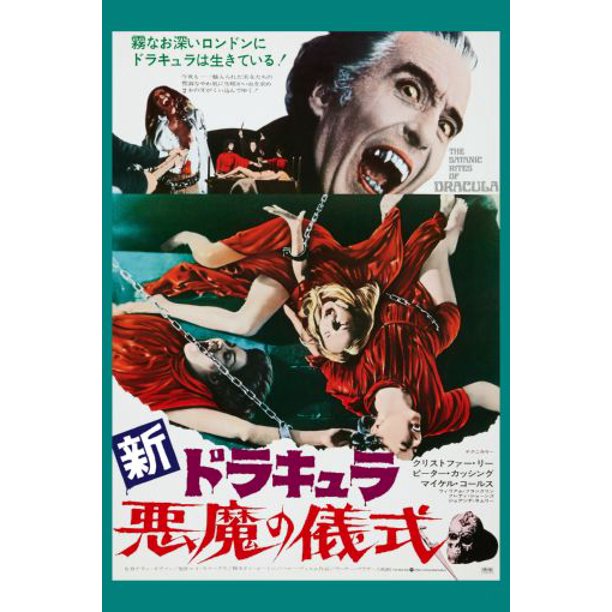
Man, what a title. Better than the original one, Dracula is Dead…and Well and Living in London, which upset Christoper Lee so much that he was outspoken at the press conference that introduced the movie: “I’m doing it under protest… I think it is fatuous. I can think of twenty adjectives — fatuous, pointless, absurd. It’s not a comedy, but it’s got a comic title. I don’t see the point.”
The eighth Hammer Dracula movie, the seventh and final to star Lee (John Forbes-Robertson played Dracula with David de Keyser as the voice in The Legend of the 7 Golden Vampires) and the third and last to put Lee’s vampire against Cushing’s Van Helsing (they would appear in only one more movie together, House of the Long Shadows), this is pretty much the end of an era.
Every time I think of this movie, I remember Bill Van Ryn of Drive-In Asylum excitingly saying to me — after we saw the trailer at a drive-in — “It’s not enough that Dracula is a vampire. Now he has an entire army of Satanists and he wants to rule the world and he has a plague!”
It turns out that there’s a govenment occult conspiracy that only Van Helsing can stop and he’s bringing along his granddaughter Patsy Stone, err, Jessica Van Helsing.
As the cabal prepares for the Sabbath of the Undead, their mysterious fifth member is revealed to be, of course, Dracula using the identity of reclusive property developer D. D. Denham and operating out of the very same churchyard where he died in Dracula A.D. 1972.
Somehow, this is more of a Eurospy science fiction movie than the traditional horror film, but that’s kind of the beauty of the whole thing.
Somehow, this fell into the public domain in the U.S. That’s why it’s on so many Mill Creek sets under this title and the edited TV version Count Dracula and his Vampire Bride.
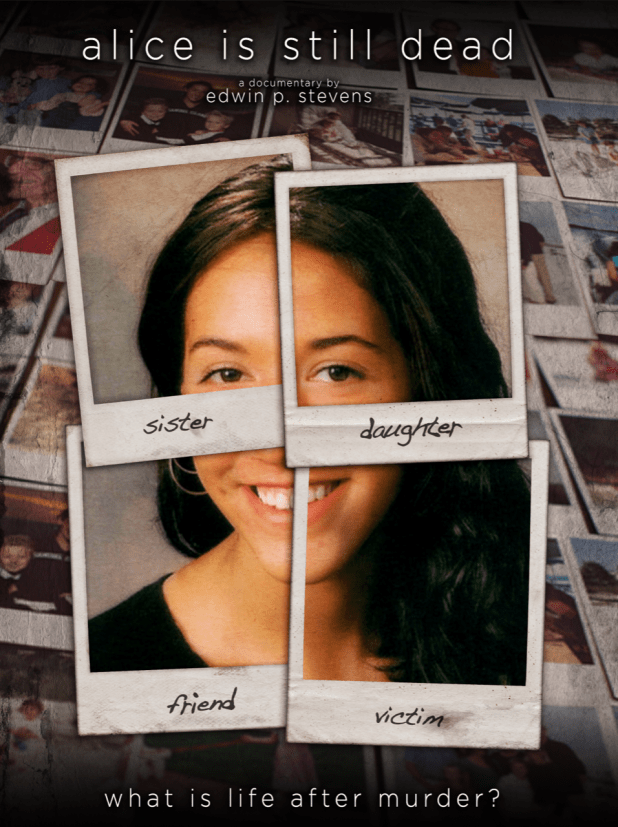
Unlike many documentaries that only show murder from the outside perspective, Alice Is Still Dead follows the story alongside the victim’s family through every step of the process, from the detective’s notification to her family facing the killer in court.
This movie was made by Edwin P. Stevens, the brother of the late Alice Stevens. Intended as a tribute to her life, it’s also his way of pondering whether he and his family can move forward. He explained the unique situation by saying, “In 2013, only a week prior to my wedding, my little sister, Alice, was murdered. I have been at a loss for years about what I could possibly do to put the grief, anxieties, anger and feelings of utter loss and regret into a story that might do her memory justice. These desires culminated in this film.”
If seeing real imagery of violence and the impact of murder upsets you, you may want to be ready to avert your eyes during this film. It does not pull back or shy away from the grisly aftermath of a double murder.
If the journey in the film seems exhausting to you, the viewer, one can only imagine what it felt like to be part of Alice’s family. There’s a search for answers, such as how could any of them change her behavior or speak to her or avert a senseless tragedy. In the end, there’s no catharsis, only loss and changing the way that you deal with the world. It’s never over. It just keeps going.
While so many true crime docs that simply sensationalize cases or glorify the technology used to catch the murderers, this film stays human and near the family, taking you through the very raw emotions as well as how the murder and trial have kept the filmmaker from establishing a family of his own.
Haunting, powerful and real, Alice is Still Dead is available digitally and VOD from Global Digital Releasing.
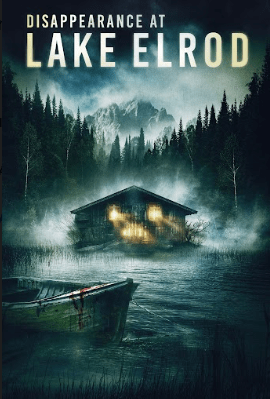
A year after her daughter’s disappearance in Elrod, Georgia, another local girl goes missing and Charlie (Robin Lively, The Karate Kid Part III, Lana Milford from Twin Peaks) is convinced that there is a connection. The only bad part? The police and community believe that Charlie is guilty of this new abduction.
Originally known as Through the Glass Darkly, this is the full-length directorial debut of Lauren Fash. She does a great job at balancing the Southern gothic and stranger in a strange land dynamics of this movie in very subtle ways. The real villain of this piece may as well be the town of Elrod.
While she’s wary of the reporter in town trying to get her first big story, Georgia is smart enough to know how to use her to get the information that she really wants. Yet everyone in town seems to know more than they should while also believing that our protagonist is the cause of all of her own — and so many others’ — challenges.
Disappearance at Lake Elrod is now available digitally.





 B&S About Movies
You must be logged in to post a comment.