EDITOR’S NOTE: Obviously, I liked this enough to watch it twice.
What was in the water of the early 70s to make this movie and The Thing with Two Heads within a year of one another?
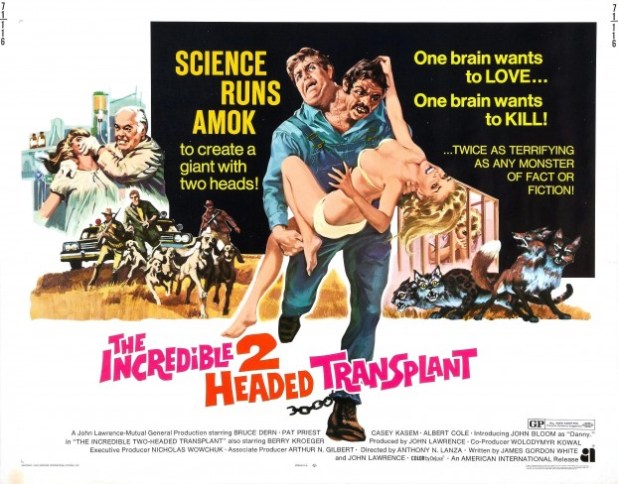
This one has Bruce Dern putting the head of a serial killer onto the body of the son (John Bloom, who was the monster in Dracula vs. Frankenstein) of the man who he has just murdered, because that’s how movie science works. What happens when you combine the head of a murderer with the head of a manchild with the mental capacity of an eight-year-old and an extremely powerful body? You get murder and mayhem.
Second Marilyn Pat Priest gets kidnapped and Casey Kasem comes to the rescue and you know, I’m a huge fan of movies where Casey show up, like Disco Fever, in which he tries to find cocaine in the carpet of a nightclub inside an airplane.
American-International Pictures put this on a double bill with Scream and Scream Again, but poor Bruce Dern had his check bounce and when he went to the set the next day to get paid, there was no set left.
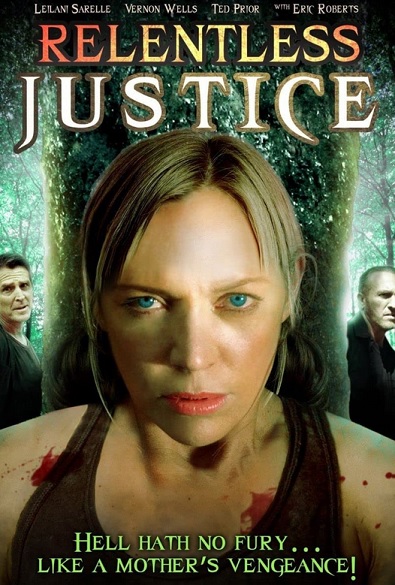
We name drop David A. Prior often around the B&S About Movies’ worker hives, because, well, we dig ’em and bag o’ chips. If you’re not familiar David A.’s work, our reviews of The Silencer, aka Body Count, and the one-two punch of the apoc-adventures of John Tucker in Future Zone and Future Force (from our past April “Apoc Week”) will get you started. And we kid about our admiration of Dave’s three-dozen-plus strong resume: What David A. Prior movie that doesn’t kill you will make you stronger. And when you add Eric Roberts in a quickie name-on-the-box role, we are all in — and twice on Sundays. (And yes, we know that’s a bad joke, because, sadly, we did lose David A. Prior in August 2015, but in no way is that “joke” in disrespect. We love ’em around here at B&S, as we build upon adding more and more reviews of his films to the site.)
And here’s three of them. Yes. This review has Easter Eggs. Let’s crack ’em, shall we?
This time out, Dave keeps it low-key and stays away from the post-apoc, zombies, dragons, and war films of the past. This time, David A. goes “hicksplotation” with the dependable city-folks-run-afoul-of-the-country folks action plot — which was done best by the likes of John Boorman’s influential Deliverance that was, in turn, retro’d to a solid effect with Robert C. Hughes’s Hunter’s Blood. However, this time, instead of a group of fish-out-of-water dick-swingin’ city folk, the penile malcontents are the country folk — and one of them is the backwater town’s mayor (played to an evil-hammy perfection by Vernon “The Wez of Mad Max” Wells). And while there’s not a deeper, underlying social statement about America’s class structure that questions who is stronger in a battle of wills between primitive man vs. civilized man, à la Boorman’s Deliverance, the “change up” is that those backwoods lotharios — and one lotharioette, the mayor’s squeeze, natch — are bested by one woman: ex-Australian Intelligence Operative and MMA Fighter played by Leilani Sarelle, who also owns and operates her own martial arts gym.
Uh, oh.
So, how do you know Leliani Sarelle?
Well, remember when Tom Cruise got duped by his race crew with the stripper disguised as a Highway Patrol Officer in Days of Thunder? Oh, and in Basic Instinct: Leilani played Sharon Stone’s Catherine Tramell’s girlfriend. And yes: she got her start in our beloved Neon Maniacs! That’s Leliani Sarelle — and it’s nice to see her hard work pushed her into a well-earned leading role. Oh, and trivia alert: Leliani is part of the Clooney family and hung out with the famous George of the clan (she even appeared on TV’s Roseanne when George was on that series) by way of her marriage to Miguel Ferrer, the son of Jose Ferrer, by way of George’s Aunt Rosemary, the famed ’40s and ’50s singer. Oh, and let’s not forget: keep your eyes open for Lisa Langlois from Class of 1984, Deadly Eyes, Happy Birthday to Me, and Phobia.
So, with the film trivia is out of the way, let’s get on with the story . . . which throws back to the mother of all “death sport” stories: 1932’s The Most Dangerous Game by Richard Connell — which fueled the likes of the mother of “death sport” movies: 1965’s The 10th Victim by Elio Petri.
When Victoria De Vries’s (Sarelle) daughter goes off camping with her boyfriend (in flip-flops, no less) they head into the local redneck general store for a pee and a phone, because, well, out here, it’s the ol’ cellphone-don’t-work trope (that’s not a rip on David; all films are like that; batteries and alternators die on brand-new cars in the movies, too — they have to, or there’d be no story to tell). And, the city folk have a snippy attitude, natch — and well, little sis De Vries is pretty cute. So, with the town mayor, again, Vernon Wells, leading the charge — with one of his minions being David’s brother Ted (who’s been all of his brother’s films) — they head off into the woods for a little sumthin’ sumthin’ (wink, wink). And they slit the boyfriend’s throat, do the ol’ weigh-’em-down-with-rocks thing into the water and kidnap Victoria’s daughter.
So, the “sport” begins when our backwoods idiots — who have been doing this for years, thanks to the looks-the-other-way-corrupt Sheriff — learn, thanks to Vicki, Jr.’s jibber-jabber bragging about mom’s past, that mom would make for a nice “game piece” and lure her into the woods. This is a town where, when one of the general store rednecks tries to pull shite with Victoria, she kicks his ass instead of being raped — and she’s arrested and tossed in jail. But again: the Sheriff and the Mayor are stacking the chips on their little backwood’s “game field.”
In the end: It’s all very, very bad idea, Mr. Mayor: Victoria De Vries has a bigger “dick” than you.
And just when you think this will kick ass and take names with a nice feminist message — the story decides to take a little snooze in the tent . . . with talking and chitty-chatty . . . and grimacing and scowling hammy thespin’ . . . and nothing really “kicks ass” until the last half of the third and final act.
“Hey, where’s Eric Roberts in all of this?”
Well, his name-on-the-box scene is with Sherrie Rose (who made her debut in the apoc’er Cy Warrior, the teen comedy Summer Job, and made a pretty cool Easy Rider update with Me and Will). She’s the related/sister of the Mayor’s wife (we think; the whole scene is “out of the country” and looks like it’s cut-in from an entirely different movie and doesn’t make much sense), and makes a deal for Roberts to store his drug inventory . . . in the town where games pieces go to die. In his second scene, Eric actually appears — unlike in most of his flicks — with other principal cast members, in this case, Vernon Wells and Ted Prior. But again, what’s this all have to do with the “death sport” game plot? Nothing. We think, at first, that Eric is one of those gangsters of the Eli Roth-variety who’s into the Hostel “Elite Hunting Club,” but no. Again, it’s like Roberts and Rose dropped in from another flick, entirely. It literally feels like a “pad” for the film’s short running time. You need 10 more minutes of film to get the running time out to an hour and a half: call in Eric Roberts and we’ll make the scene “fit,” somehow.
Oh, and to level the playing field: Mark Rolston — who you know best as Private Drake in Aliens (and over 180-other movies) — is an ex-special forces op Major hired to take out the troublesome Victoria De Vries, who has proven harder to kill than expected. Like Roberts, Rolston’s not here that much, but, like Roberts, what little he’s here, he’s effective — as always. And when Rolston shows up, that’s when things really kick intogear — with a nice knife-through-the-mouth-into-the-tree kill and thumbs-diggin’-out-the-eyeballs kill. Oh, and it turns out Victoria knows the Major from a bungled Middle East mission op — and he took the gig with an ulterior motive: a good ol’ fashioned revenge kill for outing him on the mission to their joint superiors. Their fight scenes — choreographed by five-time world kickboxing champion Kathy Long as the film’s stunt coordinator — are the best parts of the film that more than make up for the lagging talking and yakity-yak first and second “set up” acts.
Anyway . . . being a big David A. Prior fan — and being well-versed in his works via his Action International Pictures, and taking into consideration he got his start with the self-financed SOV-horror Sledgehammer in 1983 — Relentless Justice turns out to be a well-written, plot-twisty film that’s well-shot with decent direction and editing. And thinking back to Sledgehammer: the gore is vastly improved here. Overall, the film’s not great, when compared to other ’80s-actioners set in the woods — Arnie’s Commando and Sly’s First Blood — from which it takes its cues, but Relentless Justice isn’t awful, either.
Now, I know what you’re wondering: what happened to Eric Roberts’s drug stash? Did all the shite go down before the drug deal was done? Did the drugs ship to the town to be stored — and, when the Sheriff, the Mayor and their minions were all dead — did his Deputy, who turned her back and let Victoria kill the last man standing, aka the Sheriff, confiscate the drugs? There was a hint of a lesbian subtext, so did the female Deputy and Vicki hook up? Does Eric come back in a sequel? Does he go after Vicki, blaming her for losing his drug stash? Or does he go after the Deputy — who’s now the new Sheriff — and Vicki returns to kick ass, again? Does Sherrie Rose end up being the town’s new mayor?
Sadly, there was no sequel to tie that Eric Roberts loose end as, well, David passed away after the release of Relentess Justice — if there was even an intended sequel on the future adventures of Victoria De Vries.
Now, you may not know David A. as well as I, so if I tell you Relentless Justice feels a lot like his fourth feature film, Deadly Prey (1987), that’ll mean nothing. That film — starring Cameron Mitchell (Space Mutiny) with Troy Donahue (Shock ’em Dead) — also clips from The Most Dangerous Game, as a group of sadistic mercenaries kidnap people off the streets and set them loose on the grounds of their secret camp, so their “students” at the camp can learn how to track down and kill their prey.
See, how similar it is? And there’s one more bunny egg to crack.
Ted Prior’s Mike Danton from Deadly Prey returns in the 26-years-in-the-making sequel, The Deadliest Prey (2013). Nearly three decades after his abduction by the psychotic mercenaries from the first film, Danton, heads back to those Mobile, Alabama, backwater woods to stop the games that started up again — games backed by an Internet company that broadcasts the games on the web.
Are they any good?
Hell, yes! The first one from 1987 is your expected, cheap-but effective against-the-budget David A. Prior fun fest. The remake-cum-sequel stands tall to the quality of Relentless Justice — as it should: since both were shot back-to-back in the same neck of Mobile, Alabama, woods with the same crew — but the updated “dark web” angle is a nice update to the old story from 1987.
It saddens me David passed, as the quality of his films grew by leaps and bound since the likes of his ol’ David Carradine apoc-romps with the John Tucker adventures in Future Force and Future Zone. There’s were definitely some more solid films from David A. to be had.
About the Author: You can read the music and film reviews of R.D Francis on Medium and learn more about his work on Facebook.He also writes for B&S About Movies.
Sam Katzman’s films may not have been fancy, but he gave big returns to studios on low investments. Starting his career work as a stage laborer when he was just thirteen, he made films in Hollywood for four decades. Movies were such a part of his life that he was even married on the set of Fox’s The Diplomats.
He made multiple movies for Monogram, including nine movies with Bela Lugosi, as well as several serials for Columbia at the same time. He made so many movies that it’s hard to keep track of all of them — Monogram cameraman Robert Cline believed that in six years, they made more than a hundred movies — and while he was notoriously cheap, he certainly got things done.
It’s funny because people either tell stories of how hard he was to work for, how thrifty he was or how they learned from him. Sometimes, all three. But the most telling quote comes from no less a hullabaloo artist than William Castle, who said, “Few people in the motion picture industry took him seriously as a producer of quality films, but to me, Sam was a great showman.”
Katzman made horror, science fiction, action, rock and roll teen movies — anything that would make a buck. He told Variety that “A picture that makes money is a good picture — whether it is artistically good or bad. I’m in the five and dime business and not in the Tiffany business. I make pictures for the little theatres around the country. I don’t get ulcers with the type of pictures I make.”
By the end of his career, Katzman produced 239 movies and even directed five (all in 1937). Given the nickname “Jungle Sam” from all of the serials and adventure movies he made, his career spans such disparate genres as The East Side Kids, Superman, hippy movies, biker films and even MGM Elvis movies. And perhaps craziest of all, some claim — this sounds like a kayfabe story, but here it is — that he invented the term beatnik.
The story claims that the producer was at a recording studio overseeing the mix on one of his teen movies when he overheard the musicians discussing why one of them didn’t show up for the session. The answer was, “That cat was just beat, Nick,” which Katzman misheard as “beat, Nick.” He liked the sound of the word and started using it in his movies. I love this story, but as a Jewish man, Katzman had to know Yiddish. The same goes for Herb Caen, who also gets credit for inventing the word in his San Francisco Chronicle writing.
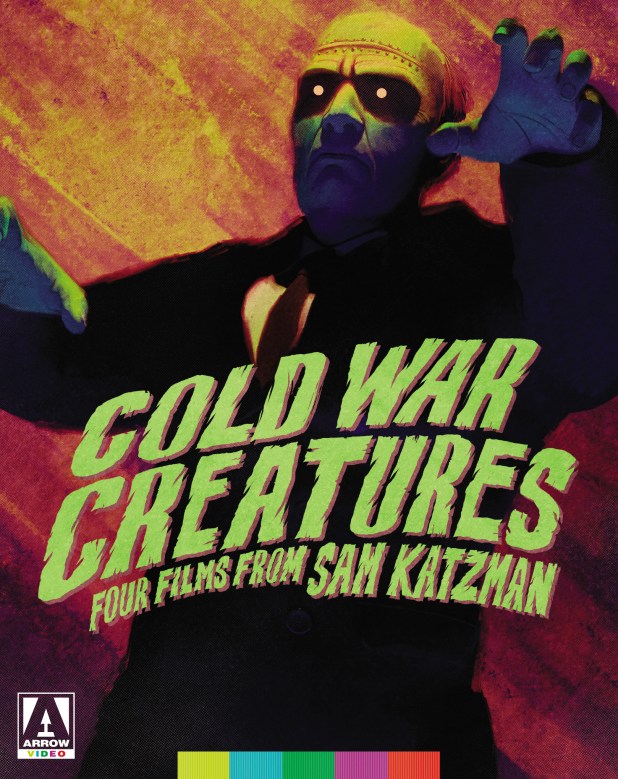
If you’d like to check out four of the many films that Katzman made, Arrow Video has you covered.
Arrow Video’s new Cold War Creatures: Four Films From Sam Katzman set includes The Zombies of Mora Tau, Creature with the Atom Brain, The Werewolfand The Giant Claw. Each film has a 1080p blu ray presentation, along with a fully illustrated 60-page collector’s book featuring extensive new writing by Laura Drazin Boyes, Neil Mitchell, Barry Forshaw, Jon Towlson and Jackson Cooper, as well as 80-page collector’s art book featuring reproduction stills and artwork from each film and new writing by historian and critic Stephen R. Bissette, the former artist of Swamp Thing. Plus, you get two double-sided posters featuring newly commissioned artwork by Matt Griffin and reversible sleeves for each movie with original and newly commissioned artwork for each film by Matt Griffin.
Creature with the Atom Brain has extras like an introduction by historian and critic Kim Newman, audio commentary by critic Russell Dyball; Sam Katzman: Before and Beyond the Cold War Creatures, a brand-new feature-length illustrated presentation on the life, career and films of Sam Katzman by Bissette; a condensed Super 8mm version of Creature with the Atom Brain, a trailer and an image gallery.
The Werewolfhas tons of great extras, like an introduction by Kim Newman, commentary by Lee Gambin, a visual essay concerning the role of women in the films of Sam Katzman by historian and critic Alexandra Heller-Nicholas and a Super 8mm version of this movie.
The Zombies of Mora Tauhas plenty of extras, including an introduction by Kim Newman, commentary by critic Kat Ellinger, a visual essay exploring the intersection of mythical horror creatures and the rational world of science in the films of Sam Katzman by critic Josh Hurtado, the theatrical trailer and an image gallery.
The Giant Claw has extras including an introduction by critic Kim Newman Brand, commentary by critics Emma Westwood and Cerise Howard, a visual essay from Mike White examining the theme of Cold War paranoia in Sam Katzman monster movies, a trailer, an image gallery and a condensed Super 8mm version of the movie.
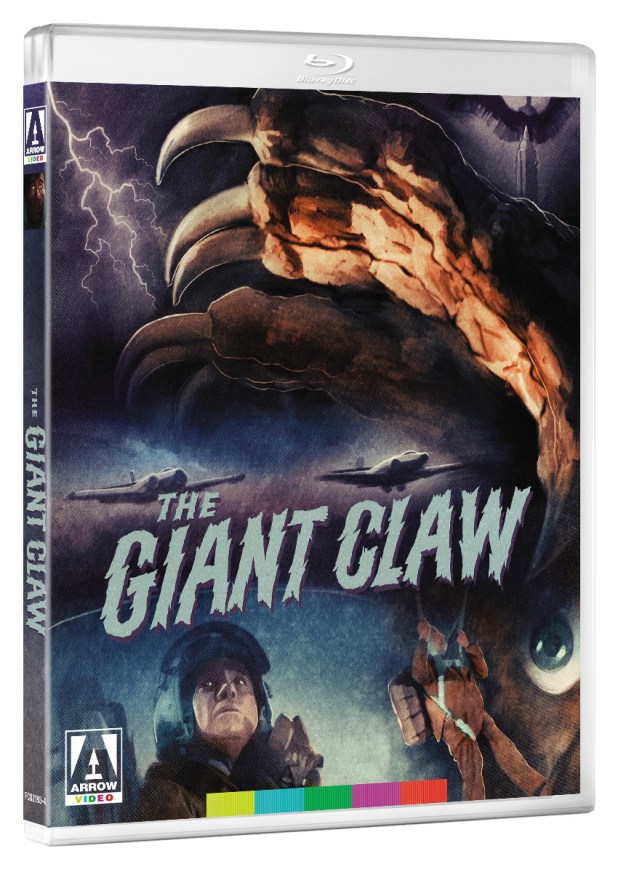
Directed by Fred J. Sears (Don’t Knock the Rock, Earth vs. the Flying Saucers, Teen-Age Crime Wave), The Giant Claw is somehow inspired by matter and anti-matter, as well as la Carcagne, the mythical bird-like banshee from French-Canadian folklore. Yes, some heady material, but then this movie has one of the goofiest — and most awesome — monsters ever.
Producer Sam Katzman originally planned to utilize stop motion effects by Ray Harryhausen. This movie didn’t have the money for that, so he hired a Mexico City effects studio who sent him a marionette that, well, looks like a monstrous turkey. Seeing as how he spent fifty dollars on the monster, I think he got so much more than what he paid for.
No one in the movie knew what that creature looked like until they saw the movie. This really embarrassed lead actor Jeff Morrow, who was there to see the movie live in his hometown and every time the monster showed up, people laughed louder, until the actor ran home and started drinking. I mean, Morrow must have felt the same way when he was in Octaman.
Obviously, the poster artists never saw the special effects either. That said, the film is also quite aware of the UFO sightings of the day, which is what they think the monster is until scientists discover that it’s an evil bird from an antimatter universe.
This is a pretty nihilistic film for the time, as the evil bird kills people without a thought when it isn’t destroying every building it can.
The Giant Claw is one of four movies on Arrow Video’s new Cold War Creatures: Four Films From Sam Katzman set along with The Werewolf, The Zombies of Mora Tau and Creature with the Atom Brain. Each film has a 1080p blu ray presentation, along with a fully illustrated 60-page collector’s book featuring extensive new writing by Laura Drazin Boyes, Neil Mitchell, Barry Forshaw, Jon Towlson and Jackson Cooper, as well as 80-page collector’s art book featuring reproduction stills and artwork from each film and new writing by historian and critic Stephen R. Bissette, the former artist of Swamp Thing. Plus, you get two double-sided posters featuring newly commissioned artwork by Matt Griffin and reversible sleeves for each movie with original and newly commissioned artwork for each film by Matt Griffin.
The Giant Claw has extras including an introduction by critic Kim Newman Brand, commentary by critics Emma Westwood and Cerise Howard, a visual essay from Mike White examining the theme of Cold War paranoia in Sam Katzman monster movies, a trailer, an image gallery and a condensed Super 8mm version of the movie.
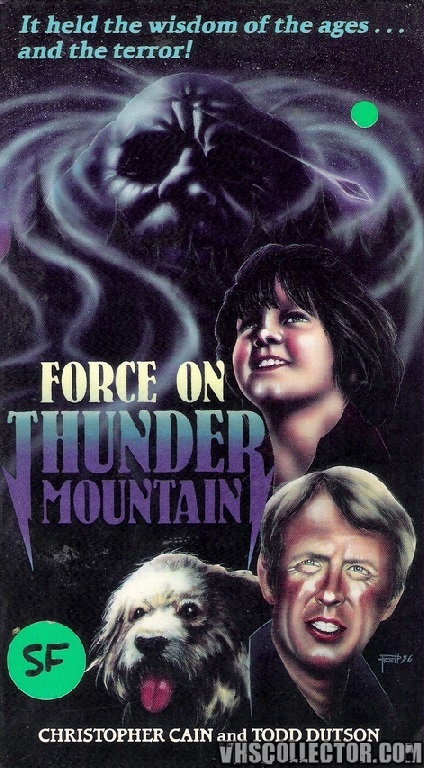
Pumpkin, peaches, pumpkin pie, stick a needle in my eye . . . this friggin’ movie. Well, at least it gives us a lead actor — Christopher Cain, in his only film role — crooning his original tune, “Thunder Mountain.” But it ain’t no Jay Ferguson singin’ “Thunder Island” or Michael Martin Murphy lamenting about Indian girls from coming down Yellow Mountain in “Wild Fire.”
No, dear reader, be not copywriter duped: for wisdom nor terror is to be found in the abyss that is The Force on Thunder Mountain, Benjy and ghost skulls, and Osmond family connections, be damned. Yes. Osmonds.
Paul Z. at VHS Collector.com with the clean JPEG assist. What would B&S do without him?
We get a portrayal of “Alan Osmond” in the deal — that is, if you watched the TV movie Side by Side: The True Story of the Osmond Family (1982) — by Todd Dutson, here, in his second and final film role; he debut-stars alongside the once-and-gone, croonin’ Cain. But don’t come a-knockin’ for anymore roles from Borge West (who produced) and David Fogg (who did sound), as they’re done and gone as actors, padre. But producer George Gale, who got his start as an editor on Phantom from Space (1953), stuck and stayed in the business. His crazy, 80-plus credits producer resume led to his working with our beloved J.S Cardone on Outside Ozona (1998) to hooking up with Sly Stallone on Rambo (2008) and The Expendables 2 (2012), as well as Conan the Barbarian (2011).
Now, Utah-based actor James Lyle Strong is another story: Primarily a stage actor, he was in eight other films. Did you see Strong’s work in The Great Brain (1978), get this, starring Jimmy Osmond of the Osmond clan? (The other Osmond’s film was 1978’s Goin’ Coconuts!, if you care.) Now you see the connection on how Todd Duston got his Osmond bioflick gig — and proof that “networking” on the set, works. Oh, and Strong has a six-degrees of separation from Rollerball (1975), well, one degree: he co-stars in the abysmal remake of H.G Wells’s The Time Machine (1978; we’re working on that one) with John “Moonpie” Beck — a film so abysmal that it was meant for theaters but dumped on TV to be a ratings bomb.
It’s all brought to us by director Peter B. Good, here in his feature film directing debut. He’d go on to direct one more film: a shocking stylistic turn with an SOV-nasty take on the Jack the Ripper legend that is Fatal Exposure (1989). As a cinematographer and incognito producer, Good gave us the death-docs Faces of Death III and IV (1985/1990). This from a guy who was noted for his early ’70s wildlife documentarian work and made box office bank as the producer and cinematographer for the Stewart Raffill (High Risk) directed The Adventures of the Wilderness Family (1975).
While Good’s second and final directing effort, the aforementioned-linked Fatal Exposure, showed a lot of potential for future growth, that potential is lost in wilds of this not-haunted forest romp. What’s really crazy: Good was also the cinematographer on one of my childhood favorites: the family nature movie Chandar, the Black Leopard of Ceylon (1972), which was part of The Wonderful World of Disney Sunday evening TV movie blocks.
No, Disney nostalgia will not blind this reviewer. Not this time. And no bogus “SF” sticker on the VHS will dupe me this time, either. Again, ghostly skulls, be damned. Or cute dogs. Or Osmonds.
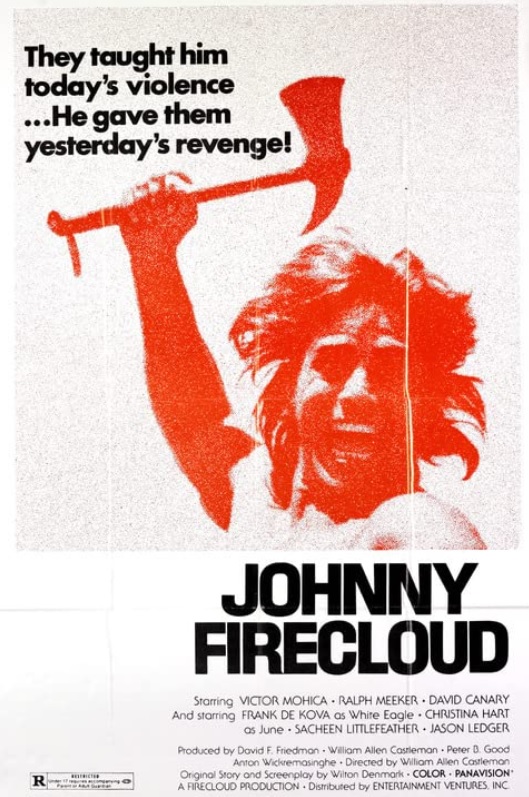
Peter B. Good’s second feature film — as cinematographer and producer, after his work with Raffill — the 1975 thriller Johnny Firecloud.
Sure, there’s a sci-fi element stumbling about the Osmond Family Utah wood, but this is a straight up, light weight drama for the family set. Courtesy of United Home Video — one of the better distributors on the market — The Force on Thunder Mountain was everywhere, on every video store shelf out there, right alongside another hornswogglin’ family flick, Mystery Mansion (1984), which ended up in the horror section — but was anything but horror. We mention the latter since both family fests were paired as a Saturday afternoon UHF-TV two-fer programmer in the late ’80s. (Oy! Mystery Mansion; I never understood a “family” movie having bondage scenes with kidnappers making death threats by shotgun, but it exists.)
Anyway . . . what’s a single parent with a paranormal fetish to do when he’s stuck with his kid for the weekend and he needs to explore a haunted mountain forest: take the kid along for some fresh air and father-son bonding, demons — or whatever the hell is on Thunder Mountain — be damned.
So, is Ash up there poking around a skin-bound book and pissing off a Sumerian demon via a reel-to-reel?
Sorry, Cletus. Yahs gotta leaves yer Raimi hopes down at the general store at the small town at the foot of the mountain, as no Equinox (1970) — be it lunar or solar — shall converge on Thunder Mountain. But you’ll “taste the rainbow” as showers of Skittles will fall. Hopefully, you picked up a bag of Reese’s Pieces at the general store, Elliot . . . as we cue the UFO stock footage from the 1953 version of Invaders from Mars and a repurposed Jupiter-2 from Irwin Allen’s Lost in Space. Then we’ll call up a couple of 1800s Gabby Hayes-cum-Jack Elam prospectors to the set, as said UFOs will telekinetic some rocks, or is that electromagnetic-field some rocks, to scare them out of them there hills . . . because “something” is out there that can not be found. Mum’s the word.
Meanwhile, in the present day . . . father and son hike and talk. And ad-lib awful non-dialog. And hike. And talk. And dad assures his son that “. . . it’s just the wind” and not to worry about those never-seen-before footprints. And feign excitement at the animal stock footage of cougar cubs and coyote pups.
Then things go all phantasmal — sans any dimensional forks from red planet Tall Man — as dad and son walk from the woods . . . into a dry, desert lake bed. Is that the Overlook Hotel I see in the horizon? Is the kid going to channel Danny Torrence and redrum all of God’s creatures great and small? And we hope against hope that Steve Austin and Bigfoot from the two-part “The Secret of Bigfoot” story arc (1976) shows up. And we hope Christopher George will appear to bring along the bastard-pups-of-Jaws plot from Grizzly (1976). And we wished Dan Haggerty showed up . . . denied. Hags was committed to the NBC-TV series The Life and Times of Grizzly Adams, and chose to work with Linda Blair in The Chilling (1989), instead. And Elves (1989). And a couple of evil Keeblers in a Utah redwood would be welcomed. Even a errant, psychotic Leprechaun (1993) would help.
Yeah, if Lee Majors starred as the dad, Christopher George as a ranger, and Dan Haggerty as the mountain prospector. And we had a Bigfoot vs. Bear smack down to go with the UFO. And an Overlook Hotel. And some Coscarelli dimensional forks. And an actual Osmond showed up. But we digress.
Instead, we get James Lyle Strong — the most experienced, best actor of the bunch — as the scraggly-bearded not-Dan Haggerty dude named Om — a 1,000-year-old, crash-landed alien armed with a Translator, a techno-trinket that makes thoughts a reality, restores cut down trees, and scare off nasty bears. The Translator also needs to fend off Om, as the screenplay (unintentionally, we think) errs to the side of pedophile — with the “sleeping arrangements” to “teach” our young lad to inherit the Translator to protect the mountain. Or something. No wonder Jimmy Osmond traveled not to Thunder Mountain as a follow up to The Great Brain. Maybe if Angus Scrimm starred as Om, it’d be less creepy; he was also the Lady in Lavender, and the kids does need a mom, after all.
Just wow. The Force is not strong with this one.
If you thought Starship Invasions (1977), Ed Hunt’s Canadian E.T. knockoff courtesy of Hal Roach Studios, was bonkers. And that Sunn Classic Pictures’ picnic basket was a ham sandwich short with the UFO paranoia that is Hangar 18 (1980). Oh, dear reader, how ye assumed the alien nuns overlorded by Christopher Lee’s priest in the extraterrestrial Catholicism that is End of the World (1977) was a VHS force to be reckoned. Oh, no. Not when you have a 1,000-year-old pedophilic alien camped at the foot of Thunder Mountain dangling the “candy” that is the Translator. Calling Planet NAMBLA, there’s a faux-Elliot with dysfunctional family issues ripe for a home phoner. Ick.
So, who’s the production company behind this extraterrestrial nature film boondoggle, a company Mr. Lucas didn’t sue for wrangling his film for their title?
Hey! It’s drive-in and TV supplier American National Enterprises: a company steeped in nature documentaries since the mid-’60s. As with Sunn Classic Pictures, ANE occasionally broke away from the stock footagementaries to produce Z-grade dramas for the drive-ins and television. There are, however, a few highlights of the B&S About Movies variety, such as the Dennis Christopher curio Didn’t You Hear (1970), the Rod Serling-fronted anthology Encounter with the Unknown (1972), the Greek faux-giallo Medusa (1973), and the ancient astronaut oddity Mysteries from Beyond Earth (1975). ANE came to leave the producing to others and stuck to distributing films, such as She (1982), Ironmaster (1983), and, frack me, Joe D’Amoto’s Endgame (1983). The imprint closed shop after the Vincent Price-starring anthology TV movie Escapes (1986).
Since The Force on Thunder Mountain has never been digitized and officially reissued to DVD (here’s the trailer) — not even in a VHS-ripped DVR grey format — there’s no VOD or freebie-stream to share, not even a VHS rip. There are, however, steeply-prices used VHS copies available in the online marketplace.
Hopefully, Mill Creek — which released the other American National Enterprises’ films we’ve reviewed, linked above, via their box sets — will reissue this family oddity. As with most of these lost obscurities of the UHF-’70s, the Park Circus/Arts Alliance TV distribution library catalogs the film. Other lost, out-of-print films in their library that we’ve reviewed include Song of the Succubus and Goodbye, Franklin High. So, yes, it’s time for Park Circus to get into the DVD box set business or work out a deal with Mill Creek to preserve these lost films.
Yeah, it’s the awful films I remember the best. My brain is weird that way.
About the Author: You can learn about the work of R.D Francis on Facebook. He also writes for B&S Movies.
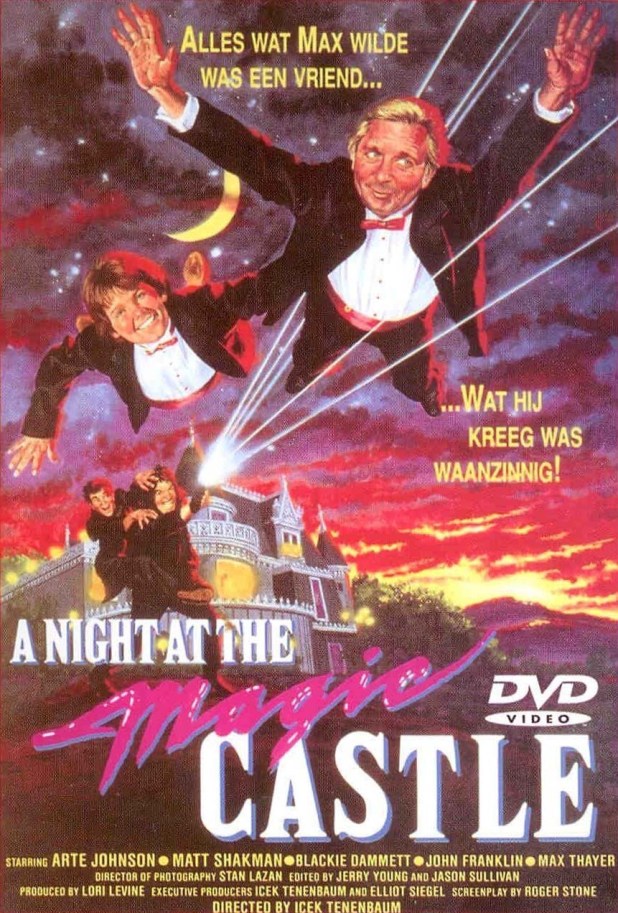
Oh man, The Magic Castle, the place where Dai Vernon performed all the time. It’s an invite-only place where strict dress code and the ways of classic Hollywood still remain, a clubhouse for magicians and magic enthusiasts and the home of the Academy of Magical Arts. “The most unusual private club in the world,” visitors must say a secret phrase to a sculpture of an owl to even see the entrance to the club.
This is the first movie ever made inside the walls of The Magic Castle, with many of its illusionists and magicians performing within the film.
Producer and director Icek Tenenbaum only made one other movie, a vacation gone wrong movie called The American Scream. He co-wrote this with Roger Stone — no, not the Penguin-looking Republican heel — who also wrote Goin’ All the Way, Lethal Pursuit and “Get Even” from the soundtrack of Gymkata. Also, his songs “Sparks” and “Dirty Talk” were in the adult films Bodies In Heat and Talk Dirty to Me Part 2.
Arte Johnson palys Harry Houdini, so between my mania about the master magician and my love of Laugh-In, you knew I’d have to watch this one of these days. A young kid in this learns all about losing his imaginary friend and the power of magic and the evil of Blackstar, who is played by Anthony Kiedis’ dad Blackie Dammit, who am I convinced may have George Eastman and William Smith powers, because he has rescued many a movie that I was iffy about the second he walks on screen.
This movie is ridiculously cheesy and yet endearing, kind of like magic on stage itself. Plus, how else are you gonna go back in time and go inside The Magic Castle?
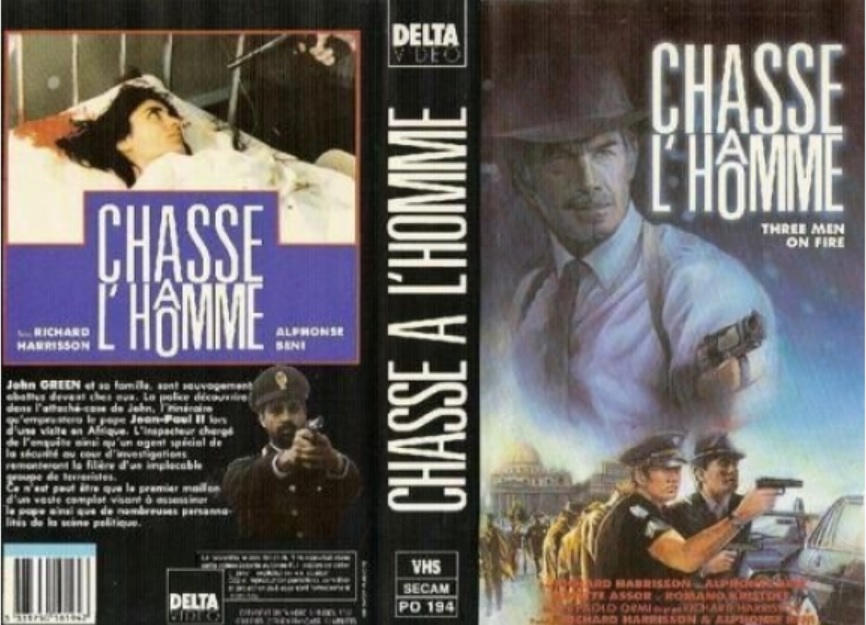
This review is all about expatriate American actors Gordon Mitchell and Richard Harrison.
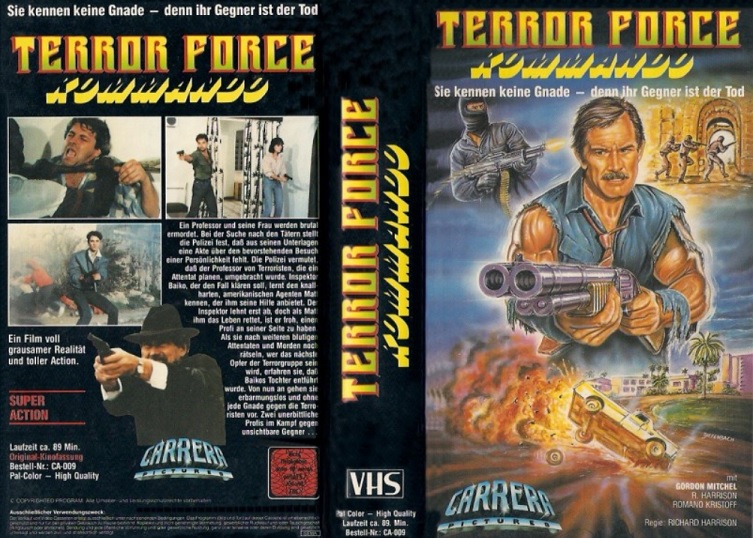
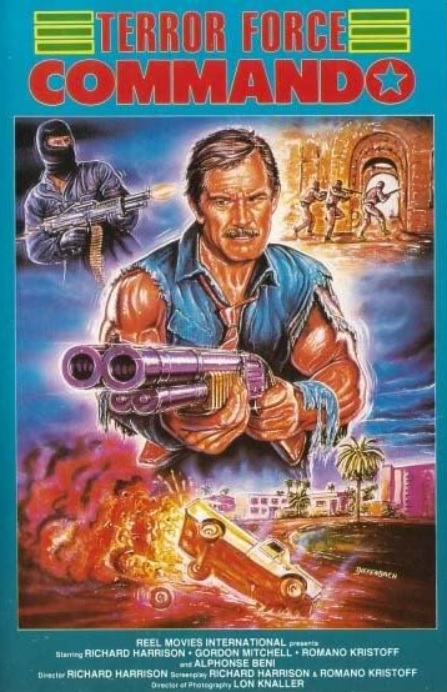
This review is not, however, about — although it spews bullets and blows up like one — an ’80s First Blood-cum-Commando Philippines war flick rip. And it’s not about an ’80s Italian First Blood-cum-Commando Philippines-esque war flick rip, either. And it’s also known as — to add to the you’re-sure-it’s-not-a-Philippines-flick confusion — Terror Force Commando, which sounds exactly like something Silver Star Productions in Manila would dump into the home video market under the thumb of directors Jun Gallardo, Cirio H. Santiago, or Teddy Page.
But I digress, again. Bad reviewer. Go sit in the “time out corner” to ferment and wallow in your lazy, ensuing and trope-laden self.
So . . . this is where I front-end this review and tell you nada about the film because it’s all about the fanboy geekdom here at B&S About Movies which, in this case, is rife with Gordon Mitchell and Richard Harrison worship. Yeah, I am weird that way, with my equally “weird” reviews. So, if you’re more into the ol’ rat-a-tat-tat plot-spoiler reviews, stop reading here. Then go over to the dryness of Wikipedia or the chatter of the IMDb for your turned-on-to-new-movie needs.
Okay, then. Anyhoo . . . let’s load this sucker into the VCR.
The original Italian Poliziotteschi version.
Born Charles Allen Pendleton in Denver, Colorado, Gordon “The Bronze Giant” Mitchell became the requisite Italian-peplum actor by way of his bit parts in The Ten Commandments (1956) and Spartacus (1960). Then Steve Reeves made bank with Hercules (1958), so beefcakes like Pendleton — regardless of their lack in speaking Italian — headed off into the Neapolitan sunset, with films such as Atlas Against the Cyclops and The Giant of Metropolis (both 1961), Vulcan, Son of Jupiter and Caesar Against the Pirates (both 1962), and a bundle of spaghetti westerns, such as Three Graves for a Winchester (1966), along with Poliziotteschis and Giallos. Did Pendleton-Mitchell do Italian Space Operas? He did: 2+5 Mission Hydra (1966). Did he do Nazisploitation? He did: Achung! The Desert Tigers! (1977). Sexploitation? He did: Porno-Erotic Western (1979). Joe D’Amato even got Gordon Mitchell into the post-apoc game with Endgame (1983).
Then Mitchell’s career, like all careers do, cooled. So, along with fellow expatriate American actors, such as the equally B&S fandom’d Richard Harrision and Mike Monty, Gordon Mitchell headed off to the Philippines to work with John Gale, aka Jun Gallardo, the “star” of Silver Star Productions.
Silver Star is a studio you’ve heard mentioned during our “Philippines War Week” this month (and our PWW II coming in December). All of those Philippine war flicks rotate the same actors, either in new footage, or via old footage cut-in from other films; the recycling resulted in the likes of actors such as Mike Cohen, Jim Gaines, Romano Kristoff, Mike Monty, Nick Nicholson, Ronnie Patterson, Paul Vance, and Ken Watanabe (no, not that one; the Nine Deaths of the Ninja one) “starring” in movies they didn’t even sign up to appear in. In fact, the recycling into films of lesser and lesser production value ended up damaging the career of Gordon Mitchell and Richard Harrison; after a string of plagiarized Philippines hokum, no studios of note wanted to work either of them.
But before he made his way down to the South Seas, Gordon Mitchell started pumping out the Sly-Arnie rips — peppered with Raiders of the Lost Ark seasonings — for the Italians, the Turks, and Germans with the likes of Treasures of the Lost Desert, Diamond Connection, and White Fire (all 1984), and Operation Nam (1986). Then there’s Commando Invasion (1986) for Jun Gallardo.
The First Blood-Commando re-imaging for the international marketplace.
Richard Harrison made his debut in South Pacific (1958) alongside Tom “Billy Jack” Laughlin and Ron “Tarzan” Ely, then signed with American International Pictures to appear in a wide array of peplum, Eurospy, poliziotteschi, and Spaghetti Westerns in Italy. It’s said that Richard Harrison was offered — and turned down — A Fistful of Dollars. And we know that film turned out. However, as with Gordon Mitchell, Harrison’s career cooled, so he headed down to Hong Kong and the Philippines to continue his career.
Harrison acted in five flicks for K.Y. Lim’s stock footage-and-everything-else-stocked celluloid factory o’ sausage that is Silver Star Productions: Fireback, Hunter’s Crossing, and Blood Debts, which were directed by Teddy Page, and two for Jun Gallardo: Intrusion Cambodia and Rescue Team. Fireback gave Harrison a chance to write, under the pen-name of Timothy Jorge.
Then Godfrey Ho came along and compounded Richard Harrison’s career problems.
Harrison contracted to make a couple of low-budget ninja films for Ho. Then Ho cut-and-pasted, as is the par for the celluloid in Southeast Asian cinema of the low-budget variety, Harrison “starring” in the films Ninja Terminator, Cobra Vs. Ninja, Golden Ninja Warrior and Diamond Nínja Force. The list goes on and on of films that Harrison didn’t sign for but “starred in.”
The U.S. home video Rambo redress — but it’s more Lethal Weapon.
So . . . back to the review of Three Men on Fire, aka Terror Force Commando, which is Richard Harrison’s fourth and final directing effort. His others were the Spaghetti Westerns Acquasanta Joe (1971), Two Brothers in Trinity (1972), and the Hong Kong action piece Challenge of the Tiger (1980). In addition to Two Brothers, Fireback, and Three Men on Fire, he also wrote Blood Debts for Teddy Page. And his final screenwriting effort: Claudio Fragasso and Bruno Mattei’s co-directing mess that is Scalps — no, not the Fred Olen Ray 1983 one — there is the Richard Harrison-penned one.
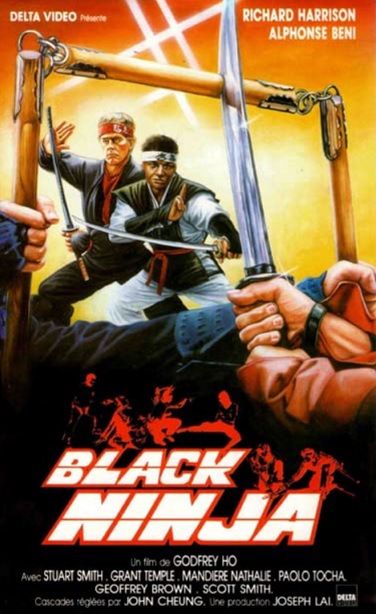
Richard Harrison and Alphonse Beni’s second team-up — down in Hong Kong with Godfrey “Oh, No!” Ho.
Casting his longtime friends and many-times co-stars Romano Kristoff and Gordon Mitchell in his long-gestating pet project, this Italian Poliziotteschi action-thriller concerns Richard Harrison’s CIA agent teaming with a Cameroonian police officer played by Alphonse Beni (1987’s Black Ninja, aka Ninja: Silent Assassin, with Richard Harrison; Top Mission for Godfrey Ho) who try to prevent the Pope’s assassination by Italian terrorists (headed by Romano Kristoff, in one of his few villain roles) during the Holiness’s Central African tour.
Thanks to the international cast and all of the film’s globetrotting between Africa and Italy — and Alfonso Beni, a star in his homeland as an actor, writer, and director, not speaking English — there’s lot of dubbing afoot. And since this is a low-budget joint, most of it is shot-on-the-fly sans permits, so there’s lots of wide shots with minimal close ups, reverses, and close ups that you’d get from an A-List American-made film in the buddy-cop action genre. As with the Hong Kong and Philippines films that damaged his career, Harrison isn’t (at not least here) much of a director himself, as we’re subjected to the same ol’ poorly framed shots compounded by choppy, cut-off editing. In the end, it all looks just like those K.Y. Lim Silver Star Productions of old by Jun Gallardo — and that it was shot in the ’70s and not in the mid-’80s in a post-Lethal Weapon franchise world.
Well . . . eh . . . maybe it’s not all that bad; Harrison’s poliziotteschi romp is just as “poliziotteschi” in its cinematic qualities as any of the Harry Callahan and Paul Kersey Italian rips made in the backwash of Magnum Force and Death Wish. And that begat — with its touches of comedy-dark — 48 Hours, and then, even more action-oriented in its comedy dark with Lethal Weapon, and then, even more comedy-light with its action by way of Jackie Chan and Chris Tucker in Rush Hour.
Harrison’s buddy-cop tomfoolery starts with — as they all do — a villain lighting the fuse; in this case it’s Kristoff’s “Zero” (or “Zeno”) murdering a Cameroonian family for information on the Pope’s visit (at least the cat survived). Another one of Kristoff’s targets is Gordon Mitchell, who’s the head of the World Peace Organization. Now, I was hoping that Mitchell was one of the ass-kicking “three men on fire” — alongside Richard Harrison and Romano Kristoff. Nope. Our “Three Men on Fire” acting as our makeshift “Terror Force Commandos” is actually Richard Harrison (as our ersatz Mel Gibson-Martin Riggs), Alphonse Beni (as our ersatz Danny Glover-Roger Murtaugh), and Romano Kristoff (as our crazed Italian-cum-ersatz Gary Busey-Mr. Joshua). So, yeah, check your John Rambo, John Matrix, and James Braddock hopes at the baggage carousel to Douala, Cameroon: this ain’t no First Blood or Commando or Missing in Action, flimflamin’ VHS artwork, be damned.
At that point . . . well, that’s the plot.
I know, I know . . . another review where I tell you nothing about the actual movie. But there’s not a plot to tell you! Well, what I can tell you is, that instead of the jungle, we are running between Rome and Douala with all the city street car chases, fistfights, and bullets, and a kidnapped daughter strapped to a bomb, à la, well, Lethal Weapon, that you can handle.
Yeah, we know Lethal Weapon came out a year later — so save us the “fan mail” — but this sure as hell ain’t no Rambo romp, either. And while Three Men on Fire is poorly executed overall, it’s still entertaining as hell, as the decent enough shootouts and overseas locals gave me everything that I wanted and expected from an ’80s direct-to-video Z-actioner. Considering Richard Harrison was on a guerilla shoestring and passion-trying, it’s actually better than most films of the genre. I liked it. But I am Richard Harrison biased. Your own Z-action mileage may vary.
You know it! We found a freebie-watch of the Terror Force Commando version of the film on You Tube. And how about that explosive opening sequence!
About the Author: You can learn more about the writings of R.D Francis on Facebook.He also writes for B&S About Movies.
“The industry is in bad shape. The people in Hollywood don’t care about films. They’re only worried about lining their pockets.” — The Tinseltown wisdoms of Peter Carpenter
Courtesy of Amazon and IMDb.
These two, lost Peter Carpenter movies have dogged us long enough!
It’s time we complete the review quartet of Pete’s four films, which includes his two writing and producing Wiseauian vanity efforts: his debut, Blood Mania (1970) and Point of Terror (1971). How much do we love Blood Mania? Well, during our month-long, February 2021 Mill Creek Box Set tribute, B&S buddy Bill Van Ryn of Groovy Doom/Drive-In Asylumreviewed it for the ‘Creek’s Grindhouse Greats set, while our friend Eric Wrazen of Festival de la Bête Noire took a second crack at it for the set.
Courtesy of Bill Van Ryn, we know that Peter Carpenter had been selected by Russ Meyer for a small role in Vixen! after Carpenter’s then girlfriend included a photo with him as part of her audition materials. A role alongside Dyanne Thorne in 1970’s softcore drama Love Me Like I Do followed, and Carpenter’s later, one-two punch of his self-produced Crown International-starring vehicles of Blood Mania and Point of Terror, made with producer Chris Marconi, undoubtedly represented a bid for establishing Peter as a working actor—a Hollywood commodity, even. A career never manifested, and Carpenter disappeared. Despite rumors that he vanished because he died, he actually simply left the movie business, although he did pass away at the too-young age of 56—in Alhambra, Los Angeles County, on April 2, 1996, under his birth name: Joseph Nathaniel Carpenter, a former enlistee of the U.S. Air Force (thanks to Mike Perkins for that bio-postscript).
As Mike Justice of the Eerie Midnight Detective Agency site correctly pointed out: Peter didn’t do much in the way of acting in these films—but, in both, he did show a natural predilection for portraying a horny, muscular man who will stop at nothing to get laid. And I’ll have to add that quality carried to its zenith, with Pete as the red-jump suit clad n’ hip-swingin’ Tom Jones wannabe in Point of Terror.
So, how we ended up here, QWERTY’ing away in the B&S About Movies cubicles about these first two Peter Carpenter films is a tale of the coolness that is B&S About Movies. And this ain’t no trope of a tale we’re telling: B&S is a family of movie lovers who love film for film—a gaggle of crazy bastards and lazy sods who write for the love of film, money in our pockets for the efforts, be damned. (In fact, it’s how our newly-posted review of The Beast (1988) came together: reader feedback to our site. Ditto for our recent “Ancient Future Week” reviews of Future-Kill (1985) and Robo Warriors (1996): reader input.)
B&S reader and uber Peter Carpenter fan, Mike Perkins, a professional librarian, reached out to us upon discovering our review of Point of Terror with questions and some new, Pete-Intel. The Perk came to tell us he’s been working with B&S About Movies’ long-time friend and contributor Mike Justice to set the record straight on Peter Carpenter’s life and career.
It all began with Mike Justice asking the February 22, 2016, question in his article: Lost Actor: What Ever Happened to Peter Carpenter? on his site. So, Mike Perkins, the insane-uber Carpenter fan he is, started digging. And the two-Mikes’ investigations led to Mike Justice posting the follow up article: Lost Actor Found: Who Was Peter Carpenter? on March 7, 2021. Then Mike Perkins took it a step further by setting up a Flickr photo tribute page, finally convincing the IMDb to updated Peter Carpenter’s page, and setting up an all-new Find A Grave tribute page. Yeah, the Mighty Perk is working on that Peter Carpenter Wikipedia page, you know it!
Courtesy of Mike Justice.
The one thing we’re all in agreement on: Peter Carpenter was Tommy Wiseau before Tommy Wiseau was Tommy Wiseau making his The Room vanity project. And that Rudy Ray Moore was the blaxploitation version of Peter Carpenter—remembering Moore took the vanity route with Dolemite. And that we need a Peter Carpenter biographical dramedy, à la The Disaster Artist and My Name Is Dolemite. And that Jason Segel—as first suggested by The Great Protrubero, one of Mike Justice’s readers—should star.
Like I told Justice: If Netflix can bank roll Jack Black as the financial-scamming Jan “The Polka King” Lewen in a bioflick, then a Peter Carpenter film can be done.
Does anyone know how to reach James Franco and Seth Rogen? A Peter Carpenter movie—Point of Stardom—starring Jason Segel as Pete, must be done—if only to get Segel into a fringed, red-jump suit. And, in the way-back machine: Judge Reinhold.
Just think of it: A world where Peter Carpenter never left the business—and Peter, instead of Judge Reinhold—ended up as one of the (many) boyfriends of Elaine Benis on Seinfeld—or Carrie Heffernan’s gynecologist on The King of Queens (i.e., Judge, again). Why did you leave the business, Pete . . . the castings you missed . . . you could have been “the Close Talker” on Seinfeld! And yes, B&S readers: we’re accepting your casting suggestions for Dyanne Thorne and Russ Meyer in the comments section, below.
In fact, speaking of castings and Jack Black: If there’s ever a Paul Naschy biopic made, Jack Black is the man for the job. From Pennsylvania’s “Polka King” to Spain’s “Werewolf King”? Jack can do it!
And . . . Jack Black can be Russ Meyer to Jason Segel’s Peter Carpenter!!!
“Uh, the ‘rails,’ R.D. We talked about this. The rails. You’re friggin’ off them, again. Please get back to the movie,” Sam “The Boss Man” Panico, implores me.
Sorry, Sam . . . the Peter Carpenter love is, eventually, gonna getcha.
So, yeah. Bill Van Ryn. Eric Wrazen. Mike Justice. Mike Perkins. Sam “the Blender Master” Panico, and yours truly: We are family, and by golly, we’ll get the job done and solve The Case of Peter Carpenter. Get this: for the fun. We’re fracked up that way. And by hook or by crook, we will get that movie made, too.
Let’s roll Vixen! and Love Me Like I Do. To the aisle seats, Robin!
Peter Carpenter? In the bioflick Point of Stardom. A missed casting coup: Judd Reinhold as Peter Carpenter in Fast Times in Hollywood.
Vixen! — The Review
“The story of a girl who loves the joy of being alive.” — Now that’s how you pitch an X-rated movie
Yeah, you’re heard of this movie in the annals of X-rated films: it was the first film to be given the rating due to its sex scenes. Yes. It was a huge box office success ($8 million against $73,000) that not only inspired 20th Century Fox to green-light Beyond the Valley of the Dolls (Doh!), it also triggered the “Golden Age of Porn” with the likes of the equally successful Behind the Green Door, Deep Throat, and The Devil in Miss Jones. Howard Avedis, who we just did week-long tribute on, dove into the golden showers with this take on the trend with The Teacher. And speaking of teachers: Earl Barton’s Russ Meyer-wannabe, the sleazy drive-in take-a-shower-after flick, Trip with the Teacher, was his lone attempt at some “golden age” sexploitation.
Erica Gavin* (later of Meyer’s Beyond the Valley of the Dolls; stellar in Jonathan Demme’s Caged Heat for Roger Corman) is Vixen Palmer: an oversexed (big surprise), bored ne’er-do-well hottie stuck living in a Canadian mountain resort town with her naive, wilderness bush pilot husband (Larry Buchanan stock-player Garth Pillsbury, Mistress of the Apes).
While he’s off on assignments, flying tourists on fishing trips, the divine Ms. Palmer manipulates anyone and everyone to get her jollies: including an uptight, vacationing husband and wife flown by her husband, as well as a Canadian Mountie (cue Peter Carpenter to the set). Vix even dabbles in incest with her rough n’ tumble biker brother, Judd (because all Drive-In B-movie programmers must have a biker; played by Don Stroud lookalike Jon Evans). But Vix draws the line at interracial love: she won’t do the hoochie-mama with Judd’s black, riding buddy (Harrison Page, who carved a still-going, extensive U.S. TV career). Oh, and everyone has opinions on communism to go with their insights on the sexual revolution.
Sigh . . . sex and political dissertations with a side of racism: an exploitation Reece’s Peanut Butter Cup packed with M&M’s (or is that Skittles) if there ever was one.
When it comes to skin-flicks—and Meyer’s oeuvre, on whole—Vixen! is a solidly produced flick that’s well-directed with engaging cinematography. Courtesy of Erica Gavin going so over-the-top, along with Meyer working in messages on racism, communism, Vietnam, draft dodging, and the sexual revolution amid the nekked parts, this is not, not-an-entertaining flick. In fact, instead of flinching in repulsion, you actually laugh—with, not at—the film. How can you not chuckle, when Vixen and her brother lament on their special showers back when they were 12—as they have a nekked shower-sex reunion? (Note: Adult Film purveyor Shaun Costello also worked a Vietnam subtext into his early porn/proto-slasher, 1973’s Forced Entry; fellow adult industry warhorses John Howard and Justin Simonds later cross-pollinated the genres with the SOV-nasty, 1986’s Spine.)
Look, this ain’t no 2 1/2 hour Zack Snyder zombie romp with the always career-bitching Dave Bautista: it’s a 70-minute skin flick from the limits-pushing Russ Meyer. (It could be worse: this was sliced to 63-minutes in other parts of the world.) So what’s not to likely? Take a chance, you analog masochist, to get your fix of Peter Carpenter strippin’ off that Royal Canadian Mounted Policeman’s uniform. Your own heart-breaking sighs for Peter, may vary.
Ugh. No trailers to embed. So log onto You Tube to watch them HERE and HERE. The DVDs abound, even on Amazon. Online streams. Yes. On torrent sites: don’t do it.
Love Me Like I Do— The Review
“I thought I was safe as long as I kept my eyes wide open and my knees tied together.” — Another satisfied Peter Carpenter conquest
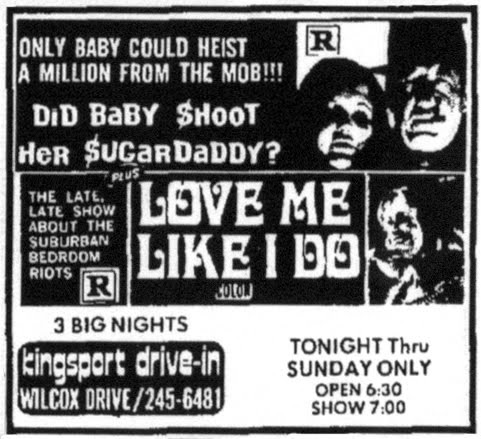
Writer and director Jean Van Hearn shot seven sexploitationer skinners between 1961 to 1973: Eternal Summer, Nymphs Anonymous, We, a Family, The House Near the Prado, The Hanging of Jake Ellis, Did Baby Shoot Her Sugar Daddy?, and this one—the only one starring Peter Carpenter. Oh, and Dyanne Thorne. Did we mention that Dyanne impressed Pete, here, so he cast Dyanne as his lead in his forth and final film, Point of Terror? We just did.
Courtesy of Temple of Shock in their review of Did Baby Shoot Sugar Daddy?
So . . . if you need films with soft-core kink titillations, trannies, way-too-many strippers, a world where women seduce men—while another man is dead, stuffed under a bed—all done at an Ed Woodian ineptness that makes a Doris Wishman joint look better that it should, then Van Hearn’s always-hard-to-plot-follow, seven-film oeuvre should be on your watch list.
Now, back to the Peter Carpenter love.
Sharon Sloane (Dyanne Thorne, in a bad wig) is a loyal, seemingly content suburban wife with a nice husband, Bill (Peter Carpenter, in his first leading man role), house and family—and she throws mod-swingin’ backyard parties. Well, things were content: Sharon just discovered—as a way to deal with the stress of his business ready to collapse in a takeover by his partner, Keith (the one and done Paul Flemming)—ol’ hubs cheats on her with the local, neighborhood nympho, Nanette (Maria De Aragon**, Blood Mania for Peter; the lead in 1972’s The Cremators). So, Sharon—while she attends to the woe-is-me problems of her horny-divorcee best friend (Lynne Gordon, her final film was Robert Redford’s The Hot Rock for Peter Yates)—does the only logical thing: she goes off the deep end. And so does everyone else.
Sharon pops off a couple o’ rounds at Bill’s squeeze, Nanette? Check.
Bill’s business partner, Keith, wants not only the business, but Sharon? Check.
Does Keith fail at goading Sharon into adultery, so he rapes her? Check.
Does she like it? Check.
Does Bill, the cheater, beat the hell out of Sharon for cheating? Check.
Divorce? Stressed out little ones? Check and double check.
Sharon and Keith run off to Las Vegas—and Sharon, the girl who won’t commit adultery—turns into the very nympho her ex, Bill, enjoys. Checky check check.
Just wow. If this is what the sexual revolution of the ’70s did for film . . . then we need Estus Pirkle to break out the bible to inspire Ron Ormond to get the cameras rolling to get our souls in check.
Look, if you’re a Peter Carpenter fan—and you were able to make it through the movie-where-nothing-happens stylings of Blood Mania, but enjoyed the mania where-everything-happens of Point of Terror—sans the musical numbers and slasher overtones of that later sex opus—then there’s something here for you to do on a Friday night.
Thanks to our bud, Mike Justice, while we do not have an online stream of the full movie to share (there’s a few torrent-to-porn uploads out there: don’t do it: unless you’re into virus alerts and site redirects), you can watch these two clips from the film HERE and HERE (but embedded, below). You want the DVD? Well, the DVDLady has multi-regional DVD-rs, if you absolutely must have it.
I’m excited! Let’s make this Peter Carpenter bioflick happen!
About the Author: You can read the music and film reviews of R.D Francis on Medium and learn more about his work on Facebook. He also writes for B&S Movies.
* Did you know Erica Gavin has an official website? True story. Check it out at ericagavin.com. The link will take you into a deeper plot synopsis and backstory on Vixen!, as well as direct you to her insights on her other films.
** Maria De Aragon was under the Greedo make-up, hassling Han Solo at the Mos Eisley Spaceport in Star Wars? Is that urban legend?
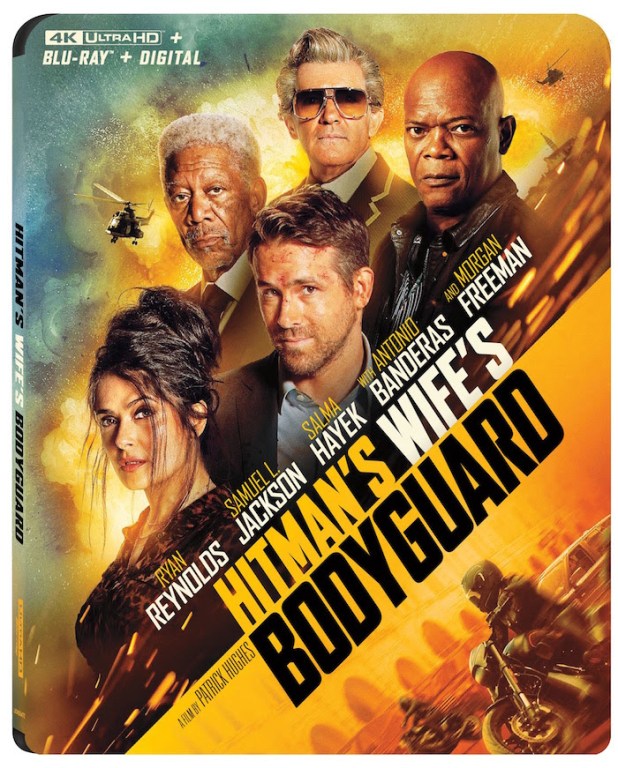
Bodyguard Michael Bryce (Ryan Reynolds) and hit man Darius Kincaid (Samuel L. Jackson) are back back together. Still unlicensed, Bryce is forced ito come back into the killer’s orbit by Darius’ wife, con artist Sonia Kincaid (Salma Hayek). Now, they have to save Europe from a killer virus and the plan to make Greece great again from Aristotle Papdopolous (Antonio Banderas). And just who might Morgan Freeman be?
This film is a sequel to the 2017 film The Hitman’s Bodyguard and features Reynolds, Jackson, Hayek and Richard E. Grant reprising their roles, with Frank Grillo (alwats welcome in more films!), Tom Hopper, Banderas and Freeman joining the guns and comedy party. Around 150 of the crew came back to work on this sequel as well.
Incredibly, while Jackson met Freeman when both were struggling stage actors in New York, this is the first feature film they’ve ever appeared in together!
The story really isn’t as important as the fact that this movie is filled with action setpieces. I’d never seen the original, but was instantly taken in by this fun film. It’s mindless explosions and stunt-filled mayhem, but after the end of a long week of work, isn’t that what you want sometimes?
The 4K Ultra HD Combo Pack, Blu-ray Combo Pack, and DVD of The Hitman’s Wife’s Bodyguard will be available for the suggested retail price of $42.99, $39.99, and $29.96. You can get plenty of extras no matter what version you select, including making of features, the trailer and even a gag reel. It’s available from Lionsgate, who also have digital and on demand options. You can learn more on the official website or official Facebook page.
You have to feel for the deep sea divers in this movie. Sure, they have to deal with their boss, rich businessman George Harrison, but now to get the diamonds out of the wreck of a ship that sank sixty years ago, they have to deal with not only a curse, but the ship’s undead zombie crew who must remain there until the curse is removed or the diamonds are destroyed. This is getting into some Return of the Curse of the Creature’s Ghost-like shenanigans, right?
Somehow, fate has decreed that I watch multiple Alison Hayes films as of late. Between Gunslinger, The Unearthly, The Crawling Hand and this movie, I really have come to enjoy seeing her show up. Marjorie Eaton — who was the physical actress who played Emperor Palpatine in the non-special editions — is also on hand.
The prologue to this movie says, ‘In the darkness of an ancient world — on a shore that time has forgotten – there is a twilight zone between life and death. Here dwell those nameless creatures who are condemned to prowl the land eternally — the Walking Dead.” That’s right, this movie used Twilight Zone two years before Rod Serling and 46 years before the comic book. And wow, zombies sure got different a decade or so later.
The Zombies of Mora Tau is one of four movies on Arrow Video’s new Cold War Creatures: Four Films From Sam Katzman set along with Creature with the Atom Brain, The Werewolfand The Giant Claw. Each film has a 1080p blu ray presentation, along with a fully illustrated 60-page collector’s book featuring extensive new writing by Laura Drazin Boyes, Neil Mitchell, Barry Forshaw, Jon Towlson and Jackson Cooper, as well as 80-page collector’s art book featuring reproduction stills and artwork from each film and new writing by historian and critic Stephen R. Bissette, the former artist of Swamp Thing. Plus, you get two double-sided posters featuring newly commissioned artwork by Matt Griffin and reversible sleeves for each movie with original and newly commissioned artwork for each film by Matt Griffin.
The Zombies of Mora Tauhas plenty of extras, including an introduction by Kim Newman, commentary by critic Kat Ellinger, a visual essay exploring the intersection of mythical horror creatures and the rational world of science in the films of Sam Katzman by critic Josh Hurtado, the theatrical trailer and an image gallery.











 B&S About Movies
You must be logged in to post a comment.