Body Bags (1993)

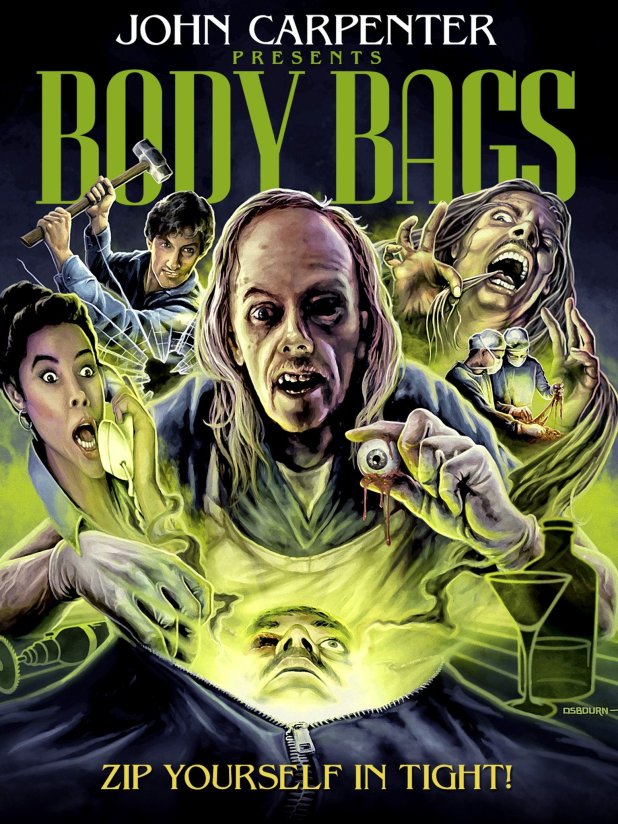
Showtime was looking for Body Bags to be their Tales from the Crypt, yet the plug was pulled after just three episodes. That’s a shame because this show had some great talent behind it. I mean, John Carpenter hosting and directing along with Roc Hooper? Yeah, that’s what I’m talking about.

“The Gas Station” may as well be a side story to Halloween. When a young college student starts her first all-night shift at a gas station near Haddonfield, she learns of a breakout at the local mental hospital — hello Smith’s Grove — and is told she needs to stay inside because the door will lock her out and stay locked until the morning. After a series of strange visitors — George “Buck” Flower, Wes Craven, Peter Jason, David Naughton — and a scrawled demon drawing in the bathroom, she learns that the man who hired her — David Carradine — is the killer.

“Hair” has Stacey Keach dreaming of having a full head of hair and doing whatever it takes, even getting a transplant from an alien. Between Sheena Easton as his wife, David Warner as the doctor who makes it happen, Debbie Harry as his nurse and cameos by Kim Alexis, Greg Nicotero and Rock and Roll Fantasy star Attila in the only other movie he ever made.

Finally, “Eyes” has everyone from John Agar and Roger Corman to Charles Napier, Twiggy and Mark Hamill in the lead role of a pitcher who gets an eye transplant from a killer.

By the end, Carpenter’s coroner character reveals himself to be a zombie as Tobe Hooper and Tom Arnold start to cut over his chest cavity for an autopsy.

Man, Body Bags has a great score and seems loads of fun, way better than the junk that passes for horror anthology stuff today like Shudder’s abysmal Creepshow reboot. At least we have these three episodes, I guess.

You can watch this on Tubi.

Merlin’s Shop of Mystical Wonders (1996)

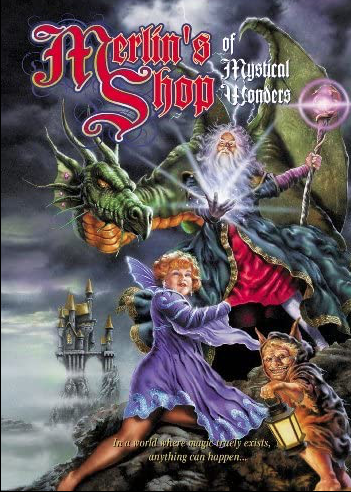
This movie might start with Ernest Borgnine as a grandfather telling his grandchild two stories of Merlin opening a magic shop like a page from The Princess Bride, yet this ends up being a horror movie more than something to watch with your kids.

Jonathan and Madeline Cooper are a married couple that have been having trouble having a child. Jonathan’s newspaper column takes him to Merlin’s new store and he has trouble believing that the old man running the place is really the Merlin of legend. So Merlin decides to give the man his spellbook, which seems to be the worst idea if you’re a magic user, but this allows the writer to see Satan, breathe fire and begin to age every time he casts a spell. He also attempts to make his cat into a demonic servant, but that goes wrong and he has to breathe fire to stop — and kill — the feline. At the end, when he tries to become young again, the spell goes wrong and ends up giving Madeline what she always wanted: a baby.

The second story is a bit close to Stephen King’s “The Monkey,” as a thief steals one of those cymbal playing monkey toys, except that every time the monkey makes a noise, someone dies. This entire sequence is really the 1984 film The Devil’s Gift, which was also made by writer/director Kenneth J. Berton. Tons of that movie got cut out and Merlin was added to the end so that it doesn’t have the ending where the entire family dies. As it is, this monkey kills a bunch of pets, so if you love the animals in your life this movie may not be for you.

Why would Merlin have a store in a strip mall? Who would make this movie? Why would they think kids would want to watch it?

Troublesome Night 2 (1997)

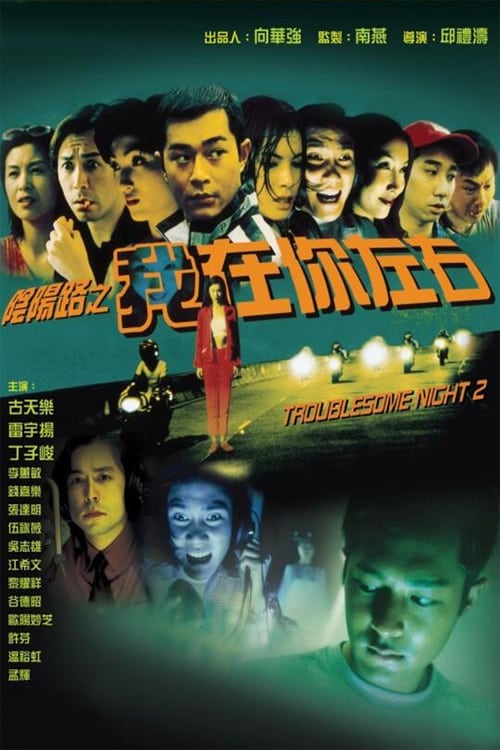
The second in this series of 19 — 19! — films starts with Anita (Amanda Lee, House of Mahjong) mourning the death of her boyfriend and calling DJ Cheung Fat (Allen Ting, who is in the first three of this series), who jokes that maybe she should kill herself if she misses him so badly. She does and her ghosts haunts him. Wow — what a downbeat way to start off what was set up as a fun horror anthology.

In the second chapter, a group of friends on a boat trip save a mysterious woman from the wreckage of another vessel. The moment she is on their boat, the supernatural comes with her, leaving the young people all alone, surrounded by uncaring waters and an army of ghosts.

Then, another DJ — DJ Sam (Louis Koo, who was in the first seven of these movies) — quits his job because of the deaths of his co-workers in the past stories. To get over his grief, he starts street racing but then encounters a ghost of his own as he races through the night streets.

With most of the same cast as Troublesome Night and more of an edge, you may find something to enjoy in this one.

Dead of Night (1945)

The solid-state model of the universe is an alternative to the Big Bang theory, which states that the univere has a finite history and “changed dramatically with time, growing bigger, emptier and more desolate.”

In contrast, the solid-state model sets forth the theory that “the density of matter in the expanding universe remains unchanged due to a continuous creation of matter, thus adhering to the perfect cosmological principle, a principle that asserts that the observable universe is practically the same at any time and any place.”

Who knew that such big ideas would come from a horror movie?

Fred Hoyle, Thomas Gold and Hermann Bondi — the men who theorized the solid-state model — saw this film and it answered an issue that Hoyle had had with their work. He hated the notion of a Big Bang and liked the idea of an eternal and unchanging universe. So how could he come to terms with the idea that things could change while remaining the same? The end of this movie provided him with the answers he sought.

Because this film is basically a story that could be rewound and watched again and again, the group began to think of the universe as being the same. As it expands, “new matter is created in the increasing gaps between galaxies so that the overall density of the universe remains the same. In this way, the universe could expand, but continue forever largely unchanged.”

This thought process all came from Gold wondering out loud, “What if the universe was like that?” as they sat and talked after the movie.

Walter Craig has come to a farmhouse to discuss some architectural renovations. Yet as he arrives, he believes that he has been there before and that he has met every guest in the past, perhaps in a dream. They come together to tell him their stories and each one doesn’t just make for a great film, but inspired nearly every horror movie that would come after.

A race car driver has a premonition of his death in “The Hearse Driver,” a story that was inspired by E.F. Benson’s “The Bus-Conductor,” which would in turn inspire the Bennett Cerf story that would be adapted as “Twenty-Two” on The Twilight Zone.

“The Christmas Story” has a woman explore a wing of a large house that no longer exists in our reality, then “The Haunted Mirror” nearly causes a man to murder his soon-to-be wife and kill himself.

“The Golfer’s Story” comes from “The Story of the Inexperienced Ghost” by H. G. Wells. Two men are in love with the same woman and make a wager for her love. When one loses the game, he drowns himself and haunts the other. Basil Radford and Naunton Wayne, who play the golfers, would continue to play similar men of leisure obsessed by sport in several films, as they started these characters in Hitchcock’s The Lady Vanishes. They also show up in the Hammer remake, as well as their own BBC series.

“The Ventriloquist’s Dummy” is probably the story that this is best remembered for and while it came after The Great Gaboo, it would go on to inspired everything from Devil Doll and Magic to two episodes of The Twilght Zone, “The Dummy” and “Caesar and Me.” The close, where the doll Otto rises to his feet had to have made an impression on Dario Argento. Just watch Deep Red.

The first horror movie to be made in England after the war, this movie was directed by Alberto Cavalcanti, Charles Crichton (A Fish Called Wanda), Robert Hamer and Basil Dearden, this film was cut apart when it played in America. Because of the length of the movie, “The Christmas Story” and “The Golfer’s Story” were both cut, so when those characters show up at the end, no one knew who they were.

Obviously, a few Americans saw this and were inspired. Milton Subotsky and Max Rosenberg would go on to make more than a few films that took the model of Dead of Night and made it even more successful. They had to move to England to start their company Amicus, but they became the highest mark for all anthology films.

Resources for this article: 

The Guardian: Dead of Night – The Movie That Changed the Universe. Posted January 5, 2005.
Urban Evil (2005)

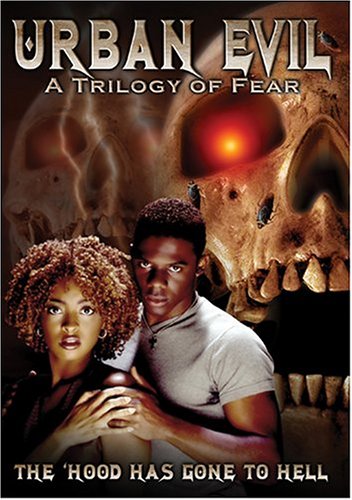
Yes, it’s another Full Moon remix — did they invent the remix or did Bad Boy? — in which several of their African-American themed movies all come together, get cut down to one-third of their length and don’t even get a wraparound or narrator to make sense of them all.

“Demonic Tunes” is The Horrible Dr. Bones, a movie in which the Urban Protectors discover that their music is being used to command an army of zombies by the titular Dr. Bones (Darrow Igus, The Fog). This was directed by Ted Nicolaou, who I would put on the good side of the Full Moon balance sheet thanks to movies like TerrorVisionSubspecies and Bad Channels.

“The Killing Kind” is better known as the 1999 Nicolaou film Ragdoll, which was also edited into another Full Moon remix movie called Devil Dolls, which has Doll Graveyard and Demonic Toys as the other segments. Man, a lot of companies have been talking about how they’re into being green and all about recycling, but Full Moon is actually doing it. Actually, this movie comes from their Alchemy Entertainment/Big City Pictures sub-line, because if Full Moon is about something instead of redoing things, they’re about sub-lines. Another of those would be Big City Records, a music label owned by Full Moon, which released the soundtrack, Ragdoll: Music Inspired By The Motion Picture. Diversification, people!

Finally, “Hidden Evil” is another Big City Pictures release, The Vault. Students and a teacher visit an abandoned school that was once a slave house and things go badly, as you can imagine when the supernatural gets involved. Director James Black has 144 acting roles on IMDB, but only made this one film. This one was developed for Band’s Empire Pictures as far back as 1989.

The second story is pretty decent and I think I may actually go back and watch Ragdoll to see how good it is at its full length. As for the rest, I feel like seeing a limited version may have been best for my sanity.

You can watch this on Tubi.

Tales from the Hood 3 (2020)

I still hate admitting that Tales from the Hood 2 was a let-down. The first film is one of my favorite non-Amicus anthology films, so I was expecting so much. And just when I expected nothing from this film, it surprised me at every turn, becoming nearly as good as the original.

Co-writer and co-director Rodney Cundieff (who wrote and directed this with Darin Scott) even admitted as much, telling Pod of Madness, “The stories, you know, they’re not as big as the first Tales. But I do think that the stories are stronger, overall, than the second one, and the look of the film is better, a lot to do with the locations that we found.”

The framing story, “The Mouths of Babes and Demons,” is about an old man named William (Tony Todd) trying to distract the six-year-old Brooklyn from the terror chasing them by listening to her tell him the four stories in this movie.

“Ruby Gates” is about a real-estate agent struggling to remove the last family in an apartment complex from their home. It’s followed by “The Bunker,” in which we think we’re seeing a MAGA white male (Cooper Huckabee from The Funhouse) rant and rave, which we are, but have no idea exactly why he remains so special. “Operatic” makes perfect use of the talents of Lynn Whitfield in the story of an elderly performer who continually watches the one time she was allowed to perform Carmen before racism took away her singing career and the lengths to which performers will go to succeed. Finally, in “Dope Kicks,” the moral is you can take anything from a man, but never steal his shoes.

While this is the first movie in the series without Mr. Simms, this movie is a strong entry in the horror anthology genre, as well as a return to form for Cundieff and Scott. Here’s hoping that Tales from the Hood 4 is on the way.


Really Weird Tales (1987)

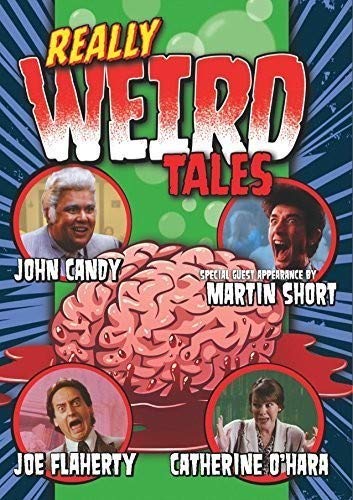
You have to give it to HBO. Between The Hitchhiker and Tales from the Crypt, they were keeping the horror anthology in business throughout the 80s. Really Weird Tales is made up of three episodes of a comedy version of that format with Joe Flaherty as the host.

Flaherty, a Pittsburgh local, was a major part of Second City and SCTV. Horror fans will respect him pretty much forever for his Count Floyd character, which is a loving tribute that pokes fun at the horror hosts that he grew up with, including “Chilly” Bill Cardille.

There are three stories here that all have pretty high production value. “Cursed With Charisma” is all about a mysterious stranger (John Candy) coming to save the town of Fitchville with new ideas of how to sell real estate, as well as an alien invasion. It was directed by Don McBrearty, who directed 1983’s American Nightmare and is still working, directing holiday direct-to-cable movies.

“I’ll Die Loving” has Catherine O’Hara as a woman who blows up real good every man that she falls in love with. Where the last segment felt almost too long, this one seems too short. It was directed by John Blanchard, who directed episodes of SCTV and The Kids in the Hall.

Finally, the best story is “All’s Well That Ends Strange,” which pits Martin Short as a lounge singer trying to get into the good graces of a Hefner-style publisher, win the heart of a centerfold played by Olivia d’Abo and escape with his life after he learns that all of the perfect bodies of the women in the mansion aren’t all that natural. It’s a rare horror role for Short, who is great in this episode. It was directed by Paul Lynch, who knows something about making a horror film, what with Prom Night and Humongous on his resume.

While this doesn’t always work all the time, Really Weird Tales should have had more than three episodes to find its footing.

You can get this from Kino Lorber.

Gap Weekend (2021)

“I like a challenge. And you, my friend, seem like a crown-contender.”
— Emily reasons her way to a “gap weekend” with Ben

Ben (Art Hall) is a heart-broken professional blogger licking his relationship wounds in the spare bedroom of his sister and brother-in-law’s house (a fine Nicola Graham and Robb Padgett; he does additional wonders behind the camera, as we’ll soon discover). It’s been six months since Veronica — Ben’s childhood sweetheart — dumped him and put the kibosh on their travel blog. Now, instead of blogging, Ben spends his evening crying over his laptop, watching his old blog entries, wallowing in the past. For Ben, the “perfect woman” is a girl who licks out the inside of Oreos and tosses away the cookie. Hey, at least he has goals.

The catalyst for Ben finally getting off the pity train: his sister plans to attend Veronica’s wedding. As modern man does in these digital days — after drowning his sorrows at an “analog bar” — Ben takes to the Internet and vents his relationship frustrations with a “dating manifesto,” where he explains his idea of an unplugged “gap weekend” of escape. Who else would respond to such a post and go off with a total stranger for a mock, pretend-relationship weekend in California wine country: the quirky — B.S shilling and not everything she seems — Emily (a delightful Rosie Koocher).

This is going to work: Ben would like to meet Pablo Picasso, while Emily digs Jackie Chan. . . . At least the weekend getaway will occupy Ben’s time and discourage him from crashing his ex-wife’s nuptials. . . .

A great shot . . . so begins the “gap weekend.”

While this is a self-produced film outside of the studio system, Gap Weekend is not the expected, poorly-shot, arduously acted endeavor that one would expect from an indie-streamer dropped in the clogged digital streams of Amazon or Tubi. Writer and director Todd Norwood is an experienced auteur: his work dates back to his debut with the comedy-drama The Wayfarers (2005), along with the lighter comedy Tricks of Love (2008), the thriller Blackwater Farm (2011), and the rom-com Chasing the Sun (2018), along with a smattering of six shorts between those films.

As result of Todd Norwood’s previous experiences, Gap Weekend is a thoroughly enjoyable, Woody Allen-styled comedic watch assisted by Robb Padgett’s nostalgic, peppy score. The intelligence of Norwood’s smart scripting (the estate sale crashing and the antique rings; Ben pretending he’s Emily’s cousin) is raised by our leads of Art Hall, with network sitcom-timing efficiency (only more theatrically realistic), and an instant-chemistry mixing Rosie Koocher. Bringing it home is the major studio-solid cinematography and editing by Mike Barroga and Robb Padgett (Did you cater the set, too?), respectively.

Everyone, in all of the related disciplines, delivers the goods in the frames of Gap Weekend, an indie delight that captures adroitly, the quaint essence of Miramax and Fox Searchlight titles released during the Gen-X ’90s. I am predicting multiple festival wins and a quick distribution deal for the PPV and VOD marketplace in this film’s future.

You can learn more about the Art Hall (who also co-produces) and Todd Norwood creative collective at the Island Time Films and Art Hall Online.com websites.

Disclaimer: We were provided a screener by the filmmakers. That has no bearing on our review.

About the Author: You can learn more about the writings of R.D Francis on Facebook. He also writes for B&S About Movies.

10/31 Part 2 (2019)

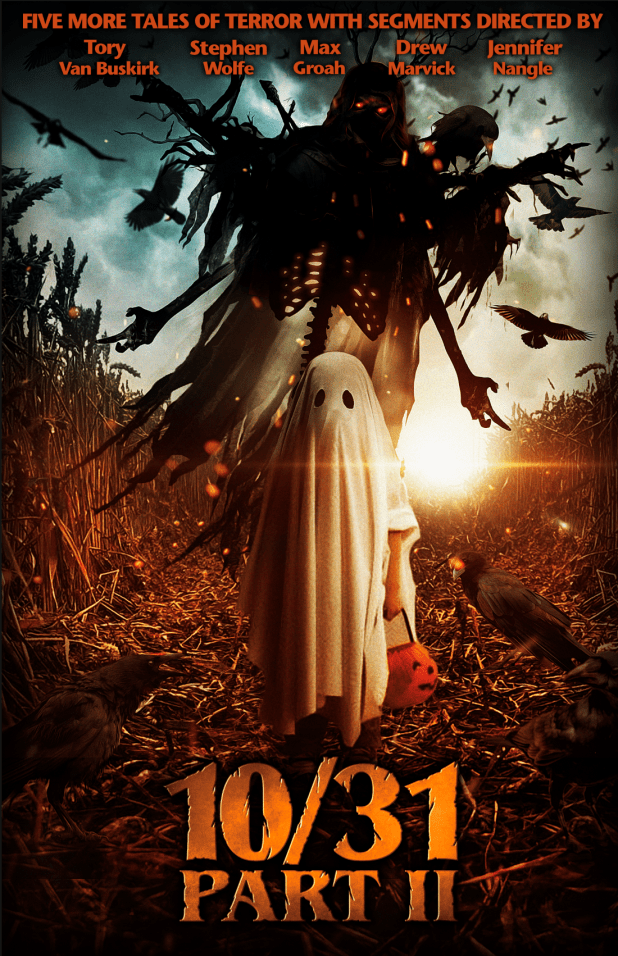
The last film that we review after watching around thirty or more horror anthologies in a week, 10/31 Part 2 starts with a series of fun trailers, including “Treaters” by Zane Hershberger, the cinematographer of The Barn; “Truck Squatch” by John Hale; “The Candy Taker” by Robert Lanphere, Cryptids and the hilarious “The October Kids” by Brett DeJager of BoneJangles.

Malvolia the Queen of Screams presents several stories from different directors in this film, such as “A Samhain Liturgy,” a babysitter tale with a twist that grows progressively darker — and better — as the story continues. It’s directed by Tory van Buskirk, who also contributed the “Sister Mary” story.

Stephen Wolfe’s “Dead Lift” is up next, the tale of why you don’t pick up strange passengers, even if you’re a rideshare driver. Wolfe also directed Doll Factory, which we covered a few years back.

I kind of wish Max Groah’s (Bong of the Living Dead) segment “Apache Hatchet Massacre 2” and Drew Maverick’s (Pool Party Massacre) “Overkill” had been cut down to trailers, as there are fun moments, but they would work better just getting the good parts out there. They’re also both slasher pastiches right in a row and would probably work better if another story was between them.

They’re already planning a third film in this series and I’ll definitely watch it. None of the segments are as good as the first or the trailers, but it’s still a very competent film and producer/composer Rocky Gray put together a great project and soundtrack.

10/31 Part 2 is available on demand from Terror Films. You can learn more at the official site and the official Facebook page.

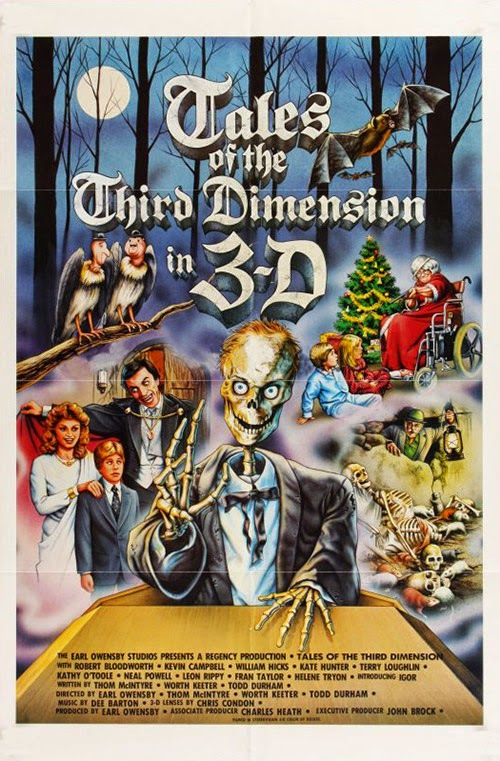
Tales of the Third Dimension in 3-D (1984)

First off, that title says the same thing twice. But hey, let’s forgive a movie that has a skeletal narrator who is supposed to sound like Rod Serling but has a voice-over actor who didn’t get the memo and decided to sound more like Howard Cosell. This movie has the temerity to use puppets not only in the opening, but for the bats and other creatures throughout, as well as one of the worst cat effects ever. This all makes make love this because it was shot on film and made in 1984. If it was a digital video streaming release from this year, I would have hated it. Such is the wonder of me.

This movie came out of the Earl Owensby Studios, a place where Ginger Alden made Lady Grey opposite David Allen Coe and the thinly-veiled Elvis bio Living Legend: The King of Rock and Ro complete with a soundtrack by Roy Orbison. The secret to Owensby’s success? Never spending more than a million dollars to make a film and never signing a distribution deal that would net them less than eight million. He also knew how to make money, because his purchase of the abandoned Cherokee Nuclear Power Plant ended up providing exactly the set that James Cameron was able to fill with water to make The Abyss.

Igor the skeleton is joined by some ravens — or vultures or crows, they’re puppets that aren’t well made — three of whom sound like the Three Stooges and two that are Laurel and Hardy to cover all the comedy bases as he introduces three tales of terror that all involve Dr. Tongue-level three-dimensional effects.

In Young Blood, a vampiric couple pushes an adoption agency to get a child — any child — and end up with a werewolf. If you’ve seen it all before, you have, as this story is “The Secret” from Haunt of Fear #24. Seriously, it’s the same exact story, but if you’re going to steal for your portmanteau, I guess steal from the best.

The Guardians is the tale of grave robbers who need money so bad that they’ll cut the ring off a dead woman’s finger (and take the finger as well). They get even greedier and descend into the catacombs under the graves where they meet their fate.

The whole reason you should watch this movie is the last segment, Visions of Sugar Plums. Two kids are dropped off at grandmother’s house for the holidays as their parents go away to Hawaii. However, grandma has run out of her medicine and ends up singing Christmas carols about puking all over the place and killing Santa with a brick before she brines the cat like a holiday ham — don’t worry, this effect was literally taking a live cat and putting some pineapples on him — and then grabbing a shotgun to kill the kids who defend themselves with knives as a deranged version of “Jingle Bells” plays. To top this all off, this segment was directed by Todd Durham*, who would create the Hotel Transylvania series of movies. He also made another 3D Owensby Studios film, Hyperspace (AKA Gremloids) which somehow stars Paula Poundstone and Chris Elliot.

Somehow, the titles for this movie show up nearly an hour into the movie. You have to love that kind of who cares filmmaking. I have no doubt that this movie will eventually come out from Vinegar Syndrome and people will lose their minds. Jump in now and drink in that third story.

*The other stories are directed by Worth Keeter, who would go on to make multiple episodes of Power Rangers, and Thom McIntyre, who wrote nearly all of the filmography of Owensby Studios.

You can watch this on YouTube.