Countess Elisabeth Nádasdy (Ingrid Pitt!) discovers that her sex drive and youth come back when she bathes in the blood of virgins. Luckily, she has her long-time lover Captain Dobi (Nigel Green) and her maid Julie to steal away local girls so that she may bathe in their blood, which really does wonders for the skin.
Based on Countess Erzsebet Báthory, this film sees Countess Elisabeth Nádasdy bring her own looks back at the expense of Captain Dobi’s manhood and the lives of many young women.
In order to marry young Lieutenant Imre Toth, she even imprisons her own daughter Ilona (Lesley-Anne Down!) and impersonates her. But like all good things, this can’t last, as even virgin sacrifices only serve to de-age Countess Dracula for less and less time. The drugs work, but they have a shelf life too.
Pitt was proud of her performance in this film — the role was originally to be played by Diana Rigg — but quite displeased that she’d be dubbed.
If you like your vampires curvaceous and cuckolding, this is definitely the movie for you. Between this and The Vampire Lovers, established Pitt as the vampire woman of the early 70’s. You can understand that despite all her wanton ways exactly why Dobi keeps doing more and more for her.
Amongst connoisseurs of the seamier world of exploitation film — alright, let’s be fair and call ourselves scumbags — Emilio Vieyra is best-known for his 1969 film The Curious Dr. Humpp, an astounding retitling of his film La Vengenza del Sexo (The Revenge of Sex). Blame Jerald Intrator, director of Striporama and dubbing supervisor for Night of the Bloody Apes) for that, as he also bought Vierya’s Placer Sangriento (Bloody Pleasure) and released it with the equally awesome title The Deadly Organ. Oh yeah — he was also smart enough to insert twenty minutes of nudity into La Vengenza del Sexo, a movie already rife with naked bodies.
This is Vierya’s vampire film. Actually, he also made La Bestia Desnuda (The Naked Beast) too.
Ofelia’s (Susana Beltrán, who appears in several of the director’s films, including saying “Use my body to keep you alive!” to Dr. Humpp and another I need to see called Stay Tuned for Terror) is about to be married to Eduardo but is truly in love with Gustavo. On her wedding night, her true love breaks into the honeymoon suite, kills her husband and turns her into a vampire just like him.
We fast-forward to the 60’s where Ofelia’s curse continues as she seduces and drains numerous teens one by one after their van breaks down. While she’s using up men, Gustavo is planning on doing the same with all the ladies.
The Argentinan government cracked down hard on this mix of gore and sex, keeping it hidden away for four years before allowing it to be released in all its bloody go-go dancing glory.
Mondo Macabro released this back in 2004, so here’s hoping that someday soon it gets another reissue. It’s so worthy of your time, a movie with seagulls instead of bats.
“Hey, Moe! These chickees are vampires!” “Shut up, numbskull. I’m having sex!” “Why soitenly! Woo-woo-woo!” — Curly and Moe in The Three Stooges Meet The Vampire Hookers
Just when you thought The Thirsty Dead was the end all be all of Filipino vampire movies, here comes Cirio H. Santiago with his own Filipino vampire movie. Like Cirio was actually going to produce 64 films and directed 105 of his own — and NOT make a vampire movie.
What the . . . you mean the guy that kept remaking — thanks to financial backing by Roger Corman’s New World Pictures, Concorde Pictures and New Horizons Pictures — Mad Max* over and over again (seven times between 1983 to 1992!) by recycling the same post-apoc stock footage over and over again, with Stryker, Wheels of Fire, Future Hunters, Equalizer 2000, The Sisterhood, Dune Warriors, and Raiders of the Sun . . . he made a vamp flick?
Yep.
How bad?
Oh, man. Strap on the popcorn bucket.
Long before Roger Corman ponied up the post-apoc cash, poor ‘ol Cirio did the best he could with his harshly-lit, 16mm epics — this one written by Chicago-born Howard R. Cohen, who also gave us The Unholy Rollers, Space Raiders**, Saturday the 14th, the aforementioned Stryker, Deathstalker, Barbarian Queen, and Time Trackers. Wait a second . . . those have Corman stank on them! You mean Corman did back this vamp romp?
Yep.
What’s it all about?
Again. Popcorn bucket. Strap.
As if his starring role rife with lame, one-liner jokes about dental and erection issues in Nia Bonet’s Nocturna, Granddaugther of Dracula (1979; also reviewed for “Vampire Week”) wasn’t embarrassing enough, Sir John Carradine didn’t learn his lessons with this 79-minute epic rife with the same one-liners, this time as the aging vampire Richmond Reed. Spouting Shakespeare as only Sir John can, he lords over a coven of three sex-o-licious, negligee-clad ladies who pose as prostitutes to lure victims to Drac’s lair for a little sexploitation bloodletting.
Yes. You heard right. Howie wrote us a script that crosses ugh-inducing, vaudevillian comedy, ’70s grindhouse-styled sexploitation (in slow motion; you know, for that extra, emotional-visual impact), and vampires. But why did . . . a guy from Chicago . . . Corman . . . shoot this in the Philippines? And where’s the native peoples? Where’d did all of these Americans come from?
Well, why did they shoot The Thirsty Dead and Daughters of Satan with a bunch of white Americans? Because it’s cheaper to shoot in the lands below The Rising Sun. That, and the angle that the vamp-vics are dopey-horny American sailors of the McHale’s Navy-variety on shore leave at a Manila-based U.S. port of call — and that’s why the count set up shop there. But hey, ubiquitous Filipino actor Vic Diaz is here — just one of his 158 credits (including Daughters of Satan and Equalizer 2000, along with Black Mama, White Mama, just to name a few) — so it all balances out the studio’s affirmative action paperwork.
Keep your eyes out for the deli counter-styled, meat cleaver-editing and out-of-sync dubbing . . . and again, the slow-motion sex scenes that make Tommy Wiseau’s sex scenes in The Room less offensive and expertly stage — if that’s even possible. And thanks to this Santiago vamp romp: it is. And it comes complete with Three Stooges-styled buffoonery, plenty of ta-tas, and an awesome theme song that makes “The Green Slime” from, well, The Green Smile, seem like a Grammy winner. Yeah, the punctuated-by-trombone “Wah-Wah-waaaahhhhhhs” of The Undertaker and his Pals has nothing on this Cirio vampfest. Nothing. In other words: this is epic.
Ack! The embed elves strike again! Curse you, little green elves! Watch the trailer on You Tube.
Between 2013 and 2018, the fine folks at Vinegar Syndrome put this out on DVD and Blu-ray, so it’s easy to get a copy; it also appears on a number of public domain sets. But we found you a freebie rip on You Tube.
About the Author: You can learn more about the writings of R.D Francis on Facebook.He also writes for B&S About Movies.
* Be sure to check out our two-part “Atomic Dust Bin” blowout chronicling all of the Mad Max-inspired post-apoc films you know and love.
** Be sure to visit our “After Star Wars” round up of all of the “Star Wars Droppings” you know and love.
When you mention 1960’s British horror films, most people are going to think of Hammer. Or Amicus. But there’s also Tigon, the very small studio who could, and by could, I mean make some astoundingly strange movies.
Witchfinder General, The Curse of the Crimson Altar, The Blood on Satan’s Claw…these are the movies that make me think that England in 1967 was an insane place to be.
Vernon Sewell directed this thriller about young and good looking men having their throats torn open and drained by a killer so frightening that whomever it is has driven the last eyewitness mad, claiming that a horrible winged creature with huge eyes is the killer.
Detective Inspector Quennell (Peter Cushing) responds by thinking that a giant eagle — no, not the Pittsburgh-based grocery store — has to be the murderer.
If this development has you happy, then good news. This is the kind of stiff upper lip British low budget fun you’re looking for. Yes, I struggled to include this in either the werewolf or vampire weeks we’re planning because it features a weremoth who lives on human blood. A weremoth! What will they think of next!?!
Cushing considered this the worst of his many films. Scanning his vast resume should tell you just how low this must be, but he was acting in as many films as he could to pay for the care of his wife Helene, who was suffering from emphysema. She would die four years later and by all accounts, he never recovered.
This played on double bills with the 1962 Italian film Slaughter of the Vampires. You can watch it all by its lonesome on YouTube.
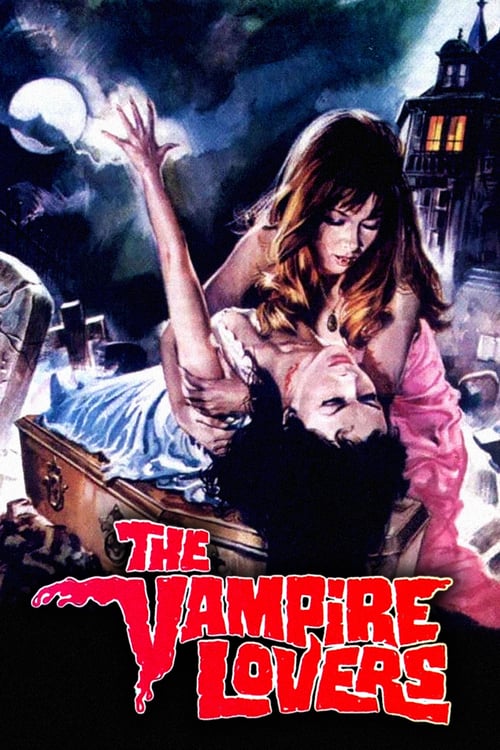
If the past Hammer films seem bloody but chaste to you, by 1970 these films made the leap to the Karnestein Trilogy, replete nudity, sex and lesbianism. Offshoots — outright rip-offs is too mean — of the story of Carmilla, blame American-International Pictures, who wanted more explicit content to take advantage of the relaxed morals of the time.
We start in Styria, where a gorgeous blonde in just a nightgown (Kristen Lindholm, who is in all three of the trilogy) shows up in a graveyard where she’s decapitated by Baron Hartog (Douglas Wilmer, Nayland Smith in the British Fu Manchu movies), a vampire destroying man out to kill every bloodsucker for what they did to his sister.
Years later, Marcilla (Ingrid Pitt!) comes to stay in the home of distant relative General Spielsdor (Peter Cushing). She soon causes nightmares for his niece Laura (Pippa Steel, who sadly died from cancer way too young at 44) and eventually her attentions give the girl a gradual illness that claims her life.
Now known as Carmilla, Pitt continues seducing women like Madeline Smith from Theatre of Bloodby sucking blood directly from their hearts. She’s helped by Governess Mademoiselle Perrodot (Kate O’Mara, who played Joan Collins’ sister on Dynasty, which is casting I approve of) and kills everyone who suspects them as an unexplained man in black watches.
Finally, the General and Baron trap her in her castle and lop off her head, because all of this murder — and probably the fact that she was stealing so many wives — is too much for them to take. That’s when they learn that her true name is Countess Mircalla Karnstein and the portrait on the wall is no longer a gorgeous woman, but a fanged skull.
Look for vampire actor Ferdy Mayne as a doctor. He played Count von Krolock in The Fearless Vampire Killers, Dracula in Freddie Francis’ The Vampire Happening and, of course, God in Night Train to Terror.
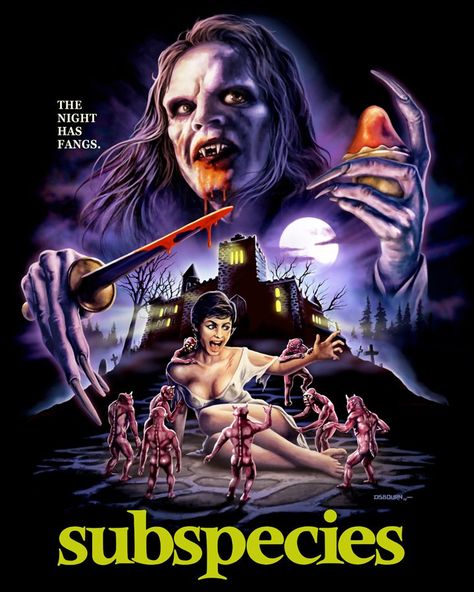
Ted Nicolaou wrote and directed five of these movies — you better believe we have the box set and action figure — starting in 1991 for Full Moon. These look way better than 90’s rental films, because they were shot on location in Romania — the first American film to ever be filmed there — and have incredible looking stop-motion and rod puppet techniques for the subspecies creatures.
Three college students — Mara (Irina Movila), Michelle (Laura Mae Tate) and Lillian (Michelle McBride) have traveled to Prejmer, Romania to study folklore. There, they meet another student named Stefan (Michael Watson) who claims to be studying nocturnal animals, but in truth has been battling his evil brother Radu (Anders Hove, who has been in every single one of these movies other than Vampire Journals).
How did we get here? Why does Radu look so beastly and his brother so much like a human? Well, their father King Vladislas (Angus Scrimm!) was seduced by a sorceress, so they’re really only half-brothers.
Radu killed their father so that he could control the Bloodstone, which drips the blood of the saints. How a vampire can hold onto a holy relic is a point of conjecture we’re best not asking.
Anyhow, Radu — who was named after Vlad the Impaler’s brother Radu the Handsome — turns Mara and Lillian into vampires, but Stefan already loves Michelle, so he works to free her friends. By the end, he chops off Radu’s head and has to turn his love so that she can survive.
Luckily, Radu’s minions are already working on bringing him back to life, otherwise I have no idea what the next movies on this box set are all about.
Speaking of his minions, which are created from Radu’s blood, they weren’t always stop-motion. The original plan was to film local Romanian talent in rubber suits on oversized sets, but then David W. Allen — who worked on several of the Full Moon films — took that footage and added in bluescreen puppets to improve the look of this film.
The Swedish black metal band Marduk’s song “Nightwing” is a cover of this movie’s theme and is all about Radu: “And the mantel of power should be shouldered by the firstborn / The one who craves evil and all kinds of human feelings scorn / He who drank his father’s blood and leaves his foes ripped and torn / And which the king halls up high since long forlorn.”
We’ve all seen our share of female-centric survival thrillers, but this feature film debut by TV and film location managers Philip S. Plowden and Devon Colwell (Chicago P.D. and Jupiter Ascending), working as co-writers and directors, don’t allow their story to degrade into (the usual) supernatural subplots; they instead chose to focus on drama and character development over the usual ultra-violence we are normally subjected to in the female-survival genre.
Actress Celeste M. Cooper—who met the writing-directing duo as a recurring background actor on the set of Chicago P.D.—is Mel, a tough-as-nails long-distance runner taught by her father to endure pain and exist outside of her body’s physical limits. While setting a goal for herself to conquer an infamous 2,000-mile hiking trail, she puts the lessons of her father (coaching her via flashbacks) to the test when two desperate men (Sean Patrick Leonard and Michael B. Woods; both Chicago P.D. and Chicago Med acting alum) descend her into a life of terror.
The day and night outdoor photography on this by Darryl Miller (Chicago P.D., natch) is crisp and sharp; in conjunction with its tight script and pacing from Plowden and Colwell, Range Runners rises above the usual VOD streaming and Lifetime damsel-of-the-weekend product. The acting in this is superb and assures we will see more from Cooper, Leonard, and Woods on the small and big screen.
You can learn more about Range Runners through the website of Fatal Funnel Films and look for it on DVD and VOD beginning September 8.
Disclaimer: We were provided a screener by the film’s P.R firm. That has no bearing on our review.
About the Author: You can learn more about the writings of R.D Francis on Facebook.He also writes for B&S About Moviesand publishes on Medium.
“This is a bad place. People aren’t meant to live here.”
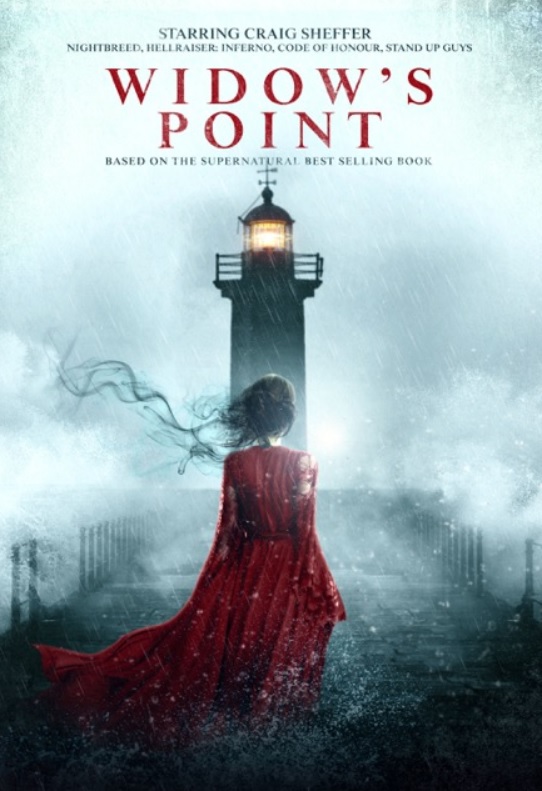
Widow’s Point is a supernatural horror adaptation by screenwriter-director Gregory Lamberson of the best-selling book co-written by Richard Chizmar and his son, Billy.
The sorely-missed-from-the-big-screen Craig Sheffer (Yes, of A River Runs Through It . . . but this is B&S About Movies, bud. So we remember Craig for his start in Voyage of the Rock Aliens, as the rich-dick in Some Kind of Wonderful, and Clive Barker’s Nightbreed) stars as Thomas Livingston, a Stephen King-esque writer who spends a self-exiled weekend in a haunted lighthouse to help promote his next book—and where he’s taunted by the Point’s supernatural forces.
Dow on his luck and in desperate need of a new best-seller, he decides to write a book on “true events” that occurred at the Widow’s Point Lighthouse in Harper’s Cover—with the hopes the advanced publicity will generate advanced sales. At that point, things go a little Blair Witch-cum-Poltergeist as Livingston’s assistant, Rosa, along with Andre, a filmmaker, will accompany him to the island to chronicle “the stunt.” Of course, the mysterious lighthouse keeper will take the rental cash, even if it’s a “bad place,” because greed is good. And as far as Livingston is concerned, ghosts and their related curses are just urban legends and fables. And Parker locks the door to the lighthouse. . . .
Before we get to the Poltergeistin’, Livingston’s book research unfolds a series of flashbacks about the house’s history: the suicide of an actress that occurred while the house served as the backdrop for a Hollywood production, an early-1900 father slaughters his family-by-hammer, and a young girl who comes to meet the lighthouse’s ghostly occupant in the woods surrounding the house during a family outing. And as the stories unfold (sort of like an unofficial anthology under Sheffer’s whiskey-soaked, wraparound story-cum-voice narration), things get to ‘giestin’ for him, Rosa, and Andre, as they come to discover the urban legends of the lighthouse are true—and that they’re about to become the next chapter in the lighthouse’s never-ending tale. . . .
Gregory Lamberson has come a long, long way since his deliciously weird ’80s VHS renter Slime City (1988)—an amazing career-trajectory growth that reminds of William Riead’s late ’80s work on the Dirty Harry-cum-Chuck Norris actioner Scorpion (1986) culminating with his biographical passion project, The Letters (2014), which explored the life of Mother Teresa.
Lamberson’s adaptation of the family Chizmar tale commands a novel-analogous—courtesy of Livingston’s voice over as he researches-writes—slow burn unraveling a fear that turns to dread for the characters. You’re not watching a movie: you’ve just curled up with an engrossing, good book for the evening. Not many films can pull that “feeling” off.
Remember how you felt when you watched Frank Darabont’s spot-on adaptations of Stephen’s King’s The Mist and The Green Mile? That’s the level of quality Lamberson has brought to the big screen in this, his eighth feature film writing-directing credit. And while Sheffer may have fallen off our radar (younger fans will know him from his from nine-year run as Keith Scott on TV’s One Tree Hill), it’s great to see him again in a mainstream feature film, showing us why we became fans of his work in the first place. Here’s to hoping Craig Sheffer’s Oscar-caliber work in Widow’s Point will propel him out his recent work as a TV series guest star and direct-to-video leading man back to carrying quality films, such as The River Runs Through It and Nightbreed, all those years ago.
Widow’s Point will appear in the U.S. marketplace as a DVD and VOD stream on September 1 through Europe’s Devilworks Films and brought to America by 101 Films.
Disclaimer: We were provided a screener by the film’s P.R firm. That has no bearing on our review.
About the Author: You can learn more about the writings of R.D Francis on Facebook.He also writes for B&S About Movies.
“Well, that sucks for you, because you’ve only got half a soul left.” “I only had half a soul to begin with.” — Melvin and Richard, finally finding common ground
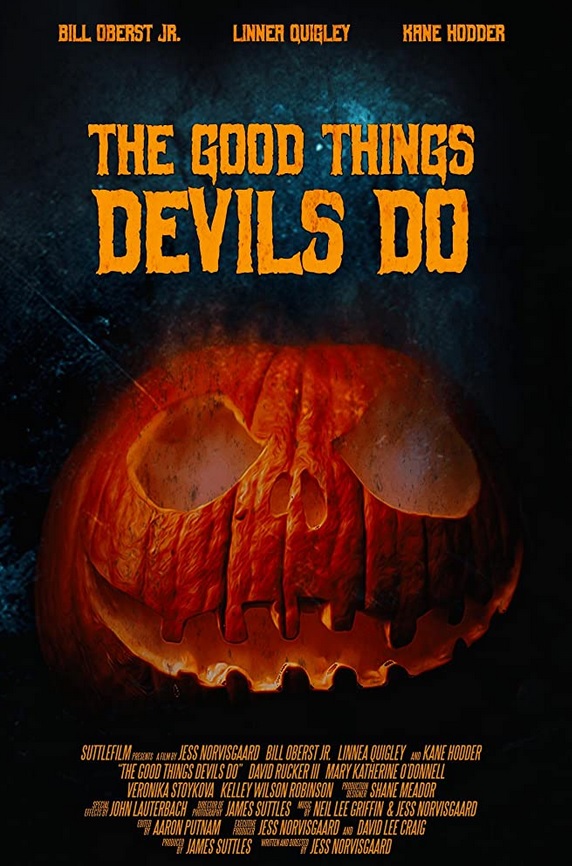
Richard (Bill Oberst, Jr., the “Eric Roberts” of horror, with 40-plus films in various states of pre-and-post-production; his most recently reviewed films are 3 From Hell and Devil’s Junction: Handy Dandy’s Revenge) is a low-level gangster in the midst of retiring from his life of crime. But before his bosses will let him out, he has to pull one final job: steal money from a rival gangster’s house. While Richard usually pulls jobs exclusively with his daughter Mouse (Mary Katherine O’Donnell; of the most recent Puppet Master romp The Littlest Reich), he’s forced to include the psycho-incestuous murder Percy (horror icon Kane Holder) on the crew.
Yeah, this isn’t going to end well. And we haven’t got to the demons.
The other victims of the “Devils” are Melvin (new-to-the-screen David Rucker III), his wife Louise (horror icon Linnea Quigley), and his 40-year-old stepdaughter Caroline (up-and-coming indie actress Kelley Wilson Robinson; who produces). Together, they curate the Museum of the Macabre—and the makeshift basement gallery’s newest acquisition is the alleged, infamous remains of the vampire Masquerade (the up-and-coming Veronika Stoykova; doing a great job under the make-up). And when those remains reanimate, Richard and Melvin join forces to protect their families in a Rodriquez-Tarantino showdown of the From Dust Till Dawn variety—only with a 1/2 cup of Raimiesque cabin humor spinning on the reel-to-reel.
What makes this all work is that—at first—you’re not quite sure which road of bad intentions this ol’ ’73 Oldsmobile Delta 88 is traveling. When we first meet the Cliff Huxtable-nerdom of Melvin (complete with a festive, pullover jack-o-lantern sweater-vest; yet, unlike Hux: he’s verbally abusive to his mousy wife and her kindly-ditzy daugthter), he’s holding high court with a group of Halloween-salivating neighborhood kids—who affectionately nicknamed him “Mr. G.”—weaving a tale about Masquerade as the kiddies anticipate his yearly Halloween display. Okay, so were heading down the orange-and-yellow candy corn road with Roy Ward Baker’s The Monster Club (1981) and Fred Dekker’s The Monster Squad (1987), which is fine with us VHS-lovin’ movie folk freaks out in the wilds of Allegheny: we love our Ward Baker and Dekker flicks ’round ‘ere.
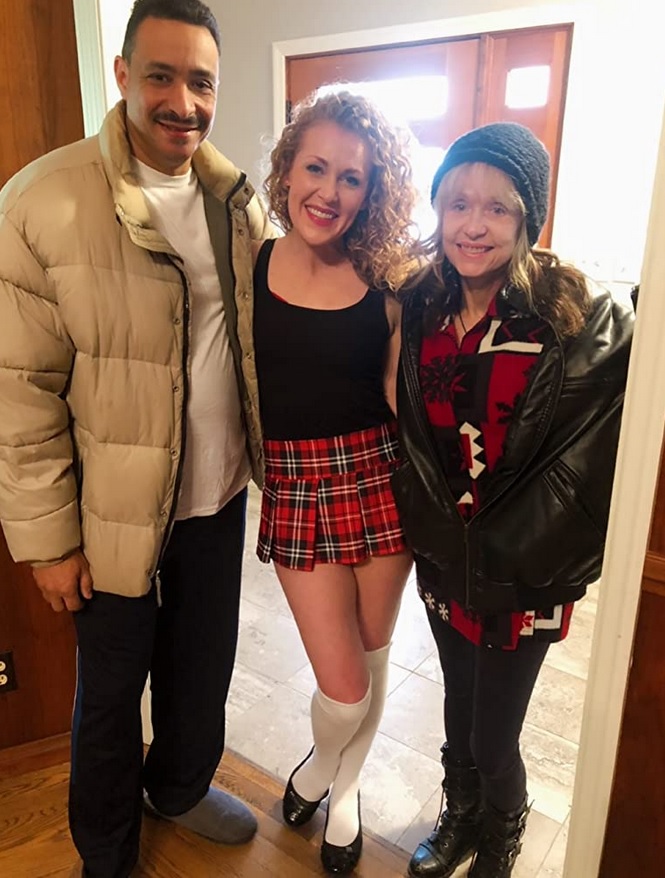
David Rucker III, Kelley Wilson Robinson, and the divine Ms. Linnea Quigley
Then Kane Holder (who’s excellently unnerving) blows away a bound-and-gagged mother and daughter with a shotgun. For reals. From Jason Voorhees to Billy Cosby on the drop of a dime. Then things go a bit “Kevin S. Tenney” as we think we’re getting a comedy-horror mix ala Night of the Demons (1988). But the vampire-demon possession follies have a graphic, Raimiesque vibe, even a Lamberto Bava Demons (1985) swagger.
What balances this trapped-in-the-house/cabin/movie theatre-and-we-can’t-out demon soiree is the light-on-his-thespin’ feet David Rucker III as Melvin. As the “Bruce Campbell” of this party, he expertly foils Bill Oberst, Jr.’s serious, leather-jacketed “George Clooney” (aka Seth Gecko) to add a much needed “you’ve got to be f’ing kidding me” vibe to slaughter. When you have a Raimiesque demon-witch ripping out a little trick or treater’s throat and possessing another—and you’re not a fan of kids-in-distress or dying on-camera (me)—you need a David Rucker III on the call sheets.
There’s been some great indie-horrors coming out of the Carolinas of late—South Carolina screenwriter and director Tommy Faircloth’s recently reviewed A Nun’s Curse comes to immediate mind—and The Good Things Devils Do (a catchy title that encourages rental) is a nice addition to those states’ burgeoning film resumes. You’ve got a familiar cast of horror greats hitting all of their marks (even though we lose them—graphically—half way though), buoyed by solid cinematography capturing a steady stream of action n’ violence as the bodies pile up. This is way above grade of the usual horror streamers.
The Good Things Devils Do, the feature film debut by North Carolina writer-director Jess Norvisgaard (a commercial camera operator who’s worked on the popular reality TV series The Biggest Loser and L.A. Ink, as well as FoxSports) is out now as a DVD/Blu and streaming on You Tube courtesy of Gravitas Ventures (we’ve recently reviewed their Eric Roberts-starrer, The Arrangement). You can learn more about the film on its official Facebook page.
Disclaimer: We were provided a screener by the film’s P.R firm. That has no bearing on our review.
About the Author: You can learn more about the writings of R.D Francis on Facebook.He also writes for B&S About Moviesand publishes on Medium.
“Then can we stop. Because I don’t want to argue.” “I don’t want to argue either, honey. As long as you can admit I’m right.” — Lisa and Jack discovering common ground
I’ve been diggin’ Dan Fogler ever since he first came to widespread notice as the plastic surgeon-foil (specializing in breasts, as only Dan Fogler can) to Dane Cook’s romance-cursed dentist in Good Luck Chuck. Then there’s his memorable work in Balls of Fury with Christopher Walken (!) and the Star Wars-homage Fanboys. And, of course, his most recent work in the Fantastic Beasts franchise.
His latest film . . . well, from my perspective, is a Miramax and Fox Searchlight homage to those 90s-halcyon days of driving to an outside-of-the-big-city six-plex with a screen or two dedicated to those indie comedies starring the likes of Steve Buscemi and Catherine Keener in Walking and Talking, Johnny Suede, and Living in Oblivion, or seeing John Turturro with Griffin Dunne in Search and Destroy—and always walking out of the theatre satisfied. (One of those indie-delights was 2005’s The Chumscrubber, written by The Argument‘s screenwriter, Zach Stanford.)
Of course, with the dual onslaughts of bat-viruses and digital streaming, a great, laugh out loud film such as The Argument, sadly, doesn’t have a ‘90s chance in hell of becoming an indie cult classic in theatres. And the streaming universe of today is a tough marketplace for a movie to shine through for discovery.
Hopefully, this review on this little puff of the cloud will alter the clogged, digital tributaries of fate for this, the third directing effort from musician Robert Schwartzman (you’ve heard his songs on TV’s The O.C., One Tree Hill, and Pretty Little Liars), whose initial forays into directing produced the under-the-streaming radar indie-award winners Dreamland (2016) and The Unicorn (2018).
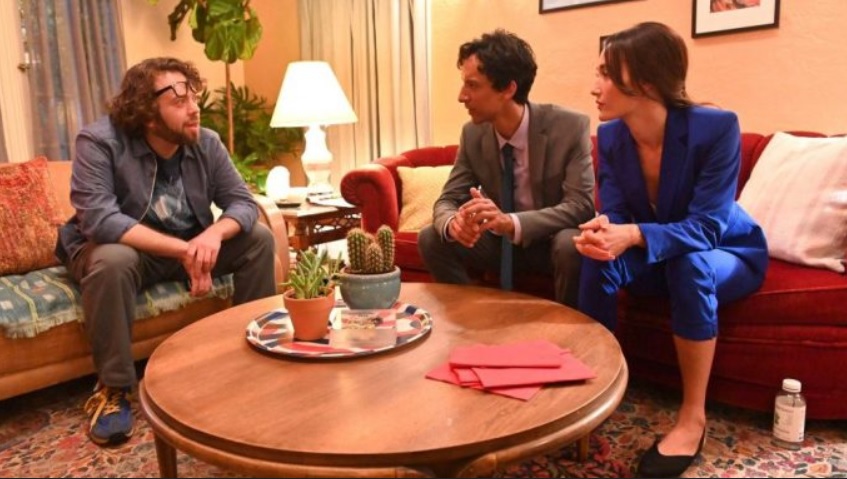
The cast of The Argument: Dan Fogler, Danny Pudi and Maggie Q; courtesy of Gravitas Ventures.
It’s almost a disservice to Schwartzman’s skills as a director to mention his Hollywood pedigree, for a filmmaker’s work should always stand tall on its own merits—of which The Argument has many. But with so many streaming choices vying for our coin—and taking into an account the purpose of a film review is to inspire you to see the film—we’ll have to cheat a little bit and tell you that Schwartzman’s name is familiar because his brother Jason is an actor you know well. And his mother is Talia Shire. And his Uncle is Francis Ford Coppola. His cousin is Nicolas Cage (Arsenal)* and his ex-cousin-in-law is Spike Jonze (Adaptation).
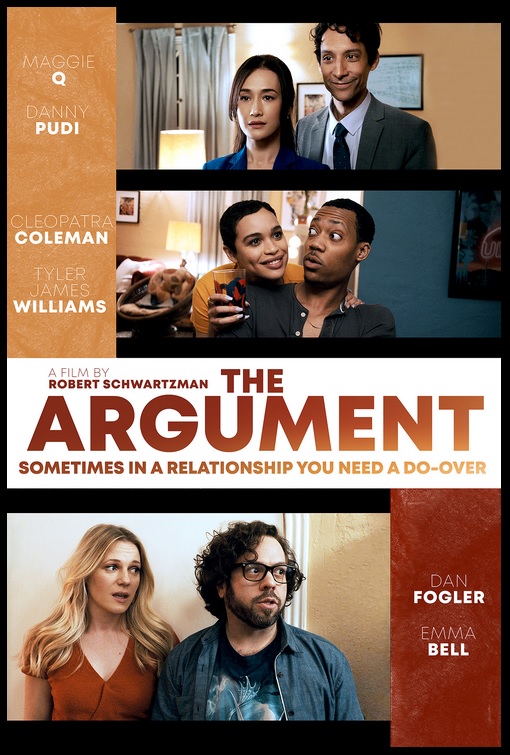
The Argument—the one where Jack is always right—is a pseudo-meta narrative commenting on the romantic repetition of relationships that turns the concept of there’s always three sides to a story: “your side, their side . . . and the truth” on its head.
Jack is a “genius” playwright and screenwriter with a middling successful, “repetitive” zombie tale on his resume (it did okay overseas), scratching n’ begging for his next gig. Lisa (Emma Bell of AMC-TV’s The Walking Dead), his three-years live-in, actress-girlfriend, has finally broken out of the endless cycle of background work, student films, and infomericals with a well-reviewed role in a local stage production of Amadeus. And, to the immature chagrin of Jack: she’s a little bit too chummy with her “Mozart.” Why? Because, well, he’s a genius writer, after all: he’s her “Mozart” (but, in reality, he’s a “Salieri”).
Jack’s insecurities and Lisa’s ego (after one successful community theatre role, she pirouetting-grand entrancing across rooms) bursts across the living room of their L.A. bungalow as they hold a cocktail party with their friends (Maggie Q of the Divergent franchise, Live Free Die Hard, ABC-TV Designated Survivor, along with Danny Pudi of Star Trek Beyond, and a mature Tyler James Williams from Everybody Hates Chris) to celebrate the play’s success. And the party ends. And their friends leave. But the argument doesn’t end.
So, in a non-mystical “Groundhog Day” of their own making—a day where Jack is never wrong—they invite their friends over for another dinner party, under the guise of Jack apologizing for his behavior. But in reality: Jack and Lisa want to recreate the night to see where it went wrong—and who was wrong: Jack or Lisa. And Jack’s obsession for resolution bleeds over into his writing (the best part of the movie; the supporting cast of “actors” own their duality) where he holds a mock-casting (via Craigslist) and auditions actors in a cold read of a never-to-be-produced play based on “The Argument”—the one where Jack was “right.”
The Argument became available for VOD streaming and PPV on-demand from Gravitas Ventures (The Arrangement with Eric Roberts; the upcoming Jess Norvisgaard’s The Good Things Devils Do, and Chris Levine’s Anabolic Life and No Way Out; review coming for the latter on September 12th) in the U.S. on September 4.
* Be sure to visit our homage to the films and the acting majesty of Nicolas Cage with our “Nic Cage Bitch” featurette. We just love the guy!
Disclaimer: We were provided a screener by the film’s P.R firm. That has no bearing on our review.
About the Author: You can learn more about the writings of R.D Francis on Facebook.He also writes for B&S About Moviesand publishes on Medium.




 B&S About Movies
You must be logged in to post a comment.