I don’t think we’ve ever covered a Finnish movie before, much less one with a werereindeer, which I didn’t even think was something. You learn something new every day and movies help you do it.
At the 1953 Cannes Film Festival, this movie won Best Fairy Tale film from a Jean Cocteau-led jury. I also didn’t even know there was a Best Fair Tale award.
This is probably the only movie out there based on pre-Christian Finnish mythology and Sami shamanism, so enjoy it. Mirjami Kuosmanen — director Erik Blomberg’s wife who sadly died young from a brain hemorrhage — plays Pirita, a bride who misses her husband Aslak while he away herding reindeer.
She wants to ignite passion in her life and keep her husband home, so she visits a shaman. In turn, he turns Pirita — who was born of a witch — into a shapeshifting vampiric white reindeer. All she had to do was sacrifice the first thing she saw when she returned home, which ends up being the baby deer that her husband has brought her as a gift.
Now, she is irresistible to all men, men who she lures as the reindeer into the woods and then drains them of their blood.
The White Reindeer is the kind of magical movie that slowly finds its way into your mind and then takes a place inside it.
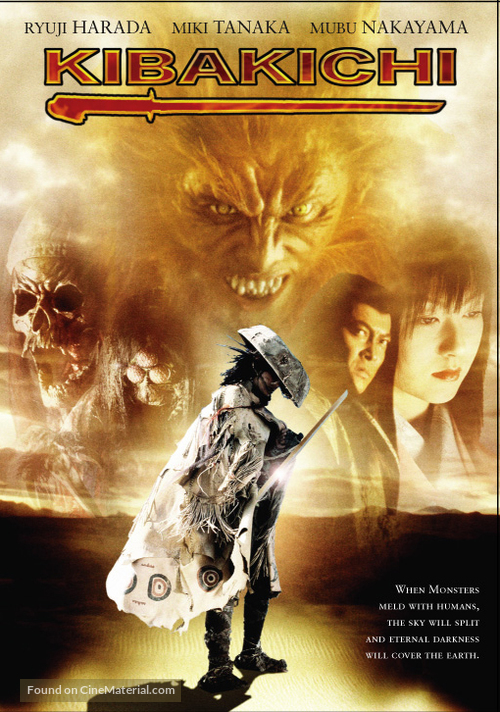
Once, the Yokai and humans lived in peace, but as humanity grew wiser and more dependent on technology, they started taking the lands of the monsters and wiping them out. Now, the few supernatural creatures left have gone into hiding.
Kibakichi is one of their number, a ronin samurai werewolf who has as much in common with Clint Eastwood’s The Man With No Name as he does with Lon Chaney Jr.’s Larry Talbot.
He finds his way to a town run by demons who have started a gambling den that attracts humans who have no idea that their hosts are hidden behind magic. However, an army of humans who are actively wiping out Yokai are on their way, armed with near-modern weaponry despite the rest of this movie seeming as if it takes place in the feudal era.
This film has pretty much everything I want in one more: blood spraying in geysers, quiet and moody heroes, plenty of monsters and lots of fighting. It pretty much feels like one of those weird NES-era games like Kabuki Quantum Fighter come to life.
Imagine my delight when I learned that there is a sequel. Now who do I talk to about the Wolfguy and Kibakichi crossover?
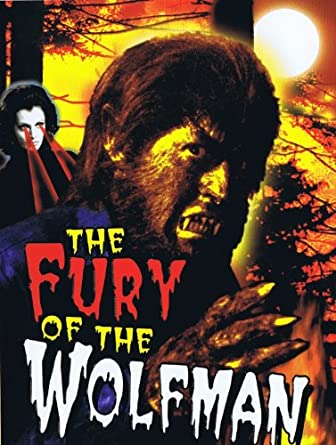
As you watch this movie, understand the pains that Lon Chaney Jr. had to go through for your entertainment. While the stories got exaggerated over the years, even a portion of their truth is a testament to the actor’s herculean patience. Although the effects improved with each movie, this makeup — which was originally developed for Werewolf of London — took five to six hours to apply and a full hour to remove. There were even “finishing nails” carefully hammered into the skin on the sides of the actor’s hands so that they would remain motionless during the transformation scenes, which took ten hours of Chaney getting makeup, going to set to hold still against a pane of glass, then back for more makeup on a day that stretched to twenty-one hours of work over two days of filing.
Larry Talbot has returned to Wales to make peace with his father, Sir John Talbot (Claude Rains) and falls for a local girl (Evelyn Ankers, Universal’s “Queen of the B’s”).
During their initial meeting, he buys a silver-headed walking stick decorated with a wolf just to get to talk to her while she works. She tells him that it depicts a werewolf, a fact of life that he learns all about when he defends her friend from an attack and gets bitten on the chest as a result.
Soon, he learns from the fortune teller Maleva (Maria Ouspenskaya) that it was her son Bela (Bela Lugosi!) who bit him. Now, he will live up to the poem that is recited several times during this film: “Even a man who is pure in heart, and says his prayers by night; May become a wolf when the wolfbane blooms and the autumn moon is bright.”
The funny thing is that poem is not an ancient tale; it was written for the movie by screenwriter Curt Siodmak. He based the chasing of Talbot and his life being thrown upside down on his experiences in post-WW II Germany.
Director George Waggner would go on to direct plenty of TV, including episodes of Batman and Cheyenne.
While this film was a success and Larry Talbott (with Chaney playing him) would return for four more films, the character never appeared in its own direct sequel. Joe Johnston would direct a 2010 remake with Benicio del Toro in the lead role. There was also talk that the character would be played by Dwayne Johnson in the planned Dark Universe and Ryan Gosling in a Blumhouse version of the film.
Most of the legends of werewolves come not from folklore but directly from this film, including a person becoming a werewolf through a bite, the weakness to silver bullets, and werewolves’ and their victims’ hands being marked with pentagrams.
Fun fact: A five-year-old Sam asked every child in his kindergarten class to show their palms, as he had told his teacher that he was doing a magic trick for the class. In truth, he was checking to see if any of them were werewolves.
La Furia del Hombre Lobo is a 1970 Spanish horror film that is the fourth in the saga of werewolf Count Waldemar Daninsky, played as always by Paul Naschy. It was not theatrically released in Europe until 1975, yet an edited U.S. version played on television as early as 1974 as part of the Avco-Embassy’s “Nightmare Theater” package, along with Naschy’s Horror Rises from the Tomb and The Mummy’s Revenge.
This time, Daninsky is a professor who travels to Tibet, only to be bitten by a yeti which seems like not the werewolf origin that you’d expect. He then catches his wife cheating on him, so in a fit of passion, he murders them both before being killed himself. But this being a Spanish horror movie, that’s just the start of the trials that El Hombre Lobo must struggle through.
Daninsky is revived by Dr. Ilona Ellmann (Perla Cristal, The Corruption of Chris Miller), who wants to use him for mind control experiments. Soon, however, our hero learns that she has a basement filled with the corpses of her failed experiments. To make matters even worse, she brings back his ex-wife from the dead and turns her into a werewolf too!
There’s a great alternate title to this movie: Wolfman Never Sleeps. How evocative! That’s the Swedish version that has all of the sex that Franco’s Spain would never allow.
Naschy claimed that director José María Zabalza was a drunk, which may explain how this movie wound up padded with repeat footage from Frankenstein’s Bloody Terror and some stunt double continuity antics that nearly derail this furry film.
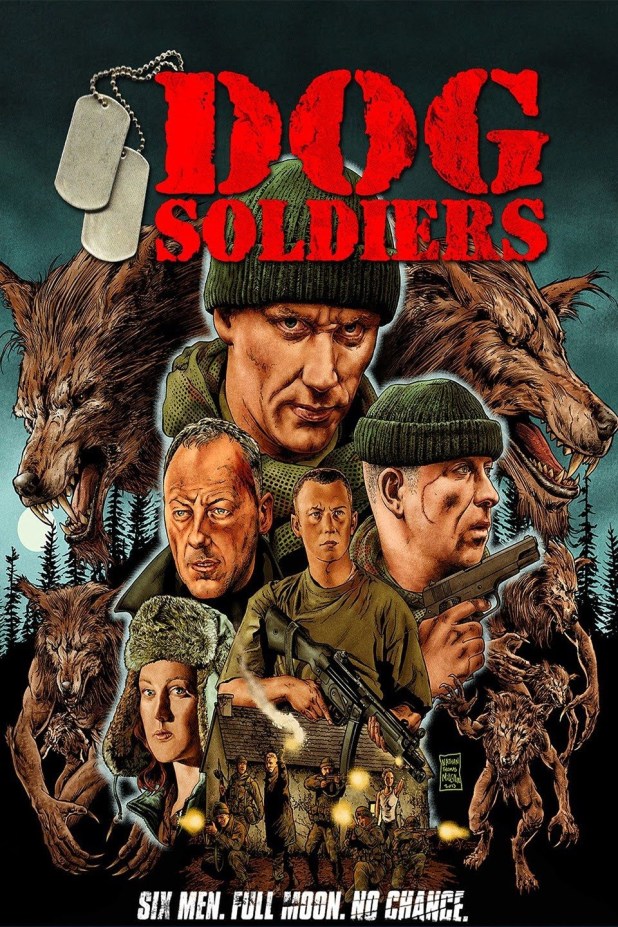
Neil Marshall has directed several Game of Thrones stories, as well as the remake of Hellboy. This movie is much better than that one by several dog hairs. It’s the story of a squad of six British soldiers who are on maneuvers when they meet an enemy even more deadly than they are — a werewolf.
Private Lawrence Cooper (Kevin McKidd, Trainspotting) failed his special forces test because he refused to shoot a dog. Now, he’s stuck back with his old unit in the Scottish Highlands for wargames against an SAS team. As soon as they get there, they find the remains of those men and realize that maybe they shouldn’t be here.
Before long, the team’s commander Captain Richard Ryan (Liam Cunningham, The Card Player) reveals that they were here to capture a werewolf alive. What follows are twists, turns, double-crosses and bloody death. It’s a nailbiter and honestly, I don’t want to give much away.
There was talk of a sequel, Dog Soldiers: Fresh Meat, and a prequel, Dog Soldiers: Legacy, but neither ended up being made.
Between references to H.G. Welles, Zulu, The Matrix, Evil Dead, Jurassic Park, The Company of Wolves, The Searchers, Star Trek II: The Wrath of Khan, Jaws, Zabriskie Point, A Bridge Too Far, Apocalypse Now, The Shining, Southern Comfort, An American Werewolf In London, Predator, Love, Honor and Obey, Battle Royale, the TV show Spaced (Simon Pegg was almost in this)and Aliens, this movie is packed with references to other genre favorites. Marshall would later claim, “I think I got completely carried away.”
Matt Cimber is an example of the individuals that I refer to as a nexus point, as he unites so many different films that I end up writing about so often. Blaxpolitation? He made The Candy Tangerine Man and The Black Six. Late 60’s and early 70’s pre-porn revolution sex movies? As Gary Harper, he made The Sexually Liberated Female, He & She and Man & Wife: An Educational Film for Married Adults (an “educational” movie made in Sweden that does have actual intercourse). Strange “it’s kinda, sorta horror”? He made The Witch Who Came from the Sea with cinematographer Dean Cundey. Sword and sorcery? He made Hundra. He was also pivotal in the lives of Pia Zadora (Butterfly) and his wife Jayne Mansfield (Single Room Furnished) and helped create the Gorgeous Ladies of Wrestling.
So when it comes time to write about Italian-style Westerns, it stands to reason that Matt Cimber should have made one of these films as well.
The best reason to watch this movie is Laurene Landon, who has been in more movies on this site than I realized. She was a featured skater in Mark Lester’s Roller Boogie before showing up in the wrestling film …All the Marbles, Full Moon High, America 3000, Maniac Cop, Maniac Cop 2, Wicked Stepmotherand in one of the commercials in The Stuff. She was also in Cimber’s Italian-American-Spanish barbarian film Hundra, complete with an Ennio Morricone score, pretty much making it a legitimate Italian film.
Here, she plays the titular blonde half-Native American Yellow Hair, who is out to find the gold of Tortuga and battling numerous outlaws and Mexican soldiers, including her arch-nemesis Colonel Torres. Helping her out is her sidekick the Pecos Kid.
This is a weirdly put-together film, as it starts like a movie serial and ends like one, including crowd noise and cheers as the characters are introduced. Even the final movies are told like a cliffhanger instead of a narrative and the violence is often staccato in nature, with gunshots and people being shot shown numerous times in succession.
While this film seems like it could be one of the kids — seeing as how basic and silly the story is — it’s also filled with plenty of ultraviolence, including people being launched off cliffs, lynched and their heads dipped in hot gold before being lopped off.
How Italian is this movie? Numerous snakes and horses have had to have been hurt making it. That said, it is nowhere near the highpoints of the genre, but I read someone say that if you happened upon this movie when you were a pre-teen on a Saturday afternoon, you’d be obsessed about it as an adult.
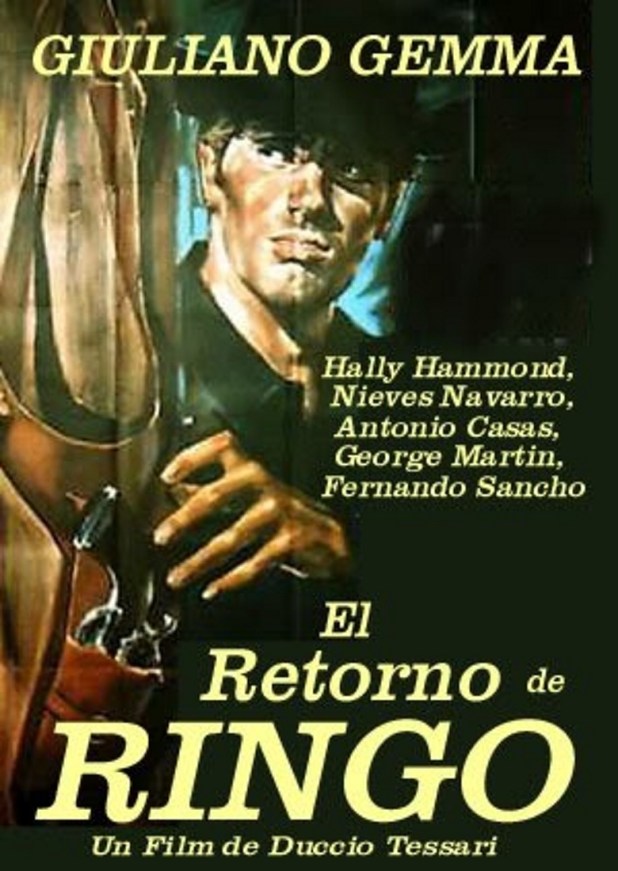
This film was Italy’s third highest grossing film in 1965 behind For a Few Dollars More and the original film, A Pistol for Ringo. Here, Captain Montgomery “Ringo” Brown (Giuliano Gemma) comes back to his homestead to find his family decimated, his property stolen by Mexican bandits and his fiancee about to marry Paco Fuentes, the villain behind all this.
If you’re like, hey, is this an Italian Western version of The Odyssey, you’re right.
While Nieves Navarro doesn’t reprise her role from the first Ringo film, she does play the tarot card-reading saloon girl Rosita. Antonio Casas also comes back in a different role as a sheriff who has been dominated by the gang and hey — Lorella DeLuca is also in both movies.
Actually, this movie is totally different from the original to the point that the more cynical of us could just believe that they threw the Ringo title on it after the original was such a success.
That doesn’t mean you shouldn’t watch it. It’s definitely a worthy Western packed with rich drama and plenty of satisfying violence. When asked to pick his top twenty Italian Westerns, Quentin Tarantino selected this as number ten.
One of the joys of the deep dives that I do into film genres is when they cross over. It’s like I’m reuniting with an old friend when a director or actor appears in more than one category.
As Ringo del Nebraska, this but one of thirty movies or more that use the name Ringo, in the hopes that you will think that it’s a sequel to either A Pistol for Ringo and The Return of Ringo. It’s also known as Savage Gringo.
Spanish director Antonio Román started the film and producer Fulvio Lucisano claims that he fired him before he could finish, replacing him with Mario Bava. Lamberto Bava and actor Howard Ross (who is in the Fulci films Warriors of the Year 2072 and The New York Ripper as well as many more movies) claim that Mario was not there and only did the matte paintings. That said, Lamberto is listed as an assistant director, so the idea that this movie was shot all in Spain can’t be true.
This movie also has the title Prepare to Die, Ringo From Nebraska – I Am Sartana, which ties it into yet another Italian Western series! It was sold to American-International Pictures Television, which is where the Savage Gringo title comes in.
If you’re wondering — why has Sam been discussing the titles of the film and who directed it more than the actual film — well, once you watch it, you’ll figure that out for yourself.
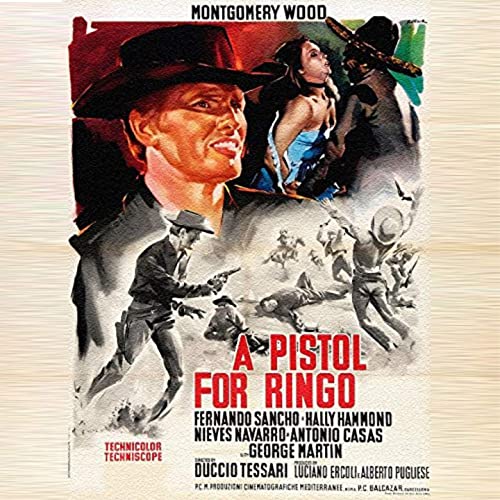
Instead of a silent Man with No Name, Tessari based Ringo on the real-life Johnny Ringo and created a well-dressed, talkative cowboy who drank milk while so many others enjoyed whiskey. It helped that he had such a great talent in Giuliano Gemma, who would go on to play Arizona Colt and also appear in Westerns like Day of Angerand Long Days of Vengeance. He was billed here as Montgomery Wood.
Ringo starts the movie in prison for killing four men in a gunfight. He is released only if he rescues a land baron and his daughter from a gang of bandits led by Sancho.
Sancho also has an evil girlfriend named Delores who gets her claws into the land baron and tries to save her man through her feminine wiles. That makes perfect sense when you realize that she’s played by giallo queen Nieves Navarro (Death Walks at Midnight, All the Colors of the Dark, Death Walks On High Heels).
Known as Ballad of Death Valley in the U.S., where it was a success, this movie begat an official sequel, The Return of Ringo, as well as numerous Ringo titled films.
It’s theme song by Morricone also rose to number one on the Italian music charts.
Ringo’s motto is “God created all men equal, the Colt made them different.” Your mileage may vary for the many Italian Westerns made in the wake of Leone’s success. This is one of the better examples of the genre.
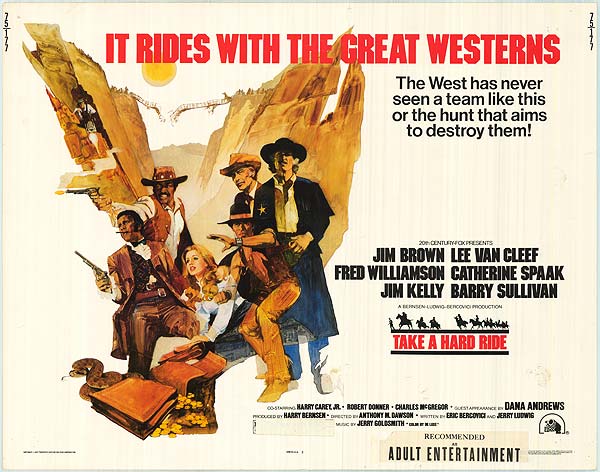
There is no Anthony Dawson, despite what the credits of this film would lead you to believe. That’s Antonio Margheriti directing this western, starring Jim Brown, Fred Williamson and Jim Kelly in their second of three films together (Three the Hard Way and One Down, Two to Go complete the set).
If you’re making a Western, who should you get to be in it? Lee Van Cleef. Credit to Margheriti for bringing him in.
Pike (Brown) used to work for cattle rancher Bob Morgan (Dana Andrews, Lt. Ted Stryker in Zero Hour!), but now his boss is dead and he has to deliver eighty-six grand to the man’s widow. Helping him is the gambling man Tyree (Williamson), a prostitute (Catherine Spaak, The Cat o’ Nine Tails), a karate fighting Native American (Kelly) and an orphan. They’re all chased by a bounty hunter (Cleef) and a sheriff (Barry Sullivan, Planet of the Vampires).
Toss in Charles McGregor (Fat Freddie from Super Fly), Robert Donner (Exidor from Mork & Mindy), Western actor Harry Carey Jr. and Buddy Joe Hooker, who Burt Reynolds based Hooper on and you’ve got an action-filled romp.




 B&S About Movies