Exploring : Paul Naschy and El Hombre Lobo

Born during the Spanish Civil War as Jacinto Molina Alvarez, the man who would one day be known as Paul Naschy didn’t write his first werewolf film — much less plan on starring in it — until he was 34 years old. He had plans of being an architect but moved between acting, writing and professional weightlifting.

However, he wrote The Mark of the Wolfman, a script about Polish werewolf Count Waldemar Daninsky and talked Maxper Producciones Cinematograficas into financing the film. Naschy wasn’t going to be in the movie, but when the producers failed to find the right actor for the part — and the 62-years-old Lon Chaney Jr. said he was too ill to travel for the movie — Alvarez became Naschy, named after Pope Paul VI and Imre Nagy, one of his weightlifting heroes.

By 1972, Naschy wrote and starred in seven horror films and was working with the biggest directors in European horror, such as León Klimovsky (his favorite director), Carlos Aured, Javier Aguirre, José Luis Madrid, Juan Piquer Simón, Francisco Lara Polop and José Luis Merino.

Eclipsing even Chaney Sr., Naschy is the only actor to play Dracula, the Mummy, Frankenstein’s monster, Fu Manchu, the Hunchback, Rasputin, a warlock, a zombie, a medieval Inquisitor, a serial killer and — sixteen times — a werewolf, mostly the aforementioned Daninsky.
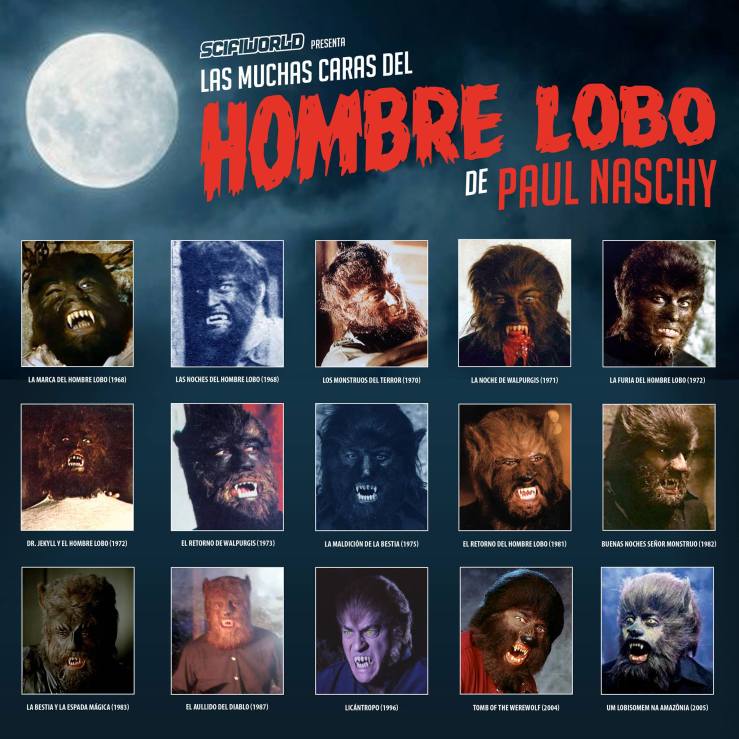
Counting La Casa del Terror and an appearance on Route 66, Lon Chaney Jr. only played a werewolf seven times. Naschy played El Hombre Lobo twelve times, as well as two unconnected werewolves. Let’s dive in and explore the furry magic, film fans!

Also — if you read through these and wonder why they don’t seem connected at all — you are starting to understand the awesomeness of these films. Even if they had all come out in America, they would have all been released out of order and perhaps been even more confusing.

The Mark of the Wolfman (1968): This is where it all starts. Whether you see it under its original title or as Hell’s Creatures: Dracula and the Werewolf, The Nights of Satan or Frankenstein’s Bloody Terror — the version I saw — this is an astounding 3D blast of weirdness. Count Waldemar Daninsky is attacked by a female werewolf and asks for help from two doctors, who end up being vampires and resurrecting that female werewolf all over again for a final battle. Blame Sam Sherman for this movie’s American title, which was needed to pad a double bill with Al Adamson’s Dracula vs. Frankenstein.

Las Noches del Hombre Lobo (1968):  This lost movie hasn’t even been seen by Naschy, who claimed that he went to Paris for a week to shoot the movie for Rene Govar, who apparently only directed this one film). Govar was said to have died in a car accident in Paris a week after the filming was completed and the film was thrown away from the lab when it was not paid. Some Naschy scholars believe that the movie was actually canceled and the script used to make the fourth Daninsky movie, La Furia del Hombre Lobo.

Assignment Terror (1970): This is another multi-named Naschy effort, boasting titles like The Monsters of Terror, Dracula vs FrankensteinDracula and the Wolf Man vs. Frankenstein, Operation Terror and Reincarnator. An alien scientist — played by The Day The Earth Stood Still star Michael Rennie — is trying to destroy humans so his alien race can move in. How would he do that? By using vampires, werewolves and mummies, that’s how!

The Fury of the Wolfman (1970): After multiple Daninsky movies, now his origin changes. He has now become a werewolf thanks to a yeti bite and dies after killing his cheating wife and the man who cuckolded him. Then, a mad scientist brings him back to kill even more, as well as his now furry ex-wife. There’s also a Swedish movie of this with longer sex scenes called Wolfman Never Sleeps.
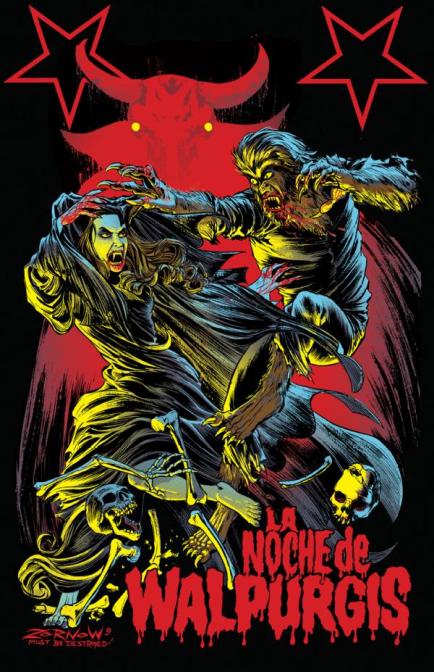
Art by Zornow Must Be Destroyed. Check out his site at https://zmbd.storenvy.com/

The Werewolf vs. the Vampire Woman (1971): Naschy’s most successful movie is also known as The Werewolf vs. the Vampire Woman, Shadow of the Werewolf, Night of the VampireNight of the Bloody Witches, The Black Mass of Countess Dracula, Werewolf’s Shadow, Fury of the Vampires and Night of the Werewolves, this one finds El Hombre Lobo revived when doctors remove the silver bullets from his heart. He later bleeds on the corpse of Countess Wandessa de Nadasdy, who ends up becoming his nemesis. Some Naschy fans like to think of this as a direct sequel to The Mark of the Wolfman. This was directed by León Klimovsky.

Dr. Jekyll and the Werewolf (1971): Naschy was inspired by the Universal monsters and the way they would crossover into one another’s films. That’s why in this Klimovsky-directed installment, El Hombre Lobo attempts to be cured by the grandson of Dr. Jekyll, who may have some sinister plans.

The Return of Walpurgis (1973): How many names can one movie have? How about seven? In addition to the Walpurgis title, this is also called Curse of the DevilNight of the Fiendish Orgy, Death Grip of the Cruel Wolves, Night of the Killer, The Mark of Dracula and Return of the Werewolf. This starts off with a Daninsky relative killing a witch and moves forward to the modern day Daninsky being bitten by a wolf skull after being seduced by a gypsy girl!
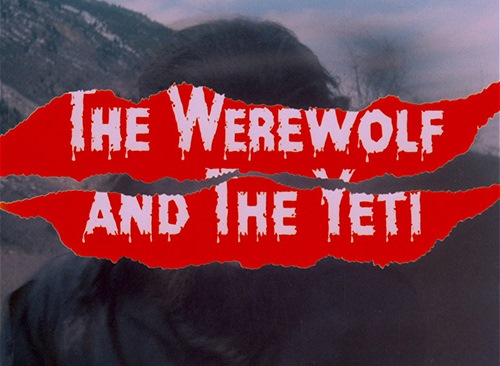
Curse of the Beast (1975): I saw this under the title The Werewolf and the Yeti, but you may know it as Night of the Howling Beast or Hall of the Mountain King. You’d think that another yeti would transform our hero into El Hombre Lobo, but Naschy is cunning and somehow creates a story not only one, but two vampire women, bite him and turn him into the werewolf. Well done.
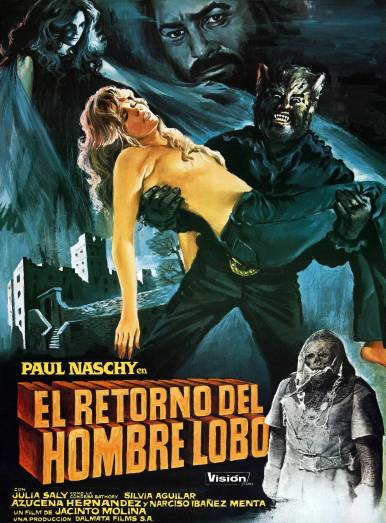
Return of the Wolf Man (1980): Basically a remake of Walpurgis Night, this was released in the U.S. as The Craving. Naschy has gone on record saying that this was his favorite Hombre Lobo film and it was also the last one to play the U.S. In this one, he battles Elizabeth Bathory.
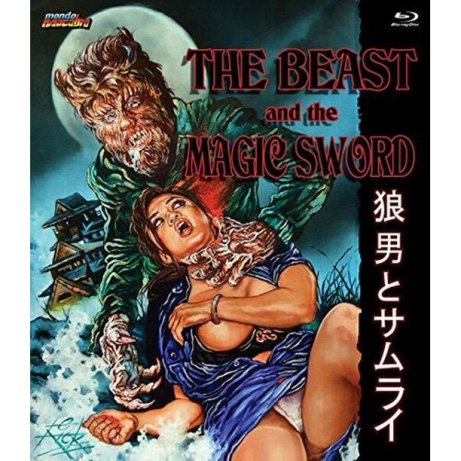
The Beast and the Magic Sword (1983): This movie is absolutely, positively, magically insane. Imagine — and then see that it’s true — Naschy making a period Japanese feudal movie mixed with werewolves. Sometimes when I’m sad, I think how lucky I am to live in a world that made this film.

Licantropo: the Full Moon Killer (1996): Yeah, there was no American release. And yeah, the budget sucks. But even a bad Naschy movie is better than 98% of any other werewolf movie you’ve ever seen. Daninsky versus a serial killer? Sure, I’ll watch that.

Tomb of the Werewolf (2004): A relative of Daninsky inherits his castle and as soon as he gets there, Elizabeth Bathory (Michelle Bauer!) gets him to pull the silver dagger from El Hombre Lobo’s corpse! Oh man — directed by Fred Olen Ray and shot by Gary Graver, it would be the last Daninsky movie made.

There are also some other films where Naschy played a werewolf, including the child film Good Night, Mr. Monster; the monster-filled comedy It Smells Like Death Here (Well, It Wasn’t Me) and A Werewolf in The Amazon.

Howl of the Devil (1987): A movie where Naschy plays just about every monster ever wouldn’t be complete without a brief cameo by our friend Waldemar. Also, Caroline Munro is in this, which should be enough to get you tracking it down.

As you may already have realized, we love Paul Naschy. We’ve also watched him in Horror Rises from the Tomb, Panic Beats, and The People Who Own the DarkThe Killer Is One of 13Blue Eyes of the Broken DollSeven Murders for Scotland Yard, The Devil’s Possessed and Count Dracula’s Great Love.

They’re all awesome. But not as awesome as werewolves fighting yetis.

Looking to own these films? We can help. Click the links and get something awesome for yourself.

Night of the Werewolf (the 1980 Return of the Wolfman) is on Shout! Factory’s The Paul Naschy Collection and The Werewolf and the Yeti is on their second volume.

Ronin Flix has Assignment Terror and Fury of the Wolfman.

Mondo Macabro has The Beast and the Magic Sword.

For even more Naschy — and everything else awesome in strange films — turn to Diabolik DVD.

If you want to see every werewolf movie we’re watched so far, check out this Letterboxd list!
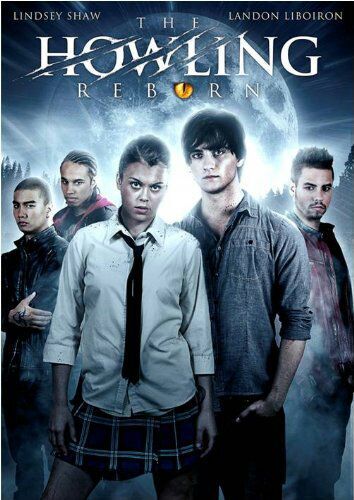
The Howling: Reborn (2011)

While this movie claims that it’s based on Gary Brandner’s The Howling II, it is merely inspired by it. If you’ve made it this far in this series of films, you won’t be surprised. This is the eighth film in the series that started back in 1981 with The Howling. Much like the Amityville and Demons series of films, the phrase series may make you think these movies have some connection. They really don’t.

Will and his girlfriend Eilana are just trying to make a horror movie with their friend Sachin when it comes out that Will is, yep, a werewolf. It turns out that his mother didn’t die when he was young, but has instead been raising an army of beasts in the basement of their high school.

Director Joe Nimziki obviously wrote his own IMDB bio, which states that he was “the youngest Vice President in Sony Pictures’ history, for what would become its’ most prolific winning streak,” “the youngest Hollywood studio President (Worldwide Marketing) at New Line Cinema, as they reached an unprecedented level of success” and “a highly-sought “Movie Doctor” in Hollywood, brought in by both studios and independent producers to re-write, direct and edit a number of major films.” He’s also worked as a creative director in advertising, so that makes even more sense.

Somehow, this movie was able to pay for the rights to Echo and the Bunnymen’s “The Killing Moon,” which surprised me. What’s really even more astounding that in Germany, they didn’t even try to release this as a Howling film, instead referring to it as Blue Moon. The original film was called Das Tier, which translates as The Animal.

What an ignominious close to a week of these films.

Exploring: The Howling

Much like Demons, Prom NightAmityvilleChildren of the Corn and the House series of films, none of The Howling movies really seem to add up. No worries! That’s why we’re here, to be your guide through a series of movies that goes from the highest of highs to the absolutely lowest levels of cinema.

So how did it all get started?

Gary Phil Brandner wrote the book that the original version of The Howling was based on. While he would write two sequels and help write the screenplay to the second film, he had nothing to do with the other films in the series.

This would lead to The Howling, the 1981 Joe Dante film that pretty much sets the standard for all werewolf films to come, even in a year that also featured Full Moon HighWolfen and An American Werewolf In London.

By the way — if you click any of the titles of the films, you can visit our complete review.

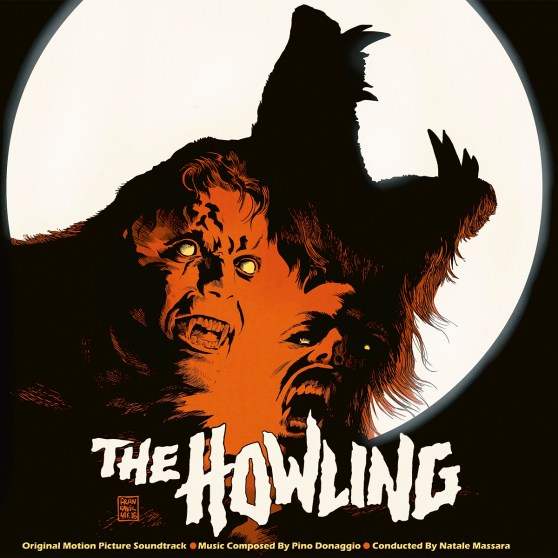
The Howling (1981): Other than the work of Paul Naschy as El Hombre Lobo, this is my favorite werewolf movie of all time. Speaking of Naschy, one of its werewolves is named after the director’s legal name (Jacinto Molino), as well as mnaming characters after famous werewolf directors like George Waggner, Roy William Neill Terence Fisher, Freddie Francis, Erle C. Kenton, Sam Newfield, Charles Barton, Jerry Warren, Lew Landers and Stuart Walker.

This is a movie that makes the journey frm grimy police procedural to pure horror in no time flat. I make a special point to watch it at least once a year to appreciate just how great it is. You can get this movie from Shout! Factory.

At this point, I will not be saying anything that nice about any of these films.

Howling II: Your Sister is a Werewolf (1985): I hated this movie the first time I saw it, but after revisiting it after watching the rest of this series, I found that it’s actually pretty solid by comparison. I think that’s more due to the lackluster films and sheer rock bottom that this series reaches.

It’s also the only sequel in the series that features a plot that directly follows the original film and also the only one that has direct input from the aforementioned Gary Brandner, who hated how the 1981 film diverged from his novel.

Obviously, Christopher Lee (who apologized to Dante for being in this movie) and Sybil Danning (I can also make a case for Reb Brown, Marsha Hunt and the scene where Babel plays in the punk disco) are the main reasons to see this. It has grown on me, but a movie that shows Danning’s bare breasts seventeen times in a row and had the tagline “The rocking, shocking new wave of horror!” can’t be all horrible.

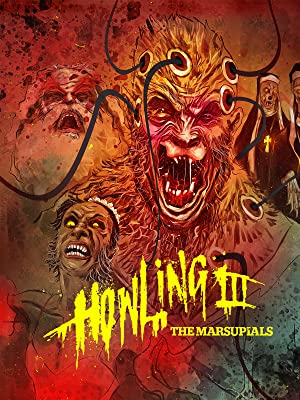
The Howling III: The Marsupials (1987): Much like the Howling II, this was directed by Philippe Mora (who also made the were-ciccada movie The Beast Within). If the two films before it didn’t exist, it wouldn’t be horrible. And yet because the other films in this series do, it somehow becomes better by comparison. It also features the cheapest Oscars you’ve ever seen. You can watch this on Amazon Prime and Tubi. Shout! Factory has also released this on blu ray.

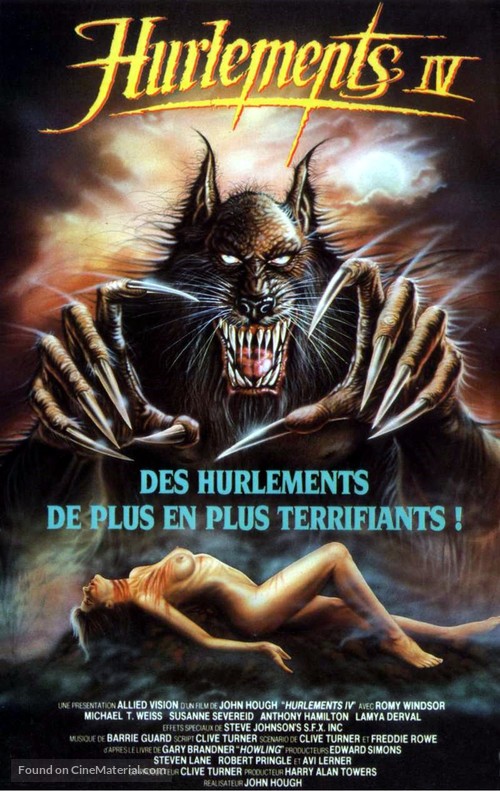
Howling IV: The Original Nightmare (1988): While this film does boast direction by John Hough, this had the noble goal of being the only movie in this series to faithfully adapt Brandner’s original novel. Clive Turner, who produced this and would become involved in the later films in the series, re-cut and re-voiced the whole film afterward. Actually, the dubbing wasn’t hard. as the budget was so small that it was shot without sound. You can watch this on Tubi.

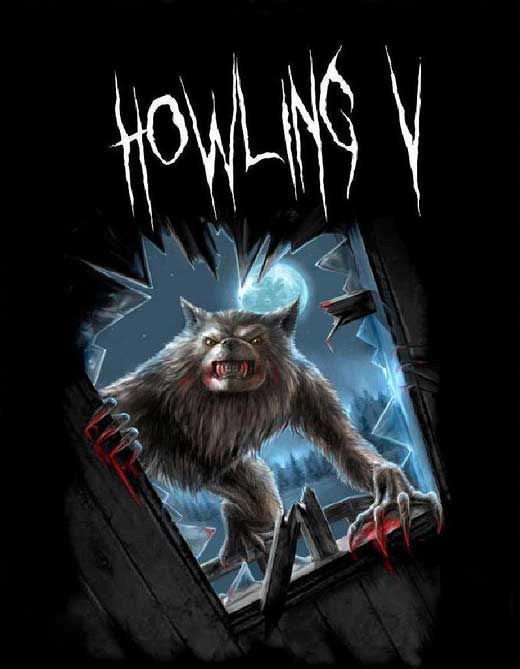
Howling V: Rebirth (1989): This one is more Agatha Christie than Lon Chaney Jr., this movie starts with the silly scene of everyone but a baby being killed in a castle — who saved the baby? The cameraman? — and then gets even goofier. You can watch it for yourself on Tubi.

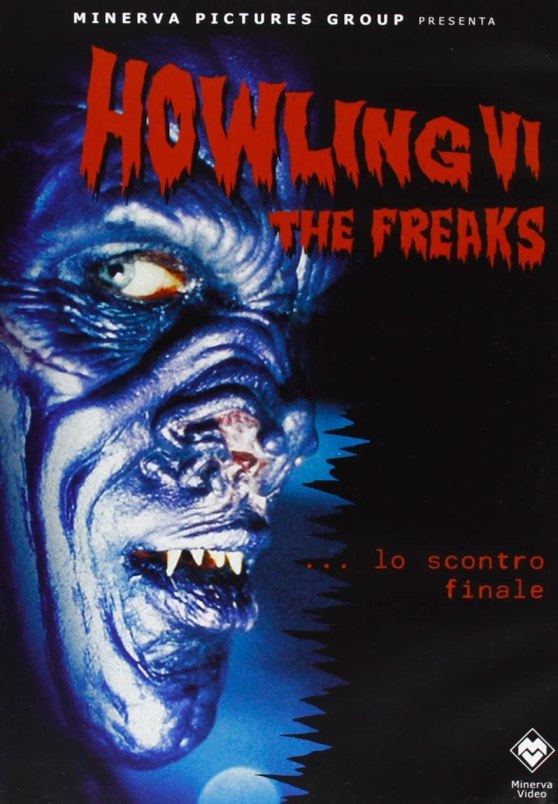
Howling VI: The Freaks (1991): Another movie based on the novels, this would be the last decently budgeted film in this onslaught of furry films, even if it went direct to video. It’s not horrible, actually, but not really what you want out of a werewolf film, instead concentrating more on the freakshow aspects — as per its title, that kind of makes sense. It’s also on Tubi.

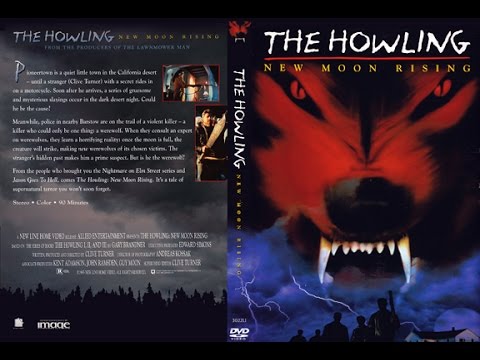
The Howling: New Moon Rising (1995): Directed, written and starring Clive Turner, this film uses footage from four through six — as well as characters from those movies — to attempt to tie together some form of continuity. It’s also a movie where Turner decided he’d rather tell the story of drunken barflies than werewolves. I’d love to chat with him about this movie because I find it fascinating. I can’t hate it — oh, it’s beyond a bad movie — but the about face that it makes in featuring long sequences of the drunks of Pioneer Town singing obsesses me.

The Howling: Reborn (2011): With a poster like that, you may think that you’re about to watch a rip-off of Twilight. No, instead, you’re just watching a reboot of the series that claims to be based on the second book. As of now, this is the last* of these movies.

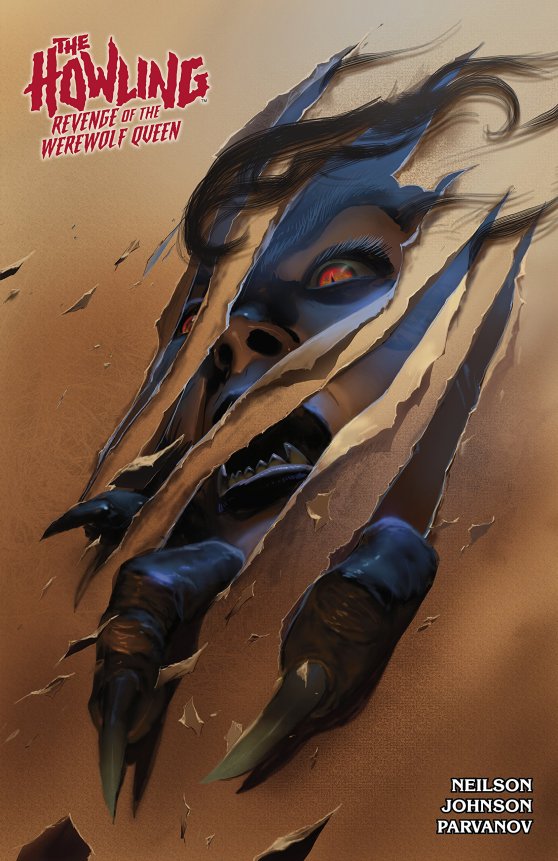
The Howling: Revenge of the Werewolf Queen (2017): Space Goat Productions released four issues of this comic book (along with Evil Dead II and Terminator comics) in 2017, but a failed Kickstarter for an Evil Dead II board game has seemed to put the future of this company into question.

So what’s next?

Andy Muschietti, who directed the two It movies, is making a new version of the series for Netflix. Of course, with most of the world on hold thanks to COVID-19, it may be a long time until we see his vision.

Have you seen all of the films? Do you disagree with our assessment? What film series would you like to see us tackle next? Let us know!

If you want to see every werewolf movie we’re watched so far, check out this Letterboxd list!
*For those wondering, The 2017 movie The Howling has nothing at all to do with any of these movies.

Wolfen (1981)

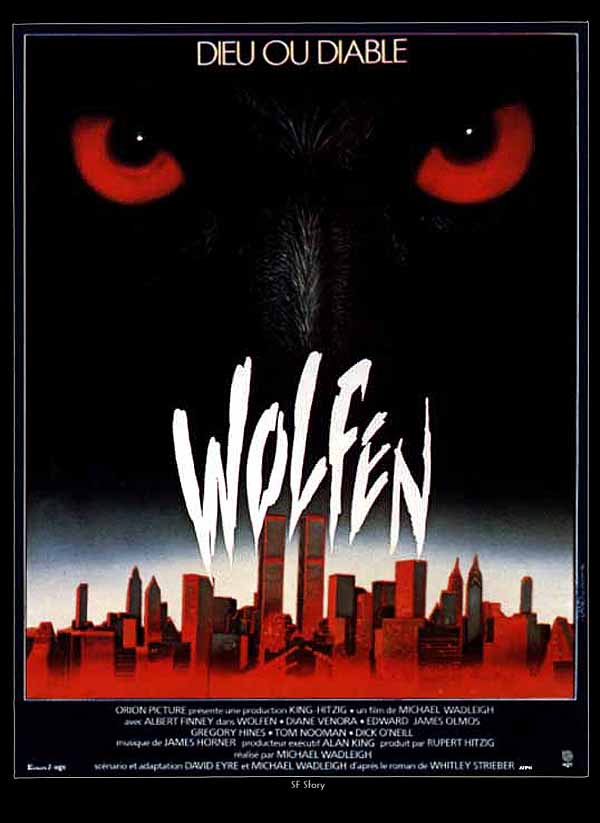
Before he was getting beamed up into spaceships, Whitley Streiber wrote The Wolfen. It came out in a year that saw two other essential werewolf movies, An American Werewolf In London and The Howling. There’s a reason why this film isn’t mentioned in the same breath as the other furry releases of 1981. By comparison, it’s slow-moving and not as filled with either humor or menace.

Former NYPD Captain Dewey Wilson (Alberty Finney) has come back to the job to work with criminal psychologist Rebecca Neff (Diane Venora, The Cotton Club) to solve a violent series of murders, including a business magnate who was killed alongside his wife and gigantic Haitian voodoo bodyguard.

So what keeps killing people throughout NYC? Is it a wild wolf? Or Eddie Holt (Edward James Olmos), a Native American activist who claims that he’s a shapeshifter?

Along the way, Gregory Hines plays a coroner, Tom Noonan is a zoologist and Tom Waits makes a cameo as a bar owner.

This is the only movie that Dustin Hoffman was ever rejected for. He really wanted the lead, but director Michael Wadleigh (Woodstock) wanted to work with Finney. For what it’s worth, he was removed from the film after reshoots and was replaced with John D. Hancock (Let’s Scare Jessica to Death), who supervised post-production and fixing some of the movie’s dialogue.

If this had been released in any other year but 1981, I think it may be more fondly remembered. It’s fine — a bit slow, but the idea of Native American skywalkers being wolf spirits that haunt New York is interesting. However, it’s a less successful take on traditional monsters than Steiber’s The Hunger, which would be made into a film two years later.

Dr. Jekyll and the Werewolf (1972)

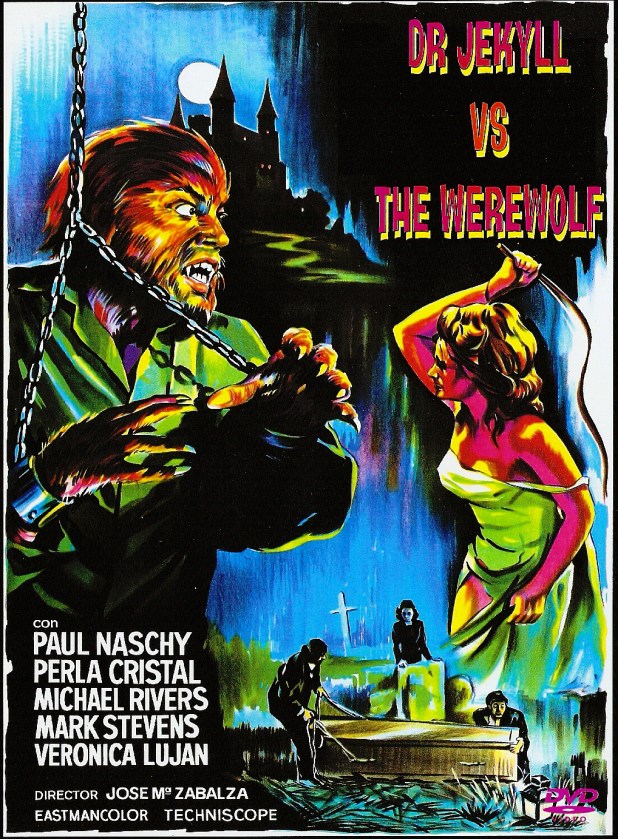
We’re six movies in to the story of El Hombre Lobo, Waldemar Daninsky. This time, after battling aliens and yetis and vampires, he is searching for a cure. That cure brings him to the grandson of Dr. Jekyll, played by Jack Taylor, whose career has taken him from the Mexican Nostradamus movies to Jess Franco sleaze to The Ghost Galleon to Edge of the AxePieces and more.

The plans in Naschy films are always wild. This one involves him drinking one of Jekyll’s formulas in the hope that the Hyde side of his persona is less evil than that of the wolf. Nope. It just makes him even more dangerous.

This was directed by León Klimovsky, who also made The Vampires Night OrgyA Dragonfly for Each Corpse, The Dracula Saga and The People Who Own the Dark.

If you’re looking for a movie where men become wolves in elevators while women watch on in terror or turn furry on the dance floor, this movie will scratch that itch. Seriously, Naschy deserves to be better remembered than he is. I adore everything he ever made.

To get another perspective on this film, check out this review from Robert Freese as part of our Pure Terror month.

Abbott and Costello Meet Frankenstein (1948)

Originally titled The Brain of Frankenstein, the title of this movie was changed to make it less “horror” and to feature the comedy duo. Lou Costello hated the script, claiming his five-year-old daughter could write a better script.

The Universal Monsters hadn’t been in a movie in three years, with Lugosi — who is playing Dracula for just the second time and last time in a feature film — and Chaney no longer under contract. Boris Karloff doesn’t even appear — that’s Glenn Strange* in the role — yet agreed to help promote the movie.

What a set-up. Lawrence Talbot (Lon Chaney Jr.) makes an urgent phone call to warn Chick Young (Bud Abbott) and Wilbur Grey (Lou Costello) that a shipment they’re about to get for a wax museum contains the real Dracula. Of course, they think it’s all a joke until, you know, Dracula really comes back.

Before you know it, Dracula has reanimated Frankenstein’s Monster and has Dr. Sandra Mornay (Lenora Aubert, The Return of the Whistler) on hand to scoop out Costello’s brains and plop them into the Monster’s skull. She’s feigning interest in our hero and there’s also another mysterious woman, Joan Raymond (Jane Randolph, Cat People) acting like she’s in love with him.

Seriously, this is the very definition of a hijinks ensue film. Dracula is disguising himself as Dr. Lejos, but Larry Talbot isn’t fooled. I’ve always loved the scene where the vampire becomes a bat and the werewolf just grabs him and jumps off a balcony to both of their supposed deaths.

While this is the last appearance of the big three Universal Monsters, Abbott and Costello would also meet up with Boris “The Killer” Karloff, Dr. Jekyll and Mr. Hyde, the Mummy and the Invisible Man, which is Abbott says, “There’s no one to frighten us any more.” That’s when a voice comes out of nowhere. “Oh, that’s too bad. I was hoping to get in on the excitement. Allow me to introduce myself—I’m the Invisible Man!” You have no idea how insane I went as a kid every time Vincent Price’s voice bellowed at the end of this. They’d also met up with the Creature from the Black Lagoon on the Colgate Comedy Hour.

This was directed by Charles Barton, who made several movies with the duo, as well as 38 episodes of Petticoat Junction, 90 episodes of Dennis the Menace, 78 episodes of The Amos ‘n Andy Show and 106 episodes of Family Affair. Walter Lantz — who created Woody Woodpecker — directed the animated Dracula to bat sequence.

*Actually, Strange isn’t in one scene. He had broken his ankle tripping over a camera cable, so when the Monster throws Dr. Mornay out the window, that’s Chaney Jr. in the make-up.

The Werewolf Reborn (1998)

Teenager Eleanor Crane goes to visit her uncle Peter in a remote Eastern European village, and receives an unexpectedly cold welcome from the villagers, who are plagued by a deadly curse. That’s because Peter just so happens to be a werewolf.

Director Jeff Burr had plans to make an entire series of movies based on the Universal monster films, with only this movie and Frankenstein Reborn ever getting made. However, there were posters designed for the Dracula and Mummy installments, as Full Moon wanted an entire series they were going to call Filmonsters!

Burr would also co-direct Mil Mascaras vs. the Aztec Mummy and direct the fourth and fifth Puppet Master films, as well as Pumpkinhead II: Blood WingsLeatherface: Texas Chainsaw Massacre III and Stepfather II. Plus, he was also the director for From a Whisper to a Scream.

You can watch this on Tubi.

Wolf (1994)

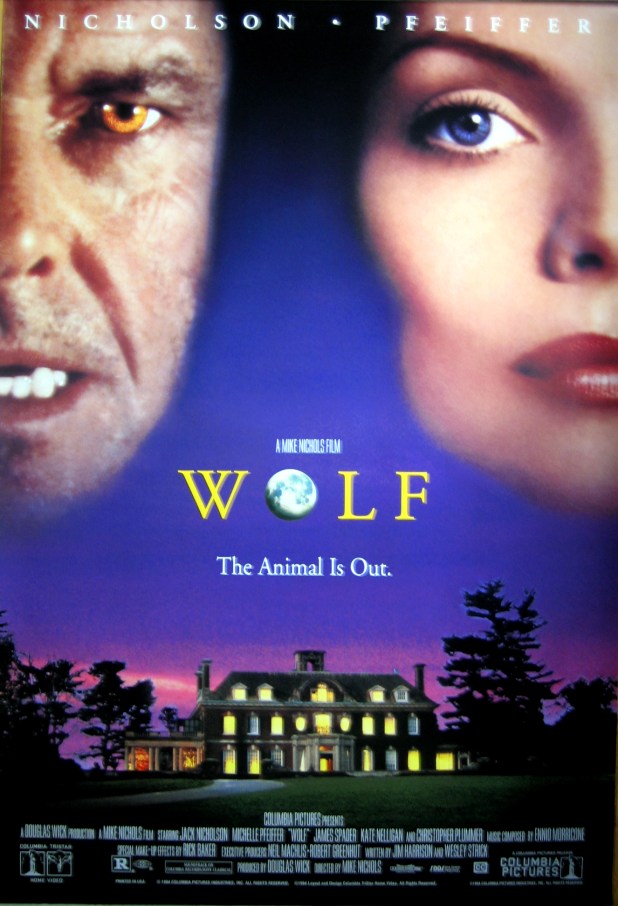
Will Randall (Jack Nicholson) once ran the New York publishing world, but now he’s been demoted by his new boss Raymond Alden (Christopher Plummer) and has lost his wife and title to Stewart Swinton (James Spader). At least he’s been bit by a black wolf and has started to become something more than just a normal person, because otherwise, his life is pretty rough.

He soon begins to romance Alden’s daughter Laura (Michelle Pfeiffer) as he tries to control the wolf inside him. Of course, his rival is also a wolf and tries to take everything away from him all over again, but this time, he’s able to best him before becoming a full-blown wolf and running into the woods.

Mike Nichols wouldn’t be my first choice for making a horror movie, what with a resume of The GraduateWorking Girl and The Birdcage. At least the Ennio Morricone is pretty great. The make-up is awesome, too. If you’re going to make a werewolf movie, get the best. Get Rick Baker.

Nicholson had been trying to get this movie made with his friend, Jim Harrison, for more than a decade. The screenwriter and associate producer hated the result of the film so much that he left Hollywood.

The real problem, I think, is that no one could agree what the movie was about. Nichols thought it was about the death of God, the decline of Western civilization and A.I.D.S. Harrison wanted it to be a “celebration of oblivion and liberation.” And Morricone believed it was a story about a man trapped in a dream.

Howling: New Moon Rising (1995)

Directed, produced, starring and written by Clive Turner, this film attempts to unite Howling IV: The Original Nightmare, Howling V: The Rebirth and Howling VI: The Freaks.

Turner’s character arrives in a small western town and begins mingling with the people there at the very same time that a large animal is killing people. Meanwhile, a detective and a priest start connecting the past three films in this series, which allows plenty of stock footage to pad out the running time.

This is the worst of the Howling films, which really seems like a low bar to trip over. Everyone in the town where this was made used their real names in the film. That in itself is a crazy story, because Roger Nail (who made Hard Time and art directed Darkman) was the original director of this movie and he wanted to make a werewolf movie. Seeing as how this was called Howling 7, you have to applaud his creative vision. Instead, Turner wanted to make a character-driven take about the hillbilly community and less about furry monsters.

That’s why the credits say, “The events depicted in this town are fictitious. The characters depicted in Pioneer Town are real.”

I can’t tell you not to watch this. I will tell you that the scene with the song “Prescription Beer” is astounding and I also wonder why there ever needed to be a werewolf here, but again. I’m just writing about these movies, not making them.

The Company of Wolves (1984)

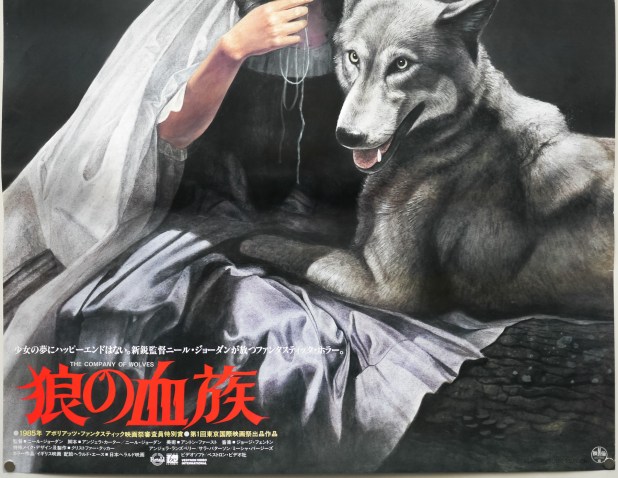
Back before Neil Jordan made The Crying Game, he made an adaption of one of the stories in Angela Carter’s The Bloody Chamber. The author had already made a radio version of the story and worked with Jordan on the script.

This was Jordan’s second film and it was made on a very low budget. In fact, to get across the idea of multiple wolves in some scenes, most of the monsters shown in the film are actually Belgian Shepherd Dogs*.

The narrative device that drives this film concerns Rosaleen, a modern girl who dreams that she is in the past, a strange place where her sister Alice is hunted and killed by wolves. Her grandmother (Angela Lansbury!) warns her, as she gives her a red cloak, to beware men whose eyebrows meet. As the villagers soon hunt a wolf whose dead body reveals a man, this dire proclamation takes on some truth.

She soon meets a huntsman, who dares her to a race to her grandmother’s house. He arrives first and eats the old woman, yet our heroine can’t hate the man. Even though she wounds him, she still cares for him and ends up becoming turned into a lycanthrope herself. Finally, the story breaks into today’s time, as the wolves crash through the windows of Rosaleen’s modern world, symbolizing the end of her pre-pubescent innocence.

This framing story also allows the grandmother and Rosaleen to tell stories that concern wolves, man and desire. They include a young werewolf (Stephen Rea) running from his wife and young family, the devil (Terrence Stamp!) showing ip in a Rolls Royce, a witch that transforms a family of noblemen and a wolf woman (experimental musician Danielle Dax) treated kindly by a priest.

The film also offers some truly horrific and bloody transformation scenes that were featured prominently in the advertising when this ran in the U.S. I remember seeing these commercials and being horrified by them, but they are just part of the overall journey for a movie that is more allegory than genre film. And hey — David Warner is in it and he always makes everything he’s in so much more interesting for his presence.

*There were also two wolves used in the film, which required snipers to also be on set. That’s because these wild animals can never truly be tamed.