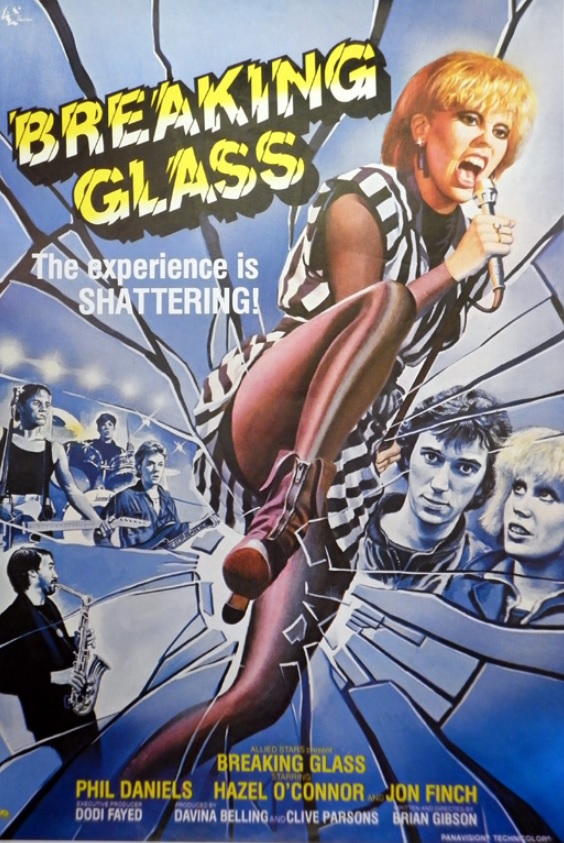
If you grew up in middle school or high school during the advent of a new cable TV channel called HBO in the early ’80s, chances are you caught at leastone of the incessant airings (we watched it multiple times, of course!) of this British rock film — alongside the likes of the juvenile delinquency classic Over the Edge (starring Matt Dillon in his film debut) and Ladies and Gentleman: The Fabulous Stains. (Meanwhile, over on the USA Network’s “Night Flight” programming block, we watched Social Distortion in the punkumentary Another State of Mind and the Ramones in Rock ‘n’ Roll High School. Ah, those were the days. . . .)
O’Connor got her start as an actress, with support roles in the British films Girls Come First (1975) and Double Exposure (1977). To launch her music career (with financial assistance by Princess Diana’s then lover, Dodi Fayed), O’Connor was teamed with Marc Bolan’s (T.Rex) and David Bowie’s longtime producer Tony Vinconti (he also worked with Iggy Pop and Thin Lizzy) to craft the songs for the film; Brian Gibson (later of several Styx videos, as well as the Tina Turner bioflick What’s Love Got to Do With It and the 1998 Brit rock flick Still Crazy) was hired to craft a film around the songs.
Fans of ’70s British new wave music and of Toyah, know that the unknown O’Connor beat out Toyah Willcox for the role. At the time, Willcox was high on the British charts with her debut album, 1979’s Sheep Farming in Barnet, which featured the hit singles “Neon Womb” and “Victims of the Riddle,” and “Leya” from 1980’s The Blue Meaning. (If you’re a fan of the image and music of Lene Lovich and Nena Hagan — from our previously reviewed Cha Cha — or Poly Styrene of X-Ray Spex and Siouxsie Sioux of Siouxsie and the Banshees, then you’ll enjoy the music of Toyah.)
As with the plot of most rock flicks, Gibson devised a story about the ubiquitous, meteoric rise and even quicker fall of Kate, a young and angry rock star lost in a world of drugs that’s compounded by managerial, record company, and media manipulation that leads to her eventual nervous breakdown. It’s a tale not far removed from the career trajectory of the faux bands chronicled in Slades In Flame, the 1982 Australian new wave comedy-drama Starstruck, 1980’s Times Square, and the aforementioned Ladies and Gentleman: The Fabluous Stains.
Astute British music fans will notice Phil Daniels from his starring role in Quadrophenia (brilliant as O’Connor’s talentless, bottom feeding street hustler-cum-manager), along with bassist Gary Tibbs from Adam and the Ants and Roxy Music as a band member (with equally decent acting chops). And keep your eyes open for ex-Animals keyboardist Zoot Money (You Tube) and Gary Holton of the Heavy Metal Kids (You Tube) in support roles. And yes, that is Jonathan Price as Ken, the band’s deaf and heroin-addicted saxophone player — on his way to his breakout roles in Something Wicked This Way Comes and Terry Gilliam’s Brazil.
Image courtesy of Good Reads. You can find used copies of the novelization on Amazon U.S.
Caveat Emptor #1: Sure, you can stream Breaking Glass on You Tube Movies and Amazon Prime U.S. But those are the American edits of the film that run at one hour thirty four minutes (94 minutes) with the film’s ending and other scenes (about 10 minutes) excised — you want to watch the original British version distributed in Europe that runs at 100 minutes. Alas, due to the usual legalese, that British version is not available on Amazon Prime in the U.K. — but the intrepid staff of B&S About Movies found the lone online copy of the British cut of the film on Vimeo (it’s been there for three years, but watch it while you can).
Caveat Emptor #2: The film was out-of-print for years and the recently released, mass marketed Blus and DVDs — which come from the choppy American print — have received poor reviews. The U.S online streams come from those un-restored Blus and DVD impresses. The way the reviews read, it seems we’d be better off with a grainy, taped-off-cable or VHS online rip of the film. The Blus and DVDs offer no menus or extras, booklets or the usual commentary tracks you’d expect from the re-release of such a classic, coveted film.
And just how influencial is this film?
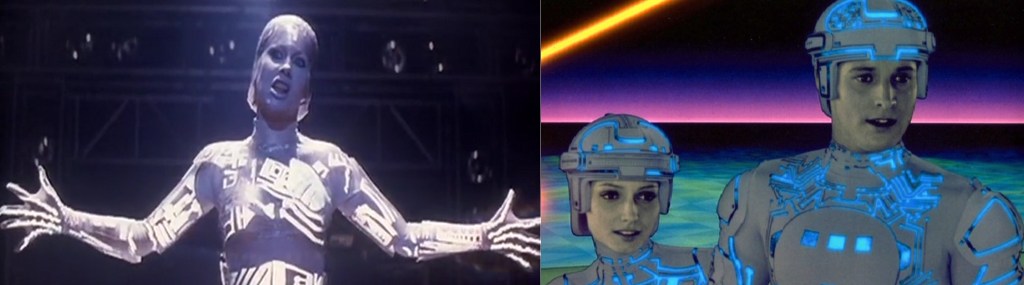
Well, we all know about the debated relationship between Jack Wood’s Equinoxand Sam Raimi’s The Evil Dead, right? Well, check out this shot of Hazel O’Connor’s “robot” from the “Eighth Day” segment of Breaking Glass against an image of 1982’s TRON.
Then, there’s the striking similarities between the hair and makeup of O’Connor and Daryl Hannah’s Pris from Bladerunner.
You can listen to the full soundtrack — which hit # 5 on the British charts and earned a gold album status — on You Tube. You can also watch two scenes/songs/rock videos cut from the film of the soundtrack’s two Top Ten British singles, “Will You?” and “Eighth Day,” also on You Tube. “Give Me an Inch” became somewhat of new wave “hit” on U.S college radio stations at the time.
You are a programme! Programme! Programme!
About the Author: You can learn more about the writings of R.D Francis on Facebook.He also writes forB&S About Movies.
This beach movie features no beach. Sure, it’s the sixth and last of the AIP beach genre films, but right now it’s the perfect movie for the abject pit of despair that I’ve found myself in tonight.
Mr. Hiram Stokeley (Boris Karloff!) has just died and has to perform just one good deed in the next day so he can go to Heaven. He asks for Cecily (Susan Hart, the wife of AIP co-founder James H. Nicholson) to help him stop his lawyer Reginald Ripper (Basil Rathbone!) from stealing his estate from its rightful owners Chuck (Tommy Kirk) and Lili (Deborah Walley, the Gidget star who was once married to Blood Island star John Ashley).
Ripper has hired his daughter Sinistra (former Miss Scotland and Fabian bau Quinn O’Hara), J. Sinister Hulk (Maytag man Jesse White), Chicken Feather (Benny Rubin) and Princess Yolanda (beach party regular Bobbi Shaw) to kill off our hero and heroine, while Eric Von Zipper (Harvey Lembeck) and his Malibu Rat Pack get involved.
This was originally called Pajama Party in a Haunted House, which is a pretty great title too. It’s the only beach party movie without Frankie Avalon and Annette Funicello, but it does have Nancy Sinatra right at the start of her fame, as well as George Barrows in his ape suit, Italian starlet Piccola Pupa and The Bobby Fuller Four.
Originally announced in the end credits of Dr. Goldfoot and the Bikini Machine (under the title The Girl in the Glass Bikini, it was retooled after AIP producers hated the initial cut. All of the scenes with Karloff and Hart were added in, with Hart superimposed over existing footage and Karloff appearing mostly by himself on a soundstage.
This film arrives at a time before hippies would change the world. It’s kind of ironic that Eric Von Zipper’s motorcycle crash would find its way into another AIP film that would more accurately reflect the latter half of the decade, the Billy Jack-introducing The Born Losers.
I have great memories of hearing the commercials on my local rock radio station for Down on Us when it played at the—then—behemoth six-plex in the big city as a midnight movie. Our hopes were high. We loved the Doors. We all dog-eared our copies Jerry Hopkins’s No One Here Gets Out Alive. We loved those midnight showings of AC/DC: Let There Be Rock, Led Zeppelin’s The Song Remains the Same, and Sam Raimi’s The Evil Dead. This was going to be an epic night where the classic rock spewed from the speakers, mixing with the waft of nacho cheese congealing over tortilla chips and the sweet flow of Mr. Pibb. . . .
To say we were disappointed at what unfurled across the silver screen would be an understatement. This wasn’t Rock ‘n’ Roll High School. This was Plan 9 from Outer Space: The Rock Musical. Yes, if Ed Wood made a rock ‘n’ roll flick, it would be this Larry Buchanan hot mess of a movie. Where’s Roger Corman and Allan Arkush when you need them?
While we’re on the subject of the Ramones: The modern-day doppelganger for Down on Us is Randall Miller’s muddled bioflick boondoggle, CBGB (2013). Randall Miller, the first film director in history to be convicted in the U.S. for the death of a cast or crew member (during the production of Midnight Rider, his Gregg Allman bioflick), was unable to secure permissions from the estates of Joey and Johnny Ramone, so faux “Ramones” tune were created—and Ramones tunes were absent from the accompanying soundtrack. (A movie about CBGB’s without the Ramones? Why bother making the movie at all?)
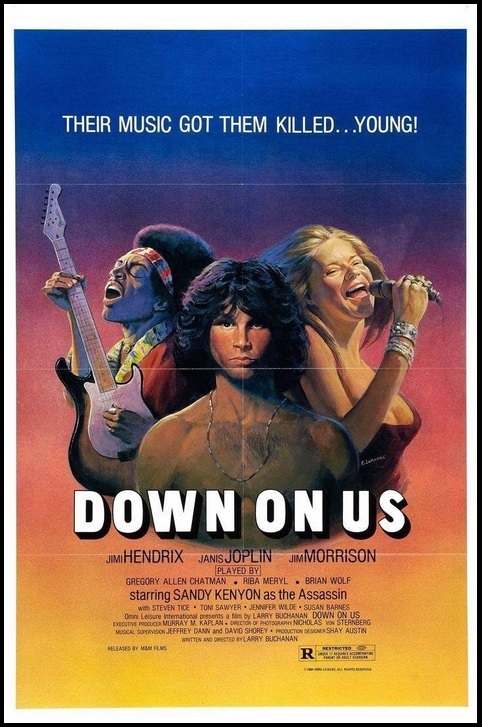
Original 1984 theatrical one-sheet courtesy of IMDb.
As for American exploitation filmmaker Larry Buchanan: He proudly wore his self-professed “schlockmeister” honor on his chest, an award he earned for his beloved (blue-jelled) day-for-night shoots trash-classics of Curse of the Swamp Creature, The Eye Creatures,In the Year 2889, Mars Needs Women, and Zontar: The Thing from Venus (need we say more: he made the Planet of the Apes rip-off Mistress of the Apes). Buchanan’s faux-biographical drama format—mixed with his ubiquitous speculations and conspiracy appendixes—that he utilized in Down on Us dates back to his “exposés” on the Kennedy assassination with The Trail of Lee Harvey Oswald (1964), the gangster chronicles The Other Side of Bonnie and Clyde (1968) and the life Charles “Pretty Boy” Floyd in A Bullet for Pretty Boy (1970), and the “romance” between billionaire Howard Hughes and actress Jean Harlow in Hughes and Harlow: Angels in Hell (1977). Buchanan also twice explored the life of Marilyn Monroe with his same theories-vigor in Goodbye, Norma Jean (1976) and Goodnight, Sweet Marilyn (1989). Not even folklore dinosaurs are immune from the depths of Buchanan’s conspiracies: he made the speculative-drama The Loch Ness Horror (1982).
Courtesy of its chintzy-muddy production values, Down on Us looks like a porn movie—only backed by a cover band sloggin’ through some “originals” they wrote that ersatz-as-tunes for Jimi Hendrix, Janis Joplin, and The Doors. Yikes! This wasn’t Oliver Stone’s The Doors—not by a longshot. This was Ferd and Beverly Sebastian’s Rocktober Blood—only with Jim Morrison instead of Billy Eye Harper (and Nigel Benjamin) fronting Sorcery. And if not for Oliver Stone going into production with his 1991 biography on the Lizard King, even with the home video market’s voracious appetite for analog delights to line their shelves, this Buchanan conspiracy faux-fest would most likely have never made it to video on the cusp of the grunge decade.
Although many critically attacked Buchanan’s film that explores Jim’s paranoia of the government—not so much a theory, but more a cinematic license playing with a “what-if” story line—as rubbish, it seems those critics are not familiar with the legend of Jim Morrison. For Morrison, it was a real, believed threat: American Government agents were after him; that he was marked as “Number 3”—after Hendrix and Joplin. Therefore, Morrison left America for Paris to find shelter and reject the legal controversies of his life. Except, in Buchanan’s bizarro-Jim world, Morrison didn’t die in a Paris bathtub: Jim fled to Spain and took up residence in a monastery.
And speaking of legal controversies: It’s one thing to craft a bogus dramatical document about the psychedlic rock triumvirate of Hendrix, Joplin, and Morrison. It’s another to licensing their music. So Buchanan contracted musicians to forge replicates of those artists for the film. Oscar nominated and award-winning director Gus Van Sant exceptionally and effectively executed this same approach with 2005’s Last Days, his faux-Kurt Cobain docudrama concerning actor Michael Pitt’s eerily portrayed pseudo-grunge rocker, Blake, fronting the film’s scripted Nirvana substitute, Pagoda (featuring stunning Nirvana simulations composed by Pitt; it all goes back to poet William Blake, one of Jim Morrison’s lyrical inspirations. The circle completes). The man Buchanan hired to mimic Jim Morrison was a musician also speculated as one of the possible musicians behind the Phantom mystery of March of 1974; an enigmatic Morrison-ersatz that released the album Phantom’s Divine Comedy: Part 1 on Capitol Records: Richard Bowen.
Richard Bowen’s other musical offering, starring Fabian!
Courtesy of Bowen, it was Buchanan’s film—not Oliver Stone’s The Doors—which offered the first on-screen interpretation of Jim Morrison, as done by actor Brad Wolf, who lip-synced to the music written and performed by Bowen. Bowen construct haunting Doors mimics with “Knock So Hard,” “Sorcery,” “Old Pictures,” “Holding On,” and “Phantom in the Rain”—each sounding like doppelganger leftovers from Phantom’s Divine Comedy: Part 1, or as outtakes from the recording career of Jim Morrison’s alleged son, Cliff Morrison. (Cliff Morrison—in a career-analogous path to Jimi Hendrix’s “son,” Billy Yeager (and to a lesser extent, Frank Marino of Mahogany Rush and his Hendrix-medium myths)—evoked his “dad’s” memory with two, late-nineties albums: Know Peaking and Color of People, fronting his Lizard Son Band.) Not only were the vocal similarities between Morrison, the Phantom, and Bowen contributing to the theory that Bowen could be the Phantom: the songs titles composed by Bowen for Down on Us also fueled the theory. Again, Bowen wrote two songs: “Sorcery” (which is what a “wizard” performs—and ties into the lead track on Phantom DC’s “Tales from a Wizard”), and the second song that appears in the film, “Phantom in the Rain.”
Image of 1989 reissue by Unicorn Video courtesy of Paul Zamarelli/VHS Collector.com and user 112-Video.
The first theory about Morrison’s demise was murder: In the backwash of Oliver Stone’s 1991 document, another film sloshed the brackish tributaries first navigated by Buchanan, a film that played it very fast and very loose with the Morrison-was-murdered theory: the 1992 direct-to-video rock flick Sorority House Party (You Tube). In this case, three hotties thwart a managerial plot to kill Attila, and unpredictable, high maintenance, costly ‘80s rock star, to boost album sales. This murder theory regarding Jim was the direct result of Hendrix and Joplin doing great sales numbers after their deaths. Moreover, with Jim flaking out on the band and a split of the Doors proving costly to both the band and the label, knocking off the Lizard King doesn’t seem like an implausible idea. (Also known as Rock and Roll Fantasy,Sorority House Party served as the directing debut of David Michael Latt, who came to incorporate the successful mockbuster purveyor, Asylum Studios.)
Other movies in the 1980s also tailored the mysterious threads of Jim’s death as cinematic narrative inspiration.
The second theory regarding Jim’s “demise” was a death hoax: Jim, tired of the dealing with the band and his Miami indecency trial ending in a possible jail sentence (like counterculture comedian Lenny Bruce), paid a French doctor to create a phony coroner report and death certificate. The cable movie-rock flick favorite Eddie and the Cruisers played with this myth—no doubt inspired, in part, by the last chapter of No One Here Gets Out Alive, the 1980 best-selling, first biography on Jim, which theorized Jim Morrison may have faked his own death. In Eddie and the Cruisers, a Rimbaud-inspired rocker of the Sixties, distraught over band infighting and record company hassles, bailed out with an elaborate death ruse. In the eventual Eddie sequel, the rocking protagonist, Eddie Wilson, ended up as a construction worker in Canada; not exactly ranking with the romanticized rumors of Jim running away to Africa—then returning to music in 1974 as a mysterious rocker, the Phantom; or as the Circuit Rider (that’s a whole other Jim-tangent that we won’t get into here).
And that brings us to best of the Jim-inspired conspiracy rock films: Down on Us (1984), eventually reissued to video as Beyond the Doors (1989). And we say “the best” because it’s all about the schlock n’ trash at B&S About Movies. (Honorable mention going Michael A. Nickle’s portrayal of the Lizard King in Wayne’s World 2, of course, living out his life as a sage beyond the immaculate perimeters in the desert.)
Larry Buchanan’s film speculated Jim was not murdered, nor did he fake his death: he went underground to avoid assassination. The plot line: President Richard M. Nixon, despondent over the antiwar sentiments agitated by the hippie icons of Hendrix, Joplin, and Morrison, sanctioned the F.B.I to kill the trio. Morrison apparently caught wind of the plot and “got out alive.” And, to complete the final cover up of the plot: the agent (Sandy Kenyon) who carried out the sanction is murdered. When his son discovers his dad’s files, the plot unfolds via flashback, then the son tracks down Morrison in Spain . . . .
While Buchanan’s film doesn’t get into it: The alleged “F.B.I murdered Jim” scheme has been in circulation since Jim’s death in 1971, cobbled in a basket with theories alleging the American government assassinated Dr. Martin Luther King, Malcolm X, and Marilyn Monroe (Hi, Larry!), along with Robert Kennedy and his brother, President John F. Kennedy (Hey, Mr. Buchanan!).
One of the earliest critics of the Warren Commission report regarding President Kennedy’s assassination, Mae Brussell, the late counterculture public radio personality of the Carmel and Monterey, California, radio stations KLRB and KAZU, most likely influenced Buchanan’s screenplay. The former host of the nationally syndicated Dialog: Conspiracy program compiled her government conspiracy theories in an unpublished November 1976 report: From Monterey Pop to Altamont, Operation Chaos: The C.I.A’s War Against the Sixties Counterculture (it was online to read in full; now it’s gone again). This report, along with current Doorsphile conspiracy theorists on social media platforms, contend there was a coordinated effort initiated in 1968 by the F.B.I’s Counter Intelligence Program and the C.I.A’s “Operation Chaos” to undermine the counterculture movement. These theories point out that Jim Morrison knew Charles Manson, through his mutual acquaintanceship of the Beach Boys’ Dennis Wilson and music producer Terry Melcher, and Morrison composed “Riders on the Storm” about Manson’s “murderous” followers.
Additionally, theorists opine the membership list of the 27 Club (with its own outlandish conspiracies; e.g., Courtney Love hired El Duce of the Mentors to murder Kurt Cobain) ties into the military service of the rockers’ parents. In addition to the high-ranking, classified naval service of Jim Morrison’s Admiral father, Lt. Col. Paul James Tate, the father of Manson Family murder victim, actress Sharon Tate, also served in the military. Theorists also point to Lewis Jones, the father of the Rolling Stones’ Brian Jones, a PhD mechanical engineer, who served as a military aeronautical engineer for Bristol Aircraft . . . et cetera, one may read the extended theories online, but the point: the deaths of their famous children were “assassinations.” The “theory” concludes: Charles Manson and his family were either hired as “actors” for the “plot,” or Manson himself was a patsy—like Kennedy assassin Lee Harvey Oswald (Oy! Larry!)—set up to take the fall for the Tate “assassination.”
It all began, according to Brussell, with the 1966 death of anti-establishment comedian Lenny Bruce (1967 memoirs: How to Talk Dirty and Influence People)—the first victim of the “operation.” The critical and financial success of the Monterey Pop celebration in the summer of 1967 simply solidified the government’s resolve to snuff out the counterculture’s icons. Brussell goes onto state that, between 1968 and 1976, many of the most famous names of the counterculture movement, were dead: Mama Cass Elliot of the Mamas and the Papas, Otis Redding, Jimi Hendrix, Brian Jones, and Janis Joplin all participated in or attended the Monterey Pop Festival. The report’s assassination roster also “stars” Duane Allman and Berry Oakley of the Allman Brothers (Hey, Randall?), folkie Tim Buckley, Jimi Hendrix’s manager Michael Jeffrey and the Beatles’ manager Brian Epstein, along with Graham Parsons of the Byrds, Ron “Pigpen” McKernan of the Grateful Dead, blues musician Jimmy Reed, and, of course, Jim Morrison, along with his wife, Pam Courson. All became victims of coordinated mind control tactics via Lysergic Acid Diethylamide (LSD)—a poisoning that altered the icons’ personalities and behaviors, encouraging their accidental “deaths-by-misadventure. . . .”
I know . . . I know . . . tangents and non-sequiturs. Let’s get back to the movie! But wait! There’s one last tangent: what’s this all have to do with Rocktober Blood?
Riba Meryl, who co-wrote the faux-rock epic “Rainbow Eyes” with Sorcery’s Richard Taylor, became an actress and portrayed Janis Joplin in Down on Us. Surprising, Riba, an accomplished singer in her own right, lip-syncs the faux-Joplin tunes “Easy Now” and “No Way” written-performed by Janet Stover (her lone film credit). Riba also repeated her Joplin character in a 1987 episode of the syndicated rock ’n’ roll U.S television series Throb (You Tube). After her lone, non-Janis character acting role in 1987’s Banzai Runner, Meryl concentrated on television and film session work and contributed the song “Brand New Start” to a 1987 cop-murder drama, The Jigsaw Murders (You Tube). Sadly, Riba passed away in 2007 at the age of 52 from breast cancer. (And why didn’t Riba Meryl provide the vocals for the song she wrote for Rocktober Blood? We may never know.)
The studio band who helped create the faux-soundtrack for Down on Us was comprised of the members of the American-New Jersey hardcore punk band Adrenalin O.D (they also as appeared as musicians-background actors). If you’re familiar with the Slickee Boys (their punky-take on Status Quo’s “Pictures of Matchstick Men”) or the Dead Milkmen (remember “Punk Rock Girl”?); AOD are goofy like that. How else can you describe a band who releases an album Crusin’ with Elvis in Bigfoot’s U.F.O that features “Bulimic Food Fight” as a lead single? Formed in 1981, AOD broke up after the failure of their “big rock move” on Restless Records, their fourth album, Ishtar (1990) (they do Queen a hell of a lot better than Metallica; it’s like the Monkees on crack. And they played CBGB’s several times).
And we never heard again from the acting-musician duo behind faux Hendrix: Gregory Allen Chatman mimed to the music written and performed by David Shorey (he also served as the film’s music supervisor): “Today or Tomorrow,” “Looks Like You,” “Crystal Wings,” “Three Day Rain,” “Poet’s Reprise,” “Just My Size,” and “Seriously Shot Down.”
We did, however, hear from two of the film’s lead actors, again: Sandy Kenyon, as government agent Alex Stanley, and Toni Sawyer as his wife; neither let there involvement with Buchanan dissuade their careers. Kenyon continued to work up until his 2010 death, amassing over 130 credits on a wide array of TV series since the 1950s (. . . I’ll never find a copy of the 1974 TV movie Death in Space starring Kenyon and Cameron Mitchell, will I? Nope: The only known surviving English language print is stored at Library of Congress, alongside Kim Milford’s lost TV rock flicks Song of the Succubus and Rock-a-Die Baby). Toni Sawyer’s latest (her 74th project), the family-adventure, When the Moon was Twice as Big (Facebook), is currently in post-production.
Both versions/titles of the movie are exactly the same: so don’t fret over which VHS issues you decide to buy. Although, in all my years, I’ve never seen a post-1984 VHS on the shelves as Down on Us, only the 1989 Beyond the Doors version. And I only found the ’89 VHS, out of six video memberships —once—at a 10,001 Monster Video. The VHS pops up in the online marketplace from time to time, Amazon and eBay in particular. However, beware of those DVDs: they’re all grey market rips-from-the-VHS.
As for online streaming: There’s only two choices to watch this online—via You Tube, natch. There’s a multi-part upload (of 13, 10-minute segments) HERE that was the only choice for many years. However, someone recently uploaded the complete film in one upload HERE.
“Our assignment: neutralize the three pied pipers of rock music.” — F.B.I Agent Alex Stanley
Indeed. And you “neutralized” the after effects of my cheesy nachos and Mr. Pibb, Agent Stanley. (I miss you, John, my brother. Good times.)
About the Author: You can learn more about the writings of R.D Francis regarding Jim Morrison’s doppelganger, the Phantom of Detroit, on Facebook and Medium. He also writes film reviews for B&S About Movies.
Post Script: Down on Us is a movie that never ceases to keep on giving. Check out Bill Burke’s new, February 2022 take on the film at Horror News.net.
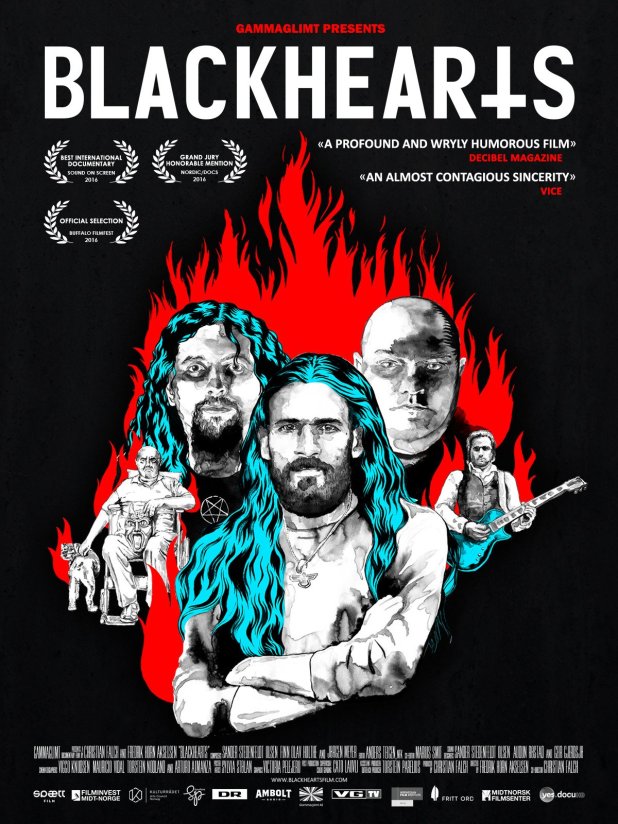
Hector draws pentagrams and is from Colombia. Sina is from Iran, where even liking black metal, not to mention being in a band, could get him jailed or worse. Kaiadas is a member of the Greek parliament as part of the Golden Dawn party, which has praised Nazis and takes a hard right stance (this is glossed over in the film). What draws them together is a metal festival in Norway and their love of where black metal was twenty years ago.
While the movie begins with a really interesting scene of a guy explaining to kids what blackpackers are — black metal fans who come to see places they’ve only listened to or read about — the rest of the film is pretty basic, sad to say.
The only scene that I really enjoyed was when the mayor of the town introduced the festival in the most friendly and least metal way possible. Decades ago, churches burned and people lived in fear, but today, black metal is commodified tourism, loved by the manchildren in this film. Only Sina comes off as someone who uses metal as an escape from a truly horrifying life.
Penelope Spheeris may be best known for Wayne’s World, but her life and films are more than just one movie.
Until the age of seven, Spheeris grew up in a traveling carnival until her father was stabbed after intervening in a racial dispute. After his death, she grew up in California trailer parks with a succession of stepfathers, yet still graduated high school voted “most likely to succeed.”
Working at Denny’s and IHOP in Los Angeles — one wonders if she even encountered David Lynch — she put herself through UCLA and started her career producing short films with Albert Brooks, several of which aired during the first few seasons of Saturday Night Live.
Between Dudes, Suburbia and two of the Decline films, Spheeris has shown her understanding of punk even as she lays bare some of the sillier moments of the kids caught up in its wake. The decline of Western civilization could mean many things here. It could be a reference to Lester Bangs’ review of The Stooges’ Fun House, where a friend remarked that this album had to be the signal of the end of it all. Or it could be a reference to Germs singer Darby Crash Darby reading Oswald Spengler’s Der Untergang des Abendlandes (The Decline of the West).
The bands within this movie — as well as the punk rock fans — gave Spheeris some amazing access to their lives, warts and all. While some bands like Alice Bag Band and Catholic Discipline may not be well known, X, the aforementioned Germs, Fear, the Circle Jerks and Black Flag should be recognized by anyone, not just punk fans.
After the film was screened in Los Angeles, punk music fans got into so many fights and caused so much chaos that L.A. Police Chief Daryl Gates wrote the filmmakers a letter asking them not to screen the film again.
This series of movies was only available in bootleg form for years. This was because of licensing issues for all the songs and Spheeris not wanting to go back and relive them. She didn’t need the money, but then she decide dthat she’d rather be remembered for these films than her more commerical work.
You can watch this on Amazon Prime and Tubi. There’s also the official site which has press clippings and more info on the films.
While this German rock flick is best remembered for featuring MTV video favorite Nena in her acting debut, the film takes its title from a hit song by her co-star Markus Mörl, which translates as “Step on the Gas – I Want Fun.”
The film was crafted as a multimedia showcase to launch the music careers of both singers in their native Germany. But after Nena’s “99 Luft Balloons” (which isn’t featured in the film) became a freak international hit (in both of its German and English versions) courtesy of its video, the film was quickly dubbed into English and retitled as Hangin’ Out — a title which also carried over into its Spanish and Japanese dubs.
The film, which featured six tunes from Nena’s eponymous band, became the 13th most successful film in Germany that year. However, to hear Nena — who has long since derided the film — tell it, the film had an opposite effect on her career: instead of the film launching her career, it was the MTV success of her career that made the film successful.
And while Nena, along with fellow Germans Falco (“Der Kommissar“) and Trio (“Da Da Da” and “Boom Boom“) where able to find international success beyond the Euroasia continent, Marcus failed to expand his career beyond Germany’s borders. He did, however, score a Top Five hit with “Kleine Taschenlampe brenn,” (“Small Flashlight Burning”), which is featured in the film and consider a German pop music classic. The film also features another one of his chart hits, “Feuerwehrmann,” which you can listen to in this clip from the film.
So, what’s the film about? It’s a simple love story.
Tina (Nena) is tired of school and life in her Barvarian village and won’t give fellow student Robby (Markus Mörl) the time of day. Instead she falls for Tino (Enny Gerber, in his only film role), a red silk jacket wearing, motor scooter riding ne’er do well who works at the local carnival. When Tino leaves town and breaks Tina’s heart, she convinces Robby to hit the road and track down Tino — which leads Tina and Robby to eventually fall in love.
While there’s several clips from the film available on You Tube (some blocked from U.S. playback), we found this English language vignette on You Tube — as you can see, the film awkwardly transitions from English language dialog to German language vocals (and here’s several trailers and clips to sample). There’s no online rips or VHS copies available online of the English language dub released under the Hangin’ Out title, but we located a copy of the German language version of the film on Russia’s version of You Tube, OK.ru.
Nena’s only acted in front of the camera two more times: the German films Tagediebe (Day Thieves; 1985) and Der Usichtbare (The Invisible; 1987). Curiosity seekers of all things Nena can watch Der Usichtbare and this promotional video of the song “Memorija” from Tagediebe, courtesy of You Tube.
About the Author: You can learn more about the writings of R.D Francis on Facebook.He also writes forB&S About Movies.
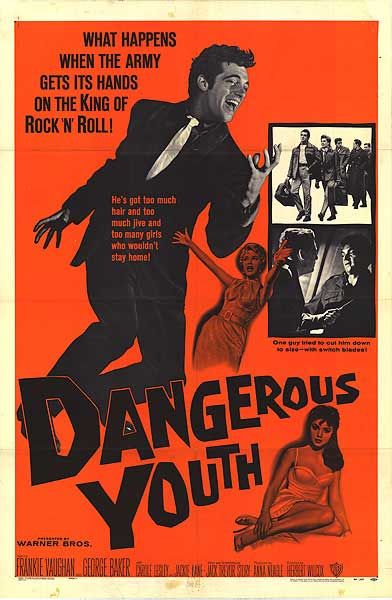
A British rock and roll movie? Sure, why not. Tough gang leader and wannabee rock star Dave Wyman (“Mr. Moonlight” Frankie Vaughan) escapes the Liverpool slums — five years before The Beatles would release “Love Me Do” — for military service. Somehow, someway, it turns out that the army life is the life for him. But we wouldn’t have a movie if things didn’t take a turn.
The camp bully kills Dave’s best friend, which means that according to the law of the street, Dave needs to take revenge. He’s also in love with his singing partner, which complicates his need for vengeance.
Look for Hammer star Michael Ripper, as well as David McCallum in his first role. But yeah, for a week of movies all about music, this barely qualifies. You have my apologies.
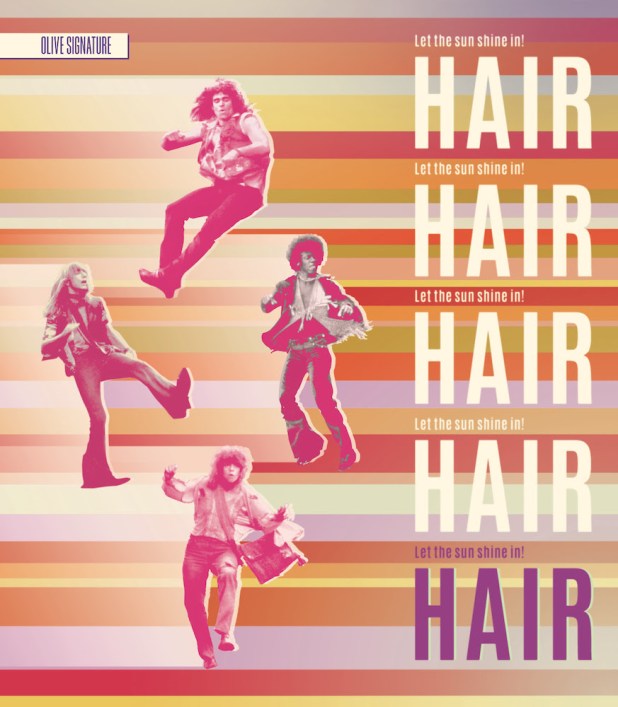
Made nearly a decade after this play took Broadway by storm in 1967, Milos Forman created his own vision of the stage play, working alongside Michael Weller (they would also collaborate on Ragtime). The changes they made are minor — Claude is a Vietnam War draftee instead of a hippy and Sheila is a high society girl — and major — the focus on the film is the peace movement instead of just the hippy antics and the ending is completely different. Many of the songs from the stage version were omitted as well.
Gerome Ragni and James Rado, who wrote the original play along with composer Galt MacDermot, would go on to say, “Any resemblance between the 1979 film and the original Biltmore version, other than some of the songs, the names of the characters, and a common title, eludes us.”
Hair focuses on Claude Hooper Bukowski (John Savage, The Deer Hunter) and George Berger (Treat Williams, Night of the Sharks) as they deal with the country attempting to handle the Vietnam War, as well as the people in their orbit. There’s Sheila Franklin (Beverly D’Angelo, The Sentinel), Jeannie Ryan (Annie Golden, who was in the 1977 revival of this show), LaFayette “Hud” Johnson (Dorsey Wright, The Warriors), Woof Daschund (Don Dacus, who has been in Chicago and Badfinger), Hud’s fiancee (Cheryl Barnes, who sang backup for Leonard Cohen along with Laura Brannigan), Sergeant Fenton (Richard Bright, Cut and Run), as well as roles for Ellen Foley (who sang “Paradise by the Dashboard Light” with Meat Loaf), Miles Chapin (Richie from The Funhouse), Broadway star Laurie Beechman, Nicholas Ray (yes, the director of Rebel Without a Cause), Michael Jeter from TV’s Evening Shade, Renn Woods (who sings one of the play’s best-known songs, “Aquarius,” she’s also in The Jerk) and an uncredited David Rose as The Acid King. Rose wrote one of the most famous songs of all time — “The Stripper.” Oh yeah! And the Vietnamese girl singing on “Walking In Space” is an uncredited Betty Buckley, Miss Collins from Carrie.
NBC must have been watching this movie, because eventually Nell Carter and Charlotte Rae would be starring in sitcoms on their network, yet they only get cameos in this film.
Olive Films has given this movie a new HD restoration, as well as plenty of extras, such as audio commentary by assistant director Michael Hausman and actor Treat Williams, featurettes with the surviving actors and interviews with choreographer Twyla Tharp, editors Lynzee Klingman and Stanley Warnow, and production designer Stuart Wurtzel. There’s also “Artist, Teacher, Mentor: Remembering Milos Forman,” a remembrance with director James Mangold (Walk the Line) and an essay by critic Sheila O’Malley.
I expected this film to be incredibly dated, yet at the end, as a huge throng of people ran toward the White House singing “Let the Sun Shine In,” I was overcome with emotion. We’ve been protesting for more than half a century and while forward progress has happened, it sure doesn’t feel like it today. Forman’s film remains vital if it can impact me so.
You can order this blu ray from Olive Films, who were kind enough to send a copy our way.
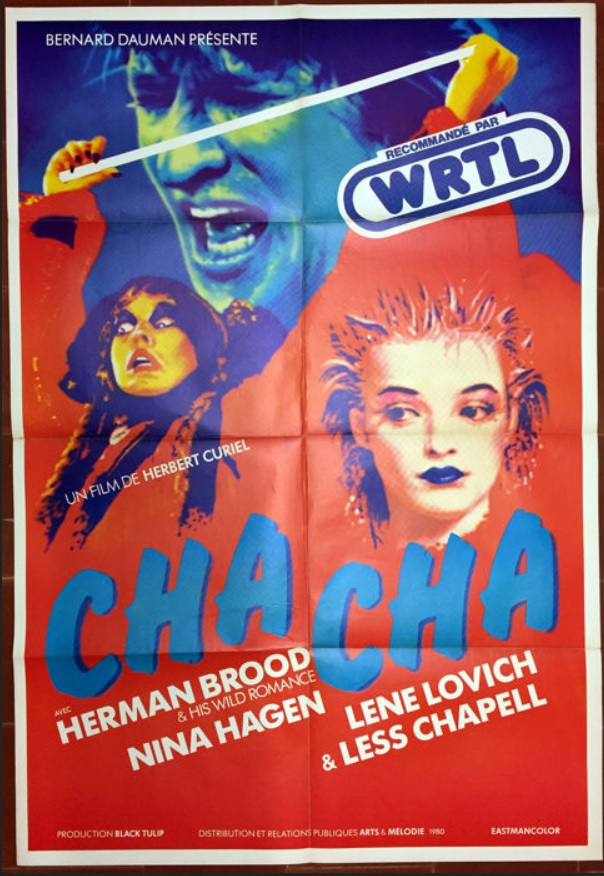
Cha Cha served as a multi-media film and soundtrack collaboration by the then romantically-linked couple of Dutch rocker Herman Brood (1979 U.K./U.S. Top 40 new wave hit with “Saturday Night” by his band Wild Romance) and East German musician-actress Nina Hagen (1982 new wave hit with “Smack Jack”), along with Detroit, Michigan-born and London-transplanted Lene Lovich (1979 U.K./U.S. new wave hits “Lucky Number” and “New Toy”).
Since each were at the top of their Euro-chart popularity, it lent to their ability to get their — what isn’t so much a fluid, narrative work, but an art film comprised of a series of vignettes strung together by a series of musical performances — passion project made. Think of 1975’s The Rocky Horror Picture Show crossed with the Richard Hell-starring Blank Generation from 1980 by Ulli Lommell (BrainWaves with Keir Dullea, The Boogey Man with Suzanna Love), and you have an idea of what you’re getting into.
Courtesy of catawiki.es (Spain)
Yes. The words “art film” should give you pause; this one is purely for the uber fans of the musician-stars of the film. You’ll also need additional patience as the film’s dialog bounces between English to Dutch to German; and its amateur student film vibe doesn’t help matters. The “plot,” such as it is, set against Amsterdam’s punk/new wave scene, is part documentary (voiceovers and interviews, natch) and part narrative film — with the cast starring as themselves; Brood is “the star” of the film: a bank robber who wants to “go straight” and believes the path to righteousness lies in his becoming a rock ‘n’ roll star.
Also featured in the film are the notable Dutch new wave bands Phoney & the Hardcore (“Suicide“), the Meteors (“Teenage Heart“), and White Honey (“Nothing Going On In the City“). (While not commercial radio hits on par with Brood’s, Hagen’s, and Lovich’s works, they were popular spinners on U.S. college radio stations and new wave clubs at the time.)
In the end, if you want to revisit the ’80s new wave era — or visit it for the very first time — Cha Cha serves as a fun time capsule of the lost MTV video era.
You can enjoy a pretty clean rip of the full movie on You Tube (it’s been there for 8 years, so it safe to say it’s not going away anytime soon). You can also listen to the full soundtrack on You Tube as well; you can access a detailed track listing at Discogs. You can learn more about Herman Brood in the 1994 Dutch rock documentary Rock ‘n’ Roll Junkie (you can watch the 15 minute television promotional video and 90-minute feature length theatrical on You Tube) and Nina Hagen in the 1994 English document (very arty and avant-garde, natch) Nina Hagen = Punk + Glory on You Tube.
About the Author: You can learn more about the writings of R.D Francis on Facebook. He also writes for B&S About Movies.
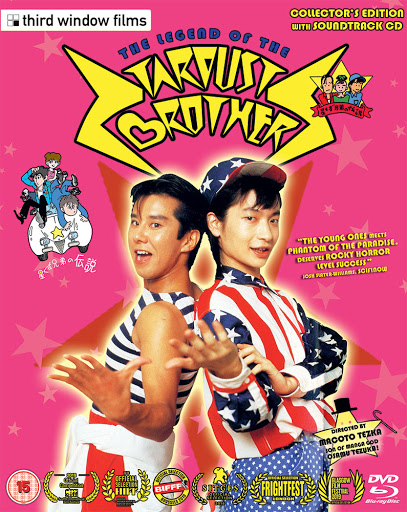
1985. Japan. Macoto Tezka (son of “The God of Manga” Osamu Tezuka) meets musician Haruo Chicada, who has already made a soundtrack to a movie that does not exist. Inspired by The Rocky Horror Picture Show and Phantom of the Paradise, along with the chance to work with some of Japan’s hottest bands, Tezka and Chicada would join up with a creative team that also included Lupin the 3rd creator Monkey Punch and directors Kiyoshi Kurosawa and Daihachi Yoshida.
They harnessed lighting and put it in a bottle that was lost at sea, as nobody really spoke of this movie for around thirty years, both in Japan and here in America.
We were missing out.
Punk rock rebel Kan and new-wave crooner Shingo are already broken up when we met them, former members of The Stardust Brothers, the greatest band of all time. What came between them? A girl? Their manager? Or are they making their lyrics the sad truth to their real lives? “Once you reach No. 1, you just go down.”
Look, any movie that has a cameo by UWF founder Akira Maeda and is dedicated to the memory of Winslow Leach is going to be a film that I’m going to proclaim to the heavens.
As is often the case with the movies that I love, the press savaged this movie. Tezka told Japan Times, “People are watching it with fresh eyes now, and I’ve had lots of positive comments. But I wonder about how I could have taken those ideas further, and all the films I might have made, if people had responded like that at the time.”
This is a movie in love with film, with music, with being young and being incredibly strange. Idol culture is fascinating and never more so when it is shown in this movie, which I urge you — yes, you reading this! — to watch right now. After all, this is “a movie that has traveled light years to find you.”
There was a 2016 sequel to this — Hoshikuzu Kyôdai no Aratana Densetsu — that I have to now track down. As for this film, it’s available to buy on Vimeo.







 B&S About Movies
You must be logged in to post a comment.