The Invisible Mother (2020)

“It’s not going to work, you know. We’re almost dead.”
— Grandma Mona

When Marcy (Fayelyn Bilodeau) loses her job as a flautist with the Chicago Philharmonic, her girlfriend, and apartment in one fell swoop, she does what most of us have done in the midst of our twenty-something failures: we return to our childhood home.

In Marcy’s case, she’s not only lying low to figure out her next move, but to help her grandfather Archie (Richard Riehle) take care of Mona (Helen Slayton-Hughes), her dementia-suffering grandmother. When Marcy begins to experience the same visions and voices as her grandmother, she realizes a spirit attached to a box of antique tchotchkes has invaded the suburban clapboard home. Helping Marcy in the supernatural battle is Coco, the neighborhood’s Barbie Doll-cum-Tangina Barrons-wannabe (Kiersten Warren), a mysterious phone psychic, and an ice cream truck-based weed dealer with a penchant for the supernatural and horror films.

Now, while that synopsis sounds conventional—like Blumhouse “shock scares” conventional—there’s nothing in the recent haunted house, possession, and supernatural forces-at-play CGI universes of the Paranormal Activity, Insidious, or The Conjuring franchises (or American J-Horror reboots) that will prepare you for phantasmagoric feast that is The Invisible Mother. For you are entering the The Twilight Zone on acid: A world where M.C Escher and Salvador Dali are your overlords: a surrealistic world where you run up a set of ouroboros stairs from a melting world to nowhere. This is a film where you will experience the same excitement the first time you watched the out-of-left field insanity of Don Coscarelli’s Phantasm and Sam Raimi’s The Evil Dead. It will become the new “classic” that horror aficionados will slide onto their shelf next to those films for perpetual, over-the-years viewings. It’s a film, like David Robert Mitchell’s amazing Under the Silver Lake that, after your first viewing, you immediately hit the start button to suck on mother’s teat a second time to drink in all the details you missed the first time. Toss the recent pseudo-yellow oozers of Omar Jacobo’s Blood Freaks and David Fowler’s Welcome to the Circle on that list.

“That’s not Taffy . . . that’s something else.”
— Grandma Mona

Those who’ve had an opportunity to see The Invisible Mother on the festival circuit call it a “modern day giallo.” And there’s certainly a giallo influence in the swirling cameras, odd cinematography angles, and vibrant color schemes of the Maestros Mario Bava and Dario Argento—along with Paul Naschy’s penchant for out-of-left-field Spanish red herrings and plot twists, and Spain’s giallo purveyors Claudio Guerin’s and Bigas Luna’s corkscrews for the bizarre.

But there’s also a taste of giallo’s black-and-white noir roots: Is Glorianna (Debra Wilson) a faux-witch with an agenda? Is Coco giving the ol’ Henry James turn-of-the-screw on the old folks? Is Archie gaslighting Mona and did he call Marcy home to twist her into his plan? Are Archie and Coco in consort? Do Glorianna and Coco need Marcy for a sinister, Argentoesque purpose? Is the house on a hellish portal and Marcy is the key? Is Mona really suffering from Alzheimer’s? Is Wyatt’s (Kale Clauson) weed, in fact, laced and causing Marcy’s oneiric state? What is going on in this Dashiell Hammett and James M. Cain-inspired world where even Sigmund Freud would question his own sanity?

But then there are the elements of David Lynch’s taste for the oneiric experimental (The Elephant Man, Lost Highway), Andy Warhol’s palate for the perverse avant-garde (Flesh for Frankenstein), the celluloid hyperbole of John Waters (Pink Flamingos, Polyester), and Todd Solondz’s oeuvre of offbeat plots and kinked characters (Happiness and Welcome to the Dollhouse).

And while the VHS centers of my celluloid cortex loaded up copies of the bloody, Neapolitan delights of Dario Argento, Mario Bava, Paolo Cavara, Ruggero Deodato, Riccardo Freda, Lucio Fulci, Umberto Lenzi, and Sergio Martino, I also got my analog buzz on with the J-Horror static of Takashi Miike (Gozu, Visitor Q), Takashi Shimizu (Ju-On, Reincarnation), and Lee Soo-yeon (Uninvited). And while impressionist Alejandro Jodoroswky (El Topo, Holy Mountain, and Santa Sangre) is justifiably named dropped when reviewing The Invisible Mother, I shall trek one step deeper into the underworld: I got some serious supernatural phantasmagoria vibes of the José Mojica Marins variety with his Coffin Joe romps At Midnight I’ll Take Your Soul and This Night I’ll Possess Your Corpse.

“For years you were like a snail. Happy, hiding. Happy, hiding.”
—Wyatt, the Ice Cream Man

And even after all of that critically rambling, I still haven’t spoiled The Invisible Mother; for this feature film debut by co-writers and directors Matthew Diebler and Jacob Gillman may be difficult to explain, but it’s impossible to spoil. And while I may have led you to believe this film is incoherent, these two neo-giallo enthusiasts, who cut their teeth in the reality television (Matthew Diebler; Catfish, Ice Love Coco) and special effects fields (Jacob Gillman; Sucker Punch), weave a cohesive narrative.

And that’s the intrinsic beauty of The Invisible Mother. It defies convention. It’s an ambiguity open to your interpretation. It’s a film noir riddle falling down an out-of-control Alice in Wonderland “rabbit hole” puzzle wrapped in an Italian murder enigma. Diebler and Gillman crawled inside our bodies to wear us like a Jame Gumb skin suit: they made a film for us, the cinematically nostalgic orphans enamored with ‘70s films reissued on the ‘80s VHS video fringe.

The Invisible Mother is a giallo—yet it’s bloodless. It’s Argentoesque—without the blunt force trauma. It’s fear and dread—with a soupçon of Naschy’s taste for the humorous dark. It’s a psychedelic whirling dervish of primary colors; a realm rife with intricately detailed sets, practical in-camera effects, and stop-motion and reverse photography (by co-writer/co-director Gillman). It’s a film that never shocks or startles. It’s a film where your eyes blaze wide-open at an endless series of unsettling “WTF” moments set to a pseudo-progressive jazz soundtrack (like a Dario Argento film co-scored by Bauhaus and The Normal) that induces nausea. It’s a film rife with all these little moments (of copper fishes, kitschy salt n’ pepper shakers, licorice cookies, pin cushions, 1940s Royal Victorian phones, 1970s oil lamps, and 1980s VHS-era video art from the beyond). It’s a masterpiece of “giallo impressionism” that I want to expose in-a-catch-all-schizophrenic-run-on-sentence-of-hysterical-amazement.

In case you haven’t figured it out: I bow at this movie’s yellow-soaked altar.

The most heartwarming highlight of The Invisible Mother is seeing the long-in-the-business “I don’t know their names, but I know their faces” of Richard Riehle (I just saw him on a re-run of TV’s Roseanne) and Helen Slayton-Hughes (who I just watched in a binge of HBO’s True Blood) given the opportunity to carry a feature film—and both are award-winning fantastic. Reihle’s 400-plus resume since the late ‘80s features his work on Fox-TV’s Grounded for Life and CBS-TV’s NCIS, along with the films Bridesmaids, Bruce Bigalow: Male Gigolo, Casino, and Office Space. Slayton-Hughes was Ethel Beavers on NBC-TV’s Parks and Recreation and appeared in the Metallica romp, Hesher.

You know Fayelyn Bilodeau from her recent appearances on Showtime’s hit series Shameless and TV Land’s American Woman. You’ve seen Keirsten Warren in a wide variety of film and TV appearances since the early ‘90s, such as her feature film debut in Independence Day (Tiffany the Stripper who greeted the aliens on the building roof that got zapped), and her recurring roles in Desperate Housewives and Saved by the Bell: The College Years. And it’s nice to see animated voice artist Debra Wilson, a cast member of my beloved FOX-TV’s Mad TV and Reno 911!, on the big screen. Kale Clauson most recently appeared on TV’s S.W.A.T and Good Girls.

“I am not sure what you’re trying to convey. I simply sell frozen confections. Perhaps I can interest you in some Necco Wafers?”
—Wyatt, the Ice Cream Man

We’re also digging on “Dracula,” the film’s theme song by Geneva Jacuzzi and Bubonic Plague. You can learn more about Geneva’s music at her official website. Then there’s the ambient music of Matt Hill & Umberto serving as the soundtrack. You can listen to all four albums by Umberto on their You Tube page. The embedded playlist, below, will get you to those songs, and more, from The Invisible Mother.

Recently completing a successful, multi-award winning film festival run, Freestyle Digital Media acquired the North American VOD rights. You’ll be able to rent and own copies of The Invisible Mother on digital HD internet, cable, and satellite platforms starting on October 12, 2021. Other films we’ve reviewed through Freestyle Digital Media include The Capture, The Control, Dead Air, Goodbye Honey, Hawk & Rev: Vampire Slayers, and Shedding.

You can stay up-to-date with the latest developments on Instagram, Facebook, and The Invisible Mother.com.

Disclaimer: We discovered this movie via social media, were intrigued by the trailer, and reached out to the filmmakers to provide us with a screener copy.

About the Author: You can read the music and film reviews of R.D Francis on Medium and learn more about his work on Facebook. He also writes for B&S About Movies.
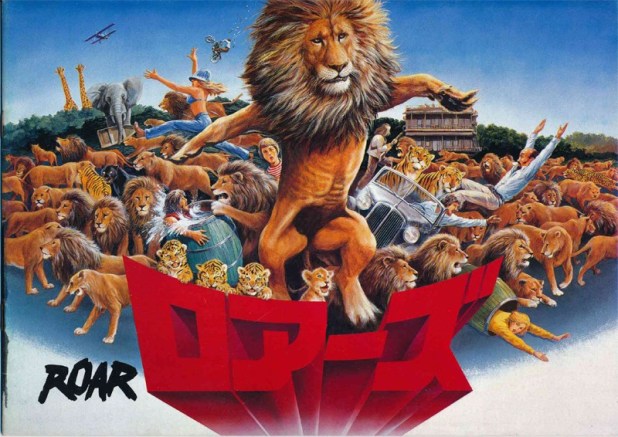
Roar (1981)

Shudder just did a series about Cursed Films and while they covered The Exorcist, they completed neglected this off-shoot, which may be the most dangerous, most cursed movie ever.

Noel Marshall was William Peter Blatty’s agent and the executive producer of that film before he decided to make this movie. Perhaps the problem is what we often discuss: the auteur complex.

Marshall wrote, co-produced, and starred in this movie alongside his then-wife, The Birds star Tippi Hedren, his stepdaughter Melanie Griffith and his sons Jerry and John.

During the filming of Mr. Kingstreet’s War, Marshall and Hedren got the idea to make this film about the plight of big cats called Lions, Lions and More Lions.

They approached animal trainers for support on the training of numerous big cats, and were told the idea was impossible. Each cat would need at least two trainers on set at all time. They dismissed these experts, as we’ll soon learn more about.

Hedren originally wanted actor Jack Nicholson to play the lead role, but Marshall decided to play that part.

The six months of production stretched into three years of shooting and eleven total years of production. The lions would live in Marshall’s homes and would eventually reach more than 130 lions, tigers, leopards, jaguars and cougars.

I referred to this film being cursed earlier. Instead of theory and conjecture, ala that Shudder show, let me give you facts: seventy people were injured during the making of this movie. Marhsall’s wounds got so bad that he got gangrene and nearly died, taking an entire year to recover.  There was also a near Biblical series of calamities, including a flood, a fire, a feline plague, destroyed equipment, Hedren breaking her leg after falling off an elephant, John nearly being smothered by a lion and needing more than fifty stitches to his head and Melanie being attacked by a lion and needing facial reconstruction.

Two years in, most of the investors had left. Marshall would sell four houses to pay for the film, rebuild the sets and rehire a crew. At the end, the movie would cost $17 million to independently make; $48 million in today’s money.

It would play theaters for a week and only bring in $2 million. Then, it went away for decades.

This is a movie that destroyed lives and a marriage.

A year after, Marshall and Hedren would split. His son John would tell Xfinity that, “Dad was crazy. He was absolutely bat [expletive] crazy. He was worse than the whole family put together. He was actually quite dangerous.”

Marshall was known for screaming at the cast and crew, ignoring safe words and working to get a shot more than take care of them.

Jan de Bont, who would go on to shoot CujoBasic Instinct and, yes, Leonard Part 6 before directing SpeedTwister and The Haunting, was the cinematographer on this film. He was scalped by a lion and needed more than two hundred stitches. Of the film, he said, “The technical problems were gigantic. When you shoot with five cameras simultaneously, each has to be ingeniously disguised so they don’t appear in the shots. This was my first Hollywood film. And I’ll never be the same again.”

Togar was one of the lead lions. He was adopted from Anton Lavey, the leader of the Church of Satan, who could no longer keep him in his small San Francisco apartment. He was perhaps the most dangerous of the lions, despite being raised in a domestic situation. He would attack assistant director Doron Kauper, which required four and a half hours of surgery to survive. Twenty of the crew walked out and would not come back.

Man, I know way too much trivia about this film. Like how Ted Cassidy — Lurch from The Addams Family — was a writer. That three of the animals had to be shot by sheriffs after they escaped during the flood. And that was one of the other lions was named Christian and he’d live with the aforementioned Togar, which means smoke.

As for the actual movie, I’d describe it as a cross between Born FreeThe Birds and Jackass. It is less a narrative film when you know the story behind the movie.

Want to see it for yourself? Visit the official site or get it from Olive FIlms.

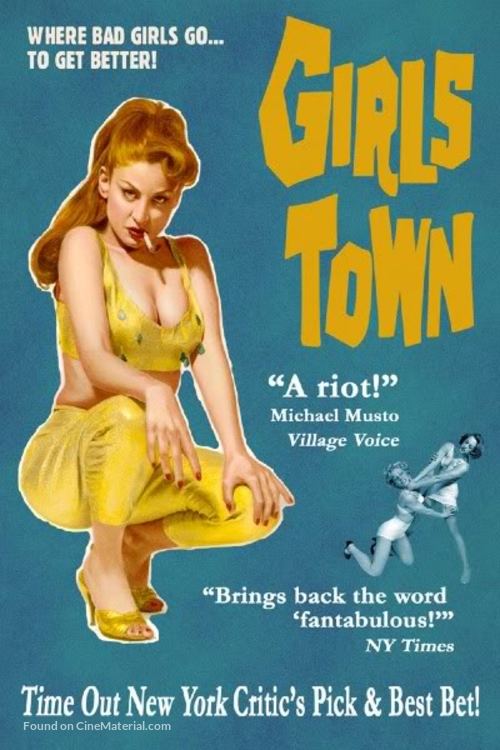
Girls Town (1959)

Mamie Van Doren was the bad girl of her era and this movie is one of the many reasons why. Despite being 27 at the time of filming, she plays 16-year-old Silver Morgan, who fends off an assault by knocking a man off a cliff. That is enough to send her to Girls Town, a place where bad girls turn to God thanks to some nuns.

Can Silver win over the tough women of Girls Town?

Will Serafina get to meet Paul Anka?

Will Silver’s sister Mary Lee (Elinor Donahue, Father Knows Best) escape the evil clutches of Fred (Mel Torme, the Velvet Fog!) and white slavery in Tijuana in time to reveal that it was really her that killed the man and not her sister?

Producer Albert Zugsmith was a master of exploitation, getting his start with movies like Invasion U.S.A.The Incredible Shrinking Man and Touch of Evil before finding his niche with movies like High School Confidential!Sex Kittens Go to College and the perfectly named Movie Star, American Style or; LSD, I Hate You. He also wrote, produced and directed noted comic strip bomb Dondi, which I really need to get to soon.

Director Charles F. Haas studied under T.S. Elliot at Harvard, which seems the perfect place to learn how to make movies like Summer Love with John Saxon, The Beat Generation with Van Doren and Platinum High School with Mickey Rooney.

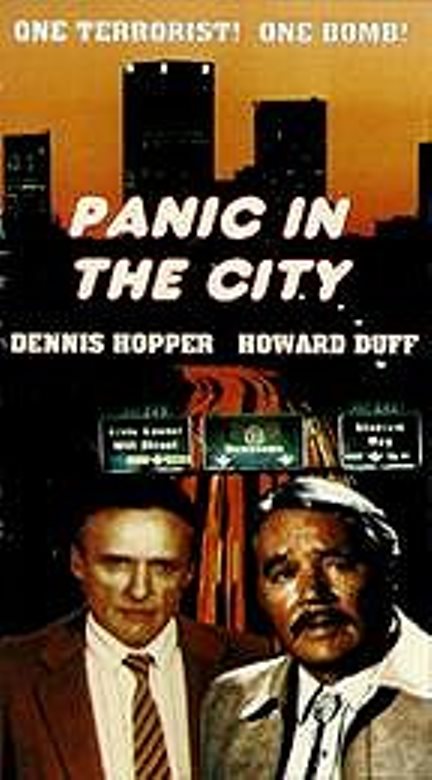
Panic in the City (1968)

Look at that junky VHS cover, pushing Dennis Hopper as the star of this film while he barely has a role in it. Oh Amazon Prime, you got me again.

This would be a better description: National Bureau of Investigation agents investigate the mysterious death of a nuclear scientist and soon learn that a group plans to set off a nuclear explosion in Los Angeles. Boredom ensues.

This was made by Eddie Davis, who eventually went to Australia and remade the noir movie D.O.A. as Color Me Dead.

Linda Cristal, who was in The Dead Don’t Die is the other reason that I watched this. Nehemiah Persoff, who is also in Psychic Killer, would go on to voice Papa Mousekewitz in the An American Tail movies. And hey! George Barrows is in this. Who is that? Why Ro-Man the Robot Monster!

You can watch the whole movie on Daily Motion:

I Hate Kids (2019)

No way are you going to click on this review. No way. So I’ll have to force your hand: this movie is connected to the cheesy ’80s heavy metal horror flick Rock ‘n’ Roll Nightmare. Now if that doesn’t make you want to read this film review . . . well, I’ll just have to hang up my laptop and open a Esty store and sell handcrafted bracelets and flower baskets, for I have failed as a writer.

Nick Pearson (Tom Everett Scott, That Thing You Do!, An American Werewolf in Paris, Boiler Room) is a snarky author of the New York Times best seller I Hate Kids—a book that denounces parenthood. Before he finalizes his marriage to Sydney (Rachel Boston, TV’s American Dreams, In Plain Sight), a dream girl who shares his “no kids” philosophy, guess who shows up? It’s boy, Nick! Meet Mason: the now teenaged son you never knew you had.

And how did Mason find him?

Well, a flamboyant radio psychic, The Amazing Fabular (yep, it’s Tituss Burgess, the Unstoppables Laundry Freshener pitchman who was in Dolemite Is My Name with Eddie Murphy), tipped off Mason. And, with that, the lothario, the geek, and the shrill psychic hit the road for a weekend road trip to visit all of Nick’s ex-girlfriends and discover which one is Mason’s mother. Helping along in this effective, Judd Aptow-ish bawdy comedy are the familiar TV faces of Rhea Seehorn from AMC’s hit series Better Call Saul and Julie Ann Emery, also of Better Call Saul, as well as Preacher.

And this is where the heavy metal horror cheese oozes in.

Frank Dietz, the star of the ’80s heavy metal horror flick trifecta of Rock ‘n’ Roll Nightmare, Zombie Nightmare, and Black Roses wrote this. Yep, after his well-liked but all too brief acting career, Dietz forged a career behind the camera as an animator (Jack Black’s Kung Fu Panda is one his many credits) and as a screenwriter.

This, his second feature film writing credit, Dietz made his screenwriting debut with 1996’s Naked Souls—starring Pamela Anderson and David Warner. Now wrap your head around that for a second: esteemed British actor David Warner—Chancellor Gorkon from Star Trek: The Undiscovered Country—in a film with Motley Crue’s Tommy Lee’s ex-wife. But Warner’s been in everything, From Beyond the Grave to Ice Cream Man to Planet of the Apes 2001, so anything is possible in the B&S About Movies universe of stars.

Director John Asher is an actor and director who’s also done everything as well, from directing a post-stoke Kirk Douglas (Saturn 3) in Diamonds (1999), comedy specials for comedians Margaret Cho and Frankie May, videos for the Canadian pop-punk band Sum 41, and acting in episodes of TV’s Blue Bloods, CSI: Crime Scene Investigations, NCIS, and The Rookie.

So what do you have to lose? Come on, now! Frank Dietz from Zombie Nightmare wrote this! That rocks me to my celluloid core. I’m all in.

I Hate Kids recently made its free 2020 streaming bow—with limited commercials—on TubiTv.

About the Author: You can read the music and film reviews of R.D Francis on Medium and learn more about his work on Facebook. He also writes for B&S About Movies.
Disclaimer: This movie wasn’t sent to us by its production company or PR department. We discovered it all on our own—courtesy of its Frank Dietz connection—and we genuinely enjoyed the film.

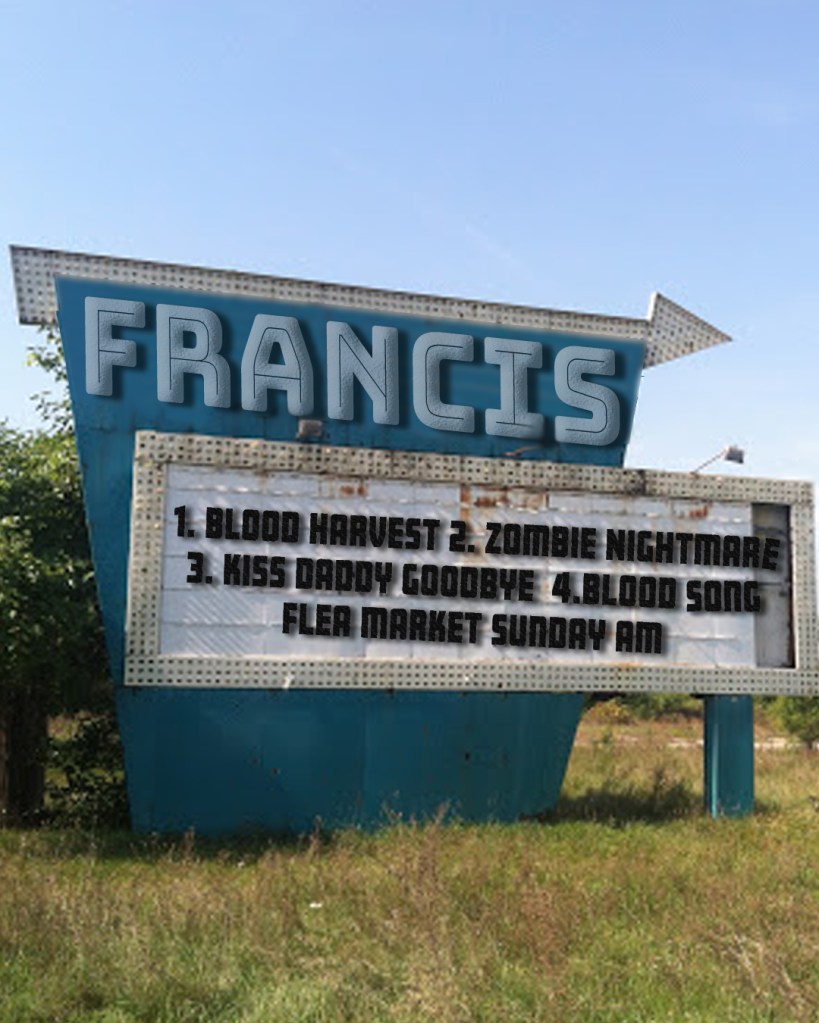
Drive-In Friday: Musician Slashers Night

We, the celluloid thoughtful folks at B&S About Movies, with our vast end-of-the-world apoc-movie knowledge (as seen in our Atomic Dustbin roundup) know this recent Coronavirus lockdown is a trying time for all of us movie lovers. So we’ve decided to open up the B&S About Movies Drive-In where, each Friday afternoon at 11 AM (the Grand Opening was on March 13 . . . Friday the 13th!) we’ll feature four movies to get you through the viral outbreak—but rot your brain cells on bad films in the process.

See you under tent, Sunday. I’m selling comics, old movie posters, and VHS tapes at the Flea Market. Okay, let me go bush-hog the lot.

This week, we’ll enjoy the acting horrors of ‘60s teen idols Fabian Forte and Frankie Avalon, ‘60s traditional music archivist Tiny Tim, and ‘80s Canadian god of thunder, Jon Mikl Thor—as they each eek out a living in the slasher ‘80s.

And as always: Make sure to drive with your parking lights on and clean up after yourself. And don’t forget to try our snack bar, which will remain open until the last feature starts.

Movie 1: Blood Harvest (1987)

God bless you, Bill Rebane (featured in Drive-In Asylum #17, which we reviewed), ye god of Drive-In fodder. You gave us The Alpha Incident, The Demons of Ludlow, and The Game. And you gave us Tiny Tim in his only acting role.

What’s it all about? A girl arrives home from college and runs afoul of a clown-suited Tiny Tim as the mentally-distributed clown “The Magnificent Mervo” killing by hook or by crook. You can watch Blood Harvest for free on TubiTV.

Movie 2: Zombie Nightmare (1987)

We reviewed Jon Mikl Thor in his big screen debut with Rock ‘n’ Roll Nightmare as part of our “No False Metal” movies week (well, actually, he made his debut with an in-joke support role in the Canadian Police Academy knockoff, 1986’s Recruits). And we also reviewed the thespin’ of Batman’s Adam West in One Dark Night and Omega Cop, so it’s inevitable, in the B&S About Movies universe, that they’d do a movie together.

So while you may have come for the Thor as the voodoo witch-revived zombie of these proceedings, you’ll end up staying for the metal of the film’s far superior soundtrack featuring Girlschool (“Future Flash” and “C’mon Let Go”), Motörhead (“Ace of Spades”), and Virgin Steele (“We Rule the Night”). Thor, of course, with his Thorkestra, composed the movie’s score. Someone recreated the soundtrack track-by-track on You Tube.

Oh, almost forgot! And who’s the dickhead punk who set this zombie revenge mess in motion? Friggin’ Shawn Levy, the producer behind 2016’s Arrival, which earned him an Academy Award nomination for Best Picture. He most recently produced the hit Netflix original series Stranger Things.

Shawn’s bitchy girlfriend: Tia Carrere—yes, Cassandra Wong, the smokin’ hot bassist-frontwoman of Crucial Taunt from Wayne’s World—in her film debut. And what’s Adam West do? He chops on a cigar from behind a desk and barks orders at Detective Frank Sorrell, aka Frank Dietz, from Rock ‘n’ Roll Nightmare, Black Roses, and The Jitters (those three films, along with Zombie Nightmare, were written by John Fasano). Oh, and did you know that Frank Dietz is a screenwriter these days? We just reviewed his latest film, the rom-com (rom-com?) I Hate Kids.

How is it that we have not given Zombie Nightmare a full review proper, Sam? Honestly, what we’ve said here is more than enough. Sorry, only the MST3K riffed-version is available. You can watch it for free on TubiTV.

But wait . . . there is more to be said about Zombie Nightmare! The Master Cylinder blog not only reviewed Zombie Nightmare proper, but also offers production insights from director-writer John Fasano and star Jon Mikl Thor.

Intermission!

Back to the Show!

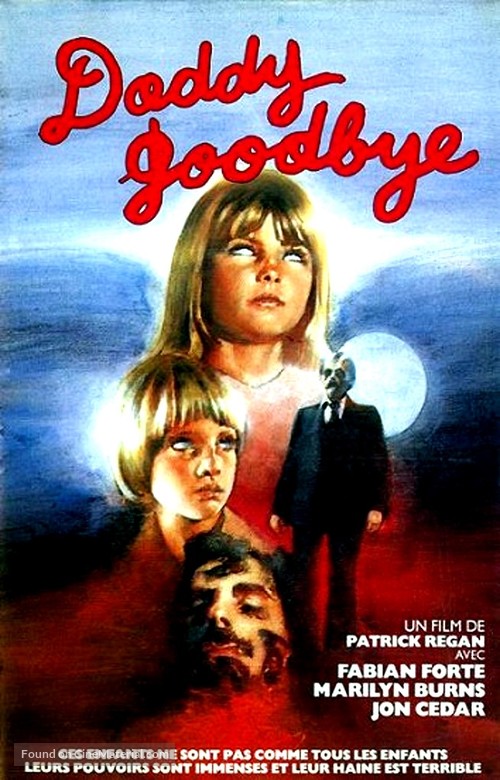
Movie 3: Kiss Daddy Goodbye (1981)

Did you know Fabian (Forte, of the moonshiner-becomes-a-stock car racer romp Fireball 500 and the Mario Bava Euro-spy comedy Dr. Goldfoot and the Girl Bombs*) made a movie with Marilyn Burns from The Texas Chainsaw Massacre?

Did you ever wonder what the ‘80s comedy Weekend At Bernie’s would be like if it was made as a horror film? Well, wonder no more. Two kids—check that, psychic kids—keep their murdered dad “alive” so that the authorities (Marilyn Chambers) don’t put them in an orphanage. Is Fabian the killer dad? Nope, he’s the sheriff on the case. You can watch a free VHS rip on You Tube.

Watch the trailer. Curse you, embed elves.

Movie 4: Blood Song (1982)

So you’re a noted television director and producer—responsible for everything from the ‘60s skit comedy show Rowan & Martin’s Laugh-In, the ‘70s series Columbo and The Six Million Dollar Man, and bought us Jan Michael Vincent in Airwolf—and now you’re facing the onslaught of the slasher ‘80s. What do you do?

Well, if you’re Alan J. Levi, you work those television contacts and hire the uber-hot Diane Alder from NBC-TV’s Hello, Larry, aka Donna Wilkes (1978’s Jaws 2, 1980’s Schizoid, 1988’s Grotesque) to play a crippled young woman stalked by a hatchet-wielding psychopath from whom she once received a blood transfusion. And, get this: Niels Rasmussen who, if we believe the IMDb, was not only the editor on Blood Song, but he also directed the American-recycled Asian slopfest, The Serpent Warriors (aka Calamity of Snakes).

And who’s the Peter Pan whistling his “Blood Song” on his flute and wants his blood back? Frankie Avalon! You can watch the full movie for free on You Tube. What? Frankie made a Euro-spy romp, too? Yep, he did: Dr. Goldfoot and the Bikini Machine*.

Anybody out there know a good Bush-hog repair man? Looks like I burnt another flux-capacitor and the warp-inversion coils need a good back flush. That grass is gettin’ pretty high.

* April was “James Bond Month,” were we reviewed all manner of ’60s and ’70s spy flicks—including Eurospy films.

About the Author: You can read the music and film reviews of R.D Francis on Medium and learn more about his work on Facebook.

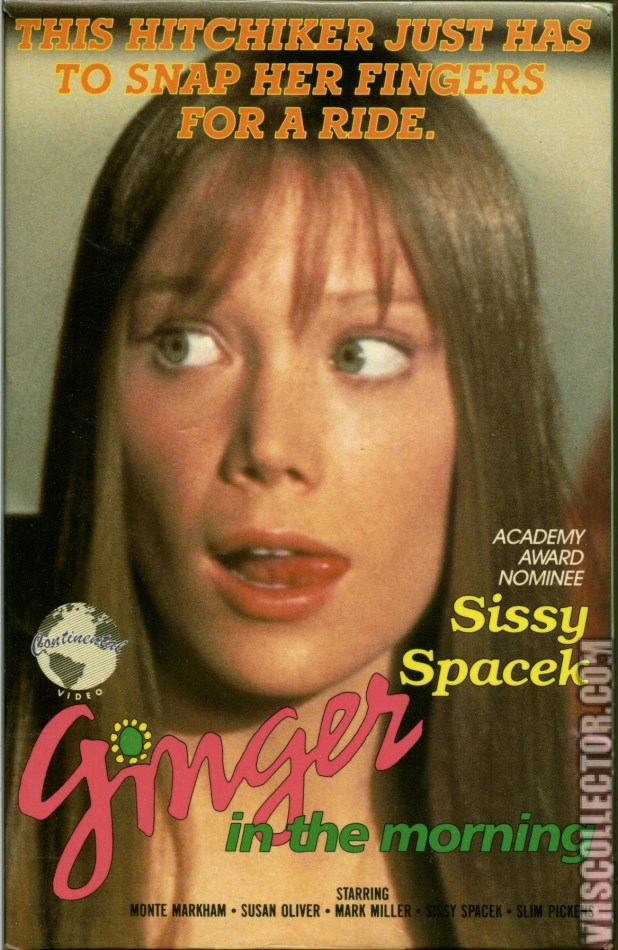
Ginger In the Morning (1974)

Oh man, that early 70’s generation gap.

Ginger (Sissy Spacek in her first starring role) is an attractive young hitchhiker who shacks up with a lonely, middle-aged ad guy (Monte Markham, We Are Still Here) who just got divorced.

Can he learn from her free spirit? Will she break him out of his shell? Will his friends act like jerks? Yes. Yes. Yes.

Mark Miller from Please Don’t Eat the Daisies, David Doyle (Bosley from Charlie’s Angels) and Fred Ward — yes, Remo Williams — are all in this.

This is an early version of the manic pixie dream girl trope (there’s a great article-slideshow about 14, present-day, “manic pixie dream girl” movies at Refinery 29; and wouldn’t you know it: Wikipedia has a page dedicated to the, what they describe as a “trope” genre, as well). So watch Ginger in the Morning and think about 1974, a time when AIDS was a myth and the only pandemic we were worried about were killer bees.

You can watch this on Amazon Prime and YouTube.

So you’ve got a free movie — and you learned about the Manic Pixie Dream Girl (MPDG) stock character-trope in film. Hey, we do what we can to expand the film horizons at B&S.

Accommodations released May 5

Accommodations is available to stream on VOD on May 5, 2020.

Distributed by Distribution Solutions / Alliance Entertainment and GVN Distribution, it will be available to stream on Amazon, Fandango Now, GooglePlay, iTunes and MovieSpree, plus cable platforms Charter, Cox, Comcast, Spectrum, and Shaw (Canada).

A Manhattan wife and mother, with an enviably luxurious lifestyle, disrupts her family’s status quo when she decides to quit “accommodating” those around her and embarks on a self-styled creative journey to find fulfillment.

Written and directed by Amy Miller Gross (The Pleasure of Your Presence), Accommodations stars Kat Foster (Bad Teacher) and Patrick Heusinger (Jack Reacher: Never Go Back) and Deborah Rush (Orange is the New Black).

Thanks to Distribution Solutions / Alliance Entertainment and GVN Distribution for giving us advanced info on this movie. Look for a review soon!