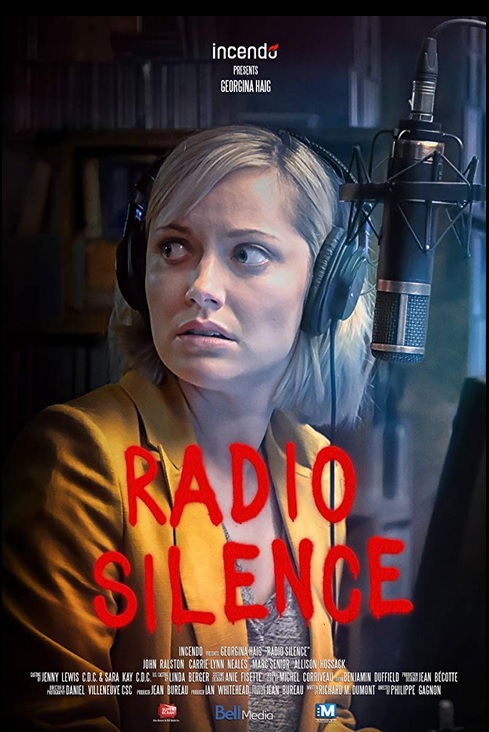
A female radio psychologist taunted by a killer is familiar damsel-in-distress fodder for the Lifetime cable network, which also aired the similarly-plotted The Night Caller (1998), Requiem for Murder (1999), and A Lover’s Revenge (2005).
Dr. Jill Peterman (Canadian actress Georgina Haig, who’s very good), a Minneapolis, Minnesota (aka Toronto), “relationship therapist” who advocates a tough-love approach when counseling her listeners, walks away from the business when a listener, “Alexis,” takes her advice of “end this pathetic life” of allowing a man to cheat on her, literally—and she commits suicide on the air.
A year later, with WRMD 96.5 FM at the bottom of the ratings and ready to change to an automated dance format, her old General Manager persuades her to return to the air—with the guilt trip that she’ll be “saving everyone’s jobs.” As she settles back into her show, the mysterious calls from “Alexis” begin. Then her billboards around the city are vandalized with the words “How Do You Sleep?”—a message that’s repeated on the greeting cards enclosed with the deliveries of black roses.
Let slip the red herrings of noir.
Did Alexis actually kill herself? Is she the one leaving threats? Or is someone else behind them? The police never found a woman who committed suicide matching that name and they believe it was a prank—even a rating-grabbing station stunt that backfired. Could it be the win-at-all-costs station owner, her producer, or her promotion-driven production assistant? Is it the barista at the local coffee house who is Dr. Jill’s #1 fan? Is any of this real and is it all in Jill’s head?
The radio studio is a poorly done build that’s darkly lit to hide the “studios” shortcomings of its ubiquitous equipment-strewn business desks and—not another recording studio mixer being used as an audio board. Ugh. But at least there’s some digital touch screen audio equipment used. And the expositional industry jargon between the station owner and general manager about terrestrial radio competing with podcasting, ratings and format changes give the proceedings a sense of reality.
You can watch this Canadian TV movie—reimaged with the sensationalistic When Murder Calls for its U.S debut—for free on You Tube and You Tube.
About the Author: You can read the music and film reviews of R.D Francis on Medium and learn more about his work on Facebook. He also writes for B&S Movies.
The question is not how far one will go to take a life, but how far one will go to save a life in this German-produced slasher-noir where Andrew Kevin Walker’s Seven (1995) and 8MM (1999) meets Eric Bogosian’s Talk Radio (1988) and Allan Moyle’s Pump Up the Volume (1990).
The “Roc Doc,” an acidic and opinionated amateur psychologist, operates the basement-bound Radio Nighthawk as he spins ‘60s American soul records and expounds on the news of the day—and he makes the mistake mocking the police for failing to prevent the gruesome murders of the media-dubbed The Night Slitter.
“How difficult can it be to prevent The Night Slitter from breaking down his next victim into individual parts?” Roc Doc ponders.
“Why don’t you put your money where your mouth is,” calls-in The Night Slitter. “After all, everyone has a body buried in the basement. The ego is not master in its own house, Roc Doc.”
And so begins the cat and mouse game with the Roc Doc forced to stay on the air—and admit to his own inner monster and skeletons—if he wants to save the life of The Night Slitter’s current victim: he’s audibly torturing the daughter of the grizzled police inspector on his trail.
Beginning as a Euro-festival acclaimed 20 minute short released in 2010, this 95-minute feature length version—alternately known as Der Tod hört mit (Death Listens) and On Air in other quarters—borrows its inspiration from the New French Extremity film movement spearheaded by Alexandre Aja’s worldwide hit High Tension (2003).
It made its U.S debut under the title Radio Silence via the festival circuit, where it won multiple Best Film and Best Director awards at the Screamfest Horror Film Festival in Los Angeles, the Sacramento Horror Film Fest, the Atlanta Horror Film Festival, and the Rhode Island Int’l Film Festival.
You can watch the full film—with English subtitles—on TubiTv. You can catch up on the cycle of French Horror Films with this great roundup on Scoopwoop.
About the Author:You can read the music and film reviews of R.D Francis on Medium and B&S Movies, and learn more about his work on Facebook.
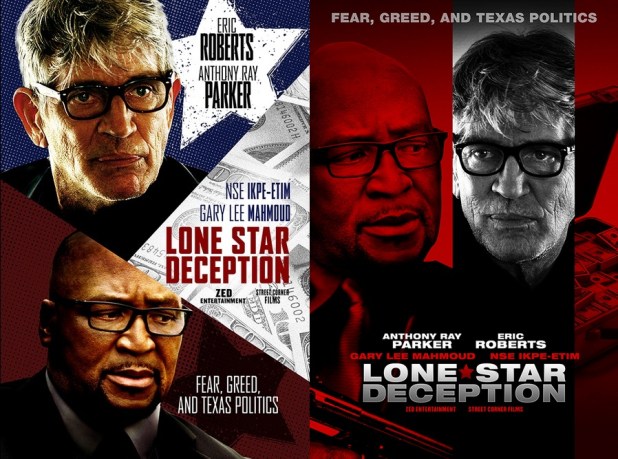
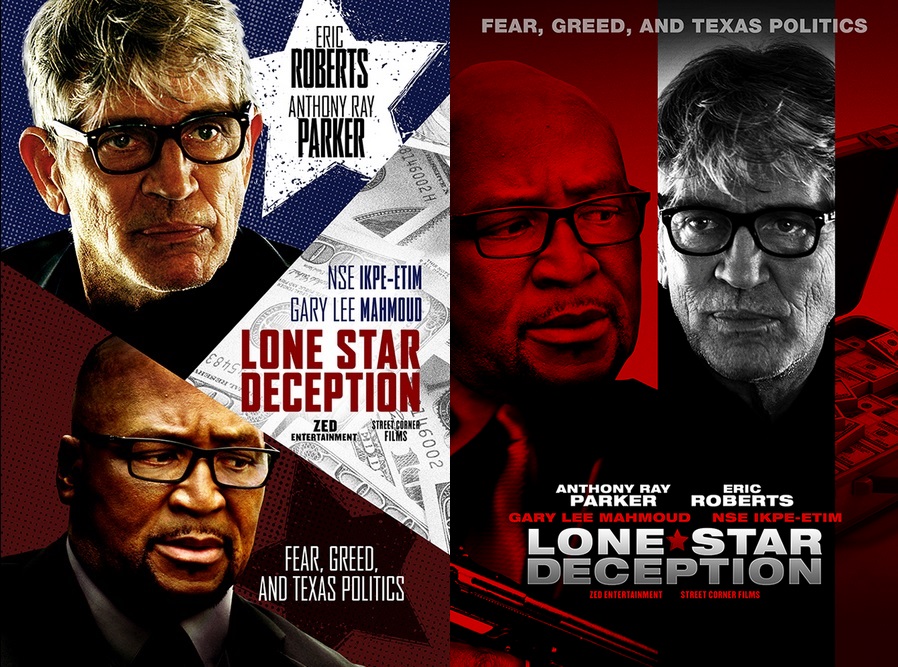
Fear, greed, and political intrigue is the name of the game for Bill Sagle (Eric Roberts, of the recently reviewed “radio week” flick Power 98), a philandering, narcissist Texas oilman who uses his wealth and power to control the political scene—and that arrogance means his machiavellian ethos knows no limits. And with him losing money with oil at $40 a barrel and his ever-increasing gambling debts (when we first meet Sagle, he’s on Learjet with a bunch of hookers on the way to Las Vegas), he hedges his bets with his nephew, Stuart Sagle (Gary Lee Mahmoud of TV’s Law and Order: SVU and Blue Bloods), into the governorship of Texas for a little ‘ol down home puppet regime.
When local mobster Jimmy Sloan, who’s in cahoots with Tony Cabrisi, who’s the brother of Stuart’s wife, sets up Stuart in a prostitution-blackmail plot, Bill Sagle hatches a new plan: groom his long-time employee, Tim Bayh (Anthony Ray Parker of Peter Jackson’s The Frighteners, the Wachowski’s The Matrix, and John Cena’s The Marine), an ex-Marine, a Silver Star Afghanistan war vet, and Harvard graduate as the first Black gubernatorial candidate of Texas. Yes, this Texas oilman is of the J.R Ewing variety and he will play the race card because, in his world, the end justifies the means. The first black candidate for governor? The contributions will roll in. And it’s all about skim. Always was.
Will Tim Bayh make history? Not if Bill Sagle’s “enemies” have a say in the matter. And Tim has his own skeletons from the Afghan war rattling in his closet. As Tim avoids assassination attempts and his family becomes targets of blackmail, kidnapping, and extortion schemes, he must decide: stay in the race and make history, or quit the race for the sake of his family? And will he use his ex-military training to scorch-earth those wanting to destroy him? His campaign manager did say that “politics is like war,” after all.
Does this all stretch credulity? Yep. But Jamie Foxx kicked ass as President Sawyer in White House Down, so why not Governor Bayh in Lone Star Deception?
As part of our aforementioned “Radio Week” (March 15 to 21), we reviewed MGM Studio’s 1972’s blaxploitation entry, Melinda. In that noirish tale, an L.A. jock’s life spirals out of control and he goes “scorched earth” on the mobsters who kidnapped his girlfriend—the same predictament suffered by Governor Bayh. If Lone Star Deception was made in 1973, you’d have a blaxploitation flick analogous to the political, double-crossing intrique of one of Quentin Tarantino’s favorites: Detroit 9000.
For those of us familiar with Eric Roberts’s mindboggling 570-plus journeyman actor oeuvre (A Husband for Christmas, A Talking Cat), we go into his films of late with the knowledge that his role will be a small one, and sometimes, a pivotal one. And that rest of the cast backing him are unknown, mostly amateur (local community) actors who, while they give it their all, offer strained performances, to say the least.
While this film is clearly Anthony Ray Parker’s well-deserved time to shine (he’s been in front of the camera since the mid-‘90s, so it’s nice to see his name on top of a marquee), there’s more than enough Eric Roberts (more so than in most of his previous films; I’ve watched Roberts films where he’s either in one scene or all of his scenes take place on one set) in the frames to satiate our fix for his always welcomed presence. And Parker, as well as Gary Lee Mahmoud (who’s actually in the film less than Roberts), each hold their own alongside Roberts. Another highlight on the acting front is the Robert Foxworth-reminding Brian Thornton (TV’s Walker, Texas Ranger, Friday Night Lights, Queen of the South) playing Parker’s war buddy, Mark. He has a pleasant, quite cool about him; I’d would have enjoyed more of him on screen.
According to the film’s against-the-odds production history, Lone Star Deception (its working title was The Candidate) took over two years to finish, which entailed six different shoots done by three directors and burnt through three producers, four writers, and two casting directors. And Roberts, ever the professional, stuck by the producers through it all, making himself always available. Roberts not only came back for one filming without compensation, but he returned to Houston (once more unto the breach, dear friends!) for the Worldfest Houston Film Festival where he accepted a well-deserved Lifetime Achievement Award. (Something that Tom Sizemore didn’t do for the Texas premiere of his own trouble-produced neo-noir, Zyzzyx Road.) And that’s why we love Eric Roberts: he’s loyal to the indie filmmaker and he always delivers on screen. (Don’t worry Tom, we dig you too: we reviewed several of your films at B&S About Movies.)
Now, when you have that much drama and personnel turnover on a film production, it usually means you’ll end up with a disjointed film lacking in consistency across all the disciplines. (Our recent review of 1968’s Terror in the Jungle serves as the best, uh, worst case example of that brand of filmmaking.)
Such is not the case with Lone Star Deception.
Director and co-screenwriter Don Okolo, along with writer Ed DeZevallos, know their Shakespeare; the bard, of course, was film noir before film noir, with his medieval noirs of anti-heroes and femme fatales rife with love and jealousy, betrayal and revenge (even racism, in the case of Othello).
As result, Lone Star Deception hits all the film noir cues—with Parker’s Tim Bayh reminding of William Holden’s Joe Gillis in Sunset Blvd., Fred MacMurray’s pasty of Walter Neff in Double Indemityand John Garfield’s Frank Chambers in The Postman Always Rings Twice. Each are somewhat well-intentioned, yet flawed indivduals who, in a desire to make a better life, subject themselves to a tail-spinning world of shady characters rife with deception and double crosses. The Seven Deadly Sins in Sagle’s Divine Comedy are funny that way.
Are Okolo and DeZavallos on par with Orson Wells’s and Laurence Olivier’s Shakespearian productions of Macbeth and Hamlet? Is Parker on par with John Garfield? No. But this isn’t Tommy Wiseau’s The Room either. So drop the clichéd Ed Woodian critical smart asseries at the door, ye film bard.
The frames of their story concerned with the dangers of greed and the quest for power are clean; it’s competently shot and decently acted with enough suspense and action to hold your interest—enough that you’re willing to overlook the film’s awkward, rough patches in the cinematography, editing, and SFX departments (a quality that holds true to one of my favorite films: Flywheelby first-time Christian filmmaker Alex Kendrick). If Parker’s Tim Bayh gubernatorial hopeful was a black female, Lone Star Deception would play well (less the profanity, natch) as part of the Lifetime Network’s roster of damsel-in-distress pseudo-noirs.
The bottom line: You’ll be seeing more on screen from Parker, Mahmoud, and Thornton, and from behind the camera with Okolo and DeZevallos (perhaps one with the ubercool Tom Sizemore? Hint.) And that’s no deception.
You can learn more about Lone Star Deception at the film’s official website. The film, distributed by TriCoast Entertainment, has made the festival rounds (where it won awards), played in Texas theatres, and will soon be released on DVD and all the usual PPV and online streaming platforms.
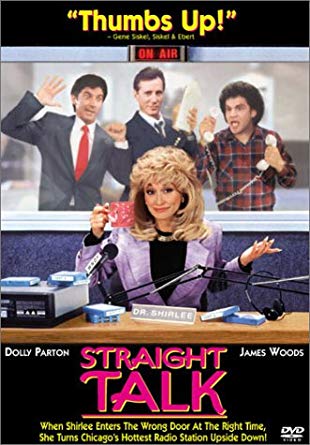
Straight Talk has been sitting on my shelf, part of a Mill Creek set along with VI Washawski, just taunting me, knowing that someday, somehow, someway that it would end up sitting in my DVD player, ready to cast its magic spell.
Writer Craig Bolotin often worked uncredited on films like Desperately Seeking Susan before writing this film. He’d go on to also write and executive produce Black Rain. This one was directed by Barnet Kellman, who is more well-known for his TV work.
The real draw, of course, is Dolly Parton. She plays Shirlee Kenyon, a dance instructor wallowing in Arkansas with her boyfriend, who is played by Michael Madsen. Yes, in the same year that he played Mr. Blonde, Madsen was the backwoods drunk beau of Dolly in a movie that no one remembers.
But he’s not the love interest. Oh no, that’d be James Woods, who plays a crusading reporter who has lost his way. He saves Dolly early in the film when she tries to fish a Jackson off a bridge. Then, of course, she talked a young Teri Hatcher into dumping Mr. Woods, who of course falls for our girl, who falls into a job as a talk radio psychotherapist.
She’s not a doctor, you may yell. Guess what, pal? You just realized the dramatic issue here. Can Dolly keep the job she’s best at? Will Woods divine her secret? Will Madsen screw it all up? And what the hell is up with this amazing supporting cast, which boasts Griffin Dunne, Tony Award-winners Tracy Letts, Amy Morton and Philip Bosco, Jerry Orbach, John Sayles (yes, the man who wrote Piranha, The Howling and Battle Beyond the Stars), Spalding Grey in a cameo as a rival shrink, Charles Fleischer (Roger Rabbit’s voice), Jay Thomas (who was a real radio man himself and plays Zim Zimmerman here)?
It’s also Ron Livingston’s screen debut. So it has that going for it.
Seriously, Straght Talk is way better than it seems that it will be. I don’t think that it presents the right path to radio — it completely rips off an old WKRP In Cincinnati episode’s plot, too — but it’s a quick movie that’s helped by Parton’s limitless charm. Yep — I’ve been front row for several of her shows and an unabashed fan, so your mileage may vary.
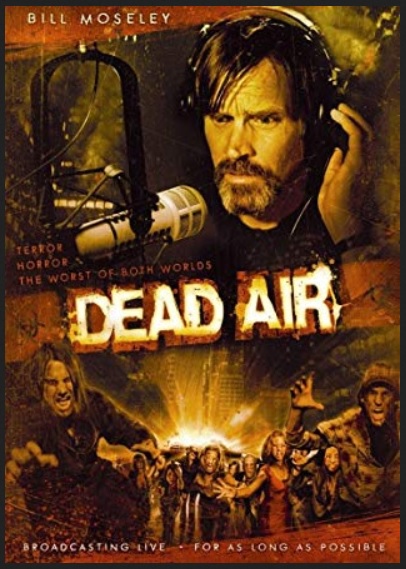
If the Lifetime cable channel decided to make a zombie movie, it would be this low-budget attempt at grafting Danny Boyle’s post-apocalyptic zombie film 28 Days Later (2002) with Oliver Stone’s Talk Radio (1998).
“Hey, wait a minute . . . dude, I know this movie . . . but Dead Air? Is this an alternate title for the Canadian horror film Pontypool (2008)?
That film—and if you’re into radio station zombies, it is clearly the better film (and not by much, to be honest)—starred Steven McHattie (Crown and Anchor, Watchmen). This one reteams Bill Moseley and Patricia Tallman from Tom Savini’s 1990 Night of the Living Dead remake—which was used as a major selling point to sucker us into renting this dead bore. (They’re a bickering divorced couple who still work together as a host and producer team.)
As with Pontypool, a Los Angeles late-night talk show host, Logan Burnhardt (Bill Moseley), and his production team are trapped inside a radio station during a zombie outbreak—this one instigated by a terrorist attack of “dirty bombs” ignited at major sporting events across the United States. Burnhardt’s crew stays on the air and takes calls and feeds information to listeners as the chaos unfolds. Then the terrorist responsible for the L.A bomb hijacks Burnhardt’s show to feed false information to the listeners and “stoke the fires of hatred.”
Yawn.
Lost somewhere in the dead boredom is a “message” about mob mentality and xenophobia, but by that point in the film, you just don’t care about the political propaganda Dead Air is selling. There’s no suspense or thrills. No threat of terror. No fear of violence. Not even a soupçon of horror. The “zombies” are nothing more than a bunch of flailing, petulant children from Central Casting, utterly devoid of violence and gore, with a splash of stage blood on their kissers sent on their way to run and growl. They’re actually not even zombies; they’re just human versions of rabid dogs prone to violence from the bomb’s toxins.
Yawn.
And the equipment in that radio studio! Logan Burnhardt is supposedly the #1 syndicated late-night talk host in the nation broadcasting from Los Angeles, the #2 rated media market in the country—and the studio is equipped with a recording studio audio mixing board as an on-air board? A reel-to-reel deck set on a counter top? This is 2009! All radio stations—especially in the major markets—converted to digital platforms and ditched analog recording over 15 years ago.
But it’s cool, Bill. We know it’s not your fault and we still love you.
Dead Air isn’t incompetent. It’s not awful in a George Romero Italian-green grease paint rip-off zombie kind of way. All of the various film disciplines have checked off all the right boxes. But that’s just it. It’s just “box checking” and everything is flat. It just lays there—and zombies can’t rest. They can never rest. They need to be on the move. But, one must consider that $500,000 budget the film was up against—and you can only do so much with a half million. So the question is: Will your passion for Bill’s work or your passion for cheesy, b-horror films from the video fringe give this a pass. But it’s Bill, right? You can check it out for free on You Tube.
About the Author: You can read the music and film reviews of R.D Francis on Medium and learn more about his work on Facebook. He also writes for B&S Movies.
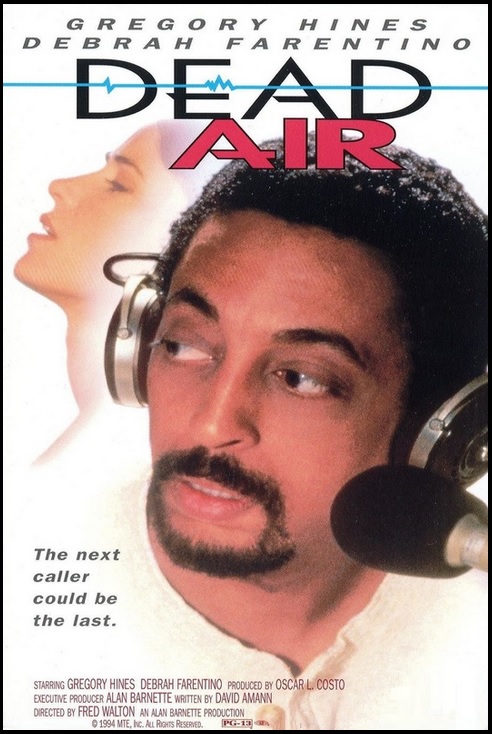
When you need a suspenseful slasher flick, a neo-giallo or neo-noir thriller competently done on a tight budget, director Fred Walton (April Fool’s Day, The Rosary Murders) is the man to call. His 1979 debut film, the babysitter stalker flick When a Stranger Calls, budgeted at $1.7 million was brought in under budget at $1.5 million in an 18-day shoot. The film subsequently grossed over $21 million and became one of Columbia Studios’ top grossing films for the year.
For reasons unknown, even after the success of those three theatrical films, Walton retreated into low-budget TV work, directing a host of entertaining cable psycho-thrillers: a remake of 1965’s I Saw What You Did (1988), Trapped (1989), Murder in Paradise (1990), The Price She Paid (1992), Homewrecker (1992), the TV sequel to his debut, When a Stranger Calls Back (1993), The Courtyard (1995), and his final film, The Stepford Husbands (1996).
As for the influence of and the respect afforded to When a Stranger Calls: Director Wes Craven paid homage to Walton’s debut by duplicating the film’s 20 minute opening sequence—deemed as one of the scariest openings sequences in a horror film—in the first 10 minutes of his 1996 horror hit, Scream. (If you’ve never seen When a Stranger Calls, it’s highly recommended you do. It’s on You Tube.)
So, with that back story on Walton’s cinema forte—along with this film’s title, its tagline and artwork of the one-sheet—you’ve probably guessed the plot of this film is somewhat similar to the previously reviewed Power 98—with a lone DJ noir-spiraling into a web of murder and deceit driven by a mysterious caller.
And if you’re keeping track of your radio psychos, you know the concept of a killer having a relationship with a radio host dates to Clint Eastwood’s 1971 directorial debut, Play Misty for Me. And you’ll recall the post-Halloween slasher ‘80s brought us the first of several psycho films concerning a serial killer harassing a radio host, which began with the U.K’s Section 3 video nasty, Don’t Answer the Phone (1980). Others in the cycle include Open House (1987) and Outside Ozona (1998), along with the cable films The Night Caller (1998) starring Tracy Nelson, Requiem for Murder (1999) starring Molly Ringwald, and A Lover’s Revenge (2005) starring Baywatch’s Alexandra Paul.
However, don’t let that familiarity deter you from watching Walton’s take on the radio psycho genre.
Three things make Dead Air work—where other low budget, set-in-radio station flicks fail. First, is the well-researched and intelligent script by David Amann (TV’s The X Files, Crossing Jordan, Without a Trace, and Castle) that not only knows its noir cues, but allows the radio station employees to sound like real radio station employees. Second, it was shot inside a real radio station—KKHR outside of Bakersfield, Ca. (the film was also shot in Agua Dulce, Ca. also outside of L.A.) Third, Gregory Hines (Cotton Club, Wolfen) did his research; he handles the equipment, along with the grease pencils and razor blades as he splices audio tape, with the skills of a radio pro.
Mark Jannek (Gregory Hines) is an L.A. DJ who specializes in incorporating his love of film noir into his music programs by re-creating old time, nourish radio dramas (remember: Eastwood’s Dave Garver worked his knowledge of poetry into his shows). After the murder of his girlfriend, Kathie, by an “obsessive fan,” Jannek restarts his life under the on-air name of Jim Sheppard at a small station in a dusty oil field town, far from the glitz and glamour of Los Angeles.
As is the case with most DJs suffering from ego issues: “Jim” is back to his old tricks and ends up at a bar after his shift . . . and meets a girl, Judy, for a one-night stand (dude, did you learn nothing from Nick West in Night Rhythms?). The next night Mark’s on the air, the ever-present #1 fan who’s been obsessively calling the show tells him she has Judy—and murders Judy while he’s on the air. Of course, the cops don’t believe him—and there’s no record of the call. Utilizing his knowledge of the noir genre, Mark starts his own gumshoein’ investigation and tracks down Judy—and finds her body. Then the cat and mouse games ensue with the mystery fan making more untraceable phone calls and leaving messages on self-erasing cassette tapes, with Mark twisting in a web that takes him from victim, to witness, to suspect—not only in Judy’s murder, but in Susan’s, his producer at the station, and, the police believe, Kathie’s murder back in Los Angeles.
Is the person who killed Judy and Susan the same person who killed Mark’s girlfriend in Los Angeles? Is it the jealous DJ who got bumped from his shift to make way for Mark? Is it the psychology student (Debrah Farentino, TV’s NYPD Blue, Earth 2), who’s writing a thesis paper on broadcasting? Is it Kathie’s sister, Lara, who discovers she’s also becoming tangled in a web by her sister’s killer? Is it Morton, the station’s dweeby chief engineer?
The ending of Dead Air is a genuine, twisty shocker. Granted, it’s not a “shocker” of the Fatal Attraction or Basic Instinct nourish level, this is a direct-to-cable movie after all, but a shocker none-the less and certainly above the “shock ending” of other radio-noirs in its wake.
Look for an early role from John Hawkes as Morton, who got his start in the sci-fi cheapy Future-Kill (1985) and made it all the way to the Golden Globes and the Oscars with nominated roles in Winter’s Bone (2010) and The Sessions (2012). Horror hounds will immediately recognize Beau Starr in his role as Lieutenant Marvin Gallis from his roles in Halloween 4: The Return of Michael Myers and Halloween 5: The Revenge of Michael Myers, as well as his much seen roles (thanks their incessant cable replays) in Goodfellas as Henry Hill’s father (1990), and Speed (1994).
The VHS rip of the full film is on You Tube. You can also watch a preview trailer courtesy of Video Detective.
About the Author: You can read the music and film reviews of R.D Francis on Medium and learn more about his work on Facebook. He also writes for B&S Movies.
During B&S About Movies’ “Radio Week,” you’ll notice we’ve reviewed a few Lifetime broadcast “radio psycho” films and mention this modest directorial debut by Clint Eastwood in passing. This tale about a womanizing DJ hooking up with the wrong fan is where the “genre” began. Oh, yes: Jessica Walters goes-for-broke in her portrayal of the troubled Evelyn Draper.
The script was conceived by Jo Heims, whose career dates back to working behind the scenes as a production secretary on 1958’s Missile to the Moon*; her earliest screenwriting credits included 1960’s The Girl in Lover’s Lane, 1961’s The Devil’s Hand and Elvis Presley’s Double Trouble. Coming to know Eastwood through their mutual employer, Universal Studios, Heims co-wrote Eastwood’s influential breakout role: 1971’s Dirty Harry. She also wrote Clint’s follow up to Play Misty for Me, the little-seen romantic drama, Breezy (1973) (he also directed High Plains Drifter that same year). Heims other works you’ve seen are the great John Llewellyn Moxey’s Nightmare in Badham County and the utterly bonkers Death Game (1977; received a Grindhouse Releasing Blu-ray bow in 2022).
The convincing “production values” on the radio station are courtesy of Play Misty for Me not being shot on a set, but as result of being shot inside an actual radio station: Carmel, California’s KRML 1410 AM. Also adding to the realism of the station’s jazz format was the shooting of additional scenes at the September 1970 Monterey Jazz Festival featuring appearances by Cannonbally Adderley and Johnny Otis.
A “live” DJ, carts, turntables, reel-to-reel decks, and rotary pot audio boards? That’s audio heaven.
While the studio initially wanted to go with the title “The Slasher” and market Eastwood’s directorial debut as a horror film, he got the title changed when he obtained the rights to Erroll Garner’s 1954 song “Misty” after he saw the jazz icon perform at the 1970 Concord Music Festival. He then acquired the rights for Roberta Flack’s “The First Time Ever I Saw Your Face” for $2,000; a popular British folk standard originally released in 1957 (You Tube), the song was written by British political singer/songwriter Ewan MacColl and sung by his American folkie wife Peggy Seger. Another song purchased for use in the film was Duke Ellington’s “Just Squeeze Me (But Please Don’t Tease Me).”
Yeah, Dirty Harry Callahan knows his jazz. Punk.
Now for the backstory and the runaway success on Flack’s other hit, “Killing Me Softly with His Song,” originally recorded by Lori Lieberman. (No: it’s not in the movie. We know.)
An early seventies confessional folk-pop singer in the mode of hit makers Joni Mitchell, Judy Collins, and Janis Ian, Lori Lieberman signed a production, recording and publishing deal with the songwriting partnership of Charles Fox and Norman Gimbel who, in turn, signed their own production deal with Capitol Records.
As with most of the forgotten musical acts of late sixties and early seventies during the burgeoning American FM radio era, the Internet exhumed Lieberman’s career frustrations in the wake of her 1971 debut single, “Killing Me Softly with His Song,” when it became a 1997 Grammy Award-winning single for the American Hip-Hop group, the Fugees—remade under the truncated title of “Killing Me Softly,” from the Fugees’ 1996 album, The Score.
From the time the song became one of the biggest-selling number one singles of 1973, as remade by R&B artist Roberta Flack, credits and royalties for the song became a point of contention for Lieberman, as she long claimed she contributed to the song’s lyrics. While the writing team of Fox and Gimbel scored another 1973 Top Ten hit with Jim Croce’s “I Got a Name,” and composed the television theme songs for the ABC-TV Network’s Happy Days and Laverne & Shirley, Lieberman floundered with three more albums for Capitol in the United States. Those albums, however, found a receptive audience in Europe (a country rife with voracious music connoisseurs), which resulted in a top-selling, Euro-only release of a 1976 greatest hits package, The Best of Lori Lieberman.
Lieberman recently released her 17th and 18th albums, Ready for the Storm and The Girl and The Cat, produced by Bob Clearmountain, known for his work with Bruce Springsteen, the Rolling Stones, and Bon Jovi.
Back to Play Misty for Me.
The most awesome aspect of this film is that Universal didn’t have much faith in turning over a film to Eastwood. So he waved his usual acting fee and was paid only as a director. To say Eastwood “showed them” is an understatement. He wrapped the film five days ahead of schedule and made it $50,000 short of its $950,000 budget. Play Misty for Me went on to gross $11 million in its initial release and, when it became a VHS rental in the ‘80s, earned another $6 million.
The influences of Clint Eastwood’s directing debut can’t be denied, as a female DJ-cum-radio psychologist taunted by a killer became familiar damsel-in-distress fodder for the Lifetime cable network, which aired the similarly-plotted The Night Caller (1998), Requiem for Murder (1999; Molly Ringwald), A Lover’s Revenge (2005; Alexandra Paul), and Radio Silence (2021). To a lesser extent, one can place the radio murder-mysteries Night Rhythms (1992), Night Owl (1993), director Fred Walton’s superb noir-slanted Dead Air (2009), and the direct-to-video renter, Shattered Illusions (1998), on the “radio psychos” list.
* You can catch up with more pre-Star Wars sci-fi films, such as Missile to the Moon, with our Exploring: Before StarWars feature.
Update November 2020 : Kino Lorber has just re-released Play Misty for Me as a Special edition Blu-ray in a new 2K transfer. The disc includes commentary by film historian Tim Lucas and a video essay with film historian Howard S. Berger. While Donna Mills appears in an all-new interview, Siegel and Eastwood appear in an “about” featurette. Writer-director Adam Rifkin (The Dark Backward, Detroit Rock City) offers his insights via his “Trailers from Hell” segment (You Tube). And . . . if you’re a Clint Eastwood completist: Kino Lorber has also re-issued Clint’s films The Beguiled and The Eiger Sanction to Blu. You can learn more about Kino Lorber’s complete roster of films at their official website and Facebook, and watch the related film trailers on You Tube.
As result of the Kino Lorber reissue, Sam takes another, new look at the film, here.
Now, the question is: When will Kino Lorber re-release the fellow radio flick A Matter of Degrees to DVD and Blu?
For this week’s installment of our weekly (at 11 AM) Drive-In Friday feature, we’re kickin’ it old school out ‘ere in the sticks amid the aroma of mosquito coils and heat-carouseled hotdogs — and probably cow and horse poo from the farm on the otherside of our lot’s treeline. Now if yer one of those folks who “don’t do black & white movies, they depress me,” then you just keep on drivin’ into the big city and spelunk that air-conditioned 28-screen behemoth selling the $5.00 (tiny) boxes of Snowcaps (they’re a $1.79 — and bigger — on the candy isle at the registers where I grocery shop).
Three-for-one watermelons and cantaloupes! Ten ears of corn for $2.00! B&S About Movies 2-4-1 DVD and VHS movie sale blowout this Sunday.
I dated two women who hated black & white movies (those relationships didn’t last long, natch). My cousin? She refused to watch anything “that’s not in color.” Me? A great movie is a great movie, color be damned. And long before Crown International Pictures and Roger Corman began pumping out B-Movie fodder for the big screens under the stars, these are the movies you necked to your girlfriend by on the nights the “submarine races” were cancelled.
So, let’s hook up that speaker on the window and fire up that mosquito coil and, like the marquee states, get ready for a night of comedy with No Time for Sergeants, drama with Marty, and lose it over Barbara Stanwyck (Scha-wing!) in the suspenseful film noirs Double Indemity and Sorry, Wrong Number.
Movie 1: No Time for Sergeants (1958)
Before there was Bill Murray’s 1981 military comedy Stripes, there was CBS-TV’s ’60s series Gomer Pyle, U.S.M.C. And before that there was No Time for Sergeants.
Before you became familiar with Andy Griffith as Sheriff Andy Taylor from the syndicated TV reruns of The Andy Griffith Show and as lawyer Ben Matlock on Matlock, you may have known him as Harry Broderick, the junk man astronaut from Salvage 1.
But before all of that, Andy Griffith was a stand up comedian-monologist that wowed audiences with humorous, long-winded stories, such as “What it Was, Was Football.” As with most comedians (see Jerry Seinfeld for a modern context), Griffith made the transition to acting and won across-the-board acclaim for his turn on the stage, television, and film versions of No Time for Sergeants. He starred as Will Stockdale, a country bumpkin drafted into the Air Force too daft to realize he drives everyone crazy — especially his beloved Sergeant King. And the fact Will keeps falling into buckets of poo (the iconic “toilet salute” scene) and keeps coming out like roses only makes Sgt. King crazier.
Griffith’s co-star/comedic foil is Nick Adams, who went from the highs of Rebel Without a Cause with James Dean, to the lows of working on the B-flicks Frankenstein Conquers the World and Godzilla vs. Monster Zero. He also starred in 1965’s Die, Monster, Die, which is a (very) loose adaptation of H.P Lovecraft’s short story “Colour Out of Space” (we recently reviewed the new Nicolas Cage version Color Out of Space).
Movie 2: Marty (1955)
“You don’t like her, my mother don’t like her, she’s a dog and I’m a fat, ugly man!” exclaims Marty to his best friend, Angie, a gangly guy who pines for women way out of his own league.
Now if this sounds alot like Jackie Gleason’s CBS-TV series The Honeymooners, which begat that network’s series King of Queens, which begat Mike and Molly, then it probably is. Did you ever see John Candy as the lonely bachelor cop in 1991’s Only the Lonely alongside Ally Sheedy? That’s where Marty takes all of its cues and that Melissa McCarthy series pinched its plot: the only difference was that Molly’s sister, instead of Molly, was the mortician cosmetologist.
The “dog” Marty speaks of is Claire (Gene Kelly’s then wife, Besty Blair): a plain Bronx school teacher that our middle-aged butcher meets at the Stardust Ballroom — where she’s humilated by a blind date that ditched her. A sweet, clumsy romance that his doting mother and sexually immature buddies try to discourage, blossoms against all odds.
While you may not know of this deep slice of celluoid set on the streets of New York, you know of the film’s screenwriter: playwright Paddy Chayefsky. He’s best known to fans of ’70s and ’80s cinema for the award-winning films Network (1976; “I am mad as hell, and I’m not going to take it anymore!”) and the sci-fi feature Altered States (1980; the film debut of William Hurt, aka Thaddeus “Thunderbolt” Ross, from the Captain America/Avengers/Black Widow film arc).
The 1953 teleplay of “Marty” on which the film is based aired as part of the NBC-TV Philco-Goodyear Television Playhouse and starred Rod Steiger (American Gothic, The Amityville Horror, Mars Attacks, and Stallone’s The Specialist) in the title role.
And do we have to tell you that Ernest Borgnine was “Cabby” in Escape from New York? Really, do we? (He talks about that role on You Tube.)
Intermission!
Back to the Show!
Movie 3: Double Indemnity(1944)
“That’s a honey of an anklet you got there, Ms. Dietrichson,” salivates the nebbishly dashing Walter Neff, an insurance salesman.
“A feather is sexy. A whole chicken is erotic. A rooster will get you into the kinky, and my bedroom, Mr. Neff,” Ms. Phyllis Dietrichson slowly rolls her ankle.
Neff drools, wishing his nose was closer . . . and wishing Quentin Tarantino* made this movie.
Poor bastard; he didn’t stand a chance.
Now, in today’s #metoo movement, Ms. Dietrichson would be on the phone to the insurance company to report Neff to his superiors. He’d be fired, slandered on social media, become an alcoholic, and slither around on rock bottom until his eventual self-demise.
But this is a James M. Cain novella-based film and back then, a comment about a woman’s anklet triggered a femme fatale chain-of-events from which a man could never recover. And in this case: a rich, seductive housewife romances an insurance salesman into a murder/insurance fraud scheme of her husband, which arouses the suspicions of an insurance investigator played by Edward G. Robison — who you know as Saul “the Book” from the apoc-romp Soylent Green.
Do we really have to tell you who Fred MacMurray is? Ugh. Yes, he’s the old guy from all of those Antenna TV reruns of My Three Sons, you know, the “Uncle Charlie, where’s Chip and Ernie?” show. But before his TV career, Freddie starred in hit-after-hit movie, including this film noir ranked No. 38 on the American Film Institute’s list of the 100 best American films of all time.
Study this film, ye potential filmmaker. It’s the gold standard.
Movie 4: Sorry, Wrong Number (1948)
Sigh. Barbara Stanwyck. The art of flashbacks to tell a story. Long tracking shots out of windows, over roof tops, across exterior walls and through windows — without bogus CGI After Effects digital stitching. In other words: “real oners.” Dark lighting. Moody shadows. Swirling cameras. And Barbara Stanwyck. Schwing for all of it, not just her.
She stars as Leona Stevenson, the spoiled, bedridden daughter of a wealthy businessman that — in the days before cellphones, where operators used patchcords in a circuit board to patch phone calls to various parties — hears a murder plot on a crossed phoneline. The twist: the plot is to murder her. And the murderer is her lover, played by Burt Lancaster, a slimy-yet-dashing businessman-cum-drug dealer (toned down for the movie).
If you’re interested in screenwriting and filmmaking, this is the film you study again and again. And again. Simply magnificent.
And you thought we were all about Sergio Martino and Fred Olen Ray movies at B&S About Movies? Don’t forget: hang up your speakers and please, use the trash recepticles on your way out. We’ll see you next Friday under the stars.
Sadly, there’s no free online streams available to share with you. However, because of each of the film’s “classic status,” they’re commercially available on all of the streaming services — You Tube, Amazon Prime, Google Play, Hulu, iTunes, and Vudu for less than $5.00 (cheaper than a box of multiplex Snowcaps!) — and DVDs are easily obtainable at your local public library. Happy viewing!
Ted Nicolaou directed Subspecies, TerrorVision and The Dungeonmaster in addition to this film, where two aliens named Cosmo and Lump take over Superstation 66, a small radio station in Pahoota, California. Meanwhile, DJ Dan O’Dare and Flip Humble have a scam going on that involves a car and polka records. If you haven’t figured out by now that Bad Channels is weird, here’s your confirmation.
Most of Bad Channels is made up of music video performances from DMT, Blind Faith and Sykotik Sinfoney, dancing fungus and humans getting shrunk down. Original MTV VJ Martha Quinn shows up. There’s also a nun playing guitar in a shopping cart.
Even crazier, Blue Öyster Cult scored this entire movie!
When Becca and I first started dating, she was looking everywhere for a copy of this movie. I got it for her and it solidified our relationship. Therefore, I love this movie a lot more than your average person.
It amazes me that this movie was made in 1992 and not at any time in the 1980’s. Nurse Ginger from this movie would return in 1993’s Dollman vs. Demonic Toys, a crossover film of Full Moon properties.
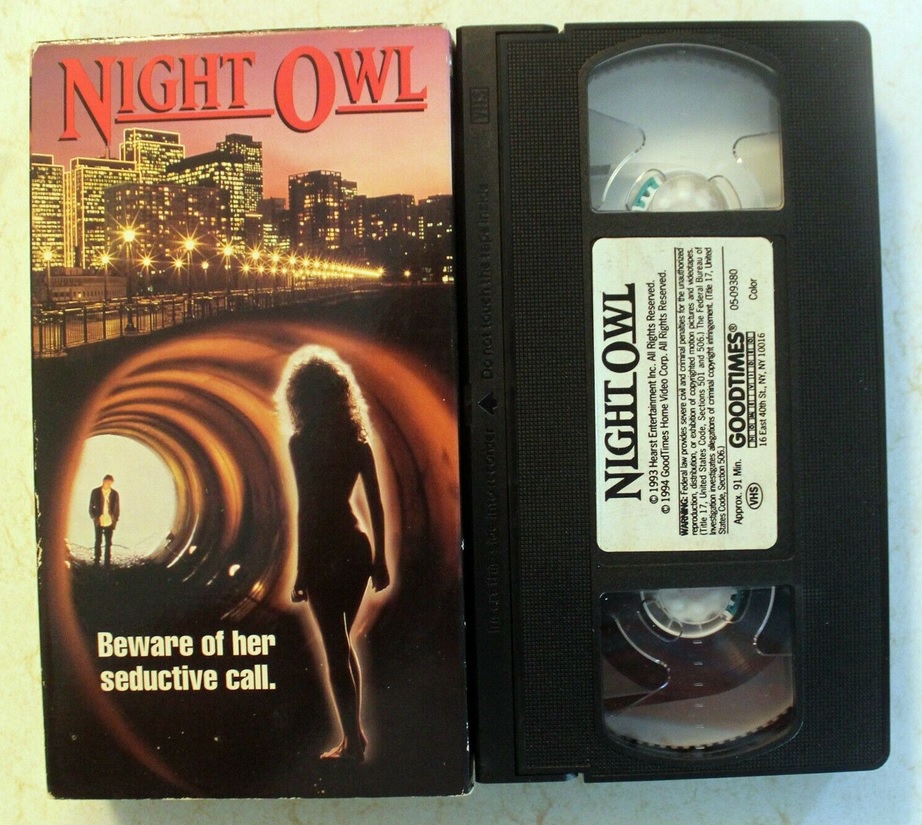
Don’t be logline or synopsis duped and don’t be conned by the film’s jazz score and soft-focus photography: Jennifer Beals (Flashdance, The Bride, and Vampire’s Kiss, Doctor M) isn’t a “pretty female radio DJ” or a “sultry nighttime disc jockey” and this isn’t a Lifetime-styled, soft-core sex thriller set inside a radio station. This is a ghost story. And it’s a fantasy-horror ghost story and not a romantic-fantasy like its inspirational antecedent: 1990’s Ghost, starring Demi Moore.
Julia (Beals) is a successful New York doctor specializing in audiology and speech pathology. She’s ready to walk away from five years of marriage to Harry, her ne’er-do-well jazz saxophone player husband (familiar TV actor James Wilder), who’s prone to cheating on her—and lying about the affairs.
She begins investigating the sudden rash of men self-mutilating (one gouges his ear drums) and committing suicides (Harry’s bandmate freaks out on stage, runs off, and jumps off a building). The one trait they have in common: they scream “She’s in my head!” over and over.
That “voice” is The Night Owl, a sultry overnight jazz disc jockey newly syndicated on the New York airwaves of WPKZ. “Her” voice captivates men—promiscuous men in particular—and feeds on their carnal desires during the full moon of the autumn equinox. And the station’s manager claims there is no “Night Owl.” And the FCC believers her to be a pirate radio operator broadcasting off the coast of New York. And Julia scoffs at the warnings of Dr. Matthews (Jackie Burroughs; The Dead Zone, Willard 2003), a professor of ancient folklore convinced the men are the victims of an ancient Siren.
And The Night Owl’s newest victim is Harry, who’s to be her Halloween sacrifice. And The Night Owl is prone to attacking the lovers of her victims in bed, raking them with her ghostly hand and wrapping a bed sheet around their necks.
Night Owl is a smartly written mystery by the female-writing TV team of Ann Powell and Rose Schacht; they draw their tale from the Greek folklore of Homer’s The Odyssey in which Ulysses and his ship’s crew comes under the bewitching spell of the Sirens. Using the airwaves to attract male listeners—in lieu of ocean waves and sailors—is a nice twist to an old legend. The script’s only weakness is its constricting 88-minute TV movie running time (this ran as a USA Network original before the channel became a rerun shill for NBC-TV; enough with the Law & Order!) that doesn’t allow for a deeper exploration of its themes.
You’ve seen director Matthew Patrick’s work before with his 1989 debut film, the highly-rated USA Network cable movie Hider in the House; Patrick doesn’t host that Gary Busey-starring movie on his personal You Tube page, since that film is owned by Lionsgate.
Beware of those Night Owl grey market DVD-rs in the marketplace, as this one has never been officially released on DVD. Luckily, Patrick shares a VHS rip of the film on his You Tube page to enjoy. He’s also uploaded his follow up to Hider in the House, the 1993 USA Network horror-thriller Tainted Blood starring Raquel Welch.
About the Author: You can read the music and film reviews of R.D Francis on Medium and learn more about his work on Facebook.





 B&S About Movies
You must be logged in to post a comment.