The Dove Foundation exists to “encourage and promote the creation, production, distribution and consumption of wholesome family entertainment.” They select movies that are family-friendly and endorse them as being Dove approved.
This movie may be the first one we’ve featured — and probably will ever feature — that is Dove approved.
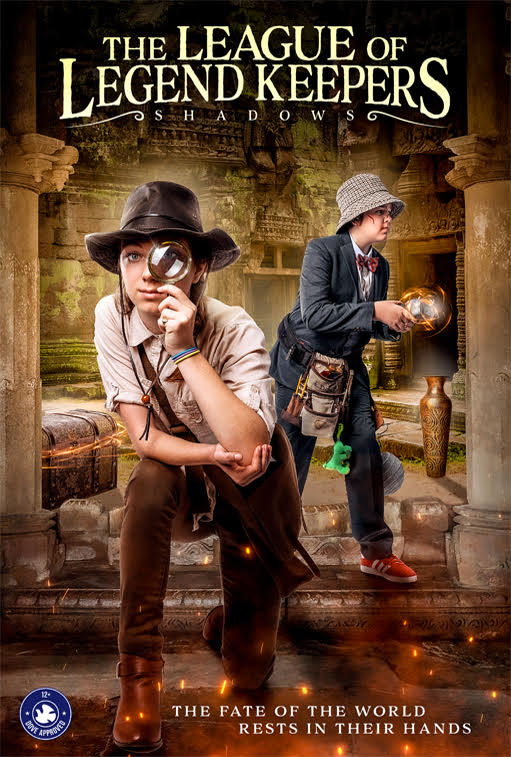
The League of Legend Keepers : Shadow is about a family of archaeologists who find a missing pendant that is being sought by an evil spirit. Once all five of the pendants are brought together, the shadows from the past will be unleashed. Will Sophie be able to save her family and her town from the shadows?
Starring and co-written by award-winning young actress Isabella Blake-Thomas (TV’s Once Upon A Time), and directed by Elizabeth Blake-Thomas, The Legend Keepers : Shadows stars Richard Tyson from Kindergarten Cop,Eternal Code and Death Kiss, as well as Jake Brennan (Richie Rich from the 2015 TV version).
Kid-friendly adventure films really aren’t my bag, but if you have little ones at home over the holiday break and want something fun (and safe) to watch, this is a good pick.
The League of Legend Keepers : Shadows is available on demand and on from Uncork’d Entertainment.
You can learn more at the film’s official Facebook page.
Comic books had several decades before the dark side of heroics — remember the grim and gritty eighies? — became a big deal. There have been comics like Watchmen, MiracleMan and Rick Veitch’s Maximortal that showed exactly what would happen if superheroes were either not raised properly or left unchecked.
Brightburn feels really close to those last two books, but allows superhero movies to finally find their dark side.
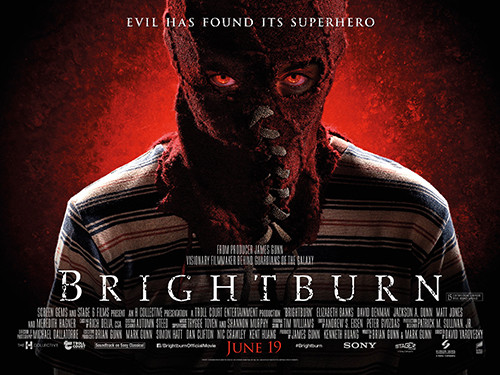
Produced by James Gunn (Guardians of theGalaxy, Slither) and written by his cousin Mark and brother Brian, Brightburn is all about Brandon Breyer (ah, an alliterative nickname, well done comics fans), who is really an alien who crash landed in a Kansas town where his adoptive parents Tori (Elizabeth Banks) and Kyle (David Denman) have tried to raise him as normally as possible. Then again, there’s that spaceship he crash landed in, hidden in the barn, that keeps calling to him.
Brandon has turned into an overachiever in school, which means that he’s shunned by the other kids, except for a girl named Caitlyn. However, his nascent puberty and realitization that his powers make him superior to humanity mean that things won’t end happily for anyone involved.
This movie ended up being way better than I had hoped, moving into more horror movie than superheroic effort. The scenes of Brandon’s abilities being used on normal flesh and blood humans are incredibly startling. There’s also a glass to the eye scene that would have made Lucio Fulci proud.
If the school that Brandon attends looks familiar, that’s because it’s Patrick Henry High School in Stockbridge, Georgia, the same school where seasons 1 and 2 of Stranger Things were filmed.
In the end credits, Michael Rooker plays a YouTube conspiracy theorist named the Big T. He shows what is basically a dark version of the Justice League, with a sea creature instead of Aquaman, a witch with ropes who could be Wonder Woman, an alien being and even the Crimson Bolt, who was Rainn Wilson’s character in James Gunn’s movie Super.
Brightburn is an intriguing take on superhero movies. Just be prepared — this has more gore than nearly every movie we’ve seen this year.
Update: February, 5, 2020: We lost Kirk Douglas today at the age of 103.
His filmography is extensive, with Academy Award nods for 1949’s Champion, 1952’s Bad & the Beautiful, and 1956’s Lust for Life, for which he also won a Golden Globe. And let’s not forget the on-screen impact of his role in 1960’s Spartacus by director Stanley Kubrick and Kirk’s earliest sci-fi, and first Jules Verne, film: 1954’s 20,000 Leagues Under the Sea.
As Kirk’s career advanced into the ’70s and ’80s, he dipped his toes a bit deeper into the realm of horror and science fiction with Jules Verne’s The Light at the Edge of the World (1971), the TV horror-musical Dr. Jekyll and Mr. Hyde (1973), Holocaust 2000 (1977), Brian DePalma’s The Fury (1978), and he closed out his work in those genres with the 1980 time-travel romp, The Final Coundown.
So, to honor Kirk, let’s visit with him once again with this review of Saturn 3 that originally appeared on December 21 as part of our “Star Wars Week” in celebration of the release of The Rise of Skywalker. And, if you missed it, please enjoy our recently-posted review of Holocaust 2000.
Thanks for the film, Mr. Douglas.
What in the hell is one of the icons of the film industry’s “Golden Age,” a three-time Academy Award nominated actor (1949’s Champion, 1952’s The Bad and the Beautiful, and 1956’s Lust for Life), doing in this Star Wars-cum-Alien knockoff—that’s really just a sci-fi retread of Friday the 13th (1980)? More importantly: What is Stanley Donen, the co-director of 1952’s Singin’ in the Rain, doing here?
I am Spartacus! I mean . . . I am Adam! King of Saturn!
Well, you can thank—or blame—British media impresario Sir Lew Grade, the head of ITC Entertainment (you know the ITC logo from Sylvia and Gerry Anderson’s U.F.O and Space: 1999), for giving noted British set designer John Barry (coincidentally, of Star Wars fame) his only directing gig. Grade also gave noted British essayist and memoirist, Martin Amis, his first and only screenwriting gig (well, until 2018’s London Fields, based on his own novel). For Kirk’s co-star—specifically chosen to fill out the revealing, exploitive see-through space suits she was to wear in the film—Grade cast TV actress Farrah Fawcett (Holly 13 from 1976’s Logan’s Run), who only had one starring-role since her breakthrough with Charlie’s Angels: 1979’s ballyhooed detective flop, Sunburn.
So, did you hear the one about the long-in-the-tooth screen icon, a first-time director and screenwriter, and a glorified poster-pin up girl walking into a bar?
It was a recipe for a Titanic-like disaster.
Instead of rising to the box office and critical highs of Star Wars and Alien, Saturn 3 sunk like the Titanic, earning three Golden Raspberry Awards for Worst Picture and Worst Actor nods for Kirk Douglas and Farrah Fawcett.
While John Barry, using his award-winning production skills, conceived a much more lavish vision of the future on the level of Star Wars for his directing debut, Lew Grade was looking for a quick turnaround to cash-in on the Star Wars-inspired sci-fi revival—so the film ended up looking like a slightly more expensive version of the previous, cartoonish ITC productions of U.F.O and Space: 1999.
Then Kirk Douglas and John Barry got into an alpha-male dispute: Douglas won.
Then, Donen, who was on the project as a producer, took the directorial reins. And he disagreed with Grade’s “exploitation elements” and downplayed them. And he was dissatisfied with Harvey Keitel’s performance—Keitel’s characteristic Brooklyn accent, in particular. So Keitel refused to participate in post-production looping and British actor Roy Dotrice (of the “Wish You Were Here” segment from 1972’s Tales from the Crypt) stepped in.
Meanwhile, with Martin Amis’s insightful Adam and Eve allegory set in space—with Douglas and Fawcett’s “Adam and Alex” as space farmers in “Eden” set on a distant Saturn moon base being “tempted” by Keitel’s Captain Benson and his robot, Hector, as the “serpent”—in shambles, Amis ended up using the history of the troubled production as fodder for his next novel.
Money: A Suicide Note, published in 1984, tells the story of John Self (i.e. John Barry) whose film project (i.e. Saturn 3) is wracked with production problems at the hands of a virility-obsessed, aging film star, Lorne Guyland (i.e Kirk Douglas). In 2005 Time magazine included the novel in its “100 best English-language novels from 1923 to the present.” The BBC adapted the book into a critically acclaimed, two-part mini-series starring Nick Frost (Shawn of the Dead, Hot Fuzz) as John Self, in 2010.
During the time of the film’s troubled production, ITC was also producing their big-budgeted, 1980 disaster flick based on Clive Cussler’s 1976 novel, Raise the Titanic, which went “Heaven’s Gate” and ballooned to a $40 million budget, which resulted in production cut-backs on Saturn 3. Both films, along with the production problems and eventual poor box-office showings of The Legend of the Lone Ranger (1981) and the way-too-late disco bomb staring The Village People, Can’t Stop the Music(1980), bankrupt the studio.
Fortunately, NBC-TV, who was obsessed with breaking into the Star Wars marketplace—with their Buck Rogers in the 25th Century series, and their The Martian Chronicles and Brave New World mini-series adaptations, bought the broadcast rights to Saturn 3 in a pre-theatrical release sale for $4 million.
When the film was broadcast on NBC in 1984, a number of scenes (15 total) excised from the theatrical print were restored. It’s this TV print that replays on American nostalgia cable networks, such as Comet and Antenna. So caveat emptor when adding Saturn 3 to your home movie library: both the theatrical and TV prints have ended up on VHS, DVD, and laser disc through numerous imprints: CBS/Fox Video, Polygram, Magnetic, Artisan, ITC Home Video, Geneon, and Pioneer Entertainment. The most recent version from Shout Factory was issued on Blu-ray in 2013. Saturn 3 is also available in a DVD two-pack with ITC’s other sci-fi—and more successful—flick, 1978’s Capricorn One.
Oh! And speaking of old Hollywood guys like Stanley Donen working in the space opera realm: John Hollingsworth Morse, a noted film and television director responsible for an eclectic variety of U.S television series from the 1950s through 1980s (Adam-12,The Dukes of Hazzard, and McHale’s Navy), got his start with the Star Wars precursor, Rocky Jones: Space Ranger. You can read up on JHM’s contributions to the Star Wars cycle of films with our article, “Exploring: Before Star Wars,” and you can enjoy his 1972 horror romp with Tom Selleck (yes, from TV’s Blue Bloods!), Daughters of Satan.
Sure Saturn 3 is on Amazon Prime, Google Play, Vudu, and You Tube for a nominal fee. But do you really want to squander your hard-earned money to see Kirk’s wrinkly ass running around a space station, Harvey in a ponytail, and see Farrah popping ecstasy and frolicking in a transparent space suit while being pursued by a robotic Jason Vorhees? Watch it for free on You Tube.
Star Wars: Episode IX – The Rise of Skywalker is currently in theatres and was released theatrically on December 20 in the United States.
About the Author: You can read the music and film reviews of R.D Francis on Medium and learn more about his work on Facebook. He also writes for B&S Movies.
The film Jaromil Jires, directed before this one, 1969’s The Joke, has been described as “possibly the most shattering indictment of totalitarianism to come out of a Communist country.” As a result, it was banned for nearly twenty years.
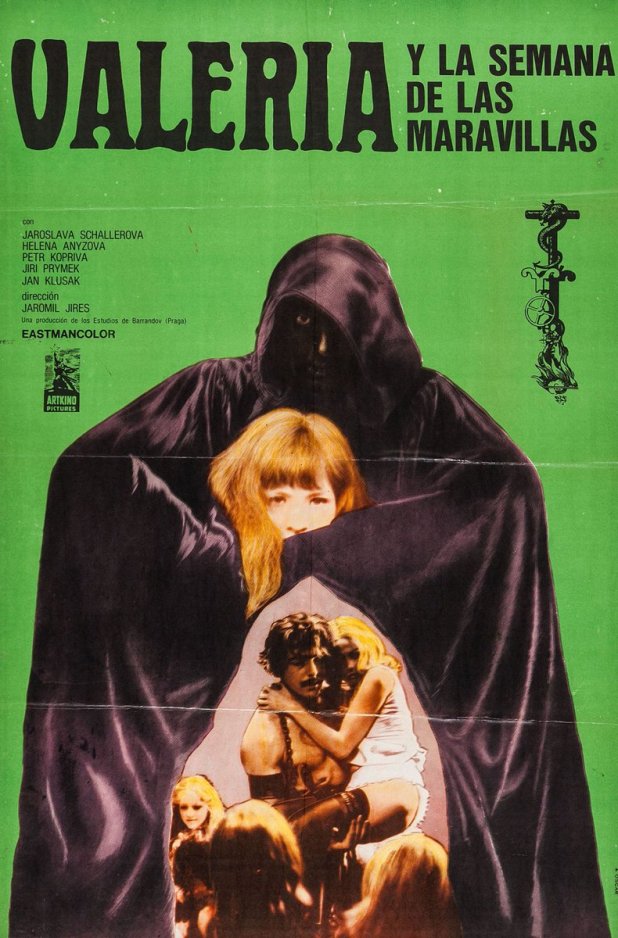
Valerie and Her Week of Wonders is based on the 1935 Vítezslav Nezval novel. Much like that work, this movie is a work of surrealism and one of the films that I can best point to being part of a genre I’ve been referring to as ‘dark childhood’ films. This genre, which I’ve come to represent as movies that use the supernatural to explain the pains of oncoming adulthood, often features dreamlike sequences, allegorical storytelling, and a focus on the psychological aspects of growing up.
Valerie is asleep when a thief steals her earrings. She’s frightened by the masked Constable, who grows angry when the thief returns what he has stolen to her. That’s when she learns that the earrings were a last gift from her mother before she entered a convent, but they once belonged to the Constable.
The Thief and the Constable remain at odds over the earrings and Valerie. That night, she meets the masked man in the street, where he leads her to a chamber where her grandmother ritualistically whips herself all in the name of a past lover. Oh yeah — there’s also a woman named Elsa who was once the Constable’s lover and grows young again when she tastes blood.
The earrings pass through multiple owners, and Valerie’s blood is the key to nearly everyone’s survival. People transform into monsters and cats, and if you didn’t guess already, the movie has descended into a dream that only Valerie can wake up from.
Honestly, it’s hard to rationally write about this film. The film is a visual masterpiece, with magic infused in every frame. You’re either going to be captivated by its artistic brilliance, or you’re going to find it too arty or strange. Obviously, I belong to the former camp.
Members of the bands Espers, Fern Knight, Fursaxa and other musicians formed the Valerie Project in 2006, performing original songs while the film plays.
If you’ve ever read Angela Carter’s works or seen the film The Company of Wolves, which she wrote for director Neil Jordan, you’ve seen work directly influenced by Valerie.
Grab the Criterion blu of this and do yourself a favor. It’s a perfect film.
Since we’re in the midst of a two-week Star Wars blow out in celebration of Star Wars: Episode IX – The Rise of Skywalker, and our “Ape Week” gala in commemoration of Disney announcing their production of a new Planet of the Apes sequel, is forthcoming (the simian fun begins December 29!), we need to take a look at the career of an impressive and successful indie filmmaker who has worked on low-budget homages to both franchises.
New Hampshire’s Brett Piper (Arachnia) is a self-made screenwriter, director, and special effects artist—and proud, self-professed purveyor of “schlock”—who eschews modern CGI for “old school” special effects, such as matte paintings, miniatures, and stop-motion animation. (Dude, you had me at “old school!”)
While Piper’s written, directed, and created effects for eighteen of his own films released from 1982 to 2019, he’s also designed effects for other directors, such as the Ape homages of fellow low-budget indie filmmakers, Mark and John Polonia (we’ll be reviewing the Polonia brothers’ films Empire of the Apes and Revolt of the Empire of the Apes as part of “Ape Week”).
But for this review, let’s take a look at Brett Piper’s debut film: a futuristic adaptation of Jules Verne’s 1874 novel, The Mysterious Island. Hey, if Disney can reboot Jules Verne’s 20,000 Leagues Under the Sea as The Black Hole, then why not a deep-space version of another Verne’s tale? And if it all looks a lot like the Apes rip Planet of Dinosaurs (1977) . . . then it probably is (and that’s a good thing!).
Just keep in mind this Star Wars rip is a grassroots amateur project: it is, in fact, a home movie shot on a shoestring budget—with even less of a shoestring than John Carpenter and Dan O’Bannon’s USC student film, Dark Star (1974). As Sam opined in his review of Piper’s Arachnia (2003): If Piper—and the Polonia brothers—had been around for the regional era of exploitation, each would be making drive-in flicks in the ’70s or direct to video films for the VHS ’80s.
So let’s get the guffaws out of the way.
Yes, we see filament lines suspending the ships. Yes, the sound sometimes unsyncs. The acting is questionable. Is that two-headed snail monster a riot? Do the stop-motion and matte effects send Jim Danforth (The Thing, They Live) running for the exits? Does this home-grown space opera make Alfonso Brescia’s Star Odyssey look like an Oscar Winner?
Oh, hell yes. And it makes Starship Invasions (1977) look like a Lucas Films’ production.
And you know what: I love this movie. For I dig this movie just as much as Sean and Patrick Donahue’s Richard Lynch-starring sort-of-apoc romp, Ground Rules.
I love Mysterious Planet a hell of a lot more than the Roger Corman star drek that is Space Raiders (ugh, that film!). Why? Brett Piper overflows with that same Tommy Wiseau-heart and has John Howard’s tenacity. Sure, their respective films, Mysterious Planet, The Room, and Spine have their (many) flaws, but they each have a special, endearing quality that’s absent from most—if not all—major studio offerings. (And you can add Flywheel(2003), Alex Kendrick’s Christian-message debut film to that list.)
The story is a simple one: Piper leads a “wretched hive of scum and villainy” mercenary crew. After a space battle, their ship encounters a “space-storm” (via—this time, will give you a pass*—an acceptable budget-saving voiceover), and they water-crash on a primitive, uncharted planet. They soon encounter strange, prehistoric life forms (the snail, and the later flying dragon that reminds of 1970’s Equinox, are both actually quite impressive considering the film’s budget), the inevitable scantily clad jungle girl, and the planet’s ruler: an ancient, super-intelligent computer (Ancient computer? Hey, wait . . . that sounds a lot like Brescia’s Cosmos: War of the Planets) who warns the planetwill be destroyed by an asteroid storm.
The questions and answers are simple with this film: Did you enjoy The Evil Dead demon-romp precursor, Equinox(1970), John Carpenter’s debut student film, Dark Star (1974), and James K. Shea’s Planet of Dinosaurs (1977; a review as part of “Apes Week” is on the way)? (I did!)
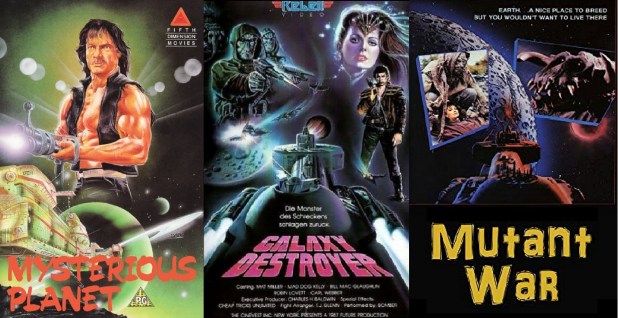
Well, that’s what Piper brings to the table with his, to be quite frank, impressive debut film (that also carries the alternate title of Star Odyssey!?!). His other “Star Wars” films are the much improved adventures of that scruffy nerf herder, Harry Trent: Galaxy Destroyer** (1986; aka Galaxy), and its sequel, Mutant War (1988). All three films are internationally distributed and dubbed, each finding loyal fan bases in France and Germany. (The full films and clips of each can be found on various video sharing sites.)
“You did alright, kid. Good job,” backpats Academy Award-winning stop-motion effects animator Ray Harryhausen to the wide-eyed comic book and sci-fi and horror film geek, Brett Piper. “Don’t get cocky. Now get back to work.”
Brett Piper’s latest sci-fi offering—in conjunction with the Polonia brothers—is 2019’s Outpost Earth. Be sure to check out Brett Piper’s work on his Facebook Fan Page. And we’re not done yet! We’ve been rolling out the “Star Wars Week” film reviews since the 16th and there’s more “Star Wars” film reviews coming up until the 28th, then it’s “Ape Week” at B&S Movies.
* Galaxy Destroyer, which also aka’d as Battle for the Lost Planet, stars Matt Mitler and Denise Coward. Mitler bowed out of the business after his 1985 vanity project, Cracking Up, which he starred, wrote and directed. Coward, who starred in Sig Shore’s Sudden Death (1985), later starred during the 1984-1985 season of CBS-TV’s daytime drama, The Edge of Night. Sig, by the way, also gave us the post-apoc’er, The Survivalist (1987).
** You know me and my pet peeves with voiceovers (with a character’s “inner feelings”) and words-on-screen set ups.
What’s this? A new Piper flick?Hell, yes!
And, we are still not done yet bowing to the Altar of Piper. We’ve dedicated one of our “Drive-In Friday” featurettes to Brett as we screened four of his films, including Queen Crab and Muckman. Yeah, we love ‘the Pipe ’round these analog wilds.
Star Wars: Episode IX – The Rise of Skywalker is currently playing in theaters and was released theatrically on December 20 in the United States.
About the Author: You can read the music and film reviews of R.D Francis on Medium and learn more about his work on Facebook. He also writes for B&S Movies.
Now, get ready for an explosive, galactic fantasy that will take you to the very edge of the universe and into the beyond . . . as Hal Roach Studios brings you . . . Starship Invasions!
“Hey, wait a minute? Hal Roach Studios? You mean the guys that made my dad’s beloved Laurel and Hardy, Our Gang, and The Little Rascals comedies?”
Yep. The very same Hal Roach Studios.
Times were tough enough for ‘70s B-Movie actors, but did George Lucas have to go and make it worse? It’s bad enough the chief wrangler at Skywalker Ranch inspired Sunn Classic Pictures to make the Kessel Run . . . but the studio that created Alfalfa, Buckwheat, Donna, Froggy, and Spanky trying to outrun the Millennium Falcon?
The Force is a bitch.
So, do you want to see Thanksgiving Day parade-style balloons doubling as UFOs? Do you want to see Christopher Lee—yes, Count Dooku from Star Wars: Attack of the Clones and Revenge of the Sith—adorned in a black-stretchy, one-piece spandex Gumby outfit? (Come on, young readers . . . you have to at least know that obscure, ‘70s pop-culture reference if you want to play along with B&S Movies!)
Just when you thought that fighting force of over-grown popcorn-popper robots from The Shape of Things to Come was more than you could bear, here comes our beloved Count Dracula himself, sporting some nifty Gumby-space pajamas emblazoned with a large, green-winged Griffin logo as he commands an inflatable, UFO Earth invasion force. Seriously, this laughable, low-budget Canadian drek couldn’t afford to have Brian Johnson and Douglas Trumbull on the payroll, so the spaceships aren’t models . . . they’re balloons.
. . . Or so we thought. It turns out that there’s a deeper mystery to The Force with this film.
This tale about a UFO expert (Robert Vaughn) abducted by benevolent aliens who need his help to battle evil aliens began as War of the Aliens, so that it “resembled” Star Wars. But wait, we have UFO’s in this, so let’s called it Alien Encounter to align it with Close Encounter of the Third Kind. (Then it found a new life on VHS shelves and TV syndication as Project Genocide.)
The plot, as it is, is reportedly cobbled from “actual UFO accounts” to tell the story about the black-clad Legion of the Winged Serpent (real life accounts repeatedly spoke of black spacesuits emblazoned with winged dragons), a rogue group of human-telepathic aliens from the Orion constellation, led by Captain Rameses (Christopher Lee), who are searching for a new home to replace their recently destroyed home planet. Oh, and according to their study of Earthmen’s sperm: we’re not descended from them: they’re descended from us, puny humans! Oh, and there’s a multi-Intergalactic Space Base deep in our ocean—inside a pyramid!
Seriously, this movie rocks!
Pummeled by critics and sci-fi fans alike for its supposed ineptitude for its inane plot, sloppy make-up, crummy costumes, corny sets and special effects, Starship Invasions is actually director Ed Hunt’s purposeful, sincere homage to recreate the hokey-campy Republic Studios sci-fi serials of the 1940’s.
Unfortunately, Ed Hunt’s nostalgic concept was, it seems, lost on Lee and Vaughn, both great actors who, it seems, made an acting choice to give it their all—and make a silk purse from a sow’s ear: ice cream from crap, if you will. But what Starship Invasions needed was corny, campy acting—in the vein of fellow Star Wars droppings Galaxina or The Ice Pirates—to make it work. It’s their “playing it straight,” Shakespearian acting that ultimately led to the film’s box office and critical demise.
So what we have with this particular Star Wars dropping is a more “realistic” homage to George Lucas’s cherished, Buck Rogers, Commander Buzz Corey, and Flash Gordon serials, than his own tales of Luke Skywalker. So keep Ed Hunt’s intentions in mind and you’ll enjoying watching this charming space opera romp on You Tube.
Starship Invasions isn’t Ed Hunt’s first time at the “UFO conspiracy” rodeo.
In 1976 he crafted Point of No Return, another fictional (based in “fact”) sci-fi thriller about an investigator looking into a series of violent deaths, via suicide and murder, which are “somehow” connected to UFOs and nuclear research (this plot device is also used in Starship Invasions). In 1979 he wrote and directed a documentary proper: UFO’s Are Real, featuring insights from respected military and science professionals.
After venturing into slasher territory with the popular video rental, Bloody Birthday (1981), he was back to using aliens as story fodder with the equally successful, wacked-out horror romp—starring the awesome David Gale (aka Dr. Carl Hill from theRe-Animator series)—The Brain (1988; written by Barry Pearson of Firebird 2015 AD fame.) Both are highly recommended for fans of the ‘80s video fringe.
Seriously. Make it your New Year’s resolution to watch The Brain and Blood Birthday.
Star Wars: Episode IX – The Rise of Skywalker was released theatrically on December 20 in the United States.
About the Author: You can read the music and film reviews of R.D Francis on Medium and learn more about his work on Facebook. He also writes for B&S Movies.
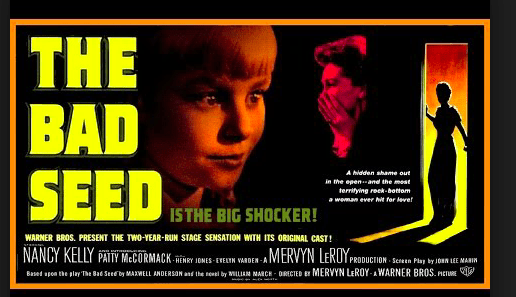
John Waters, in his book Role Models, claimed that he wanted to be Rhoda Penmark, the titular antagonist of The Bad Seed. “I wanted to be Rhoda. I pretended I was her. Why? I wanted to strike fear in the hearts of my playmates.”
There’s really no other movie quite like this one. Sure, we’ve covered plenty of other kids in trouble and kids causing trouble movies over the last two weeks, but this is the ultimate.
Based upon the 1954 play of the same name by Maxwell Anderson — which is based upon William March’s 1954 novel — the entire movie revolves around one person: Rhoda (Patty McCormack). She’s doted on by her parents, but the truth is, she’s quite literally menace incarnate. Who else would be so upset about losing a penmanship contest that she’d be moved to murder?
How did she get that way? Is it because her mother (Nancy Kelly, who won a Tony on Broadway for the play and was nominated for an Oscar) is the daughter of a serial killer who was adopted by a kindly cop? Is it because her father (William Hopper, who was later Paul Drake on Perry Mason and is the son of Hedda Hopper) isn’t around? Is society to blame? Or are some people just plain evil?
In the novel and play, the mother dies and the bad seed survives. The Motion Picture Production Code could never allow crime to pay, so Christine’s life is saved and Rhoda is struck down by the only thing that can really stop her: the hand of God, tossing a bolt of lightning her way. To further keep the censors away, Warner Brothers added an “adults only” warning to the film’s advertising.
This film is packed with great performances. There’s Henry Jones as Leroy Jessup, the caretaker who snarls every line at Rhoda, sure that she’s committed some crime as he sleeps in a bed of excelsior. Or Eileen Heckart as Hortense Daigle, a woman who grief has reduced to a spirit of sheer nothingness. Or Evelyn Varden as Monica Breedlove, an older women who wants to desperately see the good in Rhoda (she’s equally amazing in The NIght of the Hunter). Hey — there’s even Frank Cady here, who would go on to play Sam Drucker in several seventies hicksploitation sitcoms.
I also love the end of this movie, where the entire cast comes out as if they’re still on Broadway and doing their curtain call. After her credit is shown, Nancy Kelly puts Patty McCormack over her knee and gives her a spanking as they both laugh, trying to break the tension because Rhoda is so violently real, more villainous than any cartoon villain you’ll see in every single movie thereafter.
The Bad Seed has led to plenty of remakes and reimaginings. It was remade in 1985 as a TV movie that starred Carrie Welles, Blair Brown, Lynn Redgrave, David Carradine, Richard Kiley and Chad Allen. This version uses the original ending, but isn’t fondly remembered. There was another remake in 2018 that aired on Lifetime. It was directed by Rob Lowe and Patty McCormack even shows up in a cameo.
In 1995, McCormack would star in the first of two Mommy films that are kind of, sort of unofficial sequels. The Lifetime film House of Deadly Secrets, also starring McCormack, is another film that’s a spiritual second to this one. There’s also an off-Broadway musical adaption called Ruthless! and just about every bad kid movie that’s come after 1956 owes this one a debt.
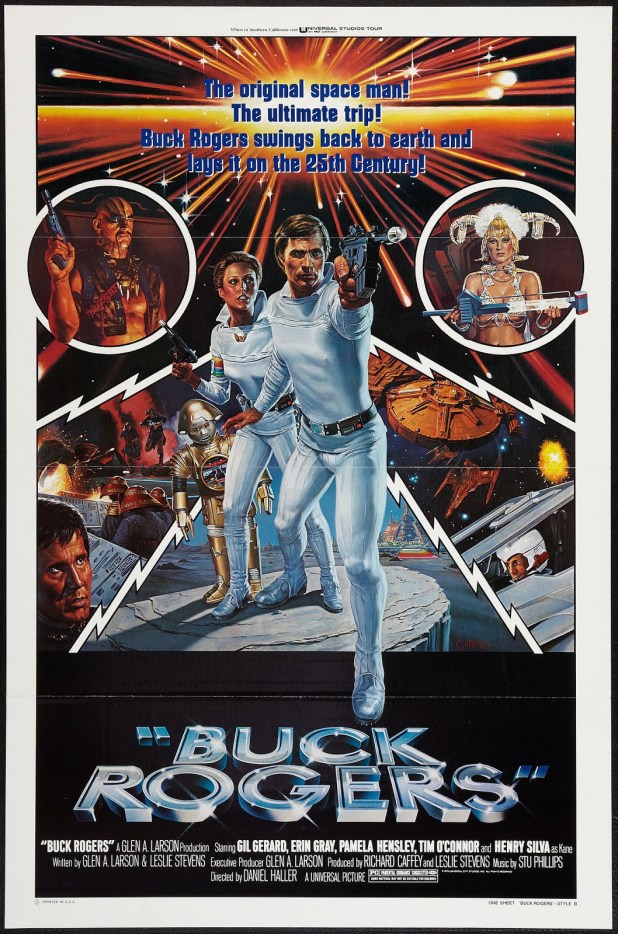
“In the year 1987, at the John F. Kennedy Space Center, NASA launched the last of America’s deep space probes. The payload, perched on the nosecone of the NASA rocket, was a one-man exploration vessel: Ranger 3. Aboard this compact starship, a lone astronaut, Captain William “Buck” Rogers, was to experience cosmic forces beyond all comprehension: an awesome brush with death. In the blink of an eye, his life-support systems were frozen by temperatures beyond imagination. Ranger 3 was blown out of its planned trajectory into an orbit a thousand times more vast, an orbit which was to return the ship full circle to its point of origin, its mother Earth, not in five months…but in 500 years.
For 500 years, Buck Rogers drifted through a world in which reality and fantasy merged into a timeless dream.”
It’s strange to call Buck Rogers in the 25th Century a ripoff of Star Wars when the concept behind it predates Lucas’ film by at least five decades. That said, without the tale of Jedis, Universal would have never green lit Buck Rogers for television. Glen A. Larson, who had a production deal with the studio, was in charge.
The original goal was a series of TV movies, but Larson’s other Star Wars-ian project Battlestar Galactica was supposed to work the same way, but then had been released theatrically overseas and in the U.S. So Universal decided to release this movie in theaters on March 30, 1979, with NBC airing a weekly series as of September 20, 1979, which started with a slightly modified version of this feature.
As the pilot and two-part first episode for the series, called “Awakening,” this movie features Gil Gerard — who was married to Connie Sellecca at the time (making them a power couple back in the days of Battle of the Network Stars; then there was Lee Majors and Farrah Fawcett as the other “power couple”) — as Buck, who has slept through the last 504 years and awakens in a brave new world (with recycled props, costumes and effects from Battlestar Galactica. In fact, even the ships on this show were brought back from Galactica, as the Earth Starfighter was originally designed by Ralph McQuarrie as a Colonial Viper).
Speaking of recycling, the inside of the Draconian flagship was used for the setting of the Motley Crue video “Looks That Kill.”
But I digress.
Buck soon learns that civilization on Earth was rebuilt following a devastating nuclear war — making this kinda sorta a post-apoc movie — that occurred on November 22, 1987, and is now under the protection of the Earth Defense Directorate.
Buck is helped by Colonel Wilma Deering (Erin Gray, who was all over 80’s TV) and a robot named Twiki who basically only says “budda budda budda” and was played by Felix Silla and voiced by Mel Blanc (who also voiced Daffy Duck as Duck Dodgers). Buck also meets Dr. Theopolis (Eric Server), a computer in the shape of a golden smiley face. Theo was a member of Earth’s “computer council” and one of the planet’s scientific leaders.
The villain of this piece was Princess Ardala (Pamela Hensley, who was C.J. Parsons on Matt Houston) and her henchman Killer Kane (Henry Silva in the movie, Michael Ansara on the series and hey, are those guys brothers?) and a henchman named Tigerman who dies in the movie but came back for TV.
The actual series was packed with guest stars who comprise so many of the people that we love: Peter Graves (Mission Impossible), Jamie Lee Curtis (Halloween), Markie Post (TV’s Night Court), Dorothy Stratten (Galaxina), Leigh McCloskey (Inferno), Richard Moll (every 80’s movie ever made), Jerry Orbach (Law and Order), Gary Coleman (pretty much the kid of the 80’s), Jack Palance (so many movies but let’s say Welcome to Blood City), Sam Jaffe, Sid Haig (take your pick of amazing movies here), Vera Miles (Psycho), original Flash Gordon and Buck Rogers star Buster Crabbe, and a litany of Batman guest-stars like Cesar Romero, Frank Gorshin, Roddy McDowall and Julie Newmar.
I have fonder memories of this in my head as we didn’t have all that much science fiction on TV until Star Wars. However, the second season takes a definite turn, as Buck gets a whole new mission on the Searcher, a ship with the Latin motto “Per ardua ad astra” (“through adversity to the stars” or “through work to the stars”). Their goal was to seek out the lost tribes of humanity, or you know, the exact same mission as Battlestar Galactica.
Supposedly, despite the series decent direst season ratings, Gerard was displeased with its light, tongue-in-cheek tone, and frequently fought with producers. He told Starlog that he hoped the series would be canceled after the first season.
Admiral Efram Asimov, Dr. Goodfellow (Wilfrid Hyde-White from My Fair Lady) and a robot named Crichton joined the crew, along with a hawk-person named, well, Hawk (Thom Christopher, who is also in Deathstalker III and Wizards of the Lost Kingdom).
Now, the formerly funny show became as pastiche of Star Trek, with Hawk as Spock, Buck as Kirk and Wilma as Uhura, completely with a more feminine uniform that showed off her legs. Every episode was serious business, with evolution, ecology, racism, pollution, war, nuclear power, identity, the self and religion the order of the day, as well as the idea that Hawk’s people were from Easter Island and even an episode about satyrs.
Thanks to a combination of an actor’s strike and dwindling ratings, the second season went on ice after just 11 episodes.
You can tell the passage of time on the show by how brown Erin Gray’s hair is, as well as how bulging Gerard’s waistline becomes. He was warned by producer Bruce Lansbury about feasting on the company’s never closing craft service buffet to no avail. The producer asked costumer Al Lehman to slim him down via wardrobe, leading to Lehman’s nickname for the actor: the white polish sausage.
I kind of love the theme song for this movie. It’s so bad — nearly a sub-Bond theme than a science fiction ode or something closer to Maureen McGovern’s “Can You Read My Mind?” from Superman.
“Far beyond this world I’ve known, far beyond my time What kind of world am I going to find? Will it be real or just all in my mind? What am I, who am I, what will I be? Where am I going and what will I see?”
Update: On November 24, 2020, the fine folks at Kino Lorber re-released the theatrical version of Buck Rogers to Blu and DVD in an extras-loaded, 2K transfer. They’re also offering the full TV series on Blu, also complete with new interviews and commentary tracks. You can learn more about Kino Lorber’s complete roster of films at their official website and Facebook, and watch the related film trailers on You Tube.
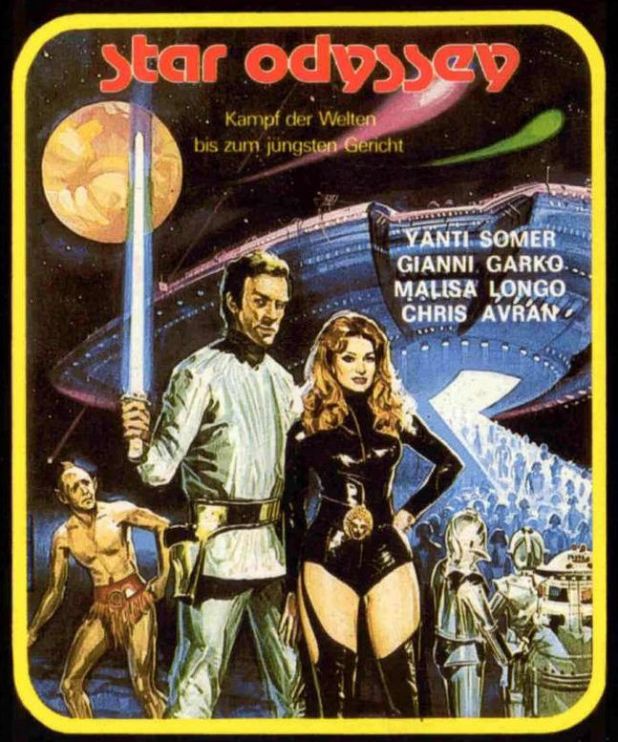
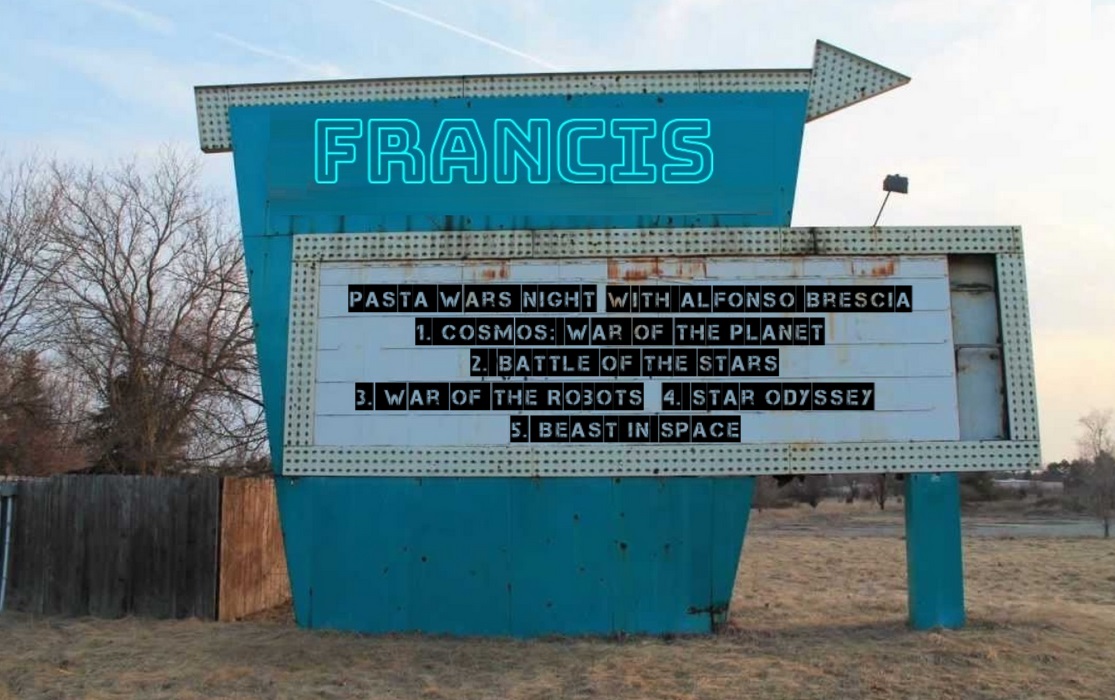
This is the fourth and final film in Alfonso Brescia’s sci-fi series — Cosmos: War of the Planets AKA Year Zero War in Space, Battle of the Stars AKA Battle in Interstellar Space and War of the Robots AKA Reactor — Star Odyssey AKA Seven Gold Men in Space, Space Odyssey, Metallica and Captive Planet is an Italian flavored take on space opera.
In the year 2312, Earth is sold to Kress, an evil ruler who wants to turn humans into slaves. Professor Maury and his band of, dare we call them rebels, set out to win the planet back from Kress and his cyborgs.
Those good guys include a space hero called Hollywood, a swindler named Dirk Laramie who wears a Spider-Man t-shirt who is played by Gianni Garko, Norman the gymnast who does cartwheels all day long and robots named Tilk and Tilly who blew themselves up at one point and constantly have to put themselves back together.
There’s also a wrestling match in the middle of this movie for seemingly no reason. Also — while it claims that the actors are listed in alphabetical order, they are not. Star Odyssey lies. It just lies to you.
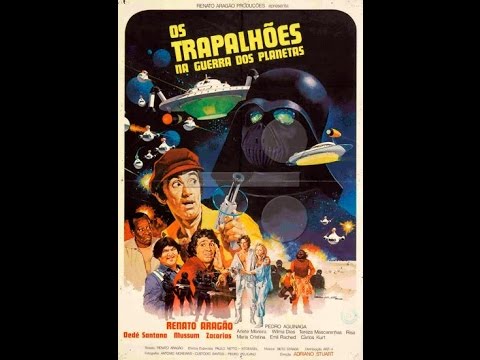
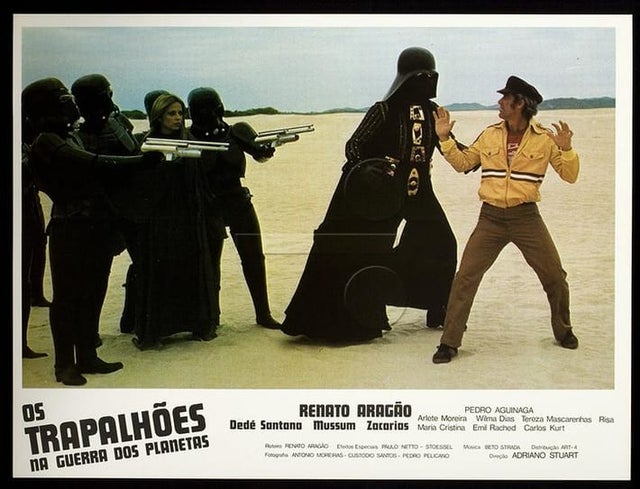
Os Trapalhoes na Guerra dos Planetas is the thirteenth film of Los Trapalhoes, a Brazilian comedy troupe. You could translate it as The Bunglers in the War of the Planets or just call it Brazilian Star Wars. Either will do.
If you like jazzy music, dudes getting set on fire, hijinks and sped-up action, great news. These are not the droids you are looking for but this is the movie you are looking for.
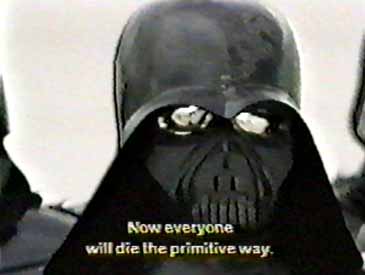
Instead of Darth Vader, this movie features a bad guy named Zuco. Yes, Zuco. He looks enough like evil Anakin, I guess. Chewbacca didn’t fare much better, as his name is Bonzo and his voice is just him being recorded backward.
This is shot on videotape and blown up to 35mm, so it looks completely insane. It really looks like it came from another dimension. This is the kind of movie that I put on when I want people to leave my house in terror. So, you know, if you see me reach for one of my Os Trapalhoes DVDs, it just means that I am trying to get some sleep. The Force is not always strong in this one.



 B&S About Movies
You must be logged in to post a comment.