WATCH THE SERIES: A Nightmare on Elm Street part one

I’ll admit it. I’m guilty. I’ve unfairly maligned this franchise because of where it ended up versus where it began. And it’s time that I rectified that situation. Over the past few weeks, I’ve been watching them all over again from the beginning and have come to change my opinion. Well, at least until the fifth film.

The original film was based on a lot of director/writer Wes Craven’s life, as well as Asian Death Syndrome, a medical condition that impacted a group of refugees who had left behind Laos, Cambodia and Vietnam, yet were still trapped by nightmares of war. Many of them refused to go to sleep as a result and some even died while sleeping.

He also was inspired by a satirical horror movie his Clarkson University students made in 1968 which was filmed along Elm Street in Potsdam, New York. And the film’s villain, Freddy Krueger, is based on an incident where a young Craven felt like an elderly neighbor was coming after him. The name comes from a childhood bully that kept beating on Craven and it’s not the first time that he used that name, as Krug from The Last House on the Left is also named for this past teenage demon.

Freddy Krueger doesn’t look like any of his slasher brethren. With every other slasher wearing a mask, Craven wanted a villain who could talk and threaten his victims, while striking even more fear into their hearts with his burned and scarred visage. He also based his soon to be iconic sweatshirt on the pattern of DC Comics superhero Plastic Man, but changed the colors to red and green as he learne dd that those were the colors that clash the most in the human retina. And his weapon wouldn’t be a knife, but an entire glove made of them.
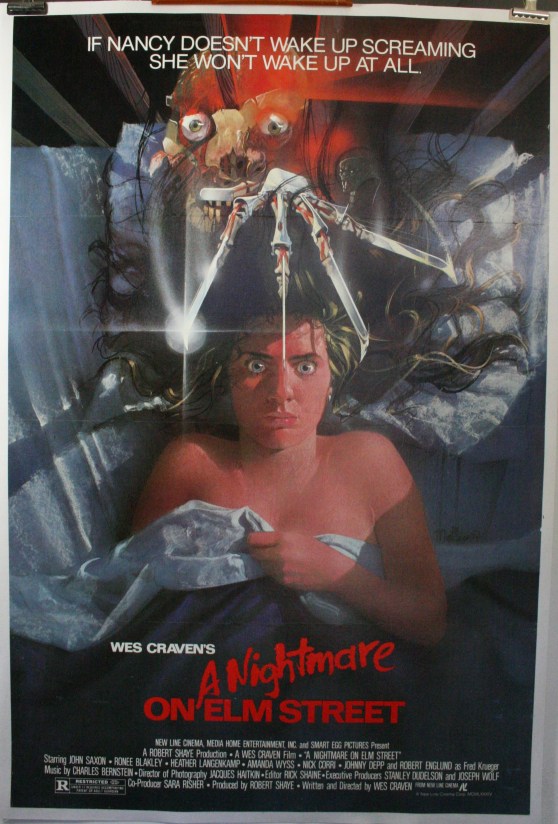
A Nightmare on Elm Street – 1984

Upon watching this again for the first time in probably thirty years, I was struck by how European the movie feels. Perhaps it’s the color tones throughout, suggesting the patina of Italian horror cinema (both Fulci and Craven cite surrealist filmmaker Luis Buñuel as an influence). It could also be John Saxon having lead billing. Or just that it doesn’t feel like any horror cinema that was currently being made in the United States.

The real villain of this piece is not Freddy Krueger — more on him in a bit — but the parents of Elm Street who have allowed secrets and their assumed authority over their children to do unspeakable and unspoken things. All of them are haunted by it, divorced, depressed and self-medicating with over-dedication to their jobs or their addictions.

There are stories that David Warner was originally going to play Freddy, but that’s been disproven. After plenty of actors tried out and failed to win the part, it went to Robert Englund, who darkened his eyes and acted like Klaus Kinski (!) to get the part.

The other feeling I have about this movie is that it owes a major debt — as all horror movies post 1978 do –to John Carpenter’s Halloween. Much like that film, the true horror happens within the foliage of the suburbs, with shadow people showing up and disappearing. Much of the action on the final night happens within two houses. One of the main characters has the ultimate authority figure, a policeman, for a father. And the cinematography by Jacques Haitkin glides near the characters and around them, much like the Steadicam shots that start Carpenter’s film.

The film starts with Tina Gray (Amanda Wyss, who puts the events of Better Off Dead into motion by breaking up with Lloyd Dobler) waking up from a nightmare where a disfigured man chases her with a bladed glove. I loved the way this scene looks, as you could almost consider Freddy off brand here, as his arms grow comedically long and he moves way faster than he would in the rest of the series. Yet by keeping him in the shadows, he’s absolutely terrifying.

When Tina awakens, her nightgown has been slashed and she’s afraid to go to sleep again. She learns that her friends, Nancy (Heather Langenkamp, who left Stamford University to be in this), Glen (introducing Johnny Depp) and Rod (Jsu Garcia, credited as Nicki Corri) have all been having the same dream. To console Tina, they all stay at her parent’s house overnight. But when Tina falls asleep, Krueger is waiting. Rod awakes to find Tina flying all over the room and up the walls — an astounding effects sequence in the pre-CGI era — and he flees the scene after her death.

Soon, Rod is arrested by Lieutenant Don Thompson (Saxon), Nancy’s father. Freddy now starts pursuing her, chasing her as she falls asleep in class (look for Lin Shaye as the teacher) and later in the bathtub, as his claw raises like a demented and deadly phallus between her thighs. Rod tells her how Tina dies and now she knows that the same killer is definitely after her (Garcia’s watery eyes and lack of focus made Langenkamp think he was acting his heart out; the truth is he was high on heroin for real in this scene). She tries to find the killer, with Glen watching over her, but he’s a lout and easily falls asleep. Only the alarm clock saves her, but no one can save Rod, who is hung in his sleep while rotting in a jail cell.

Nancy’s mom Marge (Ronee Blakley, who was married to Wim Wenders, sang backup on Dylan’s song “Hurricane” and is also in Altman’s Nashville) takes her to a sleep clinic, where Dr. King (Charles Fleischer, Roger Rabbit’s voice) tries to figure out her nightmares. She emerges from a dream holding Freddy’s hat to her mother’s horror. Soon, she reveals to her daughter that the parents of Elm Street got revenge on Freddy Krueger, a child murderer after a judge let him go on a technicality. In a deleted scene, we also learn that Nancy and her friends all lost a brother or sister that they never knew about.

While Nancy is barred up in her house by new security measures, Glen’s parents won’t allow him to see her. Soon, he’s asleep and is transformed into an overwhelming fountain of blood. Nancy falls asleep after asking her father to come in twenty minutes. He doesn’t listen and she pulls Freddy into our world. On the run, she screams for help until her father finally comes to her aid, just in time to watch a burning Freddy kill his ex-wife and them both disappear.

This is an incredibly complex stunt where Freddy is set ablaze, chases Nancy up the stairs, falls back down and runs back up — all in one take! At the time, it was the most elaborate fire stunt ever filmed and won Anthony Cecere an award for the best stunt of the year.

Nancy then realizes that if she doesn’t believe in Freddy, he can’t hurt her. She wakes up and every single one of her friends is still alive, ready to go to school. As the convertible hood opens up in the colors of the killer’s sweater, she realizes that she’s still trapped by Freddy, who drags her mother through a window.

In Craven’s original script, the movie simply ended on a happy note. Producer Robert Shaye wanted the twist ending so that the door was open for a sequel, something Craven had no interest in. Four different endings were filmed: Craven’s happy ending, Shaye’s ending where Freddy wins and two compromises between their ideas.

Obviously, the series would continue. And the follow-up would be one that left many unsatisfied.

A Nightmare on Elm Street Part 2: Freddy’s Revenge – 1985

With Craven stepping aside, Jack Sholder (Alone in the Dark, which was the first New Line movie before the original Elm Street and The Hidden) was selected as the director and David Chaskin was selected to write this (it was his first Hollywood script and he’d go on to write I, Madman and The Curse).

Chaskin’s theme for the film — which until the documentary Never Sleep Again: The Elm Street Legacy he would always say was just subtext — is the main character Jesse (Mark Patton) coming to grips with his homosexuality. Patton struggled with his anger over this film for years, as he felt betrayed as the filmmakers knew that he was in the closet. Between this role and playing a gay teenager in Come Back to the Five and Dime, Jimmy Dean, Jimmy Dean, he feared being typecast at best and labeled at worst. Yes, in 1985, this was the world that we lived in.

Chaskin claimed in interviews that Patton just played the role too gay, but Patton bristled at that claim. The emotional stress led Patton to quit acting for some time to pursue a career in interior design. That said, Chaskin claims that he has tried to reach out and apologize to the actor over the years.

Director Sholder has said that he didn’t have the self-awareness to think that the film had any gay subtext, but an unfilmed scene almost had Krueger slide a knife into Jesse’s mouth. Makeup artist Kevin Yagher talked Patton out of filming that scene for the sake of his career.

Years later, Patton would write Jesse’s Lost Journal, a series of diary entries that would set his feelings — and his character’s — straight, pardon the horrible pun.

The sequel starts with a dream sequence where Jesse Walsh (Patton) dreams of being stuck inside a school bus with Freddy at the wheel. Jesse’s circle of friends include Lisa, who he’s friends with but too shy to ask out, and Grady (Robert Rusler, Sometimes They Come Back), a frenemy that seems more like a crush.

Jesse has moved into Nancy Thompson’s home, which was on the market for five years after she was institutionalized and her mother killed herself. His family has Clu Gulager from Return of the Living Dead as his dad, Hope Lange from Death Wish as his mother and a little sister that he bothers when she’s trying to sleep.

Lisa and Jesse discover Nancy’s diary, which explains how ridiculous the house is to live in. It’s always 97 degrees, birds attack you at will before they spontaneously combust and your parents accuse you of setting it all up.

Meanwhile, Jesse is dealing with all sorts of strangeness, like a sadistic gym teacher who really likes to go to punk clubs and get whipped. One night, a dream takes him to that bar and the gym teacher makes him run laps in the middle of the night. That gym teacher is played by Marshall Bell, who was George in Total Recall, the host for Kuato. Freddy possesses our hero and the coach gets clawed up in the shower. The cops find Jesse wandering the highway naked, which doesn’t seem all that weird to his mother.

Lisa and Jesse go to Freddy’s lair in an abandoned factory, then she has a pool party. Yes, I just wrote that sentence. At the party, they kiss and have perhaps the most awkward make out session ever, until Freddy causes changes in Jesse’s body that make him run to Grady for help. Yes, he gets so upset about making up with a girl that he runs to his male crush, only to transform into Freddy in an astounding practical effects sequences and kill Grady. He returns to the pool party and lays absolute waste to the partygoers as Freddy before getting chased off by multiple shotgun blasts.

Only Lisa’s love — and kisses — can bring Jesse out of Freddy. But it’s all for nothing, as the nightmare from the beginning becomes real and their schoolbus turns into a deathtrap. Even though their friend Kerry (who has the best outfits in the movie) tries to calm them down, Freddy’s claw emerges from her chest.

A Nightmare on Elm Street 3: Dream Warriors – 1987

After the much-criticized second installment (I actually really enjoyed it, as it has a lot of European flair and its subject matter seems like a middle finger in the face of teenage boys who would seem to be its biggest audience), Wes Craven returned to write the inspiration for this script, which was originally about the phenomenon of children traveling to a specific location to commit suicide (think Japanese murder forests).

Frank Darabont and Chuck Russell took that direction and convinced New Line that the series should go further into Freddy’s dream world. The success of this film proved that A Nightmare on Elm Street would be a franchise, as this film made more than the first two movies put together. The team would go on to create 1988’s remake of The Blob before Darabont went into making Stephen King adaptions and Russell would direct The MaskThe Scorpion King and Collateral.

Kristen Parker (Patricia Arquette) is obsessed with the abandoned house on Elm Street (which one assumes is the last house on the left), making papier-mâché sculptures (which makes for a great compressed credit sequence, showing headlines of what has gone on before) and dreaming of Freddy chasing her. She awakens from her nightmare to discover that she’s slicing her own wrists as her mother Elaine (Brooke Bundy) has to interrupt her sleepover date to save her daughter’s life.

Kristen ends up in Westin Hospital, run by Dr. Neil Gordon (Craig Wasson, Body Double), battling the orderlies and doctors who want to sedate her. Check out a young Laurence Fishburne here as orderly Max Daniels! She’s eventually helped by the new therapist — Nancy Thompson! — who recites Freddy’s nursery rhyme to her. Continuity be damned, Nancy’s grey streak is now on the opposite side of her head.

We meet the rest of the patients, who will soon become the Dream Warriors: Phillip the sleepwalker (Bradley Gregg, Class of 1999), wheelchair-bound Will  (Ira Heiden, Elvira, Mistress of the Dark), streetwise Kincaid, actress Jennifer (Penelope Sudrow, After Midnight), the silent Joey and Taryn, a former drug addict (Jennifer Rubin, who is also in a movie that totally rips off this one, Bad Dreams).

The Dream Warriors is pure entertainment. Freddy makes his move toward being more of a joking character while transforming into a snake, a TV set, a gigantic puppet master and even turns his fingers into drug-filled hypodermic needles. Kristen can pull the rest of the teens into her dreams, which they’ll need as Freddy and all of their doctors are pretty much against them.

Dr. Neil learns from Sister Mart Helena the true origins of Freddy, the bastard son of one hundred maniacs, and how he can stop him. Enlisting Nancy’s dad (John Saxon returns!), Neil digs up Freddy’s bones, which are still deadly, while Nancy tries to save as many of the kids as she can within the dreamworld.

The film puts an end to Nancy’s saga while setting things up for a new cast of characters to do battle with Freddy. At least that’s what you’re supposed to think, as A Nightmare on Elm Street 4: The Dream Master pretty much wipes the slate clean within the first ten minutes. We covered it not long ago, so follow the link to read more.

We’ll be back soon to cover the rest of these films! Don’t fall asleep!
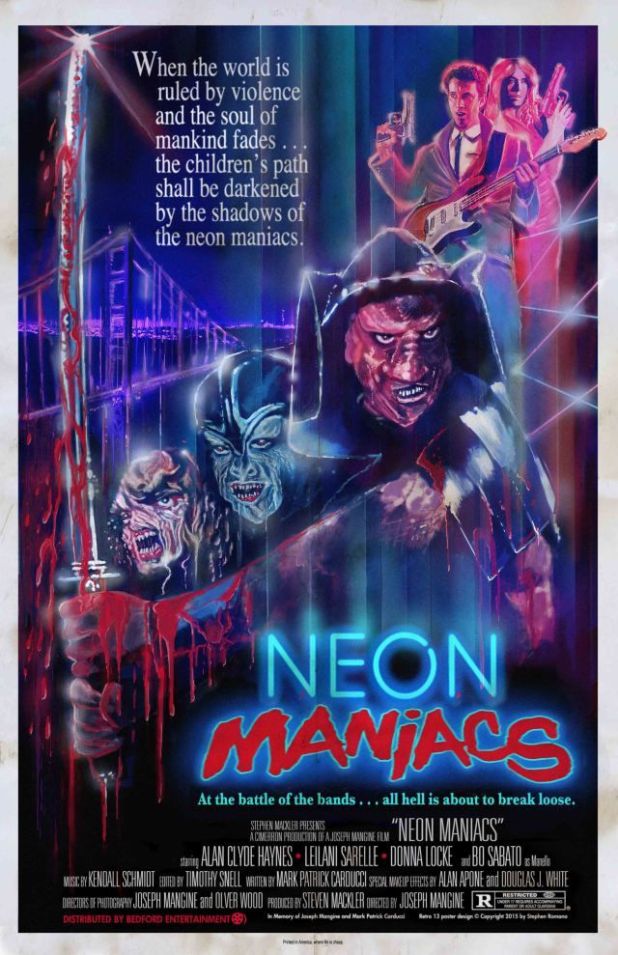
Neon Maniacs (1988)

Neon Maniacs is literally an unfinished film. Some of the maniacs are played by two different performers, as financial difficulties shut the movie down for three months and some actors had to be rehired. Plus, a lower budget meant that the ending of the film was scrapped, which resulting in an ending that comes out of nowhere and resolves nothing. And because of bitter feelings and bad memories, no copies of the original script exist and the people who made it either don’t know or don’t remember why the creatures exist and what their motivations were! Yet I found myself loving this sloppy movie.

Under the Golden Gate Bridge, in scenes obviously shot with no permit, the legions of the dead lay in wait for the night. Then, they can attack teenagers stupid enough to park their van and have sex. Only Natalie survives their initial assault, losing friends dumb enough to give head and smoke weed in the Neon Maniacs’ domain.

Those Neon Maniacs look awesome yet have no connective reason to be a group. There’s a surgeon (Andrew Divoff from Wishmaster!), a cop, a samurai and even one that looks like a furry cyclops dinosaur. The only thing that can stop them is water, so of course, they choose to live right next to San Francisco Bay because the 80’s.

There’s also Paula, a girl who is supposed to be the horror loving geek next to the supposedly gorgeous Natalie, but who outshines her in every scene, even wearing a hat that looks suspiciously like it came from the USCSS Nostromo. That said, it’s hard to know whether Paula is either 14 or 22, so having a crush on her is problematic. That said, she’s totally gonna end up with Tommy Jarvis when she grows up.

If you also like movies that suddenly become more about a battle of the bands than looming supernatural evil, Neon Maniacs also has you covered.

Joe Mangine directed this and while he didn’t direct many films, he was the cinematographer for AlligatorAlone in the Dark and I Drink Your Blood. You can watch it on Amazon Prime or buy it on DVD from Kino Lober and do what I did: imagine the film this could have been. Who is with me to Kickstart a new one?

2018 Scarecrow Psychotronic Challenge Day 29: La Venganza de los Punks (1987)

Day 29 of the Scarecrow Psychotronic Challenge is all about gangs. Specifically, one where a group of ne’er-do-wells do some serious menacing. I’ve been wanting to talk about this movie for some time, so this gives me the perfect opportunity to blow some minds.

The sequel to 1980’s Intrepidos Punks, this one ups the ante from the very first five minutes. After Tarzan (luchador El Fantasma, father to Lucha Underground’s King Cuerno) is freed from prison, he instantly gets revenge on the man who put him away, Marco (Juan Valentin) by interrupting the cop’s daughter’s quinceanera. His gang proceeds to rape and kill every single person there, leaving Marco alive so that he can be tormented by his loss.

Let me sum this up the best way I can: Tarzan and his gang look like the best Italian post-apocalyptic movie ever, if a Mexican wrestler led a gang that’s mostly made up of Japanese women wrestlers circa the Crush Girls era that had constant Satanic orgies. Tarzan even yells, “Long live death, cocaine, marijuana and alcohol!” at one point, sending me into ecstatic bliss.

Marco’s partner says that “We are all guilty. We are all accomplices. All of us!” Probably no one listened to the police chief when he claimed that the gang was only the tip of the iceberg at the end of  the last film. Now, Marco is getting kicked off the force, slowly eating soup and planning his horrible vengeance on the gang.

This movie quite literally comes from inside my brain. It’s the only place where luchadors can lead Satanist drug gangs against an ex-cop willing to take things so far that he pours acid on people, all whilst a surf punk band jams out and curvy dancers gyrate to their completely offbeat (and off beat) performance. Everybody has aluminum foil on their spikes or metallic hair or is naked or has a bad dye job or looks likes the random dudes you beat up in Final Fight. Throw in a black mass where a goat is beheaded and devoured and you have the feel good movie of 1987!

The only thing I don’t like about this movie is its ending, which Roberto Ewing’s the entire movie as one bad dream. Fuck that. If you just stop the movie right before that, all will be much better with your world. I also want there to be more movies in this series and am willing to Kickstart anything that attempted to make this happen.

WATCH THE SERIES: Fright Night

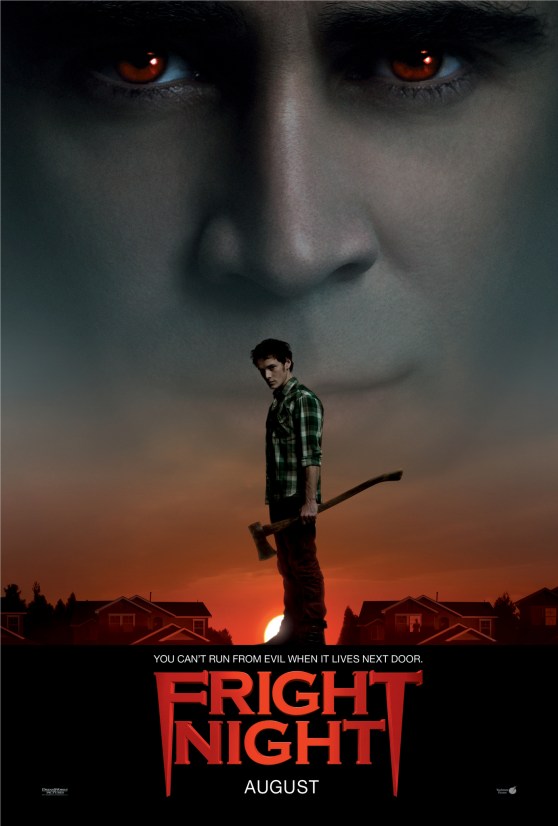
Fright Night was the first modern horror film I ever watched. I remember painting in my parent’s kitchen and my father telling me not to be afraid and just watch it with him. It’s a great start — combining the Hammer films that I loved that didn’t scare me with new school special effects and metacommentary.

The very first film in the series, this one really speaks to me as I was part of the last generation to grow up with horror movie hosts on UHF channels. Sure, there’s Svengoolie today and some internet shows, but it’s not the same. Peter Vincent (Roddy McDowall) is one such host, a washed-up actor who was in a few great movies decades ago and now goes from town to town, playing the same old 1960’s Z list horror films, saying the same lines. 

The defining moment for him is that Charley Brewster (William Ragsdale, Mannequin 2: Mannequin on the Move) believes in all his bull. And when Jerry Dandrige (the untrustable Chris Sarandon) moves in next door and shows all the signs of being a vampire, Charley finds he needs Peter Vincent more than ever before.

Plus, you get a pre-Married with Children Amanda Bearse as Charley’s love interest and a pre-gay pornography/976-EVIL Stephen Geoffreys as Charley’s best friend/worst nemesis Evil Ed. And I just love Billy Cole (Jonathan Stark, House II) as Jerry’s thrall.

This is a movie made for those who love horror movies. After all, Peter Vincent is named after horror icons Peter Cushing and Vincent Price. Creator Tom Holland wrote the part for Price, but the acting great had stopped appearing in horror movies at this time in his career. As they made the film — and the sequel together — Holland and McDowall became life-long friends, with McDowall introducing the young director to Price, who was flattered that the part was written to honor him and thought that Fright Night “was wonderful and he thought Roddy did a wonderful job.”

He’s right — this is a movie that taps into the mind and heart of horror fans, as so many of us have wondered, “What if the monster — and the monster hunter — was real?” The lighthearted yet dangerous tone of the film is letter perfect. That scene in the nightclub, where Jerry takes on the security guard? As good as it gets.

Want to watch it now? You can catch it streaming on Hulu.

Also of note: I’m glad the original ending wasn’t used. It was to close with Charley and Amy making out with Peter Vincent coming on the TV to host Fright Night, saying “Tonight’s creepy crawler is Dracula Strikes Again. Obviously about vampires. You know what vampires look like, don’t you? They look like this!” Then, he would transform, look into the camera and say, “Hello, Charley.”

After the unexpected critical and financial success of this film, a sequel was inevitable. Holland and Sarandon were both making the first Child’s Play, so they couldn’t commit to the film, although the actor did visit the set. Stephen Geoffrey’s didn’t like the script, opting to star in 976-EVIL. Ultimately only Ragsdale and McDowall would return.

Three years and plenty of therapy later, Charley Brewster now believes that Jerry Dandrige was a serial killer and that vampires don’t exist. Now a college student with a new girlfriend, Alex Young (Traci Lind, who dated Dodi Fayed before Princess Diana), Charley sadly discovers that Peter Vincent is back to hosting Fright Night. As they leave Peter’s apartment, a new nemesis, Regine steals Charley’s attention. There’s even a new version of Evil Ed, a vampire named Louie (Jon Gries, who is great in everything he’s done from Joysticks and Real Genius to The Monster Squad and TerrorVision) who is making Charley and Alex’s lives hell.

It turns out that she’s Jerry Dandrige’s brother and here for revenge. Now, the tables are turned and Peter Vincent is the one who has to convince Charley that vampires are real. Even worse, she’s turning Charley into a vampire and has stolen the Fright Night hosting job away from Peter! There’s also a transgender rollerskating vampire, putting this movie years ahead of others in presenting LGBT roles (even if Belle is evil).

One small trivia note: the vampire form that Regine transforms into at the end was modeled after 45 Grave lead singer Dinah Cancer. If you don’t know her band, they sang the song “Partytime” from TThe Return of the Living Dead.

There’s no way that this movie could live up to the original, but it tries. It hasn’t really been seen much, as LIVE Entertainment barely released it on home video. Artisan Entertainment released it on DVD in 2003, but it’s been out of print for a long time and commands big bucks. You can often find a bootleg of the high definition TV edition of the film at conventions (that’s where we got it!).

Written by Holland and directed by Tommy Lee Wallace (Halloween III: Season of the Witch and the original It, as well as the writer of Amityville II: The Possession, a movie I never cease trying to get people to watch), this movie suffered at the hands of a very real tragedy.

McDowall loved playing Peter Vincent and was eager to bring Holland back to make a third film, so he set up a meeting with the two of them and Carolco Pictures chairman Jose Menendez. Legend has it that the meeting did not go well. Later that night, Menendez and his wife were infamously murdered by their sons, Lyle and Erik. When McDowall learned of the news, he called Wallace and said “Well, I didn’t do it. Did you?”

As a result of the murders, Fright Night Part 2 lost its nationwide release schedule and only played in two theaters before being released directly to video. All of the planned advertising and public relations were canceled as well, which meant that most folks didn’t even know it was released until it showed up on video!

If you thought Hollywood was done with Fright Night, you’re wrong.

Colin Farrell plays Jerry here as “the shark from Jaws.” Christopher Mintz-Plasse plays Evil Ed as a geeky kid who was once best friends with Charley, who is now one of the popular high schools (remind me to tell you about the child vampire that used to chase me through my grandparent’s backyard someday). And former Dr. Who David Tennant is more Criss Angel than Zacherley.

This is a film that I really tried to get past and enjoy, but I just couldn’t be entertained by it. I’m not the only one. Tom Holland said, “Kudos to them on every level for their professionalism, but they forgot the humor and the heart. They should have called it something other than Fright Night, because it had no more than a passing resemblance to the original. What they did to Jerry Dandrige and Peter Vincent was criminal. Outside of that, it was wonderful.”

That said, there is a nice moment where Chris Sarandon makes a cameo as a victim of the new Jerry. Otherwise, this one is mean-spirited where it should have heart. No part of it feels fun. I was shocked to learn that it was directed by the same person who made I, Tonya and Lars and the Real Girl, Craig Gillespie.

And if you think that one is bad…

This direct-to-video sequel completely ignores the first remake, instead being a simultaneous remake of the first two films. The Gerri Dandridge in this one is a Romanian history and culture professor who teaches Charley, Evil Ed and Amy when they take a class trip to Romania. And this Peter Vincent hosts a reality show where he hunts vampires.

For some reason, Fox greenlit the movie and rushed it into being at a record pace. The first draft was written in a week and it was finished in 23 days. If only it didn’t feel like it went on for 24. This movie is a complete waste of time and the name of this franchise. It was like they heard someone say, “Nobody can make a worse remake than the last Fright Night.” And replied, “Hold my cup of blood and apple.”

Here are some other spinoffs:

NOW Comics released 27 total issues of a Fright Night comic that adapted both movies, as well as starting new stories where Peter and Charley battled a spider boy, squid people, aliens, a minotaur and the Legion of the Endless Night, which eventually brings back Jerry Dandrige to begin a new army of the undead peopled by French prostitutes!

Terror Time put out a new Fright Night comic book this year, Fright Night: The Peter Vincent Chronicles, which explains what happened to Peter between the first two original films. You can grab it — and the Fright Night coloring book and the screenplay too — right here.

In 1988, an Amiga video game was released. Strangely enough, you play as Jerry, trying to make it through your home and transform people into vampires. Everyone from the original Fright Night appears in the game as enemies and potential victims except Billy Cole.

And in 1989, the Indian film Kalpana House was released. It’s a loose remake, with Peter Vincent’s character being a priest and plenty of musical numbers. Yep. Really.

Finally, there’s the exhaustive 3 hour and 37-minute documentary You’re So Cool, Brewster! The Story of Fright Night. In addition to pretty much everything you’d ever want to know about the original two films, the filmmakers also created a series of trailers for the fictional movies The Resurrection of Dracula, Psychedelic Death, I Rip Your Jugular and Werewolf of Moldavia, which starred Peter Vincent (Simon Bamford, Ohnaka from Nightbreed and the Butterball Cenobite from the first two Hellraiser films) and Christopher Cushing (Nicholas Vince, Kinski from Nightbreed and the Chattering Cenobite from the first two Hellraiser films).

Sadly, these trailers are on the hard to find physical release of the documentary. You can watch it on Shudder right here, though!

Last year, Tom Holland announced that he’s writing Fright Night 2 as a book, with the goal of obtaining the rights to the series by 2019 and making a new movie. In the past, he’s talked about continuing the series by having single-father Charley Brewster inherit his mother’s home with his two teenage children learning that something evil is in the house next door — Evil Ed, who is trying to bring Dandrige back.

Whew! Here’s hoping you enjoyed our look at the past, present and hopefully future of a horror classic. And if you haven’t seen the original sequel, hunt it down! It’s pretty good!

The Blob (1988)

When I first started dating Becca, I was at her apartment and we were looking for something to watch. This is what she picked, making me aware of my luck. It’s one thing for me to find a hot girl. It’s another when that lady loves great movies.

We were excited to catch this in the theater recently and this is one remake that does not disappoint. It was great to hear people loudly gasp during the gore in this. It was made in 1988, when life must have been much cheaper than today, because hardly anyone makes it out alive.

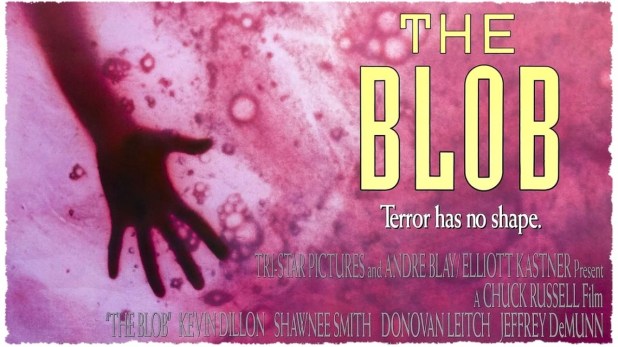
Just like the original, The Blob starts with a meteor crash being investigated by an old man and his dog. But unlike that 1950’s science fiction film, this movie exists to confound expectations. It spends so much time setting up Paul (Donovan Leitch) and Meg (Shawnee Smith, Saw II) as the leads that when Paul is eaten by the Blob early in the film, it really comes across as a surprise. The real hero is Brian (Kevin Dillon), who is constantly in trouble with the cops and always rides a Triumph motorcycle, a nod to the star of the original, Steve McQueen.

For the rest of the film’s running time, Meg and Brian have to convince the town that the Blob is real. By the end, they’re trying to expose the fact that whatever the Blob is, it’s not from space. No, it’s a U.S. government-made weapon.

The Blob is packed with familiar faces, like Jack “Eraserhead” Nance as a doctor, Candy Clark as a doomed waitress, Second City braintrust Del Close as a priest who starts to worship The Blob, Paul McCrane as a cop (he’ll always be Emil Antonowsky in RoboCop to me) and Bill Moseley as a memorable soldier who mutters a strange soliloquy about The Blob before dying.

The credit for this movie being a sequel that actually works belongs to the team of Chuck Russell and Frank Darabont, who started working together on the film Hell Night and co-wrote A Nightmare on Elm Street 3: Dream Warriors. There’s enough to remind you of the original while aspiring to be a movie on its own merits. It may have been a box office failure, but time has been quite kind to this movie.

Here’s a drink for this movie.

Sewer Jelly (from the book Let’s Get Monster Smashed by Jon and Marc Chiat)

  • 8 oz. vodka
  • 8 oz. water
  • 1 1/2 oz. cherry Jell-O
  • 1 1/2 oz. grape Jell-O
  • 8 oz. cherry yogurt (they recommend vanilla, but I’m going bloody)
  • About 20 or so small pineapple chunks
  1. Combine gelatin and 8 oz. water in a pot over low heat ad cook until the gelatin is dissolved.
  2. With the heat off, add the vodka and mix thoroughly.
  3. Combine pineapple chunks with the gelatin and mix.
  4. Pour into a bundt cake pan and add the yogurt. Mix thoroughly.
  5. Chill overnight or until set.

2018 Scarecrow Psychotronic Challenge Day 28: Hardware (1990)

Day 28 of the Scarecrow Psychotronic Challenge is 28. Home Invasions. Unwanted visitors can really make a mess out of things. I’ve always been a major favor of Richard Stanley, from his documentary The Otherworld to his attempt to direct The Island of Dr. Moreau and the documentary that ensued, Lost Soul: The Doomed Journey of Richard Stanley’s Island of Dr. Moreau. Today, we’re talking about his 1990 film Hardware.

The world has become a wasteland filled with radiation. Scavengers roam the decimated zones, taking whatever they can to survive. One of them (Carl McCoy, the lead singer of goth rock band Fields of the Nephilim) finds a robot and takes it to Alve the junkman (Mark Northover, Burglekutt from Willow). McCoy’s character, who he calls Preacher Man, is supposed to be the same as his Nephilim character, a drifter with a fake hand, yellow eyes and dressed in dusty cowboy gear.

A former soldier, “Hard Mo” Baxter (Dylan McDermott, nearly unrecognizable with cyborg parts and facial tattoos) and his friend Shades buy the parts, dividing up the body with Alvy while Mo keeps the head as a gift for Jill (Stacey Travis, Phantasm II), his artist girlfriend.

Mo is a wanderer who finds his way in and out of Jill’s life. At first, she doesn’t want to let him in, but after he gives her the robot head, she allows him in. They fight initially about an upcoming government sterilization plan and whether or not they should bring children into the world before having passionate sex that’s watched by her creep of a neighbor, Lincoln (William Hootkins, Porkins from Star Wars!).

They awake to another argument about the way that Jill has used the head for a sculpture when Alvy calls. He wants Mo to come back, as he wants to tell him what he’s learned about the robot, which is a M.A.R.K. 13. Mo wonders if that’s a reference to Mark 13:20, “no flesh shall be spared.” When he arrives, Alvy is dead and the robot is gone. A note here: the actual text is “In fact, unless the Lord shortens that time of calamity, not a single person will survive. But for the sake of his chosen ones he has shortened those days.”

The rest of the machine has reassembled itself inside Jill’s apartment and attacks her. She escapes and Lincoln appears to help her. He seems initially nice until his pervert side emergers, but he’s soon pulped by M.A.R.K. 13. As Mo, Shades and the building’s security team battle the robot, it drags Jill away.

Mo has talked throughout the film about how deadly he is, but when he fights M.A.R.K. 13, it uses the same toxins on him that killed Alvy, sending him into hallucinations before killing him, too. The robotic intruder now hunts Jill throughout the building, killing everyone in its path. She even tries to reason with the robot’s AI before she learns its secret: an issue with moisture. She and Shades get it into her shower and destroy it.

The movie ends with gorgeous shots of the drifter from the beginning as he disappears back into the wasteland as DJ Angry Bob (Iggy Pop) talks about how the M.A.R.K. 13 is about to be mass produced to sterilize the country.

Hardware is an intriguing film. It’s not great but it has a heart and soul that wants to be. It feels like a Phillip K. Dick story, but finds its influence in a post-apocalyptic short film Stanley made in his teens and his time in a guerrilla Muslim faction while acting as a journalist during the Soviet war in Afghanistan. The TV broadcasts in the film are based on the work of Psychic TV and add a lot to the film (indeed, music really influences this one, particularly a quick cameo by Motörhead frontman Lemmy).

However, one influence that has dogged this movie is how close it is to Steve MacManus and Kevin O’Neill 2000AD comic strip “SHOK!” Later releases give full credit to this story.

Richard Stanley tried to get a sequel made, Hardware II: Ground Zero, which would have been a bigger Western-style movie. Sadly, the project died as the rights to the film are split between Miramax and the producer, Paul Trijbits. In this bigger, badder world, the US government would already be mass producing M.A.R.K. 13s to patrol the US-Mexican border and wipe out illegal aliens. There, Shades and a veteran named Lyle Maddox would find Jill living in a hippie colony of “destructuralists” in Splendora, Texas who are under attack by the M.A.R.K. 13s and Mexican guerrillas. According to the site Everything is Under Control, the script is “a definite page-turner, but it’s also violent, challenging, and ultimately, perhaps even too crazy for its own good.”

I really wish that movie had been made. I love the vision that Stanley has, the cinematography in this film and the sense that it’s all part of a much bigger story. Throw in music by Ministry, Motörhead, Public Image Ltd. and a score by Simon Boswell (Santa Sangre, Stagefright) and you have a film I’ll be coming back to soon.

Hardware was released by Severin in 2009 but was out of print for awhile. You can get a new re-release at Ronin Flix.

The Boy Who Cried Werewolf (1973)

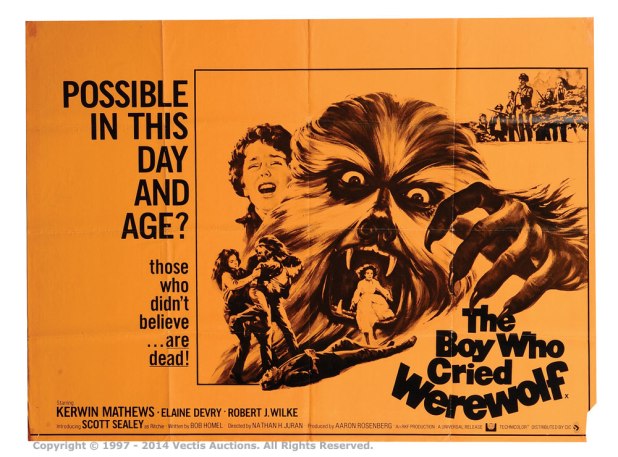
Nathan H. Juran directed plenty of films, but we probably know him best for  Attack of the 50 Foot WomanThe Deadly Mantis20 Million Miles to Earth and The 7th Voyage of Sinbad. Becca and I had seen the trailer for years, but this was one of those films that you could only find on the grey market until Shout! Factory released it this year.

Robert Bridgestone (who starred in Juran’s aforementioned Sinbad film) is a divorced dad who tries to bond with his son, Richie, by taking him on a camping trip. On a midnight hike, the men are attacked by a werewolf, but Robert is able to toss it into a ravine where it’s revealed to be a human, impaled on a wooden fence. The sheriff and Robert are happy with the conclusion that the man was simply a drifter, but Richie isn’t so sure. And since his father was bitten in the attack, he’s worried about what will happen next.

Sandy, Robert’s ex-wife, insists that father and son go to counseling together, because Richie has become obsessed with lycanthropes. The psychiatrist (George Gaynes, Commandant Eric Lassard from the Police Academy series) believes that Richie has invented the werewolf story as he can’t deal with the knowledge that his father has killed another man. He suggests they go back to the camp, an act he believes will stop Richie’s fixation with werewolves.

As they return to the cabin, Robert finds himself in great pain and transforms into a werewolf that chases Richie — who has no idea that the beast is his father — across a highway. The werewolf attacks and massacres a driver while Richie hides with two newlyweds who are camping. Finding his father missing, Richie stays with the couple, but when Robert comes to get him in the morning, he’s ill-tempered and not about to listen to his son’s werewolf shenanigans.

The next night, Robert changes into a beast again, but Richie has already found a hiding space. No worries — the werewolf will kill the newlyweds instead, shoving their camper down a hill, then mutilating their bodies and decapitating them. Richie emerges just in time to see his father go from wolf back to man. As they drive back home, Richie grills his father, who doesn’t take kindly to it. When they get back to his mother’s house, he runs, telling her he doesn’t want to be alone with a monster.

After another visit to the psychiatrist, its determined that between the divorce and murders, Richie sees his father as a beast. The film would be much more interesting here were there any doubt as to whether Robert was the werewolf. But no — instead the entire family is put into harm’s way. Too bad they didn’t see the headline of today’s paper: Local Psychiatrist Murdered.

As the estranged family heads out to camp, they run across a hippie commune. Sandy enters their circle of power that wards away evil spirits, but when Robert tries to join her, he is stopped dead in his tracks.

Back at the cabin, that whole 1970’s liberated women need men and were all wrong for divorcing their spouses paradigm rears its ugly head. Sandy confesses how much she missed Robert, who starts transforming into a wolf.

Robert finds Richie in the shed and begs his son to lock him in. Sandy barges in, only to nearly be killed. They escape to the sheriff’s office, but no one will believe Richie. Even now. I mean, he may be the most annoying kid ever, but his logic is starting to add up.

Even after he attacks the hippies, they pray for his soul and watch him transform. That night, he rises again and a search party — read that as mob of angry townsfolk — give chase. The wolf grabs Richie and bites him on the arm before he’s shot and stumbles onto a stake in the ground, which pierces his heart.

Everyone is shocked as the werewolf reveals his true form: Robert. But Sandy is more concerned that her son is now a werewolf, thanks to his father’s bite.

The Boy Who Cried Werewolf can’t live up to the manic trailer that sold it to me. But it’s still an enjoyable yarn, mixing end of the 20th century problems — divorce and hippies, man — with the traditional werewolf mythos.

2018 Scarecrow Psychotronic Challenge Day 27: The Wraith (1986)

Today’s Scarecrow Psychotronic challenge is 27. MODUM ONERARIIS: A movie about transportation methods. A car, rollerblades, a broom, flying saucer…whatever gets you there. I’ve been wanting to talk about The Wraith for some time, so this is the perfect opportunity.

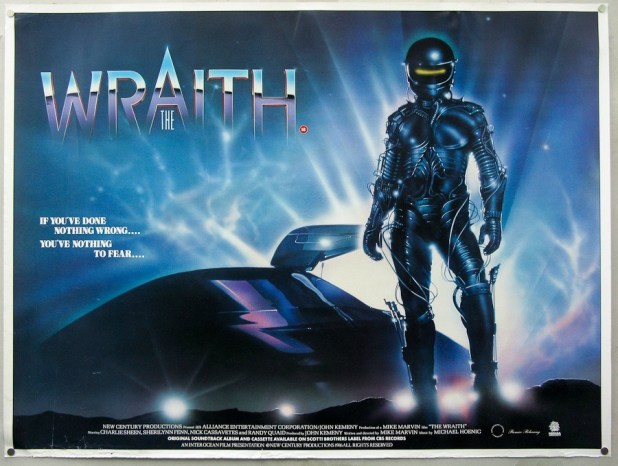
In another version of our reality, The Wraith was the Top Gun of 1986. People are still wearing t-shirts of it, dressing up in costumes at cons and I have an amazing Jake Kesey action figure on my shelf.

As bright lights descend from the heavens — shades of The Visitor — an all black Dodge Turbo Interceptor comes to life, along with a black-garbed driver.

Welcome to Brooks, Arizona. This is where Packard Walsh (Nick Cassavetes, son of Gena Rowlands and John Cassavetes, exuding pure sexual menace) leads a gang of car thieves that race people for pink slips. Everyone and everything is his property, mainly Keri Johnson (Twin Peak‘s Sherilyn Fenn), who doesn’t remember Packard killing her boyfriend Jamie Hankins (Christopher Bradley).

That’s when Jake Kesey arrives on a dirt bike. He instantly befriends Keri and Jamie’s brother Billy, who both work at Big Kay’s, a local drive-in hamburger joint. One day, while they swim at a local river, they both notice huge knife scars on Jake’s back.

The Turbo Interceptor starts to take over Packard’s races, its driver’s face never seen, his body covered in armor and metal braces for reasons unexplained. Everyone who races the Wraith, as he comes to be called, is killed, including gang members Oggie Fisher (Griffin O’Neal, April Fool’s Day) and Minty. Me, I like Skank and Gutterboy. How can you not love gang members who drink gasoline for an entire movie? I love that they’re so high that they refuse to believe in the Wraith. Soon, they get blown up real good.

Meanwhile, Sheriff Loomis (a pre-freakout Randy Quaid) is in hot pursuit but never seems to get close. Rughead, the only gang member who didn’t help kill Jamie, goes to the police to try and save his skin. He’s played by Clint Howard and his amazing hair, a B&S favorite since Evilspeak.

Packard still has an iron grip on Keri, despite the fact that she won’t give him what he wants: sex. Isn’t that what all guys want? Well, once he sees Keri kiss Jake, he kidnaps her and says they’re heading for California. She stands up to him and says that she never loved him. The Wraith shows up and Packard finally pays for his crimes. As the police prepare to give chase, Loomis calls it off, as they could never catch him.

Keri gets back home and the Wraith pulls up, then transforms into Jake. He tells her that he is her dead boyfriend, but doesn’t look like him because “This is as close as I could come to who I once was.” In truth, Sheen was tied up making Platoon, so they filmed the early scenes without him.

But Jake has one last act before he can leave — he gives the Turbo Interceptor to his brother, revealing who he really is. He tells Keri to pack light for where they are going. Where, Jake? Heaven? Outer space? The planet or dimension that sent Tony’s dad in Xtro?

The Wraith is the very definition of bonkers. It’s like Ghost Rider meets The Car meets Rebel Without a Cause by the way of a punk gang from The Road Warrior. It’s so many movies in one, with something for everyone to love. It was written and directed by Mike Martin, who also brought us Hamburger: The Motion Picture and directed four movies under the pen name Jake Kesey. Yep. You guessed it. The Wraith himself.

You can check it out on Shudder, which you should do immediately.

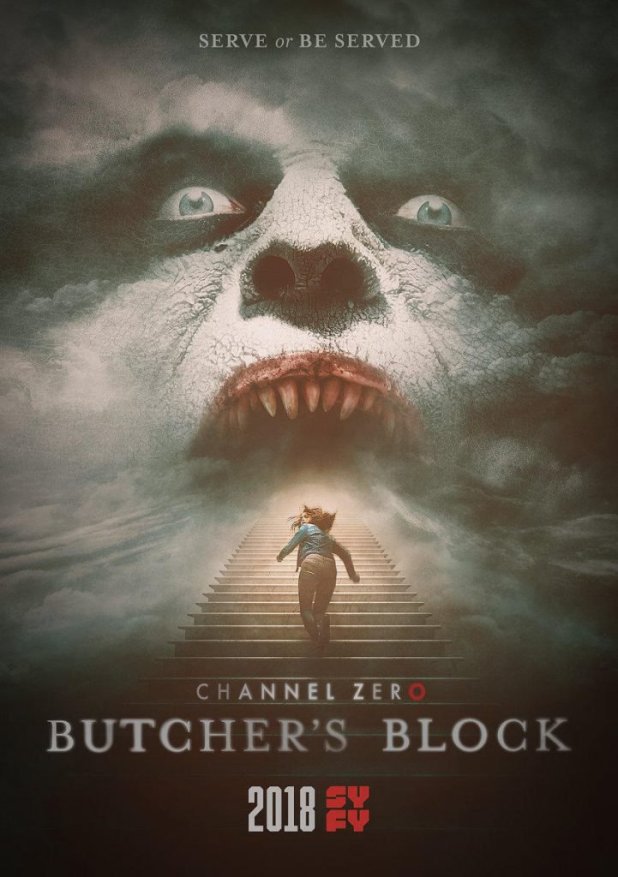
Channel Zero: Butcher’s Block (2018)

A girl named Alice Woods and her sister Zoe have come to the town of Garrett in the hopes of escaping the madness that destroyed their mother. However, there are staircases to nowhere and the Peach family to contend with, even if the rest of the world believes they’ve been gone since the 1950’s. Welcome back to Channel Zero. Things are about to get weird all over again.

From the beginning of the first episode and the strains of “Crucified Woman” by Riz Ortolani (from the film Cannibal Holocaust), you know that this season, you’re in for it. Throw in Rutger Hauer as the leader of the Peach Family and you have a recipe for what is fast becoming the perfect horror show.

Ever since the death of the Peaches’ youngest daughters, they have left our world behind and become part of a side world called Slaughterland, which lies behind the many doorways and staircases to nowhere that show up randomly in Medallion Park. There, they are immortal thanks to the Pestilent God, who randomly asks that children be sacrificed to him.

Alice is the exact opposite — a social worker trying to save people. But soon,  a little girl named Izzy and her mom disappear from her care in broad daylight. Her sister Zoe begins to continually hallucinates the face of the Pestilence King, seeing him no matter where she goes. The Peach Family calls to her to join them, demanding that she help sacrifice Izzy as part of their covenant.

Meanwhile, the girl’s landlady is writing a book all about the horrors of the area now known as Butcher’s Block. Of course, she knows way more than she lets on. And then there are the children of the Peach clan, one of whom is arrested and promptly eats his cellmate before being released by the police with no charges.

Think things are crazy? Get ready — the elder Peach cures Zoe of her schizophrenia by drilling directly into her brain, then invites Louise and Alice to a feast that ends up being Izzy’s mom. Two episodes in and this season has eclipsed all of the Channel Zero terrors that have come before!

The Peaches want Zoe to consume human flesh and become one of them, but she refuses, instead subsisting by eating her own flesh. And Alice? By now, she’s seeing visions of herself as various creatures that look like giant puppet-headed Alices.

What I loved about this season is that the heroines’ roles are reversed by the last few episodes, begging the question of who will save who. And you can understand the motivation of the Peach family, as they went away to avoid the rapidly changing horrors of the world but ended up being changed into something even worse.

There are also goblin children, a meat servant, two generations of policemen forced to face the sins and compromises of the past, 1950’s housewives, a crazy scissors lady and so much more, you’ll wonder how six episodes is enough to contain it all. Unlike the bloated seasons of American Horror Story that rely on stunt casting and deus ex machina endings season after season to increasingly worse effect, Channel Zero has only improved with every successive tale.

I don’t want to spoil anything else for you. I insist that you simply watch the entire season now on Shudder.

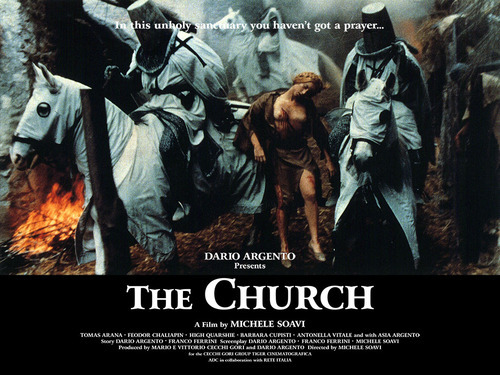
The Church (1989)

Michele Soavi directed four horror films from 1987 to 1994, starting with Stagefright and ending with Cemetary Man that continued the rich tradition of Italian horror. With training from Joe D’Amato and Dario Argento, as well as second unit work on two Terry Gilliam films, he emerged as a unique presence with an eye that combines those aforementioned traditions with a gaze toward the art film and the new.

Some considered this movie a sequel to the Demons series of films, with each movie all based around one cursed place. Demons was all about a movie theater (including Soavi as the Man in the Mask that lures people to their doom) and Demons 2 concerns an apartment building. There are also a million other movies that are and are not connected to that series that only Joe Bob Briggs can properly explain.

The film opens with the history of the church. Upon finding stigmata on the foot of a village girl, Teutonic Knights wipe out a village — man, woman, child and animal — burying them in a mass grave. It seems the devil had infiltrated the entire town and this was the only way to deal with it. One villager (Asia Argento) tries to escape and is impaled and tossed into the grave. The knights cover the grave with crosses and build a church upon it.

In modern times, we meet Lotte (Argento, again), the daughter of the church’s sacristan, Hermann; Evan, the new librarian who starts a relationship with Lisa (Barbara Cupisti, Stagefright, Cemetary Man), an artist restoring the artwork in the church; the bishop; the reverend (Giovanni Lombardo Radice, The Omen, City of the Living DeadHouse on the Edge of the Park) and Father Gus (Hugh Quarshie, NightbreedStar Wars: The Phantom Menace).

The cathedral is filled with secret pathways that Lotte uses to go out clubbing, before coming back and getting slapped by her father for smelling like cigarettes and booze. There’s also a rumbling, bubbling undercurrent of pure evil presided over by black-robed monks.

Evan and Lisa may be sneaking off and making love, but he is only really in love with learning more of the church. As she finds his way to the stone with the seven eyes, he kneels before the status and tears his own heart out, holding it above his head as it beats its last, while we’re treated to fast-moving visuals of the pulsating city above the church set to the music of Philip Glass (The Church also features music by Keith Emerson and Goblin).

As the possession of Evan increases — yes, ripping out his own heart was just the start — we’re treated to a litany of insane images. Lisa is taken by a demonic goat. An elderly couple bickers and then the wife is found using her husband’s head to ring a church bell. A man kills himself with a jackhammer. A bridal party photo shoot ends with the bride model impaled. A woman is absolutely destroyed by a subway train. A giant flesh tower of dead bodies rises as the mechanics of the church kick in, trapping everyone there with death the only escape. Oh yeah — there’s also a flashback to the original builder of the church being impaled on his mechanical security system.

The Church is less about a narrative flow and more about a collection of images and moments that add up to one impressive smorgasbord. Soavi saw the other Demons films as “pizza schlock” and ended his artistic relationship with Argento with this film. Yet he was contending with a script that had a ton of other writers, including Argento, Soavi, Franco Ferrini, Lamberto Bava, Dardano Sacchetti (who wrote nearly every major Fulci movie, as well as A Bay of Blood and Shock), Fabrizio Bava and Nick Alexander. What emerges is a wild exercise in style, featuring a multitude of references to artwork both religious and modern, including the painting “Vampire’s Kiss” by Boris Vallejo.

If you’re expecting a movie that’s easy to follow, I suggest you find another one to watch. But if you’re searching for arresting visuals and a technically proficient director who has a ton of visual tricks he wants to blow your mind with, then by all means, get ready to experience The Church.