Halloween (2018)

SPOILER WARNING: We don’t often review movies that are still in the theater, so usually don’t bother with worrying about giving away major plot points. Seeing as how this one is in the theaters right now, you may want to see it. We’d rather not be to blame for giving away plot points, twists and turns or influencing your decision to see it. Movie watching is an incredibly personal experience and we respect everyone’s opinion, even when it’s wrong and we laugh at you in the privacy of our own home about your lack of aesthetics and taste.

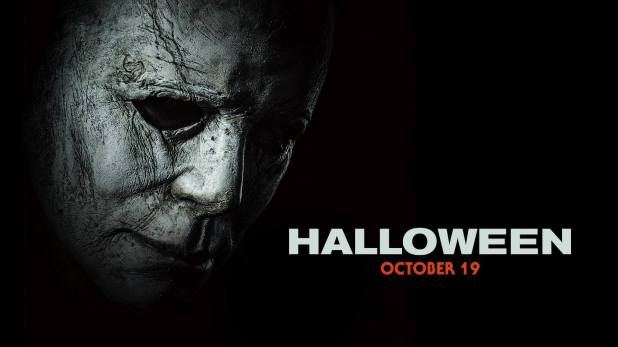
Nearly every review of the new Halloween starts out by stating the problematic nature of the franchise. In my perfect world, Halloween 2 would have been the end, with Halloween 3: Season of the Witch starting off a yearly anthology of pre-Samhain related mayhem. But my wife has so much love for this series that she endorses everything save Halloween Resurrection and the second Rob Zombie film. And even then, she’ll still watch those. We can’t hide the fact that we are fans — our shelves speak to it, with multiple versions of the first film and every cut of 6.

That’s why the possibility of a new Halloween film with a major budget, nine years after the last abortive attempt to make one of these films, raised such hope. David Gordon Green, the director of Pineapple Express, along with frequent collaborator Danny McBride would create the film along with the participation of the original creator, John Carpenter and the acting skills of Jamie Lee Curtis. For the last year, we’ve been inundated with the assurances that these creators are people who get what makes Halloween work. This would finally be the sequel that fans had been craving since, oh, 1981.

The first chink in the hype armor, for me at least, was the knowledge that this film would invalidate Halloween 2, being seen as the only sequel that counted. The convoluted history that we mentioned earlier may keep some from understanding the series, but I’ll be honest. There’s no reason why this movie had to erase the second installment. It could have still happened and it wouldn’t impact this film at all.

There’s really no nice way to say this, so let me jump in feet first. Beyond being a movie that fundamentally doesn’t comprehend what made the original Halloween such a great film, the 2018 version of Halloween is a movie with no understanding of what makes a great horror movie, either.

That isn’t to say there isn’t a great set-up. Forty years after the 1978 Haddonfield murders (referred to as “The Babysitter Murders,” a nod to the film’s original title), a Serial-like podcast team makes its way to the area to investigate the story and try to see both sides. The first mistake the journalists make is to show Michael Myers’ mask his iconic mask. This scene is pretty chilling, as the entire yard of Smith’s Grove Sanitarium rises up in chaos, dogs barking, insane men screaming, Myers just silent and not turning his back. Let’s not let the logic of how two podcasters got such a crucial piece of evidence out of police custody or how any hospital in its right mind would allow this interview to happen this way get in the path of the movie.

The podcasters then make their way to the fortress home of Laurie Strode, who has spent the last forty years preparing for Michael’s return. If this seems like 1998’s Halloween H20: 20 Years Later twenty more years later, we should be so lucky. After a quick interview in which the British duo shows that they just don’t get it, Laurie kicks them out.

That night, Dr. Ranbir Sartain and a maximum security crew transport Myers and other prisoners from Smith’s Grove to a maximum security prison. Of course, the bus crashes. Of course, Michael escapes. And of course, the footage echoes the escape from Halloween 4 while simultaneously telling us that that movie no longer exists. There’s a moment here, where Michael kills a young boy, where I felt like this was this film announcing that it wasn’t going to play by the traditional slasher rules. If young kids were fair game, everyone was. Sadly, this was one of the last surprises that the film would have in store.

Michael then finds and kills the podcast team, which has no real emotional heft because we have no reason at all to care whether they live or die. Sure, they tempted fate and must be destroyed in order for him to get his mask back. It’s a brutal scene, putting over the power that Michael has, but if we follow logic, The Shape should by 61 years old. Co-writer McBride stated that “I think we’re just trying to take it back to what was so good about the original. It was just very simple and just achieved that level of horror that wasn’t turning Michael Myers into some being that couldn’t be killed. I want to be scared by something that I really think could happen.” I haven’t seen many 61-year-old men that can throw people around like this. The refusal to embrace the supernatural evil of Myers is one of this film’s first failings.

Back to Laurie Strode. She’s had two failed marriages and had her daughter Karen (Judy Greer) taken away from her at the age of twelve. Today, they have a tenuous relationship, with Karen’s daughter Allyson working the hardest to understand her grandmother. Learning that Myers is loose, Laurie breaks into her daughter’s home and warns her and her husband Ray that they need to be ready. This is another narrative misstep. Are we supposed to believe that Laurie’s PTSD and constant battle readiness has cost her way too much? Or is she the only person who is right in this whole film? The way it plays out, as she’s pretty much the only protagonist who actually does something, proves that she’s correct all along.

That’s one of the critical flaws in this movie. Outside of Laurie, there isn’t a single character that we get to know or care about. Her daughter is someone who has given up connecting with her. That’s her one note. Her granddaughter is in a crappy relationship and wants to get to know her grandmother a little better. And that’s it. Every single other person we meet — save for Dr. Sartain and we’ll get to him later — is just fodder. Contrast this with the original, where we get to know Laurie, Lynda (P.J. Soles shows up so quickly here you don’t even catch her, by the way) and Annie really intimately before the first hint of bloodshed. I defy you to tell me one character’s motivation or reason for being beyond words on a page here. For a movie that aspires to be above and beyond the slashers of the 1980’s, even the worst of those had a character you wanted to root for other than the final girl.

Meanwhile, Michael has started to kill people all over again. Allyson’s friend Vicky is babysitting instead of attending the school dance and she gets slaughtered. The scene where Myers is hiding in the closest was so much better effect in the trailer. Here, the way it’s framed, it loses any narrative punch. That’s when we get to the next flaw in this film: it has no idea how to be suspenseful. There is no moment where you get that heart pumping feeling where the killer is stalking his prey, where you feel compelled to yell out words of help to the hapless victim onscreen. We saw this movie in a totally sold out environment of people ready to shout, scream and shriek. You could have heard a pin drop during this movie.

The only character that seemed to get a reaction was Julian, the young boy who Vicky is babysitting. Now, I’ll be honest. The kid was hilarious. And I’m not one of those people who can’t deal with a little comedy in my horror. But I’m also of the belief that once the horror truly begins, humor becomes a release valve that isn’t always necessary. In fact, Julian is so funny that he breaks the movie here, although he gets off a great line as he exits the film, telling one character that he shouldn’t even go into the house because he’ll definitely get killed.

At this point, Laurie has become Dr. Loomis, patrolling the streets on her own, gun in hand. This is something that the cops have seemingly no issue with. Maybe it’s because Sheriff Frank Hawkins was the cop who stopped Loomis from killing The Shape when he was in police custody. That’s probably better than the original script for this that had Loomis being killed before the police could stop Myers’ original rampage.

For all the time the movie spends in setting up the leader of the police, Sheriff Barker, he never appears again once the carnage really starts. No, instead of the police doing what makes logical sense — putting everyone in protective custody in a location far from Haddonfield — they allow everyone to go to Laurie’s fortified house while they search for Allyson. Keep in mind that Laurie has been wantonly shooting handguns off all over town, so she seems like the most level-headed solution, right?

Allyson is on the run, having found the body of her boyfriend’s geeky best friend impaled on a fence. She doesn’t have to run all that far or all that long. There’s literally no pretense of suspense, as Sheriff Hawkins quickly finds her and they set off for Laurie’s house, while Dr. Sartain makes a miracle recovery after being shot in the heart earlier. Seriously, the guy is near death in one scene and somehow shows up with just a sling and band-aid twenty-five minutes later. Seeing Myers on the way, Hawkins hits him Ben Tramer style with his squad car, due process and Miranda rights be damned. As they inspect the body, the “new Dr. Loomis” reveals himself to be evil, killing the cop and locking Allyson in the squad car along with the stunned Myers. That’s the only other surprise in the film, as the now mad doctor dons The Shape’s iconic mask.

“I realized right then that if this guy was the bad guy for the rest of the movie and that was it for Michael, I was going to just have to walk out of the theater.” That’s a quote directly from my wife, probably the biggest Halloween superfan I’ve ever met.

Luckily for everyone but the characters in the film, Myers survives and makes his way to Laurie’s home, stopping to stomp out Sartain’s brains all over the backyard and kill off Allyson’s dad, who outside of being cool to her boyfriend about doing drugs and bad at baiting mousetraps has no discernable character traits or reasons to exist.

As Laurie puts her daughter into the saferoom she feared as a child, she battles Michael throughout her house in a war that fanservice echoes the initial film. Instead of Michael falling off the balcony and disappearing, this time it’s Laurie’s turn. That said, there’s no real dread or worry for any of the main character’s safety — even Karen ends up having no issues shooting Myers and helping her mother trap him in the basement, which was the goal all along. They blow the house up and drive away in a truck that made me wistful for the end of The Texas Chainsaw Massacre, the second movie this year after The Strangers: Prey at Night to totally rip off the ending of a much better movie.

Director David Gordon Green said that the first cut of the film was two hours and fifteen minutes long, with the fat of the film and entire scenes cut for pacing and length. That amazes me, as this  1 hour and 46-minute film felt like it lasted for 3 hours. There are whole characters introduced, made to feel like they’ll have something to do and then discarded. You could honestly get rid of Laurie’s granddaughter, friends, the high school dance, her walk home and still have the same basic story. The only reason she’s in there is so that we have young babysitters for Myers’ to kill. We learn nothing about her other than she’s strong-willed, smart and has horrible taste in men. There’s no reason to root for her or hope that she survives. And even worse, her mother is presented as such a shrill that you almost want to see her pay for the way she has shut Laurie out of her life.

What makes the first two Halloween films work is the atmosphere — from the first frame, you realize that something inhuman is coming after Laurie Strode. The second film just amps up the pace and makes The Shape into an inhuman force that cannot be stopped. In this film, he’s just there. At no point do you feel tension from him or worry for the people he has come to kill. Things just happen. It’s sloppy, slap-dash and for all the insults lobbed at the other sequels in this franchise, much closer to parts 5 and 6 than I’m sure the filmmakers would like to admit.

This may be the first Halloween modern filmgoers see. And as such, there is no moment in it that points to what makes Michael Myers special. I can name several from the original, such as the moment where he watches Bob after he kills him or slowly rises up after we’re sure Laurie has killed him. And the end, where his body is just suddenly gone, is the stuff of nightmares. Early in the new version, Vicky’s boyfriend Dave echoes the voice of millennials, saying that Myers’ five murders aren’t such a big deal anymore in the grand scheme of things. I feel for anyone whose initial exposure to this franchise is with this film, one where Myers fails to do one remarkable thing or elicit one moment of fright.

I’ve seen plenty of reviews that state that this is the best sequel in the franchise and a return to greatness. I think that those reviews were written before anyone even saw the film, preordained so that the feel-good story of the return of a much-maligned franchise could come true. I tried to remove myself from the hype, to attempt to be surprised and enjoy Halloween 2018 on its own merits, but it really has little to none.

The sound of Michael’s breathing over the end credits signifies more than the fact that The Shape has survived. No, it means that in two years, we’ll be lining up all over again, hoping that this time perhaps someone can get what seems to be such a simple idea right.
Dead Sleep (1990)

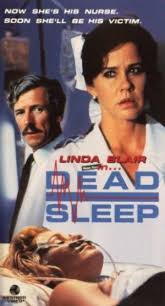
At 3 AM, my mind works like this: “Sam, there is a movie that rips off Coma and has Linda Blair in it. We must not sleep. We must watch this.”

Director Alec Mills only did one other film, Bloodmoon, but he was a camera guy and cinematographer on several Bond films like License to Kill and Moonraker. I would assume, after watching this movie, that he did the parts that are really boring, like the travelogue footage when Bond makes it to another country.

I’m on a quest to watch every Linda Blair film, so this is part of that Quixotic endeavor. Here, she plays Maggie Healey, an American who learned to be a nurse and moved to Australia where she gets a drug-addicted rich boyfriend who likes to draw pictures of her on his sailing ship. I’m not making any of this up.

She becomes a nurse at this clinic where they advise long-term sleep therapy. Being in a medically induced coma for two weeks sounds awesome and I fully endorse whatever these wacky Aussies are doing. Unfortunately, all of the bare-breasted women and men in pajamas that they have sleeping Michael Crichton-style end up killing themselves. The drama!

I really need to get around to planning a Linda Blair week. If you want to watch it yourself, it’s on Amazon Prime.

2018 Scarecrow Psychotronic Challenge Day 20: The Lost Boys (1987)

Day 20 of the Scarecrow Psychotronic Challenge is 20. VIDEO STORE DAY. The most important day of this challenge. Watch something physically purchased from an actual video store. If you live in a place that is unfortunate enough not to have one of these archival treasures then watch a movie with a video store in it at least. #vivaphysicalmedia! Sadly, the last Family Video locations that were within a half an hour of our house closed at the beginning of the year. It was incredibly depressing, despite the fact that we bought a lot of films in the closing of the store. But it felt like going to the estate sale of one of your best friends. I teared up a bit in the parking lot, because there’s nowhere left other than Redbox to look for new films. And well, those boxes may be convenient, but they just aren’t the same.

That means that I had to look for something with a video store scene in it. And that leads me to The Lost Boys, a movie that pretty much sums up the 1980’s, the days when video was king.

When I first put in The Lost Boys, my wife mentioned that she would watch it for a few minutes. Of course, she ended up watching nearly the whole thing, remarking how attractive every guy in it is, how she dressed as Star for Halloween as a little girl and reciting the dialogue word for word. After all, she says, it is the perfect 1980’s movie.

Michael (Jason Patric, who my wife also loves in Speed 2: Cruise Control) and Sam Emerson (Corey Haim, whose 976 hotline was called by my wife every single day) are the children of divorce, moving with their mother Lucy (Dianne Wiest, who my wife loves in Practical Magic) to the tourist town of Santa Carla.

They’ll be living with their strange grandpa (Barnard Hughes, Sisters) and trying to acclimate to what just might be the murder capitol of the United States (it used to be Youngstown, Ohio, a town I grew up close to). Just look at the boardwalk — it’s covered with posters of missing kids.

At a concert (once, SNL was funny and did this sketch based on this scene) featuring a shirtless and oiled up man playing saxophone (he’s actually called The Believer if you read the Vertigo Lost Boys comic book that came out in 2016). Michael falls in love quickly with Star (Jami Gertz, Less than Zero), which brings him into the orbit of the Lost Boys, led by David (a perfect Kiefer Sutherland).

Meanwhile, Sam is meeting Edgar and Alan Frog (Corey Feldman, another of my wife’s 976 call loves and Jamison Newlander, who is in the 1988 remake of The Blob), two comic shop working kids who are really fearless vampire killers. They claim that Santa Carla is the hometown of numerous vampires and that his brother could be one of them.

Tying into today’s theme of video stores, the kids’ mom soon meets Max (Edward Herrmann, Overboard), a kindly video shop owner who seems at odds with the Lost Boys that run the boardwalk (Bill S. Preston, Esq. himself, Alec Winter, is amongst their number).

The divide between brothers before and after puberty is clearly delineated by this film, as Sam is content to sing old soul songs in the bathtub with Michael is out there chasing strange women, hanging from railroad bridges and watching rice turn into maggots. You can also see this movie as the struggle between growing up and growing away from your family. Or dealing with a mother who is starting to date again and how that changes your perceptions of her. There’s also the fact that the title itself is a reference to J.M. Barrie’s Peter Pan stories, boys who will never grow up.

Of course, everything leads to a final conflict between the Emersons and the Lost Boys, with Max as their secret leader. I always loved how the video store owner’s goal all along was to finally find a mother for his motley collection of vampiric ruffians. The way he reacts when she isn’t afraid of them at the video store telegraphs this upon repeated viewings. And does anything beat grandpa’s last line? “One thing about living in Santa Carla I never could stomach: all the damn vampires.”?

After starting his directing career with The Incredible Shrinking Woman and D.C. Cab, Joel Schumacher really did an amazing job on this film. You can almost forgive him for his work on the Batman films. No, not really. You can never forgive that.

This really is the perfect 80’s film. I always felt for the vampires more than the humans. Never grow up. Never die. Never age. How does that sound bad? Sure, you have to kill other gangs on the boardwalk, but is that such a rough life?

There were plans to make a sequel named The Lost Girls with David returning as the villain — noticeably he’s the only vampire that doesn’t dissolve — but it just never worked out. There are several direct to video sequels to this that I’ve never seen, Lost Boys: The Tribe (featuring brother Angus Sutherland as the lead vampire) and Lost Boys: The Thirst. A fourth film was in the works, as well as a Frog Brothers TV show, when Warner Premiere went out of business.

Finally — I just want to mention how perfect this scene in What We Do in the Shadows is.

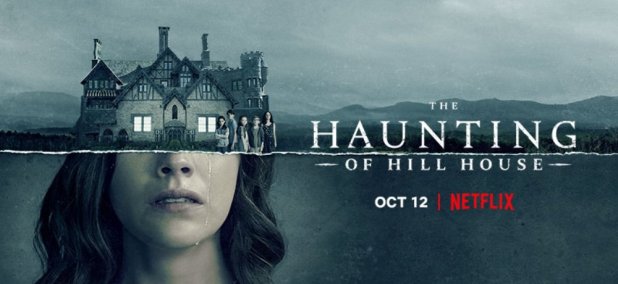
The Haunting of Hill House (2018)

I think I’ve figured out the difference between today’s “elevated horror” and the more traditional horror that we so often write about on these pages. The slasher killers of my childhood didn’t have complicated backstories or motivations, at least at first. The Shape killed because he was a killer. Leatherface and his family killed and ate because that was just their life. Sure, Jason was a mentally challenged child who drowned in a lake and somehow lived on the bottom of it for some time before coming back three movies in and wearing a hockey mask, but his mom, for all her faults, loved him.

The terrors of today’s horror? It all comes down to bad parenting. The Graham family of Hereditary was doing more than dealing with the King of Hell, they were dealing with years of family madness and secrets. Jay Height wasn’t just dealing with a sexually transmitted demon in It Follows, she was dealing with parental neglect. And in The Babadook, the real beast was just the crushing boredom of that film. It was that Amelia Vanek is a mother that blames her child for her husband’s death. She is, you guessed it, a bad mother.

There are times when you want subtext and reasons behind things. And other times, you just want to be scared. After all, when you’re looking for significance where there should be none, Freud would like to remind you that “Sometimes, a cigar is just a cigar.”

It’s no secret that I’m not a fan of “elevated horror” or trying to find the meaning behind everything — ironic as I spend a good chunk of my days debating movies right here. It’s more that I hate when people have agendas and force them into every movie. Sometimes, I just want that cigar. to be a cigar. Sometimes, I just want to watch a scary movie.

So it was without no small trepidation that I entered into the ten-hour commitment that came with watching Netflix’s new The Haunting of Hill House, an adaption of Shirley Jackson’s 1957 book (which was already made as 1963 and 1999’s The Haunting).

In the summer of 1992, Hugh and Olivia Crain plan on flipping an old mansion, just as they have with several other homes. Along with their five children, Steven, Shirley, Theodora, Luke and Eleanor, they go face to face with the paranormal, barely escaping with their lives (well, I lied, not all of them make it out as Olivia dies). Nnearlyalry a quarter of a second later, another death in the family brings the Crains back to Hill House to confront a lifetime of an absent parent, a lost mother and the ways that they’ve tried to handle so much grief and pain.

The story starts with Steven Crain (Michiel Huisman, Game of Thrones), the author of the book The Haunting of Hill House, which details his experiences in the house, as well as those of his brothers and sisters. The fact that he’s written this book — and made the money from it — has been a point of contention between he and his family ever since. That may be because of all the Crain family, he was the only one who didn’t see anything. His books and a lot of his life have been lies. At the end of the first episode, he finds his sister Nell hiding in his house. That’s when he meets a ghost for the first time — his sister has committed suicide inside Hill House hours before.

Each episode introduces us to another member of the family, from control freak Shirley (Elizabeth Reaser, Ouija: Origin of Evil and Annabelle: Creation as an adult; Lulu Wilson from  as a child) to child psychologist and psychic sensitive Theodora (who is married to director/creator Mike Flanagan, working with him on his other films like the aforementioned Ouija: Origin of Evil and Gerald’s Game) and Nell’s twin Luke, who struggles with addiction. Their lives and stories intersect and build upon one another, showing how the house and what happened on one night have ruined their lives in one way or another.

I’ve always had a theory that ghosts aren’t real. What we see in these apparitions aren’t things that go bump in the night, but moments where reality has been recorded over and over, like an old VHS tape, with the more horrible moments of life eating through the layers of reality, replaying over and over again. Hill House works that way, with the ghosts the children saw in the past simply being their future. I really want to discuss the moment that Nell realizes who the ghost she has seen her entire life is, but doing so would completely ruin this show if you haven’t seen it yet.

I was surprised by just how emotional this show made me. Credit for that is due to Timothy Hutton, who I’ve always known is an incredible actor, but he really proves it all over again as the father of this brood (the same role in 1992 in played by Henry Thomas from E.T. The Extra-Terrestrial). Carla Gugino is wonderful, as usual, as the mother who may never go away. I loved the long cuts that the actors got to use, which really added to the emotion of this. For example, the first fifteen minutes of episode six are all one straight take with no edits or cuts (there are only give cuts in the entire episode!). And bonus points for having Russ Tamblyn in here, as he was Luke in the original The Haunting!

I love that people are reporting sleep disorders and anxiety attacks after watching this show. Have we really grown so weak as a species that shows like this can trigger — that word! — us in such a way? I enjoyed this show, but I don’t enjoy reading clickbait articles like this that basically collect the tweets of people who should never, ever watch Cannibal Ferox. Just let a cigar be a cigar. Just enjoy scary shows for what they are.

But don’t just take it from me. No less of a voice in horror than Stephen King had this to say: “THE HAUNTING OF HILL HOUSE, revised and remodeled by Mike Flanagan. I don’t usually care for this kind of revisionism, but this is great. Close to a work of genius, really. I think Shirley Jackson would approve, but who knows for sure.” You watch it for yourself on Netflix.

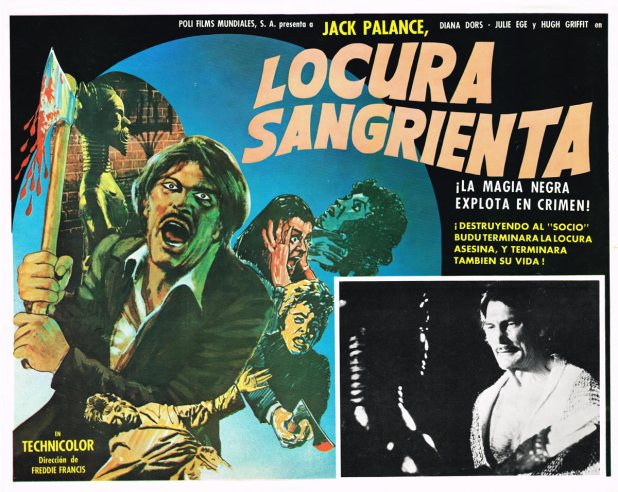
Craze (1974)

Thanks to his work on Amicus films, Freddie Francis will always get a pass. And Jack Palance has made some of the worst movies I’ve ever seen so much better. Therefore, I wanted to like Craze way more than I ended up enjoying it.

Palance stars as antique shop owner by day, cultist by night Neal Mottram. The film starts with him sacrificing a nude woman to the African god Chuku, whom he believes will reward him with both wealth and power. Its movies like this that make being a devil worshipper seem rough and pointless. Every single turn, you have to hunt someone down, kill them, get an alibi and run from the cops. It’s a lot of work and when it’s over, you still lose your soul.

Diana Dors is in it and her life story is way more interesting than the film. She gained her first fame as a Monroe-esque blonde bombshell promoted by her first husband, Dennis Hamilton. After a career of sex comedies and Page 3-style modeling, it turned out that her husband was defrauding her. Still after that, she made further headlines by holding parties where she supplied hot young starlets and plenty of drugs to a large number of celebrities. The real stinger was that she had cameras all over the house to capture the action. The Archbishop of Canterbury even publically denounced her!

Supposedly, Dors left over 2 million pounds to her son in her will. It could be unlocked via a secret code in the possession of her third husband, actor Alan Lake, but he killed himself soon after she died from cancer. Despite the best efforts of codebreakers and even a TV special, the money has never been found.

Anyways — Craze. There are plenty of British starlets in this, too. Juli Ege from On Her Majesty’s Secret Service to name one. I chose to watch this because Suzy Kendall from Torso and The Bird with the Crystal Plumage was in it. And Marianna Stone from Whoever Slew Auntie Roo? shows up as well.

It’s not horrible, but it’s very slow. Palance is great — of course he is — but even he has a lot to contend with here. You can watch it for yourself on Amazon Prime and see what you think.

2018 Scarecrow Psychotronic Challenge Day 19: Night Train to Terror (1985)

Today’s Scarecrow Psychotronic challenge is 19. VHS DAY. Watch something on the greatest physical format known to psychotronica. If you don’t have access to a VCR watch something originally shot on video.  While I don’t have Night Train to Terror on VHS, my copy has been bootlegged from one, complete with tracking issues and multiple gen quality.

God (Ferdy Mayne, Count von Krolock from The Fearless Vampire Killers) and Satan (Tony Giorgio, The Godfather) ride a train, discussing the fate of three people while a band makes a music video. If you’re ready to watch three movies get edited into one and ready to check your brains at the station, then you’re ready for Night Train to Terror.

A portmanteau made up of one unfinished and two previously released movies, this is one strange bit of 1980’s video store craziness. The train is doomed to go off the tracks, so God and Satan play for the souls of not just the band, but the people in the stories that follow.

In The Case of Harry Billings, John Phillip Law (Danger: Diabolik!) has been manipulated into working for the spare body parts black market. This was a film called Harry that was never finished until it was put into this film, although it was later released on VHS as Scream Your Head Off.

The Case of Gretta Connors concerns a carnival girl turned porn star who is in a suicide club and in love with her Hollywood producer old man husband and young boytoy. This was later released as 1983’s Death Wish Club. If you want one movie where giant beetles fly around and kill people who get sexually excited by death…

Finally, we have The Case of Claire Hansen, in which a surgeon battles Satan with the help of an old man who survived the Holocaust and Cameron Mitchell. Oh yeah — Richard Moll plays her husband and his hair changes throughout the story. If this all sounds familiar, it’s because we already watched and shared this movie. It’s the batshit crazy film known as The Nightmare Never Ends.

All of these films are linked together by writer Philip Yordan, who history has told us was merely a front for blacklisted writers, with his lone Oscar for Broken Lance truly belonging to Joseph L. Mankiewicz.

I don’t know if this review can prepare you for the sheer mania that this film has in store for you. Nothing in it makes sense, to the point where you’re unsure as to whether that’s it’s a David Lynch style movie or just plain ineptitude. There has never been a movie like this before or since and that’s no hyperbole.

Vinegar Syndrome released a DVD/blu-ray combo of this and it’s packed with extras, including an interview with producer/director Jay Schlossberg-Cohen and assistant editor Wayne Schmidt, as well as the full version of Gretta.

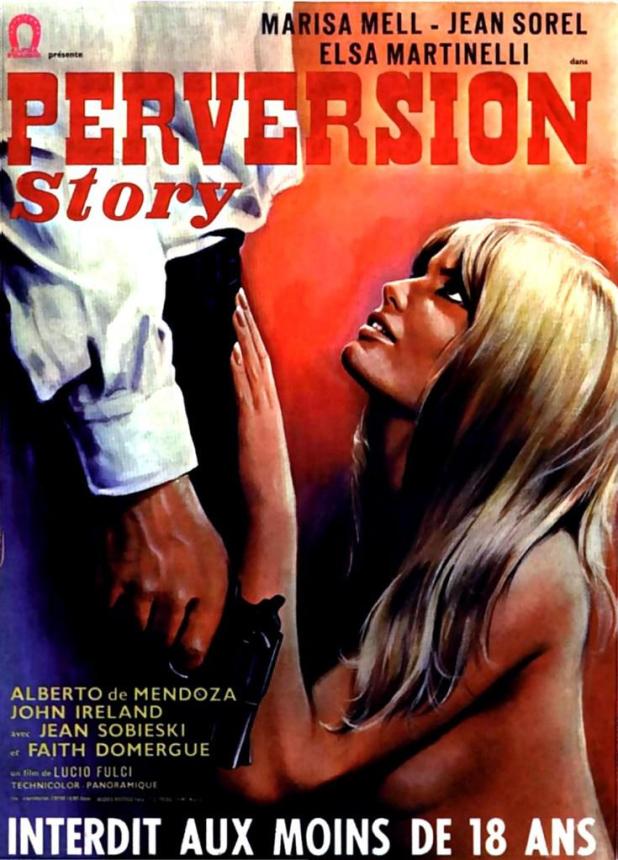
Perversion Story (1969)

Have I ever written here about how much I love Lucio Fulci? Oh that’s right — I’ve written about a few of his movies, like AengimaThe Beyond, The Black CatCat in the BrainConquest, Contraband, Demonia, The Devil’s HoneyDon’t Torture a Duckling, The Four of the ApocalypseHouse by the CemeteryA Lizard in a Woman’s Skin, Manhattan Baby, Murder RockThe New York RipperSodoma’s Ghost, Touch of DeathVoices from BeyondWarriors of the Year 2072 and Zombi 2. Heck, I’ve even written about The Curse and Zombi 3, films that Fulci just did effects on or quit part way through. Yet I was missing this film — also known as One on Top of the Other — until Mondo Macabro re-released it this year.

At this point in his career, Fulci was mainly known for comedies, so the move to the giallo genre was a major shift. Bava had invented the form only six years ago with his one-two punch of The Girl Who Knew Too Much and Blood and Black Lace. And Argento’s The Bird with the Crystal Plumage, which would turn the form into a genre all unto itself, wouldn’t be made until the next year. Gathering inspiration from Vertigo, Fulci felt that the script for Perversion Story ranked among his best.

Unlike many of his later films, this movie enjoys a decent budget, with eight weeks of principal photography and location shooting in San Francisco, Reno and Sacramento, including a gas chamber sequence shot at the San Quentin State Prison.

George Dumurrier (Jean Sorel, Belle du Jour) is the protagonist, a wealthy doctor who runs a clinic with his younger brother Henry (Alberto de Mendoza, The Strange Vice of Mrs. Wardh). He’s leading a double life. He’s caring for his asthma-stricken wife Susan, (played by Marisa Mell, just as gorgeous here as she is in Danger: Diabolik and could be the ultimate Fulci girl, as she nearly lost her right eye in a 1963 auto accident, with the distinctive curl of her upper lip the only remaining evidence of the damage) while he’s also having an affair with Jane (Elsa Martinelli, The 10th Victim).

George and Jane travel to Reno for a romantic getaway whole Susan remains in the care of her sister Marta (Faith Domergue, The House of Seven Corpses) and a nurse. Jane confesses that while she loves our hero, she doesn’t see any future in their relationship. There’s an amazing scene here where we watch the lovers from under the bed — Fulci almost shoots it as if the camera is below them and we’re caught in the space between reality and dream, true life and forbidden passion.

When they arrive at a casino, George has a message waiting from his brother: his wife is dead. Returning home to San Francisco, George meets the disapproving gaze of Marta who believes that he has to be behind her sister’s death, as he stands to receive $1 million dollars in life insurance, money he desperately needs for his business. That said, an insurance agent has been following George and Jane and informs police inspector Wald (John Ireland, I Saw What You DidThe Incubus) of his findings.

In the midst of all this scandal, George and Jane get an anonymous tip that leads them to The Roading Twenties strip club, where they meet Monica, an exotic dancer who looks exactly like Susan with blonde hair — shades of Vertigo fed through Italian sleaze! Monica and George begin an affair that may start with him seeking answers but ends with him being seduced. Fulci masterfully frames these scenes with Monica/Susan in positions of submission while obviously being the one in control of every single action that she allows to happen. For someone who would later contribute to some of cinema’s most stomach-churning excesses, this sequence is an exercise in beauty.

What’s striking about Perversion Story is that on the surface, the film seems like its going to be pure exploitation. But even in moments like when we first see Monica at the strip club, she is the only girl on stage clothed. And she appears on a motorcycle, at the time seen as the very symbol of male independence, mastering and dominating it, in complete control of her sexuality. She owns the entire room and every gaze — male and female — within it.

The police arrest Monica — due process be damned in late 60’s giallo — and she informs them that she’s an in-demand callgirl who was hired to pose as Susan by a woman she only knows as Betty. Fulci again stages an incredible looking scene here as the police begin testing the evidence and autopsy, as the screen fills with no less than five different frames all containing splashes of color and movement, a look and feel that Ang Lee would later attempt in his 2003 version of The Hulk. Again, a rare example of constraint by Fulci here, as we only see a hint of the corpse instead of actually seeing viscera.

Benjamin Wormser (Riccardo Cucciolla, Rabid Dogs) comes to bail out Monica, as he is one of her most besotten clients. However, when he arrives at the station, he learns that her expensive bail has already been arranged by someone the police will not reveal. There’s also a great interrogation scene here where Jane conducts a sexually charged photo shoot with Monica, all to learn why his life has been turned upside down. They need to know — who was his wife’s nurse Elizabeth O’Neal and where is she now? This scene sets up everything we expect from the girl on girl seduction scene, yet it’s all in the service of advancing the plot, something usually unheard of in the genre.

As the police search Monica’s apartment, they discover an envelope filled with money and marked with George’s fingerprints. While the femme fatale goes missed, Goerge is arrested, tried and convicted for his wife’s murder. On the eve of his execution, Henry visits and spills the entire plot to him. Monica really is Susan and they faked her death to get the money and leave him to pay for the crime, with the dead body really being the missing nurse. Of course, we already know this, thanks to a bravura scene where Monica sheds her blonde tresses and contact lenses in an airport bathroom, transforming herself into the woman she has always been, Susan. There’s even a POV shot that puts the viewer directly into the role of the customs officer reviewing her passport.

As Henry leaves his brother to rot, George tries in vain to get anyone to listen and Inspector Wald’s investigation comes up short. The only person left who believes in him is Jane. We follow him from his cell to the gas chamber, but it looks like there will be no last-minute reprieve. Or will there be? As the film intercuts between Henry and Susan’s romantic reunion and George being prepared for the gas chamber, the answer reveals itself. Keep your eyes open for an appearance by Bobby Rhodes from Demons as a prison guard!

Truthfully, George is out of control and powerless for the entire running time as the results of her actions. Even the denouement is out of his control — we hear the end of the story from a reporter and none of the film’s heroic figures have anything to do with the close. It’s the film’s most pathetic character that actually closes off the tale.

Perversion Story doesn’t have all of the trademarks of the giallo — multiple on-camera murders, POV shots of mayhem and black-gloved killers. But don’t let that keep you from watching. I can sum this film up in one word: gorgeous. You can really feel the spirit of the late 60’s and pop art in every single frame, making this look and feel unlike any other film in Fulci’s catalog. Instead of splatter and dread, you get longing gazes at Marisa Mell. Trust me — it’s not a bad trade-off. Throw in a jazz score by Cannibal Holocaust composer Riz Ortolani and you have the complete package.

Now, Mondo Macabro has released what they refer to as the longest, most complete form of the movie ever released (Severin released the French version in 2007). Complete with an uncut 108-minute version with English and Italian audio tracks restored from the original negative (with additional scenes provided by a 35mm print), this edition also features interviews with Jean Sorel and Elsa Martinelli, as well as an incredibly insightful commentary on the movie by Stephen Thrower, author of the book Beyond Terror: The Films of Lucio Fulci. Credit where credit is due — this version of the film looks incredible, fully realizing Fulci’s color choices and sumptuous imagery. You can grab a copy yourself at their site or on Diabolik DVD.

Disclaimer: I was sent this film by Mondo Macabro for review and in no way did that impact my review.

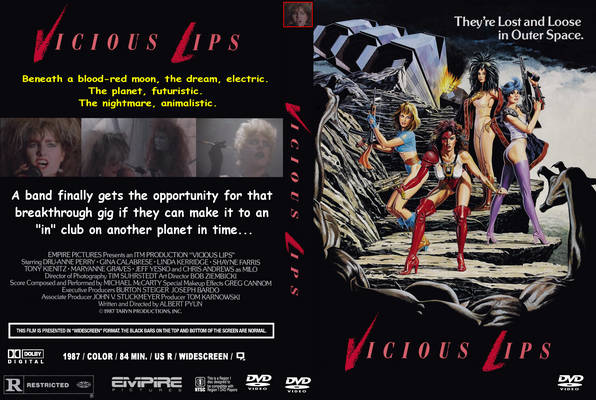
Vicious Lips (1986)

I love Comet. It’s like having old-time TV back, finding movies that you never knew existed as they are beamed directly into your home without you having to search for them. One Sunday afternoon, before a great nap, I discovered this one.

The Vicious Lips are trying to become the biggest rock band in the galaxy. Made up of Bree Synn (Gina Calabrese, The Dungeonmaster), Wynzi Krodo (Linda Kerridge, Marilyn from Fade to Black!) and Mandaa UUeu (Shayne Farris, who was also in Down Twisted with Kerridge), they’ve just lost their lead singer Ace to, well, death and need to get to a gig across the universe. Luckily, they find Judy Jetson (Dru-Anne Perry, who also plays Ace) and give her their dead singer’s name and get on their way.

I wanted to love this movie based on the first ten minutes or so, but then I realized that it came from Albert Pyun (The Sword And The Sorcerer, Cannon’s Captain America), so I had to adjust my excitement level. Here I was, hoping to get a movie about a punk rock girl band hellraising through the cosmos with the art direction of Heavy Metal and what I got was a hair ballad playing girl group slowly moving in a boring plot with art direction by whoever did the Rinse Dream’s Cafe Flesh or The Dark Brothers’ movies. That doesn’t sound like a bad thing actually. But here it is, as this film commits the cardinal sin of being boring.

If you still want to watch it, Shout! Factory has released it on blu-ray and you can watch it for free with your Amazon Prime membership.

2018 Scarecrow Psychotronic Challenge Day 18: The Aldebaran Mystery (2010)

Day 18 of the Scarecrow Psychotronic Challenge is Psychotronic Documentaries: The real authority on the occult, ufos, ghost hunters, conspiracy theories etc. They’re all real, accurate and true, right? After a week of documentaries, I had to go deep and find something truly off. And guess what? I succeeded.

This film promises so much. During Adolf Hitler’s rise to power, it states that a cabal of Nazi magicians and technicians discovered the secrets of anti-gravity and space travel from extraterrestrials.

This one hits every point you’d want it to. Hello Tesla! Hello Thule Society! Hello Maria Orsic and her Vrilerinnen, psychic girls who serve the Vril Gesellschaft, with long hair that acts as a cosmic antenna to contact occult beings from beyond our reality. Hello Black Sun! There’s also Germany’s Antarctic colony Neuschwabenland and psychic messages telling all of the Vril Society that no one will remain on this Earth.

But it doesn’t stop there. Flying wings! Flying saucers! Nordic aliens meeting with Eisenhower and Pope Pius XII! Hidden Nazi bases post World War II! Operation Paperclip! Aliens helping Nazi NASA scientists create our space program! There’s so much in this movie that it seems like the serious version of Tribulation 99: Alien Anomalies Under America!

Throw in some Roswell, Peter Levenda (who may or may not be the Simon who wrote the 1960’s Simon Necronomicon), Skull and Bones, Freemasons and more for a simmering stew full of saucer sauciness!

But don’t take it from me. Check out James Nichols site for the original essay or watch this via the link above or on Amazon Prime.

PS – Your author used to read old BBS message boards in the pre-internet phone based modem days on a Commodore 64. I was reading the Krill Papers that would eventually find their way into the book Behold a Pale Horse and there was a whole FOR YOUR EYES ONLY warning about how aliens killed Kennedy and showed our government a hologram of the Crucifixion, claiming they orchestrated the entire thing. It was at this time that my computer crashed and I became convinced — perhaps under the influence of a bottle of Jack Daniels and two Snapple Ice Teas that made for a horrifying mixed drink — that frogmen and Men in Black were coming for me, so I woke up our entire house in an abject panic. Ah, youth!

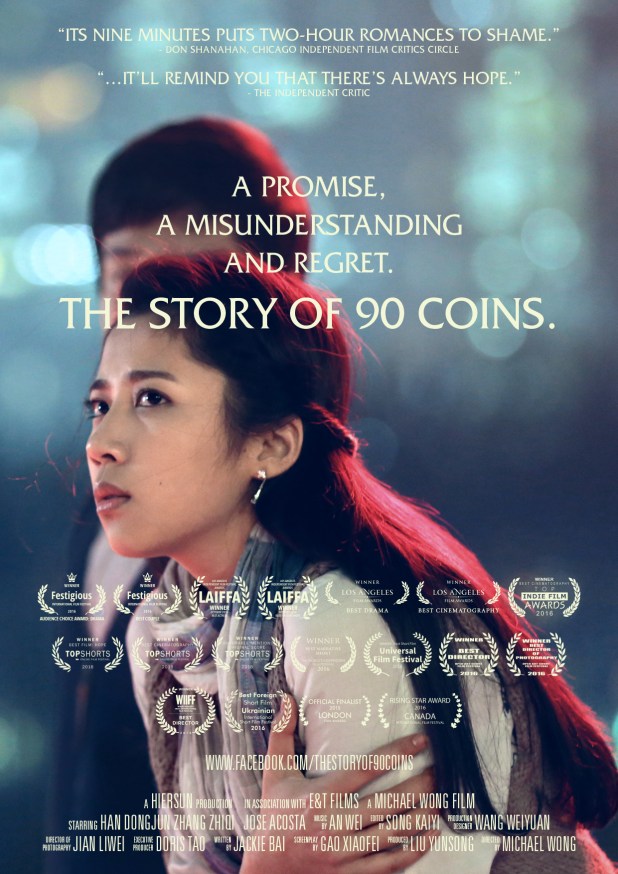
The Story of 90 Coins (2015)

A passionate man makes a special promise of love and devotion to a girl who seems reluctant to accept it. He asks for 90 days to prove that she should marry him and within time, they fall in love. Yet after several weeks, real life takes over on romance and their relationship falls apart. So what happens next?

Director Michael Wong sent us this 9-minute film that he says is “inspired by a true story; it’s a story of a promise, misunderstanding and regret.” It’s a well shot movie that asks us to remember the promise of love, that when things become hard we must also recall how magical it all is that we meet that one person.

While not the usual fare that we cover on this site, this was still pretty interesting. I’m trying to keep my mind open to ideas in cinema, so watching this made me ponder my own relationships and learn how to keep my promise to them.

Want to watch it? I posted it above. Sometimes in life, things are just that simple. Also be sure to read our review and watch Michael Wong’s latest short, The Tattooist.