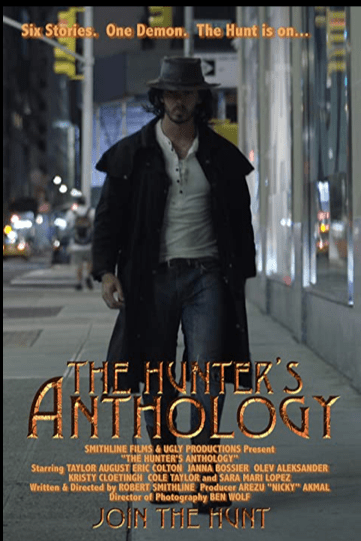
Six strangers find themselves trapped in a New York City subway by Mac, a mysterious man who claims to be a demon hunter and is there to destroy one of them.
That’s because one of their number is a demon and Mac can only tell after looking into their souls to reveal their life’s story, which takes the form of this anthology series. Across these different stories, a desperate woman goes to a fortune teller, newlyweds discover a creature lurking outside their apartment, a young man visits an insane asylum, bullied conjoined twins discover a wish-granting coin and a man lusting after a co-worker discovers a love potion.
This is a lot of fun and uses its low budget creatively, telling a fun series of stories that vary in tone without losing their edge or sense of humor. Mac has a future as a storyteller, visiting new people each episode to discover whether they are good or evil and this series does a great job of setting up future stories. I watched every episode binge style and it didn’t feel like I spent over two hours devouring these. Well done!
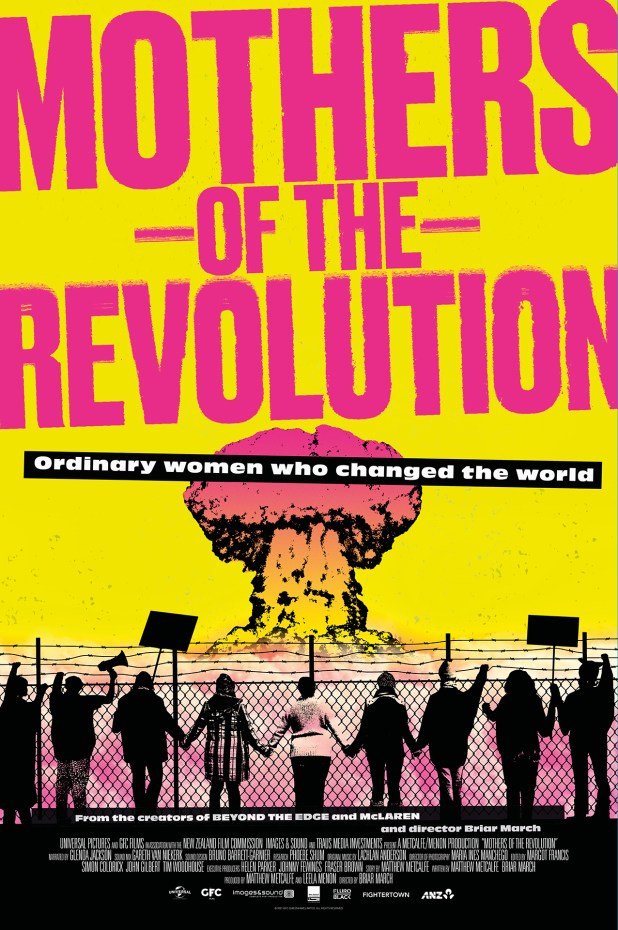
In January 1981, Ronald Reagan became President of the U.S. and suddenly worked to out-develop and out-spend on nuclear technologies against the Soviet Union, pushing the Cold War to its greatest levels since the mid-1960s.
In September of that year, in response to the growing East-West tensions, the Welsh group Women for Life on Earth walked 120 miles as a living protest against the British Government’s decision to allow US nuclear cruise missiles to be stored at the Royal Air Force base at Greenham Common, 60 miles southwest of London.
That action was the first in a series of nineteen years of work and sacrifice by a group of women whose story has never really been explored all that well even four years later. If you watched the news, all you saw was the imagery of protestors chained to fences.
The true story? Brave and principled women who stood up to a very real threat to humanity and confronted the growing nuclear madness. Eventually, they were even recognized by being more trustworthy than Reagan by Soviet leader Mikhail Gorbachev and as the true reason why he felt that he could start to work toward peace.
Yet it didn’t happen overnight.
Starting on April 1, 1983, 70,000 protesters formed a 14-mile human chain from Greenham to the Burghfield Atomic Weapons Establishment. Even as the missiles were paraded through the streets, protesters grew to stand in their way, bringing together women not just from the UK but the entire world.
Producer Matthew Metcalf had the goal of telling the story of Greenham Common from the point of view of the community of women who protested. Mothers of the Revolution, which he co-wrote with director Briar March.
As Metcalf started the project, he was conscious that he was a man telling a female story, but he thought back to his mother: “My mother imbued me with a deep sense of the importance of retelling these stories and supporting people who stand up for what’s right, so it seemed right to me that when I reached a point in my career where I had a little bit of sway, the ability to push for what I believed in, that I should use that energy and that knowledge to shine a light on the true story of Greenham Common.”
Working with female talents March and producer Leela Menon, this story came together. Menon even brings up how essential that this story is in our time of women being ready to speak up and take action more than ever before: “Politically and socially, 2018 and the years since have been very much a time of female-led voices and protests, so it felt like a zeitgeist moment to show what had come before, so that younger people moving forward can use Greenham Common as a roadmap for the future. Protest, particularly non-violent protest, is pivotal in democracy. The pushback that’s happened against protest in the past few years, shows that it is even more important than ever that we protect it as a fundamental right in a democracy.”
Three women form the story of this film:
Rebecca Johnson, the strategic force behind many of the most celebrated actions at Greenham Common.
Chris Drake, whose repressed sexuality and identity found empowerment at the camp, a place that she felt was both “coming home” and “being born.”
Karmen Thomas, the catalyst who started this action with Ann Pettitt.
From connecting with women in the Soviet Union who were also protesting to actions such as climbing control towers, representing the women’s peace camp in New York in a court case against Ronald Reagan and spending years at the camp at the expense of comfort and family, these women did more than take a stand.
They made a difference.
Mothers of the Revolution is now available on digital and on demand. Consider it essential for lovers of history or seeing how one brave person can make a change in the world.
“Hey, I can’t stop you from watching shark movies any more than I can stop myself.” — Sam Panico, in his review Great White (2021), the latest in a long line of “shark” movies.
We can’t help ourselves.
Yes. The rumors are true: B&S About Movies will watch anystreaming offering with a shark in it, as it is our quest — as with Ouija Boards and Amityville prefixers (and all of the “House/La Casa” and “Demons” sequels) — to watch them all. That shallow water quest began with our “Ten Jaws Ripoffs” feature back in 2018 that capped off our “Bastard Sons of Jaws” week of reviews . . . and the obsession continues with our recent, 2021 catch-up catch bin “Shark Weak” event.
Yes. We’ll even endure Brooke Hogan for our fix of sharks swimming through sand.
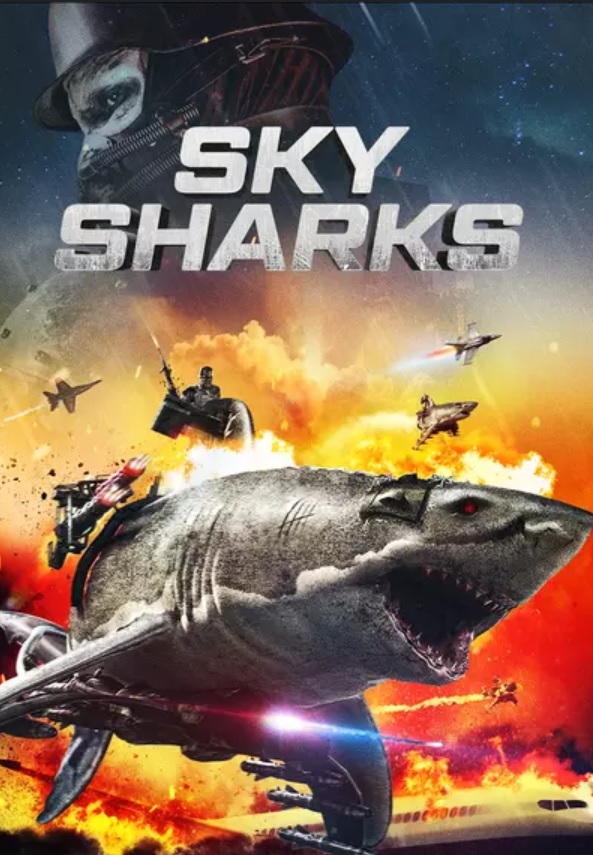
Sure, those celluloid chummers had their own, unique entertaining charms. However, this live-action, feature film debut (his first was the 2011 graphic-comic book feature Sex, Dogz, and Rock n Roll; there’s a very nice “file footage” graphic-animation sequence in Sky Sharks, as well) by writer-director Marc Fehse is an instantly engaging, can’t-stop-watching ride (that I’d watch even if not assigned to review it). It joyfully reminds of the equally absurd, Finland-made Iron Sky (2012) colliding with the Norwegian-made Dead Snow (2009) — with a pinch of Chad Ferrin’s uber-fun meshing of the demon possession and airline disaster genres with Exorcism at 60,000 Feet (in Sky Shark’s bonkers-stellar opening set piece).
True to the title, Sky Sharks wastes no time in unleashing (IMO, well-made) over-the-top graphic kills (CGI) as a Wehrmacht of artillery-packed flying sharks manned by Nazi zombies attack a Vancouver-departed flight over Iceland: the latest in a rash of “unexplainable” air crashes.
Yes. The above sentence is real. I typed it.
So, who’s behind this aerial shark mayhem? Richter Technologies via the U.S. Department of the Army’s Department of Investigation of Ancient War Engine. It seems the past — the crew of a long-lost, Antarctica ice-stranded experimental German U-Boat dabbling in “dynamic aquatics” — of Dr. Klaus Richter (Austrian actor Thomas Morris; known to U.S. audiences for Schinder’s List and the Tom Hanks-starring Angels & Demons) has returned to bring the 4th Reich to power. Attacks on New York and London await in the wings . . . or is that fins?
As with any ex-Nazi scientist pushing 100 and keeping young via injections: it wasn’t meant to be this way. It was Dr. Richter’s scientific innovations that made America the world’s foremost superpower to achieve world peace. His work also resulted in the creation of “Project Himmelsfaust.” Based in the development of the K7B youth serum: Old Nazi men never die: they turn into “super soldiers” for the Motherland. Meanwhile, due to its side effects: human females transform into an impervious zombie force — and they’re curvy and stacked.
Yeah, Sky Sharks is awesome: we’ve got air-breathing sharks armed with missile complements under their pectoral fins, hot zombie chicks with blades for hands . . . oh, just watch this movie! Keep your eyes open for the familiar U.S. TV and indie-film faces of Amanda Bearse, Robert LaSardo, Lar Park-Lincoln, Cary-Hiroyuki Tagawa, and the incomparable Tony Todd.
Screening on the overseas festival circuit since 2017 and making its U.S. streaming debut in late 2020 on Amazon, Sky Sharks made its bow this month as a free-with-ads stream on Tubi. For another ad-free experience, it’s now available as a VOD on You Tube Movies. The U.S. issued, MPI Home Video DVDs and Blus (2021) are available at all brick and mortar and online retailers, such as Amazon, Walmart, and Target. Also be sure to sample the trailer for Marc Fehse’s Sex, Dogz and Rock n Roll, on You Tube.
As for you, Sam: I told you I’d fin-up to the greens and raise your Great White. Place your bet, Big Hoss. Toss the chum bucket on the table. I dare you. A “Double Dog,” Farkus.
About the Author: You can learn more about the writings of R.D Francis on Facebook. He also writes for B&S About Movies.
“Why is she naked?” “Do you shower with clothes on?” “I don’t. But Mary Rose was not found in her home and she was not nude when they discovered her body.” “Look. Horror fans want certain things in their films.” “Tits?” “Among other things.” — Screenwriter and Producer bickering about the devilish details
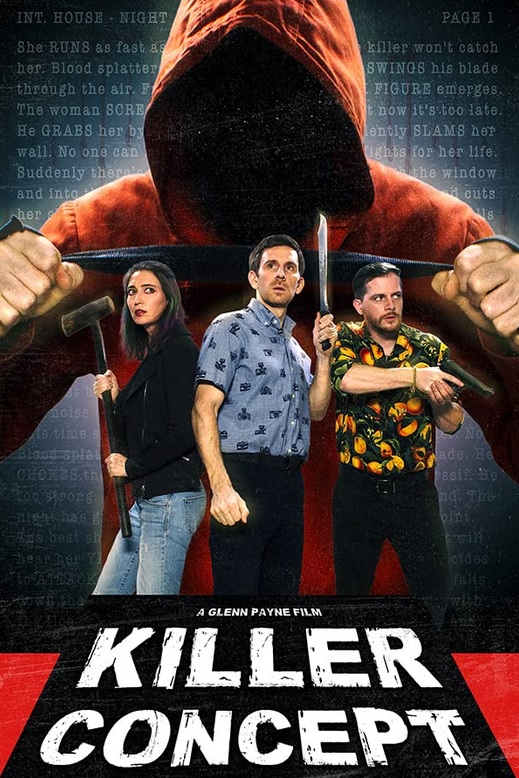
We were first exposed to the joint resume of Tupelo, Mississippi-based writer and actor, producer and director Glenn Payne and writer and actress Casey Dillard with their effective, micro-budgeted horror-thriller, Driven (2020). That film went on to win three awards for “Best Feature” at the Jackson Crossroads, Magnolia Independent, and Tupulo Film festivals, along with actor Richard Speight Jr. (CW’s Supernatural) winning the “Best Actor” award at the Nashville Film Festival.
When we learned the horror-comedy Killer Concept, the latest film from Glenn Payne’s Dead Leaf Productions, was newly available for Tubi streaming, we wanted to watch the film, as his previous work, Driven, was impressive. If you haven’t yet seen Driven, do: think Michael Mann’s Collateral starring Tom Cruise — only with demon’s showing up. Trust us, you’ll enjoy the stream. Since then, we’ve also watched Glenn’s early film, Earthrise (2014), an impressive, against-the-budget science fiction piece about three explorers returning home from Mars, for the first time. If you read our reviews for Anton Doiron’s Space Trucker Bruce (2014), Robert Goodrich’s Ares 11, and Monty Light’s Space (2020), you know that when a filmmaker effectively executes the off-Earth/space-centric genre, we’ll champion that film. Add Earthrise to that list.
The usual modus operandi in producing a film about an infamous serial killer: wait for the killer to be caught. Just not in this Hitchcockian cocktail with a twist of wryly lime.
Our auteur, Mark (Glenn Payne), is a cinematographer working with Seth, an aspiring producer (fellow local Mississippi actor Coley Bryant of the 2017 beauty queen-boxing comedy, Fighting Belle) who, like most producers, throws integrity to the wind when it comes to making a hit movie. Mark finds himself talked into a project by Seth and his writer, Holly (Casey Dillard, the lead in Driven), to make a movie about a still-at-large, local serial killer. Hey, they might even solve the crime as they’re making the movie, which will be a great promotional gimmick.
True to form, Seth, again, like most producers, could care less about that pesky “character development” and “plot” nonsense that writers like Holly pride themselves on. He doesn’t want a serious “art” piece about the psyche of what drives a man to kill women. “Get the Freud out of here, Holly!”: Seth wants an ’80s-styled “boobs and blades” job. Scream bloody murder and let slip the gallons of red Karo, says Seth. And fire up that fog machine.
As with Driven before it: Killer Concept, while on a tight budget, doesn’t look “cheap” in the least and comes off as a well-shot film: the camera moves with style and the lighting keeps the proceedings dark and thrilling against the script’s lighter delivery of its dark humor. Sure, it’s a horror-comedy, yes, but the concept isn’t a full-on yuk-yuk fest analogous to Scary Movie: it’s a lighter take on that film’s raison d’etre: Scream, a film that, itself, had its suspenseful moments as the narrative shifts screwed with your concepts as to what is and isn’t real.
I enjoyed the fine writing of Casey Dillard who, again, impressed with her Final Draft skills on Driven. In the frames of Killer Concept, she’s intelligently crafted a Droste effect-styled screenplay: she’s a screenwriter, writing a screenplay about a screenwriter, fed up with the clichés of screenwriting permeating today’s A24 and Blumhouse-driven horror industry. Dillard’s mise en abyme intelligence continues as our director, the somewhat introverted Mark, isn’t the creepy, weird, deformed, ugly serial killer that Seth wants him to be.
Oops. The bag just lost its cat.
I enjoyed the “reality” of Mark as penned by Dillard. You shiver at the thought of guys like Ted Bundy and Dennis Rader: no one saw it coming. And you don’t see it coming, here. Well, Seth and Holly don’t; but you do, now, since I slaughtered the burlapped feline.
Hey, it’s not my fault. You’re the one that reads reviews about movies, written by some “nice guy” hunkered down in a Pittsburgh basement that watched the movie, before you watch the movie. But you wouldn’t have watched the movie if I didn’t write about the movie to make you want to watch the movie. Or something like that.
Anyway, I gotta go. I need to put a few more strokes of paint on my self-portrait before my mom brings my lunch of raw goat livers a nice cup warm cocoa. But wait . . . my mom is dead and I am actually “mother” bring my own livers and cocoa. And “she” is writing a screenplay about “me,” I mean, me about her. . . .
Making its streaming debut earlier this year on Amazon, Killer Concept is now available as a free-with-ads stream on Tubi through Indie Rights Movies. You can learn more about Glenn Payne’s painting and film works at his official website and, again, at his official Facebook page for Dead Leaf Productions. And be sure to learn more about his previous film, Driven, with our review.
About the Author: You can learn more about the writings of R.D Francis on Facebook.In addition to writing film reviews for B&S About Movies, hepublishes music journalism pieces, as well as short stories based on his screenplays, on Medium.
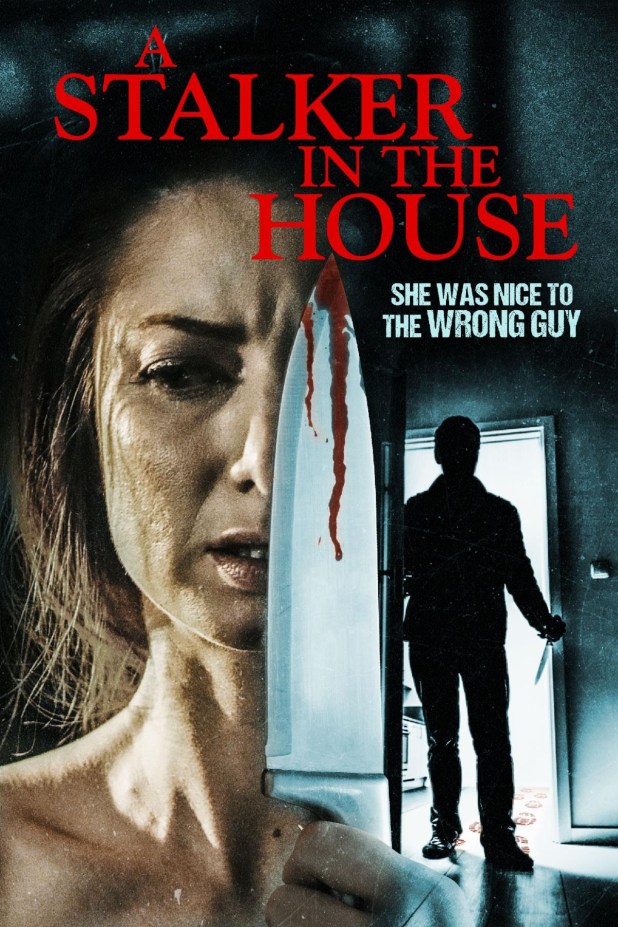
Jen (Veronika Issa, Devil’s Triangle) is single and doing what so many of us do, date online. I mean, that’s how Becca and I met. She doesn’t have as much luck as the two of us did, as she hooks up with Mike DeVorzon (Alien Conquest) who goes from nice to stalker — in the house — in no time at all. If he can’t have Jen, well, no one can.
The most famous face in this movie is Scout Taylor-Compton, who played Lita Ford in The Runaways and Laurie Strode in the two Rob Zombie Halloweenfilms that have suddenly gotten a lot better for some reason in the last month or so. We most recently reviewed her work in Apache Junction (2021), as well as the 2020 releases of Abducted (as a kick ass cop!), Enteral Code, and Getaway.
More Lifetime than Fangoria, nonetheless this was a quick and painless film about a very painful relationship.
Stalker in the House is available on demand and on DVD from Uncork’d Entertainment.
Phantom Patrol is a nostalgic story about two security guards who inadvertently release ghosts, goblins, and other phantasms into New York City from a secret, underground facility. With the help of two kids, the ragtag team becomes the only hope to stop the paranormal breakout.
Self-made, indie filmmaker Milko Davis is part of that new digital streaming vanguard we jam on here at B&S About Movies: Davis has that Dennis Devine and Brett Piper thing goin’ on that we love amid the cubicle farms along the muddy river waters of the ol’ Allegheny. If you’ve read the two “Drive-In Friday” features we’ve done on Dennis and Brett (and our reviews of several Polonia Brothers and Brett Kelly flicks along the way), well, then, you’ll have a good idea on how we feel about Team Milko.
That “team” is already ten films deep — with two shorts and eight features — of which we reviewed their three best-distributed films: Tsunambee, Jurassic Dead and Jurassic Thunder. He made his debut in 2007 with the Richard Grieco-starring Raiders of the Damned.
The Old . . .
Well, we are pleased to announce that, in addition to going into pre-production on films nine and ten: the oozing ’80s VHS retro-romps Killer Witches from Outer Space and ROT Squad — both expected by October of next year, Milko Davis has just completed film number eight: Phantom Patrol. And Milko Davis is asking indie horror and sci-fi fans for help to get the film out to the masses.
Milko’s Armageddon Films is self-distributing Phantom Patrol straight to Bluray and Vimeo On Demand (via your Desktop Browser, iOS, Android, Apple TV, Roku, and Chromecast). You can learn more about the production and how you can contribute to the film at the film’s official Kickstarter page. (Update: The current campaign has closed, but stayed tuned for another funding drive in the near future. You can still visit the page for film information.)
You can also learn more at the official Facebook page for Armageddon Films.
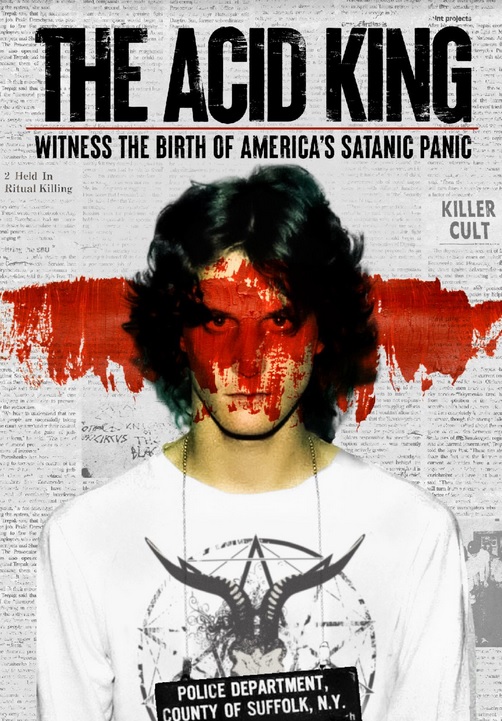
Ricky Kasso, an American teenager who murdered his friend, Gary Lauwers, in an alleged (it wasn’t) “Satanic sacrifice” during the summer of 1984, is a name we’ve oft-spoken on the digitized pages of B&S About Movies. We’ve examined his giving-metal-a-bad-name exploits (but, as we come to learn through the frames of The Acid King: it was actually the media’s fault, not Kasso’s) in our reviews of the Keanu Reeves-starring River’s Edge (1986), Jim Van Bebber’s Deadbeat at Dawn (1988) (by way of his short film, My Sweet Satan (1994), based on Kasso’s exploits; he opines extensively, here), and a rather weak attempt at dramatizing the horrors as Black Circle Boys (1998). Other films based on David St. Clair’s (since discredit) book, Say You Love Satan (1987), are the better, Canadian-produced Ricky 6 (2000) (written and directed by Peter Filardi; he wrote The Craft in 1996), and the even weaker, fictionally-based Under Surveillance (2006) (aka Dark Chamber, starring underground horror queen Felissa Rose). Prior to these films, there was the gritty, B&W short (thirty-minutes) that fictionalized the myth: Where Evil Dwells (1985).
In the release-wake of The Acid King, we can also look forward to that film’s producer, Chandler Thistle, soon-to-be-released, ’70s drive-in styled throwback on the life of Ricky Kasso: Lucifer’s Satanic Daughter (2022), a film which plays it loose with the tale: after sacrificing his best friend, Ricky really does summon a witch.
The final, accurate word.
While the aforementioned David St. Clair’s book was the first document on Ricky Kasso’s life — one that quickly became a best-selling paperback (a “bible” we carried in our back pockets, as we did with the Jim Morrison paperback tale, No One Here Gets out Alive*) — that Dell Books’ paperback was left to fall out-of-print when it was discovered St. Clair’s work was not only heavily fictionalized: it also plagiarized several portions of “Kids in the Dark,” a November 1984 exposé on Kasso written by David Breskin for Rolling Stone.
However, the discredited David St. Clair was simply hoping the “Christian Scare” bandwagon. The since discredited best seller wholly responsible for the “Satanic Panic” craze of the ’80s was Lawrence Pazder’s Michelle Remembers (November 1980) where Michelle Smith alleges she was a “victim of Satanic ritual abuse led by her own mother.” Then there’s Laurel Rose Wilson’s equally discredited best seller — under the name of Lauren Stratford — of her own “ritualistic abuse” in the pages of Satan’s Underground (July 1991). The “panic” reached it apogee with “The Devil Worshipers,” ABC-TV’s irresponsible, 30-minute segment on a May 16, 1985, edition of their highly-rated, hour-long news magazine, 20/20 — which leads off with the exploits of the “Acid King” himself, Ricky Kasso. (Smith’s and Wilson’s exploits have since been chronicled with their own film: 2023’s Satan Wants You.)
As for The Acid King: the film is not based on St. Clair’s discredited work, but Jesse P. Pollack’s own, well-received Simon Schuster book of the same name: a responsibly-written, nonfiction account of Ricky Kasso’s life; one that contains, not speculations or plagiarisms, but first-hand interviews with Ricky Kasso’s friends, family, and the investigators who worked the case. Pollack also takes it one step further: he examines the irresponsible, sensationalist journalism, noted above, that led to the creation of St. Clair’s work and its inspiration in the creation of the above noted films (and as we learn from the film: bands and their song catalogues).
The ongoing influence of Ricky Kasso.
Pollack is a writer of distinction when it come to New Jersey-New York-bred crimes. His first book, Death on the Devil’s Teeth (2015), investigated the somewhat similar, 1972 murder (occult sacrifice) on the cold case of Jeannette DePalma. Born and raised in the garden state of New Jersey, Pollack serves as a contributing writer for Weird NJ magazine, since 2001. As an accomplished musician, his soundtrack work appears in Driving Jersey, an Emmy-nominated PBS documentary series. (The soundtrack to The Acid King, not so much a “soundtrack,” but a montage of queasy-inducing, Blair Witch-styled noises, is an excellent complement to its subject matter that needs its own release.)
While I enjoy film documentaries (especially true-crime documents, then music docs; since The Acid King is amalgamate, it’s a win-win) I know the documentary-storytelling format isn’t for everyone. So, while I do not mind this insightful investigation’s one hour fifty-minute running time (a limited-edition “work print” briefly streamed on Amazon in October 2019 at two hours twenty-three minutes), that length — mostly narrated by talking heads — may discourage others to stream it. That’s my only reservation towards the film: the length, for the work, as result of its honest desire to finally set the story, straight, encourages (an engaging) steaming. As we’ve discussed many times at B&S About Movies: We are no longer in the lands of ’90s indie theatrical features distributed by the likes of Fine Line Features, Fox Searchlight, and Miramax, and 80-minute home video DVDs. Today’s distribution platform is all about digital streaming and the new distribution model allows filmmakers to break the rules when it comes to the art of storytelling. Filmmakers, today, can bypass studios, self-distribute and go straight the consumer — while indulging and not commercially compromise their vision.
The 30-plus minutes edited out of the 2019 work print-version for this 2021 streaming-relaunch are the film’s sidebars to other “Satanic Panic” cases from the ’80s in the wake of the Ricky Kasso case (we discuss those cases in our reviews of Black Circle Boys and River’s Edge); the new-distributed version concentrates on Ricky’s case, as it was the “Satanic Panic” harbinger. Other superfluous, irrelevant interviews (too much talking-headin’ from Jim Van Beeber and musicians who weren’t there; too much Amityville Horror tangents**) have been excised. Still, even with that earlier version’s narrative and production faux-pas (mostly in sound): the film is still real; its honesty in documenting the unfiltered truth is to be commended.
Oh, Geraldo. First the failure at Al Capone’s vault, now this.*˟
In reviewing the previous coverage of Ricky Kasso’s crimes, until The Acid King, the only U.S.-made examinations as to the “whys” behind Kasso’s crimes was, again, ABC-TV’s 20-20 segment, “The Devil Worshipers” (1985), the later “Devil Worship: Exposing Satan’s Underground” (1988), a prime-time episode of the syndicated Geraldo series hosted by Geraldo Rivera, and “Occult Killers” (2012), an episode of The Biography Channel’s (later to airing on LMN) Killer Kids series (S1:E1). Another is a critically-derided, hour-length Australian news magazine television document, “Satan in the Suburbs” (2000), which opted to enhance its insights with superfluous, A&E-styled “reenactments” of the events (some of which came from the movie, Ricky 6).
The system failed him: the system blamed Satan.
Considering those are hour-long programs, once you add in commercials, the actual running-time of those programs is about 40 to 45 minutes. I’ve read both, Say You Love Satan and The Acid King, and those episodic TV documents are greatly truncated, merely scratching the investigative surfaces: they’re also irresponsible, “Satanic Panic” agenda-driven pieces. The irresponsibility of those television, as well as magazine and newspaper, journalists (sans the responsible work of Rolling Stone‘s David Breskin) were exasperated by David St. Clair’s wreckless, religious-driven journalistic mania for the Paul and Jan Couch TBN crowd (Clip 1 and Clip 2 of their son Paul’s “Backmasking Special”; their minion, Pastor Gary, and his show, “The Eagle’s Next”: Clip 1, Clip 2, and Clip 3).
Jesse P. Pollack’s book is not only vastly superior to St. Clair’s (regardless of the controversies surrounding the book — which we did not know at the time of its release — it is still a well-written, entertaining read), his film is a superior, accurate account against those TV episodic documentaries. Where all other accounts stop, and inaccurately dismissed Ricky Kasso as the leader of a rock music-driven Satanic cult, Pollack’s film takes the necessary steps to examine the media’s irresponsible, “Satanic Panic” aftermath that came to influence (by way of duping, we learn) filmmakers and musicians. As The Acid King points out: Ricky’s crime is not to be excused; however, it was not a case of his being a “perfect kid” who started smoking joints, discovered Ozzy Osbourne’s music, then fell under Satan’s influence and decided to “sacrifice” someone.
Speaking of ’80s metal mixed with Satan: Visit our “No False Metal Movies” week of Satanic Panic-inspired film reviews.
While Jesse P. Pollack’s work is not as visually engaging as Tom O’Dell’s stellar, final documentary word on Charles Manson’s life with Manson: Music From an Unsound Mind (2019)**, or Joe Berlinger’s three-part Paradise Lost film franchise (1996/200/2011) on the tragic West Memphis 3 case, Pollack’s film is, nonetheless, an accurately-crafted, against-the-budget final word on the life and ongoing influence of Ricky Kasso. The Acid King also serves as a lesson to organized religion and big media: get the facts straight and enough with the self-serving sensationalism. And the fact that Ozzy Osbourne wasn’t on a recruiting drive for Satan, AC/DC doesn’t mean “Anti-Christ Devil Child,” KISS doesn’t mean “Kids in Satan’s Service,” W.A.S.P doesn’t mean “We Are Sexual Perverts” (or, insert your eyeroll: “We Are Satan’s Pawns”), and Tipper Gore was simply a woman with too much time on her hands who created the “Satanic Panic” industry.
The Acid King is a film that needs to exist about a man who shouldn’t have existed and a myth that should not have been created by an insatiable media and delusional religious fervor in the first place (but let’s not transform Kasso into a modern-day, Masonesque anti-folk hero for t-shirts and posters; he’s a murderer, after all). It’s a past that needs to be chronicled . . . so we do not repeat it.
But we always do, don’t we? We are human, after all.
And some of us are more human than others. And the less human do end up on tee-shirts and become infamous. . . .
The Acid King premieres-on-demand on November 9, 2021, through Wild Eye Releasing. You can learn more about the best-selling and acclaimed paperback that serves as the film’s basis at Goodreads, as well as sample several pages at Amazon Prime. You can learn more about the film and Jesse P. Pollack’s wares on Twitter, Instagram, and Simon and Schuster. Pollack also speaks at length with Micheal Whelan on his Unresolved podcast (45 minutes).
Update, March 2022: You can now watch The Acid King as a free-with-ads stream on Tubi.
Update, October 2022: Wild Eye Releasing issued the Blu-ray version. In addition to the HD-version of the film, the extras include a commentary track from co-writer/co-directors Jesse P. Pollack and Dan Jones, and Executive Producer Chandler Thistle, along with behind and deleted scenes features, extended interviews not appearing in the film, behind-the-scenes and crime scene photos image galleries, and two, full Unresolved podcast recordings regarding the Ricky Kasso case.
* We get down and dirty with Jim Morrison in our review of Larry Buchanan’s “What If” tale, Down on Us. We also discuss AC/DC’s lone feature film that broke them in the U.S., Let There Be Rock — a production ironically connected to the “No False Metal” classic, Rocktober Blood.
** We discuss the earlier influences Charles Manson had on filmmakers of the ’70s with our review of Lee Madden’s The Night God Screamed. We also discuss the religious and journalistic mania surrounding Ricky Kasso’s ’70s doppelganger: Ronald DeFeo, Jr., in our “Exploring: Amityville” featurette.
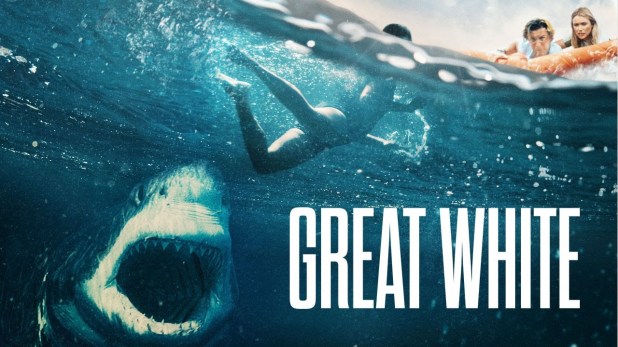
A blissful tourist trip turns into a nightmare! Yes, five seaplane passengers have been stranded miles from shore and, living up to the promise of this film’s title, there’s a hungry shark just waiting for them.
Charlie is a retired marine biologist and shark-bite survivor who, along with his girlfriend Kaz and friend Benny, have started flying their seaplane for tourists. As they take Joji and his wife Michelle around the islands, particualrly to a place that’s central to Michelle’s family history called…Hell’s Reef.
Before you can say Jaws: The Revenge, they’re trapped in a leaky lifeboat, the great white has their scent and will not stop until everyone is chum in the water. Sure, you’ve seen it before, but have you seen it on the Shudder streaming service?
This Australian film from director Martin Wilson stars Katrina Bowden from 30 Rock and was written by Michael Boughen, who produced The Loved Ones.
Hey, I can’t stop you from watching shark movies any more than I can stop myself.
Straight outta the McMurray township, southwest of Pittsburgh, Giuseppe Lucarelli got his start in the business as a background actor on Northeastern U.S. and New York-shot network TV series such as Law and Order and Lipstick Jungle. As with Florida-based actors Chris Levine and Michigan-based Mason Heidger (Now Way Out and Tomorrow Is Yesterday, respectively), Lucarelli had enough of the auditions, the film school shorts and all of the other crazy hoops young acting hopefuls navigate. So he formed his own production company, Mountain Wind Productions, to write and direct Checkmate, his feature film debut (David Minniefield co-directs). He stars as Kyle Braddock, the medical examiner son of the recently murdered Chief Braddock “with a special set of skills” reluctantly drawn into an action-packed, downward spiral. The rest of the unknown, effective cast is headed by Sara Torres (roles on TV’s Dynasty and Cobra Kai), Matthew McCurdy (Agent Wells on CW’s Daredevil), and Dave Whalen (support roles in the theatrical features The Fault in Our Stars, Southpaw, and Jack Reacher).
Produced over a four-year period in and around Canonsburg, Southpointe, Pittsburgh’s Southside and Marketsquare, an assassin-serial killer known as Checkmate (James Quinn, lots of background work on Steel Town-shot features) has kidnapped — so the city believes — the daughter (Sara Torres) of the city’s new “Top Cop,” Chief Masters (Dave Whalen), in retaliation for his highly publicized crackdown on the human trafficking trade plaguing the city. This is a dark Pittsburgh: cops are in on the trafficking. Meanwhile, Kyle has actually rescued Katie Masters — and he’s on the run for the cop murders perpetrated by Checkmate. Now, two cops: one honest, one corrupt (the under-the-radar impressive Arash Mokhtar alongside the imposing Matthew McCurdy from Daredevil) race against time to uncover the truth.
The usual road for a new-to-the-scene indie filmmaker is horror: they’re cheap and easy to make because all you need is a patch of woods or swatch of desert and you’re ready to shoot. Taking on the action genre against-the-budget — in the city limits, no less — is not a small, easy task. The production values on this debut feature by Giuseppe Lucarelli, while on-a-budget, are nontheless higher in quality than your average Lifetime damsel-in-distress production (the Sara Torres connection). As a director, Lucarelli knows his camera and effectively froths his Iron City-locations into an effective noirish foam. He’s also pulled the best from his actors: sure, they’re not award-winning, but they’re not staccato-line reading thespians, either. His scripting is pretty solid as well. One of his nice turns of the Final Draft occurs when entering Katie’s apartment: Kyle tells her to wait, as it seems the bad guys have trashed her apartment looking for a crucial laptop, only to discover: “You mean you live like this?”.
We are not going to sugar coat: the reviews on Amazon and the IMDb haven’t been kind. And yes, this was shot in the hometown Pittsburgh-base of B&S About Movies — but that doesn’t mean we’re crackin’ the Olde Frothingslosh and giving Checkmate a raving, free-pass on our pages. If you’ve spent any time at our site, you know the rules: we are not going to review a film to tear down an indie filmmaker’s sincere efforts. So, if you’ve made it this far into the review, you know we’re not going to steer you wrong. Sure, Checkmate isn’t a perfect film, but there’s something streaming-worthy happening here. There’s a skill set and class in the frames from all concerned, so crack the Rolling Rock, and enjoy.
I’ve been down this new, indie-action road before with Prince Bagdasarian’s Abducted and Steven C. Miller’s serviceable action-thrillers packed with morally-screwed characters, such as the Bruce Willis-starringFirst Kill (2017), the Nicolas Cage-starring Arsenal (2018), and the Aaron Eckhart-starringLine of Duty (2019). Ditto for Claire Forlani upending the male-dominated genre with Inferno: Skyscraper Escape and Precious Cargo. Those films, however, benefited from their higher, under $5 million budgets. So what we have in the frames of Checkmate is more akin to the recent Eric Roberts-starring more cost-effective action-thriller (and he’s in the film more than most of his 590-plus films), Lone Star Deception — and that’s not a bad thing. Checkmate is a serviceable streaming action-thriller, but if you’re hitting the big red streaming button expecting a Willis-Cage joint awash in Bayos n’ Bayhems with an Eckart-chiseled jaw charisma, well . . . don’t do that. Add Giuseppe Lucarelli’s effort to the list and you’ll enjoy the thrilling ride.
One of the standouts of Checkmate is the soundtrack by Alex Triveri, who also doubled on the cinematography crew. He’s created a nice, Tangerine Dream-styled vibe in spots — giving Checkmate a low-res, Micheal Mann à la Thief — and I have no doubt he’s a fan of those German soundtrack masters. In addition to Triveri, Adrienne Wagner serves on the camera crew headed by William Feduska — in his second feature film, with his first being the found-footage horror The Devil’s Toy Box (2017). I really enjoy Feduska’s lighting and framing, here. So I’ll not only seek out his first film: if I see his name in the future, I’ll stream that film, as well.
Another appreciation is the gunfire effects: there are none, as those effects are effectively cutaway and implied. An action aficionado may feel denied by the lack of squibs and the use of blank weapons fire. Personally, CGI gun fire and After Effects bullet wounds — which is the budgetary norm for films of this ilk, well, they just don’t work for me. So, I appreciate the cutaway trick-of-the-eye-and-sound: I rather that than budgetary CGI bullets. (Please, save your sociopolitcal debates about Alec Baldwin and guns on sets. That’s not why we’re here. This is a movie review.)
Coming soon!
Making its self-released debut in June 2019 on Tubi, Checkmate now makes its wider spread, free-with-ads stream debut this month on You Tube courtesy of Indie Rights Movies**. If you prefer an ads-free experience, you can stream the film on Amazon Prime. And make an effort to stream, you should: Half of the profits from the film’s streaming income will be donated to World Central Kitchen, a nonprofit launched by celebrity chef Jose Andres that provides meals for people impacted by natural disasters.
You can learn more about actor, writer and director Giuseppe Lucarelli — and his work in the martial arts — courtesy of his recent interview (You Tube) on the Jibber Jabber Podcast.
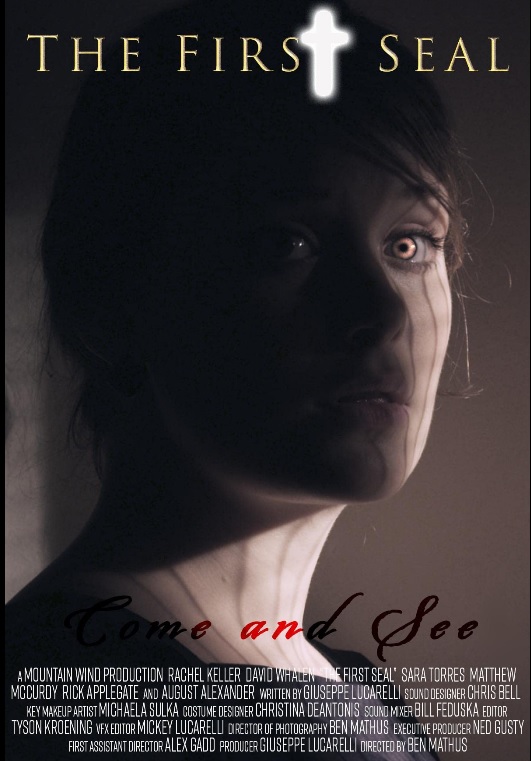
Giuseppe Lucarelli has also recently completed shooting on his second feature, The First Seal. An action-thriller, it stars Rachel Keller, who you’ve recently enjoyed on episodes of the FOX-TV series Legion and Fargo.
You say you need more Yinzer movies? Well, we heard ol’ Marsha Phillips sing, so we got down and dirty in the Monongahela mud with Pittsburgh-made giallo films courtesy of our “Exploring:Yinzer Giallo” featurette (which has a Rowdy Herrington Easter Egg-interview!). Hey, somebody needs to deep think these things . . . and our flabby, soft-as-veal, cubicle-raised bodies are up to the film critic challenge. Also, this past February, for one of our “Back to the Drive-In” double-features nights, we watched the sort-of-Yinzer flicks Frankenstein 3-D paired with The Majorettes.
* Our thanks to Brad Hundt of The Washington Observer-Reporter for his August 2021 interview, which assisted us in the writing of this film review to honor the indie filmmaking efforts of Giuseppe Lucarelli.
About the Author: You can learn more about the writings of R.D Francis on Facebook.In addition to writing film reviews for B&S About Movies, hepublishes music journalism pieces, as well as short stories based on his screenplays, on Medium.
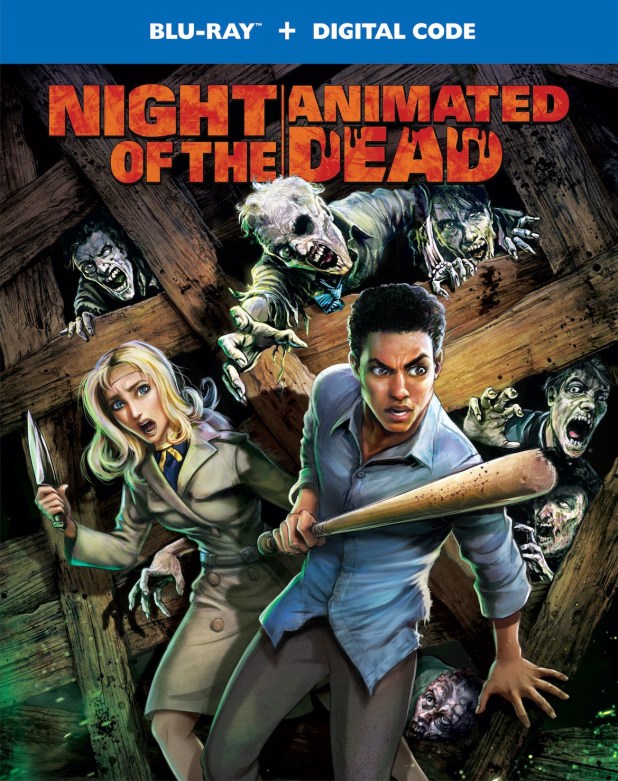
Who does this movie exist for? Anyone can easily find Night of the Living Dead and there’s really no need for it to be nearly shot for shot remade with more in your face gore and overacted voiceovers.
Sure, you get to see what happened in front of Beekman’s Diner, but otherwise, all this movie adds is more viscera to the proceedings. The characters look beyond flat and the only thing that the ones that look like the original actors will do is make you want to just watch the black and white classic that this shamelessly copies.
Jason Axinn made To Your Last Death which had so much more going for it than this effort. Lack of effort, maybe.
About the only thing to watch this movie for is to see who takes over each voice. Barbara is Katharine Isabelle from Ginger Snaps and her brother Johnny is Jimmi Simpson from Westworld. Dulé Hill is Ben, while Harry and Helen Cooper are played by Josh Duhamel and Nancy Travis. Tom is James Roday Rodriguez and Judy is Katee Sackhoff while MAD TV comedian Will Sasso is Sheriff McClelland.
Otherwise, this is an overly referential version of the original film that would have been better off if it Ralph Bakshi rotoscoped the inspiration and just made it look more cartoonish.
New movie fans won’t have any need to see this and fans of the original will undoubtedly be upset with the fact that this offers little new. Instead, all it does is give you more: more blood, more internal organs, more animated bodies that feel like they float instead of moving like people.
Also take a look at that great art on the cover. You’re not getting anything like that in this cartoon.








 B&S About Movies
You must be logged in to post a comment.