Power 98 (1996)

“If God didn’t want us to masturbate, he would’ve made our arms shorter.”
Karlin Pickett, KRZY “Power 98” Radio

Chances are—even if you are a diehard fan—you missed this neo-noir erotic thriller from Eric Roberts’s direct-to-video and direct-to-cable twilight years, one of his—to date—prolific 562 film and television roles. Even his most diehard fans wouldn’t be able watch each and every one of the 74 projects he filmed in 2017 alone. But we sure as hell try.

Why?

Because we, the fans of the video fringe, praise Eric Roberts with the same high regard we bestow to David DeCoteau (A Christmas Cruise) and Fred Olen Ray (A Christmas Princess). Yes, we will sit through a Lifetime damsel-in-distress movie—their Stalked by My Doctor franchise, now up to part 3—for our Eric Roberts fix. Yes, we sat through two Hallmark holiday movies—A Husband for Christmas and The Great Halloween Puppy Adventure—that Eric Roberts shot for David DeCoteau. Yes, we streamed Fred Olen Ray’s Boggy Creek: The Series on series on Amazon Prime just to listen to Eric Roberts’s voiceover narration. Yes, we watched David DeCoteau’s A Talking Cat just to hear Eric Roberts be . . . well, a cat.

Eric Roberts—as well as Nicolas Cage and John Cusack (Arsenal)—is either a down-on-his-luck and past-his-prime desperate thespian taking any job that comes his way to pay the bills—or he’s a brilliantly prolific actor who turns celluloid lead into ribbons of gold. For us, Eric Roberts is always the latter and never the former. When a project needs a slimy scumbag that, regardless of the slime, remains charismatic and likeable, Eric Roberts is the man who never disappoints his audience.

Such is the case with Power 98, the lone fictional writing and directing credit of Jaime Hellman, an equally prolific, Emmy Award-winning TV documentarian director (CBS, Oxygen, CNN) who delivers a script that’s not only well-versed in the film noir genre, but in the radio broadcasting industry as well. Courtesy of Hellman’s well-researched script rife with spot-on expositional broadcast terminology, Roberts’s—as well as Jason Gedrick’s and Steven Tobolowsky’s—radio broadcasting professional characters sound like—unlike most TV series or films set inside radio stations (see Zoo Radio as the worst case example)—real radio broadcasting professionals. Also lending to the film’s credibility: it was filmed, after hours, inside a real radio station: KPHX 1480 AM located Phoenix, Arizona (which doubles as L.A in the film). The sharp cinematography is courtesy of commercial director Kent Wakeford, who got his start behind the lens on Martin Scorsese’s Mean Streets (1973) and Alice Doesn’t Live Here Anymore (1974), along with the Blaxploitation classic Black Belt Jones (1973).

The “real” KPHX. Stickers courtesy of Radio Sticker of the Day blogspot.

Unfortunately, Power 98’s direct-to-video low budget format stymied the more-than-competent Hellman and Wakeford celluloid tag team. If this radio-set neo-noir had been backed with a mid-double digit millions budget that would have lent to expanding its 89-minute cable movie length to a 120-minute theatrical length, Power 98 could have achieved the blockbuster erotic thrills of Adrian Lyne’s Fatal Attraction (1987) and Paul Verhoeven’s Basic Instinct (1992) or, at the very least, the backstabbing betrayal highs of John Dahl’s indie film noir homage, The Last Seduction (1994). Thus, we’re left with a film that stagnates as being too racy to qualify as a Lifetime damsel-in-distress flick and not racy enough to qualify as an Andrew Stevens and Shannon Tweed erotic soft-core fest for the late night Showtime cable crowd.

Yes, Power 98 could have been so much more. But it could have been much less. And that’s why we love Eric Roberts: he balances the scales of cinematic injustice for the low-budget film maker.

Think back to Clint Eastwood’s directorial debut, the definitive radio psycho romp, Play Misty for Me (1971) (which Fatal Attraction later ripped off, only ditching the radio angle), with the disc jockey—and not the fan—as the psycho. Instead of Barbet Schroeder’s Single White Female (1992), think Single White Disc Jockey. Now you’ve descended into the twisted and paranoid, murder and revenge-filled neo-noir that is Power 98.

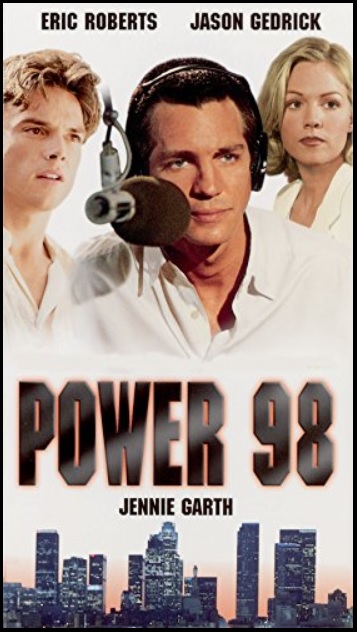
Eric Roberts is Karlin Pickett, a successful shock jock on the air in Phoenix with lots of fans—female fans in particular. After one his (many) one-night stands goes bad—with his date taking a seven story header—Karlin covers up her death and heads to Los Angeles. Rick Harris (Stephen Tobolowsky; Ned Ryerson in Groundhog Day and Commissioner Hugo Jarry in HBO’s Deadwood), the owner of a dying classical music station in L.A isn’t fond of Karlin’s brand of humor concerned with penises, testicles, and masturbation, but he does “love the numbers,” so women judging male butt contests and strip poker tournaments on the air, it is.

But this is a film noir and Karlin’s “big plans” for his show needs a patsy, so he picks Jon Price (Jason Gedrick; 1986’s Iron Eagle, 1991’s Backdraft), an ambitious producer at the station with dreams of getting his big break. The screws begin to turn when Jon discovers a creepy call from “Eddie,” in which he confessed to a murdering a woman, was faked—so says Karlin; he set it up “for ratings.” That is until two detectives (Larry Drake of Darkman and Dark Night of the Scarecrow and James Pickens Jr. of TV’s Grey’s Anatomy and The X-Files) inform Jon that the caller wasn’t a crank. Then another dead woman shows up—and this time, all evidence points to Jon. And, with that, it’s a cat and mouse game of turning screws, bitchy women, and smoking guns as the cyanide-laced bourbon flows. And guess who “Eddie” turns out to be?

Courtesy of the film’s distribution through Warner Home Video and Curb Records’ distribution relationship with Warner, be sure to stick around for the end credits, which feature the track “Sea of Love” by Lonesome Romeos. Signed to Curb Records, the Los Angeles-based alt-rock/roots-rock power trio also placed two songs, “U.S Male” and “Oh, You Angel,” on the soundtrack for the baseball comedy, Major League (1989). If you’re into Bruce Springsteen, John Cougar Mellencamp, and Tom Petty (Heartbreakers’ drummer Stan Lynch and keyboardist Bentmont Tench backed the Romeos in the studio on their 1989 and 1996 albums), then you’ll dig the Lonesome Romeos—one of the many forgotten bands that drowned in the grunge wave that swept in from the Pacific Northwest and wiped out the Los Angeles music scene.

You can watch pristine uploads of Power 98 for a small fee on Amazon Prime, Vudu, and You Tube. Or you can watch a pretty clean Finnish-subtitled version on You Tube for free. And be sure to check out Eric’s Vanity Fair career retrospective, it’s a great read.

Yeah, we love Eric Roberts. And always will.

If you have a You Tube account — and don’t we all — you can watch the unlisted and non-embed, age-restricted sign-in only trailer, here.

There’s more radio flicks to be had on B&S About Movies with the comedies A Matter of Degrees and FM, and, the slasher flick Open House, and the suspense-thriller Outside Ozona. In fact, this is the first review of our weeklong blowout of movies set inside radio stations. Stay tuned to B&S About Movies on your radio dial!

About the Author: You can read the music and film reviews of R.D Francis on Medium and learn more about his work on Facebook. He also writes for B&S Movies.

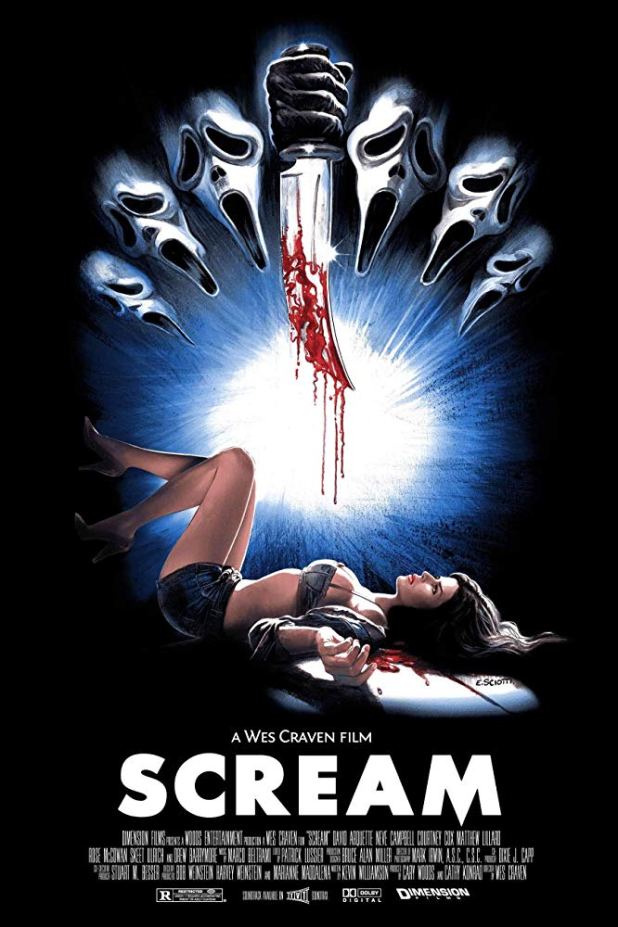
Scream (1996)

ABOUT THE AUTHOR: Jim LaMotta is one of Pittsburgh’s premiere wrestling announcers, as well as a great writer. This article originally appeared on Steel City Underground. You can follow Jim on Twitter.

After I penned an article about the Robert De Niro directed, “A Bronx Tale” and received some positive feedback from it, I thought I’d take the opportunity to write about the horror genre, the film category that has a lot of coverage on this site. The decision for this was partially a coincidence, as for whatever reason, the Showtime channels on Comcast have shown this franchise on a semi-regular basis for the past few months, and I found myself finding different layers within the film, as random viewings accompanied recent insomnia.

However, the decision to actually write this analysis was made because the film was based upon a spoof of the cliches that littered horror films of that era. Directed by Wes Craven, Scream’s 1996 release mocked and outright defied the rules of the previous generations. While Wes Craven will always be famously linked to the Nightmare on Elm Street series, his work spanned decades, as he wrote and/or directed projects as far back as the 1970s with the original Last House on The Left and The Hill Have Eyes or something as recent as the latest installment of the Scream franchise. Point being, Craven knew the horror playbook and also knew how to manipulate the perceived cliches of the genre.

Wes Craven had his status solidified before Scream was ever green-lit for production by Dimension Films, but writer Kevin Williamson, who later went on to write for the WB’s Dawson’s Creek and more recently a TV Scream spinoff, got his break with the teen slasher production. Williamson was able to weave an unpredictable tale of suspense that hadn’t been seen in quite some time for horror films when Scream hit the big screen, and Craven’s flare to build tense moments made for a successful combination.

Despite Scream’s intention to spoof the stale cliches of horror flicks, the opening scene was key because it told the audience immediately that regardless of its ability to mock the overused tactics of previous eras, this was definitely not a comedy. As is often seen in teen slashers, the typical beginning of the film found Casey Becker, played by Drew Barrymore, watching TV as she made popcorn on a Saturday night while her parents had plans for the evening. The phone rings, a foreshadow of sorts for what becomes a red flag later and when Becker answers, an almost distorted voice seemingly tries to charm her with a series of questions, including the famous, “what’s your favorite scary movie” inquiry that becomes a theme of the film. As the unknown caller continues to prod away at the teen, who forgets the popcorn on the stove, the conversation escalates to become more aggressive. Eventually, the teen is shocked to see her boyfriend duct taped to a chair on the patio as the mysterious voice insist she play a game to save his life. When she incorrectly guesses Jason as the original killer in the Friday films instead of Mrs. Vorhees, the athlete bound on the patio is gutted. In typical horror fashion, a struggle ensues as the Ghost Face killer stalks Barrymore’s character. After Becker makes it outside, the place where the audience usually tells intended victims to run to escape, she’s stabbed and strangled before a well-placed kick gives her a final chance of survival. As Becker’s parents return home, she’s within distance of them, but can’t scream for help because of the damage to her neck. The emphasis on the brutality of her death reinforces that this movie isn’t designed to be a comedy. As the flames from the stove rise and smoke surrounds the living room, the Beckers frantically try to find their daughter in the house. When Mrs. Becker picks up the phone to call for help, she can hear the final moments of her daughter, who still clutched the cordless phone prior to her murder.

That opening scene implied that the known star, Barrymore was one of the main characters of the movie, but the death of a familiar face in the opening scene sent the message that none of the cast was guaranteed survival.

In contrast, the next scene finds Sydney Prescott, played by Canadian actress Neve Campbell, who worked on the Party of Five series both before and after Scream’s success, pecking away at the keyboard in front of a very-90s clunky computer screen as she finishes her homework. How Sydney is presented in this scene really sets the tone for her character and how it evolves throughout the narrative. She’s dressed in a white nightgown with a ponytail that almost emphasizes her innocence and naive nature. She hears a noise outside her window and background music makes it appear that she might be the next victim, but instead, her boyfriend, Billy Loomis springs up into the window to visit her. Syd’s father, who planned to take a business trip that week, nearly catches this impromptu meeting before Sydney deflects him. Loomis is a rebellious type because his mom left the family quite some time ago, and his edgy nature somewhat conflicts with Sydney’s concern for his visit. Loomis is an obsessed horror fan and mentions the lack of excitement of movies edited for television before he implies that he wants to get physical with Sydney. Loomis’ comparisons create a rather odd vibe around his character, but Syd trusts him and agrees to a kiss with a sense of enthusiasm. As the teens land on her bed surrounded with stuffed animals, another aspect of her innocence, Loomis quickly progresses from kissing to an attempt to put his hand up her nightgown before she halts the interaction. As the two kiss again, Billy plans to scale back down from the window before Syd quickly opens her top for brief flash and a short laugh, as it was her way to express intimacy.

The following day when Sydney makes her way to school, the fictional town of Woodsboro is buzzing with the news of the two slain teens. News cameras and reporters surround the school as Syd and her friends discuss the gory incident. This conversation introduces the viewers to a portion of the main cast, which automatically translates to possible victims for the killer. Loomis is there with Syd, his best friend and fellow horror enthusiast, Stu sat next to Tatum, Syd’s best friend, and finally, Randy, the film buff that works at the local video store. Remember those? Upon Stu and Randy’s speculation on the grisly details, Sydney leaves after she became uncomfortable with the situation, and Loomis looks at his pal in disgust.

When Sydney makes her way home and confirms her plans with Tatum that night, which will see her spend the night at her friend’s house so as not to be alone during her dad’s business trip, she tunes into news coverage of the murders. This scene reveals that her mom, Maureen Prescott was murdered nearly a year earlier after an affair with Cotton Weary, played by Liev Schreiber, who is known for his work in the lead role of Ray Donovan. Sydney saw someone leave her house the night of the murder and her testimony led to Weary’s conviction in what was assumed to be a closed case. When the phone rings, Syd is greeted by the same voice that called Casey Becker and the conversation lures her onto the porch, again the place the audience typical tells a possible victim to run to safety. The voice on the phone claims to know details about her mom’s death, and the infuriated teen slams the front door in a rage as she returns to the house, locking the door behind her. The irony of what transpires next is that while she was outside, she actually allowed the killer to sneak in and her only option when confronted with the knife-wielding manic is to run upstairs to her bedroom, where she successful barricades the door and send a message for help using the previously mentioned clunky computer. The killer disappears from view and almost instantly, Billy Loomis jumps into view through her window again. There wasn’t enough time for him to ditch the costume and get up to the window, right? But, a cell phone, also a bulky device at the time, drops from his pocket, making it at least possible that he was the one on the phone a few minutes earlier.

Sydney is so shaken that she doesn’t know what to believe so she bolts to the front door and when she opens it she finds local officer, Dewey Riley startled with the evidence of the Ghost Face mask he found outside. Loomis is detained and questioned, proclaiming his innocence, as Dewey tells Syd that there’s no record of her dad checking into his hotel for the business trip. Before she and Tatum can leave the police station, “cut-throat” tabloid reporter, Gale Weathers storms Sydney for an exclusive quote. Weathers received a right hook for her troubles after an offer to send the teen a copy of her upcoming book, which doubted if Cotton Weary actually committed the murder of Maureen Prescott. Dewey is Tatum’s brother and escorts them home, where she commends Syd for her right hook. A call for Sydney takes her to the phone where the ominous voice informs her that not only was Loomis not responsible for the earlier struggle, but also that Weary was the wrong suspect. With Loomis still detained at the police station, he couldn’t have made the call so who was the voice on the phone?

Sydney was terrified with the revelation and hangs up, prompting the lovable dork, Dewey to storm into the hallway in his underwear with his gun to protect the family. After Loomis’ cell phone revealed that he didn’t make the call to Sydney, news of the attack made the rounds at her school and some students were running around the halls with the Ghost Face costume. This outraged principal Henry Winkler, who threatened to expel the students, cutting up the mask in the process of his verbal reprimand. Sadly, the same scissors were used to murder the principal when The Fonze had an encounter with the Ghost Face killer later that day.

As Courtney Cox’s Gale Weathers tries to flirt with Officer Dewey for possible information on the murders, Randy is visited at the video store by Stu and the two discuss the status of the case. Randy rants about the rules of horror and how those in Woodsboro are ignoring the patterns that have emerged in the case. Stu defends Loomis, asking why he would want to murder his own girlfriend, and suggests that Neil Prescott could be responsible since his location is unknown. Randy is confronted by Billy and the cleared suspect lists the reasons that the film buff might be the killer, creating his own scenarios based on the movies that he’s a fan of at the video store. In yet another example of foreshadowing, this scene was referenced toward the conclusion of the movie.

The unsolved murders cause the police to enforce a curfew and with the students’ earlier exit from school, Stu plans a party for his friends. The house party brings a few dozen friends together to watch Halloween, and Gale stakes outside in her news van, hoping to get a tip so that she can be the first to report the story. With Tatum there with Stu, Sydney attempts to enjoy some time with her friends and Dewey parked outside the party to guard her. During the viewing of the John Carpenter classic, Randy (Jamie Kennedy) rants again about the rules of horror, including that sex can make someone a target as it eliminates a character’s purity. In the middle of his public service announcement, the phone rings and Randy receives the news that principal Fonze was hanging from a goal post at the school stadium. Most of the party rushes from the house to witness the gory spectacle, leaving only the main group of friends still there. In the commotion of the group exit, Tatum is murdered by the killer in the garage, hanging from the dog door in the garage door. Unaware of this, Randy continues to watch the film as Stu tells his guests goodbye at the door. Almost on cue, Billy shows up at the door and asked to talked to Syd since the two haven’t spoken more than a brief conversation at school since her accusation landed him in the interrogation office at the police station. The two go upstairs to talk and Syd feels bad about wrongly accusing her boyfriend of the previous attack.

Up in the room, Loomis comforts Sydney as she expresses her frustration with the circumstances of her mom’s death. Eventually, Syd tells Billy she wants to be intimate with him and as the two undress, Sydney is wearing a white bra, a final sign of her innocence. After she sheds the bra, perhaps her only shield against becoming a target, Dewey and Gale find Neil Prescott’s car abandon down the street from the house. After Syd’s intimate encounter with Loomis, it’s almost as if her naive nature was relinquished, as she questioned who he called when he was at the police station, prompting him to claim that he called his dad, but Sydney explains that she saw the sheriff call his dad. Billy backpedals to explain that he didn’t get an answer when he called, but for the first time throughout the film, Loomis looks thrown off by the unexpected line of questioning. As the two finish getting dressed, the Ghost Face killer emerges and stabs Billy, who collapses in a heap on the floor.

Without the wall of virginity to protect her, Sydney is fair game for the killer and a chase ensues through the house and down the street. When she escapes a close call with the blade, she finds herself back in front of the house, with both Randy and Stu claiming that the other is the murderer. She slams the front door, leaving both of her friends outside as they both plead for her help. In the chaos, Dewey is injured, and Gale crashes her news van. Billy, who was thought to be dead just minutes earlier, stumbles down the stairs and takes the gun from Sydney to protect her from the possible killer outside. Loomis lets Randy in before he shoots him, sending the movie aficionado crashing through a table in the entryway. Loomis then reveals that his injuries from the earlier attack are phony and quotes a famous line, “We all go a little mad sometimes” from the Hitchcock classic, Psycho.

Stu went through the side entrance of the kitchen and as Sydney asks for help, Stu uses the voice altering device to tell her about the surprise. In the final scenes, Loomis explains that his mom left his family because Maureen Prescott had an affair with his father. As a part of a plan for revenge, Billy and Stu murdered her and framed Cotton Weary, who she also had an affair with after Mrs. Loomis left the family.

These scenes reveal just how cleaver Williamson’s writing had to be to plant enough seeds along the way for the revelation of the killers to be a surprise and this conclusion also logically ties together the events of the movie. There had to be two killers because it allowed for the Ghost Face to be in the same place as Billy, and created questions about what a motive would be for each character. In that early scene when Syd thought she heard a noise and it was Billy at the window, she was unknowingly letting danger in the house. When Stu suggested Sydney’s father as the killer at the video store, it was because that was his plan, as the pair of psychotic teens plotted to frame Neil Prescott the same way they framed Cotton Weary. While Billy was motivated by revenge, Stu simply wanted to play out the scenarios in the films he idolized, further stirring up the question, do films cause violence?

Stu brings Neil Prescott in the kitchen where he’s duct tapped and plans evidence in his pocket. Billy and Stu begin stabbing each other to stage their story of unintended survival, but they become too focused on their demented plan to realize that Gale survived the news van crash and was back to attempt to help. After her rescue was halted, another struggle takes place with Loomis trying to strangle Syd, who eliminated Stu just minutes earlier when she dropped a TV on him. With Billy as the only one left to finish his plan, he raises the knife to kill Sydney, but he’s intercepted by a bullet from Gale Weathers, as the reporter remembered to take the safety off this time. Ironically, the reporter was the one to save Sydney, who tends to her father still duct tapped and the wounded Randy on the floor. As the sun rises, Gale is back to her job, on location of another blood bath, while Dewey is wheeled to an ambulance. Sydney and the majority of the main cast survived despite a film that manipulated the perceived rules of horror.

As much as Scream mocked the stale cliches that saw the decline of the genre in the previous era, it also rejuvenated slash films as well, earning $173 million at the box office to become the most successful slasher movie at the time with just a $14 million budget. Ironically, similar to the franchises it mocked, Scream had its share of sequels, with the latest installment of Scream 4 in 2011. There’s news of an eventual Scream 5 release, and the argument could be made that the Ghost Face killer carved its own niche alongside other horror icons like Jason, Michael Meyers, etc. While ironic, it probably shouldn’t be all that surprising that Scream, the movie that was meant to point out the recycled storylines of horror, became somewhat of the things it mocked, as the franchise still plans to release a film nearly 25 years after the original. One of the most interesting things to note is that horror sequels are often panned by the critics for flimsy and unoriginal plots, but the audience still flocks to the box office. The 2018 release of Halloween didn’t offer much in furthering the story of the deranged Michael Meyers, but it raked in nearly nearly $255 million dollars. So, the horror genre might find itself lacking the depth of a Humphrey Bogart performance, but from a business perspective, it’s still successful.
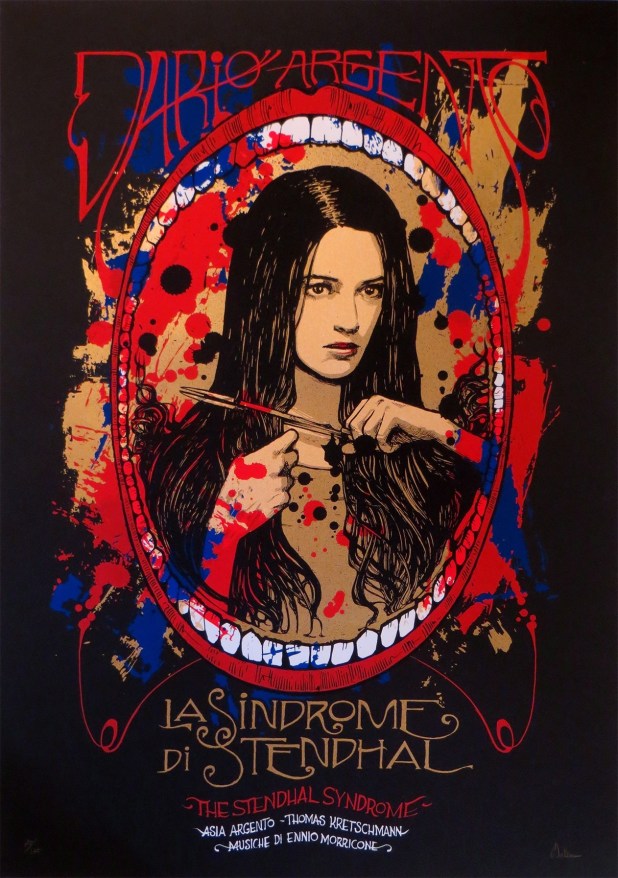
The Stendhal Syndrome (1996)

Stendhal syndrome was first diagnosed in Florence, Italy in 1982. However, a young Dario Argento experienced it in Athens as a child, as he climbed the steps of the Parthenon and was overcome in a trance. That’s what it does — the mind is so overcome by artwork that it just kind of goes away for a while.

Bridget Fonda was originally set to star, but dropped out before the start of filming. While Jennifer Jason Leigh was considered — bestill my heart to have either of them in a giallo! — Dario eventually cast Asia, his daughter, as the lead.

Detective Anna Manni (Argento) travels to Florencehunting serial killer Alfredo Grossi (Thomas Kretschmann, Baron Strucker in the Marvel movies). While visiting the famed Uffizi Gallery — Argento is the only director ever granted permission to shoot there — she is overcome by the vision of Bruegel’s Landscape with the Fall of Icarus.

Alfredo learns of Anna’s weakness, so he kidnaps her and assaults her. She escapes but is traumatized by the episode. He tries to take her back, but she knocks him into a river and he is believed dead. Yet even when she attempts to move on, he keeps calling her from beyond the grave.

When Marie, Anna’s new lover, is found murdered, her psychologist begins to worry, a fear that is intensified when Alfredo’s body is found. It turns out that Arnold is inside her, ordering her to murder people and she must be caught by the police.

Somehow, Argento was going to make a sequel to this film, with Anna becoming a detective again. Asia wasn’t available, so Stefania Rocca ended up playing a similar role in Argento’s The Card Player.

Look for Veronica Lazar (Mater Tenebrarum in Inferno, as well as Martha in The Beyond) and Cinzia Monreale (Emily from The Beyond, as well as roles in Silver SaddleWarriors of the Year 2072 and Beyond the Darkness.

This is also the first Italian film to use CGI and features a score by Ennio Morricone that can be played the same forward or backward!

It’s a late period Argento film, but it’s also probably the best of that era. There’s an awe-inspiring moment where Anna wanders into Rembrandt’s Night Watch that makes this a must-watch.

You can watch this for free on Vudu. However, Blue Underground has a tremendous blu ray version that is packed with extras.

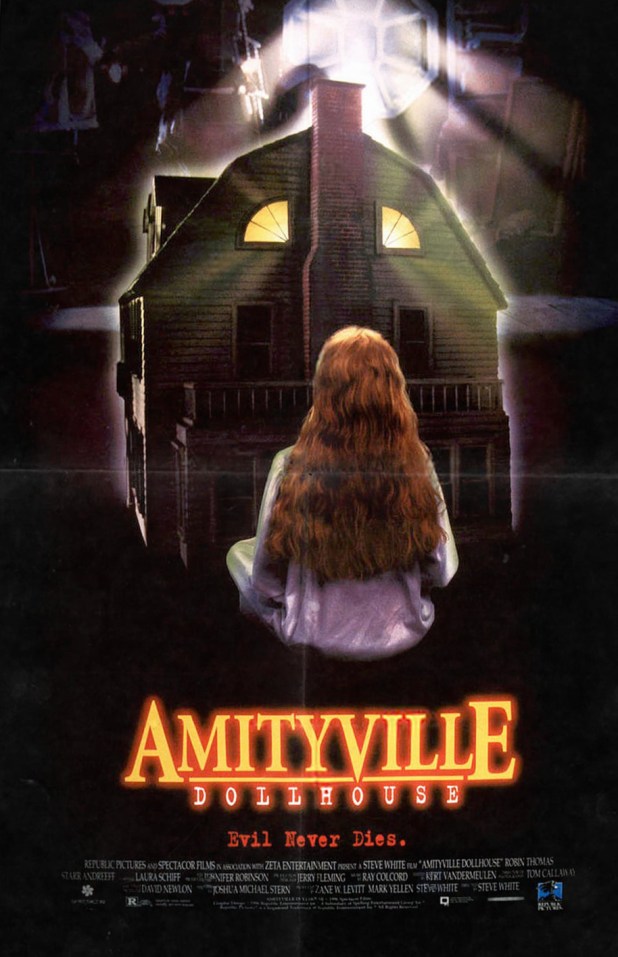
Amityville Dollhouse (1996)

Newlyweds Bill and Claire Martin (Robin Thomas from Summer School and Starr Andreeff from The Terror Within) have just moved into the home that Bill made himself. Then he finds a dollhouse — modelled after, you guessed it, 112 Ocean Avenue — in the shed. That dollhouse makes him see a vision where his daughter gets burned alive in the fireplace, so of course he gives it to her as a present when he wakes up.

That night — at Jessica’s birthday — her aunt Marla (Lenore Kasdorf, Mrs. Rico from Starship Troopers and man, can I get a deeper reference? Yes, of course I can…) and uncle Tobias arrive and are instantly nervous about the toy house and the figurines that it contains.

Bill also has a troubled son named Todd who has a girlfriend named Dana, played by the doomed Lisa Robin Kelly, who was replaced on That 70’s Show by MADTV’s Christina Moore in the sixth season and would later die hours after checking into a rehab facility. What a shame.

This one has voodoo dolls transforming into dead zombie dads, tarantulas inside pinatas, people shrinking and entering dollhouses, and even the real house itself getting blown up real good.

It’s directed by Steve White, who only directed this movie before going on to produce the TV movie version of Whatever Happened to Baby Jane?Meet the ApplegatesAmityville: It’s About TimeAmityville: A New GenerationCabin Boy, the astoundingly scummy and wonderful Death of a CheerleaderThe Devil’s Advocate and Halloweentown. It was written by Joshua Michael Stern, who would direct the Jobs movie that starred Ashton Kutcher as Steven Jobs, bringing the That 70’s Show connection full circle, I guess.

That said, most of the actual directing was done by cinematographer Thomas L. Callaway, who also worked on Slumber Party Massacre IIDemon Wind and Vice Academy Part 2.

You may ask how the dollhouse got there, why it looked like the Ocean Avenue house and why it was evil. You will get no answers. Such is life, filled with misery, pain and possessed toys. Look — if you find a dollhouse in your new house that you built, just throw it away while you still can.

EDIT: I said that and as I was posting this article, I discovered this on Etsy.

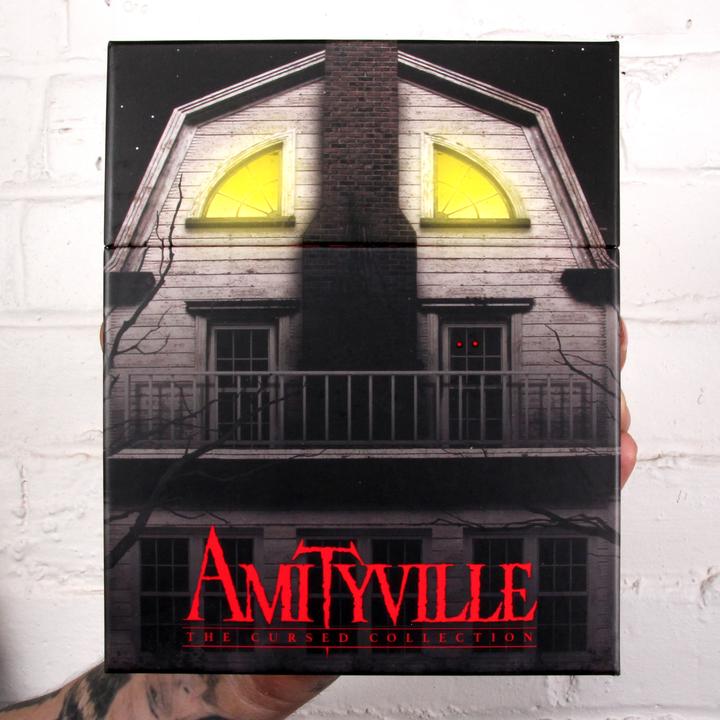
You can watch this on Amazon Prime or Tubi. Or, if you want the ultimate non-cannon Amityville experience, you can grab this movie as part of Vinegar Syndrome’s astounding Amityville: The Cursed Collection set, along with Amityville: The Evil EscapesAmityville: It’s About Time and Amityville: A New Generation.

Rollergator (1996)

Remember Donald G. Jackson?

From the man who shat out Roller BladeRoller Blade Warriors: Taken by Force, The Roller Blade Seven, The Legend of the Rollerblade Seven and Return of the Roller Blade Seven — and well, Hell Comes to Frogtown is pretty good — comes the affront to humanity known as Rollergator.

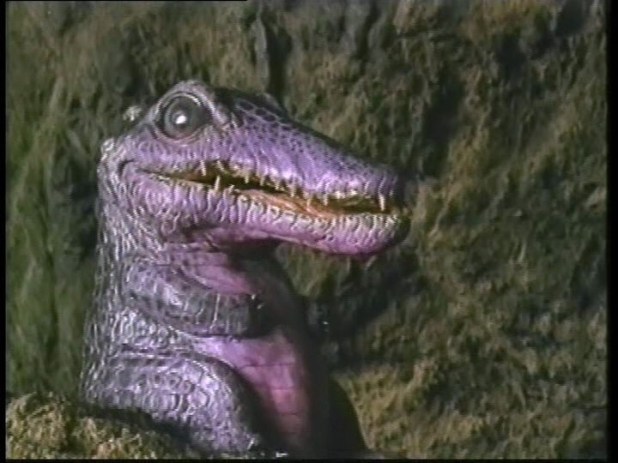
P.J. Smith is a teenage girl tries who is trying to help a small, purple-colored, jive-talking alligator as he attempts to escape from the clutches of a greedy carnival owner played by Joe Estevez. Along the way, they meet a swamp farmer played by Ed Wood alum Conrad Brooks (he somehow survived being in Plan 9 From Outer SpaceThe Sinister UrgeBride of the Monster and The Beast from Yucca Flats and yes, I realize that Coleman Francis directed that last one).

This movie has it all. Carnivals. Dark ninjas. Frogface. Roller blade mama. Pure pain. Forced humor. Roller skating gators. Sports bras. And it’s all for kids.

Erin O’Bryan, who plays Roller Blade Mama and would also play Madame Zora in Baby Ghost, a movie with nearly the same cast and crew, appeared in plenty of Playboy lingerie VHS tapes. No one else really ever appeared anywhere else in this movie, despite the promise — or threat — or Rollergator 2 in the end credits.

You can watch the Rifftrax version of this film on Tubi.

Santa With Muscles (1996)

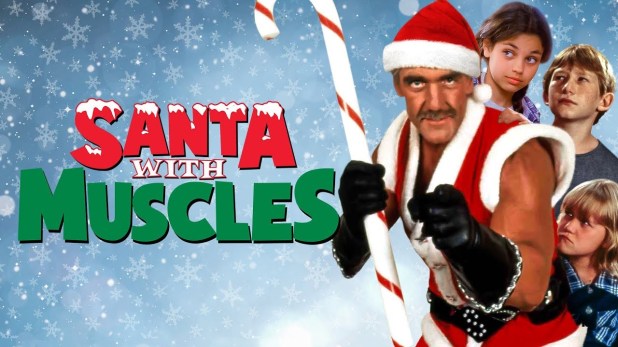
The Wolf of Wall Street — in real life — was Jordan Belfort. Other than spending time in jail for fraud and related crimes in connection with stock-market manipulation and running a boiler room as part of a penny-stock scam, he also executive produced this Hulk Hogan vehicle.

Oh Hulk Hogan — the man who to this today claims that he was asked to take over for Cliff Burton in Metallica, who says that Elvis used to watch him wrestle in Memphis even though Hogan didn’t wrestle there until 1979 and Elvis died in 1977. Then there’s the time the makers of a grill called him first, he didn’t get the phone in time and they called George Foreman next. Then there’s the time he outdrank John Belushi after WrestleMania II, which took place in 1986. Nevermind that Belushi died in 1982.

Actually, there’s no one better to play Santa Claus, who is based on telling lies to children.

Blake Thorn (Hogan) is a millionaire who sells vitamins but doesn’t ask anyone to say their prayers. Really, he’s not a nice guy and the cops bust him one day as he’s playing paintball. This is perfectly normal, as is the amnesia he gets at the mall, which leads him to believe that he’s Santa.

Don Stark, who was Bubba Caldwell in Evilspeak, plays a mall manager who gets Blake into the costume. He’d also go on to play Bob Pinciotti on That 70’s Show alongside Mila Kunis, who is also in this movie. When she was asked about this movie by GQ, she said, ” “I was too young to fully understand the importance of working with Hulk Hogan. I just thought he was this huge man.” She had some rough early films, such as American Psycho 2 with William Shatner and the 1995 Piranha TV movie remake.

There’s also an evil scientist named Ebner Frost (Ed Begley, Jr.) who is taking over an orphanage run by Garrett Morris because he wants some magic crystals. He has an entire army of maniacs to help him — Dr. Blight, Dr. Vial, Mr. Flint and Ms. Watt (Diane Robin, who is one of the prostitutes that Clarence Boddicker snarls “Bitches, leave!” to in RoboCop).

Robin Curtis, who was Lt. Savvik in the Star Trek films, is in this. And speaking of Evilspeak, Clint Howard shows up. So does William Newman (Silver Bullet and The Craft), Brenda Song (from that Netflix stinkfest Secret Obsession) and Brutus “The Barber” (also known as Baron Beefcake, The Booty Man, Big Brother Booty, Brother Bruti, Brute Force, The Butcher, The Clipmaster, Dizzy Hogan, Dizzy Golden, The Disciple, Ed Boulder, Ed Golden, Eddie Hogan, The Mariner, The Man With No Name, The Man With No Name, Furface and The Zodiac).

Director John Murlowski also was behind Amityville: A New Generation (2020 spoiler: we’re doing an entire week of Amityville movies). It was written by three one and done writers, Jonathan Bond, Fred Mata and Dorrie Krum Raymond. However, Mata was a casting director and cast the Andrew “Dice” Clay movie Brain Smasher… A Love Story. Seriously, knowledge like that will get you nowhere in this life.

If you ever wanted to see Hulk Hogan as Santa Claus, well, here’s your chance, brother. You can watch this for free on Vudu or get the blu ray from Mill Creek Entertainment.

The Craft (1996)

You know, I love the movies Ideal Home and Bad Dreams. I’d never guess that they were both written and directed by the same person, Andrew Fleming. You may not know the man, but chances are you know his 1996 film, The Craft.

Producer Douglas Wick (he produced Stuart Little and also co-wrote the sequels) wanted to create a movie that mixed the high school experience with witchcraft, which he worked on with screenwriter Peter Filardi (Flatliners). Well, he sure did it. This is a movie that was a quiet hit but has never gone away. Take it from someone who has dated plenty of goth girls.

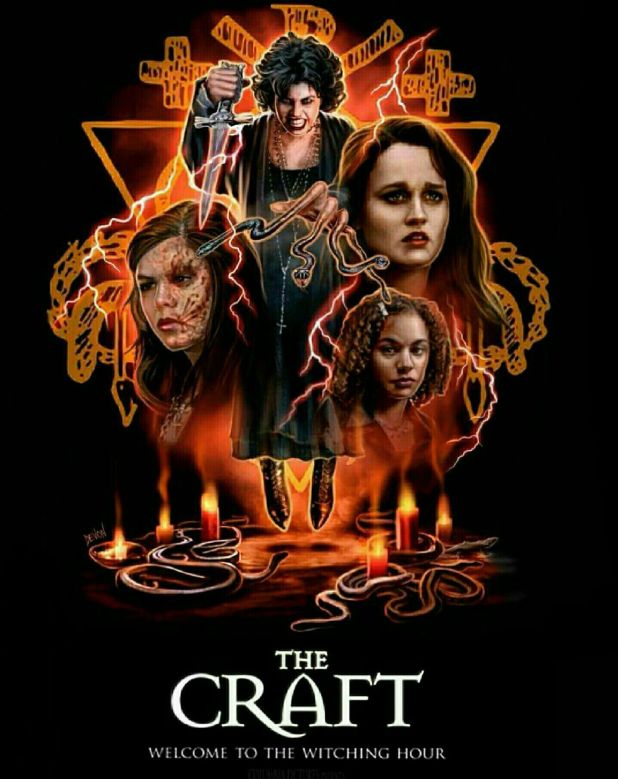
Sarah Bailey (Robin Tunney, wearing a wig as she had shaved her head for Empire Records) is the new girl in town, having moved from Los Angeles to San Francisco with her father (Cliff DeYoung, Shock Treatment) and stepmother. She soon becomes friends with a group of outcasts who are rumored to be witches: the scarred Bonnie (Neve Campbell), trailer trash and totally awesome Nancy (the legit Wiccan Fairuza Balk, who was also in Return to Oz) and Rochelle (Rachel True, CB4), whose black skin in a nearly all white school makes her a target of ridicule. The witch rumor? Yeah, it’s true. They all worship an entity they refer to as Manon.

Sarah becomes attracted to the popular Chris Hooker (Skeet Ulrich, who was very much a thing in 1996), but he claims that they slept together and ruins her reputation before it gets started. That leads to the girls finally completing a big spell that gives them everything they want: Chris falls in love so hard that he can’t live without Sarah, racist bully Laura Lizzie (Christine Taylor) loses her hair and popularity, Bonnie becomes gorgeous and Nancy’s abusive stepfather dies and she gets rich.

However, it’s not enough. After a rite called the “Invocation of the Spirit,” Nancy gains even more power because, you know, she got hit by lightning (actual Wiccan Pat Devin was the on-set advisor, so maybe this really does occur). Now she can’t be stopped and all of the girls other than Sarah have gone wrong. The coven turns on her, but Sarah ends up stronger than all of them.

Of course, Blumhouse is remaking this, with Zoe Lister-Jones directing. There was talk of another remake and a direct to video sequel which never happened. I had hoped that that luck would have stopped this new version, but it’s already finished production.

I learned a really important lesson from The Craft. The girl I was dating at the time asked me which member of the coven I found most attractive. I said none of them. She kept pressing and begging for my answer. Of course Fairuza Balk is the right answer, but I kept quiet until finally, after an entire meal of her asking, I told her. She instantly grew angry and said, “The right answer is none of them!” Somewhere inside this story is a lesson.

I love the scene where all the fish wash up and the coven realizes how much power they have. You don’t know how many times the women in my life have made me watch this movie. I have grown smarter and not said a single thing about Nancy.

Till Death Do Us Hart (1996)

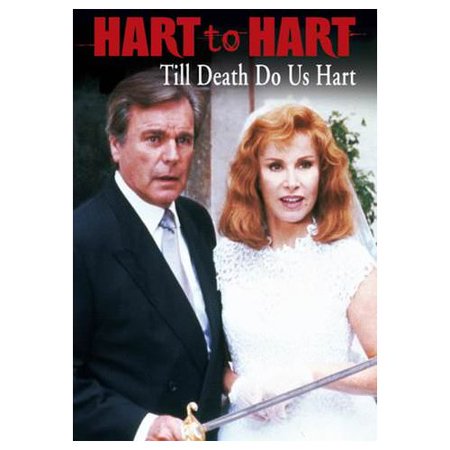
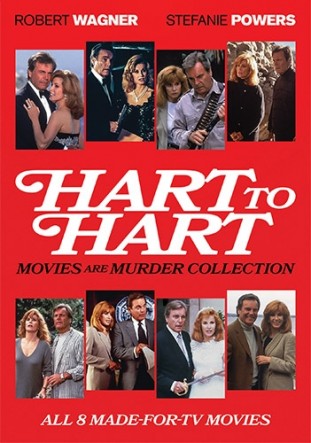
Sooner or later, you knew that George Hamilton was going to show up in one of these Hart to Hart reunion movies. He waited until the eighth of eight movies to make it happen, playing the evil Karl Von Ostenberg.

This episode finds the Harts heading to Munich, where Jennifer donates bone marrow to Maximilian, a little boy with leukemia. His doctor (Dwight Schultz, from TV’s The A-Team and Alone In the Dark) is amazed, because Jennifer looks exactly like his fiancee Simone, who has seemingly left him before the wedding. With an important dinner coming up, the Harts save him from an embarrassing situation by Jennifer filling in for the missing woman at an important dinner.

The last of these films, this was directed by original series director and creative consultant Tom Mankiewicz, who also directed the Tom Hanks version of Dragnet. He was also the writer of Ladyhawke, the two Richard Donner Superman movies, Diamonds Are ForeverLive & Let DieThe Man With the Golden Gun and The Cassandra Crossing. It was written by Bill Froehlich and Mark Lisson, who also wrote Return to Horror High.


Want to see this movie? Just get the new Mill Creek Hart to Hart Movies Are Murder Collection to watch this and seven more made for TV movies.

DISCLAIMER: This set was sent to us by Mill Creek. We appreciate it but it has no bearing on our review.

Harts in High Season (1996)

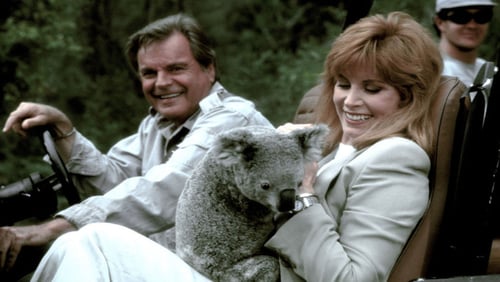
Before the Harts were married, she dated Elliot Manning (James Brolin!), who was a man that competed with Jonathan in racing and in business. After Jonathan duly destroys him in every endeavor, he still tries to be friends, but Manning nurses a revenge plot where he fakes his own death and hides in Australia while the police try to keep Jonathan for murder.

To those of you who watched the early UFC shows, Emmanuel Yarborough shows up here as Tonga, Elliot’s faithful henchman. At a weight of 882 pounds, he held the Guinness World Record for the heaviest living athlete. An NCAA All-American offensive tackle and amateur wrestler at Morgan State University, he also won the 1995 World Amateur Sumo Championships and then went into sumo and pro wrestling, where he worked for Germany’s CWA.

His biggest highlight for US fans was when he battled Keith Hackney in UFC 3, a match that proved that size wasn’t always necessary to win the fight in this new style of combat. He’d go on to defeat UWFI pro wrestler Tatsuo Nakano on a Shooto show in Japan before losing to Daiju Takase for the Pride promotion. Yarborough died in 2015 at the age of 51 from a heart attack.

Like the past movie on the set that we covered, Two Harts In 3/4 Time, this was written by Matt Crowley. It was directed by Christian I. Nyby II, who was behind most of the Perry Mason TV movies that aired through the 80’s and also directed seven episodes of Moonlighting, which gets a sly reference from the Harts in this film. His resume covers all manner of TV shows, from Battlestar Galactica to Emergency!BJ and the BearSimon & SimonThe A-TeamHill Street Blues and the Remo Williams TV pilot. He’s the son of Christian Nyby, who directed The Big Sleep and the original version of The Thing.

Want to see this movie? Just get the new Mill Creek Hart to Hart Movies Are Murder Collection. You’ll get this adventure and seven more to satisfy your need for romance and red herrings.

DISCLAIMER: This set was sent to us by Mill Creek. We appreciate it but it has no bearing on our review.

From Dusk Till Dawn (1996)

From Dusk Till Dawn came from the brains of Robert Kurtzman — the K in KNB — who wrote the original story, co-produced the film and helped create the special effects. It brings together Quentin Tarantino — who wrote the script and acts in the film — with Robert Rodriguez, the director of films such as Desperado, Sin City and, of course, the Planet Terror part of Grindhouse.

Bank robbers Seth and Richie Gecko (George Clooney and Tarantino) hold up a small liquor store and end up killing the clerk (John Hawkes, Kenny Powers’ brother on Eastbound and Down) and Texas Ranger Earl McGraw (Michael Parks, who despite this character dying, he came back to play the same role in Kill Bill Volume 1, a deleted scene in Machete and both Grindhouse movies).

As they hide out in a motel, Richie can’t help himself to killing and assaulting a bank clerk. As the cops get closer, the brothers take the Fuller family — Jacob, a former pastor and his children Scott and Kate (Harvey Keitel, Ernest Liu and Juliette Lewis) — hostage. Using their RV, the brothers make it across the Mexico border where they contact will meet them and escort them to El Ray, a place where fugitives can find safety (this concept comes from Jim Thompson’s novel, The Getaway, which also inspired two films — the 1972 Steve McQueen/Ali MacGraw classic and the 1994 Alec Baldwin/Kim Basinger not-so-classic).

While hiding out at a biker bar called the Titty Twister, everyone in the place reveals themselves to be vampires — everyone from the announcer (Cheech Marin in one of the three roles he plays here) to the band (Tito & Tarantula), the bartender Razor Charlie (Danny Trejo) and the main attraction, Santantico Pandemonium (Salma Hayek, playing a role named after the 1975 Mexican nunspoitation film where Satan selects Sister Maria to drag her fellow sisters into his domain).

The Geckos and the Fuller family only have two other people who can help — a biker named Sex Machine (Tom Savini!) and Army vet Frost (Fred Williamson!). Of course, all hell breaks loose and barely anyone survives, but what did you expect? By the end of the film, the Titty Twister reveals what it was all along — an Aztec temple. That would be explored more in the two sequels and TV series that followed.

Only in the world of Tarantino and Rodriguez can Tom Savini and Fred Williamson have just as much celebrity as George Clooney, who at times could truthfully lay claim to being the biggest movie star in the world. That said, they mean way more in my world. And throw in appearances by Marc Lawrence (Dream No EvilCataclysm) and John Saxon (probably my favorite actor of all time) and you have a movie that feels like it was made for my own personal enjoyment. Hell, before Clooney came on, Joe Pilato — Captain Rhodes from Day of the Dead — played Seth and footage exists of him in the role.

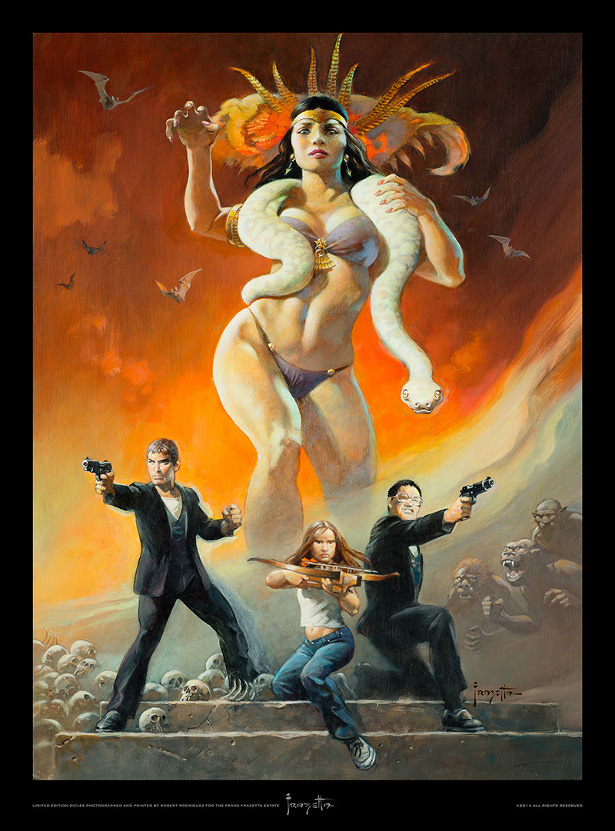
While not as serious as the other Tarantino films we’re writing about this week, From Dusk Till Dawn is a quick and fun bit of entertainment. And check out that Frazetta poster that was never used!