TROMA BLU RAY RELEASE: Toxic Crusaders The Series (1991)

Sure, there were Rambo: The Force of FreedomPolice Academy and RoboCop cartoons and toys, but the fact that The Toxic Avenger got his own cartoon and toy still blows my mind. In the seven years since the movie was made, Melvin Junko went from smashing faces with gym equipment to saving Tromaville from the evil Smogulans, led by Czar Zosta and Dr. Killemoff. Now he has friends like Nozone, Major Disaster, Headbanger and Junkyard.

What’s even more surprising is that Michael J. Pollard is in this as the voice of Psycho and that the pilot was written by future sitcom master Chuck Lorre.

Yes, I had many of the Playmates toys, which had a great tagline: “They’re gross, but they still get girls!”

Troma head Lloyd Kaufman believed that he was getting to make a live-action version of the cartoon with New Line, only to learn that they were using the new property as leverage to get a better deal from Eastman and Laird for the next Teenage Mutant Ninja Turtles film. He got some money out of it, at least.

There are 13 episodes of this show, and in none of them does someone yell, “I never did me no blind bitch before.” But you know, you have to tone things down when you make a cartoon, I guess.

My big question? Where was Sgt. Kabukiman in this series?

The Troma Blu-ray release of the entire series includes a new introduction from Kaufman, toy commercials, a documentary about the new video game, archival footage of the Toxic Avenger and bonus cartoons. You can get it from MVD.

Femme Fatale (1991)

Joseph Prince (Colin Firth) somehow scores the beyond-beautiful Cynthia (Lisa Zane), a bad girl who might seem out of the league of a park ranger/artist. On the night of their honeymoon, she disappears. He spends days, months, and years looking for her while being laughed at by his best friend Elijah (Billy Zane, and yes, he and Lisa are sisters; consider then the Ivan and Rada Rassimov of this kind of sort of Giallo) makes fun of him.

This leads him to the big city, where he tries to locate her by pictures of her tattoo—nearly getting murdered by Danny Trejo—and meets another of her past loves, Jenny Purge (Lisa Blount), a woman with whom she made BDSM art films. Oh, Joseph, you barely knew this woman and kept getting shocked that she ran drugs and had a girlfriend. And is that the Log Lady as a nun? Sure is.

There’s also a scene where Joseph goes to see ParasiteThe Head Hunter and The Evil Below in the theater, which I want from my erotic thrillers.

Directed by Andre R. Guttfreund (who won an Oscar for short In the Region of Ice and primarily worked in TV, directing episodes of Knots Landing) and written by Michael Ferris and John D. Brancato, who would later write The Net and Catwoman, this is the dumbest of the dumb movies, and for that, I loved it. It wants to be neo-noir or Giallo or something, yet it has a scene where Mr. Darcy and Machete discuss what a succubus is. Where else will you get that movie drug?

You can watch this on YouTube.

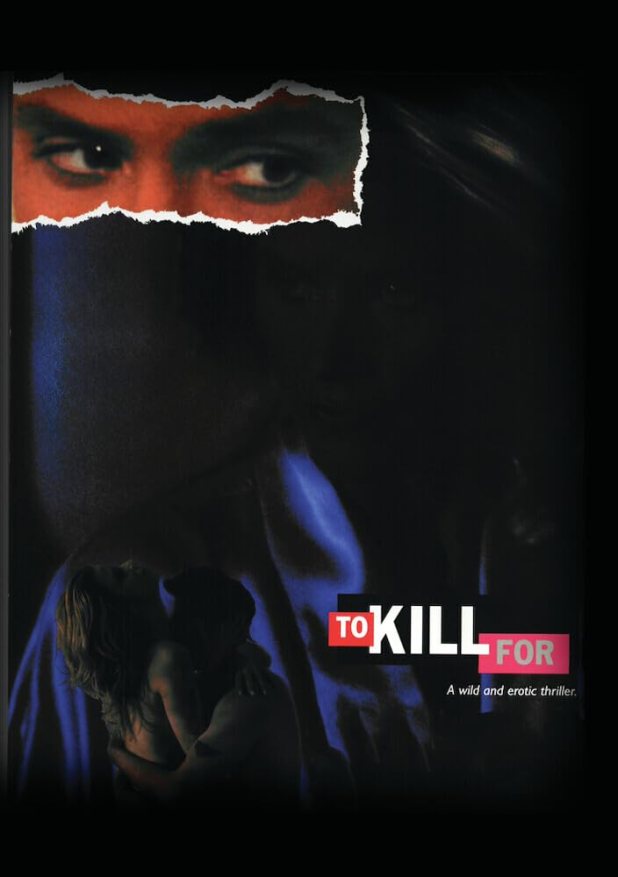
To Kill For (1991)

Also known as Fatal Instinct — the most “we’ve got that erotic thriller at home” title ever — this movie was directed by John Dirlam (a camera op on Silk Stalkings, which had to prepare him for this, as well as the cinematographer of The Vineyard and If You Don’t Stop It…You’ll Go Blind!!!) and written by George Putnam, who also wrote Unlawful Entry.

Cliff Burden is a detective looking into the death of a developer. He falls in love with the top suspect, Catherine Merrims (Laura Johnson), just as you’d expect in a film noir. Or an erotic thriller. Except all the sex happens offscreen, so…why would you have Ashlyn Gere in your cast and do that to your audience?

The plot does not matter at all. In the meantime, Madsen wanders around this big, fancy apartment building and tries to keep this rich woman away from the law while being the law. There’s no reason why someone killed the developer, and that murder does not mean anything. Yes, this is just a movie of hanging out, tough guy dialogue and lovely cinematography, which was Dirlam doing double duty.

Is there neon? Is there a saxophone soundtrack? Then, yes, this is an erotic thriller because there’s a sexy tennis scene along the way. It’s not the Skinemax you’re looking for, but hey, this is from a time when Michael Madsen was the selling point for direct-to-video detective films.

Last Call (1991)

Indian-American director Jag Mundhra was born into a conservative family where films were discouraged. He was a good enough engineering student to earn his master’s degree in electrical engineering at the University of Michigan but switched to a PhD program in filmmaking.

While his early and later movies were socially conscious, he’s probably best known for his erotic thrillers—he directed Night Eyes, so he can claim to be influential—such as Legal Tender and Tales of The Kama Sutra: The Perfumed Garden and horror movies like Hack-O-Lantern.

More than twenty years ago, Cindy watched as real estate agent Jason Laurence (Matt Roe, Puppet Master) threw her mother to her death. And wow, her mother was an exploitation actress, with a poster in her house that seems to be created from Vampire Circus.

Shannon Tweed’s character, Cindy, embarks on a revenge scheme that begins with involving Paul (William Katt) in a check-cashing crime caper. This involvement transforms Paul from a young idealistic businessman into a cynical crook. The question arises: if you had the chance to aid 1991 Shannon Tweed, much less bed her, wouldn’t you?

Throw in a solid supporting cast—Joseph Campanella, Stella Stevens, Karen Elise Baldwin—and plenty of saxophone, shake it up and add way better cinematography by James Mathers (Night Eyes 3, Syngenor, Silent Night, Deadly Night 5), and you get a movie that shows that the origins of the erotic thriller genre weren’t always quickly made tossable efforts.

What takes this beyond the norm is the scene where Tweed does a striptease wearing a black lace bodysuit, contorts in front of a yarn spiderweb, and stabbing a teddy bear while screaming, “Mommy!” That may have just been words on the page of Steven Iyama’s script, but Tweed transforms a simple turn of phrase into a memorable set piece that helps this transcend normalcy.

You can watch this on Tubi.

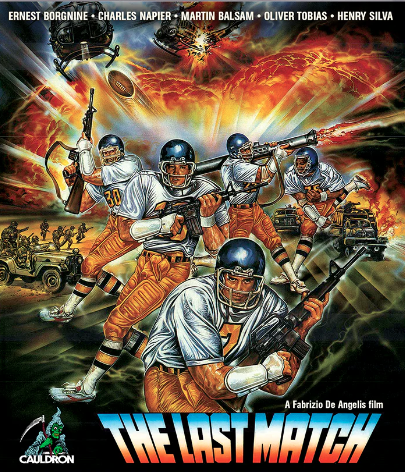
CAULDRON FILMS BLU RAY RELEASE: The Last Match (1991)

Often, I refer to movies as having an all-star cast, which is really a misnomer. After all, what I consider A-list talent certainly does not fit the rest of the world. The Last Match, however, has the very definition of what I consider an all-star cast. Let’s take a look at the lineup:

Ernest Borgnine: Amongst the 211 credits Mr. Borgnine amassed on his IMDB list, none other have him leading a football team against an unnamed Caribbean island to save his assistant coach’s little girl. He was, however, in four Dirty Dozen movies and The Wild Bunch, not to mention playing Coach Vince Lombardi in a TV movie. One assumes that he took this role to get away from his wife Tova and her incessant cosmetics shilling. 

Charles Napier: As the American consul in this movie, Napier cuts a familiar path, which he set after appearing in the monster hit Rambo: First Blood Part II. For him, it was either playing bureaucrats or cops, thankless roles that he always brought a little something extra to. The exception to his typecasting is when he played Baxter Wolfe, the man who rocks Susan Lakes’ loins in the beyond essential Beyond the Valley of the Dolls

Henry Silva: If you need a dependable jerk and you have the budget of, well, an Italian movie about a football team that also does military operations, call Mr. Silva. He admirably performed the role of the heel — or antihero at other times in movies like Megaforce, Battle of the Godfathers, Cry of a Prostitute (in which he plays the Yojimbo role but in a mafia film; he also pushes Barbara Bouchet’s face inside a dead pig’s carcass while making love to her and he’s the good guy), Escape from the Bronx and so many more movies.

Martin Balsam: Perhaps best known for Psycho, Balsam shows up in all manner of movies that keep me up at 4 AM on nights when I know work will come sooner than I fear. He’s so interested in acting up a storm in this movie that he is visibly reading off cue cards.

They’ve all joined up for a movie that finds the coach’s daughter get Midnight Express-ed as drugs are thrown in her bag at the airport on the way home from a vacation with her hapless jerk of a boyfriend. At least he’s smart enough to call assistant coach Cliff Gaylor (Oliver Tobias), the father of the daughter whose life he has just ruined. And luckily for this film, Tobias was in a movie called Operation Nam nearly a decade before, which meant that they could recycle footage of him in combat. He also was The Stud and serviced Joan Collins, so he has my eternal jealousy going for him, too.

Who could dream up a movie like this? Oh, only Larry Ludman, but we see through that fake name and know that it’s Fabrizio De Angelis steering this ship, the maker of beloved trash such as Killer Crocodile, five Karate Warrior movies and three Thunder movies that star the beloved Mark Gregory as a stiff legged Native American warrior who pretty much cosplays as Rambo. And don’t forget — this is the man who produced Zombi, The House by the Cemetery, The Beyond and New York Ripper!

In this outing, he’s relying on Cannibal Holocaust scribe Gianfranco Clerici and House on the Edge of the Park writer Vincenzo Mannino to get the job done. For some reason, despite this being an Italian exploitation movie, we never see the coach’s daughter in jail. Instead, we’re treated to what seems like Borgnine in a totally different movie than everyone else, barking orders into his headphones as if he was commanding the team in a playoff game. 

To make matters even more psychotic, the football players show up in full uniform instead of, you know, commando gear. One wonders, by showing up in such conspicuous costumes, how could they avoid an international incident? This is my lesson to you, if you’re a nascent Italian scumtastic cinema viewer: shut off your brain, because these movies don’t have plot holes. They’d have to have actual plots for that to be possible. 

I say this with the fondest of feelings, because you haven’t lived until you witness a football player dropkick a grenade into a helicopter. Supposedly this was written by Gary Kent for Bo Svenson, who sold the script to De Angelis unbeknownst to the stuntman until years later. It was originally about a soccer team!

Former Buffalo Bills QB Jim Kelly* is in this, which amuses me to no end, as does the ending, where — spoiler warning — Borgnine coaches the team from beyond the grave!

You know how conservative folks have quit watching the NFL as of late? This is the movie to bring ‘em back, a film where the offensive line has fully automatic machine guns and refuses to kneel for anything. No matter what your politics, I think we can all agree on one thing: no matter how dumb an idea seems, Italian cinema always tries to pull it off. 

*Other pros include Florida State and arena football player Bart Schuchts and USFL player Mark Rush, as well as Dolphins Jim Jensen, Mike Kozlowsky, Elmer Bailey and Jim Kiick. It’s kind of astounding that at one point, these players could just end up in a movie without the NFL knowing. This would never happen today.

The new Cauldron Films blu ray release of The Last Match is limited to 1500 copies and the film itself has a 2K restoration from the original negative. Extras include an interview with special effects artist Roberto Ricci; American Actors in a Declining Italian Cinema, a minidoc by EUROCRIME! director Mike Malloy; Understanding the Cobra, a video essay by Italian film expert Eugenio Ercolani and commentary by Italian exploitation movie critic Michael A. Martinez.

You can get this from MVD, Diabolik DVD and Cauldron Films.

SEVERIN BLU RAY RELEASE: Scala!!! shorts disc one (1968. 1971, 1978, 1984, 1986, 1989, 1991)

On the bonus discs of Severin’s new Scala!!! Or, the Incredibly Strange Rise and Fall of the World’s Wildest Cinema and How It Influenced a Mixed-up Generation of Weirdos and Misfits release, you’ll find examples of several shorts that played at the theater. You can buy this from Severin.
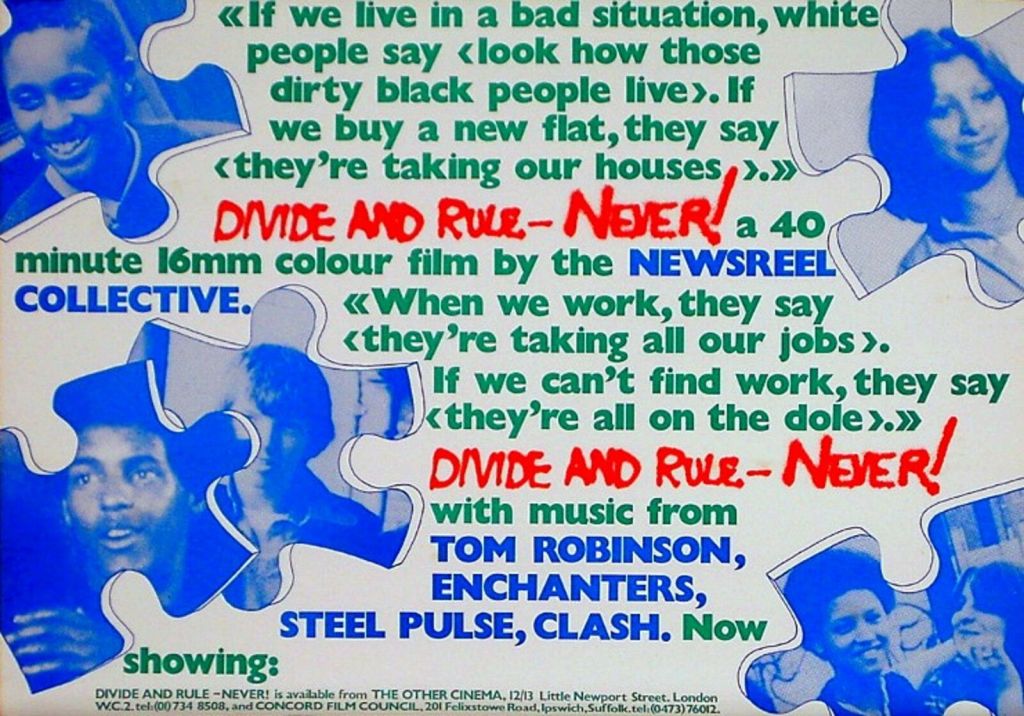
Divide and Rule – Never! (1978): Made for and by young people, this forty-minute or so film looks at race and how it is viewed in school, at work and by the law. There are also some historic sequences of British imperialism and a discussion of how Germany got to the point that it was pre-World War II, plus plenty of punk rock and reggae. This has many sides represented, from Black and Asian immigrants to ex-National Front members.

Divide and Rule — Never! was distributed by The Other Cinema, a non-profit-making, independent film distribution company in London.

Sadly, so much of this movie — made 45 years ago — are just as relevant today in America. This is movie that doesn’t shy away from incendiary material, but that’s what makes it so powerful. In addition to the interviews, it has some interesting animation and a soundtrack with Steel Pulse, TRB, X-Ray Specs and The Clash.
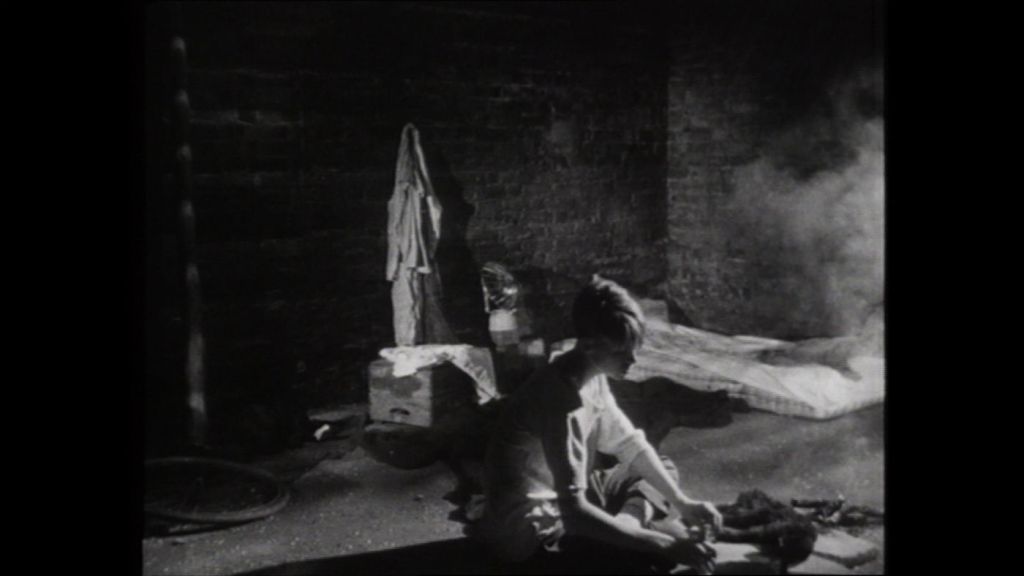
Dead Cat (1989): Directed and written by Davis Lewis, this has Genesis P-Orridge in the cast and a soundtrack by Psychic TV, which has been released as Kondole/Dead Cat.

A boy (Nick Patrick) has a cat that dies and his grief deposits him into a psychosexual nightmare, including a medicine man (Derek Jarman) and several unhoused people (P-Orridge, Andrew Tiernan).

This was shown at only a few theaters the year it was release — including Scala Cinema — before fading away and almost being lost before Lewis found it. In the program for this film, Scala said “The torture that occurs at the transition of sexuality.” If you liked videos for bands liek Skinny Puppy and Nine Inch Nails, this feels like the inspiration.
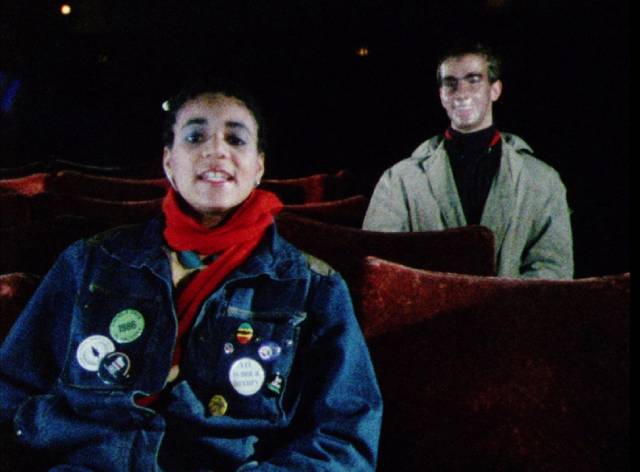
The Mark of Lilith (1986): Directed by Bruna Fionda, Polly Gladwin and Zachary Nataf as a project at The London College of Printing, this is all about Zena (Pamela Lofton), who is researching monstrous women. She meets Lillia (Susan Franklyn) a vampire, at a horror movie and the two start a relationship. 

Liliana, trapped with an abusive male partner by the name of Luke (Jeremy Peters) who is what vampires probably would be, scavengers who feed on the weak, dreams of movies in which she is the victim of just such a vampire. She’s often fed on human beings, but has been careful not to be caught or make a mess, unlike her partner. As for Zena, she’s been studying how female gods were once worshipped but now only appear in horror fiction as monstrous creatures.

So much of this movie is as right on now as when it was made, like the speech that Zena gives when Liliana tracks her down: “Have you noticed that horror can be the most progressive popular genre? It brings up everything that our society represses, how the oppressed are turned into a source of fear and anxiety. The horror genre dramatizes the repressed as “the other” in the figure of the monster and normal life is threatened by the monster, by the return of the repressed consciously perceived as ugly, terrible, obscene.”

Her argument is that we can subvert the very notions of horror, making the monsters into heroes that destroy the rules that hold us down.

However, this being a student film, it’s very overly earnest and instead of working these ideas into the narrative as subtext, they take over the entire movie. If you’re willing to overlook this, it’s a pretty fascinating effort.
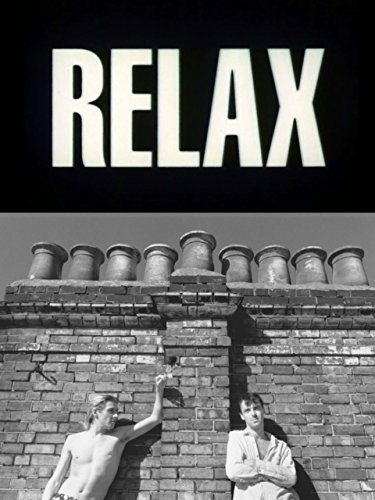
Relax (1991):  Steve (Philip Rosch) lives with his lover Ned (Grant Oatley), but as he starts to engage in a more domestic relationship, he starts to worry about all of the partners he’s had. After all, the AIDS crisis is happening and he’s never been tested. Ned tells him to relax, but there’s no way that he can.

The wait for the test is just five days but it may as well be forever. This also makes a tie between sex and death, as Steve strips for both Ned and his doctor. And in the middle of this endless period of limbo, he dreams of death and fights with Ned, who just smiles and keeps telling him to relax. But how could anyone during the time of AIDS?

I remember my first blood test and the doctor lecturing me after he gave it, telling me that I should have been a virgin until I married and whatever happened, I brought it on myself. The funny thing was, I had been a virgin, I thought I was getting married and I had no knowledge that my fiance was unfaithful to a level you only see in films. That night, my parents came to visit, leaving their small town to come to the big city and my mother asked, “What is that bandage on your arm?” I could have lied, but I told her it was for a blood test, and I dealt with yet someone else upset with me. My problems were miniscule in the face of the recriminations that gay people had to deal with, a time of Silence=Death, a place seemingly forgotten today other than by the ones who fought the war.

Directed and written by Chris Newby, this is a stark reminder of that time.

Boobs a Lot (1968): Directed by Aggy Read, this is quite simple: many shots of female breasts, all set to The Fugs’ song of the same name. Banned in Australia, this has around three thousand sets of mammaries all in three minutes, the male gaze presented over and over and, yes, over again until it goes past just being sophomoric and becomes mesmerizing in the way that breasts are when you’re starting puberty. I’m ascribing artistic meaning to this but really, at the end of the day, it’s just a lot of sweater meat. Fun bags. Cans, dirty pillows, babylons, what have you. My wife is always amazed at how many dumb names I can come up with for anatomy and I blame years of John Waters and reading Hustler as a kid and yeah, I’m not as proud of the latter than the former. That said, there are a lot of headlights in this one.

Kama Sutra Rides Again (1971): Stanley (Bob Godfrey, who also directed and write this) and Ethel are a married couple looking to keep their love life interesting, so they have been trying out new positions. Things start somewhat simple, but by the end, Ethel is being dropped through trap doors and out of an airplane onto her husband. A trapeze love making attempt ends in injury, leading Ethel to chase Stanley while all wrapped up.

Stanley Kubrick personally selected this film to play before A Clockwork Orange in theaters in the UK. I wonder if this played at Scala before the screening that shut down the theater. More than just a dirty cartoon, this was nominated for an Oscar. Despite being about lovemaking, it’s all rather innocent and remains funny years after it was made.
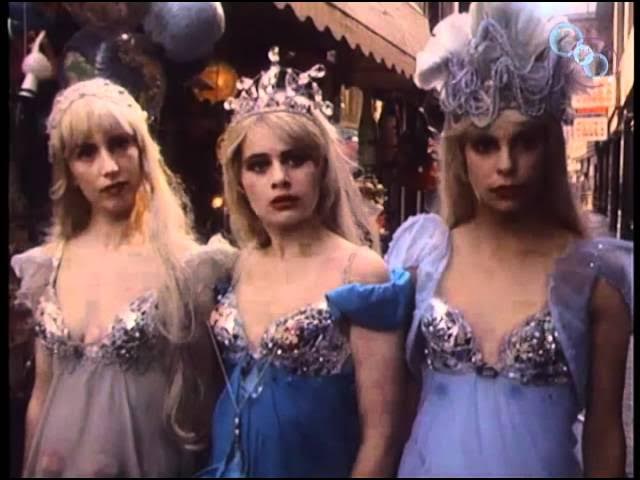
Coping With Cupid (1991): Directed and co-written by former Slits guitarist Viv Albertine, this finds three blonde alien women — played by Yolande Brener, Fiona Dennison and Melissa Milo — who have come to Earth to learn what love is, under the command of Captain Trulove (the voice of Lorelei King). They meet a man named Peter (Sean Pertwee), who hasn’t found anyone, as well as interview people on the street to try and learn exactly how one person can become enamored of another.

Richard Jobson from Skids and Don Letts from Big Audio Dynamite appear, as does feminist sexologist Shere Hite, at least on a TV set. I love that the three aliens are the ideal of male perfection yet they are lonely, trying to figure out what it takes to make the heart beat. It’s kind of like so many other films that I adore where space women try to understand men, a genre that really needs a better title. See Cat-Women of the Moon, Missile to the Moon, Queen of Outer Space, Fire Maidens from Outer SpaceAmazon Women On the Moon, Abbott and Costello Go to Mars, El Planeta De Las Mujeres Invasoras and Uçan Daireler Istanbulda.

On Guard (1984): Sydney: Four women — Diana (Jan Cornall), Amelia (Liddy Clark),  Adrienne (Kerry Dwyer) and Georgia (Mystery Carnage) — juggle their lives, careers and even families to destroy the research of the company Utero, who are creating new ways of reproductive engineering. Or, as the sales material says, “Not only are the protagonists politically active women, but the frank depiction of their sexual and emotional lives and the complexity of their domestic responsibilities add new dimensions to the thriller format. The film also raises as a central issue the ethical debate over biotechnology as a potential threat to women and their rights to self-determination.”

One of the women loses the diary that has all of the information on their mission, which leads to everyone getting tense over what they’re about to do. Directed by Susan Lambert, who wrote it with Sarah Gibson, this allows the women to be heroes and not someone to be saved. I like that the advertising promised that this was “A Girls’ Own Adventure” and a heist film, hiding the fact that it has plenty of big ideas inside it.

Today, in vitro fertilisation (IVF) is an accepted way of having children, yet here, it’s presented as something that will take away one of the primary roles of women. Juxtapose that with IVF being one of the women-centric voting topics of the last U.S. election.

UNEARTHED FILMS 4K UHD/BLU RAY RELEASE: The Guyver (1991)

How weird was it when The Guyver just randomly showed up in my local video store, unannounced, bringing Japan weirdness into my 19-year-old movie rental obsession life?

When Dr. Tetsu Segawa steals the Guyver unit from the villainous company he’s been working for, his daughter’s boyfriend Sean accidentally finds it, puts it in his backpack and has it fuse with his body after he’s attacked by a street gang. That makes him a marked man by Fulton Balcus (David Gale) and his gang of Zoanoid mutants, which includes Lisker (Michael Berryman), M.C. Striker (Jimmie Walker) and Weber (Spice Williams-Crosby).

Directed by Screaming Mad George and Steve Wang, this movie has some of the wildest effects I’ve ever seen, full body suits that still look great thirty years after I first watched this. I’m also still surprised that Mark Hamill is in this, while not as surprised that Jeffrey Combs and Linnea Quigley are in this.

Based loosely on the Yoshiki Takaya manga, this takes a lot of liberties with its inspiration, but for someone in the very landlocked small Western Pennsylvania town that I grew up in, finding this on the shelves of Prime Time Video was like some kind of magic, bringing something I thought I would never see to a place that I thought I would never get out of.

The Unearthed Films release of The Guyver is amazing, putting a movie into my collection that I thought I would never have. It has a 4K restoration of the original R-rated 35mm camera negative, along with the soundtrack on CD and a book. Extras include commentary with co-directors Screaming Mad George and Steve Wang, moderated by Dom O’Brien, the author of Budget Biomorphs: The Making of The Guyver Films, interviews with Brian Yuzna and Screaming Mad George, suit tests, outtakes, a gag reel, a production and art gallery, an alternative title sequence and trailers. You can get it from MVD.

Tales from the Crypt S3 E14: Yellow (1991)

Originally airing as another attempt to make an E.C. Comics anthology, Two-Fisted Tales, “Yellow” was taken from the first issue of Shock SuspenStories and was written by Al Feldstein and illustrated by Jack Davis. After the movie that had three of those stories aired once, all of the stories made their way into Tales from the Crypt.

“Yellow,” directed by Robert Zemeckis and written by Jim and John Thomas (Predator), A. L. Katz and Gilbert Adler, is about a soldier who keeps letting down his military man father. It’s super tense and filled with gore, plus great acting by Kirk and Eric Douglas, Lance Henriksen and Dan Aykroyd.

“Hello, creeps. I was just about to fire off tonight’s dead-time story. It’s about a young soldier who doesn’t want to be in the army anymore. I can’t imagine why not. I mean, war’s a great equal opportunity destroyer. Now, where was I? Oh yes.Ready! Maim! And here’s my favorite part. Fire! I call tonight’s tale: Yellow.”

In France during World War I, American soldiers are in the trenches and trying to take a hill for 49 days in a row. Sgt. Ripper (Lance Henriksen) leads his men with courage in the middle of the fight while his superior Lt. Martin Calthrop (Eric Douglas) hides and gets drunk. Instead of allowing Ripper to push on, Calthrop asks him to retreat.

The hill is crucial to the plans of both General Calthrop (Kirk Douglas) — Martin’s father — and German commander General von Furstenburg. As Captain Milligan (Dan Aykroyd) listens, the elder soldier orders his son to take Ripper and two men to repair communications. If he does this mission, he will be transferred away from combat, as he’s a coward. Martin screws it up, dropping the whistle he’s been given to warn his men, which causes all of them to be killed. Ripper barely hangs on — guts all over the place — to call Cathrop yellow before he dies. This causes an instant court martial and death by firing squad once the evidence is examined.

As he waits to die, Cathrop tells his father that all he cared about was the military and not his son. The general tells his son that he’d never let him die and has loaded the guns with blanks. That allows his son to stand up in the face of death and make a speech, saying , “I tried. But I’m not the man my father is. I’m sorry, and I apologize. My fear of dying got in the way of my responsibility to my men, and the obligations of my commanding officers. I know now what Shakespeare meant: “Cowards die many times before their deaths. The valiant never taste of death but once.”” The men are moved by his bravery and then he realizes that his father lied. This allows him to have a son who wasn’t yellow and his military record can continue without any stain on it.

No one realizes that the Germans have taken the hill.

This is the last episode of season 3. There are four seasons left. Are you enjoying these articles so far?

Tales from the Crypt S3 E13: Spoiled (1991)

In the world of E.C. Comics, there is no shortage of cheating spouses or the price they pay for giving into sin.

“Hello, golfing fiends, and welcome to the Crypt. Oh, don’t mind him. That’s just my caddie, Juan. He got me teed off while I was playing a round…so I shot a hole in Juan! Which brings to mind the young woman in tonight’s tale. She’s also playing around, except that her game isn’t golf. It’s love. I call this disgusting drama “Spoiled.””

This episode is so meta that there’s an argument for buying cable in it.  “The picture is so much better. Plus, you get HBO and everything. It would really improve the quality of your life,” says Louise (Annabelle Gurwitch) to her put-upon friend, soap opera obsessive Janet (Faye Grant). And once our heroine actually does get the cable, her husband Leon (Alan Rachins) demands that she turn off the Crypt Keeper!

Janet loves Fuchsia (Anita Morris), the star of her favorite daytime show There’s Always Tomorrow. When Fuschia’s husband ignores her, she gets the passion she needs from younger and way more desirable men. So you can understand when cable guy Abel (Anthony LaPaglia) comes into her home that she wants nothing more to pound his brains out while all her mad scientist hubby cares about is taking brains and moving them from body to body.

Well, not exactly. He actually switches the heads on the bodies and by the end of this story, he’s done that to Janet and Abel with some of the worst effects that 1991 can deliver.

Directed by Andy Wolk, who has mostly been in episodic television, and written by Connie Johnson (who assisted producers on this show for 17 episodes) and Doug Ronning (who also wrote another episode, “The Secret”), this is what happens when this show tries to be too cute. Sure, humor is part of E.C. but it’s not all of it. It’s why I prefer the Amicus version to so many of the HBO episodes.

Grant and Rachins would play another married couple — and the parents to Brian Austin Green — in the TV movie Unwed Father.

This is based on “Spoiled” from The Haunt of Fear #26. It was written by Otto Binder (who wrote more than half of the Captain Marvel family stories and created Supergirl) and drawn by Jack Kamen.

Tales from the Crypt S3 E12: Deadline (1991)

Charlie McKenzie (Richard Jordan) was a reporter once. But now, he’s a drunk that can barely survive. Then he meets Vicki (Marg Helgenberger) and one night of love with her has him fixing his life and trying to get his job back, even if his boss Phil Stone (Richard Herd) and sister Mildred (Rutanya Alda) don’t believe that he can ever get back off the booze. Even his bartender wants him to stop drinking.

“So, what’ll it be, stranger? Can I interest you in a mai die? Or would you prefer a rum and choke? Or maybe you’d like something a little stronger. I’ve got just the thing. It’s a nasty little snootfull about a newshound named Charlie who needs a murder story and a drink. But not necessarily in that order. Ah, what some people won’t do for a good stiff one. I call this little eye-opener “Deadline.””

Charlie has to bring in a murder story. He finds it in a diner, as Nikos Stavo (Jon Polito) argues with his unseen wife in the kitchen. Charlie runs in for his story, only to learn that the woman who is getting him back on his feet was just sleeping with drunks to upset her husband. So our protagonist kills her and calls in his story, ending this episode in a sanitarium.

This episode is directed and co-written by one of Tales from the Crypt‘s producers, Walter Hill. It’s as good as you hoped it would be. He wrote it with his assistant, Mae Woods, who would go on to be a producer of movies such as Streets of FireRed Heat and Crossroads.

This episode is based on “Deadline” from Shock SuspenStories #12. It was written by Al Feldstein and William Gaines and drawn by Jack Kamen. This episode feels like it could run along with “Mournin’ Mess” as they are so close to each other.