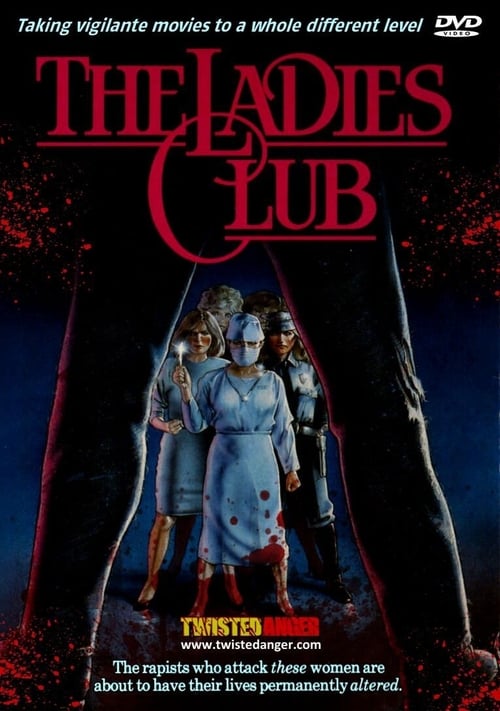
Based on Casey Bishop and Betty Black’s novel The Sisterhood — one of the alt titles along with Violated — this is the kind of movie that sets out to be a feminist film and then must climb the challenge of its own marketing, which led director Janey Greek (“Ricky” by Weird Al, Spellbinder) to use the name A.K. Allen and lead actress Karen Austin to complain about how New Line sold the movie by saying: “I think the way the film is being marketed is tacky.”
You mean the tagline “Men who attack women have two big problems. The Ladies Club is about to remove them both.” isn’t classy enough for you?
Austin was on Night Court as he original romantic interest for Harry Stone for the first ten episodes and was John Candy’s wife in Summer Rental. Here, she’s LAPD officer Joan Taylor, who has been assaulted by three men who the system allows to get away with their crime. After meeting with a woman’s support group, she and other members — like Constance Lewis (Christine Belford) and Lucy Bricker (Diana Scarwid, forever Christina) — to hunt down men who have attacked women and surgically castrate them.
That said, if you’re expecting something fully sleazed out, this isn’t it, no matter what the posters promise. I mean, it’s not anything reputable either, but you know what I mean.
And you may ask, “Is this a slasher?” Ask all the dudes that the Ladies Club picked up in bars and had surgeons around to slice off their tallywhackers. I think they would definitely tell you that this is a slasher.
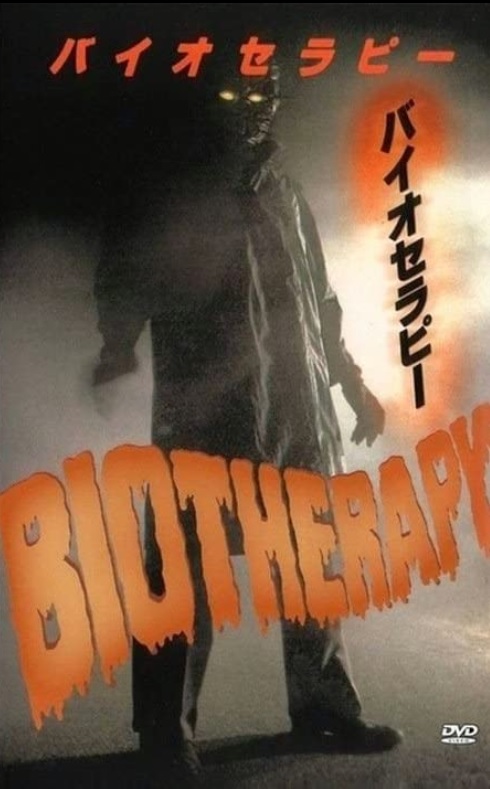
Oh, the memories of hearing about this from my fellow comic book, heavy-metal lovin’ horror nerds, “Dude, you’ve got to check out Biotherapy! The comic store just got a new shipment of tapes!”
Fifteen miles (one way) and a $5.99 rental fee, later — I’m in a VHS, analog-drunken stupor. I have no fucking idea what’s going on (no subtitles), but I just watched a woman scientist turned into a fountain by way of broken test tubes jammed into her body. Hey, look! There’s even an eye ball ripping! Yes! A disemboweling! This Japan-curio is out Karo-reddin’ a Sam Raimi cabin-in-the-woods romp!
So, is this a slasher film? Yes.
Is this a rip on John Carpenter’s, not Halloween, but The Thing, but, uh, our resident alien is Jasonesque? Yes.
Never has a movie packed so much in so little time, in this case: 36 minutes. There’s no plot. There’s no characters. It’s just a relentless barrage of in-camera practical effects. In other words: it’s the prefect film that brings on the gore.
Nasty to the extreme, Biothearpy is a story about a group of Japanese scientists working on a food growth hormone (today, courtesy of subtitles: we now know it as “GT Medicine,” not that it matters). Cue the errant meteor shower that brings forth a blue-glowing man adorned in a fedora and trench coat, à la Ben Grimm, aka the other “Thing,” who begins stalking and butchering the scientists for the formula. And check out those Giger-choppers on our time-traveling alien! Nice.
Yeah, nothing beats the good ol’ brick and mortar days of those Japanese grey imports at your local comic emporium. Consider yourselves spoiled, B&S movie youngins, as you can stream this online for free these days; take note that back in those “grey days,” we watched this without subtitles, unlike today’s digital days. Not that you need the subtitles, as this is well-made, effectively-paced and easy to follow.
Why Biotherapy wasn’t expanded into a feature-length film — as was the totally awesome Korean horror romp, Dumplings — is anyone’s guess. What’s really great about Biotherapy is its worldwide distribution. Who hasn’t seen this movie the world over? You can watch Biotherapy on You Tube with optional English subtitles or on You Tube with embedded English subtitles.
For another take, check out guest writer Herbert P. Caine’s review.
About the Author: You can learn more about the writings of R.D Francis on Facebook. He also writes for B&S About Movies.
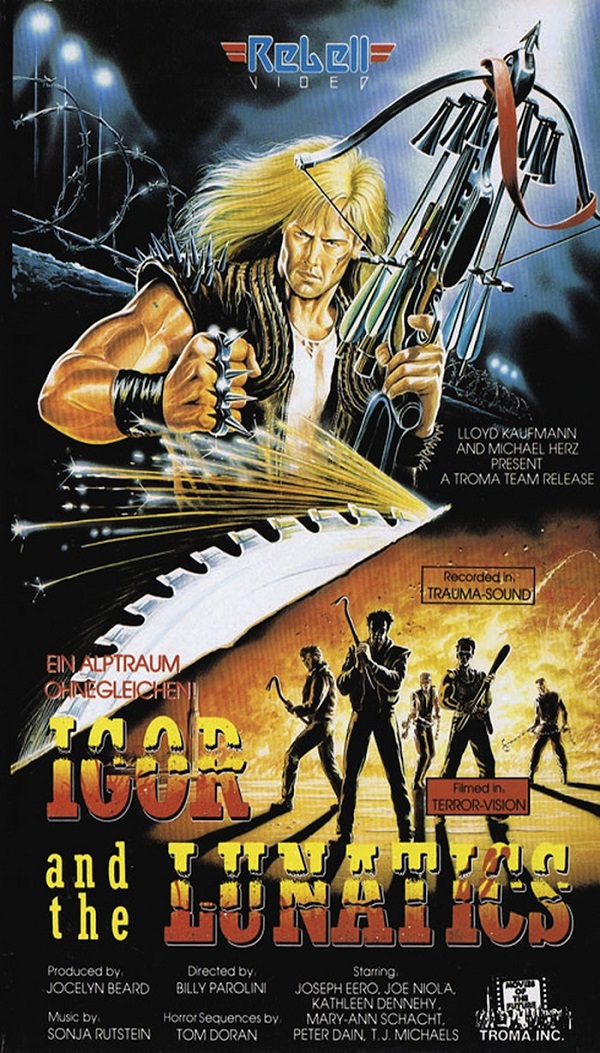
You know, some great Mad Max-style poster art was enough to get me into this movie, despite the nauseating strains of the Troma opening, which has been enough to get me to shut off numerous films.
The funny thing is the real leader of the cult of lunatics is Paul, but Paul and the Lunatics just doesn’t have the same zing I guess. So Igor got pushed to the front despite just being a foot soldier in this army of goofballs who like to use giant saws to cut women in half.
Anyways, the gang all goes to jail and somehow gets probation fifteen years later because I guess you can atone for using a giant saw to slide a woman in half. And then we get to see it twice, because hey, this movie is barely edited.
The bulk of this movie was directed by Billy Parolini and then years later, Thomas Doran and Brendan Faulkner would go back and direct the horror, action and suspense sequences.
This movie is, charitably, a mess and is saved by the really great posters. I mean, Tom — the former gang member gone legit — has come back to town just in time for Paul to get out of jail, which leads to that maniac ripping out a woman’s heart and killing Paul’s old girl — now a prostitute because this town is pretty much where I grew up — and making a tape recording of it. And oh yeah — Tom has a kid who has been raised by a Native American who lives in the woods.
If the names Thomas Doran and Brendan Faulkner are familiar to you, that’s because they made part of Spookies. Just like that movie, this has numerous continuity issues, plus even more weirdness like characters suddenly getting new names.
It’s an interesting watch. Not a good one. But hey, you have to do the work if you want to find the good ones.
15. KILLED BY TECHNOLOGY: The gadgets will getcha (<-autocorrect that one, phone).
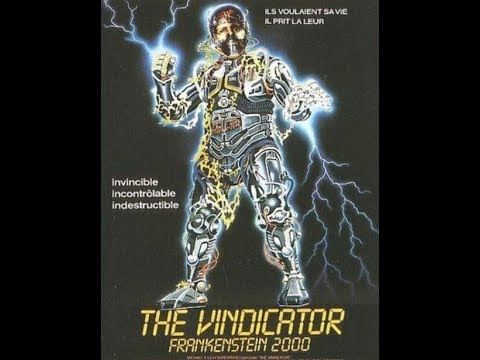
A modern-day retelling of the classic Frankenstein story set in the 80s — I mean, the movie is also known as Frankenstein 2000 as Frankenstein 80 was already taken and Joe D’Amato didn’t make Frankenstein 2000: Return from Death until 1992 and he wouldn’t care if he stole a movie title — The Vindicator was made in Canada and directed by Jean-Claude Lord (who also directed Visiting Hours as well as Toby McTeague the very same year).
The ARC corporation is trying to make the spacesuit of the future which will have a rage mode that takes over the wearer’s mind when they need to survive a dangerous situation, going pretty much full-on rage mode. Why this would be part of the machine is something that I leave up to you, dear viewer. That’s the same question that scientist Carl Lehman has, particularly after some monkeys die when one of the bosses, Alex Whyte, cranks them monkeys up to eleven and lets God or whatever machine logic that runs our simulation play dice. Dead monkeys lead to dead scientist which leads to Project Frankenstein, which is sort of RoboCop a year early.
I kind of like how filmmakers say they’re doing a modern Frankenstein and instead of being somewhat coy and naming the robot Project Prometheus or Project Shelley, they sledgehammer the point home and just say, “Hey smart guy, it’s just called Project Frankenstein, OK?”
If you wonder, “Will something go wrong, sending monkeys in a rage and burning Carl’s new skin off and him going on a quest to find his wife, who is played by the actress who would be Jill Bennett on Knot’s Landing?,” then the answer is, of course, yes.
But hey — this also has Pam Grier as Hunter, a hitman who needs a challenge and that usually involves liquidating anyone who knows or sees or even thinks about Carl in the suit. He’s never called the Vindicator, but hey I know one other Canadian scientist who got burned alive inside his cyborg suit and that’d be Weapon Alpha or the Guardian or Vindicator from John Byrne’s Alpha Flight and Canadians may be too polite to vindicate but I do not believe they are so polite as not to steal a movie title.
Anyways, there are some cyborg zombie battles and Carl’s colleague Burt trying to cuck him from beyond the grave and umbilical tubes being used to drown people and much like the cover of the VHS, I’m making this all sound way more exciting than it is. But isn’t that what renting movies used to be all about? You see a title like The Vindicator and a flaming cyborg — much less one designed by Stan Winston — and you say, “Gimme that.” Maybe a few hours later you regret your decision, but it was only a 93 minute and $2 investment, so life used to be a lot simpler.
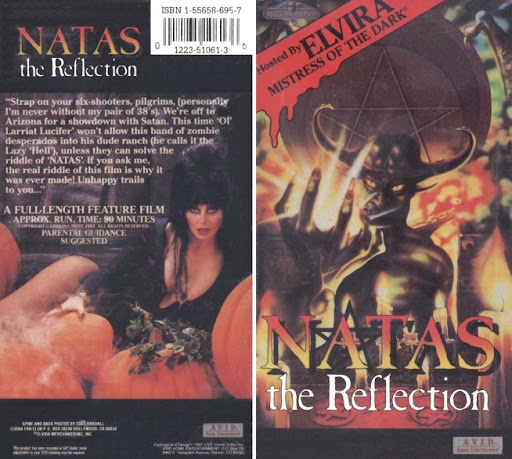
Steve is an investigative reporter so bad at his job that he doesn’t realize that Natas is Satan backward and even after dealing with gunslinger zombies, he still brings his friends into danger and a ghoul murders a bunch of them and then a demon shows up. Yes, 1986 was a wild time for movies, a moment when anything could end up on rental shelves.
Jack Dunlap only made one movie. This is it. This is what he has left us to remember him by. Well, that and some minor acting roles.
Of note, the mystical Indian named Smohalla in Natas the Reflection was played by the Nino Cochise, the real life grandson of one of the most famous Native American chiefs of all time, Cochise. He was 104 when this was made and never got to see it because it sat around for three years and he died a year after this movie. I think we can all agree that while death is inevitable and sad, he lived a full life and thankfully never had to sit through Natas the Reflection.
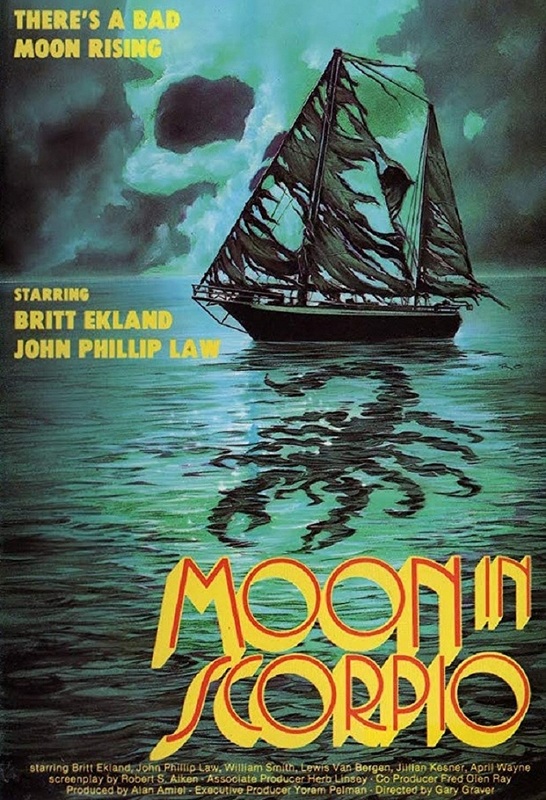
Sometimes, Gary Graver was making movies with Orson Welles. Other times, he was making ultra low budget films that were originally about soldiers burning down a temple to a snake goddess and being hunted years later by a Vietnamese child all grown up. Instead, the producers wanted a slasher set on a yacht. And that’s kind of what we got.
But man, what a cast! John Phillip Law? William Smith? Britt Ekland? Robert Quarry? Jillian Kesner from Firecrackerand Raw Force? Any one of these actors will get me to watch a movie. All of them at the same time? Come on!
Shout out to Justin Decloux, who revealed on Letterboxd that the budget for this came from Fred Olen Ray bringing Commando Squad in under budget and Graver saying that he could make another movie with what was left. After Grave shot the film and made his cut, the producers hated it and asked Ray to reshoot it for $5,000, adding in the crazy weapon and bloodier kills. That same camera equipment for the extra scenes got co-opted to make Hollywood Chainsaw Hookers and the movie ended — and that one — ended up being a big success.
Hey look — Britt Ekland starts this movie off in a straightjacket and it gets goofier from there. I can absolutely respect that. I also love that some actors in this are really trying to act (underline and bold that and make it very large in font size) while others are just trying to make a slasher.
That’s me — I’d rather a movie be a mess with a troubled production history than good sometimes.
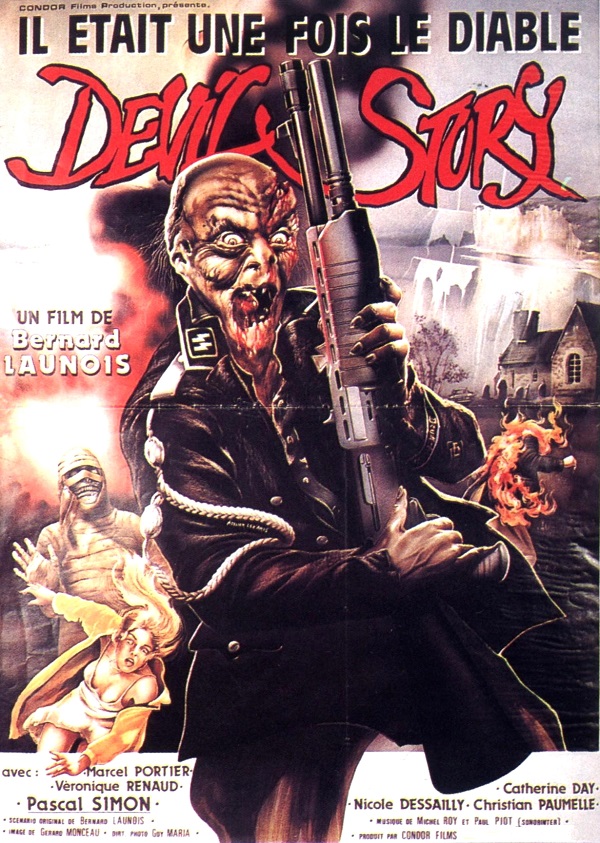
Also known as Once Upon A Time…The Devil, we have the almighty Vinegar Syndrome to thank for this movie being newly restored in 4K from its 35mm original camera negative. I’ve had a bootleg of this waiting to be watched for years because I knew someday that I would need to call upon its infernal power to save me from a week of stress, madness and ennui. This would be that week. And man, Devil Story is beyond up to the task.
Just a warning: my description of this film is going to sound stream of conscious at best but trust me, it’s even weirder than my words. A mutant killer in an SS uniform is wandering the countryside and killing anyone unfortuante enough to get in his way. A couple’s car breaks down and they have to stay in a Gothic castle. There’s talk of an Equinox and a pirate ship that crashed into the rocks. Then we meet the mutant killer’s mother, a gypsy who lives with a mummy. There’s a horse that’s either possessed by the devil or Satan himself. There’s also a cat.
This is the kind of movie that’s blessed with large quantities of gore, a woman walking hand in bandage wrapped hand through a cemetery with a mummy and that horse. That horse! Also, the film ends as only it can, with the earth itself opening to swallow a character out of nowhere.
Why are there Florida plates on that car? How much is the pirate ship a reference to The Fog? How did the mutant get kicked in the face by a devil horse, throw up blood for a way too long period of time and then just get back to business as if nothing happened? Why does the mummy have such a thick package and throw up blue goop?
There are movies that people think are weird and then there’s Devil Story, a movie whose narrative changes, synth soundtrack and willingness to be a formless mess endeared it to me. I’m so used to the Jean Rollin classy French horror world and I’m so pleased to know that somehow there can be something like this, a movie that had to escape from some sort of parallel world where it was used as a form of image-based hallucinogen.
Editor’s Note: We’re also discussing the writer and director’s earlier works Pandora (1984) and Dance Macabre (1986) within this review.
The original VHSs/courtesy of mattressparty/picuki.
Thanks to the digital realms, with horror fans willing to rip VHS tapes into DVD-rs for their retro-retail portals and video-sharing sites, the once-lost, extremely-hard-to-find resume of Wim Vink — which has all of the earmarks of the ’80s SOVs we adore at B&S About Movies (thus our joint “SOV” and upcoming “Video Nasties” tribute-review weeks) — is easier to discover.
Well, unless you live in the Netherlands, where these films were shot-on-film stocks and distributed exclusively on VHS tapes, independently, by Wim Vink.
Vink’s was an oeuvre you didn’t hear about during the height of the video ’80s in the U.S. You may have picked up on the films in some of the more, offbeat, pulpy underground mags n’ ragzines of the day; possibly you back-page ordered (Spine and Blood Cult) or back-page tape-traded a grey copy. However, we, the many, had their first exposures via the Internet, as horror aficionados began praising the work on blogs, genre message boards, and websites. Maybe, as I did with Pandora — my first exposure to and the only film of Vink’s I’ve seen pre-Internet — many years ago, you picked up a grey copy (along with the U.S. made but Japan-distributed Cards of Death) at your local comic book store.
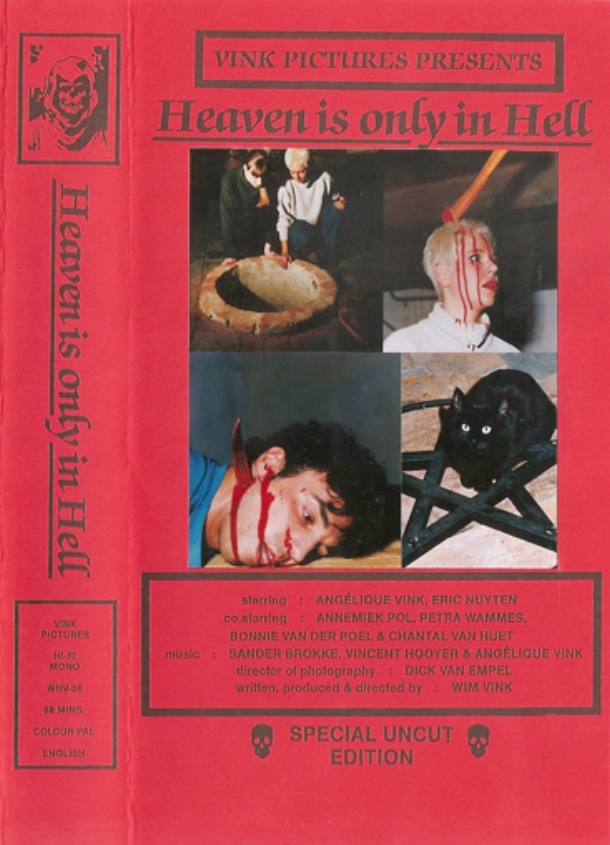
Vink’s works are intelligent films rife in scene details, but with very little dialog. They’re films that wear a Romero and Argento influence on their bloody sleeves, only with more of an art house film vibe. Some say the films are “boring and repetitive” — and more so with the only full-length film in the Vink catalog, Heaven is Only in Hell. However, that is the whole point of a Vink joint: the devil, if you will, is in the details: the mundane details. For the mundane is, in fact, our reality. Sure, a “good” or “professional” filmmaker knows how to edit out those moments for “narrative flow,” etc. and so on. Well, you know what: when I want that in my film, I’ll load up an A24 or Blumhouse “shock-scare” set piece.
Me, I’m the guy who watched Don Coscarelli’s Phantasm at the local duplex in 1979 and was jaw-dropped. Sam Raimi’s The Evil Dead dislocated my mandibles as a “Midnight Movie.” (And, along the muddy water banks of the Waal, bordering the south-central city of Tiel, it seems Vink lost his own, lower jawbone.) And I’ve rewatched the ‘Cos’s and ‘Ram’s debuts more than I’ve watched Star Wars — and I’ve watched them every Halloween, since. Look, I’m a Dennis Devine SOV-type of guy; the one who has watched Fatal Images and Dead Girls more than the average VHS purist. I can go on and on . . . and on — and I have during this “SOV Week” — about the films of Doug Ulrich and Al Darago (Snuff Kill). I adore the heart and inventiveness of each and every one of these filmmakers.
My only beef: Wim Vink is, unlike Coscarelli, Raimi, and Devine, an utter mystery — at least here, in the U.S. (Well, not so much, anymore, as we’ll discuss, later.) Even the Ulrich-Darago collective under the shadow of Vink, is easier to uncover in our Google world. Vink’s career is a series of fan-blogged and message board bits n’ pieces — and we’re doing our best to pull it all together, for a one-stop, Wim Vink shopping experience, right here, at B&S About Movies, in little ‘ol Pittsburgh, U.S.A. (along the muddy river waters of the Allegheny).
In fact, while many believe Vink’s resume of pro-super-8 and 16mm films consists of only four films — it’s actually a resume of eight films. The others — it seems, are forever elusive in the U.S. — are ZombieHorror (1981), Surrealism (1982), Porror (1988), and the Star Wars homage Luke Skywalker Meets the Horror of Darth Vader (1989).
Yes, Wim Vink’s career demands a box set — complete with a color booklet, commentary tracks, and other various vignettes. Make it happen, Severin. Yeah, we know about the music cues “borrowed,” and it’s a music copyright licensing nightmare. However, Wim Vink’s films must be digitally preserved: he is a Dutch filmmaker of historical importance and deserves to have his oeuvre contained in a luxurious box set. So make it happen, ahem, Arrow Films.
Alas . . . until then, and every now and then, we’ll just have to keep plugging “Wim Vink” into search engines and video hosting sites — with the hope that the remainder of Wim Vink’s resume surfaces, somewhere. . . . I want to set up a theater in Pittsburgh, fly in Vink, and have an all-day retrospective — complete with a question and answer event, then have fans line up to buy DVDs and posters for a signing session. Hell, we’ll invite Quentin Tarantino and Nicolas Winding Refn.
Calm down, R.D. Settle. . . .
The reality is: Wim Vink’s films are, in fact — regardless of the “depth of field” issues that appear from time to time (but that’s more of a VHS tape wear n’ tear issue) — “good” and “professional,” properly-edited films. Vink’s films are not just some U.S., 16mm-blown-to-35mm “backyarder” from the Drive-In ’70s (say, like the pretty fine works of Maryland master Don Dohler), nor an ’80s SOV’er start-n-stop-start shot over months of weekends on the non-thespian “friends and family plan,” on-the-sly, sans permits. Vink’s works consistently hit all of the engaging, cinematography touchstones of well-framed singles and doubles, wides, reverses, cutaways, and even “POV” and “God Shots” in the frames.
The films are also — especially Heaven is Only in Hell — packed with background actors, aka extras: and they’re real, trained actors (some say they’re friends and acquaintances; if so, they so a stellar job). And we know this because of the natural approach of the acting exhibited. No one in Vink’s films are deer-in-the-headlights-I’m-in-a-movie! acting for the cameras. And while Vink’s films are practically void of dialog, the leads are effective — in conjunction with Vink “professionally” setting a scene — in “selling the drama” at hand through staging and body language.
There’s a great scene — sans dialog (as with all of the films; the only audio present is soundtrack music) — in Half Past Midnight where one of the bullies leans over the nurse’s desk-station to speak with her mother: a character whom we’ve already met, earlier, in the film. So, we know they’re “conspiring” to hide the daughter’s behavior that put our tortured protagonist in the hospital, in the first place. In the next scene: mom’s injecting poison — with the purpose of murder.
Vink’s work with that hospital scene takes me back to Francis Ford Coppola’s work in The Godfather, which I rewatched in the same week as Vink’s slight resume. (Settle, hear me out.)
Al Pacino’s Michael Corleone goes to the hospital to visit his father, Don Corleone, to discover the police officers assigned to protect his father — as well as hospital workers — are missing. Then, footsteps. The assassin is coming . . . revealed to be a bouquet-bearing Enzo, the neighborhood baker, only wanting to pay his respects. Michael — without dialog, his mind working — sees Enzo in his fedora and overcoat: he looks like one of pop’s men. So Michael asks Enzo for a favor: stand outside, in front of the hospital. The “presence” will stave off the assassin until the “family members” arrive to protect the Don. No dialog: just staging and actor body-language.
Then there’s the Corleone wedding scene: Today, that extensive scene would be studio-cut to shreds. But it’s a scene with all these, wonderful, engaging little details and events — moments that add nothing to the narrative at hand (the grandfather sings a dirty song in Italian, for example) — but it’s details that need to be there.
Vink’s work is filled with those same, non-dialog and, what seems, superfluous details. Yes, even though Vink is working in the SOV-horror realms, those works, while admittedly rough in spots, are competently produced works (unlike, say, 1985’s abysmal Blue Murder) and probably the best-produced works in the annals of ’80s SOV-to-retail and ’70s 16-to-35mm-to-Drive-In distribution (something like 1967’s abysmal Night Fright comes to mind as the worst-produced 16-to-35mm romp).
While there may be music-cheats (but really “homage”) afoot in a Vink joint, in terms of staging, there’s no “cheat” in a Vink film: we get a staging, prop, and set design competence not prevalent in most other, SOV or 8 and 16mm horrors.
During Vink’s lone feature-length production, Heaven is Only in Hell, that’s a real fire truck and real ambulance in the scene — a scene packed with voyeur extras (voyeurism is one of the film’s subtexts) — and real first responder personnel amid a well-stocked, engaging crowd. We’re inside a real hospital, not some errant room with a bogus, unconvincing dressing. And a real school campus, both interior and exterior. A character is a car mechanic: we’re inside a real garage, and a real hair salon, a real record store, and so on. So, yeah, a Vink production is not your typical SOV or single-digit-mm joint: somehow, all of the locations — regardless of the budget — are booked, and up the overall production values.
Vink’s earliest was Pandora (1984), a shot-on-8mm tale-to-video of Romero-styled zombies, shot-in-Dutch (the only one), concerned with an Evil Dead-styled box with the power to raise the dead. Eh, who needs the English language when you can listen to zombies (loudly) munching. Then there’s Dance Macabre (1986), with more Romero-undead mayhem by a cult that raises a female’s skeletal remains who then attacks people and starts a zombie plague (more munching) in an apartment complex. Both are short in content, but, oh, so long — as all of Vink’s films are — on style: a Lucio Fulci fever dream, if you will.
Pandora and Dance Macabre are extremely hard to find on VHS (again, at least in the U.S.). Today, we’ll review the two easiest-to-find films: the main subjects of this two-fer review, and then we’ll ease into those first two films.
Half Past Midnight(1988)
Courtesy of the IMDb.
Dutch writer-director-make up artist Wim Vink’s next SOV’er concerns a shy, sweet girl bullied at school by her fellow classmates: your typical, ’80s big-haired and mascara-type bitches, and boyfriends. Debbie loves computers and electronics and solders circuit boards (which comes in handy for the later mayhem). She loves photography. She has great relationship with her mom. She rides a bike, everywhere.
Why do her classmates hate her so?
They’re bullies. There is no reason.
Since Vink is a director of details, one of surrealistic-slanted cinematography, there’s little to no dialog to tell us why: for Vink is about the actors selling the story — which they do, both lead and background. Sure, the “story” all seems mundane, at first watch (you can’t watch it just once), but that’s only to heighten the shock of when Debbie gets her revenge by killing her tormentors one by one, in extremely gruesome, bloody ways — and OTE gory and bloody, in the best of ways.
Half Past Midnight is a great example of ultra-low-budget horror. It’s absurd. It’s raw. It’s awesome. And it was shot in Tiel, Gelderland, Vink’s hometown. So it is truly homegrown, which makes us love it, even more.
Half Past Midnight is also, only half an hour long (and in English) — the prefect length, due to its brutality — with its tale of Debbie (Angelique Viesee), an attractive-awkward student, relentlessly bullied by her dickish classmates. One is a voyeur always taking pictures of Debbie’s misfortunes. Her teacher (Ad Kleingeld) takes pity, but with an ulterior motive: he rapes her.
While it’s not established if we are in a high school or college, everyone looks to be beyond their teen years. And that office building looks more “college campus” than “high school” to these eyes. So, that takes the creep-factor off the fact Debbie’s, obviously older, teacher asks her on a date. Now, mind you, without dialog, Vink’s made a statement on how easy it is for a sexual predator to chose and manipulate an insecure victim; the simplest act of kindness to a put upon person can open the door to a graphic event. Again, it’s about the “reality” in a Vink production.
As we mentioned: voyeurism is part of the — non-verbal — subtext. Everyone stands by and watches Debbie being assaulted, brutally, and does nothing. And when one does, such as her lecherous teacher (helps her pick up dumped books and papers; has her collect the student’s papers after class), it’s only as a backdoor for his own assault. Then, the bully who photographs Debbie’s assaults — in an eerie foreshadow of today’s smartphone-viral media sickness — develops the film in a dark room, with a glean in her eye.
So . . . the bullies are back: with a teacher now in their corner. The students ambush-spray an aerosol can in Debbie’s face and blind her. She stumbles into traffic and is hit by a car. She survives, barely. But a nurse at the hospital — the mother of one of the bullies — injects poison into Debbie’s eye.
Debbie dies. (We think.)
Debbie returns from the dead — whatever was injected in her eye, reanimates her (we think) — so she lays waste to the lot of them, going “Ash” on their asses, if you will. Using her electronics skills, Debbie solders herself a belted-power pack, complete with knife sheath, to run an electric chainsaw. And said chainsaw POVs into chests, as butcher knifes go through-and-through necks, as well as sawed off arms, and torso dismemberment, and intestinal flow, ensues, in one of the bloodiest, seven minutes ever committed to film. The only thing missing is a penis detachment by hedge clippers.
So, you thought Deadbeat at Dawn was the ultra-low-budget throwdown. Eh, piffle. Jim Van Bebber is a pussy compared to Wim Vink. Debbie ain’t no Carrie (a definite influence, here, alongside The Evil Dead) that’s for damn sure, for no ESP is required. Just a chainsaw, please. Oh, and lots of loud, screamin’ guitars by Rob Orlemans!
Half Past Midnight is simply fucking amazing. Period. Exclamation point.
The joy of a Wim Vink film is, not only recognizing the musical-homage cues, but the plot and visual cues. In the case of Vink’s only feature-length film, fans cite Michele Soavi’s classic The Church (1989). And if you’re familiar with that film — of course you are — the film unbalances you with its “what the hell is going on” plotting. Soavi’s works (the early ’90s pieces of StageFright, The Sect, and Cemetery Man) are less about fixed, narrative flow and more about image collages; loosely connected nightmares. And as with Vink’s other works: the characters are connected, somehow, then they’re not. The Vink modus operandi: ambiguity.
Here, we meet Mike and Sharon; he works as a garage mechanic, while Sharon works as a bookkeeper at stereo store. (Were they once related; now reincarnated in a future, apart, now searching for one another?) A local house for sale — where someone previously died (when, who knows/or is Mike seeing his future) — begins to haunt his mind, to the point his work suffers. Sharon, likewise, is disturbed by the same visions: the result of her psychic abilities.
Of course, as with the characters in each of Wim Wink’s films: the characters don’t live fast, they slowly exist in boring, mundane lives: going to work, then home, work, home. And it’s the drudgery that make them susceptible to the supernatural, in this case: the ghostly chants urging them to open a well’s portal.
Their dreams/visions concern a centuries old pagan coven, led by a witch and her young daughter (?), and a cursed, ancient well that, as result of progress, is now in the basement of the empty home Mike purchases. Meanwhile, Sharon’s visions overwhelm her to the point that she breaks into the house to find the “Hell Well” in its cellar — set in the middle of a finished, wooden floor, covered by an iron pentagram. And Sharon brings a “sacrifice” from her aerobics class; with fresh blood, she can now descent into the well. Mike? He hesitates and rejects his mistress: he’s strung up “Evil Dead” style by ghostly ropes from the home’s attic’s rafters — and slaughtered.
This time, the soundtrack’s all-original, composed by Angelique Vink (who also plays Sharon), as well as synth-numbers by Sander Brokke and Vincent Hooyer. And, again: sparse dialog, with only the repetitive looping of the film’s opening chant-narration for an unsettling, moody work of horror impressionism (think F.W. Murnau’s Nosferatu from 1922, better yet: Carl Theodor Dreyer’s stellar, Vampyr, from 1932). Again, detractors may say the film is overly repetitive and padded; that maybe so. However, I see it as a purposeful, artistic-narrative choice: Mike and Sharon’s lives are so, utterly empty, their aural and mental visions consume their lives to the point of an obsessive-compulsive disorder.
So, with that, as mysteriously (well, at least outside of the Netherlands) as Wim Vink drifted into the VCR-driven snows of the SOV ’80s . . . he dissipated into the developing, nickle-collated, laser-spinning ethers. For Wim Vink’s visions were not meant for a digital world, only the analog tapes of the past. . . .
Image courtesy Letterboxd. Both are available as a two-fer PAL-VHS in overseas markets.
Pandora (1984)
Oh, Hail Satan and the hell with this being in Dutch with no subtitles. All I know is I’m nostalgia waxing an Amando de Ossorio-meets-Paul Naschy Spanish zombie joint, à la Tombs of the Blind Dead and The People Who Own the Dark. (Hey, did you see the 2020 homage-sequel, Curse of the Blind Dead, yet? Do it!)
Now, when you see the word “Pandora,” you think “box,” but what we have here is a book . . . well, there’s a box, too . . . as well as music cues lifted from Suspiria, The Exorcist, and even some Tangerine Dream*. Of course, the music is gone . . . so we can hear the zombie munching n’ licking n’ slurpin’.
What’s great about Vink’s work is that it’s a body of work that understands film is an art form based in “showing” and not “telling”; for film is 90% visual and 10% dialog (and the stage is the reverse). A film’s images tell the story though props, an actor’s body language and, most importantly: that your actors are not skilled in the craft of acting—but “being.” This was a fatal mistake made by James Glickenhaus (The Exterminator, producer of Maniac Cop) with his debut film, The Astrologer (1975, aka Suicide Cult): he didn’t have a complete grasp of — as does Wim Vink — of cinematography; so his otherwise intriguing film, bogs down with 60 minutes of ponderous dialog against its 79-minute running time. This is a “mistake” not experienced in a Vink film.
So, regardless of language, we have a young woman who requests information on a book; the librarian directs her. Why would a book that can open a doorway for the dead to rise be in the library? Why was the woman looking for the book?
I don’t care.
All I know is, she — we think — has been “possessed” by the book, and having visions of a white-robed witch. And a leaf-covered sarcophagus slides open and four, Bob Clark/Alan Ormsby,’60s era Children Shouldn’t Play with Dead Things zoms are now the white-cloaked witch’s army of the dead. And they need to retrieve a box — from a businessman who possessed the box.
Fog starts pouring out of the box. One witch stabbing later: lunchtime for zombies — and it’s better than anything dished in Bruno Mattei’s Hell of the Living Dead.
Then, the woman who checked out the book, buys that errant “Pandora” box from an antiques shop . . . and the witch and her zombie quartet are back, for the box. And we get a little bit of time displacement, a sudden transport into a cavernous crypt, and an even larger zombie army. . . .
Dutch language, be damned, this film rocks my rocks offs.
Dance Macabre (1986)
In 1978, Sam Raimi, Bruce Campbell, Rob Talpert and Scott Spiegel released their their proof-of-concept short Into the Woods: a tale about a group of friends who desecrate an Indian burial ground while staying at a cabin. Around that same time, Don Coscarelli began filming Phantasm: his tale about two brothers running afoul of a cryptic mortician. Romero released Dawn of the Dead that same year. Dance Macabre is a homage to those films, right down to a music-pinch from Phantasm’s funeral scene, as well as synth-cues from Romero’s, as well as Argento’s and Fulci’s zom-romps (you’ll know ’em when you hear them). And I love the hat tip to Coscarelli, courtesy of a reenactment of Jody first meeting The Tallman, right down to the bone chilling, “Sir.”
Oh, my beautiful Vink surrealism. My only complaint is that the film isn’t longer than 22 minutes. My greatest love: there’s never one moment of silence. Outside of a character’s ritual chant, no one speaks, but the ripped music cues never stop, throbbing, trapping us in a black-metal disco on the cusp of a Dante circle. Well, except for the flesh munching. . . .
We first meet a trio of necromancers digging up a coffin of skeletal remains.
Why? Who cares.
Then we’re traveling down a modern-day road in a 19th Century-styled, horse drawn carriage. In the back: a kidnapped girl, then carried up to the attic of an apartment building. One throat slit and blood flow later: we have a white-eyed, big-haired blonde demon reanimated and on-the-loose (with a knife-licking fetish), impaling knifes into foreheads and ripping across throats of the building’s tenants.
Of course, the dead rise as a plague breaks out in the building. A SWAT team is called in for a little Pittsburgh-inspired cops vs. zombies battle. . . .
Who were the necromancers? Were they in the past? Who’s the blonde? Sure, she’s a witch, but from when and whom?
I don’t care. . . .
I just watched a film with more fun packed into 22 minutes than any 90 minute VHS slopfest I’ve watched in my analog lifetime. Dance Macabre is everything I want in an SOV horror — even though this was shot on 16mm. And it only gets better with Half Past Midnight, and even better-better with the full-length opus, Heaven is Only inHell.
Why didn’t Argento, Fulci, or Romero see the magic in Wim Vink and bankroll a 35mm feature proper? What a fucking tragic, missed opportunity.
The VHS reissues/courtesy of onorato73/picuki.
Were to Watch
You can watch Heaven is Only In Hell on You Tube courtesy of BurialGround5 — what would we do on Saturday nights without BG5?
Someone by the name of Jurgen Telkamp saved Half Past Midnight for the digital realms — god bless you, brother — on You Tube. Devilman666 comes with the back-up assist on another You Tube copy, as well.
You can watch Dance Macabre on You Tube, thanks to Hipster Pobre.
You can watch Pandora on You Tube courtesy of altohippiegabber. Just wow. The memories. Thank you!
Vim Wink’s Complete Resume (Thanks, Alto!)
1981 — ZombieHorror (30 mins) 1982 — Surrealism (25 mins) 1984 — Pandora (30 mins) 1986 — Dance Macabre (22 mins) 1988 — Porror (6 mins) 1988 — Half Past Midnight (32 mins) 1989 — Luke Skywalker Meets the Horror of Darth Vader (5 mins) 1994 — Heaven is Only in Hell (86 mins)
There’s no breaking of the Ninth Commandment, allowed. Not this time.
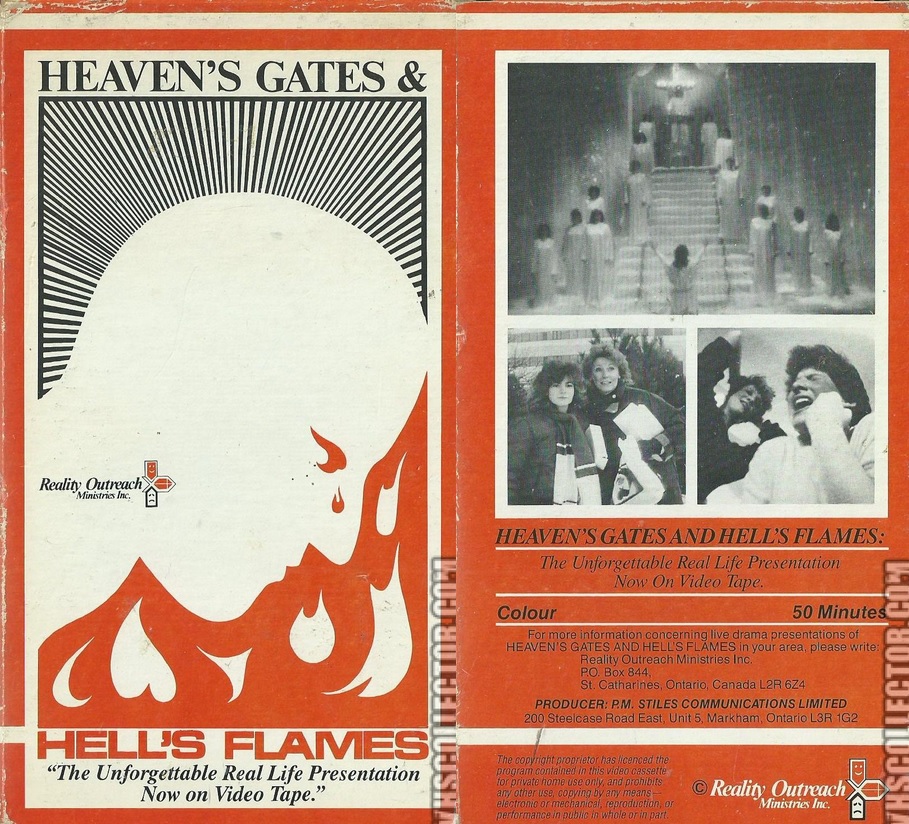
We know you’ve never seen or heard of this beautiful collision of a Christploitation flick and an ’80s SOV’er for the most epic, greatest SOV in the horror realms committed to video tape. And yes, video store owners, who had no friggin’ idea of what was distributed to them (see the great Spine shelving snafu), gandered at the words of “Heaven’s Gates” and “Hell’s Flames” and, instead of placing the tape in the “Family/Children’s” section (and this is not child appropriate in the least) where it belonged, they tossed it on the horror section shelves.
And there it was for me to score: in the horror section of the video store, a store sandwiched between a Falafel joint and an accident-attorney office. Yes, those hour-long “Christian Scare” documentaries you would see during the sleepless overnights and lazy weekends as you channel surfed past TBN – The Trinity Broadcasting Network* in the ’80s ended up on VHS for distribution on your home video shelves.
Yes, I was a truly blessed, metal-head and VHS lovin’ youth that day of yore . . . courtesy of Paul and Jan Crouch.
So . . . this 50-minute Canuck Christploiter made in St. Catharine’s, Ontario by Reality Outreach Ministries portrays people of various ages and walks of life who die in a variety of unexpected ways (e.g., drug abuse, the bottle, car accidents, muggings-gone-bad, steel girders falling). The way they lived on Earth determines where they will spend eternity: Heaven or Hell.
Oh, and a warning: this is a stage play produced by the ministry and committed to tape.
BUT IT IS STILL EPIC! ROLL THE TAPE!
Thanks, Paul Z, at VHS Collector for the clear image.
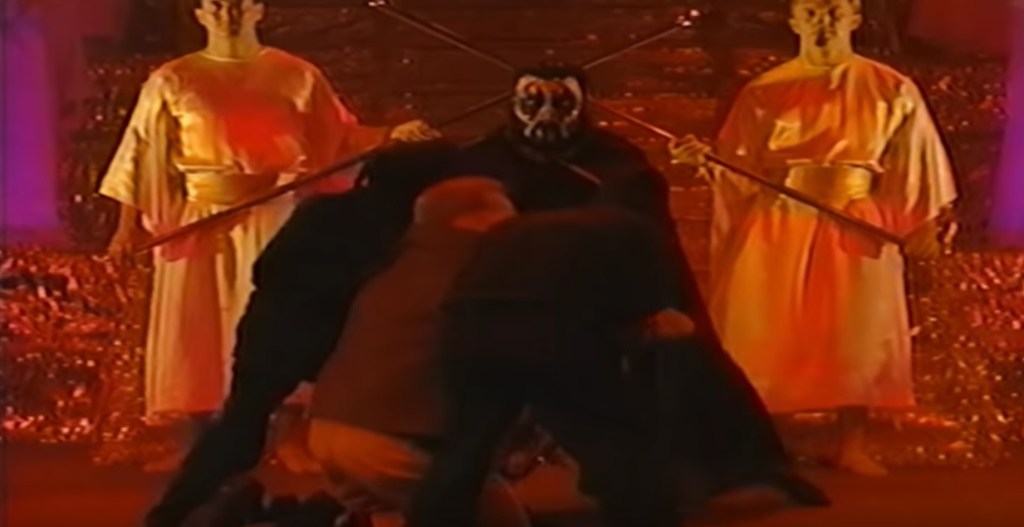
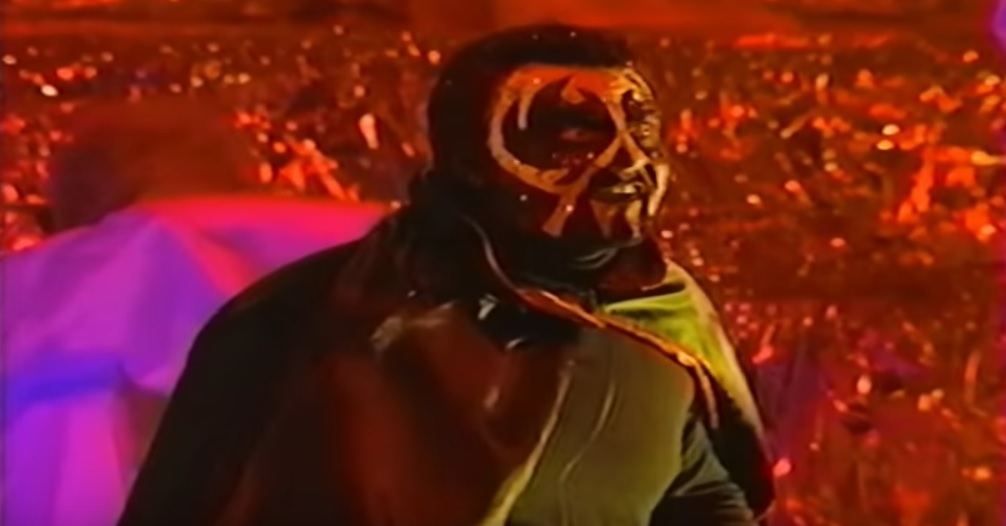
Dude . . . when this play’s depiction of Heaven kicks in, it is right out the Estus Pirkle playbook — but HGHF has nothing on The Believer’s Heaven and beats it by a few clouds. Then, when Hell kicks in — complete with a bastardized Gene Simmons-meets-King Diamond-cackling Satan — it holds no candle to Jose Majica Marins’s Coffin Joe depictions of Hell in This Night I’ll Possess Your Corpse. Oh, ye reader, forget about Estus Pirkle’s multi-colored Rubic’s Cube face-painted Satan in Ron Ormond’s The Burning Hell, for Reality Outreach Ministries has just blessed you with the Satan you always wanted in your nightmares.
Oh, yeah. The rest of the plot.
Well, it’s a bunch of vignettes, as “actors” do “scenes” that warn, you, on the various horrors awaiting those who do not accept Jesus Christ. For example: We have a young couple on a nice, romantic evening in the park (two folding chairs on stage, natch). She speaks about “her psychic said romance is in the air” as her Christian boyfriend warns her on the dangers of “deceptive physics.” Then, a mugger shows up, steals her purse, and shoots both. Dead.
For reals. I am not making this up.
Now, we’re at the “Pearly Gates” and the boyfriend gets in. The girlfriend says, “Wait, why am I here? I’m supposed to be reincarnated!”
Cue King Diamond.
The King and two of his minions grab Blondie and drag her into the red-cellophane fires. Meanwhile, the best part, is the boyfriend pulls the ol’ I-told-you-so gag — with a glean in his eye. Why? Because Christians get off on the ol’ I-told-you-so-and-seeing-you-go-to-Hell gag.
Next vignette.
Two construction worker-buds are on top of a high building (again, folding chairs on the stage). The saved worker witnesses to his troubled work-bro and turns him to Christ. Suddenly . . . a girder (actors, awfully, selling the drama) falls. Both die. Both go to Heaven. But, since the one guy just got saved . . . there’s a paperwork snafu, since there wasn’t time to write his name down in the Book of Life. But don’t worry. Jesus shows up to set the Angel in charge of the book, straight.
For reals. I am not making this up.
Okay, just one more. . . .
A little girl begs her busy, career-driven and charity-committed mom to go to church. “Next, week, Sweetie,” mom brushes her off. Suddenly . . . a car (again, actors — awfully — selling the drama), hits them. Mom and daughter are dead.
Then, mom gets the shock of her life: being a good parent, a loyal wife, and doing good deeds, alone, won’t get her into Heaven. But since the daughter went to church, she goes to Heaven. So, to Hell mom goes. Why? Because working with the homeless and the handicap wasn’t good enough for God — and you turned your back on His son. Yes, King Diamond shows up and takes away mom — to the girl’s screams and cries, begging Jesus to save her mom. Seconds later, Jesus shows up and touches the girl. All is well. The girl skips up the silver and gold staircase.
For reals. I am not making this up. It’s not a fever dream. It’s real.
And you thought Estus Pirkle’s sharpened bamboo into the ear canals of children was sick. We told you this tops a Pirkle joint six days a week and twice on Sundays. It’s pure insanity — stage production, be damned — so how can you not want to watch this? Okay, so it’s not as bonkers as Pastor Kenneth Okonkwo’s two-part, papier-mâché production, 666: Beware, the End is at Hand, but what zero-budget soul-saving epic, is?
“I want the boy! Throw him to the pits of Hell!“
“Forget about your mommy, little girl. She’s mine, now!Ooh, it’s cold gin time again!”
“To Hell with him!Bring the black box to the altar!”
“Like father, like son!For my real name is Kim Bendix Petersen!”
Anyway, it goes on and on and on like this for a glorious 50-minutes, well, near 75-minutes, since the festivities are front and backended with a Pastor’s service. But name your sin: Abortion. Drugs. Sex. Not going to church. Reincarnation. Fortune tellers. The dangers of every and any sins, are depicted, here. Lovers and families are torn apart. People hug Jesus and go to Heaven without a tear or care of their loved one being dragged to Hell.
Yes. Jesus greets you, personally, each and everyone, with a hug . . . as you walk through a literal door, aka gate, under the Angel that’s perched on top of a golden pedestal, on top of the silver and gold staircase — you know, the Angel who makes sure you’re in the Book of Life, sans any paperwork snafus where you died two-second later, after just “being saved” by a buddy.
Now, hear me out for a second: Wouldn’t it be the “Christian thing” to do, that, when your loved one is about to be dragged to Hell by faux-Gene Simmons, that your “Christian Heart” would make the ultimate sacrifice and take your loved one’s place, so they can enter Heaven?
Oops. Sorry for allowing logic into the plot. Never pick at the plot holes. Especially not in Christian Cinema.
Look, it’s a fun and frolicking “SOV Week” at B&S About Movies, so we can poke (sorry) a little fun, here. However, honestly, for a stage play, the production values are pretty decent. The stage is one, single dressing. A simple lighting change is all it takes to transform the silver and gold of Heaven into the red and orange fires of Hell. Sure, it’s not an Oscars-level production, but still, for a church auditorium-cum-chapel gig, it leaves you impressed. Yeah, credit where credit is do: the stage manager, or audio visuals manager for Reality Outreach Ministries, really makes this all work, brilliantly. I wonder if he ever did a film, proper? I’d rent that movie.
However, what is not impressing, are the “actors,” who we assume are volunteering for the cause. The way they jump around, screaming and “rejoicing” on stage with their “I’m in Heaven. Woooo! This is awesome. Angel, is my name in the Book of Life? Yes, I’m in. I’m going to Heaven!” would be a flailing, arms-akimbo thespian tragedy if it wasn’t so gosh darned funny.
Oh, hell yeah, pardon the vernacular, it’s on You Tube and You Tube.
The caveat: The uploads are of two, different productions of the same play. In my opinion, the first version (with faux-King Diamond) — the one I watched on tape all those years ago, is the stronger production of the two. The second version (with Gene Simmons; the second still, above) — which I didn’t know existed until this review — runs a bit longer at 90 minutes, due to it having more Pastor preaching than the first.
Both are still epic. Watch ’em both! Hell, yeah! Also watch this. . . .
* We also discuss the “Christian Scare” era within our review of the Paul and Jan Crouch-produced Six: The Mark Unleashed and its metal music-is-evil component with the fictional film, Raging Angels.
About the Author: You can learn more about the writings of R.D Francis on Facebook.He also writes forB&S About Movies.
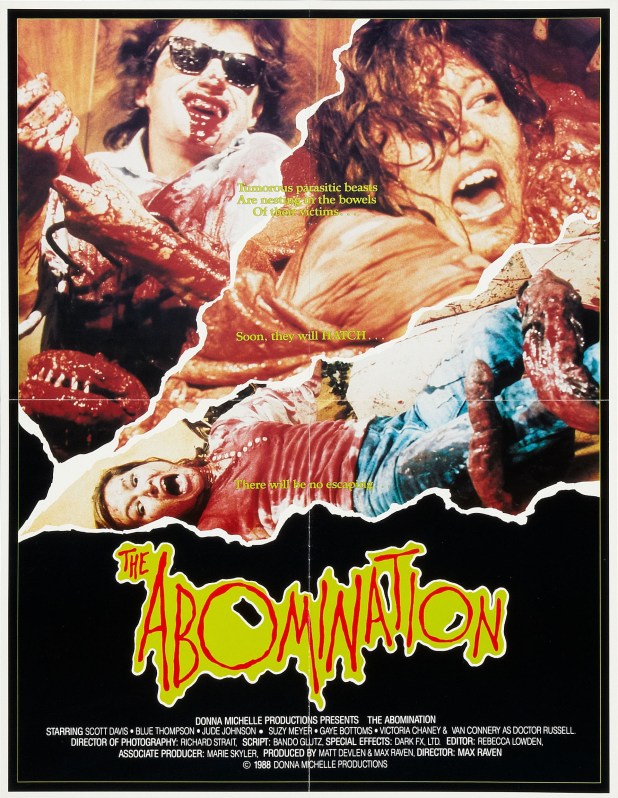
There is every other movie in the world and then there’s The Abomination.
No hype. This movie is absolutely brain destroying junk transmitted from some terrifying alternate timeline that I hope and pray never reaches our own. It’s a world where televangelist Brother Fogg can pray a tumor out of a woman, who vomits it out, and then that tumor crawls into her son who undergoes a transformation into a killing machine that feeds the many spores of the creature and pushes forward the end of all things.
This is also the kind of movie that starts with a blast forward of all the gore that you’re about to see in this movie and still not feel boring when that gore comes back. And man, that gore comes back and takes over the world of this movie, transforming protagonist Cory’s home into a panormama of teeths and blood and muscle and sinew and gristle and gore.
Man, what’s wrong with Texas? Or right? This movie feels like it wasn’t released and that it escaped, like it should have been destroyed before it infected anyone’s brain but here it is, hiding in its low-fi menace out there waiting for people to watch it and wonder, “Why are people driving so much?” when they aren’t wretching from the endless parade of blood and viscera being literally thrown at the screen and the dubbed soundtrack which makes me love this movie even more, because when you put your budget into gigantic monsters that emerge from appliances and kitchen nooks, you don’t have the cash for synched sound.
Director and writer Bret McCormick also made parts of Tabloid and the films Time Tracers and Repligator. Even at this early stage, he’s showing off a real eye of how to use the budget and how pretty much frighten you through the sheer strangeness of what he’s created.
This isn’t a perfect movie but perfection is an ideal that cannot exist. This is The Abomination.








 B&S About Movies
You must be logged in to post a comment.