He had been writing horror stories, doing home remodeling and attending a filmmaking correspondence course. Home video cameras had democratized movie making, and you can make fun of Turner’s films, but what have you done?
Well, people thought Turner died until 2013, when Massacre Video tracked him down and got permission to release his films.
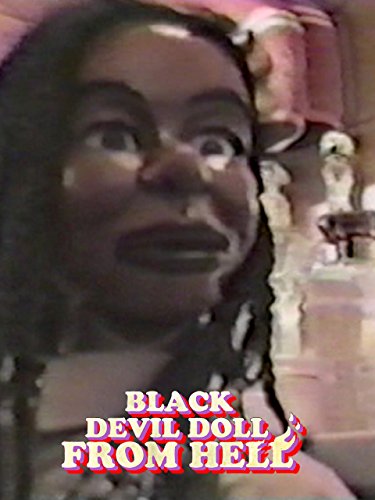
With his girlfriend at the time, Shirley L. Jones, in the lead role, Turner pressed record and made some art, if by art you mean a movie in which a Rick James devil doll has sex with a woman, ruining her for other men, even when his head falls off mid-romping. A doll bought in a hobby shop with a tongue made from latex and a coat hanger, operated by Turner’s nephew.
This isn’t the kind of movie with fleeting sex scenes. These go on so long that they go from gratuitous to just plain demented, and there’s never really been anything else like it. What if Amelia hadn’t run from her Zuni fetish doll and spread for him? This is that. I can’t believe it either, but here it is, ready for you to be upset about. Or enjoy. Maybe somewhere in the middle?
June 14: Junesploitation’s topic of the day — as suggested by F This Movie— is Free Space!
In August of 1979, Kit Williams published Masquerade, a book that had clues to the location of a jewelled golden hare that Williams had created and hidden somewhere in Britain. He had been challenged by publisher Tom Maschler to create an illustrated book that did something no one else had before. He made sixteen detailed paintings of the story of Jack Hare, who is taking a treasure from the Moon to the Sun. He loses the treasure, and the reader is asked to help him find it.
In a box that said, “I am the keeper of the jewel of Masquerade, which lies waiting safe inside me for you or eternity,” he buried a gold rabbit pendant with celebrity witness Bamber Gascoigne.
He said, “If I was to spend two years on the sixteen paintings for Masquerade I wanted them to mean something. I recalled how, as a child, I had come across “treasure hunts” in which the puzzles were not exciting nor the treasure worth finding. So I decided to make a real treasure, of gold, bury it in the ground and paint real puzzles to lead people to it. The key was to be Catherine of Aragon’s Cross at Ampthill, near Bedford, casting a shadow like the pointer of a sundial.”
Three years later, Williams received a letter containing a sketch with the solution from a man named Ken Thomas, whom the writer soon realized had made a lucky guess. After he was given the prize, physics teachers Mike Barker and John Rousseau wrote in with their answer, but had not found the prize. That’s because the rabbit’s box went unnoticed in the dirt they dug up; Thomas saw it and lucked into winning. According to Wikipedia, “It was later found that Thompson had not solved the puzzle and had guessed the hare’s location using insider knowledge obtained from a former acquaintance of Williams.”
Ken Thomas was really Dugald Thompson, and his business partner, John Guard, was the boyfriend of Veronica Robertson, who had previously been Williams’s girlfriend. Guard allegedly convinced Robertson to help him win the contest because he wanted the money donated to animal rights causes.
William wrote a sequel, The Bee on the Comb, and a video game, Hareraiser, with a jewel as a prize that was never found. Other books like this — this was a big success — included The Piper of Dreams, The Secret, The Golden Key, The Key to the Kingdom, On the Trail of the Golden Owl, The Merlin Mystery, Forest Fenn’s The Thrill of the Chase: A Memoir and the movie/book we are talking about today, Treasure: In Search of the Golden Horse.
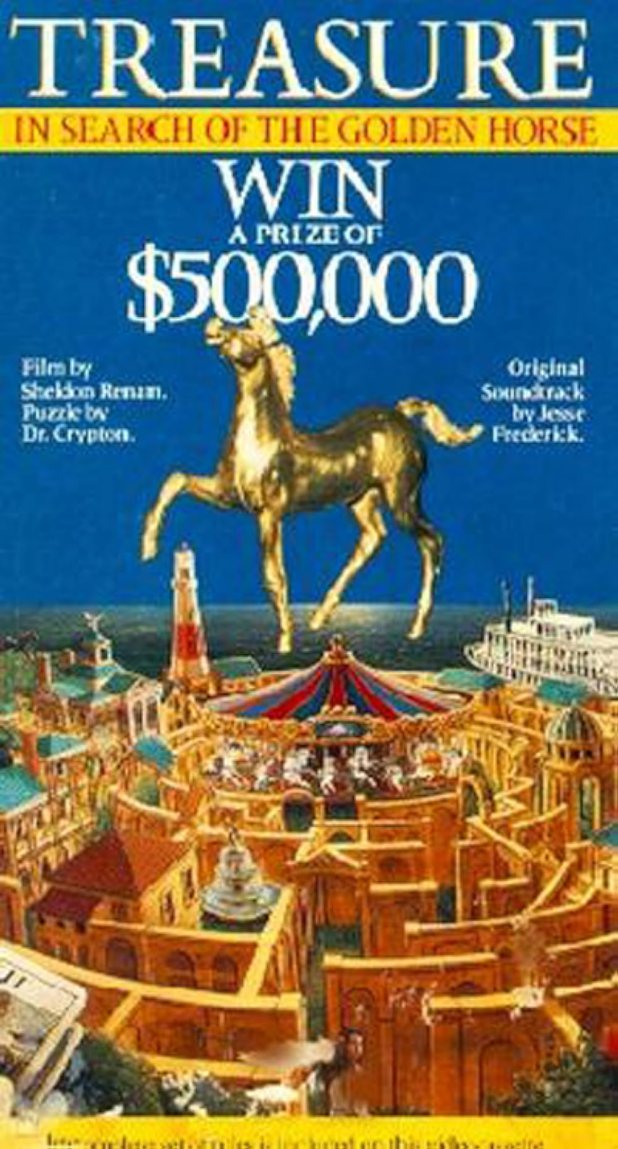
Published by Intravision, there was a movie directed by the man who came up with the idea, Sheldon Renan, and a book illustrated by Jean-Francois Podevin and published by Warner Books. A gold horse was the prize in this contest designed by Paul “Dr. Crypton” Hoffman, who was the president and editor-in-chief of Discovery magazine, president and publisher of Encyclopedia Britannica and the man who made the treasure map for Romancing the Stone.
Renan wrote the first book about underground movies, An Introduction to the American Underground Filmand “The Blue Mouse and The Movie Experience,” an influential Film Comment article about how the Blue Mouse Theater in Portland went from Hollywood movies to grindhouse films. Wildly, he also directed The Killing of America,wrote Lambada and has been a speechwriter for every CEO of Xerox since 1990.
While IMDB says that cinematographer Hilyard John Brown (also a cameraman on This Is Spinal Tapand Solomon King) came up with the idea of a film with treasure — but “opted out of working on the film because director Sheldon Renan wanted a lot of helicopter shooting, and Brown had had too many close calls in helicopters” — every other article I have found says that this was Renan’s project.
The movie is about a girl (Dory Dean) trying to find her father and her lost horse, Treasure (Galahas). She’s helped by Mr. Maps (Elisha Cook Jr., Mr. Nicklas in Rosemary’s Baby), a blacksmith (John Melanson, who was an actual blacksmith and is also the Man with the Black Gloves), a sushi chef (Yasumasa Adachi), Mr. Night Music (Herman Sherman), Dream Dancers and the Ghost Party, all narrated by Richard Lynch. Yes, Richard Lynch, who says things like “The city. It was no place to find a horse. Not her horse. She knew that roads that started in the city led in all directions. How could she leave the city and find the right direction?”
This came out during the early console video game era, and there was also going to be a Colecovision game. A silver horse was buried and is still there, as the puzzle to find it never got made.
My dad was obsessed with this book, staring at it in B. Dalton and wondering how to solve it. We couldn’t afford it, so he would sit on the floor and draw sketches of it. No one won, and the prize money was given to Big Brothers and Big Sisters. Seven months after the contest was over, Nick Boone and Anthony Castaneda discovered where the horse was with the Captain Nemo solution.
Alley Cat has three directors. I have no idea why, but Victor M. Ordonez (who is in Nine Deaths of the Ninja and Hellhole), Ed Palmos and Al Valetta (who is in Sole Survivor, Runaway Nightmare and Hollywood’s New Blood) all had their hand in this movie, leaving Robert Waters, who also wrote Fighting Mad, to write the actual story.
Billie (Karin Mani, who was also in Avenging Angel) is our heroine Billie. She starts the movie by stopping some scumbags from stealing her car. They go to their boss Scarface (Michael Wayne), who decides that he’s going to turn this tiger into an alley cat, a plan that starts by putting her grandmother in the hospital and beating her grandfather something fierce. The one good thing that happens is that she falls for a cop named Johnny (Robert Torti), who ends up having to arrest her with his partner Boyle (Jon Greene) when she defends some joggers from the very same criminals and has a gun without a permit.
When Billie goes to court, she pays twice the fine of the rapists, whose victims are intimidated by Scarface and never show. Billie reacts like a maniac, gets charged with contempt of court, and turns her movie into a WIP film for a little, complete with requisite shower moment.
This is the only women’s revenge movie — yes, Billie gets out and gets said payback — in which the lead character eats at an Arby’s. The old Arby’s had that giant beef hat on the sign before they had the meats and all. And oh yeah — while she’s in jail, her grandmother dies and Billie is robbed of those last moments, so even though her boyfriend wants to legally deal with Scarface, you will be hoping that she shoots him right in the dick.
April Ghouls Drive-In Monster-Rama is back at The Riverside Drive-In Theatre in Vandergrift, PA on April 25 and 26, 2025. Admission is still only $15 per person each night (children 12 and under free with adult) and overnight camping is available (breakfast included). You can buy tickets at the show, but get there early and learn more here.
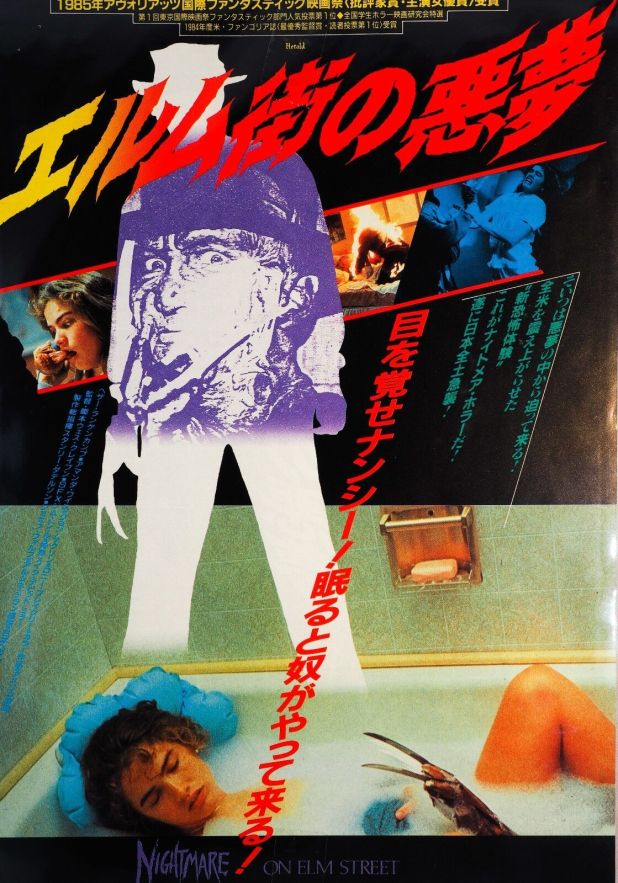
The features for Friday, April 25 are the first four A Nightmare On Elm Street movies.
Upon watching this again for the first time in probably thirty years, I was struck by how European the movie feels. Perhaps it’s the color tones throughout, suggesting the patina of Italian horror cinema (both Fulci and Craven cite surrealist filmmaker Luis Buñuel as an influence). It could also be John Saxon having lead billing. Or it doesn’t feel like any horror cinema is currently being made in the United States.
The real villain of this piece is not Freddy Krueger — more on him in a bit — but the parents of Elm Street who have allowed secrets and their assumed authority over their children to do unspeakable and unspoken things. All of them are haunted by it, divorced, depressed and self-medicating with over-dedication to their jobs or their addictions.
There are stories that David Warner was originally going to play Freddy, but that’s been disproven. After plenty of actors tried out and failed to win the part, it went to Robert Englund, who darkened his eyes and acted like Klaus Kinski (!) to get the part.
The other feeling I have about this movie is that it owes a significant debt- as all horror movies post-1978 do to John Carpenter’s Halloween. Much like that film, the true horror happens within the foliage of the suburbs, with shadow people showing up and disappearing. Much of the action on the final night happens within two houses. One of the main characters has the ultimate authority figure, a policeman, as a father. And the cinematography by Jacques Haitkin glides near the characters and around them, much like the Steadicam shots that start Carpenter’s film.
The film starts with Tina Gray (Amanda Wyss, who sets the events of Better Off Dead into motion by breaking up with Lloyd Dobler) waking up from a nightmare in which a disfigured man chases her with a bladed glove. I loved the way this scene looked. You could almost consider Freddy off-brand here, as his arms grow comedically long and he moves way faster than he would in the rest of the series. Yet, by keeping him in the shadows, he’s absolutely terrifying.
When Tina awakens, her nightgown has been slashed, and she’s afraid to go to sleep again. She learns that her friends, Nancy (Heather Langenkamp, who left Stamford University to be in this), Glen (introducing Johnny Depp) and Rod (Jsu Garcia, credited as Nicki Corri) have all been having the same dream. To console Tina, they all stay at her parents’ house overnight. But when Tina falls asleep, Krueger is waiting. Rod awakes to find Tina flying all over the room and up the walls — an astounding effects sequence in the pre-CGI era — and he flees the scene after her death.
Soon, Rod is arrested by Lieutenant Don Thompson (Saxon), Nancy’s father. Freddy now starts pursuing her, chasing her as she falls asleep in class (look for Lin Shaye as the teacher) and later in the bathtub, as his claw raises like a demented and deadly phallus between her thighs. Rod tells her how Tina dies and now she knows that the same killer is definitely after her (Garcia’s watery eyes and lack of focus made Langenkamp think he was acting his heart out; the truth is he was high on heroin for real in this scene). She tries to find the killer, with Glen watching over her, but he’s a lout and easily falls asleep. Only the alarm clock saves her, but no one can save Rod, who is hung in his sleep while rotting in a jail cell.
Nancy’s mom Marge (Ronee Blakley, who was married to Wim Wenders, sang backup on Dylan’s song “Hurricane” and is also in Altman’s Nashville) takes her to a sleep clinic, where Dr. King (Charles Fleischer, Roger Rabbit’s voice) tries to figure out her nightmares. To her mother’s horror, she emerges from a dream holding Freddy’s hat. Soon, she reveals to her daughter that the parents of Elm Street got revenge on Freddy Krueger, a child murderer, after a judge let him go on a technicality. In a deleted scene, we also learn that Nancy and her friends lost a brother or sister they never knew about.
While Nancy is barred up in her house by new security measures, Glen’s parents won’t allow him to see her. Soon, he’s asleep and is transformed into an overwhelming fountain of blood. Nancy falls asleep after asking her father to come in twenty minutes. He doesn’t listen and she pulls Freddy into our world. On the run, she screams for help until her father finally comes to her aid just in time to watch a burning Freddy kill his ex-wife and then both disappear.
This is an incredibly complex stunt in which Freddy is set ablaze, chases Nancy up the stairs, falls back down and runs back up—all in one take! It was the most elaborate fire stunt ever filmed at the time, and Anthony Cecere won an award for the best stunt of the year.
Nancy then realizes that he can’t hurt her if she doesn’t believe in Freddy. She wakes up and every single one of her friends is still alive, ready to go to school. As the convertible hood opens up in the colors of the killer’s sweater, she realizes that she’s still trapped by Freddy, who drags her mother through a window.
In Craven’s original script, the movie simply ended on a happy note. Producer Robert Shaye wanted the twist ending to open the door for a sequel, something Craven had no interest in. Four different endings were filmed: Craven’s happy ending, Shaye’s ending where Freddy wins and two compromises between their ideas.
April 19: Record Store Day — Write about a movie starring a musician.
ABOUT THE AUTHOR: Jennifer Upton is an American (non-werewolf) writer/editor in London. She currently works as a freelance ghostwriter of personal memoirs and writes for several blogs on topics as diverse as film history, punk rock, women’s issues, and international politics. For links to her work, please visit https://www.jennuptonwriter.com or send her a Tweet @Jennxldn
I was 12 in 1984, living in a small town in upstate NY with very little to do in terms of entertainment.
That summer, I was utterly obsessed with the movie Ghostbusters. I had the T-shirt and thee soundtrack and collected every issue of every magazine that wrote about it.
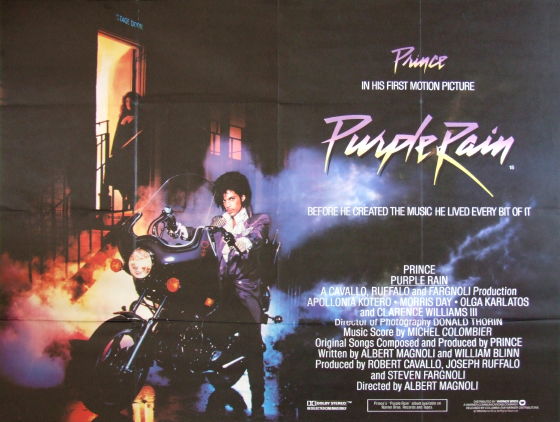
That August, the film got knocked out of a stellar hold-over run at our tiny local theatre for something called Purple Rain. I remember vividly riding by with my mom and voicing my frustration that my favorite film had been usurped. I noticed the line of teenagers and young adults wrapped around the corner and filed it into the back of my mind. It played for a solid month.
The following March of 1985, Prince and the Revolution brought the Purple Rain tour to Syracuse. I didn’t attend, but my friends who did wouldn’t shut up about it for weeks.
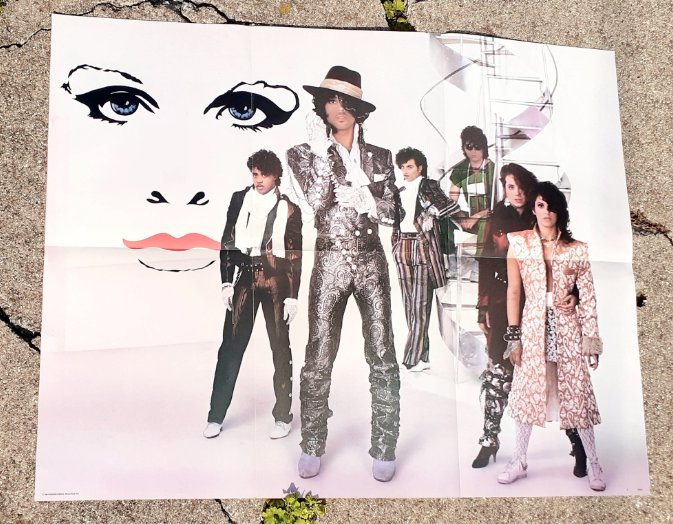
Prince was everywhere, and I just didn’t get it. Until I saw the video for “Little Red Corvette” on Friday Night Videos that April. When he broke into that split during the guitar solo, something in my soul (and my nipples) woke up and said, “Hello!” I immediately went out and bought the only Prince record my local store had in stock. Purple Rain. The album blew my mind. It was rock-funk fusion perfection. The album came with a poster of his band, The Revolution. As I hung it upon my bare wall, I wondered, “Who are these female musicians, and the guy dressed like a doctor?”
My family had no VCR at that time, so I saved my babysitting money and rented one. The first film I rented was, of course, Purple Rain. Soon after, I rented a second machine and made a dub of the original so that when the inevitable day came for us to finally get our own VCR, I’d be able to watch this movie ad infinitum. Which I did.
Through the film, I discovered the identities of the people on the poster. Revolution members included r. Fink on keyboards, Bobby Z. on drums, Brown Mark on bass, and most importantly, real-life couple Wendy Melvoin on guitar and the classically trained Lisa Coleman on keyboards. I also discovered that as impressive as the album was, the band’s live performances were outstanding.
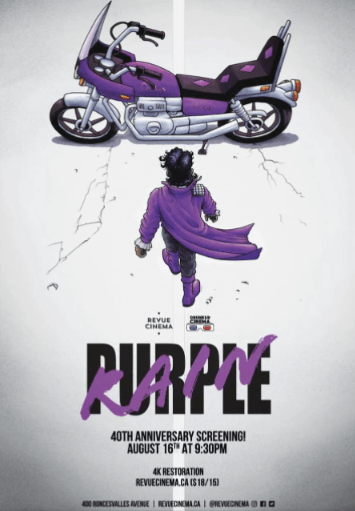
Flash forward to 2025. Prince is gone, having passed away alone in an elevator in 2016. The estate re-released the film for one night only all over the globe in 4K with a new Dolby mix for the soundtrack. I was in the second row, with a glass of wine and a good friend, cheering all the way for The Kid, Prince’s semi-autobiographical character created for the film. He’s a dick. But that’s the point.
The Kid comes from a dysfunctional family with an alcoholic, abusive, failed musician father, Francis L. (Clarence Williams III, and his long-suffering mother (Olga Karlatos) whose singing career was ruined by said father.
The Kid is a control-freak misogynist just like his dad. His bandmates struggle with his their lack of creative input – something true to life where publishing rights and royalties were concerned.
The band’s regular gig at First Avenue is under threat from another regular band at the club. The Time (another Prince creation), whose comical leader, Morris Day would love to push out The Revolution in favor of his new girl group, Apollonia 6, featuring The Kid’s new love interest Apollonia (Patricia Kotero) a beautiful, young singer/dancer who has just rolled into town to try her luck at First Avenue.
The Kid has a choice. He can either follow the path of his father, beat his girlfriend and ruin his career, or he can mellow out, trust his bandmates to write good songs and stop being a dick to women. The whole thing comes to a head when he plays the now legendary title song, composed in the film by Wendy and Lisa.
In real life, Prince brought the basic chords of “Purple Rain” to the band at their warehouse rehearsal space in 1983. While Wendy and Lisa did not compose the song, they certainly helped. Wendy reworked the simple chords Prince had brought into the iconic opening chords as we know them today. Nobody plays those chords the same way Wendy does, and it never sounds as good. She took Prince’s original, basic chords, inverted them, stretched out that third chord like a boss, and made history.
The entire band spent the next few days working the song out together as a group. At one point, during a break, Lisa Coleman saw a homeless man, who had been outside listening to the song, crying because it was so beautiful. She knew them; they had something special.
The success of the film and the album wasn’t because of the storyline or the romance, although it should be noted that it was the first film in history to land in the Box Office Top 10 whose leads were people of color. The film succeeds because of the musical sequences. It’s basically one long music video with a dramatic storyline woven throughout, and it still works after all these years.
The opening sequence of “Let’s Go Crazy” is visual storytelling at its finest. It introduces the setting and all the major characters strictly through editing with minimal dialogue.
During the scene where The Kid sings “The Beautiful Ones “to Apollonia, who is on a date with Morris at First Avenue, I turned briefly to observe the audience’s reaction. Some were shaking their heads in disbelief, mouths agape at the genius screaming into the mic on screen. Others were smiling from ear to ear. I leaned over and whispered to my friend, “Imagine being that good at anything at the age of 24.”
Is anyone in this film a great actor? No. But the cast is charismatic, and they all hold their own in the dramatic scenes. Morris’s “What’s the password?” comedy scene, a re-creation of the Abbott & Costello “Who’s on First” skit with counterpart Jerome Benton, still elicits chuckles.
One person walked out of the special screening during a scene depicting a violent fight under a railroad bridge between Apollonia and The Kid. There’s no point in sugar-coating it. The film is filled with misogyny. People like this existed in 1984, and they still exist today. The point was and is that The Kid had a choice.
Following the attempted suicide of Francis L., The Kid finds redemption through musical collaboration with the female members of his band. He saves his regular gig at the club and announces his forthcoming stardom by ending the film with Baby, I’m a Star. If you didn’t know it before seeing the movie, you knew it when the credits rolled.
Given that this was Prince’s most productive period musically, it’s safe to say that in real life, he found redemption through The Revolution as a band more than any other lineup of the New Power Generation who came after them. This was the last true band he was ever in. The rest were simply hired hands. Great musicians, all of them, but not collaborative in the truest sense of the word. If you don’t believe me, listen to the track below:
It must be noted that the song “Purple Rain,” as well as the tracks “I Would Die 4 U” and “Baby, I’m a Star,” were recorded live at First Avenue in August 1983, before the film was shot. It was the debut gig of Wendy Melvoin, who was just 19.
Engineer Susan Rogers, who manned the van on the day of the recoding, added a few overdubs for these tracks in the studio, but otherwise, what you’re hearing in the film and on the album is one of the tightest live bands to ever exist. Prince’s sound during this period was informed by this group of people, all hand-picked by to bring his vision to life.
Yes, the dialogue can be corny at times, and yes, Jerome does throw a girl into a dumpster under Morris Day’s instruction, but the musical sequences are the reason Purple Rain the movie stands the test of time. And it’s the reason it will endure into the future.
Note 1. – I still have hair envy for Apollonia’s do after 31 years.
Note 2. – Wendy Melvoin’s father was musician Mike Melvoin, who composed the funky theme for the TV series Bigfoot and Wildboy. The kind of trivia I live for.
A popular nightclub hypnotist is discovered murdered during a private press conference.
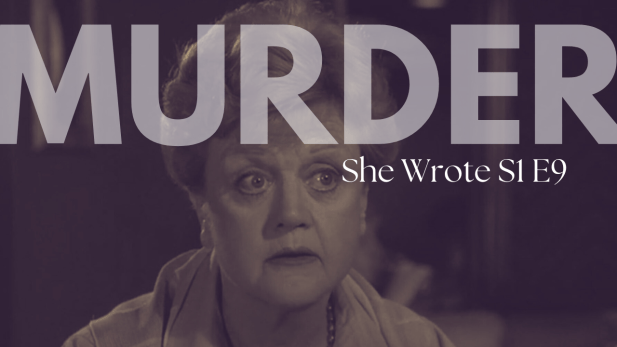
Season 1, Episode 9: Death Casts a Spell (December 30, 1984)
Tonight on Murder, She Wrote…
Hypnotist Cagliastro gets fired from the casino/hotel for sleeping with the owner’s wife. Then, he has an interview with six journalists, claiming that he can hypnotize any of them, but is killed, leaving them in a trance.
Who’s in it, outside of Angela Lansbury, and were they in any exploitation movies?
Joan, Jessica’s assistant, is Diana Canova. She was on Soap and in The First Nudie Musical. She’d play two other roles on the show, but not the same character.
The law in this, Lt. Bergkamp, is Robert Hogan, a vet of 158 roles, including three other Murder, She Wrote appearances.
Dr. Yambert is Conrad Janis, who directed and starred in the 2012 horror movie Bad Blood.
Elaine Joyce plays Sheri Diamond. She has quite the horror resume, showing up in Trick or Treat, Motel Hell and one sort of exploitation movie, The Christine Jorgensen Story.
Andy Townsend is played by Brian Kerwin, a TV vet who also shows up in King Kong Lives.
Joe Kellijian plays the owner of the hotel/casino, Robert Loggia. If I need to tell you who he is, you’re reading the wrong site.
Michelle Phillips plays his wife, Regina. Yes, from The Mamas and the Papas and Knots Landing. She’s also in some absolute junk that I love, including Bloodline, The Last Movie, and No One Would Tell, in which Fred Savage gets on steroids and abuses Candace Cameron.
In the smaller roles, we have Elvia Allman as “elderly lady,” Rance Howard as Fillmore, Ritchie Montgomery as a busboy, Alex Rebar — THE INCREDIBLE MELTING MANHIMSELF, as well as the writer of Demented, Terror On Tourand To All a Goodnight— as a hypnotist, Dianne Travis as Helsema, Marylou Kenworthy as Liz, Lee Duncan as a policeman, Kathy Karges, Gay Hagen, Joy Ellison, Hartley Silver, Bill Shick and Robert Balderson as hypnotized people and Bob Tzudiker as a clerk.
What happens?
Jessica is in Lake Tahoe, which is Vegas Lite. That’s where The Amazing Cagliostro performs, commanding audience members to act like animals. As he performs, we see Bud and Andy, two reporters, who bet the hypnotist is a phoney. Meanwhile, Joe, the hotel owner, is fighting with his wife, Regina, who is having an affair with Cagliostro, but claims that it’s because he’s using his powers on her. He fires Cagliostro, who still gets a million dollars. And then Joan pitches Jessica the idea of using the cucking wizard in her next book.
As Jessica sits in the bar and turns this down, Cagliostro gets into a fight with the reporters and sets up a demonstration of his abilities in his room. As he hypnotizes everyone, he reveals his past, just in time for him to get stabbed and leave everyone stuck in a hypnotized state.
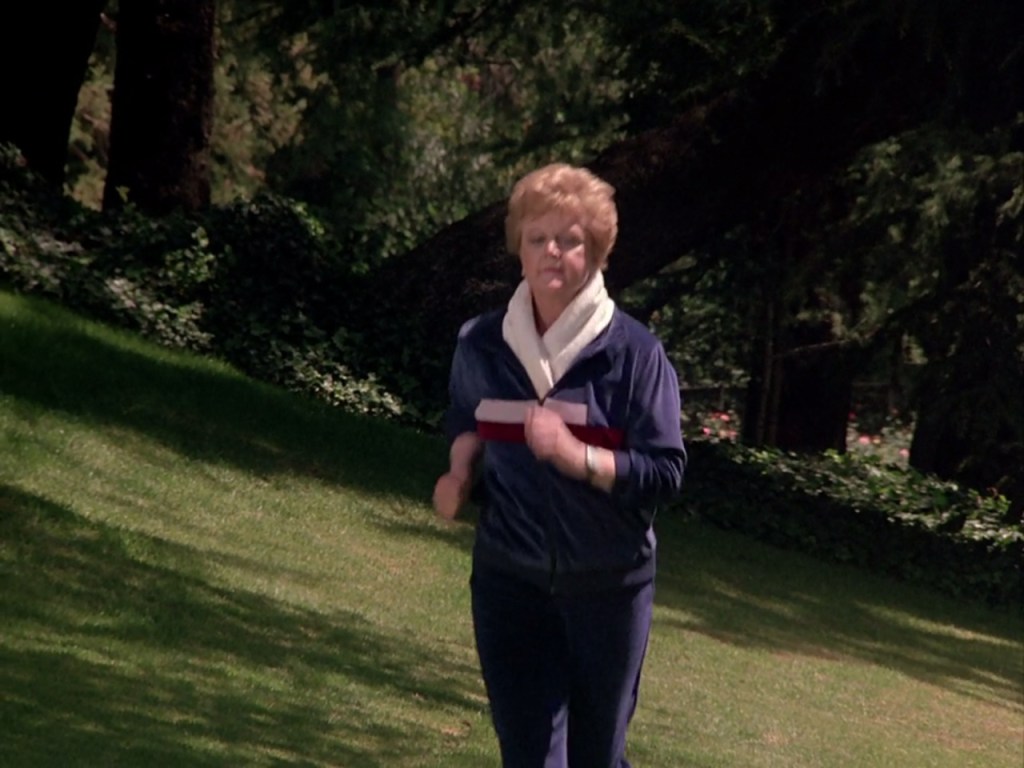
They figure out that a tape of one of his shows will bring them back, and Jessica deals with all of this as only she can. She puts on her jogging suit and starts shuffling around. Also: a towel around her neck as if she were Bobby “The Brain” Heenan.
Nearly anyone could have killed the magician, as he was blackmailing everyone, even his assistant, who started her career as a naked trapeze star, which I did not know was a thing.
Who did it?
There’s a red herring that was the assistant, but then we learn that Andy had earplugs and wasn’t hypnotized. An article his father wrote about Cagliostro ruined his career, his dad killed himself, and now, he got his revenge.
Who made it?
Allen Reisner directed, and Steven Hensley and J. Miyoko Hensley wrote the screenplay. They also wrote the Remo Williams TV pilot.
The story of this episode comes from a 1937 Bela Lugosi movie, The Thirteenth Chair.
Does Jessica get some?
No. I’m as upset as you.
Does Jessica dress up and act stupid?
Jessica also gets hypnotized and does impressions of Bette Davis and Mae West. Also, there’s no way Angela Lansberry is on the back of that motorcycle.
Was it any good?
Two shows with death in the name in a row, but hey — Jessica is a friend of the Grim Reaper.
Give me a reasonable quote:
Cagliostro: Ladies and gentlemen, observe the power of hypnosis! Now, volunteers, when I clap my hands, you will each become your favorite animal.
What’s next?
Jessica becomes a member of Congress. Yes. I wrote it. It happens.
April 3: National Film Score Day- Write about a movie that has a great score.
ABOUT THE AUTHOR: Exploitation-film historian A.C. Nicholas, who has a sketchy background and hails from parts unknown in Western Pennsylvania, was once a drive-in theater projectionist and disk jockey. In addition to being a writer, editor, podcaster, and voice-over artist, he’s a regular guest co-host on the streaming Drive-In Asylum Double Feature and has been a guest on the Making Tarantino podcast. He also contributes to the Drive-In Asylum fanzine. His essay, “Of Punks and Stains and Student Films: A Tribute to Night Flight, the 80s Late-Night Cult Sensation,” appeared in Drive-In Asylum #26.
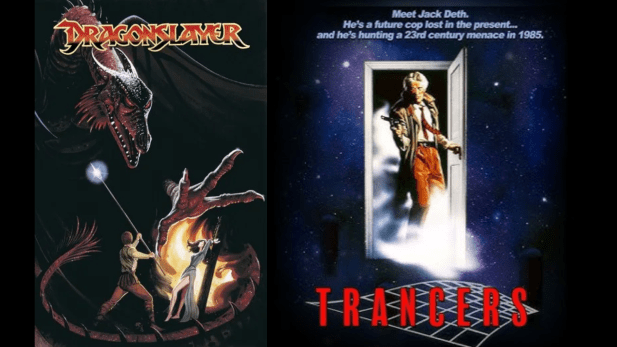
Dragonslayer (1981) and Trancers (1984): Two Great Film Scores but Only One in Service of Its Film
The mating of visuals to music can be transcendent. Think of how many movies, even stone-cold masterpieces, wouldn’t be as effective without their iconic scores by musical geniuses such as Max Steiner, Erich Korngold, Bernard Herrmann, John Williams, Miklos Rozsa, Henry Mancini, John Barry, Jerry Goldsmith, Vangelis, Danny Elfman, and, of course, the greatest film composer of all time, Ennio Morricone.* And we can’t forget groups who did scores, like Goblin, Tangerine Dream, The Beatles, Pink Floyd, The Who, Nine Inch Nails, and Queen. Music has always been a part of movies even in the silent era.
A great score can elevate a movie or hurt it. My fundamental maxim for judging the effectiveness of a score is whether I’m paying more attention to the score than the film itself. During my prime theater-going days, I went to see Dragonslayer, a now-forgotten film from 1981, a year packed with classics like Raiders of the Lost Ark, The Empire Strikes Back, Superman II, Altered States, Flash Gordon,** The Evil Dead, An American Werewolf in London, The Howling, Ms. 45, and Possession. I’d read in reviews before buying my ticket that the score by legendary composer Alex North was exceptional. My expectations were high.
So there I sat on opening day in a Philadelphia grindhouse—not one of the scarier ones—enjoying Dragonslayer, a decent enough film. And the reviewers were right: Alex North’s score was fantastic. (It was later nominated for an Academy Award.***) The score was so good that it took me right out of the film’s universe. The music had transformed this urban shithole, with urine-stained floor, broken seats, and tattered velvet curtain, into Carnegie Hall. (If only it could have literally done that—and changed the wino snoring next to me into a tuxedoed high-society type offering me a single malt Scotch.)
It was then that I realized that this was not a good thing. All the effort that had gone into creating that awesome-looking dragon had been lost on me. I’d closed my eyes and was zoning out to the music. While it was a classic symphonic score, it wasn’t the usual rousing John Williams stuff. Instead, it was more brooding. North had incorporated complex lines with counterpoint and some atonality. It’s not that the score was inappropriate to the action. It’s just that it was so much better than the film itself that it became a distraction and put a damper on my viewing experience. Dragonslayer’s score, though outstanding, does no service to the film it supports.
But sometimes—more accurately, rarely—a film with a few good elements that would otherwise be forgotten is improved so much by an unexpectedly great score that both the film and its score live on, each beloved. Case in point: Trancers (1984) a film I first watched on home video.
On paper, Trancers doesn’t look like much: a low-budget mash-up of Blade Runnerand The Terminator that Charles Band and his Empire International Pictures dumped into Chicago and LA theaters to make a few bucks before the VHS cassettes hit the shelves at Blockbuster. But Empire made exploitation films that were a cut above the rest, so it looked good, courtesy ace cinematographer Mac Ahlberg. And it had some other good things going for it: stand-up comedian Tim Thomerson, perfectly cast as Jack Deth, the futuristic gumshoe; future Best Actress winner Helen Hunt as his juvenile love interest; and a funny, clever screenplay from Danny Bilson and Paul De Meo. That duo went on to write even more great stuff, including Zone Troopers (1985), Eliminators (1986), and The Wrong Guys (1988) for Empire; The Flash (1990) for television; The Rocketeer (1991) for Disney; and Da 5 Bloods (2020) for Spike Lee, which was released after De Meo’s death. These things make Trancers memorable, to be sure, but you’ll be blown away by the score by Phil Davies and Mark Ryder.
Like the score in many 80s films, the Trancers score used the premier electronic instrument of the day, the Fairlight synthesizer. The main theme, which serves as the musical motif throughout the film, is simplicity itself: an initial burst of synthesizer whine, followed by a slow, haunting melodic line in a minor key supported by swelling harmonies. It’s mournful mood music that stands in contrast to the film’s action scenes. The film may be part science fiction, part noir, but the music emphasizes the noir. Like the Dragonslayer score, it calls attention to itself, but does so in a way that doesn’t violate my rule. Instead of distracting, it engages.**** George Bernard Shaw once said, “Music washes away from the soul the dust of everyday life. To this day, I can’t listen to the Trancers soundtrack without being moved.
Trancers was so successful on home media that it became a franchise with seven installments.***** Charles Band’s brother Richard, Empire’s house composer, reworked Davies and Ryder’s compositions through Trancers IIIbefore the uneven series turned to other composers and music with lesser effect. Recently, there’s even been talk of a Trancers TV series. Jack Deth may live on, abetted, I hope, by the original Trancers score.
But, you ask, “Isn’t the Trancers soundtrack just a knock-off of Vangelis’s opening theme from Blade Runner?” It’s true that Trancers and Blade Runner are both science-fiction films with synthesizer scores. The difference is that the Trancers score, even if it was inspired by Blade Runner, is better. If you weren’t scorched by my hot take there, here’s a molten-lava take: The Trancers score is among the best movie scores of all time. If you don’t believe me, some kind soul has put together a 10-hour loop of the theme, which you can listen to on YouTube.
There you have it: two genre films, Dragonslayer, a big-budget studio film with high ambitions, and Trancers, a low-budget exploitation film with modest ambitions, both with excellent scores. But only one score does what it’s supposed to do, and it does so beautifully. I want the Trancers theme played at my funeral as I head down the line to the next life.
*For my money, the scene in The Good, the Bad and the Ugly with Eli Wallach as Tuco running through the cemetery to “Ecstasy of Gold” by Maestro Morricone is the greatest music cue in any movie ever. If perfection can exist in this world, this is it.
**If you read any discussion of movie soundtracks mentioning the rock group Queen, you’ll always sing aloud “Flash! A-ah… Savior of the universe!” See? You did just now. It’s an immutable law of the universe.
***North received 15 Academy Award nominations, including one for the American standard “Unchained Melody,” which he wrote early in his career for the film Unchained. If that was the only thing he’d ever written, I’d say he had an amazing life.
**** Just last month, Band released to YouTube a black-and-white remastering of Trancers. The noirish score complements the monochrome images even more brilliantly.
*****Six features and one 20-minute short. The short, originally intended as a segment of the Empire portmanteau film Pulse Pounders, was shot in 1988 but was unreleased until 2013. It fits between Trancers and Trancers IIon the series’ timeline and is lovingly called “Trancers 1.5” by fans.
Two Soviet ballet dancers on tour in the States are wanted following the murder of a man backstage during their debut performance. Was Jessica in the audience? Oh, you know she was.
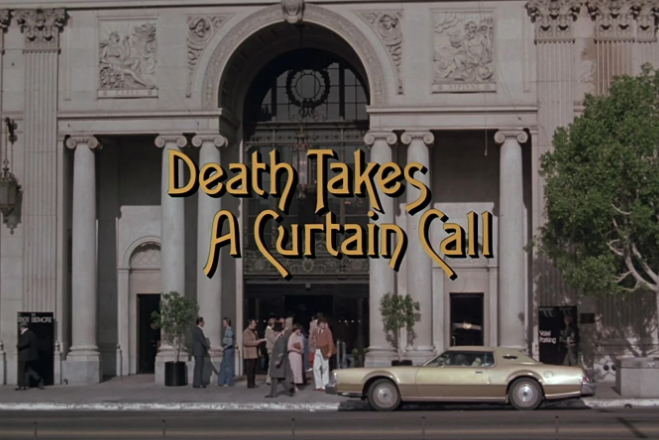
Season 1, Episode 8: Death Takes a Curtain Call (December 16, 1984)
Tonight on Murder, She Wrote…
Leo Peterson invites Jessica to Boston to see a Russian ballet. What they don’t know is that Natalia and Alexander, two of the dancers, are planning to defect. Then, there is death.
Who’s in it, outside of Angela Lansbury, and were they in any exploitation movies?
Vicki Kriegler is Natalia. She was also in the TV movie Deadly Lessons.
Alexander is played by George De La Pena, once a soloist with the American Ballet Company.
Irina Katsa, another of the ballerinas, is Kerry Armstrong.
Claude Atkins and Tom Bosley are in this as Jessica’s local love interests, Captain Ethan Cragg and Sheriff Amos Tupper. Ethan is upset that Jessica is going to the big city and not serving him pie; I think we all know what he means. I don’t want to be crass and say these dudes wanted to make the author of The Umbrella Murders and The Stain on the Stairs airtight, but I guess I just did.
Dane Clark is FBI agent O’Farrell. He played the sheriff in Blood Song and has appeared in many TV shows.
Besides being in Bill Van Ryn’s dreams, William Conrad is best known for playing Cannon and Nero Wolfe. He’s Major Anatole Karzof. Conrad also narrated plenty of movies and TV series, including Chamber of Horrors, Zero Hour!, Hudson Hawk, Manimal, the Buck Rodgers TV series, Tales of the Unexpected, The Force of Evil, the famous “Crying Indian” TV commercial, The Fugitive TV series, Rocky and Bullwinkle. Also, he directedTwo On a Guillotine, Side Show and several TV shows.
Hurd Hatfield is Leo. He was the lead in the 1945 film The Portrait of Dorian Gray, which also starred Angela Lansberry.
James Carroll Jordan, who is Skip Fleming, would be in three more episodes of the show.
In small roles, Palmer Eddington was Paul Rudd (no, not that one), a protestor named Velma was Jessica Nelson, Dewey was Patrick Thomas, Russian heavy Serge was Anthony De Longis (Blade from Masters of the Universe!), Nagy was played by Adam Gregor, Steve Arvin was a reporter, Read Morgan was a cop and Gary Bohn, Robert Cole, Camille Hagen, Paul LeClair, Farrell Mayer, Henry Noguch and Jeff Viola all had extra roles.
What happens?
Jess soon snoops and finds that Leo has a secret message in his program, and before you can “Jessica is sure around a lot of killing,” a KGB man is dead, and William Conrad is on the hunt for the murderer. When he finally meets Jessica, the Cold War heats up because he’s never met a detective woman like her in Russia. He’s also a big fan of her books and asks if she’ll help investigate who killed Berensky.
The Russian follows Mrs. Fletcher back to Cabot Cove, driving Ethan crazy and continuing to flirt with JB. At the same time, the defecting dancers- yes, that’s what Leo’s message was about- are also in town, so there are many sitcom moments. And breakfast between Jessica and Anatole.
Who did it?
Irina Katsa, the other Russian dancer, is upset that Alexander and Natalia are in love and hopes to force them to return to Russia.
Who made it?
Another episode was directed by TV vet Allen Reisner. It was written by Paul W. Cooper.
Some facts…
This is Ethan’s last appearance.
Does Jessica get some?
You tell me.
Does Jessica dress up and act stupid?
No.
Was it any good?
It’s fine. The show is still finding its way here. There would be another defection in season 3.
Give me a reasonable quote:
Major Anatole Karzof: So, farewell, my dear Jessica. I look forward to your next novel.
Jessica Fletcher: I’d like to send you a signed copy if it won’t compromise you in the Kremlin.
Major Anatole Karzof: Sometimes, a man likes to be compromised, eh?
When Keisuke (Jun Etô), a fisherman, stands in the path of progress by land developers, he is killed and his wife, pearl driver Migawa (Mari Shirato) is framed for his murder. Despite being assaulted and sent to an island of brothels, she plans to get bloody revenge on the politicians and criminals who have ruined her life.
Directed by Toshiharu Ikeda (Sekkusu hantâ: Sei kariudo, Evil Dead Trap) and written by Takuya Nishioka, this finds Migawa reborn as a supernatural avenger, a blood-covered heroine carrying a trident, unafraid to kill everyone in her path. Is she dead? Is she alive? What’s the story with her speaking with Buddha or the statue that is buried? You can make this any story that you want, but know that rich, powerful and evil people celebrating their new nuclear power plant will be stabbed and torn apart in the way that only a woman who has lost everything can destroy human beings.
While this has a lot of the female rape and revengeomatic themes of many Japanese pinky violence movies, it has a slower way to get there, only to let loose by the end, as you hope. This is the first time that this movie has been available in the West.
The Third Window Films Blu-ray of Mermaid Legend has extras that include an interview with writer Takuya Nishioka, audio commentary by Jasper Sharp and Tom Mes, a video essay on Toshiyuki Honda by James Balmont, a trailer and a slipcase with artwork from Gokaiju. There’s a Directors Company edition featuring an insert by Jasper Sharp that is limited to 2000 copies. You can learn more on the official site and order it in the U.S. from Terracotta and Diabolik DVD and in the UK from Planet of Entertainment and HMV.
Jessica goes to visit relatives and ends up mixed up with a nasty scheme involving a theme park creator.
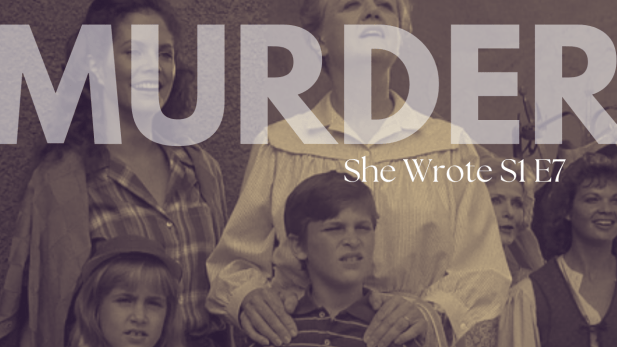
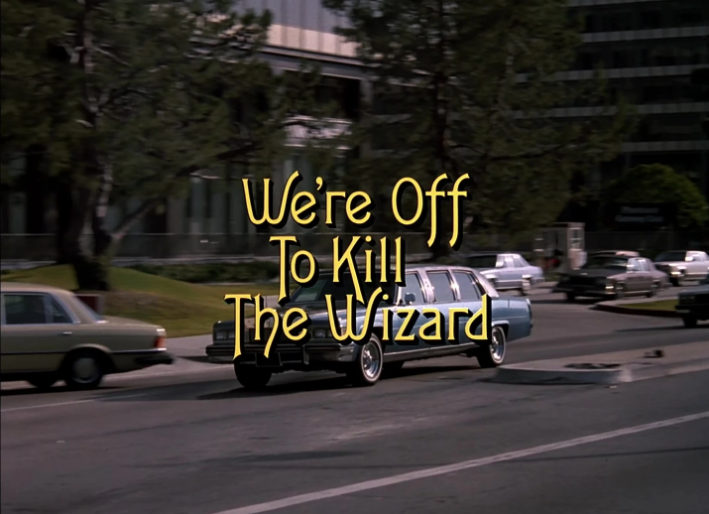
Season 1, Episode 7: We’re Off to Kill the Wizard (December 9, 1984)
Tonight on Murder, She Wrote…
Horatio Baldwin, the inventor of a theme park, invites Jessica, her niece and her nicce’s children to see his latest rides. He wants to make an entire park of Jessica’s books, but then gets murdered.
Who’s in it, outside of Angela Lansbury, and were they in any exploitation movies?
Horatio Baldwin is played by James Coco, whose acting career had led to an Emmy Award, a Drama Desk Award, a Cable ACE Award and three Obie Awards, as well as nominations for a Tony Award, an Academy Award and two Golden Globe Awards.
His wife Erica is played by Christine Belford, who was also in Christine, tons of TV and three other episodes of this show.
Laurie Bascomb was played by Kim Darby, who you should have seen in Don’t Be Afraid of the Dark and gotten killed by The Shape in Halloween VI. She also says a line in Better Off Deadthat I repeat all the time: “French fries, French dressing, French bread and to drink — ta-da! — Peru!”
Michael Gardner is George DiCenzo, who was the voice of Hordak and Captain Lou Albano in cartoons.
Arnold Megrin is Richard Sanders, better known as Less Nessman from WKRP In Cincinati.
The cops, Captain Davis and Detective Donovan, are played by John Schuck from McMilan and Wife and James Stephens, who was Father Philip Prestwick on Father Dowling Mysteries.
Kristoffer Tabori, who played Phillip Tabori, is the son of Viveca Lindfors and director Don Siegel. He’s also directed a series of movies called Murder, She Baked.
Smaller parts include Carol Donovan as Anne Kerry Ford, Eric Server as Ned O’Brien, two of the Phoenix siblings — Joaquin and Summer — show up, Harry G. Sanders from Killer of Sheep and Child’s Play 3 is a skycap, Vince Howard is in the first of five extra roles on the show, Laura Leyva is a clerk and Ivan Saric, Jack Molina from The Howling, is in the cast.
What happens?
Jess is in Chicago, visiting her niece, when Horrible Horatio shows up. He owns several theme parks and he wants her to design a haunted house and then to make an entire park around her books. She turns him down and he treats his employees badly, ending when he locks himself in his office and is soon killed.
In normal Murder, She Wrote murder fashion, a gun goes off, someone hears it and shows up to discover what looks like a suicide.
As you can already figure out, everyone wanted Horatio dead. Michael Gardner, an assistant, and his wife Erica, were having an affair. He was horrible to Laurie the secretary, who at least has Jessica as an alibi, but he was also blackmailing Laurie, so the police have a motive.
Who did it?
Philip Carlson, who had an argument and accidentally killed his boss. That said, he killed a bunch of other people to cover it up.
Who made it?
Walter Grauman directed tons of TV, including The Old Man Who Cried Wolf, V and 50+ episodes of this show.
Series creator Peter S. Fischer and Gerald K. Siegel wrote the story and Fischer wrote the screenplay.
Some facts…
James Coco and Angela Lansbury made their respective Broadway debuts in playwright George Feydeau’s Hotel Paradiso.
Yes, that is future star Jocquin Phoenix along with his sister.
Does Jessica get some?
No.
Does Jessica dress up and act stupid?
No.
Was it any good?
This establishes something that we will know by the of this series: Jessica has relative everywhere and when she shows up, someone dies.
Give me a reasonable quote:
Horatio Baldwin: My dear Mrs. Fletcher, how good of you to come.
Jessica Fletcher: How could I refuse? I had two loaded children pointed at my head.






 B&S About Movies
You must be logged in to post a comment.