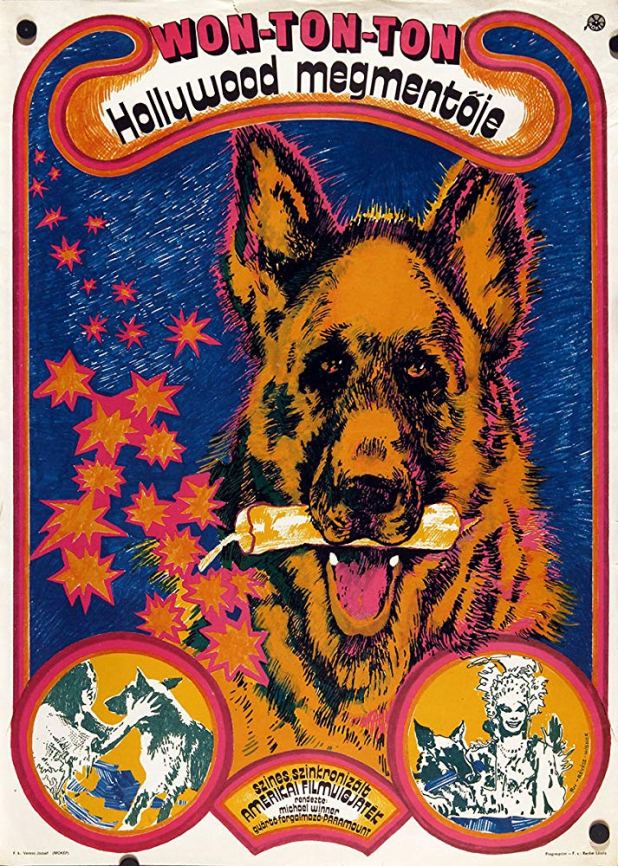
Won Ton Ton: The Dog Who Saved Hollywood (1976)

We live in a magical reality, the kind of place where Michael Winner, the same man who made some of the roughest films ever — Death WishDeath Wish 2Death Wish 3The MechanicThe Sentinel — made this movie that’s a kind of, sort of biography of Hollywood star dog Rin Tin Tin.

It was originally called Won Ton Ton, the Dog Who Saved Warner Bros. before Paramount bought the film and, well, the movie had to change its name, right?

Estie Del Ruth (Madeline Kahn) has made her way to Hollywood, followed by a dog named Won Ton Ton. While she has dreams of being a star — and a director who continually and unsuccessfully pitches movies that will be made many years later named Grayson Potchuck (Bruce Dern) tries to help — the truth is that the dog has all the talent.

This is less a film than a collection of vignettes about the Golden Age of Hollywood, such as Ron Leibman’s effeminate take on Rudolph Valentino and Art Carney, Phil Silvers and Teri Garr as players in the tale of Estie and Won Ton Ton.

The draw for me — beyond how strange it is that Winner directed this comedy misfire — is the huge cast of Hollywood legends, many of whom made this movie their final role. Here are as many as I could remember:

Dorothy Lamour: One-time star of the Hope and Crosby Road movies, she shows up here as a visiting film star.

Joan Blondell: Often cast as a gold digger, Blondell’s career stretched back to vaudeville. She’d appear in two more movies after this: The Champ and Grease.

Virginia Mayo: Warner Brothers’ biggest box-office money-maker in the late 1940s, Mayo continued acting until 1997. She was one of the first actresses to be awarded a star on the Walk of Fame.

Henny Youngman: The rapid-fire standup who would always say, “Take my wife…please.”

Rory Calhoun: Readers of this site will definitely know Calhoun, as he reinvented himself in the 80’s, appearing in genre films like Motel HellHell Comes to Frogtown and the first two Angel films.

Aldo Ray: Much like Calhoun, Ray appeared in just about every genre film he could in the later part of his career. Shock ‘Em DeadHuman ExperimentsThe GloveDon’t Go Near the ParkHaunts…I can and will go on.

Nancy Walker: This star of Rhoda would go on to direct an even bigger bomb than this: Can’t Stop the Music, the unreal story of the Village People.

Ethel Merman: Playing Hedda Parsons here, Merman was considered the First Lady of musical comedy.

Rhonda Fleming: Her name in this movie is Rhoda Flaming, which is…par for the course of this film. She was known as the Queen of Technicolor for how well she filmed.

Dean Stockwell: If you only know him from Quantum Leap, I’d recommend you check out his roles in To Live and Die in L.A. and Married to the Mob.

Tab Hunter: Known for his clean-cut, boy next door looks, his later years are marked by interesting turns, such as playing Mary Hartman’s dad on the spin-off Forever Fernwood and appearing Divine in Polyester (1981) and Paul Bartel’s Lust in the Dust.

Dick Haymes: This big band vocalist sang in the session where Bing Crosby and The Andrews Sisters recorded both “There’s No Business Like Show Business” and “Anything You Can Do (I Can Do Better).”

Robert Alda: Yes, he’s Alan’s dad. But you knew that. And you also knew that he played Father Michael in Mario Bava’s House of Exorcism.

Victor Mature: This would be the actor’s last major role; he also shows up in a cameo at the end of Winner’s film Firepower.

Edgar Bergen: As Professor Quicksand, this is one of his few roles not holding one of his trademark partners like Charlie McCarthy or Mortimer Snerd. He’s also in The Phynx, which still blows my mind.

Henry Wilcoxon: You may not know that he was very involved with the films of Cecil B. DeMille, but you do know him as the priest caught in a rainstorm in Caddyshack.

Yvonne DeCarlo: In 1950, the Camera Club of America voted her “Sexnicolor Queen of the Screen.” You know those guys — the pre-Internet creeps that’d hire women to pose for them as they stood around en masse. DeCarlo is better known as Lily Munster, she also appears in the kind of movies that this creep enjoys, namely Satan’s CheerleadersSilent ScreamPlay DeadGuyana: Cult of the DamnedAmerican Gothic and Mirror, Mirror.

There are literally dozens and dozens of stars here, so get ready…

Edward Le Veque (the last surviving member of The Keystone Kops); William Benedict (Whitey of The Bowery Boys); Huntz Hall of The Dead End Kids; silent stars Carmel Myers, Dorothy Gulliver, Maytag repairman Jesse White; comedians Jack Carter and Shecky Greene; Marilyn Monroe rival Barbara Nichols; Variety columnist Army Archerd; Fernando Lamas; Zsa Zsa Gabor; Cyd Charisse, whose legs were once insured for $5 million dollars; Doodles Weaver (who also shows up in plenty of insane movies like The Zodiac Killer); cowboy actor Pedro Gonzalez Gonzalez; Dick Van Dyke Show co-star Morey Amsterdam; Monroe/JFK scandal magnet Peter Lawford; Eddie Foy Jr.; Patricia Morison; The Adventures of Wild Bill Hickok star Guy Madison; John Carradine as a drunk (yes, I realize that this is an easy target; I also realize that I watch at least one movie with Carradine in it a day); Regis Toomey, who is also in another dog of a film C.H.O.M.P.S.; Ann Rutherford (Gone with the Wind); Milton Berle (once perhaps the most famous person in entertainment); Keye Luke (a founding member of the Screen Actors’ Guild as well as the original Brak on Space Ghost and Mr. Wing from Gremlins); Walter Pidgeon (he’d be in one more movie, the Mae West vehicle Sextette); character actors Phil Leeds and Cliff Norton as dogcatchers; Winnie the Pooh’s original voice Sterling Holloway; two of the Ritz brothers; Edward Ashley (Professor Sutherland from Waxwork); Fritz Feld (who is also in The Phynx); George Jessel; Ken Murray; Stepin Fetchit (considered to be the first African-American to have a successful acting career, now seen as an example of how Hollywood treated minorities); Tarzan actor Johnny Weissmuller; Louis Nye; Dennis Morgan; William Demarest (Uncle Charley from My Three Sons); Billy Barty who plays an assistant director; Ricardo Montalban; Jackie Coogan; Roy Rogers’ sidekick Andy Devine; Broderick Crawford (of his many movies, I’ll let on that Harlequin is one of my favorites); Richard Arlan; Jack La Rue; former pro wrestler “Iron” Mike Mazurki; as well as singers Dennis Day, Janet Blair, Jane Connell, Ann Miller, Rudy Vallee and Gloria DeHaven.

When Augustus von Schumacher attended the premiere — he was the dog who played the lead role — he walked in with Mae West. Now that’s how you become a star.

As for the movie — unless you’re someone like me that gets excited about cameos, you’re going to hate it.
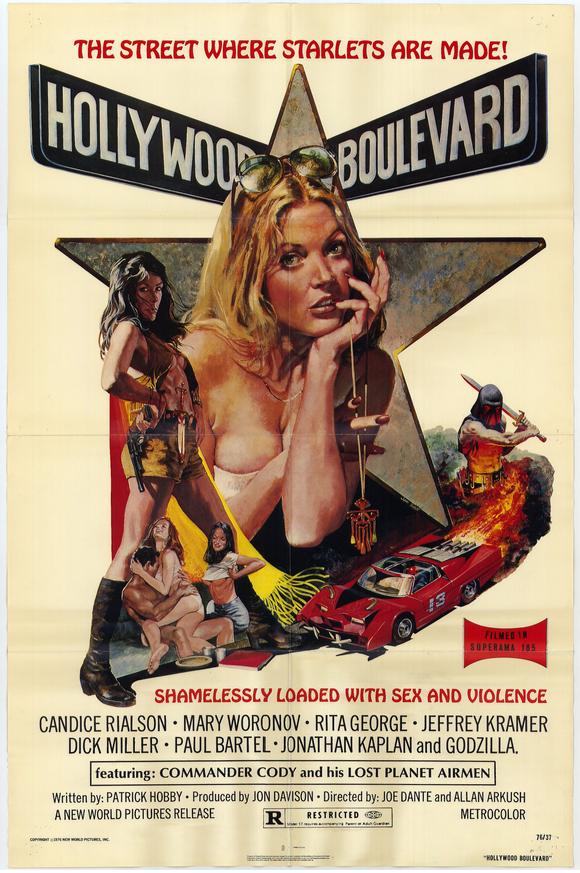
Hollywood Boulevard (1976)

I was telling someone who doesn’t watch movies like I do — well, that could be just about anyone — that this film has a cast packed with stars. That’s when I realized that Hollywood Boulevard has a cast that is all famous to me and probably me alone. I don’t care. These are my people. Join me as I celebrate them.

Candice Rialson, the inspiration for Bridget Fonda’s character in Jackie Brown, stars as Candy Wednesday, new in town and ready to be a big star. She gets an agent named Walter Paisley (Dick Miller, with the same name as his character in A Bucket of Blood) who can’t get her any work until she gets mixed up in a bank robbery.

Those of you who read the site know that I watched this movie specifically because Paul Bartel and Mary Woronov are in it. What kept me around was the fact that this movie is basically making fun of every Corman movie of this era, with the three girls formula and a script pretty much taken from the Bela Lugosi movie The Death Kiss.

Seeing as how this was directed by Allan Arkush and Joe Dante, there are a ton of inside jokes. Bartel’s director character, Eric Von Leppe, is the name of Boris Karloff’s character from The Terror. John Kramer’s character, Duke Mantee, is named for Bogart’s character in The Petrified Forest. Tara Strohmeier’s Jill McBain is named for Claudia Cardinale’s character in Once Upon a Time in the West. You also have a movie named Machete Maidens, almost every Corman director showing up in cameos, Forrest J. Ackerman popping up and Robby the Robot.

This movie was the result of a bet between producer Jon Davison and Roger Corman. Davison believed that he could make the cheapest New World Pictures movie ever, so he was given $60,000 and ten days.

Consider it a greatest hits, with scenes taken directly from Battle Beyond the Sun, The TerrorThe Big Bird CageNight of the Cobra WomanThe Hot BoxNight Call NursesUnholy RollersSavage!Caged HeatBig Bad MamaDeath Race 2000 and Crazy Mama all here.

Let me sum this up: Candice Rialson looks better in the Frankenstein costume than David Carradine.

You can watch this on Tubi.

ABC Afterschool Special: The Amazing Cosmic Awareness of Duffy Moon (1976)

Editor’s Note, January 2023: Lance Kerwin passed away on January 24, 2023, at the age of 62. Lance got his start in acting by way of his mother, who worked as a booking agent, and his father, who worked as an acting coach. Kerwin, who came to prominence for his work in the Michael Landon TV movie The Loneliest Runner (1976), the NBC-TV series James at 16 (1978), and the Stephen King adaptation, Salem’s Lot (1979), left Hollywood in the late ’90s to serve the Lord as a Christian youth minister.

Thank you for the films, Lance. You were loved and you will be missed.


If you read our reviews for the ABC Afterschool Special: Hewitt’s Just Different, along with the CBS Schoolbreak Special: Portrait of a Teenage Shoplifter, and the NBC Special Treat: New York City Too Far from Tampa Blues, then you’re up to speed on the backstory of the “Big Three” network’s competition for a slice of the young adult audience during the late afternoon school days during the ’70s and ’80s. So let’s jump right into the review!

This movie that aired on February 4, 1976, is simply too special to casually mention in passing amid some of the other notable young adult flicks aired during the ABC anthology series, which we pointed out in our review of Hewitt’s Just Different.

Why?

Because during that spring, and into the summer of 1976, anytime we faced a challenge, e.g., scaling a particularly tall tree, a knee-scraping bike stunt, or a dive off the pool house, someone would inevitably say, “You can do it, Duffy Moon!”

Yeah, to hell with J.J, Rerun, The Fonz, and Gary Coleman (please tell me you know your ’70s television characters) and their tired catch phrases. We had Ike Eisenmann fueling our kiddie vernacular.

And besides: How can you pass up a young adult flick starring Jim “Thurston Howell III” Backus and Jerry Van Dyke (Luther Van Dam from ABC-TV’s long-running Coach), and Lance Kerwin? (Yes, the epic Lance Kerwin* from TV’s James at 15, the Robbie Benson-starring TV movie The Death of Richie, the Michael Landon’s biographical The Loneliest Runner, Salem’s Lot with David Soul, and Wolfgang Petersen’s Enemy Mine.)

You don’t.

Ike Eisenmann (Star Trek II: The Wrath of Kahn, Escape to Witch Mountain) is the undersized sixth-grader Duffy, and he’s sick and tired of being called “shrimp” by the other boys in his class. Then, one day, he buys a mysterious, magical book, “Cosmic Awareness,” which enables him to “Think Big,” not just figuratively—but literally. And with the puff of his cheeks, he chants the self-motivational mantra “You Can Do it, Duffy Moon!” in his head and develops powers that enable him to beat life’s challenges.

As with the previously reviewed New York City Too Far from Tampa Blues, everybody check-out this book by Jean Robinson from the school library. Yeah, those were the days. Today, young adults are shilled Twilight and The Hunger Games. And we in the pre-Internet epoch got this. And we became better adults because of it. And that was the whole point of young adult fiction in the ’70s.

They just don’t write ’em like this anymore. To say this carries the B&S About Movies’ “Seal of Nostalgic Approval” is an understatement. Watch it!

“You can do it, Duffy Moon!”


Well, that concludes our fourth and final review of the afternoon anthology movie programming offered by the “Big Three” networks during the ‘70s and ‘80s. You can relive those days with this pretty cool catch-all playlist we found on You Tube that features a mix of the ABC Afterschool Break, CBS Schoolbreak Special, and NBC Special Treat young adult films. Enjoy! You can watch the full episode, here.

* Lance did five ABC Afterschool Specials in all. He also starred in 1974’s Pssst! Hammerman’s After You! and The Bridge of Adam Rush, and 1976’s P.J. and the President’s Son and Me and Dad’s New Wife. Looks like you’re surfin’ You Tube!

About the Author: You can read the music and film reviews of R.D Francis on Medium and learn more about his work on Facebook. He also writes for B&S About Movies.

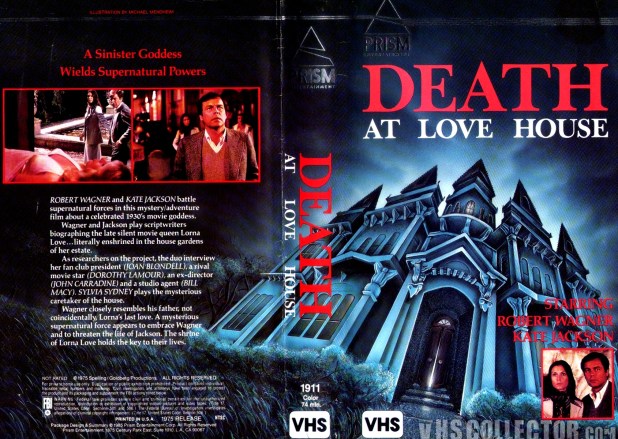
Death at Love House (1976)

Why did I watch this movie?

Was it my love of TV movies? Sure.

The fact that Robert Wagner was in it? Yes.

My enduring crush for Kate Jackson, whose looks, voices and demeanor made pre-pubescent me question why every other boy thought girls were gross? Of course.

The simple knowledge that I’ll watch just about anything, no matter how bad it may be? Undoubtedly.

Because John Carradine was in it? Come on. John Carradine is in everything.

Or that it was directed by E. W. Swackhamer, who made the insane Lookwell with Conan O’Brien and Robert Smigel, as well as the TV movie Vampire?

Come on. Just reading the synopsis and learning that Marianna Hill plays a famous sex symbol actress murdered in the 1930’s? That’s exactly why, dear reader.

Joel and Donna Gregory (Wagner and Jackson) are investigating the death of Lorna Love (Hill). This leads them to her house, where they meet with housekeeper Clara Josephs (Sylvia Sidney, the caseworker from Beetlejuice) and agent Oscar Payne (Bill Macy, who isn’t William H. Macy, but the husband of Maude).

Joel wants to know more because it turns out that his father was one of Lorna’s many lovers. So they decide to stay at Love House, where John Carradine shows up as a director who Lorna ruined. He claims that Joel’s dad was the only man to escape her before a mysterious creature attacks him, he has a heart attack and is then drowned in the garden’s fountain. If you can say anything about this movie, you should say that it’s pretty through with the brutal efficiency that it wipes out the seventy-year-old star of pretty much every horror movie made.

It’s at this point that any normal person would leave. Donna then finds an occult blade and one of her photos ruined, but she still stays. At this point, obviously she and Joel are in it to win it.

Joel and Donna then visit Denise Christian (Dorothy Lamour, who owned Old Chief Woodenhead in Creepshow 2 and played herself in The Phynx), a former rival of Lorna who — surprise! — also used to have a bit of “how’s your father” with Joel’s father. Is this whole movie about Robert Wagner’s dad engaging in adult congress with hot actresses? Yes, pretty much.

But really, this is where we learn the secret of Lorna: she asked for eternal beauty and youth. She got it and never slept again, so Joel Sr. smashed all the windows of her house — why? — and left. Afterward, she was obsessed with a healer named Father Eternal Fire.

Of course, being the son of his philandering papa, Joel starts fantasizing about Lorna. At the same time, someone tries to kill Donna by carbon monoxide poisoning. She survives and finally wants to leave, but Joel begs her to stay so they can figure out the secret.

That’s when they meet another follower of Father Eternal Fire, Marcella Geffenhart (Joan Blondell, who is also in The Phynx and, like everyone else in Hollywood pre-1950, Won Ton Ton, the Dog Who Saved Hollywood). She claims to be Lorna’s best friend and when Donna wants to know more, Joel goes AWOL and starts yelling about how Lorna deserves her secrets. So why are you writing a book about her?

I’m not going to spoil the rest, but it’s as ridiculous as you’d hope.

This ABC Movie of the Week originally aired on September 3, 1976. It was produced by Aaron Spelling, as were the occult-themed films How Awful About AllanThe House That Would Not DieCrowhaven FarmA Taste of EvilHome for the HolidaysSatan’s School for Girls (which also stars Jackson), Cruise Into Terror and Don’t Go to Sleep.

You can watch this on Amazon Prime or YouTube:

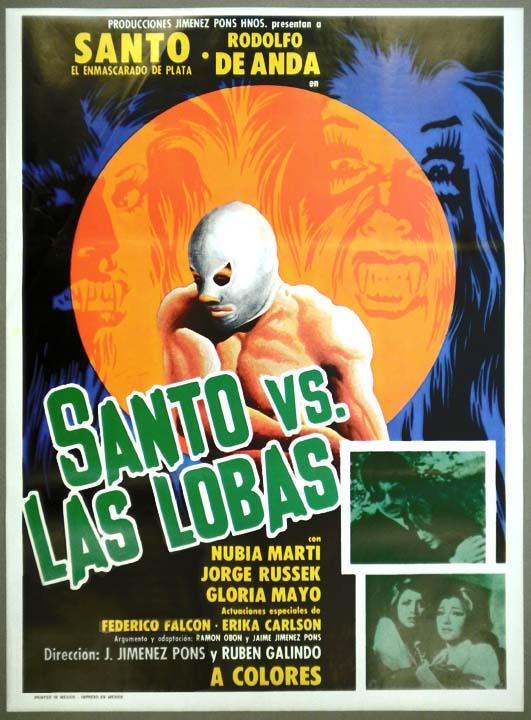
Santo vs. the She Wolves (1976)

This movie is astounding. It starts with a hairy old woman named Luba, queen of the werewolves, asking a young blonde woman to stab her and take her place as the new leader of the lycanthropes. As the wolves howl around her, we’re taken to an arena where Santo battles his foes.

After the match, the new queen comes to see our hero in his locker room and offers her body to him. Just as he’s politely asking her to leave, a detective arrives and tells our hero that the Harker family needs to meet him. As they speak, we follow the new Luba down a hallway, trailed by wolves.

Yes, imagine if you infused a Santo wrestling movie with the Gothic horror look of a Paul Naschy film and made things as dark as possible. That’s exactly what this movie is and I loved every second moment of its footage.

Why would werewolves come after Santo? It’s simple: only silver can destroy them. And our hero is quite literally the silver symbol that can destroy them all. But what if they can turn him to their side? And what if the werewolf queen has a king?

There’s nothing better than a movie where the most famous wrestler to ever emerge from Mexico bodyslams a werewolf woman to death as children are menaced. I love that this movie exists. I want you to be part of my excitement.

You can find this movie for sale on Etsy or watch it on YouTube:

Our Man Flint: Dead On Target (1976)

Originally airing March 17, 1976 on ABC, this forgotten third Derek Flint movie sadly deserves to be that way. A pilot for a weekly series, luckily it wasn’t picked up, if the quality of this effort was to be any indication of how bad the show would be. Dead On Target indeed.

Ray Danton — who became a director for TV after this (he also helmed Deathmaster and Psychic Killer) — is Flint. He had a long career in Eurospy films like Secret Agent Super DragonCode Name: Jaguar and Lucky, the Inscrutable. This would be his last acting role.

What the film fundamentally gets wrong is the fact that Derek Flint is a man continually looking to better himself and seek a higher plane. Why would he decide to become a normal everyday private investigator? Maybe he was following in the footsteps of Matt Helm, whose Tony Franciosa-starring TV series had him become a gumshoe.

Well, he does exactly that, helping Benita (Gay Rowan, The Starlost, the Robert Fuest-directed Revenge of the Stepford Wives) learn to be a private dick and battle the terrorists known as B.E.S.L.A. (Bar El Sol Liberation Army). They’ve kidnapped an oil tycoon named Wendell Runsler, who must be rescued, which again seems like something Flint would probably have an issue with.

There’s a blink and you’ll miss it appearance by a nascent Kim Cattrall as a secretary. Otherwise, I can’t find much here to recommend to you. Truly, this is the lowest of the low where the Flint movies are the highest of the high.

One of Flint’s lines is “It’s like the blind man said when he passed the fish market. “Hello, ladies!”” That makes no sense. This movie being so horrifically bland doesn’t either.

Redneck Miller (1976)

Quentin Tarantino screened this hicksploitation “radio on film” obscurity during a three-night festival (on a “Redneck Night” that featured 1974’s Hot Summer in Barefoot County and 1977’s Polk County Pot Plane) to mark the May 2007 closing of the iconic Alamo Drafthouse Cinema Downtown, Austin, Texas.

I once owned a copy of this redneck radio romp on VHS from a TV (edited) taping, which I think was purchased through the VHS grey market dealer VSOM: Video Search of Miami. Or was it Sinister Cinema? Something Weird Video? It was a while back from one of those greys that advertised in the back pages of either Psychotronic Video or Cult Cinema magazines.

Anyway, I lost my copy of Redneck Miller, along with The Dirty Mind of Young Sally (an X-Rated sex-bore about a radio station secretary who ran a pirate radio station from the back of her pimp’s 18-wheeler) and Dennis Devine’s Scream precursor, Dead Girls (1990; a rock flick; not a radio flick), to a bad case of mold—which happens from time-to-time with low-grade VHS tapes from bargain-imprints. Live and learn.

I had always hoped the Q would release Redneck Miller as part of his Rolling Thunder Pictures imprint, but Miramax shut down the specialty label before we got a restored VHS copy. And since this has never been released on VHS home video, there’s no online VHS rips. Not even a copy of the trailer or any photo stills.

Shot in Charlotte, North Carolina, and making the rounds on the Southeastern U.S Drive-In Circuit via numerous double and triple bills in throughout 1976 and 1977, Redneck Miller stars Al Adamson stock player Geoffrey Land as DJ “Redneck” Miller, a disc jockey on a decrepit, small-town radio station. He finds himself on the wrong side of the local thug-pimp when he beds Pearl, Supermac’s (Lou Walker) squeeze. So while Red is bedding his best friend’s wife, Rachel, Supermac’s gang kidnaps her. And when Red thwarts the kidnapping, they steal Miller’s beloved chopper in retaliation and use it to transport drugs—and set up Red as a drug mule. Between all of the sex and fighting, Red works to clear his name.

Geoffrey Land’s career mostly consists of Al Adamson’s (Brain of Blood, Satan’s Sadists) Drive-In/Grindhouse trash-fests The Female Bunch (1971), Jessi’s Girls (1975; western “Death Wish” with a female), Black Heat (1976), and Doctor Dracula (1978). His best known works are two of Adamson’s most successful films: 1975’s Blazing Stewardesses and the Exorcist knockoff, 1978’s Nurse Sherri.

The bit part, B-Movie career of familiar black actor Lou Walker culminated with roles support roles in Mississippi Burning (1988) with Gene Hackman, My Cousin Vinny with Joe Pesci (1992), and The Firm (1993) alongside Tom Cruise.

Screenwriters Joseph Alvarez and W. Henry Smith knew their backwoods: they also collectively wrote 1974’s aforementioned Hot Summer in Barefoot County and 1975’s Trucker’s Women for producer Will Zens and the General Film Distributors-Preacherman Corporation brain trust. Personally, I’ve never heard of or seen their early ‘70s precursors Preacherman and Preacherman Meets Widderwoman on the VHS shelves—and good luck finding those two obscurities (yeah, it figures Sam heard of it!). The same goes for director John Clayton’s Summerdog (1977) and Duncan’s World—never seen them on VHS or UHF-TV. Another of Will Zens’s hick romps is the musical, The Road to Nashville.

Say what? You need more redneck flicks? Then check out our “Top 70 Good ‘Ol Boys Film List” that round-ups our month-long reviews of downhome, hicksploitation obscurities released from 1972 to 1986. And you can learn more about Quentin Tarantino’s love of film with “Exploring: The 8 Films of Tarantino’s Rolling Thunder Pictures.” And we’re reviewing movies set inside radio stations all this week, which we will round up with another one of our patented “Exploring” featurettes his coming Saturday at 6 PM with even more radio flicks.

About the Author: You can read the music and film reviews of R.D Francis on Medium and B&S Movies, and learn more about his work on Facebook.

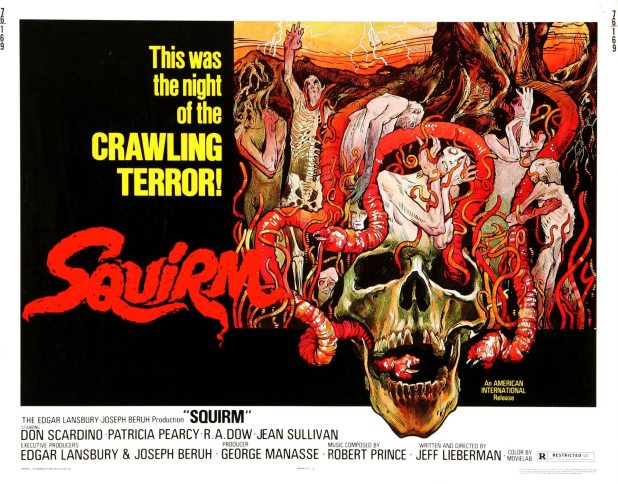
Squirm (1976)

With Blue SunshineJust Before Dawn and Remote Control, Jeff Lieberman has proven himself a reliable creator of horror that doesn’t fit into any neat box. Speaking of not being neat, this entire movie will upset any clean freak, as it deals with worms that climb up from the dirt to destroy human beings. Lieberman was inspired to make this movie thanks to a childhood event involving the ground being electrocuted and worms coming out.

September 29, 1975. Fly Creek, Georgia. A transformer knocks into the ground and the worms are turned evil by 300,000 volts of electricity, including a shipment of 100,000 bloodworms and sandworms.  escape the truck. That’s when we meet our hero Mick (Don Scardino, CruisingHe Knows You’re Alone), just as he finds one of those worms in his egg cream — a cold beverage consisting of milk, carbonated water and flavored syrup, as a substitute for an ice cream float. Despite the name, the drink contains neither eggs nor cream.

(Thanks to reader MH for pointing out this typo.)

At least he has an attractive girlfriend named Geri, played by Patricia Pearcy from Cockfighter, who believes him when all the local yokels make fun of our man Mick. Before long, those worms are doing more than just pranks — they’re eating people, dropping trees on them and even crawling into someone’s face to possess them. Rick Baker used prosthetic makeup for the first time in his career on this film.

This movie used so many sea worms — ordering a quarter-million at a time — that they wiped out New England’s supply of Glycera fishing worms for the rest of the year. And if everyone looks freaked out when the tree crashes into the room while everyone is eating dinner, that’s because Lieberman actually launched a real tree through the window from a crane and as everyone runs, they really believed that they were running for their lives.

Think people love this movie? Pittsburgh musician Weird Paul made the album Worm in My Egg Cream all about the worm in my egg cream scene, with all sixteen songs titled “Worm in My Egg Cream.”

You watch this movie for free on Tubi.

Strange Shadows in an Empty Room (1976)

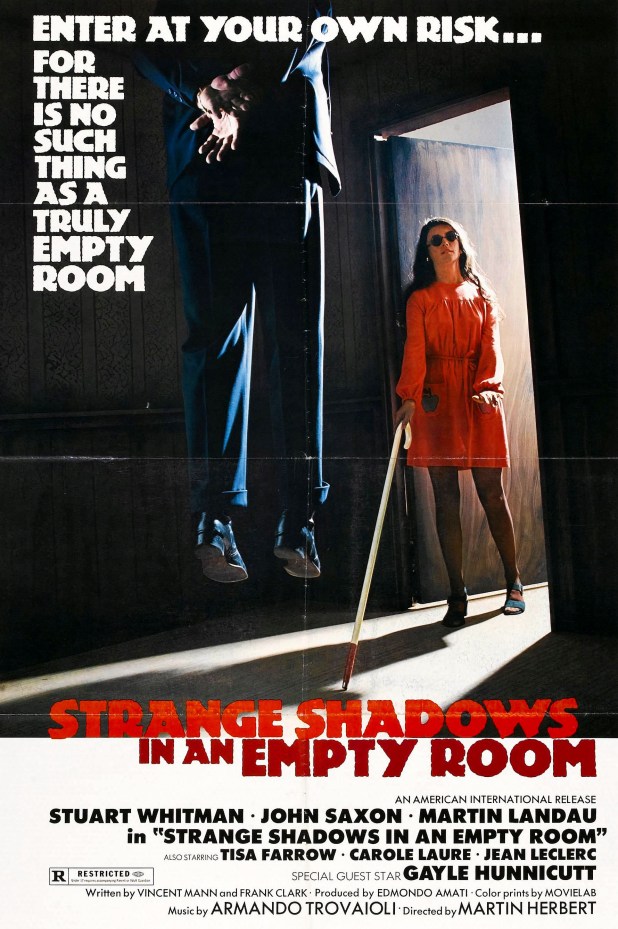
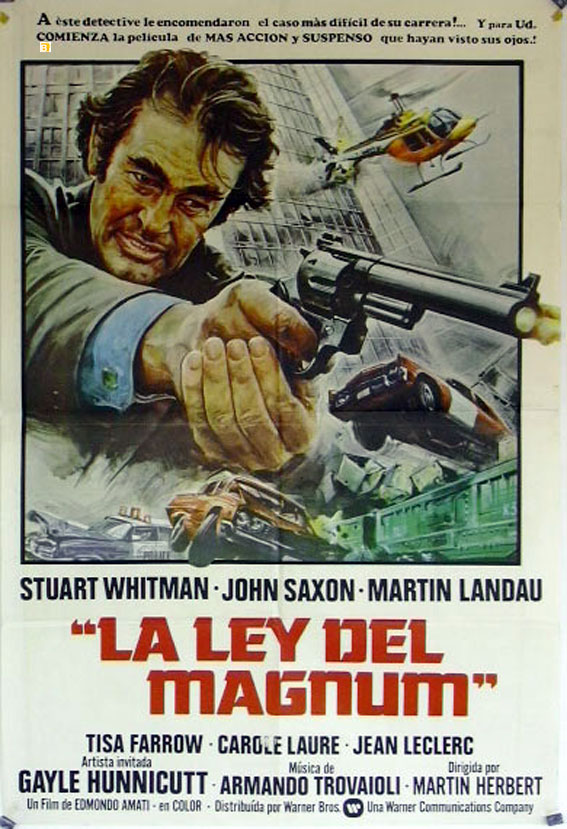
Known in Italy as Una Magnum Special per Tony Saitta (A Magnum Special for Tony Saitta) and Blazing Magnum in the UK, this movie caught my attention with Stuart Whitman as a “Dirty Harry” type detective named — you guessed it — Tony Saitta solving the giallo-esque murder of his sister.

She was played by Carole Laure, a Quebec singer whose first major acting role in Sweet Movie nearly ended her career. She plays a Miss Canada who is married off to a milk tycoon on the basis of her virginity. The film has coprophilia, emetophilia, implied child molestation and footage of remains of the Polish Katyn Massacre victims. And Laure left the production after growing increasingly upset over what was required of her, especially after a scene where she had to give a handjob. Ah, art! At least she’d go on to be in the Pele, Michael Caine and Sylvester Stallone movie Victory.

Well, she doesn’t last too long in this movie. At a party where people are faking their deaths to get a reaction, she ends up getting poisoned and really dying at the hands of Dr. George Tracer (Martin Landau!). Working with Ned Matthews (John Saxon!), Tony’s on the case of his sister’s death. And damn anyone who gets in his way.

If you’ve ever wanted to see Stuart Whitman get thrown out a plate glass window by a karate-kicking transvestite, good news. This movie was made for you. And me. Because man, it’s absolutely bonkers.

Seriously, this entire scene is insane. But let’s go back a little bit.

After University of Montreal student — and Tony’s sister — Louise (Laure) gets in a battle with her married lover Dr. Tracer (Landau), she tries to call her brother but he’s in the middle of a busy case. So she turns to her ex-boyfriend Fred and they come up with a scheme to get back at the perhaps not-so-good doctor.

That night, as everyone parties at the home of Professor Margie Cohn (Gayle Hunnicutt, The Legend of Hell House), Louise becomes sick and Tracer is frantically called. He gives her a stimulant and everyone laughs when she reveals she was faking. But soon, after a heart attack, no one is laughing.

Tony comes in from Ottawa for the funeral and despite being 200 kilometers (124 miles) from home, Detective Ned Matthews (Saxon) just decides to let him do whatever he wants, which includes the aforementioned transvestite party fistfight, which starts with one of their number saying, “Cinderella, answer the door,” before Tony beats one into oblivion and announces that everyone needs to settle down. Spoiler: They don’t, tossing him out a window before he violates another with a hot curling iron and throwing the surviving ladyman into a swimming pool. This scene is incredibly baffling, perhaps because I’m viewing it through the lens of 2020 films.

Blind university music teacher Julie Foster (Tisa Farrow!) is the only person who may have a clue as to what’s going on, but there’s also a little person crime boss, several car chases, a graphic stabbing, the aforementioned Ms. Farrow wandering down the street blind through traffic and so much more.

This movie was written by Vincenzo Mannino (Phantom of DeathMurder RockThe Last Shark) and Gianfranco Clerici (Don’t Torture A DucklingThe New York RipperCannibal Holocaust), so you know that there’s no way that this movie isn’t going to involve depravity and mayhem.

It was directed by Alberto De Martino, who also was behind Operation Kid BrotherThe AntichristHolocaust 2000The Pumaman and Miami Golem, a movie I keep meaning to get to.

This is a movie devoted to entertaining you by any means necessary. It’s all wood-paneled 1970’s, mixing the Canadian tax shelter magic with some of that good old fashioned Italian blood and guts. What a recipe!

Hollywood Man (1976)

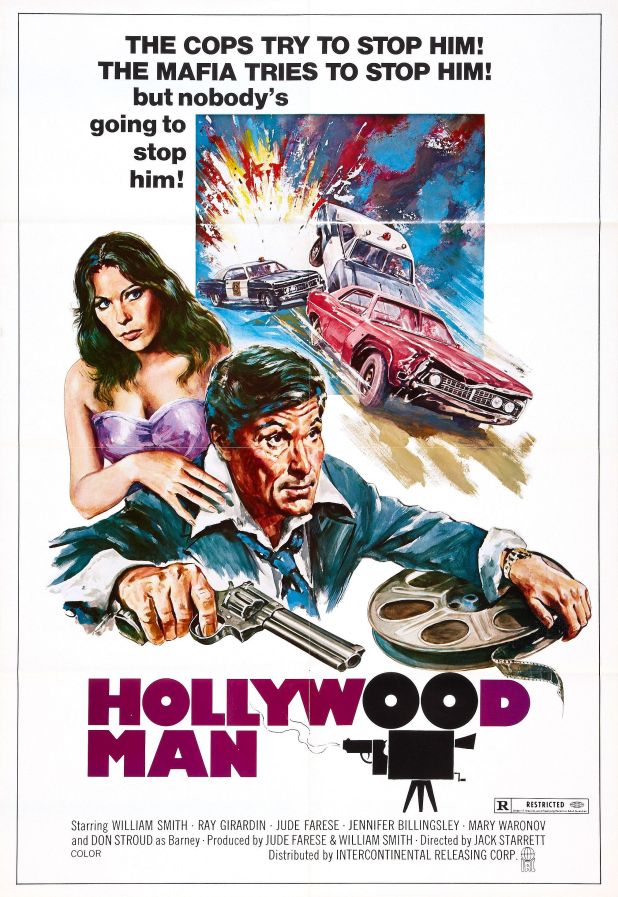
Jack Starrett may be best known for Blazing Saddles, but he was also in plenty of biker movies like The Born Losers, Hells Angels on WheelsAngels from Hell and Hell’s Bloody Devils. He moved on to directing, making films like Run, Angel, Run; Nam’s AngelsCleopatra JonesRace With the Devil and Kiss My Grits

William Smith is an actor that’s been in oh, somewhere around three hundred films. Let me topline some of his roles: Conan’s dad in Conan the Barbarian, the captain in Maniac CopC.C. and CompanyGrave of the VampireHammerSevenHell Comes to FrogtownTerror In Beverly HillsUncle Sam and he shows up as Pharaoh in two of the Roller Blade Seven movies. He was also the father to Lorenzo Lamas’ character on the TV show Renegade. Smith also produced this film, one of only three movies he put his money behind (Prologue to Wounded Knee and Body Shop are the other two).

This might be autographical — Smith plays Hollywood action film star Rafe Stoker, who has sunk $130,000 of his own money into a movie but can’t get the cash to finish the film. The mob investor agrees to pay, as long as Smith ponies up some big collateral. Then, he hires Harvey and his bikers to sabotage the movie. Plus, the cops are also on Stroker’s case. He can’t win as he and his girl get gunned down by thugs after finishing the movie.

I can’t lie — I only watched this movie because Mary Woronov was in it. Also appearing are Tom Simcox (Grim Prarie Tales), Don Stroud (The Amityville Horror), Carmine Caridi (who was in second and third Godfather films; he was also the first person to be expelled from the Academy of Motion Picture Arts and Sciences for bootlegging Oscar screeners), Clay Tanner (who played Satan in Rosemary’s Baby), former pro wrestler and bullfighter Don Sebastian (Super FuzzMako: The Jaws of Death) and wah wah pedal innovator Charles Pitts (he’s also in Truck Turner).

You can watch this on Amazon Prime and The Internet Archive.