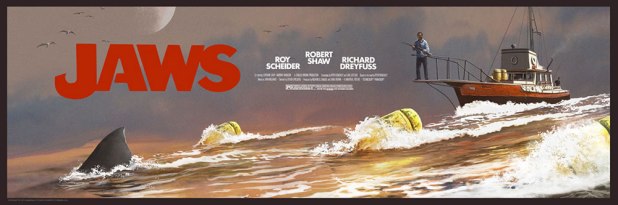
Jaws is so often referred to as the exact moment that the New Hollywood went from artists to moneymakers. It did more than that; it decreased the number of people that visited beaches in the year after its wake and conservation groups often name the movie as one of the main reasons why sharks are on the endangered list. Author Peter Benchley has even been quoted as saying that he wouldn’t have written the novel had he known what sharks were really like.
It took Steven Spielberg from a director who had only done The Sugarland Express and TV movies like Duel into a proven creator of mainstream pleasing films. And the three notes in the theme has become a mnemonic for a foreboding sense of doom.
The film’s three stars — Roy Scheider, Robert Shaw and Richard Dreyfuss — aren’t truly stars. They’re everymen who could be destroyed by the shark at any moment. There’s no way of knowing who, if any, of them will survive (and what will be left of them).
This wouldn’t have been possible if Brody had been played by Charlton Heston or Robert Duvall. Quint was almost played by Lee Marvin and Sterling Hayden. And Hooper could have been Jon Voight, Timothy Bottoms, Joel Grey or Jeff Bridges. All of these choices would lead to a completely different movie and less of a chance to capture lightning in a bottle.
Yet for all the chum that has been slung at this movie for initiating the wave of the blockbuster, it’s curiously against the mainstream. The politicians of Amity only care for one thing — making money — despite the obvious threat against life. And there are three poles of man at the end of the 20th century — Hooper, the educated man who depends on technology; Quint, the filth spewing warrior who is unashamed and unafraid; and Brody, a man who exists between two of them, who must overcome his fear of the water to save his children — everyone’s children, really — from nature’s most perfect predator. Quint must perish — he’s the last of a dying breed — as a sacrifice so that the new ways can be inspired by the past and remember them.
My own experience with Jaws was limited as a child; I was three when it came out. I do remember my father discussing the sequel at length with a cousin — it’s one of the first endings I ever had spoiled for me — and I vividly recall the Ideal game where each player had a small hook and had to pull parts out of the belly of the Great White beast before it snapped against your little tiny child fingers.
Jaws changed how we experience movies. It changed how movies were released — instead of a slow rollout, it hit 465 screens all at once in the summer, a time when studios mostly got rid of movies they saw as schlock. And it changed how they were marketed, with $1.8 million spent promoting it, including $700,000 on national TV spots. The big spending — including doubling the film’s filming budget — led to a $470 worldwide gross, numerous sequels, ripoffs and years later, this page you’re reading right now.
For a movie that started without a finished script, no set actors and no shark — to paraphrase a Dreyfuss quote — things ended up working out just fine.
This article originally appeared in Drive-In Asylum Special Issue #4, which you can buy here.
Author Note: This review was previously posted on September 28, 2019, as part of our September Post-Apocalypse Month. You can catch up with all of those reviews by visiting our Atomic Dustbin recap. We’re bringing it back to pay tribute to the work of George Lucas.
Okay. Let’s get this out of the way: This is the movie were you video fringe horndogs lose it over Mariette Hartley (as Lyra-A) in a two-piece bikini sporting two belly buttons (a dual circulatory system with two hearts) as a (network censored) “dominatrix” who breeds men for an oppressive, feminist regime.
Gulp.
Yes. Mariette Hartley: We’re talking Zarabeth in the Star Trek: TOS episode “All Our Yesterdays” where she cracked Spock’s emotionless Vulcan shell. She mixed it up with Gary Lockwood as Lisa Karger in Earth II (another failed TV movie pilot-to-series). She tempted Charlton Heston as Harriet Stevens in Skyjacked. She gave Dr. David Bruce Banner butterflies as Dr. Carolyn Fields in The Incredible Hulk. Yes. Mariette Hartley, with a resume of too many popular TV series to mention, all the way out to Fox TV’s 2018 hit series 9-1-1 as Patricia Clark.
Just one look at Mariette in Genesis II and you’ll forget all about the über-cool Sub-Shuttle that we all came for (and not a bogus CGI model . . . but a non-operational, full-sized prop pulled on a long-cable by an off-camera semi-truck) that pulls into a carved-out-of-the mountain sub-station (which Elon Musk has since pinched for his next millionaire-toy project). Oh, and did you notice the sterile, ultramodern-styled city looks suspiciously like the city in Conquest of the Planet of the Apes (20th Century Fox’s “Century City”)? And did you notice how many times the Sub-Shuttle footage was recycled in ‘70s sci-fi television?
Anyway . . . times were hard for ex-Star Trek creators.
In 1974, after the go-to-series failure with Genesis II, Gene Roddenberry developed another TV movie/series pilot with The Questor Tapes (1974). A thinly veiled reworking of the Gary Seven character and plot from the Star Trek: TOS episode “Assignment: Earth,” it was intended as a vehicle for Leonard Nemoy’s return to weekly television. The end product starred Robert Reed-doppelganger Robert Foxworth (1979’s Prophecy) who portrayed an android with incomplete memory tapes — in a pseudo The Fugitive storyline — searching for its creator and purpose (that also sounds like V’ger from Star Trek: TMP).
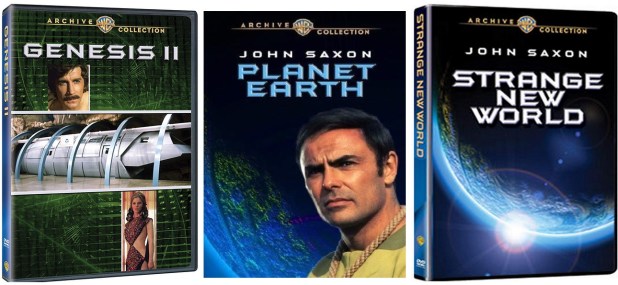
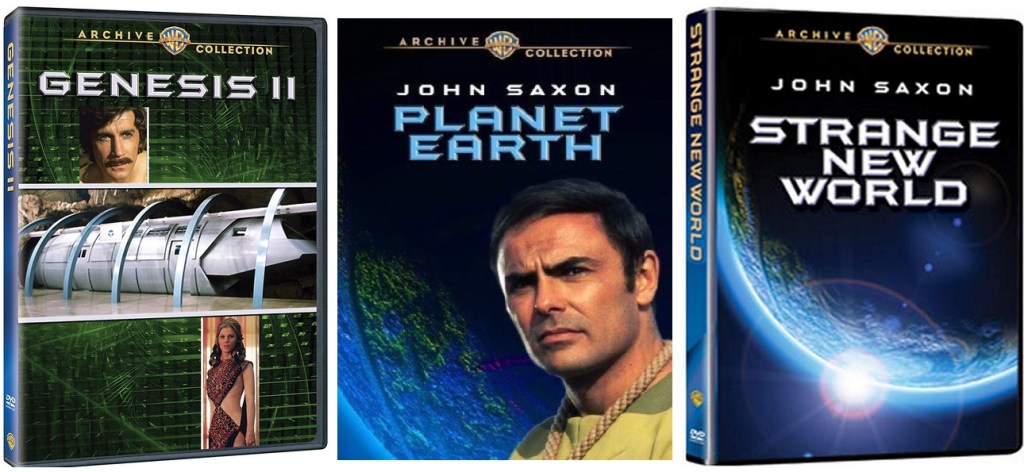
Then, after the additional go-to-series failures of the Genesis II reboots Planet Earth and Strange New World produced in the wake of The Questor Tapes, Roddenberry tried again — by jumping on the ‘70s “occult detective” sub-genre with 1977’s Spectre — by reworking another Star Trek element: the contemptuous friendship between Spock and Dr. Leonard McCoy, itself a homage to the relationship between Sherlock Holmes and Dr. Watson. Spectre starred Robert Culp (The Gladiator) as William Sebastian, a criminologist and occult expert assisted by Gig Young (1978’s Game of Death with Bruce Lee) as Dr. Hamilton.
Genesis II stars Alex Cord (who also journeyed into a “fucked up future” in Chosen Survivors) in the “future world” of 1979 as NASA scientist Dylan Hunt. Of course, he opens the post-apocalyptic proceedings with that all-too-familiar apocalypse (or psychological horror) cliché: “My name is Dylan Hunt. My story begins the day on which I died.” So goes the story a “20th Century Boy” (T Rex, anyone?) thrown forward in time by a suspended-animation earthquake-accident that damages his New Mexico/Carlsbad Caverns-housed “Project Ganymede” system for astronauts on long-duration spaceflights.
And we flash forward to the year 2133.
An archeological team of PAX (Latin for “peace”) descendants from the NASA personnel that lived-worked-were trapped in the Carlsbad installation when World War III (aka “The Great Conflict” because, well, the docile hoards of all post-apoc futures never seem to be able to preserve or retain a basic semblance of American history) broke out, discover Hunt’s buried chamber. And while they can’t seem to “remember” World War III, the PAX are smart enough to construct a subterranean rapid transit system utilizing a magnetic levitation rail operated inside a “vactrain-tunnel network” that spans the globe and saves the masses from air transportation attacks.
Anyway, here’s where Mariette Hartley comes in.
Lyra-A oversees the all-female totalitarian regime known as the mutated (natch) Tyranians that rule the lands once known as Arizona and New Mexico. In addition to their increased physical abilities, you can always spot a Tyran by their nifty, dual navels — that they seem to love to show off. (Schwing! Thank you, Gene!) Not that the wussy PAX-rats would do anything when they spot a Tyran: they let themselves be enslaved.
Lyra-A, in a grand alien fashion of the Star Trek variety, is enraptured by Roddenberry’s “Buck Rogers” and wants to harness Hunt’s knowledge of (among other things) nuclear power systems to fix the Tyranians’ dead power plant. But apoc-bitch Lyra-A double crossed him: it’s a ploy to reactivate a nuclear missile system to destroy the PAX. As a result, Hunt goes into Moses-mode (see the apoc-romps No Blade of Grass, Ravagers) and leads a revolt of the enslaved, sabotages the nuclear device, and destroys the reactor.
Sound pretty cool, right?
Airing to high ratings in March 1973 and encouraged by the network brass, Roddenberry worked up a 20-episode first season on the adventures of Alex Cord’s post-nuc Moses. Then CBS-TV dropped the bomb: they passed over Genesis II and gave the timeslot to another competing post-apoc series: the short-lived and low-rated Planet of the Apes.
Those mothballed Genesis II episodes featured recycled ideas from Star Trek: TOS and fueled the later Star Trek movies — with stories about suspended animation soldiers from the past (“Khan!!!”), a London ruled by King Charles X; NASA “evolved” computers and equipment left on Jupiter’s Ganymede returning to Earth in search of their “God” (“The Changeling” and the annoying Persis Khambatta-V’ger non-sense from Star Trek: TMP); men turned into breeders and domesticated pets (reworked for the second pilot, Planet Earth); the ol’ catapulted-through-a-time-continuum back to 1975 gaffe (“Tomorrow and the Stars,” an episode from Star Trek: Phase II, the proposed-failed post-Star Wars reboot), and a creepy priesthood who enslaves the masses via electricity used as a “God” (“Return of the Archons” from ST: TOS).
The reason the network passed on Genesis II: The series was “too philosophical” and Alex Cord’s portrayal was “too dark and brooding.” They wanted another handsome and charmingly arrogant Captain James T. Kirk. So Roddenberry and Warner Bros. rebooted Dylan Hunt into an action-driven and conflict seeking Kirk-like character embodied by John Saxon.
Cue for Planet Earth.
Now Dylan was one of three cryogenically-frozen astronauts who return to Earth to reestablish the PAX organization that sent them into space. And while we lost Mariette Hartley, we gained the equally fetching Diana Muldaur (again, from Cord’s Chosen Survivors), who rules the Amazonian, male-enslaving “Confederacy of Ruth,” along with cherished character actors Bill McKinney (Deliverance, Cannonball) and Gerritt Graham (Phantom of the Paradise, Used Cars) as “impotent males” in recurring roles.
This time, instead of CBS, ABC aired the Warner Bros. produced program in April 1974.
The network passed.
Cue a Strange New World.
To creative and legal reasons lost to the test of time, Warner Bros., who now owned the intellectual rights, reworked the premise a third time as Strange New World (pinching the title from Star Trek’s opening monologue) — sans Roddenberry’s involvement — dumped the PAX and Tyranians, and retained John Saxon as the same Kirk-like character, now known as Captain Anthony Vico, who returns from a suspended animation space trip with two other astronauts (as in Planet of the Apes TV series that screwed Genesis II in the first place).
The movie aired in July 1975.
The network passed.
And with that, between Roddenberry’s vision, and the failure of the Planet of the Apes TV series (episodes were cut into overseas theatrical and telefilms), the small screen’s attempt to jump on the major Hollywood studios’ post-apocalyptic bandwagon was over. Thus, us wee lads and lassies gathered around the TV on Saturday mornings and settled for Filmation’s Ark II, whose 15 episodes (it seems it had more episode and was on much longer), aired in 1976, then reran in 1977, then again in 1978. And that kiddie-apoc series stopped production because the network “wanted Star Wars” (and not a TV knockoff of 1977’s Damnation Alley). So Ark II was reworked and repurposed (the same “universe,” so to speak) as Space Academy and Jason of Star Command (Sid Haig, rules!).
There was also another, similar attempt at the Genesis II concept with, ironically, another Star Trek: TOS alum: Glenn Corbett (warp-drive creator Zefram Cochrane in 1967’s “Metamorphosis”). As with Roddenberry’s The Questor Tapes, The Stranger (1973) was another failed TV movie-to-series sci-fi twist on the ‘60s runaway TV hit, The Fugitive. This time, instead of returning to a post-apocalyptic society, our astronaut (Hey, Sam . . . he’s named “Stryker”!) returns to a totalitarian “twin” Earth run by the “The Perfect Order.” (And if it all sounds a bit like 1969’s Journey to the Far Side of the Sun byGerry and Sylvia Anderson of the fellow-failed, post-Star Trek series UFO and Space: 1999 . . . then it probably is: both series were movie-rebooted in the post-Star Wars universe as the telefilm/foreigner theatricals Invasion: UFO and Destination Moonbase Alpha, respectively.)
But wait . . . all was not lost with Genesis II.
Roddenberry’s widow, Majel Barrett (Nurse Christine Chapel in Star Trek: TOS and Lwaxana Troi on Star Trek: TNG and DSN) produced one of Roddenberry’s old pre/post-Star Trek dystopian-apocalyptic concepts, Andromeda (itself recycling from Genesis II and Planet Earth), a Canadian series that ran from 2000 to 2005 and aired in syndication on U.S television.
VHS rips ofGenesis II and Strange New Worldcan be enjoyed for free on You Tube, while Vudu has official, affordable streams of Genesis II and Planet Earth. For whatever “legal” reasons, no streaming platform offers Strange New World. However, copies of all three are widely available on DVD courtesy of Warner Home Video’s Warner Archive Collection.
Star Wars: Episode IX – The Rise of Skywalker is currently in theaters and was released theatrically on December 20 in the United States.
About the Author: You can read the music and film reviews of R.D Francis on Medium and learn more about his work on Facebook. He also writes for B&S Movies.
ABOUT THE AUTHOR: Mark Begley is the host of horror movie podcast Wake Up Heavy.
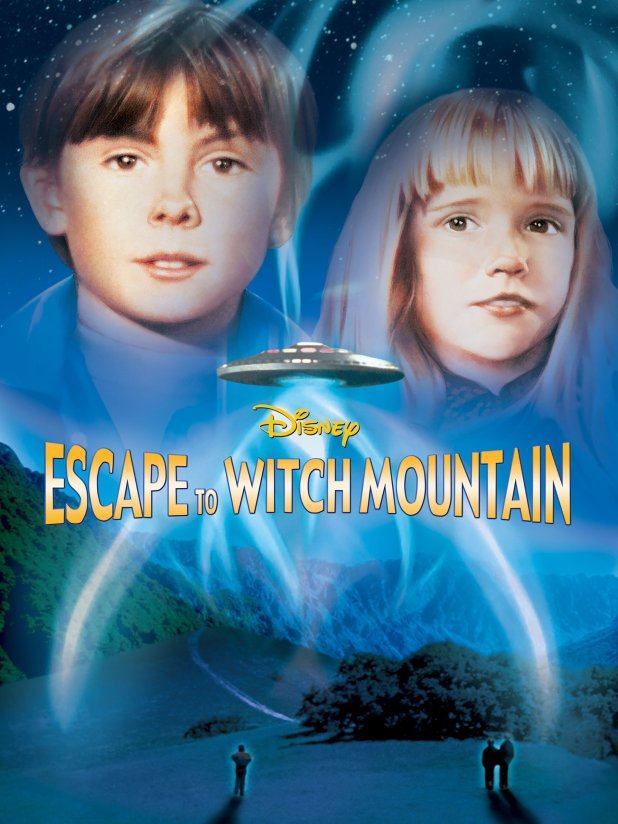
Following the recent Wake Up Heavy episode on Return to Oz that I did with my daughter, I decided to plumb the depths of nostalgia on Disney+ even further. I checked out the Kurt Russell vehicle The Computer Wore Tennis Shoes, then slid into a horror-lite favorite from my childhood Escape to Witch Mountain.
Escape is the tale of two orphaned children (or are they?)Tony and Tia, who possess psychic abilities. On a field trip with the orphanage to see Snow White and the Seven Dwarfs, the twins come to the attention of wealthy lawyer Lucas Deranian. He tells his boss, millionaire Aristotle Bolt, about the twins and their powers and they hatch a plan to take custody of them and exploit their abilities. Once Tony and Tia realize what is really going on, they escape and hide in grumpy widower Jason O’Day’s Winnebago. He reluctantly agrees to help, and the chase is on!
Readers of B&S About Movies may be wondering how this fits into the horror category, and, well, other than the title, it really doesn’t. Yes, we have horror icon Donald Pleasence as Deranian, and John Hough(Legend of Hell House, The Incubus) directing, but there isn’t anything even remotely spooky happening here. But they are kids (or are they?) in peril, so I’m taking some liberties just to write about this childhood favorite. Tony (Ike Eisenmann) and Tia (Kim Richards) use their powers (he can manipulate objects while playing the harmonica and she can communicate with humans and animals telepathically) in mostly cute or comical ways throughout the film. Along the way we see Tony control puppets, make a Winnebago fly, and a helicopter flip upside down, and Tina speaks telepathically to Tony, a cat, a horse, and a bear. I loved this kind of stuff when I was a kid and longed for special powers like that!
Ike Eisenmann and Kim Richards were staples of my childhood. They appeared together in this, Return from Witch Mountain, and Devil Dog: The Hound of Hell, as well as many other Disney shows and features on their own. Just a year after Escape Kim was unceremoniously blown away by a thug in John Carpenter’s Attack on Precinct 13. In 1977, she and her sister Kyle (the inimitable Lindsey Wallace in Halloween) were in The Car as James Brolin’s daughters. I had a major boyhood crush on Kim, and if you had told me back in 1977 that she and Kyle would be on a reality TV show about vapid people in Beverly Hills I wouldn’t have understood what you were talking about! Nor would I have wanted to.
I know I’ll be watching Return from Witch Mountain soon and will have to track down Devil Dog: Hound of Hell now because that title! Am I right? Also, here’s to hoping Disney+ adds some of their spookier treats like Watcher in the Woods and Something Wicked this Way Comes.
ABOUT THE AUTHOR: An American living in London, Jennifer Upton is a freelance writer for International publishers Story Terrace and others. In addition, she has a blog where she frequently writes about horror and sci-fi called Womanycom.
I cannot describe The Curse of Bigfoot (1975) as a good film under any circumstances. It features very little Bigfoot and no curse. Regardless, I’ve seen it many times. It represents a simpler time in childhood when public domain films like this ran regularly on TV stations throughout the United States. A time when we had just four channels, dammit. And we liked it that way!
The Curse of Bigfoot (1975) contains another older hour-long B-movie titled Teenagers Battle The Thing (1958), in which a group of high school students discover a pre-historic mummy on an archaeological dig. The mummy, having been sealed up in a preserved cave for centuries, returns to life, tears off its bandages and goes on a rampage in the small town of Ivanpah.
Although the creature is hairy and has fangs, it is never referred to as Bigfoot. It’s only in the wrap-around sequences added in the 1970s where a connection is drawn to the then-popular elusive cryptid.
Both films open the same, with a brief explanation of the evolution of humans two million years ago and have the same opening credits. Curse then adds two modern ‘70s film-within-a-film sequences.
First, a decidedly un-Bigfoot-like monster attacks a non-binary gender youth in the middle of a very sunny night. It ends to reveal a class of ‘70s youths using the film as a springboard for a discussion on how the various mythical monsters of the past have influenced current popular culture. Interestingly, one girl in the class is Jackey Neyman-Jones, who as a little girl, played little Debbie in another famously bad movie Manos: The Hands of Fate (1966.)
Curse then treats us to several scenes of documentary-style logging in the pacific northwest where two lumberjacks named Larry and John track Bigfoot into the woods on what appears to be a very long lunch hour. When the creature dispatches Larry entirely offscreen, John stares at his friend’s body. Emotionless. It’s unclear if he’s shocked or possibly just contemplating shaving off his pathetic excuse for a moustache.
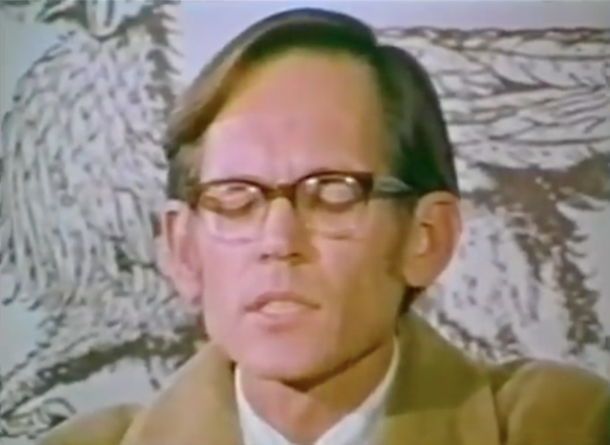
The class then discusses whether this event really happened. The nature of the class in the film is anyone’s guess although it was actually Neyman-Jones’s drama class. If my school had offered cryptozoology as an elective, I would have totally signed up. These kids don’t seem very into it. Enter Roger Mason (Dave Flocker) a late-arrival guest speaker who immediately lays into one poor kid for his skepticism. Roger has personal experience with Bigfoot. And we’re about to hear about it.
Roger is the only crossover character between Curse and Teenagers, whose sole purpose for showing up is to recount the story from 15 years ago. Still traumatized by the events, he repeatedly pauses dramatically between the words field and trip. Eyes closed, lips pursed, Roger guides us into the flashback i.e. the main film.
There’s a lot of rock climbing and a lot of talking. About rock paintings, lunch – including a riveting exchange involving soda pop – and ancient prayer sticks. There are so many prayer sticks found in this movie that even the students tire of them. While handing over his latest find to the instructor Bill, one student even asks, “More prayer sticks?” Bill rolls them over in his hands thoughtfully. “Mm hmm. More prayer sticks.” End scene.
Even when the group goes into the cave and discovers the mummy, the action is stilted despite what the dramatic library music by Ralph Carmichael (also used in the ‘50s Steve McQueen classic The Blob) would have you believe.
Overall, the best part of this movie is the music. It wastes some great cues on scares that build up but never pay off. The music was so effective, many other directors featured it in their low budget horror and sci-fi films and it was available for a while on a CD called The Blob (and other creepy sounds) from Monstrous Movie Music records.
After it gets the cobwebs out, the monster does a bit of skulking in the orange groves and almost has a run in with two of the kids – on their way back from buying orange pop – who remark how bright the moon is on what is very obviously a beautifully sunny day-for-night afternoon.
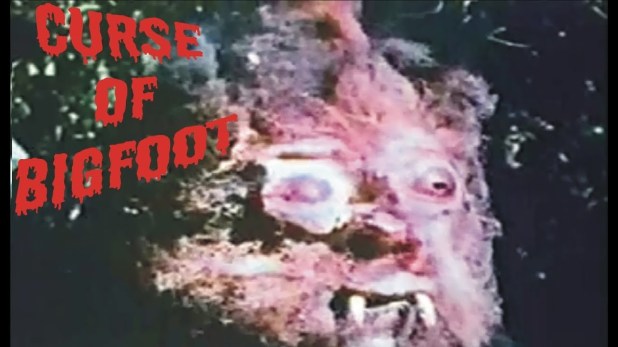
“Bigfoot’s” face looks like a paper machete mask with two toothpicks glued on for fangs. The hair is patchy and mangy and its snarl sounds like the red-haired Gossamer from the old Bugs Bunny cartoons. I laugh with glee every time I see it.
After it kills a townie in her own home, the group tries to lure the monster out of the orange grove where it’s been hiding. Someone has to go into the grove and sit watch near the raw meat they’ve placed as bait. The tension in the drawing of straws scene is palpable. Never before has a group of guys standing around casually talking been so realistically captured on film. You’ll thrill as they pull strands of hay from a random bail! Walt, the local sheriff draws the short straw and heads off to his post.
After a long scene where everyone stands around waiting, the monster finally shows up and knocks Walt unconscious. Unable to reach him on the radio, the students, Roger and Bill go in after him. They shoot the monster but the bullets have no effect so they douse him with two buckets of gasoline and throw a flare at him. While “Bigfoot” burns, the group helps injured Walt to his feet. They all stand and watch the fire in silence. The music swells. The End.
Despite its meandering plot, long boring sequences and a poorly executed monster, anyone interested in bad cinema and/or Bigfoot film completists should seek this one out. Its biggest oversight is that it never goes back to the classroom in the ‘70s for any closure. It would have been nice to see one of the hippie kids call out Roger on his earlier dramatics. His story was hardly the stuff that would render one witness speechless for the rest of her life as described. More like “Huh. So…that happened. Right. Boy, I sure could go for a bottle of orange pop…”
EDITOR’S NOTE: To see Sam’s take on the movie, head over here. And to read our list of ten Bigfoot films or our Letterboxd list of Bigfoot movies, just follow the links.
Prior to the advent of cable television and direct-to-video movies, there were the TV Movies of the ‘70s and ‘80s produced by the “Big Three” television networks: ABC, CBS, and NBC. And we love those TV Movies.
However, in spite of those gallant efforts, there’s that one lost TV Movie we missed, such as these two productions from rock ‘n’ roll television guru Don Kirshner. Lone before ersatz-rockers Black Roses, Sammy Curr, Billy Eye Harper and Headmistress, Holy Moses, Sacrifyx, and Tritonz possessed our VCRs with their rock ‘n’ horror tales, there was the forgotten, horrific chronicles of ex-Jeff Beck Group vocalist Kim Milford and his real-life band, Moon, on our TV sets.
After his success with TV’s The Monkees and The Archies, Don Kirshner began working as the creative consultant and executive producer of ABC-TV’s late-night answer to NBC’s better known The Midnight Special. In Concert began airing with two monthly shows in November and December of 1972. The shows not only doubled the ratings of The Dick Cavett Show that previously held the time slot, it also beat NBC’s The Tonight Show Starring Johnny Carson in some markets. At that point, In Concert became a bi-weekly series beginning in January of 1973.
Ever-evolving and innovating, Kirshner left In Concert to start his own syndicated program, Don Kirshner’s Rock Concert, which premiered on U.S. television on September 27, 1973. The final In Concert episode aired in 1981, as MTV, a nascent music video network—created by Michael Nesmith, one of Kirshner’s Monkees—was on the rise and Kirshner’s vision was rendered obsolete.
However, even though Kirshner surrendered In Concert to make his own way in the late-night rock television world with Rock Concert, he kept his production deal with ABC. Based on his past success for the network, ABC provided Kirshner with an opportunity to produce a pair of music-oriented movies.
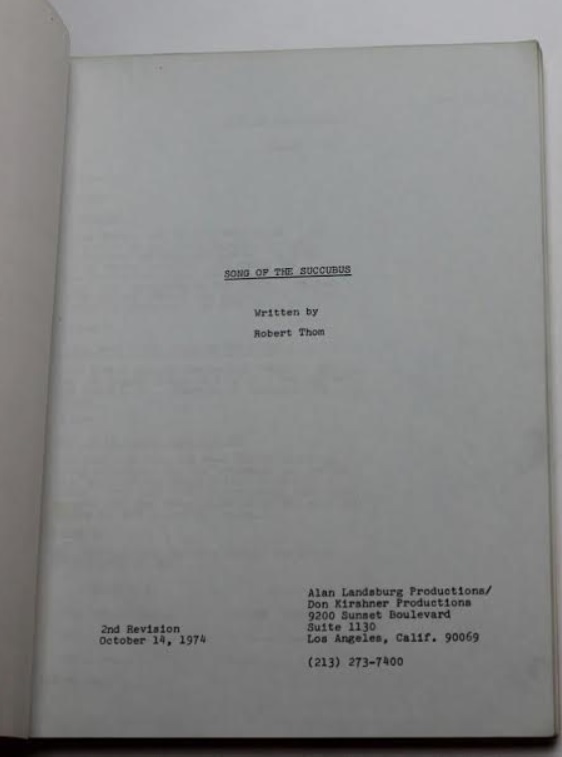
Those two films—highly-coveted and impossible-to-find rock flicks starring Kim Milford (of the sci-fi romps Laserblast and Wired to Kill )—are 1975’s Song of the Succubus and, its sequel, Rock-a-Die Baby.
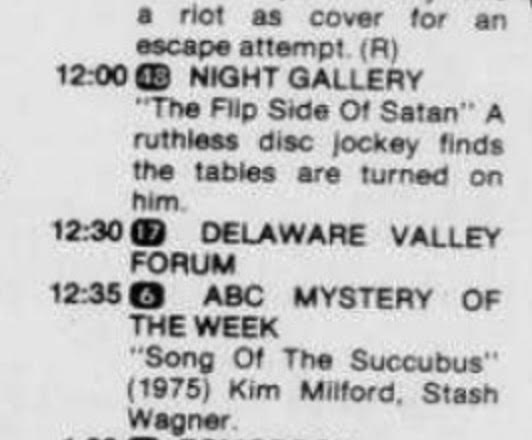
Both films aired as part of ABC’s The Wild World of Mystery, a 90-minute late night mystery and suspense anthology series that ran on the network from 1973 to 1978 and aired in the overnights at 12:30 AM—after the rock program Kirshner started: In Concert. Both films, as did all of ABC’s films, also replayed as part of their Mystery of the Week and Wild World of Entertainment movie series, which aired in the weekday overnights into the late seventies (as shown in the image from a Wednesday, July 6, 1977, television listing for Song of the Succubus airing at 12:30 AM). (NBC’s website currently streams the September 1971 Night Gallery episode, “The Flipside of Satan.” Wow. Watch it. It’s a hoot-and-a-half.)
Courtesy of NBC.com.
Song of the Succubus, the first part of the slasher-horror saga of Moon, was concerned with the ghost of a Victorian-era musician stalking the band, which they accidentally conjured through the rearrangement and recording of an old, discovered song. Its sequel, Rock-a-Die Baby, concerns the psychic premonitions of one of Moon’s fans—as the members of the band begin to die at the hands of an unseen force.
Other than that, there’s not much known about the through-line between the two films or any additional plot details. Former teen fans of the films recall Moon was on the road running away from the evil they conjured or they’re chasing the evil released through a song’s incantation. Others recall it was an “evil version” of the late Seventies U.S. television series Highway to Heaven—with demons instead of angels and the Victorian-era musician was a heavy-metal Jack the Ripper. Others recall it was a rock ‘n’ roll, live action version of the animated Saturday morning series, Scooby-Doo, Where are You?, as a rock band investigates evil.
Learn more about the movies of Don Kirshner with our “Exploring” featurette.
According to the IMDb, the last airing of Song of the Succubus occurred through a 1990 Australian broadcast—and the only known surviving print of the film is held at the U.S Library of Congress; the LOC has no copy of Rock-a-Die Baby. Meanwhile, Rock-a-Die Baby was reissued in the U.K and Europe as a TV movie (possibly theatrical) under the title Night of the Full Moon. Sadly, in the midst of the home video boom of ‘80s, with shelves hungry for product, neither of these rock films was reissued as VHS titles. (But someone taped a post-VCR airing of the films, as noted by the two performance film clips included with this review.)
Brooke Adams (of the horror films Dead Zone, Invasion of the Body Snatchers, and Shock Waves) makes her leading-lady debut as two characters in Song of the Succubus: musician Olive Deems, and Gloria Chambers, the “lost love” embodiment of the Victorian musician-antagonist slasher conjured by Moon. Succubus and Rock-a-Die Baby both star Richard Schaal (Kurt Vonnegut’s Slaughterhouse Five) as the band’s manager, along with Kim Milford (Chief Druid and Warlock) and his band Moon, using their real names as character names: Gaille Heidemann (Bewitching Witch; vocals), Stash Wagner (Mystic Magician; bass), Mike Baird (Demon Drummer), and David Foster (Cadaver of the Keyboard). The unseen member of the group, was Don Kirshner’s go-to producer, Jeff Barry.
While not remembered as such, the membership of Moon, aka Full Moon, is, in fact, a “supergroup,” one of the many that proliferated during the 1970s (either formed by Kim Milford or ad-hoc and piecemealed by Kirsher and Barry). At the time, Kim — fresh from his stage work on the rock musicals (see our review of Jonathan Livingstone Seagull that delves into the genre) Hair and The Rocky Horror Show — was briefly the lead singer of the Jeff Beck Group (those live recording come and go from You Tube). Gaille Heidemann was a studio musician working for film studios who dubbed Patty Duke’s vocals in Valley of the Dolls. Stash Wagner came from the Little Feat precursor, Fraternity of Man, a band noted for the pro-pot song, “Don’t Bogart That Joint,” which appeared on the soundtrack to Easy Rider. Mike Baird was not a member of any notable group at the time, but after the demise of Moon, he joined ’70s popsters Daryl Hall and John Oates for their fourth album, appearing on that band’s first Top 40 and Top Ten hit, “Sarah Smile”. David Foster — who appears with the band in performance but does not act in the film — came from the Canadian band Skylark, which had a Top Ten hit in 1973 with “Wildflower”. Jeff Barry’s extensive, previous resume includes work with the Monkees and the Archies (Milford wrote material for the latter) and dates back to his earliest hits “Do Wah Diddy Diddy” and “Da Doo Ron Ron” under the tutelage of Phil Spector.
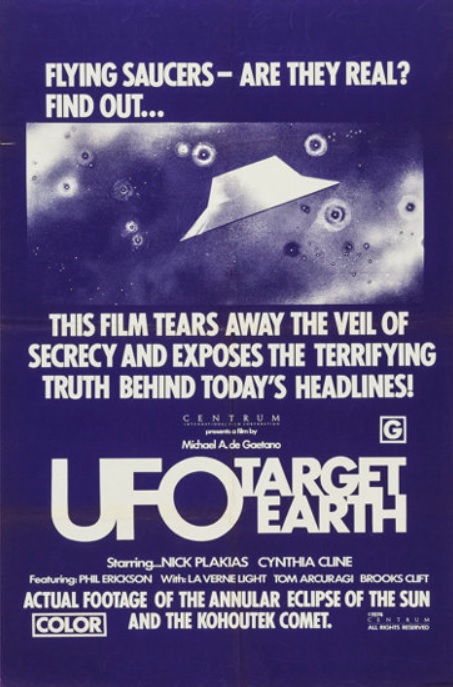
Prior to Moon, Milford formed the bands Eclipse (whose music appeared in 1974’s UFO: Target Earth), with members of Polydor and Capitol recording artists Ten Wheel Drive, then 7th Heaven with Trace Harrill, formerly with Terry Reid (know you Cheap Trick history) and the solo band of ex-Byrds’ Gene Clark. Heidemann became a much-sought studio vocalist and voice artist for animated and video game projects; when Mary-Kate and Ashley Olsen transitioned into music, she wrote the material. Stash Wagner sessioned, wrote music and toured with the likes of Blues Image, Chicago, Linda Ronstadt, Frank Zappa, and Warren Zevon. Baird’s session, membership and touring gigs led to work with Rick Springfield, Richard Marx, and Journey, just to name a few. David Foster’s later songwriting and production work led to a shelf filled with 16 Grammys by way of albums for The Tubes, Earth Wind and Fire, and Chicago. Foster and Baird also worked together in the band Airplay, which provided “After the Love is Gone” to Earth, Wind and Fire; fans of ’80s AOR (think Night Ranger) will remember the band for their song, “Stranded“.
So, will these two lost TV movies of the ‘70s ever see a release on DVD or Blu-ray through a specialty retro-imprint, like Arrow Video?
A company by the name of SOFA Entertainment & Historical Films recently acquired the rights to ABC-TV’s Rock Concert from the late-Kirshner’s estate for a box-set release on DVD. Hopefully, SOFA purchased not only Rock Concert, but Kirshner’s entire TV program catalog, which included the non-rock telefilms: The Savage Bees (1976; film), The Night They Took Miss Beautiful (1977; film), Terror Out of the Sky (1978; film), and The Triangle Factory Fire Scandal (1979; film). Each appeared as theatrical features in overseas markets, as well as the U.S VHS home-video market and low-powered UHF television station replays. Kirshner made his first theatrical feature film proper with the Olivia Newton-John-starring Toomorrow (1970).
Why Kirshner never rolled out Song of the Succubus and Rock-a-Die Baby beyond their initial TV showings, as with his other films, is anyone’s guess. A legal, educated guess is that it’s an ancillary rights issue regarding Kim Milford’s song catalog, or possibly a legal snafu with the estate of the late of Kiss, Billy Squire, and Billy Idol manager Bill Aucoin, who also managed Kim’s solo career and as a member of the Jeff Beck Group.
Both films are truly, it seems, lost forever. We did, however, discover You clips of Kim performing in the films HEREand HERE. You can listen to two song from the films, below.
If you would like to know more about the music and acting career of Kim Milford—overflowing with pictures and music regarding his work on stage, screen, television, and record—visit his career retrospective on Medium: “Kim Milford: Rocky Horror, Jeff Beck, Corvettes and Lasers.” More of Kim’s music can be found with this You Tubeplaylist.
Do you need more rock ‘n’ roll horror? Then check out B&S Movies’ tribute “No False Metal Movies.” All ye hail the Prince of Darkness, for he rocketh. Oh, and don’t forget our “Rock ‘n’ Roll Week I” and “Rock ‘n’ Roll Week II” tribute weeks, overflowing with rock flicks.
We’ve since reviewed Kim’s second film score: his band Eclipse provides “Between the Ceiling and the Sky” as the theme song to this 1974 film.
Update, December 2021: Stash Wagner, a member of Moon who starred in the film, uploaded full copies of both films — Song of the Succubus and Rock-a-Die Baby — to his You Tube account.
* Screenplay image courtesy of The Movie Wizard/eBay.
About the Author:You can read the music and film reviews of R.D Francis on Medium and B&S Movies, and learn more about his work on Facebook.
Okay. Let’s get this out of the way: This is the movie were you video fringe horndogs lose it over Mariette Hartley (as Lyra-A) in a two-piece bikini sporting two belly buttons (a dual circulatory system with two hearts) as a (network censored) “dominatrix” who breeds men for an oppressive, feminist regime.
Gulp.
Yes. Mariette Hartley: We’re talking Zarabeth in the Star Trek: TOS episode “All Our Yesterdays” where she cracked Spock’s emotionless Vulcan shell. She mixed it up with Gary Lockwood as Lisa Karger in Earth II (another failed TV movie pilot-to-series). She tempted Charlton Heston as Harriet Stevens in Skyjacked. She gave Dr. David Bruce Banner butterflies as Dr. Carolyn Fields in The Incredible Hulk. Yes. Mariette Hartley, with a resume of too many popular TV series to mention, all the way out to Fox TV’s 2018 hit series 9-1-1 as Patricia Clark.
Just one look at Mariette in Genesis II and you’ll forget all about the über-cool Sub-Shuttle that we all came for (and not a bogus CGI model . . . but a non-operational, full-sized prop pulled on a long-cable by an off-camera semi-truck) that pulls into a carved-out-of-the mountain sub-station (which Elon Musk has since pinched for his next millionaire-toy project). Oh, and did you notice the sterile, ultramodern-styled city looks suspiciously like the city in Conquest of the Planet of the Apes (20th Century Fox’s “Century City”)? And did you notice how many times the Sub-Shuttle footage was recycled in ‘70s sci-fi television?
Anyway . . . times were hard for ex-Star Trek creators.
In 1974, after the go-to-series failure with Genesis II, Gene Roddenberry developed another TV movie/series pilot with The Questor Tapes (1974). A thinly veiled reworking of the Gary Seven character and plot from the Star Trek: TOS episode “Assignment: Earth,” it was intended as a vehicle for Leonard Nemoy’s return to weekly television. The end product starred Robert Reed-doppelganger Robert Foxworth (1979’s Prophecy) who portrayed an android with incomplete memory tapes — in a pseudo The Fugitive storyline — searching for its creator and purpose (that also sounds like V’ger from Star Trek: TMP).
Then, after the additional go-to-series failures of the Genesis II reboots Planet Earth and Strange New World produced in the wake of The Questor Tapes, Roddenberry tried again — by jumping on the ‘70s “occult detective” sub-genre with 1977’s Spectre — by reworking another Star Trek element: the contemptuous friendship between Spock and Dr. Leonard McCoy, itself a homage to the relationship between Sherlock Holmes and Dr. Watson. Spectre starred Robert Culp (The Gladiator) as William Sebastian, a criminologist and occult expert assisted by Gig Young (1978’s Game of Death with Bruce Lee) as Dr. Hamilton. (If you care: Other shows in the ‘70s occult TV movie-to-series subgenre include The Sixth Sense with Gary Collins of Hanger 18 and Killer Fish, Roy Thinnes of Satan’s School for Girlsin The Norliss Tapes, and the most-successful of the pack: Darren McGavin of Dead Heat and the post-apoc dropping Firebird 2015 A.D in Kolchak: The Night Stalker.)
Genesis II stars Alex Cord (who also journeyed into a “fucked up future” in Chosen Survivors) in the “future world” of 1979 as NASA scientist Dylan Hunt. Of course, he opens the post-apocalyptic proceedings with that all-too-familiar apocalypse (or psychological horror) cliché: “My name is Dylan Hunt. My story begins the day on which I died.” So goes the story a “20th Century Boy” (T Rex, anyone?) thrown forward in time by a suspended-animation earthquake-accident that damages his New Mexico/Carlsbad Caverns-housed “Project Ganymede” system for astronauts on long-duration spaceflights.
And we flash forward to the year 2133.
An archeological team of PAX (Latin for “peace”) descendants from the NASA personnel that lived-worked-were trapped in the Carlsbad installation when World War III (aka “The Great Conflict” because, well, the docile hoards of all post-apoc futures never seem to be able to preserve or retain a basic semblance of American history) broke out, discover Hunt’s buried chamber. And while they can’t seem to “remember” World War III, the PAX are smart enough to construct a subterranean rapid transit system utilizing a magnetic levitation rail operated inside a “vactrain-tunnel network” that spans the globe and saves the masses from air transportation attacks.
Anyway, here’s where Mariette Hartley comes in.
Lyra-A oversees the all-female totalitarian regime known as the mutated (natch) Tyranians that rule the lands once known as Arizona and New Mexico. In addition to their increased physical abilities, you can always spot a Tyran by their nifty, dual navels — that they seem to love to show off. (Schwing! Thank you, Gene!) Not that the wussy PAX-rats would do anything when they spot a Tyran: they let themselves be enslaved.
Lyra-A, in a grand alien fashion of the Star Trek variety, is enraptured by Roddenberry’s “Buck Rogers” and wants to harness Hunt’s knowledge of (among other things) nuclear power systems to fix the Tyranians’ dead power plant. But apoc-bitch Lyra-A double crossed him: it’s a ploy to reactivate a nuclear missile system to destroy the PAX. As a result, Hunt goes into Moses-mode (see the apoc-romps No Blade of Grass, Ravagers) and leads a revolt of the enslaved, sabotages the nuclear device, and destroys the reactor.
Sound pretty cool, right?
Airing to high ratings in March 1973 and encouraged by the network brass, Roddenberry worked up a 20-episode first season on the adventures of Alex Cord’s post-nuc Moses. Then CBS-TV dropped the bomb: they passed over Genesis II and gave the timeslot to another competing post-apoc series: the short-lived and low-rated Planet of the Apes.
Those mothballed Genesis II episodes featured recycled ideas from Star Trek: TOS and fueled the later Star Trek movies — with stories about suspended animation soldiers from the past (“Khan!!!”), a London ruled by King Charles X; NASA “evolved” computers and equipment left on Jupiter’s Ganymede returning to Earth in search of their “God” (“The Changeling” and the annoying Persis Khambatta-V’ger non-sense from Star Trek: TMP); men turned into breeders and domesticated pets (reworked for the second pilot, Planet Earth); the ol’ catapulted-through-a-time-continuum back to 1975 gaffe (“Tomorrow and the Stars,” an episode from Star Trek: Phase II, the proposed-failed post-Star Wars reboot), and a creepy priesthood who enslaves the masses via electricity used as a “God” (“Return of the Archons” from ST: TOS).
The reason the network passed on Genesis II: The series was “too philosophical” and Alex Cord’s portrayal was “too dark and brooding.” They wanted another handsome and charmingly arrogant Captain James T. Kirk. So Roddenberry and Warner Bros. rebooted Dylan Hunt into an action-driven and conflict seeking Kirk-like character embodied by John Saxon.
Cue for Planet Earth.
Now Dylan was one of three cryogenically-frozen astronauts who return to Earth to reestablish the PAX organization that sent them into space. And while we lost Mariette Hartley, we gained the equally fetching Diana Muldaur (again, from Cord’s Chosen Survivors), who rules the Amazonian, male-enslaving “Confederacy of Ruth,” along with cherished character actors Bill McKinney (Deliverance, Cannonball) and Gerritt Graham (Phantom of the Paradise, Used Cars) as “impotent males” in recurring roles.
This time, instead of CBS, ABC aired the Warner Bros. produced program in April 1974.
The network passed.
Cue a Strange New World.
To creative and legal reasons lost to the test of time, Warner Bros., who now owned the intellectual rights, reworked the premise a third time as Strange New World (pinching the title from Star Trek’s opening monologue) — sans Roddenberry’s involvement — dumped the PAX and Tyranians, and retained John Saxon as the same Kirk-like character, now known as Captain Anthony Vico, who returns from a suspended animation space trip with two other astronauts (as in Planet of the Apes TV seriesthat screwed Genesis II in the first place).
The movie aired in July 1975.
The network passed.
And with that, between Roddenberry’s vision, and the failure of the Planet of the Apes TV series (episodes were cut into overseas theatrical and telefilms), the small screen’s attempt to jump on the major Hollywood studios’ post-apocalyptic bandwagon was over. Thus, us wee lads and lassies gathered around the TV on Saturday mornings and settled for Filmation’s Ark II, whose 15 episodes (it seems it had more episode and was on much longer), aired in 1976, then reran in 1977, then again in 1978. And that kiddie-apoc series stopped production because the network “wanted Star Wars” (and not a TV knockoff of 1977’s Damnation Alley). So Ark II was reworked and repurposed (the same “universe,” so to speak) as Space Academy and Jason of Star Command (Sid Haig, rules!).
There was also another, similar attempt at the Genesis II concept with, ironically, another Star Trek: TOS alum: Glenn Corbett (warp-drive creator Zefram Cochrane in 1967’s “Metamorphosis”). As with Roddenberry’s The Questor Tapes, The Stranger (1973) was another failed TV movie-to-series sci-fi twist on the ‘60s runaway TV hit, The Fugitive. This time, instead of returning to a post-apocalyptic society, our astronaut (Hey, Sam . . . he’s named “Stryker”!) returns to a totalitarian “twin” Earth run by the “The Perfect Order.” (And if it all sounds a bit like 1969’s Journey to the Far Side of the Sun byGerry and Sylvia Anderson of the fellow-failed, post-Star Trek series UFO and Space: 1999 . . . then it probably is: both series were movie-rebooted in the post-Star Wars universe as Invasion: UFO and Destination Moonbase Alpha, respectively.)
But wait . . . all was not lost with Genesis II.
Roddenberry’s widow, Majel Barrett (Nurse Christine Chapel in Star Trek: TOS and Lwaxana Troi on Star Trek: TNG and DSN) produced one of Roddenberry’s old pre/post-Star Trek dystopian-apocalyptic concepts, Andromeda (itself recycling from Genesis II and Planet Earth), a Canadian series that ran from 2000 to 2005 and aired in syndication on U.S television.
VHS rips ofGenesis II and Strange New Worldcan be enjoyed for free on You Tube, while Vudu has official, affordable streams of Genesis II and Planet Earth. For whatever “legal” reasons, no streaming platform offers Strange New World. However, copies of all three are widely available on DVD courtesy of Warner Home Video’s Warner Archive Collection.
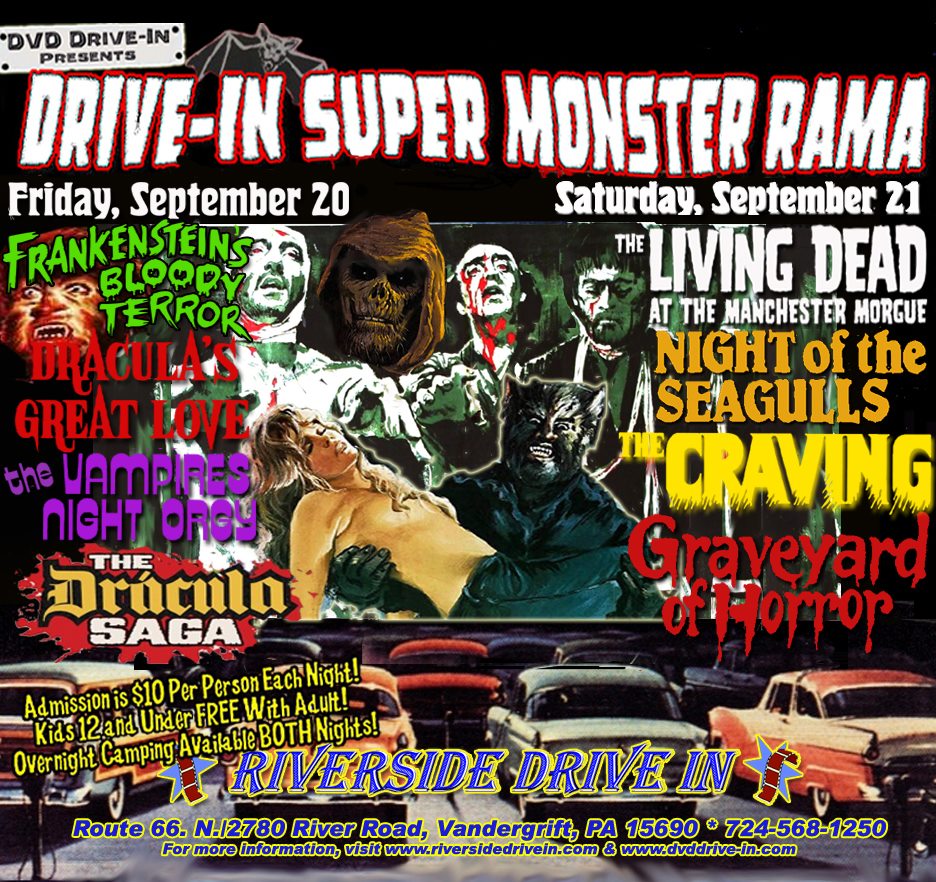
Not only is it post-apoc month at B&S Movies, Sam’s also reviewed a few Paul Naschy movies for the Drive-In Super Monster-Rama recently held outside of Pittsburgh. And . . . Paul Naschy did a post-apoc movie. Yes, that’s right: Paul Naschy, the King of Spanish Horror, and the post-apocalypse, together, in one film.
For those of you not familiar with the (appreciated) absurdity of Spanish horror, and Paul Naschy’s oeuvre, please join me in a read of my June 2019 review (and mini-career retrospective) for his 1983 film, Panic Beats(based on the exploits of kinky French Knight Gilles de Rais, as embodied in Naschy’s Alaric de Marnac character). That review serves as a primer for my upcoming review of that film’s prequel, 1973’s Horror Rises from the Tomb, part of B&S Movies’ Halloween tribute to Mill Creek’s Pure Terror 50-film box set.
That tombstone-credit is a hoot!
The People Who Own the Dark is Naschy’s contribution to the 2nd wave of sci-fi/apocalypse films that ignited during the 1970’s: beginning with Charlton Heston’s The Omega Man (1971; yes, we know we linked the remake) and ending with Richard Harris’s Ravagers (1979). In between, everyone from Hollywood’s A-List—Yul Brynner, Bruce Dern, James Caan, Sean Connery, Jackie Cooper, Paul Newman, George Peppard, and Oliver Reed—sped off into the radiated sunrise for their post-end-of-the-world romps. If his American counterparts can do it, then why not European cinema’s acting equivalent: the “Lon Chaney” of Spain? So Paul Naschy sort-of-kind-of updated that sexual scamp Alaric de Marnac for the post-apoc age to ask the question: What if the Marquis de Sade existed in the nuclear, Cold War era of the 1970s?
And that’s how we arrive at this trashy horror frolic featuring more cover-model hysterical women—this time, instead of cobby-web horror—scampering through the first days of the post-WW III apocalypse, adorned in sensible mini-dresses and chunky-strappy sandals (don’t stub a toe, sweetie); a world where make-up never smudges or runs. Amid the absurdity, you’ll discover a thought-proving parable regarding the sociopolitical dynamic between the rich and the poor and the oppressiveness of the Francoist dictatorship—of the Luis Buñuel The Exterminating Angel (1962) subtext-variety. This is a world where elites find themselves trapped in the allegorical hell of The Eagles’ “Hotel California” (You can check out anytime time you like /But you can never leave)—mixed with plentiful boobs and soupcon of gore. (Naschy’s “theme” on the corruption of wealthy libertines is also prevalent in Pier Paolo Passolini’s art-horror film statement regarding Italy’s fascist state: Salo, the 120 Days of Sodom (1975). The brutally squeamish (but not gratuitous: there’s a point to it all, really) work also drawls from the infamous exploits of the Marquis de Sade).
The People Who Own the Dark is a shrewd reworking of familiar plots and themes that spooked us before, courtesy of Vincent Price’s The Last Man on Earth (1961), George Romero’s Night of the Living Dead (1968) and, to a lesser degree, those films’ strikingly similar antecedent: John Agar’s rather dull, disembodied-moon-aliens-possess-the-dead classic, Invisible Invaders (1959). Each of these films was, in turn, influenced by the rather obscure, very talky and cheap, but proficient and well-photographed, Five (1951), which was the first post-WW II film to depict a post-atomic war survival parable. In terms of People: a more accurate, influential antecedent would be the exciting meteor-shower-blinds-and-brings-a-plague-of-man-eating-plants fable, Day of the Triffids (1963). This, actor/writer Paul Naschy and Argentine director León Klimovosky’s only “sci-fi” film, is the best of their eight engrossing collaborations (listed at the end of this article).
As with most of Naschy’s films: People appears in multiple, alternate versions: There’s the original, 1976 Spanish-language unedited “nude” and edited “clothed” versions: Ultimo Deseo (The Last Desire). Then there is the VHS-bootlegged version (I watched mine via an old. gray market mail order): Planeta Ciego / Blind Planet, which served as the film’s working—and more accurate—“sci-fi” title, later nixed to exploit the film’s sexual side. Those Spanish cuts run at 94-minutes (1:34:00). The shorter American version (1980) released four years later via Cinematic on the U.S Drive-In circuit by director Sean S. Cunningham (Last House on the Left, Friday the 13th), clocks at 80-minutes (1:20:00)—with the deceptive title: The People Who Own the Dark. The subsequent U.S-issued Sun Video VHS tapes run at 87-minutes, while the Star Classics VHS print run at 85-minutes. Then, courtesy of the U.S Grindhouse circuit, there are even shorter-choppier, less-pristine versions as result of celluloid wear-and-tear and breakage-splicing through a reel’s multiple shows-travels.
All of these versions became official and bootleg VHS releases in the ‘80s, then DVD-Rs, DVDs, and Blu-rays in the 2000s. The official U.S VHS versions we rented on Sun Video and Star Classics are rare and highly coveted by collectors. The preferred-original, fourteen-minute longer Spanish-language cut (no English-language dubs or subtitles are available) is the more enjoyable, coherent version. That version offers visual exposition involving (Vladmir) Lenin and (Karl) Marx, which offers an additional narrative-push of the film’s deeper meanings—a valuable subtext devoid from the film’s previously noted “influential” antecedents. (And that’s why, in most cases, horror fans proclaim: “Naschy is boring.” In an uncut state: Naschy is always fascinating and entertaining.)
The film was, of course, a critical and box office flop in America, courtesy of a title and artwork that duped film goers into believing they were paying to see an Amicus/Hammer horroresque film replete with hooded monks, Satanic rituals and graveyards—not a post-atomic parable citing the Marquis de Sade. If only the film retained its original title, more accurate title: Blind Planet.
In this “present day” nuclear holocaust thriller (with just a smidgen of futuristic accoutrements; you’ll know it when you see it: it’s cheap, but a chilling Nazi “death train” analogy) Paul Naschy is Bourne: a debauched, narcissistic military officer (the much-needed foreshadowing of his pigeon target-shooting practice scene by-double-barrel is missing from some prints) who gathers with four other attorney, military, and medical elitist-pigs at a rural chateau doubling as a bordello for a weekend of Marquis deSade-inspired proclivities. The rich playboys descend into the villa’s basement (wearing disfigured, metaphorical monster masques) with the Madame and her five, sheer pastel negligee-clad (complete with two lesbians, natch) prostitutes for a decadent Jess Franco-styled sex romp. Then a massive, earthquake-like explosion rocks the estate. (Bye, Jess Franco. Hello, Omega Man.) They soon discover the chateau’s two maids (one a sex-kitten; the other a stately old woman) have white, glossed-over eyes. The “earthquake” was actually a blinding, nuclear bomb/war (wiping out Madrid) that killed the power and communications grids. They’re stranded in the middle of nowhere, well, stranded in hell. And they’re not so “elite” anymore.
Welcome to Def-Con 1. Cue Amando de Ossorio’s “Blind Dead” siege of Templar monks who kill-by-sound, serving a radioactive helping of Tales from the Crypt-comeuppance to these moral defectives cast in the bowels (of Hell) of the chateau’s wine cellar which, inadvertently, acted as bomb shelter. (Again: Caveat: No monks appear in this movie!)
Of course, we’re in the Naschy universe: Those who relish the Seven Deadly Sins never learn. They’ve determined the only logical thing to do is to drawl weapons and go into the small town outside the chateau—not to help the wailing and wondering blind townsfolk (so much for the Hippocratic Oath, eh, Docs?), but to steal food and loot supplies from “Narcissism are Us.” Oh, and kill a few of the blinded poor souls during the greed-spree.
Yes. The blind townsfolk want blood.
And, not only did the fallout blind them (because of the low-budget, the film could only afford two sets of white sclera lenses to depict “ocular burn”; the rest wear dark glasses or bandages on their eyes); it’s given the townspeople a heightened sense of sound. And, suddenly being thrust into a world of darkness, they’ve snapped and become homicidal.
Pour Bourne and company’s capital vices into that toxic cauldron and you’ve mixed one hell of a post-apoc recipe. The radioactive brew boils over into a nighttime siege at the boarded-up villa (now Bourne and his friends are “blind”) where one of the elites has a mental breakdown and begins his new life as a (metaphorical . . . and nude) slobbering dog. The shocking, well-deserving, downbeat demise of this virtues-void bunch is ripped from the Romero playbook, with images that harkens the disturbing imagery of The Last Man on Earth.
While the initial set-up in meeting each of the ultimately doomed is a bit arduous (but necessary), once The People Who Own the Dark goes “Def-Con,” the film serves non-stop darkness and dread, just like horror movies should: no happy endings. There’s no revelation or spiritual rebirth that makes you a better person on this Judgment Day.
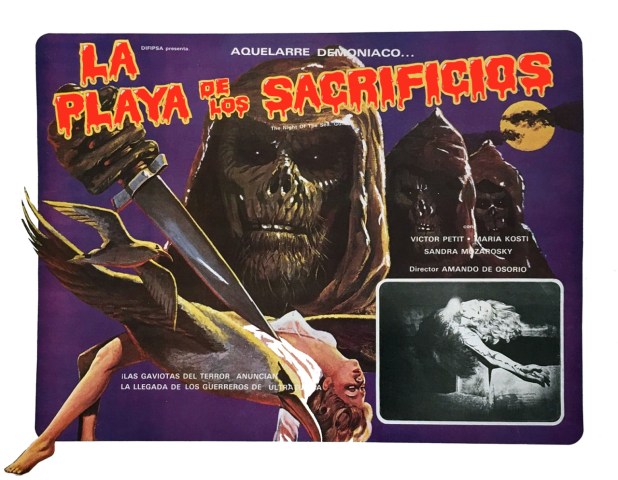
The cast is a who’s who of Spanish-Italian Euro horror cinema featuring familiar members of The Naschy Company of Grand Guignol players: Teresa Gimpera (1973’s Crypt of the Living Dead; 1976’s Secuestro with Naschy), Alberto de Mendoza (1972’s Horror Express; too many gialli to mention), Maria Perschy (1973’s Vengeance of the Zombies with Naschy, 1974’s Beyond the Door, de Ossorio’s 1976 “Blind Dead” entry, The Ghost Galleon), and the lovely Julia Saly (de Ossorio’s 1975 “Blind Dead” entry, Night of the Seagulls and 1975’s Demon Witch Child, and Panic Beats with Naschy).
And it’s well worth the popcorn to seek out Paul Naschy and León Klimovsky’s seven other collaborations: The Universal tributes The Werewolf vs. the Vampire Women (1971) and Dr. Jekyll vs. The Wolfman (1972), Vengeance of the Zombies (1973), Devil’s Possessed (1974), A Dragonfly for Each Corpse (1975; giallo), and Secuestro (1976; crime drama). (You can also enjoy my review of Klimovsky’s The Vampires Night Orgy, part of Mill Creek’s Pure Terror 50-film box set, in November.)
You can watch the longer (clothed) Spanish version on You Tube (no subtitles) and the shorter, 80-minute Anglicized cut on Archive.org (a badly damaged print; a VHS rip). You can purchase Code Red’s 2012-issued DVDs and 2015-issued Blu-rays through Amazon—with many used copies on eBay. There are numerous reviews on the web that explore the various versions and their related technical aspects, ratios, print quality, etc., to assist you in purchasing the version that best suits your entertainment needs. If there was ever a film that requires mainstream distribution streaming on Pluto TV, Vudu, or TubiTV, The People Who Owned the Dark, is it.
Links and more links! You need more Paul Naschy and Lèon Klimovsky?
And that’s all of the Paul n’ Lèon films we’ve done at B&S so far. Let’s hope we did Bill Van Ryn, who is behind the amazingGroovy DoomandDrive-In Asylum, proud.Now there’s a guy who knows his Naschy movies!
Jack Black as Paul Naschy in a Paul Naschy biopic? Hell, yes!
About the Author: You can read the music and film reviews of R.D Francis on Medium and learn more about his work on Facebook.
Is there a more striking visual in horror than the Blind Dead, freshly awakened from their centuries of slumber, slowly plodding their way toward their victims? Not for my peseta. Well, they don’t make those any longer. Let me rephrase: not for my euro.
Night of the Seagulls (La Noche de las Gaviotas) is the fourth and final Blind Dead film, a series which began with 1972’s Tombs of the Blind Dead and continued with 1973’s Return of the Blind Dead and 1974’s The Ghost Galleon. Like those films, this was also written and directed by Amando de Ossorio.
Ossorio would lament the fact that these films’ budgets meant the final product could never live up to the vision inside his head. The end of The Ghost Galleon, where a boat in a bathtub is supposed to be the Knights’ dreaded ship set ablaze, is prime evidence of this.
His iconic Templar Knights would later appear in two other Spanish horror films, Jess Franco’s film Mansion of the Living Dead and Paul Naschy’s The Devil’s Cross. These aren’t official sequels, but homages.
PS – If you catch this movie and think, “I saw a movie called Don’t Go Out at Night, or was that Night of the Death Cult, and that seemed a lot like this one,” you’re not crazy. Those are some of the wild alternate titles for this movie.
Night of the Seagulls shares the same Templars we’ve come to know, love and perhaps fear while not sharing continuity with any of the previous films.
Back in medieval times, we watch a young couple get attacked by the still human Knights Templar, who kills the man and sacrifice one of the women to their unspeakable god.
Centuries later, Doctor Henry Stein and his wife Joan come to the same town, where they’re shunned by the locals. Seriously — Joan can’t even buy apples at the only store in town without some attitude.
The reason why is that it’s Templar season. Yes, every seven years, the Templars rise and demand a virgin sacrifice for seven consecutive nights. Of course these outsiders are going to screw it all up for the town by trying to save one of the girls. Luckily — or unluckily — a village idiot attempts to aid them in their question, but all he’s really good at is being struck and thrown down hillsides.
While not on any of the official video nasty lists, this movie — under the title Don’t Go Out at Night — was listed on Greater Manchester Police’s original list of titles that were worth seizing. It took over a minute worth of cuts to enable this to be released again in 1987, but the Anchor Bay 2005 release was uncut.
Your enjoyment of this film will depend on how much you buy into the Templars, who appear to a haunting theme and then slowly make their way down the beach to expose a virgin and then do away with her. Some people find this movie slow and boring. We’re not in that camp.
Scream Factory has released this on blu ray recently, so you have no excuse not to check it out!
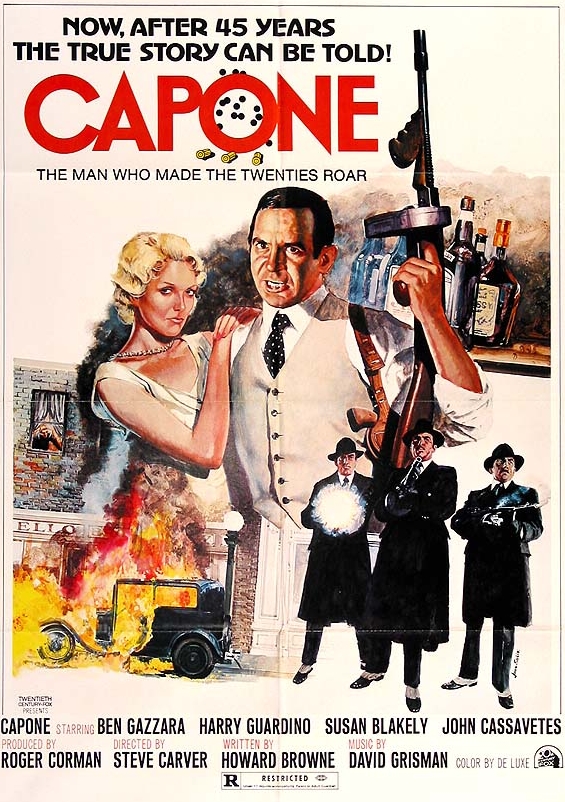
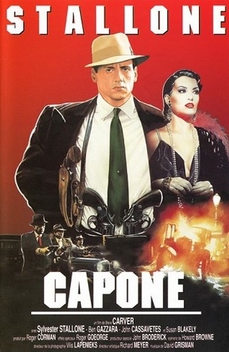
Steve Carver’s follow-up to Big Bad Mama, this Roger Corman-produced effort follows the life story of Al Capone, episodically tracking his life and control over Chicago. It stars Ben Gazzara as Capone, Susan Blakely (The Concorde…Airport ’79) as his girl Iris, John Cassavetes as Frankie Yale and Sylvester Stallone as Frank Nitti.
This being a Corman film, you also get a Dick Miller appearance. It’s as welcome as always. Corman had already made one Capone movie, 1967’s The St. Valentine’s Day Massacre, but this movie features more than just that one event.
Years later, Stallone would tell Ain’t It Cool News that “I particularly enjoyed working on Capone, because it was like the cheesy, mentally challenged inbred cousin of The Godfather“.
The film follows the most important dates of Capone’s life, such as a May 16, 1918 bust that left Capone scarred after being thrown through a window; September 23, 1919, when he decided to kill his boss “Diamond” Jim Colosimo; September 20, 1926 when Nitti saves him from a hit ordered by Hymie Weiss; and February 14, 1929, when the aforementioned St. Valentine’s Day Massacre wiped out the Gusenberg brothers.
There was some controversy over the nudity in this film, as Susan Blakely goes beyond full frontal here, nudity that wouldn’t appear in mainstream Hollywood movies again until Basic Instinct.
It all ends with Capone suffering from syphilis, driven so mad that he doesn’t even recognize Nitti. The hitman finally opens up about how he felt about his boss, remarking how he only cared about killing people. As he leaves, Capone continues to get crazier, ending with him dying a year later. This scene was shot at Barbra Streisand’s estate.
I kind of love the alternate poster for Capone that shows that for many, Stallone would be the main draw for watching this movie.
If you’re hoping for a historically accurate film, you may want to skip this. After all, Capone’s car didn’t come from a window, but from a knife wound inflicted by Frank Gallucio over a remark Capone made to Gallucio’s sister. And the whole last part of the movie, where Nitti visits Capone, it would have been impossible. Nitti killed himself in 1943, three years before Capone died.
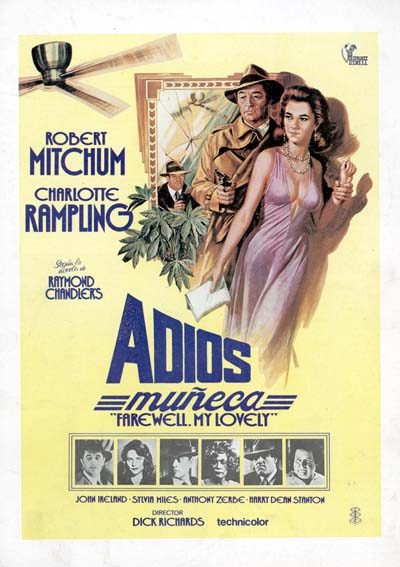
This Raymond Chandler novel had already been filmed as The Falcon Takes Over with George Sanders in 1942 and Murder, My Sweet in 1944 with Dick Powell. But for me, Robert Mitchum is Phillip Marlowe. He just exudes a weariness with the world and the perfect grim mindset that works for film noir, much less neo-noir. And by returning to the role three years later in The Big Sleep, he became the only actor to play Marlowe twice.
Los Angeles, 1941. The police are corrupt. Life is cheap. And Phillip Marlowe is exhausted by it all. He doesn’t have much left. But then he goes through a string of cases, like being hired by Moose Malloy (Jack O’Halloran, Superman) to find his missing girlfriend Velma, whose trail only brings death. And then there’s Lindsay Marriott, a client killed over a jade necklace.
Those cases are connected and then there’s the very married and even more dangerous Helen Grayle (Charlotte Rampling), who Marlowe falls for. Plus, you get Joe Spinell, Sylvester Stallone and Harry Dean Stanton all showing up. And Judge Grayle is played by Jim Thompson, who wrote hardboiled fiction just as brutal as Chandler (The Grifters and The Getaway were made from his books).
In an interview with Roger Ebert, Mitchum minced no words about working with Rampling. “She was the chick who dug S&M in The Night Porter. She arrived with an odd entourage, two husbands or something. Or they were friends and she married one of them and he grew a mustache and butched up. She kept exercising her mouth like she was trying to swallow her ear. ” played her on the right side because she had two great big blackheads on her left ear, and I was afraid they’d spring out and lodge on my lip. There were no tea breaks on THAT set.”
Mitchum was back on the very streets he’d been on as a teen making this movie. One night, as Mitchum gave money to the homeless, an old beat cop walked up to him, took one look and said, “So you’re back”.





 B&S About Movies
You must be logged in to post a comment.