The Return of Shanghai Joe (1975)

Bitto Albertini directed one of my favorite Eurospy films, Goldface, The Fantastic Superman, as well as both Black Emanuelle and Yellow Emanuelle. Here, he has a new actor as Shanghai Joe — Cheen Lee instead of Chen Lee — and has brought back Klaus Kinski in a new role as land baron Pat Barnes.

Honestly, Kinski is the only reason to watch this, as he lords over every scene and makes it his. This film sticks more to comedy than the strange all over the place insanity of the first movie, which makes this disappointing.

There’s also a bad Bud Spencer ripoff snake oil salesman. So yeah. I barely made it through this. I’m going to warn you now, the theme song from this will get stuck in your head and damage your will to live.

You can watch this on Amazon Prime.

Drive-In Friday Kinski

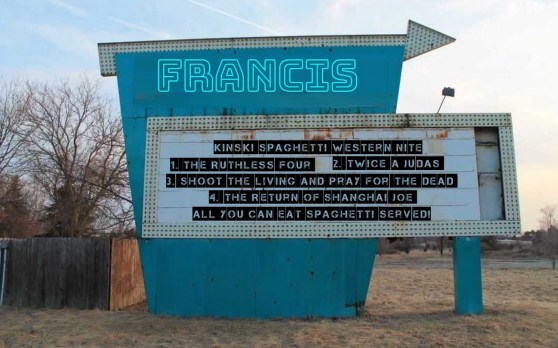
Don’t forget! We did a Klaus Kinski spaghetti westerns blowout for a “Drive-In Friday” featurette that runs down the mad German’s entire shoot ’em up resume. Join us, won’t you? We give full reviews — with a different insight to The Return of Shanghai Joe — and new reviews to The Ruthless Four and Twice a Judas.

Get Mean (1975)

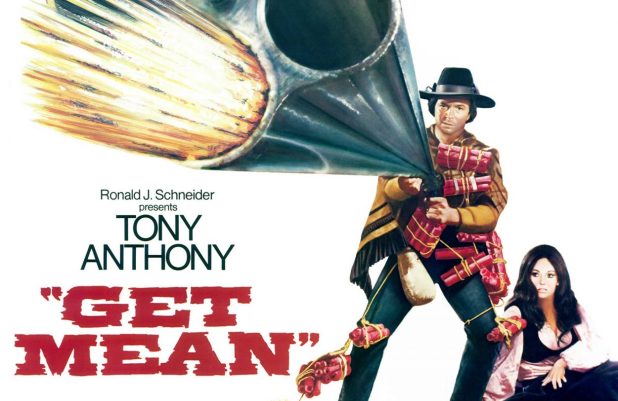
Tony Anthony played The Stranger in four films — Stranger in TownThe Stranger Returns, The Silent Stranger and this film — plus he’s also in the Zatoichi by way of Italy film Blindman (Ringo Starr is in it!) and wrote, produced and starred in Comin’ At Ya! and Treasure of the Four Crowns, movies that’d start a short 3D boom which ended with Anthony claiming that he made an estimated $1 million worth of lenses before Jaws 3D, the film that ended the trend.

This movie is just crazy — closer to a fantasy movie than a Western — and has no care at all about the fact that it doesn’t follow any rules at all. It’s directed by Ferdinando Baldi, who also made the Mark Gregory-starring Ten Zan: The Ultimate Mission.

The Stranger gets dragged into a ghost town by his horse, who promptly dies. That;s when a family of gypsies pays him to escort Princess Elizabeth Maria de Burgos (Diane Lorys, Blue Eyes of the Broken Doll) back to Spain. There, the Stranger does battle with Vikings, Moors, barbarians, ghosts, a bill and a hunchback. That’s when he lives up to the alternate title — The Stranger Gets Mean — and lets the guns and dynamite do his talking.

Raf Baldassarre is in this, who you may have seen in everything from Hercules In the Haunted World and Eyeball to plenty of Westerns like Dakota Joe, The Great SilenceSartana Kills Them AllArizona Went Wild … and Killed Them All! and even played Sabata in Dig Your Grave Friend … Sabata’s Coming. He’s also in both of Luigi Cozzi’s incredbly entertaining films based on Greek myth, Hercules and The Adventures of Hercules.

Morelia is played by Mirta Miller, who somehow unites so many film genres that I love — HBO After Dark semi-sleaze (Bolero), Mexican wrestling films (Santo vs. Dr. Death), giallo (Eyeball), shark movies (The Shark Hunter), sword and sorcery (Battle of the Amazons) and Spanish horror (Vengeance of the ZombiesCount Dracula’s Great Love and Dr. Jekyll vs. the Werewolf).

So yeah. An Italian Western with a four-barrelled shotgun carrying hero traveling through time who doesn’t respect the princess he’s trying to save. If this sounds like Army of Darkness at all to you, please remember that it came out 17 years before that movie.

You can get this from Blue Underground or watch it on Amazon Prime and Tubi.

The White, the Yellow and the Black (1975)

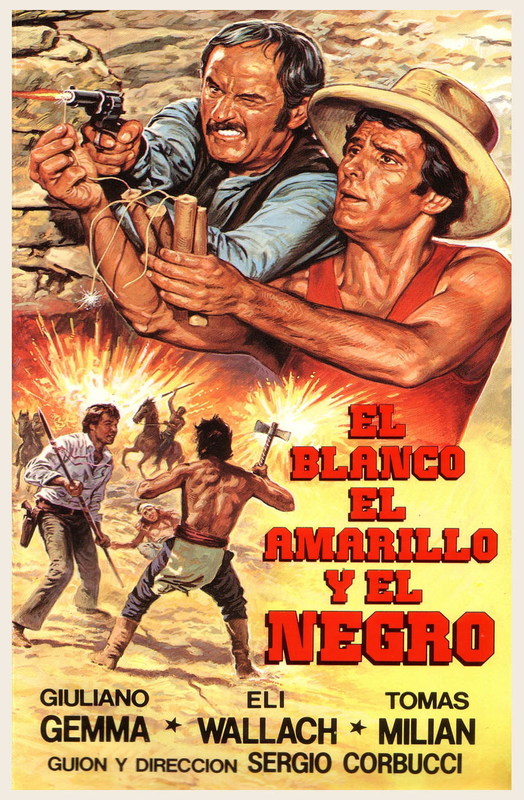
Also known as Samurai and Shoot First… Ask Questions Later, this is the last Italian Western that Sergio Corbucci would make after a career that brought the world DjangoThe Great SilenceCompaneros and The Hellbenders. It is the gateway to his next career of making comedy films, often with Adriano Celentano and Terence Hill, such as 1980’s Super Fuzz.

I was wondering how this movie got away with such a racist Japanese interpretation, with Tomas Milian playing an Asian man named Sakura in the ost stereotypical way possible. I hate to say, “It was a 1975 exploitation movie made in Italy,” but you can also explain that this is a parody of the much bigger film, 1971’s Bronson and Mifune vehicle Red Sun.

Long story short, a Japanese horse that was to be given to the government of the United States is stolen and Sheriff Edward “Blackjack” Gideon (Eli Wallach), outlaw Blanc de Blanc (‘Giuliano Gemma, Ringo himself) and Sakura have to get it back.

Milian must have liked playing this role, because he brought it back for the movie Delitto al Ristorante Cinese, the eighth chapter in the Nico Giraldi film series, which was also directed by Corbucci. Also — keep an eye out for Mirta Miller as a redhead in the saloon.

There’s a cute moment at the beginning of the film as the Sheriff and his wife have an argument and she replies, “For a fistful of dollars. For a miserable fistful of dollars that are not even already your share! At least I did that for a few dollars more… but “vamos a matar”, compañeros! Always around in the good, the bad and the ugly times! Head down, dear; you’re at the day of reckoning, now!” If you get the joke, you’re my kind of person.

You can watch this on Amazon Prime.

SAVAGE CINEMA: Best Friends (1975)

Mill Creek box sets are among my favorite things in life, as otherwise, I’d never discover so many movies. However, for every Cathy’s Curse, Welcome to Blood City or The Alpha Incident there is a Best Friends. Such is life. Savage Cinema box set, you so crazy.

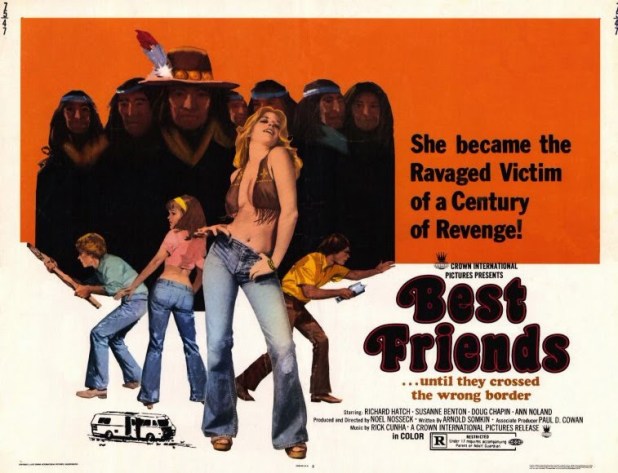
Jesse (Richard Hatch, Battlestar Galactica) is the mature one. Pat (Doug Chapin, Where Have All the People Gone) is the goofy one. Together with their girls, Kathy (Susanne Benton, A Boy and His Dog) and Jo Ella (Ann Noland, Satan’s School for Girls), they decide to go on a RV trip across the country. For everyone that has told me what a good idea that sounds like, I point them to movies like this. Actually, have any movies about being on a Winnebago trip ever gone well?

Director Noel Nosseck made the move from movies like this into TV movies like this. Good for him. As for this movie, well, this movie promises some drive-in scumbag narrative and delivers a relationship film. No matter what, I always end up judging movies by their cover.

You can watch this on YouTube, if you haven’t bought the set.

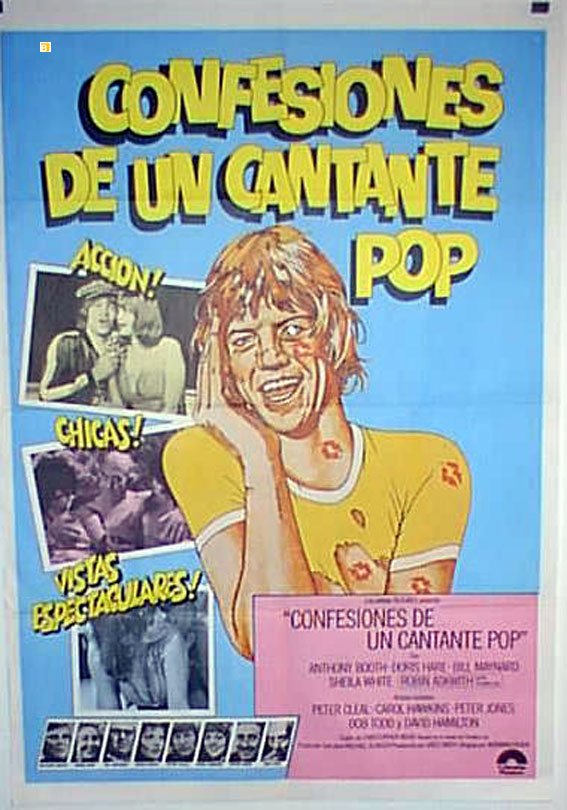
Confessions of a Pop Performer (1975)

Part of the four-part series of British Confessions sex farces, this installment focuses on Timothy Lea (Robin Askwith, Four Dimensions of Greta), who is trying to make it in the world of pop music as he joins the band Kipper while remaining a window washer.

Seriously — this movie is a Benny Hill-ish romp that I don’t think would play well with today’s audiences. You can guess how much I enjoyed it.

Keep an eye out for appearances by future Darth Vader David Prowse, Rula Lenska (Queen Kong), Benny Hill girl Helli Louise, Rita Webb (Frenzy), Richard Warwick (If….), Benny Hill and Spike Milligan straight man Bib Todd and a fake band called The Climax Sisters.

This was the only movie in the series to get a sound track record on Polydor, featuring songs from the first movie, Confessions of a Window Washer, as well as dialogue. It’s also the only original script not based on one of Christopher Wood’s books.

This movie tied another movie for Worst British Film of 1975 by Sight & Sound. That movie? The Rocky Horror Picture Show.

There was also a paperback, which has a great cover.

Norman Cohen took over for the first film’s director Val Guest (The Quatermass Xperiment ) after Guest’s wife wouldn’t let him on set with all the near-nude women. Cohen was a great pick, as he’d already worked on two mondos, The London Nobody Knows and London In the Raw.

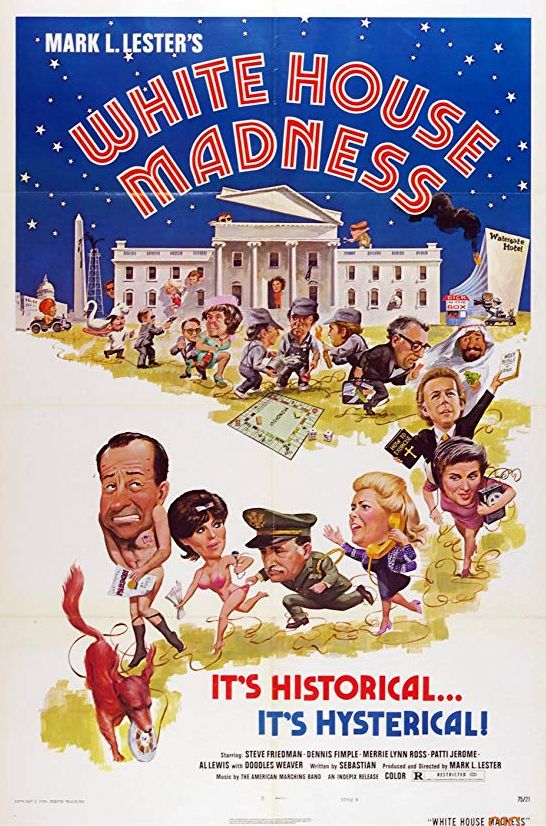
White House Madness (1975)

Dennis Fimple played many roles. Many here would know him as Grandpa Hugo in House of 1000 Corpses or saw him in Creature from Black Lake. Here, he’s Bob Haldeman, just one of the many White House members caught up in this satire of Watergate, directed by Mark Lester.

It’s also the only movie I can find with Steve Friedman in it. He plays a really bad Nixon in it, who talks to stuffed dogs and has the worst prosthetic nose ever. But that said, Grandpa Al Lewis plays Judge Sirica, who is called Judge Cirrhosis here.

White House Madness was written by Sebastian, who was really Milton Miron. He managed the Cockettes drag queens at San Francisco’s Palace Theater and also made the movie Tricia’s Wedding, which is about, well, Tricia Nixon’s wedding.

The money for this movie came from Republican Senator Phil Gramm, who had invested $7,500 of his money to make what he thought was going to be a beauty contest satire. Instead, his money was used to make this.

White House Madness was released on DVD by Lucky 13 Collectibles, who also put out Acapulco GoldEvil Laugh and Slaughterhouse in the mid-2010’s. I couldn’t find this anywhere, so shout out to my friend Hoss for hunting this down. Mark Lester week is better for your fine work.

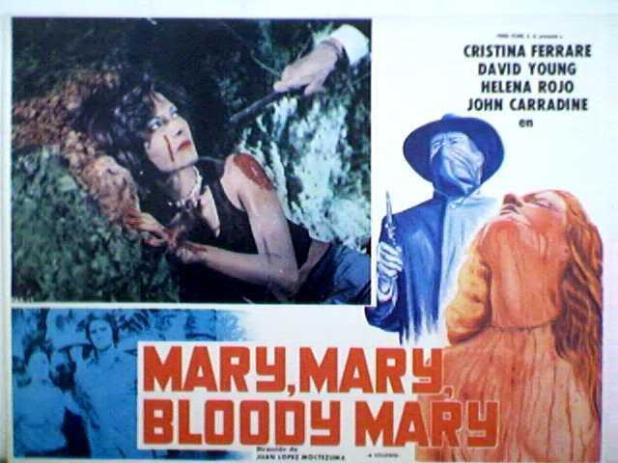
Mary Mary Bloody Mary (1975)

Juan López Moctezuma only directed six films. La Mansión de la Locura, known in the U.S. as Dr. Tarr’s Horror Dungeon, To Kill a StrangerEl Alimento del Miedo, Welcome Maria, the mind-destroying Alucarda and this film. Some people are able to make a legacy with very few films. In my book, Moctezuma is one of them.

Mary Gilmore (Cristina Ferrera, who was once married to John DeLorean and a model before her acting career; she’s since become a TV host and cooking expert on other talk shows) is an American artist searching for something in Mexico. Her van breaks down on the way and she’s surprised by a homeless guy named Ben (David Young, NightbreedPoor Devil), who offers to help her in the morning. She agrees and while she sleeps, she dreams of the last man she murdered.

Yes, Mary is something like a vampire, but she must use drugs to slow her victim down as she gains no real powers from her vampirism. In fact, unlike the typical movie vampire, she can move freely in the day. I was reminded of Martin here, as the only magic of this curse is the overwhelming need to destroy and kill. Often, the people that Mary destroys have given her kindness, like the art dealer (Helena Rojo, Más Negro Que la Noche) who she seduces or the old fisherman who offers to teach her. They get drugged and slashed and stabbed instead of what they expected.

Meanwhile, a bandaged man is stalking Mary, killing other women and trying to run her down with his car. If that wasn’t bad enough, Ben is wanted for the murder of the fisherman. No one would suspect our heroine, after all.

Things come to a head when the masked man attacks Mary at a party,  which leads to a chase with the police behind them. One of the inspectors is killed and just as Mary is about to devour Ben — who she had earlier drugged for just such a purpose — the masked man (John Carradine) reveals that he is her father. His face has rotted away and he explains that this is what the disease does. He must kill her before she is taken the same way that he is.

Ben wakes up and kills the father with the dead policeman’s gun. Mary begins him to leave and he keeps embracing her. As the camera moves above the scene, we see that she has consumed both of the men’s blood.

At the close, the police believe that the dead masked man is the one responsible for all the killing. This leaves Mary free to drive away and continue her travels.

There’s so much to love here. The painting that Mary has done of her father is a portrait of him as Dracula. There’s also something interesting about how she is the destroyer of so many lives, yet creates with her artwork.

This is the kind of movie that plays with the paradigm I’ve discussed so much: the difference between grindhouse and art house. A scene that should be pure exploitation, like the lesbian bubblebath scene, transforms into sheer artistic bliss (and bloody murder). Carradine feels like he stepped straight out of an Italian giallo. And the young lovers on the run in a foreign country film feels New Hollywood. It is all of those things and more.

Moctezuma has never failed to surprise and delight me.
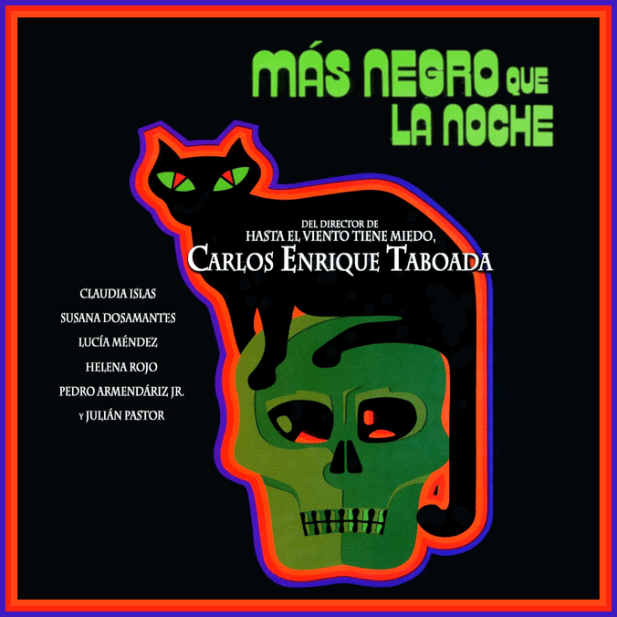
Mas Negro Que La Noche (1975)

When it comes to 70’s Mexican horror, the name Carlos Enrique Taboada is one that you can depend on. This one is a modern gothic horror about four young women who get to move into a large mansion with one condition: the dead aunt’s black cat Beker.

Yet when the cat is found dead, so are two of the girls — Aurora (Susana Dosamantes, Brian Trenchard-Smith’s Day of the Assassin) and Pilar (Helena Rojo, Mary, Mary, Bloody Mary).

Ofelia (Claudia Islas, the “Mexican Brigitte Bardot”) and Marta (Lucia Mendez, who as Vanessa was one of the first starring telenovela characters to be killed off) must now try to survive, but seeing as how Marta had joined the other two girls in the killing of the cat, it’s only a matter of time before she joins them in the great beyond.

This is a classy horror film that I’d compare to Corman and Bava, except set in modern Mexico. In 2014, it was remade in America as Darker than Night by Henry Bedwell.

You can watch this on YouTube.

Reflections In Black (1975)

A mysterious woman, dressed all in black, is killing beautiful women. Tano Cimarosa — usually an actor — directs this film, where we soon learn that all of the women are connected to affairs that they had with another woman, which was quite shocking in 1975.

Former Miss Italia Daniela Giordano (Your Vice Is a Locked Room and Only I Have the Key), Dagmar Lassander (Forbidden Photos of a Lady Above Suspicion, The Iguana with the Tongue of Fire and The House by the Cemetery) and John Richardson (Black Sunday) all make appearances.

This is really just for those that have to see every giallo ever made. Which would be me. Probably you too, if you’re reading this.

Australia After Dark (1975)

Burlesque, body-painting, snake-eating, mud-wrestling, alien landings, a gay wedding, and Satanism. Yep, director John D. Lamond (FelicityNightmares) pretty much watched Mondo Cane and said, “I borrowed a 16mm print of it and ran it on a closed circuit cinema thing and stopped and started the projector and looked at it. It ran on a sort of cycle – pathos, humour, oddity, nudity. I thought okay, what I need to do is shoot about fifty sequences, cut it into something coherent and pacey, and made it on the same sort of thing. I’d have something sexy, then something odd, then something really way-out, then something light hearted. And always do it tongue in cheek, and not have any sequence in the film run longer than about two minutes. And anything sexy, I’ll make it way-out or pretty.”

The British cut of this movie is twenty minutes less than the Australian one. That should tell you exactly how much content is in this for maniacs who need to watch Kiwi girls dance nude underwater or gratuitous milk baths.

Yes, body painting, alcoholism amongst the Aborigines, black masses and strip clubs are all side by side Down Under. I love that one of the people in this movie is named Count Copernicus. Ah, mondo!

You can get this from Severin.