Uh, oh. The Constanzaian Worlds are colliding once again at B&S About Movies, as “Kaiju Week” rear ends April’s “James Bond Month.”
Yes. There’s a Godzilla movie with James Bond-styled spies. And Apes. And not just one movie, but two movies. And my love for each, especially the first, is unbound.
Toho Studios had Godzilla. 20th Century Fox Studios had Pierre Boulle’s apes. And the American studio was kicking the Big Green One’s ass in the Pacific Rim box office. So what does Toho Studios do? They created their own race of sentient humanoid-ape aliens to introduce into the series.
Toho Studios celebrated the Great Green One’s 20th anniversary in style with this everything-plus-the-kitchen sink monster romp featuring the return of Anguirus from Ishiro Honda’s first Godzilla sequel, 1955’s Godzilla Rides Again, a new monster in the form of the good kaiju dog-deity, King Caesar, and a James Bond-inspired Interpol superspy to defeat the aliens. (Angie and King C returned in 2004’s 50th Anniversary blowout, Godzilla: Final Wars, and they should: director Ryuhei Kitamura cites Godzilla vs. Mechagodzilla as his favorite Godzilla film.)
And if that wasn’t enough: they brought on the apes.
Toho’s new breed of intelligent apes, who hail from the “Third Planet from the Black Hole,” built a secret, underground high-tech base in Okinawa. And they have the ability to build robots. And they construct Mechagodzilla, a robotic doppelganger of Godzilla equipped with a wide array of weapons and flight capabilities.
Oh, yeah. And these apes enjoy their wine. And they can morph into human form.
The fun begins as an Oriental priestess has a vision of Japan’s destruction by a giant monster. Cue to a spelunker who discovers a chunk of never before seen metal in a cave. A subsequent archaeological excavation to find more of the metal unearths a chamber with a biblical-like prophecy of a forthcoming battle between huge monsters on the Earth.
Of course that errant hunk of metal is the work of The Simians and was used to construct Mechagodzilla to spearhead their conquest of Earth.
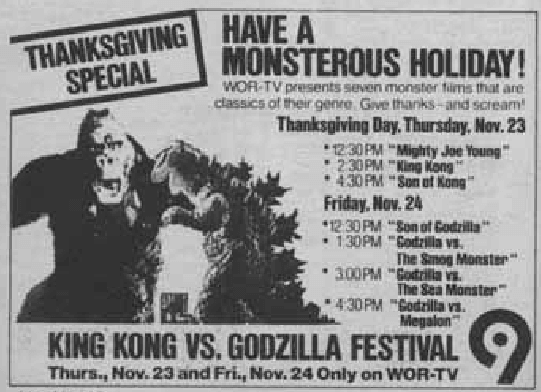
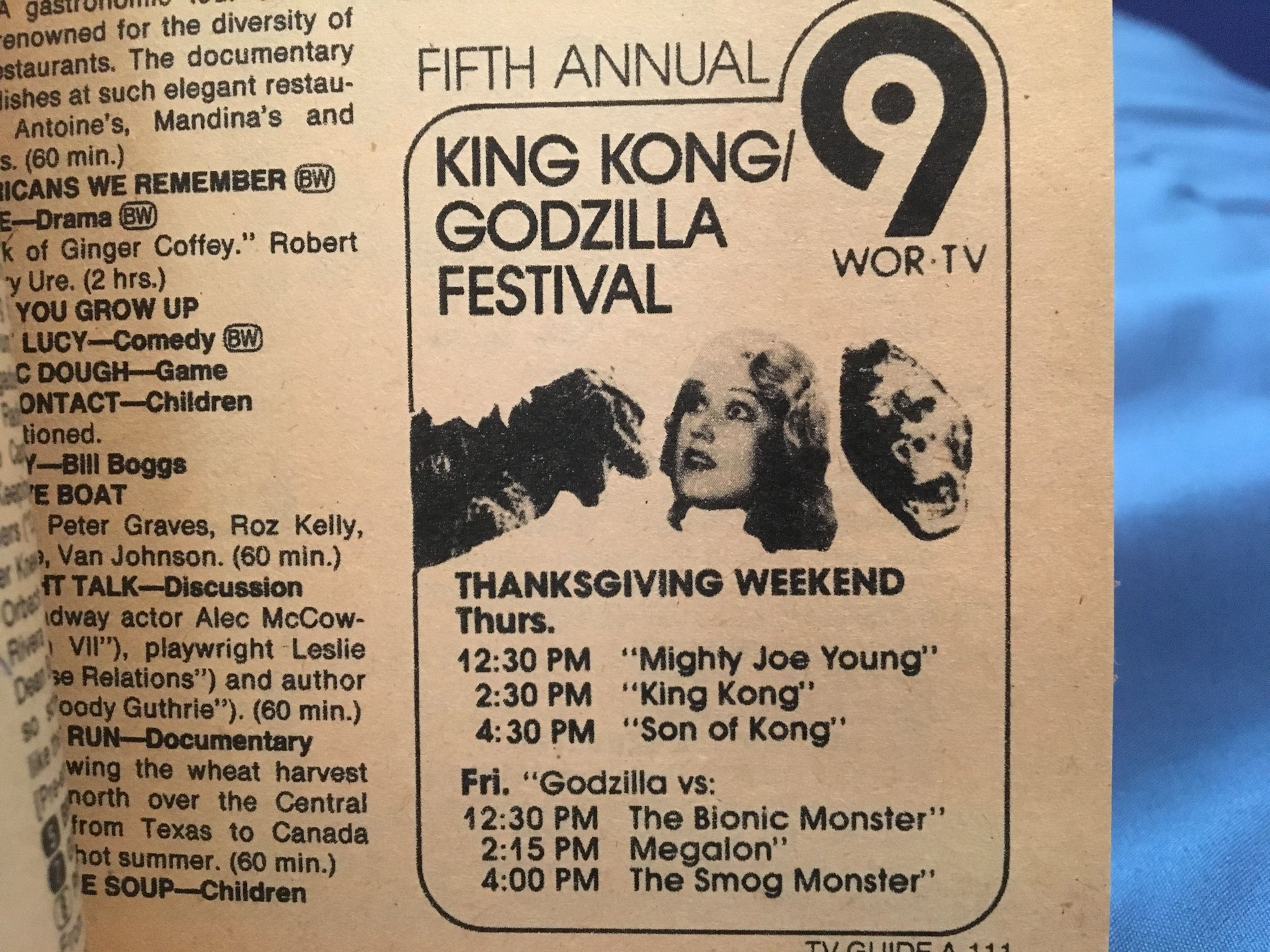
As crazy as it seems, it wasn’t 20th Century Fox who sued over this—but Universal Studios. When the film was released in the U.S in March of 1977 under the title Godzilla vs. the Bionic Monster, Universal took issue over the use of the word “Bionic,” as they owned the rights to The Six Million Dollar Man and The Bionic Woman TV series. That led to the title that we U.S kiddies saw it under: Godzilla vs. The Cosmic Monster.
Those were the UHF-TV days. . . .
Keeping with their “borrowing” of the 20th Century Fox franchise, another race of Toho aliens from the third black hole planet returned in the 1975 sequel, Terror of Mechagodzilla. This time the aliens “aped” the underground disfigured mutants from Beneath the Planet of the Apes—and hid their disfigurement under rubber masks. Oh, and they brought along another, new monster-partner: the aquatic, non-mechanical Titanosaurus. The Mechagodzilla sequel would prove to be the last of the films until the Big Green One’s 30th anniversary started a new wave of Godzilla films.
If you must have Godzilla vs. Mechagodzilla in your collection, there’s the 1988 restored Japanese cut with English audio on a 1988 VHS, a 2004 DVD with both English and Japanese audio, and a 2019 Showa-era Blu-ray issued by the Criterion Collection alongside 15 other Godzilla films released from 1954 to 1975. Terror of Mechagodzilla also appears in that collection, along with its three singular DVD forms issued in 1998, 2002, and 2007.
The epic battle! This stuff rocks no matter how old you are!
About the Author: You can read the music and film reviews of R.D Francis on Medium and learn more about his work on Facebook. He also writes for B&S Movies.
* This review first appeared on January 3, 2020 as part of our “Ape Week” retrospective.
Here’s some of the other Kaijus (and sort of Kaiju) that we’ve reviewed. For the rest that we’ve recently reviewed to commemorate the March 2021 release of Godzilla vs. Kong, enter “Kaiju Day Marathon” in our search box to the left to populate that list of films (you may see a few reposted Godzilla reviews, but many new film reviews concerning Godzilla, Kong, and other creatures from the Lands of the Rising Sun).
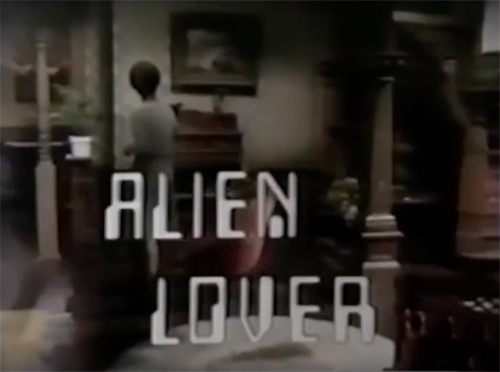
An entry in ABC’s Wide World of Mystery (Rock-a-Die, Baby) this quick burst of shot on video is way ahead of its time and way worth watching. Produced by Dan Curtis, directed by Lela Swift (who also helmed Dark Shadows and several of these ABC mini-movies) and written by George Lefferts (whose made for TV career includes several of the 1960’s Special for Women specials and episodes of afterschool specials for both ABC and CBS), it’s all about an orphan (an incredibly young Kate Mulgrew) who discovers an alien TV signal and falls in love with Marc, a man from another dimension played by John Ventantonio (Private Parts).
Sure, she may have just left the mental institution, but who is to say what’s real and what is not in her world? And man, if you only knew Pernell Roberts as the kindly Trapper John, get ready to be upset.
Sadly, so many of these genre TV shows have never been released and many of them are lost. Thanks to YouTube, you can watch this.
Here’s another winner from the awesome “Big Three” network TV movie-era of the ‘70s. Also known as End of the Line in its overseas theatrical and later U.S TV syndication runs, A Cry for Help stars Robert Culp (Calendar Girl Murders, The Gladiator, Spectre) as Harry Freeman, a cynical and acerbic, Don Imus-styled radio talk show host who abuses his on-air callers. When one of those callers, a troubled young runaway, threatens to commit suicide, Harry dismisses her, but informs the police anyway. However, when the cops dismiss him, he comes to realize his mistake. So he recruits his audience to help him track down the girl—but is it to assuage his own guilt or as a ratings gimmick?
Involved in the mystery are lots of familiar ‘70s and ‘80s TV faces with Bruce “I’m not Bruce Jenner” Boxleitner, Gordon Jump (WKRP in Cincinnati), Michael Lerner, Chuck McCann, and Ralph Manza (you’ll know him when you see him; his career goes back to the mid-‘50s), and Ken Swofford (Black Roses and Hunter’s Blood). You’ll also notice TV actor Julius Harris (Cannon, Ellery Queen, Harry O) from his Blaxploitation resume with the likes of Black Caesar, Friday Foster, Let’s Do It Again, Shaft’s Big Score, and Superfly, and as Tee Hee alongside James Bond in Live and Let Die. (Look out! April is “James Bond Month” at B&S About Movies.)
What is all that stuff? Well, those are carts, cart decks, reel-to-reel decks and VU meters, you adorable, little Spotify youngins. The “radio” in this is, of course, excellent, and Robert Culp did his homework.
If this ABC-TV production plays like a ‘70s TV detective yarn, only with a disc jockey instead of a private eye, that’s because Executive Producers William Link and Richard Levinson were behind the popular TV series Columbo, Ellery Queen, Mannix, and Murder, She Wrote. Writer Peter S. Fincher wrote and directed episodes of Baretta, Columbo, and Kojak, while director Daryl Duke came from the Columbo family as well. Duke also directed the highly-rated 1973 TV movie The President’s Plane is Missing* and the 1978 Elliot Gould-starring theatrical The Silent Partner. And for the country music fans: Duke directed 1973’s Payday** starring Rip Torn as a burnt-out country singer.
You can watch A Cry for Help for free on You Tube. Caveat emptor on those grey market DVDs, as this has never been officially released on video. There’s no trailer, but you can watch a 14-minute film clip on You Tube.
What’s that? Where can you get more TV movies? Not a problem, we love the TV movies of the ‘70s and ‘80s here at B&S About Movies. Be sure to visit our “Week of Made for TV Movies,” “Son of Made for TV Movies Week,” and “Grandson of Made for TV Movie Week” explorations. And there’s even more TV movies to be had with our upcoming “Dan Curtis Week” on March 22 through March 28. And again: April is “James Bond Month,” so join us, won’t you?
* Ugh. Too many movies! How did we miss that one during any of our “TV Movie Week” blow outs or our “Airline Disaster Week” homage?
** Once again! How did we miss that fers errs countryfied “Hicksploitation Week” of reviews?
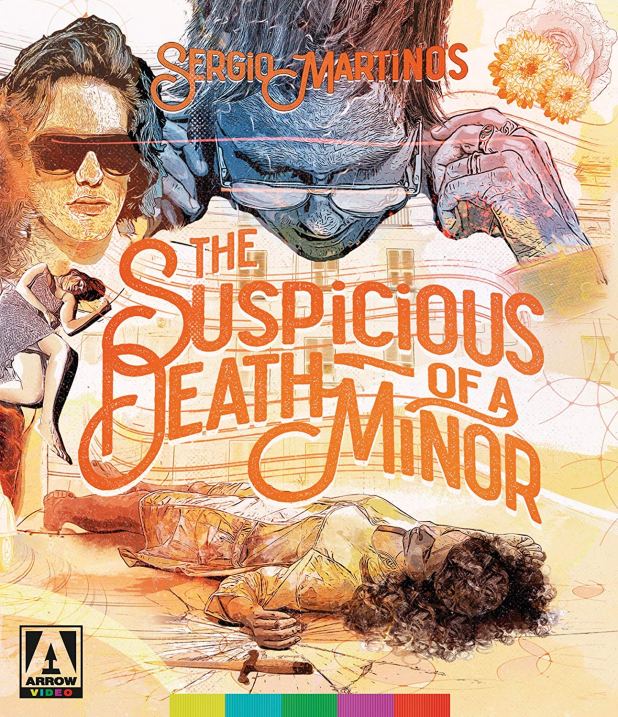
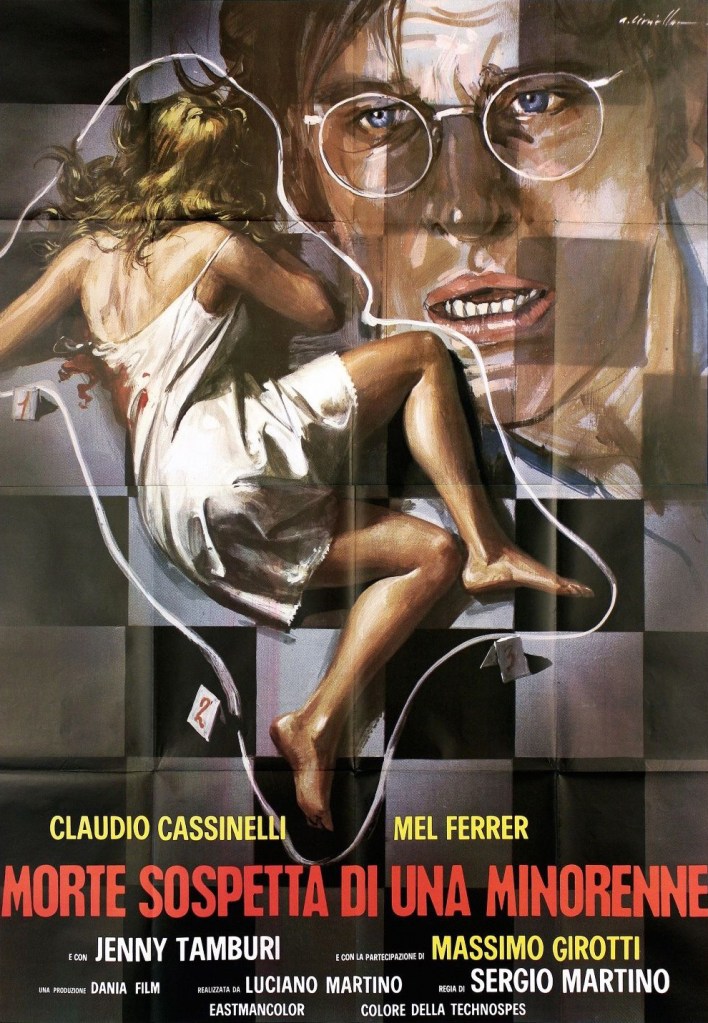
This is the last of Martino’s giallo and doesn’t feature his usual cast, like Edwige Fenech or Ivan Rassimov. It does, however, have Claudio Cassinelli, who was in Murder Rock and What Have They Done to Your Daughters?
Cassinelli plays police detective Paolo Germi, who meets a girl named Marisa (Patrizia Castaldi, in her only acting role before becoming a costume designer) who is soon murdered. She was a prostitute and now, Germi is haunted by her death and wants to find the killers. Unfortunately, Marisa was in way over her head and getting the answers won’t be simple. After all, there’s a man with mirrored shades killing everyone that gets close to the truth.
While this film doesn’t reach the lunatic heights of Martino’s finest works, it’s still a gleaming example of how great 1970’s Italian genre film can be.
You can watch this movie on Amazon Prime or get the blu ray from Arrow Video.
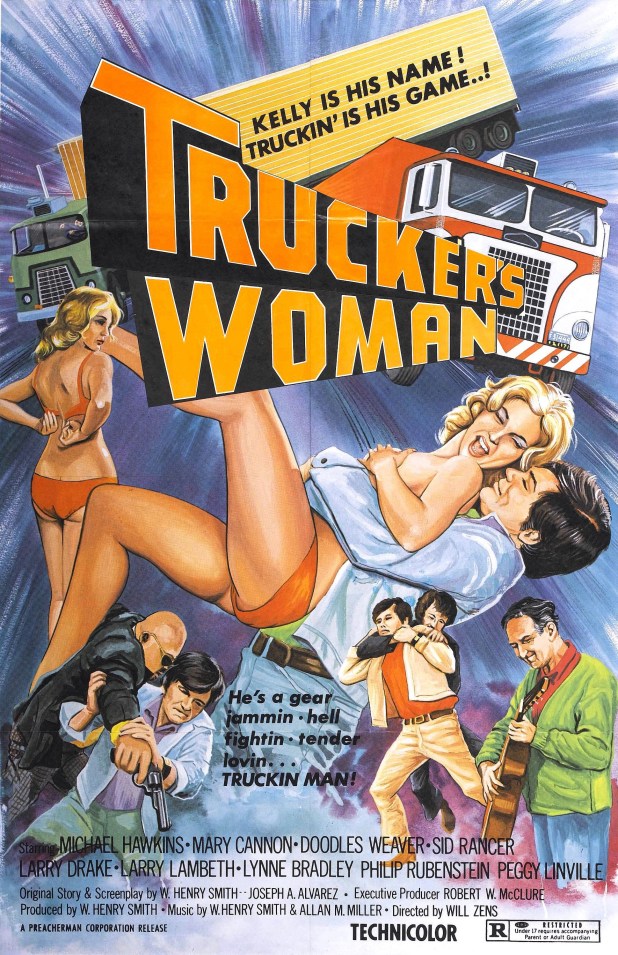
Former test pilot Will Zens found himself a maker of hicksploitation movies, thanks to movies like this, The Road to Nashville, Hell on Wheels and Hot Summer in Barefoot County. It was originally called Truckin’ Man until the producers thought a woman’s name would draw more money.
This movie was acquired in 1983 by Troma, who released it to home video. They have nothing to do with it. Thank God.
Shot in Florence and Society Hill, South Carolina, this movie isn’t about anything that’s on the poster. Instead, it’s all about a middle-aged man who drops out of college — maybe he was a non-traditional student — to go undercover as a truck driver so that he can solve the mysterious murder of his trucker father. I’ve noticed in so many trucker movies that the mob has killed dads, which seems like their chief job in this reality.
Michael Hawkins plays that trucker. He’d go on to play in plenty of soap operas, like Ryan’s Hope, where he was Frank Ryan for 272 episodes. He’s also a state trooper in The Amityville Horror and a Pepsi executive in Mommie Dearest — he’s literally one of the people Joan screams “You drove Al Steele to his grave and now you’re trying to stab me in the back? Forget it! I fought worse monsters than you for years in Hollywood. I know how to win the hard way! Don’t fuck with me, fellas! This ain’t my first time at the rodeo” to — but he may be best known for being Christian Slater’s dad.
Larry Drake, who would later play Durant in Darkman (and eventually turned up as a detective in the direct-to-cable thriller Power 98), is Diesel Joe here. Comedian Doodles Weaver also shows up. If you haven’t seen his near-manic performance in The Zodiac Killer, I urge you to do so at the first opportunity. Actually, I shared it in our review of Bigfoot, so just click over there. Screenwriters Joseph Alvarez and W. Henry Smith also penned the hicksploitation-centric romps Preacherman and Redneck Miller.
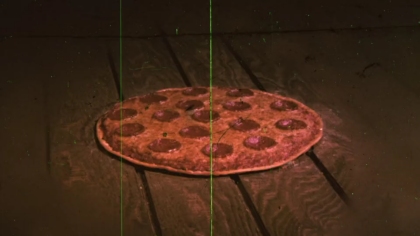
Perhaps most strangely, at around the one-hour eight-minute mark of this movie, trucker Mike Kelley goes to the back of his rig and reaches for his break line. For a split second, an image of a pepperoni pizza flashes on the screen. Due to the vignetting effect which was applied to it, several people believe that the insertion of this frame was not accidental, but instead a subliminal message to suggest o drive-in audiences that they should get up and go buy some pizza.
Man, I’m hungry for some pizza.
You can watch this with Rifftrax commentary on Tubi.
When I was first writing this site in earnest, this was one of the films I watched and never took the time to write about. It’s not because I don’t love it. Au contraire, it’s probably my favorite late-model Hammer film next to Captain Kronos – Vampire Hunter, another film I’ve failed to discuss on this site. It’s everything a movie should be. It has horror, amazing performances, plenty of sex and lots of Satan. All hail the Karnstein family!
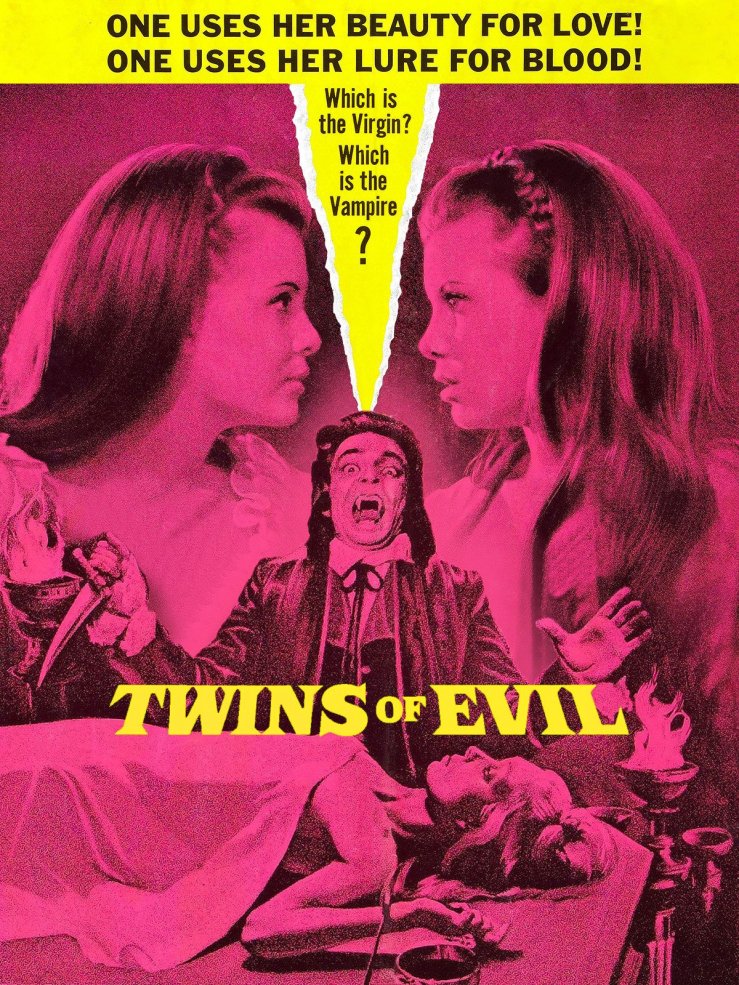
The third and final film of the Karnstein Trilogy — The Vampire Lovers and Lust for a Vampire are the other two, although the aforementioned Kronos is also tied in — this movie is all about twin sisters, Frieda and Maria Gellhorn. One is good. One is evil. Both are played by Playboy‘s October 1970 Playmates of the month, legitimate identical twins Mary and Madeleine Collinson. Born in Malta, the twins appeared in five other films: Some Like It Sexy, Permissive, Groupie Girl, She’ll Follow You Anywhere and The Love Machine, which was based on the book by Jacqueline Susann, who also wrote Valley of the Dolls.
After their careers in entertainment, Madeleine married a British Royal Air Force officer and raised three children before dying in 2014. Mary has two daughters and now lives in Milan with an “Italian gentleman,” whom she has been with for more than two decades.
Think gorgeous twins are a one in a million miracle? Not in the Gellhorn family, as their former model mother gave birth to another set of twins years after the girls were born.
The girls have been recently orphaned and come to live with their puritanical witch-hunting uncle Gustav Weil (Peter Cushing, destroying everything in his path). Maria (played by Mary) is content to be a normal teenager. Her sister Frieda (played by Madeleine) becomes fascinated by wicked Satanist Count Karnstein (Damian Thomas, Sinbad and the Eye of the Tiger), who probably makes her refer to him as daddy and says things like, “Good girl.”
Oh yeah — he also calls Countess Mircalla Karnstein (Katya Wyeth, Hands of the Ripper) back from the grave and she rewards him by making him a vampire. Ingrid Pitt was supposed to play this role but didn’t do the cameo.
Maria falls for the handsome and virtuous teacher Anton (David Warbeck, The Beyond), who knows all about killing vampires. At the same time, Frieda is feasting on naked virgin women chained to walls, because every 1970’s vampire movie has lesbian moments.
Frieda is captured by the Brotherhood, the group of witchfinders that Gustav leads, but the vampires switch out Maria and she nearly gets killed. This leads to a battle throughout the castle complete with vampire heads being hacked clean off. It’s wonderful.
Australian-born actor Alex Scott — he’s also in Next of Kin, The Asphyx and The Abominable Dr. Phibes — shows up, as does Dennis Price (who was in plenty of Jess Franco movies), Judy Matheson (Lust for a Vampire), Kirsten Lindholm (The Vampire Lovers) and singer-actress Luan Peters/Karol Keyes, who hit the 70’s vampire trifecta by being in Lust for a Vampire, Vampira and this film.
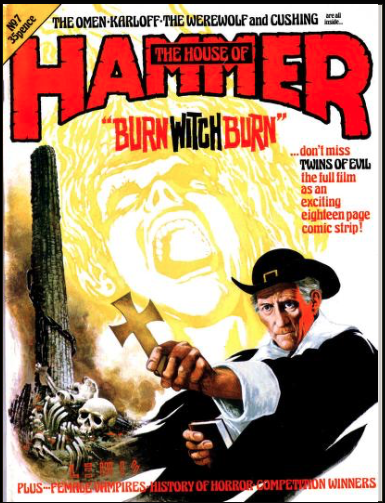
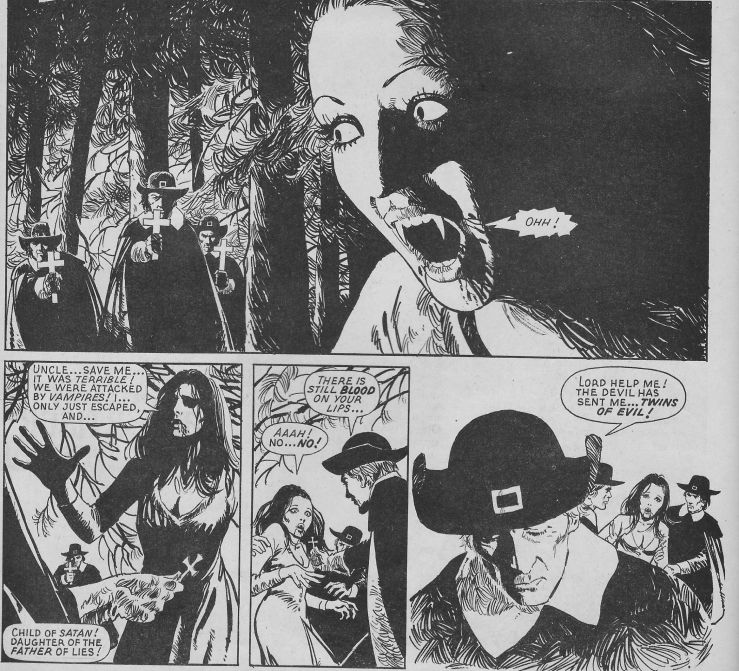
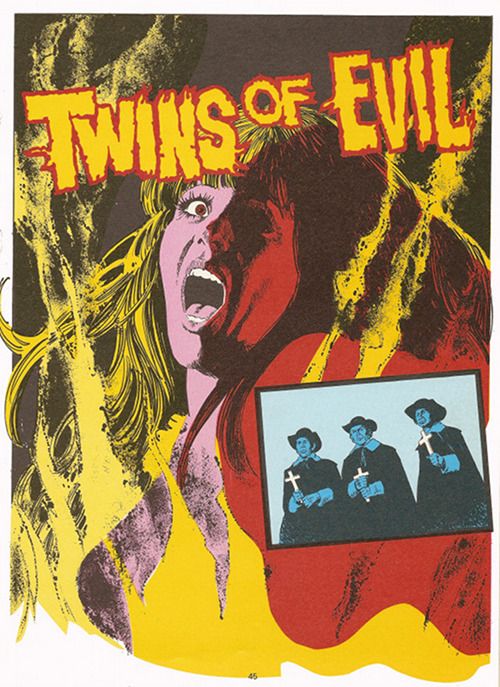
Twins of Evil was adapted into an 18-page comic strip for the January–February 1977 issue of the magazine House of Hammer. You can check it out on the Internet Archive for free.
Director John Hough would go on to direct The Legend of Hell House, Escape to Witch Mountain, Return from Witch Mountain, The Watcher in the Woods, The Incubus, Lady and the Highwayman, Biggles: Adventures in Time, American Gothicand more.
Shot on the same sets as Vampire Circus, Twins of Evil is everything I love about movies. And if you’re into metal, the band Hooded Menace used a sample from this film in their song “In the Dead We Dwell.”
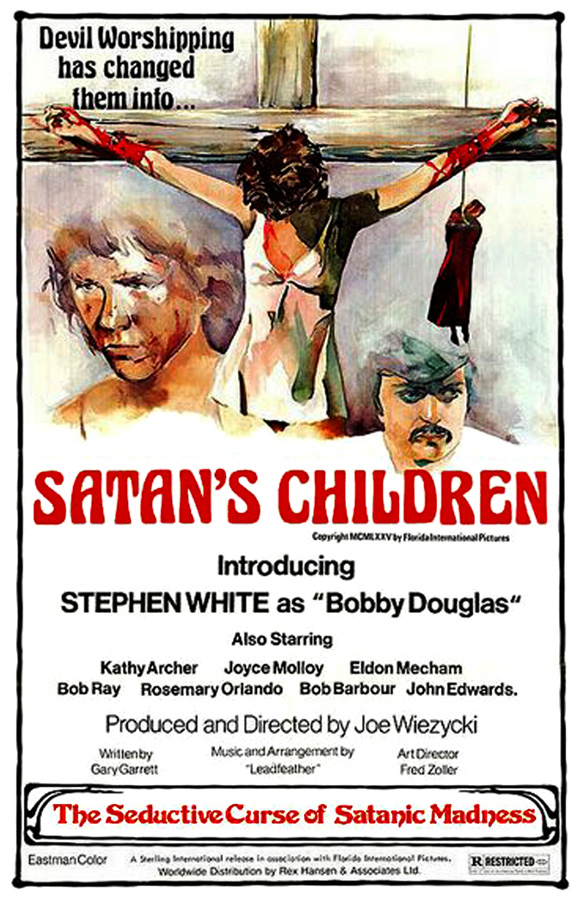
Runaway teen Bobby Douglas (Stephen White, Gas-s-s-s) is given shelter by a cult of Satanists, but both his presence and questionable sexuality leads to conflicts within the group.
To be fair before we begin — The Church of Satan statement on homosexuality is that they “fully accept all forms of human sexual expression between consenting adults. The Church of Satan has always accepted gay, lesbian, bisexual and asexual members since its beginning in 1966. This is addressed in the chapter “Satanic Sex” in The Satanic Bible by Anton Szandor LaVey.”
Made by filmmakers from the gutters of Tampa on short ends as AGFA tells it — Joe Wiezycki also made the movie Willy’s Gone — Satan’s Children was made with students from the University of South Florida drama department.
Bobby escapes his father’s insults and his stepsister’s sexual suggestions — you thought incest only happened like this via Pornhub — to unknowingly end up at a gay bar. All the horror stories from Cruising are true — he’s soon having a train run on him in the grimy backseat of a car against his will. Yep, they drive all around while yelling things as they roger him, then leave him face down and ass up in a field.
So what would you do? Well, if you’re Bobby, you’d join a Satanic coven and get your revenge. After all, Florida may be the home of Disney resorts, but it’s also the birthplace of bands like Nasty Savage, Marilyn Mansion, the Genitorturers, Deicide and, well, Creed.
Everybody in this movie is too sweaty, too pale and too frightening to behold. This is all you need to know of Florida to beware of its darkness. The gay bars even look like a diner and not any place that I’d imagine them to appear like. Every scenario here is concrete block and wood-paneled, covered in years of filth, dust and scum.
The first time I saw legit non-Playboy VHS porn was a movie that later research would tell me was 1984’s I Like to Watch with Lisa De Leeuw, Mike Horner, Herschel Savage and Bridgette Monet. It was upsetting. The people looked too strange, too slovenly, too unsexy — exactly the opposite that I thought porn would be.
This movie brought back that queasy feeling, which kind of made me nostalgically happy for films that can still upset me. It’s wonderful to know that that can still happen.
You can watch this for free on Tubi or grab the double disk of this film and Satanis from AGFA/Something Weird video. You can buy it from Amazon or Diabolik DVD.
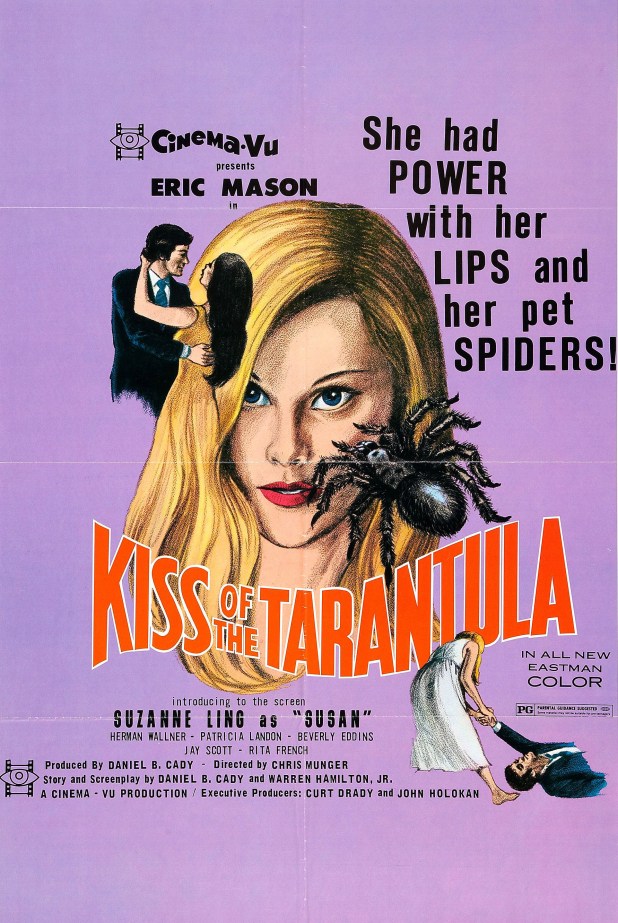
Also known as Death Kisses and Shudder, this gender and species swapped cover version of Willard is all about Susan Bradley, a little girl who can control spiders, which she does to kill her mother — well, she was gonna kill daddy — before taking out anyone else who displeases her. Susan really loves her spiders — to the point that one scene almost suggests that she loves them biblically. Oh 1975, what a magical time you were to be alive.
The big issue is Walter, Susan’s creepy uncle and a dirty cop. He has evidence that his niece has killed at least two people, but he covers it up and even kills to protect her, all so he can get the chance to aardvark with this little arachnophile. Guess what? She’s not having it. Oh yeah — Walter was also sleeping with her mom and helping her plan to murder his own brother. Whew!
You kind of have to love a movie where a little girl kills an entire VW worth of teenagers at the drive-in. This movie checks almost all the boxes for our site: murderous children and animals gone wild. If only there was an acid sequence, a Satanic ritual and George Eastman dressed as a big hairy tarantula.
Writer and producer Daniel Cady would go on from this to write and produce several adult films, such as Soft Places, Reflections and Tomboy under the name William Dancer. He also produced the regional shocker Dream No Evil.
Director Chris Munger would also direct Black Starlet and The Year of the Communes, a documentary narrated by Rod Steiger.
You can watch the Rifftrax version of this movie on Tubi and Amazon Prime.
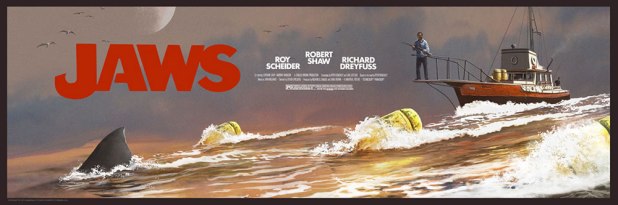
Jaws is so often referred to as the exact moment that the New Hollywood went from artists to moneymakers. It did more than that; it decreased the number of people that visited beaches in the year after its wake and conservation groups often name the movie as one of the main reasons why sharks are on the endangered list. Author Peter Benchley has even been quoted as saying that he wouldn’t have written the novel had he known what sharks were really like.
It took Steven Spielberg from a director who had only done The Sugarland Express and TV movies like Duel into a proven creator of mainstream pleasing films. And the three notes in the theme has become a mnemonic for a foreboding sense of doom.
The film’s three stars — Roy Scheider, Robert Shaw and Richard Dreyfuss — aren’t truly stars. They’re everymen who could be destroyed by the shark at any moment. There’s no way of knowing who, if any, of them will survive (and what will be left of them).
This wouldn’t have been possible if Brody had been played by Charlton Heston or Robert Duvall. Quint was almost played by Lee Marvin and Sterling Hayden. And Hooper could have been Jon Voight, Timothy Bottoms, Joel Grey or Jeff Bridges. All of these choices would lead to a completely different movie and less of a chance to capture lightning in a bottle.
Yet for all the chum that has been slung at this movie for initiating the wave of the blockbuster, it’s curiously against the mainstream. The politicians of Amity only care for one thing — making money — despite the obvious threat against life. And there are three poles of man at the end of the 20th century — Hooper, the educated man who depends on technology; Quint, the filth spewing warrior who is unashamed and unafraid; and Brody, a man who exists between two of them, who must overcome his fear of the water to save his children — everyone’s children, really — from nature’s most perfect predator. Quint must perish — he’s the last of a dying breed — as a sacrifice so that the new ways can be inspired by the past and remember them.
My own experience with Jaws was limited as a child; I was three when it came out. I do remember my father discussing the sequel at length with a cousin — it’s one of the first endings I ever had spoiled for me — and I vividly recall the Ideal game where each player had a small hook and had to pull parts out of the belly of the Great White beast before it snapped against your little tiny child fingers.
Jaws changed how we experience movies. It changed how movies were released — instead of a slow rollout, it hit 465 screens all at once in the summer, a time when studios mostly got rid of movies they saw as schlock. And it changed how they were marketed, with $1.8 million spent promoting it, including $700,000 on national TV spots. The big spending — including doubling the film’s filming budget — led to a $470 worldwide gross, numerous sequels, ripoffs and years later, this page you’re reading right now.
For a movie that started without a finished script, no set actors and no shark — to paraphrase a Dreyfuss quote — things ended up working out just fine.
This article originally appeared in Drive-In Asylum Special Issue #4, which you can buy here.
Author Note: This review was previously posted on September 28, 2019, as part of our September Post-Apocalypse Month. You can catch up with all of those reviews by visiting our Atomic Dustbin recap. We’re bringing it back to pay tribute to the work of George Lucas.
Okay. Let’s get this out of the way: This is the movie were you video fringe horndogs lose it over Mariette Hartley (as Lyra-A) in a two-piece bikini sporting two belly buttons (a dual circulatory system with two hearts) as a (network censored) “dominatrix” who breeds men for an oppressive, feminist regime.
Gulp.
Yes. Mariette Hartley: We’re talking Zarabeth in the Star Trek: TOS episode “All Our Yesterdays” where she cracked Spock’s emotionless Vulcan shell. She mixed it up with Gary Lockwood as Lisa Karger in Earth II (another failed TV movie pilot-to-series). She tempted Charlton Heston as Harriet Stevens in Skyjacked. She gave Dr. David Bruce Banner butterflies as Dr. Carolyn Fields in The Incredible Hulk. Yes. Mariette Hartley, with a resume of too many popular TV series to mention, all the way out to Fox TV’s 2018 hit series 9-1-1 as Patricia Clark.
Just one look at Mariette in Genesis II and you’ll forget all about the über-cool Sub-Shuttle that we all came for (and not a bogus CGI model . . . but a non-operational, full-sized prop pulled on a long-cable by an off-camera semi-truck) that pulls into a carved-out-of-the mountain sub-station (which Elon Musk has since pinched for his next millionaire-toy project). Oh, and did you notice the sterile, ultramodern-styled city looks suspiciously like the city in Conquest of the Planet of the Apes (20th Century Fox’s “Century City”)? And did you notice how many times the Sub-Shuttle footage was recycled in ‘70s sci-fi television?
Anyway . . . times were hard for ex-Star Trek creators.
In 1974, after the go-to-series failure with Genesis II, Gene Roddenberry developed another TV movie/series pilot with The Questor Tapes (1974). A thinly veiled reworking of the Gary Seven character and plot from the Star Trek: TOS episode “Assignment: Earth,” it was intended as a vehicle for Leonard Nemoy’s return to weekly television. The end product starred Robert Reed-doppelganger Robert Foxworth (1979’s Prophecy) who portrayed an android with incomplete memory tapes — in a pseudo The Fugitive storyline — searching for its creator and purpose (that also sounds like V’ger from Star Trek: TMP).
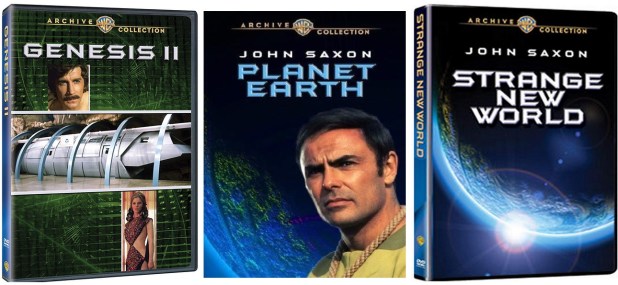
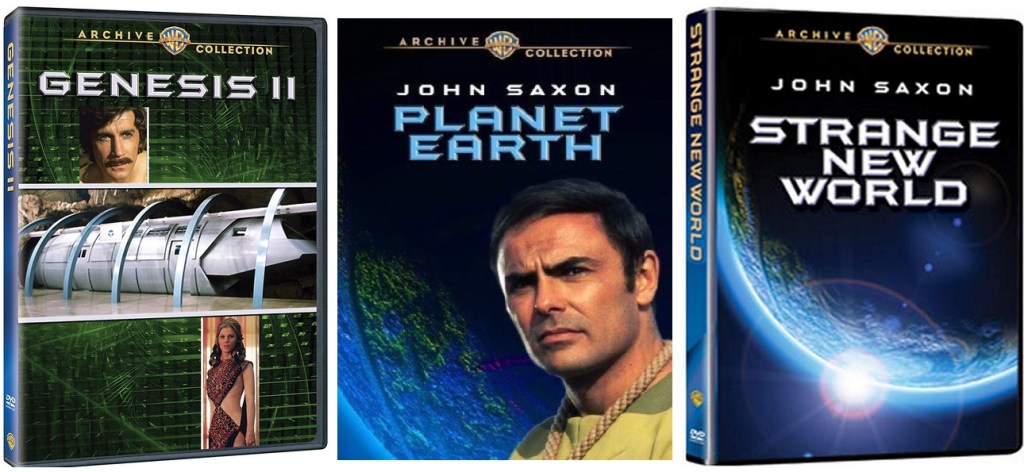
Then, after the additional go-to-series failures of the Genesis II reboots Planet Earth and Strange New World produced in the wake of The Questor Tapes, Roddenberry tried again — by jumping on the ‘70s “occult detective” sub-genre with 1977’s Spectre — by reworking another Star Trek element: the contemptuous friendship between Spock and Dr. Leonard McCoy, itself a homage to the relationship between Sherlock Holmes and Dr. Watson. Spectre starred Robert Culp (The Gladiator) as William Sebastian, a criminologist and occult expert assisted by Gig Young (1978’s Game of Death with Bruce Lee) as Dr. Hamilton.
Genesis II stars Alex Cord (who also journeyed into a “fucked up future” in Chosen Survivors) in the “future world” of 1979 as NASA scientist Dylan Hunt. Of course, he opens the post-apocalyptic proceedings with that all-too-familiar apocalypse (or psychological horror) cliché: “My name is Dylan Hunt. My story begins the day on which I died.” So goes the story a “20th Century Boy” (T Rex, anyone?) thrown forward in time by a suspended-animation earthquake-accident that damages his New Mexico/Carlsbad Caverns-housed “Project Ganymede” system for astronauts on long-duration spaceflights.
And we flash forward to the year 2133.
An archeological team of PAX (Latin for “peace”) descendants from the NASA personnel that lived-worked-were trapped in the Carlsbad installation when World War III (aka “The Great Conflict” because, well, the docile hoards of all post-apoc futures never seem to be able to preserve or retain a basic semblance of American history) broke out, discover Hunt’s buried chamber. And while they can’t seem to “remember” World War III, the PAX are smart enough to construct a subterranean rapid transit system utilizing a magnetic levitation rail operated inside a “vactrain-tunnel network” that spans the globe and saves the masses from air transportation attacks.
Anyway, here’s where Mariette Hartley comes in.
Lyra-A oversees the all-female totalitarian regime known as the mutated (natch) Tyranians that rule the lands once known as Arizona and New Mexico. In addition to their increased physical abilities, you can always spot a Tyran by their nifty, dual navels — that they seem to love to show off. (Schwing! Thank you, Gene!) Not that the wussy PAX-rats would do anything when they spot a Tyran: they let themselves be enslaved.
Lyra-A, in a grand alien fashion of the Star Trek variety, is enraptured by Roddenberry’s “Buck Rogers” and wants to harness Hunt’s knowledge of (among other things) nuclear power systems to fix the Tyranians’ dead power plant. But apoc-bitch Lyra-A double crossed him: it’s a ploy to reactivate a nuclear missile system to destroy the PAX. As a result, Hunt goes into Moses-mode (see the apoc-romps No Blade of Grass, Ravagers) and leads a revolt of the enslaved, sabotages the nuclear device, and destroys the reactor.
Sound pretty cool, right?
Airing to high ratings in March 1973 and encouraged by the network brass, Roddenberry worked up a 20-episode first season on the adventures of Alex Cord’s post-nuc Moses. Then CBS-TV dropped the bomb: they passed over Genesis II and gave the timeslot to another competing post-apoc series: the short-lived and low-rated Planet of the Apes.
Those mothballed Genesis II episodes featured recycled ideas from Star Trek: TOS and fueled the later Star Trek movies — with stories about suspended animation soldiers from the past (“Khan!!!”), a London ruled by King Charles X; NASA “evolved” computers and equipment left on Jupiter’s Ganymede returning to Earth in search of their “God” (“The Changeling” and the annoying Persis Khambatta-V’ger non-sense from Star Trek: TMP); men turned into breeders and domesticated pets (reworked for the second pilot, Planet Earth); the ol’ catapulted-through-a-time-continuum back to 1975 gaffe (“Tomorrow and the Stars,” an episode from Star Trek: Phase II, the proposed-failed post-Star Wars reboot), and a creepy priesthood who enslaves the masses via electricity used as a “God” (“Return of the Archons” from ST: TOS).
The reason the network passed on Genesis II: The series was “too philosophical” and Alex Cord’s portrayal was “too dark and brooding.” They wanted another handsome and charmingly arrogant Captain James T. Kirk. So Roddenberry and Warner Bros. rebooted Dylan Hunt into an action-driven and conflict seeking Kirk-like character embodied by John Saxon.
Cue for Planet Earth.
Now Dylan was one of three cryogenically-frozen astronauts who return to Earth to reestablish the PAX organization that sent them into space. And while we lost Mariette Hartley, we gained the equally fetching Diana Muldaur (again, from Cord’s Chosen Survivors), who rules the Amazonian, male-enslaving “Confederacy of Ruth,” along with cherished character actors Bill McKinney (Deliverance, Cannonball) and Gerritt Graham (Phantom of the Paradise, Used Cars) as “impotent males” in recurring roles.
This time, instead of CBS, ABC aired the Warner Bros. produced program in April 1974.
The network passed.
Cue a Strange New World.
To creative and legal reasons lost to the test of time, Warner Bros., who now owned the intellectual rights, reworked the premise a third time as Strange New World (pinching the title from Star Trek’s opening monologue) — sans Roddenberry’s involvement — dumped the PAX and Tyranians, and retained John Saxon as the same Kirk-like character, now known as Captain Anthony Vico, who returns from a suspended animation space trip with two other astronauts (as in Planet of the Apes TV series that screwed Genesis II in the first place).
The movie aired in July 1975.
The network passed.
And with that, between Roddenberry’s vision, and the failure of the Planet of the Apes TV series (episodes were cut into overseas theatrical and telefilms), the small screen’s attempt to jump on the major Hollywood studios’ post-apocalyptic bandwagon was over. Thus, us wee lads and lassies gathered around the TV on Saturday mornings and settled for Filmation’s Ark II, whose 15 episodes (it seems it had more episode and was on much longer), aired in 1976, then reran in 1977, then again in 1978. And that kiddie-apoc series stopped production because the network “wanted Star Wars” (and not a TV knockoff of 1977’s Damnation Alley). So Ark II was reworked and repurposed (the same “universe,” so to speak) as Space Academy and Jason of Star Command (Sid Haig, rules!).
There was also another, similar attempt at the Genesis II concept with, ironically, another Star Trek: TOS alum: Glenn Corbett (warp-drive creator Zefram Cochrane in 1967’s “Metamorphosis”). As with Roddenberry’s The Questor Tapes, The Stranger (1973) was another failed TV movie-to-series sci-fi twist on the ‘60s runaway TV hit, The Fugitive. This time, instead of returning to a post-apocalyptic society, our astronaut (Hey, Sam . . . he’s named “Stryker”!) returns to a totalitarian “twin” Earth run by the “The Perfect Order.” (And if it all sounds a bit like 1969’s Journey to the Far Side of the Sun byGerry and Sylvia Anderson of the fellow-failed, post-Star Trek series UFO and Space: 1999 . . . then it probably is: both series were movie-rebooted in the post-Star Wars universe as the telefilm/foreigner theatricals Invasion: UFO and Destination Moonbase Alpha, respectively.)
But wait . . . all was not lost with Genesis II.
Roddenberry’s widow, Majel Barrett (Nurse Christine Chapel in Star Trek: TOS and Lwaxana Troi on Star Trek: TNG and DSN) produced one of Roddenberry’s old pre/post-Star Trek dystopian-apocalyptic concepts, Andromeda (itself recycling from Genesis II and Planet Earth), a Canadian series that ran from 2000 to 2005 and aired in syndication on U.S television.
VHS rips ofGenesis II and Strange New Worldcan be enjoyed for free on You Tube, while Vudu has official, affordable streams of Genesis II and Planet Earth. For whatever “legal” reasons, no streaming platform offers Strange New World. However, copies of all three are widely available on DVD courtesy of Warner Home Video’s Warner Archive Collection.
Star Wars: Episode IX – The Rise of Skywalker is currently in theaters and was released theatrically on December 20 in the United States.
About the Author: You can read the music and film reviews of R.D Francis on Medium and learn more about his work on Facebook. He also writes for B&S Movies.





 B&S About Movies
You must be logged in to post a comment.