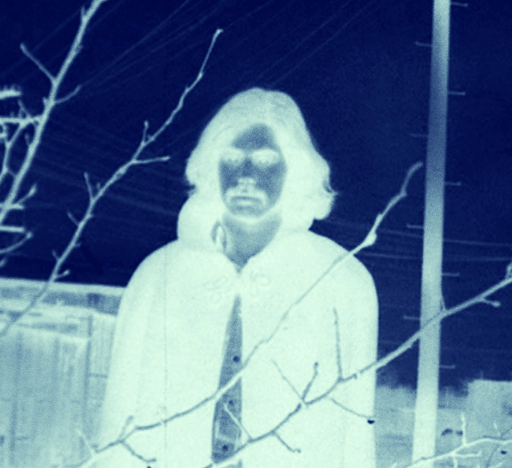
Black Snow (1971)

Roger Watkins was born in Binghamton, New York and graduated from Oneonta State College in with a Bachelor’s degree in English Literature. He served as an apprentice for Freddie Francis, Otto Preminger and Nicholas Ray. He wrote Mystique for Roberta Findlay and as Richard Mahler, he made Her Name Was Lisa, Midnight HeatCorruption and American Babylon, movies that were porn but had no interest in getting anyone turned on.

He’s probably best known for his 1973 movie The Last House On Dead End Street, which is also knwon as At the Hour of Our DeathThe Fun House and The Cuckoo Clocks of Hell. It’s charitably one of the most mentally deranged movies I’ve seen and I say that with respect. For years, because the movie was made with no real names, rumors were spread that it was a snuff film. In truth, it’s a $3,000 down and dirty movie that really had an $800 budget because Watkins spent most of the money on drugs.

It took until 1989 when Chas Balun revealed that Watkins made the movie. In 2000, Watkins posted on the internet that it was really him and the film was released. The full 175-minute version seems lost forever, even if the story of a Chicago riot and fire destroying the print seems as true as the story that there’s a real murder in the film.

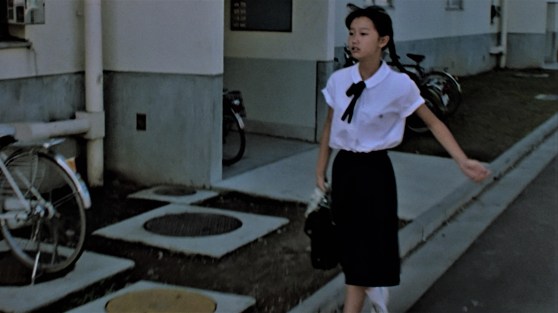
On the 2002 DVD release of the movie, Black Snow and several other Watkins short films appeared. I love that he did commentary over this, calling it “a piece of shit” and that it proved just how easy it was to make avant-garde bullshit. Then again, after he told Nicholas Ray that, the director told him, “Maybe it’s easy for you, Roger.”

It’s basically people walking through the snow and showing their darkness, which must have some kind of message behind it. Except Watkins laughs through the whole thing, which is so strange to me, as I assumed that he was as dark as he is in The Last House On Dead End Street and not someone having fun rewatching a college project.

In 2015, Vinegar Syndrome claimed that they were making a perfect version of The Last House but that seems like it’s never going to happen. The uncut version of the movie is hidden on their release of Corruption, so there’s that.

You can watch this on YouTube.

Christmas Craft Fair Massacre (2022)

My wife has started doing craft shows selling dog bandanas. Check her work on Instagram. Over the last few months, we’ve been doing a lot of Christmas craft fairs. Other than the demons, I can say from a first-person perspective that Christmas Craft Fair Massacre is the most realistic and truthful movie about craft fairs ever committed to film. Or digital video.

Max Raven and Bando Glutz, well, in the words of Judith Priest, I can neither confirm nor deny that they are also Bret McCormick.

Houston’s Central High School was built on a Native American burial ground — I live next to the second largest one in the eastern part of the country — which means it has lured devil worshippers there, like Principal Mortimer Shade (Tytus Berry), to find the one pure soul — Julie Purebred (Rebecca Bills) — with the help of the mask-wearing Ned (Max Raven). He’s also struggling against the lady who runs the mall, Megara Pendragon (Victoria Chaney), who wants her soul as well.

So yes, this movie may feel like it’s been shot on phones and has long talking sequences that were edited together to make it seem like everyone was in the same room. Who cares? It also has a priest, a shaman, someone who may be the director as well and a nice lady all work together to drop a telekinetic nuke on the craft fair, saving the world and our souls.

I have sat in these fairs and stared at the clock for what seems like days upon days and only ten minutes has moved and maybe I don’t want to be there, but I really love my wife and will do anything for her. But if I could drop a mind bomb on the Monongahela Y before sitting there again for eight hours while someone next to me super hard sells fiberfill pillows and I’ve heard their lines hundreds of times, man, I would drop a bomb that would give Oppenheimer a boner from beyond the grave.

Every review that doesn’t understand this movie was written a person without any holiday spirit.

You can watch this on Tubi.

Quello Strano Desiderio (1979)

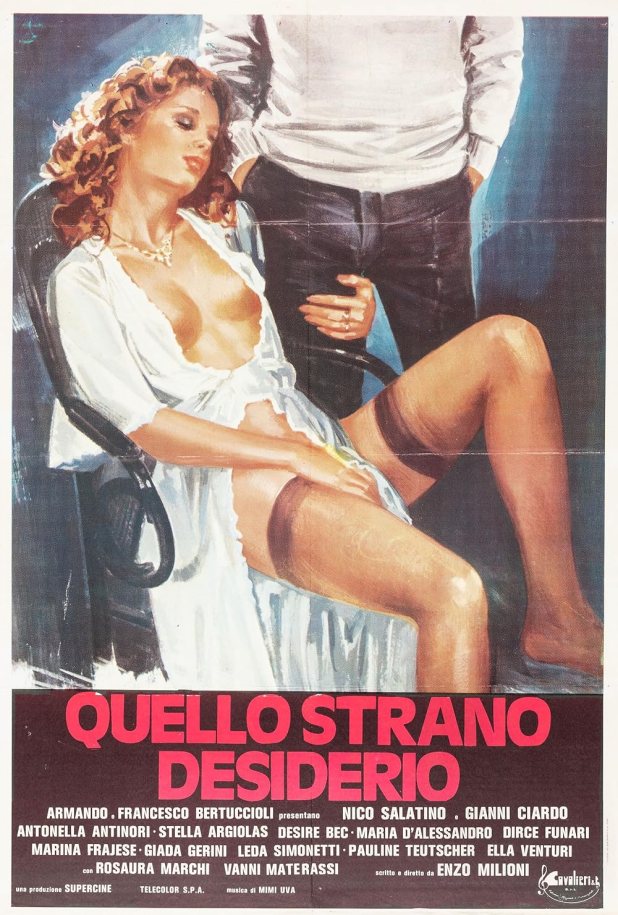
Directed and written by Enzo Milioni, That Strange Desire is the story of two aliens from the planet Alpha 4 who have been on the game show Cripto-Tivvu and won a trip to our planet. They possess the bodies of  Casimiro (Nico Salatino) and Peppino (Gianni Ciardo) and learn that while their race has not had sex for thousands of years, it’s still an act here on our planet.

Filmed almost entirely at the former Grand Hotel Ambasciatori in Bari, this comes from the director of The Sister of Ursula, so you should not be surprised when it feels a bit scuzzy. Most of the movie feels like he turned the camera on and filmed whatever happened and then threw some wacky music over it.

For some reason, this movie has two very quick moments of hardcore inserts, which seem even more gratuitous than usual. I also wonder how this made it on the list of Italian Gothic films I’ve been working from, but at least I made it through this one.

The cast also includes Antonella Antinori (who did some adult as well as mainstream movies like MayaPlay Motel and Burial Ground), Marina Hedman (again, lots of adult but also appeared in Images In a Convent and La bimba di Satana, as well as Jess Franco’s Elles font tout and an Amazon in Starcrash), Maria D’Alessandro (Hotel FearConcorde Affaire ’79) and Dirce Funari (Porno HolocaustBlue Movie and also an Amazon in Starcrash).

Soffio Erotico (1980)

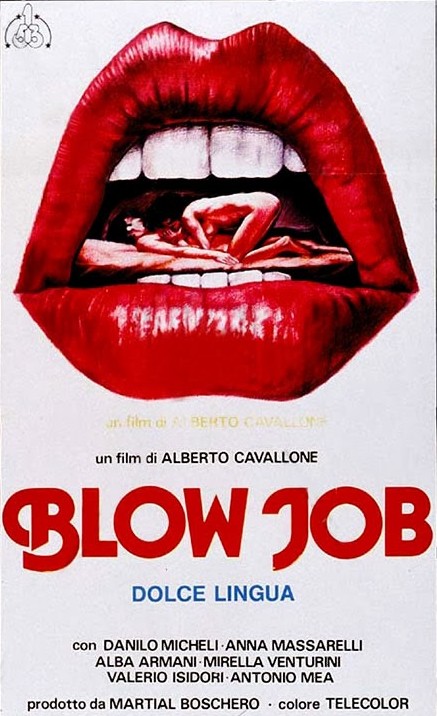
Blowjob has nothing to do with the sex act of its title and more to do with the works of Carlos Castaneda and Aldous Huxley. It was the follow-up to Blue Movie for director Alberto Cavallone, who said that it was a “deliberately pornographic film, but with political content. A movie about violence as a means of communication and knowledge in a repressive society.” Cavallone also claimed that it had no actual sex, which several performers dispute, as there were different cuts of the film. It was shot as The Naked Witch.

Stefano (Danilo Michel) and Diana (Andrea Belfiore, Patrick Still Lives) escape a hotel bill thanks to the violent suicide of a woman who has lept from her room’s window. Running to a race track, they meet Countess Angela (Anna Bruna Cazzato), a scarred and one-eyed woman who helps them pick the winning horse and takes them home to her country estate. The journey there should have clued them into something weird, as they pass a skull-faced biker who’d be at home in Tales from the Crypt or Psychomania.

Once there, Angela casts a spell on Diana and when Stefano seeks a doctor to help her, he only meets Sibilla (Mirella Venturini), a gorgeous witch who gives him a magical powder. Once healed, Diana and the Countess leave Stefano all alone in the castle as they head off to a dancing ball. If you’re thinking, “This would be the perfect time for Sibilla to emerge from a mirror and take our male protagonist to a cave and have sex with him,” you are the spirit of Alberto Cavallone and thank you for reading my site.

After returning to the home of Angela, there is a large dance that becomes an orgy until the skull biker emerges, removes her helmet and reveals that she is Sibilla. The enchantress begins a dance of death that takes out everyone except for Diana, Stefano and Angela, who is revealed to also be Sibilla. She is stealing the sex essence of the young couple in order to heal and reincarnate her form. Stefano replies by destroying a mirror, which bring him back to the hotel, where he learns that the woman who fell out of her window to kill herself was Diana. As emergency workers clean her from the streets, Stefano notices Angela and Sibilla watching.

According to Roberto Curti in his book Italian Gothic Horror Films 1980-1989, this film was shot at a villa near Riolo Terme, in North-East Italy, that was owned by a dirty old man who gave it for free, as long as he could watch the more sexual scenes be lensed.

That said, this has more than just sexual ambitions. The director said, “the whole film was focused on the possibility of escaping from our own bodies, by modifying sensorial perceptions through the use of drugs or self-concentration.” Also known as Soffio erotico (Erotic Whiff) and Dolce lingua (Sweet Tongue), this is a movie that brings you in with the promise of titillation and instead wants you to question your perception; the very act of seeing pornography is seeing what should not be seen, as well as being a sinner; it is, in short, occult.

Typhoon Club (1985)

ABOUT THE AUTHOR: Joseph Perry writes for the film websites Gruesome MagazineThe Scariest ThingsHorror Fuel and Diabolique Magazine; for the film magazines Phantom of the Movies’ VideoScope and Drive-In Asylum; and for the pop culture websites When It Was Cool and Uphill Both Ways. He is also one of the hosts of When It Was Cool’s exclusive Uphill Both Ways podcast and can occasionally be heard as a cohost on Gruesome Magazine’s Decades of Horror: The Classic Era podcast.

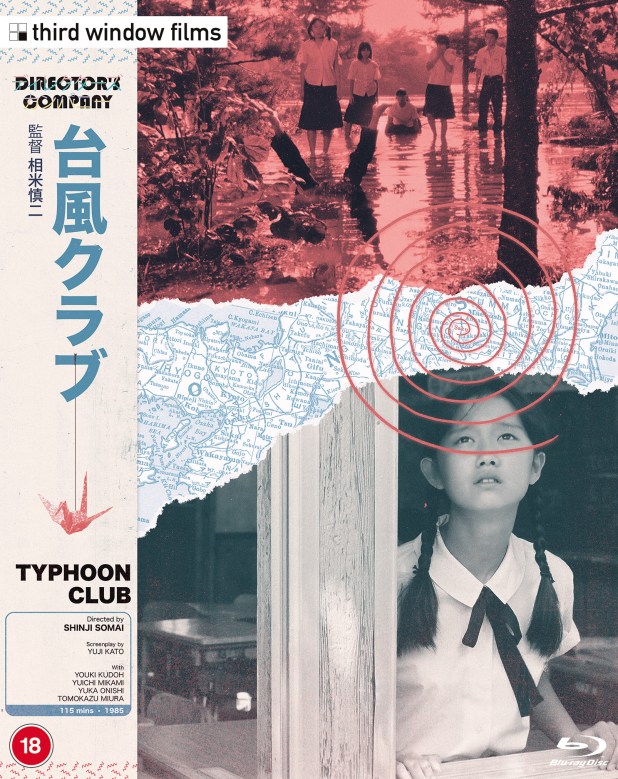
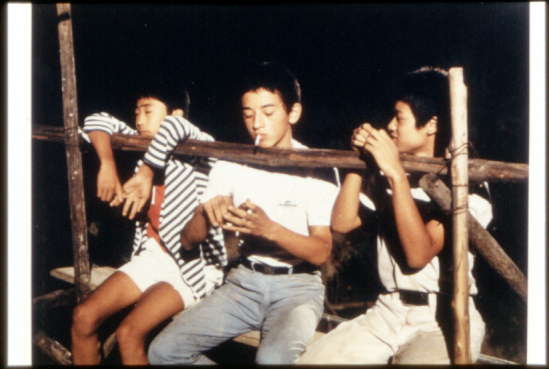
The titular storm in director Shinji Sômai’s Typhoon Club (Taifû kurabu; Japan, 1985) is both a literal one, as the story takes place before, during, and after a typhoon event in Japan, and a figurative one as a group of rural junior high school students deal with the realities of teen life and the frustrations of a lack of adult role models. Yuji Kato’s screenplay treats its teenage characters with a realistic eye, and the ensemble cast of young performers nail every nuance that is asked of them.

Starting with the near-drowning of a boy by the girls he was spying on at the school pool — closed at night, but when did that ever stop teenagers who wanted to swim by the moonlight? — and featuring a maddening sequence of a boy stalking and terrorizing a girl classmate — whose back he has scarred with acid during science class in an earlier scene — inside their school that is more unnerving than many horror movie scenes, there are many reflections on death and danger. Typhoon Club isn’t solely focused on the gloomy, though, as the students try their best to live life their way, including a lesbian couple and their energetic friend, and a boy who hopes to escape his smaller town and attend high school in Tokyo. There’s a dance sequence that feels more authentic than practically any one that you can name from a major Hollywood feature about teenagers.

Beautifully shot, framed, helmed, written, and performed, Typhoon Club deserves its reputation as a classic slice of Japanese cinema. If you haven’t seen it before, this new 4K restoration is a perfect way to watch it.

Typhoon Club, from Third Window Films, is now available in a new 4K restoration, region-free blu ray.

Bonus Features

  • New 4K digital remaster from the original negatives
  • Feature audio commentary by Tom Mes
  • Selected audio commentary by Josh Slater-Williams
  • Assistant Director Koji Enokido Talk Event
  • Introduction by Ryusuke Hamaguchi at the Berlin Film Festival
  • Trailer 
  • Slipcase with artwork from Gokaiju
  • ‘Director’s Company’ edition featuring insert by Jasper Sharp – limited to 2000 copies

TUBI ORIGINAL: Dress for Success (2023)

Directed by Erskine Forde and written by Eliza Hayes Maher (Deadly DILF) and Tiffany Yarde, this is the story of Caribbean cousins Fabienne Larke (Mishael Morgan) and Mirlande Holder (Andrea Lewis) who have decided to start a clothing company together. Fabienne is also a lawyer for a company that is trying to break a strike led by Zayn (Daniel Malik), a fiery union leader. What she doesn’t know is that she was only picked for this role because she’s a woman of color with a mother who was a factory worker. Can the cousins start their business and make it work when they are so unalike now — Fabienne being shy and devoted to work and Mirlande being live on social all the time and floating through her existence — or will things fail?

A lot of this movie is expected but that doesn’t mean that it isn’t entertaining. Actually, the fighting between the cousins felt authentic. I also liked that the movie didn’t go down the everyday route of having Fabienne and Zayn fall in love. There are some good messages about family, sticking with what you believe in and giving to others, as the cousins eventually create a company that gives clothing to young people who can’t afford interview clothes. Another fun Tubi movie!

You can watch this on Tubi.

Notturno con grida (1981)

The only copy I can find of Screams In the Night is, as nicely as I can put it, beat to shit. Whole sections of it turn into static and digital noise, the quality is at least fifth generation and the sound is barely listenable. There are no subtitles, either. And yet, in a world of 4K everything, I appreciate these analog moments when a movie looks bad and you need to fit to make it matter.

A medium named Brigitte (Mara Maryl, the wife of co-director and writer Ernesto Gastaldi), her husband Paul (Luciano Pigozzi, the Peter Lorre of Italy) and their friends Gerard (Gerardo Amato, The Red Monks), his fiancée Eileen (Martine Brochard, Top Model) and Sheena (Gioia Scola, Obsession: A Taste for Fear) have invoked the spirit of the long dead Christian (Franco Molè), who was killed ten years ago in this very room. He was once the husband of Eileen and in a few days, he will finally be declared dead, so she can use his money to build residential spaces on his property with Gerard.

Everyone has a secret. As for Gerard, he’s sleeping with Sheena and plans to kill Eileen. Paul used to be a priest. And Brigitte? Well, as everyone dies around them, she just may be a witch.

Gastaldi, who was the writer of so many Italian films, joined director Vittorio Salerno (he directed Libido as Julian Berry Storff), who hadn’t made a movie in five years. One day, while hunting in the woods — according to Roberto Curti’s Italian Gothic Horror Films 1980-1989 — he found a gigantic petrified formation known as a trembling stone. He couldn’t stop thinking about it until one night, he finally had an idea. Five people — lost in the woods and who all hate each other —  find the stone. It becomes “the amplifier of their bad desires, their projects of mutual duplicity … and mysteriously, no one will get out of the woods alive.”

To fund the movie, they got a 60 million lire grant from the Ministry of Spectacle by submitting the movie as La coscienza and pretending it was an art film. After they got the money, they formed a co-op with the cast, basing their salaries on the money the movie made from distribution.

Shot in three weeks with just four technicians, which included director of photography and cameraman Benito Frattari, his nephew Marco, a sound man and a local handyman to carry things who was provided for free by the mayor of the town where they shot, Soriano nel Cimino. Unlike many Italian exploitation movies, it was shot with direct sound. It also has nearly all natural light, which may be why it was set and shot outside. It is a frugal film, as you can tell.

If you have seen Libido, this is something of a spiritual sequel. It takes scenes from that movie and treats them in sepia, using them as flashbacks. In 1965, Mara Maryl was tied to a bed, an image that appears on that film’s poster. In 1981, it’s a rock in the woods. Pigozzi fell off a cliff to his death in the earlier film; here he claims it just broke his legs.

Perhaps most strange here is how much this movie prefigures the ideas within The Blair Witch Project. I’m not insinuating theft, just that the collective unconsciousness is a strange place. The woods are constantly changing, reality is shifting and there is no way out. However, this was shot on 16mm, not video, and even with a small crew looks professional and not the work of twentysomethings in the woods with a handheld.

As for the score, it has material lifted from The Suspicious Death of a Minor and improvised flute music by Severino Gazzelloni, whose ode to Pan was composed and recorded in six hours, giving the movie an hour of music to use.

I would treat this as a curiosity unless you have an obsession — you know me — with Italian film.

You can try to watch this on YouTube.

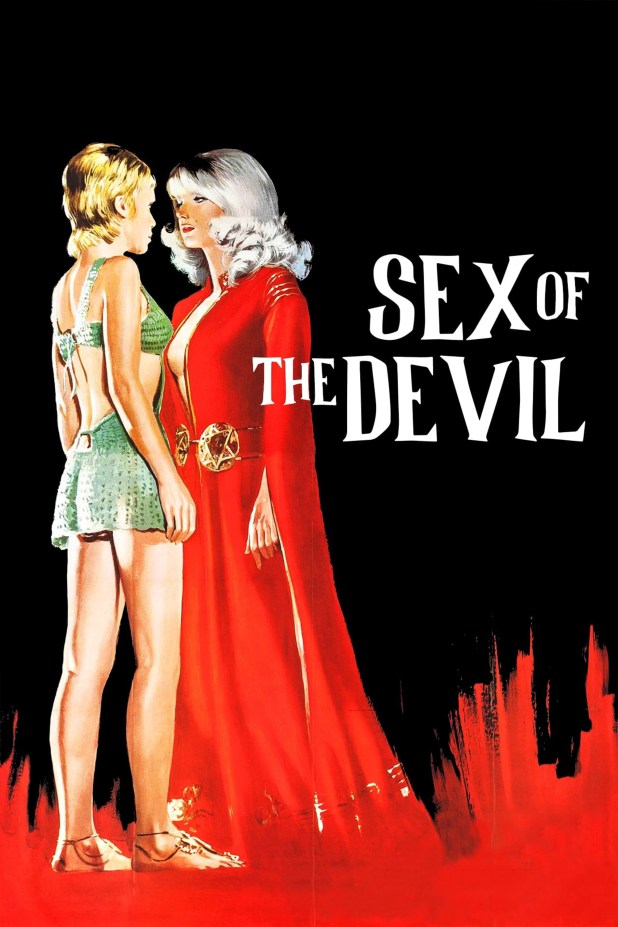
Sex of the Devil (1971)

The marriage between Andrea (Rossano Brazzi) and Barbara (Maitena Galli) is near the end, beyond the saving that a vacation to Istanbul can provide. Yet they go anyway, along with his assistant Sylvia (Sylva Koscina), to a villa whose last tenant, a sculptor named Claudine, hung herself. The housekeeper Fatma (Güzin Özipek) keeps secrets, like how she practically worships the dead woman. Speaking of secrets, Sylvia and Barbara have some of their own, as they have begun their own relationship away from the impotent surgeon husband, who is convinced people are trying to kill him. Also, as this is a fantastic, Claudine’s spirit finds her way to Sylvia.

The last part of the title of this movie — Il sesso del diavolo—Trittico — refers to a triptych or threesome. The film is filled with different versions of three together, such as the couple that arrives at the villa, a past indiscretion and maybe even a new one.

Directed by Oscar Brazzi and written by Sergio Civinini and Paolo Giordano, this film gets the most out of its setting, along with a soundtrack by Stelvio Cipriani that takes its inspiration — well, we can just say taglia e incolla — from Iron Butterfly’s “In-A-Gadda-Da-Vida.”

La Strelle nel Fosso (1979)

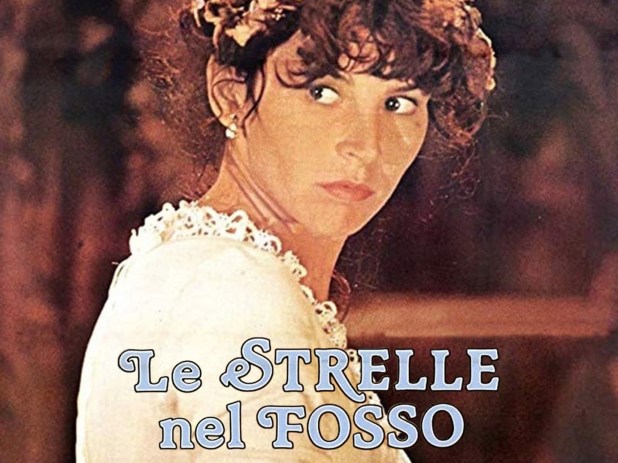
According to Roberto Curti in his book Italian Gothic Horror Films 1970-1979, director and writer Pupi Avati refused to “oblige to the rules of commercial film-making” and this movie — thought of as improvisational film jazz, mostly written and shot on the spot — was him trying yet again to create his own vision. While his previous TV movie Jazz Band was well-received, none of his movies had made money (there’s a moment in Curti’s guide to 1980s Italian Gothic where Lamberto Bava, while speaking about his film Macabre, says “…a week after the film’s release, the producer told me it was the first Avati production that made any money.).

This begins with a ratcatcher (Ferdinando Orlandi) staying overnight at a farmhouse and telling a young girl a bedtime story. There was once a house in the swamp and in it lived a family — father Giove (Adolfo Belletti) and his sons Silvano (Lino Capolicchio), Marione (Gianni Cavina), Marzio (Giulio Pizzirani) and Bracco (Carlo Delle Piane) — in a place where no woman had been for years. Possibly, this was because Giove’s wife died while giving birth to his fourth son.

One night, a pianist named Olimpia (Roberta Paladini, What Have They Done With Your Daughters?) appeared and in time, each member of the family asked her to marry them. She accepted each of their engagements and the marriages were celebrated throughout the day and night. But the next day, she was gone and they were all dead in a tableau reminiscent of Leornardo’s The Last Supper.

As the ratcatcher finishes his story, we notice that the girl looks just like Olimpia.

Pizzirani remembered that it was not an easy movie to make. “We did not know anything about the story. Pupi showed up at morning, gave us a sheet of paper and we had to study our lines. Sometimes the dialogue lines were not call and response, and I recall having to learn very long parts, deadly difficult speeches which later on I would repeat, improvising upon them a bit. It was traumatic.”

What emerges is a story made of stories and each of those tales deals with how we confront the story we don’t know the ending of. Our own. Avati said, “I have a problem with death and so I tried to make it beautiful, sunny, warm.” Is Olimpia even real? Did the mother die or leave the men alone to their own lives? How much is allegory and how much is actual? Avati always makes me ask so many questions.

You can watch this on YouTube.
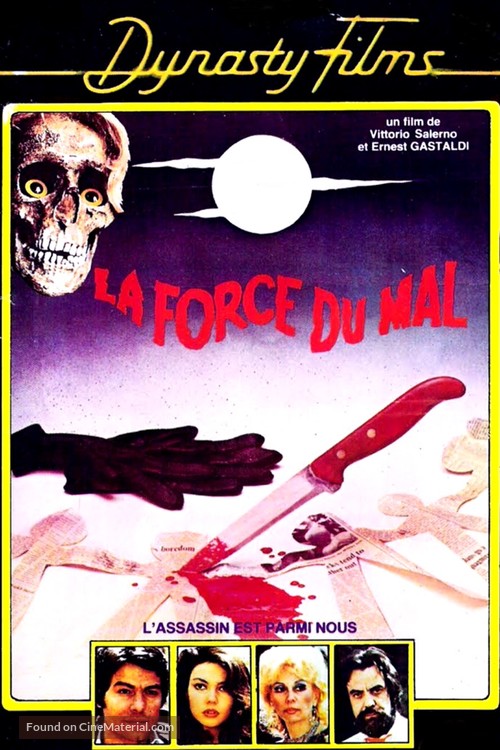
Luna di Sangue (1989)

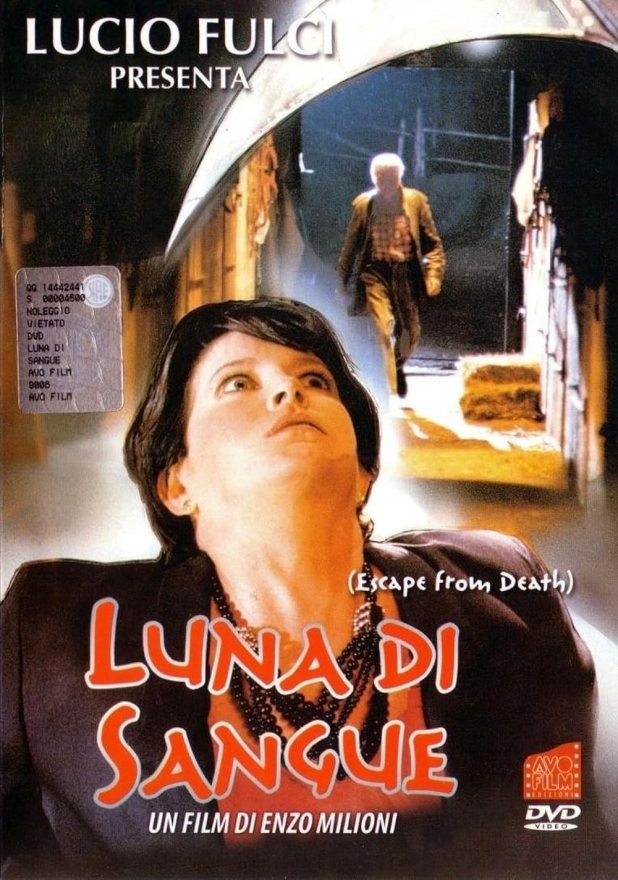
Ignore the Lucio Fulci Presents, as he had nothing to do with this other than to sign over his name. It was directed by Enzo Milioni, who also made Quello strano desiderio and The Sister of Ursula, and was written by Millioni and Giovanni Simonelli, who directed Hansel e Gretel.

A dying man tells the story of Ann Moffett (Barbara Blasco) and how she found her husband Larry’s dead body only for it to disappear. No one believed her and a year later, a man comes to visit her and claims to be her dead husband.

In case you wondered just how far Milloni can take things, there’s a scene where a farmer catches his mute and potentially mentally deficient daughter Tanya (Luciana Ottaviani AKA Jessica Moore from Eleven Days, Eleven Nights) fooling around with two men in his stable. He chases them off and his daughter then proceeds to kneel before him and commit an act of incestual oral copulation, capped off by someone shooting her in the back of the head, removing his member, which is shot again and then he’s shot in the face.

You may have seen the head being pushed out a window and the head of Annie Belle (House On the Edge of the Park) being sliced off with a scythe in the Fulci compilation that is Cat In the Brain.

How does this all work together in a kind of, sort of giallo? It doesn’t. It has a few murder set pieces that don’t fit in and a story that goes nowhere. Such is life.

You can watch this on YouTube.