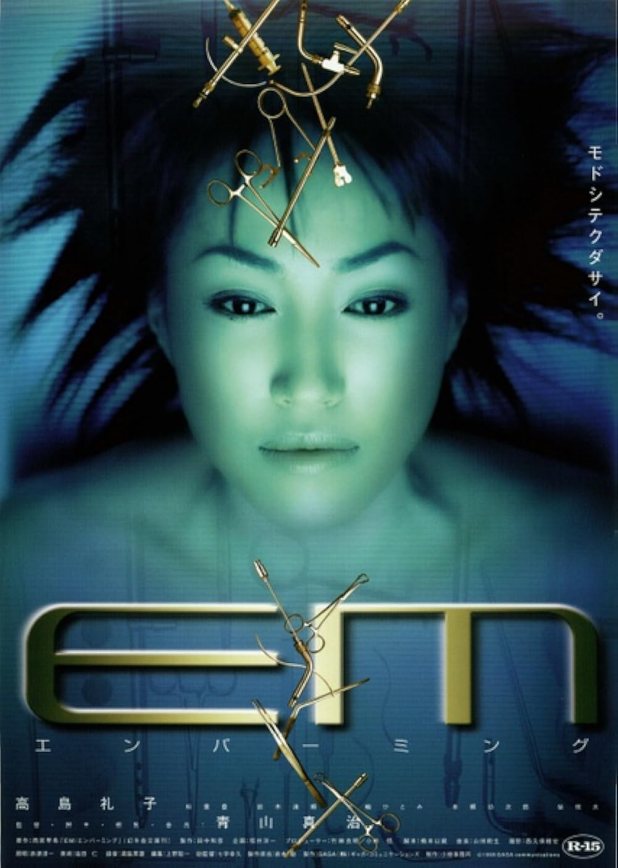
EM Embalming (1999)

Directed by Shinji Aoyama, EM Embalming follows Miyaki Murakami (Reiko Takashima), an embalmer — did you guess from the title? — who assists Detective Hiroka (Yutaka Matsushige) in investigating the suicide of Yoshiko Shindo, the son of a local politician. Yoshiko has jumped to his death from a building. To aid in the investigation, Reiko begins the process of reassembling Yoshiko’s body for preservation. However, she is cautioned by a priest (Kojiro Hongo) that her work is considered evil, and that embalming bodies is a sin.

As the story unfolds, the head of the deceased boy is stolen, and suspicion falls on his girlfriend (Hitomi Miwa) as the alleged thief. But soon, Miyaki discovers that Dr. Fuji (Toshio Shiba), who operates an operating room in the back of a large truck and was also the man who embalmed her mother, is involved in harvesting corpses and selling body parts on the black market.

In Japan, embalming is not as commonplace as in the United States. Miyaki’s skills transform her into an artist, even if her craft is gruesome. The film does not shy away from blood and gore, rapidly shifting between detective work and horror, which aligns it with the Giallo genre. And yes, the pun is intentional—there’s abundant blood.

The film’s narrative is scattered; it moves slowly, intertwining themes of incest and grief within its complex storyline. Yet unlike so many movies made in the J-horror boom, it doesn’t want to be the next anything. It wants to be itself, a strange, headless, desiccated mess of a film.

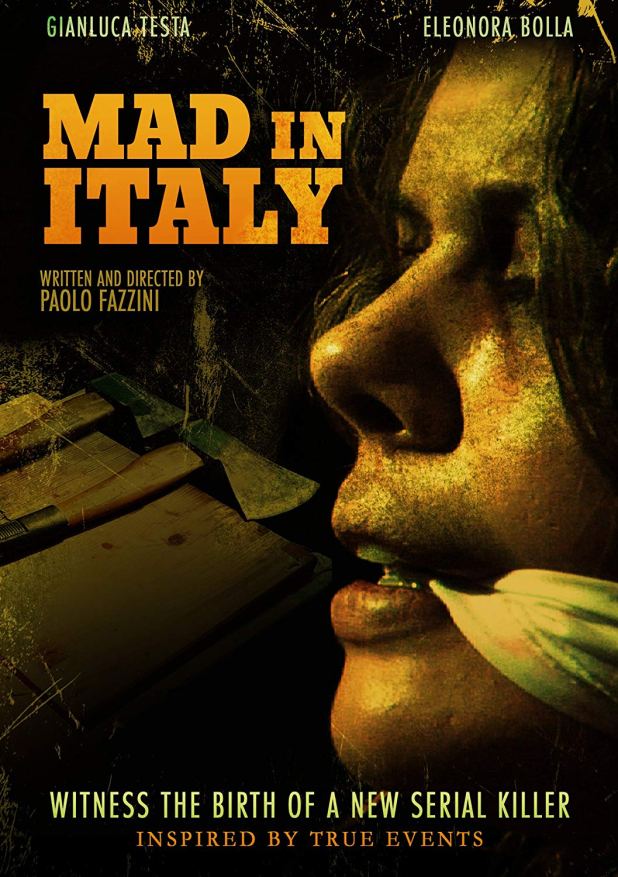
Mad In Italy (2011)

Director Paolo Fazzini also made Hanging Shadows: Perspectives on Italian Horror Cinema, so he understands Giallo. He is telling us about Davide (Gianluca Testa), a blue-collar worker who has lost his job, so he kidnaps “the girl” (Eleonora Bolla), an exotic dancer who is the daughter of a rich factory owner, taking her away from the city to a small home near Sicily. He ties her up and takes care of her, all while looking for work and finally spiraling into becoming a murderer.

His mind is caught between nightmares and waking life, seeing visions of people who want to bite into his flesh in the forest or a woman with no mouth. The film invites us to “Witness the birth of a new serial killer,” but if you’re coming to this for a slasher, it moves slowly, and the time between the violent and caring acts takes time.

It looks wonderful—cinematographer Mirco Sgarzi has talent—and also has one of my favorite things: a claim that it was inspired by true events. Yet whenever I wanted it to expand into more than just sitting, watching, and waiting, it felt like it never wanted to go there. Sure, Giallo inspires it, but it never embraces anything other than the color that fills each moment.

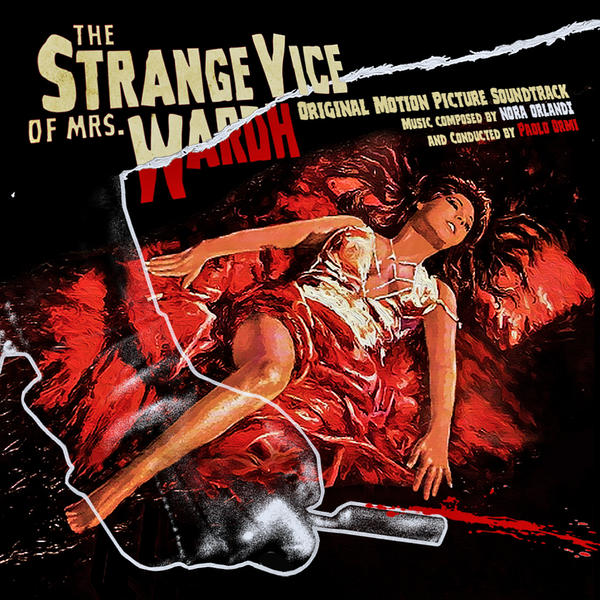
Cinematic Void January Giallo 2025: The Strange Vice of Mrs. Wardh (1971)

EDITOR’S NOTE: Cinematic Void will be playing this Giallo classic Saturday, January 25 at 5:00 PM at the Tenth Ave. Arts Ctr. in San Diego, CA (tickets here) along with Your Vice Is a Locked Room and Only I Have the Key and All the Colors of the Dark. For more information, visit Cinematic Void.

Sergio Martino’s directorial efforts have run the gamut — from straight exploitation (Mondo Sex and Mountain of the Cannibal God, which features Stacy Keach and Ursula Andress, as well as real animal mutilation which we’d never endorse) to horror (Island of the Fishmen, which in addition to starring Barbara Bach and Joseph Cotten, was re-edited by Jim Wynorski and re-entitled Screamers), post-apocalyptic action (2019: After the Fall of New York and Hands of Steel, which is more Terminator rip off than Road Warrior), spaghetti westerns, crime dramas, war films, comedies and even Italian TV, where he’s worked for the last several decades. But this week we’re here to discuss his contributions to the world of giallo.

This is his first effort and the start of the ensemble case in which he’d use in his films. George Hilton would appear in four of his films, Ivan Rassimov in three and one of the queens of the giallo, Edwige Fenech, would star in three (in fact, she was married to Sergio’s brother, the late producer Luciano Martino, at one time).

Wondering why this film isn’t just titled The Strange Vice of Mrs. Ward? Turns out a woman named Mrs. Ward sued before the release, claiming that the film would ruin her good reputation, so they changed the title. Yes, Italy, the country where you can make a movie called Zombi 2 and have nothing to do with the original film still has legal settlements such as this. You can also find this movie under the titles Blade of the RipperNext! and The Next Victim.

Julie Wardh (Fenech) is the wealthy heir to a retailing company. But she’s also a fragile flower, back in Vienna, a city packed with memories and former lovers. She’s married to Neil (Alberto de Mendoza from Horror Express and A Lizard in a Woman’s Skin), a man so wealthy and powerful that he leaves for business the moment they land.

As Julie rides alone in the rain, her car is stopped by the police who are on the hunt for a killer. The sound of the wiper blades reminds her of the last time she was here, recalling a vicious fight between her and a lover who repeatedly slapped her around before they made love in the rain. There’s a gorgeous shot here at the end, where the lovers are to the left of the camera while rain descends on them, almost illuminating them and a sports card pushes into the right foreground. Compared to other giallo which seem content to merely ape Argento or seem like boring police procedurals, Martino aspires to art within his direction (which honestly is why this site is planning on a week of his films).

A green light and honking horns snap Julie from her reverie and she returns to her apartment, where she takes strange notice of a car. Her apartment has been left exactly as it was the last time she was here — it’s a white pop art explosion of metallic, green and blue lines contrasted with oval windows — and just as she’s getting ready to take a bath, the buzzer rings. A dozen roses with a note attached: The worst part of you is the best thing you have and will always be mine – Jean.

We cut to a party, where Caroll (Conchita Airoldi, who would go on to produce Cemetery Man) is trying to hook Julie up with her cousin George (George Hilton, All the Colors of the Dark, The Case of the Bloody Iris) as a catfight between two girls in paper dresses goes down. Tell you what — if I am to learn anything from giallo, it’s that every party in 1970’s Italy was packed with drugs, crazy music and the chance that anything from a fistfight to an orgy could happen at any minute. People had to be exhausted all the time. Jean (Ivan Rassimov from Planet of the Vampires, Your Vice is a Locked Door and Only I Have the Key, Eaten Alive!), the guy who sent the roses and was the man she remembered in the earlier flashback, is there extending a salute. This enrages Julie, who leaves the party, but he follows her into the street. He reminds her that she belongs to him, but she counters that she married Neil to escape him, which is cemented when Neil shows up and punches the dude. Jean just laughs, looking at both of them, knowing that he owns Julie body and soul.

This leads to a flashback where Jean pours champagne all over her, soaking her dress, then smashes the bottle of champagne, showering her in glass shards. He uses what’s left of the bottle to slice up her dress and skin before he takes her. Their coupling is a mix of pleasure and pain, covered in blood, that she had to escape. But did she want to?

So what then is Mrs. Wardh’s strange vice? Is it for men that are bad for her? Is it for pain and dominance? Or some combination of both? As we learn, she’s caught between three men — her husband, whose cool indifference and emotional (and physical) unavailability is just as cruel as her former lover Jean, who owns her to the point that she is nearly his again before Neil showed up to hit him. And the third side of this love rectangle (is there such a thing?) is George, who is the porridge to her Goldilocks — the just right combination of both. Yet there is a fifth side to this — making it a love pentagon (!?!) — with Julie wanting to be a good woman, true to her vows and not to her need to be beaten, bloodied and forced. She is torn between her desire and her need to fit into the moral code of the world. So much of giallo is based on this — created in a country where the Holy Seat of a religious empire sits smack dab in the middle of Rome. Religion and morality nearly shook hands with the sexual revolution and excesses of the pre-AIDS 1970s.

Ah, but let’s not forget that a proper giallo needs a murder, which this film delivers with a quick slash in the shower. That said — what strikes me about Martino is that unlike Argento, he cares more about the story and the characters than creating murder art set pieces. The conversation between Carol and Julie isn’t just words on a page, they’re vital clues into her mental state. Whereas Carol’s casual amorality is revealed, saying that the killer — who we just saw attack the showering girl — is taking out her competition, Julie worries about her values. She married Neil for security and protection, but not the monetary or physical kind. She wanted protection from herself, as she feels that her loss of control and willingness to submit to the violent impulses of men makes her a sinner.

George shows up to meet Julie and get to know her better. He even tells her that he loves to court women when their husbands are around, cuckolding them. Julie claims that that leaves her cold, while Carol claims that she’d bed him, family or not. They decide to go to lunch together, which seems to be more about George staring at Julie than sustenance. Julie demands that George take her to the bus station, but instead he takes her all over the countryside on his motorcycle (What is it with Fenech’s character and dudes that ride bikes? Is it the freedom that it represents?) while he wears white leather fringe, a look that is very 1971. He calls her the moment that she enters the house and she tells him that she likes him way too much, so she can never see him again. Of course, he’s already there and enters the front door before kissing her. She tries to get away, but he keeps telling her that he is in love with her. She begs him to not complicate her life, that she is not the girl he thinks she is. Their kiss is artfully compressed into a second kiss that occurs much later that same day — an intriguing way to show the passage of time and the growth of their relationship.

As they kiss in the dark, a car nearly hits them, which Julie is sure is Jean. She tells him to take her anywhere, which ends up being his apartment. The car returns and its driver watches from the window as Julie and George make love (or, more to the point, she knees him in the crotch while laying upon him, but whatever works for them, I guess).

Later, Julie gets more flowers from an anonymous admirer. Her husband asks who they are from and she wishes aloud that they came from him. There’s another note attached — “Your vice is a locked door and only I have the key.” She tells him that she realizes that diplomats only love other diplomats. He replies that she feels that he has always failed and wronged her. He asks if she is content. “I’m more than content,” comes her reply.

The black gloved killer is watching her and calls her to blackmail her, saying that he will tell her husband. She goes to talk to Carol and claims that it’s Jean. Carol responds that the killer’s last victim was “that whore at the party” and Jean couldn’t be the killer, as he doesn’t go after women like that. Carol embraces free love and says that if Julie is into George, then why should she have to hide it? Also: Carol just walks around her apartment naked (and also has a crazy cover up that is all black with red feathers) and Julie is just fine with it. Carol offers to go to where the blackmailer/killer wants her to drop off the money.

Julie nervously chainsmokes while watching a motorcycle race, a scene intercut with Carol going to meet the killer. To show the escalation of worry, Martino piles on the jump cuts and quick switches between the two women. Whereas Julie is trapped within her worry and the walls of her apartment, the carefree Carol is all alone within a huge park. Alone until the killer reveals himself, slashing her with a straight razor. Again — the killings are rather matter of fact in contrast to the set-ups in this film.

The police get involved, finally investigating Jean. They go to his apartment, which is covered with photos of naked women and exotic animals. Then, they interrogate him with her in attendance. It’s just an excuse for him to keep trying to seduce her and inform the police that Julie has a blood fetish, so she could be the killer, too. George has also been brought in for questioning, to which Jean says, “Now I know why my flowers have no effect on you.”

Neil arrives to take Julie home, but later George says that he wants to speak to her husband and take her away from the city. She says that she has to see this out, she has to discover who killed her best friend when it should have been her.

As Julie returns home, she finds herself in a dark parking garage. The headlines of a car cut into the inky blackness before she is nearly run over. She runs for the elevator, watching for the killer and the numbers of her floor to get closer. Yet the doors open to reveal the killer! Julie runs from him, even attempting to hit him with her car. She barely makes it inside the apartment, screaming at the door. Her husband lets her in but she’s in hysterics. There’s a lot of this scene that feels like it influenced Halloween 2‘s elevator scene. I’m not alone in feeling like that sequel is a giallo. Check out this awesome article from Bill at Groovy Doom to see what I mean.

Neil has had enough and decides to go to Jean’s house and confront him. He tells Julie that he will go alone, but she is afraid and rushes to be with him. They explore his dark house, finally finding Jean’s body in the tub. Julie is overcome and passes out in her husband’s arms. When they get outside, Jean’s car is gone and flowers have been left in the backseat with another poem. Neil throws the flowers down in disgust.

We cut to a dream sequence of George, a laughing Carol and Jean covered in blood, slapping her around. Her husband wakes her up and shows her the photo of the killer. She asks her husband to protect her, but he leaves. She calls and begs George to come get her. He promises to take her to Spain, a place that will make her forget the rest of the world (people continually promise this to Julie, such as Carol’s offer that a place will make her forget she’s on a diet or that an affair will make her forget her sadness).

Neil comes back home to learn that Julie has left. Meanwhile, the killer tries to attack another woman, who unmasks, disarms and stabs him. He makes one last attempt to kill her, but passes out from blood loss.

Meanwhile (!), George and Julie are spearfishing. The camera work here slows down, turning around our lovers (You can’t tell me that DePalma didn’t watch at least a few giallo, even though he claims to have only seen The Bird with the Crystal Plumage and has been dismissive of Argento’s work. Sure, all of his films and giallo betray the and of Hitchcock, but some of these films seem way too close). They discover that the killer has died, but George disappears and someone starts following Julie. She arrives back at their apartment to hear the sound of dripping water. We follow the sound to the bloody curtains of the tub as water and blood spill out. The camera begins to spin back and forth before she sees Jean’s dead body, screams and passes out. George arrives and tries to wake her up, but she’s catatonic. George finds the cause of Julie’s worry — rust had been dripping onto the floor, looking like blood.

Julie awakens and her mood gives way to madness. She’s sure someone is there and yet there is no one. As she realizes this, she attacks a wall and is chloroformed from behind by…Jean! George is rushing a doctor to see her, explaining her vice for blood that excites and repels her at the same time. But Jean is too busy dragging her to the kitchen, where he duct tapes the window shut. He opens a gas line and locks the door (using an ice cube?), leaving her to die. We hear her heart beating out as it’s cut with shots of the doctor and George rushing to her. She makes an attempt to stand but cannot. And it’s too late — Julie is dead.

Neil comes to see the police and blames George for what the police are classifying as a suicide. Jean waits in a secluded area for George, who greets him with a smile. He asks him for the money — turns out that they were in this together. Even after explaining that they both have an alibi, Jean asks again for the money. George shoots him and leaves a gun in his hand, making it look like a suicide.

Turns out that Neil and George were in on this too — Neil has paid off his debts and with Carol gone, George is the only heir to a fortune — much like Hitchcock’s Strangers on a Train. As they drive away laughing, Neil sees Julie on the side of the road and demands that Neil turn around. To their surprise, it is her — followed by the police. A chase leads them off the side of the road to their death. The doctor has saved her life and it seems like he’s fallen for her.

Wow. The Strange Vice of Mrs. Wardh was but the first of Martino’s giallo films, but it’s great. It kept me guessing until the end with none of the b roll travelogue footage and red herrings that plague so many other films in the genre. What a movie to spend the middle of the night into the morning with!

Here’s a drink recipe.

The Strange Cola of Mrs. Wardh (tweaked from this recipe)

  • 1 1/2 oz. J&B Scotch
  • 5 oz. cola
  • 4 dashes Angostura Orange Bitters
  • An orange wedge
  1. Put on your black leather gloves and use a switchblade to slice an orange wedge.
  2. Fill a tall glass with ice and pour in the J&B and cola.
  3. Add the bitters, then squeeze in the orange juice and use the rest of the wedge for a garnish.

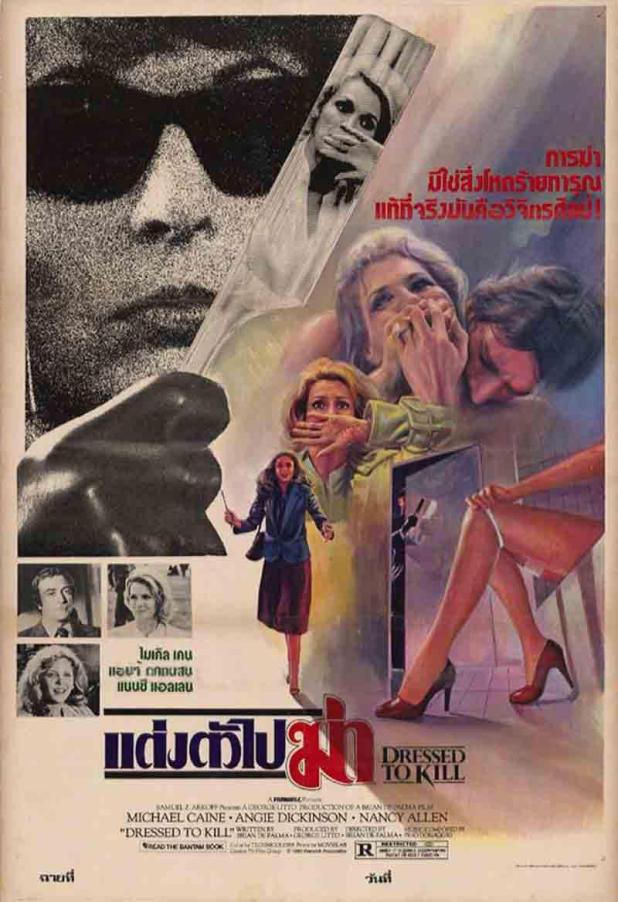
Cinematic Void January Giallo 2025: Dressed to Kill (1980)

EDITOR’S NOTE: Cinematic Void will be playing this film on Friday, Jan. 24 at 10:30 p.m. at the Guild Cinema in Albuquerque, NM (tickets here). For more information, visit Cinematic Void.

Let’s get this out of the way: Brian De Palma, much like Giallo, was heavily influenced by Hitchcock. In fact, when an interviewer asked Hitchcock if he saw the film as an homage, he replied, “You mean fromage.” That said — Hitchcock died three months before the film was released, so that story could be apocryphal (it’s been said that the famous director made this comment to either a reporter or John Landis).

What is true is the interview that De Palma did after Dressed to Kill (Rolling Stone, October 16, 1980).  The director claimed, “My style is very different from Hitchcock’s. I am dealing with surrealistic, erotic imagery. Hitchcock never got into that too much. Psycho is basically about a heist. A girl steals money for her boyfriend so they can get married. Dressed to Kill is about a woman’s secret erotic life. If anything, Dressed to Kill has more of a Buñuel feeling.”

However, I’d argue that this film has more in common with Giallo than anything the “Master of Suspense” directly created. That’s because—to agree with DePalma above—this film does not exist in our reality. Much like Argento’s The Bird with the Crystal Plumage, it exists in its dream reality, where the way we perceive time can shift and change based on the storyteller’s whims.

Yet what of DePalma being dismissive of Argento in interviews, claiming that while he saw the director as having talent, he’d only seen one of his films? Or should we believe his ex-muse/wife Nancy Allen, who claims that when she told DePalma that she was auditioning for Argento’s Inferno, he said, “Oh, he’s goooood.”

Contrast that with this very simple fact (and spoilers ahead, for those of you who worry about that sort of thing, but face facts, this movie is 37 years old): DePalma rips off one of Hitchcock’s best tricks from Psycho: he kills his main character off early in the film, forcing us to suddenly choose who we see as the new lead, placing the killer several steps ahead of not just our protagonists, but the audience itself.

And yet there are so many other giallo staples within this film: fashion is at the forefront, with a fetishistic devotion to gloves, dresses, spiked high heels, and lingerie being displayed and removed and lying in piles all over an apartment or doctor’s office. This is the kind of film that makes you stop and notice an outfit, such as what Kate Miller (Angie Dickinson, Big Bad Mama, TV’s Police Woman) wears to the Metropolitan Museum of Art or the blue coat that Liz Blake (Nancy Allen, CarrieStrange Invaders) wears to meet Dr. Robert Elliot (Michael Caine, how could we pick any movie other than Jaws 4: The Revenge).

Then there are the music cues from Pino Donaggio, who also scored Don’t Look Now, Fulci’s The Black Cat, and Argento’s Do You Like Hitchcock? The film not only looks the part, but it has intense sound, too.

We also have characters trying to prove their innocence, investigating ahead of the police. Or the son of the murder victim who wants to discover why his mother really died. Or her doctor, who has an insane patient named Bobbi who has stolen his straight razor and demands that she give him more time than the rest of her patients. All of them could be the killer. Giallo gives us no assurances that just because we see someone as the protagonist, there’s no reason they couldn’t also be the antagonist.

Let’s toss in a little moral ambiguity here, too. Kate is a woman who is bored with her life. She’s raised a son and seen her marriage lose any hope of sexual frisson. Liz is a prostitute — no slut shaming here, she’s a strong businesswoman more than anything  — but she’s also a practiced liar, as a scene shows her deftly manipulating several people via phone to get the money she needs to buy stock based off an insider tip she receives from a client. Dr. Elliot is obviously attracted to Kate but claims that his marriage prevents him from having sex with her. Yet it seems like he has secrets beyond informing the police of the threats of his obviously unbalanced patient, Bobbi. And then there’s Peter, Kate’s son, who has no issues using his surveillance equipment to spy on the police or Liz. If this character seems the most sympathetic, remember that he is the closest to the heart of DePalma, whose mother once asked him to follow and record his father to prove that he was cheating on her.

Finally, we have the color palette of Bava’s takes on giallo mixed with extreme zooms, split screens and attention to the eyes of our characters. The blood cannot be redder.

The film opens with Kate in the shower. While the producers asked Dickinson to claim that it’s her body, it’s really Victoria Johnson (Grizzly) as a body double. Her husband comes into the shower to make love to her, but she finds it robotic and not the passion she feels she deserves. Directly after, she tells Dr. Elliot that she’s frustrated and attempts to seduce him, but he rejects her.

More depressed than before the appointment started, she heads to the Metropolitan Museum of Art. Despite being surrounded by inspiration, such as the statue of Diana by Saint-Guadens, West Interior by Alex Katz and Reclining Nude by Tom Palmore (a tip of the hat to the amazing I Talk You Bored blog for an insightful take on the film and the research as to what each work of art is), she absentmindedly writes entries in her schedule. Planning the holiday meal gets her through the mindlessness of her life, flowing penmanship reminding her to “pick up turkey” instead of slowing down and appreciating not just the artwork around her but the people. There’s a young couple in lust if not love. There’s a young family. And then, a man with dark glasses catches her eye before brazenly sitting down next to her.

We are used to male characters chasing after female characters who aren’t defined by anything other than being sex objects. Instead, we have Kate pursuing the man, making the first, second, and even third moves until we realize that she was just following the man’s breadcrumbs.

Of note here is that color plays an essential role in the scene, as do expected manners. Kate is a wife and mother. She is who society expects to have virtue, and she is clad in all white, but her intentions are anything but pure. She finally has what she wants—the thrilling sex life that she may have only read about in trashy paperbacks.

This scene is a master class in pacing and movement. Imagine, if you will, the words on the page: Kate follows a mystery man through the museum. And yet, those are just eight words. We get nearly nine minutes of wordless pursuit, yet it never grows dull.

Finally, Kate follows the man out of the museum, but she loses him until she looks up and sees her glove dangled from a taxi. But blink, and you miss death in the background as Bobbi blurs past the camera.

When we catch up with Kate, it’s hours for her but seconds for us because this movie is a dream universe. She wakes up in bed with a stranger. There’s a gorgeous camera move here as DePalma moves the camera backward, an inverse of how a lesser director would have treated this scene. Instead of showing the two lovers tumbling through the apartment and removing clothes at every turn, we see Kate reassembling herself to move from her fantasy world to reality and toward her real world, which will soon become a nightmare. The camera slides slowly backward as she gets dressed, remembering via split-screen and sly smile how she doesn’t even remember where her panties have gone. She’s still wearing white, but under it all, she’s bare, her garments lost in a strange man’s house. A man whose name she doesn’t even know.

So now, as she emerges from realizing her sexual fantasies, she feels that she must make sense of it. She wants to write a note to say goodbye but doesn’t want to overthink it. Maybe she doesn’t even want it to happen again. And then she learns more about the man. It starts with his name and then becomes more than she ever wished to find out: his health report shows that he has multiple STDs.

Kate leaves the apartment and makes her way to the elevator, where she tries to avoid anyone’s eyes. In the background, we see an ominous red light, ala Bava. Bobbi—death and punishment for sin—is coming.

The death scene — I hold fast to my claim that The New York Ripper is close to this film but made by a director who doesn’t have the sense to cut away from violence — DePalma stages his version of the shower scene. But more than Psycho, we’ve come to identify with Kate. She’s a woman fast approaching middle age who wants a thrill, and yet, she’s punished by disease and death. She didn’t deserve this, and her eyes pleaded not to the killer as much as they did to the camera. And to us.

Here’s where we have to wonder aloud about DePalma’s long-discussed misogyny. This film was protested by women’s groups, who stated in this leaflet that “FROM THE INSIDIOUS COMBINATION OF VIOLENCE AND SEXUALITY IN ITS PROMOTIONAL MATERIAL TO SCENE AFTER SCENE OF WOMEN RAPED, KILLED, OR NEARLY KILLED, DRESSED TO KILL IS A MASTER WORK OF MISOGYNY.” Is DePalma guilty of the slasher film trope of “you fuck, and you die?” Maybe. Perhaps if she had remembered her marriage, at best, she wouldn’t be here. At worst, she wouldn’t have forgotten her ring in the stranger’s apartment and would have survived.

The way I see it, the death of Kate allows us to make the transition from past protagonist to new heroine, as the doors open post-murder to reveal a grisly scene to Liz and her john. The older man runs while Liz reaches out to Kate, their eyes meeting and fingers nearly touching. Kate’s white purity has been decimated by the razor slashes of Bobbi, the killer. As their transference is almost complete, Liz notices Bobbi in the mirror. Remember that we’re in a dream state? Time completely stops here, so we get an extreme zoom of both the mirror and Liz’s face. She escapes just in time, grasping the murder weapon and standing in the hallway, blood on her hands as a woman screams in the background, figuring her for the killer.

At this point, the film switches its protagonist. Unlike the films of David Lynch, like Mulholland Drive, this transference is not a changed version of the main character, but her exact opposite. Kate wore white, was older, and had a marriage and child, yet she slowly came to feel like an object to the men in her life. Liz wore black, was young and single, but was wise to the games of sex and power. She isn’t manipulated, turning the tables on men by using their needs for personal gain. Kate may have seen sexual fantasy as her greatest need, but for Liz, it’s just a means to an end.

Kate and Liz are as different as can be. For example, Kate goes to the museum to find inspiration. Liz only sees art as commerce, and she spends plenty of time explaining to Peter how much money she could make by acquiring a painting.

Dr. Elliott discovers a message from Bobbi on his answering machine (these machines and the narrative devices they enable must seem quaint and perhaps even anachronistic to today’s moviegoers). Once, Bobbi was his patient, but he refused to sign the paperwork for their (as the pronoun hasn’t been defined, so I’ll use they/their) sex change. In fact, Dr. Elliot has gone so far as to convince Bobbi’s new doctor that they are a danger to herself and others.

The police, however, have arrested Liz, and Detective Marino (Dennis Franz, TV’s Hill Street Blues and NYPD Blue) doesn’t believe a word she has to say. There’s a great moment here where Liz goes from wide-eyed ingenue to knowing cynic in the face of Marino’s misogynistic tone. Meanwhile, Kate’s son Peter (Keith Gordon, Jaws 2Christine) uses his listening devices in the station to learn more about his mother’s death than the police are willing to let on.

He begins tracking Liz, obsessively noting the times that she comes and goes from her apartment. He’s doing the same to Elliot’s office. But he’s not the only one tracking people. Bobbi has been stalking Liz, including a sequence where our heroine goes from being chased by a gang of black men to talking with an unbelieving police officer to Peter saving her from Bobbi with a spray of mace.

Because Peter has seen Bobbi also emerging from Dr. Elliott’s office, so he joins forces with Liz to discover who she is. That means that Liz uses her chief weapon — sex — to distract the doctor long enough to discover Bobbi’s real name and information. We learn that Liz’s mental sex game is as strong as her physical attributes here — she says that she must be good to be paid as well as she is. She knows precisely the fantasy Dr. Elliott wants to hear. But perhaps she also knows the fantasy that the mainly male slasher/giallo viewer wants: the woman submitting to the killer holding the knife.

Peter watches outside in the rain when a tall blonde pulls him away. Has he been taken by Bobbi? No — Liz returns to have sex with Dr. Elliott; he has been replaced by the killer. Bobbi lifts the razor as Liz helplessly crosses her arms in front of her face for protection. But at the last minute, the blonde who grabbed Peter outside is revealed to be a police officer, as she shoots Bobbi through the glass. That shattered pane also breaks Bobbi’s illusion and mask, revealing that Dr. Elliott is the man under the makeup and clothes.

The killer is arrested and goes into an insane asylum; Dr. Levy explains that while the Bobbi side of his personality wanted to be free, the Dr. Elliott side would not allow them to become a true woman. Therefore, whenever a woman broke through and aroused the male side of the persona, the female side would emerge and kill the offending female.

Inside the mental asylum, a buxom nurse attends to the male patients. The room is bathed in blue light, a cool lighting scheme that echoes Mario Bava’s films. The movie has moved from a dream version of reality to a pure dream sequence. It intrigues me that Carrie and Dressed to Kill both start with a shower scene and end with a dream threat to the surviving secondary heroine.

Within the asylum, Dr. Elliott overcomes the nurse and slowly, methodically, folds her clothing over her nude form. As he begins to either dress in her clothes — or worse, molest her dead body — the camera slowly moves upward as we realize that there is a gallery of other patients all watching and screaming. This scene reminds me of the gallery of residents watching a doctor perform surgery, yet inverted (have you caught this theme yet?) and perverted.

Bobbi emerges once again, and because she is dead, she cannot be stopped. Liz is bare and helpless in the shower, and nothing can protect her from being slashed and sliced and murdered — except that none of this is real. She awakens, screaming in bed, and Peter rushes in to protect her. And for the first time in the film (again, thanks to I Talk You Bored for noticing), she is wearing white.

Many find this a hard movie to stomach due to its misogyny. I’ll see you that and tell you it’s a misanthropic film that presents all of humanity, male and female, negatively. The men in this film are actually treated the way women usually are in films, as either silent sex objects (Warren Lockman), sexless enemies (Kate’s husband), shrill harpies that need to be defeated (Detective Marino) or sexless best friends who provide the hero with the tools they need to save the day (Peter). Seriously, in another film, one would think Peter would have a sexual interest in Liz, but despite her double entendres and come-ons, he remains more concerned with schedules and numbers and evidence.

Bobbi, the combination of male and female, comes across as a puritan punisher of females who benefit from sex, either emotionally or monetarily. Or perhaps they are just destroying the sex objects that they know that the male side of their brain will never allow them to become. Interestingly, Bobbi’s voice doesn’t come from Michael Caine but from De Palma regular William Finley (The Phantom of Phantom of the Paradise).

What else makes this a giallo? The police seem either unwilling to help at best or ineffectual at worst until they tie things up neatly at the end. And the conclusion, when the hand emerges not from the doorway — but the medicine cabinet — to slash Liz echoes the more fantastic films in the genre, such as SuspiriaAll the Colors of the Dark and Stagefright, where reality just ceases to exist. At the end of all three films, the heroine has confronted the fantastic and may never be the same.

In the first, Suzy narrowly escapes from hell on earth and emerges laughing in the rain. Is she happy that she survived? Has she achieved a break from reality? Is she breaking the fourth wall and laughing at how insane the film has become, pleased that the torture is finally over?

In the final scene of All the Colors of the Dark, the fantasy world is all a ruse, yet our heroine, Jane, is now trapped in the dream world. She can tell what will happen before it does; she knows that her husband has both slept with and killed her sister, but he has saved her from a fate worse than death. Yet all she can do is shout, “I’m scared of not being myself anymore. Help me!”

In Stagefright, the final girl walks out of the scene and out of reality as she defeats the killer. She has transcended being an actress to removing herself from fiction.

In all these films, the characters are not unchanged by their experiences with the dream world. In Dressed to Kill, the final dream sequence renders Liz truly frightened for the first time in the film. It’s the only time we see her as vulnerable — even when faced with an entire gang of criminals on the subway, she retains her edge. As Peter reaches out to comfort her — the only sexless male in the film and not just a sublimated one like Dr. Elliott — she recoils from his touch before giving in to his protective embrace.

In the same way, the film changes us. It has thrilled us, made us think, or even made us angry. True cinema—true art, really—makes us confront what we find most uncomfortable. Sure, we can deride and decry many of this film’s choices, but the fact that I’ve devoted days of writing and over three thousand words to it speaks to its potency. Thanks for reading if you’ve made it this far.
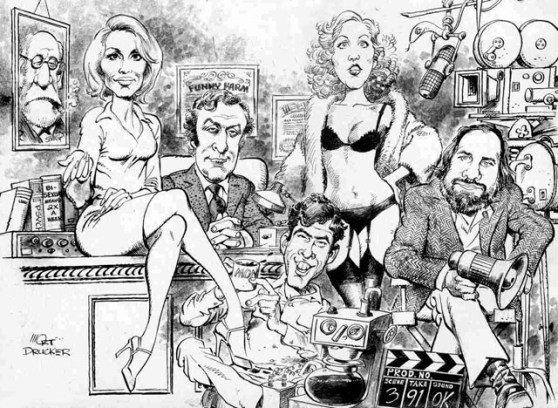
PS—I’ve often discussed—in person and on podcasts—that I experienced so many R-rated movies for the first time via Mad Magazine. I’m delighted I could find the Mort Drucker illustration for his skewering of Dressed to Kill.Dressed to Kill (1980)
ARROW BLU RAY AND 4K RELEASE: The Cell (2000)

Tarsem was born in Punjab and came to the Art Center College of Design in Pasadena, California, to learn how to be a filmmaker, studying alongside and acting in the student movies of Zack Snyder and Michael Bay. I first noticed his work in the video for R.E.M.’s “Losing My Religion” before he directed this film. He’s gone on to make The Fall, Immortals, Mirror Mirror, Self/less and Dear Jassi, some incredible commercials, and even coming back to music videos to make Lady Gaga’s “911.”

The Cell may tell a somewhat simple story: Child psychologist Catherine Deane (Jennifer Lopez) must save comatose boy Edward Baines (Colton James) by studying the mindscape of serial killer Carl Rudolph Stargher (Vincent D’Onofrio), who suffers from the same viral illness that causes an unusual form of narcoleptic schizophrenia.

Yet the direction and visual style of this film push it into unfamiliar territory. Taking cues from British artist Damien Hirst’s divided horse imagery, Norweigan figure painter Odd Nerdrum, H. R. Giger, and even shouting out Fantastic Planet, this looks unlike anything in the film—but a ton of music videos and artwork—before.

The story, all about the Cronenberg-ish named Neurological Cartography and Synaptic Transfer System, finds Catherine entering the brains of her sleeping patients to fix their dreams, an idea taken from He Who Shapes by Roger Zelazny. Watching it, I was reminded of another similar film, Dreamscape, which may have a bigger script and wilder ideas but doesn’t have the eye for imagery that Tarseem and director of photography Paul Laufer bring to this.

Catherine is guided by doctors Henry West (Dylan Baker) and Miriam Kent (Marianne Jean-Baptiste) and government agents Pete Novak (Vince Vaughn) and Gordon Ramsay (Jake Weber) as she descends into the mind of the killer, whose killing technique gives the name to this movie: he drowns his victims inside a glass cell. Then he rises above it to watch their deaths from above. Like Freddy Krueger, he rules his mindscape; just like those films, what happens to Catherine in the dreamscape occurs in reality. She’s trapped but must escape to learn how to use the device and save Edward.

Amazingly, there is a direct-to-video sequel to this that no one has ever talked about. It came out in 2009 and has a new killer, The Cusp, who kills people and resuscitates them over and over until they ask him to kill them. His only surviving victim, psychic investigator Maya (Tessie Santiago), is the only one who can stop him.

Despite its success, writer Mark Protosevich has disowned the film. He claims that what Tarseem made—and the many rewrites—changed his original script so much that he hopes he can remake it someday. Speaking of remakes, he wrote the script for American Oldboy.

The new Arrow Video release gives more than just the original and director’s cuts of the movie. There’s also a director of photography cut, with a different aspect ratio and alternate color grading created by director of photography Paul Laufer. This gives you an opportunity to explore the world of The Cell from so many places.

The Arrow Video Blu-ray and 4K UHD releases of The Cell have brand new 4K restorations of both the 107-minute Theatrical Cut and the 109-minute Director’ Cut by Arrow Films, approved by director Tarsem Singh. There’s also a bonus disc containing a previously unseen version of the film with an alternate aspect ratio and alternate grading created by director of photography Paul Laufer. Plus, you get an illustrated collector’s book containing new writing on the film by critics Heather Drain, Marc Edward Heuck, Josh Hurtado and Virat Nehru and limited edition packaging with a reversible sleeve featuring original and newly commissioned artwork by Peter Savieri.

Extras include four different audio commentaries:

Film scholars Josh Nelson & Alexandra Heller-Nicholas

  • Screenwriter Mark Protosevich and film critic Kay Lynch
  • Director Tarsem Singh
  • Director of photography Paul Laufer, production designer Tom Foden, makeup supervisor Michèle Burke, costume designer April Napier, visual effects supervisor Kevin Tod Haug and composer Howard Shore

Projection of the Mind’s Eye, a new feature-length interview with director Tarsem Singh; Between Two Worlds, a new in-depth interview with director of photography Paul Laufer; Paul Laufer Illuminates, a new interview about the alternate master of The Cell; Art is Where You Find It, a new visual essay by film scholar Alexandra Heller-Nicholas; The Costuming Auteur, a new visual essay by film critic Abbey Bender; Style as Substance: Reflections on Tarsem; eight deleted/extended scenes with optional audio commentary by director Tarsem Singh; six multi-angle archive visual effects vignettes; theatrical trailers and an image gallery.

You can order the Blu-ray or 4K UHD from MVD.

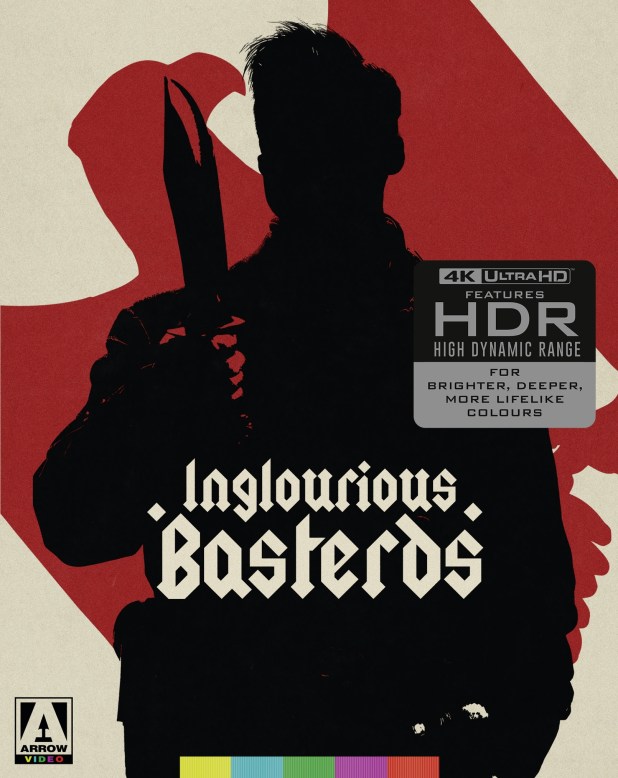
ARROW 4K UHD AND BLU RAY RELEASE: Inglorious Basterds (2009)

Enzo G. Castellari’s The Inglorious Basterds — known in Italy as Quel Maledetto Treno Blindato or That Damned Armored Train — is a 1978 film that ran near constantly on cable throughout the late 70s and early 80s.  In case you’re wondering just how important this film was to Quentin Tarantino, check out his excitement as he speaks to Castellari in this clip from the extras from Severin’s out of print release.

Tarantino started writing his World War II film in 1998, but would struggle with the film, working on it and then shelving it again and again. That’s when he arrived at a story much like Castellari;s film — a group of soldiers escape from their executions and go on a suicide mission. While that idea changed slightly, it was what he needed to get the script written.

Tarantino had always wanted to work with Brad Pitt, so this felt like the right film, and the addition of Christoph Waltz — Tarantino felt that the role of Hans Landa was unplayable until then — made the movie for him. Tarantino saw the film as just as much a spaghetti western as a war film and almost called the movie Once Upon a Time in Nazi-Occupied France.

The film starts with SS colonel Landa interrogating a French dairy farmer about the last Jewish family in town. The farmer is promised that his family will be spared if he gives up the family, so the soldiers shoot through the floor, killing all of the members of the Dreyfus family except for their daughter, Shosanna (Melanie Laurent).

We them meet Lieutenant Aldo Raine (Brad Pitt) of the First Special Service Force, who is recruiting Jewish-American soldiers to his team. They go way further than the regular troops, scalping Germans when they kill them. Called The Basterds, we soon meet two of them — Sergeant Hugo Stiglitz, a rogue German soldier who has changed sides and already claimed the lives of thirteen Gestapo officers, and Donny “The Bear Jew” Donowitz (Eli Roth), a baseball bat carrying maniac. There’s also Smithson “The Little Man” Utivich (B.J. Novak) and Private Omar Ulmer (Omar Doom) amongst others.

Meanwhile, Hitler learns that the Basters have been atatcking his troops, carving swastikas into the heads of the survivors so they can never hide their shame. And teh surviving Shosanna is now operating a Paris cinama under the assumed name Emmanuelle Mimieux, plotting with her lover Marcel to murder the Nazi leadership who will attend the premiere of Nation’s Pride, a propaganda film all about Fredrick Zoller, who recently killed 250 Allied soldiers in one battle.

British Royal Marine Lieutenant Archie Hicox (Michael Fassbender) and the Basterds are planning their own attack. He and Stiglitz meet an undercover agent, the German film star Bridget von Hammersmark (Diane Kruger), but Hicox’s accent nearly destroys the entire mission, as a firefight breaks out between the Basterds and an entire bar full of Germans. They survive, but now Landa is on to them. At the premiere, he strangles Hammersmark and catches on to the Basterds who have snuck in.

That’s when Landa makes his gambit. He has Raine contact his superiors and cuts a deal: the mission can continue as long as he has immunity for his war crimes. Zoller attempts to seduce Shosanna before they shoot one another and die. As the film draws to a close, footage of Shosanna appears, telling the assembled audience — including Hitler and most of his high command — that a Jew is about to kill all of them. The screen erupts into flames as Ulmer and Donowitz — using the fake name Antonio Margheriti, obviously a reference to the director of Yor Hunter from the Future — break into the box containing Hitler and Goebbels, killing the before firing their guns into the audience as bombs kill everyone.

The film closes with Landa and his radio operator driving Raine and Utivich into Allied territory, where they surrender. Raine responds by shooting the radio operator and carving a swastika into Landa’s forehead, marking him for life so that he’s never able to truly escape.

This being a Tarantino film, it’s filled with cameos and references. Bo Svenson from the original Bastards shows up as an American Colonel in the Eli Roth directed film within a film. Mike Myers plays Ed Fenech, named for the queen of giallo Edwige Fenech. Samuel Jackson and Harvey Keitel’s voices are in the film as the narrator and an OSS commander. And Castellari himself shows up as a Nazi general.

How does this fit into the Tarantino Universe? Well, Lieutenant Aldo Raine is Floyd from True Romance‘s great-grandfather. And Donowitz would be the father of producer Lee Donowitz from that same film. This has great significance, as instead of Hitler killing himself in a bunker, American heroes killed him in a blaze of glory. Is it any coincidence that one of Lee’s movies was a war picture called Coming Home In a Body Bag?

For all the amazing roles that Quentin Tarantino has created for actors, this is the first of his films to win an Oscar for acting, as Christoph Waltz won Best Actor in a Supporting Role (he’s win another Oscar for Tarantino’s Django Unchained).

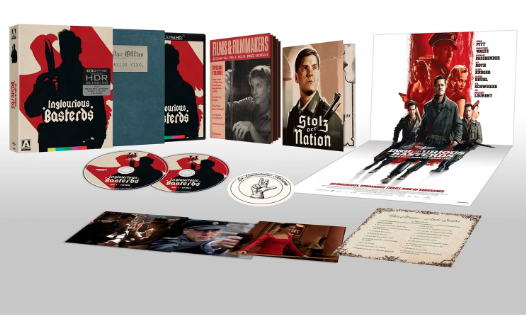
Arrow Video is giving this the release it deserves. It all comes inside a limited edition “Operation Kino” packaging with new art by Dare Creative, complete with a 60-page Films & Filmmakers collector’s book with writing by film critics Dennis Cozzalio and Bill Ryan; a double-sided fold-out poster; Replica Nation’s Pride Premiere programme booklet; a La Louisianne beermat; 3 postcard sized double-sided art cards; a strudel recipe card and a reversible sleeve with original and newly commissioned artwork by Dare Creative.

As for the extras, you get audio commentary by film critic and author Tim Lucas; interviews with editor Fred Raskin, special make-up effects supervisor Greg Nicotero and actor Omar Doom; Making it Right, a new visual essay by film critic Walter Chaw, author of A Walter Hill Film; Film History on Fire, a new visual essay by film scholar Pamela Hutchinson, author of BFI Film Classics Pandora’s Box; Filmmaking in Occupied France, a new interview with film scholar Christine Leteux, author of Continental Films: French Cinema Under German Control; extended and alternate scenes; Nation’s Pride and a making of feature; an archival interview with Quentin Tarantino, Brad Pitt and Elvis Mitchell; featurettes on the original film, Rod Taylor and a film poster gallery tour and trailers.

You can get the 4K UHD and blu ray release of this movie from MVD.

Cinematic Void January Giallo 2025: All the Colors of the Dark (1972)

EDITOR’S NOTE: Cinematic Void will be playing this Giallo classic Saturday, January 25 at 5:00 PM at the Tenth Ave. Arts Ctr. in San Diego, CA (tickets here) along with Your Vice Is a Locked Room and Only I Have the Key and The Strange Vice of Mrs. Wardh. For more information, visit Cinematic Void.

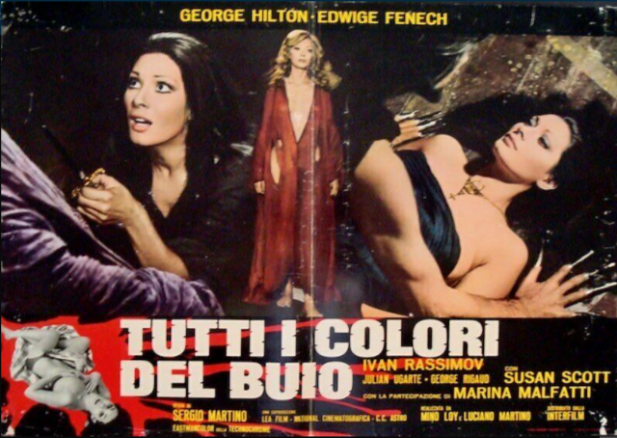
The first five and a half minutes of 1972’s All the Colors of the Dark (also known as Day of the Maniac and They’re Coming to Get You!) subvert what I call Giallo’s “graphic beauty” in intriguing ways.

An outdoor scene of a stream slowly darkens, replaced by an old crone with blackened teeth, dressed as a child and a dead pregnant woman are both made up to be anything but the gorgeous creatures we’ve come to expect from these films; even star Edwige Fenech (The Strange Vice of Mrs. Wardh, Five Dolls for an August Moon and so many more that I could go on and on about) isn’t presented in her usual role of a sex symbol. She’s covered in gore, eyes open and lifeless. As the camera zooms around the room and begins to spin, we see a road superimposed and hear a car crash. Even when Edwige’s character in this film, Jane Harrison, wakes up to shower, we’re not presented with the voyeuristic spoils that one expects from Giallo’s potent stew of the fantastique and the deadly. She stands fully clothed, the water more a caustic break with the dream world than an attempt at seducing the viewer or cleaning herself.

Again — in a genre where words possess little to no meaning — we are forced to wait five and a half minutes until the first dialogue. Richard (George Hilton, Blade of the Ripper), her husband, bemoans that he must leave but feels that he can’t. His therapy is a glass of blue pills and lovemaking that we watch from above; his penetration of her intercut with violent imagery of a knife entering flesh.  Instead of the thrill we expect from this coupling, we only sense her distance from the proceedings.

As Richard leaves her behind, we get the idea of the madness within their apartment: a woman makes out on the sidewalk with a young hippy man who asks when he’ll ever see her again. Mary (Marina Malfatti, The Night Evelyn Came Out of Her Grave, The Red Queen Kills Seven Times), a mysterious blonde, glares down at him, somewhat knowingly. His wife looks lost and trapped. Without dialogue, we’ve already sensed that some Satanic conspiracy is afoot. Echoes of Rosemary’s Baby? Sure, but you could say that about every occult-themed 1970s film — the influence is too potent, a tannis root that has infected all of its progeny.

Last year, a car crash took the life of Jane’s unborn child. Her sister Barbara (Nieves Navarro, Death Walks at Midnight, Emanuelle and the Last Cannibals) has advised therapy, which Richard laughs at. As Jane waits to see the doctor, she sees a man with the bluest eyes (Ivan Rassimov from Planet of the Vampires and Django in Don’t Wait, Django…Shoot!) — eyes we’ve seen before, eyes that hint at blood and murder and madness.

Even when surrounded by people, such as on the subway, Jane is lost in her thoughts and in another world, one of inky blackness and isolation punctuated only by the cool blue eyes of the sinister man who tracks her everywhere she goes. Even the teeming masses of the city make her feel more lost; only the light of the above-ground world erases the nightmare of her stalker. That is — until he finds her in the park, where she screams for him to stop following her. The camera is detached, following her from high above, watching her run away, needing the refuge of her home. Even then, the man is still there, banging on the door, demanding to be part of her reality.

The thing is — Richard has no faith in his wife’s sanity. And even when he’s telling her sister, Barbara, how he doesn’t trust psychiatry, he’s also watching her undress in a mirror. This scene really hints that they’ve had sex in the past (perhaps the past was just five minutes ago).

Jane finally finds a kindred soul—her neighbor, Mary, whom we saw earlier in the windows. Mary tells Jane of the Sabbath, the black mass and how it helped her. She sees Jane as a lost soul who needs to be saved and agrees to take her to her church.

The blue-eyed man returns, chasing Jane past a spiraling staircase, ax in hand. The camera spins, making us dizzy as it cuts from the building to the man to Jane’s car to the man. Jane demands to be allowed to go to the Sabbath as she fears the madness that seems ready to overtake her.

As we approach the old mansion where the rite will occur, we feel more of a sense of belonging, a warmer color palette instead of the washed-out nature of the urban sprawl we’ve experienced until now. Everything is lit by a candle. Mary appears to have achieved a glow, and Jane stands in stark contrast to the beatific zombies of the assembled congregation. A taloned priest murders a dog in front of Jane’s eyes as Mary caresses her (trust me, this isn’t a Fulci realistic dog murder, although I hid my mutt Angelo’s eyes for this scene). The priest tells her that if she drinks the blood, she will be free. Hands and lips and bodies overtake her as an orgy breaks out, a bacchanal that she seems to want none of. This sex is presented as horror, as anything but pleasure, yet Jane seems ill-equipped to resist.

Immediately, we see her enjoying her husband, no longer frigid and everything back to normal, as he says. However, Jane tells her that she doesn’t feel real any longer. She walks to the bathroom, seeing multiple reflections of herself that harken back to the kaleidoscope effect we saw as the priest took her to the altar.

No matter what peace, love, and sex happen, Jane can’t escape the blue-eyed man. Even on a romantic lunch date with her husband, he’s there, outside, waiting for her. A taxi drives her back to her home, the only sanctuary against the invasion that the man presents. As she goes through her husband’s effects, she finds a book of the supernatural emblazoned with a pentagram. He claims it’s just a second-hand book and accuses her of hiding things from him.

Jane returns to the Satanic church, this time willing to give herself over and actually seeming to enjoy lovemaking for the first time in this film. Mary intones, “Now you’ll be free.” Again, the long-fingernail priest takes her while the blue-eyed man watches her, his hands covered in blood. The members of the church dance around her as Mary calls to her. The priest tells her that Mary no longer exists. She is free to go, as she brought Jane to the church. The final act is for Jane to murder her, to send her away. Jane screams that she can’t do it, but Mary tells her that they must part, that this act will free her, as she lowers herself onto the dagger that Jane clutches.

Jane awakens, fully clothed, in a field. The blue-eyed man is there, telling her, “Now you are one of us, Jane. It’s impossible to renounce us.” He offers his hand, telling her to follow him. She’s expected. He takes her to an altar that is the same design as the pendant we just saw her wear during the orgy. She demands to know where Mary is, but the only answer she gets is that she belongs to the cult and will now be protected. Mary is gone, and Jane’s sacrifice allows her to be free. They show her Mary’s body, covered in black lace, as she runs screaming.

Perhaps in retaliation for the ritual, dogs chase her through the woods, tearing at her, stopped only by the blue-eyed man who knocks her out. She awakens, clad in virginal white, surrounded by white sheets. Her husband leaves a note in lipstick on her mirror. She looks, and the symbol is on her arm, which is covered in blood. When she goes to Mary’s apartment, an old woman lives there instead.

Jane is totally lost — the ritual has brought her nothing but more madness and the blue-eyed man even closer. Her husband is away on business, her sister is on vacation, and her therapist is dismissive. Even her apartment walls, which offer security, have become a maze of fear. The colors shift to Bava-esque hues of blackness and reds as we see the blue-eyed man attack her over and over again, with constant repetition of the frame as she screams — and then there’s no one there, just the room filled with red and a broken piece of pottery embedded in her hand.

After examining Jane, the doctor leaves her with an elderly couple. Her husband can’t find her and asks Barbara to help.

Jane awakens in a white room — of course, the blue-eyed man is waiting outside the house in the gauzy early morning hours. Yet there is an ominousness about the proceedings — no one is there. A tea kettle is boiling on the stove while the old man and woman sit there, in still repose, dead at the breakfast table. She’s trapped in the room with them as she frantically calls for help. She tells her doctor that the man is there and has killed everyone. He calmly tells Richard and Barbara that he has another patient to deal with, as he doesn’t trust Richard and wants to keep him in the dark. However, he does reveal the truth to Barbara. That lack of trust goes both ways as Richard follows the doctor.

Meanwhile, the blue-eyed man finds Jane, telling her she cannot renounce them. He tells her that the knife that he holds killed her mother when she tried to deny them. And it’s the same knife that killed married. He tells her she is beyond reality and will never find it again.

Following the sound of a hound, she finds the doctor’s car in the driveway — and, of course, he’s dead, too. The blue-eyed man gives chase and finally tries to kill her, but he’s stopped at the last minute by Richard, who stabs him with a rake. He stomps on the man’s hand repeatedly, revealing the tattoo symbol he stares at.

Meanwhile, Mary arrives home to a green-hued apartment, where Richard is smoking and accusing her of being part of black magic. He sees the symbol when he watches her undress, and she tells him that she wants him, that she can make him forget her sister. She promises him untold power and that he can become anyone he wants. As she leans in for a kiss, he shoots her, tossing the envelope of a letter that he received that explains it all.

Cut to a hazy white room where Jane has been given a sedative. An inspector — the priest from the cult! — demands to see her. Richard arrives and embraces her, telling her he will take her out the main door. They speed away in a car and return to their apartment. But all is not well — Richard is killed by an unseen person, and Jane is left holding the dagger. The police that arrest her all have the symbol on their wrists and are led by the leader. The camerawork becomes tighter and claustrophobic as we see the cult descending on her.

Wait — it’s all a Wizard of Oz dream, with the police and her husband at her bedside, explaining the film’s entire plot, which ends up even more ridiculous than everything that we’ve seen up until now (which is really saying something). Turns out there was no real magic. The cult was just a drug ring. Mary was real and just a heroin addict. Her sister was behind it all because she wanted all of the money from the will of their mother’s murderer, who wanted to give 600,000 pounds to both of them.

Jane rejects this reality, saying that this cannot be true after all that she’s seen. The cop replies that he kept trying to call her, and she never answered, so he wrote it all in a letter — the letter that Richard showed Barbara after he shot her. It’s worth noting that the American version of the film ends with Jane being killed by the cult and all of the ending — nearly six minutes worth of important story and denouement — exorcised.

We return to where we were, with Richard going upstairs — just like we’ve seen before. Jane screams that she knows what will happen. The cult leader attacks him, blaming her for Barbara’s death. Richard follows him to the roof, where they fight, and the priest is thrown from the roof. Jane tells Richard that she knew the man was there; she knew that her husband had killed her sister, that it wasn’t a suicide, and that some strange force was guiding her. She asks for help, and the credits roll.

With this film, director Sergio Martino (Torso, 2019: After the Fall of New York) crafted an intriguing blend of the supernatural and the Giallo. Even the procedural elements come only after the film has descended into surrealism as if a cold glass of water splashed in the face of a viewer who needs an explanation. Magic is madness, and we can’t even trust our heroine at the end when she begs to escape the power inside her.

This film is terrific, with Edwige Fenech turning in a strong performance. You really feel the isolation and madness that surround her and empathize with her. The strong visuals and the break from the genre conventions of masked killers, gloved hands and inept police make watching this film an absolute joy. From beginning to end, it makes you question not only the reality that it presents but also the objective trustworthiness of our heroine. And while it betrays an obvious inspiration to the aforementioned Rosemary’s Baby, it is not slavish in its devotion, making a powerful statement on its own merit.

Here’s a cocktail recipe.

They’re Coming to Get You

  • 1.5 oz. J&B
  • .5 oz. lemon juice
  • .5 oz. simple syrup
  • 1 egg white
  • 3 dashes Angostura bitters
  1. Shake all ingredients in a cocktail shaker filled with ice.
  2. Strain into a glass and enjoy.

Cinematic Void January Giallo 2025: Corpse Mania (1981)

Editor’s note: Cinematic Void will be playing this movie on Monday, January 20 at 8:00 p.m. at the Music Box Theater in Chicago, IL. You can get tickets here. For more information, visit Cinematic Void.

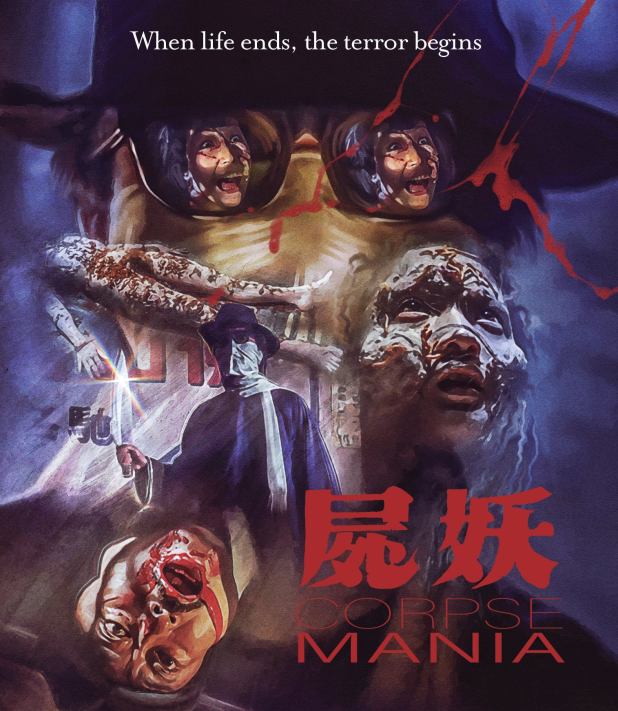
Not all slashers are domestic, as we again test the “Is it Giallo or is it a slasher?” game with the Shaw Brothers-produced 1981 film Corpse Mania. It was directed by Chih-Hung Kuei, who would go on to create the strange Curse of Evil and the “I don’t have a word good enough to properly convey the level of strange” film The Boxer’s Omen.

Inspector Chang is beginning to figure out that all of the dead bodies in his area were visitors to Hong House, the brothel of one Madam Lan, and all fingers point to Mr. Li, a man who has already been jailed for defiling corpses, which really doesn’t seem like the kind of crime you get out of jail for due to good behavior. And he’s just bought one of Lan’s girls, the dying Hongmei. He pours flour and maggots all over her as she passes on, a feat that gives him a Category III boner.

Set in the 19th century, this starts with a house across from the brothel giving off the worst smell possible, leading the authorities to find a home filled with spiderwebs and a long-dead body that had been sexually used before it was murdered.

Sure, you might know who the killer is from the moment the movie starts, but give this points for his bandaged get-up, inventive stalking scenes and not shying away from the gore, including a scene where the killer gets a corpse ready for sweet lovemaking and then admires it the more it draws maggots.

From real maggots crawling all over its actresses and astounding blasts of blood to a dummy thrown off a roof that’s so fake that Lucio Fulci would stand up and laugh out loud, this movie has it all. Its fog and mood suggest a Hong Kong version of Blood and Black Lace with Bava taking a break from all the sexualized violence to deliver a kung fu sequence and an underwater throat slashing that reaches out for a gory glamour. As they said of his seminal Giallo, a pornography of violence.

Fear City (1984)

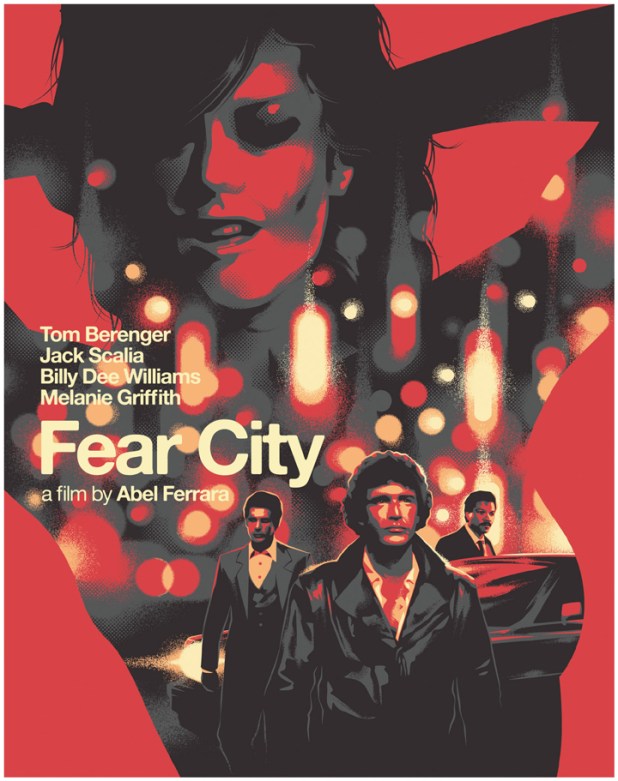
After The Driller Killer and Ms .45, Abel Ferrara made this another New York City end-of-the-century trip into sleaze and death. He was joined by regular writer Nicholas St. John, who was fine doing the script for 9 Lives of a Wet Pussy but couldn’t deal with Bad Lieutenant.

Matt Rossi (Tom Berenger) and Nicky Parzeno (Jack Scalia) have a good thing going, getting their exotic dancers — Maria Conchita Alonso is one of them — booked into the best men’s clubs in the Big Apple. Matt used to be a boxer and was in love with one of the girls, Loretta (Melanie Griffith), but then he beat a man to death and became a shell of who he once was, and she found herself seeking solace between the shapely thighs of Leika (Rae Dawn Chong).

Someone starts targeting their girls, like Honey (Ola Ray, Michael Jackson’s girlfriend in the “Thriller” video), who is beaten and torn apart by someone. Detective Al Wheeler (Billy Dee Williams) isn’t much help, as he looks down on Rossi, Parzeno, and their girls. Leila is attacked and hospitalized, which lets Rossi get back with Loretta.

Unlike many Giallo, we see Pazzo (John Foster), the killer, early and know who he is throughout. He’s a young kid obsessed with martial arts. His attacks have ruined the dancing business, and once Leila dies, Loretta starts taking every drug she can, dying inside. Then, the killer attacks Ruby (Janet Julian) and Parzeno, as well as cutting the head off one of the girls with a sword.

Rossi turns to Carmine (Rossano Brazzi, Count Frankenstein from Frankenstein’s Castle of Freaks), a crime boss who he has an accord with. He tells him that the only way to stop this is to murder the killer and get this over with. That’s simple, as the knife-wielding maniac is already stabbing Loretta, who was looking to score. Rossi remembers his days in the ring and punches the man’s face into putty, killing him. The cops seem happy about it, but that’s life in Fear City.

How Giallo is this? Well, the credits thank J & B Distillery.

Fear City was originally to be a 20th Century Fox movie, but because it contained so much sex and violence, they sold it to Aquarius Releasing—or Chevy Chase Distribution—the people who brought you Dr. Butcher, M.D. and 7 Doors of Death, which was The Beyond with edits.

Don Nakaya Neilsen is in the cast as a boxer. Trained by Benny “The Jet” Urquidez and Tom Stone—the man who cucked Elvis and wrote Enter the Ninja—he was a kickboxer who eventually became a pro wrestler in New Japan Pro Wrestling and did an MMA match with Ken Shamrock that was quite influential in Japan. He also got chiropractic treatments legalized in Thailand, so he lived a pretty eventful life before dying young at 58.

You can watch this on Tubi.

We Kill for Love (2023)

In the pre-internet, non-binging world of cable and video stores, the erotic thriller — more than even adult videos — was the acceptable dirty secret, whether consumed via Cinemax After Dark, the Playboy Channel or by renting videos out in the open with a piece of tape and a marker written message saying, “Must be 18 to rent.”

Yet today, the erotic thriller is nearly forgotten, replaced by Lifetime movies and more chaste streaming murder mysteries. The 80s and 90s were filled with these movies, and as someone who grew up in that era, I know people would furtively whisper their titles between classes. Night EyesBody ChemistryRed Show Diaries.

This is nearly three hours long, but at no point was I bored. In fact, it could have been twice that length, and I’d have loved it even more. The film moves from film noir into the American films that started the trend of these films, such as Dressed to Kill and Body Heat, as well as Basic Instinct and Fatal Attraction, all the Hollywood versions of these films that while controversial, had the gloss of being studio production. The joy of this film is it gets into the companies that made the authentic erotic thrillers and the filmmakers and actors who created them. People like Fred Olen Ray, Jim Wynorski and Andrews Stevens, as well as Monique Parent, Amy Lindsay and Nancy O’Brien.

Maybe it’s the fact that this is thirty years past when I’d watch these in between channels or on dubbed VHS tapes that were passed from friend to friend, but I felt like I was meeting old friends again. If you have the slightest interest in the genre, it’s definitely worth a watch. The scene where the multiple titles of the films and how it’s hard to keep track? I felt myself in that moment.

My only quibbles: Yes, noir is where so many of these movies get their start. Certainly Body Double. Yet so much of the erotic thriller genre owes itself to Giallo, mainly because so many of the old guard — Martino especially — returned to make erotic thrillers in the 80s and 90s. While I know this couldn’t be five hours long, if I could lobby for a sequel, the fact that Gregory Dark’s films weren’t mentioned is an oversight that demands to be corrected.

You can buy this from Yellow Veil Pictures on Vinegar Syndrome.

Check out the Letterboxd list of the movies covered in We Kill for Love.