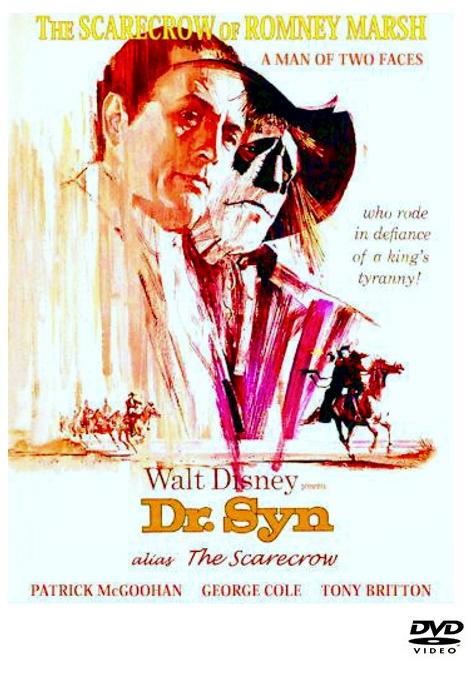
The Reverend Doctor Christopher Syn comes from a series of novels by Russell Thorndike and was inspired by 18th-century smuggling when brandy and tobacco were smuggled into the U.S. to avoid British taxation. The books were originally made as movies in 1937 as Doctor Syn and in 1962 as Captain Clegg, which starred Peter Cushing.
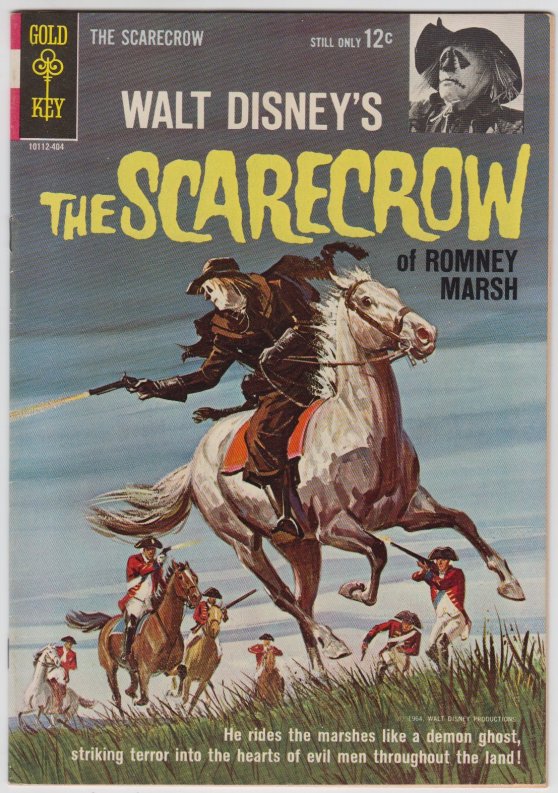
The Scarecrow of Romney Marsh was produced for the Walt Disney’s Wonderful World of Color TV series. Shot on location in England, it was directed by James Neilson, who also made the Disney movies The Moon-Spinners and The Adventures of Bullwhip Griffin.
Patrick McGoohan (The Prisoner) plays Dr. Syn in three different parts, which were all edited together to run in British theaters as Dr. Syn, Alias the Scarecrow on a double feature with The Sword in the Stone.
Dr. Syn, a country priest, leads his rebels against the armies of the King of England, who is enslaving American colonists for his Royal Navy. Think of Zorro in the pre-Revolutionary War and you have a good idea of what this is all about,
The first part of the film deals with General Pugh, who has come to the New World to destroy the smuggling ring of Dr. Syn, who is dealing with a traitor in his midst. Finally, Syn rescues his men from General Pugh before faking his death.
I’ve always been fascinated by Dr. Syn/The Scarecrow, who is nearly a horror movie character within the Disney universe. I was so happy when Disney Adventures magazine started featuring his stories in the 2000s, even crossing his story over with Jack Sparrow from The Pirates of the Caribbean.
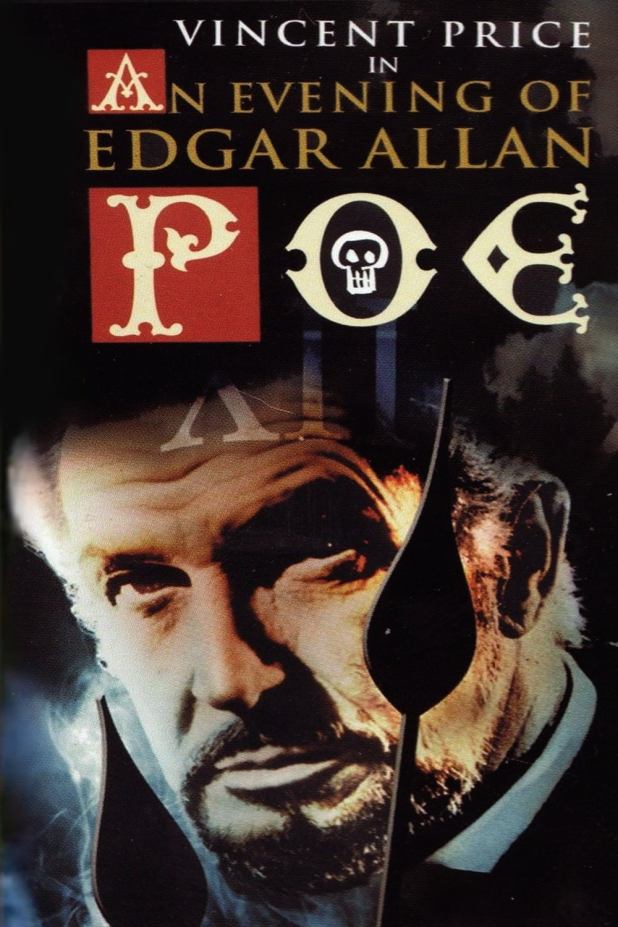
I love Vincent Price and stand against anyone who dislikes how hammy he was. But hey, if you feel that way, perhaps you should avoid An Evening of Edgar Allan Poe, which features Price all alone on the stage — with props and outfits that change with every story — matched with only music by Les Baxter, recorded at the same time and with the same orchestra as Cry of the Banshee.
Produced by Samuel Z. Arkoff and Kenneth Johnson (who wrote, produced and directed this; you may know him from creating The Incredible Hulk TV series, as well as The Bionic Woman and V), this is an opportunity to see Price go wild telling the stories “The Tell-Tale Heart,” “The Sphinx,” “The Cask of Amontillado” and “The Pit and the Pendulum.”
The really cool thing about this is that it seems like every single story was shot in one take, which speaks to Price’s ability as an actor as well as his endurance, as he really goes full Vincent Price on every one of these stories.
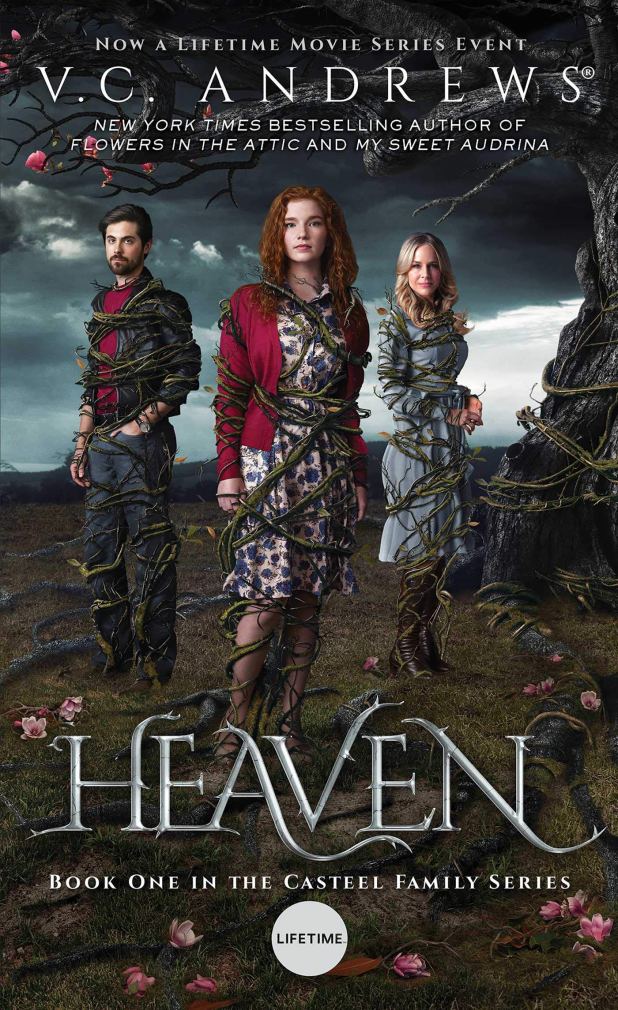
The Casteel series started after VC Andrews wrote the Dollanganger books — which includes Flowers in the Attic — and My Sweet Audrina. Only the first two books appeared before her death and the series tells the story of a troubled West Virginia family, starting with Heaven, a gir whose mother died in childbirth, which leads to a hate-filled relationship with her father.
Lifetime made all five books in this series into films following their success with the Dollangager movies. Directed by Paul Shapiro (whose career is all over the place in the best of ways, working on plenty of TV movies and episodic TV) and written by Scarlett Lacey (who also was the scribe for the My Sweet Audrina TV movie and Wendy Williams: The Movie), this film places Annalise Basso into the role of Heaven Leigh Van Voreen Casteel.
Heaven is the oldest child in her family, driven to escape Winnerow, West Virginia with her academic abilities. It takes until late in her teens before she learns that she’s the daughter of the rich Leigh Cateel, who died in childbirth, causing her father to never love her. Yet when he father’s drinking grows out of control, she and her siblings are sold off to other family members, sending her to live with his ex-wife Kitty and her new husband, a writer named Cal who starts an affair with her.
Man, I’m behind in my VC Andrews TV movie watching. What is wrong with me? I have no priorities!
This is the kind of movie I love, one where a woman on her deathbed tells a teenager that it’s good with her if she keeps arrdvarking with her husband, a man who should be her father figure yet asks to be called daddy.
Now I have to stop writing this and get to watching like twenty more of these. My work is never done.
What a great, three-day rally of films from Bernard L. Kowalski (thanks for allowing me to free range, Sam) as we wrap it up with a TV movie that pays tribute to a great TV series from the ’70s. To say I am stoked to review this BK entry is an understatement: the development of this tribute week to ol’ Uncle Bernie centers on this flick. And we get Kent McCord, who never got the due he deserves, some props.
Let’s roll it!
By the late ’80s, the cable networks began eschewing their UHF-styled, bread-and-butter reruns format by going for the throat of the “Big Three” over-the-air networks of ABC, CBS, and NBC — with their own, original programming. The national “superstations” TNT and USA each began producing their own TV movies (many of which we’ve reviewed at B&S), so why not the all-new basic cable and satellite network The Nashvillle Network?
You don’t remember that logo? It’s okay, most TV viewers — not county-centric — don’t remember it either.
Put some good ol’ down home twang in your life.
Going on the air in March 1983, the network operated from studios on located on the grounds of the now-defunct theme park Opryland USA in Nashville. But, as with the major movie studios creating competing ripoff films for the marketplace (e.g., Armageddon vs. Deep Impact, White House Down vs. Olympus Has Fallen) The Nashville Network was beat on the air — by two days — by Country Music Television.
After the dust settled: The Nashville Network lost the ratings war.
TNN began its life as a country music alternative to Warner-Amex’s MTV’s rock and VH-1’s contemporary music formats by airing music videos; the programming soon expanded into concerts, game and talk shows, and country-eccentric movies (such as Smokey and the Bandit). By September 2000, the channel dumped their “southern” identity by ditching the “Nashville” moniker for “National” to become The National Network. Then, to the holier-than-thou, law-suitin’ and hissy fittin’ dismay of Spike Lee (“They’re stealing my brand!”), National transformed into the male-centric Spike TV in 2003. Today, you know the channel as the upper-tier cable dumping ground for all things Paramount-produced: The Paramount Network.
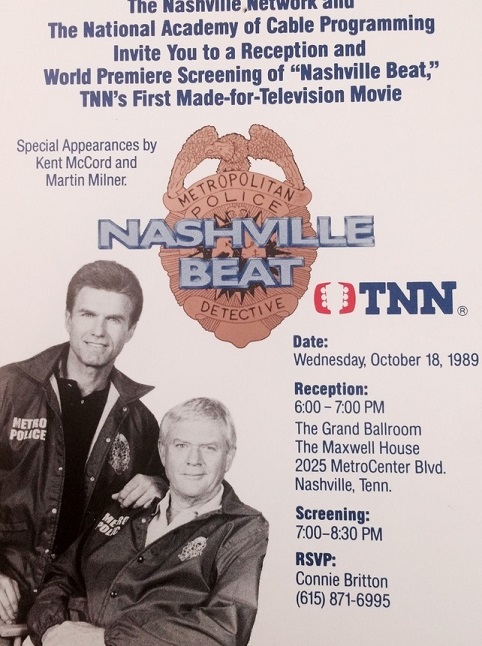
So, with that backstory out of the way . . . let’s polish off our three-day tribute to the films of Bernard L. Kowalksi (that began all the way back in 1956 with Hot Car Girl) and dig in to some slip-smackin’ BBQ with Bernard’s last film — and TNN’s first made-for-television movie — Nashville Beat.
Now, if you’ve been following along the Kowalski beat this week, you’ll know that his last theatrical film was the drive-in horror classic, Sssssss (1973). And, since we love our Six Degrees of Separation of actors and directors in the B&S cubicle farm: that turn-man-into-snakes-mad-scientist romp starred Dirk Benedict, later of Battlestar Galactica . . . and Kent McCord ended up on that failed Star Wars TV series ripoff’s second season, aka Galactica: 1980, as the all-grown up Boxey, aka Troy (we reviewed the overseas theatrical version of the series, Conquest of the Earth; look for it).
Anyway, after Sssssss (Who decided the title only needed six lowercase “S”; why not eight?), Kowalski returned to television — where he got his start — with multiple episodes of Perry Mason and The Untouchables, as well as Banacek starring George Peppard (more “Six Degrees”: he was in the fellow Star Wars dropping, Battle Beyond the Stars), and Columbo. In between, Kowalski developed the MGM Studios/CBS-TV series pilot for the Starsky and Hutch-precursor, The Supercops (1974), which aired on March 21, 1975, and continued the adventures of (real life cops) Dave Greenberg and Bobby Hantz. That series was quickly derailed by the (more powerful, due to Charlie’s Angels) TV production powerhouse of (Aaron) Spelling-Goldberg Productions’ TV movie-to-series pilot for Starsky and Hutch, which aired on the competing ABC-TV network on April 30, 1975. And, since we love our Six Degrees of Separation of actors and directors in the B&S cubicle farm redux: David “Ken ‘Hutch’ Hutchinson” Soul starred with Kent McCord in the CSI TV series-franchise precursor (and, in my opinion, superior), the all-too-short-lived TV Movie-to-series, UNSUB (1989).
While we didn’t get around to reviewing all them (or finding copies of most of them), other post-Sssssss and The Supercops TV movies Bernard Kowalski directed are Flight to Holocaust (1977), The Nativity (1978), TV’s response to Rocky with Marciano (1979), Nick and the Dobermans (1980), Turnover Smith (1980), Nightside (1980; with Doug McClure, from Kowalski’s Terror in the Sky), and Johnny Blue (1983).
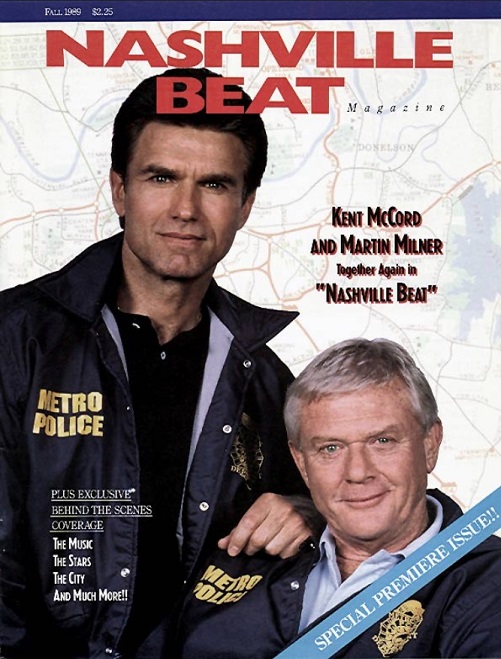
Image courtesy of the Kent McCord Archives (with more pictures and article on the show.)
So, if you know if your ’70s TV: You’ll know Nashville Beat is the 14-years-in-the-making reunion of actors Martin Milner and Kent McCord after their successful, seven-season run on Adam-12 that aired on NBC-TV from 1968 to 1975. The final episode of that series ended in a cliffhanger, somewhat: we never knew what happened with officers Pete Malloy (Milner) and Jim Reed (McCord), as the series closed with Reed’s rookie copy readying to take the detectives exam and leave his seasoned, veteran partner and the streets. . . . Instead of NBC-TV giving us a late ’80s TV movie version of Adam-12, we got the closest thing to an Adam-12 TV movie: Nashville Beat, which was developed, produced, and co-written by McCord with the intention of becoming TNN’s first original drama series.
Milner and McCord — while pretty much the same cops, only older-but-wiser and in plain clothes — are Captain Brian O’Neal and Lieutenant Mike Delaney, both who started out like their Adam-12 counterparts: on the streets of Los Angeles. Even after his old partner left for a job as a detective in Nashville, Delaney and O’Neal remained close friends. Upon become a widower, Delaney heads to Nashville to help his old partner on a case with ties back to Los Angeles. And the case works out well, and Delaney’s heart is ready to love again with the sexy, big-haired owner (it was the ’80s, natch) of the honkytonk where O’Neal and his copy buddies hangout. So the movie ends with Delaney deciding that he just might move the kids out to Nashville to start over . . . which would set off the new series that never happened.
Meanwhile, TNN’s faux Adam-12 reunion got the folks at MCA Television (a division of Universal that supplied NBC-TV programming) to reboot Adam-12 in September 1990 to fill the UHF-TV blocks of the new, weekend syndicated programming crazy (ignited by Star Trek: The Next Generation and Xena: Warrior Princess). The syndicated revival, The New Adam-12 (1990) was cast-headed by John Wayne’s son, Ethan (who made his debut in his dad’s Big Jake). The series, which ran for 52 consecutive episodes, was cancelled after one year. No one (including moi) cared: Milner and McCord were never invited back to appear. But, we did see Milner and McCord share the screen again in a 1997 episode of Diagnosis Murder with Dick Van Dyke, playing, yet again Los Angeles police officers.
And that’s a wrap on our three-day tribute to the career of Bernard Kowalski. Discover his films with our reviews and enjoy!
You can watch a VHS rip of the home video version of Nashville Beat on You Tube. And look for our reviews of Hot Car Girl and Sssssss — this week — as we continue our tribute to Bernard L. Kowalski.
About the Author: You can learn more about the writings of R.D Francis on Facebook.He also writes for B&S About Movies.
The Woman Hunter has an all-star cast, with Barbara Eden in the lead, alongside Stuart Whitman, Larry Storch and Robert Vaughn. Like I said — it’s what I say is an all-star cast.
Most Giallo heroines are characterized by their wealth and potential mental issues. However, in The Woman Hunter, when Dina Hunter (Eden) survives a car accident and plans a trip to Mexico with her husband (Vaughn), who would have thought that the artist she hired to paint her portrait (Whitman) could be a jewel thief and a murderer?
This was written by Brian Clemens (Captain Kronos, And Soon the Darkness) and Tony Williamson (Adam Adamant Lives!, The Avengers). It is Clemens’ first U.S. work and Williamson’s only script made over here. It’s directed by Bernard L. Kowalski, who stepped in for John Peyser (The Centerfold Girls). I assume that everyone enjoyed shooting this on location in Acapulco. Larry Storch even brought his wife Norma along.
Thanks for joining us as we wrap up our second day of our three-day tribute to all things Bernard L. Kowalski!
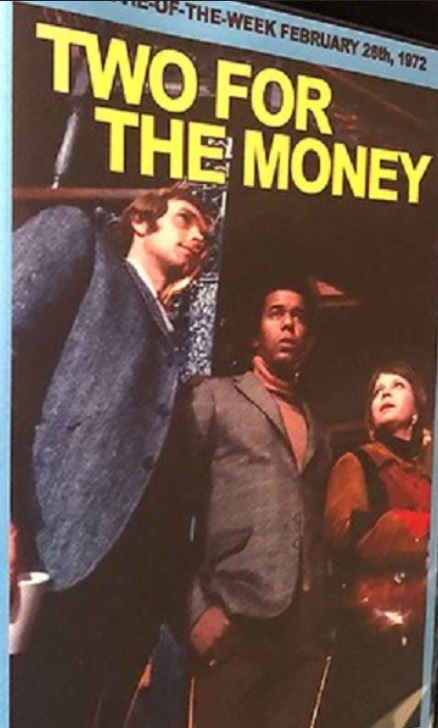
He had to go through Roger Corman with Hot Car Girl, Attack of the Giant Leeches, and Night of the Blood Beast, then do TV series for the rest of the ’60s to get his shot at the major studio brass ring with Krakatoa: East of Java and Stiletto. But both of those films — as well as the David Janssen-starring western Macho Callahan — flopped at the box office, so it was back to TV for Bernard L. Kowalski. However, instead of the TV series of the ’60s, he now was in the TV movie business, in which he gave us Terror in the Sky, Black Noon, and Women in Chains. For his fourth TV movie, Kowalksi directed this script by TV series and TV movie scribeHoward Rodman (best known for the series Route 66 and the later Harry O, also the TV sci-fi flicks Exo-Man and the first Six Million Dollar Man TV movie). Was this a TV movie pilot film? Yep, you bet.
If you spent any time in front of the TV watching reruns of series from the ’60s and ’70s, and even into the ’90s, you’ll notice character actors Robert Hooks and Steven Brooks as our two cops who quit the police department to become private detectives — and come to hunt down a serial killer who has eluded the law for years. And they’re against the clock because notable western character actor Walter Brennan (John Wayne’s Rio Bravo) is out for vigilante justice to avenge the murder of a family member by the killer. And the always welcomed character actor-ness of Neville Brand as a racist, small town sheriff isn’t helping matters.
Yep, that is Richard Dreyfuss (Two Bernard L. Kolwaski flicks with future Jaws stars? Roy Scheider was in Stiletto, remember?) starting out his career. And that is the voice of the devil, Mercedes “Pazuzu” McCambridge, from The Exorcist. (Plot spoiler: she’s the killer and she’s off-the-hinges-great here; not that you don’t see that plot twist coming.) Also be on the lookout for Oscar actors Anne Revere (Supporting Actress winner for National Velvet) and her “sister” Catherine Burns (Supporting Actress nominee for Last Summer). Shelley Fabares, who did her share of car racing and Elvis flicks*, is the town’s pretty librarian girlfriend of Brooks that’s caught the creepy eye of Brand.
You can watch Two for the Money on You Tube. Grey market DVDs are easily available. It’s not that bad of TV movie thriller. Definitely not engaging TV series material in the manner of say, Starsky and Hutch (gotta go watch The Supercops from 1974 with my youth-buddy, Ron Leibman), but a serviceable TV flick, none the less.
* Of course we did all off the King’s — well, all three — racing flicks. What ensuing, trope-laden cliched movie site did you think your were surfing, here? Check out our “Drive-In Friday: Elvis Racing Nite” feature.
About the Author: You can learn more about the writings of R.D Francis on Facebook.He also writes for B&S About Movies.
Editor’s Note: We reviewed this on May 22, 2020, as part of one of our many “TV Week” tributes. It’s back again for the second day of our three-day “Bernard Kowalksi Week” tribute to his drive-in features and telefilms. He directed this CBS film after working on numerous episodes of TV’s The Untouchables and Mission: Impossible, as well as the westerns Rawhide and The Wild Wild West.
Bernard L. Kowalski has a decent horror pedigree, directing Night of the Blood Beast, Attack of the Giant Leeches,Krakatoa: East of Java, Terror in the Sky and Sssssss. Here, he puts theterror on a slow boil and puts Reverend John Keyes (Roy Thinnes, constantly battling the occult) and his wife Lorna (Lynn Loring, The Horror at 37,000 Feet) against an unseen force bedeviling a small Western town named San Melas. There’s voodoo, devil worship and a mute young girl and a gunslinger possessed by the Left Hand Path.
Ray Milland shows up, proving that Old Hollywood is never to be trusted. Plus, there’s Gloria Grahame (Blood and Lace), Henry Silva (Almost Human, Megaforce, the epic Escape from the Bronx), stuntman Stan Barrett, Joshua Bryant (Salem’s Lot), a young Leif Garrett (Thunder Alley) and Jodie Foster’s brother, Buddy.
This 1970s made-for-TV horror neglects the Old West, so it is a strange film to start with. Then again, it also plays the Troll 2 trick of a town with a backward name and a connection to witches, but it doesn’t telegraph that. The ending—which moves to 1971—more than makes up for the slow-moving last 68 minutes. I love dreamy TV movies that take forever to get anywhere.
Editor’s Note: This review ran on December 28, 2020, as part of another one of our “TV Week” tributes — dedicated, in part, to TV airline disaster movies (see our end of the week Round Up). We’re bringing it back for our our second day of our three-day “Bernard Kowalski Week” tribute — a great director!
CBS-TV got its start in the airline disaster sweepstakes in September 1971 with this tale about transcontinental flight struck with food poisoning. To save the aircraft, the cabin crew locate a passenger with enough flying experience so that he can be coached by an experience pilot on the ground. Doug McClure, it goes without saying, is very good in his role as a Vietnam war ex-chopper pilot who’s called into action to safe the day.
While many write this off as a rip-off of ’70s airline disaster flicks — and, in a way, it is (which we will get to) — Terror in the Sky has it roots in an Alex Haley-written Canadian telefilm starring James “Scotty” Doohan, Flight Into Danger (1956). The CBC-TV screenplay was quickly rebooted as the Paramount Pictures features film Zero Hour! (1957) starring Dana Andrews — each deal with a “food poisoning” premise. Haley then took the premise and retooled n’ tweaked it again for the novel Runway Zero-Eight (1958), then again as novel Airport (1968), which, in turn, became the Burt Lancaster-starring Airport (1970). So, officially, Terror in the Sky is a bigger-budget TV remake of Zero Hour! and a loose cousin to Runway Zero-Eight. which aired on CBS-TV in September 1971.
As for Zero Hour!: Interest in the film was renewed in the ’80s when it was revealed that the Abrahams-Zucker Brothers’ (The Kentucky Fried Movie) Airplane!, which spoofed the Airport series of movies of the ’70s, was actually an almost verbatim comedy-remake of the film.
Yeah, you know why we love this, as it’s another airline disaster TV movie with bonkers casting: assisting Doug McClure are Roddy McDowall and Kennan Wynn, along with ’50s gents Kenneth Tobey (The Thing) and Leif Erickson (On the Waterfront).
Is the name of director Bernard Kowalski ringing any bells? It should. He gave us the Alien precursor Night of the Blood Beast, The Fast and the Furious precursor Hot Car Girl, and the giant monster mash classic Attack of the Giant Leeches, and the mad scientist romp Sssssss. Oh, and the western-horror about devil worshiping voodoo cowpokes, the most awesome TV movie ever, Black Noon (1971). And let’s not forget he closed out his career with TV’s Colombo, Airwolf, Knight Rider, and Jake and the Fatman.
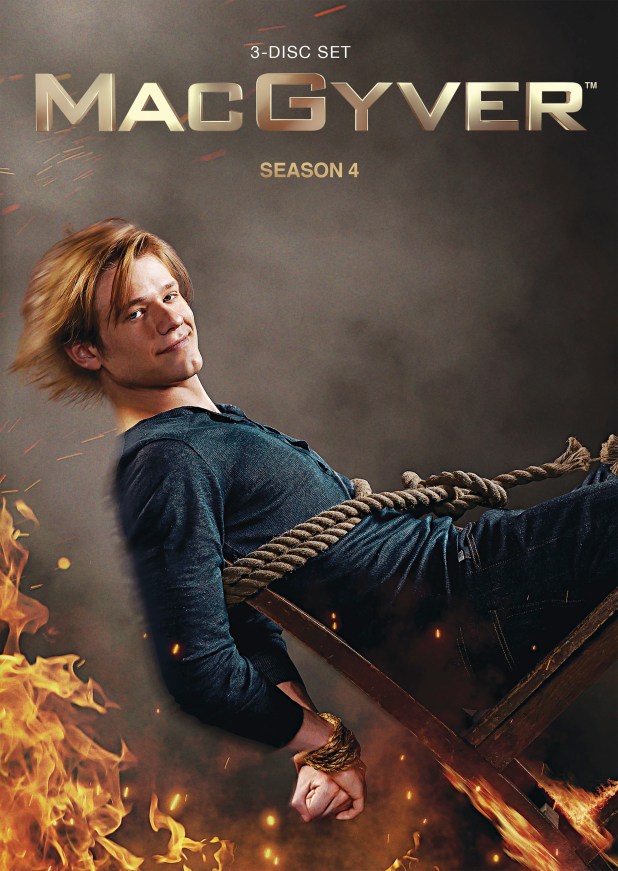
It’s pretty amazing that the reboot of this venerable 80s show — which lasted seven seasons and only ended when star Richard Dean Anderson told TV Guide, “The only reason it went off the air was that everybody was ready to move on. I was physically exhausted and had no life.”
In the new series, Lucas Till plys Angus “Mac” MacGyver, an undercover government agent for the Phoenix Foundation, a covert agency that the rest of the world believes is a think tank. An Army EOD technician, Mac prefers to use non-lethal means to stop his enemies and excels, as always, at solving problems with unique scientific feats.
The new version of the show was created by Peter M. Lenkov — who created the comic RIPD that the movie is based on — and takes place inside the same universe as his other two shows, Magnum P.I. and Hawaii Five-O. Lenkov also wrote Demolition Man, Son In Law and the second and third Universal Soldier films. A sad thing to report is that he was removed from all of the CBS shows he created in 2020 because it was said that he fostered a “toxic work environment,” with Lucas Till telling Vanity Fair, “I’ve never worked this hard in my life, and I am fine with hard work. But the way Peter treats people is just unacceptable. I was suicidal that first year on the show, because of the way he made me feel. But the way he’s treated the people around me — that’s just my breaking point.”
But a positive thing is that the series is actually pretty fun to watch. I wish that it had been a better experience for the people making it. Horror fans will also enjoy seeing appearances in season 4 from some of their favorite actors like Keith David, Peter Weller, Joshua Leonard (The Blair Witch Project) and Tobin Bell. The Tenderloins (James Murray, Sal Vulcano, Joe Gatto, and Brian Quinn), who you may know from Impractical Jokers, also appear as waiters in one episode.
This season also finds the Phoenix Foundation being rebuilt as a privately funded entity to go up against CODEX, a secretive organization that is coordinating multiple catastrophes to get the attention of world leaders. They also possess something called File 47, which is about the end of the world. Any time the team gets close to the truth, the agent from that group always commits suicide rather than reveal their plan.
There’s even an episode with Mac loses his short-term memory and must undergo a dangerous treatment that sends his brain back in time, where he meets numerous people from his past and the past of CODEX, such as Thomas Alva Edison, Alexander Graham Bell, his mother, his evil self and even Nikolai Tesla, who helps him regain his memory and teaches him the secrets of Shiva, a superweapon he’s created.
Season 4 moves at a quick clip and it’s pretty cool that there’s an underlying story arc throughout the episodes. You can catch the DVD box set, which has just been released from Lionsgate and CBS Studios.
Just a few days after the end of the series Power, this is one of several new stories that continue the universe of the original show. Those shows will be Power Book III: Raising Kanan, which concerns the life of Kanan (50 Cent); Power Book IV: Force, which is rumored to be about Tommy (Joseph Sikora) and Power Book V: Influence, a political tale of Tate’s (Larenz Tate) rise to power.
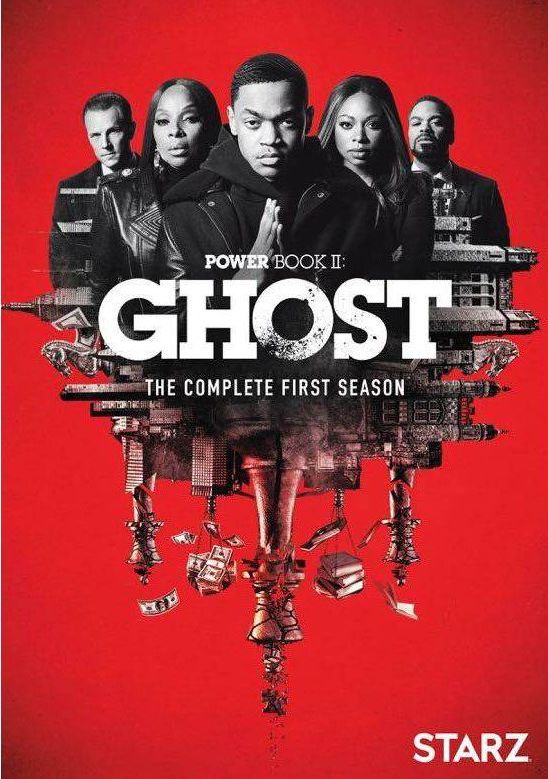
Ghost is about Tariq St. Patrick (Michael Rainey Jr.), the son of James “Ghost” St. Patrick and Tasha Green-St. Patrick (Naturi Naughton). He wants to escape the heavy shadow of his father, but finds himself going down the same path into selling drugs. He also has to deal with the Tejada family, led by Monet Stewart Tejada (Mary J. Blige).
With appearances by Method Man and Redman, as well as Cooper Saxe (Shane Johnson) continuing to pursue the St. Patrick family, this Starz series won the Outstanding Drama Series in the 2021 NAACP Image Awards, which also saw Blige win Outstanding Supporting Actress in a Drama Series.
While I’ve never watched the original series, I really enjoyed this show. It presents a world that I’d have no chance to ever be part of and immerses you in the lives of its characters.
The DVD set of season one has just been released and is a great way to catch up on the world of Power and get set for the new shows, with Power Book III: Raising Kanan starting on July 18 and Power Book IV: Force airing next January.




 B&S About Movies
You must be logged in to post a comment.