DISMEMBERCEMBER: Star Wars Holiday Special (1978)

EDITOR’S NOTE: I am so sorry. This was on the site on December 15, 2017.

In 1978, we had no idea when we’d see a new Star Wars. We didn’t have them every single year, like we’re all celebrating right now. No, we had our comics and toys, but no other new media. So it was with great excitement that my three-year-old brother and my six-year-old self gathered in front of the TV on November 17, 1978 to get a whole new adventure.

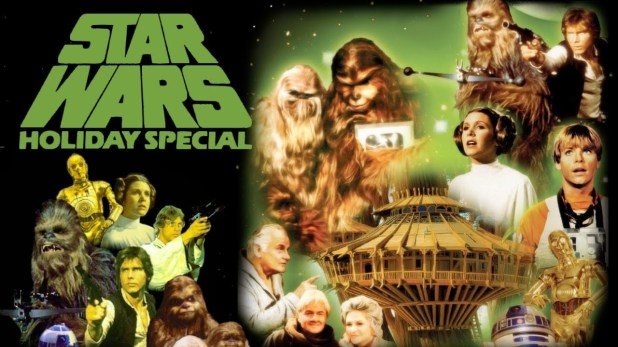
It’s Life Day — the Christmas of the Star Wars universe. Chewbacca just wants to get home, but the Empire is on his tail.

Meanwhile, on his home planet of Kashyyk, Chewie’s family hopes for him to be there. His wife, Mallatobuck, scans for starships and calls Luke Skywalker and R2D2. Yes, everyone from Star Wars is in this, even noted crank Harrison Ford.

She also gets in touch with Saun Dann (Art Carney from The Honeymooners? Yes. Don’t freak out just yet.) and tells him to look for Chewbacca and Han. Meanwhile, Chef Gormaanda (Harvey Korman from The Carol Burnett Show) teaches her how to cook via a hologram.

Saun brings Life Day gifts for everyone, including virtual reality porn featuring Diahann Carroll as an alien for Attichitcuk, Chewbecca’s dad. This sequence will bend your mind and make you humble. Keep the Force strong and your fast forward button handy, as the song in this scene, “This Minute Now” invites the wookiee to have a fantasy and experience the alien woman.

Let me reiterate what just happened: kids tuned in for Star Wars and got to see Chewbacca’s dad polish Vader’s helmet. He was shooting womprats in Beggar’s Canyon. Releasing the Special Edition. Dare I say, jumping to de-light speed. Communicating with Red Leader One. You know what I’m saying. And I think you do.

Han and Chewie land on the planet, but the Imperial army is looking for them. They get distracted by food and Jefferson Starship singing a song called “Light the Sky on Fire” — again, yes, I am not shitting you — while Chewbacca’s son Lumpawarrump goes to watch a cartoon.

Ths cartoon — produced by Canada’s Nelvana — is the best part of the show. This is the first appearance of Boba Fett, who acts as if he is a hero. It’s short and sweet, with stylized artwork and plenty of action. It’s the best part of the show, which isn’t much of a feat. It’s said that the animation was based on the artwork of Jean “Mœbius” Geraud at the request of George Lucas. Mœbius was part of the crew that Alejandro Jodorowsky had assembled to create his version of Dune, along with Dan O’Bannon, who helped create the effects for Star Wars. Interestingly, many believe that Lucas stole Jabba the Hutt’s design from Jodorowksy’s idea of what Baron Harkonnen should look like.

Harvey Korman shows up again, then the Empire shuts down the planet Tatooine. We return to one of the best parts of Star Wars, the Mos Eisley Cantina, where we meet the owner, Ackmena (Bea Arthur from The Golden Girls. Yep. Bea Arthur.) and Harvey Korman shows up again! And Richard Pryor is there, too!
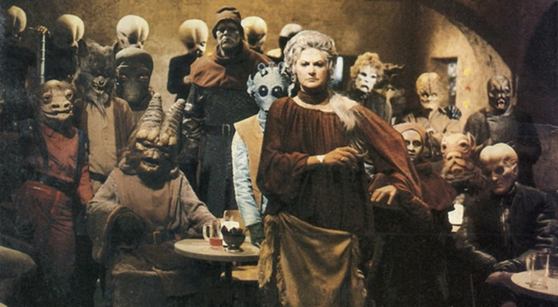
Then, in defiance of the Empire’s curfew, Ackmena sings “Good Night, but not Goodbye” with Figrin D’an and the Modal Nodes, the cantina band. If you can make it through this part of the special, you must have a high midichlorian count. Of note, Greedo is in the bar showing no ill effects of being shot at first, as well as one of the rats from The Food of the Gods.

Chewbacca’s son runs from the Imperial troopers but is saved by his father and Han. Then, everyone goes to the festival at the Tree of Life. Everyone appears and a song about Life Day, which somehow has the same theme as the Star Wars theme, is sung by Princess Leia (Fisher demanded that she be allowed to sing in this special). We sit through b-roll of the original film and then see the wookiees eat dinner.

This has never been broadcast again or sold, as George Lucas sees it as a major source of embarrassment. Then again, he created the prequels, too.

If you’re wondering why the wookiees speak only in their native language and it’s never translated, thank Lucas. He fought for this against the wishes of writer Bruce Vilanch. Yes, that Bruce Vilanch. This means that for minutes at a time, all you hear are yells and grunts instead of English.

But this wasn’t the last Star Wars Christmas project. In 1980, Meco Monardo, who recorded the amazing combination of disco and science fiction entitled Star Wars and Other Galactic Funk, created Christmas in the Stars, an album that found C-3PO and R2-D2 travel to a droid factory that makes toys for S. Claus. It’s also the first audio appearance of Jon Bon Jovi, singing on the song “R2-D2, We Wish You a Merry Christmas.”

If you truly love Star Wars and the holidays, you have so many other ways to spend your time. Don’t give in to the forbidden fruit that is the Star Wars Holiday Special. My brother and I had no idea of the horrifying monstrosity we’d face back in 1978. Imagine the feeling Grand Moff Tarkin had watching the Death Star explode, except our pain went on for two hours. Two hours is a long time when you’re three and six.

It hasn’t gotten any better with age. In fact, it’s all curdled with time, like a glass of Thala-Siren milk that’s been left out overnight.
Night Gallery episode 4: Make Me Laugh/Clean Kills and Other Trophies

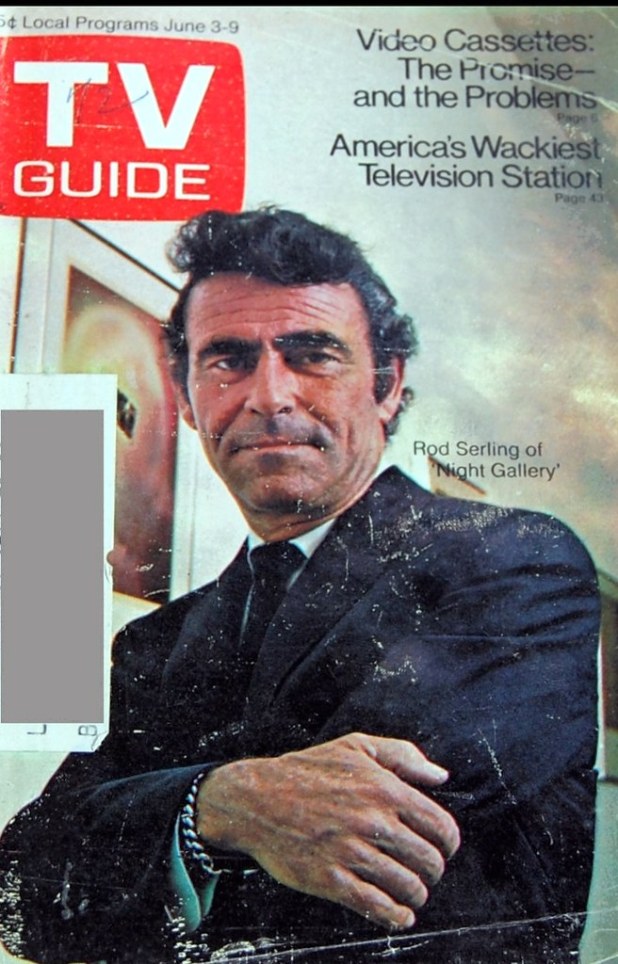
Night Gallery is best when it exists in the world of shadows and this episode is a great example of that. It also helps that Rod Serling wrote both stories.

“Make Me Laugh” is directed by Steven Spielberg, who also was part of the pilot. Jackie Slater (Godfrey Cambridge) is a comedian whose act is all washed up and even his agent (Tom Bosley) has given up. Yet when Catterje (Jackie Vernon) offers to give him a miracle and make everyone laugh at everything he says, he accepts the deal regardless of the consequences. It’s a quick and simple story and hey, there’s a Grandpa Al Lewis blink and you’ll miss it appearance.

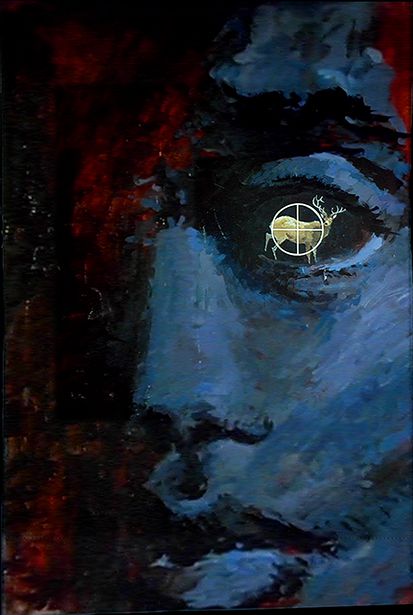
“Clean Kills and Other Trophies” is directed by Walter Doniger and stars Raymond Massey as Col. Archie Dittman, a man obsessed with hunting. His son Archie Jr. (Barry Brown) has just graduated college but his father plans on cutting him off if he can’t learn how to kill, a fact that upsets his butler Tom Mboya ((Herbert Jefferson, Jr.).

Massey is great in this and the ending is ridiculous but also great. It’s so over the top that it’s hard not to laugh. It makes the episode.

Thankfully, this episode has none of the quick comedy scenes.

A CHRISTMAS STORY: Ollie Hopnoodle’s Haven of Bliss (1988)

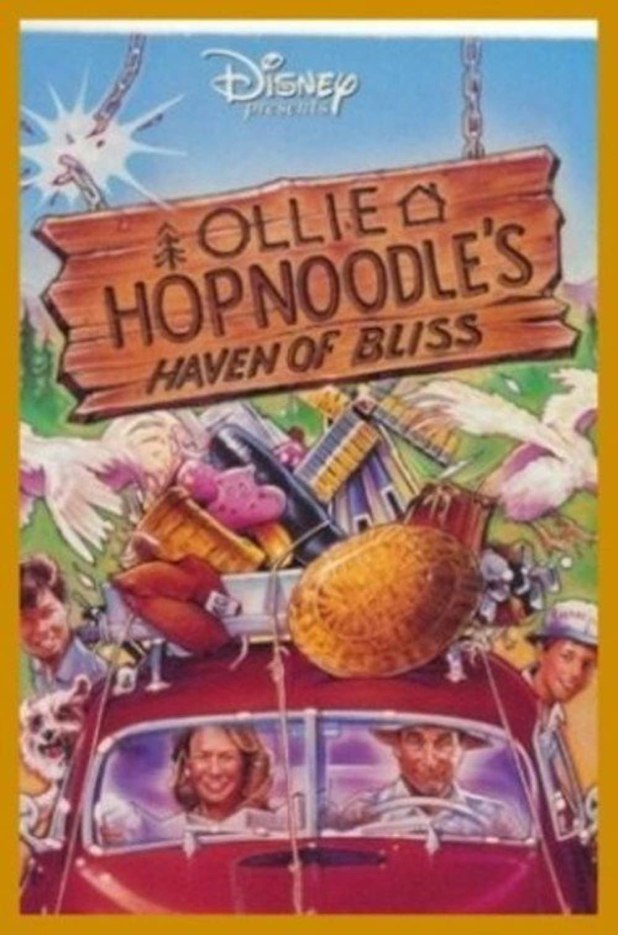
This Jean Shepherd story isn’t about a holiday but is about summer vacations. But first, work. Ralphie (Jerry O’Connell), Flick (Cameron Johann) and Schwartz (Ross Eldridge) are working a horrific first career at Scott’s Used Furniture Palace — run by a character played by Shepherd — while dreaming of having a few days off. Before that, the family dog Fuzzhead (Shepherd’s real life dog Daphne) goes missing and ends up living in a mansion.

The trip to get to the trailer park of the title is described in the words of Shepherd as a journey “beset on all sides by strange creatures, the lost mariner searches and searches, in the Sargasso sea of life.”

James Sikking, who plays The Old Man, is also in The Night God Screamed, which is pretty awesome casting. Mom is played by Dorothy Lyman, who depending on when you watched TV was a pretty big deal. For those who watched soaps in the afternoon, she was on a ton of soap operas, including A World ApartThe Edge of Night, as Gwen Parrish Frame on Another World, Rebecca Whitmore on Generations, Bonnie Roberts on The Bold and the Beautiful and most importantly, she was Opal Sue Gardner on All My Children. If you watched TV at night, you knew her as Naomi, the daughter-in-law on Mama’s Family.

Ollie Hopnoodle’s Haven of Bliss was co-producted by Disney, public TV’s American Playhouse and Boston public TV station WGBH. While funded by Disney, they had nothing to do with production. After airing on their channel, it moved to public television.

This was the last film Shepherd made for television. He wanted to turn his stories into a series, but by 1988, he was making from the reruns and home video sales from A Christmas Story and decided to make another movie. That would be 1994’s It Runs in the Family: My Summer Story or as it is better remembered today, A Summer Story.

You can watch this on YouTube.

A CHRISTMAS STORY: The Star-Crossed Romance of Josephine Cosnowski (1985)

Originally airing on February 11, 1985 on PBS’ American Playhouse, the fourth feature film of the Parker family starts in a movie theater as an older Ralphie (Jean Shepherd, who wrote these stories) relates that seeing a movie by a Polish director reminds him of Josephine Cosnowski (Katherine Kamhi), the neighbor who became his first serious love.

Barbara Bolton and Jay Ine return as mom and Randy, but young Ralphie is Pete Kowanko and The Old Man is played by George Coe, a castmember of season one of SNL. Sadly, James Broderick, who played the role in The Phantom of the Open Hearth and The Great American Fourth of July and Other Disasters died of thyroid cancer in 1982.

The Old Man always said, “There has to be a God if there’s beer. All that goodness just ain’t accidental.”

This made me think about my father, lost a week or so before Thanksgiving, and as Ralphie takes his little dog up the steps and he remembers, his old self weary through time, that there was no better holiday than before being an adult and when Thanksgiving really meant something, that it was something to look forward to and now, all of life is just appointments and time moves so fast as we march to our destiny. It made my eyes burn I cried so hard, my very own little dog next to me with no idea just how much I missed being a kid and knowing my father was one door away.

A CHRISTMAS STORY: The Great American Fourth of July and Other Disasters (1982)

Directed by Richard Barlett and written by Jean Shepherd, who also wrote the original stories that these were based on. You will probably know A Christmas Story, but Ralphie Parker had several adventures before and after that film.

James Broderick returns as The Old Man, Barbara Bolton is back as mom and Shepherd again plays the older Ralphie, who starts the story visiting South of the Border and buying fireworks. In the actual movie, he’s played by Matt Dillon and Jay Ine is Randy.

Ralphie is high school aged here and excited to meet his friend’s attractive cousin named Pamela, a date he eventually botches. That said, the main part of the story is all about his father’s obsession with fireworks and his mother’s chain letter that keeps wash rags coming to their house.

If A Christmas Story has its holiday, so does this. The only downer is the repeated reference to fireworks as dago bombs, but I guess it was the 1940s and that’s how people referred to Italians. It was how my grandmother did until her death a year or so ago, despite my dad being, yes, Italian.

You can watch this on YouTube.


A CHRISTMAS STORY: The Phantom of the Open Hearth (1976)

I saw someone whining that the new A Christmas Story Christmas recast the mother and was a sequel to a movie that didn’t need a sequel. Little did they know that it was the ninth — if you count the A Christmas Story Live! TV movie — story of the Parker family, a series of films that began seven years before its best-remembered installment.

All of these stories are based on the writing of Jean Shepherd, who often told stories of his childhood in the fictional town of Hohman, Indiana (he grew up in Hammond) on the radio. After publishing those stories in Playboy, but he never intended to be a writer.

Hugh Hefner claimed that The Giving Tree author Shel Silverstein asked Shepherd to write down his radio stories, but he never saw himself being a writer. So Silverstein recorded the shows off the radio, transcribed them and worked with Shepherd to turn them into written works.

His first book, In God We Trust: All Others Pay Cash, contains many of the stories of the Parker family, stories that despite having the names of real people and real places, are all from Shepherd’s imagination. These memories come in the form of Ralph, who has returned to his home town as an adult, telling these stories to his friend, Flick, who now runs the bar where their fathers used to drink.

Four of the stories in the book — “Duel in the Snow, or Red Ryder Nails the Cleveland Street Kid,” “The Counterfeit Secret Circle Member Gets the Message, or The Asp Strikes Again,” “My Old Man and the Lascivious Special Award That Heralded the Birth of Pop Art” and “Grover Dill and the Tasmanian Devil,” as well as “The Grandstand Passion Play of Delbert and the Bumpus Hounds” from Shepherd’s second book Wanda Hickey’s Night of Golden Memories make up A Christmas Story.

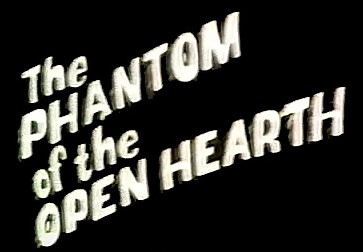
But before that, on December 23, 1976, The Phantom of the Open Hearth aired as an episode of PBS’s anthological television series Visions. It features Shepherd as the adult Ralphie and David Elliot as the teen version in a story of Ralphie trying to decide between taking Daphne Bigelow (Tobi Pilavin) or Wanda Hickey (Roberta Wallach) to the school dance, all while his father (James Broderick) anticipates winning a major award that this film explains is a leg lamp because the contest was sponsored by Ne-Hi Soda and that was their logo. While all thatis going on, Randy (Adam Goodman) annoys Ralphie and mom (Barbara Bolton) is obsessed with getting free fine china from the movie theater.

Directed by Fred Barzyk (Jean Shepherd’s AmericaThe Lathe of Heaven) and David Loxton (Countdown to Looking Glass) from a script by Shepherd, this led to another PBS movie, The Great American Fourth Of July and was almost a TV series in 1978. The pilot was directed by John Rich and written by Shepherd and was also called The Phantom of the Open Hearth. That’s where the line “Oh, fudge (but I didn’t say fudge)!” comes from.

Its a little jarring to see the adult adventures of Ralphie while still interesting to get a different perspective.

You can watch this on YouTube.

Night Gallery episode 3: The House/Certain Shadows On the Wall

Originally airing on December 30, 1970, this episode of Night Gallery starts to get darker than the season has been up to now.

Elaine Latimer (Joanna Pettet, The Evil) has spent her time in a mental hospital dreaming of a country road that leads to the house of her dreams. Pettet is a fixture on this show, also appearing in the stories “The Caterpillar,” “Keep in Touch – We’ll Think of Something” and “The Girl with the Hungry Eyes.” Consider this a short F giallo, as we wonder if Elaine has lost her mind or perhaps she has finally learned where she belongs.

Directed by John Astin, this story was based on an original story by Andre Maurois and the script was written by Serling.

“Certain Shadows On a Wall” brings Agnes Moorehead back to working with Serling, as her character Emma is killed by her brother Stephen (Louis Hayward), yet remains a shadow on the wall watching as her sisters Ann (Grayson Hall) and Rebecca (Rachel Roberts) plan Stephen’s demise.

Directed by Jeff Corey — who is mostly known for acting; he was Zed in Battle Beyond the Stars and was also in Jennifer and The Premonition — this was also a Serling script, this time based on a story by Mary Eleanor Freeman.

While neither story is fully realized, this episode finds the show heading for the twisted tales that make me adore it so much.

Night Gallery episode 2: Room with a View/The Little Black Bag/The Nature of the Enemy

Originally airing on December 23, 1970, Night Gallery expanded to three stories for this episode.

“Room with a View” was directed by Jerrold Freedman (A Cold Night’s Death) and written by Hal Dresner (The Eiger Sanction) and it’s all about a bedridden man named Jacob Bauman (Joseph Wiseman, Dr. No) who learns that his wife Lila (Angel Tompkins, Murphy’s Law) is sleeping with someone else. His revenge scheme involves the young nurse (an unbelievably young Diane Keaton) who is there day and night with him.

“The Little Black Bag” is directed by Jeannot Szwarc (Jaws 2, making that two Jaws directors who worked on Night Gallery) and written by Rod Serling from a story by C.M. Kornbluth. It tells the tale of William Fall (Burgess Meredith) finding the medical bag of Gillings (George Furth), a doctor from the future. This same story was also adapted on the show Tales of Tomorrow with Charles S. Dubin directing.

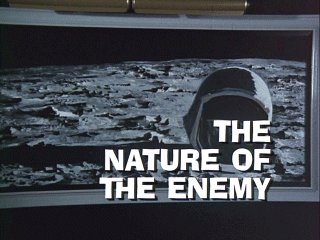
“The Nature of the Enemy” is directed by Allen Reisner and written by Serling from a story by Cyril M. Kornbluth, a science fiction writer who died way too young. The director of NASA (Joseph Campanella) tries to keep control after life is found on the surface of the moon.

The second episode of this series — much like the first — doesn’t live up to the promise of the pilot. Soon, though, this would get much better.

Night Gallery episode 1: The Dead Man/The Housekeeper

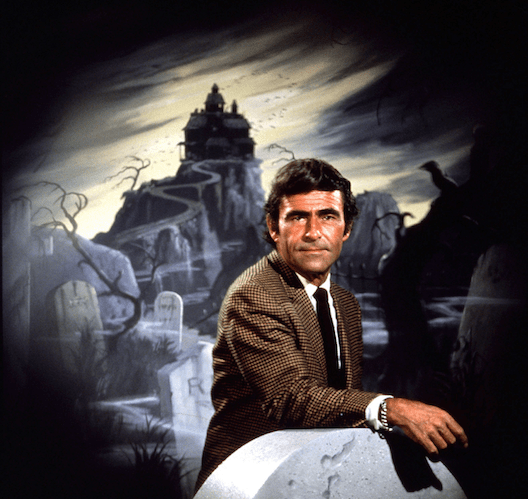
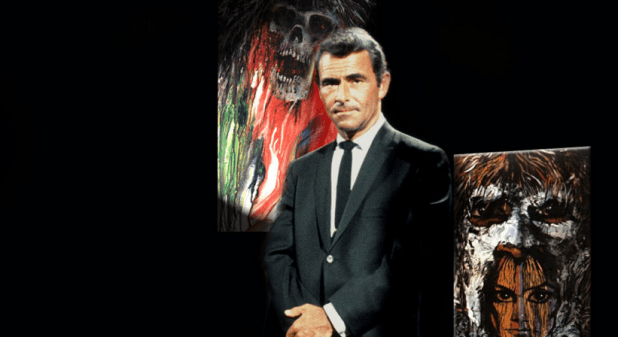
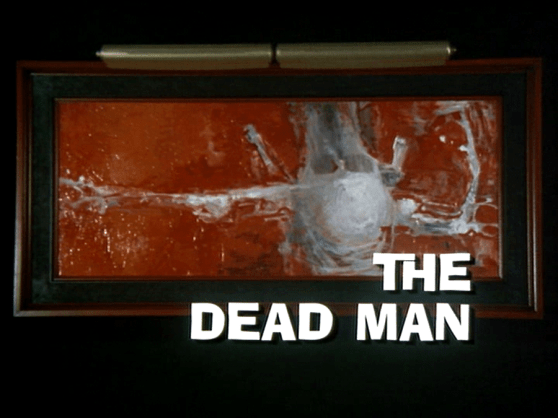
Originally airing on December 16, 1970, Night Gallery returned from its pilot a year later with two new stories, starting with Serling walking out of a floating gallery and saying, “Good evening, and welcome to a private showing of three paintings, displayed here for the first time. Each is a collector’s item in its own way—not because of any special artistic quality, but because each captures on a canvas, suspended in time and space, a frozen moment of a nightmare.”

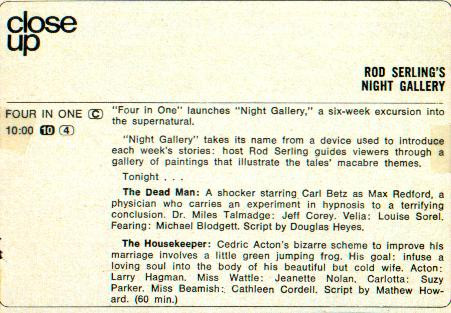
The first story, “The Dead Man,” was written and directed by Douglas Heyes (Kitten With a Whip). Based on the short story by Fritz Leiber, it’s a very Amicus-style story of Dr. Max Redford (Carl Betz) and Dr. Miles Talmadge (Jeff Corey) discussing a medical technique in which different taps can make a person sick or well. One of those patients, John Fearing (Michael Blodgett), has come back numerous times sick from a variety of afflictions despite looking like the picture of health. Meanwhile, Reford’s young wife Velia (Louise Sorel) is falling for this paranormal patient. Of course, the doctor ends up causing the death of his patient and the mental collapse of his wife.

“The Housekeeper” was directed by John Meredyth Lucas and written by Heyes. Cedric Acton (Larry Hagman) is married to Carlotta (Suzy Parker), a rich woman who is cruel to him. He hopes to move the brain of his new housekeeper Miss Wattle (Jeanette Nolan) into the body of his gorgeous young wife. It’s a comedic instead of a frightening story — Night Gallery would suffer from more of this in the second season — but Hagman is good, just coming off his run on I Dream of Jeannie.

MILL CREEK NIGHTMARE WORLDS: The Disappearance of Flight 412 (1974)

Oh man, 1970s TV movies and UFOs go together like blood and half-naked teenage camp counselors.

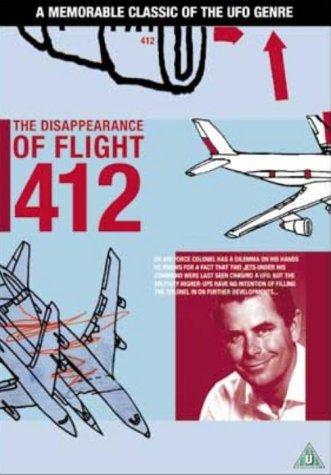
U.S. Air Force Colonel Pete Moore (Glenn Ford), the commander of the Whitney Air Force Base 458th Radar Test Group, has sent a crew made up of Captain Bishop (David Soul), Capt. Riggs (Robert F. Lyons), Lt. Ferguson (Stanley Bennett Clay) and Lt. Podryski (Greg Mullavey) out on flight 412, which the title tells us is of course going to, you got it, disappear. Well, the UFO doesn’t cause that, but government spooks sure do. And that means that Moore and Major Mike Dunning (Bradford Dillman) have to find out what happened.

Shot like a documentary, this movie has some major issues when it comes to accuracy. When the first scenes of the jets are shown, they’re U.S. Marine McDonnell Douglas F-4B Phantom II fighters. Later, Grumman F9F Panther fighter aircraft are shown, planes that didn’t fly after the 50s. Maybe that was the government doing that, adding disinformation to a movie that is supposed to give us the real info on aliens.

Director Jud Taylor mainly worked in TV and is known for TV movies like Revenge!Weekend of TerrorSearch for the GodsAct of Love and the TV miniseries of The Old Man and the Sea. It was written by George Simpson (who mainly worked in sound for movies) and Neal R. Burger. They also wrote the 1990 TV movie Ghostboat together as well as the novel it was based on and the books Thin Air, Fair Warning, Severed Ties and Blackbone.