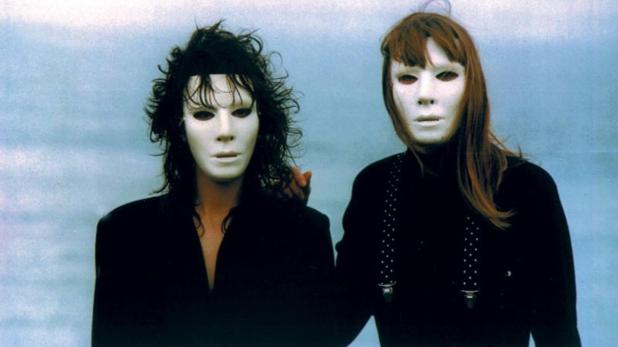
Two girls find a magical wooden device called a Moon Goddess — which looks like something Lina Romay would dig up in a Franco movie — and it transforms them into adults — or were they old women transformed into kids all over again? — in this under an hour made for TV ultra personal Jean Rollin film, which kind of feels like a greatest hits of his most striking moments.
This movie feels like the kind of fast forward nostalgia I had as a kid when I was made emotional by love songs I had no understanding of at the time.
Years later, Clams Casino would release a music video with footage of this film, which has been attributed to people struggling with depression and the video itself helping them.
In the same way that childhood ends and I am confronted by feelings within it to this day, this movie makes me feels things that I understand more with each watch. It is ghost-like. It is etheral. It is magic.
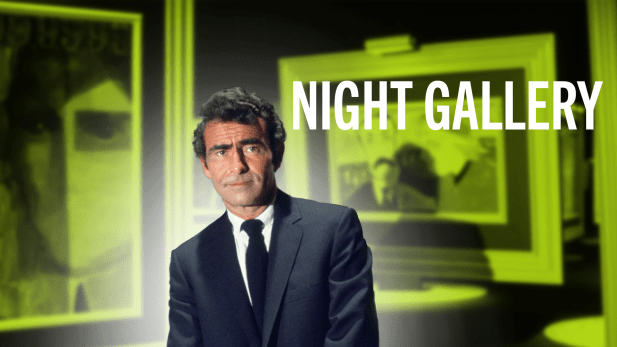
First airing on January 20, 1971, this episode of Night Gallery fully embraces the darkness of the world, as a man grows old and the world changes around him in the first story, one I have gone back to watch again and again.
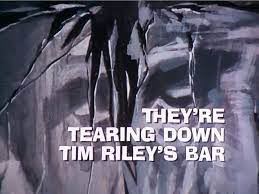
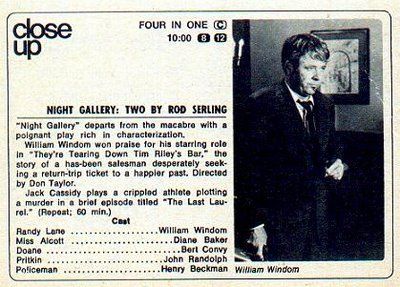
“They’re Tearing Down Tim Riley’s Bar” is directed by Don Taylor (Damien: Omen II, The Final Countdown, Escape from the Planet of the Apes) and written by host Rod Serling is the story of Randy Lane (William Windom), who returned home from the war, had a party at Riley’s, got married and found a great job in plastics. But that was 25 years ago and now, his wife is dead, the job is a dead end and they’re tearing down Tim Riley’s Bar.
His boss (John Randolph) has forgotten him. His assistant (Bert Convey!) is after his job. The only person who seems to care is his secretary (Diane Baker) but he’s blinded by grief and can’t see it. All he can do is drink himself into oblivion and wander the old places of his life and bear witness to the ghosts of the past, much better spirits than he sees every day.
Not really horror, not even scary, this is one of the best segments of the show and was nominated for an Emmy. The older I get, the more it upsets me, but that’s why when Serling is good, there’s no one better, even if the ending is way too simple.
“The Last Laurel” was directed by Daryl Duke, who would go on to make The Silent Partner and The Thorn Birds. Written by Serling from a story by David Grubb, it suffers by comparison to the first half of this episode. Jack Cassidy plays Marius Davis, a man dying and unable to stop his gorgeous wife Susan (Martine Beswick) from sleeping with the man treating him in his last moments, Doctor Armstrong (Martin E. Brooks). Of course, there’s revenge by astral projection.
This ends the first season of Night Gallery yet it feels like things are just getting started.
Originally appearing on January 13, 1971, the fifth episode of Night Gallery has at least two solid tales to deliver.
“Pamela’s Voice” pits Jonathan (John Astin) against his wife Pamela (Phyllis Diller), ending with him killing her because he’s sick of hearing her voice. Yet even death can’t stop her from haranguing him in this story directed by Richard Benedict, who started as an actor and became a director, and written by Rod Serling. While most comedy episodes of this show don’t work for me, there’s a lot of talent here.
“Lone Survivor” is directed by Gene Levitt, the creator of Fantasy Island, and written by Serling. Th crew of the Lusitania find a man in a dress, lost at sea, claiming that he dressed as a woman to escape the sinking of the Titanic years ago. This would be impossible except, well, this show allows the fantastic to become true. That ghost of a man is played by John Colicos in a fine role.
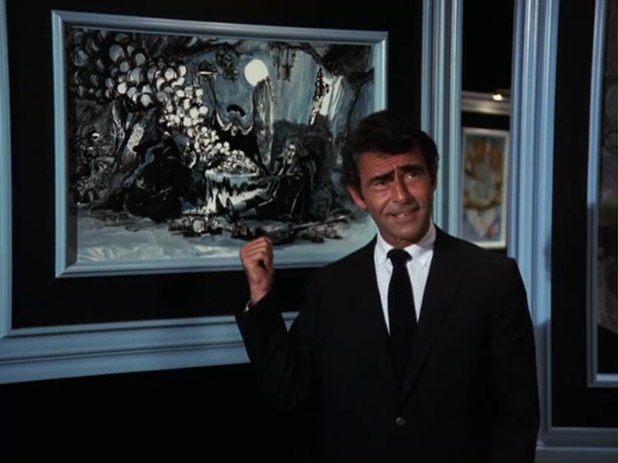
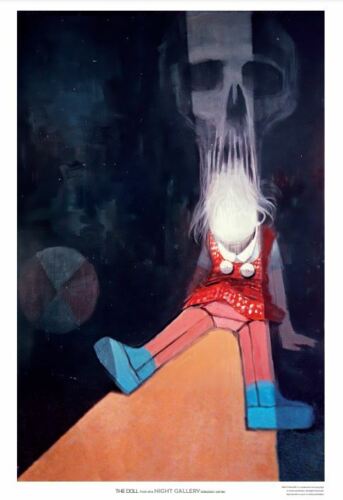
“The Doll” starts with Serling intoning, “This little collector’s item here dates back a few hundred years to the British-Indian Colonial period, proving only that sometimes the least likely objects can be filled with the most likely horror. Our painting is called “The Doll,” and this one you’d best not play with.”
This episode was directed by Rudi Dorn and written by Serling. Based on “The Doll and One Other” by Algernon Blackwood, this is all about a doll given to Col. Hymber Masters’ (John Williams) niece (Jewel Branch) as he returns from India. I have no idea who would be good with such a frightening doll in their home, but yet she loves it, even when it causes chaos. Blame Pandit Chola (Henry Silva), who has sent it to get revenge for the death of his brother.
With this episode, Night Gallery affirms the promise that it had with the pilot. Guillermo del Toro has claimed that so many of his shots come directly from “The Doll” and that it remains an influence on him even today.
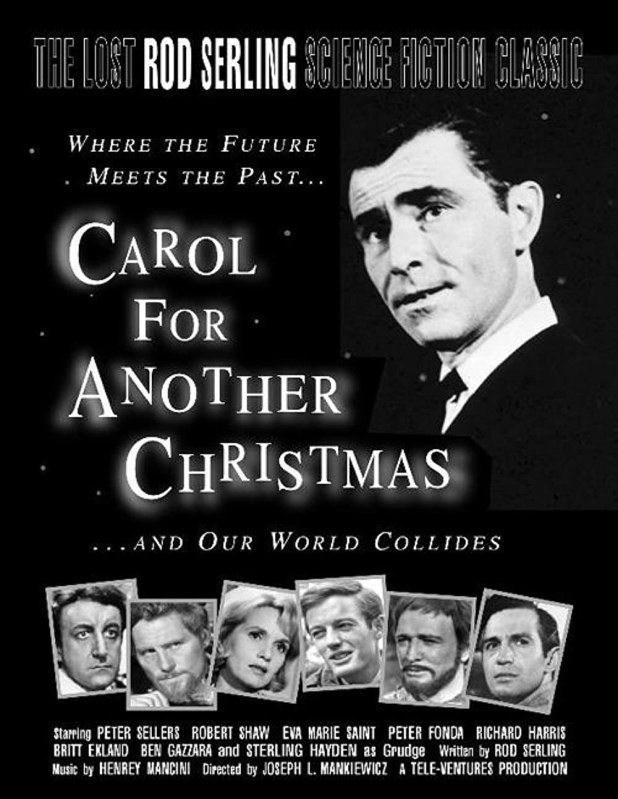
Originally televised on ABC on December 28, 1964 and was the first in a planned series of television specials developed to promote the United Nations and educate viewers about its mission — Who Has Seen the Wind?, Once Upon a Tractorand The Poppy Is Also a Flower are the others.
It sure has a great pedigree, as it was written by Rod Serling and is the only TV work by director Joseph L. Mankiewicz. It also marked the return to acting after Peter Sellers’ heart attack and has his wife at the time, Britt Eklund, in the cast.
On Christmas Eve, rich industrialist Daniel Grudge (Sterling Hayden) is alone in a dark room listening to “Don’t Sit Under the Apple Tree (with Anyone Else but Me)” by The Andrews Sisters. His nephew Fred (Ben Gazzara) comes to ask for help with a United Nations program at his college, but Daniel remarks that he’s tired of the U.S. being the world’s policeman. After all, his son Marley died twenty years ago to the day and he’s never gotten past it.
As you can imagine, three ghosts — Past (Steve Lawrence), Present (Pat Hingle) and Future (Robert Shaw) — take him through the world of isolationism and also introduces the despotic Imperial Me (Sellers) who demands that everyone left on the planet after a nuclear war kill one another until no one is left.
Serling biographer Gordon F. Sander wrote that this movie is unlike a lot of the author’s social change stories, as it ends on a down note. That may be because of the assassination of John F. Kennedy and the war in Vietnam taking more American lives. This film is very heavy handed — it also led to a right wing boycott, which yes was already happening in 1964 — and didn’t play again until nealry fifty years after it first aired.
EDITOR’S NOTE: This holiday giallo was first on the site many years ago, all the way back on December 16, 2017.
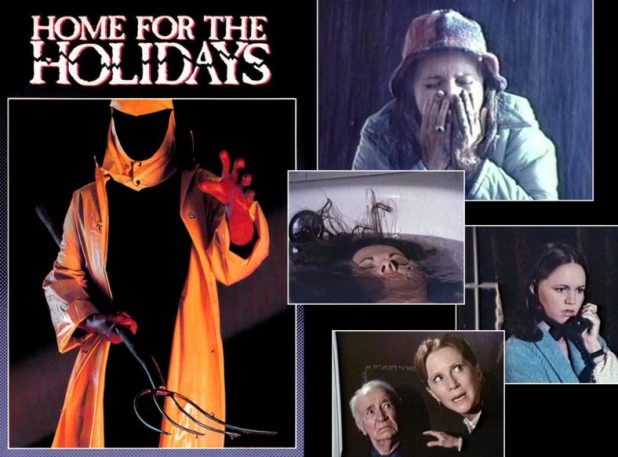
Originally airing on November 28, 1972, this ABC-TV movie was produced by Aaron Spelling and debuted on VHS in 1986. It’s packed with future talent and is at the center of what we love most here: TV movies, Christmas movies and horror.
Benjamin Morgan (Walter Brennan, Rio Bravo) is rich and dying and suspects his wife, Elizabeth (Julie Harris, one of America’s most famous stage actresses), of poisoning him. He sends his oldest daughter, Alex (Eleanor Parker, Eye of the Cat) to find her three sisters and bring them home — the first time they’ve been back since their mother’s suicide.
The three sisters are Freddie (Jessica Walter, Arrested Development), Joanna (Jill Haworth, The Brides of Dracula) and Christine (Sally Field, Steel Magnolias). Their father tells them that they must kill their stepmother before she kills them. At dinner that night, Joanna harangues her stepmother with questions about how her first husband died, while Freddie screams in her room about how their father’s affairs led to their mother killing herself.
This is obviously the holiday get-together everyone hoped for.
Soon after, Joanna tries to leave but is killed by a pitchfork-wielding person in a yellow raincoat. That same killer also drowns Freddie in the bathtub while Elizabeth keeps offering everyone warmed milk and honey. Soon, the phone line gets cut and everyone is trapped with a killer. But who is it?
There are plenty of twists and turns here, as the love between a father and daughter and the love between husband and wife is contested. It’s bloodless, as it’s a TV movie, but it’s also pretty dark, because the 1970’s were the end of the world and the movies made then reflected it. You also get a cast packed with Oscar winners and nominees, all acting within basically one or two rooms, so there’s plenty of emotion and suspense.
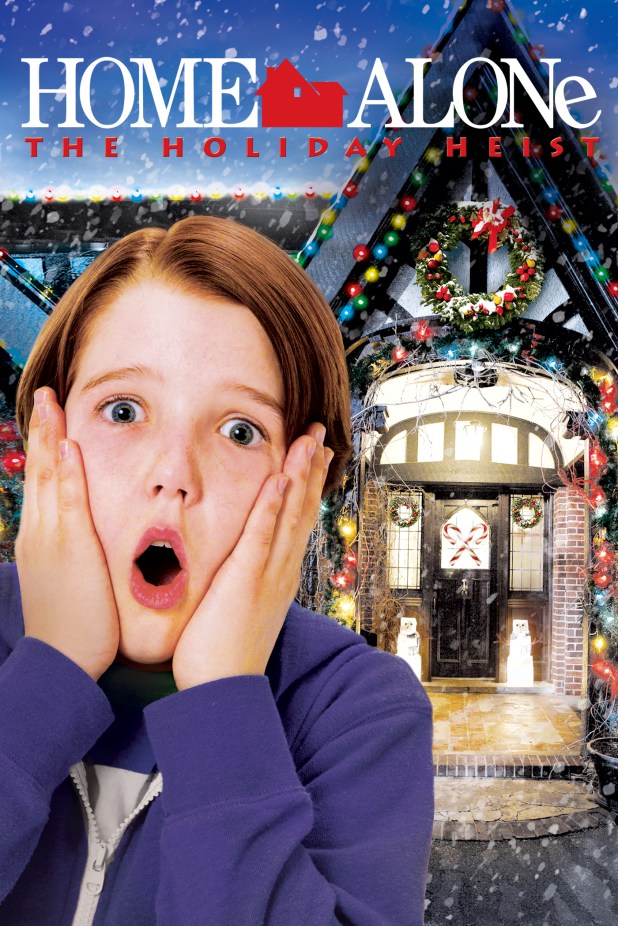
Peter Hewitt directed Bill & Ted’s Bogus Journey, Garfield and Thunderbirds, so who knows what he got into when he made this, the fifth Home Alone movie, made for the Disney Channel. It’s written by Aaron Ginsburg and Wade McIntyre and doesn’t have the McCallister family but instead a new kid named Finn Baxter (Christian Martyn) who plays video games all the time.
The bad guys are three thieves, Sinclair (Malcolm McDowell), Jessica (Debi Mazar) and Hughes (Eddie Steeples). I remember when I was young and I believed that McDowell was someone who brought prestiege to a movie. Now I realize that much like the man whose role he assumed for Rob Zombie, McDowell is the Donald Pleasence of today. I mean, he’s not Eric Roberts, but very close.
This was going to be called Home Alone: Alone in the Dark which sounds way too dark, right? It also references to all the other films even though its character is in no way connected to them, so it makes you wonder why you’re watching this movie instead of those movies, which is not how a sequel should leave you feeling.
One day in the woods, Moni (Ivana Baquero, Pan’s Labyrinth), Koldo, Peti, Eugenio and Tito discover that a woman in a Santa suit has fallen into a pit. That woman is bank robber Rebeca Expósito (Maru Valdivielso) who they decide to keep as their secret. They decide to start feeding her and trying to get her to tell them where the millions she store are, but soon, she’s escaped and she has an axe.
Luckily, they have the training they’ve picked up from a childhood of watching horror movies on VHS, like the film within this film Zombie Invasion which looks a lot like The Gates of Hell. It also has Elsa Pataky from Beyond Reanimator and Fast and the Furious. Oh yes! She’s also in Argento’s Giallo.
As the Santa with an axe chases the kids, only what they have learned from those films — and The Karate Kid — can save them. Maybe. Maybe not. This has a dark ending with a little bit of hope, as at least one of the kids gave her actual food and not just junk. Also, she didn’t shove something into her eye like she was some kind of Fulci-obsessed lunatic.
Películas para no dormir means 6 Films to Keep You Awake. They include Blame by Narciso Ibáñez Serrador (Who Can Kill a Child, The House That Screamed), Spectre by Mateo Gil, A Real Friend by Enrique Urbizu, The Baby’s Room by Alex de la Iglesia (El Dia de la Bestia) and To Let by Jaume Balagueró (Rec). This story was Paco Plaza (who also directed Rec) and written by Luiso Berdejo (Quarantine).
This is a great watch and I loved the other ones I’ve seen, so I need to hunt them all down.
This really could have been made in 1979 or earlier and I’d say, “Yes, I can see that.”
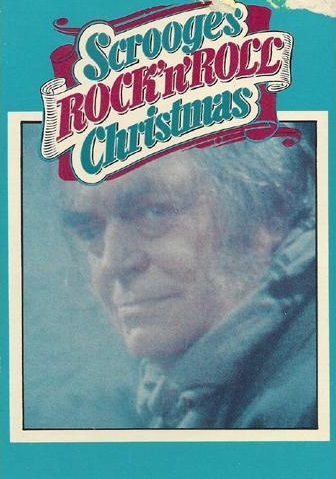
Lee Benton plays The Girl — oh man, she’s Donna from the absolutely deranged female softball players vs. redneck maniacs movie Blood Games under her other name Shelley Abblett — who is looking for a record store and finds Scrooge, who is played by Jack Elam. She has a crystal ball that allows them to watch music videos from bands like Three Dog Night, Merilee Rush, Paul Revere and the Raiders, The Association, Bobby Goldsboro, the much hated Mike Love, Dean from Jan and Dean and a singer named Bridget that everyone talks about like she’s about to be the next big thing.
Who is this Bridget?
Lou Tedesco was an old school TV guy and directed this, while it was written by producer Rex Sparger. I have no idea how this was made, because back to 1984, you had MTV, whose top videos were “Let’s Go Crazy” by Prince, “Jump” by Van Halen, “Eyes Without a Face” by Billy Idol and “Round and Round” by Ratt. This seems like something from a completely different era.
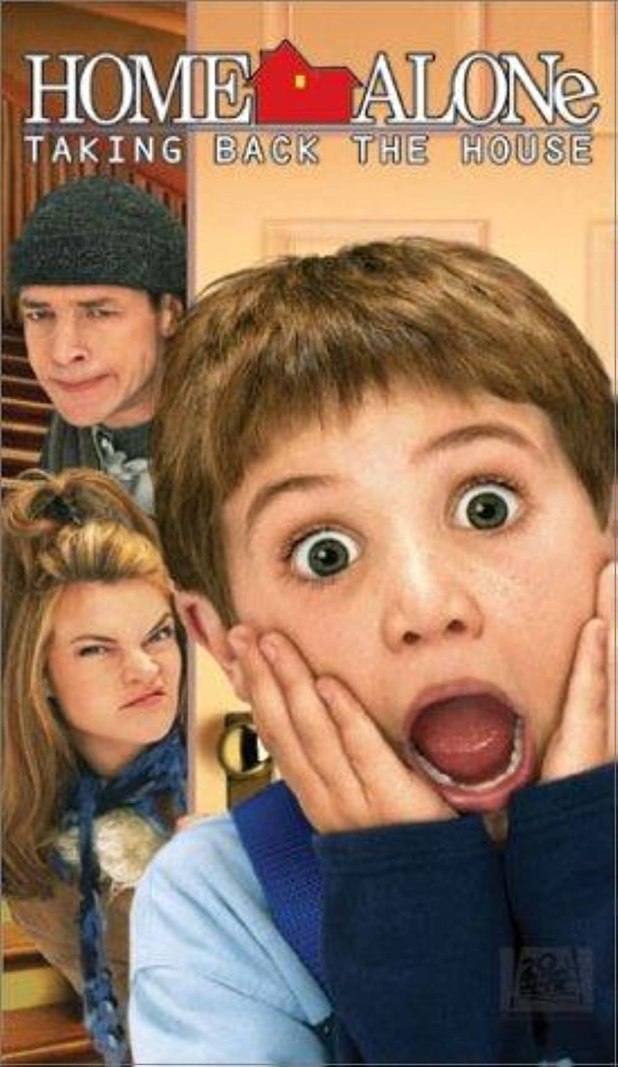
As much as I dislike every Home Alone movie, this one…this is the darkest timelime. Kevin McCallister (now played by Mike Weinberg) is now a child of divorce and his mom Kate (Clare Carey taking over for Catherine O’Hara) crying while she watches It’s A Wonderful Life and his father Peter (Jason Beghe from Monkey Shines taking the role from John Heard) getting married to the rich and gorgeous Natalie Kalban (Joana Going). Gideon Jacobs and Chelsea Russo are Buzz and Megan, who don’t really figure into this.
I mean, I can see why they got divorced, after leaving Kevin at home twice they had to have Child Services called on them and had to deal with all sorts of issues. Now dad has two servants — Mr. Prescott (Erick Avari) and Molly (Barbara Babcock) — and a hot lady and why would he ever go back?
Filmed in Cape Town, South Africa — not the most wintery of locations — this movie couldn’t even get Daniel Stern to play Marv. He called the movie “an insult” and “total garbage.” They had to get French Stewart for the role, yet he dresses like Harry, which is somewhat confusing but maybe the filmmakers never watched the first movie. Anyways, Marv has a girl named Vera, played by Missi Pyle. And you knew it, Kevin has to fight them off again inside the mansion.
Directed by Rod Daniel (Teen Wolf) and written by Debra Frank and Steve L. Hayes, this was supposed to become a series. That’s why the original ending that had Kevin’s dad staying with Natalie and his mother dating a police officer who turned out to be Marv’s younger brother was changed. The parents had to stay together if they were making a show, I guess.
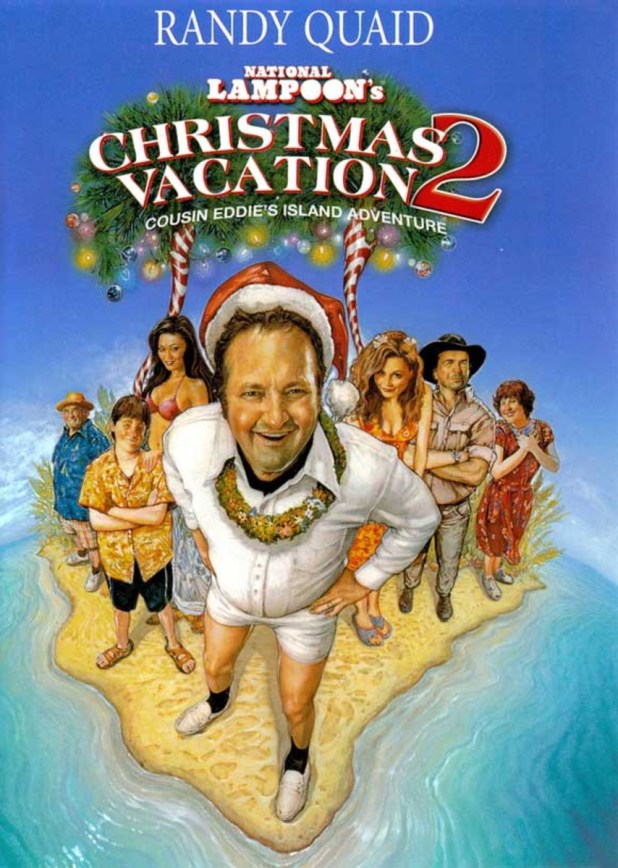
On December 20, 2003, NBC ruined many Christmas holidays by fostering this mess of a movie — directed by Nick Marck and written by National Lampoon publisher Matty Simmons, who at one time was the Executive Vice President of Diners Club. He is not John Hughes, Doug Kenney, Henry Beard or Michael O’Donoghue, as this film will show. I don’t know — maybe I just hated this movie so much that I am minimizing his contribution. Maybe he was a good writer. This movie doesn’t prove that.
Look, we all love Cousin Eddie. Do we love him enough to watch him as the main character for an entire movie, along with his family, which includes Catherine (Miriam Flynn), Clark the third (Jake Thomas), Audrey Griswold (Dana Barron, the first time someone has played a Griswold kid more than once) and Uncle Nick (Ed Asner). They even got Eric Idle to show up for a bit, bringing back his character from National Lampoon’s European Vacation.
Eddie gets fired by Fred Willard because he’s dumber than a chimpanzee, who then bites him and earns his family a settlement that turns into a Hawaiian vacation guided by Muka Luka Miki, who seems Hawaiian but is not, but neither is South Korean actress Sung Hi Lee.
It’s a rough watch and one that makes you wonder whether this needed to be made. Eddie is the steak sauce on the prime rib that are two of the three Vacation movies, but a steak covered in A1 tastes horrible. Follow that rule and avoid this.




 B&S About Movies
You must be logged in to post a comment.