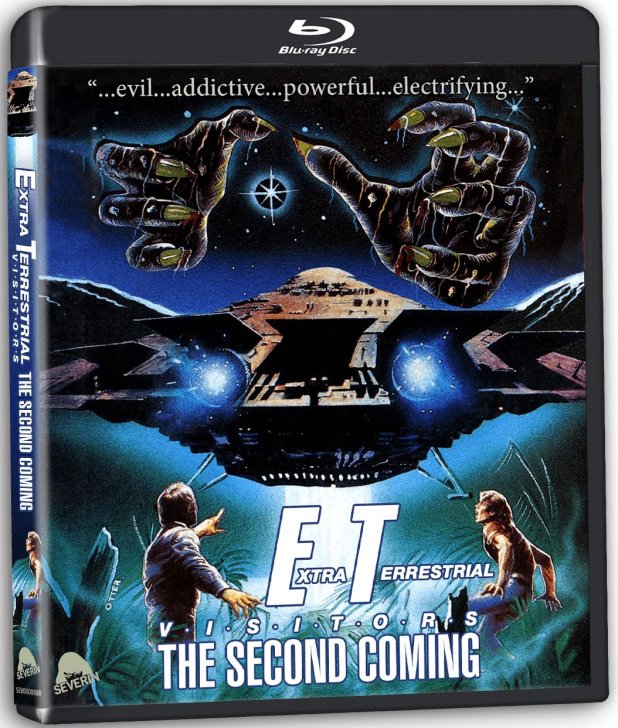
APRIL MOVIE THON 2: Extra Terrestrial Visitors (1983)

April 8: Film Ventures International — Share a movie that was released by Edward Montoro’s company. Here’s a list!

EDITOR’S NOTE: Here’s another take on this movie.

Juan Piquer Simón made Pieces and Slugs, so we can forgive him for Supersonic ManThe Rift and Cthulhu Mansion (which I like for some reason). With this movie, he’s challenging us a bit.

Los nuevos extraterrestres was meant to be a frightening movie about an alien on a murderous Earth rampage, but then E.T. came out and who better than the man who made Pieces to create a clone of Spielberg’s family classic?

It starts with poachers trying to get to the alien eggs that they find in the woods and being killed in the process, as well as a rock band getting involved. Then Tommy (Óscar Martín), our child protagonist, brings one of the eggs home and ends up helping it hatch, at which point he gets a new telekinetic friend he calls Trumpy.

Maybe that name hasn’t aged well.

Meanwhile, the band — Rick (Ian Sera, Kendall from Pieces and obviously his genitals have healed well as he has a roving eye), his girlfriend Lara (Susana Bequer, who shows up in Hostel: Part II), Kathy (Sara Palmer) and Tracy (Maria Albert), along with a hitchhiker named Sharon (Nina Ferrer) they found on the way — show up at Tommy’s house and Lara soon dies with a Big Dipper symbol on her forehead, which happens after she’s attacked by Trumpy’s mother and falls off a cliff.

This movie alternates between sweet moments between alien and child versus angry alien mother killing people left and right before being shot tons of times by Rick after she kills Tommy’s angry Uncle Bill (Manuel Pereiro). The boy and alien say their goodbyes and you’re like, well, didn’t we just watch Bambi’s murderous mother get killed? Has anyone learned anything in this? Is Trumpy going to grow up and murder us all?

Film Ventures International released this as Pod People and the credits appear on top of blurred footage from a whole different movie, Don Dohler’s The Galaxy Invader. And hey, if Tommy’s room feels familiar, it’s the same room where Timmy was working on his dirty puzzle in Pieces

I have no idea who this movie is for, but I have to respect the lengths it takes to make us think that it was shot in America, as Tommy’s bedroom has tons of Boston sports pennants to the point that you question why there are so many of them and start to realize that no, this didn’t come from the colonies and no, in no way is this a sequel or in the same world as E.T., no matter what they want to tell you.

The chocolate of alien murder in the woods and peanut butter of human and alien childhood friendship does not taste that great when smashed together, but it sure is fascinating and man, Trumpy looks legitimately like an alien to the point where if you told me that he was an escapee from Groom Lake, I’d believe you.

This is being released on blu ray from Severin. It has a 4K scan from the 35mm negative, plus extras such as The Simon’s Jigsaw — A Journey Into the Universe of Juan Piquer Simon, interviews with Emilio Linder and composer Librado Pastor, a private concert with Pastor, the Pod People credits and a CD soundtrack single. You can get it from Severin.
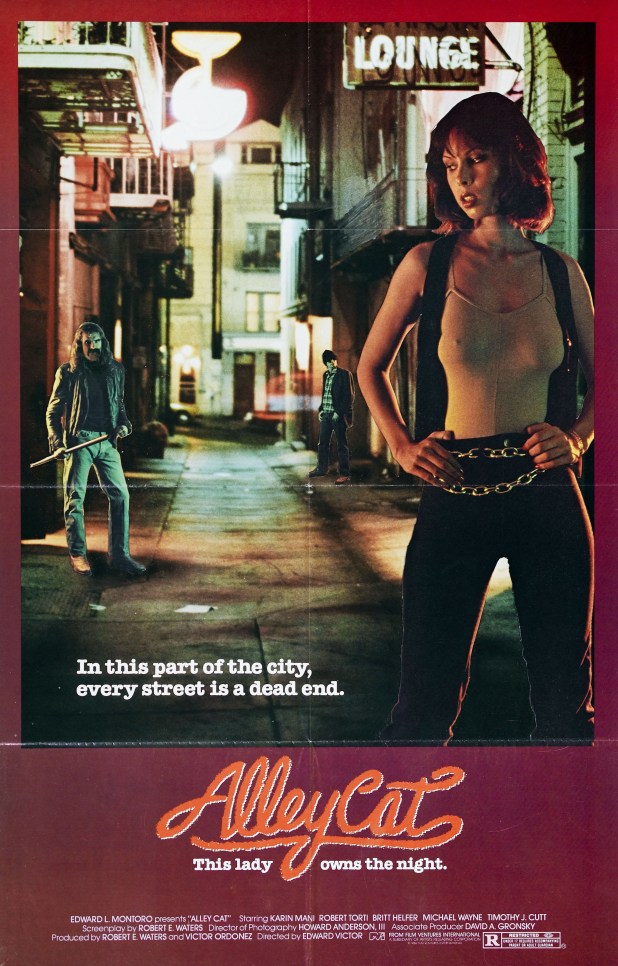
APRIL MOVIE THON 2: Alley Cat (1984)

April 8: Film Ventures International — Share a movie that was released by Edward Montoro’s company. Here’s a list!

Alley Cat has three directors. I have no idea why, but Victor M. Ordonez (who is in Nine Deaths of the Ninja and Hellhole), Ed Palmos and Al Valetta (who is in Sole SurvivorRunaway Nightmare and Hollywood’s New Blood) all had their hand in this movie, leaving Robert Waters, who also wrote Fighting Mad, to write the actual story.

Billie (Karin Mani, who was also in Avenging Angel) is our heroine Billie. She starts the movie by stopping some scumbags from stealing her car. They go their boss Scarface (Michael Wayne), who decides that he’s going to turn this tiger into an alley cat, a plan that starts by putting her grandmother in the hospital and beating her grandfather something fierce. The one good thing that happens is that she falls for a cop named Johnny (Robert Torti), who ends up having to arrest her with his partner Boyle (Jon Greene) when she defends some joggers from the very same criminals and has a gun without a permit.

When Billie goes to court, she pays twice the fine of the rapists, whose victims are intimidated by Scarface and never show. Billie reacts like a manaic, gets charged with contempt of court and turns her movie into a WIP film for a little, complete with requisite shower moment.

This is the only women’s revenge movie — yes, Billie gets out and gets said payback — in which the lead character eats at an Arby’s. The old Arby’s, before they had the meats and all they had was that giant beef hat on the sign. And oh yeah — while she’s in jail, her grandmother dies and Billie is robbed of those last moments, so even though her boyfriend wants to legally deal with Scarface, you will be hoping that she shoots him right in the dick.

APRIL MOVIE THON 2: Jackie Chan: My Stunts (1999)

April 7: Jackie Day — Celebrate Jackie Chan’s birthday!

ABOUT THE AUTHOR: Jennifer Upton is an American (non-werewolf) writer/editor in London. She currently works as a freelance ghostwriter of personal memoirs and writes for several blogs on topics as diverse as film history, punk rock, women’s issues, and international politics. For links to her work, please visit https://www.jennuptonwriter.com or send her a Tweet @Jennxldn

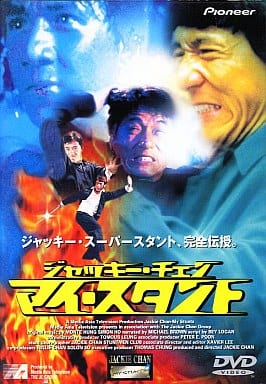
Jackie Chan’s My Stunts straight-to-video documentary takes us inside the world of Jackie Chan’s stunt and fight choreography. The follow-up to My Story (1998), the film begins by taking the viewer on a nostalgic tour of some of Chan’s most famous action scenes. It visits the locations of Police Story (1985) and reminisces on the amazingly dangerous stunts in that film. We also shown the inside of the lab where Chan and his celebrated stunt team come up with ideas for fight sequences. Chan’s enthusiasm for his work at this stage in career really shines through. It’s clear that his work is his whole life. Chan takes us step by step through pole fighting and wire techniques with great enthusiasm and precision. They illustrate his perfectionist ways to even greater effect in the behind-the-scenes clips from Who Am I? (1998) where we get to see a little bit of “Assy” Chan.

During the filming of a rooftop fight, Chan becomes frustrated with the performance of a fighter who is not a movie actor but a real martial artist. After several failed takes, Chan finally replaces him with one of his own team members to get the desired result. It’s a very interesting peek at what it must be like to work with Chan. The best part happens when Chan trusts the work to several members of his team. It’s clear the members of his stunt team are greatly responsible for his longevity in film and Chan lets them take the credit they deserve.

It’s a very educational and entertaining documentary and fans of Kung Fu films in general will certainly come away with a greater respect for all the people who do this kind of work.

It’s on YouTube for free here:

APRIL MOVIE THON 2: Jackie Chan: My Story (1998)

April 7: Jackie Day — Celebrate Jackie Chan’s birthday!

ABOUT THE AUTHOR: Jennifer Upton is an American (non-werewolf) writer/editor in London. She currently works as a freelance ghostwriter of personal memoirs and writes for several blogs on topics as diverse as film history, punk rock, women’s issues, and international politics. For links to her work, please visit https://www.jennuptonwriter.com or send her a Tweet @Jennxldn

Jackie Chan: My Story coincided with the release of his autobiography I Am Jackie Chan: A Life in Action. The documentary chronicles the life of Jackie Chan beginning at infancy and ending in 1998 with Jackie poised on the brink of huge success in American with release of the first Rush Hour.

It begins with a great opening montage composed of some of Jackie’s best fights and stunts over the years. The montage makes the viewer realize the extent to which time has taken its toll on Jackie’s body. As time passed, he relied more on wire work and stunt doubles whereas the clips from the “old” days show a young, spry Jackie leaping up walls in top form. It’s quite a sight to behold and will likely make you want to dust off some of the old videos.

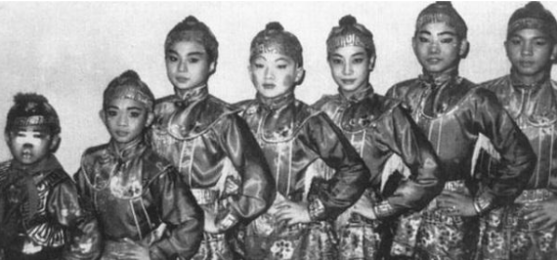
Following the introduction, we are told about Jackie’s childhood at the Peking Opera school. History is fleshed out through interviews with fellow school-mate Sammo Hung, Jackie’s father Charles Chan, and Jackie himself telling basically the same stories we’ve all heard him tell before on countless talk show appearances over the years. The stories of the long hours of practice and the beatings by the master are inter-cut with clips from the film Painted Faces (1988) in which Sammo played as the schoolmaster, Yu Jim Yuen.

The film moves through Jackie’s days as a stuntman showing many wonderful clips of him working his butt off as an unknown continuing through the phase of his career where director Lo Wei tried unsuccessfully to turn Jackie into the next Bruce Lee.

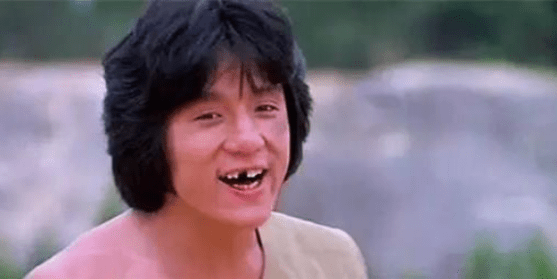
It’s not until Snake in the Eagle’s Shadow (1978) that we really see why Jackie became a star. With this film, he truly found his niche as a comedian and hasn’t looked back since. In Hong Kong, from then on, each of his films was more successful than the last except for his brief stint in several bad American movies in the early 1980s. In particular, new light is shed on The Protector (1985.) When viewed side by side, Jackie’s version is superior. Long-time fans will feel vindicated for preferring the Hong Kong versions over the American.

From there, the documentary shifts gears and takes some time to focus on Jackie’s various injuries and brushes with death. Watching them all edited together really makes you appreciate how hard Jackie has worked over the years.

At one point Jackie himself admits he neglected his wife and son for his career but avoids the issue of his extra-marital affairs and his illegitimate daughter altogether. Since then, accusations of domestic abuse and neglect have plagued him. Jackie has always been a master at controlling his image and this film is no exception. The primary focus of Jackie Chan: My Story is in his work, not his personal life. For old and new fans alike, it’s a good way to kill a couple of hours.

It’s on YouTube for free here:

APRIL MOVIE THON 2: Dragons Forever (1988)

April 7: Jackie Day — Celebrate Jackie Chan’s birthday!

ABOUT THE AUTHOR: Jennifer Upton is an American (non-werewolf) writer/editor in London. She currently works as a freelance ghostwriter of personal memoirs and writes for several blogs on topics as diverse as film history, punk rock, women’s issues, and international politics. For links to her work, please visit https://www.jennuptonwriter.com or send her a Tweet @Jennxldn

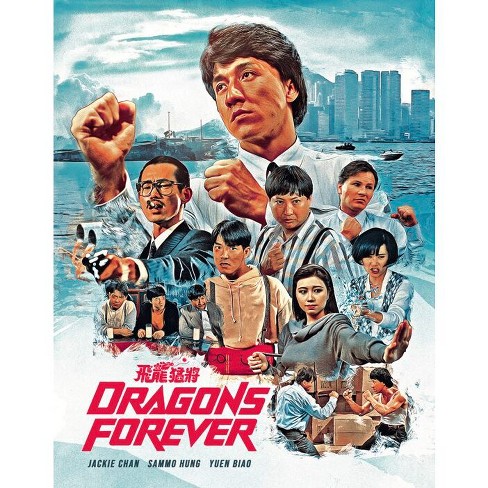
Dragons Forever was the last of the “three brothers” films, starring Jackie Chan, and his opera school brothers Sammo Hung and Yuen Biao. This makes the flimsy environment vs. greed storyline less interesting than the powerful themes of friendship and loyalty.

Jackie plays a horny self-serving lawyer who spends a lot of his time trying to keep Sammo and Yuen Biao from beating each other up. It is possible that much of the personality conflicts between the three leads reflected the real life disharmony between the three men at that time. Throughout the film they are constantly opposing each other only to later vow eternal friendship. It is well known that Jackie Chan and Sammo have had their falling outs in real life (there are many rumors as to why) but they have always remained loyal to each other. It appears that no difference of opinion, creative or otherwise, can break the bonds of growing up together in Yu Jim Yuen’s Peking Opera School.

As expected, the action is top-notch with Yuen Biao stealing the show as the loveable psycho. He wears bright yellow sweaters on covert operations and in the subtitled version, pontificates non-stop on modern society. Yuen Biao is the best acrobat and martial artist of the three by far. He should’ve been a bigger star. 

Sammo Hung doesn’t get to do much fighting this time compared to the Project A films, but he serves up some of the best choreography of his career with the help of another of the Seven Little Fortunes opera group, Corey Yuen Kwai. Yuen Wah makes an appearance as the comedic villain, bringing the total number of “little fortunes” to five. This film features the famous re-match between Jackie and Benny “The Jet” Urquidez from Wheels on Meals which pales compared to the original bout, but is still great. Sammo was always a better director than Jackie. His versatility shines through superbly here, pivoting flawlessly between action and situational comedy. Overall, it’s very enjoyable viewing experience. 

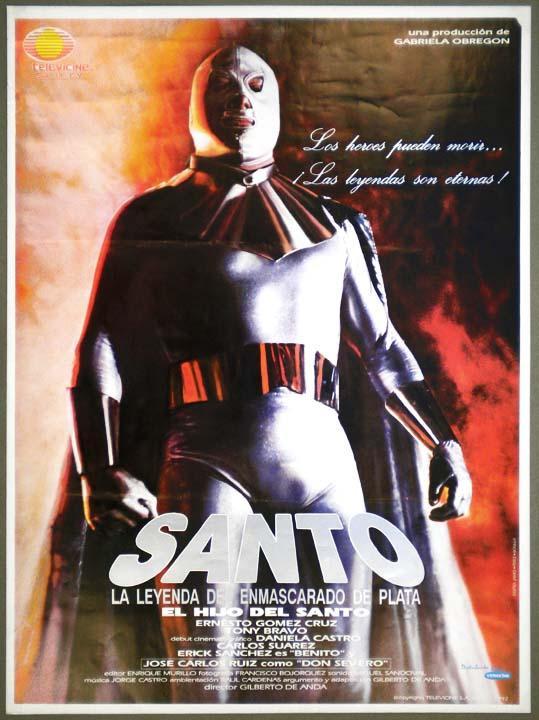
APRIL MOVIE THON 2: Santo: la leyenda del enmascarado de plata (1993)

April 6: Viva Mexico — Pick a movie from Mexico and escribir acerca de por qué es tan increíble.

Directed and written by Gilberto de Anda, Santo: The Legend of the Silver Mask tells the origin of El Hijo del Santo and how he came to wear the mask of his father. It’s also about the issues a young kid obsessed with Santo has with growing up.

My wife said that if you want to die, you should play a drinking game where you do a shot every time someone says Santo. There’s no way you would survive.

Hijo Del Santo’s pro wrestling debut was under the name and mask of Korak. His father would not agree to this, as while he wanted one of his sons to carry on the name and legacy, he wanted them to graduate college first.

Months after he got his Communication Science degree, Hijo del Santo made his debut with the mask of his father as a team with Ringo Mendoza versus Coloso Colosetti and Sangre Chicana. While fans were skeptical of him at first — Santo cast a very big shadow — he soon showed that he was an even better wrestler than his father, if not as big of a cultural icon.

While all this is happening, Don Severo tries to steal the farm of Marcos Arriaga, a widower who lives with his young son Benito. Benito is such a fan of Santo that he even wears his mask when he takes test in school.

Then, when the elder Santo dies of a heart attack, Benito is left depressed and hoping that Santo will return. He goes to Mexico City to find him while El Hijo del Santo trains and learns from his father’s sidekick, Carlitos (Carlos Suarez, who really was Santo’s friend in his later movies). There’s an amazing moment when he takes El Hijo del Santo into the near-Batcave of Santo which is filled with inventions and cool cars. They open a locked box which contains the original mask of his father and fog comes out of it.

At the end, when Santo saves Benito and his father by deflecting bullets and blowing stuff up real good with his laser car — just after winning the mask of Espanto Jr. — I couldn’t help but get excited. This is nowhere as good as the movies of his father, but El Hijo del Santo really should have gone wild and fought slasher killers and demons.

Espanto Jr.’s real name is Jesús Andrade Salas. He was such a rival of Santo that he lost his mask and hair three times to him. When AAA formed, he jumped there and eventually became an evil Santo named Santo Negro and had a lot of heat. Santo’s family objected to the idea of a fighter coming from South America to destroy El Hijo del Santo and take his mask, so they forced AAA to stop using the name. Instead, Salas became the original Pentagon and did a similar angle with AAA star Octagon. He had to retire in 1996 after he collapsed in the ring and was replaced by the former Metalico as Pentagón Black. There’s also a Pentagon III who lost his mask and hair to Octagon and, if you watch AEW, the one-time Zairus and Dark Dragon is now known as Pentagón Jr. or Penta el Zero M. He’s the nephew of Blue Demon Jr., so if El Hijo del Santo was still wrestling full-time or if his son El Nieto del Santo ever gets started, he’d be a natural rival for him.

There’s also some great footage of Santo hitting some of his topes in this that make them seem really dangerous and in your face, as well as Blue Demon looking so smooth in the ring.

You can watch this on YouTube.

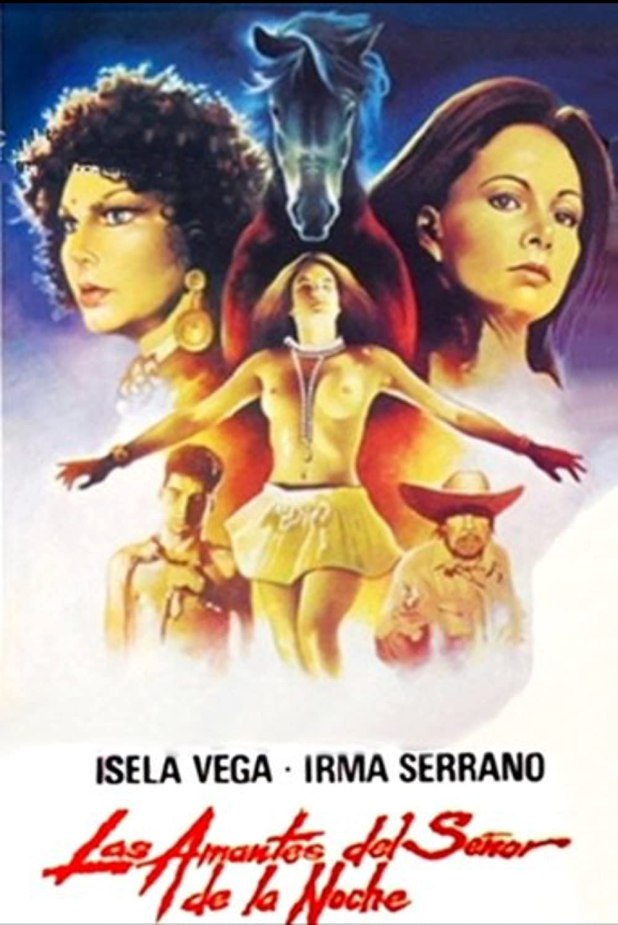
APRIL MOVIE THON 2: Las Amantes del Señor de la Noche (1986)

April 6: Viva Mexico — Pick a movie from Mexico and escribir acerca de por qué es tan increíble.

Lovers of the Lord of the Night was directed and written by one of its stars, Isela Vega. She’s probably best known for playing Elita in Sam Peckinpah’s Bring Me the Head of Alfredo Garcia. This was the only movie she directed, which is a shame, because this is the kind of movie that movie people should be celebrating, particularly with the reborn love for folk horror as of late. She wrote this movie with Hugo Argüelles.

Venusita (Elena de Haro) has fallen in love with the scion of a wealthy family of merchants named the Venustianos. Her lover’s mother and father want better for their son, so they decide to send him to the United States, far away from Venusita.

She turns to black magic, visiting a bruja named Saurina (Irma Serrano, known as La Tigresa de la Canción Ranchera (The Tigress of Ranchera Music) who once starred in a movie opposite El Santo, El Santo y La Tigresa). She casts a spell that brings her young man back to Mexico, but also kills his father.

This played in the U.S. for the first time last year at Mexico Maleficarum at The Academy Museum Of Motion Pictures. That event was made of movies that I’m obsessed by, including Alucarda (those two movies played the same night), Muñecos infernales, Hasta el viento tiene miedo, El escapulario,  Misterios de ultratumbaLa brujaSanta Sangre, El museo del horror, El barón del terror, El vampiro sangriento, La invasion de los vampiros, La nave de los monstruos, Las mujeres panterasLa maldición de la Llorona, Veneno para las hadas, El espejo de la bruja, El mundo de los muertos, El vampiro and Cronos.

The horror elements of this film come in with the idea that when you get what you want out of magic, you must always pay it back.

I figure people will pay attention to this once it gets a fancy slipcase and they don’t have to hunt it out on Russian darkweb sites.

APRIL MOVIE THON 2: El luchador implacable (2006)

April 6: Viva Mexico — Pick a movie from Mexico and escribir acerca de por qué es tan increíble.

Lucha libre movies were a big deal from the 1950s to 1980s, but kind of went away, ironically at the same time that lucha had a major boom by finally being on TV. Yes, unlike America, wrestling often stayed off TV in Mexico, instead using magazines and newspapers for promotion. That all changed when one of the largest promotions, CMLL, began appearing on the national Televisa network in the early 1990s.

Lucha is very conservative — despite the high flying ring style — and has only changed when renegades left their home promotions. For example, Francisco Flores, along with EMLL trainer Ray Mendoza, broke away from EMLL (the old name for CMLL, which you can consider very similar; it was formed in 1933 and is still around to this day) because they were too restrictive, taking many of the younger wrestlers and those that had not really been pushed — including Fishman, Perro Aguayo, El Canek, Dos Caras and Villano III  — and forming the Universal Wrestling Association. While they were the main national competition to CMLL, by the late 80s, the companies were working together and many of their wrestlers left to work for CMLL.

The nail in the coffin of UWA was another renegade, Antonio Peña. The company remained stuck in the past and matchmaker Juan Herrera preferred heavyweight wrestlers who stuck to the traditions of lucha libre, while Peña — who wrestled as Espectro Jr., Dalia Negra, The Rose, Espectro de Ultratumba  and Kahoz, a rudo who would invoke evil spirits before his match and release live pigeons before he fought, sometimes even appearing to have bitten the head off of one of them and being covered in blood — was a fan of faster-moving wrestlers like Konnan, Octagon, Mascara Sagrada and the mini-estrella division, in which wrestlers under 5’1″ were not in comedy matches but instead high action battles.

After Paco Alonso, the owner of CMLL, kept ignoring booking ideas, he began negotiations with Televisa. They paid for Asistencia Asesoría y Administración (AAA) and now owned their own lucha libre promotion, leading to an even bigger boom — despite the hardliners claiming TV would ruin their live gates — that only died out when the peso was devalued.

CMLL and AAA are still in business, but man, in the 90s, AAA boasted one of the most exciting rosters ever. In addition to Konnan and Octagon becoming gigantic stars, it was where Rey Mysterio Jr. got his first major fame, as well as having a roster that included Psicosis, El Hijo del Santo, Eddy Guerrero and his partner Love Machine Art Barr, Blue Panther, Cien Caras, Blue Panther, Heavy Metal, La Parka and so many more.

It’s funny — Konnan leaving AAA just followed the same formula — he returned — and CMLL is still considered way too conservative, thirty years after AAA was created.

El Luchador Implacable is a throwback to the other way that lucha libre was once promoted. Stars like El Santo, Blue Demon, Mil Mascaras and more often appeared in movies that were created to draw fans back to the arenas.

It’s about a motorcycle gang that is running wild until they make the mistake of attacking a pro wrestler: Dos Caras Jr.!

Dos Caras Jr. — the nephew of Mil Mascaras — would eventually lose his mask voluntarily when he left Mexico behind to find fame in America as part of the WWE. That said — he did do a few MMA matches with the mask on!

Known as Alberto Del Rio, he became the only man to hold the WWE, WWE World Heavyweight, Impact World, GFW Global, AAA Mega and CMLL World Heavyweight Championship titles. He’s been controversial — that’s putting it mildly — figure due to multiple scandals but is currently back in AAA.

At the time this was made, he was still in CMLL and while there, he would be one of the few of his family members — El Sicodélico Sr., his uncle, was also a rudo — to be a bad guy. He kind of struggled in CMLL as one way that the company changed was that heavyweights weren’t pushed as hard as they were in the pre-UWA days. Unlike most luchadors, Del Rio is 5’6″ and 239 pounds, so he has some size.

Other luchadors that show up in this include Silver King (who was Ramses in Nacho Libre), Rey Bucanero, Hector Garza, Olimpico and Ultimo Guerrero, as well as Rey Myserio Jr. I wonder if some of this movie was filmed while Rey wrestled just ten matches for CMLL in 2001-2002. Mysterio started the year this movie was made by winning the Royal Rumble, then the world title from Randy Orton, becoming a bigger superstar than he ever was before, even if he had to change his name, removing the Jr. as Vince McMahon hates the name as he suffered being called Junior most of his early life.

El Luchador Implacable isn’t bad, but when compared to the movies of lucha libre’s history, it kind of pales in comparison. There are no mummies, no aliens, no werewolves transforming in the middle of the ring.

You can watch this on YouTube.

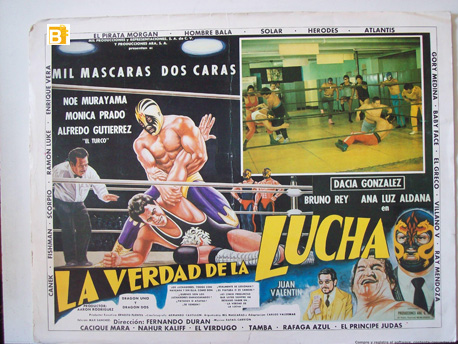
APRIL MOVIE THON 2: La verdad de la lucha (1990)

April 6: Viva Mexico — Pick a movie from Mexico and escribir acerca de por qué es tan increíble.

One of my favorite sites is Luchablog. There’s nobody else in America that does a better job of keeping you up on lucha libre — Mexican pro wrestling — as The Cubs Fan. I was intrigued that he had an article about the magazine Lucha Libre that started publishing a series of articles about “La verdad de la lucha” or “The truth of lucha.”

With May 29, 166’s issue 136, magazine director Valente Perez broke kayfabe and revealed that all lucha libre fights were predetermined and why that was a good thing, as it was a unique Mexican art form and even theater. He came up with the word Los Maestros to explain the best wrestlers in the sport and how they could tell a story and make fights look violent yet safe.

Perez also claimed that the first falls of the traditional lucha three fall matches were competitive real matches to test the wrestlers while the rest was for the fans, as real matches aren’t as exciting. He felt that the primera caída, or first fall, was essential as it proved who was a real wrestler.

He also had no issue calling El Santo a paper idol who had too many injuries and who would be better off just sticking to making movies.

In these articles, Perez referred to Mil Mascaras as a pistolero or a strong guy — or speak the American language of wrestling, a hooker or shooter — who can do whatever he wants to anyone he wants to do it to in a match.

And Mil Mascaras is both the star and co-writer of this movie, which is filled with some of the biggest names in lucha as of 1990: Pirata Morgan, Scorpio, Fishman, Enrique Vera, Hombre Bala, Solar (a true maestro who is still wrestling today!), Atlantis (so young in this movie!), Herodes, Cacique Mara, Gory Medina, Baby Face, El Greco, Ray Mendoza and his son Villano V, Príncipe Judas, Rafaga Azul, Tamba the Flying Elephant, El Verdugo, Nahur Kaliff, Blue Panther, Andy Barrow and Piloto Suicida. Thanks Luchawiki!

It’s the story of two wrestlers — Sergio Roca (Dragón I) who is played by Eduardo Liñán in the acting scenes and Mascaras in the ring and Joel Aguilar (Dragón II) who Mascaras’ brother Dos Caras in action — as well as their sons Jorge Roca (Hijo de Dragón I) who is Dos Caras and Guido Aguilar (Guido el Magnífico or Hijo de Dragón II) who is El Hombre Bala and los rudos El Manotas (Cacique Mara) and El Indio Navajas (El Greco).

There’s also a heel role for Noé Murayama, an actor born in Japan who came to Mexico with his dentist father and the rest of his family. He was in more than 160 movies, including Blue Demon contra Cerebros Infernales and, perhaps most famously in the U.S. thanks to the recent Vinegar Syndrome release, El Violador Infernal.

Directed by Fernando Durán Rojas and written by Carlos Valdemar (Zindy the Swamp BoyGuyana: Cult of the Damned) from a story by Mascaras, La verdad de lucha libre has a story of several generations off luchadors, as well as what it takes to get to the main event. It ends with Dos Caras watching from a wheelchair at ringside as his brother wins a match that’s more important than just a title.

This movie shows the very human side of being a pro wrestler (as well as the faces of several of the wrestlers, briefly, which is still a major thing in Mexico where wrestlers keep their identity a secret). Whether you love Mexican film or lucha — especially the history of the sport and art form — this is worth your time.

You can watch this on YouTube.

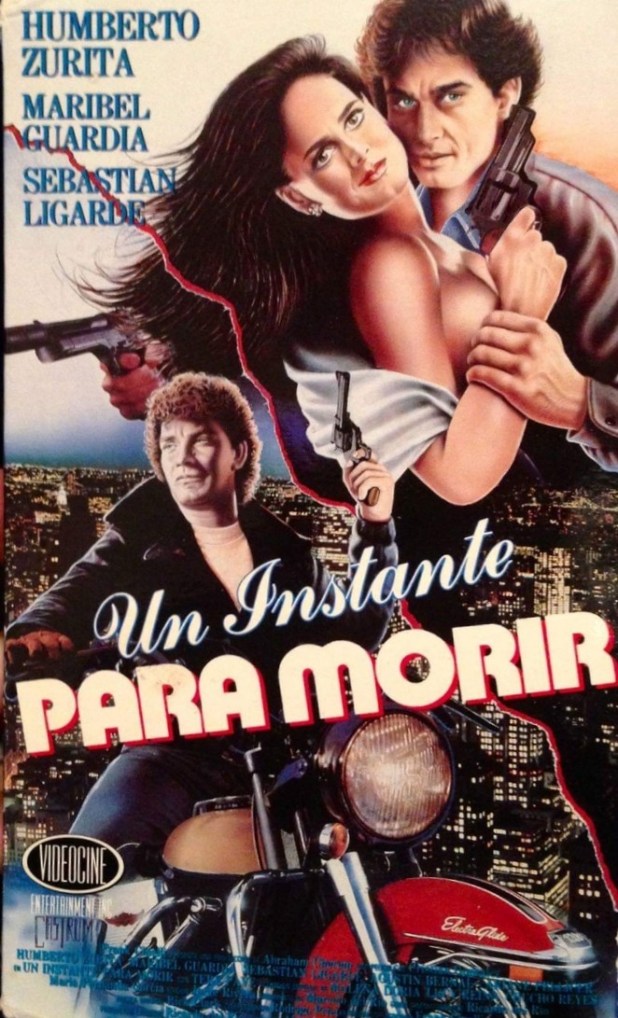
APRIL MOVIE THON 2: El asesino del zodiaco (1993)

April 6: Viva Mexico — Pick a movie from Mexico and escribir acerca de por qué es tan increíble.

Released in theaters as El asesino del zodiaco (The Zodiac Killer), it was put out on video as Un instante para morir (An Instant to Die). It’s all about a police commander, a forensic scientist and a reporter all on the hunt for a killer who uses the zodiac to plan his murders. You know. A zodiac killer.

It’s directed by Christian González (ThanatosComando terrorista) and written by Marcelo Del Rio, who would go on to work in the art department for movies like the remake of Vantage Point and Limitless and Ricardo Del Río, who was a production coordinator on Kill Bill Volume 2 and was also a line producer on several big films made in Mexico.

It’s also a Mexico giallo and looks great, which is probably due to Rodrigo Prieto being the cinematographer. Since these somewhat humble beginnings — he also El jugador and Ratas nocturnas in this same time period — he went on to do the cinematography or direct the photography for some major movies such as 21 GramsBrokeback MountainThe Wolf of Wall Street and videos for Taylor Swift, Lana Del Ray and Travis Scott. He’s the director of photography on the upcoming Barbie as well.

I like how there are chapters for each segment using the zodiac signs and it looks and feels way better than a low budget Mexican genre picture — not that that’s a bad thing, because I love those too.