Six-Hundred & Sixty Six (1972)

“After the destruction of the Vatican and the bombings in Florence, it seemed as though World War III was inevitable. Now, that was before The Man took power. And there were those, including the club of Rome and a large number of scientific and cultural societies throughout the world, who became quite concerned about saving the great works of mankind.”
— Tallman, the Curator of the Museum of Man


Courtesy of Reelgood.

It was the swingin’ ’70s: we just came out of the Vietnam war and the wounds of the Korean War were still fresh. We worried about, not “if” but “when,” the next war would occur. Man was disillusioned and afraid. And Hollywood loves to exploit man’s celluloid schadenfreude to turn a buck. So, after the one-two-three punch of Charlton Heston in Planet of the Apes, The Omega Man, and Soylent Green, the Tinseltown apocalypse as was in full swing*.

However, while the end of the world was all the rage, it wasn’t a rage in which everyone could afford Charlton Heston. Or apes. Or contact lenses and monk habits. Or dump trucks with bulldozer scoops. But they could afford the dependable character actors of Bryon Clark (Weekend of Terror with Lee Majors) and the always awesome Joe Turkel (best known as Dr. Edlon Tyrell in Bladerunner and Lloyd the Bartender in The Shining; but this is B&S About Movies, so memory banks err to Free Grass, The Dark Side of the Moon, and his serial killer role in the biker flick, Savage Abduction). TV channel surfers may also recognize actor John O’Connell; he debuts, here, as Lt. Baldry. He matured into a respected, U.S. television career on shows such as Barney Miller, Wonder Woman, The Incredible Hulk, and M.A.S.H. as well as the TV Movie The Triangle Factor Scandal. Ed DeLatte, primarily a stage actor, here as Karsch, made his last film appearance in the family-friendly, Benji (1974). Our director, Tom Doades, briefly (and competently) appears as the Officer welcoming Turkel’s Colonel to the installation; the fifth member of the installation, the also-fine-in-his-role Al Chavis, is one-film-and-gone.

Unlike most of the film’s we’ve reviewed this week — as well as the past reviews we’ll recap in our “Exploring: Christian Cinema of the ’70s” feature to end the week — this Christian apoc’er has a secular pedigree behind the Brother Deluxe 700: Marshall Riggan. Making his debut with the counterculture crime-drama Cry for Poor Wally (1969) (which starred Sherry Miles, of another lost Christploiter, The Ballad of Billie Blue), he closed out his dramatic career (he transitioned into documentaries, after) with the more familiar, ’70s drive-in horror So Sad About Gloria (1973). In that film, Dean Jagger (Evil Town) stars in a tale of young woman released from a mental hospital; she relapses into visions — or gaslighted — and commits a series of axe murders. Think Let’s Scare Jessica to Death meets Messiah of Evil, and you’re in the ballpark of that forgotten, horror non-hit . . . from the guy who gave you one of the earliest films — long before The Omen appeared — concerned with calculating the identity of the Number of the Beast.

Yes. From a church-backed (well, a non-profit think tank) apocalypse flick to and early ’70s Romero-Friedkin-inspired horror film. Who knew? Well, we do. This is B&S About Movies, after all, where one’s oddball resume — in this case, Marshall Riggan — is king.

There’s nothing known about the film’s production history, outside of the fact it was produced by a concern known as the Evangelical Christian Research Center. Did a now “saved” Marshall Riggan pen the script on his own and the secular shingles he worked with passed on his Christian-slanted apocalypse tale? Was Riggan hired by the ECRC think tank to pen a science-fiction palpable “teaching and preaching” screenplay to spread the world of the foretold apocalypse? Again, the apocalypse was celluloid chichi at the time.

What we do know: Gospel Films, the distributor and co-producer behind my cherished childhood TV series Davey and Goliath, distributed this Riggan penner. Among Gospel Films thirty-plus productions over the years, the faith-based shingle also distributed the later, “Number of the Beast”-concerned Christian apoc’ers Early Warning and Years of the Beast (both 1981; reviews coming this week). Another known about the production: Tom Doades’s daughter, Lynn, commented on a trailer upload (embedded below) for the film by Brooklyn, New York’s Spectacle Art Cinema**, in conjunction with their special, 2018 screening of the film; she stated that she remembered when the film was made — and that her dad was Tom Doades; so we assume she means he has since passed away.

Anyway . . . with a Holy Bible opened next to his Deluxe 700 — and a little inspiration from Colossus: The Forbin Project (1970), The Andromeda Strain (1971), and Silent Running (1972), as well as the (neither made yet) trapped-in-a-bunker-by-bats apoc’er Chosen Survivors and John Carpenter’s Dark Star (1974): We have group of scientists, military and government types trapped in a secret mountain-computer brain facility (the new “Tower of Babel” if you will) when the Rapture, then Armageddon, breaks out. (While not inspired by it: As everyone runs around the underground bunker, we can’t help but evoke the forth serial of the twelfth series of the BBC-produced Dr. Who with the great, Terry Nation-penned Genesis of the Daleks. Never seen it? Find the unserialized movie version; it’s fantastic.)

While not inspired by it, a closer — and better known — Fundamentalist cousin to Six-Hundred & Sixty Six is its-released-in-the-same-year doppelganger by Mark IV Pictures: A Thief in the Night. If you thought that eventual, four-part Donald W. Thompson series (across a decade) had the science-fiction/horror hybrid of the Christploitation spectrum locked up, think again: this lone effort by director Tom Doades — courtesy of Riggan’s smart script — is intelligent, imaginative, against-the-budget filmmaking at its finest.

That’s not to say the film — which is nicely framed and well-shot by Tom Doades — doesn’t have its flaws (and we’re not referring to the condition of the uploaded steamer we’ve linked; it’s a washed out, beat-to-hell “roadshow print” that’s to be excused). As result of its non-budget . . . well, sure, there’s a production value to the proceedings, overall, but there is nothing in way of any techno-trinkets; there’s none of the spinning tape reels or rows of flashing computer banks of the film’s sci-fi antecedents. In fact, with a just a little bit more budget, we could have had, instead of an underground bunker, the later Canadian apoc’er Def Con 4 (1985) — but just the cool, budgetary space station part, not the rest of the fell-to-Earth part (which sucks). It’s Doades creative framing that sell us the idea that we are, in fact, deep inside an underground military installation (e.g., Joe Turkel meets with a superior, walks into a chamber with a Star Trek-swooshway, cross-straps himself into a flight chair; add a sound-effect: poof!: he’s descending down a shaft. Riggan’s script also intelligently tech-predicts the use of microprocessors to store large banks of data).

To that end: If you read our reviews of the later — and equally intelligent — Canadian TV productions 984: Prisoner of the Future and Music of the Spheres, as well as PBS-TV’s Hide and Seek, then you’re familiar with their wall-to-wall talky scripts more suitable for the theater stage than the sound stage.

“The literature, art, the artistic expression, scientific thought; because we all knew what enormous damage the next war could bring. So we decided to store all the cultural treasures into the memory banks of computers and then bury those computers beneath a mountain, where they would be safe. The accumulated knowledge and wisdom and artistic expression of an entire civilization called Earth.”
— Tallman, the Curator of the Museum of Man


Angela Company, this is Hal. Hal, meet Angela.

When we first meet Colonel John Feguson (Joe Turkel), he’s the newly appointed Head of Operations Officer of what he believes is an underground missile silo; it is, in fact the world’s underground digital archive (much like ZERO, housed in Geneva, Switzerland, in 1975’s Rollerball — only with none of the prop pomp and circumstance of that A.I influencer*˟ ) created to preserve (i.e., save) man’s culture in the event of a war. We’re advised, via budgetary dialog, natch, that, through the use of “lasers and holographic memory,” the mountainous mainframe not only digitally stores books, but 3-D images of works of art and photographs of nature and architecture˟*. (There are a few convincing computer touches credited to the still-in-business, Midwest-based Communications Systems, Inc.; all of the set furnishing are courtesy the now-defunct, Lebanon, Pennsylvania-based “You’ll love it at” Levitz).

We also learn — again, in a budgetary, twenty-minute heavy, expositional dialog dump — in our not-to-distant future, the United Arab Nations, as well as the Soviet Union has fallen; China has grown in power. The world is split apart as warring Eastern and Western Hemispheres (a U.S./Europe political amalgamate, “the United States of Europe,” aka, “the New Roman Empire,” controls the latter from the capitol of Rome). As result of the ensuing political and religious unrest, both the National Museum in Venice and the Vatican were destroyed in bombings (both stopped World War III, it seems, at first) — and an organization known as “The Brotherhood of Man” has risen, with the goal of abolishing religion — to create a new, hodgepodge belief system based in Israel — as a way to a unified, world piece.

In an effective homage to Michael Anderson’s minimalist, 1956 Edmond O’Brien-starring production of George Orwell’s 1984 (which provides Tom Doades with production cues, in our opinion), an image of the world’s new leader, aka The Man, overloads throughout the film; at times, his words of wisdom echoes throughout the complex; meant to inspire, as are the perpetual poetry refrains and bible verses by the complex’s computer, Angela Company, the pontificates only demoralize. (Malachi Thorne, a long-time, respected, animated voice artist; but lots of ’60s and ’70s on-screen TV gigs, voices The Man; Helena Humann, credited in everything — from 1972’s The Last Picture Show to 1980’s Roadie to 1988’s Problem Child, along with lots of TV credits — serves as the A.I voice. Robert L. Crawford, Sr. an Emmy-nominated film editor and actor, who appeared in the late ’60s TV series, Manhunt, serves as the enigmatic image of The Man; his sons, Johnny and Bobby, appeared as child actors on The Rifleman and Laramie, respectively. Learn more with his Hollywood Reporter obituary.)

As Col. Ferguson’s assignment wears on, it’s clear the civilian-government overseer, Tallman (a great Bryon Clark), is already a wee-bit tweaked being cooped underground so long, as well as a wee-bit power mad in his job as the curator of all of the world’s historical information. In an event that foretells John Carpenter’s later remake of The Thing (1982), the mountain facility is rocked by a nuclear strike — so Ferguson and his men, think.

Cut off from the world above, the elevator damaged, and their life support systems compromised, with air, water, and medical supplies running out, the already-closed in walls, close in even more, paranoia ensues: just what Tallman needs to justify the executions of the bunker’s occupants to reserve resources. Then Ferguson and the rest of the crew — with the perpetual bible-verse and wisdom taunting of The Man and Angela, as well as observing “the end of the world” unfolding via the installation’s recording uplinks to the world’s satellites and computers (via dialog, not images that we see) — come to believe that it wasn’t a just nuclear strike on the installation: the bible-predicted apocalypse has, in fact, occurred.

As the quintet begins to decipher The Bible, plotting on maps, to figure out what happened . . . their mental state isn’t going to get any better. Then they learn, as the Euphrates River “mysteriously” dries up, China invades the Middle East; remnants of the Soviet Union and the New Roman Empire join forces to stop the invasion — and WW III breaks out at the foot of Israel’s Mount Megiddo. Ferguson, the eventual sole survivor, trapped in the complex, learns — finally — that The Man, numerically decoded, is the prophetic beast . . . and his number is Six-Hundred and Sixty Six. As with Burgess Meredith in “Time Enough to Last,” an iconic, 1953 episode of The Twilight Zone . . . Colonel John Ferguson is now just a part of a smashed landscape, just a piece of the rubble, just a fragment of what man has deeded to himself.


In the end, that’s the goal of the Evangelical Christian Research Center: not so much to entertain, but to teach you — through rambling, Biblical-based conversations dressed in a sci-fi sheen — about bible prophecy. But why does it have to be so gosh darned dry and chat-chat-chatty slow?

Yes, again, Turkel and Clark are both excellent throughout, especially Clark, in delivering their slow-burn unraveling, but outside of a little bit of chasing an off-his-nut Tallman around the complex, and his dispatching one of his charges with a rifle-shot, the action is non-existent, as the narrative relies too much on woe-is-me contemplating (“The Eurphrates can’t just dry up! Nothing can stop the Chinese from invading Israel!”) and prophetic map-plotting to decipher Bible prophecy.

This could have made for a very taunt, suspenseful episode — sans of or a lightening up on the Bible prophecy angle — of the TV anthology series The Twilight Zone or The Outer Limits. To that end, considering most of the church and tent revival films of the day clocked-in at 60-minutes maximum, cutting this 90-minute apoc’er by ten-minutes to 80-minutes may have helped to rise the proceedings to the professional polish of a “real” apoc movie — and not just a proselytizing apoc one. Even Cornell Wilde’s No Blade of Grass and Richard Harris’s Ravagers were secular-apoc swings-and-misses, but even their dragging, too-long woe-is-me moments were punctuated with several fits of action: a little bit of “action” outside of the bunker; e.g., having Ferguson arrive by a helicopter with an exterior shot of the complex; showing us a missile launch or a missile striking the mountain complex, would have been welcomed gear-changers. (But that would taken away from the film’s purposeful claustrophobia, so we’ll still cut the film some slack.)

So, yeah, there’s a lot of lost potential, here. However, if you’re an apoc fan, as well as a fan smart scripting and (very) solid acting — and you don’t mind a little ol’ Bible study mixed with your sci-fi, well . . . you could do a lot worse than spending time with this final feature film written by Marshall Riggan that also served as the lone directing effort by Tom Doades. Speaking of “worse,” we have: Remember all of the money our ol’ Uncle Al Bradley, aka Alfonso Brescia, spent on Star Odyssey*˟*, his boondogglin’ Star Wars rip, with all of its fancy techno-trinkets and the WIZ supercomputer? Sure you do. See, a bigger budget doesn’t always equate to better.

See? Worse. Or would you rather have had robots C3PO’in around the complex with Jewish Stars of David on their heads, or Angela Company scurrying about like an errant R2D2?

Since Six-Hundred & Sixty Six is in the public domain, you can stream the trailer on Vimeo and watch it on the Internet Archive. If you search for a copy in the online marketplace, the film was reissued under the more exploitative title of 666: Mark of the Beast during its video ’80s shelf life to expand its audience beyond Christian bookstores.

About the Author: You can learn more about the writings of R.D Francis on Facebook. He also writes for B&S About Movies.


* We examine those films of the ’70s with our “Drive-In Friday: A-List Apocalypse” feature.

**Spectacle Art Cinema excels at rediscovering lost films. We previously reviewed another of those films, Rock ‘N’ Roll Hotel.

*˟ We examine the history of A.I. in films with our “Exploring: The “Ancient Future” of A.I” feature.

˟*Actually, it’s all courtesy of fractals, which we discuss in our review of Fractals: The Colors of Infinity (1995) from our “Ancient Future” week of film reviews back in April 2021.

*˟* We explored all five of Uncle Al’s “Star Wars” films with our “Drive-In Friday: Pasta Wars with Alfonzo Brescia” featurette.

Years of the Beast (1981)

“A fast-moving, feature-length, dramatic film that portrays the events in the book of Revelation.”
— The IMDb’s wishful-thinking copy writing department

If you read our reviews on the quartet of Russell Doughten and Donald W. Thompson’s PreMillenialist Dispensationalism flicks (that began with A Thief in the Night), you know how much we enjoy those biblical post-apoc romps. The same can’t be said for this lone directing effort by actor D. Paul Thomas (bit roles in films like The Hanoi Hilton and Inside Edge, TV series such as L.A. Law and Beverly Hills 90210) that’s based on a novel by Leon Chambers, scripted by family film purveyor Daniel L. Quick (Cry from the Mountain, Mountain Lady).

Nothing in the frames of this overly-talky, proselytizing pablum quantifies it as a “fast moving” or “dramatic” film. I’m not sure what movie those ecclesiastical reviewers were watching, as this lesson in snail racing is a butterless slice of burnt white toast washed down with a cold cup of coffee.

That’s not to say the film, despite its budget, is not ambitious in its efforts. But it’s that “effort” over the budget that usually scuttles films of the post-apoc ilk (see your favorite guilty Italian, Spanish, or Philippine ’80s apoc pleasure*). Years of the Beast wants to emulate PBS-TV’s later, secular-insightful nuclear war drama Testament, as well as ABC-TV’s The Day After, NBC-TV’s Special Bulletin (all 1983), and the BBC’s Threads (1984). Hollywood was into the “Life after a Nuclear Attack” craze (see 1977’s Damnation Alley; itself after a post-apoc novel), after all, so why not a Christian-take on the theme? But those films (sans Damnation Alley, which went the goofy kaiju-scorpions route) effectively examined the hopelessness and outright nightmare of life after a nuclear strike. The “dread” of those films is not to be found in these frames, since we are stuck with politics and bible-banging in the frames. (But at least we’re spared the flashback sermon inserts and preaching via “Tribulation Maps” to forward the plot.)

As the film begins — and if this film was as exciting as the above book cover, looks — the Beast, aka the Antichist, has risen and driven his heel into the backs of the world — a world where paper money is now worthless; a world besieged by every manner of natural disaster, government corruption, and oppression. And the Beast has all the answers. And the Rapture: Christian propaganda.

Of course, we experience none of this in-camera: we learn about it from a whiny, dry-as-toast, out-of-work college professor (and way too many, screeching portable radios) and his domineering wife, as they head out to her father’s small-town ranch to avoid receiving the dreaded Mark of the Beast (or was it to escape the quakes in the big city; don’t care). And just in time, as we get (the most, and only, impressive moment of the film) an against-the-budget nuclear destruction of Seattle (not stock news footage, but shot-on-the-extremely-cheap on the streets of Seattle).

While we cut back to the Antichirst enforcing his rule from The Vatican (curse you Catholics, for you are not true “Christians”), our once kindly, small town Sheriff is now drunk with power and in-touch with his true inner fascist to assure the new order is enforced. Oh, and the Antichrist: As foretold in the pages of Revelation, he receives a mortal head wound; his “spiritual advisor,” clad in a crab amulet (representing the cyclical nature of life), goes into full-on, ’70s B-movie Satanic candlemass mode, replete red robes, red mood lighting, and song chants to reanimate the imperious leader (the only other interesting set piece of the film).

So, with the Antichrist’s rise to power complete, now the Sheriff is really off his nut, as he is now bestowed the authority to round up the downtrodden for the “Universal Census” to receive their Marks. And with that, the chase is on, with our dopey professor assisted by a clan of woodsy, Christian freedom fighters; warriors for Christ who enjoy putting rifle barrels to a person’s head to force them denounce Jesus — as a test. Which begs the question: If the gun-threatened person said, “Praise the Prime Minister!” would the Christian soldiers carrying the cross of Jesus break the Fifth Commandment and murder those who chose the mark?

Boy, oh boy. Christians sure to love killing the non-believers under threat of rifle barrels and guillotines. So goes the par for the course in Christploitation apoc romps. And with that opening title card (see below), how can you not be converted to the new, paranoid way of thinking!

As the frames unfurled, I was taken back to my views of the shot-on-video Canadian snooze-fest that is Survival 1990 (1985), with its endless scenes of “walking and talking” and the penniless, post-apoc talking-and-talking ambitions of the secular, Gary Lockwood-starring Survival Zone (1983). In fact, it’s exactly those two films — only with a Biblical lesson tacked on. Another fact: This is the Steve Railsback and Marjoe Gortner starring The Survivalist (1987) — although Years of the Beast was made first.

In The Survivalist (which at least had a (very) small cast of extras rioting in the streets), Marjoe Gortner is a slobbering National Guardsman who, drunk with the freedom of newly-granted post-apocalypse enforcement powers, becomes obsessed with bringing Railsback to justice. In the frames of Years of the Beast, we have the same slobbering idiot — only in the form of a small town sheriff — who takes the universal Telex from the Antichrist a bit too literally, as he starts flashing his badge to loot homes of food and supplies (no hoarding allowed, but since he’s accepted the Mark, he’s allowed to hoard) and running-gunning down people in the street for stealing a can of dog food. (He’d probably rape, too, like Gortner, but this is a Christian flick, after all.) And when our fair college professor refuses to comply with the law, well, our good ol’ boy Sheriff McKifer has a new meaning in life, sans all other responsibilities to the new world order: Get Professor Steven Miles, no matter the cost: he will take the Mark. (The “cost” is that God strikes down McKifer with a powerful, deus ex machina blast of sun that raises boils on his flesh, then God pushes him off a cliff.)

Unlike most of the low-budget, post-apoc Christian films we’ve reviewed, such as the (superior) films of Donald W. Thompson, we at least have a cast of trained, secular thespians. You see the instantly recognizable character actor faces of Macon McCalman (Smokey and the Bandit and Dead & Buried are two of his many), TV stalwart Jerry Houser (who got his start in The Summer of ’42, then became Marsha’s hubby in The Brady Bunch reboots), his wife, played by Sarah Rush (Corporal Rigel from Battlestar Galactica: TOS), and James Blendick (Chris Farley’s Tommy Boy), and Jon Locke (way back to ’50s TV westerns). Heading the cast, in his first leading role, is Gary Bayer (Starflight One: The Plane That Couldn’t Land, Psycho III, and lots of TV series). And that’s the not-bad, Anthony Quinn’s daughter Valentina Quinn (an all too-short film career) as the Sheriff’s 2nd (who he eventually kills, but doesn’t rape, because this isn’t a secular apoc-flick, which always has superfluous rapes). Each of the actors are on-point and serviceable enough in their roles, but what they have to work with isn’t there.

Look, I know this film’s message is well-intentioned, but it’s a tedious lesson in bad everything — and it felt like it took a year to watch. The lesson, by the way, I’ve learned from revisiting and refreshing myself with a week of Christploitation apoc flicks is that the prophetic apocalypse will brought on by:

  1. Russia and/or Cuba
  2. China
  3. Catholics, ruling from the new world capitol of The Vatican
  4. Israel and the Jewish Nation, for not believing in Jesus Christ
  5. The United Nations, from the new, world seat of New York City

And that all peoples in categories 1 – 4 are unequivocally damned to hell. And so it goes. . . .

You can feel the spirit move you — or not — with uploads of the full film on You Tube or Tubi. You can sample the trailer on You Tube.

* We examine many of those post-Mad Max/Escape from New York flicks with our two-part “Atomic Dustbin” round-ups during our all-apocalypse month blowout.

A special thanks to Paul at VHS Collector.com for the clean images.

About the Author: You can read the music and film reviews of R.D Francis on Medium and learn more about his work on Facebook.

Early Warning (1981)

Jenny Marshall (Delana Michaels; a slight resume, but still in the business), a Christian woman, wants Sam Jensen, an atheist newspaper reporter (Greg Wynne; in his acting debut, and with another slight resume), to publish an “early warning”: a cover-blowing story about the rise of the “bible prophesied” One World Foundation. Skeptical at first, Sam Jensen comes to believe Jenny Marshall (who was working on the “big story” with Sam’s old newspaper mentor; since murdered by the OWF) as result of her relentless pursuit by the foundation. A troubling romance, i.e., Christian woman falls in love with the atheistic reporter, but can’t be in love with a non-believer, yada, yada, yada (and yawn), ensues, as the sort-of-romantic duo try to take down the Antichrist.

More book cover than theatrical one-sheet?

Is it as dry and dopey-mopey, replete with weak acting and weakly-excuted action, as the Christian post-apoc’er Years of the Beast released in the same year? Eh, well, er . . . the scripting is (just a little) better than that end-times snooze-fest-o-rama. However, while I am not a fan of montage-newscast voice overs to set up the story, screenwriter David R. Elliot does eerily predict the very same issues we’re dealing with in 2021 (outbreaks of racial and religious-based violence, closing of churches and arrests of pastors, out-of-control gun violence, gun and explosive-possessing terrorist cells, male-only draft laws, the rebirth of Nazism, outbreaks of senseless murders and rapes) in his opening titles sequence. And the talk of one world banks, laser-engraved computer numbers, the rise of radical liberalism in schools as the plot unfolds has its intelligent-engaging moments.

Film and television sound editor David R. Elliot (The Waltons, Stephen King’s Cujo), in his lone writing and directing effort, was certainly influenced by Donald W. Thompson’s (who wraps up his end-times tetralogy with The Prodigal Planet in 1983) and Hal Lindsey’s eschatological works (his 1979 documentary The Late Great Planet Earth). It’s obvious Elliot is also a sci-fi fan, as you’ll notice influences ranging from the early A.I. classic Colossus: The Forbin Project and John Carpenter’s post-apoc game changer Escape from New York.

While the proceedings are obviously on a low-budget, Elliot’s vision of the coming rise of the Beast is more technically proficient (his ability to stage car chases under helicopter sniper fire by black-clad soldiers, give us over-the-cliff car crashes, and some flashy techo-trinkets) courtesy of his being a filmmaker, first (he’s also worked on Stewart Raffill’s High Risk and, with Bo Hopkins, The Plutonium Incident). As result, the against-the-budget production values are higher than, and more effectively framed and shot than, a Thompson Christian-apoc production; however, Early Warning is still, very TV drama-flat and just a (slight) notch above a PBS-TV movie apoc-production (Hide and Seek, Music of the Spheres).

The acting is obviously above the non-pro thespian fray of Thompson’s end-time flickers, and it’s nice to have familiar actors Alvy Moore (ironically of The Brotherhood of Satan) and (George) Buck Flower(s) (a Carpenter go-to actor) show up . . . but neither is here long enough to balance against the other, weaker-unknown actors. While we get Flowers in the expected, desert-rat/survivalist role, Alvy Moore, god bless him, is one of the worst astronomers committed to film. (Did he just say, “I study stars n’ stuff” to explain his work? Could he be anymore “Hank Kimble” in his delivery?)

Oh, watch out for the ’60s Batman-era stock soundtrack: it’s arduous. And that flutes and clarinet stock music “chase sequence” music ain’t helping. Also of a particular annoyance: as with Carpenter’s post-apoc game changer, we have a (evil) society advanced enough to create laser-etching, ultraviolet-scanning computers to “mark” people — but it still all comes down to “mission critical” cassette tapes to put a stop to the chaos. Ugh.

Eh, look, it streams for free-with-commercials on Tubi and, as November 2022, Early Warning now appears on various Smart TV channel platforms (thus the odd, recent spike of reads of this review; and here we were simply scratching off an old Christploitation flick from our list). It’s something for the curiosity-seeking non-believer to fast-forward through on a slow Saturday night . . . to see the cinema drek Sam and I were stuck watching under revival tents and Wednesday Chapel’s once-a-month “media day” events. Yes, churches forced us kids to watch this stuff. And so it goes. . . .

You can also stream this — and other Christian movies we’ve reviewed this week — on the You Tube Christian Movies Portal. You can sample the trailer on You Tube.

About the Author: You can read the music and film reviews of R.D Francis on Medium and learn more about his work on Facebook.

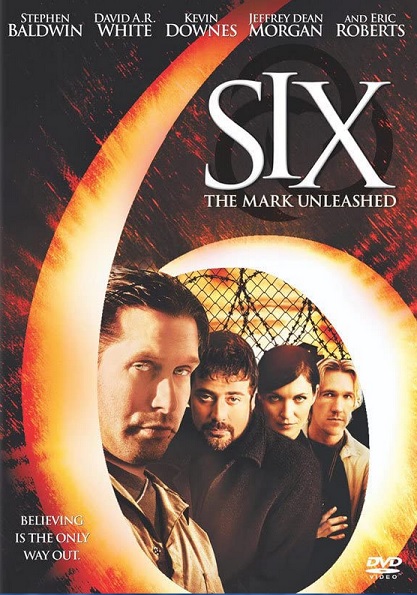
Six: The Mark Unleashed (2004)

Editor’s Note: This was review was composed several months prior to the Alec Baldwin set-shooting incident. No offense to that tragedy is intended. The cinematic offenses of this movie, however, are.

And what does all of this have to do with backmasking in music? Read on, brother.


I come here, not to bury a Baldwin brother (in this case, Stephen), but to praise Eric Roberts (most recently of The Arrangement and Lone Star Deception), who, as you know, always gets a pass at B&S About Movies — even when the evil that he does is a Christian apocalypse flick (and shows us that he’ll never not take a movie offered). But, hey, Eric, like Brutus, is an honorable man in our good books, so I shall speak of this film, regardless of the fact that Paul and Jan Crouch’s Trinity Broadcasting Network — with their son, Paul, Jr., as the Executive Producer — bankrolled this script by faith-based actor David A.R. White (“Anthony Roy,” if you’re interested).

No, actually, you do have a choice: Don’t watch.

By the early 2000s Paul and Peter LaLonde’s Christian-based Cloud Ten Pictures — a studio that specializes in “end-times” films — created a worldwide phenomenon with their contemporary updating of the stuffy biblical prophecy films of old by “born again” drive-in purveyor Ron Ormond, with his debut film, If Footmen Tire You, What Will Horses Do? (1971), and Evangelical films vendor Donald W. Thompson, with his debut, A Thief in the Night (1972), and Tom Doades’s own sci-fi take, Six-Hundred and Sixty Six (1972), then there’s the two Christian apocalypse progenitors also distributed by that film’s shingle, Gospel Films: Early Warning and Years of the Beast (both 1981).

The LaLonde Brothers broke home video rental records (at least within the Christian bookstore-verse) and found receptive cable television audiences (secular and non) courtesy of their major-studio slick adaptations of Christian author Tim LaHaye’s Left Behind adult novel series, with the films Left Behind: The Movie (2000), Left Behind II: Tribulation Force (2002), and Left Behind: World at War (2005), each starring the bane of a secular movie goer’s existence: Kirk Cameron (also of the 2008 Christian drama, Fireproof). However, prior to their productions of, and inspired by LaHaye’s books, the LeLonde brothers produced their own proselytizing The Apocalypse: The Film Series tetraology with Apocalypse (1998), and its sequels Revelation (1999), Tribulation (2000), and Judgement (2001).

Paul and Jan Crouch’s TBN, which aired LaLonde’s modernized biblical apocs to ratings success, weren’t going to be “left behind,” so they bankrolled their own “End of Times” flick with Six: The Mark Unleashed (2004). Released amid those rash of LaLonde productions (I binged watched all of them over a Library check-out frenzy, when libraries still had VHS catalogs), White’s contributions certainly don’t tread any new ground in terms of plot points and characterizations, but I kinda liked this one, as it is the most “sci-fi” of the pack.

As with anything touched by the hand of Crouch, secular critics are also not kind to David A.R. White’s writing or acting; and if you don’t like Kirk Cameron, you probably won’t like White, either. Beyond his secular, bit TV series roles as a “Pizza Guy” (Coach), “Room Service Waiter” (Melrose Place), and “Gas Station Attendant” (Sisters), White’s career wasn’t going anywhere in Hollywood. In fact, his most notable role was a six episode support run as “Andrew Phillpot” in the Burt Reynolds-fronted sitcom, Evening Shade. So, White decided to take the “beast” that is Hollywood by the horns and leave his “mark” on Tinseltown.

As with the struggling Tyler Perry before him, David A.R. White formed his LaLonde Brothers-styled studio, Pureflix (like Netflix, only for the Church crowd), along with his partner, Kevin Downes (as Christianity’s version of the secular Ben Affleck and Matt Damon), to produce (and stream, by others) faith-based films — which they sausage-vanity press one after another. Pureflix’s first films were the analogous apoc’ers The Moment After (1999), The Moment After 2 (2006), In the Blink of an Eye (2009), Jerusalem Countdown (2011), and the (very Mad Max-inspired, well, kinda sorta) Revelation Road trilogy. Perhaps you’ve encountered White’s dramatic God’s Not Dead series (which made it to theaters; “Part V” comes in 2023), since they starred Kevin “Hercules” Sorbo (Herc’s other for the studio is Let There Be Light). Another studio, the one that really injected new interest in the Christploitation genre was Albany, Georgia-based Sherwood Pictures, with 2003’s Flywheel. Like the Christian Cinema films of the ’70s from Ron Ormond and Donald W. Thompson, that studio’s overseers in the Kendrick brothers got their start rolling out their debut film “roadhouse” style.

As for Six: The Mark Unleashed, having Eric Roberts on board certainly pushes us through the digital propaganda (well, VHS for me), but it’s a pre-stardom Jeffrey Dean Morgan who, as expected, is instantly likeable and engaging (as a “born again” smuggler-cum-resistance fighter sold out by his “Marked” wife), which helps one accept White’s and Downes’s (who also directs) meh-to-serviceable acting (as fellow political prisoners to the new order; Roberts gets them busted, by the way). And while it’s fun to hate on a Baldwin brother, Stephen (best known for the Bryan Singer career starter, The Usual Suspects, and the Pauly Shore abomination, Bio-Dome), is good, here. Now that’s not saying the acting is great, it’s still strained and hokey, but it’s better than most Christian apoc’ers and, overall, the film is a cut above the Jack T. Chick bible-tract inspired flicks of the ’70s.

The Film Review

Not watching . . . is a way out.

So, if you haven’t guessed already, it’s the last days of Armageddon (all of these films start with bible quote title cards, stock war footage, along with images of Hitler, Lenin, and Mussolini in short order) with a brutal dictator ruling the masses via forced chip-implant technologies (that triskelion on the video box) monitored by a global satellite network. On the ground, our Antichrist, dispatches his Gestapo-like Community Police Force, aka the CPF, to keep the masses in line. The rules are simple: If you do not accept your implant and become part of “The Community” (or become a double agent for the CPF) — after your mandatory, three week’s prison sentence, where you are tortured into accepting — you’re beheaded. (You’ll notice a pattern in these films with Christians obsessed with guillotines and rolling heads. It’s as if they’re rejoicing in glee that us Sodomities will loose our noggins. The only thing missing is Estus Pirkle’s love of fire in the frames.)

The usual lies and deceptions ensue as White and Downes (who lead here; Roberts and Baldwin, while on the box, are perfunctory players) “Escape from New York” with Morgan (on an obviously low-budget, which is why we’re inside a prison for most of the movie) to a purported safe haven known as Prodigal City. Dean, of course, plays his mission for the CPF — to kill resistance leader, Elijan Cohen (for all “leaders” in these films can never not have a “biblical” name) — close to the chest. As is any rumored “paradise” in these films, it ends up being a Gomorrah worse than the one from which our righteous protagonists escape.

Needless to say, if you’re a secular post-apoc fan, again, of the Escape from New York variety, or a lover of prison break films from the Escape from Alcatraz mold, there’s nada entertainment to be had. Secular reviewers pounced on this TBN production (despite its TV connections, there’s a theatrical sheen), while Evangelical viewers and Christian-industry reviewers, loved it, natch. Granted, it is not as slick as the LaLonde’s larger-budgeted films, but it is certainly not as scrappy-stuffy as those arduous Thompson and Ormond flicks of old.

You can watch Six: The Mark Unleashed — and all manner of Christian films — on the Pureflix streaming service, but we also found a freebie on You Tube. You can also watch it on-demand at ChristianCinema.com.

You can sample the film’s trailer on You Tube.


And now . . . a public service message on the dangers of rock music backmasking, bought to you by the fine folks of the Trinity Broadcasting Network

In the early, pre-Internet days of cable television, with its meager 40-channel (sometimes less) universe, there wasn’t a whole lot to channel surf (once you took out the Spanish and Sport channels), and with lesser channels, you sometimes ended up on TBN’s local UHF outlet and stumbled into things . . . that scared the crap out of you, because “salvation” via fearmongering, is key. So sayeth the Lord.

So, Paul, Jr., for you unaware, new wee-rockers to cause, lead the charge against Satan using rock music to indoctrinate children, with an oft-ran, 1982 two hour-long special on the evils lurking in the grooves of our records and the covers that encased them. Of course, instead of “saving us,” Paul, Jr. made our teeny-boopin’ VHS years all the sweeter, as he inadvertently created the Metalsplotation cycle of films, which we like to call “No False Metal” movies, in the process.

So, a toast and “horn flash” to Junior. Amen. For you put the Metal peanut butter into our horror film chocolate and gave us Billy Eye Harper and Sammi Curr.

Ack! As is the case with all things You Tube, the full special is gone (ugh, again?) But this clip and clip (also embedded below; since video links sometimes break) breaking down Led Zeppelin . . . again, scared us shitless. Then, when Pauly J. explained the meaning behind Ozzy Osborne’s “Mr. Crowley,” then opened the Eagles’ Hotel California gatefold to show us a shadowy, cloaked demon perched a dark balcony, the Electric Light Orchestra with their reversed “Christ you’re infernal” chants, Black Oak Arkansas ranting “NATAS,” and then pondered what the German band Accept was asking us to “accept” . . . we dumped those albums (along with Iron Maiden) at the used record store and put our trade-in money into the church collection plates and prayed ourselves into aneurysms for forgiveness.

And thanks to Paul, Jr., our “Friday Night Activities” at the local Baptist indoctrination center became a weekly “sermon,” with our blue-plaid jacket and pink-striped tie youth pastor, screaming with saliva flying, as he spun records backwards and overhead projector-burned “evil” lyrics and albums into our Playdoh minds. Then he started booking one awful “Christian Rock” band after another — bands that made Stryper look like Metallica. (Rizen and Chalice, you still sucketh. Don’t get me started on the screech that is Holy Right. Please, no more Holy Right. Please. I believe. I believe! Just make it stop!)

TBN was also behind the “young adult talk show” The Eagle’s Nest (. . . come, oh ye little ones to my ‘nest,’ ick), which retreaded the “Rock music is the Devil’s music” torch lit by Paul Jr., on an episode that you can watch in a three-part You Tube upload HERE, HERE, and HERE.

So goes the days our youthful, brainwashed lives.

About the Author: You can learn more about the writings of R.D Francis on Facebook. He also writes for B&S About Movies.

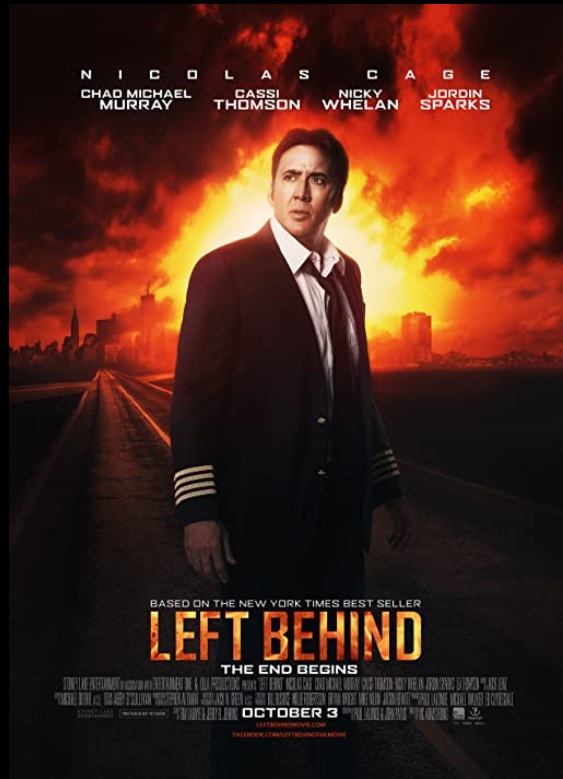
Left Behind (2014)

The Cage. Rented. No Question.

What can we say that hasn’t been already said about this proselytizing pablum of propaganda — of what is now, four films, three of which starred self-righteous douchebaggin’ bible-banger Kirk Cameron (Saving Christmas*) — except that it is awful. And that believers, aka the fans of the film, will say that we who bash the film are “anti-Christians” who simply love to hate Christians. (It’s a “pagan conspiracy,” so says the Kirkster, ye whom, once he was “saved,” then turned his cheek to assure Julie McCullough was fired from TV’s Growing Pains, once her Playboy past came to light. Which is why we remember her work in Round Trip to Heaven and not ye work in Like Father Like Son and Listen to Me. Amen.)

No, ye believers. We hate Left Behind — in spite of the presence of the Cage — for it is just bad movie making, replete with bad, well . . . everything. Especially movies that have to explain the “timeline” of their production: that this version of Left Behind isn’t a remake of the first movie, but a reboot of the first movie, and it’s based on and not a direct adaptation of the first book of the 12 novels in the series, and does not follow the book’s chronology.

Argh! This is worse than a post-George Lucas Star Wars production with all of the plot explanations in its advanced press.

If you skimmed (there’s no other way to endure it) the first Kirk Cameron version, pretty much all of the same characters from Left Behind: The Movie (2000) are in play in 2014 version — except for the Antichrist character of Nicolae Carpathia (the only intriguing aspect of those films, courtesy of actor Gordon Currie). That’s because this reboot takes a more personal, subjective approach to chronicling the effects of the Rapture through the eyes of Cage and his family. This movie isn’t about the “why” it happened, but the “how” of the non-believers surviving the chaos.

What-the-F-This-Movie-ever! Why does this movie of vanishing bodies and piles of dirty laundry even exist?

Is the film’s purpose to spread the gospel? To save souls? To frighten you — as is the case with most Christploitation films (see If Footmen Tire You, What Will Horses Do? and The Burning Hell to get you started) — into believing?

Nope. It’s to satisfy a lawsuit. So much for Christians loving one another on a unified front to bring glory and praise to God. In the end, it’s all about the money, the -sploitation, if you will, always and forever. Amen.

It turns out Christian writer Tim LaHaye wasn’t too thrilled with the Kirk Cameron-starring films produced by end-time flick purveyors Cloud Ten Pictures, so he filed two lawsuits. Those suits, in turn, effectively stopped the production of the Kirk Cameron timeline (which needed to be stopped); a timeline that ended with the third film World at War (2005). And this $15 million Asylum/SyFy Channel-esque version with the Cage — which had plans for two more reboot-sequels; productions so desperate for financing in the backwash of the bad reviews and box office returns, Cloud Ten had to go an Indiegogo campaign route — is the end result. (Upon the demise of Cloud Ten Pictures, defunct in the legal backwash, that studio’s CEO, Paul LaLonde, incorporated Stoney Lake Entertainment, which ultimately produced this remake.)

Ah, the stench of the horseman that is greed.

I, therefore ye, proclaim thy film as a new form of -sploitation: Cageploitation, that is, films that exploit Nic Cage to bamboozle us into watching a film about vanishing bodies and piles of wrinkles clothes on a plane. And for not making Left Behind: The Animated Movie or its live action counterpart series for the PAX television network (also defunct, now ION), we thank . . . well, “someone” . . . as it would be crass to evoke the big guy upstairs.

So, sorry, Nic. We loves yahs and all, but in this case: we can’t be your isle-seat bitch, for you were made the bitch of the producing Brothers LaLonde Peter and Paul.

“I want this dirty laundry off my gosh-darn golly-jeepers plane!

Be his celluloid beeach!

Yep! Cloud Ten Pictures also made these!

* Sorry, Kirk. There was no “pagan conspiracy.” You ruined Christmas all on your own, buddy — along with 19 other films — as foretold in our “Ten Movies That Ruin Christmas” and “Ten More Christmas Movies To Ruin Your Holiday” featurettes.

About the Author: You can learn more about the writings of R.D Francis on Facebook. He also writes for B&S About Movies.

Mother Joan of the Angels (1961)

A priest is sent to a small parish in the Polish countryside which is believed to be under demonic possession and there he finds his own temptations awaiting.
— An IMDb slugline that doesn’t do this film justice

When Martin Scorsese selects a film for his Masterpieces of Polish Cinema series — one that won the Special Jury Prize at the 1961 Cannes Film Festival — you know that you are, in fact, watching a masterpiece. Jerzy Kawalerowicz’s seventh film (a slight resume of only 17 films across 50 years) is a film that has the ability to unnerve — like Brunello Rondi’s The Demon (where William Friedkin got his “spider walk”; only Rondi does it without wires, courtesy of Daliah Lavi’s performance), Otakar Vávra’s Witchhammer, and Ken Russell’s The Devils — while at the same time, it overwhelms you in its surrealistic beauty. It’s a film that takes an unconventional Hollywood approach to explore spiritual issues and religious megalomania, but is misclassified as a “horror film” in some quarters.

It’s also a film considered as one of the best Polish films ever produced.

Martin Scorsese, doing the Lords work, in preserving films for later generations. There are 21 films in the series across three volumes.

As with Witchhammer, Vavra’s lone foray into the horror genre, Mother Joan of the Angels is also a historical-drama concerned with brutal, religious-based inquisitions — only, instead of witches, we’re dealing with Nuns. All three films — Kawalerowicz, Vávra, and Russell — are based in the same subject matter, with Jerzy Kawalerowicz, basing his on a novella of the same title by Jarosław Iwaszkiewicz, one loosely based on the 17th century Loudun possessions. While Ken Russell’s The Devils (1971) depicts the trial and death of French Priest Urbain Grandier, Mother Joan of the Angels continues the story after Grandier’s death. The story concerns a spurned nun in 1634 France accusing a priest of using black magic to seduce her and her sisters and then had them possessed. After Grandier’s execution, Mother Joan takes his place after his execution.

There’s nothing, absolutely nothing, I can say of any relevance on the quality of this film’s cinematography, direction, and acting. For Mother Joan of the Angels is a film that humbles me. As a critic, I am not even qualified to write as much as I have about this film. My only goal is to you make you, the B&S About Movies reader, aware of it. For this is a film not to be read about, but experienced.

This film is simply perfect. Watch it.

There’s no U.S. online streams to share — pay, freebie, or free-with-ads — but the DVDs as a single issue abound in the online marketplace. We did, however, find a copy of Kawalerowicz’s 6th film, prior to Mother Joan of the Angels, with Night Train (1959) on You Tube. Here’s one of the many extended scenes from Mother Joan of the Angels on You Tube to enjoy. You can watch Mother Joan of the Angels in its entirety on the overseas Euro-streaming platform of FShareTV.

About the Author: You can learn more about the writings of R.D Francis on Facebook. He also writes for B&S About Movies.

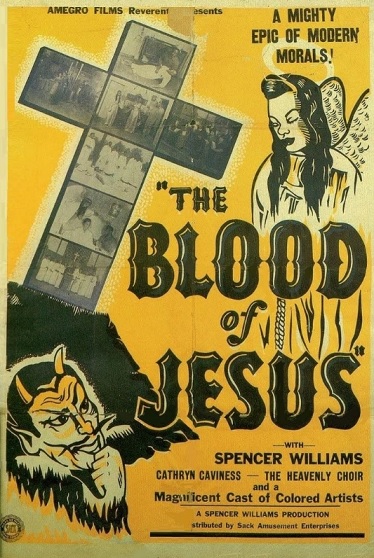
The Blood of Jesus (1941)

Before drive-in exploitation filmmaker Ron Ormond found faith and made a series of films with Southern Baptist pastor Estus Pirkle (The Burning Hell), there was this early “Christploitation” classic, a low-budget concern with an all-Black cast (and crew) regarding a newly baptized, Baptist-believing woman accidentally shot by her atheist husband. Upon her death, she’s greeted by an angel who takes her to the Crossroads of Life. The story, intelligently, turns into a parable based on the tale of Blues musician Robert Johnson’s trip to the crossroads (and other Southern Baptist folk tales), as the Devil (a great James B. Jones) temps her with the sins of the big city.

Sure, the against-the-budget, student film productions values — shot for $5,000 ($91,000 in 2021) — are crude and the actors aren’t pros, but this “race film” packs a powerful punch.

The Blood of Jesus was written and directed by Spenser Williams, a black actor who got his start in the late 1920s in a series of “roadhouse” shorts. He worked his way up to a starring role as “Andy” in CBS-TV’s, 78-episode, three-year (1951-1953) adaptation of Chicago WMAQ-AM’s long-running radio comedy Amos n’ Andy (1928-1960). The radio show was, of course as common for the times, voiced by white actors. Beginning his writing and directing career at the same time he began his acting career, Jackson augmented his 30-plus acting credits as a writer of eight films and as a director of thirteen.

He made his directing debut with the 10-minute comedy short Hot Biskits (1931) about two-men in a high stakes golf game. He followed the hour-long The Blood of Jesus with another faith-based film, Brother Martin (1942), which concerns the life Peruvian Martin de Porres, a late sixteenth-century believer (later elevated to sainthood in 1962 by Pope John XXIII). Spencer Jackson’s final feature film (a really fun watch) is the comedy Juke Joint (1947), which follows the Amos n’ Andy model of two con men trying to turn a buck as part of a small town beauty contest.

If there is any filmmaker who demands a restoration box set of his films (at least his efforts as a writer-director) or a biographical film (not a documentary, but a dramatic film on the level of say, Richard Attenborough’s 1992 Chaplin homage to British Comedian Charlie Chaplin), Spenser Williams is it.

Make it happen, Hollywood. In fact, Will Smith, if you’re reading this: make that movie.


You can You Tube “The Blood of Jesus 1941” to discover several uploads of your choosing, but here’s one of them. I implore you watch this film. And I need to stop talking about his movie, before I start to cry.

Justifiably, this film was added to the National Film Register in 1991, as this is a culturally significant document on the beginning the the black film industry. It’s powerful, magnificent stuff. A beautiful film that crushes it. Watch it. Then watch it again. Just watching this five minute preview clip on You Tube won’t be enough.

About the Author: You can learn more about the writings of R.D Francis on Facebook. He also writes for B&S About Movies.

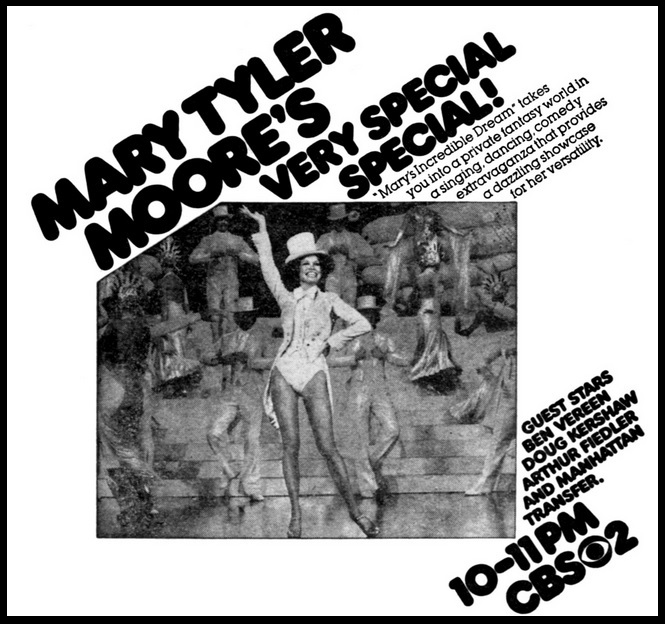
Mary’s Incredible Dream, aka The Mary Tyler Moore Spectacular (1976)

My memories of Ben Vereen decked-out in a green sequence suit and Bowler hat like an LSD-induced Frank Gorshin from Batman . . . was, in fact, real.

And my obsession for this MTM project, is real.

Courtesy of ReelGood.

There’s nothing quite like watching an actor or musician reaching the top of their profession to relish the schadenfreude of their ego crash, burning down their career — regardless of the fact this received three Primetime Emmys (in technical fields). Such a project is this early ’70s Christian Cinema oddball inspired by The Holy Bible tales of Adam and Eve and the parable of Noah and the Flood.

Yes, step right up!

Menahem Golan’s rock ‘n’ roll take on Eve and that damned apple with The Apple has nothing on this hour-long prime time special written by Jack Good (the Monkees’ equally off-the-hut 33-1/3 Revolutions Per Minute and Patrick McGoohan’s rock ‘n’ roll inversion of Othello with 1974’s Catch My Soul) and co-directed by TV’s Jamie Rogers and Gene McAvoy (Sonny & Cher).

Does The Devil singing the Rolling Stones’ “Sympathy for the Devil” — in full cabaret regalia — interest you? Does Ben Vereen (Gas-s-s-s in 1970, later Will Smith’s deadbeat dad in The Fresh Prince of Bel-Air) in a skin-tight red jump suit, his chest exposed, as he jumps around like David Lee Roth during his Van Halen-prime to the tune of “Ball of Confusion” by the Temptations do it for you? No? Perhaps Ms. Moore taking a crack at Cat Stevens’s “Morning Has Broken” — during the Noah’s Flood sequence, while she floats on God’s plaster of Paris hand — floats your boat?

Yeah, didn’t think so. But I implore you, it should.

For watching Moore decimate the carte blanche gained from The Dick Van Dyke Show in the 1960s and The Mary Tyler Moore Show in the 1970s, with this disco-ballet-musical knockoff of The Wizard of Oz — with Ms. Moore as an angelic, Eve-Dorothy amalgamate — is a whole lot of fun. More fun that should be humanly allowed. As fun as Jesus returning during the disco-era to take on the Mafia in White Pop Jesus (1980)? Hey, it’s your thirty pieces of silver to spend however you want.

For a wee lad, a leggy Mary was a heartbreak/courtesy of Moviefone.

In her 1995 memoir, After All, Mary Tyler Moore explained that this special was originally going to be titled Mary Tyler Moore Explains the History of the World (Mel Brooks, of course, would do it so much better in 1981 with History of the World: Part I). Mary’s “version of the world” went down in history on Mary’s home channel, CBS-TV — and bombed — on January 22, 1976, taking Ben Vereen (who doubles as Noah and the Devil, in his TV acting debut) and lauded cajun-county fiddler Doug Kershaw (he appeared on Arlo Guthrie’s “Alice’s Rock and Roll Restaurant” and records by Grand Funk Railroad; in the stoner western, Zachariah, and concert doc Medicine Ball Caravan; here, he doubles as Adam and the Devil), acclaimed Boston Pops maestro Arthur Fiedler (as God), and the Manhattan Transfer (angles, devils, and everything else) (who were always annoying, yet very hot before this, and not so much after this), down with the Ark.

Oh, the vanity of Ms. Moore tapping, dancing, and singing her way across the stage to a mixture of rock, pop, and classical tunes (even a good ol’ country Hair-inspired “washboard” number) in a tale about man’s creation, fall, and rebirth. Oh, but it’s not really happening . . . for it is all Mary Tyler Moore’s “dream.”

The “dream” is Mary drifting off to sleep . . . then being whisked away to the Pearly Gates — where Heaven is a giant, Westinghouse Radio (the kind Grandma kept on top of the refrigerator) to meet God (Arthur Fiedler conducting an angelic choir), the Manhattan Transfer show up with several (awful) numbers of musical wisdom, and Ben Vereen in that green tuxedo with a “666” on it, well, not since Jim Carrey in that awful Batman movie.

Does Mary become a cave girl to pull out a Flintstone-sytled bone microphone? Does a giant, plaster-cast “hand of God” save Vereen and Mary’s Mr. and Mrs. Noah from the flood, set to the backing of a Planet of the Apes-styled, waist-deep Statue of Liberty? Does Mary and a cast of Nazi dancers sport some green-glilter, Nazisplotation SS-uniforms for a softshoe? Is that stock film footage of Richard Nixon and Henry Kissinger making a timely political statement?

Yes to all! Yes. Yes. And, oh, my God. YES! This is Sgt. Pepper’s Lonely Hearts Club Band on acid with a speedball chaser. No, it’s not a dream. Mary Tyler Moore in this ersatz collision of Hair tangled with Godspell and Jesus Christ Superstar really happened . . . just like those musical variety nightmares of the late ’70s starring the washed-up cast of The Brady Bunch that left our parents snickering and us wee lads and lassies scratching our heads.

Courtesy of Mod Cinema.

Courtesy of the folks at Mod Cinema, we learn the “why” of this ungodly musical: Moore decided that the next season of The Mary Tyler Moore Show (which morphed into the dramatic Lou Grant with Ed Asner) would be the last, as she was developing a variety show as her next project. And this “incredible dream” served as the (failed) pilot.

Yeah, uh, no more weekly variety show for Ms. Moore.

Well, not, not really.

During 1978 – 1979 TV season, Moore, once again, attempted the musical-variety genre by starring in two more, unsuccessful CBS variety series. The first was Mary*, which featured a pre-stardom David Letterman, Michael Keaton, Swoosie Kurtz and Dick Shawn in the supporting cast. Making its debut on September 24, 1978, it ran for a total of three, low-rated episodes (its highest ranking was 64th out of 114 shows), until its cancellation on October 8, 1978.

Then, in March 1979, a mere five months after the cancellation of Mary, the network brought Moore back in a new, retooled version called The Mary Tyler Moore Hour**. Described as a groundbreaking “sit-var” (part situation comedy/part variety series), Moore portrayed a TV star putting on a variety show. The show-within-a-show format, which starred the likable and dependable Joyce Van Patten (Bad News Bears, 1976), Ron Rifkin (Silent Running), and a returning Micheal Keaton was cancelled in June 1979 after eleven episodes. Not even guest appearances by Lucille Ball, Dick Van Dyke, and Gene Kelly — starring as themselves and appearing on the “show” within the show — could save it.

Yes, dear reader, Mary’s Incredible Dream is incredibly, epically delicious. If there’s ever a time where you NEED to waste 51-minutes of your life — at least you’re not losing 9-minutes on commercials — this is it. Watch it on You Tube . . . but I have a feeling this two minute opening of Mary adorned in a flowing, pink chiffon nightie fly upward into the heavens just may be all you need to decide if you want to spend another 51-minutes with this, well, train wreck that gives the teachings of Jesus a bad name.

Oh, by the way . . . if you need to know more (we know you don’t, but anyway) about Mary Tyler Moore, there’s an hour-long Reelz-exclusive documentary (well, 44-minutes, since the TV commercials are cut) Behind the Smile on Tubi.

* Mary Tyler Moore has rabid fans, so yes, you can find episodes and clips of Mary on You Tube.

** Yeah, The Mary Tyler Moore Hour is on You Tube, so take your pick of the clips or episodes.

About the Author: You can read the music and film reviews of R.D Francis on Medium and learn more about his work on Facebook.

The Judas Project (1993)

In the world of retail, “Christmas in July” is a promotional gimmick enticing mall shoppers to stock up on decorating supplies, as well as stocking up on discounted gifts. At B&S About Movies: we celebrate “Christmas in Summer” by spreadsheeting a six-months out “Christian Cinema Week” for the first week of December: we’re weird that way.

As this week unfolds, you’ll notice we’re concentrating primarily on the films of the ’70s, which we’ll round up (at 8 PM, Saturday the 4th) with one of our patented “Exploring” featurettes; this one entitled “Christian Cinema of the ’70s” that features a plethora of mini-reviews of even more films. And it seems Santa checked off those efforts in the B&S About Movies “nice column”: he gifted us with an early, July present: a never-heard-of-it-before Christsploitation flick.

It was a lazy July weekend, as I browsed the aisles of a second-hand store. Of course, the first section I always hit is the VHS/DVD section: it’s how I scored my copy of the Richard Lynch apoc romp, Ground Rules (1997); it’s also how I got this copy of a Christian apoc romp starring Richard Herd (our ersatz Caesar/King Herod) who, if you’re keeping track, was in the secular, French apoc romp, The Survivor (1998). Also encouraging our watch, and helping us swallow the low-budget exploitness of it all: the 230-plus television-and-film-credited Jeff Corey (our ersatz Pontius Pilate), as well as iconic daytime actor and prime-time character actor, Gerald Gordon (a government assassin, aka thief, nailed on a Calvary cross, next to Jesus). Needless to say, they are, in spite of the material and the other non-thespians stumbling around them, excellent.

Regardless of its additional lack of narrative quality, discovering The Judas Project for the very first time, 28 years after its initial release, is a blessing: considering when one compiles a week of Christian Cinema films and a film named The Judas Project — tossed willy-nilly between a copy Sandra Bullock’s Murder By Numbers and James Spader’s Supernova — calls out to you. It also becomes a double-blessing when you just rewatched the production-tragic Christian rock-apoc romp Raging Angels (1995) in the same week — specifically to review it for “Christian Cinema Week.”

The Judas Project: The Review

Jesus and helicopters: load and roll the tape!

The Holy Bible is rife with parables, but not with the moral or spiritual lesson of Tommy Wiseau (The Room) and fellow, self-proclaimed auteur Neil Breen (Neil Breen’s Movie Magic) discovering Jesus and deciding to proclaim their new-found faith by making a movie together, but not just any movie: a sci-fi Jesus movie.

The “message” here is the same ol’ salvation trope: Humanity is in peril, so God sends forth his son in the form of a man named Jesus Jesse to save mankind from the impending terror that is to destroy the Earth. The plot-twist in this fictionalized retelling of the story of Jesus Jesse: it’s told as if The Holy Savior arrived in the late 20th century.

No, we are not making this up: this movie is real.

As the film spins, one notices that, while the VHS sleeve indicates the year of release as 1993, the copyright on the film stock indicates the production began in 1990; as such, the film is woefully dated in its attempt to emulate-update the “Jesus in present times” progenitors Godspell, Jesus Christ Superstar, Pilate and Others, and Jesus of Montreal. The clue the proceedings are outdated: it makes reference to the “evil Russians” by calling out the USSR, which fell on December 26, 1991 — two years prior to its direct-to-video release.

Needless to say, as with all Christ-based films: none of the films are “bad”; reviewers in the Christian press loved The Judas Project, praising its action, acting, and even the (woeful, not-so-special) special effects (The lightning! The lightning!). The less-discriminating, secular reviewers, honestly — and isn’t that what Jesus taught us: to be honest and not deceive others — pounced on the movie: for all the same reasons the preaching-to-the-choir Christians praised the film.

Uh, no. I am not breaking the Eighth Commandment for a film review.

For this promoted, “made entirely apart from Hollywood” (in Savannah, Georgia) modernization of the “Greatest Story Ever Told” is actually the “Most Abysmal Story Ever Committed to Film”: a community theater-level production that should have closed on the same day it opened — and certainly never committed to celluloid.

We meet our “Jesus” in this updated version of the first-coming of Christ, in the form of Jesse (underdog ’80s AOR musician John O’Banion): he’s a new-and-improved, radical social revolutionist savior in this Passion Play — as he speaks to a beach-wondering multitude searching for a missing boy. Tired, stressed, and hungry, he comforts the downtrodden with wisdom — then feeds their bellies with an endless supply of bread and cheese.

Yes. Not fishes. Cheese.

Jesse eventually recruits twelve disciples, all white, natch, which goes against the grain of today’s multi-racial society in which the film is set. Why, yes: Judas shows up (daytime and prime-time actor Ramy Zada) — rollin’ in a fancy car with “Money 66” license plates. Why, yes: as is the case with any Christian apoc flick from the ’70s through the ’90s: people are crucified on crosses by threat of machine guns (to get its “point” across — and it is gruesome, natch). Why, yes, the film is anti-Semitic: Jesse’s chief antagonist is a powerful Jewish religious leader, determined to kill the Christ.

Look, I get it.

Writer-director-and everything else — also composing the companion soundtrack’s all-original CCM rock opera — James H. Barden is passion-trying with the same vigor as Mel Gibson with The Passion of the Christ (2004) — more so, if you consider the soundtrack. Barden’s “What If” question of an Earth that never knew Jesus Christ 2,000-plus years ago — only to have him arrive for the first time during the planet’s sci-fi apocalypse meltdown — is an intriguing concept. Barden’s detracting from the Revelation’s Antichrist trope proliferating most of the apocalyptic Christian films of the ’90s obsessed with the Mark of the Beast (Left Behind, Jerusalem Countdown, Megiddo: The Omega Code 2, Six: The Mark Unleashed — to name a few), instead placing the actual Christ into the same context via the synoptic gospels of Matthew, Mark, Luke, and John is, in fact, appreciated.

However, if you know your post-’80s Italian, and their even-worse Philippine (Stryker), apoc knockoffs (sans the superior Endgame or 2019: After the Fall of New York)*, Christian apoc flicks rarely pull off their honorable, against-the-budget intentions. Check your roster of Cloud Ten Productions apoc’ers fronted by David A.R White, accordingly: then file next to The Judas Project. Maybe if this was made in the early ’70s by 20th Century Fox, Metro-Goldwyn-Mayer, or Warner Bros. with an apoc-rugged Charlton Heston** as the “New Christ,” possibly George Peppard** as “Jesus” with a 12-wheeled amphibious battle truck*˟, we have something, here. . . .

To think protestors took to the theater sidewalks over Mel Gibson’s and Martin Scorsese’s takes on the life of Jesus. The Last Temptation of Christ (1988) is the film you praise for its quality and ability to get its subtext across. The Judas Project is, by far, the far more offensive picture, courtesy of its all-white apostle brigade, women are misogynistic victims, stereotyped as promiscuous, controlling Jezebels, with Jews as the “evil” responsible for the murder of the Christ, and anyone born in the lands of Mother Russia are inherently diabolical. Can we get a little philogyny and Semitic joy up in this here church? It’s not like the Russians are Estus Pirkle’in sharpened bamboo into the ears of children . . . will someone please spin Sting’s “Russians” and let the world know they love their children, too? An entire nation of peoples goes to Hell, just because they were born there?

Ugh, Christian cinema: just. please. stop.

Enough with the bogus, “faith-based” sci-fi shilled by the likes of Loophole (about a Judas Iscariot “violence gene”), The Judas Project, Raging Angels and a David A.R. White end-of-the-world production. Please take your production cues from Alex Kendrick and his Sherwood Pictures shingle (in Albany, Georgia, by the way). Stay out of the beyond-the-low budget-indie lands of apoc-futures and stick to present-day car lots (the really fine Flywheel), football fields (the finer Facing the Giants), and spiritually-conflicted firemen and police officers (the better-than-you-think Fireproof and Courageous). Mixing Apaches with The Holy Savior sends us running away from the “Romans Road,” not towards it.

Maybe if the wise, disembodied stone head of Zardoz was quoting the gospel and commanding the Apache helicopters, we’d hit the celluloid trail to Damascus. . . .

The Life of John O’Banion

Honestly, if not for this film’s obscure rock musician angle presenting an opportunity to honor a career, we wouldn’t have gotten this far.

Radio disc jockey, TV host, and one-time lead vocalist in American jazz trumpeter Doc Serverinsen’s Today’s Children (he, once the leader of Johnny Carson’s ’70s late-night band), John O’Banion made five appearances on Johnny Carson’s show as a solo artist, as well as multiple Merv Griffin and Mike Douglas daytime talk show episodes. O’Banion also appeared on American Bandstand, Solid Gold, and Star Search (hosted by Carson sidekick, Ed McMahon; big shock: O’Banion was the ultimate winner that season).

The Star Search “win” led to his single, “Love You Like I Never Loved Before,” charting in the Top 50 in the U.S., Australia, and Canada. His biggest chart hit was Crystal Gayle’s cover of “I Don’t Want to Lose Your Love,” which reached #2 on the U.S. country charts in 1983. Signed to Elektra Records, O’Banion released several snyth-pop albums: John O’Banion (1981; his highest charter, known as Golden Love Song in the overseas markets), Close Up (1982), and Danger (1982). Finding a more receptive audience in Europe and Japan, he released the German-made White Light (1985), and appears on the Elektra-produced soundtrack with two songs for the film Legend of the Eight Samurai (1983). The Asian film led to his recording Satomi Hakken-Den (1983) and Hearts (1995) for the Pacific Rim market, where he had his greatest chart success.

During his tenure with Elektra Records, O’Banion attempted to launch an acting career with a minor-support role in Charles Bronson’s Borderline (1980), and a larger supporting role the TV movie Courage (1986) starring Billie Dee Williams (Alien Intruder) and Sophia Loren. He closed out his acting career as the Christ in The Judas Project. He died in 2007 at the age of 59 in Los Angeles from complications after being stuck by a car while on tour in New Orleans.

There’s no free or pay streams to share. There is, however, a still active website where you can purchase streams. During its initial roll out, The Judas Project aired on the Christian cable network TBN – The Trinity Broadcasting Network throughout the ’90s. The network would later finance their own Christian-inspired apoc’er with the aforementioned, Six: The Mark Unleashed (2004).

You can watch the trailer on You Tube.


This movie needs more helicopter . . . and cowbell.

* You can enjoy more ’80s apoc films with our two-part “The Atomic Dust Bin: 10 Post-Apocalyptic Films You Never Heard Of” featurette — Part 1 and Part 2. To see even more of our post-apocalyptic reviews, check out our complete Letterboxd list.

** Do we have to tell you that we are referring to the apoc ’70s “Big Three” of Planet of the Apes, The Omega Man, Soylent Green, as well as Damnation Alley? Eh, no, worries! We break the apoc ’70s down with our “Drive-In Friday: A-List Apocalypse” and “Ten End of the World Movies We Love” featurettes.

*˟ We break ’em all down with our “Ten Post-Apocalyptic Vehicles” featurette.

About the Author: You can learn more about the writings of R.D Francis on Facebook. He also writes for B&S About Movies.

The Late Great Planet Earth (1978): Another Look

Editor’s Note: Sam Panico previously reviewed this Christian post-apocalyptic film as part of our January 2019 “Tabloid Week” chronicling sensationalistic documentaries. As we fill out our ever-expanding database of reviews with some of the “Christian Cinema” films from the ’70s we’ve missed, we brought this prophetic classic back for another look. To say Sam and I are obsessed by this film is an understatement. And you should be, as well. And, one day: I’ll finally sell Sam on Jonathan Livingston Seagull.


Who better than family nature film purveyor Pacific International (Challenge to be Free, Mountain Family Robinson, and The Adventures of the Wildness Family) to give us a good ol’ biblical prophecy gloom n’ doomer to scare the little ones into believing in Jesus? Hey, like the film tells us: 70 percent of The Holy Bible‘s predictions by the prophets of old have come true. So, if those predictions did, it follows the other 30 percent will happen in our lifetime.

Are you rejoicing in the light, yet?

Prior to the film breaking box office records, the 1970 book of the same title, penned by eschatologist (a theology concerned with the final events of history as told in The Bible) Hal Lindsay, competed for the title as one of the decade’s bestsellers (and with his first book!) against Erich von Däniken’s 1968 tome, Chariots of the Gods?, itself turned into a 1970 film. By the early ’90s, The Late Great Planet Earth sold 30 millions copies.

Initially, the book was produced as a prime-time documentary special in 1975. The ratings response was so favorable, a new, theatrical version narrated by Orson Welles was rushed into theaters. In addition to Welles’s voiceovers and occasional pop-ins on camera, Lindsey appears to weave his theories about the Earth’s future based on the prophets Jeremiah and Isaiah, Ezekiel and Amos in foretelling the arrival of Jesus as the Messiah.

While many of Lindsey’s projections — both in book and on film — are dated, and some proven wrong in our modern world, credit is due to Lindsey’s non-fire and brimstone approach (say, as opposed to Pastor Estus Pirkle’s approach in a series of Ron Ormond films, starting with If Footmen Tire You, What Will Horses Do?) in speaking calmly and reasonably correlating The Bible in a realistic, contemporary content — such as reasoning the weird creatures spoken of in biblical prophecies to modern-day war craft.

That is until those scenes . . . of a computer analysis calculating if Jimmy Carter, Ted Kennedy, or Ronald Reagan (the whole “666” thing), is the Antichrist . . . wow. That’s a hard swallow. Then there’s our “final judgement” by way of a 10-nation confederacy (i.e., Daniel’s 10-horned beast), which Lindsey sees as the European Common Market, going into battle with Russia (aka, The Bible‘s Magog), which will happen in 1988. But not before the gravitational pull of “The Jupiter Effect” in 1982 stirs up the sun and scores the Earth as warm up for the end times. And, if all else fails, another educated talking head tells us that man will never make it past the year 2000.

Believe it not, as goofy as it all may sound, before Lindsey brought a soupçon of common sense to the discussion, the pastors and preachers I dealt with in my youth actually believed in literal, “wild and mysterious creatures of multiple heads and multiple horns with tails of scorpions,” cooked up by Satan himself, would run loose on the Earth. Pure insanity. And we believed it. And it scared us stiff.

Whatever. As you can see, we’re still here.

Sure, we can scoff now, but this flick scared the shite out of us wee lads, leaving us a paranoid mess ripe for a “Friday Night Activity” evening at the local Baptist indoctrination center. I mean, come on, what little kid wants to not be called up in the Rapture and left to suffer on Earth, then go to Hell, afterwards? Seriously. Talk about child abuse. Youth pastors telling you Communist minions will force you to watch your mom and dad being executed. That you’ll be beheaded if you don’t allow yourself be “marked” by a red-hot “666” branding iron.

Anyway, Lindsey has since written 14 more books. When his fifth book, 1983’s The 1980s: Countdown to Armageddon became a runaway best-seller, luckily, it wasn’t made into a sequel film. Once again, he predicted the Rapture would happen at the end of the ’80s. And we are still waiting for Russia to attack Iran to gain control of the oil supply, with China not letting Russia get away with that nonsense — and all hell, literally, breaks loose — sans the multi-head and horned beasts (we hope).

Oddly enough: No predictions about a cyberattack on U.S. oil pipelines. Nothing about bat-born viruses cooked up in labs. Nada about social-media backed CHOP and CHAZ warriors overthrowing whole police precincts and running Walgreen’s out of business and out of San Francisco — none of that reality made it to either of Lindsay’s books or the film. And so it goes, as the prophetic wheels of fate, spin. . . .

You can watch The Late Great Planet Earth on the Internet Archive.org. You say you want your own copy? See, we told you an obsession for it would happen. The fine folks at Scorpion Releasing issued the film on Blu-ray available at Diabolik DVD.

You need more “Jupiter Effect” in your films, you say? Well, then, you need to check out our review for The Spirits of Jupiter. More predicted destruction of the Nostradamus variety? Then check out Japan’s inversion of an Irwin Allen flick with 1974’s Nosutoradamusu no daiyogen.

About the Author: You can read the music and film reviews of R.D Francis on Medium and learn more about his work on Facebook.