Man Maid (2008)

Although Man Maid was made in the backwash of the 2005 critical and box office comedy hit The 40 Year Old Virgin (Jane Lynch from that film cameos here as a dominatrix) — and lost somewhere in the Judd Apatow comedic raunch-o-verse — this quirky tale about a male housekeeper at a dying hotel in the Pacific Northwest feels like one of those off-beat, innocuous ‘80s comedies John Cusack used to make — on his way up to the likes of Con-Air — such as Better Off Dead and The Sure Thing. But since Man Maid was released in the early 2000s and filled with eccentric characters, a more accurate reference would the out-of-the-ordinary, ’90s indie comedy hits Bottle Rocket, Little Miss Sunshine, and Napoleon Dynamite. And if this was made in the ’80 with major studio backing, John Cusack would have been our male maid; in the ‘90s, Jon Heder would have been cleaning rooms; a pre-Office Steve Carell would have been tailor made for the role of our off-the-grid geek hero — complete with motor scooter — who gets the girl and saves the day. In fact, if DreamWorks-Paramount had backed Man Maid, Jay Baruchel from their 2010 joint venture, She’s Out of My League, would have his face inside the washing machine.

Also known as The Cleaning Man in overseas markets, Man Maid was plucked off the festival circuit by Canadian TV Movie purveyor Marvista Entertainment, which airs their catalog on channels such as Hallmark and Lifetime.

Shot in 22 days on a shoestring in Oregon back in 2006 and hitting the festival circuit in 2008, Man Maid feels as if it comes from a place of erudition. Self-financed and mini-major indie comedies usually come from aspiring filmmakers and burgeoning actors with the burning desire to make something and, to that end, they’ll keep the story simple and write it around locations that they know (and know they can secure for shoots to avoid costly set builds) and write characters that they know. And considering this is a tale about a male maid, one wonders if writer-director Chris Lusvardi and lead actor Phillip Vaden worked as maids — or at least as hotel concierges or managers — to work their way through college.

Vaden — who’s very good here and brings a definite Cusack-Carell vibe to the proceedings — is Vincent Van Metcalf: a slightly more ambitious Pacific Northwest slacker — and second generation male maid — who finances his camping-tent lifestyle as a member of the housekeeping staff of a historic, dying hotel. During his off-days, he feverishly builds a piecemeal structure — as an act of love (reminding of the tale of eccentric South Floridian Edward Leedskalnin and his Coral Castle mystery) — that’s to serve as an outdoor concert stage for the way-out-of-his league Chloe Flaminghawk (nary a strand of Elizabeth Warren’s Native American DNA in her body), a free-spirited, aspiring singer who can’t sing, write, or play a harmonious chord on her accordion. (Played by a wonderfully ditsy-cute Amanda Walsh from SyFy’s Lost Girl, she’s bumped-off-the-marquee for Jane Lynch; that’s Walsh, poster right. And yes . . . the Bryce Johnson on the marquee is Detective Darren Wilden from ABC Family’s Pretty Little Liars.)
Move it on over, Woody. This machine kills fascists.

Proving that even off-beat dorks can get girls . . . and couldn’t be more clueless: Vincent is oblivious to his more realistic romantic goal of Tory (Sara Rue, TV’s The Big Bang Theory), the hotel’s “plain and boring” manager. Love blossoms when it’s learned the in-debt-to-the-IRS hotel is about to face foreclosure at the hands of a heartless developer (is there any other kind), played by omnipresent comedic television actor Stephen Hytner (who — sorry, Sam — will always be the ovaltine-obsessed Kenny Bania from Seinfeld). So the makeshift, outdoor stage, once to serve as a musical home for the dreamy-eyed Chloe Flaminghawk, will now host a benefit concert to save the hotel. And Chloe’s godfather — Americana-Country star Sissy Taylor (John Doe), known for his protest anthems — will headline the show.

Aggravating Sam — one Seinfeld reference at a time.

Ah, but beware, ye streaming John Doe fan. While John gets top-billing on the theatrical one-sheets, he only appears in the film’s last 15-minutes — to stand up to the cops and sing a tune — but it’s worth the wait to see Doe mixing it up with Stephen Hytner. (Oh, and while Rue and Doe worked together in Gypsy ’83 — also reviewed this week — they have no scenes together here.) All in all, Man Maid is an enjoyable, competently shot and acted film that rises above the usual indie norms — and is actually on par with the other comedies named checked in this review.

Sadly, unlike indie writer-directors Wes Anderson, Jonathan Dayton and Valerie Faris, and Jared Hess, each who found critical and box office acclaim with their respective indie-darlings, along with major studio and A-List actor acceptance with their sophomore films, the equally quirky Man Maid — which served as their film debuts — would be the only feature film from the writer-director and acting team of Chris Lusvardi and Phillip Vaden.

You can enjoy this “John Doe Week” entry — with its hard-to-find DVDs currently out-of-print — as a free-with-ads stream on TubiTV and decide to give it a go after you watch the trailer.

About the Author: You can learn more about the writings of R.D Francis on Facebook. He also writes for B&S About Movies and publishes on Medium.

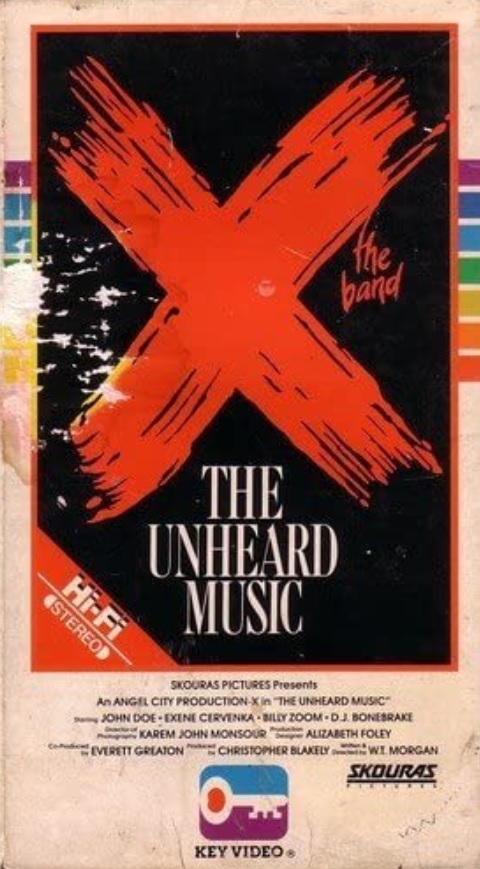
X: The Unheard Music (1986)

Writer and director W.T Morgan is a name engraved in the history of the Los Angeles punk band X. When Morgan made his debut foray into feature film narrative work with his rock ‘n’ roll love letter to his college radio roots in A Matter of Degrees (1991), he cast X’s bassist John Doe in one of Doe’s best-remembered roles as a burnt-out college rock disc jockey at odds with the commercialization of radio broadcasting. And that theme of the homogenization of music and radio industries carries through in this rock-doc.

Watch the trailer.

As with the four-years-in-production schedule Doe experienced with his first acting gig in Border Radio (started in 1982, released in 1987), W.T Morgan followed the band around Los Angeles and Southern California between 1980 to 1985. In addition to its sixteen-song strong soundtrack of the band in the studio and live on stage, the film also features band interviews, along with footage and insights from local disc jockeys, record store owners, and other local movers and shakers.

Granted with a limited art house release, this is one that punkers were first exposed to as result of its multiple showings on HBO and the resulting VHS tapes that hit the shelves. The DVD and Blu-ray version was issued on December 7, 2011, and includes a special features section with John Doe and Exene Cervenka discussing the film.

X: The Unheard Music is available on a wide variety of VOD streaming platforms, but we found a copy on You Tube. This is X in their prime. If there’s any punk document to watch, it’s this one. Watch it. And they still got “it,” as this 2019 full concert, courtesy of The Current.

About the Author: You can learn more about the writings of R.D Francis on Facebook. He also writes for B&S About Movies.

Black Cat Run (1998)

Before he gained mainstream Hollywood notice for the Val Kilmer-starring The Salton Sea (2002). Before he went mainstream with two back-to-back Shia Labeouf-starrers with Disturbia (2007) and Eagle Eye (2008). Before he gave us xXx: The Return of Xander Cage (2017) and tossed his hat in the ring to direct the upcoming G.I Joe: Ever Vigilant, D.J Caruso directed this Frank Darabont (The Shawshank Redemption, The Green Mile, The Mist) co-penned retro-action flick for HBO Films that aired on the cable network on September 18, 1998.

Hot from his 30-plus episode run on TV’s Melrose Place and his debut in a theatrical-starring role with Starship Troopers (1997), Patrick Muldoon (American Satan, The Comeback Trail) stars as Johnny Del Grissom, a gas-station attendant who chases down the chain gang escaped convicts who abducted his girlfriend — and he’s also on the run, as he’s blamed for her father’s murder (Rex Linn, TV’s Better Call Saul and Young Sheldon). And, of course, her pappy is the sheriff. And so ensues the Fast & Furiousness with Johnny chasing down the convicts and Deputy Norm Babbit (Jake Busey, S.F.W. and Starship Troopers) chasing down Johnny.

Macon County Line or Jackson County Jail, anyone? Yes, please!

Seriously, how can you not like a movie (and there are detractors) that rolls out a tricked out Olds 442 tweaked with Nitrous . . . and gives you John Doe, our favorite punk bassist from Los Angeles, matching thespin’ chop-for-chop alongside Kevin J. O’Connor (Deep Rising, The Mummy), Peter Greene (Pulp Fiction, The Mask), our favorite ex-Bond girl Lois Childs, and Jeffrey DeMunn (currently starring on Showtime’s Billions; Dale Horvath on The Walking Dead)?

You can’t. Not with a writer and director and cast like that.

In spite of its obviously low budget, Black Cat Run burns rubber and then some, all working in a Mad Max, big-dumb-engine sort of way, which was just an Aussie western trading out horses for horsepower.

And we love it, for this is pure A.I.P retro-cinema: a ’70s Drive-In dream that would make Roger Corman proud, filled with 44-Magnums, exploding tanker trucks, cheesy one-liners that would make make Eastwood cringe, and every other B-Movie absurdity you can think.

Watch the full movie as a free rip on You Tube. You can thank us later.

About the Author: You can learn more about the writings of R.D Francis on Facebook. He also writes for B&S About Movies and publishes on Medium.

Touch (1997)

If you know your Quentin Tarantino, and we know you do, you know the career of American novelist Elmore Leonard through the Q’s adaptation of Leonard’s Rum Punch (1992) as Jackie Brown (1997). Of course, that was preceded by Barry Sonddenfeld’s adaptation of Get Shorty (1995) starring John Travolta, which was based on the 1990 novel of the same name, and Steven Soderbergh’s Out of Sight (1998) starring George Clooney, which was based on the 1996 novel of the same name.

Of course, long before Tarantino exposed Leonard to a new audience, Leonard’s novels produced the Burt Lancaster-starring Valdez is Coming (1971), the Charles Bronson-starring Mr. Majestyk (1974), Stick (1985) with Burt Reynolds (Smokey and the Bandit), and 52 Pick-Up with Roy Scheider (Sorcerer). And Tarantino hasn’t given up on Leonard: back in 2009 he optioned the 1972 novel Forty Lashes Less One. But since the Q has stated he’s not making anymore films after Once Upon a Time . . . in Hollywood, sans his interest in doing a Star Trek film, we’ll have to accept that film will never come to fruition.

Courtesy of impawards.com

In all, twenty-six of Leonard’s novels and short stories have been adapted for the screen, with nineteen as motion pictures and another seven as television series and TV movies. And this film co-starring John Doe of X is one of those movies.

And unlike most of his works, which were westerns, mostly crime dramas, and a smattering of suspense thrillers, Leonard broke “format” and came up with Touch (1987), a lesser known, dramatic-black comedy concerning an ex-Monk (Skeet Ulrich of Scream fame) who becomes a substance abuse counselor; when he acquires the divine abilities of faith healing, he’s manipulated by a fundamentalist preacher (Tom Arnold) and washed up evangelist (Christopher Walken). Love triangles ensue with Bridget Fonda (Singles) and Gina Gershon (Prey for Rock & Roll). And Anthony Zerbe (Mathias from The Omega Man) shows up as a Father Donahue, a Catholic Priest.

Now, you would think that an Elmore Leonard novel adapted and directed for the big screen by Paul Schrader of Taxi Driver fame (and his rock ‘n’ roll love letter with Joan Jett’s Light of Day) would be a box office winner.

Wrong.

As with the poorly reviewed and, in most cases, rarely seen, and/or poorly distributed Be Cool (2005; with John Travolta), Freaky Deaky (2012; with Christian Slater of Playback), and (the truly awful) Life of Crime (2013; with a woefully miscast Jennifer Aniston), Touch failed in its test screenings and in its limited theatrical release before being dumped into the home video market.

And not even its alternative rock tie-in to the then “hot” grunge-rock wave engulfing America from the Pacific Northwest could save the film.

At the time, I was spinning alt-rock tunes and the Touch soundtrack was an instant add to our station’s rotation due to its grungy pedigree. All of the alt-rock rags and radio trades of the day made much ado about the film as one of the post-Nirvana projects by Dave Grohl; the drummer composed the film’s soundtrack (and played all of the instruments) for his new Capitol Records imprint, Roswell Records, a concern that found great success with the 1995 freshman and 1997 sophomore releases by Foo Fighters: Foo Fighters and The Colour and the Shape. While the majority of the soundtrack features instrumental tracks to score the film, it also featured the songs “This Loving Thing (Lynn’s Song),” a collaboration between John Doe and Dave Grohl (Doe would later rearrange the song with his solo band, John Doe Thing). Grohl also collaborated with Louise Post of Veruca Salt (remember “Seether“?) on the film’s title cut theme song, “Touch.” (Luckily, the extremely rare soundtrack is uploaded to You Tube to enjoy.)

Now, remember as you watched the quintessential grunge flick, Singles (1992), after Soundgarden released their fourth studio album, Superunknown (1994), you began to recognize snippets of that album’s songs — “Spoonman” in particular — appearing as instrumentals in the film? (An uncredited Chris Cornell scored the film for Cameron Crowe.) Well, in the grooves of Touch you’ll hear snippets of Dave Grohl’s drum rolls and fills — “Stay Away” (aka “Pay to Play” in its demo form) in particular — from Nirvana’s breakthrough album, Nevermind.

At the time, Nirvana was hot, John Doe knew a good thing with grunge when he heard it and got X back into the studio — after their 1987 demise — with Hey Zeus! (1993), and Louise Post was the new alt-rock darling with MTV offering their full support to Veruca Salt and their debut, American Thighs (1994; You Tube).

So, with that alt-rock pedigree behind it, darn right alt-rock stations were spinning the soundtrack. My station even used the instrumental tracks for various production vignettes. And, as with the John Doe-starring A Matter of Degrees (1991), the Touch soundtrack was better known and more successful than the actual movie it intended to promote.

Now, if you remember your grunge (soap) operas, you’ll recall Dave Grohl wrote “Everlong” from The Colour and the Shape (1997), inspired by his ongoing romance with Louise Post. However, prior to her romance with Grohl, Andy Thompson, the lead vocalist and guitarist with the Dallas, Texas, alt-rock quartet the Buck Pets was a bit more blatant in his love for Louise Post: the Buck Pets’ eponymous Island Records debut (1989) closed out with “Song for Louise Post.”

Ah, sigh . . . alt-rock love with Punk Rock Girls.

Been there. Done that. And heart broken. Curled up on the couch watching the VHS of Touch with Kim, my little “punk rock girl,” aka my “Louise Post,” is one of my cherished memories; her apartment wafted with vanilla incents and clove cigarettes. A “Greasy Boys Pizza” on the coffee table. And she never did return my copy of the Touch compact disc.

I hope Kim still has that CD, plays it, and remembers me the way I remember her, as I write this review for B&S About Movies “John Doe Week.” And Kim and I really did hang out a place called the Zipperhead (Room). And she liked Mojo Nixon and we went to see the Dead Milkmen live. We went to quite a few club concerts together.

True love. Now I am an adult and life sucks. To touch that alt-rock dream, again. So thanks for the memories, Mr. Doe. I need to buy you beer, my friend.

Touch was previously available as a free-with-ads stream on TubiTV, but has since been pulled. You can, however, stream it for a nominal fee on Vudu.

About the Author: You can learn more about the writings of R.D Francis on Facebook. He also writes for B&S About Movies.

Vanishing Point (1997): John Doe Week

Editor’s Desk: This review originally ran on August 7, 2020, as part of our “Fast and Furious Week I” week of reviews and we’ve brought it back for “John Doe Week.


Did you know their was a remake of Vanishing Point? It’s okay. No one does.

The FOX-TV Network—back when they were in the business of creating original content, in lieu of reality programming and weirdo-dorky Seinfeld (sorry, Sam) wanna-be shitcoms—retooled this 1971 classic made by their sister film studio. Ack! No one should be poking around Richard C. Sarafian’s classic. And how did Sarafian go from this, to Farrah Fawcett’s Sunburn (1979), to become “Alan Smithee” on Solar Crisis (1990)? And so it goes in the B&S About Movies universe. (See? Too many movies, so little time. So many reviews to write!)

Of course, since this is a TV film, the vague existentialism and “thinking road flick” gibberish of the original is excised, thus transforming Barry Newman’s Kowalski into an action hero. Luckily: it features the same model 1970 Dodge Challenger R/T as the original film. Sadly: the messages regarding religious cults, racism, drug abuse, homophobia, and police entrapment are lost . . . and we’re stuck with a Challenger-driven Bonnie and Clyde redux.

And if you thought Sarafian’s transition from Vanishing Point ’71 to Farrah was odd: The director, Charles Robert Carner, wrote Gymkata (1985)* for Robert Clouse. Yes. The film starring American Olympic gymnast Kurt Thomas—as if no one learned their lessons from trying to turn Olympian Mitch Gaylord into a film star with American Anthem* and American Tiger.

Watch the trailer.

In the Challenger cockpit is the always welcomed Viggo Mortensen (who starred in the rock-religious flick Salvation with his then wife, Exene Cervenka of X (we are reviewing it this week; look for it) ; and yes, he’s Aragorn from Lord of the Rings) as Kowalski; he’s still employed by a car delivery service, but now he’s a Desert Storm veteran pining for his glory days as a stock car racer. This Kowalski’s “need for speed” isn’t the result of drugs, bets or personal demons: he’s a clean, faithful husband desperate to get home to his pregnant wife who’s suddenly hospitalized. While the ‘70s Kowalski didn’t need a reason to say “Fuck the Man!” to earn his folk hero status, the ‘90s Kowalski becomes an Americana hero as result of being mislabeled as a “terrorist” by an overzealous government abusing new anti-terror laws. 

Helping out on the radio front is a politically outspoken DJ simply known as “The Voice,” (Jason “Beverly Hills 90210” Priestly, a FOX-TV series, natch) on KBHX 106.5, “The Voice of the Rocky Mountains.” At least Priestly’s DJ is hip enough to spin tunes such as “Volunteers” by the John Doe Thing. Not helping matters is a hard-edged, ex-stock racer turned Utah State Trooper (the always welcomed Steve Railsback of Lifeforce) in hot pursuit with a Hemi of his own and a catch-Kowalski-at-all-costs attitude (if this sounds a lot like the Marjoe Gortner-Railsback persuit in The Survivalist, it probably is.) And in with the desert-dwelling assist is rocker John Doe (A Matter of Degrees) as an anti-government tax evader with a knack for repairing Hemis. (And rock trivia buffs take note: This is only time you’ll see the ex-husbands of X vocalist Exene Cervenka—Viggo and John Doe—together in the same film.)

It’s interesting to note that while a TV movie, Vanishing Point ’97 has a 90-minute, theatrical-running time. Movies shot-for-TV run 80 minutes, then 40 minutes of commercials are added to fill a two-hour programming block. Thus, 10 minutes of advertising are lost to fit the film into that 120-minute programming block. That’s bad business. So, considering Viggo’s status at the time, was this intended as a theatrical feature, and 20th Century Fox realized their production faux-pas and dumped it on TV?

What do you think, Eric?

“Jesus. Even the poster for this sucks. What the f**k was Viggo thinking.”
— Eric, purveyor of film quality and Seinfeld hater

Indeed, Eric. Indeed.

You can watch Vanishing Point ’97 on You Tube.

* Sam? Bossman? How many times must I lay down the American Anthem/Gymkata gauntlet? At the very least, all I want for Christmas is a Sam Panico review of Gymkata. Amen.

About the Author: You can learn more about the writings of R.D Francis on Facebook. He also writes for B&S About Movies.

My Little One (2019)

In our previous review of Pleased To Meet Me (2013), we discussed the analogous career travels of musician-actor John Doe and Sam Raimi-bred Bruce Campbell. Campbell resigned himself to being an actor that would never book a leading man role in major studio picture; that his career would consist of smaller support roles in A-List pictures, while maintaining a leading man status in B-Movies.

And as result of his iconic status from The Evil Dead, one day, Bruce got a call to star in La Patinoire, aka The Ice Rink (1998), a French rom-com about an inexperienced film crew producing a hockey film — with Campbell starring as Sylvester, a fish-out-of-water American actor cast as the team’s goalie, who falls in love on-screen and off-screen with his leading lady.

And so it goes with this Swiss-French co-production casting John Doe in a minor support role as a musician scratching out a living in a dusty Arizona casino. Thus John, like Bruce (thanks to The Evil Dead), is cast as the lead in self-produced indies like Pleased to Meet Me, or he’s cast in an overseas, major studio film as a support player — courtesy of his iconic tenure with his Los Angeles punk band, X. And in the U.S., John trades chops with such A-Listers as James Woods, Jennifer Aniston, and Ben Affleck in Salvador, The Good Girl, and Forces of Nature, respectively.

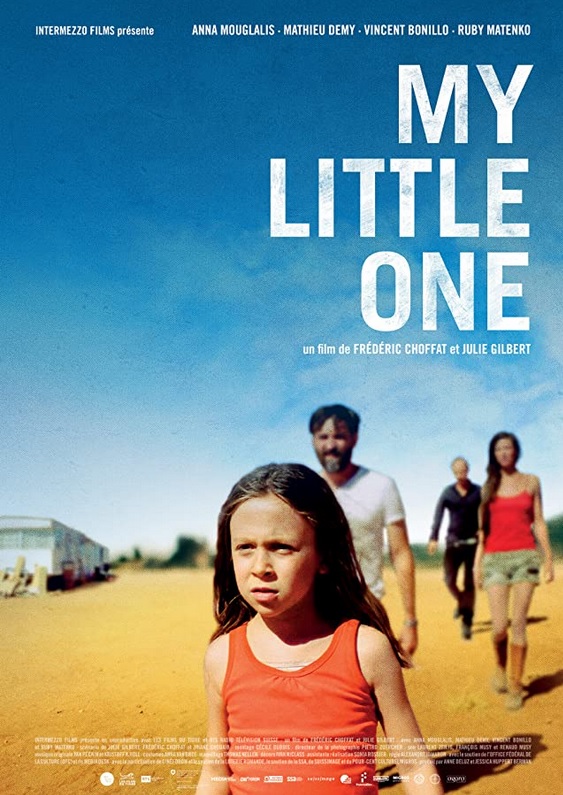
And, because of the Chin that Kills, I rented The Ice Rink. And because of Doe, I sought out this road movie (during its festival release) set in the Navajo Nation of the American Southwest that stars renowned French art house actors Vincent Bonillo, Mathieu Demy, and Anna Mouglalis.

“Never wait for something to happen.”
— Jade

A decade ago, the now estranged brothers Alex and Bernardo (Bonillo and Demy) lived on the coast of Mexico in a menage-a-trois, spiritual existence with Jade (Mouglalis), until a tornado destroyed their mutual business — and Jade disappeared. And while the still dreaming, 40-something Alex drifts in the memories of his youth, Bernardo became a responsible husband, father, and architect in Geneva, Switzerland.

The brothers are forced to reconcile as strangers-in-a-strange-land when they discover Jade now resides in Arizona. Dying from cancer, she wants the brothers to take care of Frieda (who is possibly either of their daughters), her now 10-year old, half-Sioux, half-American and half-Swiss daughter (well played by Disney series actress Ruby Matenko, who’s also appeared in the U.S. cable series Baskets and Veep). Jade makes a living as a singer known as “The Frenchie” in a slot machine casino with fellow musician Matt (John Doe). The film also stars local Navajo actors Zoël Zohnnie (as a medicine man who practices white-man medicine) and Kody Dayish (as a youthful hashish dealer).

My Little One comes from a place of erudition, with co-writers/directors Frédéric Choffat and Julie Gilbert drawing on their connections to the Navajo desert and its indigenous peoples as result of Choffat growing up in the Moroccan desert, while Gilbert, as result of her mother’s career as an ethnologist (a branch concerned with sociocultural anthropology), spent her youth among the indigenous peoples of Canada, Mexico, and U.S.

The indigenous aspect of the film — both of the peoples and landscapes — beautifully captured by cinematographer Pietro Zuercher, is maintained with Navajo native tongues (not subtitled) amid the English and French (subtitled) speaking cast. While I’d would have enjoyed watching Doe in a larger role in such an exquisitely-made film (he’s a fine actor deserving of such a casting), this tale of the lost and confused fear and loathing in an exotic land is still a joy to watch.

As with the unfurled existentialism in the dusty, lost landscapes of Border Radio — John Doe’s acting debut from all those years ago — a film that pinched from the ’70s cult films Easy Rider, Vanishing Point (John starred in the ’90s remake) and Two-Lane Blacktop, My Little One harkens the French New Wave films of old to remind us of Michelangelo Antonionis The Passenger (1975), as well as the ’80s American independents Stranger Than Paradise (1984), Down by Law (1986), and Mystery Train (1989) by writer-director Jim Jarmusch.

A hit on the festival circuit — where it was nominated as “Best Foreign Independent” at the 2019 Golden Trailer Awards — in France, Germany, and Switzerland before its European theatrical release, Los Angeles-based Cinema Libre Studios acquired the rights to distribute the film in the U.S. in the wake of its U.S. premiere at the Miami Film Festival. Other films on the studio’s roster include Imprisoned starring Lawrence Fishburne, the rock-doc Creating Woodstock, and the recently U.S.-released historical import from China, Enter the Forbidden City.

About the Author: You can learn more about the writings of R.D Francis on Facebook. He also writes for B&S About Movies and publishes on Medium.
Pleased to Meet Me (2013)

When it comes to musicians as actors, John Doe is the “Bruce Campbell” of the profession. Campbell has stated in interviews that he accepted his lot as an actor, in that he’d never be a leading man (after losing out to Billy Zane for The Phantom), instead getting smaller support roles in A-List pictures and leading man roles in B-Movies.

Watch the trailer.

And this seems to be the lot rolled by John Doe. Not that John cares: he’s always a musician first and an actor second. So, like Ash, we’ll see John in the supporting cast of a bloated Hollywood project mixing it up with the likes of Ryan Reynolds Ben Affleck and Sandra Bullock (Forces of Nature*) and Patrick Swayze (Road House*), then see him as a leading man in an indie project (his upcoming, 82nd film, D.O.A.: The Movie, and the-2002-still-can’t-find-a-copy Under the Gun co-starring Christopher Atkins).

In this Kickstarter-financed, shot-in-two-week-mostly-on-the-first-take film named after an old album from ‘80s college radio darlings the Replacements, John Doe leads a pleasurable cast of veteran musicians thespin’ for the cameras. In his support are Aimee Mann (yes, the Til’ Tuesday “Voices Carry” girl),’70s folk singer Loudon Wainwright III (of the 1972 novelty hit “Dead Skunk (in the Middle of the Road)”), and ’80s college rock folkie Joe Henry. More current indie-rock fans will recognize Whispertown’s Morgan Nagler, Over the Rhine’s Karin Berquist, and the Broken Spurs’ Adam Kramer in the cast.

Doe is somewhat playing himself: Pete Jones, a legendary rocker at a personal and professional crossroads. The muse has left him. He can’t seem to get his long-in-the-studio album finished. He’s dodging bankruptcy, foreclosures, and lawsuits from his record label. He needs help.

That help comes in the form of his ex-wife and former producer Laura Klein (Aimee Mann) who now works as a National Public Radio reporter. Referencing her inner, old studio producer, she believes Pete’s artistic rut is the result of losing his “musical purity.” So, for an episode of her syndicated radio program “World Café, she devises a 24-Hour experiment where she’ll place an online classified ad to form a one-day eclectic band of six random musicians to record a new Pete Jones tune.

This mostly ad-libbed, improvisational comedy project that comes off as a more serious, Spinal Tapish mockumentary is based on a 2002 episode of the National Public Radio program “This American Life.” In that program, a group of strangers were recruited from classified ads to enter the studio for one day to craft a cover of Elton John’s “Rocket Man.”

If you’re a fan of Louisville Kentucky’s indie-rock and folk scene (where this was shot) and hep to obscure references to early ‘90s college rock bands like Sleater-Kinney and Pussy Riot—along with Loudon Wainwright III as a socially maladjusted Theremin player and seeing John Doe in a leading-man role (check all those boxes for moi)—then there’s something here for you to watch.

This one is hard to find and is only available for streaming on the Vudu platform. Sorry, Amazon Prime users: there was a streaming copy, but it’s no longer available. But keeping checking back to see if it returns.

About the Author: You can learn more about the writings of R.D Francis on Facebook. He also writes for B&S About Movies.

* Look for our full reviews of Forces of Nature and Road House, this week.

Georgia (1995)

This entry in our week of John Doe film reviews is a personal, family-affair project for its star Jennifer Jason Leigh (who made her debut in Eyes of a Stranger and captured young male hearts as Stacy Hamilton in Fast Times at Ridgemont High). Leigh produced the screenplay written by her mother, screenwriter Barbara Turner.

Courtesy of timberroseway/PicClick

As an actress, Turner got her start in 1955’s Blackboard Jungle and 1958’s Monster from Green Hell; she came into her own as a screenwriter with 1966’s Deathwatch starring her then husband — and Jennifer’s dad — Vic Morrow (Message from Space, Escape from the Bronx). Her other notable writing efforts include Cujo (which she nom de plume’d as Lauren Currie) and the Academy Award-winning Pollock.

As her co-star, Leigh chose her long-time friend Mare Winningham (St. Elmo’s Fire), whom she known since she was thirteen years old. The choice proved effective, as it provided Winningham with her lone Academy Award-nod — for Best Supporting Actress. For their director, Leigh and Turner chose long-time family friend Ulu Grosbard. A well-regarded theater director (The Subject Was Roses, A View from the Bridge), he worked extensively as a second unit director on the box office hits Splendor in the Grass, West Side Story, The Hustler, and The Miracle Worker; he counts Dustin Hoffman and Robert De Niro as his close friends.

As is the case with fictional rock n’ roll films that are not biographical (Ray, Walk the Line, What’s Love Got to Do With It), while critically acclaimed, it failed at the box office and failed to find a cult audience on video (see Prey for Rock & Roll; Paul Simon’s One Trick Pony comes to mind). The story concerns the artistic sibling rivalry of the Flood sisters. Leigh is the jealous and less talented, punky bar room howler of the Janis Joplin variety continually at odds with Georgia, her critically-acclaimed country-singing sister.

John Doe serves as a member of Sadie’s band; he assisted the cast in the recording of the film’s thirteen-song soundtrack featuring covers of tunes by Lou Reed (“I’ll Be Your Mirror,” “Sally Can’t Dance,” “There She Goes Again”), Elvis Costello (“Almost Blue”), and Van Morrison (“Take Me Back”). If you You Tube “Georgia 1995,” you’ll populate several clips from the film featuring Leigh’s vocals.

It’s powerful stuff on both the acting and musical fronts. Watch it. You can stream it as a VOD on Amazon and You Tube.

We love our rock ‘n’ roll chocolate in our movie peanut butter at B&S, so be sure to check out our “Rock ‘n’ Roll Week” Round Ups, Part 1, Part 2, and Part 3, offering over 100 links to rockin’ reviews. We also rounded up our John Doe film reviews, here.

About the Author: You can learn more about the writings of R.D Francis on Facebook. He also writes for B&S About Movies.

Wyatt Earp (1994)

In 1998: It was the battle of the Earth-destroyed-by-asteroid epics Deep Impact vs. Armageddon.

In 2013: It was the battle of the terrorist-attack-on-the-White House epics Olympus Has Fallen vs. White House Down.

And back in the early ’90s: It was the battle of the Gunfight at the O.K Corral flicks that were 1993’s Tombstone and 1994’s Wyatt Earp.

Welcome to the O.K Octagon for the Wyatt Earp showdown that Kevin Costner built.

In “The Western Godfather,” an October 2006 article published in True West Magazine, it’s learned that Costner was originally involved in Hollywood/Buena Vista Pictures’ (part of Walt Disney Studios) production of Tombstone — starring as Wyatt Earp. As is the case with the clout of A-List stars, they’re given control over their scripts. Costner was, of course, unhappy with screenwriter Kevin Jarre’s (an expert history scribe courtesy of his 1989 Civil War epic, Glory — but you know Jarre’s work in Rambo: First Blood Part II) version that focused more on all of those involved in the epic Wild West gunfight, than Wyatt Earp.

So Costner turned in his spurs to Uncle Walt and signed on the dotted line with Bugs to make his own version Wyatt Earp’s tale for Warner Bros. with Lawrence Kasdan (of Star Wars* fame) who helmed Costner’s previous western, 1985’s Silverado. And Costner used his considerable clout to convince most of the major studios to refuse to distribute Tombstone.

So, what was the end result?

Tombstone — released first, in December 1993 — was a box office success, becoming the 16th high-grossing western released since 1979.

Wyatt Earp — released in June 1994 — was a critical and box office bomb.

So, how bad was it?

Wyatt Earp earned five Razzie nods for Worst Picture, Director, and Screen Couple (Earp and his three wives), while walking away with the awards for the Remake or Sequel and Actor categories. In addition, Costner’s version ended up on several major, national publications’ “Year End Worst Of” lists, including Rolling Stone, which ranked it the 2nd worse film of the year.

And good ‘ol Pops, a western freak who never appreciated my love for all things Spaghetti Western — or Klaus Kinski** — beyond Clint Eastwood’s forays, hated Wyatt Earp. But he loved Tombstone. So there you go. (And he, like I, loved Costner’s Waterworld and The Postman, and Costner’s early film Fandango is still one of my VHS-rental favorites.)

And why are we reviewing the Costner one and not the Kurt Russell and Val Kilmer-starring one? Have you not been paying attention at all this week, ye B&S About Movies reader?

This one stars the perfect-for-the-western-genre-and-we-wished-he-did-more-of-them John Doe of X as Tommy “Behind-the-Deuce” O’ Rourke — a character based on the real life professional gambler and gunslinger Michael “Mike” O’Rourke, aka “Johnny O’Rourke,” aka “Johnny-Behind-the-Deuce.”

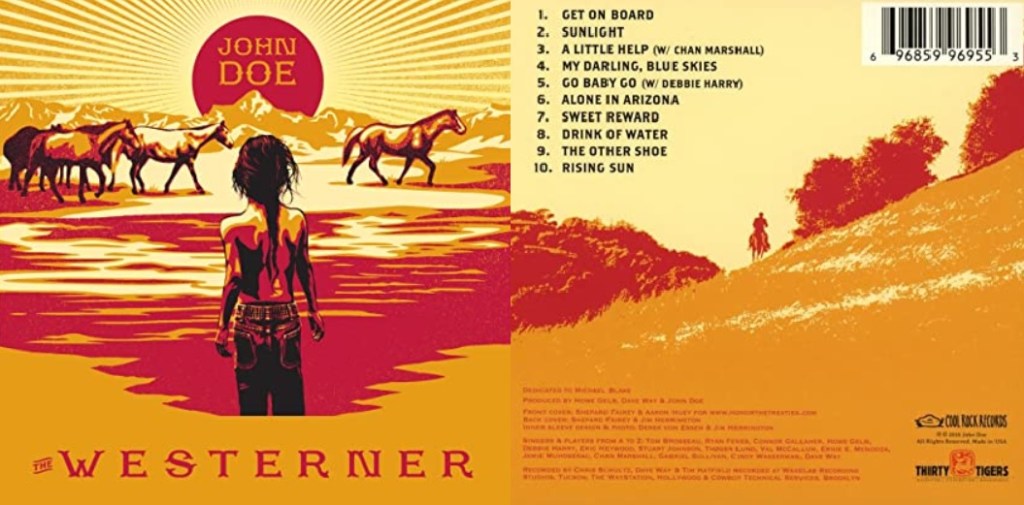
Check out John’s 2016 release on You Tube.

* Be sure check out our month-long blowout of Star Wars-influenced film reviews with the our “Exploring: After Star Wars” featurette.

** My love for Klaus Kinski Westerns is unbound, as proven with our “Drive-In Friday: Kinski Spaghetti Westerns Nite” featurette.

About the Author: You can learn more about the writings of R.D Francis on Facebook. He also writes for B&S About Movies and publish music reviews and short stories on Medium.

Pure Country (1992)

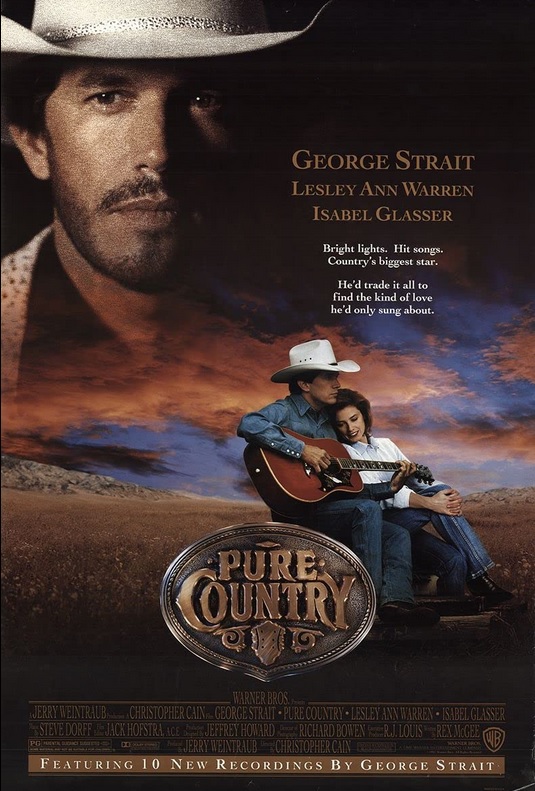
This attempt to transform country superstar George Strait into a chiseled-chin leading man is the feature film debut — and lone feature film — written by Rex McGee, through he returned with Where There’s a Will (2006), a cable movie directed by John Putch (who made his acting debut in the 1981 NBC-TV movie Angel Dusted and appeared as a grown-up Sean Brody in Jaws 3-D).

The film’s director, Christopher Cain, previous helmed 1987’s The Principal starring Jim Belushi (who, in a meta-WTF of of all time, had his character, Rick Latimer from that film, re-appear in the 1991 sci-fi flick Abraxas). Cain also gave us the Brat Pack western — and that overplayed and annoying Bon Jovi song — Young Guns (1988). He followed up Pure County with The Next Karate Kid (1994) starring Hilary Swank from the recent, controversial box office bomb The Hunt. Of course, we are all about the Big Three and cable network TV movies of the ’70s through the ’90s, so we remember Cain at B&S About Movies for Wheels of Terror, which aired on the USA Network (you know, back in the days before USA ditched original content to become an aftermarket shill for NBC-TV series).

While Pure Country barely made back its $10 million budget, the accompanying soundtrack became George Strait’s biggest, best-selling album. And on a sadder note: the film marked Rory Calhoun’s (Motel Hell) last film appearance; he died in April 1999. Calhoun is the wise father of Strait’s love interest played by Isabel Glasser. Retreating into TV work and indie films soon after, she co-starred with Robert Patrick and Rutger Hauer in the 1998 Top Gun ripoff Tactical Assault.

Strait is a character not far removed from his real self: he’s world-renowned country star Wyatt “Dusty” Chandler. However, unlike Strait, Dusty’s a trouble soul: he’s tired of the lights and smoke and the sets. And he’s none to fond of a new song called “Overnight Male” written by Buddy Jackson (Kyle Chandler), his manager Lulu’s (Lesley Ann Warren) boyfriend, being forced on him.

So, in a plot twist analogous to Neil Diamond’s 1980 remake-bomb of The Jazz Singer — Dusty cuts off his trademark beard and ponytail and splits for the open road. And does this sound a lot like when Rick Springfield made his play for the silver screen — and bombed, just like Neil Diamond before him — in 1984’s Hard to Hold?

Yep. It’s the same old he-has-everything-but-really-has-nothing story. And love is always the answer to get back on top.

Just how many of these musician-vanity projects — where the soundtrack always performs better on the Billboard charts than the film on the Variety charts — will Hollywood make before they realize their attempts to transform “then hot” musicians into A-List leading-actors (well, outside of David Bowie, Willie Nelson, and Kris Kristofferson) doesn’t work?

Billie Eilish? Hollywood is calling. And for your own sake, don’t pick up the iPhone.

While the story is a simple, hokey story, truth be told: Strait is a pretty decent actor and he would have been better served by breaking into the business with a non-musical role, you know, as with Trace Atkins, Dwight Yoakham, Tim McGraw, Randy Travis, and Tobey Keith.

Oops! I stand corrected. There are musicians that can act. Open mouth. Insert crow.

Hey, wait! Where’s John Doe?

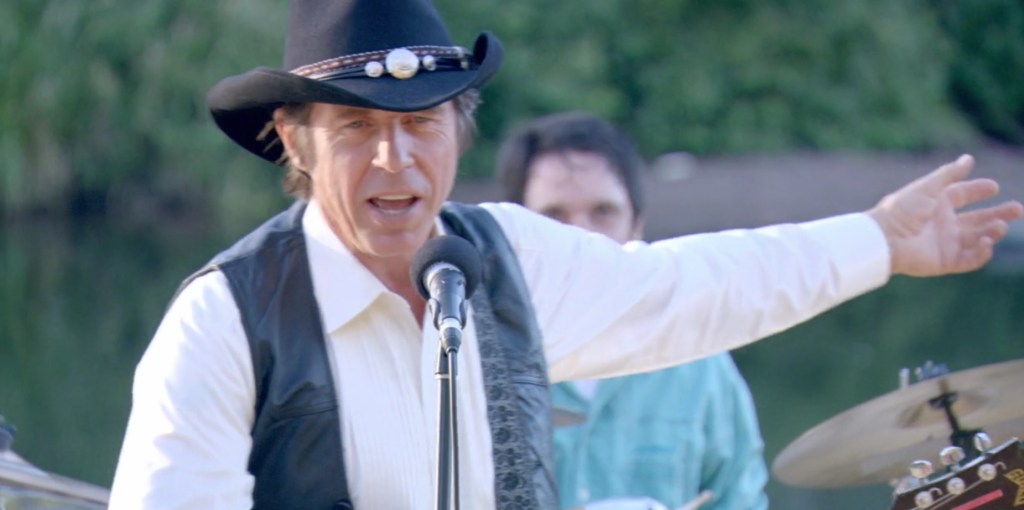
While Johnny D. didn’t make the marquee as a co-star, he — as he always does, and as he did in Great Balls of Fire (also reviewed this week) alongside Dennis Quaid — is excellent in his support role as Dusty’s longtime friend and drummer, Earl Blackstock.

And did you know that director Christopher Cain’s adopted son is Dean “Superman” Cain? And did you know Dean co-wrote — with the Roger Corman-bred George Armitage (Private Duty Nurses, Night Call Nurses, Darktown Strutters, Gas-s-s-s, and the 1979 TV movie Hot Rod) — a female-driven sequel directed by his dad in 2010, Pure Country: The Gift, that starred country star Katrina Elam?

It’s okay. No one did.

And that there was a third sequel: 2017’s Pure Country: Pure Heart?

But we did see the original, thanks to John Doe.

About the Author: You can learn more about the writings of R.D Francis on Facebook. He also writes for B&S About Movies and publishes on Medium.