CBS LATE NIGHT MOVIE: Vultures (1983)

EDITOR’S NOTE: Vultures was on the CBS Late Movie on March 19 and August 20, 1986.

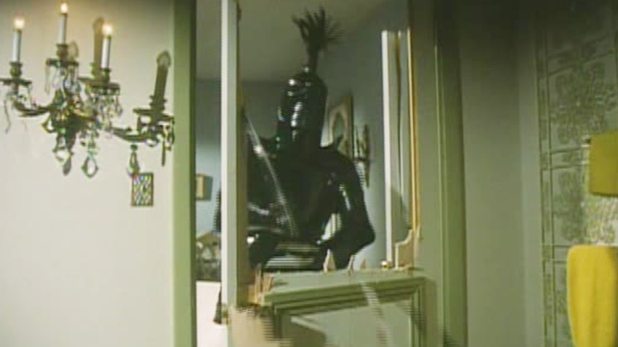
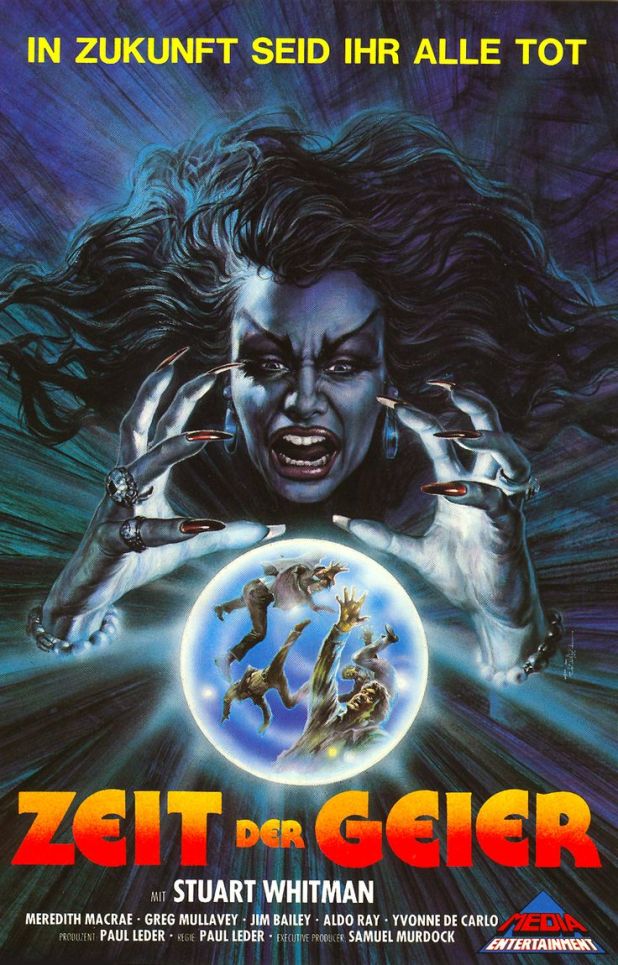
When Ramon (Jim Bailey) begins to get close to death, he summons his relatives to his bedside to discuss his will and testament. But then the killings begin, wiping out everyone in the will.

Directed and written by Paul Leder (My Friends Need KillingI Dismember MamaA*P*E*), Vultures sets itself up like any murder mystery, but how it’s made points to just how incredibly strange it is.

First off, nearly every murder is incredibly bloody, making this feel more like a slasher than a staid Agatha Christie affair. Then, it has a cast of some of my favorites, including Aldo Ray, Yvonne DeCarlo and Stuart Whitman. And is that Carmen Zapata from the Sister Act movies? Meredith MacRae from Petticoat Junction  (and Leder’s My Friends Need Killing)? Greg Mullavey from Mary Hartman, Mary Hartman? And Maria Perschy from The People Who Own the Dark, The Ghost Galleon and Blue Eyes of the Broken Doll? How did that happen?

Yet the strangest and most wonderful thing is that this has an “Introducing Jim Bailey” credit.

Bailey is more than one role in this movie, playing several male and female roles beyond just Ramon. He’s also Richard Garcia, the psychic Esperanza, Virginia Garcia, Olivia Mann and a female impersonator in this. Bailey is a versatile performer and often played Vegas, doing impressions of Garland and Streisand. According to this great interview with Daily Grindhouse, Bailey became “one of the go-to performers for male-to-female characters in Hollywood.” He’s Cleopatra, the lover of Anthony Geary’s Serenghetti in Penitentiary III and also shows up in episodes of Night Couty and Ally Mcbeal as well as in the cast of another strange movie I’m fascinated by, The Surrogate, where you can witness him do his Bette Davis act.

The black sheep of the family, Carl (Stuart Whitman), is the main suspect. There are two gory knife attacks — Aldo Ray doesn’t even make it long past the credits, which video blur out the original title, Vultures In Paradise — and a car gets blown up real good. There are twists and turns, but it makes sense that this aired on the CBS Late Movie, because it really does feel like a TV movie. And I mean that in the best of ways, but also a TV movie that has a drag performer not just as a sideshow act but as a crucial and memorable part of the cast in six different roles.

This is one odd movie and I would not have found it without my friend the CBS Late Movie. It’s the kind of movie that I needed to watch in 2023 and not back in 1986 when it aired, because it had to find me.

David DeCoteau wrote a great remembrance of Leder on one of my favorite sites, The Schlock Pit, and revealed that his movie Dreamaniac was shot in the same house as this movie, which was owned by Bill Norton (Big Bad Mama, Day of the Animals).
CBS LATE MOVIE MONTH: The Traveling Executioner (1970)

EDITOR’S NOTE: The Traveling Executioner was on the CBS Late Movie on January 9, 1974 and April 9 and August 21, 1975.

ABOUT THE AUTHOR: A.C. Nicholas, who has a sketchy background and hails from parts unknown in Western Pennsylvania, was once a drive-in theater projectionist and disk jockey, Currently, in addition to being a writer, editor, podcaster, and voice-over artist, he contributes to Drive-In Asylum. His first article, “Grindhouse Memories Across the U.S.A.,” was published in issue #23. He’s also written “I Was a Teenage Drive-in Projectionist” and “Emanuelle in Disney World and Other Weird Tales of a Trash Film Lover” for upcoming issues.

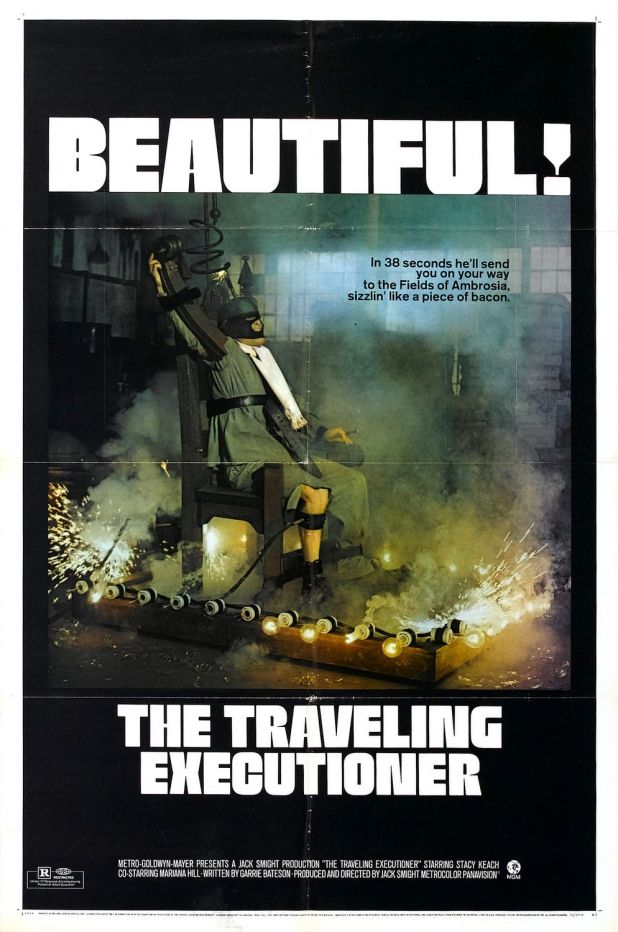
One of the classic tropes of American cinema is that of the snake-oil salesman, traveling the South at the turn of the last century in a medicine wagon and touting god-knows-what in a bottle that will cure everything from piles to anemia. The Traveling Executioner, an obscure, oddball film from 1970, subverts that trope into an unforgettable existential character study.

In 1918, Jonas Candide, an ex-carny and ex-con, played by Stacy Keach in the performance of a lifetime, travels the Deep South with his own electric chair. (Don’t question how a portable electric chair without a way to charge its generator would work; just go with it.) Acting as a private executioner, Candide sends convicts to the next life for $100 a pop. Candide is not a bloodthirsty villain but rather a charming rogue whose greatest gift is his ability to put the condemned at ease in their final moments. Before throwing the switch, he spins a story of how he was contacted through a medium by a man he executed who told of how wonderful the afterlife is—fields of Ambrosia. Hearing this story, the condemned pass on with a smile on their face, soon to go to a better life.

Candide is good at what he does, and all is well until one day he learns he’s scheduled to execute a German brother and sister convicted of murder. He falls head over heels in love with the sister played by Drive-In Asylum favorite Marianna Hill. From that moment on, Candide hatches as many schemes as he can in to save his love from his traveling chair. As you can imagine for a movie from the 70s, in E.C Comics fashion, it doesn’t end well.

The Traveling Executioner is one of the oddest, yet most unforgettable movies I’ve ever seen. Everything about it stamps it as a classy production. It was the only screenplay written by 21-year-old University of Southern California film student Garrie Bateson. And while the screenplay has a whiff of film-student earnestness and an ending that you’ll see coming early on, it nonetheless makes a serious impression. Directing with a sure hand was journeyman Jack Smight, who has Frankenstein: The True Story, The Illustrated Man and Damnation Alley among his credits. The dusty, depressing look of the film was the work of ace cinematographer, two-time Oscar nominee Philip Lathrop. Maestro Jerry Goldsmith supplied the score. Adding to the film’s cache are nice early supporting turns by M. Emmet Walsh, as a warden, and Bud Cort, as a mortician and Candide’s assistant. Things look and play like a late-period Western without the gunfights.

But the real joy here is watching the stage actor Stacy Keach giving it his all in an early film role. He’s a sympathetic protagonist even when he resorts to unsavory measures in the name of love. For me, Keach, later to make his mark on TV as the definitive Mike Hammer, has always been an underrated talent. Casting him in this role was a masterstroke.

MGM had no clue how to market The Traveling Executioner, which everybody describes as a “black comedy.” It’s not. At its heart, it’s a serious art film with some exploitation trappings. Indeed, the gauche, heavy-handed ad campaign promising unbridled fun did nothing to sell it to audiences. But then again, I can’t think of how any ad campaign could capture the film’s unique tone. Despite a few good reviews, it had a short, disastrous theatrical release in the fall of 1970. Afterward, apart from a few showings on The CBS Late Movie, it vanished and was almost impossible to see for decades. It finally became available on a DVD burn from Warner Archives in 2011, but it has yet to find its own fields of Ambrosia, a cult following. I wish Quentin Tarantino and Roger Avary would feature it on the Video Archives podcast. It’s a great film with a singularly great central performance awaiting rediscovery.

Epilogue. Unbelievably, in 1993, The Traveling Executioner was adapted into a stage musical, The Fields of Ambrosia. Despite some good reviews, the 1996 London show closed after only 23 performances. Déjà vu.

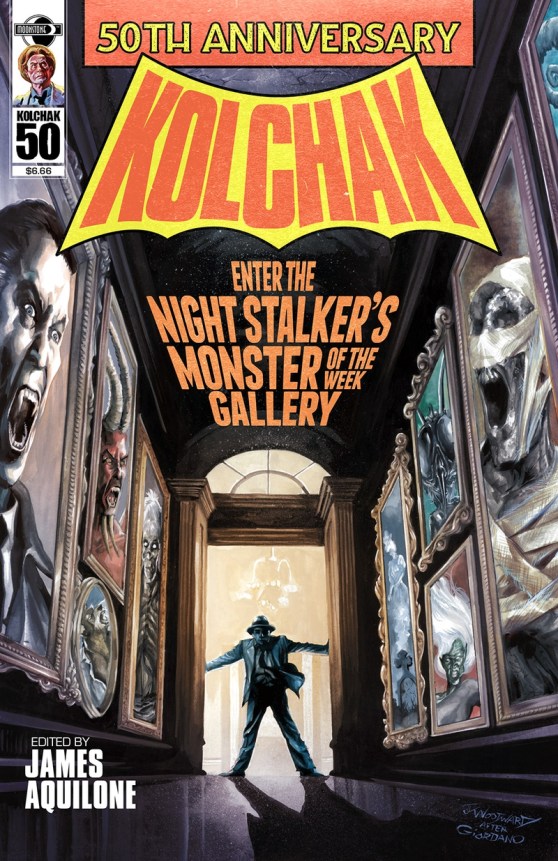
CBS LATE MOVIE MONTH: Kolchak: The Night Stalker recap

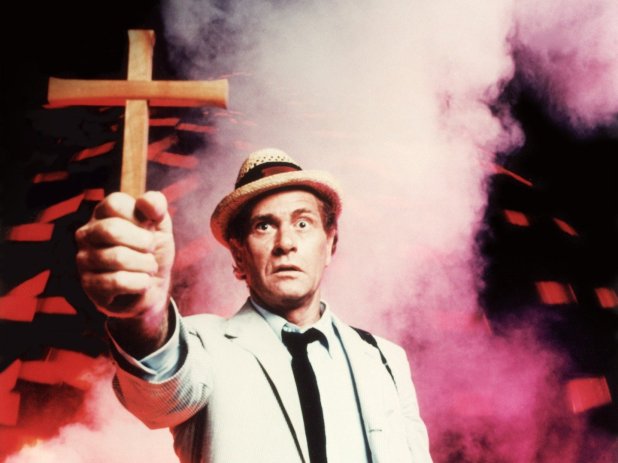
After The Night Stalker and The Night Strangler, Carl Kolchak was so popular with TV viewers that a TV series had to follow. Over the last few weeks, I’ve been going through those episodes as part of CBS Late Movie Month. I can’t even explain the sheer excitement that would happen every time Kolchak would be part of the late night series. Sure, McCloud is good, but a newspaper writer battling a lizardman in the sewers? That’s the kind of thing that made my kid brain explode in sheer mania.

Here are the episodes:

Sadly, the third TV movie about android duplicates — The Night Killers — was canceled in favor of the series.

There were also originally twenty-six episodes in the show — only twenty were filmed — and a few of the unproduced scripts include “Eve of Terror,” written by Stephen Lord (Kolchak says in this story, “What if I told you that a deranged feminist murdered a Casanova lab technician, a sex goddess, and her purveyor?”); “The Get of Belial,” written by Donn Mullally (Kolchak covers a miner’s strike in West Virginia and meets a family that has an inbred monster) and “The Executioners,” written by Max Hodge (Kolchak is demoted to the arts section and discovers that a series of murders are tied to a painting).

In 2005, a new Night Stalker series aired on ABC. Although creator Jeff Rice has the rights to any written Kolchak stories and Universal Studios owns the rights to the TV series, ABC owned the dramatic rights to the character and two TV movies. That’s how this show got made, with Carl Kolchak portrayed by Stuart Townsend. Despite a digital cameo by McGavin and the episode “Timeless” being a remake of The Night Strangler, the new show felt joyless and only lasted six episodes while ten were filmed. 

Author Mark Dawidziak was authorized by Rice to write a new novel, Grave Secrets, in which Kolchak moves to Los Angeles to work for the Hollywood Dispatch and investigates a ghost that is killing people who are destroying the cemetery where its body is interred. His book on the show, Night Stalking, details the show and as part of the Night Stalker Companion: A 30th Anniversary Tribute, the scripts for The Night Stalker, The Night Strangler and the unfilmed The Night Killers were published.

Moonstone Comics also published Moonstone published several Night Stalker books, such as The Lovecraftian HorrorThe Lovecraftian DamnationThe Lovecraftian GambitA Black and Evil Truth, The Lost World and adaptions of two of the unfilmed episodes, “The Get of Belial” and “Eve of Terror” amongst many others.

Kino Lorber released the two films on blu ray, but they are out of print. However, the complete series is available from them. It’s packed with extras, including 21 commentary tracks and 14 original TV commercials for the show.

You can also watch the episodes on NBC or their Peacock app. They’re also available on Apple TV and Amazon Prime.

While there have been rumors of a movie, nothing has ever happened. Perhaps that’s for the best. We’ll always have two TV movies and twenty episodes of a show that everyone was exhausted of while making and no one watched while it was on the air, yet I am still writing Kolchak fifty years later.

Sometimes, as a writer today, I wonder how much of my life was inspired by Carl. I think it was a whole hell of a lot, as I always saw him as a lonely man pounding on the keys trying to get the world to see a truth that they would never truly be able to view.

There’s something beautiful and sad in that.

CBS LATE MOVIE MONTH: Kolchak: The Night Stalker: The Sentry (1975)

EDITOR’S NOTE: This episode of Kolchak: The Night Stalker was on the CBS Late Movie on November 23, 1979 and February 12, 1988.

This episode of Kolchak is very special to me.

As a kid — who am I kidding, as an adult — I have a tendency to read way too long in the bathroom. Once, while my family was eating at Red Hot in my hometown of Ellwood City — I would have been three or so at this point — my dad decided to get me out of the bathroom faster by knocking on the walls of the bathroom just like the monster in this episode, which sent a young me screaming out of the toilet with my pants around my ankles in public.

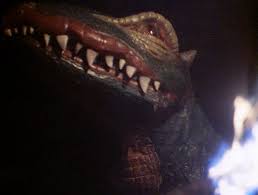
The last episode of Kolchak — star Darren McGavin called Universal and ABC and asked to be let out of his contract — this one has a lizard rampaging in the tunnels under Chicago after a researcher steals some of its eggs. So, while a monster, it’s a misunderstood lizard.

This installment also allows Carl the opportunity to flirt with an attractive female officer, Lieutenant Irene Lamont (Kathie Browne, McGavin’s real-life wife) instead of fighting with another cop. There are also roles for Lance Hoyt, Tom Bosley and Margaret Avery (you know her from her fine acting career, I know her from Terror at the Red Wolf Inn).

Directed by TV vet Seymour Robbie (who directed 17 episodes of Remington Steele, 21 of Murder, She Wrote, 12 of F Troop and was also the director of the infamous Jackie Gleason show You’re In the Picture) and written by L. Ford Neale and John Huff, I still love this episode, no matter how silly it is to see a stuntman running around with an alligator head. As a child and, yes, an adult I am quite easy to please.

CBS LATE MOVIE MONTH: The Devil’s Eight (1969)

EDITOR’S NOTE: The Devil’s Eight was on the CBS Late Movie on June 19 and June 6, 1973; January 29, 1974 and May 13, 1975.

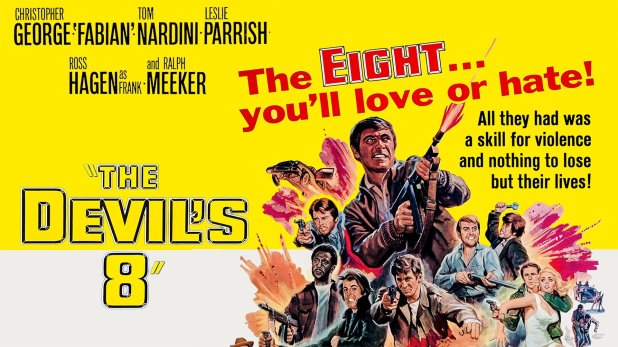
Oh American International Pictures. You knew exactly what the kids wanted. In 1969, they wanted their own version of The Dirty Dozen. Who better to give it to them than you?

Based on a story by AIP story editor Larry Gordon and the first draft was by James Gordon White. It was eventually rewritten in ten days by two of his assistants, John Milius and Willard Huyck. The future director of Conan the Barbarian quipped, “It was called The Devil’s 8 because they didn’t have enough money for a full dozen.”

White wasn’t a fan of the final film. “They took the Southern flavor out of it and I’m from the south, so I know from whereof I talk.” Take it from the writer of Bigfoot, The Mini-Skirt Mob and both movies about a head transplant, The Incredible 2-Headed Transplant and The Thing with Two Heads.

Originally known as Inferno Road, this movie has an all-star cast. And by that, I mean an all-star AIP 1969 cast.

Christopher George (Day of the AnimalsCity of the Living DeadPieces and about a hundred other movies that I love) plays federal agent Ray Faulkner, who starts the movie on a road gang before he breaks the rest of the guys out and forces them on to a helicopter at gunpoint. They are:

  • Sonny (Fabian!) is in prison for murder but he’s a great driver. Unfortunately, he has a drinking problem.
  • Frank Davis (Ross Hagen, The Sidehackers) used to drive for the mob, but then they murdered his brother.
  • Billy Joe (Tom Nardini, Cat Ballou) is a mechanic who just wants to drive.
  • Sam (Joseph Turkel, Dr. Eldon Tyrell from Blade Runner and Lloyd from The Shining) loves to get in brawls.
  • Henry (Robert DoQuia, the sergeant from the RoboCop movies) is an African-American prisoner who can really handle the wheel.
  • Chandler (Larry Bishop, son of Joey, who was in Wild In the Streets) would rather read the Bible than get involved in all this.
  • Stewart Martin (Ron Rifkin, L.A. Confidential) is a rookie fed.

After training “The Eight…you’ll either love or hate!” in high-speed driving and throwing bombs, they work their way into Burl’s (Ralph Meeker, who was actually in The Dirty Dozen, as well as Without Warning and The Alpha Incident) illegal moonshine operation. There are all manner of double crosses and not everyone makes it out alive, but Burl’s mistress Cissy (Leslie Parrish) ends up with her real man, Davis.

Let me talk about Leslie Parrish for awhile. She’s led a pretty amazing life, starting under her birth name Marjorie Hellen, which she changed in 1959. While she was a teenager at the Philadelphia Conservatory of Music, she started modeling and became a human test pattern for NBC known as Miss Color TV, as they used her skin tones to test how well they’d transmit over the airwaves.

In 1956, she started her contract with MGM and appeared in redneck classic Lil’ Abner as Daisy Mae. In fact, it was director Melvin Frank who convinced her to change her name. She was also in The Manchurian Candidate and a ton of TV shows at this time, as well as being the Associate Producer on Jonathan Livingston Seagull. Part of that job meant caring for the real seagulls and keeping them in her hotel room, as well as being the mediator between her husband, author Richard Bach, and director Hall Bartlett after they stopped talking. Despite all that, her role is only listed as researcher in the credits.

While acting paid the bills, her real job was activism. She was a member of the Jeannette Rankin Brigade, a coalition of women’s peace groups and had private audiences with politicians and led huge public protests. She has also been incredibly involved in environmental activism and even created KVST-TV, which looked pretty much like C-SPAN does today, but all the way back in 1967. Today, she continues to develop and lead the Spring Hill Wildlife Sanctuary on Orcas Island in Washington. And oh yeah — she was also in The Giant Spider Invasion. Check out her official site!

The Devil’s 8 is decent, but as always, I’m on the side of the bootleggers. Don’t make me divide my loyalty by putting Fabian on the side of Johnny Law! Come on, AIP!

CBS LATE MOVIE MONTH: The Poppy Is Also a Flower (1966)

EDITOR’S NOTE: The Poppy Is Also a Flower was on the CBS Late Movie on November 10, 1972; May 23 and December 6, 1973 and June 9, 1975.

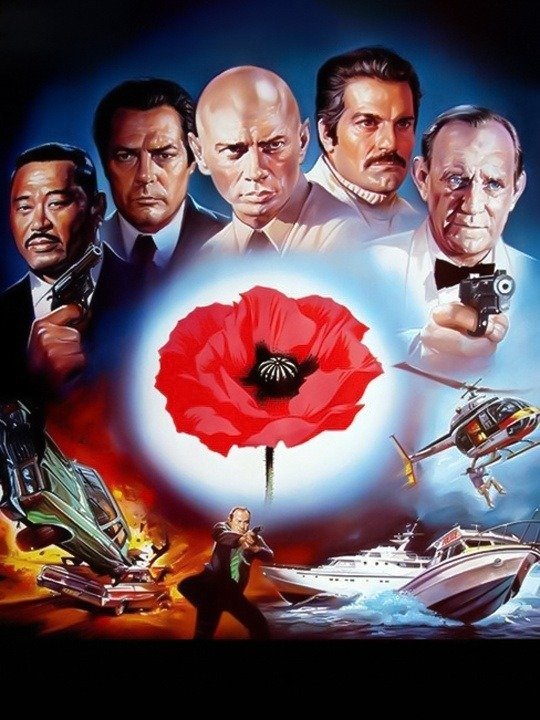
You know how I’ve discussed how Eurospy films often feel like the United Nations, what with so many countries working together to make these movies? This American/French/Austrian made-for-television spy and anti-drug film — also known as Danger Grows Wild — was made with the United Nations themselves as part of a series of television specials designed to promote the organization’s work. It was produced by Xerox.

So how does it tie-in to Bond? Well, 007 director Terence Young is at the helm — he passed up Thunderball to direct this — and it’s based on a story by Ian Fleming.

In an attempt to stop the heroin traffic at the Afghanistan–Iran border, some United Nations operatives inject a trackable radioactive compound into a seized shipment of opium and let it go go back into the wild to try and find Europe’s top heroin distributor.

German-born Sente Berger — who is also in The Man from U.N.C.L.E. film The Spy with My Face and The Ambushers — is here, as is Stephen Boyd (Ben-Hur), Yul Brynner, Angie Dickinson, Georges Geret, Hugh Griffith (another Ben-Hur alumnus), Jack Hawkins (who took as many roles as he could late in his career before his three-pack-a-day habit stole his voice), Rita Hayworth (!), E.G. Marshell, “If I Had a Hammer” singer Trini Lopez as himself, Marcello Mastroianni, Amedeo Nazzari (a huge Italian star from before World War II and well afterward), Omar Sharif, Barry Sullivan, Nadja Tiller (Death Knocks Twice), Eli Wallach (who won an Emmy for his role), Grace Kelly (this is the only movie she made after retiring from acting in 1957) and Harold “Oddjob” Sakata. Truly, this is the very definition of a star-studded affair.

All of them were paid $1 each to be in this film, with Young working for free.

One of the producers, Edgar Rosenberg, was of course the husband of Joan Rivers. This is the movie where Joan would meet Hayworth and write that she was demanding and incoherent, yet still glamorous. That said, it’s possible that Hayworth was already beginning to suffer from the effects of Alzheimer’s Disease.

You can watch this on Tubi.

CBS LATE MOVIE MONTH: Hotline (1982)

EDITOR’S NOTE: Hotline was on the CBS Late Movie on October 30, 1986 and March 10, 1987.

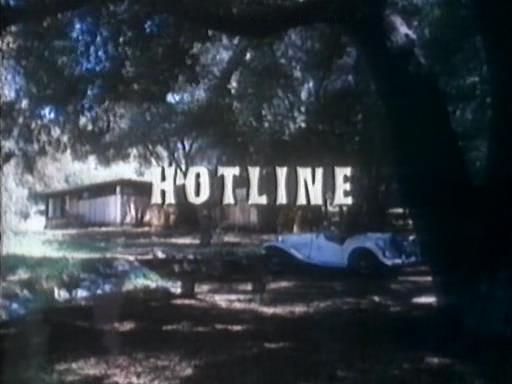
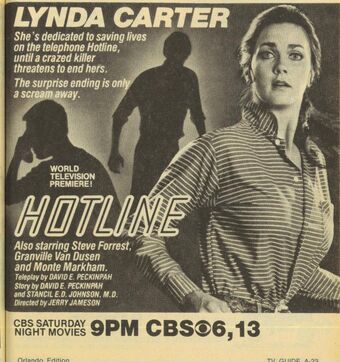
Originally airing on CBS on October 16, 1982, this made-for-TV movie was directed by Jerry Jameson, who also was the in the director’s chair for movies like The Bat PeopleAirport ’77 and the Gunsmoke and Bonanza reunion movies. Lynda Carter (TV’s Wonder Woman as well as Miss World USA 1972) plays Brianne O’Neill, an art student who is getting stalked by The Barber, a man who claims to be behind several killings in the paper.

Who is The Barber? Is it Justin Price (Granville Van Dusen, who was the voice of Race Bannon on The New Adventures of Jonny Quest)? Deranged killer Charlie Jackson (James Booth, Airport ’77)? Former actor Tom Hunter (Steve Forrest, Mommie Dearest), who has been in love with Brianne for a long time? Her boss Kyle Durham (Monte Markham, Jake Speed, We Are Still Here)? Or her co-worker Barnie (Frank Stallone!, Ground Rules)?

Look for Harry Waters, Jr. in this movie. He played Marvin Berry in Back to the Future, the guy that Marty McFly used to steal rock ‘n roll from black people. There’s a death by harpoon gun, so this movie has that going for it. Consider it an early 80’s American low budget made for TV giallo and you’ll be fine.

CBS LATE MOVIE MONTH: The Legend of Billie Jean (1985)

EDITOR’S NOTE: The Legend of Billie Jean was on the CBS Late Movie on October 7, 1988.

This movie was a big deal when I was 13 and somehow, I never saw it.

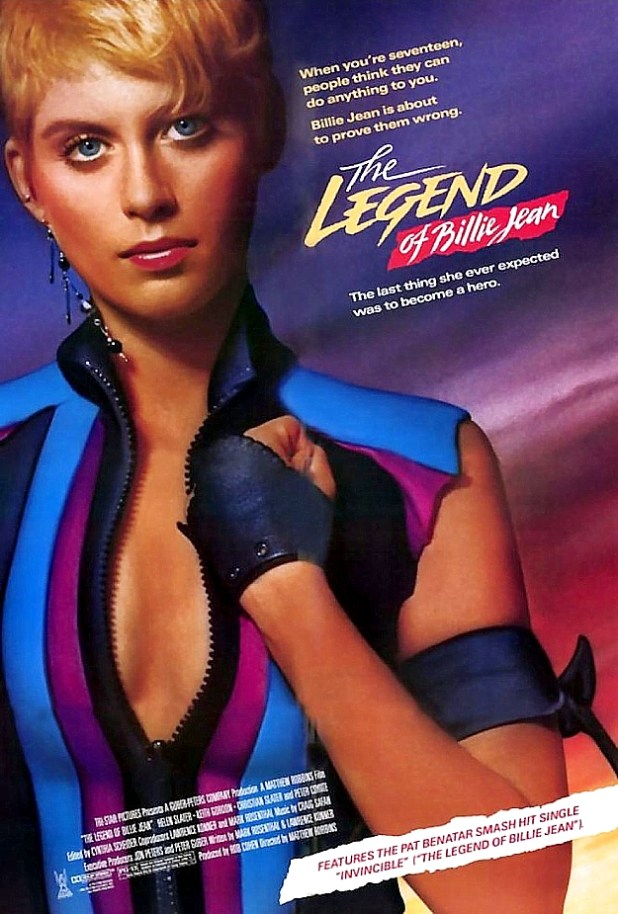
Billie Jean Davy (Helen Slater) and her brother Binx (Christian Slater, the two stars are not related) spend their days in Corpus Christi, Texas swimming in the lake and riding on Binx’s Honda Elite Scooter. As they talk about running away someday to Vermont, you may wonder if they are boyfriend and girlfriend rather than brother and sister, but this movie never goes there. I’ve just seen too many Joe D’Amato movies.

The Davy family have to deal with some bullies led by Hubie Pyatt (Barry Tubb), who steals the scooter and does damage to it. Billie Jean demands money for the repairs from Hubie’s father (Richard Bradford), who ends up trying to use the money to get sex out of her. He ends up getting shot by Binx and the two go on the run, along with their friends Ophelia (Martha Gehman) and Putter (Yeardley Smith, who refused to cut her hair for this movie and is wearing a wig; she was also twenty when this was made and is playing a fourteen-year-old. She strapped her breasts down with Ace bandages to look younger.).

While the shop owner survives, this puts Lieutenant Ringwald (Peter Coyote) on the hunt for the escaped kids while they become folk heroes. Pyatt starts selling merch with Billie Jean on it after the kids become even more famous for kidnapping Lloyd (Keith Gordon), the son of a politician named Muldaur (Dean Stockwell). Kidnapped is what they want the world to think, as she wants to use her new fame to get back the money she’s owed and be forgiven for their crimes. She also decides to shave her head, wear combat boots and be a militant heroine to young girls all over Texas, kind of like Connie Burns without a guitar.

This movie was called Fair Is Fair and man, they sure say that a lot in this. I kind of love it though and for everyone who complains about movies that have strong female heroines, well, guess what? This did it back in 1985. It also has a theme song — “Invincible” by Pat Benatar — and a great soundtrack with Billy Idol, Divinyls and Wendy O. Williams.

Director Matthew Robbins has had an amazing career. In addition to writing The Sugarland ExpressThe Bingo Long Traveling All-Stars & Motor Kings and MacArthur, he wrote and directed Corvette SummerDragonslayer and *Batteries Not Included. He was an uncredited writer on THX-1138Jaws and Close Encounters of the Third Kind, which he worked on as a second unit director. As if that wasn’t enough, he also wrote Mimic, Crimson Peak and Pinocchio for Guillermo del Toro and even wrote several Bollywood films, including 7 Khoon Maaf and Rangoon.

The script was written by Mark Rosenthal and Lawrence Conner, who also wrote Sometimes They Come BackThe Jewel of the Nile, The Beverly Hillbillies, Mighty Joe Young, Planet of the Apes, Mona Lisa Smile, Flicka, Mercury Rising and  Superman IV: The Quest for Peace together.

TUBI ORIGINAL: Five Star Murder (2023)

The Partridge Inn in Augusta, Georgia is listed as a three-star hotel online. Part of the Curio Collection by Hilton, it’s one of the only hotels in Georgia to be a member of Historic Hotels of America and is the closest golf course to the famous Augusta National Golf Course. Built in 1890 as a modest two-story private residence, it was converted to an inn in 1910. In 1978, it was saved from demolition and reopened in 1987, then was renovated again in 2014.

As for the flooded basement in this movie, that’s actually the Family Y of Greater Augusta.

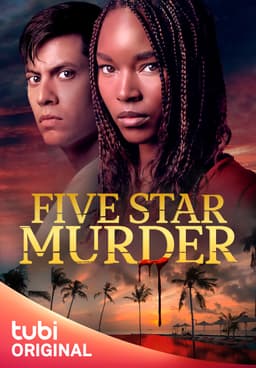
In Five Star Murder, the Patridge Inn is the five-star Libertine Grand Hotel, where we first meet some strange guests: Caroline (Damaris Lewis), who received a letter telling her who her father is and plans on flying to Spain the very next day; Harold (Ted Ferguson) and Joan Steele (Jill Jane Clements), an argumentative older couple; influencer Rose (Kimberly Blake) and her boyfriend Dylan (Darrell Snedeger), who are celebrating their one week anniversary and homeless by choice Quinn (Quinn Bozza), who just sold his shoes for some coffee.

Checking them in are the head of the hotel, Brianna (Rachel G. Whittle) and her assisted Marcos (Adam Ignacio). These guests would be bad enough if it wasn’t for the major storm coming in. As the hotel is buffeted by wind and heavy rains, everyone is evacuated, except for the above guests — who refuse to leave — and the two staff members.

And then the murders start.

The Libertine Grand Hotel was built by Louis Laurent, a genius who was inspired by “D’où venons-nous? Que sommes-nous? Où allons-nous?” (“Where Do We Come From? What Are We? Where Are We Going?”), a painting by Paul Gauguin. Filled with themes such as the “contrast between enlightenment and superstitious, irrational, even barbaric traditions” and the cycle of birth and death, as well as what Gauguin called “The Beyond” — alert Fulci — this was a controversial work that upset people because of how obscure it was.

According to Vanity Fair, “When Gauguin embarked on this, his climactic work, in 1897, he was in pathetic shape, suffering from syphilis and such a serious case of suppurating eczema that the locals took him for a leper. This once prosperous part-Peruvian Parisian had ended up a penniless outcast; worse, his eyesight was beginning to fail. After being unable to paint for six months, he vowed to commit suicide. Before doing so, however, Gauguin was determined to create one last masterwork, into which, as he said, “I wanted to put … all my energy.””

The film says that he tried to kill himself after the painting, which is true. Or was he trying to get attention? As that same article says, “After finishing Where Do We Come From?, Gauguin decided to carry out his vow to kill himself. He claimed to have climbed up into the mountains, taken a huge dose of arsenic, and lain down to die in the hope that his body would be devoured by ants. Supposedly, the arsenic didn’t work; more likely, he never took any.”

As the film starts, Laurent takes arsenic in front of that painting — claimed to be the actual painting — and dies. That’s when we discover that people come to the hotel in the hopes of solving the puzzle box that its creator has made, hiding his fortune inside the penthouse.

Everyone is connected. Rose is Laurent’s niece, who wanted to get away from his rich shadow. Dylan, Quinn, Harold and Joan are all hunters. Brianna was dating Laurent and lost her marriage as a result. Even the heroine of the film, Caroline, ends up being the man’s daughter.

Directed by Jose Montesinos (The Soulmate Search5 Headed Shark Attack) and written by Chris Retts (Wade In the Water), Five Star Murder sets up a great storytelling engine and way of getting all of these characters into one place and then killing them off, one by one. It’s pretty entertaining and not just for a Tubi original.

You can watch this on Tubi.

CBS LATE MOVIE MONTH: Kolchak: The Night Stalker: The Knightly Murders (1975)

EDITOR’S NOTE: This episode of Kolchak: The Night Stalker was on the CBS Late Movie on November 16, 1979; August 28, 1981 and December 18, 1987.

As in so many episodes of Kolchak, there are murders throughout Chicago and they have a supernatural feeling about them, as all of the murders were committed with medieval weapons. The big difference is that Captain Rausch (John Dehner) is the first cop who seems like he actually wants to deal with Kolchak.

It also has Minerva Musso (Lieux Dressler), a decorator who has David Bowie lined up as her next client. For now, she’s renovating a home into a disco club and that’s why the knight has come back from the grave, enraged that his ancestral home is being used in such a way and destroying anyone who gets in his way.

Director Vincent McEveety was a TV veteran, directing eight episodes of Star Trek, 11 of Diagnosis Murder, 28 installments of Murder, She Wrote, 18 visits to In the Heat of the Night and movies like Herbie Goes BananasThe Watcher In the WoodsThe Apple Dumpling Gang Rides AgainHerbie Goes to Monte CarloGus, The Strongest Man In the World, the original Wonder Woman TV movie, Superdad and The Million Dollar Duck. This episode was written by David Chase, his eighth script for the series, and Michael Kozoll, who went on to write First Blood and one of my favorite TV movies, Vampire.