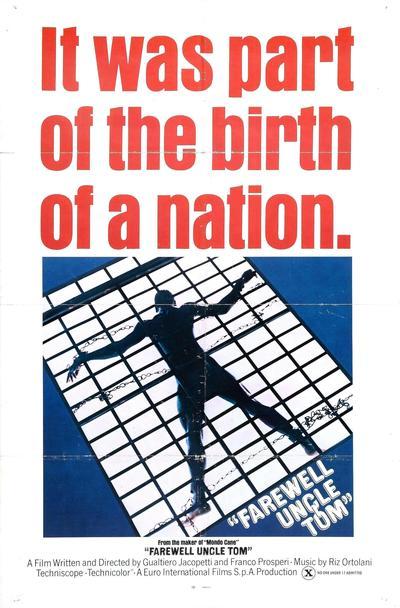
CANNON MONTH 2: Goodbye Uncle Tom (1971)

EDITOR’S NOTE: This was first on the site on June 2, 2020.

Five years after Africa Blood and Guts, Gualtiero Jacopetti and Franco Prosperi returned with this movie, which is pretty much one of the roughest films I’ve ever made it through.

This was shot primarily in Haiti, where the directors were the guests of Haitian dictator Papa Doc Duvalier, who gave them diplomatic cars, clearance to film anywhere on the island and as many extras as they required to be used as slaves being treated exactly as slaves were. They were also invited to a nightly dinner with Duvalier himself.

If your mind isn’t already blown, stick around.

Goodbye Uncle Tom is based on true events in which the filmmakers explore America in slavery times, using published documents and materials from the public record to make what they consider a documentary, even claiming to go back in time to achieve this level of realism.

This movie was made in opposition to the claims that Africa Blood and Guts was racist. It didn’t work, as Roger Ebert would say, “They have finally done it: Made the most disgusting, contemptuous insult to decency ever to masquerade as a documentary.” He also stated that “This movie itself humiliates its actors in the way the slaves were humiliated 200 years ago.”

The movie was originally released in Italy in a 119-minute version and was immediately withdrawn. I’ve read that the directors were sued for plagiarism by writer Joseph Chamberlain Furnas. It was then re-released with 17 more minutes of footage.

The director’s cut shows a comparison between the horrors of slavery and the rise of the Black Power Movement, ending with an unidentified black man’s fantasy of living out William Styron’s The Confessions of Nat Turner. In that book, Turned is divinely inspired and given a mission from God to lead a slave uprising and destroy the white race.

This ending upset American distributors so much that they forced Jacopetti and Prosperi to cut more than thirteen minutes of racial politics that would upset their audiences. Pauline Kael still said that the movie was “the most specific and rabid incitement to race war,” a view shared with former Ku Klux Klan leader David Duke, who said that Goodbye Uncle Tom was a Jewish conspiracy to incite blacks on white violence.

This movie is not for everyone. But I feel that it needs to be seen. I rarely get political on this site, but in truth, I feel that we as a country have not done enough to understand the roots of the black experience. While an Italian exploitation film isn’t the best way to learn more, it’s a start.

It’s no accident that Cannibal Holocaust would eventually use the music of Riz Ortolani to juxtapose the horrific images on screen with the beauty of his compositions. The composer had been working with the duo since Mondo Cane, where his song “More” nearly won an Oscar.

But make no mistake that this movie, while intending to be educational and anti-racist, still employs the tools of the mondo and exploitation. How else do you describe the conceit that these filmmakers have gone back in time, taking a helicopter with them that they use to fly away from the terrors of the plantation at the end?

In 2010, Dr. David Pilgrim, the curator of the Jim Crow Museum of Racist Memorabilia, said that when he showed this film to a class, it led to some major traumas. “On the day that we watched Goodbye Uncle Tom three students had unexcused absences, several cried while watching, one almost vomited; most sat, sad and disgusted. I taught for another fifteen years but I never showed that movie again.”

He went on to say that the film “is a more truthful portrayal of the brutality and obscenity of slave life than was Roots; however, I have some major problems with the film. I find it ironic that a movie that explored the exploitation and degradation of Black people was filmed in a way that exploited and degraded Black people. In some ways Goodbye Uncle Tom was just a XXX movie set against the backdrop of slavery; the “peculiar institution” served as an excuse to show sexual and violent gore. Jacopetti and Prosperi told a great many painful truths about slavery but they debased hundreds of Blacks to make the film.”

“I said all of that to say this: Jacopetti and Prosperi were not the messengers that I would have selected, and their implied assumptions about Blacks are troubling, but they made a movie that accurately portrayed the horrors of slavery. Of course, it is the case that a realistic depiction of the savagery of slavery would be difficult to watch no matter who made it. This is why when you finish watching Roots you may feel that a family has overcome great oppression and a nation has become more democratic; whereas when you finish watching Goodbye Uncle Tom you just feel sick to your stomach.”

That says a lot about this movie in a better way than I can, but I’m still going to try to sum it up: this is a well-made movie that may have been made with the best of intentions, but was made by two people who only had the experience to make exactly what they made. It is a movie made about slavery that used slave labor. It is a movie that offended both liberals and conservatives, those that believed in tolerance and those that were racist, those that were black and people who were white. This is a message movie that had its message taken away by American producers, leaving two hours of shock with none of the moral it so desperately needed.

If this movie upsets you, perhaps you needed to be upset. You should be less upset about a movie made nearly fifty years ago and more upset about our nation’s history of racism and intolerance. And you should definitely be upset about the lack of civil rights in our country today. I’m writing this after a day of nationwide protest, with police cars ablaze and crowds of protesters and the press teargassed.
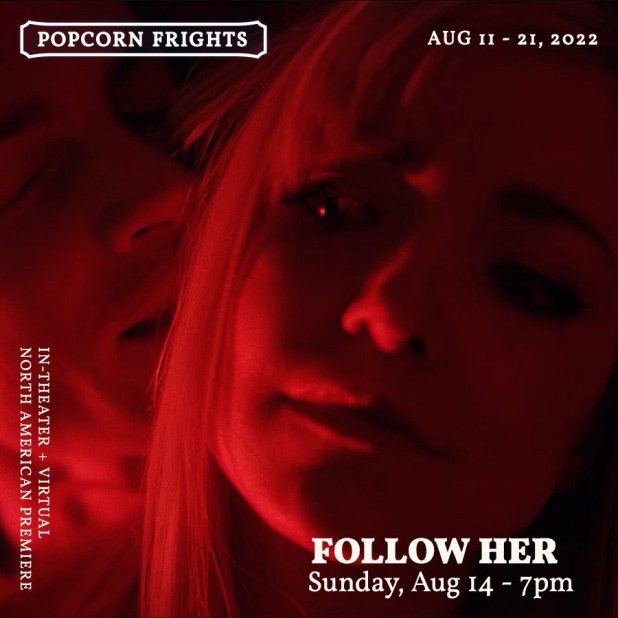
POPCORN FRIGHTS: Follow Her (2022)

Jess Peters (Dani Barker, who also wrote the film) is a struggling actress and livestreaing influencer who has been getting somewhat famous answering job listings from creepy men and then sneak filming and either revealing their behavior or kink shaming them.

Now, she’s found a job that asks her to go to a remote cabin and co-write a script with Tom Brady (Luke Cook) — not the athelete — and playact as the two main characters in his psychosexual murder mystery. She finds herself attracted to him but plans on using this as content for her streaming channel. But what if she’s someone else’s content?

Originally known as Classified Killer, this is the full-length debut of director Sylvia Caminer. I really don’t want to get much deeper into the twists and turns of the movie, except to say that the first one actually got me. This film gets more intense as it goes on and it totally took me for a ride. It works hard to get you to like Jess, who has a pretty unlikeable online character, and makes you wonder who is behind the people that you live vicariously through social media.

Follow Her debuts on August 14 at Popcorn Frights and will be available to watch virtually as part of the festival.

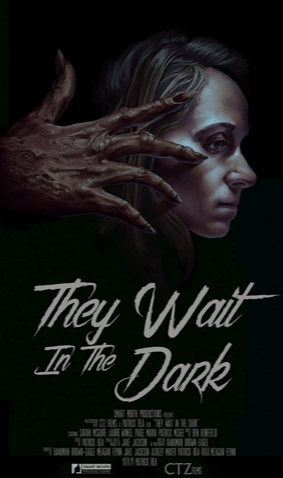
POPCORN FRIGHTS: They Wait In the Dark (2022)

Amy (Sarah McGuire, The Stylist) is a young woman on the run with her young son Adrian, trying to stay one step ahead of her abusive ex-girlfriend Judith (Laurie Catherine Winkel). The chase takes them from motel to motel, seeking out people to help them get further away, even sleeping in gas station bathrooms to try to stay as far away as they can.

Yet when they start hiding in a barn in Kansas, some demonic force from Amy’s past begins to take over Adrian, all when Amy’s past — in the form of Judith — gets closer.

From the very real terror of abusive relationships to the supernatural world of possession, They Wait In the Dark is an intense heartpounding thrill ride of a film

Director Patrick Rea has plenty of credits on his directing resume — I Am List is probably the best-known — and has used that experience to put together a unique and tense film.

They Wait In the Dark is playing at Popcorn Frights and will be available to watch virtually as part of the festival.

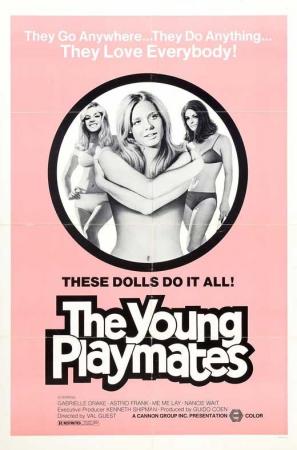
CANNON MONTH 2: The Young Playmates (1972)

Also known as Au Pair Girls, this was filmed on the estate of George Harrison and was based on a script by producer David Grant. The original story was much more sexually explicit than what the final film ended up being thanks to director Val Guest, who disliked the pornographic ideas that Grant had.

Guest also directed The Quatermass XperimentQuatermass 2The Camp On Blood Island and The Day the Earth Caught Fire before making Confessions of a Window Cleaner, Toomorrow and When Dinosaurs Ruled the Earth.

There are four au pair girls:

The Danish Randi (Gabrielle Drake, Lt. Ellis on Gary Anderson’s UFO) works for a mean businessman and when his son picks her up at the airport, she ends up sleeping with the young man before they even get up to his boss’ office.

Swedish Anita (Astrid Frank) teases Mr. Howard, the older man she’s working for, yet doesn’t realize that she’s doing it. Then she ends up getting picked up by a sheik (Ferdy Mayne) who wants to take her back to his home.

Chinese Nan (Me Me Lai, not having to deal with cannibals this time) works in a large mansion where she falls for a concert pianist and German Christa (Nancie Wait) loses her heart and virginity to a rock star.

We follow each story throughout the movie, going from girl to girl as their dramas unfold. Some of the stories are ridiculous, some are sad and all try to be sexy. It doesn’t always succeed, but it is a travelogue film too if you enjoy that.

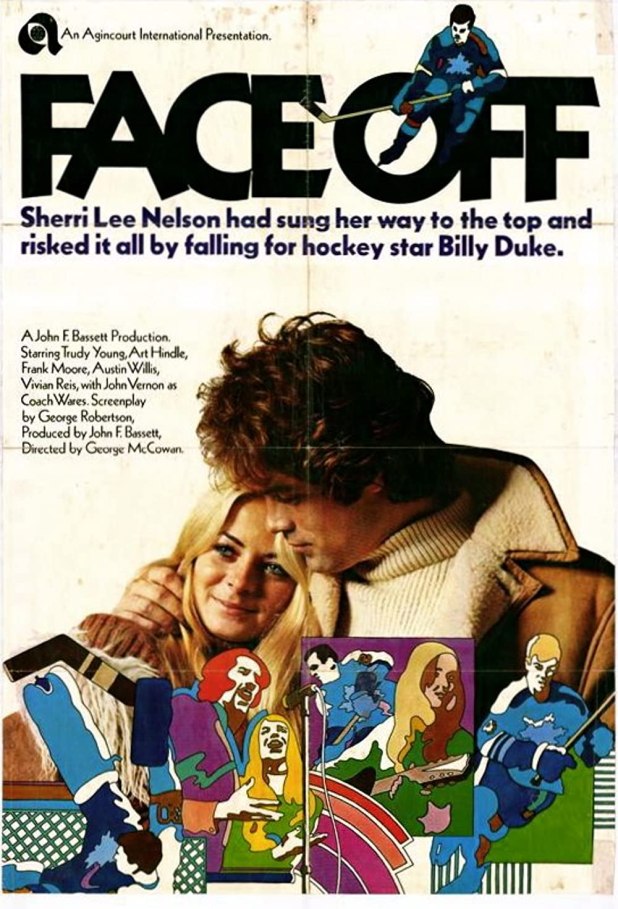
CANNON MONTH 2: Face-Off (1971)

Also titled Winter Comes Early — the name of the band in the movie — this George McCowan (FrogsThe Shape of Things to Come)-written and George Robertson-written film — based on writing by Neil Young’s sportswriter dad Scott — has Art Hindle as Billy Duke, a hockey player who becomes an overnight sensation playing with the Toronto Maple Leafs.

He’s also dating a singer named Sherry Nelson (Trudy Young) who hates all the violence of hockey. That won’t do for his coach Fred Wares (John Vernon), who wants to break up the young couple so Billy can focus on playing hockey. As for Sherry, her former love and bandmate Barney (Frank Moore) is trying to win her back but drugs seem to be really winning her heart.

This is a great opportunity to see 70s NHL hockey with players like Bobby Orr, Stan Mikita, Bobby Hull, Derek Sanderson, George “Chief” Armstrong, Darryl Sittler, Ron Ellis, Rick Ley, Paul Henderson, Bobby Baun and more showing up on the ice.

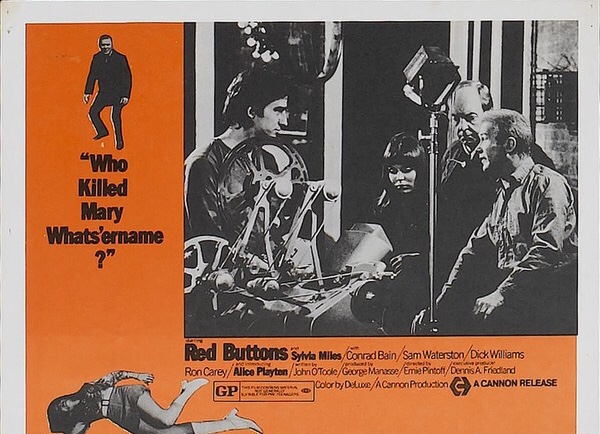
CANNON MONTH 2: Who Killed Mary What’s ‘Er Name? (1971)

Ah man, another impossible to find early Cannon movie.

Also known as Death of a Hooker, this is the tale of diabetic ex-boxer Mickey Isador (Red Buttons, not playing a comedy here) who feels that the NYPD didn’t do enough to investigate the murder of his sex worker neighbor Mary. To solve the case, he teams up with her friend Christine (Sylvia Miles, Madame Zena from The Funhouse), his daughter Della (Alice Playten, under all that makeup, she played Blix from Legend), the drunken Val (Conrad Bain) and would-be director Alex (Sam Waterston).

This movie feels like it lives in the same sleazy neighborhood as any other grindhouse New York movie while never dwelling in that gutter, such as when Mickey turns down a freebie when he saves Christine from being assaulted.

Director Ernest Pintoff also made Lunch Wagon and Jaguar Lives! As for the cast, it’s filled with notable minor pop culture stars, like Earl Hindman (Wilson on Home Improvement), Ron Carey (Carl Levitt on Barney Miller), Gilbert Lewis (The King of Cartoons) and David Doyle (Bosley on Charlie’s Angels).

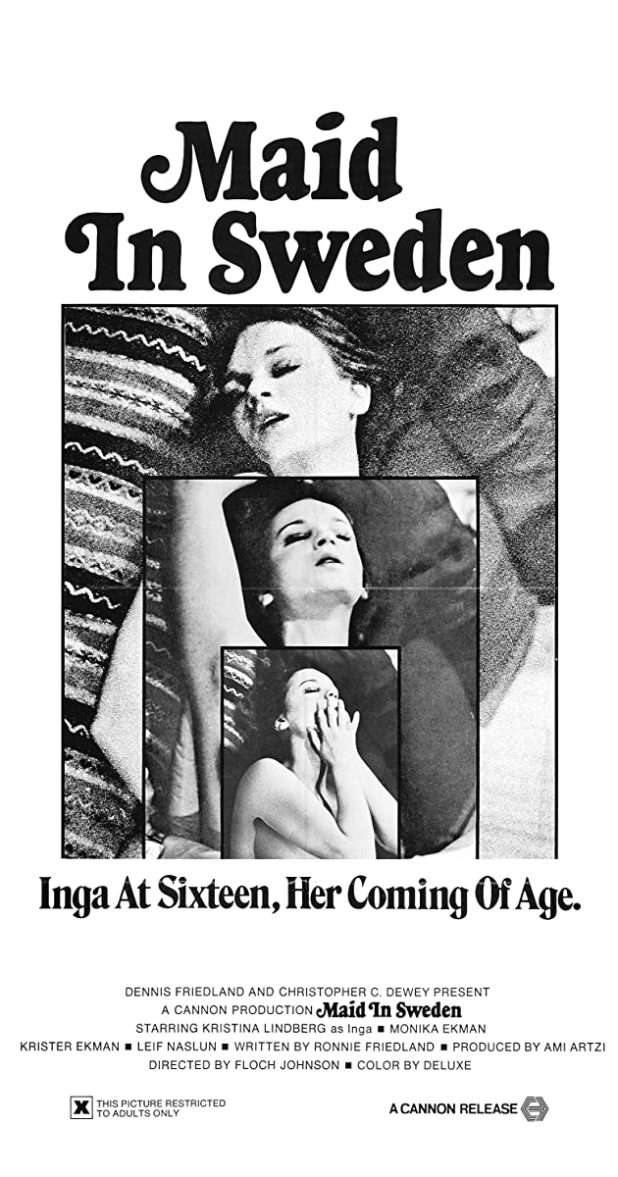
CANNON MONTH 2: Maid in Sweden (1971)

Dan Wolman also made Baby Love and Nana for Cannon. Here, the Israeli filmmaker is in Sweden, making a movie about a young girl named Inga who leaves her small town for the big lights and big city of Stockholm. There, she’s shocked to find her sister Greta (Monica Ekman) is living in sin with her boyfriend Casten (Krister Ekman, Monica’s real-life husband). Before you can say Swedish adult film imported by Cannon, Casten is making love to both sisters, putting a wedge between them. Then, Inga leaves for home.

This movie has just as much sex as travelogue footage, padding it — barely — to eighty minutes.

Yet it has one thing that makes it worth watching.

Inga is played by Thriller star Christina Lindberg.

Yes, the one-eyed demoness of revenge.

I’d like to not have this article descend into me being a Tex Avery wolf over Lindberg, but that’s incredibly difficult. If you ever wondered, was the world created by an accidental combination of chemicals and the Big Bang or was there a Divine Designer behind it all, I point you to Christina Lindberg and ask you to make up your own mind.

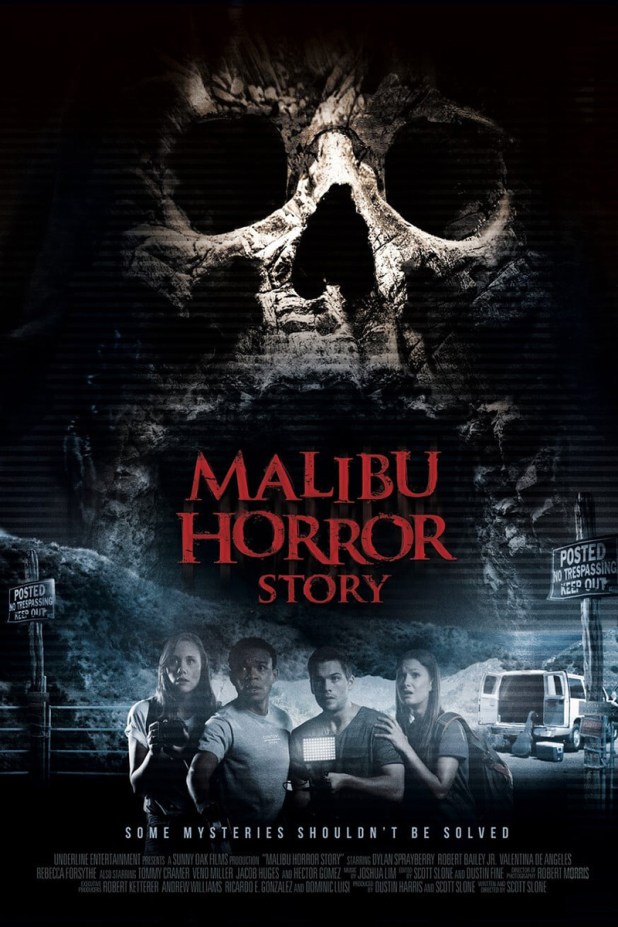
POPCORN FRIGHTS: Malibu Horror Story (2021)

In this film from director and writer Scott Slone, a paranormal team has followed the trail of four dead young men who followed a night of partying and taking way too many mushrooms by going into a sacred cave in Malibu — filled with Native American legend — and not coming out alive.

Malibu Horror Story begins as a true crime show, giving the backstory in an intriguing way before going to behind the camera found footage as the team gets to the cave. One of the dead teens came from a family whose land took over from the Native Americans who had lived there for centuries, leading to a shaman seeing to avenge the genocide of his people by conjuring a Skinwalker that is ready to possess and murder anyone who sets foot in the cave.

A movie a decade in the filming, I really liked how this movie uses shifts in media to move the story along and isn’t content to remain all found footage. While I usually dislike this genre of horror, this concept works well for me. While the movie doesn’t break any new ground, it’s well told and if you love shaky cam scares, you’ll probably love it.

Malibu Horror Story is playing at the Popcorn Frights festival and is available to watch digitally during the festival. You can learn more about this film on its official web page.

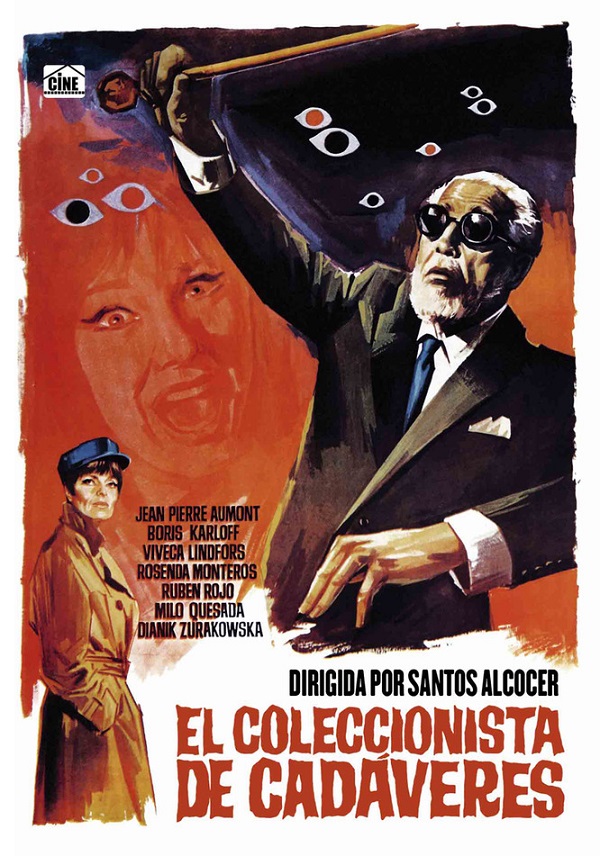
CANNON MONTH 2: Cauldron of Blood (1970)

Originally filmed — in Spain — as El Coleccionista de cadáveres (The Corpse Collector), this was directed by Santos Alcocer, who some credit as Edward Mann. They’re definitely two different people — Alcocer also made Only a Coffin and wrote several other movies while Mann  directed Hallucination Generation. He also wrote Island of Terror, The Freakmaker and Seizure, while directing Hot Pants HolidayWho Says I Can’t Ride a Rainbow! and Hooch. He also contributed the song “There’s a Certain Kind of Woman” to this movie, co-founded New York City’s Circle in the Square, was a syndicated cartoonist on Andy Gump, Dixie Dugan and Joe Palooka before doing his own strip Blade Winters and was a creative force who worked to make Woodstock, NY an artier place to live. He also co-wrote this movie along with John Melson and José Luis Bayonas.

Franz Badulescu (Boris Karloff) has been using skeletons in his sculptures for years; it’s only recently that the bones have come from the victims of his homocidal wife Tania (Viveca Lindfors). She’s already hobbled Franz with a car wreck; now it seems that she wants to take him off the table.

Journalist Claude Marchand (Jean-Pierre Aumont) is in town to interview Franz and fall in love with Valerie (Rosenda Monteros) just in time for Tania and her lover Shanghai (Milo Quesada) to select her as their next victim.

Cannon released this on a double bill with Crucible of Horror which seems like a fine pair. Thanks to DVD Drive-In, I learned that Karloff replaced Claude Rains in this film and had been in Spain to shoot an episode of I-Spy — “Mainly on the Plains” — that also has Paul Naschy in it.

Fitting in with the art as murder genre — House of WaxA Bucket of BloodBlood BathColor Me Blood Red — this has a great ending centered around a vat of acid and an awesome psychedelic freakout opening credits sequence. This isn’t a well-considered movie yet I found myself really enjoying it, particularly the dream sequences that Lindfors endures of her being beaten and dressing as a German soldier before waking up to take out her worries on the staff.

If the music seems like you’ve heard it before, that’s because Filmation used it for their Shazam! and Star Trek series.

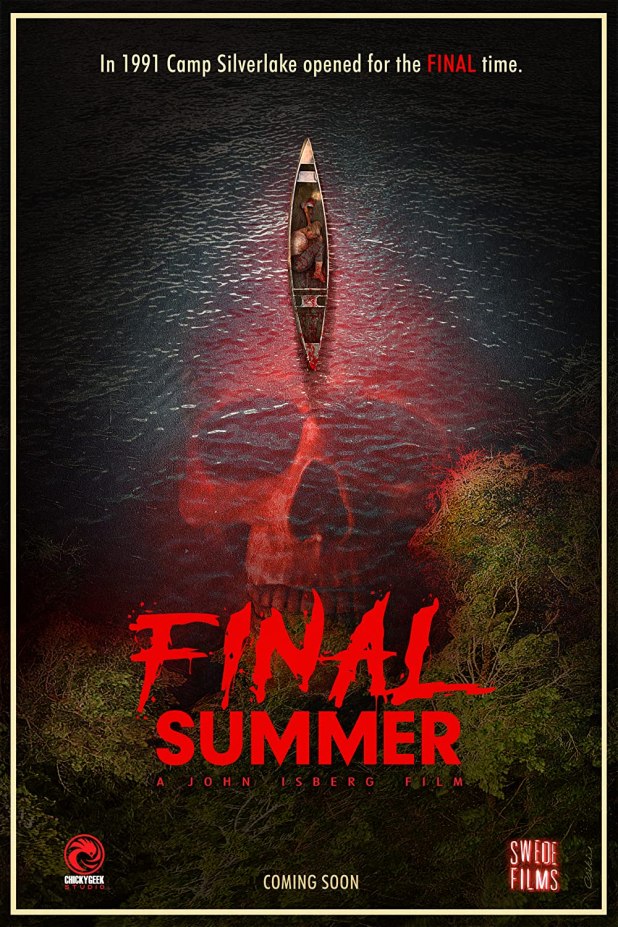
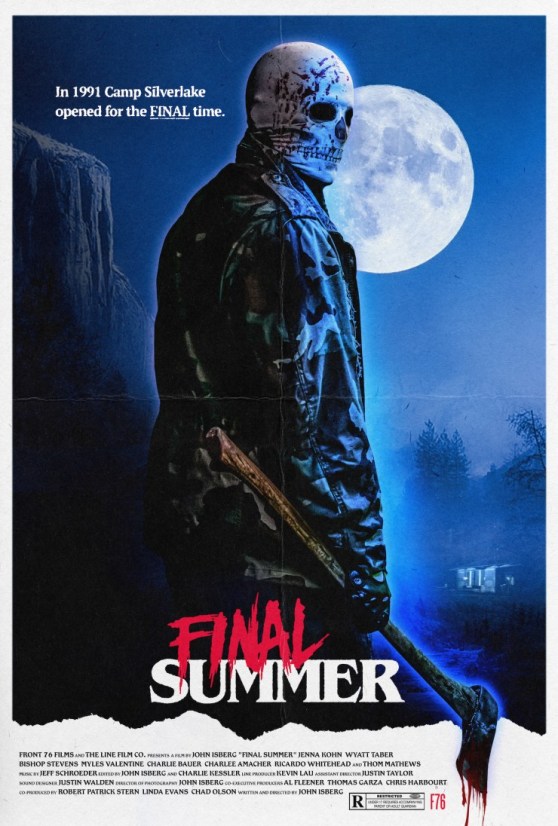
POPCORN FRIGHTS: Final Summer (2022)

Late summer 1991 finds the final day of summer camp at Camp Silverlake and an opportunity for the urban legend of the camp to come to life and take revenge on the counselors of the camp. Sure, we’ve seen it before, but what as time, distance and a lawsuit that keeps Friday the 13th movies from being made taught us?

With star turns from Thom Matthews (Friday the 13th Part VI: Jason Lives) and pro wrestler Bishop Stevens, director John Isberg told Phasr that his influences on the film were Black ChristmasHalloween, Deep RedNightmare on Elm StreetIt FollowsDon’t Breathe, Final Exam, Blood Rage, Sleepaway Camp, The Burning, Pieces, Final Girls and Friday the 13th: The Final Chapter. Parts of the movie gave me the feeling of Torso and A Bay of Blood visually, but they may be filtered through the lens of Friday the 13th Part 2.

I don’t know if any modern slasher will ever make me feel like one from 1981, but this one certainly tries. It doesn’t all come together in the end, but it’s a fine modern take on the form and one obviously made with love for the genre.

Final Summer is playing at the Popcorn Frights festival and is available to watch digitally during the festival. You can learn more about this film on its official Facebook page.