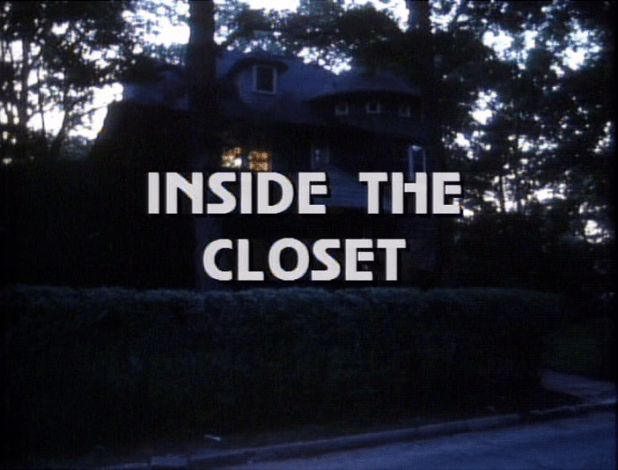
Tales from the Darkside episode 7: “Inside the Closet”

“Inside the Closet” is one of the more famous episodes of Tales from the Darkside as it’s the first thing that was directed by Tom Savini. While writer Michael McDowell died at the too-young age of 49, he left behind scripts to films like BeetlejuiceThe Nightmare Before Christmas and Thinner.

It’s a very simple story: Gail (Roberta Weiss) needs a room so she can keep studying in college and ends up finding one from Dr. Fenner (Fritz Weaver), a professor whose daughter is away at college and wife has just died. Or so he says…

In 22-minutes, with two actors and sets, as well as little to no budget, Savini transforms the basic into one of the most frightening — and sweet, oddly — tales in this series. I’ve seen Lizzie up close and in person and it’s just as eerie in real life.

I’d rather not spoil too much, other than to say that Gail is not alone in the house and all of her fears are very, very real.

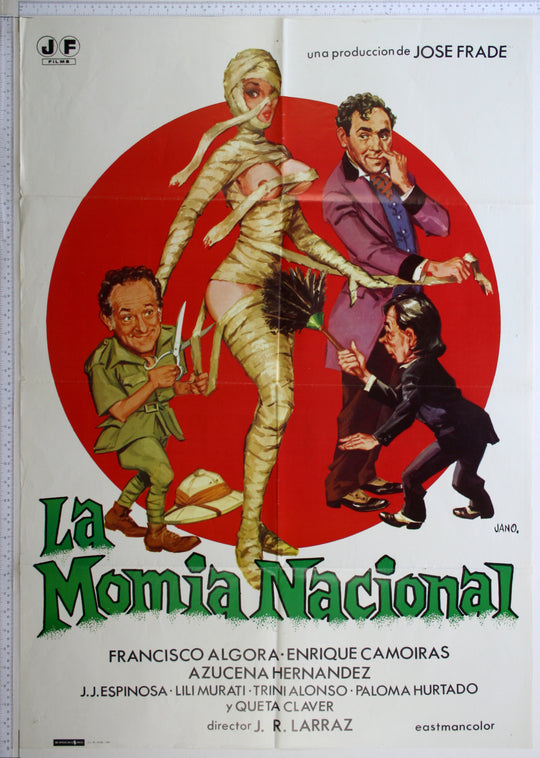
La momia nacional (1981)

I saw an article on Film Butcher that said that The National Mummy was part of the trend of destape (uncover) films as Franco and the Catholic Church’s power over the cultural morals of Spain declined. That’s funny, as the poster they shared has the mummy being unwrapped.

Released the same year as the zombie movie in mummy bandages Dawn of the Mummy, this José Ramón Larraz-directed film is a sexy comedy. Unlike so many movies in his career, Larraz worked from a script by someone else, as this was written by Juan José Alonso Millán (he also wrote Marta, one of my favorite movies).

Saturnino (Francisco Algora) is a young and wealthy archaeologist. While relaxing in his mansion, he receives a visit from his teacher — and hombre lobo por la noche — Don Felipe (Quique Camoiras, a prop comedian who often used larger objects to make his diminutive size even smaller), who brings along his daughter Ana Mari (Azucena Hernández, who was also in El retorno del Hombre Lobo in 1981) and a mummy that he has found in the Upper Nile.

Much like every mummy movie ever, no one pays attention to the curse. In this case, her bandages are to remain on, but when they loosen up, she comes to life and begins killing every man she can through violent sex.

As if having a werewolf and a mummy in the film was not enough, there’s also a very Nosferantu-like vampire named Dr. Vilaseca (Carlos Lucena) who has an entire army of ladies of the evening who only come out at night. And oh yes — there’s also an axe murderer loose in the house.

This is a goofball film, the kind of movie where a picnic descends into hijinks when a maid gets her arm cut off and numerous people try and help her while the protagonist tries to feel up the professor’s daughter after she faints. Where Cupid can descend from a brothel ceiling and attempt to take charge of lovemaking. And where the touch of a female vampire hooker can turn a man into a beast. It’s dumb but knows how to be fun.

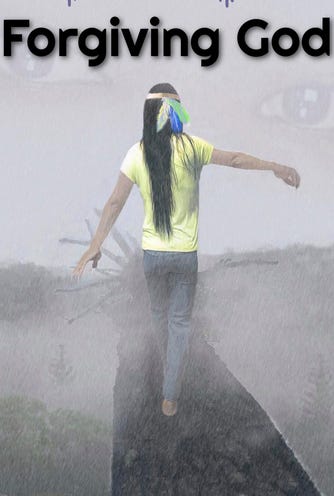
Forgiving God (2022)

Aaron Dunbar, the co-director (with Jason Campbell) and writer of this film asked me to check this out but said, “It’s a faith-based film,” as if that would make me immediately look at it in a different light. If anything, it made me want to watch it more, as his A Wish for Giants somehow combined Christian faith and cryptozoology into one narrative and I was there for all of that.

Forgiving God grabbed me from the first moment, as two teens play with a spirit board and conjure up someone trapped in hell, a moment so upsetting that it causes Jon Moore (Matthew Utley) to slash his wrists and nearly die.

Is this where I confess and say that I have an entire Ouija-film-related Letterboxd list and page of this site?

Jon’s had a rough life. He’d begged his father to stop at a tourist stop when he was just nine years old and while in the bathroom, a gunman killed his entire family. Raised in an abusive foster system, he has no need for the church that his new foster parents want him to attend. He also does repeated hair flips when he’s angry, like all nascent goths should.

Yet Jon finds a friend in the woods — a Native American girl named Isaka (Alexandria Sertik, who was in A Wish for Giants) — who protects him not just from a bear — literally one of my favorite scenes in any movie in 2022 — but teaches him that faith extends beyond the church pew — Dean Cain plays the pastor — and can be part of your real life and authentic self. That said — she has a tragedy of her own to share with him before the movie ends.

There’s also a moment where a rock concert and a song that literally speaks about forgiving God inspires Jon to be saved. Isaka’s words are something he will remember long after he grows old: “Everything happens for a reason, even those things which are detestable. They shape us into who we’re meant to be.”

Made in Armstrong and Indiana Counties in PA — Pennsylvania filmmakers can encompass Romero’s zombies and a Suburban Sasquatch while Shane Black, Herschell Gordon Lewis, Rusty Cundieff and Rowdy Herrington are from Pittsburgh, Steven E. de Souza and M. Night Shyamalan are from Philly, the Farrelly brothers are from Phoenixville, Joseph L. Mankiewicz was from Wilkes-Barre — this is a low budget but high concept film that doesn’t shy at all away from its message. It never feels like it’s pushing you or screaming in your face about God, which makes it that much more effective.

Lord knows I struggle with whatever reality is, but that doesn’t mean that I should look down on this movie for being faith-based. Instead, I really enjoyed its earnestness and found that it’s a fine follow-up to A Wish for Giants.

To learn more, visit the official Facebook page for Forgiving God.

TUBI ORIGINAL: War of the Worlds: Annihilation (2021)

Directed by Maximilian Elfeldt (Avengers Grimm: Time Wars) and written by Conor Dowling, this is a movie by The Asylum and if you know what that means, well you know what that means. Now, The Asylum may have already made War of the Worlds and War of the Worlds 2: The Next Wave, but this is not a sequel to those mockbusters.

General Skuller (William Baldwin) is in charge as meteors land on Earth, unleashing a toxic cloud that wipes out nearly every soldier in its path. One of his soldiers, Ashlaya Wellish (Arie Thompson) goes AWOL to rescue her son Lucas (Kennedy Porter) after her husband Jutta (Michael Marcel) is killed. She rescues Lucas and meets up with a doomsday prepper named Tiago (Noel G) and a tense alliance is formed.

There’s also a doctor named Patlin (Rashod Freelove) who saves one of the enemy soldiers who ends up being a female human named Gwen (Emree Franklin). This goes over with the other humans — who have just watched giant walkers destroy so much of their planet — about as well as you think.

Most of this movie feels like it was shot in a warehouse or an office complex with CGI that was sourced from other movies. And I love the sheer anger this movie has engendered on IMDB because soldiers have long hair, beards and unmatching weapons, as if that’s the most unrealistic thing about it. Also, Billy is doing an impression of his brother, which is kind of sad and yet makes me happy in a juxtaposition of pathos and cringe.

This movie is mired in a sea of one star reviews. I mean, it ends with Baldwin commanding a spaceship and attacking a planet. That deserves at least two stars.

You can watch this on Tubi.

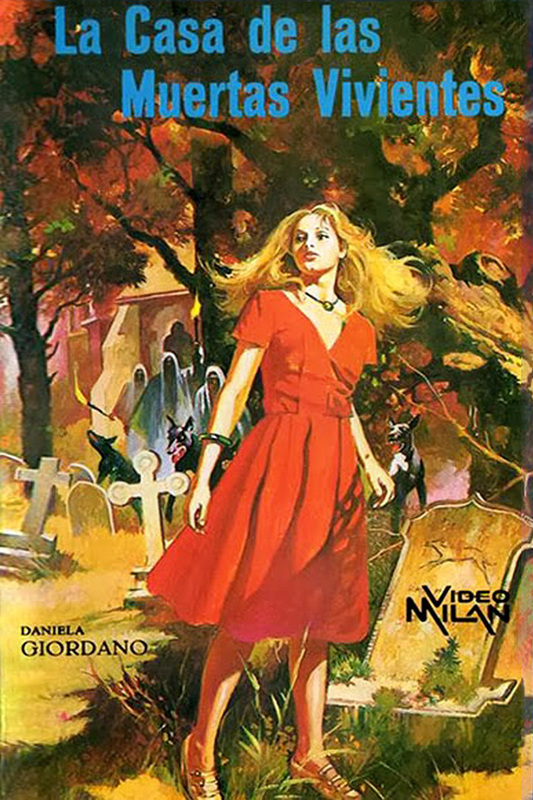
La casa de las muertas vivientes (1972)

Whether you call this La casa de las muertas vivientes (The House of the Living Dead), Night of the Scorpion, the Italian title Il cadavere di Helen non mi dava pace (Helen’s Corpse Gives Me No Peace or Helen Is Not Resting In Peace) or An Open Tomb… An Empty Coffin, this is a giallo made in Spain and Italy during the height of the genre. It’s directed by Alfonso Balcázar (Sartana Does Not Forgive, A Noose Is Waiting for You Trinity) from a script that he wrote with Giovanni Simonelli and José Ramón Larraz, the same team that made Watch Out Gringo! Sabata Will Return.

Oliver Bromfield (José Antonio Amor) has lost his father and wife Helen (Gioia Desideri), which causes him to move back to the gigantic ancestral home in the mountains far from the closest village. Despite the fact that they are isolated from anyone else, he makes a point to tell his new wife Ruth (Daniela Giordano) to not listen to what anyone says about his family. If that isn’t enough to freak her out, perhaps the way that Oliver’s stepmother Sarah (Nuria Torray) kisses him will do it. Or maybe it’s the maid (Alicia Tomás) who doesn’t answer questions or the sister who refuses to speak to her. Look, if you marry into a rich family in a giallo, your chances of encountering weirdness and death are absolute.

So yes, Sarah keeps trying to seduce her stepson as well as spying on him as he consummates his new marriage. His sister Jenny angrily stabs butterflies — oh post-Argento giallo and its obsession with animals — as she laments the loss of Helen, who she definitely had an affair with and when Oliver found out, Helen took a dive over the railing. Maybe. Who can say?

Ruth slowly starts going insane, what with being trapped in this house of depression. Wouldn’t you be worried if you watch a kitten die after drinking the poisoned milk that you were about to drink — yes, this movie makes a The Cat O’Nine Tails ripoff while having a cat figured into said theft — and then come back to life?

Everybody in this family wants someone they can’t have and Ruth starts to realize that maybe she shouldn’t have said yes to this marriage deal. She even brings in a private detective (Osvaldo Genazzani) who she says is her Uncle Edgar to figure out what’s happening.

That’s when a killer with black gloves and a blade remembers that we’re in a giallo and not a soap opera and starts stabbing people with just twenty minutes left.

This may not rank in the best of all giallo, but there is that awesome clock that the voyeur stepmother uses to peep through which gives the opportunity for some great shots. And once it picks up, it picks up.

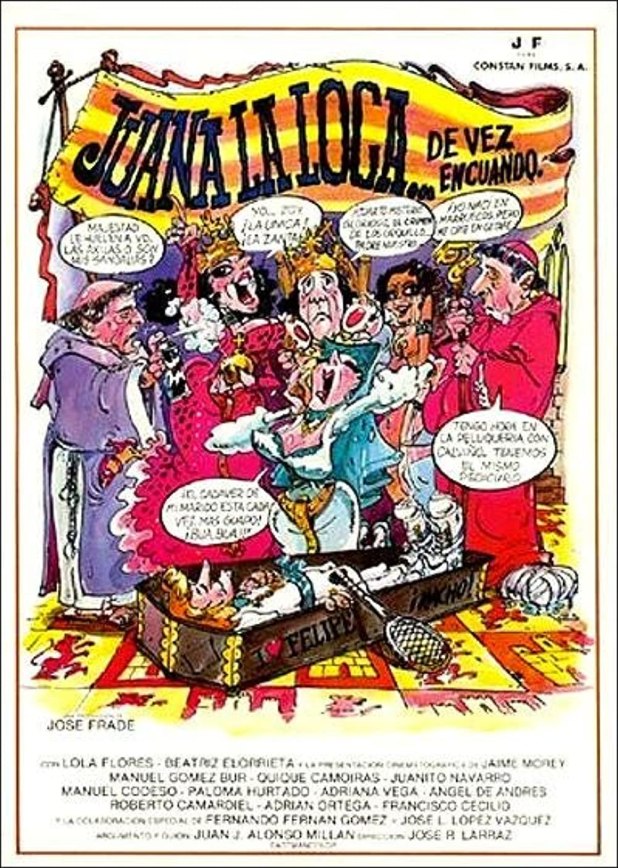
Juana la Loca… de vez en cuando (1983)

The second time that director Jose Ramon Larraz would work with writer Juan Jose Alonso Millan — The National Mummy is their other work together — this movie is a parody of the life of Juana I of Castile, the woman who will one day become the Queen of Spain.

The Catholic monarchs in charge are worried about the brutal Torquemada’s obsessive need to prosecute and torture everyone. It’s within this world that Larraz and Millan attempt to tell a comedic tale.

Based on The Madness of Love by Manuel Tamayo Y Baus, this tells how Juana went from a passionate young woman to Joanna the Mad, a woman who was both the Queen of Castile and Aragon yet kept confined.

She was married by arrangement to Philip the Handsome, Archduke of Austria of the House of Habsburg, and gained power as every member of her family died, other than King Ferdinand II of Aragon, who proclaimed himself Governor and Administrator of Castile, then King after Phillip died in 1506.

Despite being the ruling queen, Joanna was declared insane and confined in the Royal Convent of Santa Clara in Tordesillas by order of her father, who ruled for a decade and then her son took over as she remained hidden from the world.

Was her insanity because she discovered that the love of her life, Phillip, was cheating on her. She may have had melancholia or inherited schizophrenia. Or perhaps this highly intelligent woman was used by her husband and father.

Anyways, somehow Larraz was picked to direct this and well, he is used to making sex comedies by this point in his career. I’m not one to understand the intricacies of Spanish history and the humor that arises from it. I prefer when Larraz makes movies with haunted women confronting the evil within themselves.

Tubi picks (week twelve with guest Erich Kuersten)

ABOUT THE AUTHOR: Erich Kuersten is a gonzo-theorist, film and music critic, crypto-Jungian and editor of The Acidemic Journal of Film and Media, with work appearing in: Bright Lights Film Journal, Popmatters, Slashfood, McSweeney’s, Slant and the Daily Om. Also (in print): The Decadent Handbook, Scarlet Street and Midnight Marquee. Films include the awards-skipping Queen of Disks, The Lacan Hour, Drunkards of Borneo and the “Shortcuts to Enlightenment” series. Check out his site here.
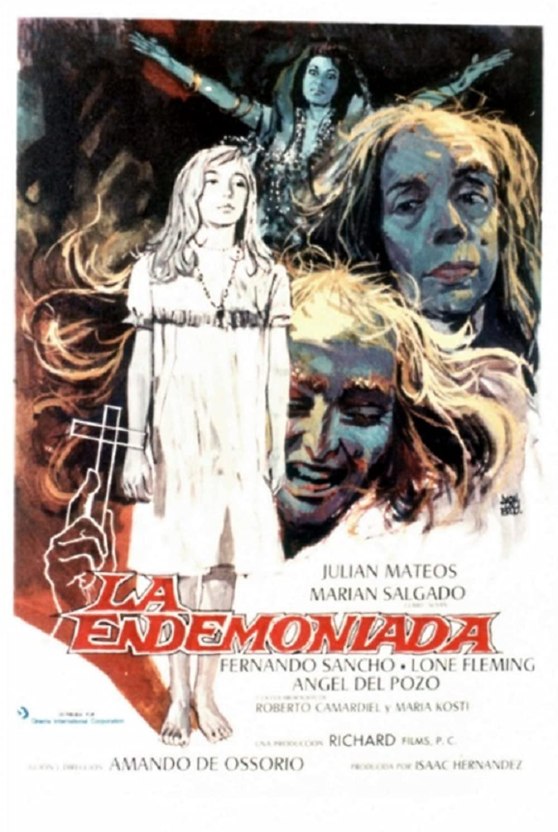
1. Demon Witch Child (1975): TUBI LINK

After an old witch kills herself in the DA’s office, she possesses his spooky-looking to start with daughter Susan (Marián Salgado) and lets the obscenities fly. Clearly Mexican with a complicated relationship with Catholicism (in a good way), we got the pleasure of watching a very deadpan child actress in old lady make-up killing people in the park, sexually taunting a priest (“You’re either a goddamned queer or impotent!”), sacrificing a baby, insulting her mom, castrating her mom’s boyfriend, and generally proving Mexico can out-do Italian Exorcist clones any day of the week. There’s even some Tubular Bells-style chimes and a child chorus singing a spooky Morricone-ish “na-na-na” song. The acting of everyone else is all over the place and side plots of stall out but Salgado seems to be having a real wild time, holding very still for the time lapse transformation effects and generally earning her spot in the following year’s Who Can Kill a Child?  Pair it with the wondrous Antichrist also on Tubi (the Italian one, not the Von Trier one)
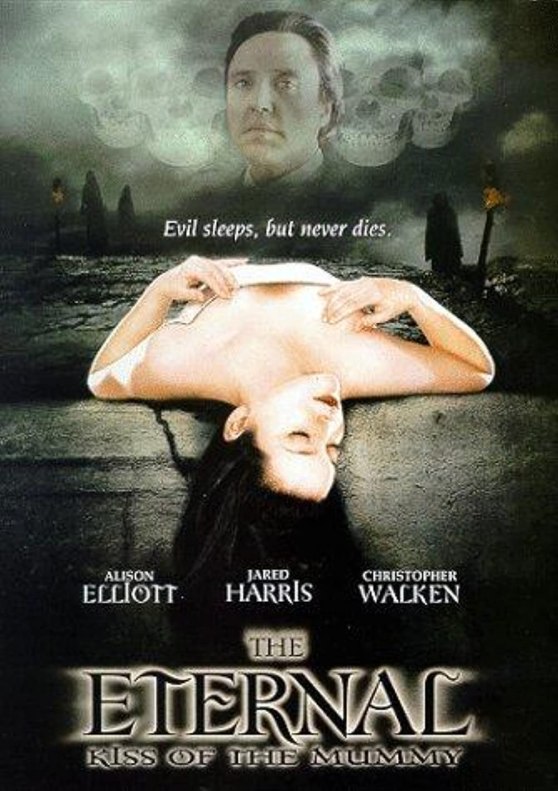
2. The Eternal (1998): TUBI LINK

Michael Almereyda followed up Nadja (his cult black-and-white downtown 90s hipster reimagining of Dracula’s Daughter) with this revisionist Irish take on Blood from the Mummy’s Tomb, (i.e. Bram Stoker’s “Jewel with 7 Stars”). Hard-partying NYC hipster Alison Elliott travels with her drinking partner/husband (Jared Harris) and their kid to her Irish homestead–drawn by bad fainting spells and the pull of bog mummy druid sorceress ancient relative currently down in the basement, watched over by her eccentric hard-drinking Christopher Walken. The banal title and terrible DVD cover (it makes this artsy and cool film look like some lame direct-to-video softcore), no doubt keep its ideal audience at bay. Don’t be fooled! With its arty photography, dreamy music (including a Cat Power song) and 16mm and super 8mm film stock used to evoke past life and childhood memories, the whole thing flows with a dreamy Irish vibe both melancholic and groovy, especially for anyone who grew up watching classic horror movies on TV before moving to the city to become a jaded hipster alcoholic.

3. Revenant (1998): TUBI LINK

Also known as Modern Vampires, this triple-R rated HBO TV movie benefits from a darkly hilarious and gleefully savage script by Matthew Bright (Freeway). Caspar van Dien is a cool vampire who needs to guide sexy Natasha von Wagner in the mores of vamping after she starts running amok (he vamped her a while ago but then left her to fend for herself). See, Dracula is in town and trying to reign in all the vamping under his rule and he considers Van Dien a threat. Rod Steiger is the hammy Van Helsing Jr. who we learn staked his own son after Van Dien turned him. Kim Cattrall, Udo Kier, Natasha Lyonne, Craig Ferguson all co-star, though the scene is stolen by four gangbangers Steiger recruits as vamp hunters, who wind up saving the day (for the vampires) and have a great blunted group dynamic. Rife with the typically cheerful and shockingly blase sense of darkly comic amorality we hope for from a Matthew Bright script, it’s a dark little sociopathic gem dressed in made-for-HBO vamp movie colors. (see also the Bright-scripted Dark Angel, also on Tubi).
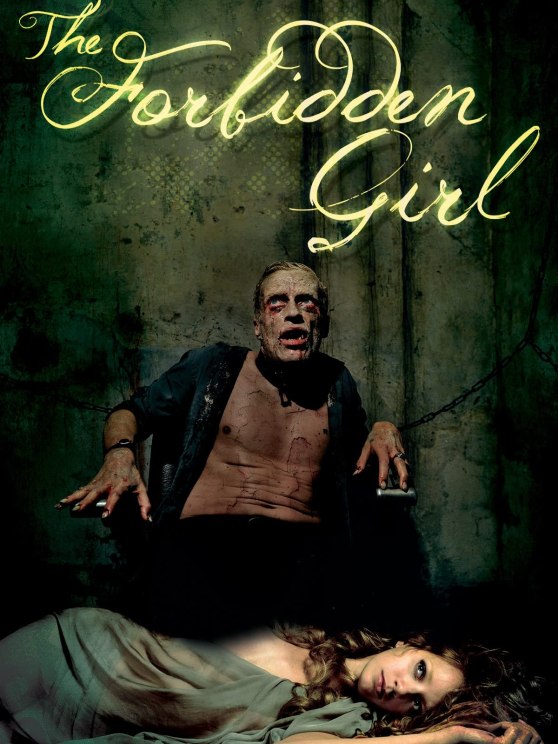
4. The Forbidden Girl (2013): TUBI LINK

This atmospheric German/Dutch production, filmed in English, benefits from a great location–a vast, crumbling mansion with Overlook-ish interior hallways–and a strange Jungian archetypal plot involving the confused son of a deranged preacher who finds the girl (Jytte-Merle Böhrnsen) he thought he only imagined but who’s now living as an insane sun-allergic invalid where he’s been hired to be a live-in tutor (and she doesn’t remember him). Cockblocking their inevitable hookup is a strapping Germanic house man (Klaus Tange, from Strange Color of Your Body’s Tears) always within earshot and an elderly witch who seems to be getting younger as the film goes on. Given way more love and care (especially with the dusky cinematography and hallway-prowling camera) than its lack of renown warrants, Forbidden triangulates Neil Jordan, David Lynch, and Joseph Campbell to find a zone that feels like a half-forgotten childhood dream, but with some bad CGI.

5. 68 Kill (2017): TUBI LINK

Naive, smitten yokel Chip winds up on the wrong side of his homicidal girlfriend (a wondrously feral Anne LynnMcCord) after racing away into the night in her car, rescuing the woman she was trying to sell to her even more evil snuff film-making brother. A wild chase ensues and he eventually winds up in the clutches of another homicidal woman, this one a meth-headed crime ring leader played by Sheila Vand (A Girl Walks Home Alone at Night). Your jaw will hit the floor and likely not be lifted again until the credits roll, especially if you love strong, dangerous women and propulsive black comedy crime films where you legitimately have no idea what will happen next.
6. Machine Gun Kelly (1957): TUBI LINK

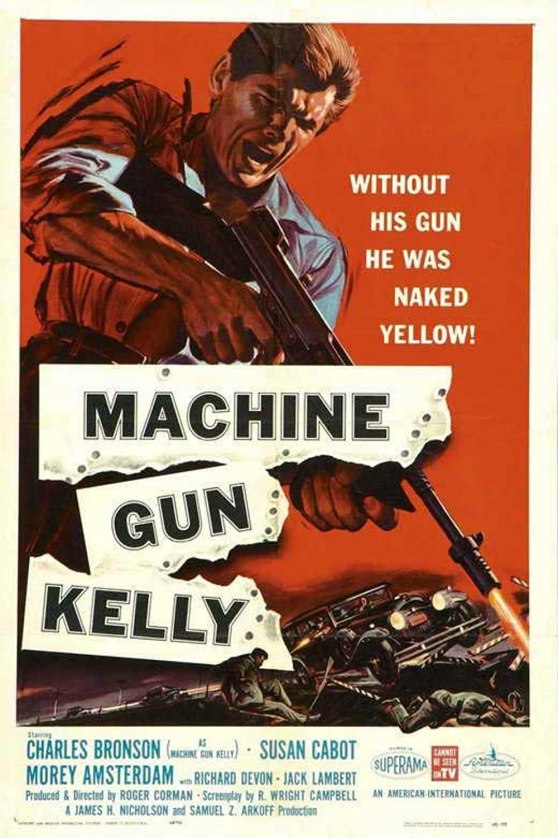
A lean, mean Roger Corman crime film stolen by Susan Cabot as Kelly’s long-time girlfriend and the real brains of the operation (she even gave him the name). A groovy score and rattatat editing along with Cabot’s stylish self-assertion, cool furs, and–surprise–Charles Bronson as Kelly, his toughness shot through with a cowardly streak a mile wide. Corman has no time for tedious art or Big Statements, and in the process of stripping things down to a lean hour he’s way more insightful and illuminating than most of the overblown prestige gangster pics. And Cabot is a real discovery if you only know her from The Wasp Woman. Pair it with Corman’s other big Cabot vehicle, Sorority Girl also on Tubi and let the Cabot magic rip.

7. Blood Beat (1983): TUBI LINK

I avoided this for years, presuming by the title it was the usual early 80s mix of aerobics and slasher tropes. Just goes to show how wrong you can be! It’s a scrappy regional horror about a samurai ghost who kills people, but it’s also the most accurate and palpable tales of what it’s like going to your college lover’s parent’s house in the boonies over Christmas break, only to find everyone likes to go hunting (and you don’t) and the psychic (bi-polar?) mom doesn’t like you and has serious emotional problems and spends most of her time in her painting studio, having visions, and/or staring at you. With a great moody weird electronic score, vivid 70s Wisconsin naturalism, and some truly psychedelic effects, it’s a 70s film in spirit and one of those priceless examples of locally-sourced independent horror that flourished once upon a time, where it’s so different from the usual you’re like “Finally! Why can’t they all be this weird?”
8. Bride and the Beast (1958): TUBI LINK

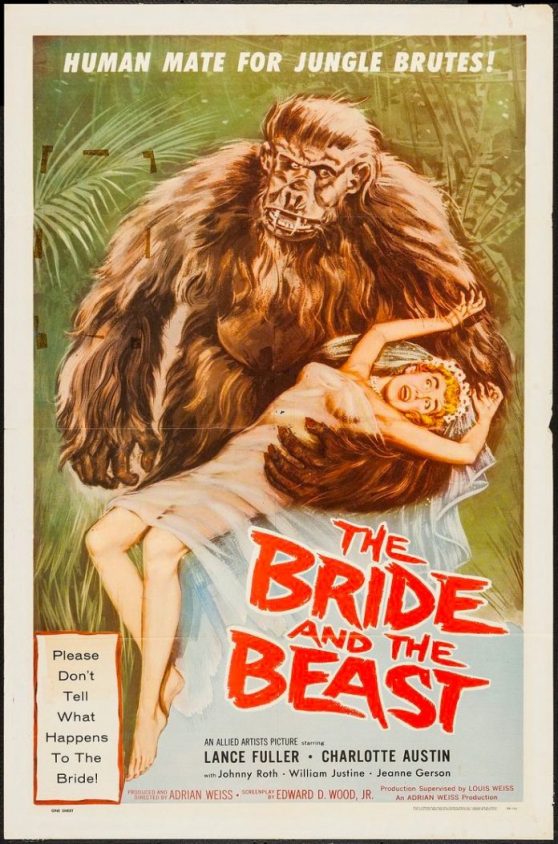
As the thunder crashes and the taxidermy big game looks on, the post-wedding nuptials between a big game hunter and cool, soft-spoken dame (Charlotte Austin) are complicated and interrupted by his pet gorilla Spanky She and Spanky have a thing that transcends boundaries. Under hypnosis, she remembers her past-life as “queen of the gorillas!” and they’re leaving for a hunting trip in Africa the next week. Spoiler Alert – she likes it there. I love this movie so much I don’t mind that the second half is awash in stock travelogue footage. Regardless of what we’re seeing, Charlotte Austin’s narration is dreamy (she has a great purr of a voice) and the words she speaks have Ed Wood’s unique fingerprints all over them. He may not have directed, but this Woodian right down to Austin’s angora sweaters.

9. John Dies at the End (2012): TUBI LINK

Whether or not this film speaks to you will probably depend on your ever-transcended space and time with psychedelic drugs. Paul Giamatti in a cool Chinese restaurant, a dimension just like ours except it’s ruled by a tentacled Lovecraftian monster, crazy flesh-eating flies, a hotdog phone, a renowned TV psychic (Clancy Brown) and a one-handed girl who helps open a phantom door at “the Mall of the Dead” thanks to her phantom limb, and so much more. Directed by the great Don Phantasm Coscarelli (Angus Scrimm has a cameo as an evil priest), this deserves a wider cult audience than it has. I have hope the world will one day be ready.

10. The Lady in Red (1979): TUBI LINK

A lot of people ignored this on video as they confused it with The Woman in Red, a sex comedy with Gene Wilder and Kelly LeBrock. This isn’t that. I only found out the difference by accident when it showed up one late-late night HBO. I could scarcely believe how much of a blast it was. John Sayles scripted, Lewis Teague directed, it’s an imagining of the life of the moll who was with Dillinger when he was shot, but it’s so much more. Pamela Sue Martin stars; she gets her start after following a no-good man to the city from her life on the farm, seduced and abandoned, she gets a job at a garment factory and then winds up jailed in a union riot after a cop kills her communist roommate (it’s a Sayles script all right!), then sent to a jail-annexed brothel run by a scenery-chewing Louise Fletcher. Somewhere along the line she gets hip to the way things are, especially with the help of Dillinger, who teaches her to shoot and rob banks. It’s one of the better examples of what I call “libsploitation” i.e strong women fighting back against their sexual subjugation through cathartic violence,  while also showing their breasts in lots of sex scenes. That’s the Corman’s New World one-two punch!
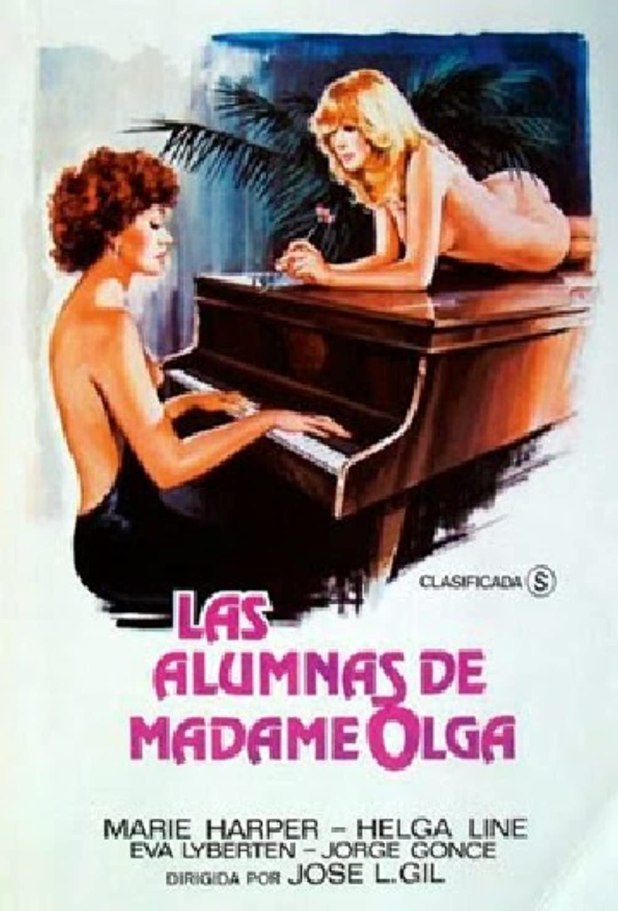
Madame Olga’s Pupils (1981)

Also known as Sex Academy in the UK, this José Ramón Larraz directed and written film is al about the titular Madame Olga (Helga Liné, The Killer of Dolls) who may or may not be related to the Olga with the House of Shame, but she does have a high class bordello in London.

Over 77 minutes, Larraz packs in the prurient scenes, as well as a story about how one of Olga’s girls named Tina (Eva Lyberton) ends up dying after an encounter with a millionaire. Usualy Olga just maes things like this disappear but a friend of the dead girl named Rafael (Jorge Gonce) starts asking too many questions.

Olga deals with it by giving him a job scouting new girls but he soon falls for both Lavinia (Marie Harper, the 1983 Fanny HillThe Urge to KillEmmanuelle in Soho) and her mother Betty (Lynn Endersson). Of course, he also makes time to Olga while he’s at it.

It looks very sumptuous — of course, Larraz directed it — but the artist was meant for so much more.

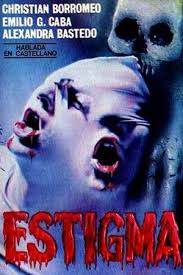
Stigma (1980)

EDITOR’S NOTE: This was originally on the site on October 22, 2018.

Sebastian has become possessed and now has the power to make his thoughts come true. Somehow, all that allows him to do is relive his past lives again and again.

Director José Ramón Larraz also worked in comic books, as well as helming the films Symptoms and Vampyres.

The film starts with Sebastian learning that his father has died and his mother feeling free and ready to start her life all over again.

It turns out that Sebastian was born with a veil of skin covering his face, which is a symbol of psychic power. That may be how he knew that his father was dead before anyone told him.

Also, Sebastian has issues with women. He puts off anyone who wants to be with him and gets upset when his mother kisses another man. Learning that his father was with a whore when he died, he declares that all women are whores. His mother answers by slapping him.

Sebastian and a girl who is interested in him, Marta, end up kissing but he forces himself on her until his lip begins to bleed. At confession later, a priest tells him that wishing evil is the same as doing it. What does this have to do with Marta being dead now?

An old woman named Olga remembers Sebastian from the past as he has a vision of hanging himself. Olga awakens her granddaughter Angie, sure that something bad is about to happen to Sebastian. There seems to be a romantic triangle between him, Angie and his brother Joe.

Sebastian ends up recording his mother having sex with her new lover. This upsets him so much that his shower is filled with blood and his vision of a ghost woman makes his lip bleed again.

That love triangle I mentioned above ends up with Angie and Joe having sex. Yet Olga thinks that Sebastian and Angie have an attraction too. She’s worried about the danger that he brings. While on a ferry with Angie, Sebastian sees the ghost woman again. He confesses to Angie that when he thinks of someone he hates, he makes them die and his lip bleed — that’s his stigmata. He also can see himself from the outside of his own body and he probably killed his father.

Joe confronts Sebastian about the issues that he’s having in school, so Sebastian thinks of him dying in a car crash. Angie believes that he is evil, but he says that he has no control. Once he realizes that someone is going to die, it’s too late.

Here’s where things get really bonkers: Sebastian keeps seeing the ghost woman, so he talks with Olga. She hypnotizes him and he remembers where he killed Marta. He then goes into his past lives, where he sees his sister, who looks exactly like Angie. They have sex and he awakens in a panic as his father had become angry with him.

While he doesn’t want to see Olga again, Sebastian uses tapes of her seance to calm himself. Soon, he is visiting the setting for his dreams in real life and has more visions of his past inside them. Angie comes searching for him and he shows her where people died in the building as he starts to bleed from his lip.

That’s when we go back into the past again, where he has sex with his sister again and his father criticizes him. When his sister is engaged to be married, he becomes depressed. She doesn’t even think of him any longer and he can’t forget her or stop disappointing his father.

That’s when he uses an axe to kill his parents, then starts making love to the maid. He decides to strangle her instead, then remembers many other girls that he is killed. A mirror breaks and he begins to bleed from the lip as we return to the present and he listens to the seance tapes.

I honestly had to read several sites to make sense of what happens in this movie. It’s long on style, short on substance and yet it has a unique doom feel. I was pretty forgiving of its narrative issues, but your mileage may vary. I was interested to see what would happen next and it had enough verve to keep me watching.

You can watch this on YouTube.

The 1981 Drive-In Asylum Yearbook is here!

The new issue of Drive-In Asylum is now available!

The sixth DIA special issue — the 1981 Yearbook Special — celebrates our faves of this stellar year in fantastic films – Scanners, Halloween II, Strange Behavior, Dead & Buried, Wolfen, Scared to Death, The Hand and many more.

72 pages — with a full color cover and black & white pages inside, some pages printed on colored paper, 5.5 x 8.5 inches in size — packed with reviews and ad galleries, all dedicated to movies birthed in 1981, including a gallery of films that were reissued that year with different names. Plus Big Bad Daddy Wolf and Unkle Spooky both give us countdowns of their fave 1981 screamers.

72 pages In this issue, I wrote a way too long breakdown — with painted art — of the movie that introduced America to ninjas, Enter the Ninja! Plus, there’s even more art from me inside this issue!

Order yours now! www.etsy.com/shop/GroovyDoom