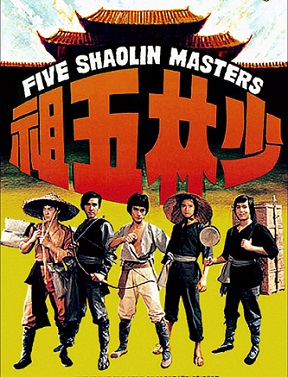
After suffering numerous defeats at the hands of the Qing kung fu experts, five patriots return to the ruined Shaolin temple — that burned down at the end of Shaolin Temple — to perfect their kung fu and take revenge.
Hu De-Di (David Chiang), Cai De-Zhong (Ti Lung), Fang Da-Hong (Mang Fei), Ma Chao-Xing (Alexander Fu Sheng) and Li Shi-Kai (Chi Kuan-Chun) must now become their own masters, training themselves and overcoming self-doubt in order to become legends.
However, one of their number is a traitor, which adds some intrigue to the proceedings. The best part of the movie is the huge battle and escape at the beginning, as each hero gets an introduction and a freeze frame with their name as we rock out to their theme song. Better than that, the villains get the same treatment, including a villainous song for them to do evil to.
Chang Cheh directs this and Wang Lung-Wei again plays the traitorous villain, which is pretty astounding as he died at the end of the last film, but you can’t keep a great heel down. There’s also a bad guy in this that can snap necks with his ponytail, which is definitely the kind of martial art that you don’t see in many films.
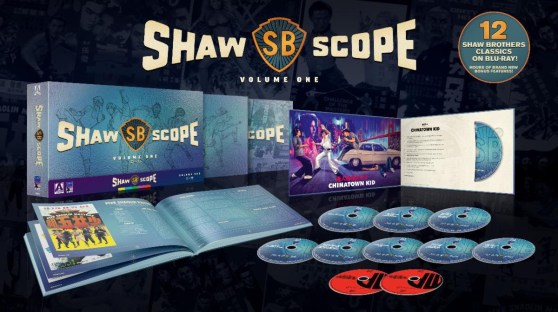
The Arrow Video Shaw Scope Volume One box set has Five Shaolin Masters in uncompressed Mandarin and English original mono audio, as well as newly translated English subtitles and English hard-of-hearing subtitles for the English dubs.
There are also alternate opening credits from Five Masters of Death, the US version of Five ShaolinMasters, and U.S. and German trailers.
You can also stream this movie on the Arrow player. Visit ARROW to start your 30-day free trial. Subscriptions are available for $4.99 monthly or $49.99 yearly. ARROW is available in the US, Canada, the UK and Ireland on the following Apps/devices: Roku (all Roku sticks, boxes, devices, etc), Apple TV & iOS devices, Android TV and mobile devices, Fire TV (all Amazon Fire TV Sticks, boxes, etc), and on all web browsers at https://www.arrow-player.com.
The Old School Kung Fu Fest is back and the Museum of the Moving Image and Subway Cinema will co-present eight newly restored films and one fan favorite classic by Kuo on glorious 35mm. Four titles will be available exclusively online, December 6–13, and another five films for in-person big-screen viewing at MoMI, December 10–12.
Lin Fung carries people with his rickshaw tirelessly to provide for his blind wife, but when a new and evil team of rickshaws comes to town with Tong Yan in charge, our hero starts a series of fights that leads to his wife being taken and a trap being set for him. Up until now, Lin Fung was held back by his wife’s ban on fighting, but now he’s going to take out everyone in his way.
Revenge is rough, though. Yan’s son is killed, so everyone Lin Fung loves must die as well, so while our hero remains triumphant, he honestly has nothing to show for it. That’s why I love martial arts movies and get upset — I seethe inside like Lin Fung wanting revenge — when people make fun of the bad dubbing and think they’re jokes. They’re melancholic musings on the fragile existence that we live in and the feeling that the only way out is through fists, feet and brutal death.
The Old School Kung Fu Fest is back and the Museum of the Moving Image and Subway Cinema will co-present eight newly restored films and one fan favorite classic by Kuo on glorious 35mm. Four titles will be available exclusively online, December 6–13, and another five films for in-person big-screen viewing at MoMI, December 10–12.
At once a prequel and sequel to the movie that made Jackie Chan a star — Drunken Master — this film focuses on Beggar Su (Simon Yuen) and his friend Fan Ta-Pei. It’s like showing up for a Star Wars sequel and having it be all about Han and Chewbacca and man, isn’t that what you really wanted?
Our heroes have been mysteriously asked to meet one another and begin drinking to no surprise and remembering their teenage past together. Despite stealing grapes, they begin to work for a winemaker named Chang Chi who is a secret master of martial arts. They beg him to train them, they both fall for the same woman and their defense of innocents using their new Drunken Boxing abilities leads to the evil Tiger Yeh coming to attack their master. This explains how they drifted apart and why they’ve been brought back together.
Look, it’s no Drunken Master. But hey — the fights are nearly the same. That doesn’t mean that it isn’t entertaining.
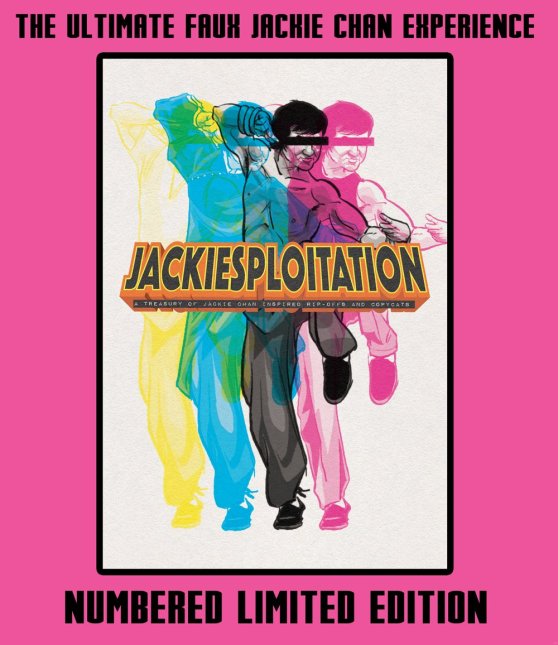
If you’re really into movies that cash in on Jackie Chan, I recommend Gold Ninja Video‘s Jackiesploitation blu ray!
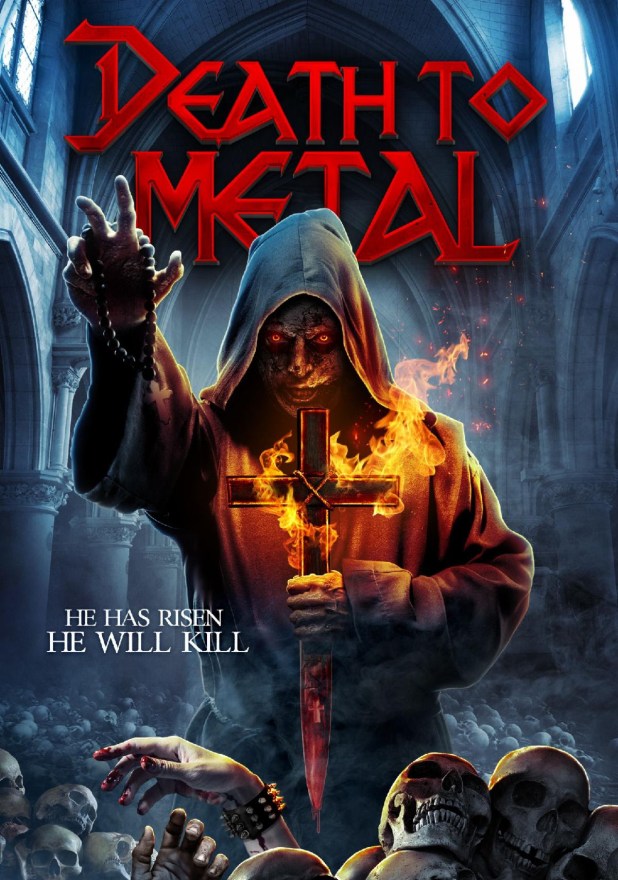
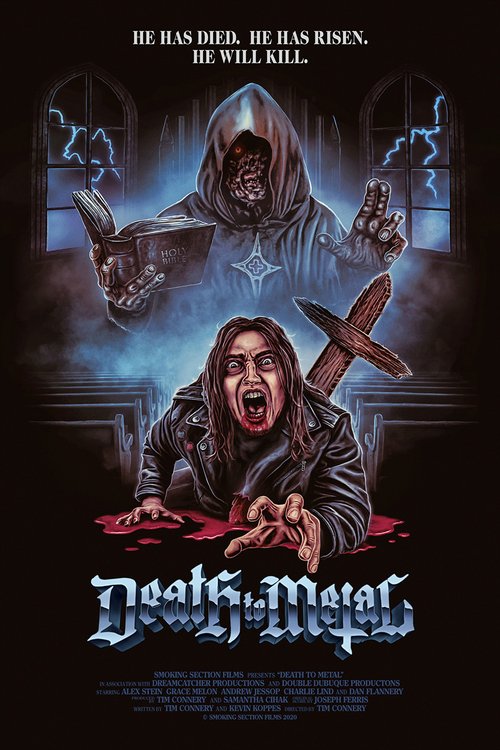
After a freak accident, an already disturbed priest is transformed into a mutated killing machine on a mission to wipe out anyone that loves heavy metal. I mean, with a concept like that, how can I not watch — much less not love — this movie?
The tagline is the nail in the upside down cross upon the coffin:
He has Died. He has Risen. He will Kill.
Director, co-writer and co-producer Tim Connery made Black Web in 2012, but that probably won’t prepare you for this blast of, well, blast beats and gore and blasphemy.
Zane (Alex Stein) has lost his girlfriend Tracy and his band Withered Christ in the same day and basically wants to die. This was supposed to be his moment, singing for the local band opening a major festival in his hometown.
Meanwhile, toxic waste gets dumped outside of town just in time for the disgraced priest Father Kilborn (Andrew Jessop) drives into it and becomes something much darker and more willing to destroy everything in his path for the Word of the One True Lord.
So when Zane gets back into the band and takes the stage, maybe he should have listened to his friend Mariah (Grace Melon) about setting Bibles ablaze.
Look, any movie that ends with the line “I think I’m just going to keep running him over until the cops get here” is going to win me over.
If you love extreme metal and/or gore, which seems like something that goes together like whiskey and weed and Black Sabbath, you’re going to love this. It’s streaming now from the fine folks at Wild Eye.
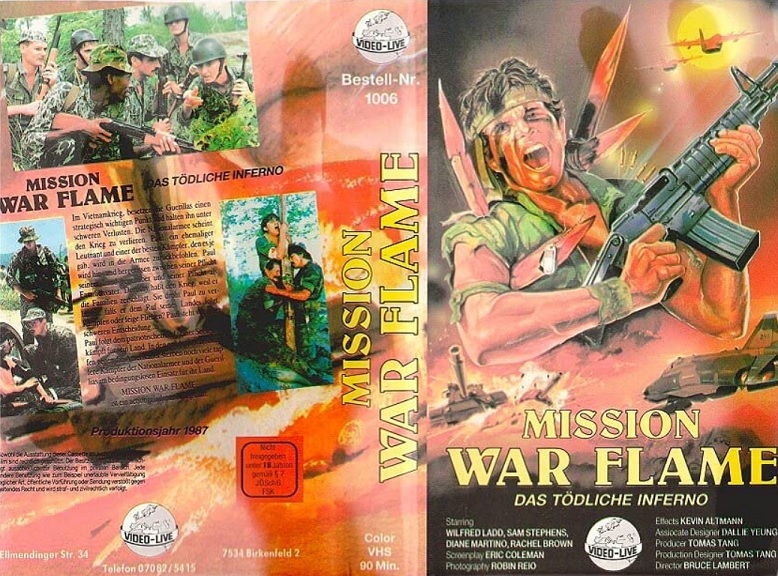
This Godfrey Ho Philippine Namsploitationer to cash in on all things John Rambo is actually a pre-John Rambo Hong Kong action-joint known as Black Warrior by Tomas Tang. Tang, by way of his Filmark International Studios, is a name you see oft-mentioned on Ho’s end product since a lot of Tang’s stuff, such as Devil’s Dynamite, ended up as a reedited Ho joint, such as Robo Vampire. In fact, you could dedicate an entire WordPress site just on the wealth of Ho-cum-Tang flicks. Adding to the bola ng katituhan is the fact this also slopped through the VHS marketplace as a sequel to Jungle Rats, aka Jungle Rats 2: Black Warrior. And since the covers are the same, well, now you know from whence all of that stock footage for Jungle Rats, came. Where’s Romano “Rom” Kristoff? Well, he’s not, here. . . .
Compare to Jungle Rats and be amazed!
As in Jungle Rats: we have another reconnaissance team assigned to trek through the jungle borders to rescue a group of soldiers and a couple of American Red-Cross civilians — civies acting as double-agents feeding Intel to the military — taken captive and imprisoned by the Vietcong. Yes, as in several of these movies: the soldiers’ jungle guide is . . . a woman . . . and all of the usual stock footage bridges and hut explosions, ensues . . . as no plot or character, develops.
Apparently, one by the name of “Glenn Clegg” wrote this tumpok ng tae, but I’m pagsusugal’in my pesos that an anglicized, expatriated American actress Sally Nicholls (aka Nichols) script-cobbled (Mission War Flame) this one for Godfrey Ho — who is here, depending on the VHS print you see, as “Christ/Chris Hannah” to “direct” this mess. Who are actors Barry Hyman, Kevin Brooks, and Rachel Sheen: your guess is as good as ours.
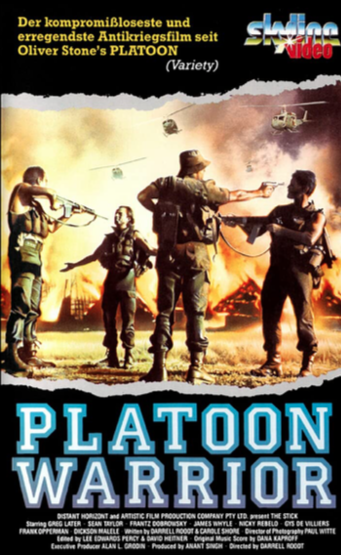
If you can figure it all out on You Tube and let us know, thanks! But to help you out . . . no, Platoon Warriors is, in fact, a completely different Philippine-made warsploitationer. And the Michael Dudikoff vehicle Platoon Leader — which we didn’t get to this week — is another completely different film. Well, except for the recycled war footage. . . .
When you can’t evoke Sly Stallone, there’s always Oliver Stone.
About the Author: You can learn more about the writings of R.D Francis on Facebook. He also writes for B&S About Movies.
Godfrey Ho. He’s Joe Livingstone. He’s Willie Palmer. He’s Charles Lee. And here, he is Bruce Lambert behind the camera and Eric Coleman behind the typewriter. You’ll also notice the name of Sally Nicholls credited for “dialog” on many of Godfrey’s films. Well, someone had to thread together Ho’s piecemeal efforts into coherency. And she’s a real person, not an alias — an actress whose work dates back to the ’60s with Lon Chaney, Jr. And you’ll notice notable Hong Kong action star Tao Chiang — 187 credits strong since 1968, with his most recent film, Yang Jingyu, out in 2019 — starring here.
Now, we have to note — taking into account that acting in Philippine cinema is like checking into the Eagles Hotel California: once you sign on the dotted line, you never leave the industry. Especially on the line with Silver Star Films, for they will keep recycling that footage into movie after movie after movie.
So, when you begin dissecting Ho and Chiang’s joint resume, going back to The Deadly Silver Ninja (1978), Ninja Thunderbolt (1984), and Fatal Command (1986) — for nineteen films total, prior to the making of Mission War Flame — you begin to wonder how many of these films did Tao Chiang actually “act” in and how many was he “spliced into” for proxy-stardom? And how much of those films — as well as Mission War Flame — did Godfrey Ho actually shoot. Just look at that opening artillery-filled prologue. A Godfrey Ho production employing all of those extras — and artillery cannons? Nope. Not buying it: it’s from another film. But what film: that is the question. Nothing here looks like it was originally shot, sans some linking materials, but even that is questionable. And all of the footage looks like it’s from 1977 — or earlier — than the 1987 release date of the film.
So, that stock Vietnam war film footage has run the villagers from their jungle mountain enclave. Now we are into the Ho-shot footage — we think — with a bunch of Americans in non-military camouflage lined up to spout some dubbed dialog as they prepare for a mission, aka “the war flamers” of the film. One of our soldiers lets us know, “I am not afraid of anything. Not even war itself.”
Forward! March!
Now we have some Asian actors — probably from another film, as well — as they mount up for the U.S. soldiers’ attack, that is, “the footage” from the other film.
Now, with a third batch of mismatched footage, we’re meeting the family of Paul, a young Vietnamese doctor recruited — against his family’s objections — into a U.S. Marine-backed military force that will go up against the Viet Cong — from that previous batch of spliced-in film — that took over a hill and ran off those villagers. In fact, it’s not just Paul. Apparently, you can just be walking down a dirt road with your girlfriend and you’re “recruited” into the fighting force. Here’s your papers. Report for duty. You’re helping us take back that hill.
Oh, and there’s the tanks that finally appear at the end. Trust us. Godfrey Ho didn’t rent any tanks and it’s from another film.
The “human drama” comes from the fact that Paul and the other recruits love the glory of fighting for their country. Paul’s wife calls him a “monster,” you know, just like with the “Return from ‘Nam” movies made in America. And this is where the B&S About Movies editorial board allows us to drop “ensues” into the review. Only, nothing ensues . . . as this has none of the all-out action assault of most of the other “Philippines War Week” entries we’ve covered this week and back in August during our first tribute to Philippines war flicks.
Ah, but Godfrey comes through in the end. Paul and the two other saps that got recruited into the fight, struggle to raise the American flag on the recaptured hill — only to die in a hail of sniper fire. Now, that would be a heartbreaking ending in another film. Here, the “message,” if any, about the cost of war, and honor, and glory, is lost. For this is just plain bad — and criminal — that this patch job of obscure South Asian films from the ’70s was marketed in the backwash of First Blood and Commando. There’s not even martial arts to wow us. Just a whole lot of “uggghs” and “aihyaaaahs” as bodies fall under hails of squibs.
There’s no trailer to share because, for there to be a trailer, there needs to be a “story” to cut into a trailer with a narrative arc to tell you what the film is about in the first place. But we did find a copy of Mission War Flames on You Tube — but more for you to fast forward through than actually watch. But we know you’re a celluloid masochist . . . Aihyaaaaah!
About the Author: You can learn more about the writings of R.D Francis on Facebook.He also writes for B&S About Movies.
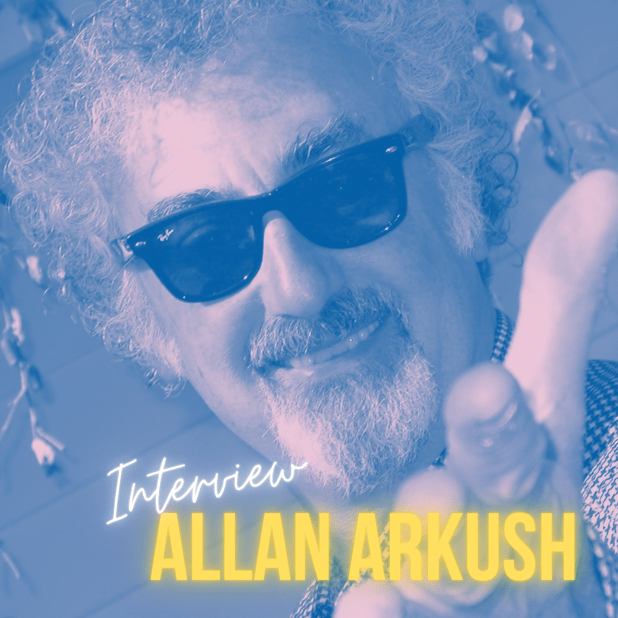
Allan Arkush should need no introduction, but if we must, let’s just say that he’s a very Zelig-like figure when it comes to the movies that we love on this site.
After a childhood in Fort Lee, NJ he attended the New York University Film School and had Martin Scorsese as a teacher and faculty advisor. At the same time, he worked at The Fillmore East as an usher, stage crew member and in the psychedelic light show Joe’s Lights.
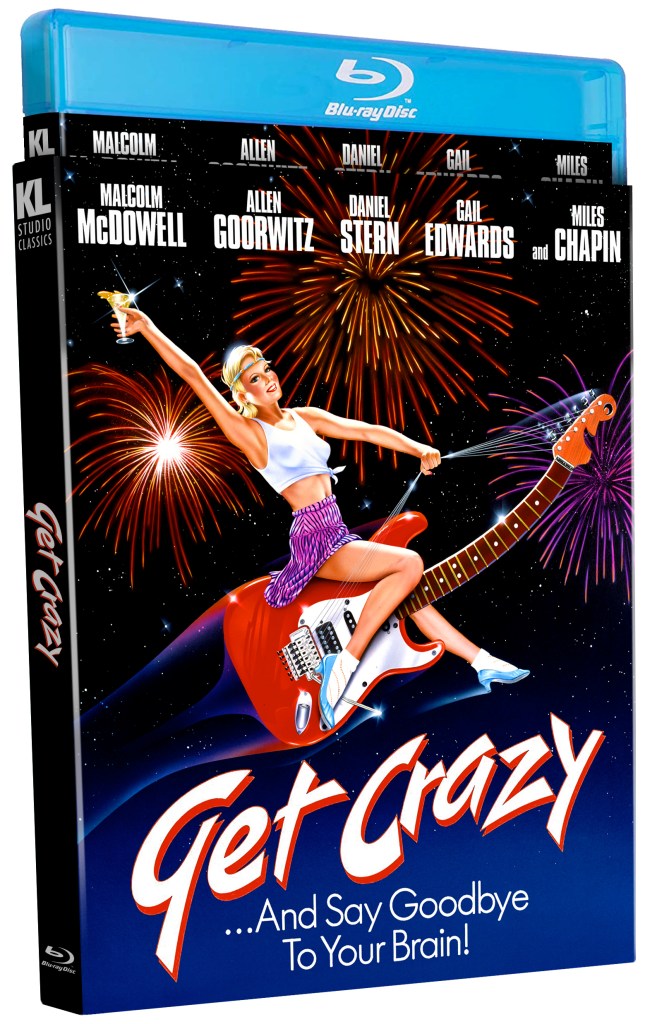
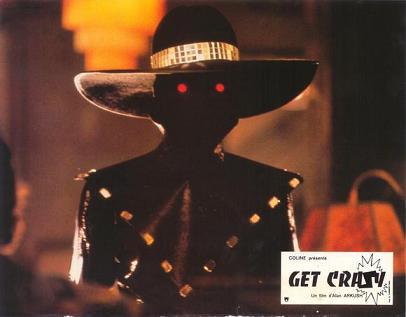
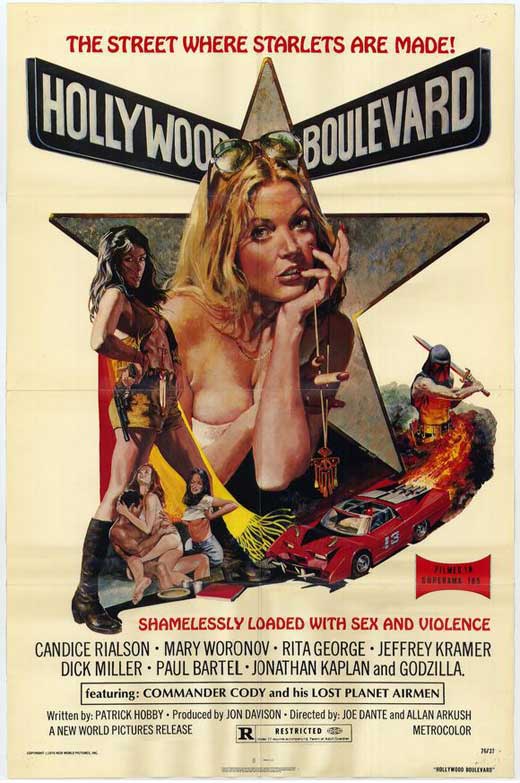
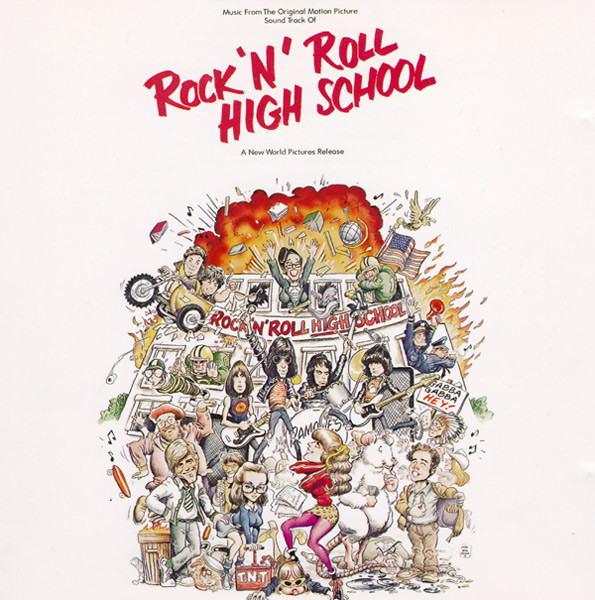
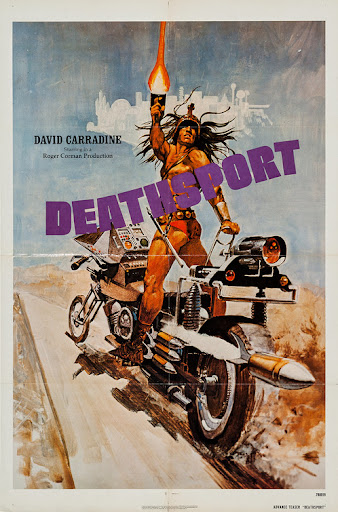
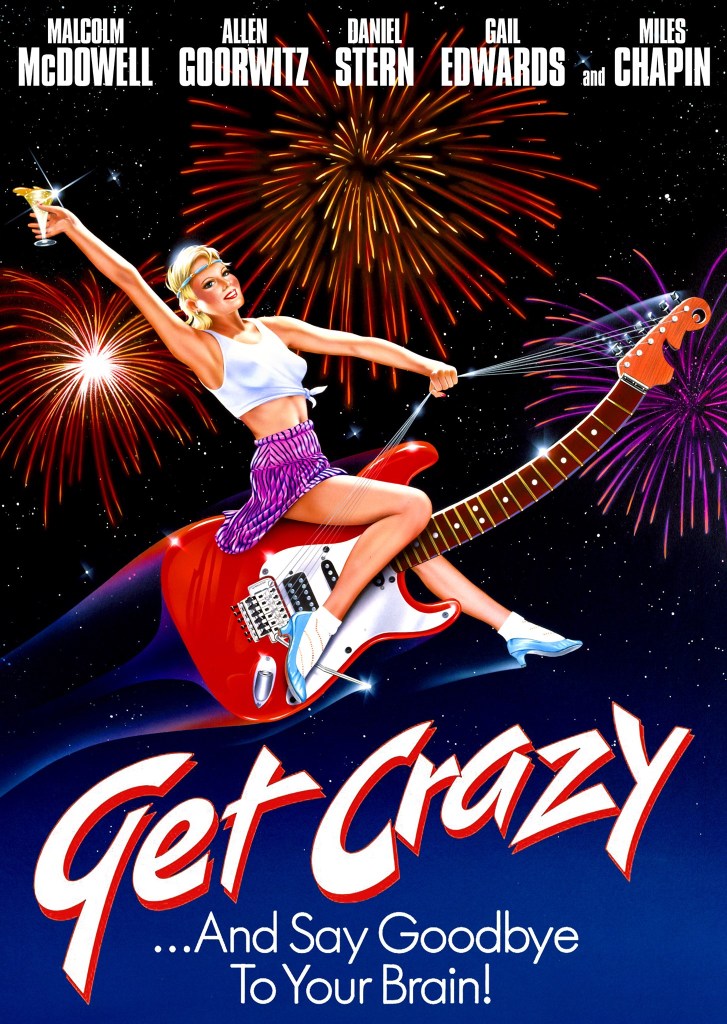
His start in the film business came at Roger Corman’s New World Pictures, where alongside Joe Dante, he cut so many of the trailers that we know and love. He graduated to directing movies like Hollywood Boulevard, Deathsport, Grand Theft Auto and Rock ‘n’ Roll High School. He moved on to make his own films like Heartbeeps, Caddyshack II and Get Crazy, which is now been finally re-released by Kino Lorber.
Beyond that, he’s done a lot you may have seen and not realized was him, from the dancing baby episode of Ally McBeal to numerous episodes of Moonlighting, Crossing Jordan, Heroes and even music videos.
We were beyond thrilled to get the opportunity to speak to Mr. Arkush and discuss his career. Thanks to Matt Berry from Kino Lorber for setting up this interview.
B&S ABOUT MOVIES: So how does it feel finally having Get Crazy get released 37 years after it was — for all intents and purposes — a lost movie?
ALLAN ARKUSH: It feels good on two levels. Naturally I couldn’t be happier that the movie will be available looking better and sounding better than it ever has. But in many ways equally rewarding was reassembling some of the original editorial team from Get Crazy and Rock ‘n’ Roll High School to make all of the extras. Kent Beyda and I go back to 1978 and he cut the extra The After Party, but he did more than edited it, using all 60 hours of interviews he wrote it and gave it shape. He also had edited the two 1983 videos. Mark Helfrich from RNRHS cut “Not Gonna Take It No More 2021” from the iPhone footage “Nada 2021″ gave us and I couldn’t be happier about that. The extras were a way for all of us to tell the whole saga of Get Crazy. Tara Donovan, one of my AFI students, working for a year producing it for nothing. Ed Stasium, The Ramones producer did the score and our original music Editor Ken Karman came back to spread his magic. And so many more…No Dogs In Space and almost all the cast and crew. What a joy. But let’s go back to the beginning.
I worked at the Fillmore East as an usher and then on the stage crew and working the lights for psychedelic shows. I was living in that environment — which was very exciting — and going to NYU film school at the same time and realizing that you could do so many of the things in your life that you’d like to do. And making a living from it!
So after making Rock ‘n’ Roll High School, I thought that it’d be good to do the next part of my life and tell the story of working in rock ‘n roll. Danny Opatoshu and I got together to write the script and it ended up becoming a real memoir of the events of my life as well as an actual plotline.
We ended up meeting with a few companies and one of them said, “We love this, but you need to set it in the present day.” We changed some stuff around and then before we started shooting, they wanted it to be a broader comedy like Porky’s or Airplane!
Danny said, “I’m gone,” so we got in more writers, we made the changes and that’s the version that you watched. But when the movie was done, the people who ran the company didn’t like it. They didn’t think there was a market for it. So they dumped it and took a tax loss, then they went under and their library got sold, then got sold again and then it got lost.
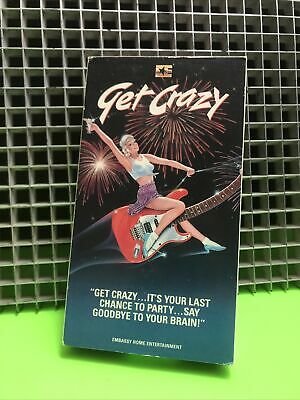
They put out the VHS — which was in the thousands and it’s not even in stereo — and that was it.
When it came time to release a DVD, no one could find the negative. The sound elements — because it moved around so much — and all the sales and the paperwork were gone for like thirty years. Thirty years!
I would get calls every couple of years with people from independent distribution companies asking, “What can you remember about where you recorded the audio?” People would say to me, “God, I love your movie, where is it?” And I said, “I don’t know.” I honestly did not. Finally, someone said to me, “Let my company find this movie for you and let’s get it out there.”
They found out that it was at MGM. Wow, MGM had bought the library that had it and now that everything was getting ready to be streamed, they went through their vaults and organized things. So we tried to buy it from MGM and they didn’t want to sell it. And that’s where I decided to call MGM and speak to the people in charge myself and I heard from their Legal Department of Business Affairs and they said, “We’re not interested.”
So that was the end of that.
Then I got a call from Frank Tarzi at Kino Lorber a year later and he said, “We want to put this out, so don’t say anything.” And Kino Lorber negotiated for over a year and then when they said yes, Frank asked if I wanted to do a commentary. I thought to myself that this movie is really my life story, my autobiography and this has been a really long trek. Frank Tarzi has been a big supporter. I called my friends who edited the original film, asked them if they wanted to be involved and they were on board. I called Danny next and said, we can tell our story back to everyone. This gave us the chance to tell the whole thing our way and it really gave us an opportunity to close the circle.
We got a small — very small — budget to make this but hey — I worked for Roger Corman! I’m used to that! So we put together a home movie — using Zoom, because this was made during the pandemic — and it’s amongst people who should really get together and talk more often.
B&S: I’ve always loved Get Crazy because it feels like a story about a great time in someone’s life. It’s my favorite kind of movie — a hijinx movie. It’s the kind of movie where all you need is that quick line: one night at a concert hall…and hijinks ensue.
ALLAN: How did you see it first?
B&S: I know that I rented it at some point and then I had a bootleg. Sorry.
ALLAN: It’s OK. I did too! And I still have the original VHS, because those were the only ways to have my movie.
B&S: It has to be exciting to have the movie out there again.
ALLAN: It’s great. And I got it back into the right 16:9 aspect shot and got it back into surround stereo. Because we spent so much time I guess with headphones on, you can actually hear everything all over again — Frisbees flying overhead and all that kind of stuff that we put so much and the audience yelling absurd things. We also got to do a new color correct, so that I could get everything I wanted out of the color. I always wanted it to look like a 1950s Jerry Lewis movie!
B&S: Color correcting used to be this journey to meet the colorist, talk about it for hours and go away…and now you do it on your laptop.
ALLAN: Working in the trailer department for Corman, that’s all we did some days, color correct the footage for trailers. Any movie that came through, we had to double-check the 16 millimeter and then do the final color correct for the foreign films distributed by Roger working off the European negatives, so I definitely remember that old chemical process.
B&S: Back to the extras — I really love the documentary you put together. It feels like you’re in the middle of a conversation that you always wanted to hear.
ALLAN: We got everybody, which was easy, because they didn’t have to go anywhere and Kent Beyda did such a great job editing and shaping the story.. We did it all online so we could have these long conversations and the editor pulled the good stuff. I had a list of questions and I let everyone make jokes. People like Miles Chapin are hilarious. Danny Stern is really funny. And then you get Malcolm telling the story about how he never read the script? Classic.
And we did it all on budget. It’s the Roger Corman lesson: let’s embrace what we’ve been given and work with it.
B&S: Well, when I see a movie and someone says, “I didn’t have much of a budget,” I always think, “Camera angles are free.”
ALLAN: You’re practically quoting Roger Corman. I was really lucky to have a boss who was a filmmaker because that doesn’t happen anymore. Roger produced all of them, he chose them and it was his money. He gave us notes on every trailer and all of our pictures. They were always on your footage and related to how you shot things. He’d read your footage and tell you what you had done wrong and then tell you what to do the next time so you don’t make that mistake again. I mean, that was like graduate school. It’s not like the notes that you get like, “I don’t like it.” It wasn’t general notes not based on real knowledge or personal choice. After a while, what happened was that his notes were predictable in the sense that we knew his taste.
Everyone there was a film buff. So when Corman bought a Fellini movie, he didn’t have to explain to us what was good about it. Every movie that we did the trailer for the ad campaign that came from a foreign place, we picked what visual language he wanted. I mean, we did a trailer for Small Change by Truffaut where we compared all the little kids in the film to other characters in his films. Who gets to do that?
B&S: I’m obsessed by trailers and have seen you on Trailers from Hell, so I wonder, what’s the best trailer ever made?
ALLAN: The Shining has a remarkable trailer. Hitchcock’s Psycho, where he walks around the set? They don’t make trailers like that anymore.
I’ve really tried to use my Trailers from Hell episodes as a springboard to explore topics in film history that I’m interested in. I recently did one for Blast that I directed part of. Joe Dante found the trailer and so I ended up making a ten-minute intro for a two-minute trailer.
I also did one on William Whitney and how he directed this western, but when I started studying him, I suddenly realized how many movies he did and how he directed every single thing I watched on television as a kid.
The one for Deathsport is pretty funny. But I’m very proud of the one I did for Wild Strawberries and how when you see a movie of one age, it’s one thing and then you see it several times throughout your life, the movie evolves because you’re evolving if it’s a great work art.
Can I ask, what did you think of how Get Crazy looks on blu ray?
B&S: Man, it looks great. It’s strange because, like how you said that you experience a movie like Wild Strawberries at a certain age, you see them in a certain format with imperfections and you remember them with those pops and tracking and whatever. So to see it so clean, it makes it a new movie in some ways.
ALLAN: I love how blu ray increases the simultaneity in the image and in the frame because I really stuffed the frame. I liked that about the Marx brothers movies and I liked that about Hellzapoppin’, which is one of my favorite comedies. And that’s what I was trying to do. Now that it’s sharp, you can see this stuff going on all over the place.
B&S: Especially since you have the right aspect ratio now too, right? I just told someone the other day, so many of Ed Wood’s movies, people laugh about the boom mic showing up and they don’t realize that he wasn’t making this movie for TV.
ALLAN: That was a joke throughout making Hollywood Boulevard. Like we kept looking at two aspect ratios. Is this a TV safe shot? Will the boom mic show up? Can we count how many times it shows up? And Joe Dante and I thought that this would never show up on TV anyway and then it shows up on Netflix decades later. I called him and said, well, we made Netflix. And they’re showing the TV ratio one only (laughs).
B&S: Hollywood Boulevard is the fan service movie for Corman fans. I love how self-referential it is. It’s a movie I feel like I need to watch with IMDB open to research everything as it happens. And please consider this a compliment, but I feel like it synthesizes multiple films in the way that Tarantino became known for more than a decade later.
ALLAN: I think that came out of our natural sense of being postmodern. Watching so many movies, the nature of using footage from other movies and making it about an exploitation film company seemed like a good idea. So already, we’re chasing our tail and we just hired our friends to be in it, especially the ones that were directors, because we didn’t know how to direct yet. We got Paul Bartel on the set and Jonathan Kaplan, so we can turn to them if we need them.
B&S: What was Paul Bartel like?
ALLAN: He was so charming and funny and a good friend. If I could transport you back to the old New World edit suite at lunchtime, everyone would just walk to the around the corner to the studio grill — which was just a diner — and sit at a big roundtable and it’d be Paul, Jonathan Demme, Joe Dante and we’d just all talk film.
ALLAN: No. Once we got Roger convinced that this wasn’t going to be a disco movie and explained the difference between disco and punk rock. If we’re going to blow up a school, it can’t be a disco band doing it!
It was really important for us to find the right band. When we met with the A&R at Warner Brothers, they were surprised how much I knew about music. So they offered us Devo, who didn’t even have a record out yet. Then they said, “Do you listen to Sire Records?” Of course I did, the Talking Heads are on Sire. They asked, “Do you know The Ramones?”
Do I know The Ramones? I’ve got the first three records and I think that Rocket to Russia is one of the greatest rock and roll albums I’ve ever heard in my life. It’s top ten. The thing about The Ramones is that their music sounds like surf music or a girl group, but backed up by chainsaws.
The movie is about a suburban girl who used to be a cheerleader and then she falls in love with Joey Ramone, which may not make sense, but it does! That’s what rock ‘n roll does to you. It helps you identify with people.
When this movie was made though, The Ramones weren’t The Ramones. I don’t mean that negatively. They couldn’t play concerts with other bands or tour with a band like Black Sabbath. They were very concerned with their punk image. At that point, the Sex Pistols had come to America and failed. Look at the magazines and newspapers at the time and they’re vicious. That kind of punk rock look was so negative at the time, so The Ramones were new wave. Today, their music sounds so normal and that’s really Joey’s influence, the drive that John breaks through and the rhythm section works so well.
The movie really has a large female audience. That’s because Riff Randell is a young woman who loves rock and roll, but she has agency and self-determination.
B&S: I get choked up every time I see the “I Want You Around” scene. That’s what rock and roll means to me. I mean, there’s Joey, dressed up in leather and sunglasses and he should be so tough. And that’s also The Ramones to me and how I think of them. Only Joey could be tough and sing such a love song at the very same time.
ALLAN: That scene is a homage to Frank Tashlin’s The Girl Can’t Help It and the scene where Julie London sings “Cry Me a River.”
B&S: I love that movie. It’s a living and breathing cartoon.
ALLAN: That’s what I tried to bring to Get Crazyand Rock ‘n’ Roll High School. Growing up, I loved the Jerry Lewis movies because they were cartoons as live action. Get Crazy was the end of me trying to push that style, because I started working in television after that and it doesn’t do that style as well. I did get to come back to it when I directed “The Hostile Hospital” episodes of A Series of Unfortunate Events. I really embraced that job.
B&S: Was Mad Magazine an influence?
ALLAN: I love that magazine. Mad was like Rocky and Bullwinkle because it was deceptively smart and satirical and the natural extension of that was going to see Dr. Strangelove on opening night. That’s where my sense of humor was.
B&S: So was Dee Dee as bad at acting as I’ve heard?
ALLAN: Yeah, he wasn’t a natural actor. That took like thirty takes.
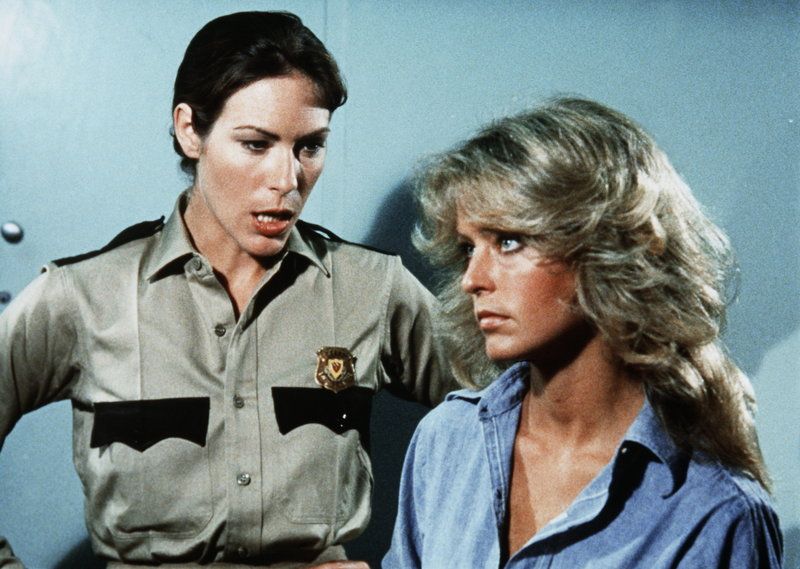
B&S: Yet when I saw it in a theater, everyone yelled out his line. But man, your best line in that, “Do your parents know that you’re Ramones?” I think that’s Mary Woronov’s best role because she’s in a women in prison movie and not a high school comedy.
ALLAN: Well, she was the warden in the most popular Charlie’s Angels* of all time. So she’s perfect for those roles even if they’re nothing like who she really is.
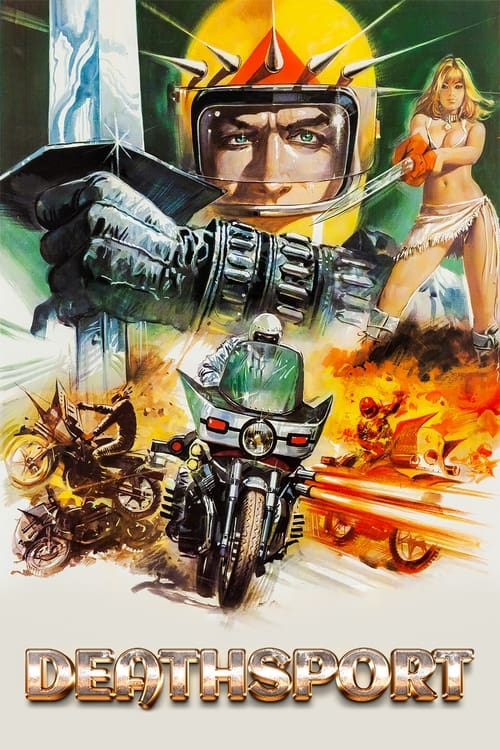
B&S: Another IMDB trivia note that maybe you can dispel: Is that the Deathsportbike in the hallways scene near the end of Rock ‘n’ Roll High School?
ALLAN: No. Those were bigger road bikes and that was the problem. Shooting them for that film, they weren’t really the right bikes for going across a rough landscape. But Roger got a deal on those bikes and we used them…
B&S: What happened with Nicholas Niciphor directing that movie?
ALLAN: Well, Nick had gone to UCLA and he was really good, but he was brought up in Europe and he had never seen a Roger Corman movie. And he hadn’t seen the kinds of movies that we were making, he’d seen art films.
Everyone working with Corman had turned down Deathsport. It had a bad, bad script. We were desperate to do our first picture and we still all turned it down!
One of the problems Nick had was that we’d all been working for Corman for three or four years and had built this network of people. Nick was an outsider. And he’s working for Corman, who was so cheap that he didn’t want to rent out a screening room to show him Death Race 2000 and he’s making the sequel to that movie!
He didn’t know anyone like we did, the people you could turn to to get these done. Making a Corman movie took a certain amount of camaraderie and he was walking into it blind. And his experience wasn’t enough. I don’t want to say anything about him as a person. He was a stranger in a strange land.
It wasn’t going to work, so nothing was working right. If you look at the Trailers from Hell, I summed up all of the things that were wrong about the movie. I worked on it for another six weeks afterward trying to save it. Nothing changed. It still was awful.
Roger was like, put aside Disco High — which was what he wanted Rock ‘n Roll High Schoolto be — and come blow up motorcycles and then I’ll let you make your musical.
The story was so vague and strange. I had to spend a lot of time correcting screen direction and so forth. And I was editing and writing and shooting it was a disaster. The preview was so bad that just before the sword fight, the projectionist closed the curtain.
B&S: Well, the poster sells the movie. And Claudia Jennings. You can’t look away from her.
ALLAN: Ali Larter, who was on Heroes, is the same way. There’s no time of the day or night where she doesn’t look perfect.
B&S: Can you tell me about Heartbeeps?
ALLAN: I got offered this big studio movie. And I really have to say that I totally misread the situation. I didn’t really understand the script or maybe it didn’t indicate that it could be a wacky comedy. I seized on the idea that it could be this big story about robots falling in love and making it a Frank Borzage movie (a bizarre idea and nothing like what the studio wanted). He was big on love conquers death, love is a spiritual thing and I thought that’s what the situation was with these robots. Maybe that’s an intellectually good solution but it’s not the movie they wanted.
I made so many bad choices like a pace that was WAY too slow for comedy. I should have just turned Andy Kaufman loose, used many many more special effects and taken more advantage of the genius of my FX team Stan Winston and Albert Whitlock. We recently did a commentary for the KINO rerelease and that was both eye opening and painful, but useful to me as an artist, not unlike when I critique a film at the AFI.
B&S: But you had a great cast! I mean, Jerry Garcia is in it.
ALLAN: Yes,Jerry was someone I knew really well. And I asked him to do one of the robot voices on the guitar. I was trying to borrow stuff from other parts of my life to shoehorn in. The studio cut ALL of Jerry’s work out.
B&S: The supporting cast Get Crazy is a virtual “Who’s Who” of 70’s Corman movies. Did producer Herb Solow express any misgivings about the casting choices?
ALLAN: What I was trying to do so because it was such a large cast. I didn’t want another Heartbeeps situation. I wanted to pack it with all the things that I knew well.
Back at the Fillmore East there was a doctor who was always on call. When we decided to put him in the movie, we thought, “Who can play a doctor and have that outfit with the shiny thing on his head?” Paul Bartel. One of the best lighting designers in the world worked there. Oh, Mary can play her.
It’s like Mad Magazine and the fold-ins. How much can we fit in?
I wanted you to feel like, in the last five minutes, you realize that you didn’t catch everything and need to go back and watch it again. Maybe I need to watch this three or four times.
Working at the Fillmore was a non-stop thing. That’s why Danny Stern never sits down. And that’s what our life was like. Crazy, non-stop work and everyone else is there trying to lose it to the transcendent experience of the music and we had to keep working. We still had to focus on the job. That was a point of pride.
There’s nothing like that anymore. The music like that doesn’t exist anymore. Music that was a transcendental experience. You came to have the Grateful Dead elevate the theater ten feet off of Second Avenue or The Who just take it to the limit of human behavior and that’s not true any more.
What was so exciting is that we captured that in the movie. So much of it is definitely in the movie. When Piggy goes off the balcony, I love that. I love that everyone has signs and grades him like an Olympic event. And I’m proud that we got the score we did and the songs that were written for the film are good. Not many rock musicals have scores written for them that are good. I mean, our needle drops are even good. When Electric Larry appears, that’s Adrian Belew playing that part, the guitarist who played with David Bowie. The reggae dub in the bathroom scene is so different.
If nothing else comes out of this, I got to make a movie that shows women who love rock and roll back then still love it now in their sixties. And that’s enough for me.
As for the cast, when we did the documentary for the extras, these people are still speaking with such fondness about something that happened 37 years ago. It wasn’t like we just finished shooting. 37 years ago we spent 36 days together in a theater and they talk about it with such vivid memories.
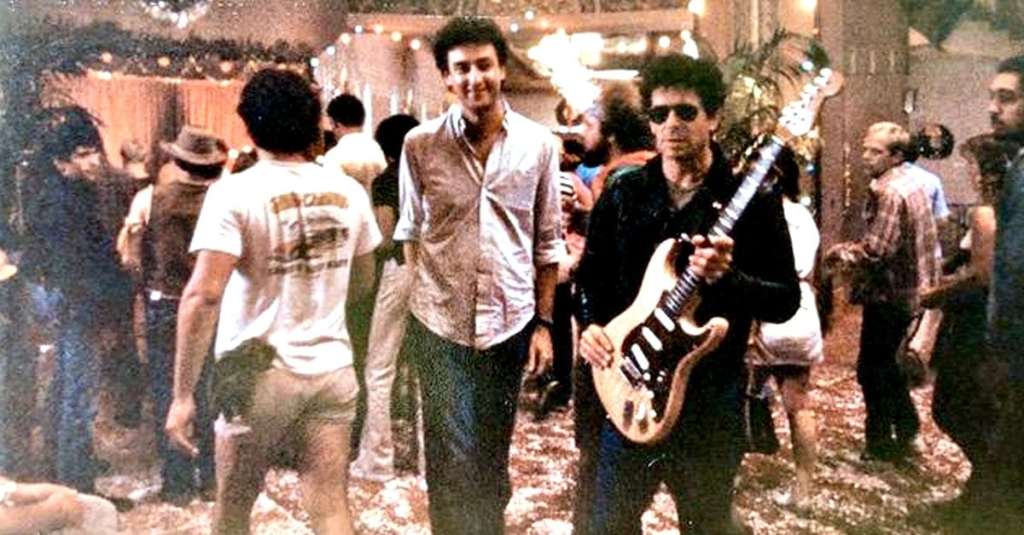
B&S: What was it like to have Lou Reed in the movie?
ALLAN: He was the first person that we wanted. I had lunch with Lou and it turned into a serious discussion about my feelings about his music and his feelings and what he was trying to do. He had just released The Blue Mask and I was telling him how much I liked it and he was happy I wasn’t just naming the songs everyone else knew like “Walk on the Wild Side” or the obvious stuff.
We discussed The Blue Mask and I said, “It’s like journalism. You know what it;s like to get robbed in New York City. What it’s like to face death or the day John Kennedy died.”
The way he wrote a song is the way that great songwriters like Bob Dylan or Neil Young said that the music passed right through them. I’ve heard Dylan say that the songs are like being at the beach, you know how when you look at the horizon, things float toward you and you start to see them better? That’s how Dylan feels songs come to him.
That was my interpretation of songwriting and Lou went along with it.
B&S: Did any of your cab driving experience come in when you did those scenes?
ALLAN: (laughs) Maybe the way he paid for it.
B&S: I love that the bit goes the whole movie and comes back at the end. I’m used to things being forgotten.
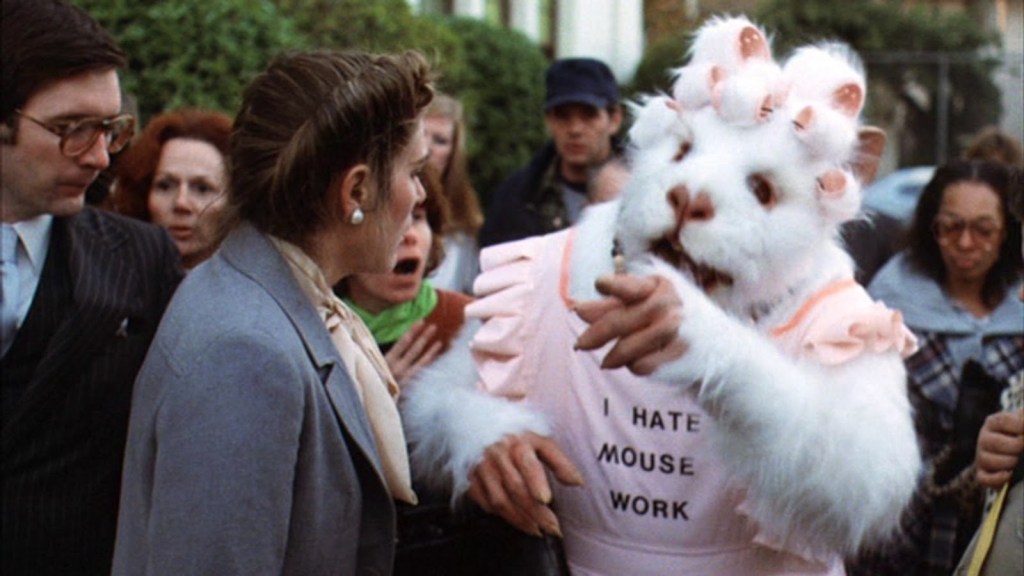
ALLAN: (laughs) I’m all about the callback! I mean, that’s why the scalper is at the concert and the mouse’s mom in Rock ‘n Roll High School‘s apron says “I hate mousework.”
B&S: So why Caddyshack II?
ALLAN: Yes, exactly. Why Caddyshack II? There are no more questions to be answered.
I had a really successful run on television. Moonlighting was a big deal, I was doing LA Law, working on pilots and I had a deal with Warner Brothers to direct and they said, “Well, there’s another National Lampoon movie.” National Lampoon Goes to College and I thought, “That sounds like a good idea.”
They couldn’t get it bought. So they asked, “How would you like to make Caddyshack II?”
You should never make a movie for the wrong reasons. You should only make movies about something where you know no one else can make it better than you. I’m 73. So I finally learned that was the mistake there. Also, the second time I saw Jackie’s one-man show I realized he was wrong. He doesn’t connect to his audience in a personal human way. He is a very funny joke machine and you laugh yourself silly. I needed a comedian who was equally an actor. I went to the producer Jon Peters and told him my fears. He was so convinced that Jackie was a brilliant comedian and could pull it off. Jon looked me in the eye and said, “Don’t turn a Go picture into a development deal.” I should have walked away. Lesson learned.
B&S: It was a can’t win situation.
ALLAN: It was my own fault. Everyone who worked on it worked hard and the writers** were good. It was great to work with Danny Aykroyd.
B&S: Did you have anything to do with the National Lampoon Jaws movie?
ALLAN: (laughs) No but Joe Dante did! I wish he would have made that. Jaws Three, People Zero. (laughs)
I want to see the movie Joe wants to make about Corman, The Man with the Kaleidoscope Eyes.
B&S: I want to see anything he makes. I love that even in a movie like Small Soldiers, it should be a toy tie-in and simple, but he’s an anarchist.
ALLAN: Yes. Joe really isn’t capable of doing anything that doesn’t express who he is. I did this series called Witches of East End and we did some episodes together. And we did a great job within the confines of television.
There’s a lot of middle management, but I got to put my daughters through college toiling in other people’s vineyards. Heroes I’m really proud of. I’m really proud of the series A Series of Unfortunate Events and some episodes of Hellcats. But in between, a lot of it was just work for hire.
B&S: Was Moonlighting a good experience?
ALLAN: It was a good time, because I had scripts that were just like movies that I worship, like The Philadelphia Story and The Awful Truth and Preston Sturgess movies. We had the people that could deliver that stuff and that was fantastic, shooting them with hard light like an old movie.
Here’s an example. You know what a movie buff I am. You should watch Sullivan’s Travels if you haven’t seen it. There’s a sequence where they’re chasing a car with this character, he’s a director who is leaving Hollywood to learn what people are really like so he can make a movie about reality. All the press are following him in this motorhome and people are falling all over the place while it’s moving.
In Moonlighting, Bruce is in a milk truck*** being chased by these killers. And the milk truck is bouncing this way and that, throwing milk bottles out. So the next morning, we were about to shoot it and I brought in my VHS of Sullivan’s Travels and we watched it. Could it work and how do we do it within the right context?
Gerald Perry Finnerman, the cinematographer, said well, the framing is too tight. And that’s why there’s so much energy because they’re bouncing the sides of the frame and it looks like they’re going to fall out of the movie. We did it in two or three takes and that’s one of the happiest things of my life because I got to do my kind of comedy within this show.
That’s what made television so great for me because I was in charge a lot. And I was able to see scenes in a script for Heroes and recreate the opening of 8 1/2.
I also got to work on two shows that were on the zeitgeist of what was on people’s minds about gender and relationships. Every episode of Moonlighting is about a woman in charge and she wants respect. And Ally McBeal, with the dancing baby, that went through the roof.
I’ve been very lucky in TV and doing certain shows. I learned a lot about different points of view and things in the world. When I was doing Crossing Jordan, that was a show about cornoners at a point in my life when I was just starting to face mortality. And doing Heroes was a great experience.
ALLAN: I did! Oh man — we were really taking the piss out of them in that video when you watch it. When I was working on Hellcats, one of the music guys asked if I ever did a video and I told him, have you ever seen “Breaking the Chains?” And he was like…wow!
B&S: And “Beast of Burden,” which is one of the best videos ever.
ALLAN: It has my favorite shot of my career in it. When Bette is up on the peoples’ shoulders, she reaches down and pulls Mick up and we follow that with the crane.
B&S: You got your crane shot!
ALLAN: I did.
B&S: What do you teach at AFI?
ALLAN: At AFI, everyone comes in with a discipline. Cinematographer, director, producer, writer. You team up and make three movies in your first year. In my class “Narrative Workshop & Analysis” we watch all of the films, four a week and we critique them as a class. It can be about themes, story or technical aspects. It’s very demanding and the students are from all over the world. After the session with the whole class, I sit with creative team privately where it gets pretty granular. I ask them a lot of questions and it’s not always about the film but about their feelings on making films and what movies inspire them.
I also do seminars about different topics like how has the romantic comedy changed as gender relations do? How much does the focal length of a lens change the writing, production design, editing, etc? We did a history of song scores and needle drops from Casablanca to Jackie Brown.
I love it. It’s a return to my roots as a film student at NYU and in Corman Land.
We really appreciate the time that Mr. Arkush spent with us and are jealous of his students, as we learned so much in the short time we got to spend with him. Please grab Get Crazy from Kino Lorber, as this is a movie that deserves to be in the collection of everyone that loves movies and rock ‘n roll.
Thanks to Mike Justice, Craig Edwards and Gigi Graham for their help with this interview.
*”Angels in Chains” which was episode 5 of season 1. You can watch it on Tubi.
**Harold Ramis and Peter Torokvei
***”Maddie’s Turn to Cry” which was episode 13 of season 3.
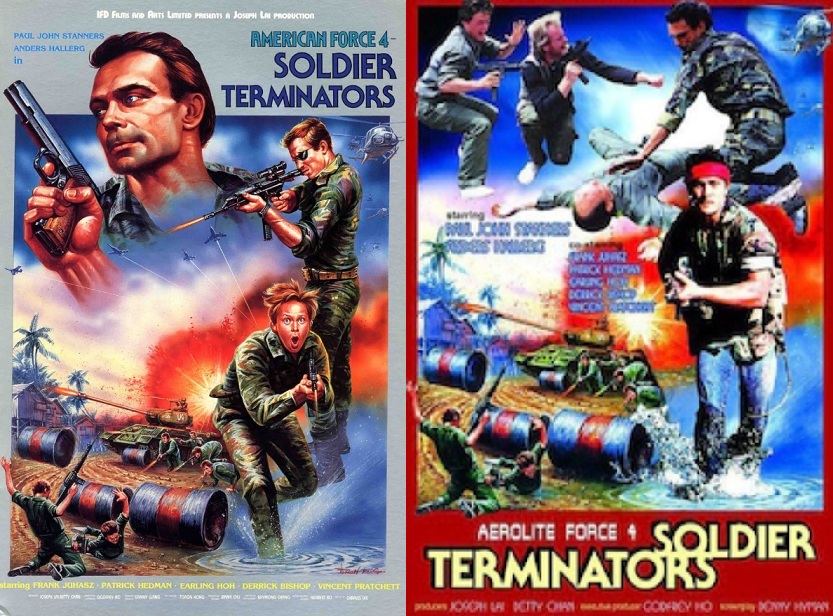
Leave it to Godfrey Ho to mash-up Sly Stallone and Arnie Schwarzenegger into one film. But not First Blood and Commando: Rambo and The Terminator. Only one problem. Well, there’s more than one problem with this film, but the main one: there’s no “Terminators,” as you know them, in this film. Luckily, Godfrey didn’t put a robot on the cover to frack with us. Sorry to slag ya’, Godfrey, but you are the Pacific Rim exploitation king that out-cheaps the crowned King we hail that is Cirio H. Santiago.
Alas! I know this is hard to believe: but this isn’t the usual Godfrey Ho hack job, where he buys up forgotten or unfinished Hong Kong and Philippine films, cuts them together, dubs new dialog, and releases the end product. If you read our reviews for Devil’s Dynamite and Robo Vampire (yes, it is exactly what you think it is; there is, in fact, a robot . . . just not in this film), then you know what we mean. But for those of you that are not familiar with the cinematic “style” of Mr. Ho: Soldier Terminators is one of his 150 films that he credit-rotates under the names of director and screenwriter Joe Livingstone and screenwriter Willie Palmer, aka Godfrey Ho, but here’s Charles Lee. During Ho’s 25 years of making genre films in Hong Kong, Taiwan, and the Philippines, his mostly Z-grade movies never lost a dime. And he parlayed that experience into teaching film — I know! — at Hong Kong Polytech.
So, with that being said, Ho actually made a fluid movie. We think. It actually looks legit — for once. It’s still rumored that Soldier Terminators is two films cut into one: but if that’s true, it’s all effectively spliced together. Now, that’s not to say the Stallone-inspired proceedings make a whole lot of sense — and what Ho flick does — but either it being one film, or the rumored two, it is still the most consistent film he’s made in my memory. Again, back to Devil’s Dynamite and Robo Vampire, which are the same film, but, with creative editing and dubbing, became “two” films.
So, from what we gather in the “plot” of Soldier Terminators: The People’s Freedom Army is a union of Southeast Asian soldiers out to rid their lands of communism. Hey, that’s mighty “American” of you. But the PFA want nothing to do with the Americans. We think. So we send our best man: Alexander Samson. Sammy-boy travels to Malaysia and infiltrates the PFA, so as to feed information back to his superiors. We think. Successfully inside, Sammo begins training with the group. They like him. He’s a good fighter and walks the talk. Meanwhile — we think, from that “other film” — we have a crazed commander who doesn’t want the PLA’s activities to succeed; for if they do, then the Americans will gain a foothold in the region. And, we think, the commander has a financial concern in the area with the Commies. Or something.
Now, the actor portraying our lead character of Alexander Sampons, Anthony Alonzo, is listed on the IMDb for this film as “uncredited” and as “archive footage.” Uh, oh. “Archive” means it wasn’t shot for this film. And it’s true: Anthony Alonzo is, in fact, uncredited. In a double fact: No one is credited, sans two actors: Paul John Stanners and Anders Hallerg. Another fact: Actor Vincent Pratchett leaves a comment on the You Tube upload of Soldier Terminators and makes the point that he worked on the film (he does, so says the IMDb; his only film) and he’s not credited in the film itself.
Now, Paul John Stanners turns up (“uncredited” per the IMDb) in . . . uh, oh, Robo Vampire. Shit, Godfrey: Here I am saying this is your “best,” and you’re fucking it up. So how much do you want to bet Stanners’s work, here, in Soldier Terminators, was cut into Robo Vampire? As to whom Anders Hallerg is . . . your guess is as good as ours. Hallerg is not listed on the film’s IMDb page and he doesn’t populate with his own actor’s page. The “star” here, Derrick Bishop — who’s not listed in the film’s opening titles or end credits (in Ho’s defense: there are no “end credits” to the film; all we get is a “The End” title card) — appeared in three more late ’80s films: Magic Emerald (aka Hell Hunters), Instant Rage, and Angel Force. Oh, and something called Advent Commando 5: Sweet Inferno. And Ho made all of them. Did Bishop star in one — Advent Commando 5 or Soldier Terminator — then got spliced in to “starring” in the others?
Hey, it’s a Godfrey Ho film, so your guess is as good as ours — and it’s probably right, just like ours.
Now, for that pesky title prefix of “American Force”: Okay, the alternate titles on this are American Force and American Mission. As for the “American Force 4” prefix: we have no idea what the other three films are in the “series.” Chances are, with Ho, there’s no continuity between the four films. Only the Kobol Lords know what films ended up with the “Advent Commando” prefixes. I gave this perplexing celluloid titling enigma 15 minutes of investigation . . . and came up with a goose egg. It’s — as with all Godfrey Ho films — a mystery. And none of his films should exist, yet they do. And we talk about them. And they all made money. So the joke’s on us. Are YOU teaching school at Hong Kong Polytech?
There’s no trailer to share, but we found two freebie streaming copies. Hey, it’s Godfrey Ho and video junkoids love ’em, so, of course, there’s more than one upload. Soldier Terminators is on You Tube HERE and HERE.
About the Author: You can learn more about the writings of R.D Francis on Facebook.He also writes for B&S About Movies.
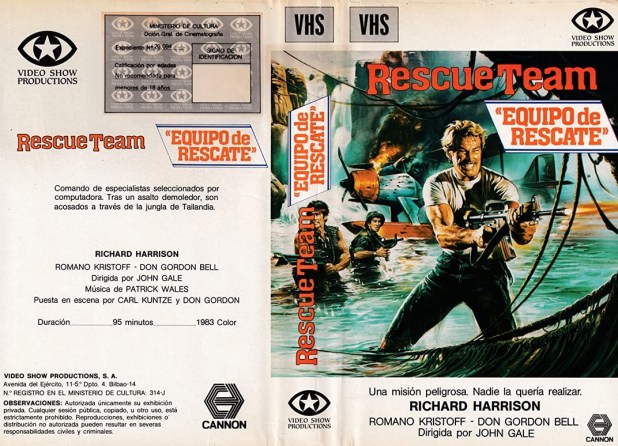
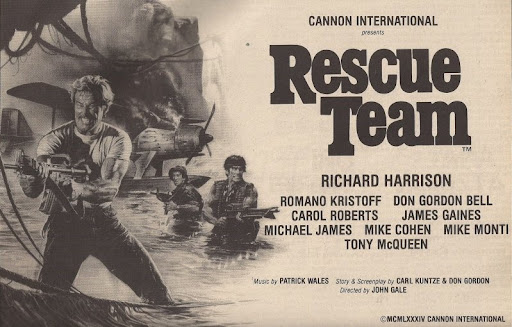
Jim Goldman is also Jun Gallardo, the director of fifty plus movies like SFX Retaliator and The Firebird Conspiracy. Are you surprised that he’s recruited Richard Harrison for this film mission? If you’ve watched as many movies where the Philippines become the new Vietnam, you’re not.
Also known as Operation Coleman — Frank Coleman is the man who needs to be rescued — and featuring the same cast as Intrusion: Cambodia (coming later this week) this one finds Harrison as CIA agent Robert F. Burton. He’s offered a hundred thousand dollars to save the POW and uses a government computer to choose the best men for the job.
Between pretending to be archaeologists and spending the night before their mission getting drunk at a strip club may not be the best move for these soldiers. Plus, in any gathering of thirteen — or however many people go to Vietnam to get a treasure or rescue someone in an 80s VHS rental movie — expect a Judas.
Somehow, Tetchie Agbayani — who plays Kara in this movie — would also appear as Princess Rubali in Gymkata, get to be in The Money Pit and Disorderlies (of all movies!) and was the first-ever Filipino woman to appear in Playboy (even if it was the German version). She’s still acting today.
It’s great to see the always-welcomed and familiar face of character actor Craig muMs Grant (yes, his name is stylized as such). His breakthrough role was as “Poet” on HBO’s Oz, while his many network and cable series appearances included the Law & Order franchise. He was working on the Starz series Highttown at the time of his death. He also appeared in Spike Lee’s Bamboozled (2000). He died due to complications of diabetes at the age of 52 (New York Times obituary) this past March. The Scrapper, however, will not be the end of his legacy: his final two films are in post-production: Life After You (with Kathryn Erbe of Law & Order fame) and Bitcon (with Frank Whaley), with No Sudden Move (starring Don Cheadle, Benicio De Toror, and Joe Hamm) also recently released.
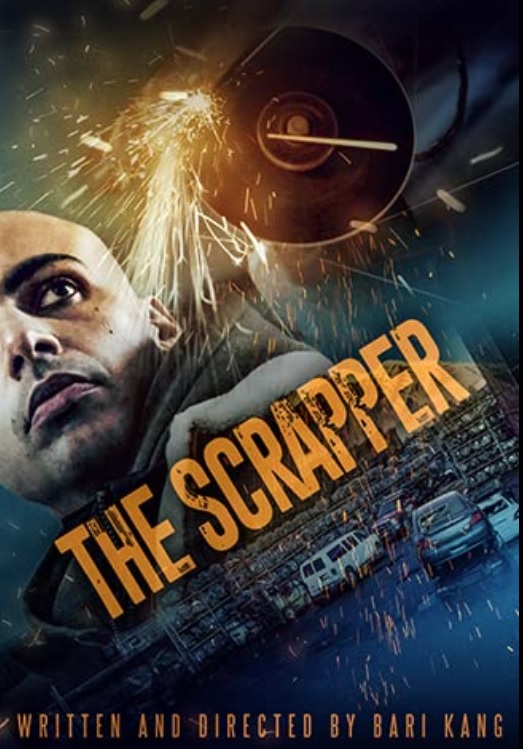
Grant stars, here, alongside the film’s lead actor, writer and director Bari Kang. The Scrapper is Kang’s second feature film. His debut feature, Lucky (2016), a crime thriller that captured his immigrant experience, was respected enough in critical circles to be reviewed in-the-positive by The L.A Times — not an easy task for self-produced indie feature.
Kang is ex-con of Punjabi-Mexican heritage who now not only cares for his mentally-challenged brother, but also expecting a child on the way. To provide for his family, he takes on one last job. That “last job” — a violent robbery — may be the last of everything as he finds himself between warring factions of Punjabi and Mexican crime syndicates versed in money-laundering, drug running and human trafficking. When the job goes bad: he is pursued by both mobs in an act of vengeance.
If you’re a fan of Quentin Tarantino and the Goodfellas-side of Martin Scorsese, you’ll enjoy the effective, dark, gritty tone-on-a-budget that Bari Kang will bring to your favorite streaming platform starting December 7 from 1091 Pictures. You can also watch Lucky as a VOD on Amazon.
Both films are well-made, heartfelt passion works worthy of streaming and of your making it a double-feature night with Bari Kang.






 B&S About Movies
You must be logged in to post a comment.