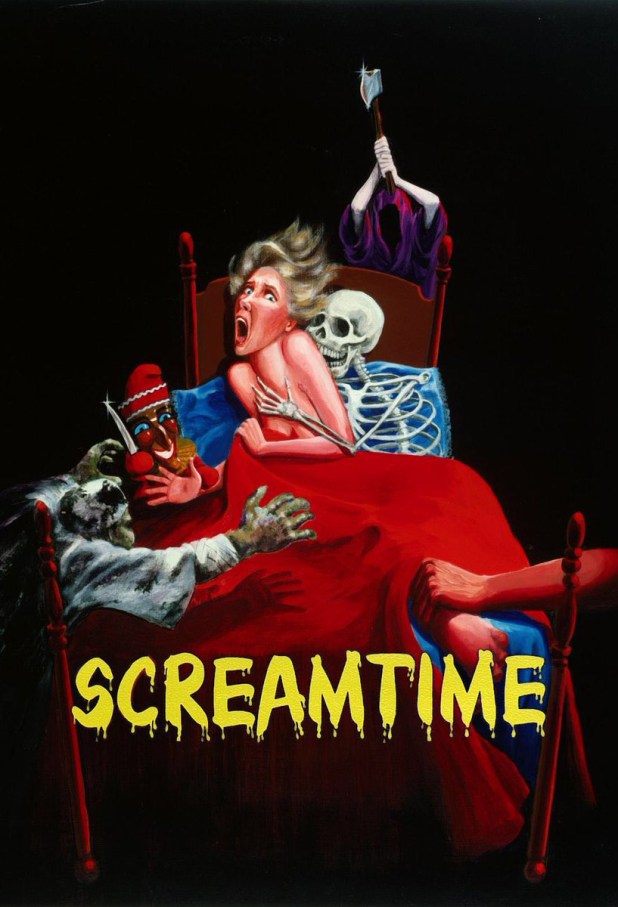
Screamtime goes from New York City — the wrapround story is about two guys stealing the videos that we’re about to watch — to London, which is kind of jarring, as the stories play out.
“That’s the Way to Do It” is about the personal pain of a Punch and Judy puppeteer whose stage and puppets have been set ablaze as those around him are killed.
“Dreamhouse” is so much a retelling of The Shining that the kid is named Danny. It’s about seeing dead people in a new house and those dead people are planning on creating even more death. This sequence has a really decent slasher feel.
Do You Believe in Fairies?” is about two older women being robbed — by Dollar vocalist David Van Day — yet their house is under the protection of fairies and gnomes.
This has two directors: Stanley Long is best known for making a few of the Adventures of… sex comedies, Sex Through the Ages and the STD education movie It Could Happen to You. He’s joined by another director you may know better, Michael Armstrong, who wrote Horror House, House of the Long Shadows and Mark of the Devil, which he also directed.
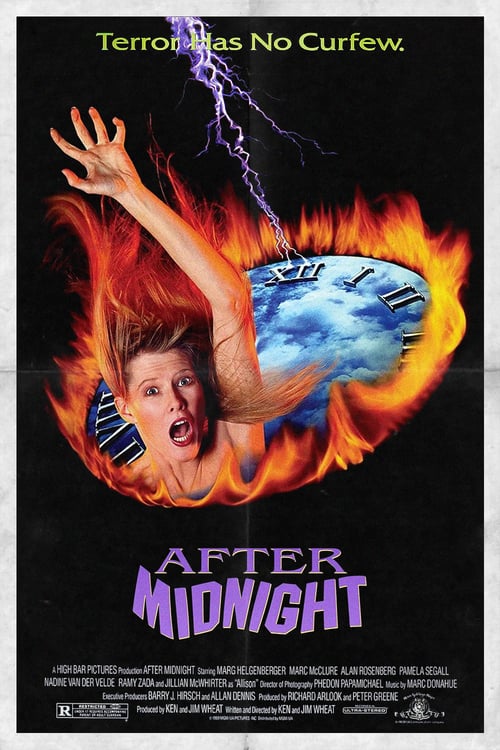
In a class called The Psychology of Fear, Allison and Cheryl (Pamela Segall, the voice of Bobby Hill!) learn all about being scared by Professor Edward Derek, who teaches class with a loaded revolver that causes a jock to wet himself. The college shuts him down after that, but he still offers private lessons in his home where he tells his students three stories all about being frightened.
In “The Old Dark House,” Kevin (Marc McClure) and Joan (Nadine van der Velde, Critters) are separated inside a haunted house but there’s a surprise for, well, both of them. “A Night on the Town” has four women battling a deranged gas station attendant with a pack of trained dogs ready to kill for their master. “All Night Operator” has Alex (Marg Helgenberger) taking calls for a woman who is being stalked before the caller* turns his attention on her.
After these tales, we’re back in the home of the professor, who is attacked by the disgraced athlete before he turns the tables on the man and murders him with an axe. His entire house becomes a literal hell on earth, dragging everyone into the flames before Allison wakes up in his class all over again.
After Midnight didn’t have many fans when it came out, but like I enjoy horror anthologies. Obviously, I’m doing an entire week of them. There are some big shocks in this and it goes to some interesting places, even if the wrapup is kind of an easy ending.
*He’s played by Alan Rosenberg, her real-life husband.
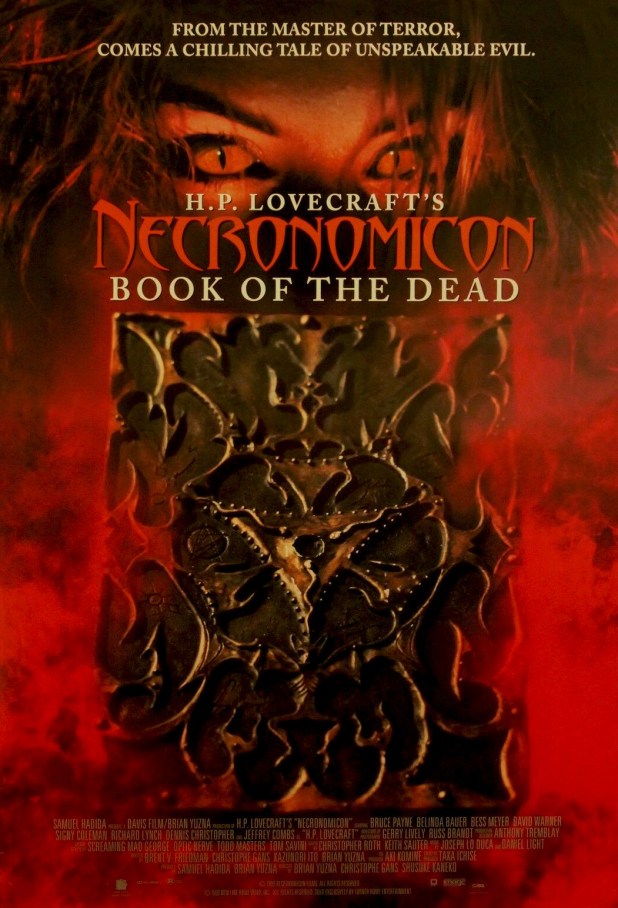
H. P. Lovecraft (Jeffrey Combs!) tells his cabby (Brian Yuzna) to wait outside the monastery — he’s got a Necronomicon to find. As he races to find a copy before the monks stop him, he’s locked inside a room where he gets to discover the future through the book.
The first story, “The Drowned,” is loosely based on “The Rats in the Walls.” It tells the story of Jethro De Lapoer (Richard Lynch!), whose wife and child died in an accident, causing him to set a Bible ablaze at the funeral. He brings them back to life with the Necronomicon, but the green glowing eyes of his family as they rise upset him so much that he leaps to his death. His nephew has no such compunctions and brings back his wife Clara (Maria Ford), who comes back in the same way, nearly causing his death. Stuart Gordon’s Castle Freak was also inspired by this same story. This story and the framing story come from Yuzna.
“The Cold” is based on the short story “Cool Air” and has Dr. Madden (David Warner!) injecting spinal fluid and staying inside a chilled room to stay alive forever, at least until the power goes out. Dennis Christopher, Gary Graham and Millie Perkins are also in this story, which you may have seen in Alberty Pyun’s H. P. Lovecraft’s Cool Air or the Jeannot Szwarc-directed, Rod Serling-written Night Gallery episode. This was directed by Christopher Gans, the director of Brotherhood of the Wolf and Silent Hill.
At the end, Lovecraft avoids the monks and runs into the night. This film may not be completely successful at making an anthology of his stories, but it’s pretty entertaining. It was well-received in the U.S., but a much bigger success in Europe and Asia, where it played theaters.
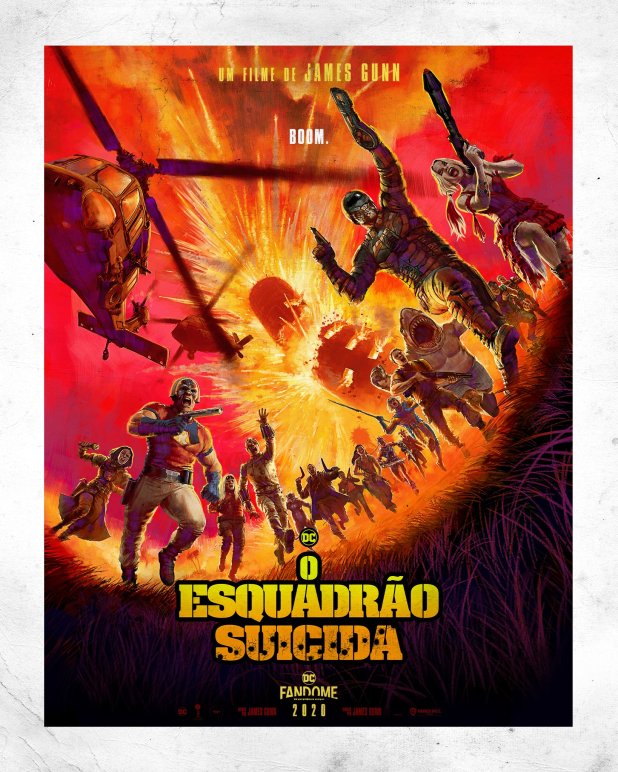
Yeah, I get it. There are a lot of superhero movies. But saying there are too many is like saying there are too many slashers or comedies. It’s a genre in and out of itself that can tell a variety of different stories. And nobody has done a better job of that than James Gunn, who started in the world of Troma and low budget horror like Slither before making Super and then taking over his own part of the Marvel Cinematic Universe with Guardians of the Galaxy.
But let me tell you — this is basically a high budget low budget film with a heart and you’d be silly to skip it. What other movie would be audacious enough to — spoiler warning — kill more than half its cast including most of the names on the poster before the credits even begin?
Where David Ayer’s Suicide Squad was pretty much considered a fumble — I liked the Deadshot moments and seeing the cast on screen — this movie fully lives up to the premise of John Ostrander’s run on the comic book. These are the very lowest of the low when it comes to super-villainy, forced by the American government to do missions where there’s every single chance they’ll die, whether at the hands of their enemy, one another or by the bombs implanted in their heads by their team leader Amanda Waller (Viola Davis, perhaps given less to do in this movie but nailing exactly who the character is).
Two different versions of Task Force X have been sent to the island of Corto Maltese to destroy Jötunheim, a laboratory that holds the secret of Project Starfish. One team — led by Rick Flag made up of Harley Quinn (Margot Robbie, who has this character down as perfect as it gets), Captain Boomerang (a sadly wasted Jai Courtney), Savant (Michael Rooker), The Detachable Kid (Nathan Fillion), Javelin (Flula Borg), Mongal (Mayling Ng), Weasel (all CGI and looking like Bill the Cat) and Blackguard (Pete Davidson) will take the beach. The other — using them as a distraction — is Peacemaker (a perfect John Cena), Bloodsport (Idris Elba), King Shark (voiced by Sylvester Stallone), Polka-Dot Man (David Dastmalchian, not the first choice for a superhero character or actor, which should explain a bit of this movie to you) and Ratcatcher 2 (Daniela Melchior).
This is a deep cut, but even Squad pilot Briscoe shows up to fly their transport. Deeper still is getting characters like Calendar Man, Kaleidoscope and Double Down into the prison.
There’s really no way that I can be subjective in my review of this. The Ostrander-era Suicide Squad is my favorite comic of all time and I subscribe to its modern remix Copra — you should too RIGHT NOW — and this movie completely hits all of the right notes, from how Killer Shark could eat anyone on the team at any time to Savant running from the battle and paying the price.
So yeah. There are a lot of superhero movies. There is only one that has a kaiju starfish, a man who loves peace so much that he’d kill for it, full-frontal male nudity and perhaps the most gore I’ve ever seen in a mainstream film, as well as moments in the Project Starfish lab that would not feel out of place in an Italian zombie film.
Movies can be and should be escapist fun. In a world where nearly every DC film has faltered to almost astounding levels, unable to even get the character of Superman correct in the last few decades, Gunn hits it out of the park. I can’t wait for the Peacemaker show and whatever comes next.
This is how you should feel after watching a blockbuster, folks.
Editor’s Note: We’ll also discussion two, even more obscure Ormond family productions, with the films Surrender at Navajo Canyon (1980) and The Sacred Symbol (1984), in the context of this review.
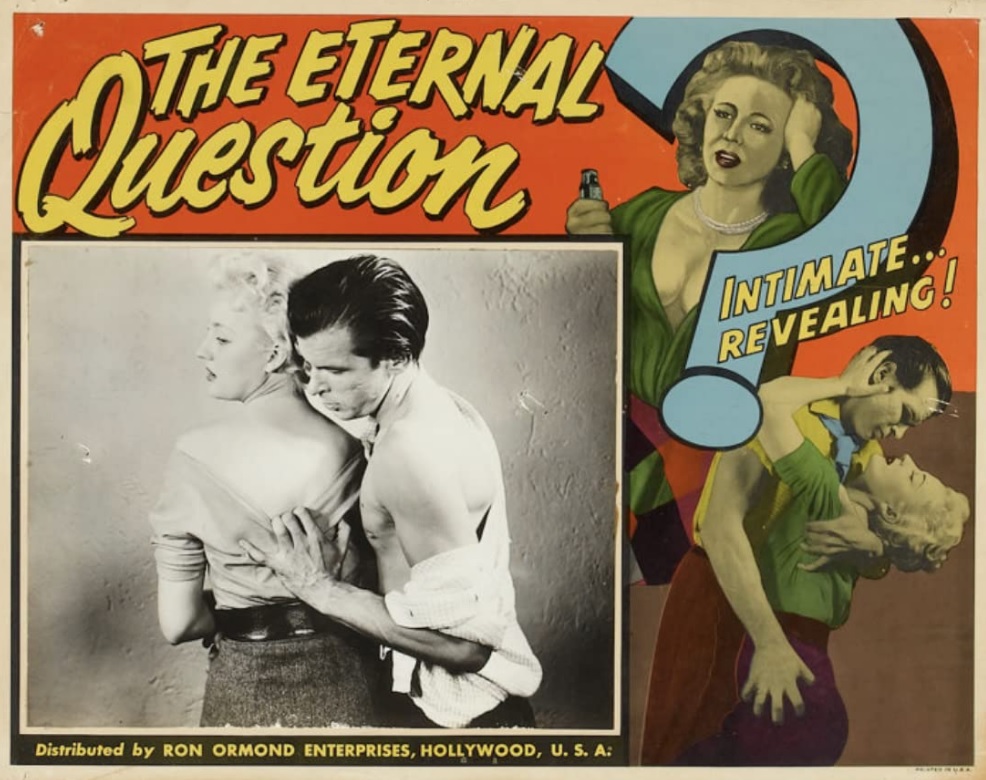
You wouldn’t know it by the lobby card, but this isn’t a soft skin flick or film noir rife with sexual innuendo: it’s a film about palm reading.
Yes. Palm reading.
Well, at least the guy’s palm is pawing the woman.
“What stark and naked emotions lie ahead?”
If you know your Ron Ormond history, you’ll know the Nashville-based indie filmmaker began his show business career as a vaudeville magician, while his soon-to-be-wife, June Carr, worked the stages as a dancer and singer. So it makes sense, since palm reading was part of the traveling circus and carnival roadshows of the day, that Ron Ormond would want to preserve the art of palm reading and fortune telling — as he did with minstrel shows in the frames of Yes Sir, Mr. Bones.
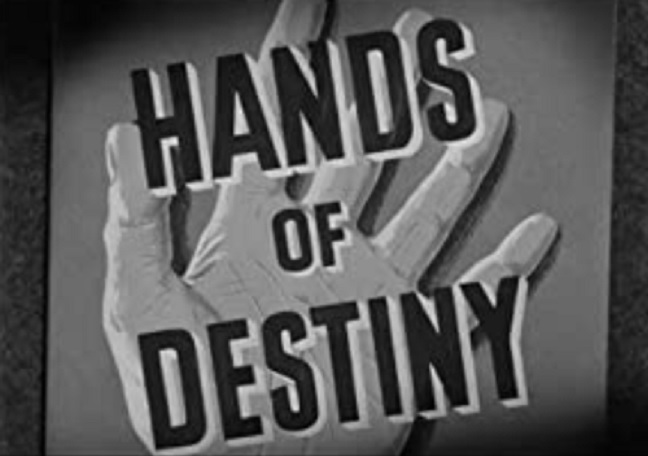
The Eternal Question, a black and white-shot film, is actually an Americanized remake of a part documentary/part dramatic film produced in the U.K. about a palm reader and the life of his clients, known as Hands of Destiny (1954). Produced by Ron Ormond, he took a co-writing credit as result of his tweaking screenwriter Tony Young’s initial script. They both co-directed the remake, which features the same cast as Young’s film.
Hands of Destiny concerns then famed Austrian palmist-to-the-stars Josef Ranald, who rose to fame with his book, How to Know People by Their Hands (1941), which served as the source material for the film. As a reader of everyone from Adolf Hilter to Bob Hope and Gary Grant, Ranald claimed — in the pages of his book and the film he co-scripted — the “evil” of people could be read in their hands. To that end: though the course of the film, Ranald, appearing as himself, saves the life a woman from a suicide-drowning via a reading; he reunites a long-lost mother and son by comparing their similar palm prints, etc. And that’s the tale: a collection of vignettes of Ranald’s work as a palmist. During the course of the film, we’re treated to his signed collection of palm prints from U.S. presidents, celebrities, and even Nazi officials.
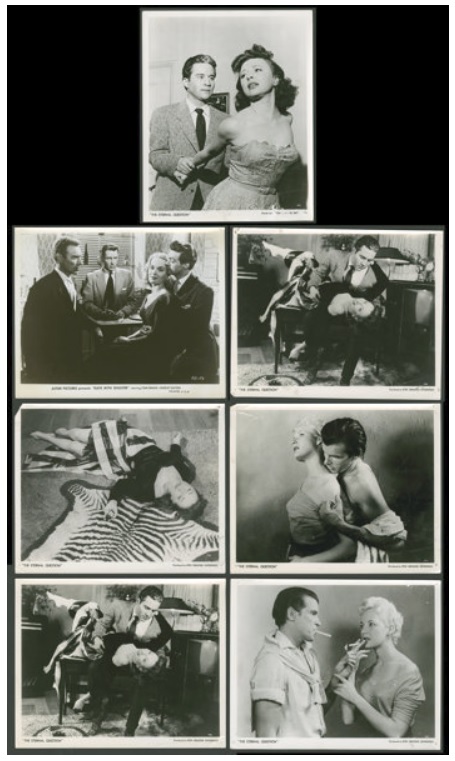
It is said that Ormond’s version isn’t so much a remake, but a re-editing of the British film (thus the identical cast), with new inserts added, such as an intro sequence with Charlie Chaplin. Jr. as a psycho-mugger in the park — and he doesn’t appear in the British original. Bill Nagy (Fire Maidens from Outer Space), however, appears in both films.
The newsprint ad below tell us The Eternal Question was paired with another Ron Ormond release, Attack of the Flying Saucers.
Ron Ormond did a UFO film?
Attack of the Flying Saucers was an imported, West German science fiction short (17 minutes) known as Fliegende Untertassen, aka Flying Saucers (1954), shot at Filmaufbau Studios in Göttingen with direction co-credited to industrial filmmaker Georg Zauner and animator Friedrich Wollangk. Famed contactees Daniel Frey and Reinhold Schmidt appear in the film.
Courtesy of the Tapatalk group-forum Monster Kid Classic Horror.
These two Ormond obscurities were paired in a triple feature with Fire Maidens from Outer Space by way of producer-distributor Robert L. Lippert. Ormond and Lippert collaborated over the years, especially on several westerns from 1948 to 1951 starring Lash LaRue (who worked on Ormond’s non-western, Please Don’t Touch Me There). Fire Maidens also features stock Sfx shots from Lippert’s own Rocketship X-M (read up on that production in our review of 1951’s Flight to Mars). But let’s not forget star Bill Nagy’s connection to The Eternal Question.
Outside of a new, English-language narration and dialog track created by Ron Ormond, the film remained the same. It’s also said the Ormonds planned to make their own UFO feature following the release of Attack of the Flying Saucers. Titled Crusade to New Horizons, it was to consist of “contact” stories told to Ron Ormond and feature insights from various UFOlogists. The feature-length film — which may or may not have incorporated footage from Attack of the Flying Saucers — was never made.
Ormond’s interest in otherworldly subjected led to his co-authoring a series of late ’50s books on the subjects of psychic phenomenon, Asian mysticism, hypnosis, and psychic surgery with his magician-mentor Ormond McGill. (Ron Ormond, born Vittorio Di Naro, derived his vaudevillian stage name, Rahn Ormond, in tribute to McGill.) Those “self help” books led to Ron working as the editor-in-chief for Flying Saucers From Other Worlds magazine. (By the mid-60s, Ron Ormond added television programming to his resume: as a producer of Roller Derby games for broadcast. His son, Tim, later a filmmaker in his own right, appeared as one of the Derbities in the child’s version of the games broadcast.)
Upon developing and undergoing medical treatment for bladder cancer in 1959, Ron and McGill traveled on an eight-month spiritual quest to the Far East that also took them into India and the Philippines. Those travels were documented in the photo journals Religious Mysteries of the Orient, Into the Strange Unknown, The Master Method of Hypnosis, The Art of Meditation, and The Magical Pendulum of the Orient. Also filming those travels, that footage — such as Filipinos ritually flagellating themselves — would be used in his later, ’60s films, such as Please Don’t Touch Me and The Girl from Tobacco Row.
That footage, shared in those films, also reappeared in Tim Ormond’s The Sacred Symbol (1984), a part documentary/part dramatic reenactment tale that examined, not only Christianity, but religions from around the world. Footage from Untamed Mistress (1959), which was actually footage shot-on-safari by a family friend, also appeared in the film.
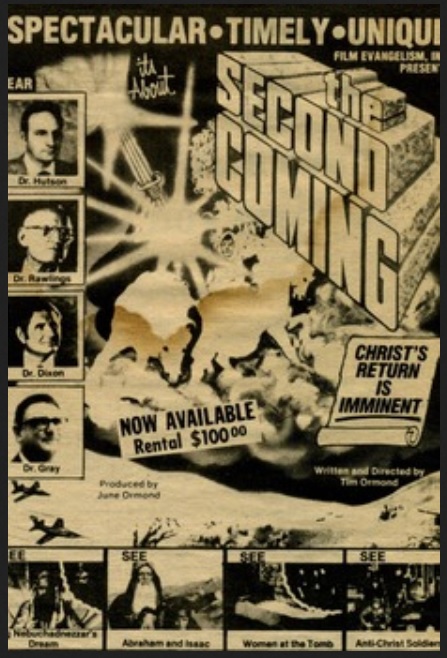
It was after two, light-plan mishaps, with the second in 1970, that Ron Ormond dedicated his talents to spread the world of the Lord by producing a series of films with Southern Baptist pastor Estus Pirkle, the first of which was If Footmen Tire You, What Will Horses Do?. Ron’s final film before his May 1981 death — which was completed, in full, by Tim Ormond due to Ron’s failing health — was The Second Coming (1980).
Prior to the production of The Second Coming — a film mixed with science fiction, theology, special effects — Ron combined his extensive, past westerns experience with his later religious endeavors for the film Surrender at Navajo Canyon (1980). That promotional film was produced in conjunction with the ministry of Pete Rice to chronicle his efforts in ministering to the members of the Navajo Nation.
Courtesy of Letterboxd.
Tim spoke at length about the production of The Scared Symbol during a 2007 interview on the digitized pages of Mondo Stumpo:
“So from that point, the last Christian film I made [The Second Coming], which does not mean I’m not still a Christian, I am, I’ve just kind of gotten involved in other things. I still keep in touch with some of my other friends. But the last one I made was The Sacred Symbol, which was, in essence, when my dad went to the Orient. He shot a whole lot of footage of very unusual and strange things. Anything from fakirs to snake handlers to Buddhists to the flagellantes. Well, I had all this footage, but I was now making Christian films, so I thought, ‘What can I do with this strange footage?’
“So I wrote a script around the footage, and it was called The Sacred Symbol. And basically the storyline was, some people met at the Adventurer’s Club, and they discussed their guest speaker, John Harvey, who in real life was John Calvert, who was a famous worldwide magician and who was a friend of my dad’s back in Hollywood [when Ron, himself, was a vaudevillian magician]. And so, at the Adventurer’s Club, they discussed John’s travels, and he talks about, ‘I’ve been here and seen this, and I’ve been there and seen that, but I finally found something which amazed, even me, when I uncovered the sacred symbol.’ And then [John] started talking about Christ and such and such, and that led us into the finale of the movie, which was, ‘There’s all these various, different things and religions, but there’s the true path,’ and such.”
Our thanks to British film fans David McGillivary and Leowine/IMDb and the Telegoons.org website for their previous research regarding The Eternal Question in helping B&S About Movies chronicle this truly lost Ron Ormond film — in our quest to catalog his secular and Christian films — as there are no clips, trailers, or full streams of The Eternal Question to share.
You can learn more about the film’s British counterpart, Hands of Destiny, as well as television producer, writer and director Tony Young, with his career biography at Telegoons.org. Tony’s best-known production to American audiences is his final film, Penny Points to Paradise (1951), as result of it serving as the film debut of Peter Sellers.
You can pay-for-view stream Hands of Destiny from the BFI – The British Film Institute. There are no copies of Attack of the Flying Saucers or its German counterpart online.
About the Author: You can learn more about the writings of R.D Francis on Facebook. He also writes for B&S About Movies.
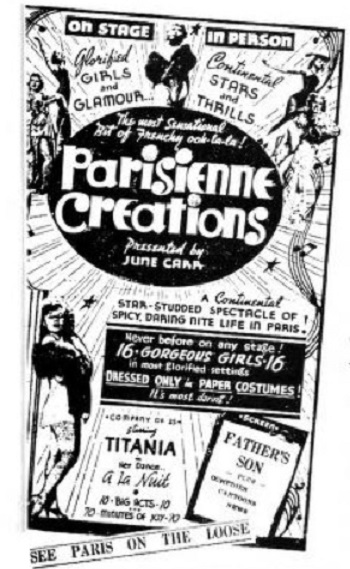
Editor’s Note: We’ll also touch upon another lost, forgotten Ormond historical document, Parisienne Creations, concerned with the vaudeville-inspiring cabaret halls of Paris, within the context of this review.
The many who are quick to denounce this entry on Ron Ormond’s resume, unfortunately, don’t know the man behind the lens.
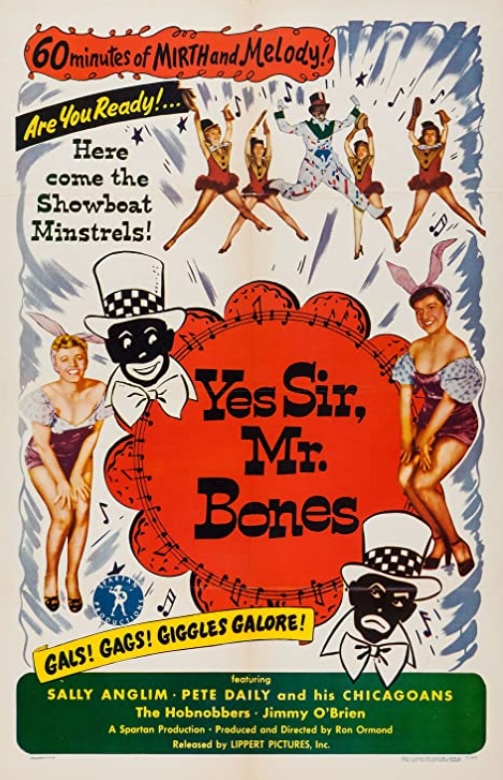
Ron Ormond directed a series of westerns for Robert L. Lippert Productions* — twelve of them with Lash La Rue, plus one non-western with Lash, Please Don’t Touch Me. Ron was then contracted — in a style similar to his “jukebox musicals” Square Dance Jubilee (1949) and Kentucky Jubilee (1951), his western-musical Forty Acre Feud, and vaudevillian document Varieties on Parade (1951) — to recreate, for the sake of documentation, a 19th century minstrel show to put on drive-in screens.
Born Vittorio Di Naro, anglicized to Vic Narro, Ron got his start in show business as a vaudeville stage magician, “Rahn Ormond,” in tribute to his friend and mentor, magician/hypnotist Ormond McGill. It was on those touring stages where Ron met singer and dancer June Carr, who soon became his long-time wife and co-partner in film, many of which we’ve reviewed at B&S About Movies.
Again: This film is not a minstrel show committed to film: it is a documentary — presented in a dramatic format — about minstrel shows.
It is important to understand Ron’s work and affections for his vaudeville years, which he paid tribute to with Varieties on Parade (1951), because the precursor to vaudeville, which lasted until the 1930s, was minstrels shows, which dated back to the mid-1800’s. Both entertainment forms included a wide variety of acts consisting of comedians, singers, dancers, acrobats, magicians, ventriloquists, animal acts, and even male and female impersonators — with one exception: minstrel shows mostly featured white performers adorned in black face for the purpose of portraying black people. We say “mostly,” because African-Americans were also part of the casts (as shown in the clip, below). In fact, as the “white” shows toured, there were black-only minstrel shows that also toured the U.S. in the early days of the 19th century.
So, while many express outrage with the mere existence of Yes Sir, Mr. Bones, the film is not a case of Robert L. Lippert “putting on a minstrel show” and capturing it on film. The film is a case of Ron Ormond creating — for the times — a document regarding the earliest beginnings of vaudeville: an art form that gave birth to the iconic, “Borscht Belt” talents of Red Skelton, Milton Berle, Sid Caesar, Henny Youngman, and George Burns. Even illusionist Harry Houdini developed his skills on vaudeville’s touring stages. The African-American equivalent, the “Chitlin’ Circuit,” gave rise to singers such as James Brown, multi-performers like Sammy Davis, Jr., comedian-impressionist Flip Wilson (who dabbled in female impersonation, long before Martin Lawrence and Tyler Perry), and comedian Redd Foxx, who rose to the top of U.S. TV ratings in the early ’70s with his updating of the Amos ‘n’ Andy comedic formula with his series — featuring situations and characters based on his stage act — Sanford & Son.
As with Ron Ormond’s other works in the jukebox musical format we’ve previously reviewed at length, or the jobs where he had to “make a movie” out of stock footage and the pieces-parts of other films (Untamed Mistress), Ron needed to come up with a “plot” to present the material. In the case of Yes Sir, Mr. Bones: a plotline was additionally needed to soften the presentation, so that the production didn’t come across as “putting on a minstrel show” and capturing it on film — which would be, admittedly, offensive.
Ron Ormond and his wife June also preserved the days of the Moulin Rouge-era cabarets of Paris with Parisienne Creations (year unknown; sometime in the ’50s)/courtesy of the Internet Archive.
So Ron came up with story about a young boy visiting an entertainment retirement home occupied by ex-minstrel and vaudeville actors, so as to learn more about the art form that grew out of Parisian Moulin Rouge theaters (which is the whole point of the film: to work as a historical document to preserve a moment in U.S. history that shouldn’t have existed, but did).
Enraptured by the boy’s interest, the residents start to reminisce; the film flashes back to an old riverboat holding an old-fashioned black face minstrel show — one filled with song and dance numbers and various vaudevillian skits. Unlike real-life minstrel shows, the usual, raunchy humor is cleaned up for the drive-in crowd who, until this film, may have heard of or seen photos of minstrels shows from the early 1900 to 1930s, but never seen one, in the ever-changing, maturing times of the 1950s.
If you go into Yes Sir, Mr. Bones as a historical document of a bygone era, and allow the film to work as what it is, a “historical document,” you’ll realize that man, while making grave mistakes, has the fortitude to see their errs — and change. And change Ron Ormond did: in his later life, for the remainder of the ’70s until his death, he created a succession of Christian films (The Second Coming) concerned with his own salvation through Jesus Christ.
In this clip, below, which features Scatman Crothers (The Shining; a longtime friend and associate of Redd Foxx, he came to guest star on Sanford & Son) in his feature film debut, his partner is Flournoy Eakin “E.F” Miller. A later vaudevillian actor, writer, and lyricist, Eakin came to work on Broadway, and then as a writer on CBS-TV’s Amos ‘n’ Andy. While the full-length film is not available, there are several clips in a playlist preserved on You Tube to sample. Those clips come from the authorized, DVD reissue by the VCI imprint, which offers an extensive, contextual commentary track as part of their reissue.
Ugh. Yet another movie trailer is deleted. You can search the film’s title on You Tube to find clips.
* We previously reviewed the Robert L. Lippert sci-fi productions Flight to Mars (1951) and Project Moonbase (1959) as part of our “Outer Space Week” tribute. Both are, needless to say, Bechdel test failures when it comes to their documenting women working in outer space. We also recently reviewed the Lippert-Ormond rock ‘n’ roll flicks That Tennessee Beat (1966) White Lightnin’ Road (1967).
** We discuss, at length, racial portrayals in film — by both black and white actors portraying the other — in our review of the radio station-based dramedy, Loqueesha (2019). We also analyze the portrayal of white, rural Americans, aka, rednecks, hicks, crackers, with our “The Top 70 Good Ol’ Boys Film List – A collection of down-home films produced from 1972 to 1986” featurette examination on Hicksploitation cinema.
About the Author: You can learn more about the writings of R.D Francis on Facebook. He also writes for B&S About Movies.
We’ve made it our life’s mission to watch and review — sans his twenty-plus westerns as a producer, writer and director — all of Ron Ormond’s secular and Christian films. (The westerns will get done, eventually.) And we’re almost there. We’re left with The Eternal Question (1956), a soft skin-flick of which we have yet to locate a copy — hard or streaming.
The two most recent, Ormond non-western secular flicks we’ve watched are the films headlined on this review. We spoke of Ron Ormond’s work in the jukebox musical format with Square Dance Jubilee (1949) and Kentucky Jubilee (1951), each which thread a dramatic-cum-comedy plot through the film’s many musical acts. While Varieties on Parade and Forty Acre Feud both end up on some critics’ jukebox musical lists, these two works are less plot-driven and more about capturing a variety stage show in its entirety.
Remember, at the time of the release of each of these films, the new, technical advancement of television was not as integrated into our lives as it is today. Not everyone owned a television to watch the variety show styling of Milton Berle and Ed Sullivan. So, films, such as these Ormond productions, brought the show to the silver screens in outdoor, rural America.
Forty Acre Feud
Back in the day, country music concerts incorporated comedy into their sets, and this jukeboxer is filled with a gaggle of country singers (each doing two songs), including George Jones, Loretta Lynn, Bill Anderson, Ray Price, Del Reeves, and Roy Drusky (each lip-sync their hit songs, but doing it so well, you can’t tell), while Minnie Pearl and Ferlin Husky bring on the comedy. Shot at Bradley’s Barn in Mt. Juliet, Tennessee, the “plot,” of what little there is to keep the acts hitting the stage with some semblance of rhyme and reason, concerns local election shenanigans.
Ferlin Husky went on to star in two films Sam the Bossman and I really love: The Las Vegas Hillbillys (1966), and its sequel, Hillbillys in a Haunted House (1967). Both are, in fact, jukebox musicals themselves, with plots about organized crime and an inherited casino, and a mad scientists hiding out in a haunted house.
By the close the decade, as televisions became more prevalent in homes, the jukebox musical format of the silver screen was rendered obsolete by the premier of CBS-TV’s “Kornfield Kounty” series Hee-Haw in 1969.
Varieties on Parade
The whole purpose of this film is to give you “60s minutes of Star-Studded Entertainment” by bringing a big-city, vaudeville stage show to the drive-in screens of rural America. Unlike Ron Ormond’s other jukebox musicals — outside of the film’s opening POV shot, as you walk up to the box office and get a ticket, then are taken to your seat by an usher — there’s no plot to speak of to thread the acts.
This time capsule gets right down to it with an endless stream of singers, dancers, and magicians. There’s a mother-daughter bicycle stunt team and a brother juggling act, while former kid actor Jackie Coogan spoofs a routine with fellow comedian and the evening’s emcee, Eddie Garr. Are you in the mood for two comedians coming out on stage dressed as a horse? A three-woman trampoline act? An aerobics routine along with slapstick interludes? Then buy a ticket for the show!
You can get both of these films — and other Ron Ormond jukebox musicals (Yes Sir, Mr. Bones) — as part of VCI Entertainment’s “Showtime USA” DVD series. The restores on both are excellent and they also offer bonus commentary tracks with in-depth examinations on all of the films in the series.
About the Author: You can learn more about the writings of R.D Francis on Facebook. He also writes for B&S About Movies.
Bruce Eder, in the liner notes of the 1989 The Criterion Collection reissue of A Hard Day’s Night, reminds us that, in a 1964 review of that classic Beatles’ film, critic Andrew Sarris described it as “the Citizen Kane of jukebox musicals.”
Since then, the term “jukebox musical” has, in my opinion, gone a wee-bit off the critical rails. I don’t see music-oriented biographies, such as the recent (each a barely one-watch-and-done abysmal) Bohemian Rhapsody (2018) and Rocketman (2019), and the Aretha Franklin bio, Respect (2021), as part of the genre. My opinion carries over to, speaking of the Beatles, Across the Universe (2007) and Yesterday (2019) centered on their catalog. Is the Beatles’ Yellow Submarine (1968) a jukebox musical, as well? Is Harry Nilsson’s Son of Dracula (1974) a jukebox musical or a visualized rock opera, like the Who’s Tommy (1975), which no one considers a jukebox musical?
For me: when you say “jukebox musical,” I reminisce having to watch a singing-and-dancing James Cagney in Yankee Doodle Dandy (1942) while babysat by my Aunt Martha. For me, a jukebox musical means my enjoying Billy Haley and the Comets and the Platters in Rock Around the Clock (1956), the first rock n’ roll musical — of which famed DJ Alan Freed made five*. Then, there’s one of Kentucky Jubilee‘s offspring with the low-budget, major studio cash-in by MGM to jump on the folk music bandwagon with Hootenanny Hoot (1963). And who can forget — oh, how we try — when accordionist Dick Contino graced our screens as a hipster, Elvis-styled leading man in the likes of Daddy-O (1958) and Girls Town (1959) alongside Paul Anka and the Platters. And there’s no way to forget “The King of Swing,” jazz trumpeter Louie Prima (?!), jumpin’ on the jukebox bandwagon with Twist All Night (1961).
Sure, there was a little bit o’ plot n’ action in the frames (e.g., mobsters muscling-in on the club; Louie Prima throws a punch between trumpet blows), but the celluloid raison d’être was to market music (yes, even the outdated Louis Prima). Back in the day, not everyone owned a television set. Not as many people saw Elvis and the Beatles for the first time on television as you think: their first visual experience of both was in a movie theater. Today, going to a concert — now major industry unto itself — is a common place event in our lives, but not back in the day. In fact, to hear my dad tell it: he went to one concert in his entire life: the tragic Buddy Holly tour in 1959 at the Syria Mosque in Squirrel Hill, east of Pittsburgh.
So, the best way for record labels and promoters to expose their artists to the masses: take the acts to the people — by way of a movie. And in most cases, the movie wasn’t so much a “movie” with a plot, but a loosely connected series of pre-recorded “pop clips” of bands inserted into the film (e.g., kids would be sitting in a living room, they’d turn on a television; the Platters would play their latest hit). Unlike a Beatles or Elvis flick, the songs were not original to the film itself, just the latest tune from an artist’s catalog.
Kentucky Jubilee
Let’s bust-out that barn with a “real” jukebox musical!
Such a film is this entry from our ever-expanding, beloved Ron Ormond catalog (Mesa of Lost Women, Girl from Tobacco Row, The Second Coming), himself a filmmaker loosely connected to the Earl “Snake” Richards-starring jukebox rock-musical, That Tennessee Beat (1966), by way of producer Robert L. Lippert.
Remember us calling out the cinematically-challenged Dick Contino and Louis Prima? Well, not only were unfashionable accordion and trumpet players squeezing out their last moments of relevancy via films: even bug-eyed, mustachioed Ritz Brothers knockoffs like the Vaudvillian-bred Jerry Collona (a Bob Hope associate; appeared in 1940’s Road to Singapore) just gotta try. He stars, here, as a music festival emcee involved in — like just about every jukebox musical before or after — a crime caper. Which is even more ludicrous than Louis Prima “getting the drop” — in full comic effect — on the bad guys.
While this was shot-in-Florida with a gaggle of that state’s regional talents, this all takes place in Hickory, Kentucky. (Why not title the film Hickory Dickory Rock? Well, when one of the acts is a one-man band playing oil funnels and a banjo, it’s not rockin’.) And — like just every jukebox musical before or after — a big time, Hollywood director comes to town to find musical acts to make ern’ of dem dere movin’ picktures. This time, instead of having a corner on the jukebox racket, our mobster (Russell Hicks, a Phil Silvers associate; also in the 1950 jukeboxer, Square Dance Kathy) has control of the town’s lone club and its annual jubilee — and he can’t have any big city outsider musclin’ in on the territory.
Of course, the director (the equally-hammy Fritz Feld, later of The Phynx and Hello, Dolly!, also Professor Greenleaf in TV’s Batman) and Jerry Colonna, are kidnapped. Why not have the cute blonde, Jean Porter (who made it to the MGM lot by way of winning a Texas talent show), be a damsel-in-distress to spice it all up? Doh!
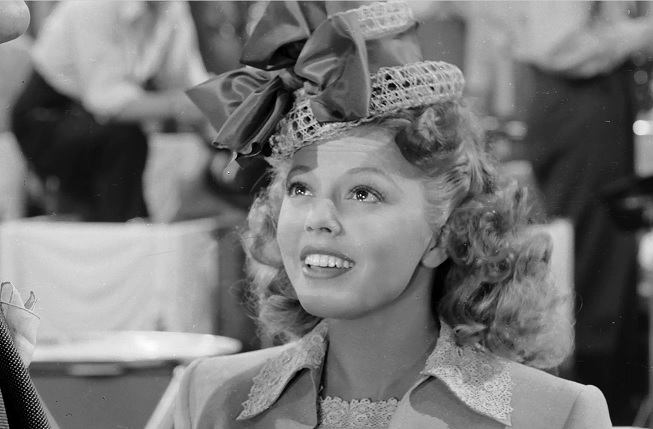
Making pillbox hats, sexy : GULP! MGM contract player, Jean Porter.
So, a cub-reporter (Jimmie Ellison) sent to cover the shindig, and the members of the fifteen we-never-heard-of-before-or-heard-from-again acts (also finding time to curse us with 25 songs, along with corn-bred comics, contortionists, a whip-act, and vaudeville bits) join forces to save the day. If you know your Ron Ormond westerns, you’ll notice Jimmie “Shamrock” Ellison and Raymond Hatton starred in six Robert L. Lippert westerns directed by Ron Ormond. So, yeah . . . bad jokes, not-so-wise cracks, Colonna sportin’ a turbin and reading a crystal ball, and puddy-faced camera mugging that would give Joe Piscapo pause, ensues.
Hey, scoff if you will, but movies like Kentucky Jubilee were more convenient and cheaper than going to an actually hootenanny or jubilee. And Ron Ormond incorporated all of his well-honed western skills to string together one of the better-plotted jukebox musicals.
Yes, this once, long-lost Ron Ormond film has been digitized (a stellar restore that keeps you watching) for your enjoyment at the Internet Archive.
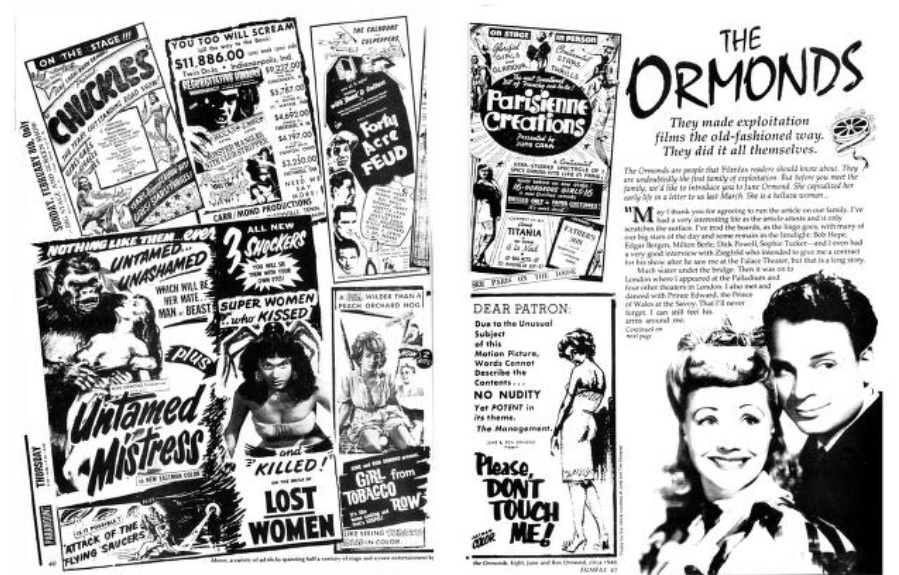
Learn more about the Ormonds in the pages of Filmfax, Issue 27 (1991), preserved on The Internet Archive. (The extensive article begins on Page 40.)
Square Dance Jubilee
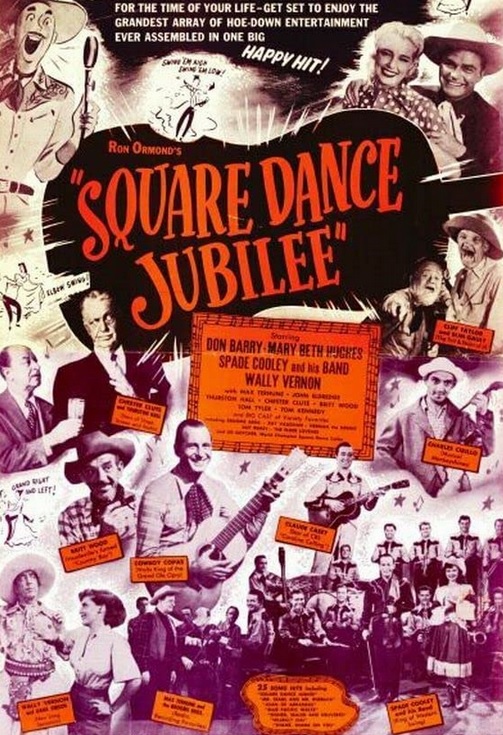
Prior to Ron Ormond writing and directing Kentucky Jubilee — of the seven films he directed that year — he earned his “jukebox musical” stripes writing and producing this “musical western” starring 250-plus credits strong, gruff n’ tough-as-nails western/cop actor Don “Red” Barry (’60s TV’s The Virginian and Surfside 6) and redhead-to-platinum blonde, 20th Century Fox/Universal/MGM B-Movie contract player Mary Beth Hughes. On the musical front, we have the-then-hip fiddler Spade Cooley and his western-swing band. (Laugh, but there’s some serious, Hendrix-styled theatrics with fiddles and upright basses goin’ on up in this ‘ere jubilee.)
As with the later Kentucky Jubilee, the story is the same: In the earliest days of some new-fangled contraption called tele-ee-vish-un**, two talent scouts for a New York-based country music TV show called “Square Dance Jubilee” (hosted by Spade Cooley), are sent out West to find authentic western singing acts for the show. In addition to finding acts, they find themselves mixed in up in cattle rustling and a murder mystery.
If you’re familiar with, and didn’t mind, Rock Around the Clock being retooled as Twist Around the Clock and Don’t Knock the Rock returning as Don’t Knock the Twist, then you have fun as Don “Red” Barry plays the straight man to another, fading vaudevillian in the form of a camera-mugging Wally Vernon (in the Jerry Colonna role) taking care of the crime drama. The Cowboy Copas and Claude Casey handle the tunes. Of course, variety acts also show up, this time with ventriloquist Max Terhune. In a twist: Red Barry croons a tune, “Girl in the Mink Blue Jeans,” and Wally Vernon’s goofy-rubbery soft-shoe must be seen to be believed.
So, what’s not to likey, here? We’ve got Ron Ormond scripting, Robert L. Lippert producing, and a western-driven crime drama threaded by the way of music, vaudeville bits, and comic relief.
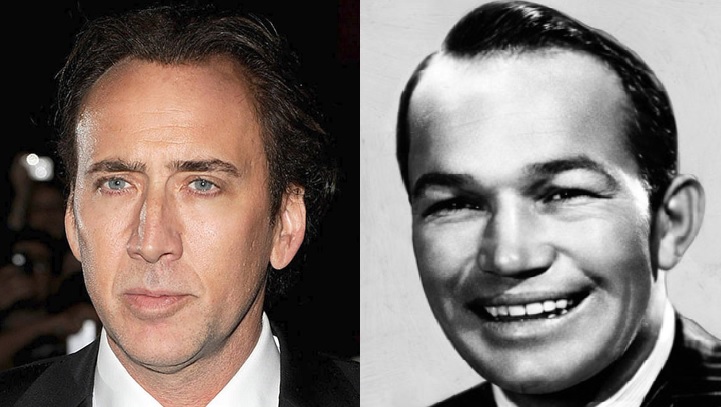
Meanwhile, behind the scenes . . . Spade Cooley had a contentious marriage with Ella May Evans, a singer in his band; she’d go on to have an affair with . . . TV and film cowboy Roy Rogers . . . and Cooley was eventually convicted of murdering Ella May. His biggest hits during his ’40s heyday were the #1 “Shame on You,” the #2 “Detour,” and the groundbreaking-influence on popularizing the use of the steel pedal guitar, “Steel Guitar Rag.”
Since Amazon shelved Nicolas Cage’s “Tiger King” project, I wonder if the Cage would be up for doing a Spade Cooley biography flick?
Meanwhile, behind the scenes . . . the twice divorced Don “Red” Barry had an affair with Susan Hayward in the mid-’50s . . . who got in cat fight with another woman visiting his apartment. In July 1980, Barry shot himself in the head, shortly after a domestic dispute with his estranged, third wife, Barbara.
Yeah, sometimes reality, aka truth, is stranger than fiction. And the reality of Don “Red” Barry and Spade Cooley are sad, graphic tales.
Anyway, you can enjoy a very nice, restored rip of Square Dance Jubilee on You Tube.
Me and Jean Porter at the sock hop under the tent under the stars . . . heaven. Uh, Mary Beth, er, what are you doin’ here?
Untamed Mistress is of a time and place. It’s a film that’ll probably offend, since it’s basically a stag film, aka a nudie-cutie. Before Internet pornography — although this is not pornographic in the least — films like Untamed Mistress is how your dads and your dads’ dads got a peak at nudity, at least until the “Golden Age of Porn” broke thought in the early ’70s with the likes of Behind the Green Door, Deep Throat, and The Devil in Miss Jones (we delve into that genre with the ’80s VHS-rental, Spine, and the ’70s drive-in grindhouser, The Last Victim).
However, the operative word here is “nudie-cutie,” and this is a Ron Ormond production, so whether it’s a (very) soft-core skin flick or a “jukebox musical” (such as his Kentucky Jubilee), Ron’s bringing along an inventive storyline to tie the pieces together. In this case: the pieces fit into a jungle/ape picture — with a damsel-in-distress tossed in for a feminist take on Tarzan.
In fact, Untamed Mistress — considered a horror film — treads pretty much the same ground as Ron’s Mesa of Lost Women (1963) — which is considered a sci-fi film. Only the latter was set in the desert and not a jungle, and has human-sized tarantulas and women with the abilities and instincts of spiders. This time, we have gorillas and a woman with the abilities and instincts of a gorilla — and she’s possibly “married” to a gorilla.
The film came together when Ron Ormond severed his partnership with producer-distributor J.N Houck, Jr., the Drive-In huckster-guru of Howco International Pictures (Night of Bloody Horror, Creature from Black Lake, Smokey and the Good Time Outlaws). Part of Ormond’s severance package was retaining the rights to the Sabu movie Law of the Jungle, aka The Black Panther, but he couldn’t use the image of Sabu. So, Ron and his wife, June Carr, concocted a storyline to recycle the footage. Additional footage was also cut into the film courtesy of a family friend: a wealthy doctor with an adventurous spirit who shot reels of his own African safari and donated it to the project.
The story concerns an injured and dying Indian guide (Bryon Keith, a white actor in brown make-up, cut in from that Sabu footage; he was Mayor Linseed for several Batman episodes) of two brothers (Allan Nixon, of Ormond’s Outlaw Women, 1952, as well as Mesa of Lost Women; the other the one-and-gone John Martin) on safari. The guide tells a tale, in flashback, that he was once a prince and that a jungle girl, the love of his life, ran off to live with a tribe of gorillas. One of the brothers is also romancing Velda (Jacqueline Fontaine, also of Ormond’s Outlaw Women), his own jungle girl. When she’s captured by the tribe, the brothers go to battle to rescue her. They come to discover an entire tribe of gorillas and their human-female brides — and a shocking secret of Velda’s.
Laugh at you will at the mismatched Sabu footage to the family-friend shot travelogue, mismatched to the backyard plastic jungle footage populated by mostly white actors in brown make-up — with lots of voiceovers — but the Sabu footage had naked, topless African women bouncing around, and nudity is nudity in the 1950s. Meanwhile Velda, when topless, is always conveniently obscured by jungle brush. Add in a few guys in gorilla suites, a cursed jewel, a flying shrunken head, a mythical white gorilla, along with Velda bending and spinning around in a tribal dance, and you have film that cleaned up at the rural drive-ins.
As much as Untamed Mistress is critically derided for its “mismatched footage,” the transitions aren’t that incompetent; this is a Ron Ormond production, after all, so it all works pretty well. Well enough for a film with a “provocative” angle that was grossly oversold, as the “nudity” here, is a joke. But in 1955, this was pretty racy stuff for a film . . . of a time and place.
The inversion of Tarzan is of interest here, as Allan Nixon, who played with the Washington Redskins (aka now The Washington Football Team, aka now The Washington Commanders), turned to modeling in New York and scored a studio contract with MGM Studios. At one point, he was in contention as the replacement for Johnny Weissmuller in Tarzan, as well as a bungled studio contract with Republic Pictures, interested in casting him as a western star.
Sadly, after a draft-stint in WWII, followed by a bout with alcoholism and drunk and disorderly arrests, Nixon derailed his career. He continued acting in bit roles in TV series and B-movies until the early ’60s. By the early ’70s, he developed a new career as a writer (he had a journalistic degree) of several exploitative romance novels, as well as several novel-sequels to Shaft under the pen name of Don Romano. Allan Nixon died at the age of 79 in April 1995.
Nixon made the tabloids when his third wife, Velda May Paulsen, an ex-model, was arrested in January of 1958 when she attacked him with a steak knife following a domestic argument. The fight was the result of Nixon’s upset that Paulsen was still friendly with her ex-boyfriend — Burt Lancaster. She was killed later that year in an explosion at their apartment caused by a lit cigarette and a gas leak.
Learn more about the Ormonds in the pages of Filmfax, Issue 27 (1991), preserved on The Internet Archive. (The extensive article begins on Page 40.)
About the Author: You can learn more about the writings of R.D Francis on Facebook. He also writes for B&S About Movies.
EDITOR’S NOTE: We originally covered this movie all the way back on May 26, 2018. We’ve updated this article with some new material thanks to the inspiration we received from watching Arrow Video’s new UHD release. Want to learn even more? Check out our interview with star Courtney Gains!
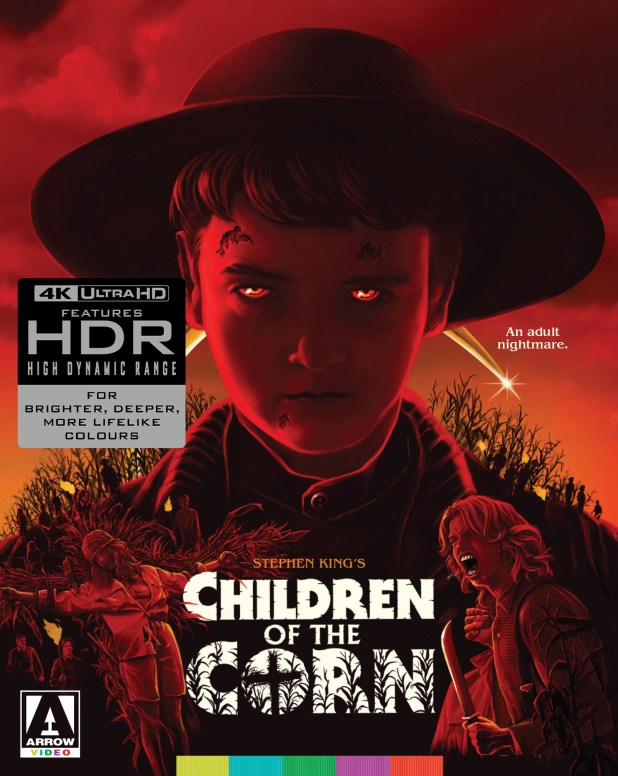
Children of the Corn started as a short story first published in Penthouse Magazine that was later collected in the 1978 book Night Shift. It’s a story incredibly similar to Tom Tryon’s novel (and the film) The Dark Secret of Harvest Home. You could also draw parallels to Narciso Ibáñez Serrador’s Who Can Kill a Child? or Village of the Damned.
Did you know that Children of the Corn was filmed once before? A short film called Disciples of the Crow was made in 1983 that’s an abridged version of this story.
This one was produced in 1984, with Gor and Tuff Turf director Fritz Kiersch at the helm. Burt and Vicky (Peter Horton and Linda Hamilton) are on their way to California when they drive through the cornfields of Nebraska and accidentally hit a young boy. However, when Burt exams the kid, it turns out that his throat had already been slit. Uh oh.
As they examine the boy’s suitcase, they discover a crucifix made of twisted corn husks. They head to the next town, Gatlin, to alert the authorities.
They come across a mechanic who refuses them service. The truth is that he is the last adult in Gatlin. He’s agreed to supply the children with services and fuel for his life, but the enforcer of the town, Malachai breaks the pact and murders him, angering their leader Isaac.
When Burt and Vicky get to town, everything is out of date and there’s a bad feeling in the air. Even worse, no one seems to be in town. They find a little girl named Sarah alone in a house, where Vicky stays while Burt explores. Malachai soon appears, capturing Vicky and taking her to be sacrificed in the cornfield.
The only thing in town that’s in shape is the church. Inside, Burt learns the truth of Gatlin — twelve years ago, everyone over nineteen was killed and the children took Biblical names after their murders.
Now, they live under this religious order that demands that everyone over nineteen must be sacrificed. During a blood-drinking ritual, Burt starts to yell at the children. They chase him until another young boy named Job rescues him and they hide in a fallout shelter.
Isaac and Malachai argue, with the older boy taking over and ordering his leader to be sacrificed. Isaac warns that this will anger their covenant with He Who Walks Behind the Rows and the children will be severely punished.
That night, Burt goes to rescue Vicky and a horrible special effect devours Isaac. Seriously, this weird chroma key fuzz looks incredibly dated. Anyways, Burt fights to save his wife and a possessed Isaac reappears and breaks Malachai’s neck.
A storm appears as Burt, Vicky and the two children decide that they must destroy the cornfield with gasoline and fire. They escape the town, taking the kids with them, their marriage somehow saved and they even discuss adopting the kids (but not before a sneak attack by Ruth is foiled).
This overly happy ending stands in marked contrast to the downbeat tone of the novel, where Vicky is sacrificed and Burt is killed by the creature in the cornfield. The creature punishes the town by lowering the sacrifice age to eighteen, so Malachi and the elders all walk into the cornfield to die as Ruth wishes that she could kill He Who Walks Behind the Rows.
If you’re wondering where Gatlin is in regards to King’s connected universe, the next town over is Hemingford Home, where Mother Abagail gathered her forces in The Stand.
There are six sequels to this film — Children of the Corn II: The Final Sacrifice, Children of the Corn III: Urban Harvest, Children of the Corn IV: The Gathering, Children of the Corn V: Fields of Terror, Children of the Corn 666: Isaac’s Return and Children of the Corn: Revelation — as well as a 2009 remake, the Children of the Corn: Genesis reboot, Children of the Corn: Runaway and the 2020 prequel/remake that nobody seems to be talking about.
If you’ve never seen this before, the Arrow Video release is the perfect way to start. The film looks great and it’s a great reminder of just how frightening this movie was when it came out way back in the 80s.
Starting with a brand new 4K restoration from the original camera negative by Arrow Films, Children of the Corn is a great purchase for the UHD lover. It has two commentary tracks, with one by horror journalist Justin Beahm and Children of the Corn historian John Sullivan and another with director Fritz Kiersch, producer Terrence Kirby and actors John Franklin and Courtney Gains, as well as Harvesting Horror: The Making of Children of the Corn; interviews with Linda Hamilton, producer Donald Borchers, production designer Craig Stearns and composer Jonathan Elias; a new visit to the film’s original Iowa shooting locations; the theatrical trailer and an interview with the actor who played “The Blue Man” in a sequence that was cut from the film. You can get this from Arrow Video.






 B&S About Movies
You must be logged in to post a comment.