Great Balls of Fire! (1989)

My grandfather drove a big El Camino that was painted with black primer and held together with hope and Big Red chewing gum. Whenever I’d ride with him, he’d generally be blasting an 8-track of “The Killer,” often pulling over and yelling at me to pay attention, telling me that no one could play the piano like Jerry Lee.

I kept that in mind while watching this movie, which is based on his biography by child bride Myra Lewis and Murray M. Silver Jr.

Directed by Jim McBride (who also made the American version of Breathless with Texas Chainsaw Massacre 2 writer L. M. Kit Carson), this is a great way to learn just why Lewis was so important to men like my grandpa. (McBride also worked with Dennis Quaid on The Big Easy; he also directed the cable rock ‘n’ roll bio-flick Meatloaf: To Hell and Back.)
MV5BYWU1NDI2MTctOWMyNy00MjAzLWFlMTYtODIxOGY0YmY0YWEyXkEyXkFqcGdeQXVyNjE5MjUyOTM@._V1_

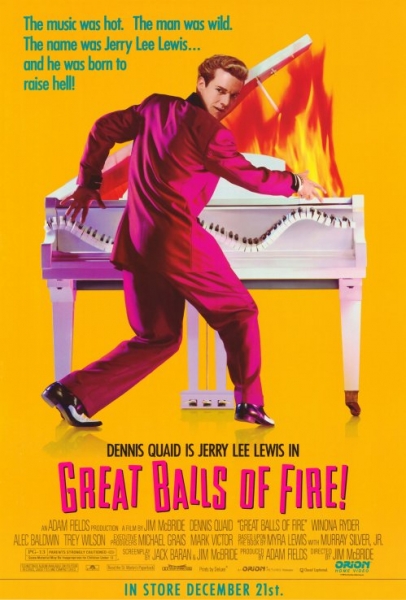
Would Jerry Lee have supplanted the King if he couldn’t keep his hands off his thirteen-year-old first cousin? This movie never really tries to answer this, instead showing us the fervor that The Killer* was someone who wasn’t above setting his piano ablaze to get a reaction. Dennis Quaid, well, kills it in this movie, absolutely inhabiting the soul of Jerry Lee on screen.

Silver, who co-wrote the book, claimed that the film was phony, while McBride said that he didn’t care about the facts. So while no one liked the film, nearly everyone liked Quaid in the lead. As for The Killer, he hated the book, so he wasn’t going to like the movie. Yet he did concede that Quaid “really pulled it off.**”

Winona Ryder is fine as Myra, but where the film shines is by placing real rock stars into unexpected roles, like John Doe — hey, the whole reason for this week on our site — as Myra’s put-upon pa J. W. Brown, Jimmie Vaughan as Roland Janes, Mojo Nixon as James Van Eaton and CBGB regular and New York Rocker writer Lisa Jane Persky as an early rival for Lewis’ affections. This movie also boasts Steve Allen as himself, Alec Baldwin as Lewis’ cousin Jimmy Swaggert, Nashville sound engineer David R. Ferguson as Jack Clement, the late Lisa Blount (Dead and BuriedCut and RunPrince of DarknessNeedful Things***) as Lois Brown and, of all people, Peter Cook as a British reporter.

*The official Lewis website states “Many people think it’s because of his rowdy reputation or because of how he knocked out audiences. The truth is that “killer” was a common slang term during Jerry Lee’s youth, and he would say goodbye to his friends by saying, “See ya later, killer.” This became his nickname before he had a performing career.” Or maybe he lived up to it later when he may or may not have killed his fifth wife, Shawn Stephens; definitely shot his bassist Butch Owens with a .357 accidentally and also showed up at the gates of Graceland with a loaded pistol on the dash, which sent him to jail eight months before Elvis died.

**To be fair, that’s really Lewis singing and playing the piano parts.

***Which also has the version of “Great Balls of Fire” that Jerry Lee re-recorded for this movie on its soundtrack.

 

Road House (1989)

“Opinions Vary.”
Dalton

Everybody hated this movie.

Variety hated it. Roger Ebert of the Chicago Sun-Times hated it. And it received five Golden Raspberry Awards nods for Worst Picture, Actor, Supporting Actor (Ben Gazzara? No, way, for he rocketh), Worst Director, and Worst Screenplay. Then John Wilson, the founder of the Golden Raspberries, listed it in his The Official Razzie Movie Guide as one of “The 100 Most Enjoyable Bad Movies Ever Made.”

Feldercarb, we say! For Pittsburgh born-and-bred director Rowdy Herrington* made this AND the Steel Town-set Striking Distance. And that’s the type of cinematic one-two punches we love ’round ‘ere in the B&S About Movies office cubicles, Big Hoss. Come on, now! A Doctor of Philosophy who travels the country as a bouncer kicking some town-psychopath ass and a Pittsburgh-bred, drunken river boat cop chasing down killers on the outskirts of Lawrenceville?

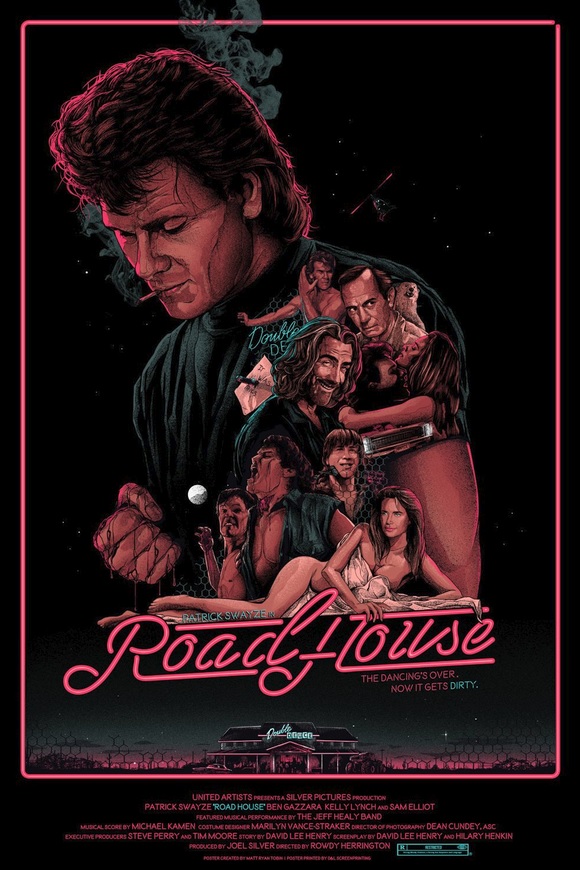
Seriously, what’s not to love here in this updated, glorified and horseless western (that takes place in Missouri, but was shot in California and Nevada)? And that’s what the mainstream critics who slagged Road House failed to see — and all of us lovers of all things “B-Movie” were able to see: Patrick Swayze’s Dalton is the new sheriff in a corrupt gold-mining town run by ex-Civil War hero-done-good, Brad Wesley. Only, this ain’t your granddad’s old n’ stuffy Cary Grant or Van Johnson western: this one’s modernized with a monster truck built specifically for the film**.

And Cary Grant or Van Johnson never delivered lines like this fan favorite:

Ah, but alas . . . for today, we came here not to bury Rowdy, but to praise John Doe, our favorite bassist from Los Angeles — this week of reviews is dedicated to him, after all — as the ne’er-do-well Pat McGurn, Brad Welsey’s favorite nephew with a weak constitution. As I look back on this film for “John Doe Week,” wow. Doe really shines in his role as Pat, whose loserville-status is what caused the whole dust-up between Sheriff Dalton and town “owner” Brad Wesley in the first place. Any other guy, after being fired — like myself, and Sam, B&S’s Chief Cook and Bottle Washer — would just find another job. But when you’re Pat McGurn: you run cryin’ to Uncle Brad who, in turn, gives you a couple of his guys to go kick some defenestration ass. Doc Clay, well, her stirrin’ up romance with the town’s new “bad boy,” that was just addin’ more tabasco to Brad’s breakfast Bloody Mary; lazy-ass Pat was the vodka, for you do not mess with the son of Brad’s only sister.

John, if you’re reading this: that’s sum mighty fine thepsin’, pardner!

About the Author: You can learn more about the writings of R.D Francis on Facebook. He also writes for B&S About Movies.


* Rowdy Herrington sat down with us for an extended interview back in November of last year. (Part 1, Part 2, Part 3, Part 4). He talks about Road House in the second part of the interview.

** In the movie, that truck, built in 1988 and known as Bigfoot 7, destroyed a new car showroom and crushed four new cars: a one-take shot that cost $500,000, a bill that could fund 10 of the low-budget flicks we normally review at B&S About Movies. And, yes, the truck did turn up again in Tango & Cash, another film that, like Road House, was slagged by critics across the board, but wow . . . we love that retro B-flick as well. The next time you’re in Kissimmee, Florida, for a Disney World romp, swing by Fun Spot America where Bigfoot 7 is currently displayed.

Derelicts (2017)

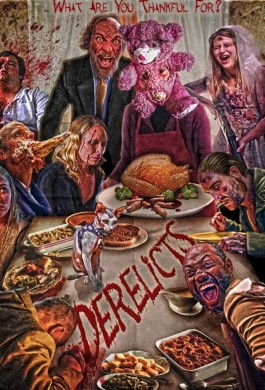
We’ve talked about Thanksgiving horror films before — see our list right here — but now there’s a new one. Directed by Mark Newton and Matt Stryker*, Derelicts is all about a dysfunctional family suffering a home invasion on the day that people eat too much, watch football and pass out.

There’s an actor in here named David Lee Hess, which might give away the home invasion inspiration for this movie. Actually, it seems to have a fair bit of Rob Zombie in it, if you like that kind of thing. But this does a fine job with a $150,000 budget, with really interesting flashbacks, flashforwards, long moments of silence and plenty of gore.

I mean, there’s a killer with a stuffed animal mask. That alone should probably give you a reason to watch this.

*IMDB lists the director as Brett Glassberg, in case you are wondering.

You can watch the entire movie on Kings of Horror’s YouTube page. To learn more, visit the movie’s official Facebook page.

Zombex (2013)

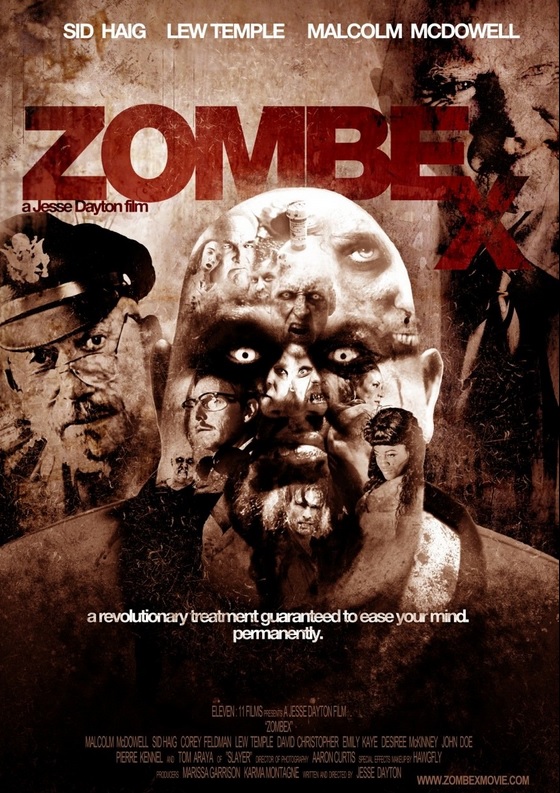
Look, we’re not going to sugar coat: the reviews on this one ain’t good. But when you have a film with a cast headlined by Malcolm McDowell and Sid Haig, with Corey Feldman along for the ride, and Slayer’s Tom Araya and X’s John Doe in tow, you cut generous amounts of CGI-slack for this, the writing and directing debut of musician Jesse Dayton. Dayton is a Texas musician best known for his soundtrack collaborations with Rob Zombie (Halloween II ’09 and The Haunted World of El Superbeasto).

Watch the trailer.

How can you not want to at least try to watch a film with this cast—regardless of the fact that there’s no in-camera effects and all of the gun fire and headshots (to kill the zoms) are cheap CGI-boondoggles? Malcolm McDowell, as always, is good in his role and giving it his all, but we sure wish Zombex gave us more of him, Sid Haig, John Doe, and Tom Araya. Also stepping up to the plate is Lew Temple (the real star of these proceedings)—who we all know as Axl from The Walking Dead—as a conspiracy-spouting talk radio DJ out to expose the cover up.

Dayton gets bonus points for injecting a sense of reality into the undead tomfoolery with a zombie outbreak infecting a post-Karina Louisiana. Ol’ Mal is, of course, the greedy pharmaceutical boss distributing a new anti-stress drug that triggers the outbreak.

You can watch Zombex on Amazon Prime and Vudu as a VOD, but we found a free stream (without an account sign up) on Roku Online. The film’s Facebook page is still active, so you can check out stills from the film.

You can learn more about the life, career, and discography of Jesse Dayton at his official website. Fans of HBO’s True Blood also know Jesse for his songs “Coming Down” and “One of Them Days” appearing in the series. And I really dig Dayton’s countrified take on the Cars’ “Just Want I Needed,” complete with lap steels and mandolins. Give it a listen.

About the Author: You can learn more about the writings of R.D Francis on Facebook. He also writes for B&S About Movies.

Border Radio (1987): John Doe Week

Editor’s Desk: This review originally ran on September 26, 2020, as part of our “Rock ‘n’ Roll Week II.” We’ve brought it back for “John Doe Week.


Was it worth waiting a few years before finding a copy of this poorly-distributed VHS in a cut-out bin at an old Sound Warehouse?

Oh, yeah.

Fans of the cult film existentialism of Easy Rider, Vanishing Point, and Two-Lane Blacktop — or any art film that finds a reissue on the Criterion Collection — will enjoy this grim, black and white film noir homage (shot on Super 16mm) to the French new-wave films of old; to that end, the film employs a disjointed, non-linear narrative. Do you enjoy the films of Jim Jarmusch’s Stranger Than Paradise (1984), Down by Law (1986), and Mystery Train (1989)? Did you enjoy the later Clerks (1994) by Kevin Smith? Do the “mood pieces” of Italian filmmaker Michelangelo Antonioni — such as 1975’s The Passenger — appeal to you?

Then you’ll enjoy Border Radio — although this UCLA student film by Allison Anders and Kurt Voss (Down and Out with the Dolls) doesn’t possess the “slickness” of those films, as you can see from the trailer.

Border Radio is a noirish tale of three southern California punk rockers — two musicians and a roadie (Chris D. and John Doe) — who decided a club stiffed them on a gig, so they rob the club. Chris D. subsequently abandons his rock journalist wife and crosses the border into Mexico with his split of the caper, leaving her holding the bag in repaying the debt of their robbery; she sends John Doe into Mexico to find him.

The caveat of Border Radio: this is not a punk film.

U.S.-issued VHS by Michael Nesmith’s Pacific Arts Video courtesy of 112 Video/Paul Zamarelli of VHS Collector.com.

There are punk rockers cast in the film as actors, but the music and punk aesthetic is void from its frames. The film’s stars, Chris D. of the Flesh Eaters and the Divine Horsemen, and John Doe of X, do not perform any of their music in the film. At the time Allison Anders (1992’s Gas Food Lodging, 1999’s Sugar Town, 2001’s Things Behind the Sun) completed the four-years-shot film begun in 1983, L.A.’s punk scene — with the musicians she cast as actors — was over.

The Flesh Eaters disbanded and the Divine Horsemen (lead singer Julie Christensen stars in the film) were set to release their first recordings; Billy Zoom left X; Phil and Dave Alvin (Dave co-stars in the film) disbanded the Blasters, and Texacala Jones (who also appears in du-Beat-eo) split from Tex and the Horseheads. Green on Red (they appear on stage at the Hong Kong Cafe), who got their start on Slash Records with Gravity Talks (1983) and wrote the soundtrack for Anders’s Gas Food Lodging (1985), also folded up the tents after their three, pre-grunge albums for Mercury: The Killer Inside Me (1987), Here Come the Snakes (1988), and This Time Around (1989) failed to expand beyond college rock airplay and connect with the burgeoning, commercial alternative rock scene. The film’s theme song, “Border Radio,” is performed by The Tonys, aka L.A.’s the Dils, aka Rank n’ File, led by Chip and Tony Kinman; by the time of the film’s release, they formed the synth-based Blackbird project.

You can learn more about the out-of–print Enigma Records soundtrack — never released on compact disc — on Discogs.com. The film is not currently available on PPV and VOD platforms, but DVDs can be purchased direct from Criterion. Here’s the trailer and the full soundtrack to enjoy.

About the Author: You can learn more about the writings of R.D Francis on Facebook. He also writes for B&S About Movies.

Slam Dance (1987)

John Doe made his first big screen appearances in the 1981 music documentaries The Decline of Western Civilization and Urgh! A Music War. While he made his big screen debut as an actor in Oliver Stone’s Salvador (1986; reviewed this week), he actually made his first foray into acting with Allison Anders’s Border Radio (1987), which began shooting in 1983. After scoring his first mainstream acting gig in Salvador, Doe found himself on another hot ticket, this time with much-ballyhooed Chinese director Wayne Wang.

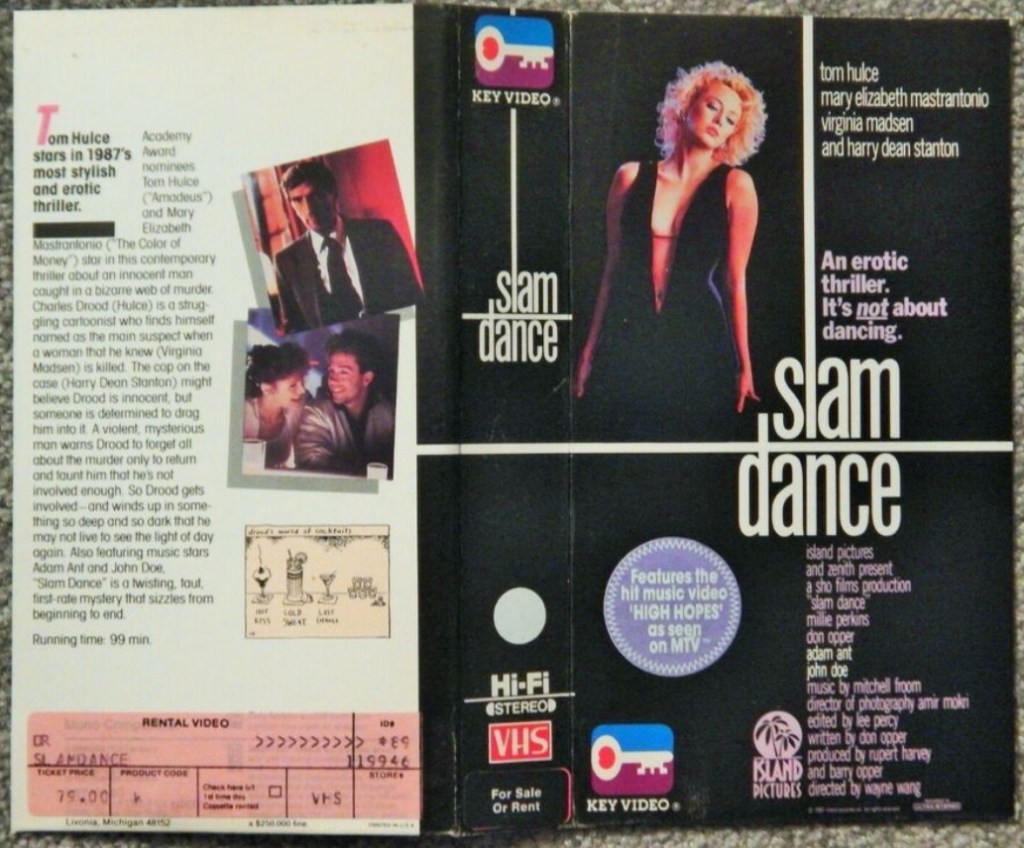
Ah, the VHS sleeve we remember/courtesy of rtsrarities/eBay via pinterest

Born in British Hong Kong and trained at California College of the Arts, Wang made his debut with the 1972-shot — for $16,000 — and released in 1975 gangster drama A Man, A Woman, and a Killer. The film was poorly reviewed and it wasn’t until his next film, Chan is Missing (1982), that Hollywood stood up and took notice; the film is recognized as the first Asian-American feature film to gain theatrical distribution and acclaim outside of the Asian marketplace place. Gene Siskel and Roger Ebert of PBS-TV’s Sneak Previews loved him. Courtesy of Wang’s choice to shoot in black & white to carry through the film’s mystery-noir narrative, he was hailed as the next “John Cassavetes.” Wang’s next feature, another Asian-centric narrative cast with Asian actors, Dim Sum: A Little Bit of Heart, repeated the box office and critical acclaim of Chan is Missing.

And, with that, Hollywood was ready for Wang to take on an American feature film. Island Pictures, a subsidiary of Island Music, fronted Wang the $4.5 million to shoot the Don Opper-penned (Android and City Limits; rewrites on Critters) film noir Slam Dance. The film was a critical and box office bomb that cleared less than a half million in American box office receipts. Wang himself was so displeased with the end product — which he blamed on producer interference — he tried to have his name removed from the film.

And since it was the first “mainstream movie” for both Opper and Wang, it killed off their mainstream hopes in Hollywood. Opper didn’t write another movie until the Hallmark Channel (!?) disaster film Supernova (2005), an Australian-produced feature film that starred Luke Perry, Peter Fonda, and Tia Carrere. While Wang directed three more indie, low-budget films, he returned to mainstream critical good graces with The Joy Luck Club (1993) and Miramax-distributed Smoke (1995).

Tom Hulce, who was never able to consolidate his Oscar tour de force in Amadeus (1984) into a leading-man career of distinction, stars as C.C. Drood. Drood is a married cartoonist involved noirish intrigue after his lover, Yolanda (a very hot Virginia Madsen), who makes her living as a call girl, is found murdered. In addition to having John Gilbert (John Doe), a corrupt cop looking to pin the murder on Drood, Yolanda’s lesbian lover, Bobby, has hired a hit man (Don Opper) to kill Drood. Of course, Gilbert and Bobby, were in on the murder all along. Another wrench in the noir works is new wave star Adam Ant as Drood’s agent. And the musician connections of the film carries through with keyboardist Mitchell Froom, who got his start with the bands Montrose and Gamma led by Ronnie Montrose, composing the film score.

As for the actor that led to us reviewing this film: John Doe followed up his smaller support role in Salvador with class and style; he should have made a much greater leap into feature films after turning in equally stellar (in larger roles) performances in the much-aired cable cult favorites of Road House (1989) and Great Balls of Fire (1989) (reviews for both this week!). Unfortunately, Doe’s next two films, Liquid Dreams and A Matter of Degrees (both 1991) failed at the box office. Doe fared better with his next work — going thes-for-thesp — as professional gambler Tommy “Behind-the-Deuce” O’Rourke in the Kevin Costner and Dennis Quaid-starring Wyatt Earp (1994; reviewed this week, look for it).

While it’s available as a rental on Vudu, we found a free-with-ads steam on TubiTV — denied! — it’s been pulled. But you can stream it over on Amazon Prime. Oh, and regardless of the pretense of Doe and Ant — and its title — this is not a “punk film.” You’ve been caveated. You can watch the trailer and opening seven minute from the VHS, via You Tube.

About the Author: You can learn more about the writings of R.D Francis on Facebook. He also writes for B&S About Movies.

Salvador (1986)

Editor’s Desk: This is our first review in our week-long tribute to the acting career of John Doe from the Los Angeles punk band, X.

Before receiving wide-spread acclaim for the one-two punch of Platoon (1986) and Wall Street (1987), and after intriguing audience with his feature film debut Seizure (1974) and an adaptation of the novel The Lizard’s Tale, known as The Hand (1981) starring Sir Michael Caine, writer and director Oliver Stone arrived on A-List Hollywood’s doorstep with this, his third feature film. Sadly, while it received Oscar nods in the actor and screenplay categories for James Woods and Stone — and was loved by critics — it cleared less than $2 million in box office against its $5 million budget.

The film tells the story of an American photojournalist (Woods) who becomes involved with the left-wing liberation military during the Salvadorian Civil War that tore apart the Central American country from 1979 to 1992.

Also starring a great cast of Jim Belushi (as Wood’s out-of-work DJ friend), Micheal Murphy (as a U.S Ambassador), and John Savage (as a fellow, murdered photojournalist), John Doe lends his support as an American expatriate who owns a seedy bar.

While Doe made his acting debut in Border Radio, which was shot in 1983, it wasn’t released until 1987. So, outside of his uncredited, under-five bit-parts in Smithereens (1982; as a bouncer) and 3:15, the Moment of Truth (1986; as a club drunk), this Stone award-nominee served as John Doe’s big screen acting debut — a career that has since grown to a resume of 82 credits. We’ll soon see John in the lead of the indie-film noir D.O.A The Movie in 2021.

About the Author: You can learn more about the writings of R.D Francis on Facebook. He also writes for B&S About Movies.

Image courtesy of photographer Allen J. Schaben for the Los Angeles Times, May 2020/font overlay by PicFont.

L.A. Macabre (Amazon Prime Series, started in 2013)

Fifteen episodes of the series L.A. Macabre are now available on Amazon Prime (season one, season two) and we were lucky enough to get a sneak peek.

Originally starting as a found footage web series on YouTube. the second season of the show turned it into a single camera drama with more locations throughout Los Angeles, as well as expanded characters, stunts and scares. Now, the Amazon Prime version has been cut into fifteen 30-minute episodes.

The series starts with three filmmakers — show host Ryan (Ryan Hellquist), director Colin (Aidan Bristow) and Ryan’s younger sister Jamie (Ryan Bartley) — getting the opportunity to interview Callie (Corsica Wilson), a former member of a cult called The New Family. After the first episode of L.A. Macabre with her in it airs, Callie begins to get stalked by someone or something who just could be from her old life. Or is she everything that she seems?

If you’re a true crime fan or someone missing Supernatural, this show has something to offer you. It starts off smart and quick before somehow picking up steam from there. I really like that the show moves away from found footage and becomes more of an action-adventure by the second season, while concentrating on the romance between Ryan and Callie, as well as the worry that she may be brainwashing him with the techniques that were once used against her.

You can learn more about this series by visiting its offical Facebook and Twitter pages. You can also watch the show on YouTube.

Savage Dawn (1985)

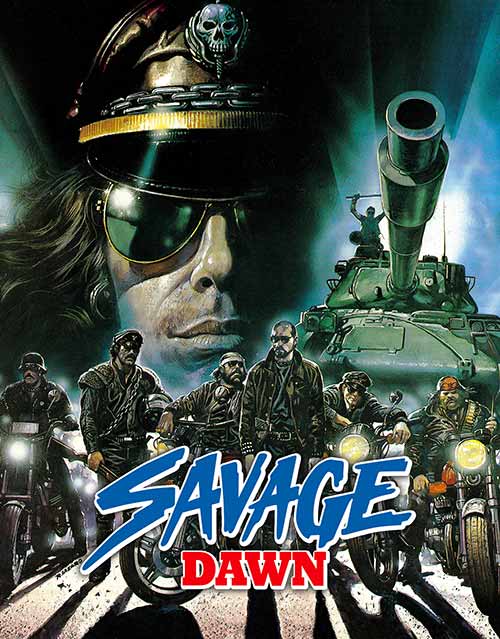
The cast for Savage Dawn reads like a who’s who of people I love in junk cinema: Lance Henriksen, William Forsythe, George Kennedy, Karen Black, Elizabeth Kaitan and Richard Lynch for starters, right? In a biker movie? In the made for VHS rental era? And directed by Simon Nuchtern, the guy who made the epilogue for Snuff and Silent Madness?

At some point in the past, Ben Stryker (Henriksen) and Tick Rand (Kennedy) were soldiers, but today Stryker rides the highway solo on his motorcycle while Tick has retired to the desert town of Aqua Dulce, Texas.

As soon as our hero gets to town, he has to deal wth two members of the Savages biker gang, Spyder (John Lisbon Wood, who was also a mad bomber in Alligator) and Meatrack, as well as Deputy Joe Bob (Lewis Jon Bergen, who played comic hero Jon Sable on the way too short TV series in 1987).

Rand has been living with his daughter Katie (Claudia Udy, Joy) and son Danny (Michael Sharrett, Deadly Friend), who wants to ride like Stryker. Together, the two of them notice the Savages on their way into town, including one of them, Zero (Mickey Jones, who was once in The First Edition with Kenny Rogers before becoming a character actor in things like V, where he was Michael Ironside’s partner) assaulting a woman. Danny wants them to attack the bikers, but Stryker is tired of fighting, like some old gunslinger wanting to hide.

Later that night, as Stryker and Tick drink at the Tomkat Bar, the locals have a tough man contest that usually Deputy Joe Bob wins. He holds his own against Zero until the leader of the Savages, Pigiron (Forsythe), sucker punches him and wins the title and the lust of Rachel (Karen Black) before the bartender disqualifies the bikers. That’s when the sheriff (Leo Gordon, a man whose career goes from The Evil One in Saturday the 14th Strikes Back to the blacksmith in Big Top Pee-Wee, Dr. Warren in Bog, Burt in Nashville Girl and so many other small parts; he also wrote The Wasp WomanThe Cry Baby KillerThe Terror and Attack of the Giant Leeches) tells the Savages to leave town along with the town’s mayor — and reverend — Romano (Lynch). They jail Zero, but Pigiron — who leaves with rachel — says that they’ll be back.

They come back the very next day, attacking a girl who is with Danny, who ends up tied behind a bike, leading Stryker to finally get involved. The Savages end up taking over the whole town, as they’ve taken over an armory and have a tank, and used one of their members, Lipservice (Wendy Barry, who was Linda the maid in Young Lady Chatterly II, as well as one of the girls in Mötley Crüe’s “Looks That Kill” video) to seduce the mayor.

Also, somewhere in here, Zero gets a haircut from Sam Kinison, of all people, playing a religious barber who gets killed when he tries to sing “Amazing Grace.”

Just like Shakespeare, just about everybody dies at the end, but the Bard never wrote something that put George Kennedy into a machine gun firing wheelchair nor did he run over Karen Black with a tank.

Beyond the cast members already discussed, this movie also has Kevin Thompson, who was Ali Gator in The Garbage Pail Kids Movie, Hal Sweesy (whose only other credit is the impossible to find Rock ‘n’ Roll Hotel), Solly Mark (who was the samurai in Neon Maniacs), John Stewart (who directed Action U.S.A. and Click:the Calendar Girl Killer) and Bill Milling (who produced 1981’s Nightmare and under plenty of names was an adult director, such as Chiang for the CJ Laing starring The Vixens of Kung Fu (A Tale of Yin Yang); Dexter Eagle — Ecstasy In BlueVirgin Snow and Blonde Valvet; Luis F. Antonero — Temptations; Philip Drexler Jr. — Satin SuiteDelicious; Craig Ashwood — All American Girls and Jim Hunter — Up Up and AwayHeart Throbs). Plus, you get a Pino Donaggio score and cinematography from Gerald Fiel (He Knows You’re AloneFriday the 13th Part IIISilent Madness).

So many people I’ve discussed this movie with were disappointed by it. It hit me at the right time, because I’m all about George Kennedy as an ex-military man who has decided to make his own wheelchair of destruction against a biker gang. Plus, you know, I’ll watch anything that Richard Lynch is in. Or, most likely, I have no taste.

You can buy this from Vinegar Syndrome or watch it on Tubi.

Schlock (1973)

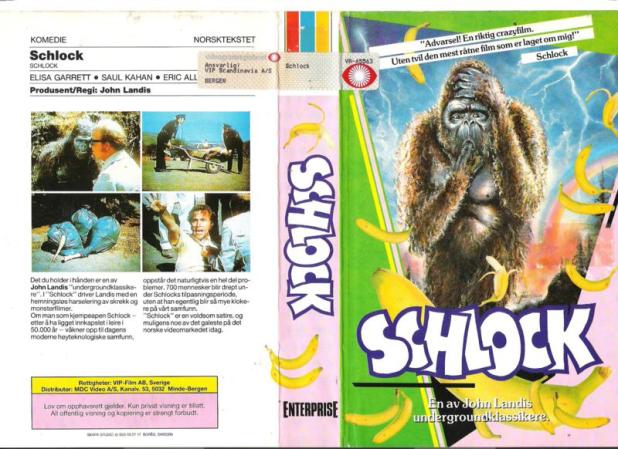
Back before John Landis became a big deal and killed Vic Morrow, he was making movies like this, inspired by 1950s monster movies. Landis wrote, directed and starred as the ape in this, wearing one of the first special effect makeup jobs by Rick Baker.

Landis couldn’t find anyone willing to release this movie, but then Johnny Carson saw the film, loved it and booked Landis as a guest on The Tonight Show. Clips got shown, Carson laughed and the film was released*.

Schlock is a prehistoric apeman — you know, just like Eegah — who has come out of a cave into Southern California to terrorize some teens. He falls for a blind girl named Mandy who really likes him — well, she thinks he’s a dog — until she regains her sight and realizes that he’s a beast. That means that the military has to put him down, with Mindy quoting Love Story and a cop says the immortal final line from King Kong. As for Professor Shlibovitz, who studies the hairy creature, he comes out of the cave with the subject for a sequel, the Son of Schlock.

Landis originally wanted to make an adult movie, but then found out that he’d have to work with the underworld. So instead, he got his family and friends to donate money and made this.

*Jack H. Harris agreed to distribute the film if John Landis added ten minutes to the running time. He gave Landis $10,000 and allowed him to use footage from The Blob and Dinosaurus! Landis almost advertised that Steve McQueen was in his film, but didn’t. Still, McQueen told him years later that he was owed money for Schlock.

You can watch this on Tubi.