F.I.S.T. (1978)

Editor’s Note: This is part of our week-long tribute to the films of Sylvester Stallone. You’ll find links to several more reviews of his films, within. If you don’t see your favorite mentioned, enter the title into the search box to your left; chances are, we reviewed it.

Okay. Let’s get this out of the way: F.I.S.T is not a boxing film and the title is an acronym for a fictional, blue-collar labor union based on the International Brotherhood of Teamsters (stylized as “Teamsters Union”), known as the “Federation of Interstate Truckers.” Stallone’s eventually casting as the Jimmy Hoffa-inspired Johnny Kovak was purely coincidental and not intended to dovetail the film’s marketing into Stallone’s previous, leading man debut of Rocky.

Kovak is a regular blue-collar guy working the loading docks for a trucking company who, fed up with the abusive treatment of his fellow workers, becomes a social activist whose organization of protests and riots transforms into a full-fledged labor union. As the labor union’s membership and influence grows, along with gaining political power, Kovak’s initially honorable intentions are corrupted by organized crime influences. When he tries to break the union free from its mafia ties, he and his family lose their lives.

Written by Joe Eszterhas (Flashdance and Basic Instinct), Stallone, as is his custom for most of the films he acts in, rewrote the script alongside Norman Jewison (Fiddler on the Roof and Rollerball). The film is produced by the younger brother of Roger Corman (Night of the Blood Beast; part of B&S About Movies upcoming reviews of Mill Creek’s Pure Terror 50 Film Box Set) and shot by Laszlo Kovacs (Hells Angels on Wheels, The Savage Seven, Psych-Out, Blood of Dracula’s Castle, and Easy Rider. I can go on and on with Mr. Kovacs’s resume).

Outside of Stallone, the names of Gene Corman, Joe Eszterhas, and Laszlo Kovacs may mean nothing to you. But for this film geek, I see it as one of the oddest quartets in film that you don’t see very often collaborating on a film. And it worked. They made one hell of an entertaining film.

If you’ve seen the Danny DeVito-directed biographical crime drama Hoffa starring Jack Nicholson, then you’re up to speed on what to expect from F.I.S.T with its homage to one of America’s most infamous organized crime figures. And while it all seems a bit The Godfather-familiar, only with trucks and loading docks instead of mobsters and gambling, many will say that analogy stretches the threads of story and characterization.

While F.I.S.T may not be on the shortlist alongside The Godfather, Goodfellas and Scarface—the cream of the gangster film crop—F.I.S.T is certainly better than the MTV-styled mobster tropes Carlito’s Way (1993) and Mobsters (2001)—and is just as good as Hoffa. In the Hoffa-portrayal sweepstakes, Stallone matches Jack Nicholson toe-to-toe and blow-by-blow. Sadly, the film received a lukewarm critical and box office reception. Then, Sly’s follow-up, Paradise Alley, stalled at the box office . . . so he made another Rocky and First Blood and moved into action films and sequel work.

If F.I.S.T and Paradise Alley had achieved critical and box office success on par with Rocky, it’s possible Stallone’s career would have taken a different path—a dramatic path. Perhaps he would have starred as Jimmy Hoffa instead of Nicholson in Hoffa? What might have been.

Be sure to look for my reviews of Avenging Angelo, Cobra, Cop Land, D-Tox, and Paradise Alley.


About the Author: You can read the music and film reviews of R.D Francis on Medium and learn more about his work on Facebook.

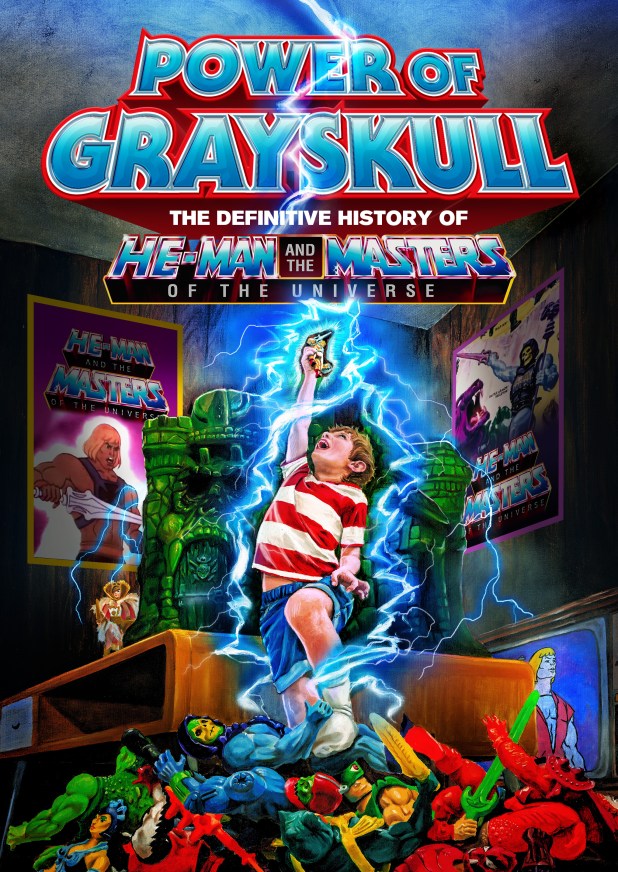
The Power of Grayskull: The Definitive History of He-Man and the Masters of the Universe (2017)

I can remember the first He-Man figure we ever got. My grandparents brought it to us from Montgomery Ward and it felt like it had arrived from another planet. Where He-Man and even Star Wars felt grounded in our reality, The Masters of the Universe seemed the unholy union of technology and sorcery, the kind of place where a caveman could fight alongside a man in green armor and a flying monkey against a humanoid beast, a swamp creature and a living skeleton. As the line grew, the edges of this weirdness were somewhat sanded down — then again, any toy line that contains a character named Two Bad that is constantly fighting itself is still pretty wild — as it became more popular.

This documentary gets into how He-Man and the Masters of the Universe were “designed in the wake of Conan the Barbarian and under the shadow of Star Wars,” eventually becoming a multi billion dollar property that remains popular today.

From the initial development of the toyline to how it used the deregulation of toy advertising to become a multimedia entity, the start of this film tells the tale that many He-Man fans know, but one that newcomers will be interested to learn.

The movie also goes deep into the creation of the cartoons, the spinoffs and the 1987 Masters of the Universe movie, which starred Dolph Lundgren and Frank Langella, who are both quite candid and completely entertaining in their interviews.

While I’m definitely the target audience for this, I think anyone with an interest in 1980’s pop culture or marketing will find plenty to enjoy.

You can watch this on Netflix or grab it on on DVD and digital from High Octane Pictures on September 3.

DISCLAIMER: We were sent this movie by its PR team, but that has no bearing on our review.

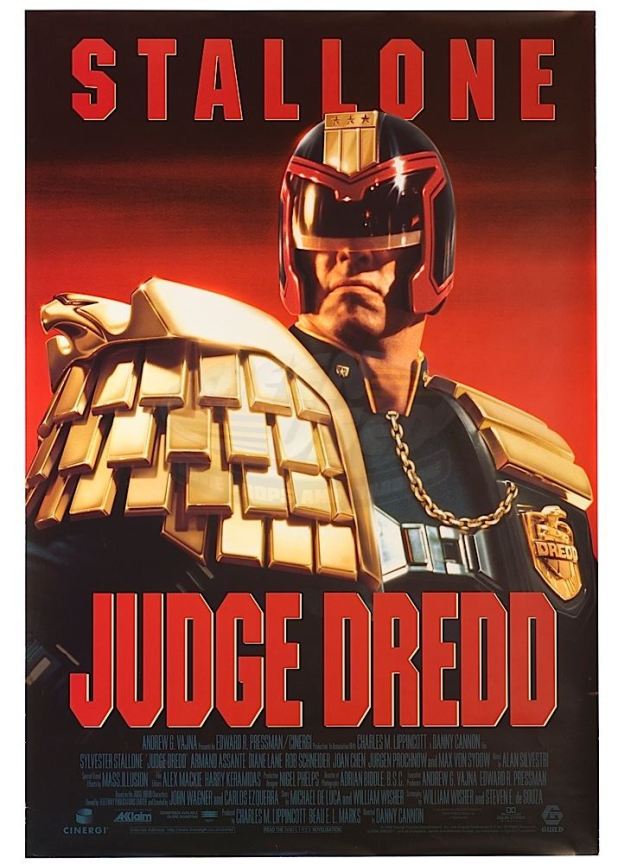
Judge Dredd (1995)

Since the second issue of 2000 AD, Judge Dredd has ruled over the streets of Mega-City One, a domed city that contains most of the East Coast of America. The Judges are empowered to be judge, jury and executioner, keeping the lawless post-apocalyptic land of the future as safe as possible.

This movie isn’t anywhere near as beloved as the comic. Co-creator John Wagner said, “I hated that plot. It was Dredd pressed through the Hollywood cliché mill, a dynastic power struggle that had little connection with the character we know from the comic.” He also added, “The story had nothing to do with Judge Dredd, and Judge Dredd wasn’t really Judge Dredd even though Stallone was perfect for the part.”

Joseph Dredd (Stallone) assists first-year Judge Hershey (Diane Lane) in ending a block war (an uncredited James Remar appears in this scene). As Dredd and Hershey quell the rebellion, Herman “Fergee” Ferguson (Rob Schneider) is caught up in the arrests.

Meanwhile, Judge Griffin (Jurgen Prochnow, Sutter Cane from In the Mouth of Madness) releases a former judge named Rico (Armand Assante), who just so happens to be Dredd’s brother, from prison. He reactivates an ABC Warrior combat robot (another 2000 AD series) and murders Hammond (Mitchell Ryan, the Dark Shadows TV show and Dr. Wynn from Halloween: The Curse of Michael Myers), a reporter who was critical of Dredd’s methods.

Dredd is put on trial by the Chief Judges, including the villainous Griffin and his mentor, Chief Justice Fargo (Max von Sydow). To save our hero, Fargo agrees to step down and enacts the final service of all Judges — doing the long walk into the Cursed Earth while Dredd is sentenced to life in prison.

Rico causes chaos while the cannibalistic Angel Gang attack’s Dredd’s transport to prison. Joining up with Fergee, they escape and are saved by the final sacrifice of Fargo, who is killed by Mean Machine Angel. Before dying, Fargo reveals that Dredd and Rico are the progeny of the Janus project, a genetic engineering effort to create the perfect judge. This explains why Dredd’s DNA was at the crime scene, as Rico’s is identical to his.

Of course, Dredd has to come back and save Mega-City One, ending with a battle between the man who is the law and Rico atop the Statue of Liberty.

To be perfectly honest, Judge Dredd is a mess. Even though it was made more than three years after Demolition Man, a film that it is quite similar to, it feels incredibly dated. The film gets the look of Mega-City One right, but none of the humor or nuance. That said, the Gianni Versace-designed costumes are awesome and I love that Adrienne Barbeau is the voice of computer at the Hall of Justice.

The film had to be submitted to the MPAA five times to get an R rating when its goal was PG-13. And the constant creative disputes led director Danny Cannon to swear he’d never work with another big name actor. He’s gone on to direct I Still Know What You Did Last Summer and Geostorm, as well as being a major part of the CSI and Gotham TV shows. Stallone wanted an action comedy film while Cannon wanted a darker, more satirical vision that was closer to the source material.

Stallone would tell Uncut “I do look back on Judge Dredd as a real missed opportunity. It seemed that lots of fans had a problem with Dredd removing his helmet, because he never does in the comic books. But for me it is more about wasting such great potential there was in that idea; just think of all the opportunities there were to do interesting stuff with the Cursed Earth scenes. It didn’t live up to what it could have been.”

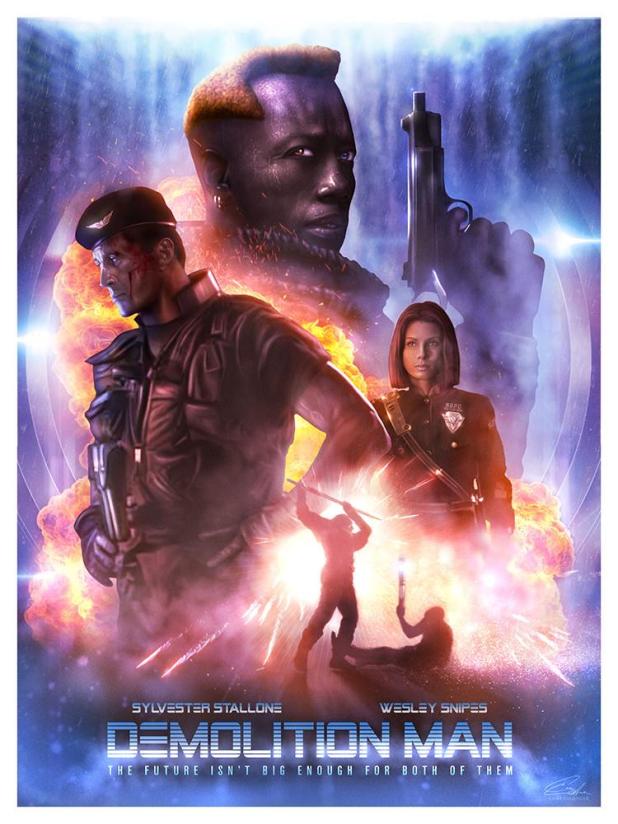
Demolition Man (1993)

Marco Brambilla is a Milan-born, New York City-based video collage and installation artist, which doesn’t make him a natural choice to direct a Sylvester Stallone movie. He also directed Excess BaggageDinotopia and the upcoming Abominable, but if you said, “Who should direct a slam-bang action film?” I would not answer with a video installation artist who comments on visual overload through his work.

1996: maniac Simon Phoenix (Wesley Snipes) kidnaps a number of hostages and hides in an abandoned building (the Belknap Hardware and Manufacturing Company in Louisville, Kentucky, which was scheduled for demolition, substitutes for a Los Angeles building). This lures in LAPD Sgt. John Spartan (Stallone) — “Send a maniac to catch one” — who jumps out of a helicopter directly into combat. Spartan had done a thermal scan and no bodies were found, so he goes in guns blazing.

Unfortunately, the hostages were already dead and their bodies are found in the rubble of the exploded building. Phoenix claims that Spartan knew he had hostages and attacked anyway. The question of why does the court believe a man who has killed numerous people over a cop comes to mind here, but if you’re going to ask questions that make sense, you’re not ready for 1990’s action films.

Phoenix and Spartan are incarcerated in the California Cryo-Penitentiary, where they are frozen and given subliminal rehabilitation techniques while they sleep.

2032: Phoenix has a parole hearing and escapes, armed with the skills he needs to survive in the future, like computer hacking. Remembering that it takes a maniac to catch one, Lieutenant Lenina Huxley (Sandra Bullock, who took over the role from Lori Petty after just two days of filming) thaws out Spartan.

Spartan wakes up to the peaceful world San Angeles — Los Angeles, San Diego, and Santa Barbara all in one city, kind of like Mega-City One from Judge Dredd — and discovers that he is a man out of time. It’s the most politically correct world ever, a place where physical contact and swearing are illegal and anything unhealthy is banned. 

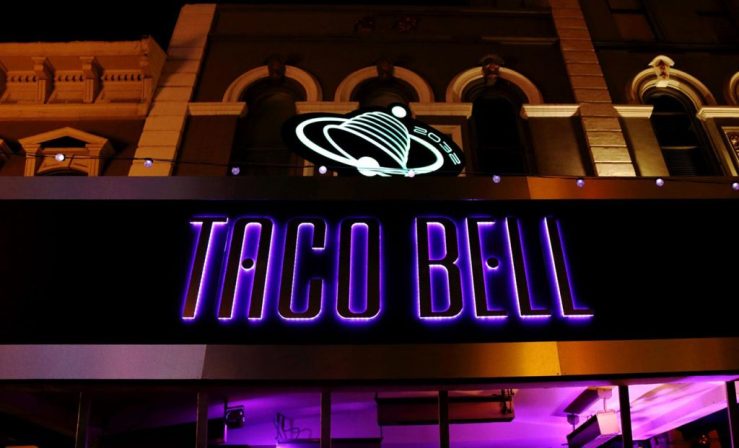
It’s also a place where Taco Bell is the only survivor of the Franchise Wars and is now considered the finest restaurant in the world. In Europe, where Taco Bell is less known, this movie substitutes Pizza Hut.

Taco Bell did a Demolition Man pop up to celebrate the film’s 25th anniversary at the 2018 San Diego Comic Con.

Spartan and Phoenix battle at a museum that has outlawed weapons, where the villain meets Dr. Raymond Cocteau (Nigel Hawthorne, who lent his voice to The Black Cauldron and The Plague Dogs). Cocteau is an evangelic peace-loving ruler who has been in charge of San Angeles since the Great Earthquake of 2010. Phoenix finds that he can’t kill him because the leader is the one who programmed him while he was in cryosleep.

He did all this so that Phoenix will murder Edgar Friendly (Dennis Leary), the leader of the Scraps, an underground gang that resists his absolute power. Huxley figures this all out and Spartan tries to stop him. Unfortunately, Phoenix also has an army of dethawed criminals. He taunts Spartan by telling him that he killed all the hostages before the bombs went off, doomed the hero cop to 36 years of cryo-prison for no reason.

Phoenix kills Dr. Cocteau, thanks to one of his men not being programmed, and tries to take over the future. Spartan stops him and blows up the cryo-prison in the process. He suggests that the peaceful future can only succeed if the Scraps and the above ground people learn to work together. He kisses Huxley and they walk away together. 

It’s pretty amazing how much Judge Dredd took from this film, like Rob Schneider’s character and Adrienne Barbeau as the voice of the computer. It’s an early pass at that film and actually a million times better. It doesn’t feel dated at all, despite how silly it is at times. And by silly, I mean awesome.

Fred Dekker (The Monster Squad, Night of the Creeps) actually did some uncredited rewrites to the film. It was his idea to show the two adversaries in 1996, saying “If you don’t show Kansas, Oz isn’t all that special.”

Of all the ridiculous ideas in this film, the bathroom seashells take the prize. Stallone has explained them by saying that the first two seashells were to be used like chopsticks to pull waste from the body and the third was used to scrape what was left. I mean, just the thought of how the three seashells work makes me pause this movie every time and try to comprehend what they’re all about.

The real explanation comes from screenwriter Daniel Waters, who wanted a scene where even the bathroom in the future would cause Spartan problems. So he called another screenwriter and asked for ideas. The answer? “I have a bag of seashells on the toilet as a decoration.” Waters replied, “OK, I’ll make something out of that.”

Hungarian science fiction writer István Nemere claims that most of that script was based on his 1986 novel Holtak Harca (Fight of the Dead), in which a terrorist and a soldier are frozen and then awaken to a society that has outlawed violence. He’s alleged that there is a conspiracy where a man has been illegally selling the ideas of Eastern European authors to Hollywood after the fall of the Iron Curtain.

According to this article at The Toy Box, the Mattel action figures that came out for this film basically took the body parts from The New Adventures of He-Man figures and added new heads. That said — where else can you find a Dennis Leary action figure?

There are tons of small roles in here filled with actors and personalities that I love, like Jesse Ventura and Jack Black. Jackie Chan was Stallone’s first choice to play Simon Phoenix, but Jackie doesn’t play bad guys, even when they planned a sequel to this.

I know I said earlier about ignoring plot holes, but there’s a major moment that isn’t touched on in the film. After Spartan learns that his wife died, he asks about his daughter before being cut off. In truth, before the Wasteland battle, he meets a Scrap named Kate (Vasilika Vanya Marinkovic, Jacklyn Hyde from the 2000’s reboot of Women of Wrestling) who he learns is his daughter. You can see him protecting her during the battle and she also stands next to Friendly when he’s introduced to Associate Bob at the end (I kind of adore Associate Bob, who constantly says “greeting and salutations” a line from another Daniel Waters movie, Heathers).

In fact, there’s a ton of this movie that was cut to achieve a more teen-friendly rating, including more of the scene where Phoenix rips out Warden Smithers’ eye, Phoenix spraying a crowd with machine gun fire, Phoenix killing Zachary Lamb and a battle between Jesse Ventura’s character — who has been overdosed with adrenaline — and Spartan. All of these cuts make the continuity of the battle scenes in the Scraps underground lair and the cryo-prison an absolute mess.

Best of all, when this movie in Kuwait, it was called Rambo the Destroyer. That’s a carnie movie that even Italian film producers would have to applaud.

I love Demolition Man, a film that gets its title from a song by The Police that Grace Jones sang on. It’s big, dumb, loud and completely insipid — and inspired — in all the best of ways.

You can watch this movie on Vudu for free.

NOTE: The poster art for this article comes from Casey Callender and you can buy it right here.

Paradise Alley (1978)

Editor’s Note: This is part of our week-long tribute to the films of Sylvester Stallone. You’ll find links to several more reviews of his films, within. If you don’t see your favorite mentioned, enter the title into the search box to your left; chances are, we reviewed it.

Sylvester Stallone has made a lot of movies—59 in fact. Okay, 57—if we forget about the two movies he’d rather forget: The Party at Kitty and Stud’s (1970) and No Place to Hide (1973). (Well, even less if we cross off his recent forays into animation voice work.)

Sorry Sly. This is your week and B&S Movies champions the underground, the obscure and the trashy. We can’t resist taking a peek in your celluloid closet.

In the wake of Rocky’s success, The Party at Kitty and Stud’s—Sly’s feature film debut—was reimaged using his faux-boxing nom de plume, Italian Stallion, for its grindhouse and Drive-In reissue, and eventually, its VHS “backroom” release.

Budgeted at $5,000 and clocking at a measly 71 minutes, it’s a plotless, soft-core sex romp about a “free-spirited woman,” Kitty, and her rough-edged boyfriend, Stud (Stallone) who throws a “sex party” and . . . that’s it for the plot and character development. According to reviews over the years, the film—just as we now look back on Midnight Cowboy and Shampoo and wonder what all the fuss was about—was rated with an “X” upon release, but would pass as a PG-13 by today’s social standards. You’ve seen worse in a Lifetime channel damsel-in-distress flick.

Stallone, however, fared better with this second film, No Place to Hide. As with Kitty, his post-Rocky stardom triggered a re-release under the title, Rebel. While some critics tagged the film as a soft-core flick, it’s actually one of the many lackluster, counterculture-hippy thrillers concerned with politically-driven students of the ‘60s engaged in propaganda and violence to promote their political beliefs.

Okay. That takes care of the pre-Rocky backstory on Sly.

When you’re dealing with an iconic actor’s career chronicled by a 40-plus year IMBb page, everyone has their favorite films by that actor. When it comes to Stallone, some will tip their hat to Tango & Cash (which tried—and failed—to repeat that Lethal Weapon buddy-cop vibe), others will cite the late Rutger Hauer’s American film debut as a terrorist alongside Stallone in Nighthawks. Others believe, rightfully so, that Sly’s Rocky series of films are the best boxing films ever made. Sam, the proprietor of B&S About Movies, swears by the Sammy Hagar themed-song-fronted arm wrestling flick, Over the Top. We both love The Expendables series. And while I never cared much for either, my cousin loves Demolition Man and Judge Dredd.

As for me: I always come back to Sly’s second post-Rocky film—after F.I.S.T (his “Godfather” if you will)—Paradise Alley, which he wrote; the film also served as his directing debut.

Where Rocky was about a down-and-out pug trying to escape a bleak, early ‘70s Philadelphia, Paradise Alley is a 1940s period piece about the three Carboni brothers: Cosmo (Stallone), a fast-on-his-feet street hustler, and Lenny (the always reliable Armand Assante in his leading man role; he starred in Prophecy, next), a bitter war hero. Out of greed and desperation, they bully their less-street wise, dumb-hulk of a younger brother, Victor (Lee Canalito, who vanished from acting after a bit role in a Magnum P.I episode), into becoming a professional wrestler—dubbed Kid Salami. Those plans to use wrestling as a way out of Hell’s Kitchen begin to unravel as Cosmo and Victor enter into a battle of wills over guilt vs. greed in their manipulating—and possibly permanently injuring—Victor.

Ironically, Stallone didn’t write Paradise Alley in the wake of Rocky—and traded wrestling for boxing as many critically derided. He wrote Paradise Alley, first, as a novel, and then adapted it into a screenplay. During the course of auditioning for Rocky’s producer, Irwin Winkler (some say the audition was for a role in Winkler’s Breakout starring Charles Bronson), Stallone pitched Paradise Alley, but was unable to sell the work due to legal issues with another producer. So with Winkler and his partner, Robert Chartoff, willing to read his work, Stallone banged out Rocky. The rest is history.

Paradise Alley is one of the few instances where you’re better off finding and watching the TV version of the film, which is slightly closer to Stallone’s original vision. He stated his initial theatrical cut of the film was almost two and a half-hours long; Universal Studios forced almost 50 scenes to be cut; 10 of which Stallone added back for the extended television version that offers greater atmosphere and character development.

If you read critical and fan reviews for Paradise Alley, it’s derided as a “self-indulgent mess” and that Stallone was in way over his head and made his move to the director’s chair too soon. I’ve watched the film several times over the years (both the theatrical/VHS and the TV version) and I fail to see any quality issues with the film. Perhaps my youthful nostalgia for Paradise Alley blinds me to Stallone’s critically-implied ineptitude as a first time director. Regardless, it’s obvious Stallone was paying attention on the sets of his pre-Rocky films The Lords of Flatbush (1974), Capone, Death Race 2000 (as Joe “Machine Gun” Viterbo!) and Farewell, My Lovely (all 1975), and picked up tips on the set of F.I.S.T from director Norman Jewish (Rollerball).

Also adding to my love of Paradise Alley was that all of my wrestling heroes from my weekend, late night ‘70s wrestling binges on WIIC-TV Pittsburgh and WOR-TV out of New York appeared in the film: Terry Funk, Ted DiBiase, Dory Funk, Jr. and Dick Murdoch. Yes! Badass Dick Murdoch and Dusty Rhodes “The American Dream” as The Texas Outlaws, and Murdoch’s tag team years with The Junkyard Dog. Awesome times! The only thing missing from Paradise Alley was Adrian Adonis and The Tonga Kid.

Yeah, Paradise Alley is my paradise in the Stallone canons.

Be sure to look for my reviews of Avenging Angelo, Cobra, Cop Land, D-Tox, F.I.S.T.

About the Author: You can read the music and film reviews of R.D Francis on Medium and learn more about his work on Facebook.

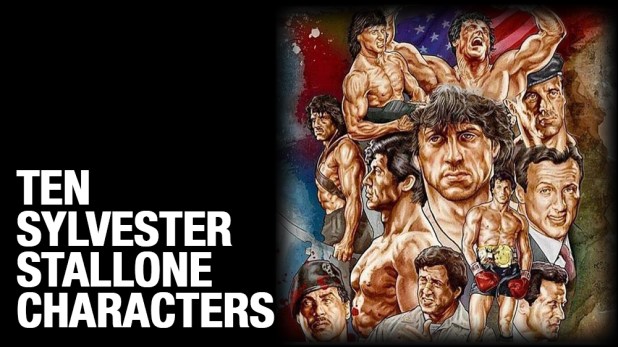
Ten Sylvester Stallone characters

Unlike many actors, Sylvester Stallone has been fortunate enough in his career to have not just one or two characters appear in more than one movie, but several. And even though some of his roles may have only appeared in one film, you can totally see how they could have future adventures.

Consider this article a purely unscientific study of my ten favorite Stallone characters. You may feel differently and I totally encourage you to comment and share your thoughts.

1. Robert “Rocky” Balboa: Across six of his own films and appearances in the two Creed films, Rocky is the ultimate Stallone character. He’s autobiographical, with a life that mirrors the struggles, challenges and successes of the man who wrote and played him down to the fact that Stallone’s dog played Rocky’s dog.

In Rocky, he’s a down on his luck fighter who somehow ends up in a match with the champ. Rocky 2 — the rematch. In the third film, he’s lost the eye of the tiger and must recover it before winning back his title. By four and five, he’s battling Russia and retirement before Rocky Balboa features him in one last fight.

He’s one of the rare characters in American cinema that we’ve seen grow old and go through changes in each successive movie. Stallone even sees one more story in Rocky, saying that he has a new movie idea where “Rocky meets a young, angry person who got stuck in this country when he comes to see his sister. He takes him into his life, and unbelievable adventures begin, and they wind up south of the border. It’s very, very timely.”

2. John Rambo: Rambo may have appeared in less films than Rocky — the fifth installment arrives at the end of this summer — but he’s no less popular a hero. Starting with First Blood, a film that Rambo was originally intended to not survive, this is another character that has changed along with the political climate.

In his first appearance, Rambo is an outsider, a veteran who returned home to a country that didn’t want him. By the second film, the Reagan era is in full effect, with our hero returning to Vietnam to win the war this time. And in the third, well, he’s working with the Taliban. Look — they were our allies at the time. Global political peacekeeping is tricky business. By the fourth film, Rambo is just trying to live peacefully in Thailand and sell snakes. Of course, that doesn’t last. What’s surprising is just how gory and brutal the carnage becomes.

Rambo is more than a character. He’s become an archetype, a touchstone where people are referred to as going in like Rambo. So many action movies that follow in the wake of the Rambo series owe a tremendous debt to the first two films.

3. Barney Ross: The leader of The Expendables, a team of highly trained mercenaries, Barney has appeared in three different movies. Beyond his ability to draw his signature 1911 Kimber Gold Combat II faster than anyone on any battlefield, Barney is known for his loyalty to his men and how he strives to protect people. Not usually qualities that you’d apply to a mercenary, but he’s a different breed. He’s got a list of allies — and enemies — longer than most, but that’s because he’s survived the game way longer than anyone. Here’s hoping that the fourth movie in this series happens soon.

4. Ray Breslin: Across three Escape Room movies, Ray uses all of the skills that he has learned as a former prosecutor, businessman, structural engineer and escape artist to run his firm, Breslin Security. After escaping from the prison called the Tomb — along with Arnold Schwarzenegger — in the first film and the Hades prison in the second, Breslin returned for Escape Plan: The Extractors along with his operatives Trent DeRosa (Dave Bautista), Hush (Curtis “50 Cent” Jackson) and Abigail Ross (Jamie King). While not as celebrated a character as Rambo or Rocky, Breslin is one that Stallone keeps returning to, as these films do great business worldwide (if not domestically).

5. Joe “Machine Gun” Viterbo: Always coming in second to Death Race 2000 superstar Frankenstein has driven Joe a bit crazy. How else can you explain someone who dresses like 1940’s mafia hitman and drives a car with a gigantic switchblade mounted on the hood? While not one of Stallone’s best known roles, this was one of his first and shows that he had plenty of charisma. He also rewrote several of his lines — he was writing Rocky while this movie was filming — such as when he tells Myra, his navigator, “Some people might think you’re cute. But me, I think you’re one very large baked potato.” and “I’ve got two words to say to that: bull shit.”

6. Lincoln Hawk: I may be the only person in the world that wishes that there had been more than one Over the Top movie, but when you run your own web site obsessing about movies, you can make outrageous claims too. If I were to spitball my take on the sequel, it would involve Hawk and former enemy Bull Hurley being set up to haul an illegal load of radioactive material for terrorists who have kidnapped Hawk’s son Michael. At the film’s climax, Hawk and Bull would have killed most of the terrorists — played by George Eastman, Rober Z’Dar, Vernon Wells, Clint Howard and Al Leong — before tearing the arms off the man behind it all — Alexander Rasputin, long lost brother of the evil mystic and the man who wants to eliminate American and arm wrestling, who is played by Klaus Kinski, who was nearly killed several times by Stallone during filming. Also Cameron Mitchell would play Jesse Cutler, the brother of Robert Loggia’s Jason Cutler.

7. Marion Cobretti: A member of the LAPD Zombie Squad, the man known as Cobra battle the New World for one movie and that was it. Again, like Over the Top, I’ve debated a sequel in my head for years, as well as the hope that a high quality copy of the two hour plus unedited cut of the film — with way more mayhem and gore — would see the light of day. Thanks to Stallone’s official Instagram, it looks like I’m not alone.

8. Sgt. John Spartan: Yet another one and done Stallone character, the hero of Demolition Man starts the film by jumping out of a helicopter and goes on to basically maim, murder and explode every single thing in his way. There were plans of trying to bring in Jackie Chan as a villain for the follow-up, but Jackie doesn’t play villains. It’s a shame — I’d watch every single movie that had John Spartan in it, even if the movie was just about him eating Taco Bell and using those three seashells.

8. Lieutenant Raymond Tango: I think the fact that a sequel to Tango & Cash was never made is the reason why no one seems to get along any longer. Movies where machine gun loaded trucks chase down old cowboy actors like Jack Palance are the great uniter, never a divider. Kurt Russell and Stallone in one film? It’s like putting more butter on your peanut butter and jelly sandwich. Seriously. You should try that sometime.

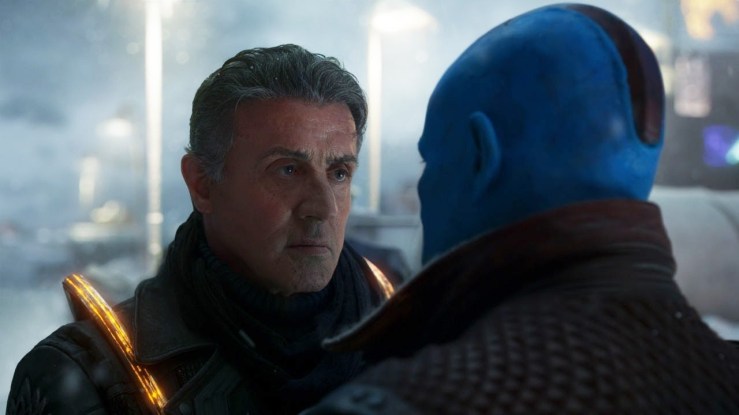
9. Stakar “Starhawk” Osborg: What was missing in the Marvel Cinematic Universe? Sylvester Stallone. His quick role as this high ranking member of the Ravagers in Guardians of the Galaxy Vol. 2 was completely awesome. According to writer and director James Gunn, Starhawk is “very important to the Marvel Universe” and “it’s our plan to see more of Stallone” in future MCU films. I’m intrigued to see if they’ll play into the comic canon and have both Stallone and Michelle Yeoh, who played his adoptive sister/lover Aleta in another cameo at the end of the film, be both parts of Starhawk. Yes, all I did in my teenage years was read comic books.

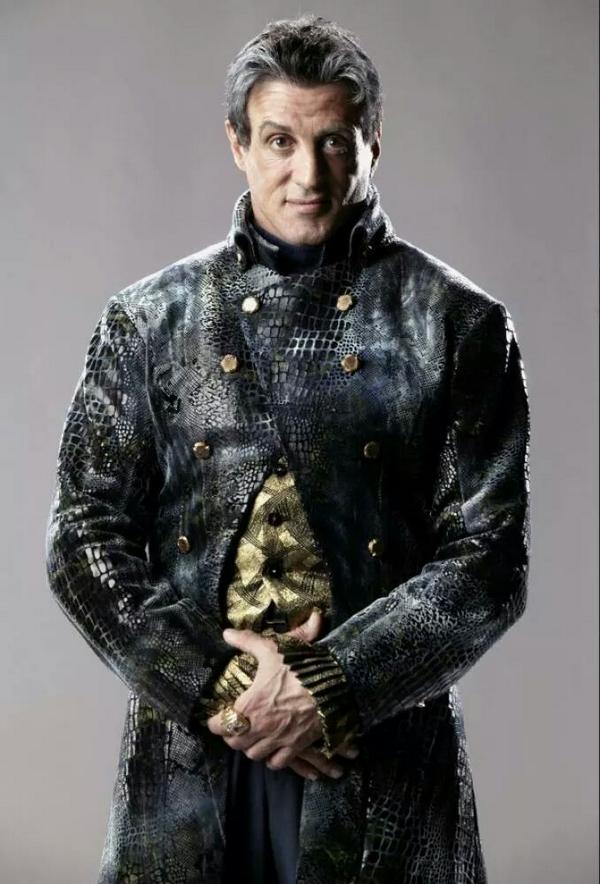
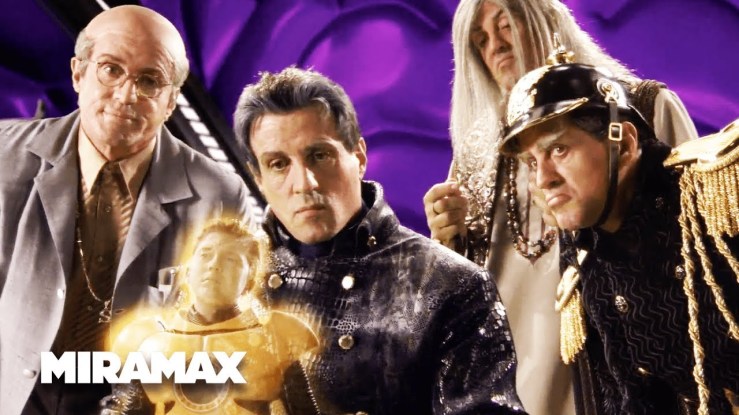
10. The Toymaker: A rare role for Stallone as a bad guy, the main enemy of Spy Kids 3D is the reason why their grandfather Valentin Avellan (Ricardo Montalbán) is in a wheelchair. He was once an OSS agent that turned his back on his Valentin, his partner, and has been imprisoned in cyberspace. From the video realm, he and his three duplicates plan on taking over the minds of the children of the world. If I were to make a crossover film with every single Stallone good guy teaming up — the ultra-Expendables — he would be the big bad.

Whew! What a list! Did I miss one of your favorites? Let me know! Or send me your own list!

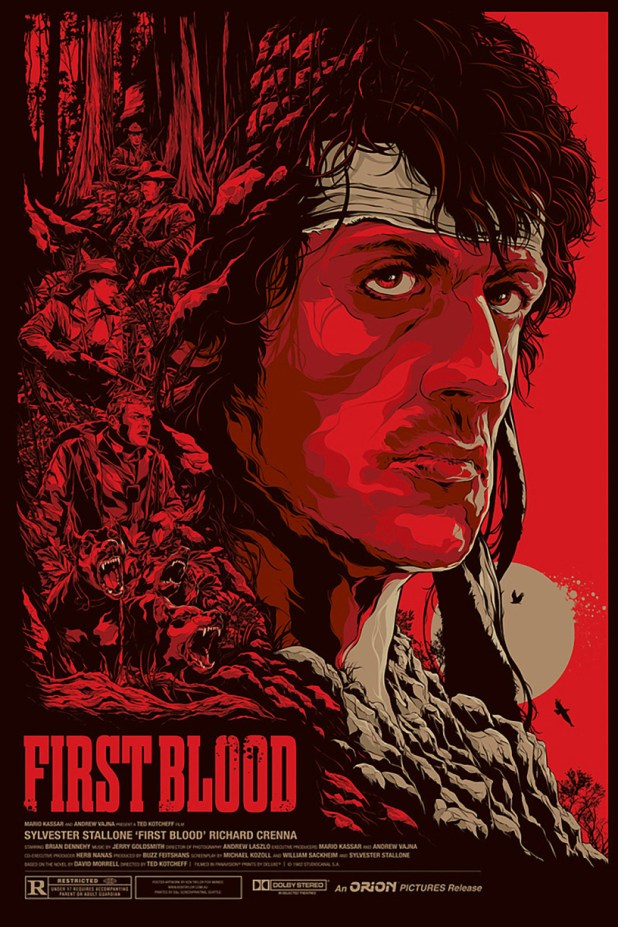
First Blood (1982)

The first of the Rambo films has an interesting pedigree. It comes from director Ted Kotcheff (the original Dick and JaneNorth Dallas FortyUncommonn ValorWeekend at Bernies) and was based on a downbeat 1972 book by David Morrell. When Stephen King taught creative writing at the University of Maine, he used First Blood as a textbook. Ten years, eighteen screenplays and three studios later, the film finally got made.

Back in 1982 when the film rights were first sold, producers considered Steve McQueen for the lead. Sheriff Teasle was offered to both Gene Hackman and Robert Duvall, but they turned the part down. Lee Marvin turned down playing Colonel Trautman, but Kirk Douglas eventually took the role. He quit just before shooting began, as he wanted the movie to end like the book, where Rambo and the sheriff fatally would one another, Trautman kills Rambo and sits with the dying lawman. Rock Hudson also signed up to be in the film, but he had to undergo heart surgery, leaving Brian Dennehy to play Sheriff William Teasle and Richard Crenna to play Colonel Samuel Trautman in what would become the character actor’s most iconic role.

Seven years after his discharge, he left Vietnam, John Rambo (Sylvester Stallone) is wandering America. A visit to Hope, Washington to see an old friend is cut short when he learns that his former military brother has died from cancer that was caused by Agent Orange.

As he wanders the highway, Sheriff Teasle begins to harass him, finally driving him to the unskirts of town and telling him not to come back. When he does, he’s arrested for vagrancy, resisting arrest and possession of a knife. The police are brutal to the former war hero, as Deputy Art Galt (Jack Starrett, Nam’s Angels, Race with the Devil) and the other cops spray him down with a hose and even attempt to dry shave his face. Rambo snaps and decimates the outmatched lawmen; he;s a former Green Beret who won the Medal of Honor.

Galt chases him from helicopter, taking shots at him even though he’s been warned not to, which leads to his death. Rambo informs the police that the man’s death was his own fault, but the rest of the police come in shooting. Our hero, such as it is, dispatches each of them with non-lethal traps until only Teasle remains.

Even more officials — state police and national guard — come in, along with Rambo’s mentor and former commanding officer Colonel Sam Trautman, who advises that Rambo just be allowed to leave town. All hell breaks loose with Rambo nearly killed in an abandoned mine before escaping and destroying much of the small town. As he prepares to kill the sheriff, Trautman convinces him to surrender and Rambo collapses in tears, screaming “Nothing is over! Nothing! You just don’t turn it off! It wasn’t my war! You asked me, I didn’t ask you! And I did what I had to do to win! But somebody wouldn’t let us win!”

The first rough cut of this movie lasted three and a half hours long and was so bad that Stallone wanted to buy it and destroy it before it ruined his career. After heavy re-editing and a second ending, where Rambo doesn’t commit suicide, the film became a great success. The character itself would change as America moved from a country unsure of how to deal with the war in Vietnam to one that embraced its status as the world’s policeman; the next Rambo film would present the character in a completely new way.

Exploring: The films of George Eastman

eastman

George Eastman — born Luigi Montefiori on August 16, 1942 — is an Italian actor, writer and director who took on his Americanized name after appearing in several spaghetti westerns in the late 1960’s and early 1970’s. He’s known for his menacing glare and towering height — he’s 6 foot, 9 inches tall.

After working with Joe D’Amato on the film Cormack of the Mounties, the two began a professional relationship that extended throughout the next few decades. Probably Eastman’s best-known role is playing Klaus Wortmann, the insane cannibal killer in D’Amato’s Anthropophagous. He played a similar role — now named Mikos Stenopolis — in the spiritual sequel/Halloween ripoff Absurd and also starred in Erotic Nights of the Living Dead and Porno Holocaust for the multi-named D’Amato (born Aristide Massaccesi, but also known as Ariston Massachusetts, Arizona Massachusset, Federiko Slonisko, Federico Slonisco Jr., Dan Slonisko, Raf Donato, David Hills, Michael Wotruba, Dirk Frey, Robert Hall, O.J. Clarke, Gilbert Damiano, Peter Newton, Richard Haller, Kevin Mancuso (actually the name for both he and Eastman together when they co-directed 2020 Texas Gladiators), Dario Donati, Joan Russell, Robert Yip, Lim Seng Yee, Boy Tan Bien, Chang Lee Sun, Fu She, Hsu Hsien, Leslie Wong and certainly many more that no one has figured out were really him).

Eastman didn’t just appear in Italian exploitation films. He also was the nemesis for Charlton Heston in 1972’s The Call of the Wild and played Goliath in the 1985 version of King David, which stars Richard Gere.

NOTE: Thanks to Matthyou Stern on Facebook for mentioning that he was also the minotaur in Fellini’s Satyrcon.

After a string of 1980’s appearances, mostly always as the heavy, he moved into directing and writing with films such as 1990’s Metamorphosis before becoming a screenwriter full-time.

Eastman is one of my favorite actors in Italian cinema. When he shows up in a film, you’re guaranteed that he’s going to bring all of his scene-chewing insanity to every moment that he’s on-screen. Here are but a few of my favorite roles that he’s played.
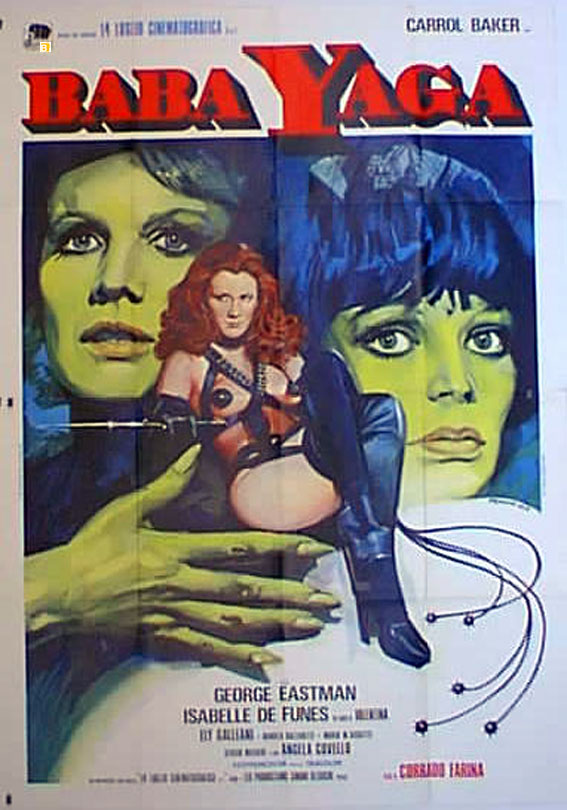
ACTING – Arno Treves in Baba YagaThe first time I ever saw Eastman in a film was in this 1973 adaption of Guido Crepax’s erotic comic book. He plays Arno, a director who is the friend and lover of photographer Valentina Rosselli (Isabelle De Funès), who comes into the orbit of Baba Yaga (Carroll Baker), who may or may not have occult powers. Grab it from Blue Underground.
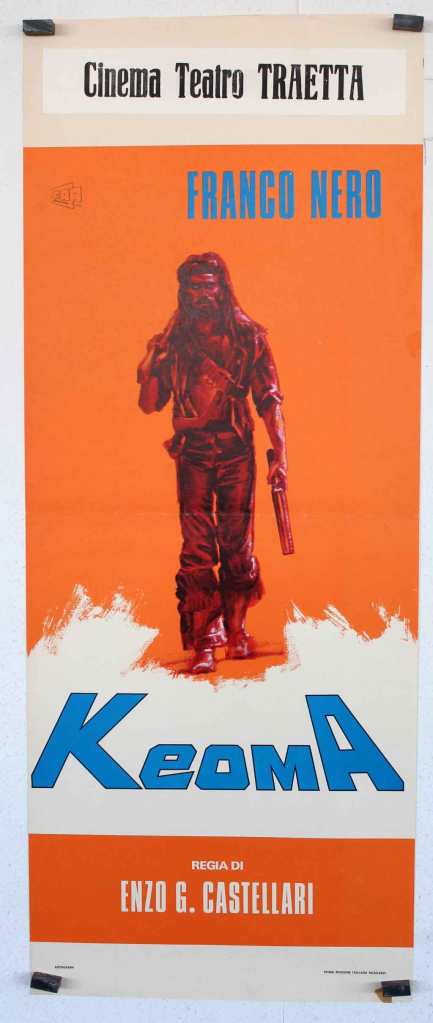
WRITING – Keoma: Eastman wrote the original treatment for this Enzo Castellari directed and Franco Nero starring spaghetti western that at once is the end of the era of those films and also was the potential for an entirely new look at the genre. Endlessly dark and influenced by Shakespeare, Sam Peckinpah and Bob Dylan — quite a cocktail — it’s a film that deserves a much larger cult. You can check out the new blu ray release from Arrow Video to see why (and there’s also a mini-doc, Writing Keoma, that features a new interview with Eastman).
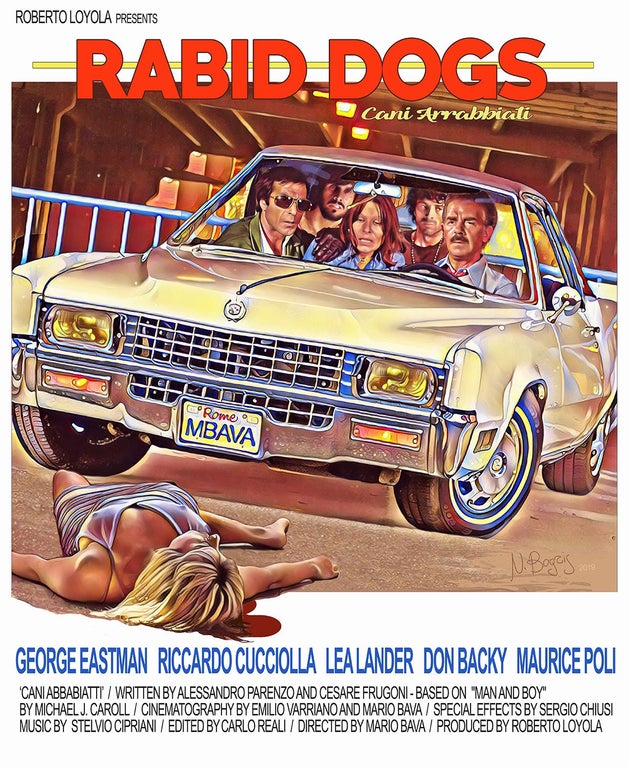
ACTING – Rabid Dogs/Kidnapped: This 1973 film by Mario Bava wasn’t released until after his death, due to rights issues and no final cut having ever been completed. Taking place mainly within a car filled with criminals who all have their own agenda, Eastman plays Thirty-Two (named for the size in millimeters of his member), a drunken rapist and murderer whose madness sets the plot into overdrive. You can get it from Kino Lober.
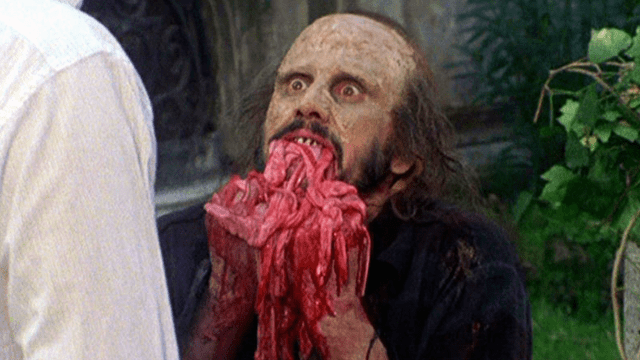
ACTING – AntropophagusAlso known as The Grim Reaper in its cut down US release, Eastman owns every frame of this movie, appearing as mad cannibal Klaus Wortman. How many other actors eat their own intestines and rip open a woman’s belly to eat her unborn child, much less both in the same movie? This movie has so many titles, even I can’t keep track of them, like Antropofago, Man Beast, Man-Eater and The Savage Island. It’s also one of the 39 category 1 video nasties, which you can read about right here. Want to see it for yourself? Severin Video has you covered.
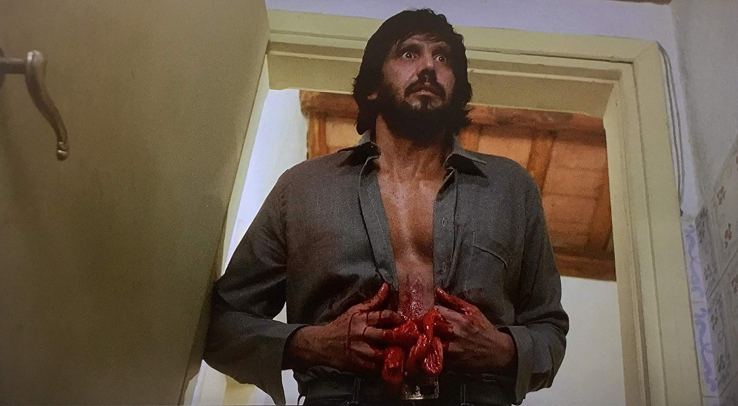
ACTING – Absurd: Eastman plays Mikos Stenopolis, a man experimented on by the Vatican, who begins the film by being impaled on a fence before killing every single person in his path. If this seems a lot like the movie directly above it, that’s no accident, as it also comes from the D’Amato/Eastman alliance. This one, however, is the only Halloween ripoff that has a Pittsburgh Steelers came as its backdrop. Severin Video has also rereleased this on blu ray.
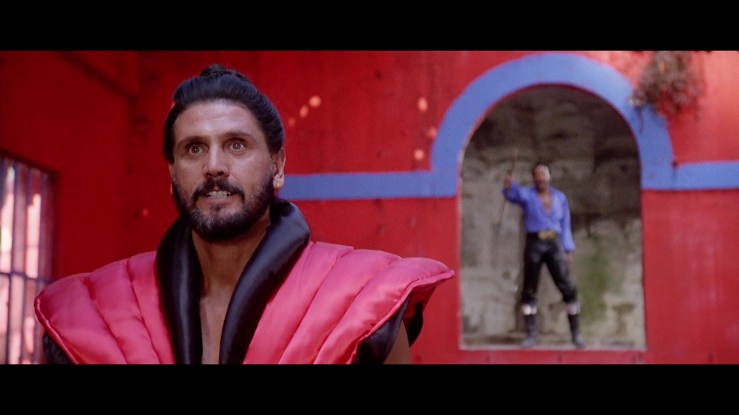
ACTING – 1990: The Bronx WarriorsAnyone who makes fun of this Enzo Castellari post-apocalyptic film gets thrown out of my house on their ass. Eastman plays Ogre here, dressed in the finest Mortal Kombat fightwear years before that actually was a thing. Lucky you — you can get this movie and Escape from the Bronx and The New Barbarians on this new blu ray reissue from Blue Underground! Or watch this on Shudder and thrill to a movie that is somehow even better than the multiple movies that it’s ripping off.
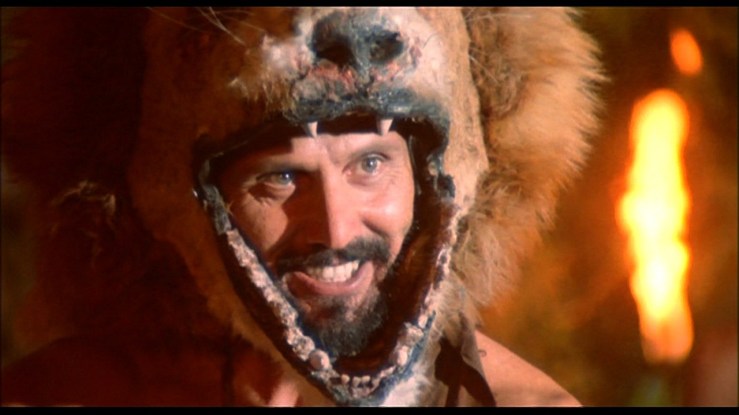
ACTING – IronmasterIn case you ever think that this world sucks, here’s a heartwarming thought: at one point in the mid-1980’s, Umberto Lenzi and George Eastman, wearing a cape with a lion head, were running wild inside South Dakota’s Custer State Park making a complete ripoff of Quest for Fire that eschews any realism and goes straight for the throat. Life can be wonderful, you know. Buy this from Ronin Flix and find out for yourself.
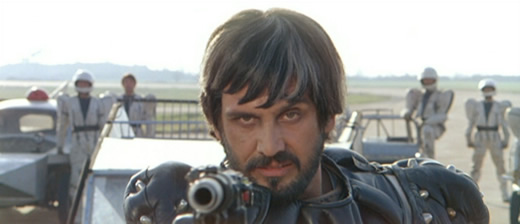
ACTING – The New BarbariansReleased in the US as Warriors of the Wasteland, this may be my favorite role that Eastman ever played. As One, the leader of the Templars, he murders, rapes, pillages and tortures his way through what’s left of the world after the bombs have fallen. Between him and Fred Williamson’s Nadir, the main hero Scorpion can only come across as second rate. Seriously — you have not lived until you see Eastman go full-on maniac and scream out batshit dialogue when he’s not murdering someone every two minutes. Essential viewing. Also available on that aforementioned post-apocalyptic Blue Underground three-pack.
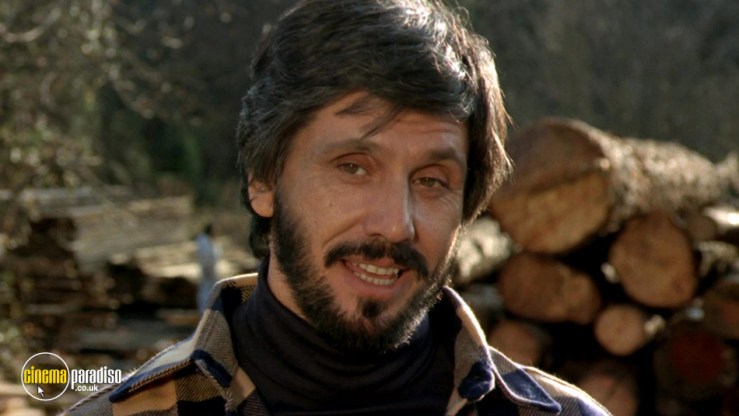
ACTING – BlastfighterYou may have watched ripoffs of Rambo: First Blood before. But have you ever seen one with a magical gun that can shoot darts and grenades? Or one that has Michael Sopkiw, who was the childhood friend of Eastman, and is just trying to live out his life in his cabin and leave his blastfighter under the floorboards, but poachers won’t leave well enough alone? No. You have not. So you should totally get this from Ronin Flix.
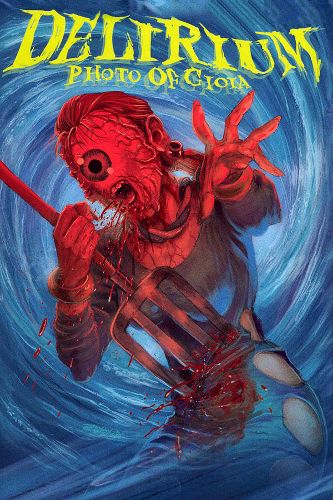
ACTING – DeliriumLamberto Bava claims that this is one of the few movies where he had the budget to get things right. Well, he did one thing correct: he hired Eastman to be Alex, the photographer boyfriend of the main character. Then he didn’t have him do much at all. Oh well. This movie is also available from Ronin Flix. I wonder if Eastman owns stock in that company.
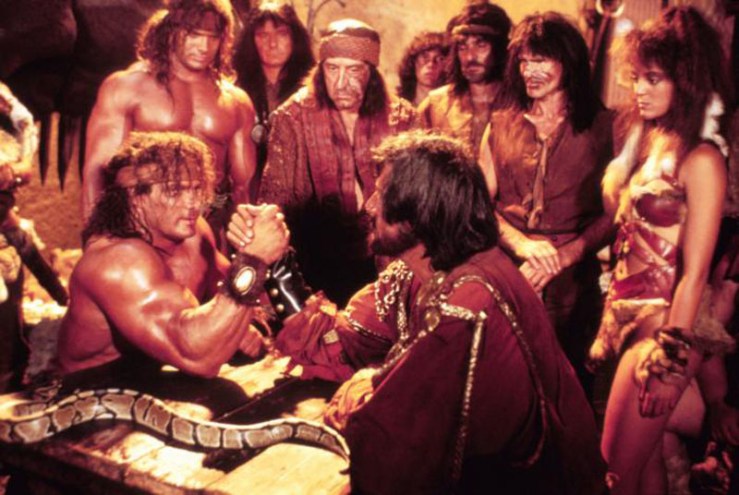
ACTING – The BarbariansCannon Films. Ruggero Deodato. The Barbarian Brothers. If these words make you excited, well, you’re at the right website. Eastman makes a quick appearance here as Jacko, arm wrestling one of the brothers in a bar. Here’s hoping he got a sweet paycheck out of this one.
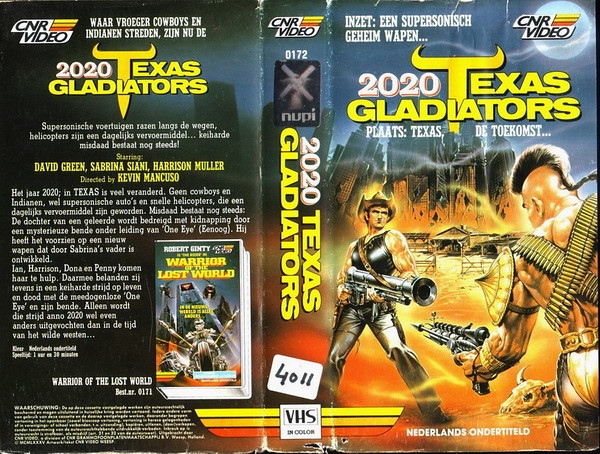
WRITING/DIRECTING – 2020 Texas GladiatorsIn the book Spaghetti Nightmares, Eastman derided the entire post-apocalyptic genre: “These (post-atomic) films, which were made in the wake of the various Mad Max movies, were decidedly crummy. The set designs were poor…and the genre met a swift and well-deserved death. I only wrote these awful movies for financial reasons…no attempt at originality was made at all.” On this one, I’d agree, as it’s pretty much a spaghetti western with different clothes. You can grab it at Cult Action.
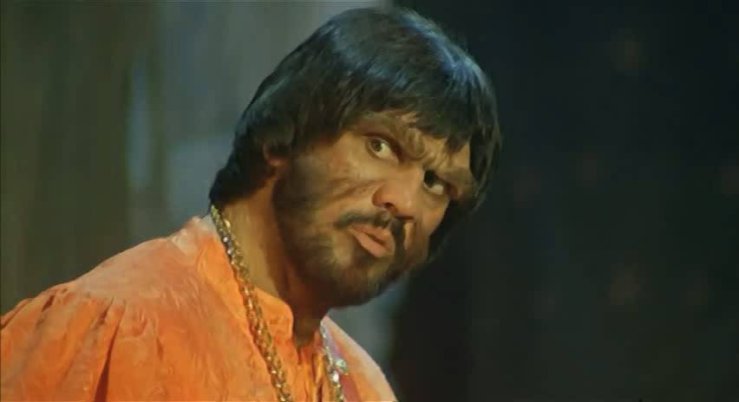
ACTING – 2019: After the Fall of New YorkA hero named Parsifal navigates a world where women are no longer fertile, looking to bring back the one woman who can have a child. Does this sound like Children of Men? Well, amazingly, that book and movie ripped off this movie after it ripped off Mad Max. Then again, this one also has Sergio Martino directing it and features Eastman as Big Ape, a pirate-dressed Planet of the Apes character in the midst of all this who is obsessed with finally having sex with the aforementioned fertile woman and spreading his DNA all around the brutal new world of 2019. This movie is exactly as insane as that writeup makes it out to be.
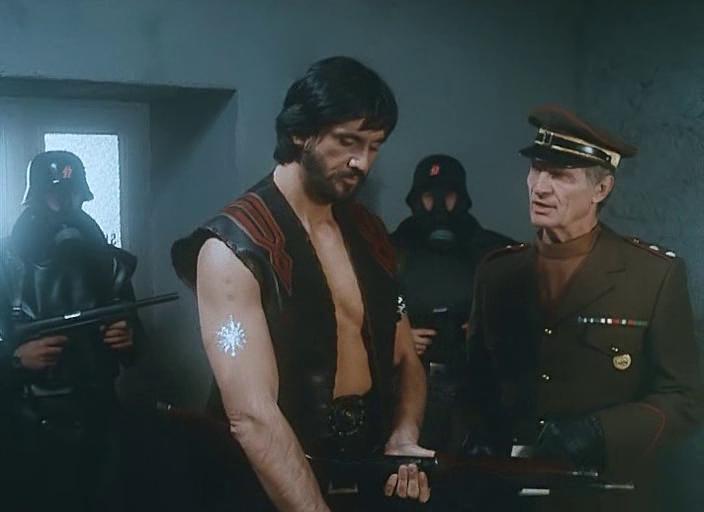
ACTING/WRITING – EndgameWhy this movie isn’t out on blu ray right now blows my mind. It’s my absolute favorite post-apocalyptic film ever — I know, I say that often and even did about Warriors of the Wasteland up above — but this movie is absolutely and utterly scumtastically perfect. Just look at that cast — Al Cliver, Laura Gemser and Eastman as Karnak, the second-greatest Endgame player of all time. Eastman also wrote this film, which is packed with utter depravity and mayhem. Grab it yourself from Cult Action like I did.
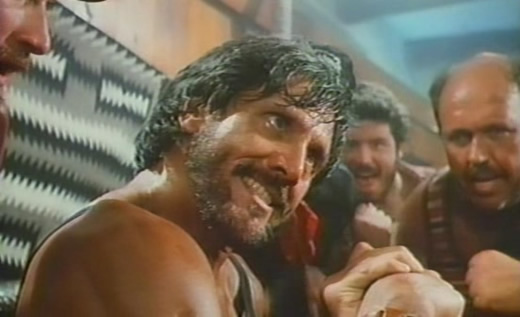
ACTING – Hands of SteelA Sergio Martino directed movie that rips off Mad Max and The Terminator while also somehow trying to be Over the Top starring John Saxon, Janet Agren, Claudio Cassinelli (who was killed in a stunt mishap on set) and Eastman as a demented trucker: Yes. Give me all of that. You can get this from Ronin Flix, complete with a new Eastman interview.
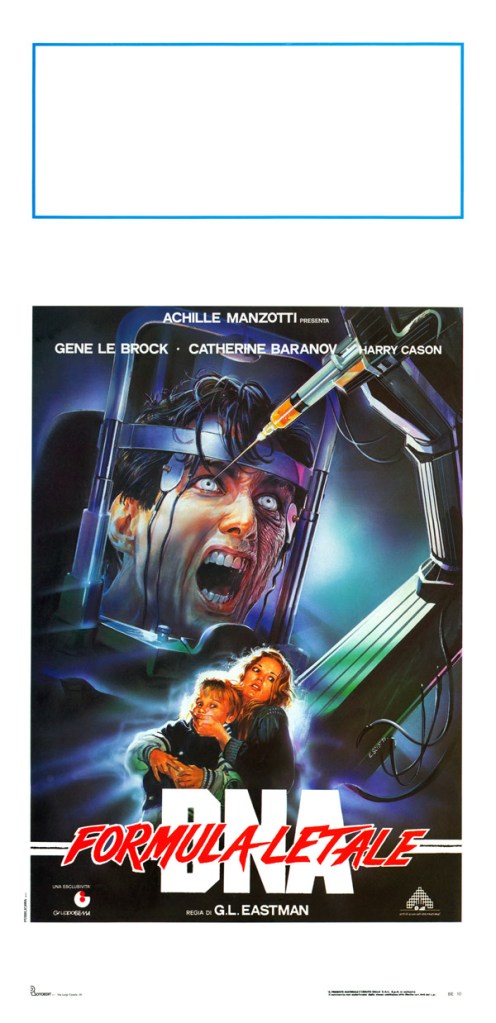
DIRECTING – MetamorphosisAlso released as Re-Animator 2 in Spain, this Eastman directed film tries to remake The Fly while basing itself on lizards instead of insects. You can grab it from Shout! Factory.
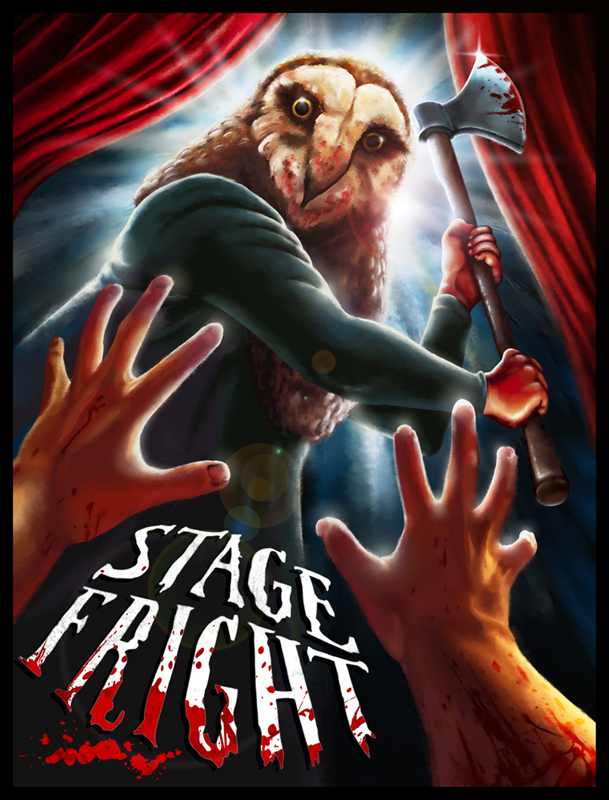
WRITING – Stage Fight: This Michael Soavi-directed, Eastman-written slasher is perhaps the last great blast of Italian horror cinema. It’s one of the most visually stunning filsm you’ll see, packed with brutality and beauty in equal measure. It’s a movie that I can’t get enough of — the way the end plays with the viewer’s perception and even breaks down reality is truly perfect. Grab it from Blue Underground or watch it on Shudder ASAP!

I’ve skipped a few other movies, but when you’ve been involved in as many films as Eastman, this is bound to happen. I’ll probably add to this list when I get a chance to check out his work in movies like Erotic Nights of the Living DeadPorno HolocaustEmanuelle Around the World, Emanuelle and Francoise, Caligula: The Untold Story and the two Django films that he appeared in.

Did I miss anything? What’s your favorite Eastman movie? And when is he going to act again? I realize that he reprised his role from 1986’s Christmas Present in 2004’s Christmas Rematch, but he should totally be still acting!

NOTE: Thanks to Twitter user Sjekkie Sjen for telling me: “It’s spelled Joe d’Amato not Joe D’Amoto.”

Grudge Match (2013)

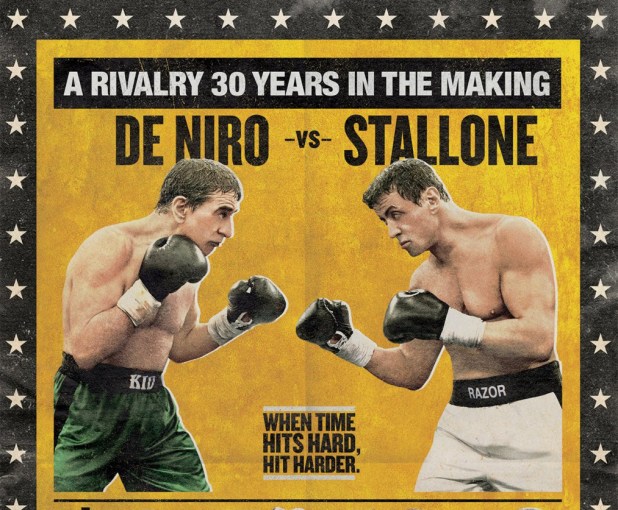
Raging Bull was played Robert De Niro. Rocky by Sylvester Stallone. Now, in Grudge Match, they play two old boxers stepping back into the ring for one more fight.

Although this movie is set in Pittsburgh — Kim Basinger hilariously mispronounces CONSOL several times, which I know for a fact they hate — it was really filmed in New Orleans.

As a Yinzer, I find this incredibly upsetting. There are so many errors, like how there are signs for Pepsi Max in CONSOL, which is untrue. The now PPG Paints Arena only sells RC Cola. During the national anthem scene at a monster truck rally, a Winn Dixie sign shows up. There are none in this area. And in Pennsylvania, car dealerships can’t be open on Sunday. Come on, Hollywood, redd up your films and stop being such jagz n’at.

Henry “Razor” Sharp (Stallone) and Billy “The Kid” McDonnen (De Niro) were both famous boxers from Pittsburgh who have one loss on each of their records — courtesy of one another. Before the rubber match, Razor retires with no explanation, costing Kid a huge pay day.

Decades later, Razor is struggling to make ends meet and working on a shipyard. Promoter Dante Slate, Jr. (Kevin Hart), wants Razor to provide the motion capture  for a boxing game, but Razor won’t trust the man, as it was his Slate’s father’s bad investments that left the aging boxer destitute.

However, Kid is now a successful car dealership and bar owner who says yes right away. Razor only agrees because the $15,000 payday will cover the overdue health bills for his trainer, Lightning Conlon (Alan Arkin).

While clad in greenscreen suits and mocap balls, the two boxers get into a huge brawl, ruining a studio and going viral when the video is posted. Slate decides to promote a final match between the two, called Grudgement Day, presented by Geritol.

At the press conference, Razor sees his ex-girlfriend Sally Rose (Basinger), who cheated on him with Kid and gave birth to a son named B.J. (The Punisher himself, Jon Bernthal) before getting married to someone else.

Kid’s trainer Frankie Brite (LL Cool J) is barely helping him, so he connects with B.J., who is a coach at Pitt, and gets in shape. As for Razor, he’s blind on one eye and everyone wants him to call it all off. However, he needs this one last fight, as Kid took everything he loved away from him — boxing and Sally.

There’s a great moment here where a montage recreates many of the Rocky training scenes, including Stallone dragging a truck that has the name Road Hawk on it, which is a nod to his role as Lincoln Hawk in Over the Top. And hey — it’s Rich Little as an announcer!

The big battle is actually pretty great. It’s shot well and is particularly brutal at the end, given that this is a comedy. It’s actually pretty much a feel good picture, something we rarely feature on our site, so enjoy it while you can. People will be getting devoured and stabbed again soon enough.

Grudge Match was directed by Peter Segal, who was also behind the camera for Second ActGet SmartTommy Boy50 First Dates and The Nutty Professor II: The Klumps. As for Stallone, this movie earned him a Golden Raspberry nomination for Worst Actor (along with Bullet to the Head and Escape Plan), but he lost to Jaden Smith for After Earth. He’s been nominated 14 times and won it four times:

  • 1984: Rhinestone
  • 1985: Both Rocky IV and Rambo: First Blood Part II
  • 1988: Rambo III
  • 1992: Stop! Or My Mom Will Shoot

He was also nominated for:

You can watch this on Tubi.

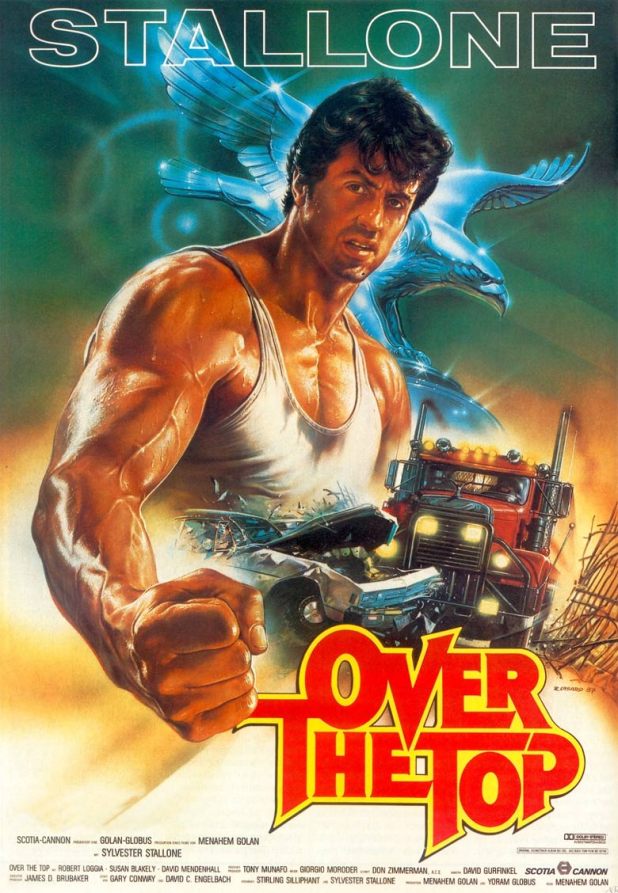
Over the Top (1987)

Stirling Silliphant wrote the Oscar-winning screenplay for 1967’s In the Heat of the Night, as well as The Towering InfernoThe Poseidon AdventureVillage of the Damned,  TelefonThe EnforcerShaft In Africa and more than 700 hours of prime-time television drama to his credit. He was also a close friend and student of Bruce Lee, who he featured in the movie Marlowe and four episodes of the series Longstreet. They also worked together on a script called The Silent Flute, which was eventually filmed as Circle of Iron.

Those are some fantastic credits. Somehow, someway, he eventually found himself working with Sylvester Stallone to write the screenplay for the movie that would take arm wrestling from the bar to the mainstream. And who was ready to direct?

None other than Cannon Group co-owner Menahem Golan, the director of Delta ForceEnter the Ninja and The Apple. Yes, that Menahem Golan.

https://www.youtube.com/watch?v=jJ8d_czhqeA

Lincoln Hawk (Stallone) is a man trying to rebuild his life. While he does that, he’s driving a truck and arm wrestling. His ex-wife Christina (Susan Blakely, My Mom’s a WerewolfThe Concorde … Airport ’79) wants him to bond with their son Michael (David Mendenhall, Space RaidersStreets and the 12-year-old drug dealer in the Diff’rent Strokes episode where Nancy Reagan shows up) because she knows that she’s dying.

Michael has been in military school and calls everyone “sir.” His grandfather, Jason Cutler (this movie is yet another in my quest to see every film with Robert Loggia in it), hates Hawk and never wants him in their family.

On the journey from Colorado to California, Michael develops a deep bond with his father, who teaches him the art of arm wrestling and the essence of manhood. However, their reunion at the hospital is marred by the news of Christina’s demise. Blaming his father for not being there in her final moments, Michael returns to his grandfather’s home. Hawk, in a desperate attempt to free his son, ends up getting arrested. The mansion where Cutler resides may look familiar, as it was also featured in The Beverly Hillbillies.

Michael visits Hawk in jail, informing him of his decision to stay with his grandfather. Determined to win back his son’s trust, Hawk sets off to compete in the World Armwrestling Championship in Las Vegas, with a grand prize of $100,000 and a new, larger semi-truck. In a bold move, he sells his truck and places a $7,000 bet on himself at twenty-to-one odds. The discovery of the letters Hawk had written to him over the years, trying to establish a connection, further fuels Michael’s belief in his father.

Hawk advances to the final eight but suffers his first loss in the double-elimination tournament and hurts his arm. Cutler summons our hero and tells him that he’s always been a loser, but if he leaves forever, he’ll give him $500,000 and a better truck than the prize.

Hawk refuses and makes it to the finals, taking on his rival, the undefeated Bull Hurley. His son finds him and gives him the emotional energy he needs to survive, just as Hawk doesn’t only beat Bull but gains his respect. Somehow, Cutler gets over ten years of being a complete asshole and is happy about Michael and Hawk being reunited because that’s how eighties movies work. The guys get so sweaty in the final battle that they have to get the strap, and people go wild for it. It’s pretty impressive, and you’ll yell, “Get the strap!” too.

The film’s climactic finals were shot during a tournament organized by Cannon, the production company. This year-long competition, starting in Beverly Hills, featured events across North America, Europe, Israel, and Japan. The actual crowd and the B-roll footage of matches at the Las Vegas Hilton are what you see in the movie. The scene where Michael Bociu breaks his elbow? That’s as real as it gets.

If you’re into pro wrestling, Terry Funk, Reggie Bennett and Scott Norton show up here (Ox Baker, who was in Escape from New York, and Manny Fernandez and The Barbarian almost made it into the movie). Plenty of professional arm wrestlers like professional arm wrestling personalities such as Allen Fisher, John Vreeland, Andrew “Cobra” Rhodes, John Brzenk (who inspired the story) and Cleve Dean are also on hand.

The music in this movie is astounding. Kenny Loggins sings “Meet Me Halfway” numerous times, and there is also some Giorgio Moroder, some Asia, some Robin Zander, some Eddie Money and Sammy Hagar singing “Winner Takes It All,” which was also made into a music video to promote the film.

The film received three nominations at the 8th Golden Raspberry Awards in 1988. David Mendenhall won two for both Worst Supporting Actor and Worst New Star, which seems kind of crappy for them to abuse a kid. Sylvester Stallone was nominated for Worst Actor, an award he’s won four times, but he lost to Bill Cosby in Leonard Part 6 this time.

Stallone has claimed that if he had directed this, he would’ve changed the setting to an urban environment, used scored music instead of rock songs, and made the Las Vegas finale more ominous. These changes would have significantly altered the film’s tone and atmosphere. So why was he in it? He answered, “Menahem Golan kept offering me more and more money until I finally thought, “What the hell – no one will see it!””

Speaking of Stirling Silliphant, he only did the screenplay. Actor/writer Gary Conway (American Ninja 2: The Confrontation) and director/writer David Engelbach (America 3000Death Wish II) created the original story. Engelbach cried when he saw the finished movie, remarking that his original draft “wasn’t nearly as dumb as the final film and was more about truck driving and arm-wrestling than it should’ve been.”

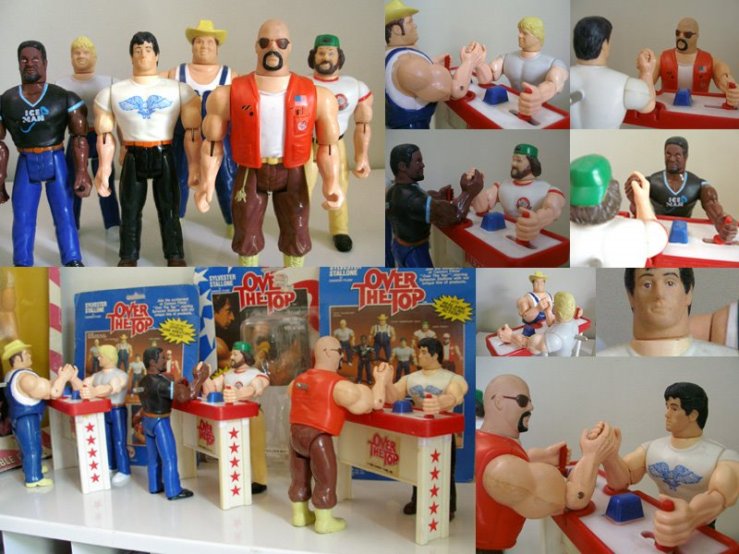
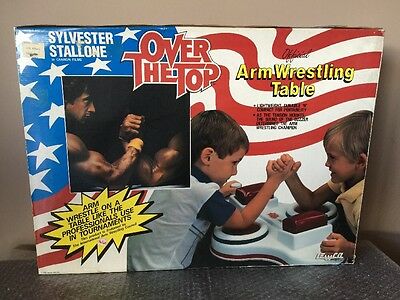
When this movie came out, my brother and I were in our early teens and couldn’t wait for it. There was an entire line of toys that had knobs in their backs that allowed them to arm wrestle and, even better, an actual competition table. We begged our parents for it nearly every day for six months, but our mother continually told us to use an actual table. She had no vision. At this point, I could have a father-in-law who hates me, a bedridden ex-wife and a son who doesn’t know me, but I could flash anyone and put their arm down in no time. Get the strap!

Even more magical, fifty miles from the filming of this movie, Sergio Martino had assembled an Italian/American crew to create Hands of Steel, the only Road Warrior by way of The Terminator truck driving movie that also has arm wrestling in it. Coincidence? Do you know anything about Italian cinema?