SEVERIN BLU RAY RELEASE: Scala!!! shorts disc one (1968. 1971, 1978, 1984, 1986, 1989, 1991)

On the bonus discs of Severin’s new Scala!!! Or, the Incredibly Strange Rise and Fall of the World’s Wildest Cinema and How It Influenced a Mixed-up Generation of Weirdos and Misfits release, you’ll find examples of several shorts that played at the theater. You can buy this from Severin.
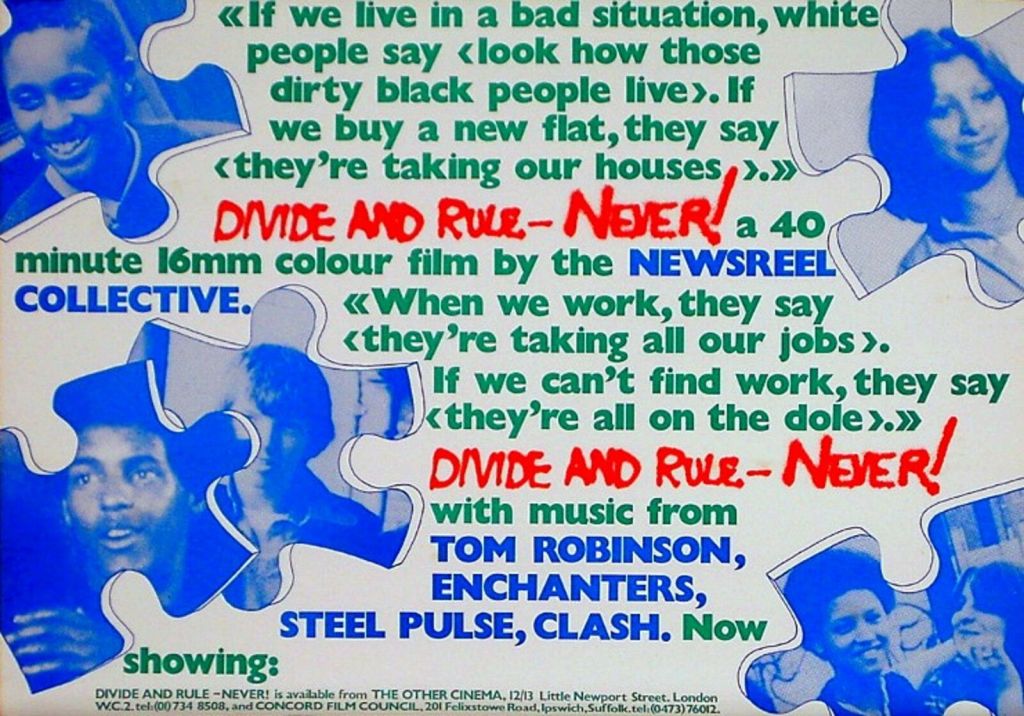
Divide and Rule – Never! (1978): Made for and by young people, this forty-minute or so film looks at race and how it is viewed in school, at work and by the law. There are also some historic sequences of British imperialism and a discussion of how Germany got to the point that it was pre-World War II, plus plenty of punk rock and reggae. This has many sides represented, from Black and Asian immigrants to ex-National Front members.

Divide and Rule — Never! was distributed by The Other Cinema, a non-profit-making, independent film distribution company in London.

Sadly, so much of this movie — made 45 years ago — are just as relevant today in America. This is movie that doesn’t shy away from incendiary material, but that’s what makes it so powerful. In addition to the interviews, it has some interesting animation and a soundtrack with Steel Pulse, TRB, X-Ray Specs and The Clash.
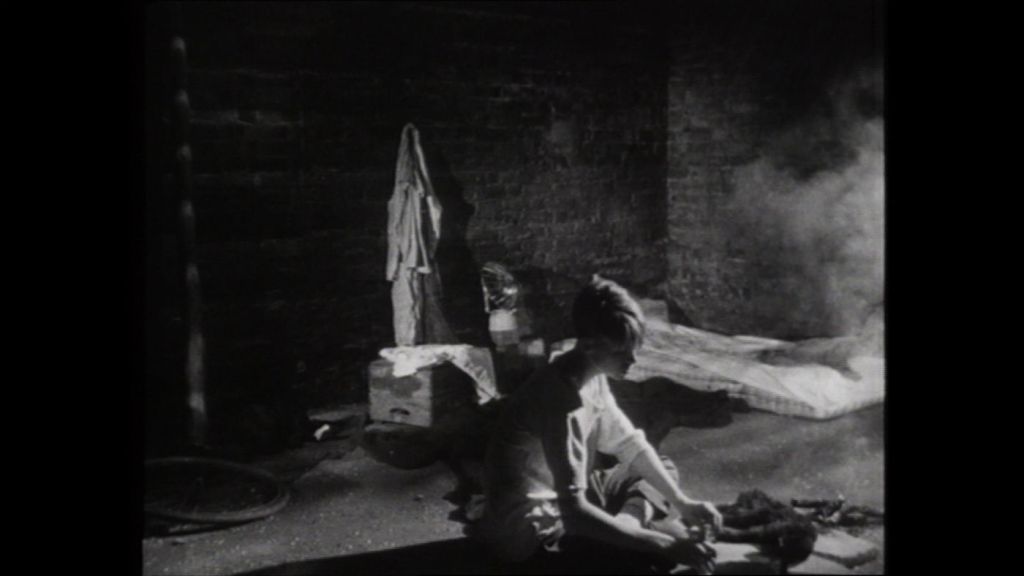
Dead Cat (1989): Directed and written by Davis Lewis, this has Genesis P-Orridge in the cast and a soundtrack by Psychic TV, which has been released as Kondole/Dead Cat.

A boy (Nick Patrick) has a cat that dies and his grief deposits him into a psychosexual nightmare, including a medicine man (Derek Jarman) and several unhoused people (P-Orridge, Andrew Tiernan).

This was shown at only a few theaters the year it was release — including Scala Cinema — before fading away and almost being lost before Lewis found it. In the program for this film, Scala said “The torture that occurs at the transition of sexuality.” If you liked videos for bands liek Skinny Puppy and Nine Inch Nails, this feels like the inspiration.
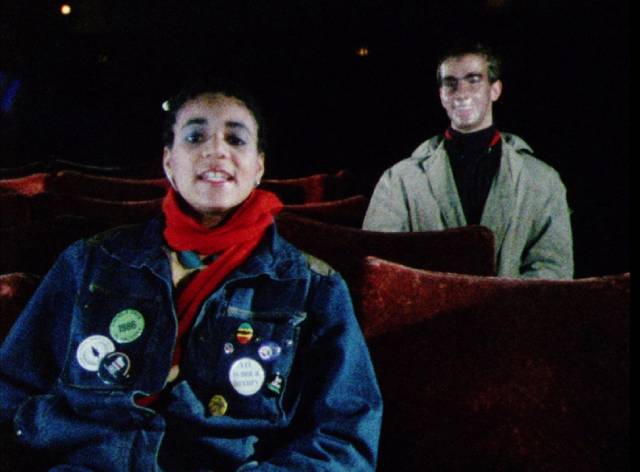
The Mark of Lilith (1986): Directed by Bruna Fionda, Polly Gladwin and Zachary Nataf as a project at The London College of Printing, this is all about Zena (Pamela Lofton), who is researching monstrous women. She meets Lillia (Susan Franklyn) a vampire, at a horror movie and the two start a relationship. 

Liliana, trapped with an abusive male partner by the name of Luke (Jeremy Peters) who is what vampires probably would be, scavengers who feed on the weak, dreams of movies in which she is the victim of just such a vampire. She’s often fed on human beings, but has been careful not to be caught or make a mess, unlike her partner. As for Zena, she’s been studying how female gods were once worshipped but now only appear in horror fiction as monstrous creatures.

So much of this movie is as right on now as when it was made, like the speech that Zena gives when Liliana tracks her down: “Have you noticed that horror can be the most progressive popular genre? It brings up everything that our society represses, how the oppressed are turned into a source of fear and anxiety. The horror genre dramatizes the repressed as “the other” in the figure of the monster and normal life is threatened by the monster, by the return of the repressed consciously perceived as ugly, terrible, obscene.”

Her argument is that we can subvert the very notions of horror, making the monsters into heroes that destroy the rules that hold us down.

However, this being a student film, it’s very overly earnest and instead of working these ideas into the narrative as subtext, they take over the entire movie. If you’re willing to overlook this, it’s a pretty fascinating effort.
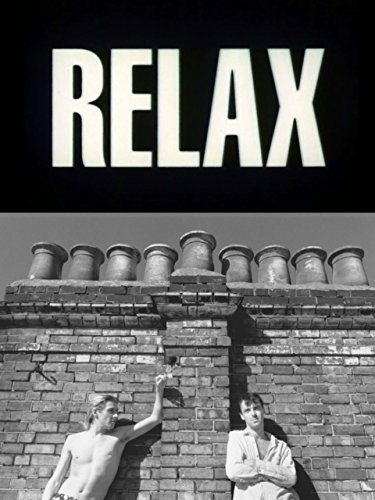
Relax (1991):  Steve (Philip Rosch) lives with his lover Ned (Grant Oatley), but as he starts to engage in a more domestic relationship, he starts to worry about all of the partners he’s had. After all, the AIDS crisis is happening and he’s never been tested. Ned tells him to relax, but there’s no way that he can.

The wait for the test is just five days but it may as well be forever. This also makes a tie between sex and death, as Steve strips for both Ned and his doctor. And in the middle of this endless period of limbo, he dreams of death and fights with Ned, who just smiles and keeps telling him to relax. But how could anyone during the time of AIDS?

I remember my first blood test and the doctor lecturing me after he gave it, telling me that I should have been a virgin until I married and whatever happened, I brought it on myself. The funny thing was, I had been a virgin, I thought I was getting married and I had no knowledge that my fiance was unfaithful to a level you only see in films. That night, my parents came to visit, leaving their small town to come to the big city and my mother asked, “What is that bandage on your arm?” I could have lied, but I told her it was for a blood test, and I dealt with yet someone else upset with me. My problems were miniscule in the face of the recriminations that gay people had to deal with, a time of Silence=Death, a place seemingly forgotten today other than by the ones who fought the war.

Directed and written by Chris Newby, this is a stark reminder of that time.
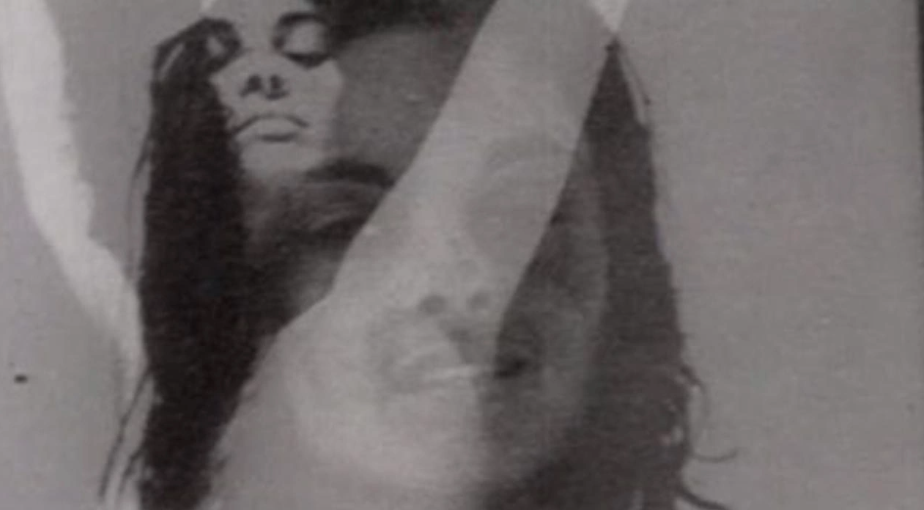
Boobs a Lot (1968): Directed by Aggy Read, this is quite simple: many shots of female breasts, all set to The Fugs’ song of the same name. Banned in Australia, this has around three thousand sets of mammaries all in three minutes, the male gaze presented over and over and, yes, over again until it goes past just being sophomoric and becomes mesmerizing in the way that breasts are when you’re starting puberty. I’m ascribing artistic meaning to this but really, at the end of the day, it’s just a lot of sweater meat. Fun bags. Cans, dirty pillows, babylons, what have you. My wife is always amazed at how many dumb names I can come up with for anatomy and I blame years of John Waters and reading Hustler as a kid and yeah, I’m not as proud of the latter than the former. That said, there are a lot of headlights in this one.

Kama Sutra Rides Again (1971): Stanley (Bob Godfrey, who also directed and write this) and Ethel are a married couple looking to keep their love life interesting, so they have been trying out new positions. Things start somewhat simple, but by the end, Ethel is being dropped through trap doors and out of an airplane onto her husband. A trapeze love making attempt ends in injury, leading Ethel to chase Stanley while all wrapped up.

Stanley Kubrick personally selected this film to play before A Clockwork Orange in theaters in the UK. I wonder if this played at Scala before the screening that shut down the theater. More than just a dirty cartoon, this was nominated for an Oscar. Despite being about lovemaking, it’s all rather innocent and remains funny years after it was made.
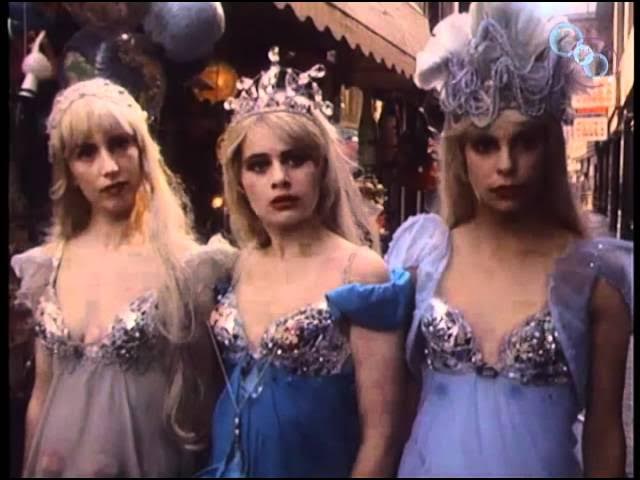
Coping With Cupid (1991): Directed and co-written by former Slits guitarist Viv Albertine, this finds three blonde alien women — played by Yolande Brener, Fiona Dennison and Melissa Milo — who have come to Earth to learn what love is, under the command of Captain Trulove (the voice of Lorelei King). They meet a man named Peter (Sean Pertwee), who hasn’t found anyone, as well as interview people on the street to try and learn exactly how one person can become enamored of another.

Richard Jobson from Skids and Don Letts from Big Audio Dynamite appear, as does feminist sexologist Shere Hite, at least on a TV set. I love that the three aliens are the ideal of male perfection yet they are lonely, trying to figure out what it takes to make the heart beat. It’s kind of like so many other films that I adore where space women try to understand men, a genre that really needs a better title. See Cat-Women of the Moon, Missile to the Moon, Queen of Outer Space, Fire Maidens from Outer SpaceAmazon Women On the Moon, Abbott and Costello Go to Mars, El Planeta De Las Mujeres Invasoras and Uçan Daireler Istanbulda.

On Guard (1984): Sydney: Four women — Diana (Jan Cornall), Amelia (Liddy Clark),  Adrienne (Kerry Dwyer) and Georgia (Mystery Carnage) — juggle their lives, careers and even families to destroy the research of the company Utero, who are creating new ways of reproductive engineering. Or, as the sales material says, “Not only are the protagonists politically active women, but the frank depiction of their sexual and emotional lives and the complexity of their domestic responsibilities add new dimensions to the thriller format. The film also raises as a central issue the ethical debate over biotechnology as a potential threat to women and their rights to self-determination.”

One of the women loses the diary that has all of the information on their mission, which leads to everyone getting tense over what they’re about to do. Directed by Susan Lambert, who wrote it with Sarah Gibson, this allows the women to be heroes and not someone to be saved. I like that the advertising promised that this was “A Girls’ Own Adventure” and a heist film, hiding the fact that it has plenty of big ideas inside it.

Today, in vitro fertilisation (IVF) is an accepted way of having children, yet here, it’s presented as something that will take away one of the primary roles of women. Juxtapose that with IVF being one of the women-centric voting topics of the last U.S. election.
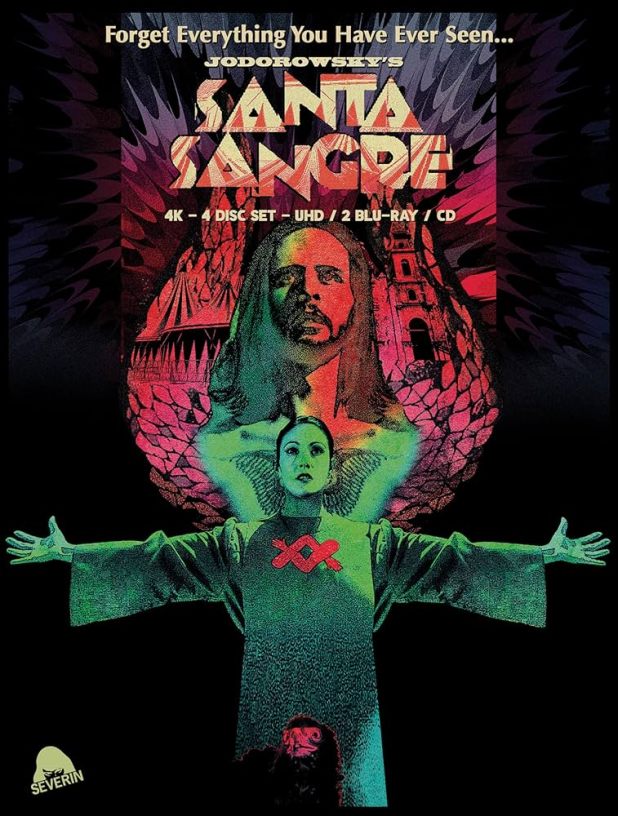
MOVIES THAT PLAYED SCALA: Santa Sangre (1989)

Thanks to the British Film Institute, there’s a list of films that played Scala. To celebrate the release of Severin’s new documentary, I’ll share a few of these movies every day. You can see the whole list on Letterboxd.

I first encountered Sante Sangre at Prime Time Video in Ellwood City, the video store of my childhood. For some reason, it was stocked in the horror section. I have no idea where I’d put the film myself, but it felt like horror was often the catchall for the films that were not understood. And, of course, as I grew up in a very small town between Pittsburgh and Youngstown, no one was going to rent anything out of a foreign section. As such, amongst the gorehounds of home, Sante Sangre was a film that was too odd, too strange and ultimately not violent enough to appease our needs. I’d never rented it and now, an old man who worships at the foot of The Holy Mountain, I find myself wishing that I could send a message back to my younger self and tell him to seek this film out.

Interestingly enough, this film was written by Roberto Leoni, who had worked in the library of a psychiatric hospital which inspired this film. Leoni also wrote My Dear KillerCasablanca Express and one of the oddest movies I’ve ever seen, Sergio Martino’s American Rickshaw.

He brought the script to Claudio Argento, who felt that Alejandro Jodorowsky was the only director who could make this movie. However, after Dune ended due to money issues and Tusk was considered a failure, Jodorowsky had disappeared. The director would only meet Leoni, telling him that the angel of stories had passed over Paris and taken this story to Italy, but it was meant for him to tell.

After all, Jodorowsky had had a chance meeting in the alley outside a bar with Gregorio Cardenas Hernandez, the famed Estrangulador de Tacuba who had emerged after nearly thirty years in prison able to play the piano, write poetry, practice law and with a wife and four children. He was pardoned of his crimes and led a normal, if famous, life until his death in 1999.

Fenix, played at different times by Jodorowsky’s sons Axel and Adan, has grown up in the circus, the child of Orgo the knife-thrower and Concha the trapeze artist. His mother is also the leader of a cult that worships a dead child who was raped and had her arms cut off by two brothers. As the Catholic church and the government destroy their place of worship, Orgo is making love to the tattooed woman who he performs alongside. Concha catches him, but is hypnotized and raped as well.

As if that isn’t bad enough, the beloved elephant dies despite Fenix’s prayers. He watches as scavengers tear it apart in the city dump and all his father can do is carve up his chest with a tattoo to try to stop his tears and make him a man.

That night, Concha finally rises up against Orgo, burning his privates with acid. He retaliates by cutting off her arms before slicing his own throat, unable to live without his sexual member. The tattooed woman takes the mute Alma — who Fenix already loves — and runs off into the bloody night.

We move back to the present, where the film began with Fenix in a mental institution. A chance outing reveals to him that the tattooed woman is still alive and trying to introduce Alma to a life of selling her body. That night, a strange woman kills the older inked female, but we can’t see who it is.

We soon learn that Concha is forcing Fenix to be her arms — not just in their knife throwing act, which forces him to become a strange substitute for his father — but in a series of murders. Alma tries to get Fenix to leave this all behind, but his mother demands that he kills the only woman he has ever loved. He responds by stabbing her, yet she does not die.

That’s when we learn the truth. Concha has been dead since the night Orgo took her arms all those years ago and an armless mannequin has been the one that our hero — such as it is — has been listening to. Along with the help of more imaginary friends, Fenix destroys the past and surrenders to the police, amazed that he has regained control of his arms once again.

As the elephant dies in this film, inspiration was born. In Eddie Murphy’s song “Whazupwitu,” everything begins with the words of the clown: “The elephant is dying.” This is not the last time Murphy would mention the director’s work, as he often brought him up while he did press for Dolemite Is My Name.

I am also amused that beyond Argento’s brother producing this — and by osmosis some of the murder scenes feeling as if they are inspired by Dario — Rene Cardona Jr. (yes, the director of Tintorera) was also a producer.

Even after several watches of this film, I am still astounded by its rich palette of colors, the way it synthesizes references from Universal’s Invisible Man to the lucha movies of Mexico’s past and how the hero is the villain while also being pure of heart, despite the many murders he has committed.

Perhaps in my teenage years, I was not yet ready for the psychomagic cocktail that a teacher like Jodorowsky was shaking up with this film. Yet today, I can definitely tell you that it has my highest recommendation. Please watch it. I’d love to discuss it with you.

You can watch this on Tubi.

CALULDRON FILMS BOX SET RELEASE: Brivido Giallo

The Brivido Giallo Collection collects the four film series directed by Lamberto Bava. Each film in this set is a standalone fully featured production that was completed between 1987 – 1989. The films stories are not connected, but were collected together for Italian television near the end of the 80s. 

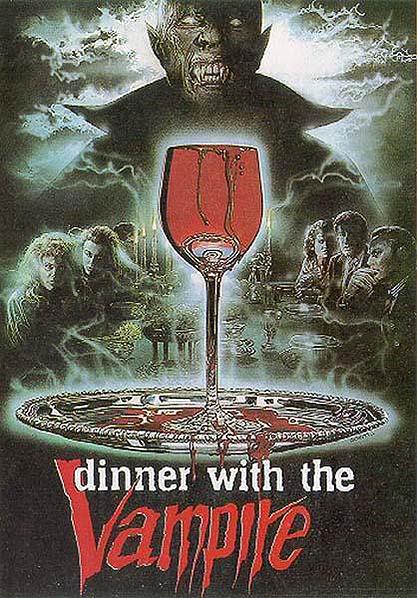
Cauldron Films is collecting all four movies — Until Death, Graveyard Disturbance, Dinner with a Vampire, and The Ogre — on blu ray for the first time in a limited edition five disc set with each movie fully uncut and restored from 4K scans of the 35mm film negatives, loaded with brand new cast and crew featurettes by Eugenio Ercolani (including 4 with Lamberto Bava himself) and an exclusive new interview with composer Simon Boswell, all housed in a rigid outer box with four folded posters featuring new artwork by Eric Adrian Lee.

You can get this set from Cauldron Films and Diabolik DVD.

Here’s an overview of what’s in the set:

Graveyard Disturbance (1987): I used to have a complicated relationship with Lamberto Bava. And by that, I mean that for every Demons, there’s a Devilfish. But then I realize that I kind of like Blastfighter, love Macabre and even kind of dig Delirium. I always giae him another chance and finally, one day, I came around to liking what Lamberto directed.

In July of 1986, Lamberto was hired to create five TV movies under the title Brivido Giallo (Yellow Thrill). Of course, none of these were giallo and only four got made: Until DeathThe OgreDinner with a Vampire and this film.

Originally titled Dentro il cimitero (Inside the Cemetery), this spoof of Italian horror is about five twentysomething teenagers who make a bet with an entire town — which is literally referred to as the kind of place from An American Werewolf In London — to see if they can survive one evening inside a series of catacombs. Not only are there zombies and vampires in there, there’s also death itself.

It all starts off with plenty of promise, as our gang of young punks has the most 80s van ever, complete with an image from Heavy Metal, U2 and Madonna. After the crew shoplifts, they go on the run and straight into supernatural trouble.

The person they’re stealing from? Lamberto. Which is only fair, as he uses this movie to rip off everything from — sorry, spoof or pay homage to — Carnival of Souls and Phenomena to his father’s Black Sunday and any number of zombie movies.

So where does the eating come in? Well, there’s one great scene in here where an entire family of multiple eyed creatures all dine on rotten food. This moment had to have inspired Pan’s Labyrinth.

The Cauldron release of Graveyard Disturbance includes commentary by Eugenio Ercolani and Nanni Cobretti; interviews with Bava, Gianlorenzo Battaglia, Karl Zinny, Massimo Antonello Geleng and Roberto Ricci; a trailer; a poster with artwork by Eric Adrian Lee and a reverse blu ray wrap with the original artwork.

Until Death (1988): As I mentioned above, I felt like I had never given Lamberto a fair chance. Then again, whenever I say that, people always remark that I’m always mentioning that I like his movies. Demons is a near-perfect movie but I’ve always qualified that by saying that he had Argento, Franco Ferrin and Dardano Sacchetti on board along with Michele Soavi as assistant director. And then I think, well, you know, I kind of really like Macabre and it has some really grimy stuff in it. A Blade In the DarkBlastfighterDinner with a Vampire, Graveyard Disturbance, The OgreDemons 2 and Midnight Ripper all have charms. I’ve even come around to liking Delirium e foto di Gioia, Maybe not Monster Shark. But the more I think about it, I really do like Lamberto Bava.

This is the movie that put me over the edge into perhaps even love.

In July of 1986, Lamberto was hired to create five TV movies under the title Brivido Giallo (Yellow Thrill). Of course, none of these were giallo and only four got made: The Ogre, Dinner with a Vampire, Graveyard Disturbance and Until Death.

There were some hurt feelings about this movie when it was made. It was based on an older script by Dardano Sacchetti, but Lucio Fulci went on record saying that he was planning on making an adaption of The Postman Always Rings Twice with the title Evil Comes Back. Fulci said that Sacchetti wrote it up and sent it to several producers and later found out that when Luciano Martino bought it, his name wasn’t on it. Fulci said, “…because of our friendship I decided not to sue Sacchetti, but I did break off all relations with him.” Sacchetti responded, “The producer of Evil Comes Back didn’t have the budget required, and he gave up to do the film. That’s it. Years later, as the screenplay was mine, I sold it to another producer who used it for a b-movie with Lamberto Bava.”

Gioia Scola really could have been a remembered giallo queen if she’d come along 15 years early. As it is, she was in some of my favorite late 80s films in the genre, including Obsession: A Taste for FearToo Beautiful to DieSuggestionata and Evil Senses.

In this film, she plays Linda, a woman whose husband Luca (Roberto Pedicini) left her eight years ago. All the men of the small village wondered why he’d leave behind such a stunning woman. In fact, this movie could have been called Ogni uomo vuole scopare Linda. She gave birth to Luca’s son and unknown to the town, has since become the wife of the man who helped kill her husband, Carlo (David Brandon).

Together, they run a small hotel near the lake. During one rainy night, Marco (Urbano Barberini) arrives to stay. And it seems like he knows way too much about what’s going on. Her son Alex (Marco Vivio) may as well, as he wakes up every night screaming, dreaming of his father clawing his way out of a muddy grave. She hires Marco as the handyman, but Carlo thinks they’re sleeping together. In no way can this turn out well.

How does Marco know where all the old clothes are kept? How does he already know the family recipes? And why is he so close so quickly with Alex?

What’s intriguing is how close this is in story and tone, yet goes off on its own path, to Bava’s father’s film Shock. The difference is where the father would use camera tricks and tone to create a mood of dread, his son will put you directly into the middle of the muck and grue with comic book lighting and great looking effects from Angelo Mattei. And keeping the family tradition going, Lamberto’s son Fabrizio was the assistant director. How wild that Mario’s grandson was AD on movies like Zoolander 2 and Argento’s Giallo and The Card Player, using the name Roy Bava for those last two movies.

My favorite fact about this movie is that it was released on VHS as The Changeling 2: The Revenge. Trust me, it has nothing to do with The Changeling.

The Cauldron release of Until Death includes commentary by Eugenio Ercolani and Troy Howarth; interviews with Bava, Battaglia, David Brandon and Massimo Antonello Geleng; a trailer; a poster with artwork by Eric Adrian Lee and a reverse blu ray wrap with the original artwork.

The Ogre (1989): Following the success of the film Demons and Demons 2, this film was announced as part of Bava’s TV movie series. The script, written by Dardano Sacchetti, is pretty much the original script for The House By the Cemetery before Lucio Fulci added to the tale. Seeing as how it was a TV movie, there was some self-censorship, as Bava said that were this a real movie, the ogre would have eaten children.

Cheryl (Virginia Bryant, Demons 2The Barbarians) is a sexually confused American writer of horror novels who traves to Italy with her husband Tom (Paolo Malco, The New York RipperThunder) and son Bobby — yep, little Bob, but not Giovanni Frezza — to work on her next book.

She begins to have nightmares of childhood memories of being stalked by an ogre and becomes convinced that the house has a curse on it that is bringing her past memories into our reality.

Alex Serra, who was the blind man from the original Demons, also shows up. Speaking of Demons, this movie was released outside of Italy as the third film in that series. As you’ll soon learn from the Demoni sequels, it has nothing to do with the first two films. Even more confusing, this was released on DVD in Germany as Ghosthouse II, the sequel to the Umberto Lenzi’s Ghosthouse/La Casa 3. That movie is confusing, too, as it’s the third movie in the La Casa series, which translates to house in Italian, but has nothing to do with the movie House. Instead, Evil Dead is known as La Casa in Italy.

Want more info on how all that works? Check this article out on La Casa and this article about the Demons movies.

The Cauldron release of The Ogre includes commentary by Rachel Nisbet; interviews with Bava, Geleng and Ricci; a trailer; a poster with artwork by Eric Adrian Lee and a reverse blu ray wrap with the original artwork.

Dinner With a Vampire (1989): Four actors — Gianni (Riccardo Rossi, the Italian voice of Simba in The Lion King), Rita (Patrizia Pellegrino), Monica (Yvonne Sciò, who was in the Tal Bachman video for “She’s So High”) and Sasha (Valeria Milillo) have won their audition to appear in a new horror movie. As they’re on the way to meet Jurek the director (George Hilton, All the Colors of the DarkThe Case of the Bloody Iris) — who lives in a large castle — they learn that he’s a vampire and has a challenge: he believes that they can kill him.

There are movies within a movie. There’s a hunchbacked assistant named Giles (Daniele Aldrovandi). And there’s lots of gore, particularly at the end. Written by Bava with Dardano Sacchetti, this comedy isn’t going to change your world, but it will entertain you unless you have a major issue with goofy humor.

The Cauldron release of Dinner With a Vampire includes commentary by Eugenio Ercolani, Nathaniel Thompson and Troy Howarth; interviews with Bava, George Hilton, Geleng and Boswell; a trailer; a poster with artwork by Eric Adrian Lee and a reverse blu ray wrap with the original artwork.

The set also comes with a soundtrack compilation CD featuring tracks from each Brivido Giallo film curated and supplied by composer Simon Boswell.

This is an incredibly exciting set! Here’s to more Italian TV movies making their way here.

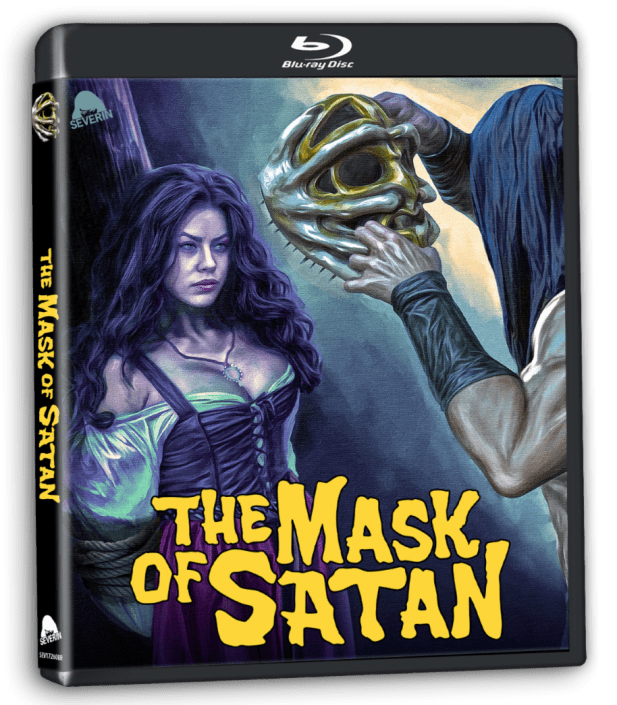
SEVERIN BLACK FRIDAY: The Mask of Satan (1989)

From writer/director Lamberto Bava comes a modern-day reimagining of his father’s classic Black Sunday! also known as Demons 5: The Devil’s Veil, this is scanned in 2K from the original camera negative for the first time ever in North America and has an interview with Bava.

The sale will take place from 12:01am EST on 11/29 to 11:59pm PST on 12/2 at Severin’s site.

A group of skiers on the Swiss Alps fall into a chasm opened during an avalanche, which kills one of them named Bebo, played by Michele Soavi, who can’t seem to get away from any movies in the Demons series. Soon, they find a metal mask — whoops, this happens so often in Demons movies — and discover a body buried between the ice. Digging around, it causes them to get buried deeper in the snow, so deep that they discover an underground city where a witch was executed. And that witch? Well, she decides that this group of skiers would make the perfect instruments of her revenge.

Lamberto decided that if he was going to make another movie in the Demons saga, why not also remake his father’s Black Sunday while he was at it?

That movie was filmed because the elder Bava was a big fan of Nikolay Gogol’s short story Viy, often reading it to his children. When he was allowed to choose the storyline for a movie he wanted to direct, he chose Gogol’s story, which also inspired the 1967 Russian film.

Davide is the de facto leader of this group and his girlfriend Sabina (Debora Caprioglio, using the last name of her fiancee Klaus Kinski here) breaks her leg and it’s instantly healed. Is it any wonder that she’s soon possessed by the dead witch Anibas, who has the same name as her only reversed? What kind of coincidence is that?

There’s also a blind priest that everyone adores making fun, which makes you wish for the entire cast to be killed. Well, you get what you want, trust me. Mary Sellers from Stagefright is in this, as is Eva Grimaldi from Ratman as the demonic form of Anibas.

Man, what a demonic form it is. After she begins seducing our hero, her young breasts instantly transform into withered old tears and her feet and hands are replaced with chicken claws while she spits white fluid all over him. Oh yeah — she also has the facial scars that Barbara Steele wore in Mario’s version.

This is a hard movie to review, as you have to compare it one of the greatest movies ever made. Even Lamberto, I think, would admit that his father remains the best director. But his son tries, he really does. And this film is pretty entertaining. But Black Sunday is the kind of film that’s going to live forever. Lamberto was able to create some fun visuals and effects here, plenty of gore and some great music from Simon Boswell and gooey effects from Sergio Stivaletti, who directed The Wax Mask and did the effects for DemonsHands of SteelDemons 2The ChurchThe Sect and Cemetery Man.

It even has the same title as Black Sunday in Italy: La Maschera del Demonio. There’s also plenty of nudity and a scene where the witch’s tongue comes so far out of her mouth that she starts choking Davide and he’s like, well, alright, I guess I’ll have sex with her now.

It’s entertaining, as all Italian late in the game horror is to me. And that’s enough to recommend it to you.

UNSUNG HORRORS HORROR GIVES BACK 2024: Nightmare In Venice (1989)

Each October, the Unsung Horrors podcast does a month of themed movies. This year they will once again be setting up a fundraiser to benefit Best Friends, which is working to save the lives of cats and dogs all across America, giving pets second chances and happy homes.

Today’s theme: 1980s

Ad un passo dall’aurora (One Step Away from Dawn) is based on the book Traumnovelle by Arthur Schnitzler and is about a rich surgeon, married to a beautiful woman, who seeks new and more erotic experiences outside of his marriage and wait, this is the same story as Eyes Wide Shut, except instead of Stanley Kubrick directing, it has Mark B. Light. Of course, that’s Mario Bianchi, the man who helmed Kill the Poker Player, the “Lucio Fulci Presents” films Sodoma’s Ghost and The Murder Secret and Satan’s Baby Doll, After this movie, he’d spend most of the next decade making adult films as Nicholas Moore, Tony Yanker and Martin White, including the scenes that would make up the 2001 compilation movie John Holmes vs. Ilona Staller.

That said, even though so much of Bianchi’s career was in actual dirty movies and this is a movie about sex, this is somewhat chaste. I mean, yes, it has a female masturbation scene, but the orgy that is at the center of the story feels like a sex party from a TV movie.

Riccardo Varchi (Gerardo Amato) is a cardiologist who becomes obsessed with a sex worker named Lù (Tinì Cansino, who I am as well already obsessed over as she was Arabella: Black Angel) and attends the aforementioned orgy, where he’s soon blackmailed.

This is not the only Italian film inspired by the same story. 1982’s Il cavaliere, la morte e il diavolo (The Knight, Death and the Devil), directed by Beppe Cino (La Casa del Buon Ritorno), is also an adaption and adds a punk girl to the tale.

I love that Stanley Kubrick probably watched this to get ready to make his movie. He probably did more takes of one scene that Bianchi did in this entire movie.

CANNON MONTH 3: The Freeway Maniac (1989)

EDITOR’S NOTE: For the last two days of Cannon Month, I’m going to cover movies that weren’t produced by Cannon but which were distributed by them on one of their various home video labels including Cannon / MGM/UA Home Video, HBO/Cannon Video, Cannon Video, Cannon / Guild Home Video, Cannon / Rank Video, Cannon Screen Entertainment Limited, Cannon Classics, Cannon / Warner Home Video, Cannon/VMP, Cannon Screen Entertainment, Scotia/Cannon, Cannon International, Cannon/ ECV, Cannon / Showtime, Cannon / United Film, Cannon / Isabod, Cannon / Mayco and so many more.

There’s no way that the Gahan Wilson that wrote this movie is the Gahan Wilson who drew all those cartoons for Playboy, right?

Because if he is, then this is a comedy and this movie makes a lot more sense.

And if not, then I have no idea what the filmmakers were going for in this one.

So after this movie completely rips off the open of Pieces and Nightmare, we move to an asylum where the inmates are being given cigarettes as some form of therapy. One of them escapes and kills everyone in his way and that’s Arthur (James Jude Courtney, who would go on to be The Shape in the 2018 Halloween). He nearly kills an actress named Linda (Loren Winters, who was a one and done actress in this, along with producing the film), whose experience ends up getting her cast in a cheesy science fiction movie called Astronette that will use her notoriety for publicity.

There’s no way Arthur would hunt her down, right?

I have so many questions for this movie. How did they get Robbie Krieger from The Doors to write the theme song? Why did they have Linda’s boyfriend cheat on her and suddenly become a sympathetic hero in the last act? Why is there no real freeway in this movie? Why does Arthur howl at the moon? Why is some of this movie well-shot with decent stunts and other portions have the worst acting you’ve ever seen? Are you surprised that this was released by Cannon — well, released on VHS in the Netherlands by Cannon Screen Entertainment, so not really produced by Cannon.

There’s not really another slasher like The Freeway Maniac. It’s…something else.

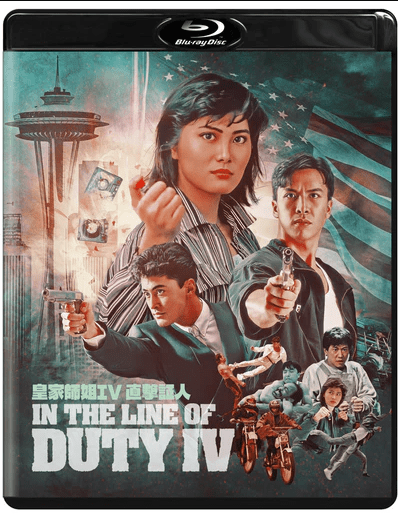
88 FILMS BLU RAY RELEASE: In the Line of Duty 4 (1989)

Captain Donnie Yan (Donnie Yen) and Madam Rachel Yeung Lai-ching (Cynthia Khan) are on the trail of cocaine dealers. When she goes off script and gets found by a dockworker named Luk Wan-ting (Yuen Yat-chor) who thinks that she’s an illegal immigrant. He feels bad for her and gives her money and a place to say. As Donnie stays after the criminals, she learns that Luk’s brother Ming (Liu Kai-chi) is being  attacked by criminals that he owes money to. The two fight off the gang and when her cover’s blown, Rachel gets back on the case. At the same time, their partner Peter Woods gets shotgun blasted by the real boss behind all of the drug deals is a CIA officer named Mr. Robinson.

I’ve just explained about the first ten minutes or so of this dense film, one that builds tension and then goes as wild as any of the other movies in this series.

Luk Wan-Ting is a witness to that murder and gets framed for it. He escapes the police and a killer, which sends our heroes after him. She thinks he’s innocent based on their past history and he thinks that he’s not, so we have some tension between our supercops. In fact, things get even tenser when they start to wonder which cops they can trust and decide to hide out with Luk and attempt to get him to testify.

The final fights in this film — once the plot is solved and we can, as they say, get to the fireworks factory — are incredible. The battle between the CIA agent (Michael Woods) and Yen on top of a building has more action than every movie that will come out of Hollywood this year. There’s also a great battle between Khan and karate champion Farlie Ruth Kordica that has the two falling from huge heights and kicking each other repeatedly. Also: if you like glass being broken — I do — this movie will give you all the shattering and smashing of glass that you can handle.

Director Yuen Woo-ping is a name you should already know but if you don’t, he’s the director of Drunken MasterTiger CageIron Monkey and so many more movies. He also was the fight choreographer of Crouching Tiger, Hidden DragonFist of LegendBlack Mask, the second and third Matrix and Kill Bill 1 and 2. Seeing his name means that you’re about to have your mind absolutely blown.

88 Films’ reissue of In the Line of Duty 4 has the option of watching the movie in Cantonese and two different English dubs, as well as extras like a commentary by F.J. DeSanto, an interview with Donnie Yen and trailers. There’s also a gorgeous book and posters for each movie. You can buy the set from MVD.

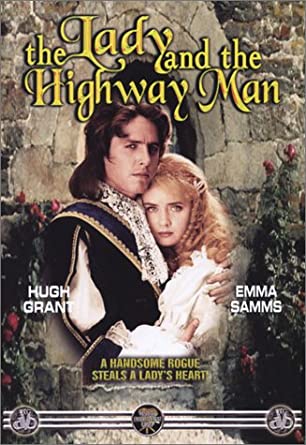
CBS LATE MOVIE MONTH: The Lady and the Highwayman (1989)

EDITOR’S NOTE: The Lady and the Highwayman was on the CBS Late Movie on April 27, 1990.

Barbara Cartland’s romance novel Cupid Rides Pillion was filmed as this British TV movie, one of the first appearances by Hugh Grant, who appears alongside a pretty solid cast that includes Oliver Reed (once a werewolf, once a diver out of a mansion window in Burnt Offerings), Claire Bloom (Clash of the Titans), Michael York (who I associate with this type of movie most often, as he was in The Three Musketeers), Emma Samms (Dynasty), Sir John Mills (Quatermass in the 1979 TV movie) and Liz Fraser (who was in many of the Carry On movies) among others.

It’s yet another time I watch a movie and am amazed that it’s a John Hough movie. The guy has such a vast resume — everything from Twins of Evil and The Legend of Hell House in the late 60’s horror genre to great 70’s fare like Dirty Mary, Crazy Larry and the two Witch Mountain movies and then some out there 80’s stuff like The Watcher in the WoodsAmerican GothicBiggles and Howling IV: The Original Nightmare.

Emma Samms’ character of Lady Castlemaine is based on the life of Barbara Palmer, First Duchess of Cleveland, one of King Charles II’s mistresses and the mother of several of his children, in case you’re into British scandals.

This is the story of Lord Lucius Vyne (Grant), who is loyal to King Charles II and helping help to return to rule after Cromwell. He takes on a secret identity as the Silver Blade, kind of like a musketeer of sorts. He’s too late to save Lady Panthea Vyne’s (Lysette Anthony, Krull) King Charles Spaniel from being stomped to death, so fair warning if you like small dogs.

Even when the king comes back, he has enemies, so the Silver Blade remains in his service, even when it nearly costs him and his lady love’s life.

You can watch this on Tubi and trust me, the print is just as horrible. I think with a British TV movie from the late 80’s, this is as good as we’re going to get.

Junesploitation: L’uomo che non voleva morire (1989)

June 26: Junesploitation’s topic of the day — as suggested by F This Movie— is Free Space! We’re excited to tackle a different genre every day, so check back and see what’s next.

This is the only episode of Alta tensione that I haven’t seen — until now. The other episodes are Il gioko, a story of a teacher thinking her students murdered the instructor she has replaced, the giallo Testimone oculare and Il maestro del terrore, in which a horror director is attacked by a writer and an actor. All were directed by Lamberto Bava.

Translated as The Man Who Wouldn’t Die, this originally going to air in 1989. Due to concerns about the violence of these films, it didn’t play on Italian TV again until 2007. The other three aired in 1999. None of them have been released on home media legally.

Written by Gianfranco Clerici (Strange Shadows in an Empty Room) based on a short story by Giorgio Scerbanenco, this is about a gang of five burglars that art dealer Madame Janaud (Martine Brochard, Murder Obsession) hires to steal art from a rich man’s villa. Led by Fabrizio (Keith Van Hoven, Demons 3), the thieves (including Lino Salemme, who did coke out of a Coke can in Demons and Stefano Molinari, the demon in the movie on the TV in Demons 2) tie up the man of the house and his wife, then take everything they can get their hands on so that Janaud can sell them to art collector Mr. Miraz (Jacques Sernas).

The problem is that one of the gang, Giannetto (Gino Concari) screws over the gang and cuts up the most expensive thing they take, Renoir’s “After the Bath.” He hides in the villa’s garage and decides to go back for it later.

That would be bad enough, but Giannetto attacks the husband and then assaults his tied-up wife while the man watches. He gets enraged and kicks the offensive moron in the head and kills him. Fabrizio kills both the husband and wife, then wraps the body of Giannetto in a carpet. The gang argues what to do, so instead of killing him, they strip him and dump him in the woods. Somehow, he survives and comes back to life in the hospital. He wants revenge, but he’ll be lucky to stay alive, as a giallo killer starts to murder all of the gang, with one’s face getting smashed, another being done in by toilet — head smashing and drowning — and a smooshed head for the last crook.

This was originally to be made by Lamberto’s father Mario, who had been working on a script with Rafael Azcona and Alessandro Parenzo. It’s not Lamberto’s best work but the kills are very well filmed and the Simon Boswell score is good.

You can watch this on Daily Motion.

Junesploitation: Il maestro del terrore (1989)

June 19: Junesploitation’s topic of the day — as suggested by F This Movie— is 80s Horror! We’re excited to tackle a different genre every day, so check back and see what’s next.

I’ve made a real 180 on Lamberto Bava. Maybe it’s because the first of his movies that I watched was Devilfish. I should have really started with Macabre, A Blade In the Dark or any of his TV movies and then I’d feel a lot different. And years ago, I unfairly compared him with his father instead of allowing him to be judged on his own merit.

I am sorry, John Old Jr.

The Prince of Terror has never been released in the U.S. on VHS, DVD or blu ray. That’s a shame.

It pulls the Body Double fake out as soon as it starts, as you get the jump scare of a woman — Magda (Marina Viro) — escaping an RV only to see her boyfriend drown in a swamp and become an inflated zombie and begin stalking her through a swamp.

This isn’t happening.

Instead, it’s the set of director Vincent Omen’s (Tomas Arana, The Church) latest movie. He hates the script from his longtime writer Paul Hilary (David Brandon, who was the director in Stage Fright so dumb that he let his cast stay in the theater where a killing machine was hiding), so he gets him fired before heading out to play golf. While he’s hitting the front 9, he’s interviewed by a reporter (Virginia Bryant, The Barbarians) who asks him about the rumors that he’s much older than 37 and his public perception as the “Prince of Darkness.”

He holds up one of his golf balls, which has 666 on it. Obviously, he’s into this personna.

After he finishes playing, he goes home to his wife Betty (Carole Andre, Yor Hunter from the Future), daughter Susan (Joyce Pitti) and dog Demon. Yes, he is definitely into this demonic side. That evening, he and his lovely spouse are supposed to join his producer (Pascal Druant) and Magda for dinner. And then, golf balls explode into their home, sinister phone calls start and end only when the phone lines are severed and their cute little dog is killed — by having his fur removed and then he’s just thrown in the garbage — because this is an Italian movie. Then, a bald killer with a huge knife (Ulisse Miniverni) appears.

By the end of the movie, Omen gets shot, his wife gets her leg ensnared in a bear trap and his daughter gets buried alive in the basement. Plus, the toilet flushes blood and the security guard is replaced with a robot. It’s an all over the place plan from Paul the writer and actor Eddie Felson– the bald monster — who both want to get back at Vincent.

Special effects maestro Sergio Stivaletti got a workout here, as when Vincent gets his revenge, he starts attacking people with golf balls, including one that blows up a man’s wrist and another that goes Fulci and blows up an eyeball. There’s also a good Simon Boswell score.

I wonder how much of this story was writer Dardano Sacchetti getting his scripting revenge on former friend and co-creator Lucio Fulci. That scene where he’s accused of stealing ideas and it becomes obvious that Omen has no ideas of his own, as well as a bloody script emerging from a toilet, seem to lead one to feel that way. It’s fun in a TV movie way — I love this era of Italian TV movie horror — but it certainly doesn’t aspire to the heights that Fulci reached.

This is part of a series of movies that aired on Italian TV as Alta tensione. The other episodes are L’uomo che non voleva morire, in which a man is near death in a hospital and trying to recall how he got there; Il gioko, a story of a teacher thinking her students murdered the instructor she has replaced and the giallo Testimone oculare. All were directed by Lamberto Bava.

I hope that American boutique labels follow the lead of Cauldron Films and release movies like this and the House of series that they just put out instead of just releasing the same movies in new formats. There is so much out there!

You can watch this on YouTube.