CANNON MONTH: House of Long Shadows (1983)

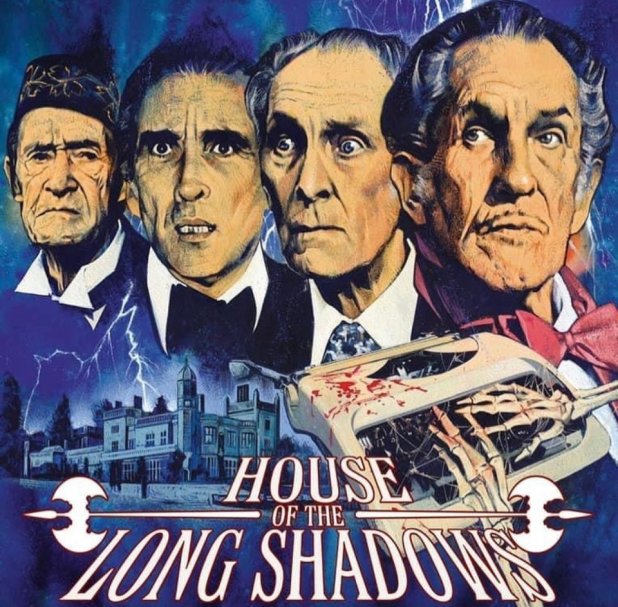
Vincent Price, Christopher Lee, Peter Cushing and John Carradine all in the same film? That’s the whole draw of Cannon’s House of Long Shadows, made by Pete Walker in one of the more chaste films of his career. He’d actually retired and was running a chain of theaters when Golan and Globus asked him to make a movie for them.

Taking cues from Seven Keys to Baldpate by Earl Derr Biggers, the Michael Armstrong (ScreamtimeMark of the Devil) script has writer Kenneth Magee (Desi Arnaz, Jr.) making a bet that he can write a great novel. To make it happen, he heads for the solitude of a deserted mansion that isn’t so deserted; after all, Lord Grisbane (Carradine) and his daughter Victoria (Sheila Keith, House of Whipcord) are living there.

By the end of the night, more guests — Grisbane’s sons Lionel (Price) and Sebastian (Cushing), Magee’s publisher’s secretary Mary Norton (Julie Peasgood), a buyer for the mansion by the name of Corrigan (Lee) and a young couple named Diana (Louise English) and Andrew (Richard Hunter) — all arrive.

The Grisbanes are really in the house to release their brother Roderick, who has been walled into his room for forty years after impregnating and murdering a local girl. But when they open his room, he’s already escaped, which gives Lord Grisbane a fatal heart attack. His demise is soon followed by Victoria being strangled, Diana washing her face with acid and Andrew being poisoned. Everyone’s tires are slashed, so they’re all stuck with a killer.

Roderick makes his way through everyone in the cast, leaving only Mary and Magee alive. But  of course, there’s a twist. Actually two of them. And no, I won’t spoil them.

As the only film in which Price, Lee, Cushing and Carradine appear together, this is a fun trifle. It was sold by Cannon as a straight horror movie when they should have leaned into its comedic side. Golan had dreamed of seeing these horror stars team up, so it’s great for us that he could make it happen, even if he had also wanted Bela Lugosi and Boris Karloff, both of whom were long gone.

You can learn more about House of Long Shadows in Austin Trunick’s The Cannon Film Guide Volume 1: 1980-1984.

You can listen to The Cannon Canon podcast about this movie here.

CANNON MONTH: Nana (1983)

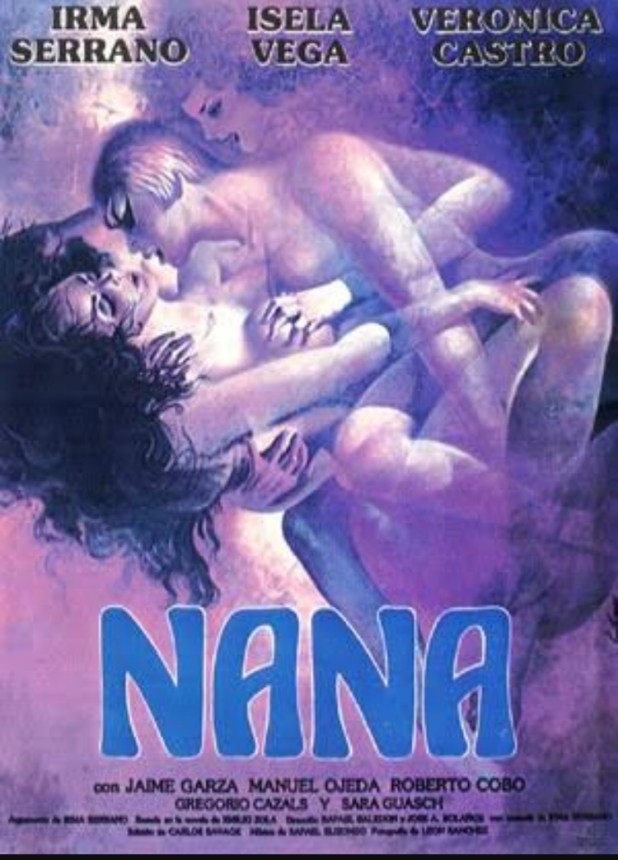
Oh Cannon. You make an Emile Zola movie and it ends up being directed by Dan Wolman, who also made Up Your Anchor for Cannon and written by Marc Behm, who would write X-Ray for the studio. He also wrote the novel that Eye of the Beholder was made from, as well as The Beatles’ Help!

And the result ends up being the type of movie that winds up on our site.

Katya Berger (who was in Absurd and is the daughter of William Berger; her half sister Debra is also in this and her resume is even more made up of movies that make our site, like Born for HellEmanuelle In BangkokThe Inglorious Bastards and another Cannon film, Dangerously Close) starts as a girl who has no idea how to use her carnal abilities, yet is in a bordello, but by the end, she’s destroying lives. Sleeping with bankers, dumping them for royalty, making counts act like human dogs, cucking them for their sons…what is this, a Joe D’Amato movie?

The thing is, if D’Amato had made this, it would have been way better. Sure, this looks classy, but it forgets that if it wants to be a classy literate film, it shouldn’t have so much nudity. Then it can’t put together that if it wants to be sleaze, it’s way slow and never really gets to the madness that a Mattei, a Franco, a Tinto Brass would remember.

But hey! 1960s Profumo scandal figure Mandy Rice-Davies — who is also in Black Venus — and Annie Beale from House on the Edge of the Park and D’Amato’s L’alcova are in this so it can’t all be boring. Plus, it has Ennio Morricone making the music, so that’s a positive, right? And then they spelled his name wrong!

Speaking of Franco, there’s a scene with rich people hunting naked women, which is the kind of thing that he would make an entire movie about. More than once, if you want to get down to facts. This scene also has all sorts of inserts and male and female full frontal, which the main actors seem to be kind of like, “What are we doing?” as it happens.

And really, the sleaziest part of this — and you’d have to watch the credits to get it — is that both of the Berger sisters end up having movie sex in this, which feels totally D’Amato in nature. William Berger had to be a bit shocked, right? I mean, aren’t you scandalized?

Armando Nannuzzi was the cinematographer on this movie and if his name sounds familiar, well, he’s the guy who Stephen King blinded in one eye while making Silver Bullet.

CANNON MONTH: One More Chance (1983)

An amateur boxer and the nephew of famous boxer Jake LaMotta, John LaMotta shows up in a few other Cannon movies like Revenge of the NinjaNinja III: The DominationBreakin’ 2: Electric Boogaloo and American Warrior, which all come from director Sam Firstenberg, who made One More Chance his first movie.

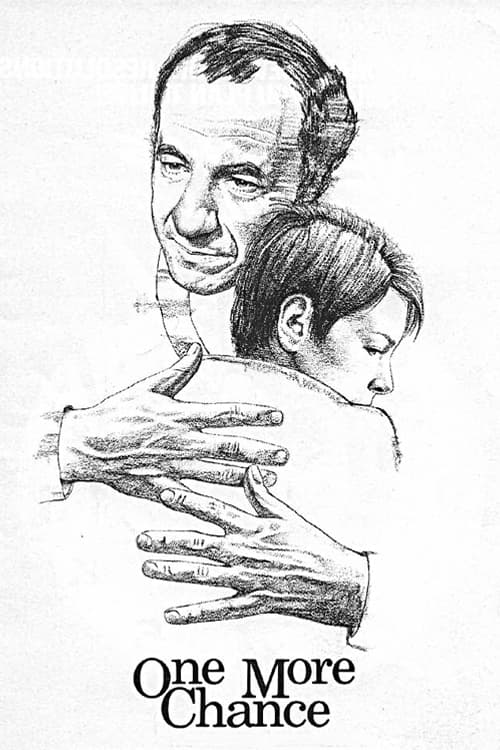
Pete Bales (LaMotta) is a criminal fresh out of jail that’s lost track of his ex and son. She’s living in Arizona with their now teenage child and her new husband. His parole won’t let him cross state lines. But a former neighbor, Sheila (Kirstin Alley), knows were they are and sees something in Pete that no one else does.

Firstenberg made this as a student film at Loyola-Marymount University in Los Angeles before expanding on it and making it into a full feature. He also had two great leads to hang the movie on, as well as appearances by Michael Pataki and Logan Clarke.

This doesn’t have the wild action of his later films –both Ninja III and Breakin’ 2 seem to come from another universe so much more fantastic than the boring world that we stumble through — but as a lot of heart and an ending that is quite moving. Firstenberg also wrote the script, something he wouldn’t get to do again until Cyborg Cop II and I think this film may be closer to his heart.

You can watch this on Tubi.

CANNON MONTH: Treasure of the Four Crowns (1983)

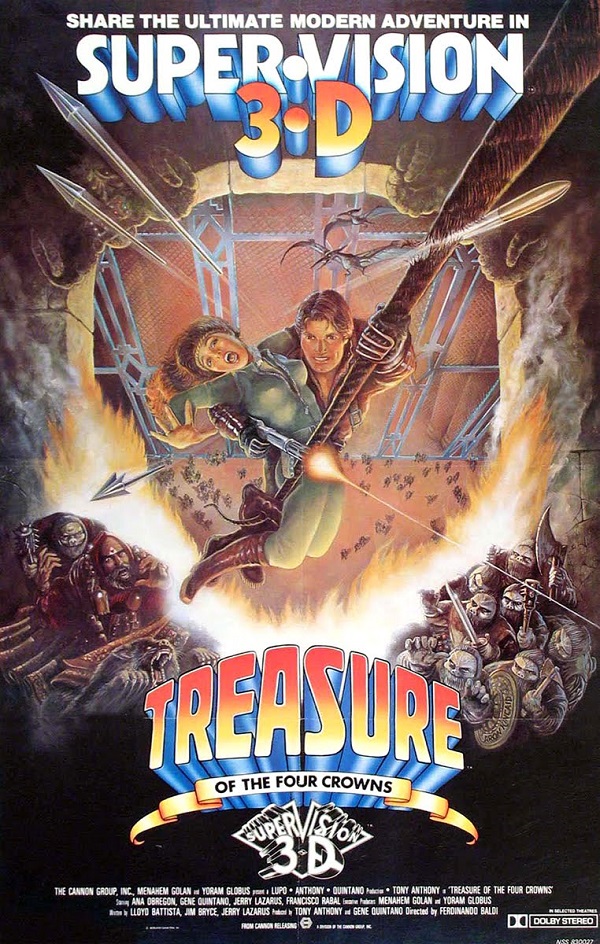
You can write this movie off as a ripoff of Raiders of the Lost Ark — and it is, right down to the scene with the boulder — but come on. It has an Ennio Morricone score, is a spiritual sequel to Comin’ At Ya! and most importantly it’s in 3D.

Made in “SuperVision” and “WonderVision,” the film was actually shot using the Marks 3-Depix Converter, the same camera that had been used for Friday the 13th Part III. This system stacked its Techniscope-sized left and right images one above the other on a single band of 35mm film. It was projection using the Polarator projection attachment offered by the Marks Polarized Corporation, allowing the audience to watch the film through color-neutral linear polarizers, a system that lead actor Tony Anthony may have invented.

J.T. Striker (Anthony) has been hired to assemble a group of professional thieves to take two of the gems that will open the last two Mystical Crowns. To get there, he’s going to make your eyes hurt with pop out skeletons, the soldiers of Brother Jonas (Emiliano Redondo) and tons of booby traps which pretty much wipe out everyone in his team, which includes the drunken Rick (Jerry Lazarus, who is also in Cannon’s Hot Chili), a dying circus strongman named Socrates (Francisco Rabal, Nightmare City) and his daughter Liz (Ana Obregón, who was Catalina in another Cannon movie we’ll be getting to soon, Bolero).

Roger Ebert himself broke down what gets thrown at the viewing in this one: “knives, spears, darts, bones, jeweled daggers, balls of fire, laser beams, boulders, ropes, attack dogs, bats, shards of stained glass, a set of dishes, a large kettle, a stove, a corpse, a python snake, an empty glove, birds (both real and artificial), arrows, unidentifiable glowing objects shot from guns, keys, letter openers, several human heads, skeletons, large sections of an exploding castle, one bottle of booze and assorted spoons.”

This movie doesn’t tease you with its 3D. It punches you right in the face with it.

By the end of the movie, Striker has the other gems and his ead spins around, gets all burned up and he starts shooting fire out of his hands melting all of the bad guys, then a giant sludge monster jumps out of a swamp and right into your lap, teasing a sequel that never came, as well as a space 3D movie that was announced, Seeing is Believing.

Director Ferdinando Baldi also made BlindmanDjango, Prepare a CoffinGet MeanWarbus and Ten Zan: The Ultimate Mission, all deliriously strange movies that I wholeheartedly recommend.

Perhaps most amazingly, both Francisco Rabal and Emiliano Redondo are in Pedro Almodóvar’s Tie Me Up! Tie Me Down!, so the Spanish film industry really does come together to make a movie.

Kino Lorber is releasing this on blu ray soon and I could not be more excited.

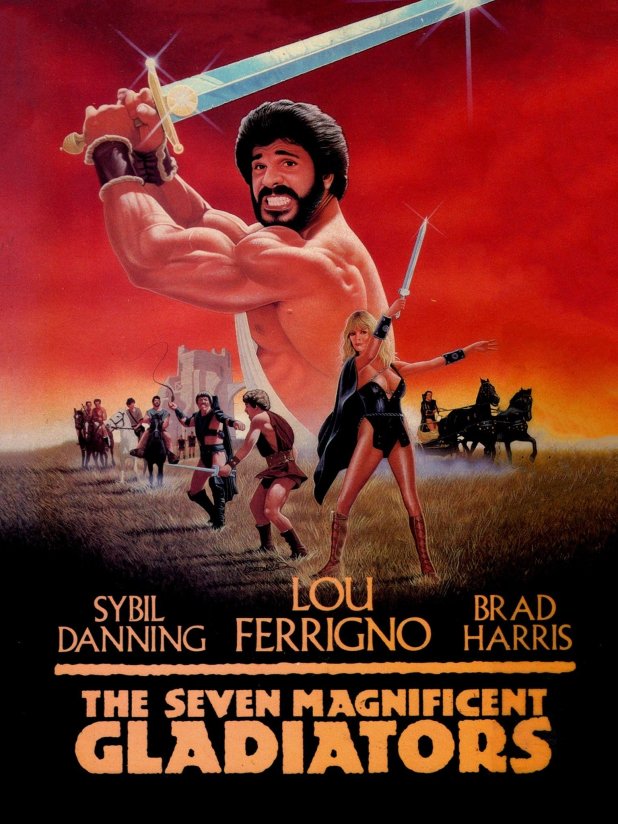
CANNON MONTH: Seven Magnificent Gladiators (1983)

EDITOR’S NOTE: We’ve covered this movie a few times — we did an entire Bruno Mattei week — but as it’s part of Cannon’s releases, here it is again. Oh man — I still can’t believe that the reshoots on this movie ended up being a whole other Hercules movie. There’s also added material in this one, because Cannon Month keeps inspiring me.

What happens when Bruno Mattei and Claudio Fragrasso ripoff — remake — The Magnificent Seven/The Seven Samurai with gladiators and barbarians instead of cowboys and, well, samurai? This was originally going to be Hercules, according to Variety, but Luigi Cozzi took over that one and supposedly was brought in to save this one. More about that in a bit.

The plot here — again, it’s the same movie as the other two films that gather seven heroes — is about Nicerote (Dan Vadis, a former member of the Mae West Muscle Review who played Hercules in Hercules the Invincible, Roccia in The Ten Gladiators movies and appeared in several Clint Eastwood movies), a bandit leader and his sorceress mother who makes yearly raids on a peasant village. But this year, Pandora (Carla Ferrigno, who was Athena in Hercules and also in Black Roses) and the women of the village have found a magic sword and go off to hire a hero who can use it and anyone else who can finally end the annual destruction of their homes.

Oh yeah — anyone not worthy of lifting that sword gets burned alive. Choose wisely.

Now, the mighty barbarian Han (Lou Ferrigno) wields the mystical Sword of Achilles and soon assembles a team of gladiators to help him win the day. There’s a gladiator whose life he saves named Scipio (Brad Harris, who played Goliath, Hercules and Samson in past peblum films, as well as Durango and Sabata), Julia (Sybil Danning, the real draw of this film, playing the Harry Luck Magnificent Seven character and as you know, she was in another Seven Samurai remix, Battle Beyond the Stars), Goliath (Emilio Messina, Lepto from The Ten Gladiators), Festo (Giovanni Cianfriglia, who played Superargo in two movies) and more.

This was actually made before Hercules, but Cannon found it unreleasable. They ordered Luigi Cozzi to film new replacement scenes with Ferrigno, but then the decision was made to make a sequel to Hercules and not tell Lou, which still blows my mind. Cozzi told Austin Trunick, who wrote the bible to all things Cannon The Cannon Film Guide Volume 1: 1980-1984, “After the decision to shoot Hercules II, nothing of what had been planned for Seven Magnificent Gladiators was made. Seven Magnificent Gladiators was left exactly as Mattei delivered it and the movie simply was shelved. It was taken out of the vaults only a few years later, when Cannon was in crisis and short on movies, and just release as it had been edited by its director.”

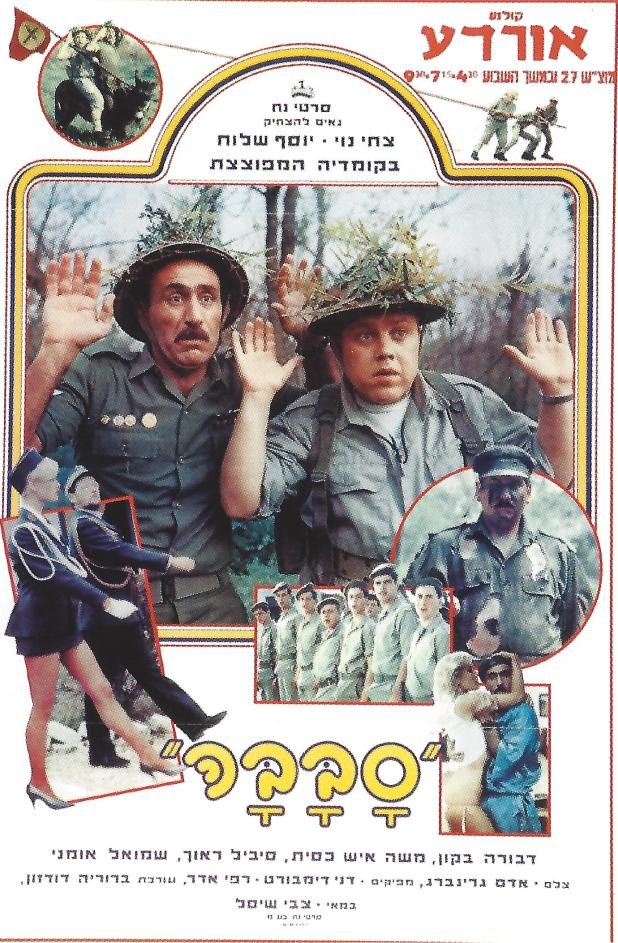
CANNON MONTH: Private Manoeuvres (1983)

How much do I love Cannon?

I haven’t just watched every Lemon Popsicle movie, I’ve now moved into the spinoff, in which Yudale enters into his mandatory Israeli army service and helps Sergeant Shemesh defeat a rival base. Maybe that’ll happen, but they’re both obsessed with sleeping with the Swiss ambassador’s wife (Sibylle Rauch, who was also in another movie in this series, Hot Bubblegum).

If you think that Italian and Japanese movies have bad dubbing, let me introduce you to this movie, which sounds like the absolute most deranged voice recording that I’ve ever heard before.

Director Zvi Shisei also made the 2001 reboot Lemon Popsicle: The Party Goes On and man, realizing that I still have so many movies in this series kind of makes me fearful for the extent of the obsessive-compulsive love of Cannon that I have.

JESS FRANCO MONTH: La casa de las mujeres perdidas (1983)

Desdemona (Lina Romat) lives on an isolated island with her father Mario (Antonio Mayans), her stepmother Dulcinea (Carmen Carrión) and her mentally handicapped sister Paulova (Asunción Calero). What’s there to do on such an island? Well, beyond Desdemona’s onanistic acts on the beach, getting whipped by her mother and using her hand on her sister, she’s been trying to sleep with her father, so when a stranger (Tony Skios) enters the film, things are looking up pun unintended.

The House of Lost Women is just one of thirteen movies Franco made in 1983 but this soap opera is sure strange, as we demand, and quite pervy, as we probably demand as well.

Man, is this another Jess Franco Cinematic Universe theme? Disgraced men that have taken their entire family to an island where all there is to do is dream of escape and have sex wit oranges? Is this island close to the one in Muñecas Rojas? Could you swim over and be attacked by the sirens of Bahia Blanca? Or are we so very close to Hot Nights of Linda?

Watching too much Franco makes you either confused or feeling as if the onion is peeling back to show you the multiple realities and versions of these characters, all yearning for orgasmic bliss but trapped with one foot on the bed and the other in the void.

You can order the movie from Severin.

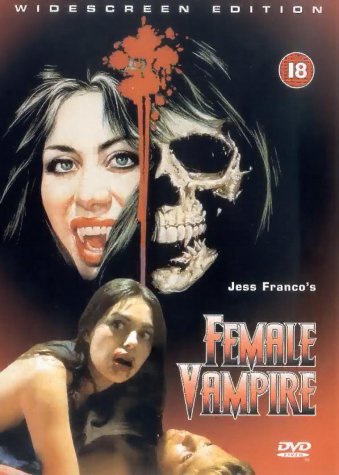
JESS FRANCO: Female Vampire (1973)

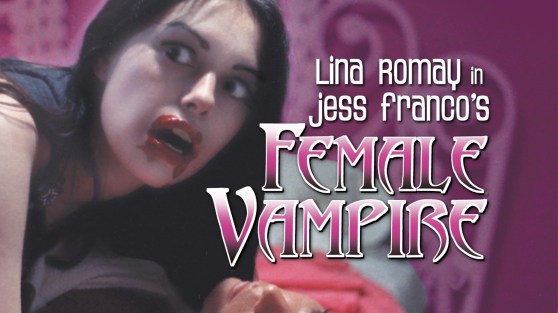
Countess Irina Karlstein (Lina Romay, taking over the role of Franco’s muse and sex object after the death of Soledad Miranda; as she was more sexually adventurous than that doomed starlet and with the fall of the other Franco, General Francisco, who led Spain, Jess’s movie’s from here on out get progressively more filled with kink, as if they weren’t overloaded with it before) is a silent woman whose sexual needs are much like the desire that vampires have for blood. If she can’t make love, she’ll die, but luckily she’s gorgeous and if that doesn’t work, she can also hypnotize people, then gain their lifeforce via oral copulation.

And then she displays the best fuck and run skill of all. She turns into a bat and flies away.

How will the forces of morality deal with her and the numerous smiling corpses that have been showing up? By having a scientist named Dr. Roberts (Franco himself) take on the case and consult with, of course, Dr. Orloff (Jean-Pierre Bouyxou), bringing this movie into the Franco Cinematic Universe, albeit one in which a psychic artist and writer named Baron Rathony thinks that they can be forever happy with a female vamp who has no concern about her victims.

Franco made three different versions of this movie: La comtesse noire (The Black Countess), a straight vampire movie; the more erotic La Comtesse aux seins nus (The Bare Breasted Countess) and the hardcore Les avaleuses (The Swallowers). But no matter what, Franco saw this as erotica and not smut, comparing his work to that of In the Realm of the Senses.

At one point, Dr. Orloff wonders, “Whether the pleasure isn’t worth life itself,” and man, I think it totally is, even if you have to fall for a woman bathing in blood to get there. Most amazingly,  Romay’s husband at the time, Ramon Ardid, co-edited this with Franco, who was most assuredly making love to his wife with a camera the entire time.

Also known as so many names — and running times and cuts — like Yacula, Jacula, Bare-Breasted Vampire, The Bare Breasted CountessNaked Vampire and Erotikill, this is prime Franco, filled with fog and dreams and long gazes across the body of a woman who would obsess him for decades, who he probably felt the same vampiric thirst for the entire time they were filming.

In the article “Goodbye, Bare Breasted Countess” on Birth. Movies. Death., Lars Nilsen spoke of the love that Franco and Romay had, one that they said started with the making of this movie.

“At the screening of The Bare Breasted Countess Jess and Lina revealed that it was the film shoot where they fell in love. Lina also told the audience that when she made love with someone else in one of Jess’ films she didn’t mind because in her mind she was with Jess. The audience sighed. She also said “35 years ago Jess took me to the moon and I’m still there.” More well-deserved sighs (and tears).”

The article ends with this, which breaks my heart, reaffirms that love exists and makes my face wet and hot with tears.

“Lina wheeled Jess into the theater and they stood just inside the door of the theater watching the end of the movie. The whole audience could see them there as they looked up at the naked 19 year old Lina, a stunning vision of loveliness, playing the Countess Karlstein, rolling around in her death/orgasm agonies in a bathtub full of blood while her pursuer, played by Jess himself, looks on, falling in love her. It would be an emotional moment for the audience regardless, as they knew that Jess and Lina were falling in love at the time, but the sight of the two silhouetted in the light from the hallway as their love played out on screen was pure movie magic. It was the most appropriate manifestation of this movie love that was old and new all at once.”

So in case you wonder, why did I waste an entire month watching so many Jess Franco movies?

It was never a waste.

You can watch this on KinoCult.

Female Vampireis also on the ARROW PLAYER. Head over to ARROW to start your 30-day free trial. Subscriptions are available for $4.99 monthly or $49.99 yearly. ARROW is available in the US, Canada, the UK and Ireland on the following Apps/devices: Roku (all Roku sticks, boxes, devices, etc), Apple TV & iOS devices, Android TV and mobile devices, Fire TV (all Amazon Fire TV Sticks, boxes, etc), and on all web browsers at https://www.arrow-player.com.

JESS FRANCO MONTH: Macumba Sexual (1983)

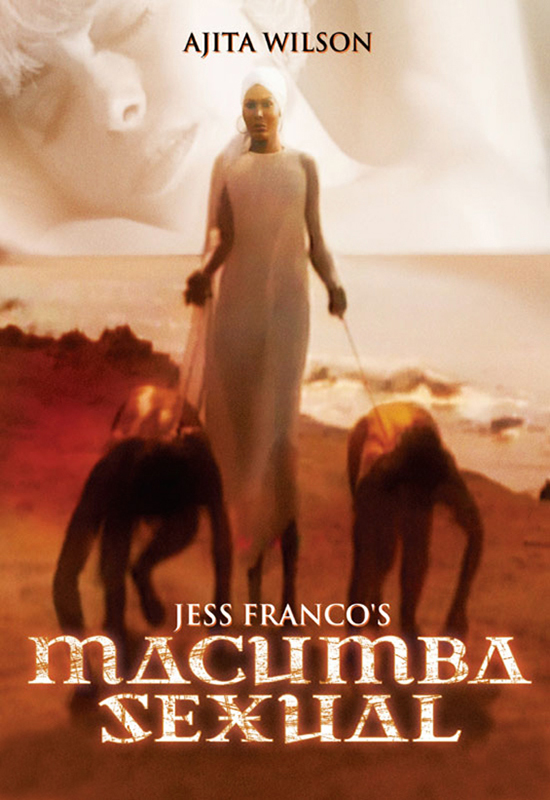
Princesa Obongo (Ajita Wilson) is the Goddess of Unspeakable Lust, rising from the dunes of sand and remaking and remixing and redoing Vampyros Lesbos by way of Lorna the Exorcist — even ending with Lina screaming — but in a way that makes this its own film worth watching.

Is Obongo even a real person? Or is she just the ultimate fantasy of Lina and her husband (Antonio Mayans), a black goddess here to dominate them both, to raise idols worthy of worship and by worship, I mean in the biblical sense in the way that Jess Franco means biblical sense.

There’s also the issues of identity that we have to contend with, as Lina isn’t even Lina and we must pretend that she’s Candy Coster and of course, we love her little smile and agree to her game. And the powers of Wilson, well, Franco would say that “Ajita had that naivete, like she belonged to a world less perverted than our own.” And while In life, Ajita was a goddess to men and a European sex film star, the truth is that she wasn’t born a woman and even in 2022 we’re having trouble wrapping our head around that and unable to admit that maybe everyone and everything can be beautiful and worthy of lust. There’s been some mystery about this fact, but Lina would say, “She was definitely transsexual.”

There’s also this fish lizard creature with a large penis that keeps showing up. It’s a Jenny Haniver, a carcass of a ray or a skate that has been modified by hand before being turned into a mummified specimen.

Franco remained obsessed by women whose encounters with the occult would unlock their latent sexual powers, which alternatively thrilled and terrified those caught in this pull. By those, I pretty much mean Lina, who endures this journey and the relentless zooming lens of the man who transformed his fascination with her into an eternal love affair.

For an incredible read on this subject, I recommend the article I used for reference, Created By Cinema: The Enigma of Ajita Wilson, which is on Grindhouse Effect.

JESS FRANCO MONTH: Sola ante el terror (1983)

Melissa (Lina Romay) is a paralyzed woman who is being taken care of by her two sisters, who all lost their father (Antonio Mayans) at a young age. However, only Melissa can still speak to the father, who guides her to kill those who killed him.

A remix remake of The Sinister Eyes of Dr. Orloff with no nudity or sleaze — what!?! — that has one interesting thing: Mayan’s daughter Flavia is young Melissa with dark hair, crosscut with Lina in blonde wig as the grown-up version.

But seriously, at this stage in his career Franco was just redoing his older movies with less enthusiasm and budget. I wonder why? What had he missed the multiple times he’d already made these movies that he thought he could improve? Or was he just happy in the repetition, making movies he already knew worked and not wanting to break any new ground?