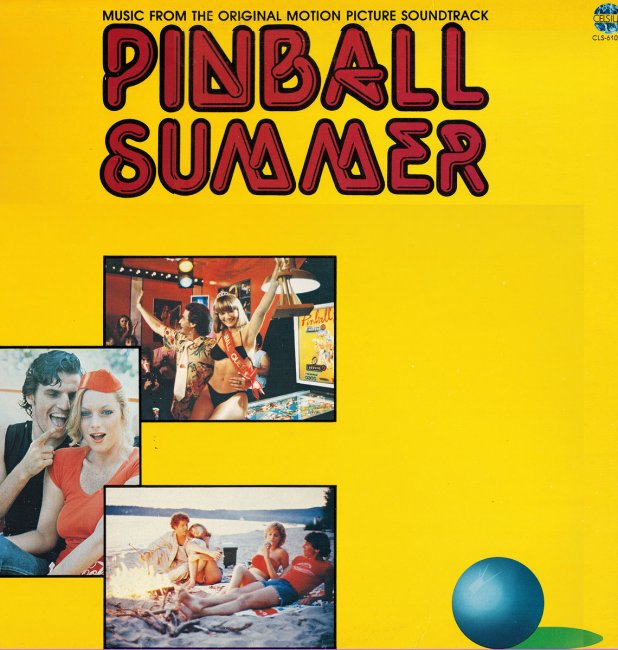
Also known as Pick-Up Summer and Flipper Girls in Germany, this Canadian film comes after the Crown International beach movies and before Porky’s. Most of the action revolves around a place called Pete’s, an arcade that is hosting a pinball competition, which also has a Miss Pinball pageant, which I really hope was a thing at some point.
Speaking of movies leading to something more, director George Mihalka and cinematographer Rodney Gibbons would make My Bloody Valentine* after this, a movie that is much better remembered than this teen summer comedy that revolves around disco, burger joints, amusement parks and hijinks between a biker gang and our heroes over the pinball trophy.
Film Ventures International bought this for America and changed the name, thinking pinball was dead. It did pretty well and people didn’t even notice that it was made in Quebec and not California. It’s a pretty innocent movie when it comes to teen comedies.
*Helene Udy, who played Sylvia in that classic slasher, Thomas Kovacs, who played Mike, and Carl Malotte, who played Dave, are all in Pinball Summer as well.
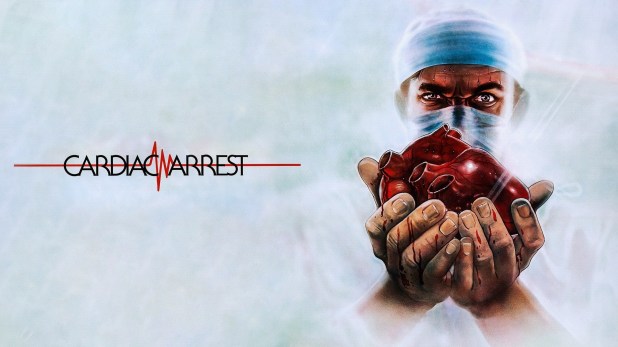
Directed and written by Murray Mintz, Cardiac Arrest is about a serial killer who is surgically removing the hearts from his victims. It feels like a TV movie and that’s not a bad thing.
Clancey Higgins (Garry Goodrow) and Wylie Wong (Michael Paul Chan) are the cops, Leigh Gregory (Max Gail) is the man whose wife Dianne (Susan O’Connell) needs a heart transplant and a famous doctor (Ray Reinhardt) just may be running a black market for hearts.
There’s even a part for Fred Ward, who always makes me happy when he shows up in a movie. But wow, the box art for this is so amazing that I was hoping that the movie that was inside the packaging could live up to it. It doesn’t, but there’s some charm in Goodrow and how he plays his role.
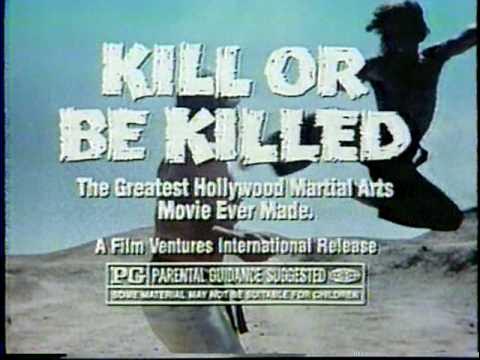
Martial arts movies make little to no sense most of the time. Then, there’s this movie.
Steve Chase is a martial artist who goes to the desert for what he thinks is an Olympic style meet. Nope. An ex-Nazi general was defeated at the 1936 Olympics by a Japanese martial artist named Miyagi, so he’s out for revenge. Luckily, Steve and his girl Olga escape.
To fix up his team, von Rudloff’s miniature henchman Chico goes around the world to recruit a new team. And Steve ends up meeting Miyagi and joining his team, which leads to the madcap fight between he and his girl when she is kidnapped and forced to join his team.
Finally, Steve must fight and defeat Luke, the ultimate fighter, leading the Nazi to killing himself rather than face defeat.
I’ve given you a straight reading of the film. To see it is to know how different it is, as it’s either filmed by someone who wants to be an artist or someone who has been in the sun too long. This is often the same thing.
This movie was a success for four years in its native South Africa, where many Japanese martial arts forms were done to perfection. Yes, that makes no sense to me either. Neither does the sequel, but trust me, I’ll be covering that one soon enough, too!
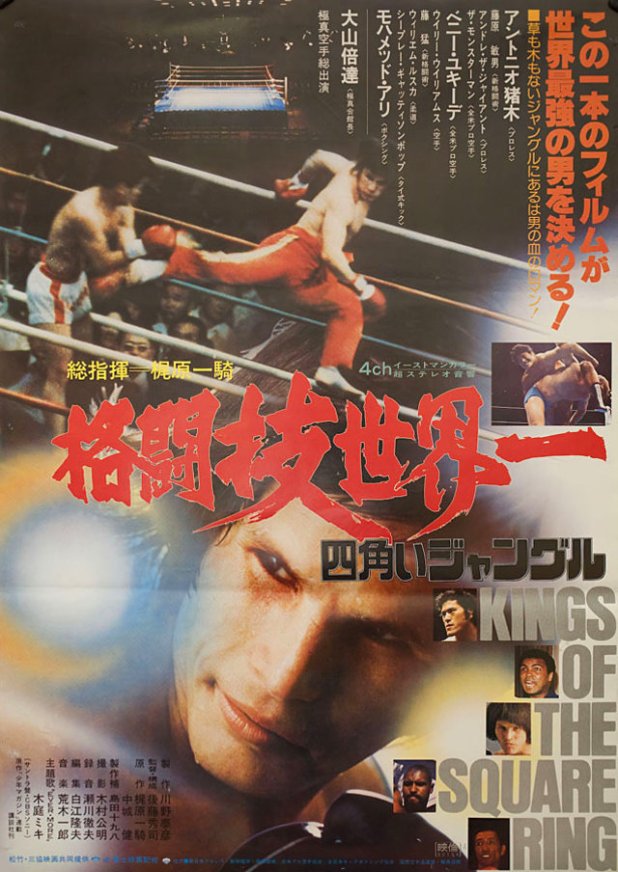
Directed by Shuji Goto, Kings of the Square Ring comes from a curious time in the time of pro wrestling, martial arts and what would someday be known as mixed martial arts.
This film shows nearly every style that was known in the late 1970s when it was filmed. You get to see kickboxer Benny “The Jet” Urquidez fighting Takeshi Naito, sumo Takamiyama and Muay Thai expert Toshio Fujiwara — the first Japanese person to win a title in that style — against Monsavan Lukchiangmai and Seepree Kiatsompop. Plus, you get boxing, as Paul Fuji fights Abdul Bey.
The majority of the film is devoted to New Japan Pro Wrestling and its star Antonio Inoki. It first shows the fight he had with Muhammad Ali — a match that everyone thought was fake but was more real than either man wanted it to be — as well as a fight with Everett “Monster Man” Eddy, who was in Disco Godfather and did stints for Petey Wheatstraw. There’s even training footage of Willy Williams, who was one of Inoki’s most famous challengers, a man who fought bears and trained in a waterfall like a real person who had come straight out of a Street Fighter video game.
Beyond the intense Karl Gotch-taught training in the New Japan dojo, the film also shows Inoki battle Bob Backlund, Andre the Giant and Tiger Jeet Singh, as well as a match between Willem Ruska and Buffalo Allen, who would later become Bad News Brown in the WWF.
This reminds me of Fist of Fear, Touch of Death, another 1980 documentary on the mysterious world of martial arts. It had to make Inoki happy that his obviously not real world of real martial artists and fighters coming to Japan to challenge him would be treated as fact by an actual movie.
What remains is a true document for fans of this era and the opportunity to see matches and people you may have only seen in magazines, read about or seen clips of.
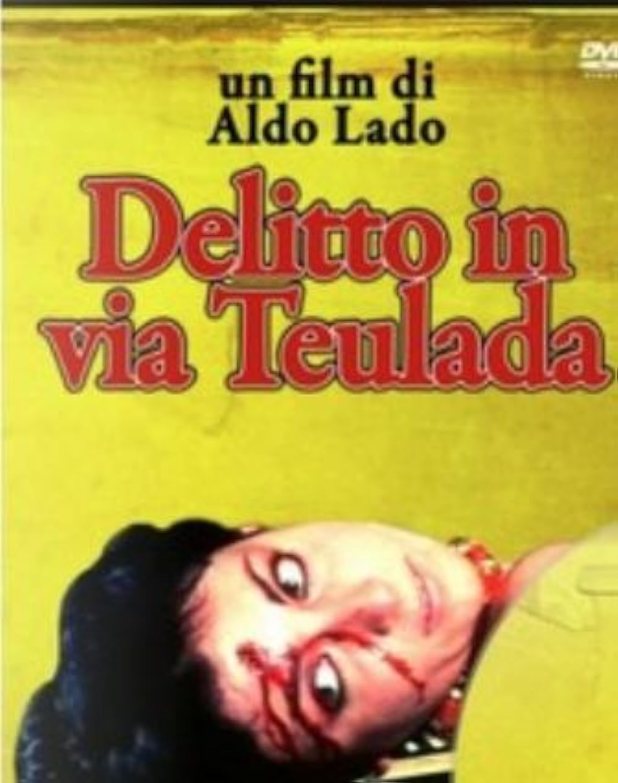
Crime in via Teulada was originally broadcast in 1979 on television as 15 segments of 5-minutes each. It was called Striped Mystery and the show aired before RAI’s Variety. It was an attempt to mix reality and the world of the movie, as it was also shot at RAI’s studios in Rome. The original version was called Giallo A Striscio.
In 1980, it was released in theaters as a 61 minute long movie.
The huge Rai building is filled with activity as so many shows are being made, including a crime film, a historical drama, a musical program called Discoring and the variety show Domenica In. In the midst of all this craziness, an actress named Diamante (Mariarita Viaggi) is killed and one of the RAI employees, Ely (Margherita Sestito), finds the body where film reels are stored. When security comes to help her, the body is gone.
Two of Ely’s co-workers, blind switchboard operator Lia (Auretta Gay) and production assistant Sandro (Pietro Brambilla), take over the case when a dancer named Annie (Barbara D’Urso) are murdered and — spoiler warning — Ely are killed. There are also some actors playing themselves, such as Pippo Baudo, Domenico Modugno, Nanni Loy, Filippo Albertazzi, the Tessler Twins, Renato Rascel and Corinne Clery wandering about and anyone could be killed next. Everything seems to point to an actor named Enrico (Branko Vatovec), who is also Lia’s brother, but the killer really could be anybody. And by that, I mean someone with ties to all of the victims from their past.
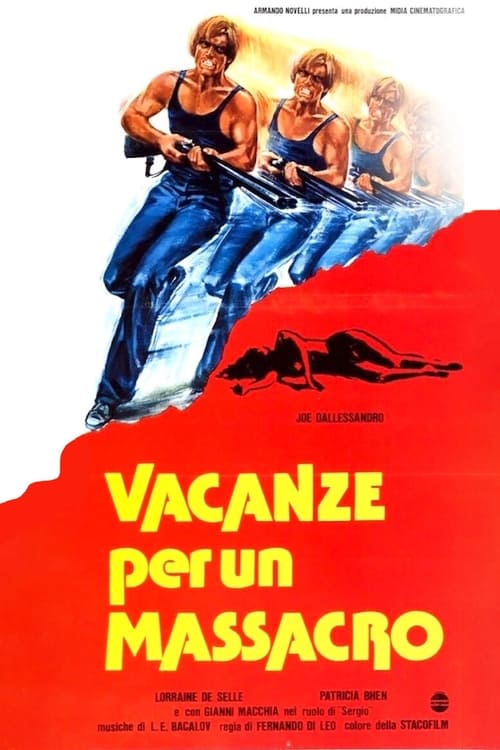
Joe Brezy (Joe Dallesandro making his last movie in Italy) is the kind of person that’ll escape prison, kill a man with a rock and stab an old man with a pitchfork before most of us have our second cup of coffee. Then, he asks an old man for everything that he knows about the cabin where Liliana (Patricia Behn), her sister Paola (Lorraine De Selle, House On the End of the Park) and her husband Sergio (Gianni Macchia) are having a very tense vacation.
The next day, when Sergio goes hunting and Liliana goes shopping, Joe makes his way inside and forces her to help him dig out the fireplace. As each person returns to the house, he makes them dig as well, as he’s hid money there before he got sent to jail. Oh yeah, he also reveals that Paola and Sergio are having an affair and forces them to make sweet — well, not so sweet — love in front of her.
The captives come up with a plan to escape, but Joe ends up shooting everyone but Liliana, who he wants to take away from all this madness. Instead, she shoots him and that’s our movie.
This was written by Mario Gariazzo (Play Motel, Enter the Devil, Eyes Behind the Stars) and he intended to direct it, but Fernando Di Leo — whose company Cineproduzioni Daunia 70 produced many of Gariazzo’s movies — ended up making it instead. He wasn’t happy with the finished movie, saying that in Roberto Curti’s Italian Crime Filmography that it was a “disappointing film indeed, including my toying with Lorraine De Selle’s nude scenes. It’s mediocre, but not because I did wrong – I just wasn’t interested in it.” He added, “…you don’t always have the chance to do what you want, and often you know very well you’re making a bad movie, but you do it anyways.”
As for the soundtrack, Luis Bacalov brought music he had already used for Caliber 9 and The Designated Victim.
For being someone not known for his acting, Dallesandro is pretty good in this. That’s because he’s just seducing women and being a wildman. He’s used the right way and man, De Selle is the reason this all works. It’s a one room meltdown, primal violence and wanton lust.
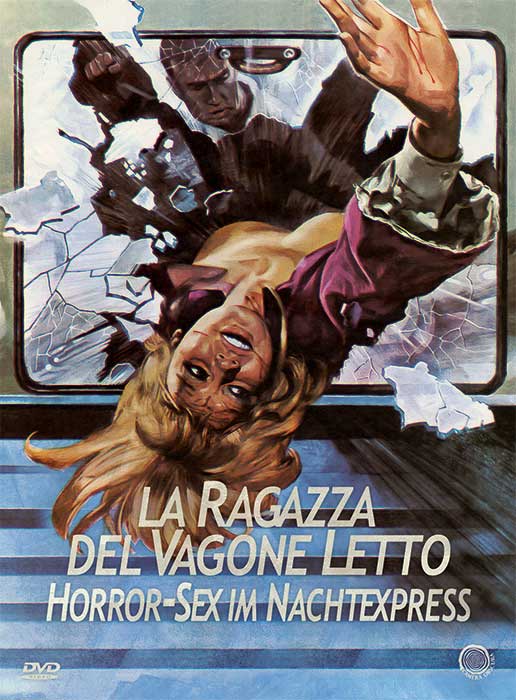
La ragazza del vagone letto (The Girl In the Sleeping Car) also goes by Terror Express and Horror-Sex im Nachtexpress. It’s directed by Fernando Bali, who also made Nine Guests for a Crime and Treasure of the Four Crowns. It’s writer? Luigi Montefiori, the lunatic best known as George Eastman.
It’s as if someone said, “Can we make Last Stop on the Night Train but somehow make it scummier and more upsetting?” And that someone was George Eastman and maybe people told him, “George, that movie is already pretty upsetting.” But this was the same year that George ate a baby on a Greek island in Antropophagus, so was telling him no? No one, that’s who.
You should never get on a night train in Italy. But if you do, if you see David (Werner Pochath, the vampire-like killer of Bloodlust), Ernie (Carlo De Mejo) and Philip (Fausto Lombardi). They lose their composure when Guilla (Silvia Dionisio, Andy Warhol’s Dracula), a sex worker who has a deal with the conductor (Gino Milli) to do business on the train, refuses to sleep with any of them. They harass everyone in the dining car and despite a frustrated married woman named Anna (Zora Kerova, prepping for how horrifically she would be killed in The New York Ripper) defending them and coming on to Ernie, two of them assault her in a bathroom.
It wasn’t like the train was all that great to start with, what with a family falling apart — the father (Roberto Caporali) wants his daughter (Fiammetta Flamini) and not his wife (Gianfranca Dionisi) — along with a dying elderly couple and a cop (Giancarlo Maestri) transporting Peter, a criminal (Gianluigi Chirizzi) to prison riding this evening’s rails. The criminals free Peter and slowly ruin everyone’s life, including playing dice for the chance to deflower the teenager, making her dad throw the final roll to see who gets her. But that guy isn’t blameless, because he’s already paid Guilla to wear his daughter’s nightgown while he takes her.
These criminals should be killed in the most brutal way possible, which doesn’t happen, but nonetheless, if you want to see how far things will go — if this movie was made in an Italian exploitation high school, the mean lady teacher would say, “I expect this from you, Montefiori, but I can’t believe that you’ve corrupted Fernando like this.” — this movie will drag you there.
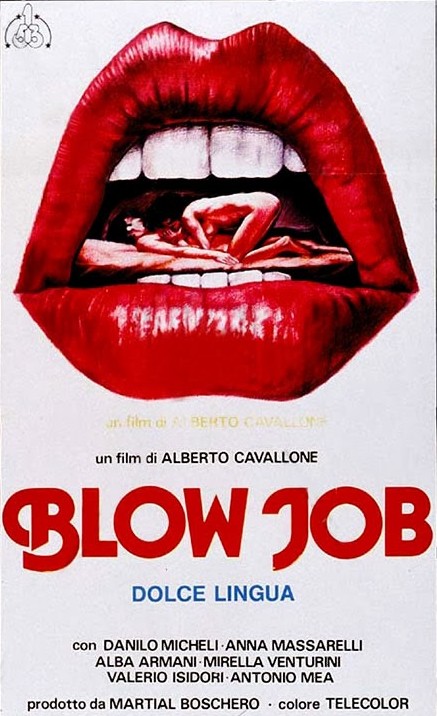
Blowjob has nothing to do with the sex act of its title and more to do with the works of Carlos Castaneda and Aldous Huxley. It was the follow-up to Blue Movie for director Alberto Cavallone, who said that it was a “deliberately pornographic film, but with political content. A movie about violence as a means of communication and knowledge in a repressive society.” Cavallone also claimed that it had no actual sex, which several performers dispute, as there were different cuts of the film. It was shot as The Naked Witch.
Stefano (Danilo Michel) and Diana (Andrea Belfiore, Patrick Still Lives) escape a hotel bill thanks to the violent suicide of a woman who has lept from her room’s window. Running to a race track, they meet Countess Angela (Anna Bruna Cazzato), a scarred and one-eyed woman who helps them pick the winning horse and takes them home to her country estate. The journey there should have clued them into something weird, as they pass a skull-faced biker who’d be at home in Tales from the Crypt or Psychomania.
Once there, Angela casts a spell on Diana and when Stefano seeks a doctor to help her, he only meets Sibilla (Mirella Venturini), a gorgeous witch who gives him a magical powder. Once healed, Diana and the Countess leave Stefano all alone in the castle as they head off to a dancing ball. If you’re thinking, “This would be the perfect time for Sibilla to emerge from a mirror and take our male protagonist to a cave and have sex with him,” you are the spirit of Alberto Cavallone and thank you for reading my site.
After returning to the home of Angela, there is a large dance that becomes an orgy until the skull biker emerges, removes her helmet and reveals that she is Sibilla. The enchantress begins a dance of death that takes out everyone except for Diana, Stefano and Angela, who is revealed to also be Sibilla. She is stealing the sex essence of the young couple in order to heal and reincarnate her form. Stefano replies by destroying a mirror, which bring him back to the hotel, where he learns that the woman who fell out of her window to kill herself was Diana. As emergency workers clean her from the streets, Stefano notices Angela and Sibilla watching.
According to Roberto Curti in his book Italian Gothic Horror Films 1980-1989, this film was shot at a villa near Riolo Terme, in North-East Italy, that was owned by a dirty old man who gave it for free, as long as he could watch the more sexual scenes be lensed.
That said, this has more than just sexual ambitions. The director said, “the whole film was focused on the possibility of escaping from our own bodies, by modifying sensorial perceptions through the use of drugs or self-concentration.” Also known as Soffio erotico (Erotic Whiff) and Dolce lingua (Sweet Tongue), this is a movie that brings you in with the promise of titillation and instead wants you to question your perception; the very act of seeing pornography is seeing what should not be seen, as well as being a sinner; it is, in short, occult.
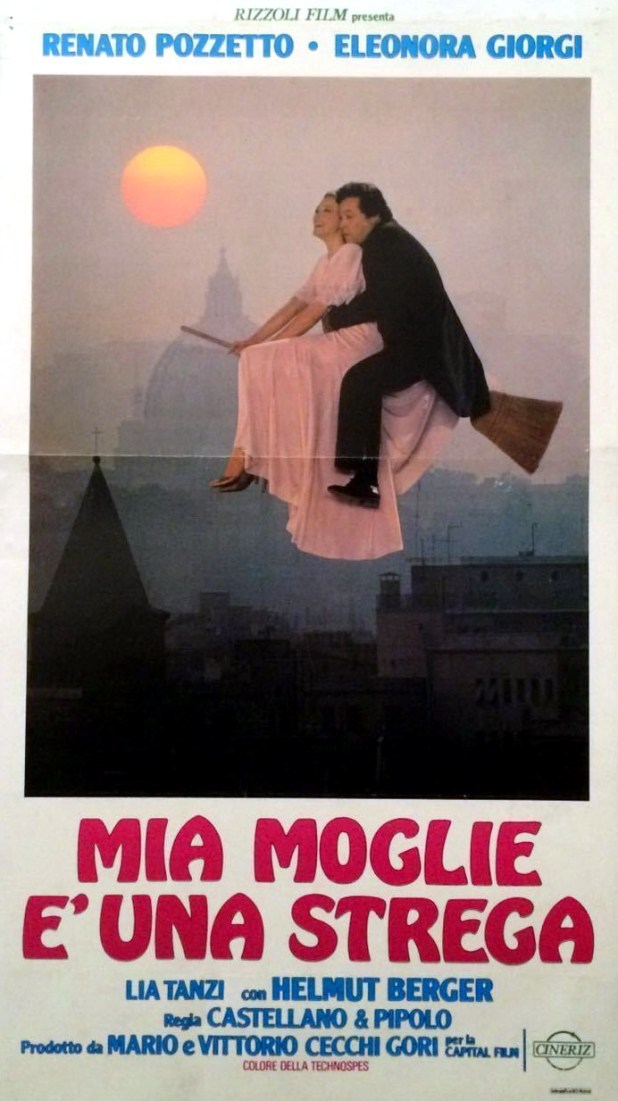
The idea of marrying a witch is a strong one. Generally in most cinema, it is treated as a positive, as seen in I Married a Witch, which was later stolen by television to become Bewitched. Only in Italy would such the start of this story feel as if it were closer to Black Sabbaththan the adventures of Darren and Samantha.
The witch Finnicella (Eleonora Giorgi, Inferno) has been sentenced to being burned at the stake by the Catholic church but is brought back to life three hundred years later by her lover, the demon Asmodeus (Helmut Berger). She is charged with making Emilio Altieri (Renato Pozzetto) fall in love with her — he’s the descendent of the cardinal who doomed her to the flames who would one day become Pope Clement X — and then kill him. Yet when she finally meets him, he’s already in love with Tania (Lia Tanzi, The Suspicious Death of a Minor). Even when she becomes his secretary and wantonly offers herself to him, Finnicella can’t win him to her embrace. He even fires her, at which point she kisses him, but he still stays pure.
That’s when Finnicella realizes that she’s in love with him, even if her demonic master decrees that Emilio must die.
At Emilio’s wedding, she slips a love potion into his champagne. He doesn’t drink, but he acts as if he has and leaves his soon-to-be wife, claiming to be in love with another. Finicella doesn’t believe him, as she thinks it’s just the magic. He proves it, as Tania drank the champagne and has remarried her ex-husband Roberto (Enrico Papa) in the moments they were speaking.
Emilio and Finnicella marry and honeymoon in Paris. As she flies him over the city, having revealed that she is a witch, Asmodeus appears. He reminds her of their deal and why she was brought back to life. She pleads that she is in love, but it gets her nowhere, as the demon guns her down and her husband is blamed for her murder. Finnicella’s ghost begs Asmodeus to fix all of this and he says that a witch could never make him lose his head and proclaims just how smart he is, which ends up with her cutting his head off with a guillotine. Now, holding his head, Asmodeus must release Emilio from prison, erase the crime and bring the witch back to life.
Directed and written by Franco Castellano and Giuseppe Moccia, this was a big success in the Italian box office. If you look closely enough, you can spot Rentao Polselli regular Rita Calderoni, as well as Serena Grandi, Shôko Nakahara (who years later would be in Tokyo Gore Police) and Maria Grazia Smaldone (Libidomania) in small parts.
The best thing about this movie, for me, was the soundtrack. It’s by Detto Mariano, who also did the soundtracks for Miami Golem, War Bus and Titanic: The Legend Goes On. Giorgi sings the title song “Magic” and so much of the feel is disco with distorted guitar; it’s an absolute treat!
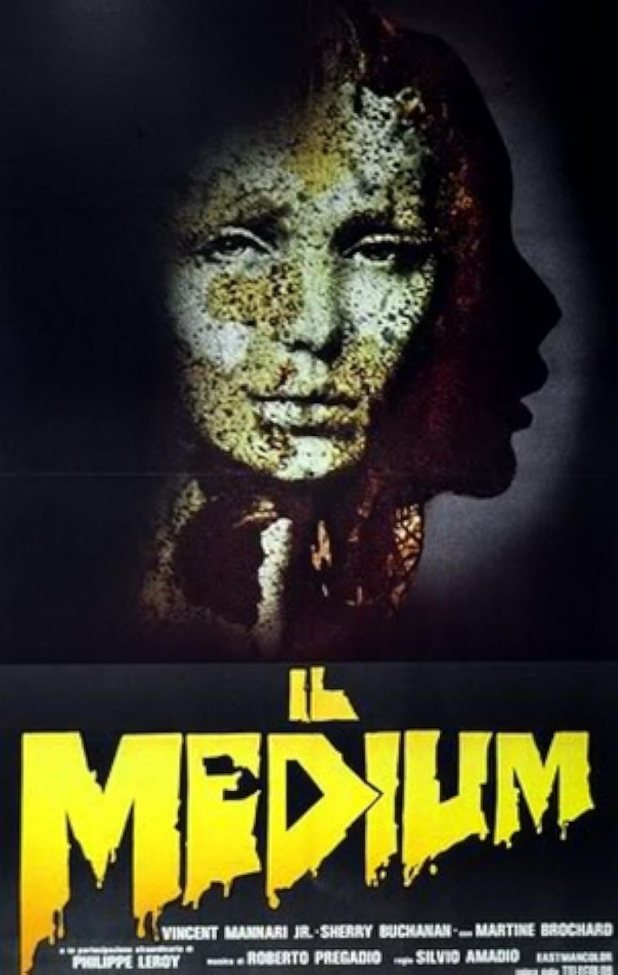
By the 1980s, Amadio was more known for his work with esoterism, which is a combination of pagan philosophies, the Kabbalah and Christian philosophy. According to Roberto Curty in Italian Gothic Horror Films, 1980-1989, the director worked with a group known as Circolo di spiritualisti (Circle of Spiritualists) and became a well-respected occult writer and a devotee of conjuring the dead to visit him.
An American composer Paul Robbins (Guido Mannari, Caligula) who uses the dodecaphone twelve-note technique has come to Rome with his ten-year-old son Alan (Stefano Mastrogirolamo) to work on a new opera. He hires Laura (Sherry Buchanan, Eyes Behind the Stars) to look after the boy who has an imaginary friend — a raven-tressed woman dressed in white — whose voice starts showing up on tapes, just as his father is attacked by a dog. The woman eventually possesses Alan as part of a revenge plot; Daniela (Martine Brochard, Eyeball) believes that her sister Eleonora’s death — Paul’s wife and Alan’s mother — was brought about by the composer. Now, he must rely on Professor Power (Philippe Leroy, The Laughing Woman) to save his son through a psychic duel fought — as Chris Claremont would write — not in the physical realm, but the astral plane, no quarter asked, none given.
It’s the first movie written by Claudio Fragasso, who told Fangoria, “Silvio Amadio came to me with an actual medium and told me that the dead had told them I should write the script.”
 B&S About Movies