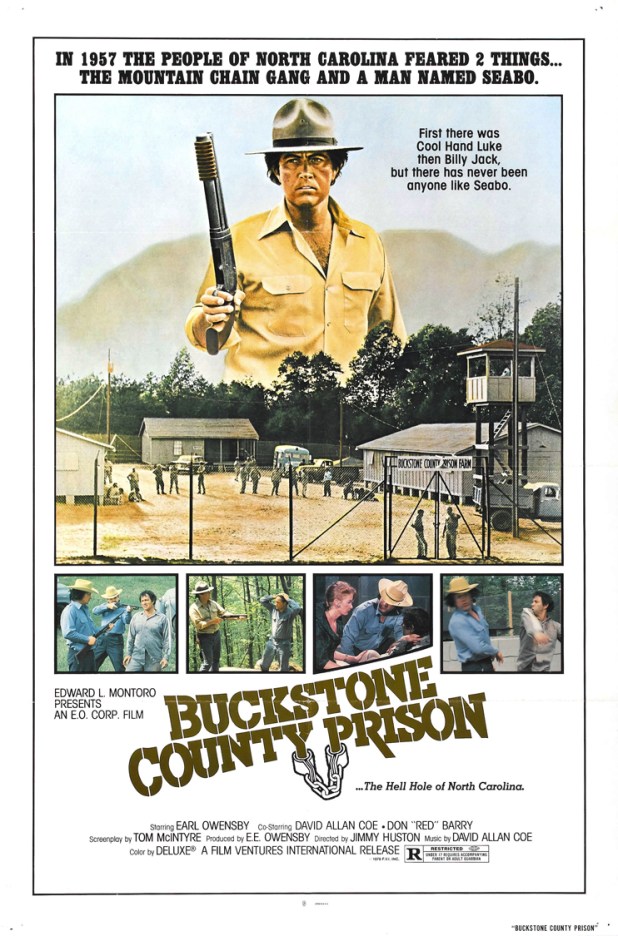
“In 1957 The People of North Carolina Feared Two Things…The Mountain Chain Gang And A Man Named Seabo.”
If that doesn’t work for you, how about “First there was Cool Hand Luke then Billy Jack, but there has never been anyone like Seabo.”
Earl Owensby had already made four movies — Challenge, The Brass Rings, Dark Sunday and Death Driver — before making this, a movie he’d pretty much remake six years later with Chain Gang.
Starring in this and producing it, Owensby knew the kind of movies that people in Southern drive-ins wanted to see because he was one of them. His E.O. Studios was run smartly: he’d star in these movies, they’d hire local semi-pro actors and shoot most of the movies off the soundstages.
Seabo (Owensby) — get used to that name — is a half-Native American, half-white bounty hunter who is set up for a murder he didn’t commit and faces off with prison guard Jimbo (Ed Parker). He eventually gets freed if he hunts down some escaped prisoners and joins forces with another bounty hunter named Red (David Allan Coe, who also recorded some of the songs on the soundtrack including one song, “Bounty Hunter,” that sounds a lot like “A Boy Named Sue”).
This movie feels made to order for what people were looking for at a drive-in with Owensby as a star that doesn’t look all that much different from the people sitting in the cars drinking beer and flashing their headlights at the screen.
There’s a copy of To Be Twenty that’s on Films & Clips, a YouTube channel that has lots of hard to find Italian movies. And if you watch that one, well, you may think that this is a fun loving comedy. And I’m here to sadly inform you that while that’s the movie I wish this was, it is certainly not the movie that it is.
That’s because the original version — the one that the director, Fernando Di Leo preferred — is 98 minutes long and the first 90 minutes will not prepare you for the last eight. The version that was cut and played in theaters after that one failed — and was dubbed for America — is 85 minutes and all sexual hijinks and fun.
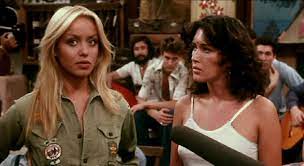
Lia (Gloria Guida, who went from Miss Teenage Italia 1974 to starring in commedia sexy all’italiana films like Monika and La minorenne; she’s also in Bollenti spiriti and La casa stregata) and Tina (Lilli Carati, the runner-up of Miss Italia 1975; she’s in four Joe D’Amato movies — La Alcova, Christina, The Pleasure and A Lustful Mind — and acted in adult films in the late 80s and was also addicted to cocaine and heroin. She retired from public life in 1990 but returned to acting to play an occultist in Violent Shit: The Movie, which was dedicated to her as she died before it was released). They’re two young and, frankly, gorgeous women who decide to hitchhike to Rome and experience the world of free love.
As the girls say, We’re young, we’re beautiful, and we’re pissed off.” That takes them to a commune where they hope to find the pleasure that they’ve heard of and the leader, Nazariota (Vittorio Caprioli), allows them to stay as long as they sleep with the members. It sounds exactly like what they want, but every man in the place is either asleep, high, smells or a combination thereof. Tina does finally find Rico (Ray Lovelock) while we get to know the other members, who include a clown called Arguinas (Leopoldo Mastelloni) who has been meditating for three months and a single mother of three named Patrizia (Daniela Doria).
This episodic movie finds our two heroines taking part in a documentary where Lia shares how she grew up in a church orphanage and Tina reveals that her rich parents only cared about keeping her pure, which caused her to rebel. They also sell encyclopedias which leads them to meet all manner or strange people, all before the cops bust the commune — Arguinas is even accused of being in the CIA — and the ladies are told if they don’t go back home by dark, they will be arrested.
Now, depending on the cut you watch, that’s the movie. Unless you want to see the director’s cut. And if you care about the girls, you won’t.
On their way home, they stop to eat and dance while a jukebox plays. Several men take notice and follow them outside and take their turns assaulting them, beating them and leaving them for dead. The movie closes on their nude and destroyed bodies.
I mean, this is a sex comedy that also has readings from the Skum Manifesto and hippies portrayed as morons around ten years after their shelf date. But Di Leo drops the floor out from under you as until now, this has all been played as a humorous sex film. You are unprepared for what happens and I don’t think he was trying to make a point about the way men treat women. It feels like he’s punishing Lia and Tina for using their bodies and enjoy all the sex they’ve had.
At once, it’s a movie with goofy dialogue like “As you already know, all the ideologies and religions man has invented over the centuries have all failed. But it finally reached this unbearable level when Christianity, Marxism and psychoanalysis created general and personal conditions that are conducive to schizophrenia” and an ending that feels like a snuff film.
The director also made Blood And Diamonds, Naked Violence, Slaughter Hotel, Caliber 9, Madness — it’s all making sense now — and Naked Violence. I wish that I had just stuck to the America cut, but sometime we need to expose ourself to things and learn from them. I wish this was a message movie, like I said, but I think it’s a message I don’t agree with.
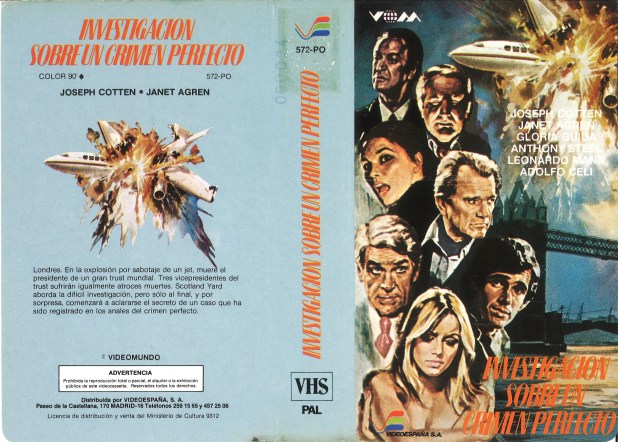
CEO Sir Ronald Selmer‘s plane has blown up in flight, which brings together the Vice Presidents of his company — Sir Arthur Dundee (Joseph Cotten), Paul De Revere (Leonard Mann) and Sir Harold Boyd (Adolfo Celi) — to discuss who will take over the company. The company pretty much runs the world, so each of them wants to be in charge, which means that anything can happen. And by anything I mean murder.
The smart money is on Selmer’s racecar driving nephew Paul — who even has a Keane painting in his office! — but someone sends his car off a cliff which brings in another family member, Superintendent Jeff Hawks (Anthony Steel), to solve the murders — yes, many murders — at the behest of Lady Clementine (Alida Valli, Suspiria).
There’s all sorts of wild moments along the way, like Sir Harold’s wife Gloria (Janet Agren) leaving a snooty fox hunt to be the roast beef in a man man sandwich in the stables, Sir Arthur trying to seduce and kill Sir Harold with one of his ladies — Polly (Gloria Guida) — and Sir Arthur’s pacemaker being short-circuited with a magnetic murder device.
Director and writer Giuseppe Rosati has a big cast and instead of making this an upper crust Agatha Christie thriller — she does get name-dropped — remembers that he’s Italian and that this whole movie should be sleazy. Well done! He directed this movie using the name Aaron Leviathan which is the best Italian Americanized name of all time. Giuseppe Rosati also made Those Dirty Dogs, Silence the Witness and The Left Hand of the Law.
The amazing Italo-Cinema points out that while this is set in London, it’s filmed in Italy, so if you see the graveyard from Antropophagus — which is set in Greece, I feel like I’m a world traveler — and some of the buildings from Suspiria.
The killer gets away with it! Come on! How many times have you seen that in a giallo? I kind of loved this but any time I see Joseph Cotten and Adolfo Celli in a movie, much less Janet Agren and Gloria Guida, well — I’m pleased.
EDITOR’S NOTE: Cinematic Void will be playing this movie on January 20 at 7:00 PM MT at Sie FilmCenter in Denver, CO. For more information, visit Cinematic Void.
Never say never, but I think this will be the only movie we ever feature on this site that has a love theme by Barbara Streisand in it. I could be wrong, but I just get the feeling that there aren’t going to be many more crossovers quite like this one.
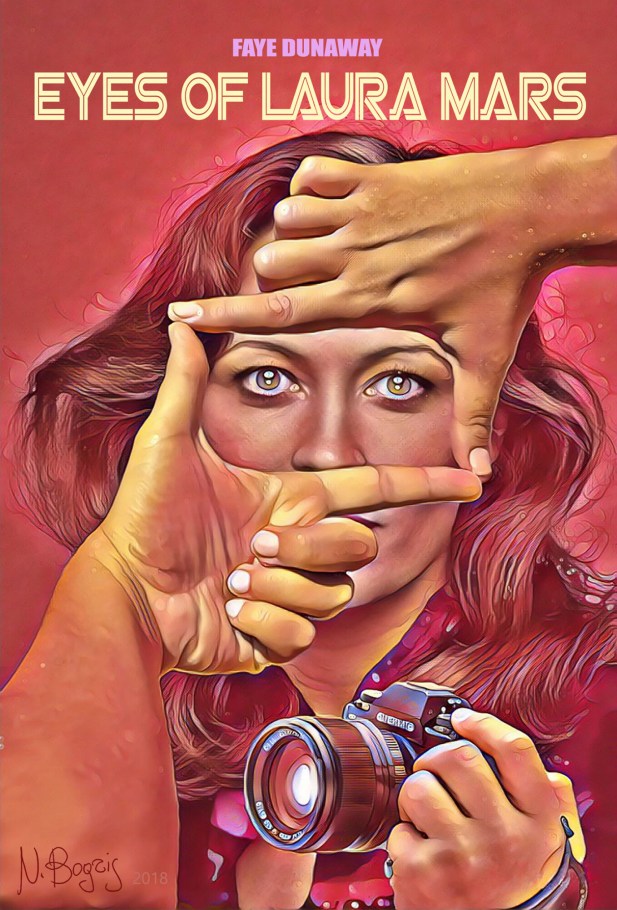
Eyes of Laura Mars was adapted from a spec script titled Eyes, written by John Carpenter; making this Carpenter’s first major studio film. Producer Jon Peters, the beau of Barbra Streisand in this era, bought the screenplay as a vehicle for her, but Babs felt that it was too “kinky” and passed. However, she felt that “Prisoner,” the song that she lent to the film, would be a great single. She wasn’t wrong — it peaked at #21 on the Billboard Hot 100.
Instead of Ms. Streisand, we get Faye Dunaway, who had just won an Oscar for Network and had not yet become Mommie Dearest. She plays Laura Mars, a fashion photographer whose Chris Von Wangenheim by way of Helmut Newton-style photos (Newton and Rebecca Blake supplied the actual photos for the film) glamorize violence. As she’s due to release the first coffee table collection of her work, she begins seeing the murders of her friends and co-workers through the eyes of the killer. I love how until now, she’s only been detached and seen things through the eye of a camera.
John Neville (Tommy Lee Jones) is the cop in charge. After she rushes to a murder scene exclaiming that she saw who did it blocks away, the cops keep her in custody, showing her numerous unpublished crime scene photos that match her new fashion photos perfectly. Throughout the film, Larua and Neville fall in love as her visions — and the murders — increase in intensity and violence.
This is a great example of an American giallo filled with the twists, turns and red herrings of the genre. It’s done with a much higher budget and way better locations than you’re used to. And it gets closer to the psychosexual elements, but as great a director as Irvin Kershner is, he isn’t a maniac like Argento and his ilk. It’s also packed with talent, like Raul Julia, Battle Beyond the Stars‘ Darlanne Fluegel, Rene Auberjonois and Chucky himself, Brad Dourif.
The Eyes of Laura Mars would be parodied as The Eyes of Lurid Mess in MAD Magazine #206, with art by Angelo Torres. As was often the case with R rated movies when I was six years old, I first experienced this movie through the black and white ink lens of MAD.
When seen through the lens of the giallo form, The Eyes of Laura Mars reminds me of post-Deep Red era Argento — taking the basics of the detective form and grafting on one supernatural element. Here, it’s the fact that Laura Mars (Faye Dunaway), a high glam fashion photographer, can see the violent deaths of people as she takes photos. The images that they inspire lead her to great success and controversy, creating an intriguing narrative of the violent and at times bloody battle of inspiration for artists. I’m also struck by how detached Mars is from the art and fashion world in which she lives, until she’s in the midst of shooting. Then, she finally opens not just herself up, but her posture. She spreads low to the ground, sexualizing herself when she’s often covered by clothing throughout the film that hides her body from the world.
Going from an independent picture produced by Jack H. Harris to big studio affair by Jon Peters (who dreamed of then-girlfriend Barbara Streisand in the lead), The Eyes of Laura Mars struggled with a new writer being brought in to adjust John Carpenter’s script (the auteur said “The original script was very good, I thought. But it got shat upon.”) and the production lasted 7 long months, including a 4 day shoot in the middle of New York City to capture a major fashion shoot with models, wrecked cars and fire everywhere.
It has assured direction by Irvin Kershner, which led to him being hired for The Empire Strikes Back. After watching so much giallo, I’ve noticed that the America versions of the form are very much like Laura Mars herself: detached, cold and not all that interested in the murder as art that native Italian creators like the aforementioned Argento immerse themselves in. This film is made in hues of black and white when their world is neon and always the most red possible.
Upon a new view of this film, I was also struck by just how great the cast is. Tommy Lee Jones is perfectly cast, with his final speech near-perfect. In truth, he wrote that ending monologue, but credited it to Tommy Lee Jones actually wrote his own monologue, crediting it to Kershner, unbeknownst to the Writers’ Guild. Brad Dourif is routinely amazing in movies and his small role here is still a stand-out, as is the acting of Rene Auberjonois and Raul Julia.
This movie also features one of my favorite settings: New York City at the end of the 1970’s, which I feel is the closest place to Hell on Earth that has ever existed. As a child, I watched WOR Channel 9 news from the safety of being a few hundred miles away in Pittsburgh and wondered who would ever want to live in this city. You can almost smell the garbage and desperation in the air here, which is in sharp contrast to the cold, metallic and not so real world of fashion and art.
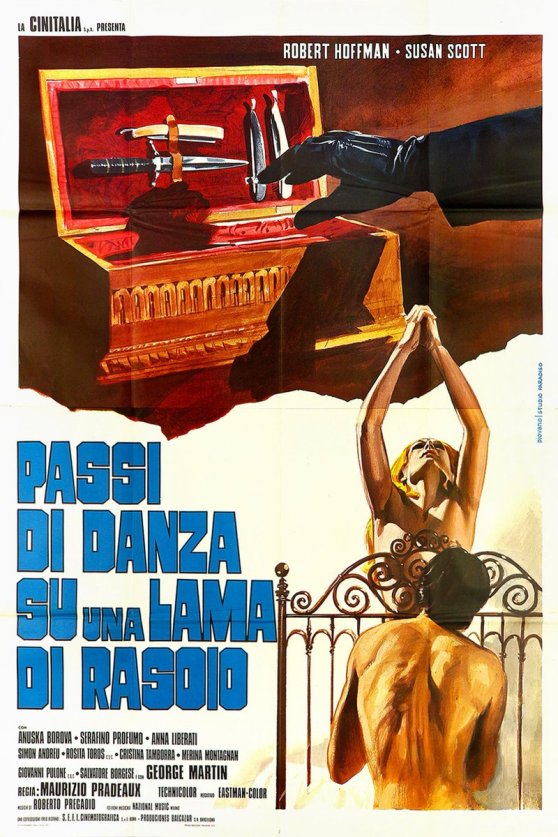
Death Carries a Cane (1973): If death carries a cane, isn’t it weak? With that thinking, aren’t the alternate titles — Dance Steps on the Edge of a Razor, Maniac At Large, The Night of the Rolling Heads and Devil Blade — so much cooler?
Well, that’s because whoever the killer is, he or she has a limp. That’s what Kitty (Nieves Navarro, billed here under her boring Americanized nom de plume Susan Scott) sees when she watches a murder through a coin-operated telescope. That’s just the first of many killings and it just might be her boyfriend Alberto, who has the misfortune of having a limp and a cane when that’s what’s being profiled. I’ve said it before and I’ve said it again, defund the giallo police.
Director Maurizio Pradeaux also made another Grim Reaper referencing giallo, Death Steps in the Dark, which has a scene where the protagonist has to wear drag to escape the police.
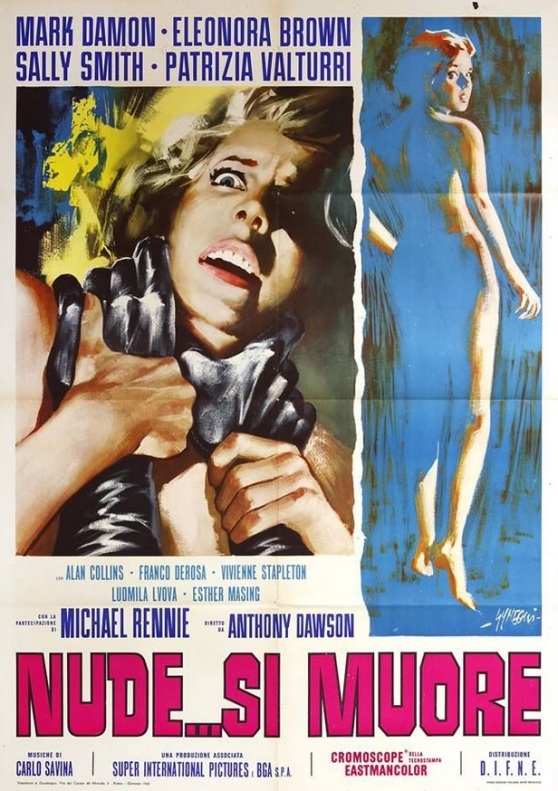
Naked You Die (1968): Naked…You Die (AKA The Young, the Evil and the Savage) is a pretty fun early giallo with good direction by Antonio Margheriti.
Yet it was very nearly was a Mario Bava movie.
According to Tim Lucas’ Mario Bava: All the Colors of the Dark, Bava was hired by Lawrence Woolner — the distributor of Hercules in the Haunted World and Blood and Black Lace in America — to direct a movie about a killer stalking a school. Cry Nightmare was going to be the title and Bava wrote the script with Brian Degas and Tudor Gates (Barbarella, Danger: Diabolik).
Lamberto Bava told Lucas that “Just a short time before the filming was to begin, Mario Bava had an argument with the producers and he abandoned the film.” As for Margheriti, who met Woolner when he distributed Castle of Blood, he said “I think Mario was busy at that time, working on Diabolik or something.”
Either way, locations were already secured, cast and crew had been hired and a theme song had already been recorded.
The drowned body of a woman is placed in a truck going to St. Hilda College. There, only seven students, two teachers — Mrs. Clay (Ludmilla Lvova) and Mr. Barrett (Mark Damon — Headmistress Transfield (Vivian Stapleton) and gardener La Foret (Luciano Pigozzi) are present.
Soon, the killing begins with Betty Ann being strangled and found by Lucille (Eleonora Brown in her last film until coming out of retirement in 2018), who is having an affair with Barrett. When she tells him to come see the body, it’s already gone, so they decide to leave the school.
The killings kick into gear with Cynthia (Malisa Longo, Ricco the Mean Machine) being killed in front of the gardener, who is soon killed as well and Denise (Patrizia Valturri) too. There’s also amateur detective Gillie (Sally Smith) on the case and Inspector Durand (Michael Renne from The Day the Earth Stood Still) trying to stop the killings.
All the girls wear similar uniforms — and outfits that change scene by scene — and nobody wonders why an older teacher can play Big Bad Wolf with Little Red Riding Hood and get away with it.
The aforementioned theme song “Nightmare” by Powell and Savina (Don Powell, who played Emanuelle’s father in Black Emanuelle 2 and did that film’s soundtrack, along with Carlo Savina, who composed the music for The Killer Reserved Nine Seats, Lisa and the Devil, Fangs of the Living Dead and so many more) and performed by Rose Brennan owes royalties to Neal Hefti.
Perhaps even wilder is the fact that the movie informs us that Gillie may be the daughter of James Bond.
Giallo would change in a few years to be bloody, sleazier and stranger. That said, this is a great example of an early version of this style of movie.
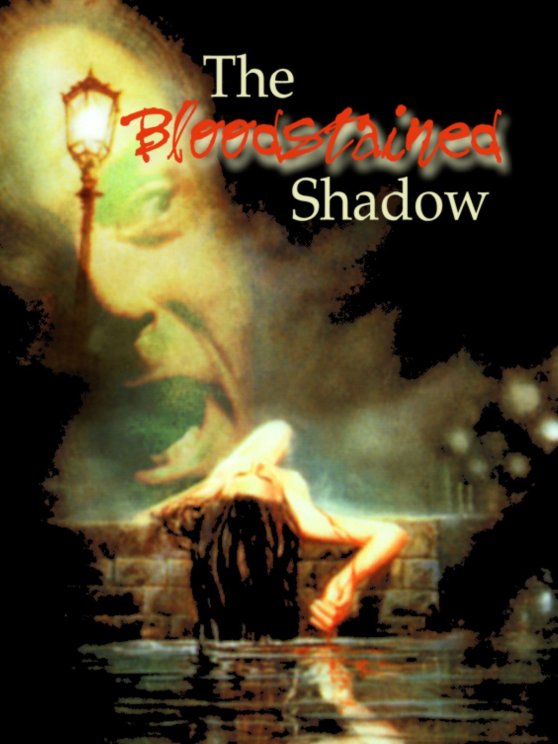
The Bloodstained Shadow (1978): One of my favorite things about giallo are the alternate titles. As if The Bloodstained Shadow isn’t a great name, this movie also goes by Solamente Nero (Only Blackness), which is a way better title. The other thing I love about this genre is that just when I think I’ve seen every good one, I find another to enjoy.
This is the kind of movie that tells you exactly where it stands in the first minutes, as a killer strangles a girl in a field before the credits even start. That murder has never been solved. Years later, a college professor named Stefano has a nervous breakdown. To recover, he comes home to visit his brother Don Paolo, who has become a priest that hates all of the immorality in their small town.
Oh what immorality — there’s a gambler, a psychic, a combination atheist/pedophile and an illegal abortionist with a mentally challenged son who lives in a shack top the list, along with your typical sex and drinking that happens in any town.
Meanwhile, murders have been piling up and whoever is behind it, they’re leaving notes to the priest, warning him that if he reveals who the killer is, he’ll be next. That’s because on Stefano’s first night back home, Don Paolo saw the killer murder the town psychic in the courtyard.
Stefania Casini (Suspiria) also appears as the love interest, Sandra, who helps Stefano come back to normalcy. Well, as normal as a town filled with murder can be. I’m kind of amazed that she wears a belly chain all day. When you get to the love scene, you’ll know what I mean.
There’s also some amazing religious imagery in this one, like a skinned and bloody animal that has been placed in the sacristy to warn the priest that he’s getting too close, or the communion scene that reveals who the real killer is.
Finally, Goblin plays some great music in here, created by composer Stelvio Cipriani. It’s really a great package, thanks to director Antonio Bido, who directed one other giallo, Watch Me When I Kill. I love how the past childhood trauma that the brothers endured continues to permeate their lives as they try to grow up. This is a very adult giallo and by that, I mean that it doesn’t need nudity and gore to tell its tale.
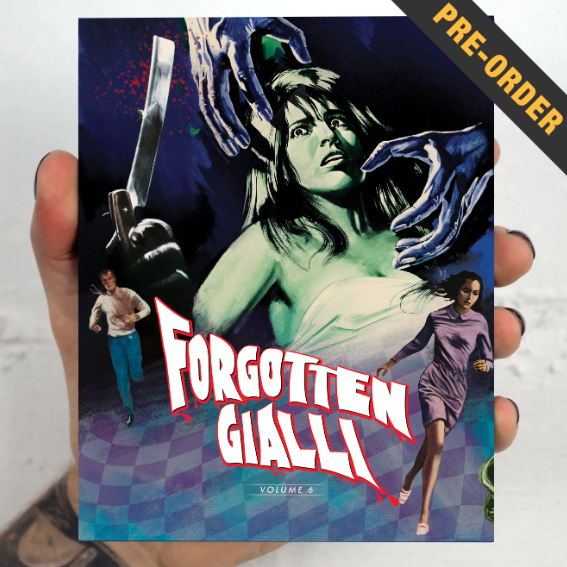
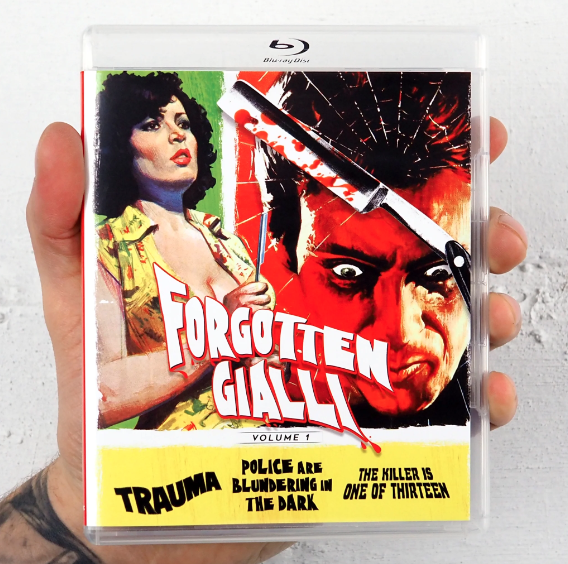
The first in a series from Vinegar Syndrome, these sets allow you to discover three giallo films that have been rare until this release.
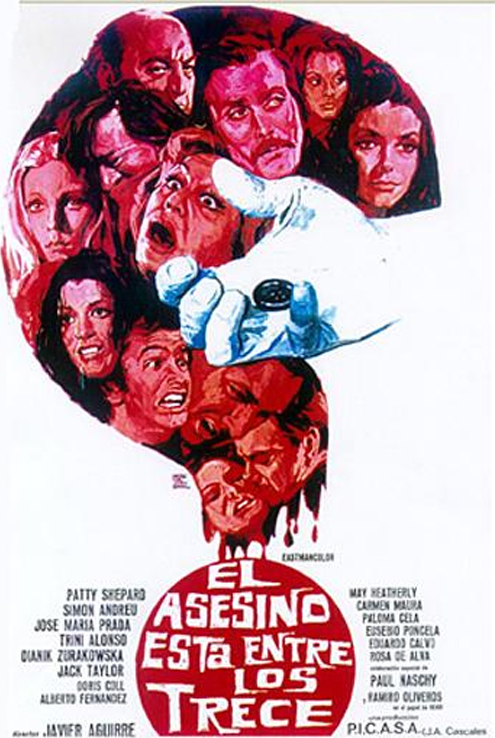
The Killer Is One of 13 (1976): Not a lot of nudity and little blood, this giallo is closer to Agatha Christie than Edward Wallace. That said, it does have Paul Naschy in it and it’s directed by Javier Aguirre, who made Count Dracula’s Great Love.
Patty Shepherd (Edge of the Axe) stars as Lisa, who has gathered twelve of her husband’s closest friends and informs them that she believes that one of them is the killer. That said, there are really seventeen suspects when you add in the butler, chauffeur, maid and gardener.
The Police Are Blundering In the Dark (1975): A young nude-model is stabbed to death with a pair of scissors, the third in a series of victims who had all had their photos taken by Parisi, a potentially mentally unhinged individual who claims that his camera can photograph people’s thoughts.
Director and writer Helia Colombo made one giallo and here it is, rarely seen outside of Italy until today. It really has the best title because if you think about it, the police never do a great job in these films.
Now, reporter Giorgio D’Amato meets his friend Enrichetta at the photographer’s villa, but when he arrives, he learns that she’s the model we watched die at the beginning of the movie.
She’d been begged by Parisi — who is in a wheelchair and looks quite frail — to come to speak to him about his magical camera. And just like Clue — you know, but with plenty of graphic murder and no short supply of nudity — we meet the suspects, ranging from Alberto the butler to the photographer’s lesbian wife Eleonora, his niece Sara and the sexed-up maid Lucia, who is the next to be killed.
I have no idea why that camera figures in, but maybe the filmmakers thought that Four Flies On Grey Velvet was going to force everyone to have science fiction photography as part of their plot, so they ripped it off. There’s also little police involvement, but it’s not like there’s an actual rule that giallo titles have to make sense. I prefer when they don’t.
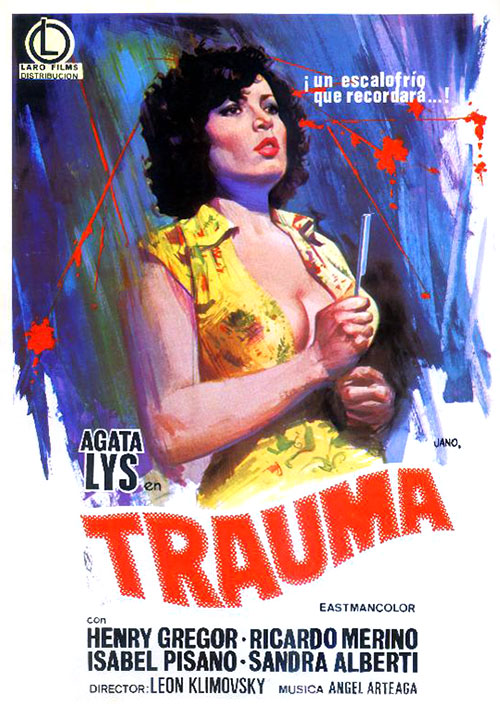
This is all about a gorgeous inn in the country that seems like the perfect place for Daniel (Heinrich Starhemberg, who was also the executive producer, which means that he gets to be the hero and have a love scene with Lys) to do some writing. However, from the moment he meets Veronica (Ágata Lys), nothing will be as it seems. She’s always taking care of her wheelchair-bound husband who is never seen and who lives in one small room.
All of the other guests are busy making love, which seems to be perfect for the film’s other character, a razor-slashing black-gloved killer. As he kills each couple, whoever they are also gets rid of the luggage of each person, as if they weren’t ever there. One of them is Antonio Mayans, which made me happy to see him.
You can get all three movies on blu ray in a great box set from Vinegar Syndrome.
EDITOR’S NOTE: Cinematic Void will be playing this movie on January 8 at 7:00 PM CT at Music Box Theatre in Chicago, IL. For more information, visit Cinematic Void.
As an audience comes together for an afternoon showing of a western* called I Giorno Dell’Ira starring Giuliano Gemma (A Pistol for Ringo, Arizona Colt), one of the moviegoers is shot by the actor. As his gun smokes on screen, an old man lies dying. The cops investigate and learn that nearly everyone has something to hide, from a couple having an affair to two small-time criminals (Tony Kendall is one of them), some student protesters and a sociologist (Flavio Bucci) who has the feeling that this is all like a Ray Bradbury story.
The police make everyone remain in the theater, basically living there, surviving off of the snack bar and meals brought in from the outside world. The entire situation is photographed and then run back, recreated, which leads to a second person being shot. This frustrates the inspector, who makes the entire theater remain and watch it again, with him sitting in the place where two men have already died.
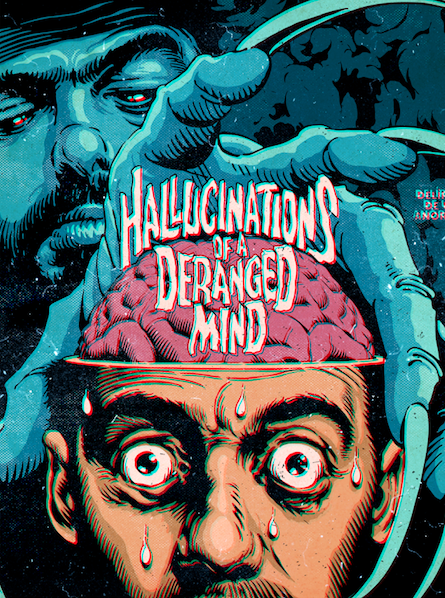
Dr. Hamílton (Jorge Peres) is a psychiatrist who is having nightmares in which Coffin Joe is taking his wife. He seeks help from filmmaker Jose Mojica Marins, who assures him that he created Coffin Joe, who doesn’t really exist.
There are only 35 minutes of new footage in this movie with the rest coming from censored scenes from past films including Awakening of the Beast, This Night I’ll Possess Your Corpse, The Bloody Exorcism of Coffin Joe and The Strange World of Coffin Joe.
By this point, even though it’s mentioned several times in this movie that Coffin Joe was not real, he has become real. He has become more than an idea and is Brazil’s national boogeyman. He exists in our imagination as real as an actual living being. Kind of like, oh you know, Freddy Kreuger, who took a similar path 16 years later.
It’s also a great way to get out all the strangest stuff that couldn’t be seen in the past. Sure, it’s barely connected, but if you’re looking for a Coffin Joe mixtape to put on with some fuzzed out music for a party, well, this is it.
Arrow Video’s limited edition collection of the movies of Coffin Joe stares into your eyes. Hallucinations of a Deranged Mind has commentary from Marins, editor Nilcemar Leyart, Paulo Duarte and Carlos Primati in Portuguese with English subtitles, You can get this set from MVD.
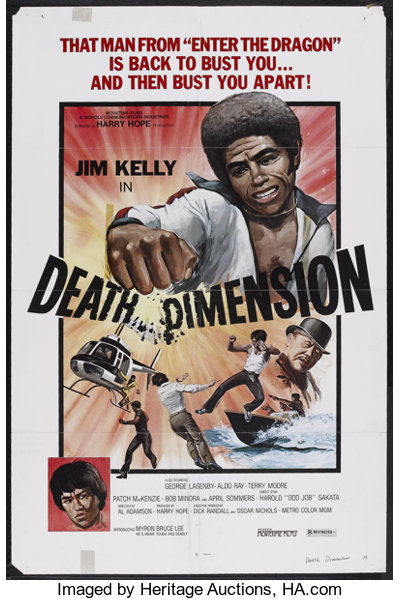
Also known as Death Dimensions, Freeze Bomb, Icy Death, The Kill Factor and Black Eliminator, this Al Adamson movie has the kind of cast that gets me so excited, as well as Gary Graver shooting it all.
Dr. Mason (T.E. Foreman) has created a weather control device. As smart as he is, he’s dumb enough to miss the clues that he’s working for a crime boss known as Santo “The Pig” Massino (Harold Sakata). Instead of saving the world, The Pig plans on blackmailing the world. Dr. Mason deals with this by killing himself. And if you were him, how would you protect the plans? Would you send them to another scientist? A reporter? No, you would save them on a microchip and seal them in the forehead of your assistant Felicia’s (Patch Mackenzie) forehead.
Felicia is on the run and soon, the bad guys have to battle Detective Ash (Jim Kelly) and Captain Gallagher (George Lazenby).
Does Harold Sakata’s voice sound familiar? It should. It’s actually James Hong. Think about that during the scene where he uses a snapping turtle to threaten a woman’s breasts.
There’s also a little bit of Hollywood’s past here, as Terry Moore from Mighty Joe Young and Aldo Ray are in the cast.
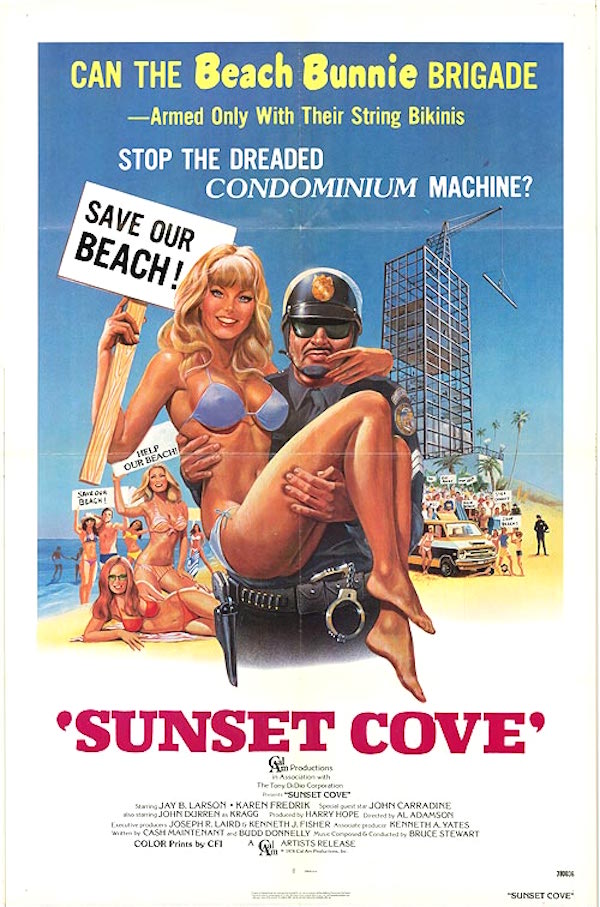
“Can The Beach Bunnie Brigade–Armed Only With Their String Bikinis–Stop The Dreaded Condominium Machine?”
A bunch of teenagers jump in The Complete Van and head off to Sunset Cove to surf, tan and even hang glide. But Kragg (John Durren), a cop who hates teenagers, and Dexter (Jay B. Larson), a real estate rich guy who wants to take over the beach along with Mayor Nix (Burr Smidt), are ready to destroy their fun.
The good news? The kids have retired Judge Harley Winslow (John Carradine) helping them.
In the middle of this somewhat innocuous sex comedy, director Al Adamson figured that this needed more sex and added a scene that’s nearly porn. Otherwise, so little time is spent on the characters — yes, I know it’s a sex comedy, but watch it compared to others and be amazed how little you get to know anyone — taking off their tops and one character eating.



 B&S About Movies
You must be logged in to post a comment.