EDITOR’S NOTE: High Ballin’ was on the CBS Late Movie on May 15, 1981.
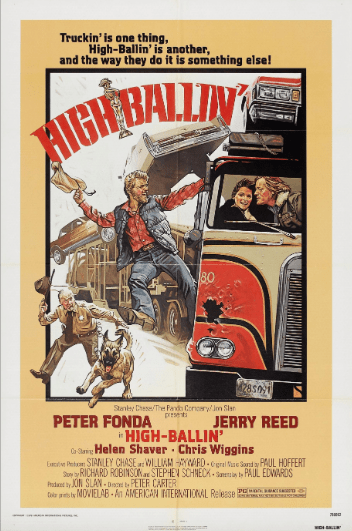
“Iron Duke” Boykin (Jerry Reed) is an independent trucker dealing with “King” Carroll (Chris Wiggins) and his gang, led by Harvey (David Ferry), who are trying to get every big rig driver to be part of his company. He’s joined by Rane (Peter Fonda) and Pickup (Helen Shaver) in an attempt to bring whiskey to a labor camp, thereby making enough money to be free of the monopoly.
But when Boykin is shot and Pickup is captured, Rane has to fight the gang with a posse — this movie is pretty much a Western with trucks instead of horses — and go one-on-one with Harvey.
Set in the U.S. but shot in Toronto, this also was released on video as Death Toll, which is a way more serious title.
Director Peter Carter also made Rituals and The Intruder Within, so he’s good in my eyes. It’s written by Paul F. Edwards, Richard Robinson (Kingdom of the Spiders) and Stephen Schneck (Welcome to Blood City). This has an amazing action scene with Rane launching cars off a truck onto the gang chasing Duke, as well as a tire iron fight outside a truck stop. Best of all, this was called Convoy II in some countries.Plus Clint Howard and Michael Ironside! How can you go wrong with all of these elements, as well as Jerry Reed singing the theme song, the same house at the beginning of Smokey and the Bandit in this opening and the stars of Smokey and Easy Rider teaming up?
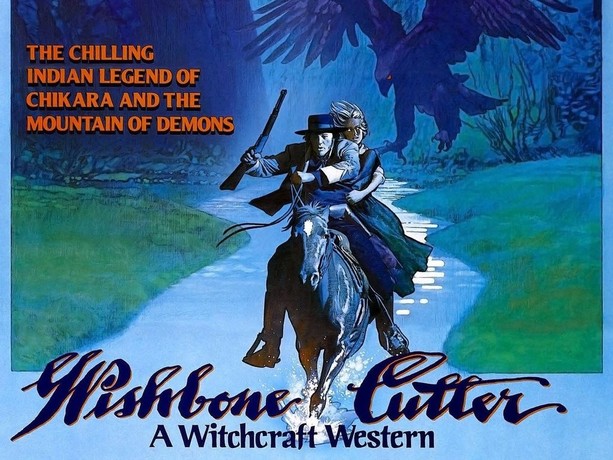
It’s a Western horror, which is rare, and one that places Confederate soldier Wishbone Cutter (Joe Don Baker, who yes, was a 70s lead and near sex symbol) into a treasure hunt after he learns of a cave filled with diamonds from dying soldier Virgil Caine (Slim Pickens).
Wishbone assembles a team that includes Amos Richmond geologist (Ted Neeley, once Jesus Christ), Native American Half Moon O’Brian (John N. Houck Jr.) and eventually Drusilla Wilcox (Sondra Locke), a woman they find after a massacre. The Arkansas mountain is guarded by a demon bird, so of course everything gets strange by the time they get there. Wishbone is already haunted as his wife Rosalie (Linda Dano, who was on more than 1,300 episodes of Another World) has left him for a Yankee soldier.
Wilcox claims that the men that killed her people were silver naked beings and O’Brian claims that they’re being attacked by demons. The movie never gives in and reveals to you what it’s really all about and for that, I like it even more. It’s also got the same crew that Charles B. Pierce used, so it gets the authentic Arkansas rough feel down right. Even the ending makes little to no sense, but hey, I kind of adore that.
The only downer I’ll reveal is that there’s a lot of real animal abuse in this, as several horses plunge off a cliff and I have no idea if any survived. Just know that going in.
On the positive side, somehow, the filmmakers got The Band to let them use “The Night They Drove Old Dixie Down.”
Also known as The Ballad of Virgil Cane, Thunder Mountain, Wishbone Cutter, The Curse of Demon Mountain, Demon Mountain and Shadow Mountain, this is a movie that combines the end of the Western 70s darkness with occult themes and a relentless downer edge. I’d never seen it before and it’s definitely a film I plan on exploring again.
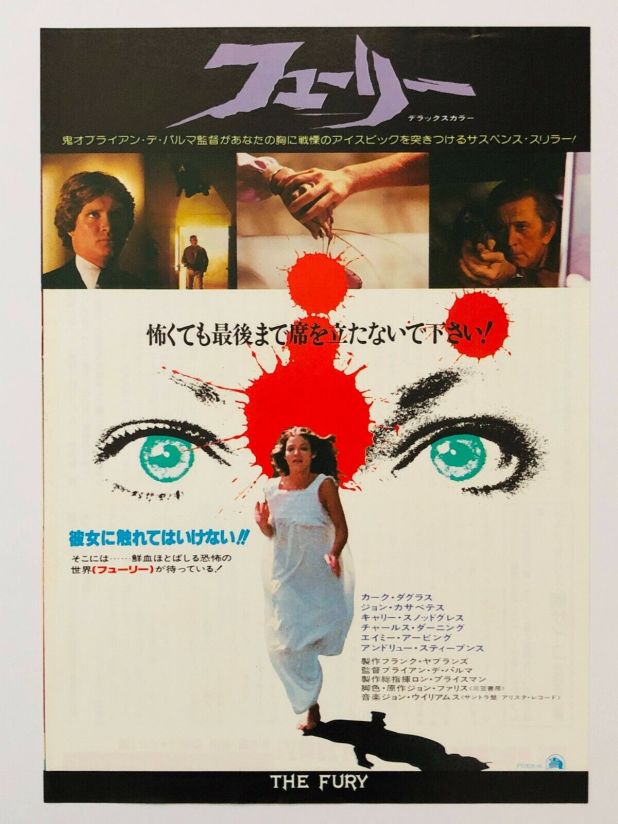
EDITOR’S NOTE: The Fury was on the CBS Late Movie on September 6, 1985.
Roger Ebert said of this movie, “I’m not quite sure it makes a lot of sense, but that’s the sort of criticism you only make after it’s over. During the movie, too much else is happening.”
Ex-CIA agent Peter Sandza (Kirk Douglas) and his psychic son Robin (Andrew Stevens) meet up with Ben Childress (John Cassavetes), one of Peter’s old spy friends. Peter is leaving the life behind, but Ben is prepared. He stages a terrorist attack that nearly kills his supposed friend and takes his son away.
Across the world, student Gillian Bellaver (Amy Irving) learns that she has powers of her own. She can barely control them, so she goes to the Paragon Institute, a front for the same organization that Childress is running, one that kills parents and takes their psychic teens away to make them into weapons for the U.S. government. Thanks to having a girlfriend (Carrie Snodgress) on the inside, Peter starts to track down his son.
Gillian grows in power and soon meets Robin psychically. Childress determines that she knows too much, so he plans to eliminate her, while Peter plans on following her to find his son. Working with Dr. Susan Charles (Fiona Lewis, between this and Strange Behavior not someone I would trust with my teenage child), they have successfully transformed Robin into a killing machine. That said, he can’t be controlled and his abilities have already caused one mass homicide at a theme park.
As Peter and Gillian break into Childress’ mansion, Robin goes full-on mental and thinks that PSU wants to replace him with Gillian. He kills his handlers and even tries to murder his father, who tries to keep him from falling. When he responds by scratching Peter’s face and causing his own death. Seeing his son dead, the old agent decides life isn’t worth living and he kills himself.
As he lies dying, he gives Gillian all of his power, power she soon uses to cause Childress to bleed from the eyes and then to literally blow up. It’s one of the wildest stunts ever and one that took two tries. De Palma told The Talks, “I had 8 or 9 high-speed cameras and he explodes. He explodes. And the first time we did it, it didn’t work. The body parts didn’t go towards the right cameras and this whole set was covered with blood. And it took us almost a week to get back to do take two.”
How was this achieved? In the same interview, the director said, “Nobody had ever done this before. I had these incredible high-speed cameras that the astronauts use and about three of them jammed because they were going so fast. They were all shooting super, super slow-motion – this is in the ’70s – and then it’s all over and you look around and the set is completely in shambles.”
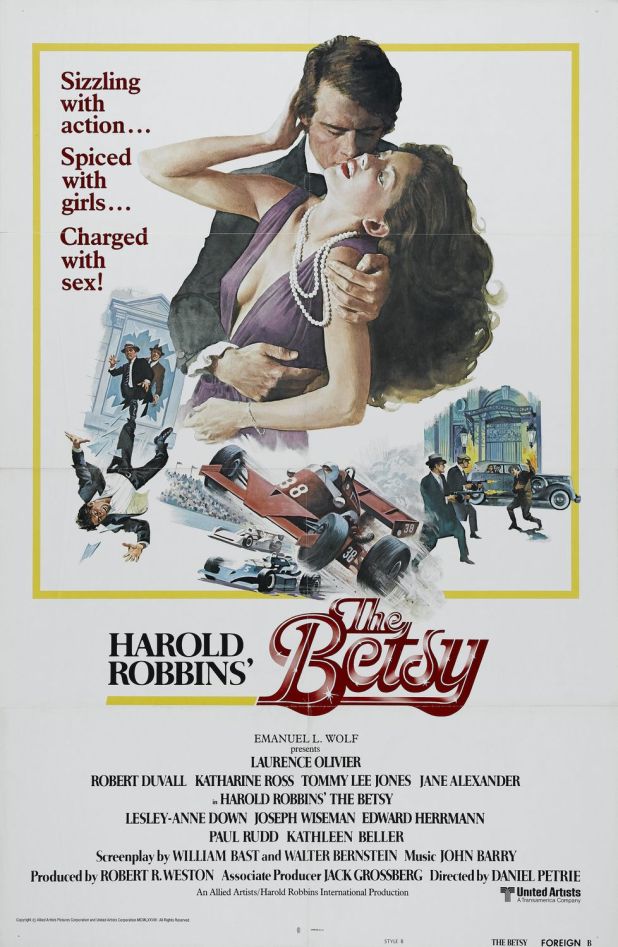
EDITOR’S NOTE: The Betsy was on the CBS Late Movie on September 15, 1982.
Based on the Harold Robbins book, directed by Daniel Petrie (Bronco and Billie, Six Pack, Fort Apache the Bronx) and written by William Bast and Walter Bernstein, this is the story of Loren Hardeman Sr. (Laurence Olivier) and the car that will bring his company back to glory, named for his great-granddaughter (Kathleen Beller). This goes against what his grandson (Robert Duvall) thinks the company’s future is. It’s also about the loves of race driver Angelo Perino (Tommy Lee Jones) and a special fuel that will power The Betsy.
In The Golden Turkey Awards, Harry and Michael Medved said of this movie: “Another Harold Robbins book bites the dust as a wretched, melodramatic film. Lord Laurence Olivier’s attempt at a Texas twang is a hilarious flop, as is his incestuous relationship with his daughter-in-law, Katharine Ross.”
Jokes on you, Medveds, that’s just cucking your son, not incest. It’s also a scene where the homosexual son of the elder Loren shoots himself in the head while the young version of the grandson Loren watches, then goes upstairs to tell his mom, who has grandpa between her thighs.
That’s Harold Robbins, right?
Well, in the world of this movie, it’s an actual choice between Kathleen Beller and Lesley-Anne Down. Come on, Tommy Lee Jones!
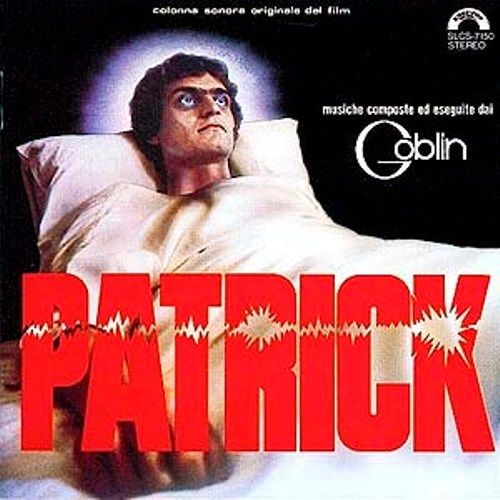
EDITOR’S NOTE: Patrick was on the CBS Late Movie on August 26, 1983 and March 2 and August 9, 1984.
Directed by Richard Franklin (Psycho II, Road Games) and written by Everett De Roche (Race for the Yankee Zephyr, Harlequin), Patrick opened the world to the genre of Ozploitation. While the Australian score was by Brian May, the Italian cut was scored by Goblin. In fact, it did better internationally than in Australia, even if the U.S. version dubbed over all of the accents.
Patrick (Robert Thompson) hasn’t left his hospital bed or closed his eyes in three years. After killing his parents, he’s been in a coma in a private hospital, never keeping the same nurse for long. Now, Kathy Jacquard (Susan Penhaligon) has taken the job, hoping that it will help her finally divorce her husband Ed (Rod Mullinar).
According to Dr. Roget (Robert Helpmann), Patrick is being kept in his care to explore life and death. Never mind that other patients have seen him fly out of his window. He can also kill people from afar, like when he tries to drown Dr. Brian Wright (Bruce Barry) when he tires to pick up Kathy, who he has been communicating with via spitting and spirit typewriting. Strangely, her only ally end up being Matron Cassidy (Julia Blake), the same woman who was tough on her at the beginning of the movie.
Yes, Quentin Tarantino admits that he took the paralyzed in bed spitting scene in Kill Bill Vol. 1 from this movie. He has also said that “Hitchcock was overrated but you know who was better? Richard Franklin.” and stated that Road Games is his favorite Australian movie.
Soon, Patrick is showing her that he can still feel — his erection is how he does it — and that the hospital is trying to kill him with electroshock therapy. By the end of the movie, he’s making her choose between her ex-husband or him as she injects him with potassium chloride and is linked to his mind as he passes on.
Maybe not. After all, he leaps from the bed while dead — a scene that the filmmakers started with and worked backward from, unlike the modern horror movie creators who have no idea how to close their stories — and his eyes reopen after his death.
Two years after this, the Italians made Patrick Still Lives, a truly baffling sequel that took the basic ideas of this movie — the same story, I can admit it — and infused it with near pornographic levels of sex and violence. It’s just as incredible as that sentence makes it sound. There was a remake in 2013 that I need to see but what I wish was filmed was Franklin and De Rouche’s sequel idea, Patrick II: The Man Who Wasn’t There. A religious cult would dig up Patrick and he would be in a coma, at which point he’d start being obsessed about another young lady.
The poster has a great tagline: ”I saw a man upon the stair, I looked again, he wasn’t there. He wasn’t there again today, I wish that man would go away.”
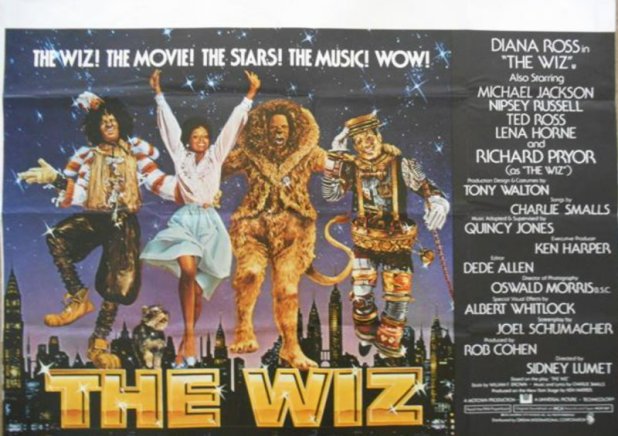
EDITOR’S NOTE: The Wiz was on the CBS Late Movie on October 5, 1984.
As discussed in the article on this site about Return of Oz, nearly every Oz movie has been a failure until Disney’s Oz the Great and Powerful. While we traditionally believe that the 1939 version was a success, it wasn’t a financial success until it was re-released in 1949 and then became beloved when it was on TV.
The Wiz lost $10 million nearly forty years after.
The Wiz: The Super Soul Musical “Wonderful Wizard of Oz” premiered in Baltimore in 1974 and won seven Tony Awards, including Best Musical. Ted Ross and Mabel King would reprise their roles as The Lion and Evillene, but when Motown made this movie, Stephanie Mills was out as Dorothy and Diana Ross was in. First, she was turned down by Barry Gordy and then she got Rob Cohen of Universal Pictures to finance The Wiz if she were to play the lead role. Other roles would include Michael Jackson as the Scarecrow, Nipsey Russell as the Tin Man, Lena Horne as Glinda, Thelma Carpenter as Miss One (instead of Addapearle as in the stage play, but writer Joel Schumacher didn’t use any of the original book by William F. Brown) and Richard Pryor as the Wizard.
Saturday Night Fever director John Badham was to direct, but he couldn’t see Ross as Dorothy, so he left and Sidney Lumet (known for movies like Dog Day Afternoon and Network) was hired. He’d never made a musical and little if any comedy.
Back to that script. Schumacher was influenced super into Werner Erhard and the Erhard Seminars Training movement, as was Diana Ross. While some say that EST is used to “transform one’s ability to experience living so that the situations one had been trying to change or had been putting up with clear up just in the process of life itself,” others charge that it was mind control or an attempt at creating a “totalitarian army.”
Cohen said, “Before I knew it, the movie was becoming an est-ian fable full of est buzzwords about knowing who you are and sharing and all that. I hated the script a lot. But it was hard to argue with Ross because she was recognizing in this script all of this stuff that she had worked out in est seminars.” A lot of what Glinda says at the end of the movie is L. Frank Baum filtered through EST — “Home is a place we all must find, child. It’s not just a place where you eat or sleep. Home is knowing. Knowing your mind, knowing your heart, knowing your courage. If we know ourselves, we’re always home, anywhere.” — as is the song “Believe In Yourself” — “If you believe / Within your heart, you’ll know / That no one can change / The path that you must go. Believe what you feel / And know you’re right, because / The time will come around / When you’ll say it’s yours.”
If there’s anything positive from this film, it’s the fact that both Michael and LaToya Jackson were able to move into a Manhattan apartment, all on their own for the first time in their life. Michael got to go to Studio 54; he impressed Quincy Jones with his work ethic so much that Jones agreed to produce Off the Wall. He would also produced Thriller and Bad. Jones compared Jackson to Sammy Davis Jr.
However, the film was a commercial failure and may have even hurt all black films for some years to come, as Hollywood kept pointing to how this movie bombed. It cost $24 million, made $13.6 in theaters and CBS paid $10 million to air it, but it still was seen as a loss. Michael came out as a star, but this was the end of Diana Ross as a movie star.
I’ll never understand why Dorothy was 24 years old in this instead of a child, but that’s what Ross wanted and that’s what she got. Yet there are things that really work in this for me, like the urban scapes that make up Oz — critics hated that and well, they were wrong — and the four crows are fun villains.
The CBS version cuts a lot of footage so that it fit into a three hour running time. I can’t even imagine how long the commercials were for this when it was on the CBS Late Movie.
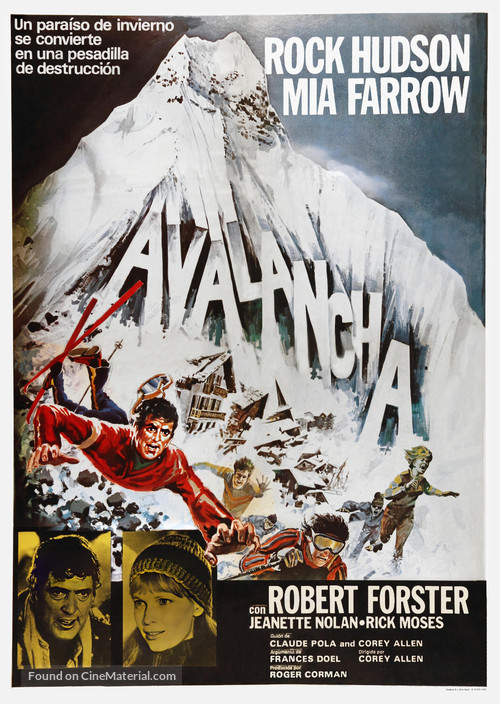
EDITOR’S NOTE: Avalanche was on the CBS Late Movie on June 28 and September 4, 1985.
Corey Alan directed a ton of TV, 1971’s The Erotic Adventures of Pinocchio and this Rock Hudson-starring disasterpiece in which the much beloved actor plays ski resort owner David Shelby, a man who owns a ski lodge so we can all totoally identify with him. He also invites his ex-wife Caroline Brace (Mia Farrow!) to visit in the hopes that he can convince her that he’s a changed man.
His opposite is Nick Thorne (Robert Forster), an environmental photographer who knows that that David has built his resort where he shouldn’t. One look at the title of the movie should tell you what’s coming next. When Caroline battles Nick over being a control obsessed freak all over again, well, she ends up in Nick’s arms just in time for David’s business partner’s plane to crash into the mountain and send the snow into everyone’s lives.
The end of this movie — after so much destruction and loss of life — is really all about Mia Farrow choosing between Rock Hudson and Robert Forster. I mean, what else should this be about?
Originally budgeted at $6.5 million, producer Roger Corman cut that amount –will the shocks ever end? — before shooting began in Colorado. There’s plenty of styrofoam for snow, which is kind of obvious. It was still the most expensive movie that New World ever made.
EDITOR’S NOTE: Kiss Meets the Phantom of the Park was on the CBS Late Movie on December 27, 1985 and July 21, 1986.
Known as Attack of the Phantoms in Europe and Kiss Phantoms in Italy, this movie has been an embarrassment to Kiss the band and their fans, the Kiss Army, for years. As a six-year-old in 1978, I was certainly aware of the band, as many of my friends had the toys and their older brothers and sisters had the records. But they always seemed strange to me — I was always wondering why they weren’t heavier. It wasn’t until I moved past their 1980’s work and started to enjoy the first few albums that I learned just how much fun Kiss could be.
That’s probably why this movie doesn’t upset me at all. In fact, I kind of love it.
In 1977, Kiss had an income of more than ten million dollars. Their manager Bill Aucoin believed that the traditional cycle of album releases and touring had taken Kiss as far as they could go. So what was the next level? Kiss would become superheroes. Seeing that band boss and bassist Gene Simmons was a huge comic fan, this move made perfect sense.
Round one was a Marvel comic, with the band mixing their blood into the ink for the cover. Round two was this, a Hanna-Barbera produced movie that was a rush job, with all four band members given a crash course in how to act that didn’t really take for anyone but Simmons, who would go on to menace Tom Selleck in Runaway and John Stamos in Never Too Young to Die.
Screenwriters Jan Michael Sherman and Don Buday spent time with each Kiss member so that they could properly learn their characters. “Space Ace” Ace Frehely was known to be pretty strange, frequently saying “Ack!” The writers decided that he would be like Harpo Marx and that would be the only word he would say. Ace responded by demanding more lines or he would quit the film.
Both Frehley and “Catman” Peter Criss hated the long downtime that comes with movie making. They were both dealing with substance abuse issues at the time, too. Nearly none of Criss’ dialogue is his voice. It’s Michael Bell other than when he sings “Beth.” In fact, Frehley got in a fight with director Gordon Hessler (Scream, Pretty Peggy) and left, so for one scene you can clearly see his stunt double taking his place. How can you tell? Well, Ace isn’t black but his double is.
Much of Kiss’ acting in this film is them performing in the parking lot of Magic Mountain in front of 8,000 fans. Those fans were drawn by free tickets from local station KTNQ and DJ “The Real” Don Steele, who shows up here, as well as in plenty of Roger Corman alma mater films like Gremlins, Death Race 2000, Rock ‘n Roll High School and Eating Raoul. In 1970, he was so famous that a “Super Summer Spectacular” spot Don Steele contest led to two teenagers trying to track down the DJ accidentally ramming a car into a highway divider, killing a man. The case that came out of it made it the whole way to the Supreme Court of California and Weirum v. RKO General, Inc., 15 Cal.3d 40 is still studied in American law schools in regards to the subject of foreseeability in torts law.
Within Six Flags Magic Mountain, Abner Devereaux (Anthony Zerbe, The Omega Man) is upset that his animatronics are playing second banana to an appearance by Kiss. That may be because his creations have been eating up park revenue. Devereaux is a real piece of work, enslaving Sam Farrell and other employees and a gang of punks (one of them, Dirty Dee, is played by Lisa Jane Persky, who was an early CBGB audience member and girlfriend of Blondie bass player Gary Valentine, who write “(I’m Always Touched by Your) Presence, Dear” for her. She has gone on to appear on Quantum Leap and in multiple projects with Divine. Another punk, Chopper, has a vest with a Satan’s Mothers patch, the exact same logo that would be used again the next year for Walter Hill’s The Warriors).
As Sam’s girlfriend Melissa searches for him as the mad scientist of the park is fired and Kiss plays their concert. After the show, we realize that Kiss are nearly ascetic magicians given to magical pronouncements and superpowers, particularly “Demon” Gene Simmons whose voice rumbles whenever he speaks and “Starchild” Paul Stanley who can read minds.
Devereaux eventually steals the mystical talismans that give Kiss their powers and replaces them with evil robotic duplicates. Of course, Kiss gets their powers back and wins over the crowd and saves the park.
Before the movie aired on TV, a private screening was arranged for Kiss. While their management and hangers-on loved it, the band was incensed and refused to allow anyone to speak of the movie in their presence.
This is quite literally a Scooby-Doo movie, only topped by the 2015 cartoon Scooby-Doo! and Kiss: Rock and Roll Mystery, where Kiss wrote a song all about Fred, “Don’t Touch My Ascot.”
Ironically, soon after this film, Gene Simmons and Paul Stanley would replace the increasingly unreliable and out of control Ace and Peter with an endless series of duplicates who had no ownership or voice in the band’s future. So you can kind of watch this film as a precursor to the very behavior that band would embody in the future. Perhaps the robotic Gene is now the real Gene? The mind boggles.
If I ever met Simmons — my brother has, he gave a keynote speech at a Major League Baseball annual retreat, something I find inordinately hilarious — I hope he looks at me and roars like a lion before intoning, “No gratitude need be voiced. Your mind speaks to us!”
EDITOR’S NOTE: Night Cries was on the CBS Late Movie on January 8 and July 9, 1982.
Jeannie (Susan Saint James) and Mitch Haskins (Michael Parks) have just had a baby. Or at least that’s what they thought, as when Jeannie wakes up, in a room with a woman who has just lost a child, she’s shocked to learn that her baby has died.
She’s sure that her daughter was taken from her and keeps having horrific dreams of a house and being attacked by Nurse Green (Delores Dorn). She decides to work with a sleep expert, Dr. Whelan (William Conrad), to discover what exactly has happened.
Those dreams are so amazing. Jeannie dreams a baby carriage has gone into water and when she saves it, it’s a grandfather clock. Directed by Richard Lang (Don’t Go to Sleep) and written by Brian Taggart (The Spell), this TV movie uses those dreams to make use of its low budget and become really odd in the best way.
I also am amazed that the house in her dreams gets explored and its owner, Mrs. Delesande (Cathleen Nebitt), just lets her in. The 1970s were way too forgiving of people who come to your home and say, “I’ve been dreaming of my dead child in your house” and they just let the dreamer explore the home. This would never happen today, right?
Then again, when you have real skeletons in your closet, let people look around.
Also: James and Conrad’s scene where they argue about her dream is really intense. The bedside manner of 70s made for TV doctors is really not good.
April Ghouls Drive-In Monster-Rama is back at The Riverside Drive-In Theatre in Vandergrift, PA on April 26 and 27, 2024. Admission is still only $15 per person each night (children 12 and under free with adult) and overnight camping is available (breakfast included) for an additional $15 per person. You can buy tickets at the show but get there early and learn more here.
After the Star Wars became an international sensation, Luigi Cozzi (the batshit insane Hercules movies with Lou Ferrigno, Contaminationand more) was able to round up a decent budget to make a film called Empire of the Stars, which eventually became this film. Cozzi battled against food poisoning of the cast and crew and even a Communist worker revolt which led to the movie being held for ransom to deliver a film that doesn’t look anything like Star Wars. Nope, Starcrash is the very definition of what I love in a film, a movie that takes inspiration from one source and then piles on the crazy and weird to bring you something you’ve never quite seen before. Maybe that’s because Cozzi never saw Star Wars and only read the novelization of the film!
In a galaxy far, far…yeah. You know what I mean. Anyways, Count Zarth Ann (Joe Spinell — yes, Frank Zito from Maniac is playing Darth Vader and if that instantly doesn’t tell you why this is such a great movie, not much else will) is taking over the galaxy with his giant fist shaped spaceship. Already, I love this movie more than anything that will come out this year.
Stella Star (Caroline Munro, Faceless,Slaughter High, The Spy Who Loved Me, Dr. Phibes Rises Again, Dracula A.D. 1972, Captain Kronos Vampire Hunter…can you tell that someone likes Ms. Munro?) and Akton (Marjoe fucking Gortner, a former child preacher that exposed the faith healing racket in 1972’s Oscar-winning documentary Marjoe, as well as recording the album “Bad, but not Evil” and appearing in The Food of the Gods and Mausoleum…can you tell someone likes Mr. Gortner?) discover a body in hibernation as they go through some space wreckage, but are caught by the Imperial Space Police’s Sheriff Elle (a robot with a voice straight out of a spaghetti western) and the green-skinned Chief Thor (Robert Tessier, who formed Stunts Unlimited with director Hal Needham) and sentenced to life on separate prison planets.
Stella breaks out of her sentence almost immediately and is recaptured by Elle and Thor, who also have Akton. The Emperor of the Galaxy (Christopher Plummer, who shot all his scenes on a sound stage in a few days, saying “Give me Rome any day. I’ll do porno in Rome, as long as I can get to Rome.”) thanks them for recovering the survivor. He informs them of his battle with Zarth Arn and asks for their help in finding his weapon and two other escape pods — one of which may contain his son.
A quick note — only Marjoe Gortner, David Hasselhoff, Christopher Plummer and Joe Spinell dubbed their voices (Spinell also worked as a dialogue coach on the set) due to budgetary concerns. That’s why Elle is played by one actor (Judd Hamilton) and voiced over by another (Hamilton Camp). And it’s also why the English-speaking Caroline Munro has the voice of Candy Clark (Gortner’s wife at the time)!
The film turns into a series of adventures — much like a movie serial — where our heroine goes from planet to planet, battling all manner of creatures and races. Like a world full of Amazons that have a gigantic female robot — in glorious stop-motion — that fires a giant sword as it menaces Elle and Stella. Or Thor revealing himself to be Zarth Arn’s Prince of Darkness and stranding everyone on a snow planet where Elle sacrifices himself by giving his body temperature to save Stella (Elle’s line “Now, maybe it’s time to use your ancient system of prayer and hope that it works for robots as well” is one of the most poignant I’ve heard in a movie. Forget for a second that this is a low budget space opera and just indulge yourself in the pathos!)!
Actually, Thor never gets the chance, as Akton straight up murders him and then brings Elle and Stella back from the dead.
Finally, our heroes discover the location of the third pod, but are attacked by Zarth Arn’s red field. As they land and inspect the pod, cavemen attack and tear Elle to pieces. However, a man in a gold mask fires laser bolts from his eyes and saves them. That man is the Emperor’s son, Prince Simon (holy shit, it’s David Hasselhoff!) and Akton comes back and uses a laser sword (not a lightsabre) to take out the rest of the cavemen. But there’s bad news — this is the Count’s planet!
Guards capture everyone and the Count reveals his plan to lure the Emperor here and blow up the planet with him on it. He leaves and orders several robots to keep watch. Akton fights and destroys them, but is mortally wounded. Before he dies, he explains that he has accepted his fate, a really strange speech in a movie that is filled with such science fiction action. It’s like a Zen koan inside a box of sugary breakfast cereal.
The Emperor arrives and uses a green ray to stop time, saving everyone, as he says, “You know, my son, I wouldn’t be Emperor of the Galaxy if I didn’t have some powers at my disposal. Imperial Battleship, halt the flow of time!” Yes, Starcrash has some of the most ridiculous dialogue ever and I could not be happier about it.
A huge space battle breaks out, with rockets filled with suicide troopers and explosions and planets being threatened and the Emperor deciding to ram his ship, the Floating City, into the Count’s ship to kill them both. However, Elle has been repaired (“It’s so nice to be turned on again.”), which means he and Stella volunteer to do the suicide mission…which they survive.
Simon picks up our heroes and the Emperor gives this speech, another reminder of Starcrash’s power of language: “Well, it’s done. It’s happened. The stars are clear. The planets shine. We’ve won. Oh. Some dark force, no doubt, will show its face once more. The wheel will always turn; but for now, it’s calm. And for a little time, at least, we can rest.”
Sadly, Cozzi planned a sequel to the film titled Star Riders, which would have starred Klaus Kinski, Nancy Kwan and Jack Rabin. And it’s $12 million dollar budget was to come from Cannon Films! I weep for what has not been! And Escape from Galaxy 3 is also known as Starcrash 2, using tons of footage from the original and it has a heroine named Princess Belle Star.
Starcrash holds fond memories for me, because I saw it on a double bill with tomorrow’s film, Battle Beyond the Stars, at the Spotlite 88 Drive-In Theater. I vividly remember my dad laughing through most of the movie, but really liking the part where the rockets were fired into the Count’s ship and men jumped out of them. For the next several months, I thought more about these two films than Star Wars — we still had another year to go before The Empire Strikes Back as this was in the days before constant Star Wars-related media.
BONUS: Here’s the podcast episode I did for this movie:
You must be logged in to post a comment.