CANNON MONTH 2: Battle Force (1978)

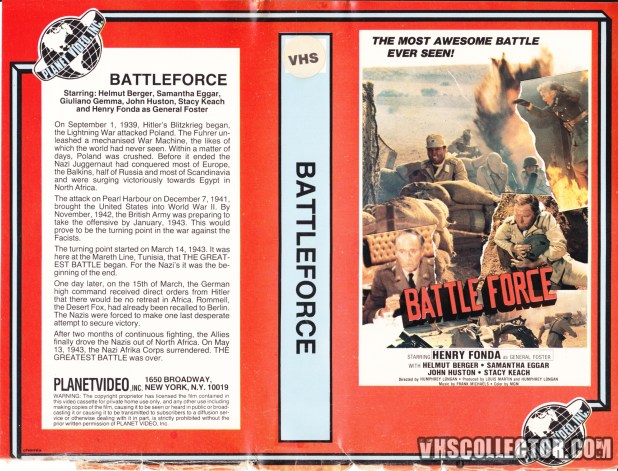
EDITOR’S NOTE: 21st Century — pre-Menahem Golan — released this film originally known as The Biggest Battle on the Planet Video VHS label.

Just look at this cast: Giuliano Gemma, Edwige Fenech, Ida Galli, Helmut Berger, Michele Soavi, Stacy Keach, Ray Lovelock, Samantha Eggar, Henry Fonda, Evelyn Stewart, John Huston and Orson Welles as the narrator.

Yes, you read that right.

Directed and co-written — with Cesare Frugoni, who also was the writer for Cut and RunThe Spider LabyrinthSlave of the Cannibal GodWarriors of the Year 2072The Island of the Fishmen and many more — by Umberto Lenzi, this starts at the 1936 Berlin Olympics, as German officer Manfred Roland (Keach) has dinner with a group of friends including German actress Annelise Hackermann (Eggar), Canadian reporter Sean O’Hara (Huston) and American Brigadier General Harold Foster (Fonda). The two military men give one another matching medals that say “In God we trust” and promise that in four years, they will have another meal just like this.

Six years later, that dinner hasn’t happened and the world is quite different. Roland is married to Hackerman, who has gone into hiding due to her religion but soon has to give sexual favors to an SS officer just to live while her husband executes her people. Foster’s sons John and Ted (Lovelock and Soavi, I mean, what a great bunch of kids to have!) have joined him in the war effort.

Another soldier, Lt. Kurt Zimmer (Berger) may be dating a French sex worker (Fenech), but he’s still killing her people until John joins the resistance. Everyone ends up in Tunisia, where John meets British commando Captain Martin Scott (Gemma) and the fighting increases. While this is all happening, Annelise commits suicide.

In the big battle, Scott kills Zimmer and rips the medallion from the dead body of Zimmer. He gives it to John who notices that it looks just like his father’s but has no idea why.

Lenzi spent a ton of money on this movie and it was a ton of tanks in the big battle. Meanwhile, Huston and Fonda were shooting Tentacles at the same time as this movie. Somehow, this movie mixes newsreel footage and episodic war stories and does it all in under two hours with the kind of cast that should be in a miniseries. It’s not good, but it’s something.

You can watch this — complete with really rough video edit of the title — on Tubi.

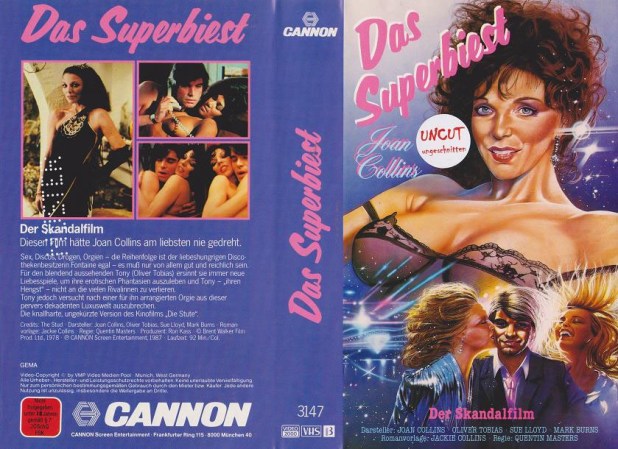
CANNON MONTH 2: The Stud (1978)

EDITOR’S NOTE: Cannon didn’t produce this movie, but released it on video in Germany on the Cannon Screen Entertainment label.

Directed by Quentin Masters and written by Dave Humphries and Christopher Stagg from star Joan Collins’ sister Jackie’s book, The Stud was seen as a British take on Saturday Night Fever. It has a great soundtrack that made it to #2 on the British charts and the Bee Gee’s soundtrack for that movie kept them away from #1.

It’s got some great songs in it, like the theme by the Biddu Orchestra, “Love Is the Drug” by Roxy Music, “I’m Not in Love” by 10cc, Sweet’s “Love Is Like Oxygen,” Heatwave’s “Boogie Nights,” Hot Chocolate performing “Every 1’s a Winner,” the K.C. and the Sunshine Band favorite “That’s the Way (I Like It)” and “Blinded by the Light” by Manfred Mann’s Earth Band, which has the lyric “revved up like a deuce” and not “wrapped up like a douche” as I usually sing it.

Anyways, The Stud.

Fontaine Khaled (Collins) is a disco queen married to an Arabic businessman (Walter Gotell). All she cares about is her nightclub Hobo and her wild life. When she hires Tony (Oliver Tobias) to run the place, she really means that she hires him to keep her satisfied. But he’s more interested in Alexandra (Emma Jacobs), her stepdaughter, who uses him to finally get her stepmother out of her life by showing her father a tape of Tony acting out an Aerosmith song with Fontaine. And no, I don’t mean “Chip Away at the Stone” or “Mama Kin,” but I could either mean “Love In an Elevator,” “Big Ten Inch Record,” “Get a Grip,” “Don’t Stop,” “Falling in Love (Is Hard on the Knees),” “Get It Up,” “Joanie’s Butterfly,” “Come Together,” “Lick and a Promise,” “Love Me Two Times” or “Bolivian Ragamuffin.”

There’s a scene where a nude Joan swings on a trapeze and a huge orgy scene in a pool in this, which caused the actress to say, “It was those nude shots in the pool that I was most unhappy with. But I was more unhappy because I had gotten so drunk to do them that I did things I normally wouldn’t do.” Poor Joan!

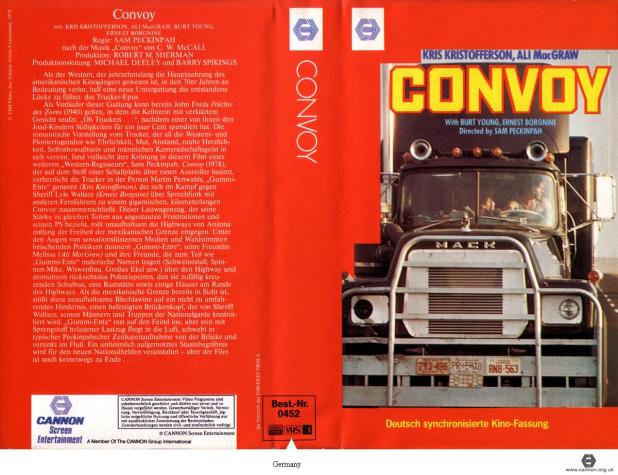
CANNON MONTH 2: Convoy (1978)

EDITOR’S NOTE: This article was first on the site on September 15, 2019. Convoy was obviously not produced by Cannon, but they did release it in Germany on the Cannon Screen Entertainment label.

Way back in 1974, William Dale Fries Jr. was working as a creative director for Bozell & Jacobs, an Omaha, Nebraska-based ad agency. He created a Clio Award-winning (the Clios are the Oscars of the ad industry, but perhaps AVN awards would be more appropriate) campaign for Old Home Bread that featured a truck driver named C.W. McCall, which led to a series of songs called “Old Home Filler-Up an’ Keep on a-Truckin’ Café”, “Wolf Creek Pass” and “Black Bear Road.”

Fries wrote the lyrics and sang those songs, while Chip Davis — who would go to dominate your parents’ holidays with Mannheim Steamroller — wrote the music.

Their song “Convoy,” though became a monster. A true crossover, it became the number-one song on both the country and pop charts in the US, number one in Canada and number two in the UK. In fact, it’s such a big song that it’s listed 98th among Rolling Stone’s 100 Greatest Country Songs of All Time.

Please note: McCall is no one hit wonder. The aforementioned “Wolf Creek Pass” hit #40 in 1975. and three other songs — “Old Home Filler-Up an’ Keep on a-Truckin’ Cafe”, “‘Round the World with the Rubber Duck” (the pirate-themed sequel to “Convoy” where the convoy leaves the US and travels around the world, touring the UK, France, West and East Germany, the USSR, Japan and even Australia, where the lyrics “Ah, ten-four, Pig Pen, what’s your twenty? Australia? Mercy sakes, ain’t nothin’ down there but Tasmanian devils and them cue-walla bears” are sung) and “There Won’t Be No Country Music (There Won’t Be No Rock ‘n’ Roll)” — reached the Billboard Hot 100 when things like that really mattered. And to top that off, a dozen McCall songs reached the Billboard’s Hot Country Singles chart.

Let me explain one more time how big of a song this was: Sam Peckinpah — yes, the guy who directed The Wild Bunch and Bring Me the Head of Alfredo Garcia and played a drunk in utterly bizarre Ovidio G. Assonitis film The Visitor — made a movie about it. Even stranger, it was the most successful movie of his entire career.

Somwhere in the Arizona desert, truck driver Martin “Rubber Duck” Penwald (Kris Kristofferson, pretty much the most attractive man to ever drive an 18 wheeler) is passed by Melissa (Ali McGraw, a woman able to break the hearts of both Robert Evans and Steve McQueen, but once you see her in this film you’ll say, well, yes, I understand how they could throw caution to the wind and ruin their lives for Ali McGraw; PS — I learned pretty much 99% of my writing style from The Kid Stays In The Picture), a photographer who gets him in trouble with his arch enemy Sheriff “Dirty Lyle” Wallace (Ernest Borgnine, The Devil’s Rain!). It turns out that the Rubber Duck has been pulling his rig into the driveway of Lyle’s wife Violet (Cassie Yates, who we all know and love from Rolling Thunder) if you know what I’m driving at.

Along for the ride are fellow truckers Pig Pen/Love Machine (Burt Young, who I will always love thanks to Amityville II: The Possession) and Spider Mike (Franklyn Ajaye, The ‘Burbs). After a big brawl, Melissa ends up riding with Rubber Duck as Lyle gives chase.

A giant convoy — yes, there has to be one — saves our hero, brought together through the magic of the Citizen’s Band radio. Sure, the National Guard gets involved after the trucks petty much ruin a Texas jail, but everything works out just fine.

During this period of Peckinpah’s life, he was struggling with addictions to alcohol and drugs. Much of the film is actually directed by actor and friend James Coburn, who was originally brought in to serve as second unit director. The movie was made at twice the budget, but still made tons of money at the box office.

However, rumors of increasingly destructive alcohol and cocaine abuse would ruin the director, leading to him making only one movie, The Osterman Weekend, before his death. At one point, a cocktail of blow, quaaludes and vitamin shots led Peckinpah believing that both Steve McQueen and the Executive Car Leasing Co. were conspiring to murder him.

Speaking of cocaine, Ali MacGraw, who was always uncomfortable in front of the camera, used powder and tequila to perform until she went too far one day on set, which led to her quitting for good.

The soundtrack to this movie is exactly what was playing on my hometown radio station, WFEM in New Castle, in 1978. “Lucille” by Kenny Rogers. “Don’t It Make My Brown Eyes Blue” by Crystal Gayle. “Okie From Muskogee” by Merle Haggard. All it’s missing is the Steckman Memorial death report at 7 AM, with the theme music of BJ Thomas singing “Morning Has Broken” followed by Paul Harvey and it’s exactly the music of my young life. I also realize that that was a joke that literally no one other than me would get, but when you own your own web site, you can make obscure jokes about the small power country music FM stations of your youth, too.

Somewhere out there, there’s a print of Peckinpah’s two and a half hour plus director’s cut before the studio took it from him. I would watch that right now.

You know who else must have liked this movie? Tarantino. Stuntman Mike’s hood ornament in Death Proof is the Rubber Duck’s.

Finally, one more moment from my youth.

Saturday afternoons belonged to WUAB in Cleveland’s Superhost (the nights belonged to Saturday Night Live and Chilly Billy Cardille’s Chiller Theater). Superhost was really Marty Sullivan, a floor manager and occasional news anchor at the station who showed monster movies and the Three Stooges every weekend from 1969 to 1989 in a baggy Superman suit with a red nose. He made his own version of “Convoy” that was so popular that it aired every single week, because none of us had VCRs, much less the internet. It might seem silly to you today, dear reader, but having horror movie hosts that would do things this ridiculous created memories that will never go away and bring happy tears to my eyes even as I type this.

You can watch this on Tubi.
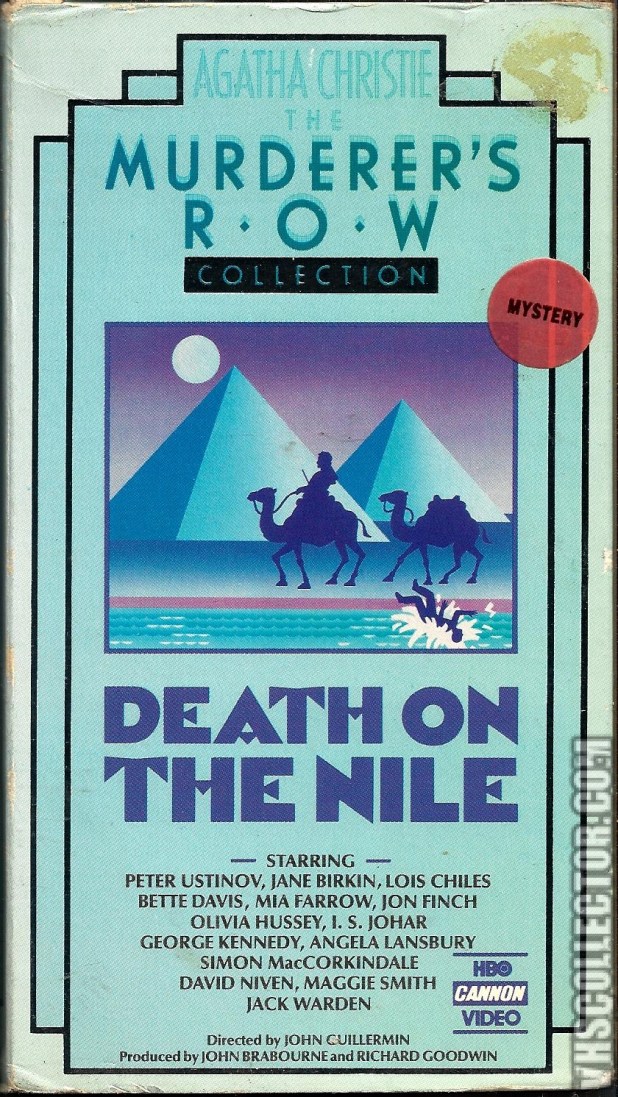
CANNON MONTH 2: Death On the Nile (1978)

EDITOR’S NOTE: Death On the Nile was not produced by Cannon but was sold on videotape by Cannon / Media Home Video.

EMI Films had scored a huge success in 1974 with a film version of Murder on the Orient Express and turned to director John Guillermin (King Kong) and screenwriter Anthony Schaffer (The Wicker ManAbsolution) for the sequel. Albert Finney would not return as Hercule Poirot and this would the first time Peter Ustinov would play the role (he would come back to the Belgian detective five more times).

The movie was sot over seven weeks on location in Egypt and four weeks filming was on the historic ship SS Memnon. It was so hot that the makeup call was at 4 AM and filming started at 6 AM; Bette Davis said, “In the older days, they’d have built the Nile for you.” Davis also brought her own makeup, lights and mirrors to the set.

This was anything but a cushy job for the actors, who didn’t have reserved hotel rooms and had to go to a different place to stay every single night.

However, the crew came together, as Guillermin told the Los Angeles Times: “The more experienced people created a very generous atmosphere. They were not impatient at all. I have never worked with Bette Davis before and was told she was professional but not communicative. Well, she was an absolute bastion of support and enthusiasm. During the breaks, the cast would often sit to one side engaged in terrific conversation. There was Ustinov’s great wit and Niven’s dry humour. Jack Warden is a very funny man and Mia Farrow is a very funny woman. This was a bunch of people who could relax.”

Heiress Linnet Ridgeway (Lois Chiles) has hired her friend Jacqueline de Bellefort’s (Mia Farrow) fiancé Simon Doyle (Simon MacCorkindale) to be her estate manager; you can guess what happens: they soon fall for one another and get married. On their honeymoon to Egypt aboard the S.S. Karnak, they’re stalked by Jacqueline.

The couple is nearly killed at the Temple of Karnak; then Simon is shot in the leg by Jacqueline and Linnet is found shot in the head. On the wall next to her, there’s a letter J scrawled in blood, yet Jacqueline was sedated by Miss Bowers (Maggie Smith), who stayed with her all night, giving her a solid alibi.

Poirot and his friend Colonel Race (David Niven) have plenty of other suspects: Linnet’s maid Louise Bourget (Jane Birkin) has been angry with her for some time; Andrew Pennington (George Kennedy), one of Linnet’s employees was taking money from her; Mrs. van Schuyler (Bette Davis) wanted Linnet’s necklace and her nurse Miss Bowers blamed Linnet’s father for destroying her family; Rosalie Otterbourne (Olivia Hussey) wanted to protect her mother Salome (Angela Lansbury) a libel suit by Linnet; Dr. Ludwig Bessner (Jack Warden) was about to be exposed by Linnet while Communist Jim Ferguson (Jon Finch) hated Linnet’s wealth.

I have a major thing for Agatha Christie movies — they’re like clean giallo — and I really enjoyed this movie where others might find it boring. That said, even if you just enjoy the big cast, then you’ll find something to like here.

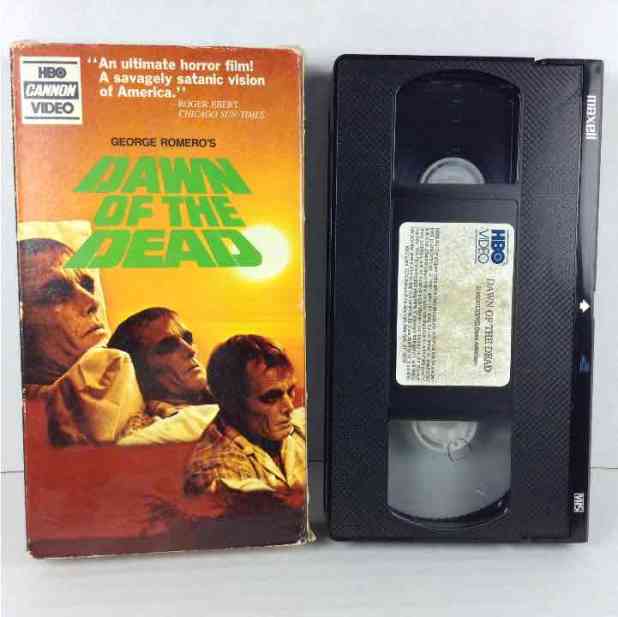
CANNON MONTH 2: Dawn of the Dead (1978)

EDITOR’S NOTE: This was on the site for the first time on October 3, 2020. Dawn of the Dead was not produced by Cannon but was released on video by HBO/Cannon Video.

As we entered the dumbest and most boring apocalypse ever this year, I discovered that every plan, every zombie escape strategy I had, none of it mattered. Instead, I would sit in my living room and watch moronic leaders fight over whether or not we would wear a mask, people willing to die to eat at TGI Friday’s and actual liberty get booed by people who shouldn’t even be allowed to sit in the stands at a football game.

If George Romero was around, he wouldn’t be surprised, other than the fact that our end is so bloodless, so pointless, so vanilla.

I watched Dawn of the Dead so many times that I could recite it at will in high school. Obviously, my goal was not to get laid. It was to study this movie over and over.

While the rest of the world had to wait until now for the end times, Pittsburgh knew it was real long before, when our church of commerce was taken over in the middle of the night by a bunch of maniacs and filmed evidence would confirm every one of our greatest fears. Like Pogo told us we met the enemy and it was us. It still is.

Where Night of the Living Dead took place inside a cramped farmhouse, Dawn would take place in Monroeville Mall, a place that now has a bust of Romero and a photo of Dario Argento that refers to him as a “cast member.” The humor of this caption makes me overjoyed.

Romero knew one of the mall’s developers, who showed him the secret areas behind the mall, and told the director that people could survive a disaster inside the mall. He now had an idea for the movie, but he couldn’t find anyone in America to help make it. That’s how Dario Argento came in and made his way to Pittsburgh.

Shooting from 11 PM to 7 AM, when the holiday music would come on and couldn’t be stopped, the filmmakers — joined by a creative cast and crew, including special FX maniac Tom Savini*, made a movie that influenced the whole world and every horror film that would follow in its wake.

Where the zombie plague was confined to Evans City before, now the end of the world has expanded and much like how no one can agree on how to fix a simple plague these days, no one can agree on how to properly battle the newly dead getting up and killing those that they once loved.

Stephen “Flyboy” Andrews (David Emge, Hellmaster) and Francine Parker (Gaylen Ross, Creepshow) are planning on stealing the traffic helicopter from the TV station they work at and escaping Philadelphia. They’re joined by SWAT officers Roger DiMarco (Scott Reiniger,  Knightriders) and Peter Washington (Ken Foree, who is in so many horror movies, but let’s go with Death Spa) and land in Monroeville, hiding inside the mall and clearing it of the undead.

All the consumerism is too much. The living dead want to get into the mall, remembering their past lives, which were simply consuming. Now that money doesn’t matter, nothing that was worthwhile in the mall does either. The foursome decides to leave, but Roger has grown too reckless and is bitten. And one night, a gang of motorcyclists break in and allow the zombies to crash through the barricades. Stephen, angry at his loss of home, flips out and kills several bikers before he is bit.

As he turns and follows his former friends into their hiding place, the urge to give up is too much. Originally, Peter would shoot himself and Francine would walk headfirst into the helicopter blades. But in the small window of happiness here, the pregnant heroine lives as the black cop decides to stay alive and save her. We see them fly away to an uncertain future.

While the American version of this film is 127 minutes and features a mix of library music and the Goblin soundtrack, Dario Argento’s Italian cut, known as Zombi, features more of Goblin and cuts out any of the film’s comic book humor, concentrating on providing more action. It would lead to a revolution in Italian horror, of course.

I’ve debated featuring this movie on our site for some time. It means so much to me, but I didn’t know what else I could say about it that hadn’t been said. Yet today, as I sit here and wonder just how bad the world is going to get by the end of this year, I see that the zombie apocalypse that I spent my life preparing for — influenced by this movie — is almost preferable to the Fourth Reich or Civil War that we seem to be heading toward. I can only hope that a few years from now, I’ll read this and laugh at all the hyperbole. Or maybe I’ll be fortifying the Exchange on Miracle Mile, surrounding my wife and myself with guns, DVDs and all the supplies we need to survive. Because after all, when there’s no more room in hell, the dead will walk the Earth.

*Nearly every stunt in this movie was done by Savini and Taso N. Stavrakis, including a dive over a rail that led to the effects master nearly breaking his legs when he missed his mark.

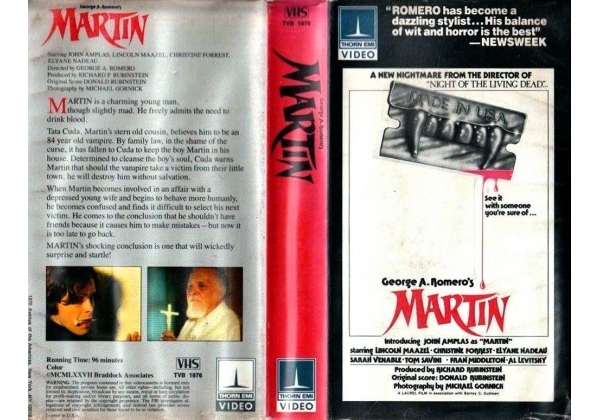
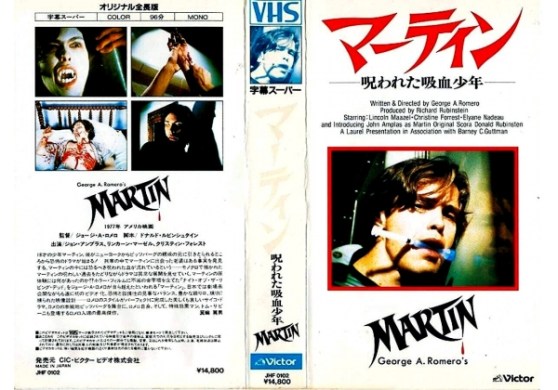
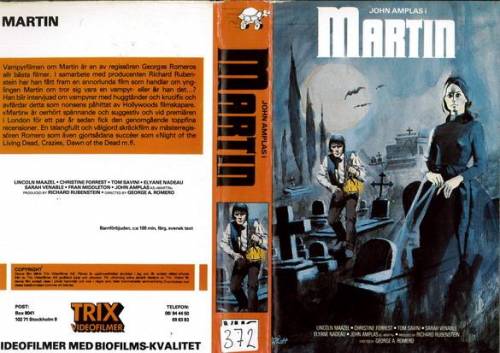
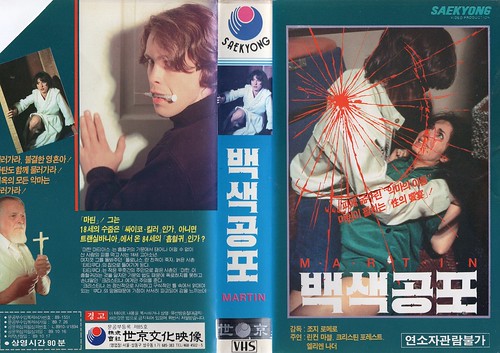
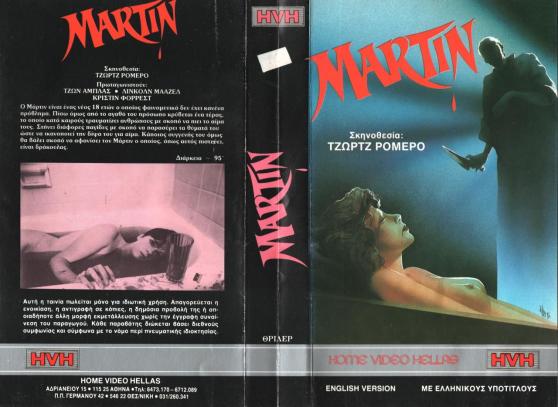
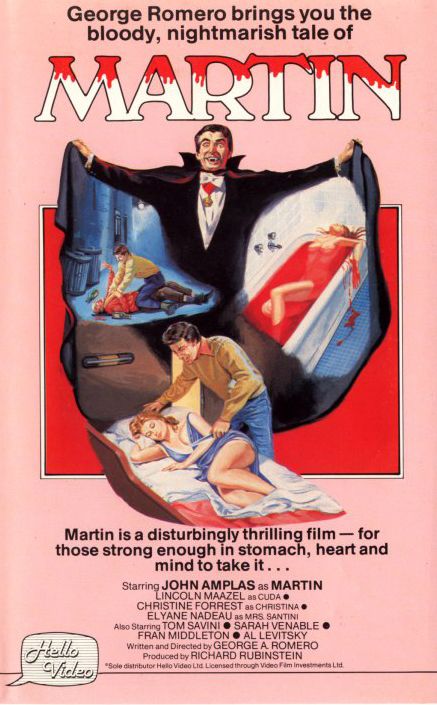
CANNON WEEK 2: Martin (1978)

EDITOR’S NOTE: This was on the site for the first time on March 17, 2020. Martin was not produced by Cannon but was released on video by HBO/Cannon Video.

In the five years between The Crazies and Martin, much had changed, both in the life of George Romero and his adopted hometown of Pittsburgh.

After the post-World War II economic boom, an outdated manufacturing base — that had already been overextended for the past two decades — was further taxed by hostile relationships between management and labor. And Pittsburgh had even worse issues than the rest of the country, as the raw coke and iron ore materials to create steel were depleted, raising costs. The giant Pittsburgh mills also faced competition from non-union mills with lower labor costs.

As a result, layoffs began happening throughout the region. For example, Youngstown, OH — about an hour and a little more from the Steel City — never recovered from the Black Monday of September 19, 1977 and the closing of Youngstown Sheet and Tube.

According to a 2012 story in the Pittsburgh Post-Gazette, by January 1983, the regional economy officially bottomed out. Unemployment in Allegheny County (where most of the Pittsburgh metro calls home) hit between 14 and 18% with 212,000 jobless individuals. It’s never been that high before or since. And in areas like Beaver County (close to where your author grew up and also where my grandfather worked in the furnaces for forty years), home to industry giants Jones & Laughlin Steel Corp. and Babcock & Wilcox Co., the unemployment hit a staggering 27%. That’s higher than the Great Depression. And for many of the 300,000 manufacturing workers impacted by these changes — before this, you went to high school, you worked in the mill, you had kids, you died — Pittsburgh was dying.

George Romero found himself in similar straits. He was nearly a million dollars in debt thanks to the failure of every film after Night of the Living Dead. He’d taken to working on sports documentaries like his Pittsburgh-centric series The Winners and even directed The Juice is Loose, the story of football hero OJ Simpson — albeit years before his reversal in fortune — and Magic at the Roxy, a TV magic special. He confided in producer Richard P. Rubinstein that he was nearly out of cash. While the producer counseled Romero and explained that bankruptcy was an option, Romero didn’t want to screw over the people who helped him make his films. This action gave Rubinstein plenty of respect for the director and led to their partnership. While this, their first film together, didn’t pay back those investors, Dawn of the Dead would.

Deciding on Braddock — one of the hardest hit mill towns — and utilizing family and friends, Romero started to film what he would later call his favorite film.

In the film’s first script, Martin was an older man who is definitely a vampire, struggling to live (unlive?) in the modern world. But after seeing John Amplas in a Pittsburgh Playhouse production of Philemon, Romero rewrote the film to make Martin younger and more innocent.

Martin’s family has all died in Indianapolis, so he’s on his way to Pittsburgh — but not before shooting a woman up full of drugs and drinking her blood. He’s met at the train station by his uncle, Tateh Cuda, and taken to his new home. Even today, Braddock is one of the most run-down sections of Pittsburgh — the decay evident in the movie got a lot worse before John Fetterman was elected and numerous civic campaigns have brought new business in. That said — it’s still a great setting for a horror film.

Cuda and his niece Christine share a home and have allowed Martin to stay. The old man gives Martin several rules, including one that if ever kills anyone in Braddock, he’ll stake him through the heart. He keeps crucifixes and garlic all over the house, continually telling Martin that first, he’ll save his soul, and then, kill him. Martin yells at Cuda, showing him that he can touch the crucifixes and eat the garlic and bitterly exclaims, “There’s no real magic…ever.”

This is in direct contrast to Martin’s fantasies, shot in black and white (there’s a 2-hour-and-45-minute cut of this film that’s only in black and white that someone on eBay bought and will likely never reveal to the world) like a romantic vampire movie, where women willingly give up their throats to him. The truth — he barely defeats the women in battle, needs drugs to sedate them and with no fangs, he must use a razor blade to kill them.

Despite Cuda’s continual threat of death, he hires Martin to work in his butcher shop as a delivery man. This allows him to meet several women, including Mrs. Santini, who tries to seduce him. Unlike his dreams of control over these women, he can’t even control his own feelings and runs away.

Pittsburgh has always been a talk radio town — local powerhouse KDKA boasts a 50,000-watt antenna that can be heard throughout most of the continental US in the evening — and Martin takes advantage of this, calling a local DJ (Michael Gornick, director of Creepshow 2) to try and figure out life. He becomes known as “The Count” and is one more lonely voice seeking comfort until the sun comes up — again, in marked contrast to the way vampires traditionally fear daytime. The DJ segments hit close to home — I was a long-time listener (1989-2005) of Bob Logue’s Undercover Club. Pittsburgh has a long history — as stated above — of radio shows like Party Line. We’re slow to give up on technology, so AM radio still remains strong here.

Martin tries to keep his thirst under control, but finally sneaks out to the big city — Pittsburgh is very much a bridge and tunnel town where folks stay within one of the ninety small neighborhoods that make up the overall town — and attacks a woman he’d seen at Cuda’s market. But she isn’t alone — she already has an extramarital lover over — and Martin barely overcomes them both before he drugs and rapes the woman. Martin gives in to another hunger after this — a yearning for sex based on love — that he finds with Mrs. Santini.

Meanwhile, Christine, Martin’s sole advocate in the home, finally gives up on living with the ultra-religious Cuda and leaves, despite her unfulfilling relationship with her boyfriend (played by an incredibly young Tom Savini). She is slapped across the face by Cuda and shocks him by not registering the blow, instead telling that his time is over and that she doesn’t care what he or the church says.

Martin loses control once he realizes that Christine won’t come back, so he goes into the city and attacks two homeless men, but is almost killed in a battle between the police and drug dealers. He returns to Mrs. Santini’s house to try and escape with her, but she has already killed herself.

In a quick, shocking scene, Cuda dispatches Martin — who he blames for Mrs. Santini’s death — with a stake. During the credits, Cuda buries him as radio callers ask what happened to The Count. The answer? He’s freshly buried, with a crucifix over his grave.

Martin is not only Romero’s most personal films, but it’s also one of his most technically polished. The scenes where the talk radio dialogue plays against Martin’s actions allow for exposition without sacrificing pace. And the black and white versus color sequences — particularly the exorcism scene — play out as a grisly counter to the expected Wizard of Oz dichotomy.

Most strikingly, Martin presents a sympathetic hero versus a snarling monster. The true vampires in the film are the city of Pittsburgh itself, losing the vital blood of young men that once were pumped through its mills and mines and now would go elsewhere, abandoning the city for jobs and lives elsewhere. It would not be until the early 2000s that the city would rise, more phoenix than vampire, and become the tech and gourmet destination that it is today. To go from the Braddock of 1978 to a five-time most livable city in the country has been quite the journey.

The second — and perhaps main — monster of the tale is Tateh Cuda. Whereas we have been traditionally taught to see Dracula as the villain and Van Helsing as the hero, this is a man who will not break from the ways of old, the days when the word of men and church stood above all. He is not to be defied — and when he is and his manhood is decimated by Christine’s departure and final words — all he can do is reassert said manhood in the most phallic way possible: a wooden stake through the heart of the other child he has lost. More than Martin — who questions if he truly is a vampire or not and if he can escape the family cruse — Cuda is trapped in his ways and will never leave them.

When faced with the change of guard at his church, Cuda cannot understand why so many are abandoning not only their faith but the city itself.  When faced with the retirement of a priest he has known his whole life, he yells at Father Howard (Romero, in a small role) “Retired? Huh! Father Carelli is younger than I am. He asked to leave. He left like the rest of them. He thinks this town is finished!” Then, he learns that Carelli left only because cancer has taken him. Father Howard stands in contrast to the pre-Vatican 2 Catholic faith, a new style priest who laughs at The Exorcist without realizing that to someone like Cuda, those rites are very real.

Note: Lincoln Maazel, father of well-known orchestra conductor Lorin Maazel, played Tateh Cuda and lived to be 106 years old — he was already 75 when Martin was filmed.

Martin is not often said in the same breath as Romero’s zombie films and that’s a shame. It remains my favorite of his works, as there are so many ways to analyze the film. It’s not light watching or escapism, but the questions that it poses will stay with you long past the end of the film.

PS – Martin is not an easy film to find. I was satisfied knowing that I could get it at the Carnegie Library until I found my copy at VHSPS.com (sadly, it’s no longer available on their online store, so I’m glad I got my copy).

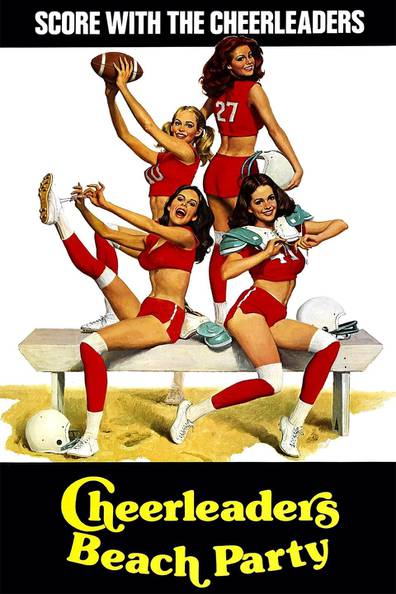
CANNON MONTH 2: Cheerleaders Beach Party (1978)

Alex E. Goitein had already made Cherry Hill High for Cannon, but now he had Chuck Vincent writing his script, the man who would one day be able to boast of making Bedroom EyesHot T-ShirtsAmerican Tickler, Bedroom Eyes IISensationsDerangedYoung Nurses in Love and so many more movies.

The cheerleaders of Rambling University — Monica (Elizabeth Loredan), Toni (Jamie Jenson), Sissy (Lynn Hastings, also in Cherry Hill High) and Sheryl (Gloria Upson, who was also in…did you guess Cherry Hill High?) — fight to keep their players from going to another college, which means stealing the van of an opposing coach and putting crabs into the jockstraps of his players. They also destroy — or make it so much better — with some pot-laced brownies.

Animal House then came out the same year and changed how sex comedies went from dirty little drive-in movies to big business.

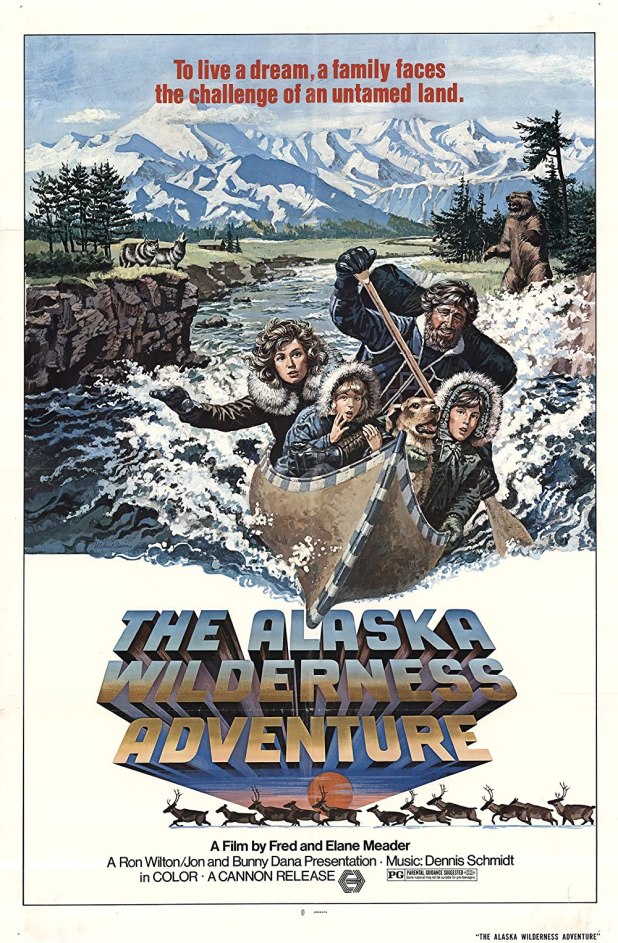
CANNON MONTH 2: The Alaska Wilderness Adventure (1978)

It’s as if Cannon took a look at all that sweet G-rated money — well, this was rated PG that Sunn Classics was raking in four walling theaters and said, “Let’s send a family into the woods and watch them nearly die.”

Also released in 1974 as Year of the Caribou, Don, Elaine and Fred Meader join Linda Johnson and Jay Russell as they battle the elements and nature, spending an entire year living off the land with no modern tools or luxuries.

You know, except for the camera.

Yes, there is a bear attack, in case that was what you were looking for.

The basic cable of today is the exploitation cinema of yesterday.

If you want the fake version, there’s an entire series about The Adventures of the Wilderness Family.

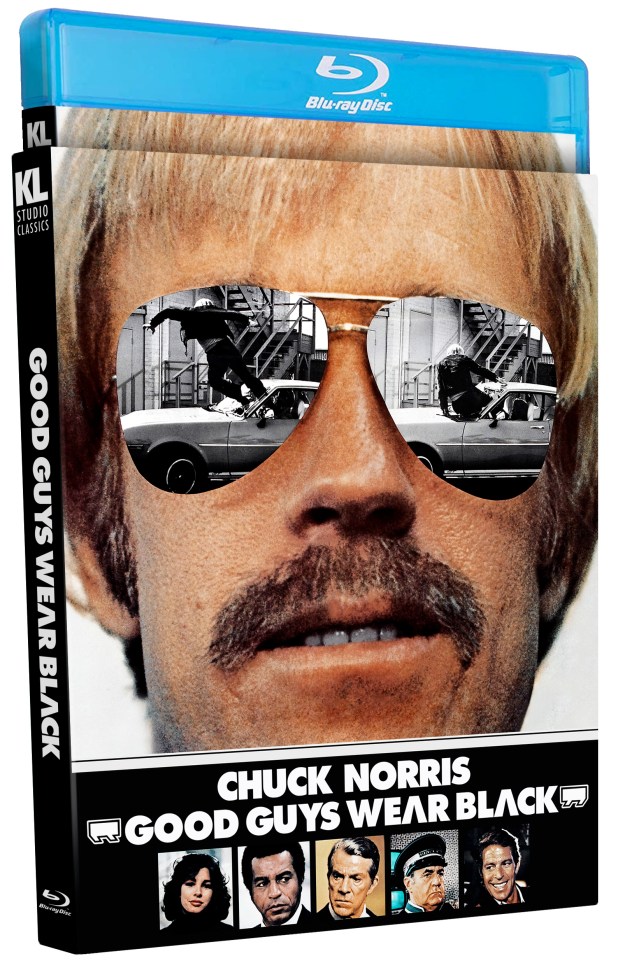
KINO LORBER BLU RAY RELEASE: Good Guys Wear Black (1978)

EDITOR’S NOTE: Originally posted on January 30, 2022, this Chuck Norris movie is now being released n blu ray by Kino Lorber. It has a new 2K remaster, audio commentary by Mike Leeder and Arne Venema, a feature on the making of the movie, an interview with director Ted Post, TV and radio commercials and the trailer. This is a must-buy for Chuck Norris fans!

Since his first starring role in Breaker! Breaker!, critics have made light of the acting ability of Chuck Norris, something that he’s taken in stride, because what Chuck lacks in acting ability, he makes up for in hard work.

Chuck told The New York Times, “I was the worst thing in 50 years. Well, I wasn’t good, but my feelings were hurt. I’m not trying to be Dustin Hoffman; I just want to project a strong positive hero image on the screen. I went to Steve McQueen, and he said, ‘In Good Guys you talk too much. Too much dialogue. Let the character actors lay out the plot. Then, when there’s something important to say, you say it, and people will listen. Anyway, you’ll get better as an actor. You should have seen me in The Blob.”

In These Fists Break Bricks, Grady Hendrix and Chris Poggiali share the story of how Norris went from a name in the world of martial arts to small parts in films* to suddenly ruling the box office of the 80s and the TV ratings of the 90s.

He convinced producer Al Belkin to put up $700,000 by telling him, “There’s four million karate people in America. They all know who I am. And if only half of them go to the movie, that’s a $6 million gross on a $1 million budget.” Belkin signed onto Good Guys Wear Black and told his staff that if it didn’t work out, they’d all be out of a job. It didn’t work out. No one would release the finished film, so Belkin rented out theaters and four-walled it across America. Norris toured relentlessly to promote his film. The result􏰘 $18 million at the box office.

In fact, Hendrix went even further when we interviewed him and asked about his feelings on Norris:

Grady: One of the things I really admire is how hard he works because acting does not come easy to him. He’s gone on record saying that it took him a really long time to get it. But he keeps doing the physical stuff on screen, even though he had a hard time. And you know, his first movie, no one wanted to make a movie with him. But he did it and he hit the road for almost a year and made it a big movie. Second movie, the exact same issue and the exact same hard work. Third movie and so on, until he gets the big studio contract and he walked out because he didn’t want to do the really violent stuff. He wanted young kids to see his movies because he feels like it’s good for them.

The film that he chose for his second movie takes place in the cynical world of the 70s. United States Senator Conrad Morgan (James Franciscus) made a deal to end the war with the North Vietnamese. If Yen will release several CIA agents, Morgan will take out the Black Tigers, a CIA assassination squad, who are sent to their deaths. Only Major John T. Booker (Norris) and four of his men survive the massacre.

Five years later, Booker is a professor of political science and an enemy of the war. Yes, a movie that posits that Chuck can debate the finer points of geopolitics and can romance Anne Archer. Then again, Chuck was quoted saying, “My country wasn’t built on sacrificing people to expedite principles.”

However, the surviving Black Tigers are being killed, as Morgan is to become Secretary of State and the North Vietnamese begin to blackmail him. He thinks that Chuck and his friends are expendable, but we know what happens when Chuck gets upset.

Chuck has some solid support from actors as diverse as Dana Andrews (yes, from the noir classic Laura) and Lloyd Haynes (Room 222) to Jim Backus (yes, Mr. Magoo). And no matter how bad he was in this movie, he was critic-proof.

When discussing how the movie was taken on an old school roadshow, Chuck would say, ” I traveled with them, opening from cities to hamlets, talking with folks and promoting the film any way I could. Many critics panned that film, but the public embraced it. They filled those theaters and launched my movie career.”

That’s why I love Chuck Norris. He’s not a creation of anyone but himself, someone who was willing to go in front of the MPAA and get the movie changed to a PG rating. And his character in this is supposedly who he is playing when he shows up in The Expendables 2.

And oh yeah — this was directed by Ted Post, so somehow he made a Planet of the Apes movie, a Dirty Harry movie, the giallo TV movie Five Desperate Women and, most essentially, The BabyGood Guys Wear Black was written by Mark Medoff, who also wrote Children of a Lesser God and When You Comin’ Back, Red Ryder, a fact that brings me incredible waves of joy.

*When Bruce Lee invited him to be in Way of the Dragon, Chuck asked of their fight, “Who gets to win?” Bruce laughed and said, “I’m the star.”

China 9, Liberty 37 (1978)

ABOUT THE AUTHOR: A.C. Nicholas, who has a sketchy background and hails from parts unknown in Western Pennsylvania, was once a drive-in theater projectionist and disk jockey, Currently, in addition to being a writer, editor, podcaster, and voice-over artist, he contributes to Drive-In Asylum. His first article, “Grindhouse Memories Across the U.S.A.,” was published in issue #23. He’s also written “I Was a Teenage Drive-in Projectionist” and “Emanuelle in Disney World and Other Weird Tales of a Trash Film Lover” for upcoming issues.A different version of this review originally appeared on the now-defunct website Tapehead in 1997.

Monte Hellman is deserving of a larger cult following. I will now get on my soapbox and trumpet his name into cyberspace in the hopes of winning a few converts to my religion. A former Roger Corman protege, Hellman, who passed away last year, kicked around for over five decades directing, ghost directing when other directors croaked mid-way through shooting (The Greatest and Avalanche Express), and producing low-budget fare. Sure, some of his stuff is purely of the “I have to pay the rent” variety. No one ever saw The Iguana when it was originally released, and he did a Silent Night, Deadly Night sequel. He’s best known for the cult favorite Two-Lane Blacktop (1971), but he was a gifted director who never managed to cross over to full mainstream filmmaking despite his obvious abilities. Between 1965 and 1978, he made four extraordinary westerns: Ride in the Whirlwind (1965), The Shooting (1967), The Cockfighter, a/k/a Born to Kill (1974), and China 9, Liberty 37 (1978). (OK, I bend the genre a little to call a film about cockfighting a western, but it did star Warren Oates, and thematically it fits in with the other films.) Whether you fall into the camp that believes his westerns are slow and pretentious, or like me, you think he’s a lost talent who made one western masterpiece, The Shooting, and three near-masterpieces, there’s no getting over that Monte Hellman’s films should be seen. You won’t forget them, and you can later argue about them for months, if not a lifetime, afterward. How many current directors fit that bill?

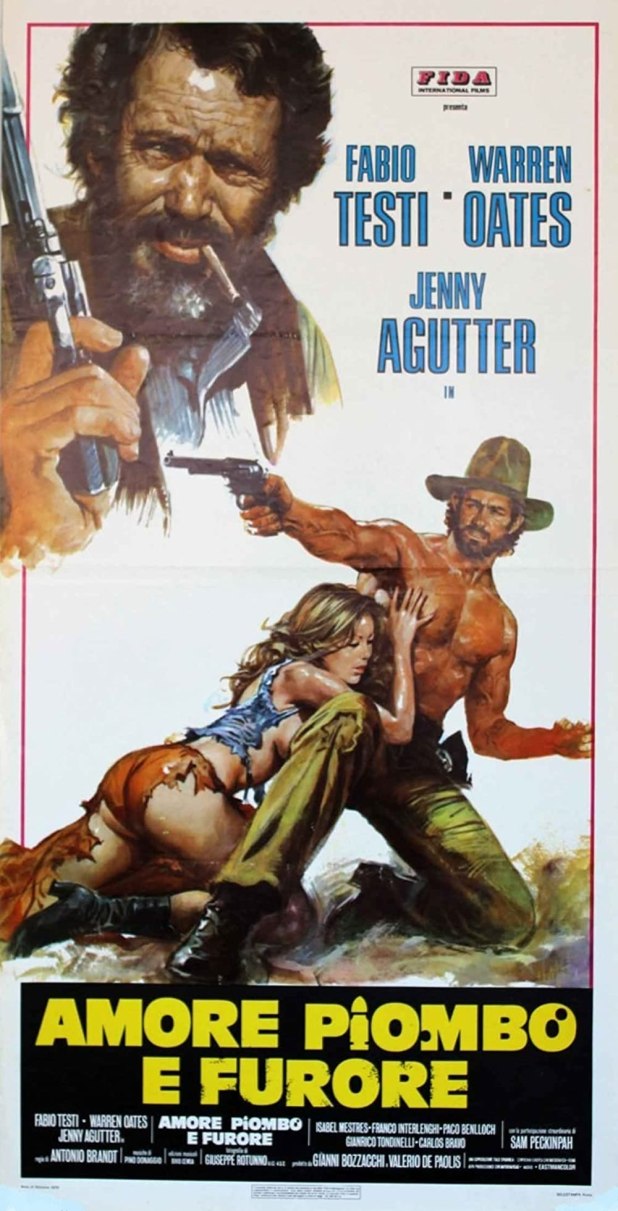
The last of the Hellman westerns is a true spaghetti western: China 9, Liberty 37—the title is a reference to a milepost sign—a film widely hated by critics and audiences alike. Fabio Testi (What Have You Done to Solange? and Stateline Motel), a legendary gunslinger, is saved from the noose by agreeing to assassinate Warren Oates, another gunslinger, so that the railroad robber barons can steal Oates’s land. Complicating matters is Jenny Agutter as Oates’s wife who falls for Testi. Agutter stabs Oates after he gives her a brutal beating, and then she and Testi ride off with a recovered Oates and his band in hot pursuit.

Let’s get this straight up front: Testi is awful in the lead. His thick Italian accent and mumbled phonetic English had me wishing that he had been dubbed by someone else, anyone else, including Nathan Lane. Despite this disastrous casting, however, just about everything else about the film is excellent, especially Guiseppe Rotunno’s stunning cinematography. (He also shot The Adventures of Baron Munchausen, Wolf, and The Stendhal Syndrome.) And savvy film fans will instantly recognize composer Pino Donaggio’s signature lush strings on the soundtrack, parts of which would not sound out of place in his scores for Brian DePalma films of that era. Oates is perfect as always—this guy never gave a bad performance—as an introspective man tortured by his wife’s unfaithfulness. He has a remarkably good reaction shot when, after recaptioning Agutter, he stumbles upon his brother about to ravish her. That was the hallmark of a Warren Oates performance—a tough, laconic man beset by circumstances outside his control. Oh yeah, I almost forgot to mention that director Sam Peckinpah makes his acting debut in a colorful cameo.

But above all, despite a wavering accent—sounding variously like Patsy Kensit, Peta Wilson from the old USA Network series La Femme Nikita, or an Irish charwoman—Jenny Agutter nearly steals the show. Agutter, so memorable as the young girl in Nic Roeg’s classic Walkabout and An American Werewolf in London, but underutilized in films such as Logan’s Run and The Riddle of the Sands, is positively radiant here. With her lightened hair, beautiful face, and numerous nude scenes (even with some full-frontal nudity, but you’ll need a telescope to check it out), Agutter plays out her part with no inhibitions. Younger cineastes, so used to cosmetically enhanced starlets of today will be startled by the exposure of Agutter’s real-woman, natural body. Nonetheless, she is extremely alluring and endearing, and you will never see a more ethereal expression than the one she has when she’s making love to Testi in a river. And with mumbling rod-puppet Testi fondling her, that takes some excellent acting!

China 9, Liberty 37 is an unusual western because one might persuasively argue that it’s really a retro chick flick disguised as a spaghetti western. Jenny Agutter is such a strong, well-realized character with testosterone boy Testi that many female viewers will undoubtedly compare this to a Harlequin-romance. Meanwhile, male viewers will simply fantasize about Jenny—Jenny bathing, Jenny in a transparent nightgown silhouetted in the moonlight, Jenny in the river… But I digress. This is a super-offbeat film that true B & S About Movies fans will recognize as something more than a typical spaghetti western shoot ’em up. Try it, you might like it.