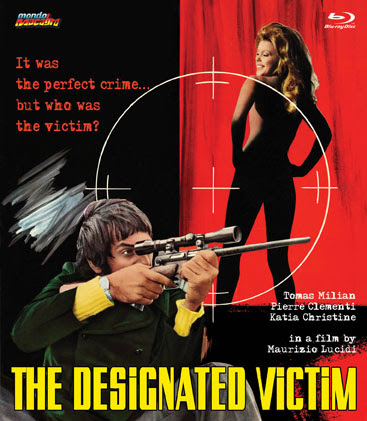
Maurizio Lucidi is probably better known for his westerns like My Name Is Pecos than any other movies he made. After watching this giallo, I wish he had done more in the genre.
Stefano Augenti disillusioned advertising executive (Tomas Milan) gets all Strangers On a Train with the unsavory Count Matteo Tiepolo (Pierre Clémenti) and come up with a plan to take out one another’s problem relatives. Stefano agrees to kill the count’s brother, who is in the way of his rightful inheritance, whole Tiepolo will kill the ad man’s wife who refuses to cash out of his business.
Matteo starts playing with Stefano and informs his supposed partner’s wife about the plan before she’s strangled. He has the evidence that will keep the police off Stefano, but will only send it if his brother is murdered as agreed upon.
Milan even contributed the lyrics and vocals to a song in this movie, “My Shadow in the Dark,” which was performed by the New Trolls.
The Mondo Macabro release of this movie has a new 4k transfer from the original film negative as well as interviews with writer and assistant director Aldo Lado and Balthazar Clementi. Plus, there’s commentary by Peter Jilmstad and Rachael Nisbet, as well as an exclusive extended version and alternate scenes.
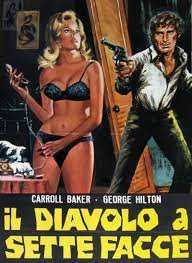
Also known as Bloody Mary and Nights ofTerror, this Osvaldo Civirani-directed kinda, sorta giallo stars one of the queens of the genre, Carrol Baker, as well as Stephen Boyd and George Hilton.
Baker plays two roles in here, identical twins Mary and Julie. While Julie is just an innocent on a working holiday in Holland, her sister is a diamond thief who has even sold her own husband out to get ahead.
I say kinda sorta as while this movie looks like a giallo and is named like one, it’s closer to a crime caper or even the Eurospy. Sure, someone is spying on our heroine, but nobody with black gloves is stabbing anyone and there are no psychosexual hijinks.
But hey — I love Baker and this has some fun twists and turns, as well as some romance. Consider it giallo adjacent, I guess.
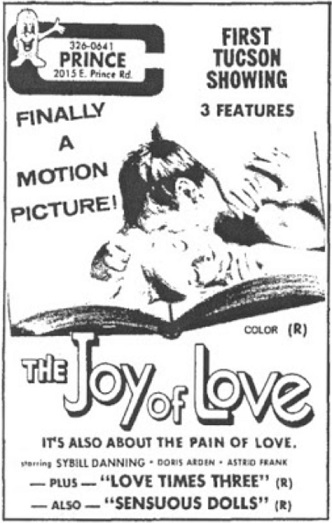
First, it’s confused with German director Eberhard Schröder’s Die Klosterschülerinnen, aka The Convent Students, which also made the rounds as Sex Life in a Convent, but is also known as . . . Girls in Trouble.
Second, that film, and this Sybil Danning vehicle (well, not really) is not only co-directed by Schröder: both star German glamour model and Euro-sex kitten Doris Arden (1968’s So Much Naked Tenderness and 1972’s Nurse Report).
Third, while it’s a softcore skinflick (uh, not really), it ends up on “Christploitation” lists due to its anti-abortion and pro-life slant in its chronicle of several pregnant women on their way to get abortions.
Finally, while it played across Europe in 1971, it finally made it to America during the height of the “Golden Age of Porn”* on U.S. shores as The Joy of Love.
But this ain’t no porn . . . or the least bit golden. And there’s no joy in watching it. And it’s not a Christian flick . . . or the least bit saving. Everybody got duped with this one. No one was entertained by it and everybody hated it. But what else would you expect from a film that markets both the porn and God-believing markets?
Lacking a fluid narrative, the film actually plays as a series of documentary-styled vignettes. So what we really have here is an omnibus films of seven tales on the dangers and horrors of abortion. And now you see why it ends up on Christploitation lists.
In the first tale, two women are in court over a botched kitchen-abortion. Then, we meet a kidnapped and raped 13-year old girl forced to keep her baby because the law doesn’t allow abortions. In the third tale, a knocked up young lady has a miscarriage forced upon her. Then, we’re inside a mobile — and illegal — abortion clinic. Then a secretary is raped by her boss, who then send her to the U.K. for an abortion. We also meet a woman who visits an abortion doctor who drugs her and takes porn-pictures of her to make some pocket change. And in the final, seventh tale, a young, pregnant girl begs a doctor for an abortion; he calls in priest to read her the riot act.
So, what happened back in that opening court room scene?
Well, the old bag with the kitchen knife who almost murdered the young woman, gets three years. The girl — who was almost murdered, mind you — gets six months in jail because, well, she’s a “slut” that already had a child previously that she gave up for adoption.
As you can see, this West Germany ditty is far from being a skin flick. And it’s just one of those oddball flicks you spotted behind the green curtain* during the video store ’80s because Sybil Danning’s presence sells the tape — then you discover she’s only the wife of the judge from the first segment, she’s not an aborter or abortee, and she shows us no skin. And the whole movie is actually pretty disgusting and you start to wonder what the big deal was about you finally aging-in to get behind the green curtain.
Obviously, there’s no trailer to show you or links to stream it online. But make no mistake: this offensive lesson in tedium that would give Ed Wood pause, exists. Sybil Danning fans can skip this — we implore you, skip this — and go directly to Malibu Express or They’re Playing with Fire.
Oh, and beware of Eberhard Schröder skin flick rabbit holes. It’s a sexually twisted filmography you’d rather not know about. Trust us. Don’t do it. (But you know you will.)
* We delve into the “Golden Age of Porn” and “Behind the Green Curtain” eras with our joint review of Forced Entry (1973) and The Last Victim (1975), along with Spine (1986) from our “SOV Week” of reviews.
About the Author: You can learn more about the writings of R.D Francis on Facebook.He also writes for B&S About Movies.
“You know what sells films, sweetie: tits and cheap lighting. What in the hell is this artsy-fartsy brass bed in the middle of the desert crap? How in the hell am I suppose to recycle this into another film? And we’re calling it ‘Cemetery Girls,’ got it?” — Roger Corman schools Stephanie Rothman on the fine art of exploitation filmmaking (not really, we are trying — and failing — at being funny)
This is the type of review I enjoying writing for B&S About Movies, as it was born out of chatting about film with our loyal readers whom reach out to us via review comments, our feedback form, or social media.
The review begins when I had chats with Mike Perkins, professional librarian extraordinaire, who, in working with B&S About Movies’ friend and contributor, Mike Justice of The Eerie Midnight Detective Agency site, solved the mystery of the short-lived career of ’70s actor Peter Carpenter (which we discuss within a two-fer review of Peter’s work in Vixen! and Love Me Like I Do).
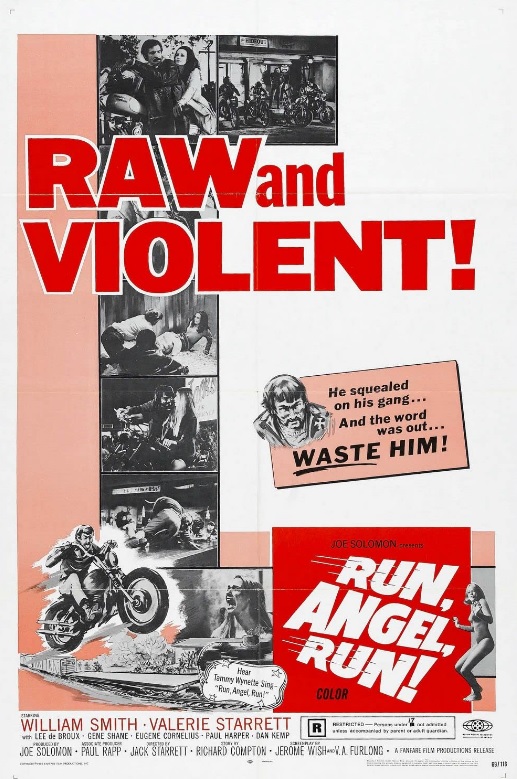
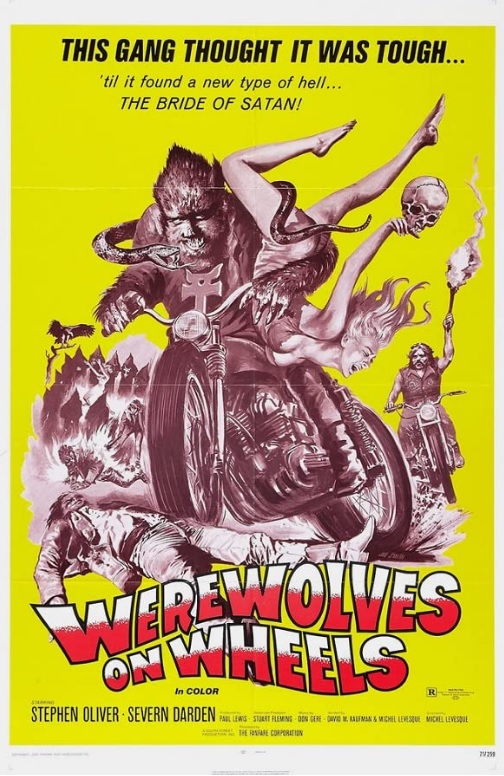
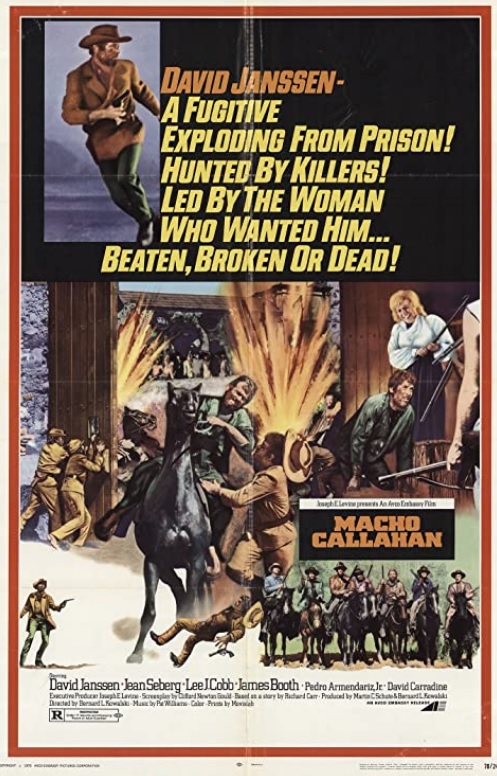
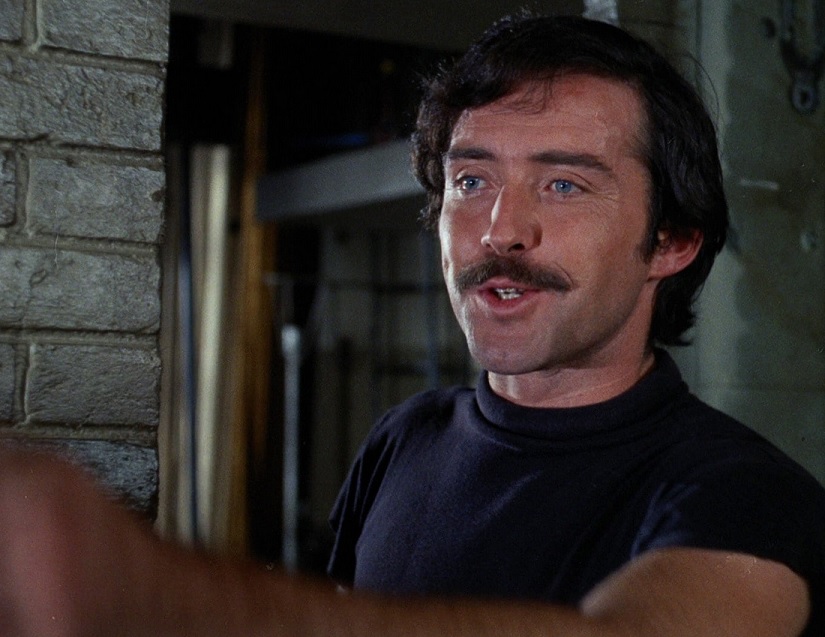
Then Mike Perkins and I got to talking about Peter Carpenter’s he-was-there-then-he-was-gone doppelganger in actor Gene Shane . . . and, as with Pete, there’s little-to-nothing known about Gene’s life after he wrapped up career his with The Velvet Vampire. As with Pete: Gene only did four films: the others are Run, Angel, Run! (1969), the lost Bernard L. Kowalksi* flick with David Janssen, Macho Callahan (1970), and Werewolves on Wheels (1971). Unlike Pete: Gene branched off into legit TV series, with the ratings-toppers The High Chaparral and Bonanza (1969), but he got his start in the short-lived, forgotten series The Guns of Will Sonnett and The Outcasts (1968).
And so ends the resume of Gene Shane . . . well . . . if we believe the Digital Content Managers of the IMDb, which list Gene starring as “Jesus” — of all characters — in the 2004 Larry Buchanan quasi-documentary, The Copper Scroll of Mary Magdalene (see his Jim Morrison romp Down On Us, aka Beyond the Doors, for more on the ‘Buch’s paranoia-docs lifespan). Ah, but ye DCM’ers of the IMDb, busted again, ye are: that film is actually The Rebel Jesus shot in the ’70s and shelved. Buchanan finally got around to editing it for its 2004 release — when he died. (Oh, get this: the film also stars Garth Pillsbury from Peter Carpenter’s Vixen! — so there’s that to mull over.)
So, what does that mean?
Well, Gene Shane, aka Duece Berry in Werewolves on Wheels, if you’re keeping track, like Peter Carpenter before him — vanished from the face of the Earth after four films, with The Velvet Vampire, in fact, as is his last work (plot spoiler: or is it?).
Cue Mike Perkins to the B&S About Movies cubicle farm: he’s already on The Case of Gene Shane. So stayed tuned . . . for the ‘Perk will find out, and when he knows, you’ll know, right here on the pages of B&S About Movies.
Alrighty, then. Let’s unpack The Velvet Vampire.
Finally . . . The Review!
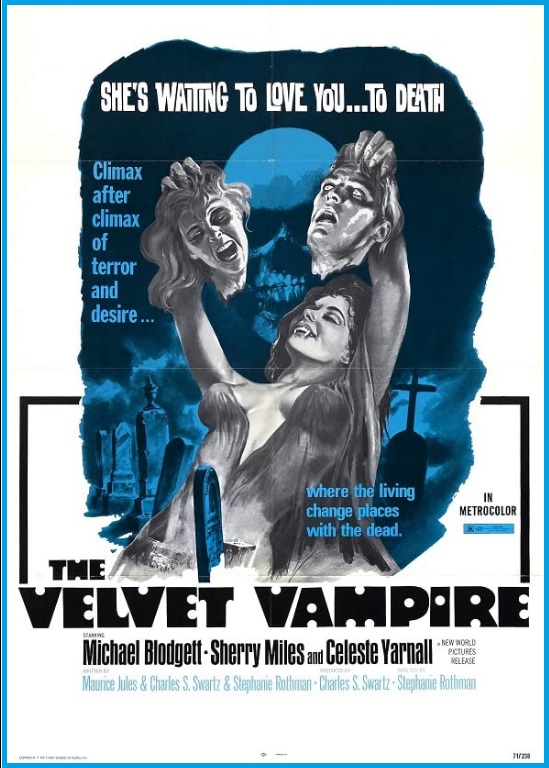
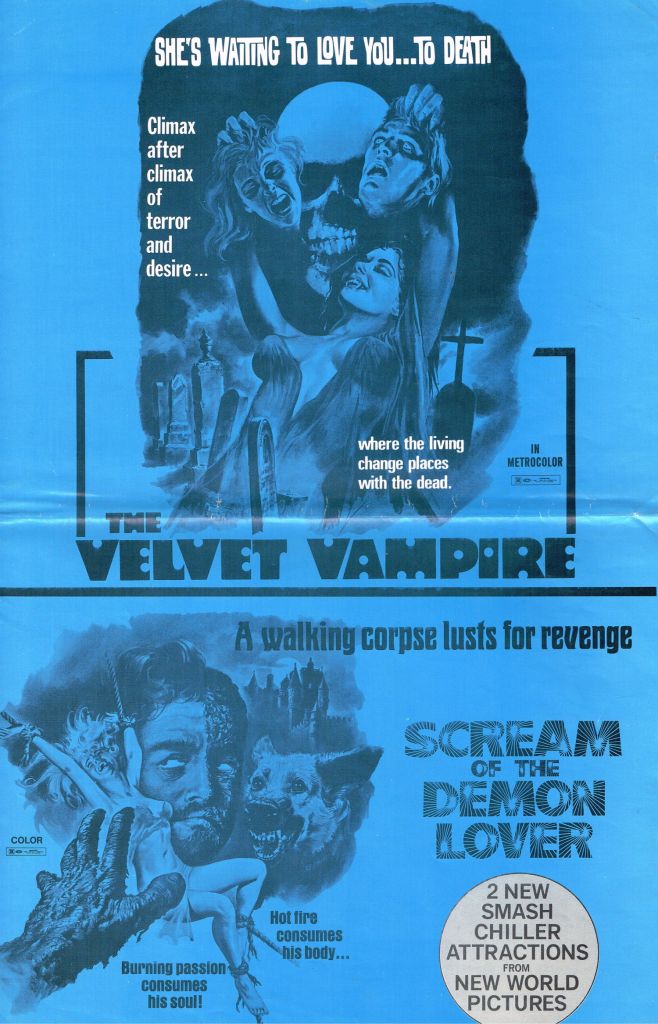
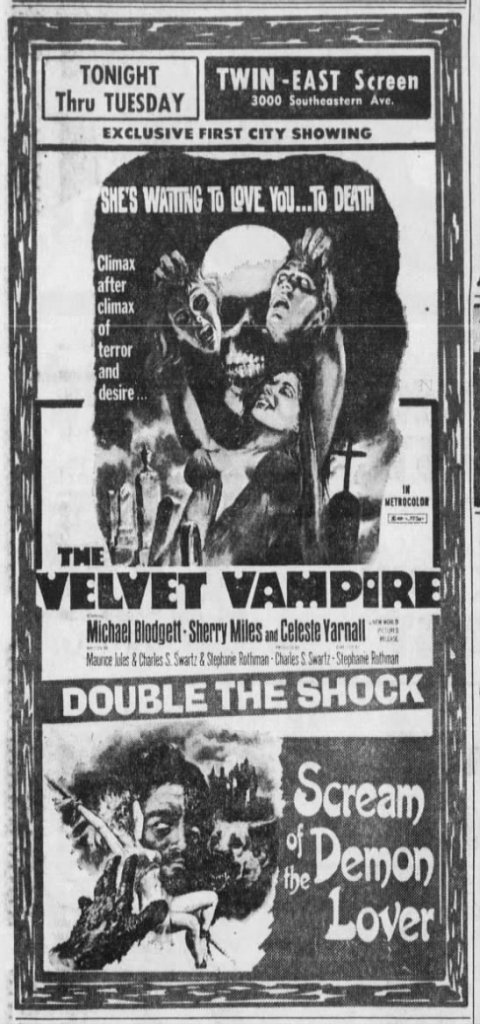
So, yeah, Roger Corman, who bankrolled this through his New World Pictures shingle, didn’t like the end product — so he dumped The Velvet Vampire into Drive-Ins on a double-bill with Jose Luis Merino’s (awesome!) Spanish-Italian co-production Scream of the Demon Lover (1970). Meanwhile, USC trained writer and director Stephanie Rothman — who previously served in both capacities on The Student Nurses for Corman — was disappointed on how Corman handled the movie, as well as its box-office reception. Mind you, this response is from the guy who rips off Star Wars by way of The Magnificent Seven — then recycles Battle Beyond the Stars over and over again in (the even worse) Space Raiders and Forbidden World, but in the cooler Galaxy of Terror and not so bad Android.
Rothman roots with Corman run deep: It was after a viewing of The Seventh Seal that she decided to become a filmmaker. And she reached her goal: She was the first woman to be awarded the Directors Guild of America fellowship. So Corman gave her a job . . . directing It’s a Bikini World, then she worked on Gas-s-s-s and The Student Nurses. But she wasn’t interested in making a sequel to The Student Nursesor making The Big Doll House . . . she pitched The Velvet Vampire.
So Rothman left New World for Dimension Pictures, where she . . . well, for you Eddie Romero fans: she wrote his 1973 Philippines-shot ditty, Beyond Atlantis (Patrick Wayne! John Ashley!), then directed Terminal Island, The Working Girls and Group Marriage. Oh, and by 1978, she wrote — and had her name removed from — Starhops, which shouldn’t be confused with Gas Pump Girls or Lunch Wagon, but is of the T&A Van Nuys Blvd. variety.
In an interview, “Feminism, Fantasy and Violence: An Interview with Stephanie Rothman,” in the Journal of Popular Film & Television, Rothman spoke of The Velvet Vampire: “It’s not a traditional horror film nor a hard-core exploitation movie. In some places it was booked into art theatres. In others it had [a] one week saturation release in drive-ins and hard-top theatres. There was no consistent distribution pattern for it because people responded differently to it and I think that may be part of the [film’s failure].
Stephanie, screw Roger. We friggin’ love this movie!
Oh, and let’s not forget: Bram Stoker isn’t behind the implied soft-core shenanigans, here. Stoker’s Dracula came out in 1897. Sheridan Le Fanu’s novella Carmilla came out 26 years prior, in 1872; it was reprinted for its best-known and accessible distribution as part of Le Fanu’s short-story collection In a Glass Darkly (1872). Another great female vampire tale rife with (implied) sex and lesbianism that draws from Le Fanu’s works is French director and screenwriter Roger Vadim’s And Die of Pleasure, aka Blood and Roses; another is the early ‘70s “fleshy” variations of The Vampire Lovers, Lust for a Vampire, and Twins of Evil, aka “The Carnstein Trilogy” from Hammer Studios. . . .
Oops, back to the film at hand . . . er, that is, neck.
Roger Corman’s New World Pictures imported the Spanish-Italian co-production of Il castello dalle porte di fuoco for a double bill with The Velvet Vampire.
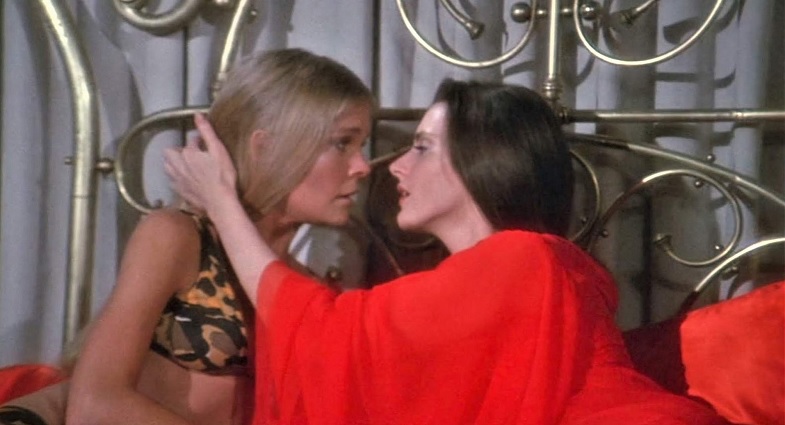
I love how The Velvet Vampire starts: We have the eyeball-melting Celeste Yarnall (my heart is weeping, again; sigh, Celeste) walking alone across a city-at-sleep: she’s decked out in a mod-red dress. And a ubiquitous biker tough (the always-welcomed character awesomeness of Robert Tessier in an early, pre-The Longest Yard roll) tries to mug-rape her. (Yeah, right, Robert, that’ll work.) Next thing you know: Diane LeFanu (yeah, know your Sheridan LeFanu and “Carmilla” from In a Glass Darkly) causally washes her hands in a park fountain.
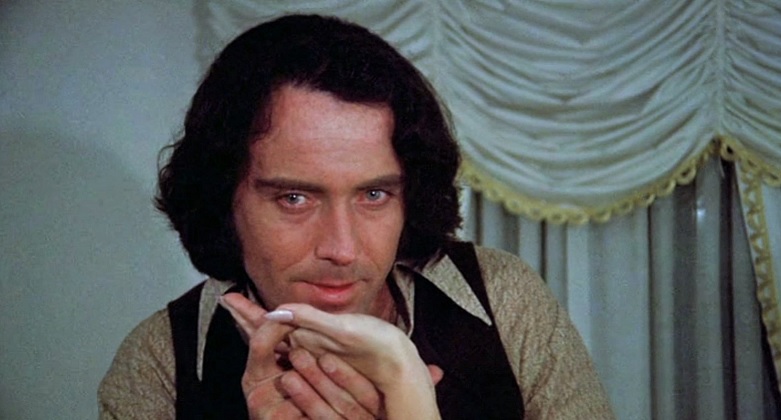
Then Mr. LaFanu heads on over to an art gallery (run by Gene Shane as Carl Stoker; who’s part of the plot twist; yep, “Hi, Bram!”) filled with erotic wares — as real-life blues artist Johnny Shines preforms his song, “Evil-Hearted Woman.”
All this in the first five minutes? I’m hooked.
We haven’t even gotten to the dune buggy-innuendos. Or the (simply stunning) phantasmal, desert-surrealism scenes. Or the woman-on-woman sucking-snake-venom-out-the-leg (thigh, but no triangle-of-death shot) scene. Or the hints of cannibalism and necrophilia. Or the subtle, implied lesbianism.
So . . . our vamp, the divine Ms. LaFanu, picks up Lee Ritter (Eric Stolz-lookalike Michael Blodgett from Beyond the Valley of the Dolls and Disco Fever), a sex-swingin’ married guy at the gallery and invites him and his put-upon (very hot blonde) hippy wife, Susan (more heart-weeping for Sherry Miles-DeBoer of The Phynx), to her secluded desert estate — conveniently located near an abandoned mine and an old graveyard (filled with the long, mysteriously-dead miners). Sharon’s attended to by her slave: Juan (Jerry Daniels; some U.S. TV, but Lee Majors’s The Norseman).
Gulp!
What raises Stephanie Rothman’s vamp-fest above most of the cliche vampress romps of the ’70s — and puts it, for me, on level with my beloved Hammer’s “Carnstein Trilogy,” as well as the great Count Yorga and greater Lemora, Lady Dracula — is that Rothman eschews the conventions of yore: Ms. LaFanu lives in the desert and embraces the sun, she’s a voyeur (as the couple has sex), has a reflection, sucks down raw chicken livers, and jumps into her hubby’s grave and pines for him as she cries on top of his pine box. And she may not even be a vampire: just a psycho with a blood fetish/illness. And, unlike those Hammer-Euro vamp-babes of old: she’s bisexual and blood is blood, after all.
What the frack, Rog? I have no idea what you didn’t like, here, desert brass beds and the sexuality of snakes, be damned.
Oh, this friggin’ epic movie!
Rothman does a wonderful job symbolism-editing Ms. Ritter’s desert snake bite moment with Ms. LaFanu sinking her fangs into Mr. Rothman. Meanwhile, Rothman’s cinematographer, Daniel Lacambre, really knows how to work a lens under the baking sun, inside mine shafts, and empty mansions — and the later L.A. train station chase. The love scenes between Yarnall and Blodgett couldn’t be more artful, tasteful, and exotically shot — without degrading into Russ Meyer-removed sleaze. (Which is probably why Corman hated it: too arty and not “exploitative” enough. Whatever, Rog. Don’t you have some unimaginative stock footage to recycle?) Again, the desert-surrealism of the Ritters in bed in the middle of the desert wasteland: don’t tell me Don Coscarelli wasn’t inspired by Rothman’s frames. That’d be like saying Sam Raimi wasn’t inspired, i.e., ripped off, Equinox to make Evil Dead.
Critics, both pro (Frack you, Kevin Thomas of the Los Angeles Times) and just-run-of-the-mill codgers, slag the acting — especially Blodgett’s. Granted, no one, besides Celeste Yarnall, is jumpin’ on the A-List (well, maybe so; Yarnall retired for a spell from acting after working with Burt Lancaster in ’73’s Scorpio; but did a LOT of U.S. television, prior), but everyone’s thespin’ fine. And I distinctly remember — because I had a mad-as-hell boy-crush on her — Sherry Miles in reruns of The Beverly Hillbillies, Adam-12, The Partridge Family, and Police Woman. You don’t book all of those jobs by not being good at your job. (I was supposed to be married to Sherry by now — and playing second guitar for the Monkees. Sigh, childhood dreams.)
And that’s what this not-really-a-lesbian-vamp-flick is: a dream. I love this movie . . . and a bag o’ chips. Thank god Corman didn’t wrestle it away from Stephanie Rothman to add more boobs and lesbian-love to screw up a perfect horror film.
Yes. Perfect. Don’t debate me on this point.
You can free-with-ads stream The Velvet Vampire on Tubi TV. There’s also a non-commercial rip on Daily Motion. As you can see from the trailer, you can purchase the restored DVD from Scream Factory, as well as other imprints.
Stephanie, Sherry, and Gene, Oh, My!
Did you know Sherry booked — then lost — the role of Bobbie in Mike Nichols’s Carnal Knowledge to Ann-Margret (Viva Las Vegas). So, yeah, Sherry thespian-rocked it. No worries, though. Sherry ended up in Your Three Minutes Are Up with Beau Bridges, Harrad Summer for Steven Hilliard Stern (This Park Is Mine), and The Pack with Joe Don Baker for Robert Clouse (The Ultimate Warrior), great films, all.
If you’re keeping track, and a Stephanie Rothman completist: She also wrote and directed Blood Bath (1966), It’s a Bikini World (1967), something called Group Marriage (1973) (which we never heard of), the Escape from New York precursor, Terminal Island (1974) (which we’re absolutely convinced John Carpenter ripped; inspired by Watergate, my ass, John), and the soft-sexer The Working Girls (1974).
Stephanie also wrote our much-loved Patrick Wayne-Sid Haig adventure-cheapy Beyond Atlantis (1973), and the late-’70s T&A’er (see William Sachs’s Van Nuys Blvd. for the breakdown on that genre) Starhops (1978). Oh, and before Corman gave her the reins, between ’65 and ’66, she served as a producer on Voyage to the Prehistoric Planet, Beach Ball, and Queen of Blood. You’ll also see her production-credited on Corman’s Gas! Or It Became Necessary to Destroy the World in Order to Save It. Be sure to check our the extensive Wikipedia page dedicated to Stephanie’s life and insights; it’s a story of hard luck and bad knocks. She deserved so — as you’ll see from The Velvet Vampire — much more. What a movie!
Speaking of Wikipedia: Yes, there will be an all-new Wikipedia page created for Gene Shane — as well as Peter Carpenter. That’s Mike Perkins-money-in-the-bank . . . and a bag o’ chips.
There’s also an actor known as Gene Otis Shayne, often credited Gene Otis Shane or Gene O’Shane (1936 – 2017). An Al Adamson stock player, he made his feature film debut in Uncle Al’s own vamp-romp (woefully inferior to The Velvet Vampire), Blood of Dracula’s Castle (1969), and a biker-romp, Hell’s Bloody Devils (1970).
I never gave it much thought, until now. Outside of the brown vs. blue eyes, they look like the same guy, to me. The plot thickens . . . but I’ll leave this in Mike Perkins’s capable hands. I am still coming down from blowing my brain cells with three back-to-back Robert Rundle** film reviews (long story). I can’t handle the information download of Gene Shane-Duece Berry-Gene Otis Shayne-Gene Otis Shane-Gene O’Shane as being the same person, not after the tales of Rundle.
We’ll keep you posted on . . . The Case of the Two Gene Shanes. (Dah-da-dun!)
Update February 2024: Never Say Never, meho. Once it worms into our brains . . . we finally rolled out our many-times-threatened Roger Corman tribute with a month of reviews released by his New World Pictures shingle. Yeah, if you enjoyed our two-month Cannon Films blow-out, you know we won’t let any canister of celluloid unturned on ‘ol Rog’s oeuvre. Clicking through the link will populate all of those months’ reviews, which includes a second take on The Velvet Vampire, as it additionally name checks several other female vampers to enjoy.
About the Author: You can learn more about the writings of R.D Francis on Facebook.He also writes for B&S About Movies.
DAY 19 — CAN’T YOU HEAR ME KNOCKIN’?: When you let an unexpected guest in, you may be in for a long night.
Editor’s Note: While we’ve included this — controversial — film as part of our Christploitation genre cataloging, we’ll also briefly delve into the Hagsploitation genre, turn you on to a few “hippie flicks,” as well as discuss other, analogouslylost, U.S. made Drive-In horrorsreleased around the time of this film.
Christ, Hags, Manson, and rubber skull masks, oh, my!
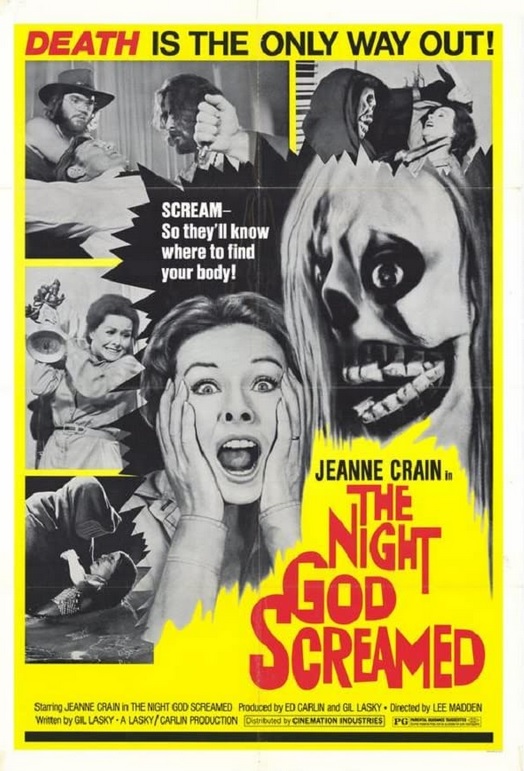
I know. I know. Why is an exploration of ’70s Christian Cinema including a crime-horror romp that advises “death is the only way out,” courtesy of Cinemation Industry — the Drive-In shingle that gave us the likes of Teenage Mother (1967), Female Animal (1970), The Man from O.R.G.Y (1970), I Eat Your Skin (1971), Teenage Sex Report (1971), Son of Dracula (1973), Dynamite Brothers (1974), and an X-rated cartoon in the form of Fritz the Cat (1972).
Hey, this ain’t no trope-laden site ensuing with cliched, generalized lazy thinking, buddy pal-o-mine: this is freakin’ B&S About Movies in Pittsburgh, baby: we don’t write for stinkin’ food or for reissue DVD/Blu swag. We choose our God-Christploitation reviews the fracked up way because we dig the film at hand: no reissue promo-campaigning required.
Besides, it can’t always be about Estus Pirkle and Ron Ormond (The Second Coming will get you there, brother), which, if they kept making movies together, a proto-slasher about a serial killer twistin’ the Good Book probably would have been the next, logical celluloid-Pirkle step. Don’t forget: he’s the guy who jammed sharpened bamboo sticks into children’s ear canals. And when he’s not inducing them to puke, he cuts them down from hanging trees onto a field of buried pitchforks, then tosses them in mass graves. (no, really; we’re not making it up). The folks at Mondo Stumpo summed Pirkle’s psychotronic years, brilliantly: Christian Gore.
So, yeah. Estus Pirkle vs. Lee Madden. No contest. Pirkle wins. Hands down.
The Pirks’ celluloid triad If Footmen Tire You, What Will Horses Do?, The Burning Hell, and Believer’s Heaven (well, it’s a little bit more positive; but kids are still being tossed in mass graves) are still more gag-inducing and horrifyingly sick than this faux-Manson ditty brought to you by Cinemation — again, the studio that gave you the likes of the not-even-close, exploitative bile-inducer, I Eat Your Skin. As Sam the Bossman has opined in his Pirkle-Ormond opuses: all three films are stuck in our collective minds way longer than any blockbuster — or Christian film or horror film — we will see this year. Or any other year. Digital streaming or hard-copy reissues. Period.
Eh, well. Maybe not.
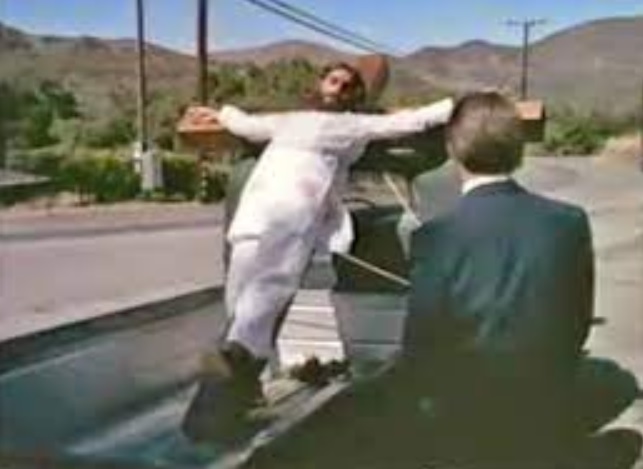
Madden really scraped the offensive bottom of — and broke through the rusted bottom of — the Christploitation barrel. And people lost their minds over The Exorcist and The Omen? I mean, a Catholic Priest crucified on his own cross? Top that, Mr. Friedkin and Mr. Donner. Well, actually — in terms of quality — you did.
Anyway, long before you youngins were exposed to Charles Manson by way of Quentin Tarantino’s Once Upon a Time . . . in Hollywood, there was a mini-cottage industry of “hippie flicks” that borrowed from the Manson myth — courtesy of instilling the idea that all of Haight-Asbury’s flowery-denizens were blood-thirsty killers. So, we got the likes of the hippie-crime romps Psych-Out (1968), the double bill to I Eat Your Skin with I Drink Your Blood (1970), The Cult (1971), The Love-Thrill Murders (1971), the document/reenactmentary of The Other Side of Madness (1971), the Andrew Prine with a goat insanity of Simon, King of the Witches (1971), the really fine Deathmaster (1972), Thumb Tripping (1972), the “Manson as a filmmaker” with Snuff (1976), and, of course, the incredible Steve Railsback as Manson in the exquisite TV movie, Helter Skelter (1976).
Yeah, there’s a “Exploring: Charles Manson on Film” feature to be had . . . someday.
Now, back to the Godsploitation, aka Christploitation, portion of today’s programming: a weird genre to begin with, depending on the critical whims of the writer (in the case, Sam Panico and yours truly), the films included, can be controversial choices. Even B&S contributor Bill Van Ryn of Drive-In Asylum questioned today’s movie choice. And when BVR furrows his brow, well, you’ve just hit celluloid pay dirt. And only God knows what the dude who hates it when we use the word “trope” in our reviews (and takes a moment from his day to let us know), will think. . . . The night the critic screamed, indeed.
Offensive:When a priest purchases a cruciform for his church, transports that sign of Christ in the back of a pick up truck, stops at a gas station, and a white-robbed hippie takes a siesta on said cruciform, you’ve just exploited the Holy Savior.
Now, one would never consider a British horror film starring Christopher Lee as a “Christploitation” piece: but when your film is based upon the works of occultist author, paranormalist, and “secret society” founder Dennis Wheatley — himself a friend and collaborator of fellow occultist and Thelema religion founder Anton LeVey — the movie based on his book, The Devil Rides Out (1969), a book in which the big guy of the underworld, Baphomet, and his buddy, the Angel of Death, shows up — both ultimately defeated by the power of Christianity — the film ends up on the (my) list.
The same could be said for Die! Die! My Darling! (1965). Although it’s part of the psychobiddy sub-genre (i.e, old, crusty women terrorizing “sinning” young women, aka “hagsploitation”), when you have Tallulah Bankhead in crazed, full-on religious hysteria exorcising a corrupt Stephanie Powers, that films ends up on the stone immaculate perimeters of Christ/Godsploitation (my) lists. And our speaking of Tallulah Bankhead attempting to reignite her career in a horror film brings us to — gulp — Jeanne Crain, the star of The Night God Screamed.
Remember how the Smithereens’ Pat DiNizio lamented about British model Jeannie Shrimpton in the lyrics of “Behind the Wall of Sleep”; how he’d gleefully commit a murder if she so purred the request? Yeah, for me, it’s like that with the Academy Award for Best Actress-nominated Jeanne Crain — for her title role in 1949’s Pinky.
Yeah, I had it bad for Jeanne Crain. Sigh. Remember how Superman time-travel willed himself back to the past to hook up with Jane Seymour in Somewhere in Time (1980): Calling Dr. Gerard Finney, time-hypnotize me to a Jeanne Crain romance.
As with Veronica Lake making her final bow with Flesh Feast (1970), Joan Crawford appearing in Berserk! (1967) and Trog (1970), and Wanda Hendrix (zoinks!) closing out her career at the age of 44 with a Gothic, Civil War tale, the really fine The Oval Portrait (1972), ex-20th Century Fox studio-starlet Jeanne Crain attempted an early ’70s comeback — her last film was Hot Rods to Hell (1966) — with a horror film: inspired by Charles Manson. Sadly, it was not meant to be. When her “big horror move” failed to spark interest, the divine Ms. Crain called it a day after working with — fifth-billed, mind you — Charlton Heston in Skyjacked (1972).
So, with Alex Nicol — an actor/director in The Screaming Skull (1958) and director for Peter Carpenter’s Point of Terror (1971) — thespin’ it up with an early James Sikking (Outland, Star Trek III: The Search for Spock) — Jean Crain stars as family matriarch Fanny Pierce in a tale directed by Lee Madden.
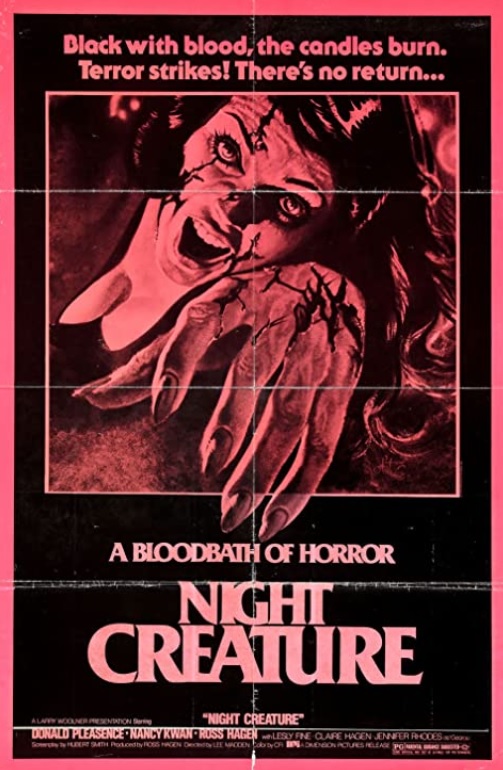
Wait? Not Lee Madden of the biker flicks Hell’s Angels ’69 (1969) and Angel Unchained (1970), and the hunter-on-private island romp Night Creature (1978).
Oh, hell, yes. Strap on the popcorn buckets. Let’s unpack The Night God Screamed.
Lee Madden’s second — and final — horror film, which he also wrote, during his all-too-short, six-film career. His others were the sexploiter The Manhandlers (1974) and, get this: the abysmal horror-comedy, Ghost Fever (1986), with Sherman “George Jefferson” Hemsley.
The reason this offensive, yet stunning movie failed: it’s a slow-burn, psychological thriller that, instead of the shocking gore and violence you’d expect from a Manson-inspired film, it’s all about the atmosphere. Another reason: due to its provocative title, small town and rural communities with theaters refused to carry the film; they acquiesce to the alternative title of Scream. The third reason: Jerry Gross was against-the-sprokets and Cinemation was going under . . . while barely releasing it in 1971, the film stumbled around as a second-biller until 1974, never to find its well-deserved audience. The same marketing snafus happened to the youth-seeking devil worshipers romp, Brotherhood of Satan (1971), the exquisite gaslighter, Let’s Scare Jessica to Death (1971), the dreamy The Velvet Vampire (1971), William Girdler’s debut Asylum of Satan (1972), the weirdly, Clint Eastwood-connected and released-stalled Die Sister, Die! (1972), the toy-making Devil worshiping of Necromancy (1972), Jean-Marie Pélissié’s art house-beauty, The Bride (1973), the utterly bonkers and also questionably-rated, The Baby (1973), the stellar post-Romero craze of Messiah of Evil (1973), and the flawed but captivating Warlock Moon (1973).*
Eh, so what else is new in the puritanical bread baskets of America?
So, rightoff the bat, the Fundamentalists are loosing their nuts: we open with a monk-hooded figure dragging a six-foot tall cruciform through the woods. And our faceless monk looks down from a hill upon a lakeside baptismal ceremony conducted by our ersatz Jesus, aka our ersatz Charles Manson, i.e, “Billy Joe,” as he complains to God about “the man” coming down on his faux-Chuckness because they dig Jesus, and do dope only to “turn on to” Jesus, and that they’re not a phony, money-grabbing ministry, lying and stealing from their flock. . . .
Oh, and the dude in the robe: he’s The Atoner. And the baptism? The Atoner drowns you, the “Judas,” into the afterlife.
So, with that bit of Christ exploiting out of the way; we finally get to this review’s raison d’étre: Jeanne Crain is Fanny, the put-upon wife of Pastor Willis Pierce (Alex Nicol) who oversees a small chapel and soup kitchen in a rundown, crime-ridden neighborhood.
The prim n’ snobby Fanny hates her life and wants out. And I want her to move in with me.
Anyway, the “path” to the way out leads the Pierces to run afoul of Billy Joe and his sidekick, The Atoner. And yes, they crucify Pastor Willis to a cross inside his church because, well, God has advised Billy Joe that the Pastor is a false prophet.
So, a year passes: Fanny is PTSD’d (I’d still put up with her; I’ve cohabited with far worse), hearing her husband’s and Billy Joe’s voices — even though hubby’s dead and our faux-Manson is in prison.
Then, taking cues from Charles Manson seeking revenge on Beach Boys associate Terry Melcher for reneging on a “deal” to record his music**, Billy Joe’s clan descends on the convicting Judge Coogan’s house to extract revenge: instead, they find Fanny, who came to work as a housekeeper and assistant to the judge, his wife and four teen (well, casting older-than-teens, natch) children.
Well, not really. Do we really have to explain “gaslighting” to you?
My poor, dear Jeanne really goes through the ringer in her final, leading role. Put your head on my shoulder, let me whisper in your ear, baby.
While not exactly graphic-bloody in A Bay of Blood (1971) sense, The Night God Screamed is, never the less, like The Baby before it, still a pretty brutal and intense movie — filled with religious imagery — for a PG-rated film. The trailer isn’t doing the film justice. As for “exploitation” critical descriptors, aside: Jeanne Crain is still a friggin’ hotter-than-hell MILF. Paging Dr. Gerard Finney, R.D Francis is seeing rainbows and skyrockets, again.
It’s hard to believe that, in a ’70s UHF-TV world that played A Bell from Hell (1973) — a movie with human-sized puppets playing pianos and women hanging upside down in an abattoir — The Night God Screamed never playing on TV is a crime against the ultra-high frequencies that white-noised my brains with the Drive-In delights that I was too young to see back in the day. Thank god for the VHS ’80s.
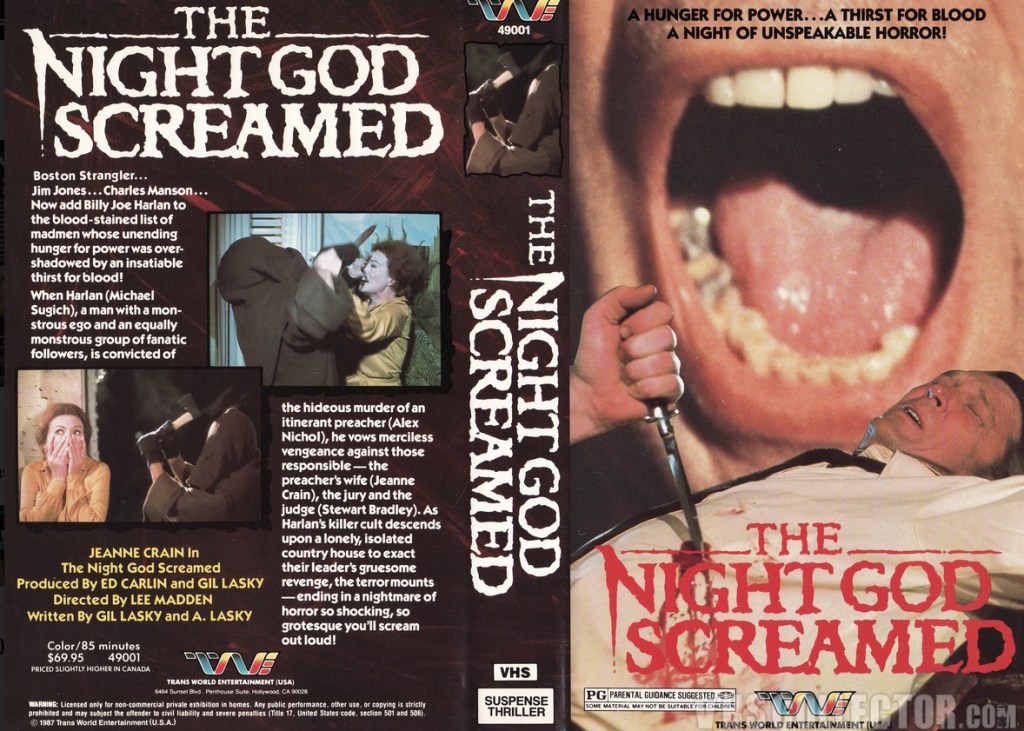
Although there’s earlier issues,the Trans World Entertainment 1987 VHS reissue was the best-distributed/courtesy of Paul Z at VHS Collector.com.
Sorry, kiddies. There’s no freebies or with-ads streams to share. But the DVDs are all over the online marketplace, VHSs are out there, for the ever-the-analog purist. And if there’s one, pure ’70s horror DVD to add to your collection, The Night God Screamed comes highly recommended. Do it.
* Other early-70s, poorly-distributed and lost, U.S. Drive-In horrors to venture — each with their own, special bit of crazy — are Touch of Satan (1971), Legacy of Satan (1974), and Satan’s Children (1975).
** That’s finally been all squared away with Tom O’Dell’s stellar, 2019 documentary, Manson: Music From an Unsound Mind (Tubi).
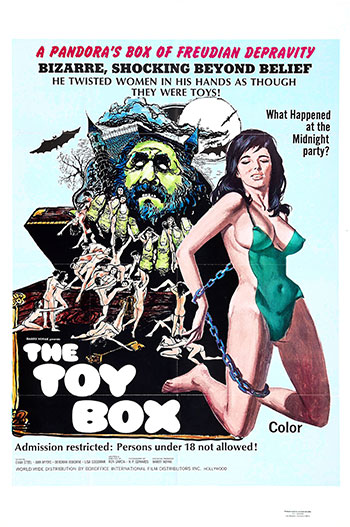
A section 3 video nasty and a production of Harry Novak, this movie should come complete with soap so that you can clean yourself up after the way you feel post-watch. But hey, before we luxuriate in filth, let’s talk about Harry and Boxoffice International Pictures.
Just take a cursory scan through some of the films that Boxoffice brought to the eyes of maniacs like you and me: Kiss Me Quick! in which an alien comes to our planet in search of feminine breeding stock*, the spectacularly named mondo Suburban Pagans, the drinking suburban housewives and their pot-smoking daughters in The Muthers, Jean Rollin’s The Nude Vampire, the Gary Graver-directed Erika’s Hot Summer, redneck trash (a good thing) like Country Cuzzins and Sweet Georgia, the brutal and wonderful Toys Are Not for Children, The Sinful Dwarf, Frankenstein’s Castle of Freaks, Lisa, Rattlers, The Child and so many more. When I first started buying trailer collections, the Something Weird Extra Weird Sampler was where I first saw Harry’s signature swirl onto my screen and then blow my mind with the aberrant junk that he was fostering on the movie buying public.
The actual story of this movie isn’t really a story as much as it’s an opportunity to get single women one handing it and couplings two handing it. So yeah, Ralph has taken Donna to see his crazy uncle again, but first she has to see her man in the boat before putting on a scene before the somehow dead and yet able to speak from beyond the grave uncle. And then this movie makes me wonder, who is this for? Who wants to see fellatio interrupted by stabbing or Uschi Digard have sex with — not in — a bed** or a necrophilia scene that ends with a pitchfork murder? Someone, I guess. As Harry Novak himself once said, “When I was a kid, my Daddy told me, “There’s a buyer for everything.” And I lived to find out that he was right.”
But if you make it through all that freaky 70s not so sexy sex, well, you learn the truth. The fact that Donna is really the uncle who is really an alien who sells human brains as drugs on the planet Arkon and the gifts promised from the toy box are really death as we watch a whole bunch of hippies get trapped inside a death house.
Director and writer Ronald Víctor García started out as an electro-mechanical packaging designer for the Apollo Command Module, the Saturn Stage II Helium Purge System and the Polaris Atomic Submarine Launching Systems before making movies like this. And somehow, some way, he became the director of photography for Twin Peaks and One from the Heart. In fact, he’s still out there today, working as a cinematographer on The Good Fight.
I wouldn’t say that this movie was good, but I will say that I was pretty messed up in a good way by it. It has a great movie somewhere in there and I wished that they had found it.
*Harry had a thing for sexy aliens, producing one of my favorite named movies of all time, 1975’s Wham! Bam! Thank You, Spaceman!
**To be fair, I am a red-blooded male and I am willing to watch Uschi Digard do pretty much whatever she wants to do.
I got a package in the mail the other day from One 7 Movies and man, I’m glad I’m the one that opened it and not my wife, as it contained two bursts of scummy cinema that I’d be explaining for weeks. I didn’t ask for this but when someone sends me something, I feel compelled to review it.
Who are One 7? According to Mya DVD, the label’s press release states “It is our privilege to introduce a new label to the U.S. marketplace. One that builds upon the best traditions of Italian and European cinema, and is certain to gain cult status in the states quickly.
One 7 Movies was founded by one of the original partners of Mya Communications and No Shame Films. Expect the most classic, the most cutting edge, and the most sought after comedies, thrillers, science fiction epics, erotica, and much more…
All films have been beautifully transferred from original vault materials, and sleeve art design is eye-catching to say the least.”
They’re also making their disks with CAV, who handle some level of distribution for Mondo Macabro, New Concorde, Massacre Video, Grindhouse Releasing, Severin and others. I have no idea how they got my info, but they also sent me Redemptio, which solves that mystery of how that ended up in my mailbox.
Anyways…
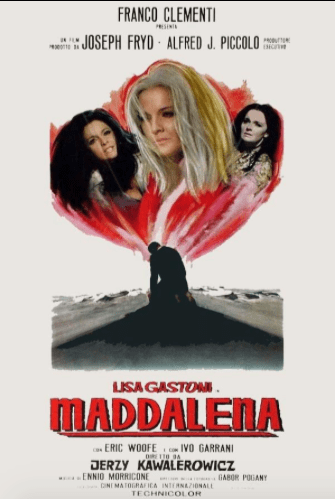
The big selling point of this film — for me at least, beyond the fact that it’s The Thorn Birds six years before the book that inspired that mini-series was written — is that it has an Ennio Morricone soundtrack, with two of the songs, “Come Maddalena” and “Chi Mai,” being re-released as the song “Disco 78” in a different key and with louder and harder drums.
Polish director Jerzy Kawalerowicz (Mother Joan of the Angels) made this modern Mary Magdalene story in which the titular character (Lisa Gastoni, The Wild Wild Planet) is on the outs with her husband — who won’t divorce her — so she attends erotic parties. At one of them, a priest is blindfolded and led before her and she decides to try to seduce him, all the whole seeing him as perhaps her salvation. It’s complicated, just like this movie, which can’t decide what genre it is and honestly doesn’t care.
It’s an interesting movie that seems to want to spend as much time being titillating as it does wanting to explore religious mores and themes, which might make it a hard sell to some audiences. It also doesn’t have the cachet of a more well-known auteur for audiences to latch on to either. That said — I’m not upset with the time I spent with this film.
One 7 Movies also sent Os Violentadores De Meninas Virgens, a movie that I can’t justify, unlike The Devil in Maddalena. In that movie, a group of wealthy men hires a pimp to provide them with a continual supply of women to assault and deflower. While they get theirs in the end, getting there means endless scenes of simulated rough antics which aren’t my idea of entertainment. Your mileage may vary and I also hope that your mileage — if so — keeps you far away from me.
I wish I could tell you where to get more info on One 7, but they don’t have a website. I can send you to Diabolik DVD if you want to purchase Maddalena however.
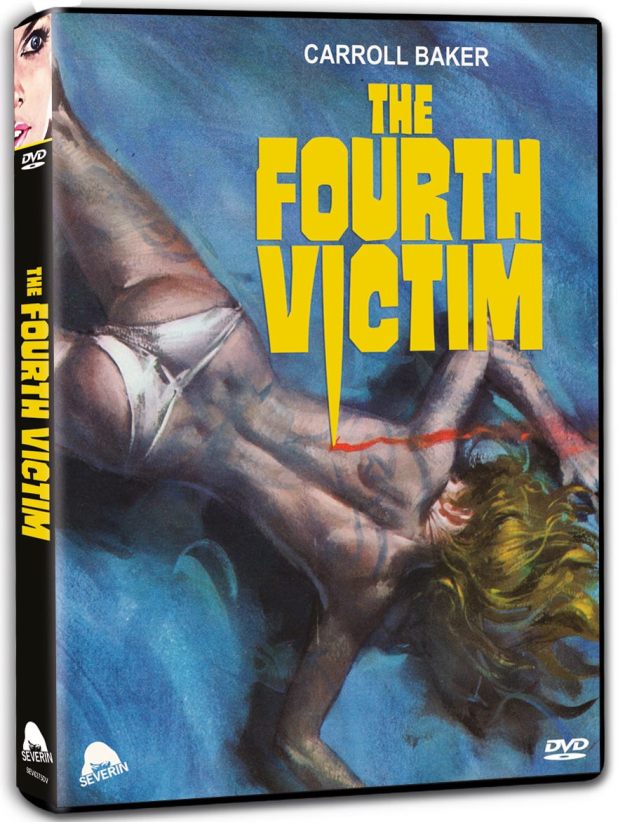
I absolutely loved this movie. Seriously, what a madcap blast this was and it totally took me unawares. Arthur Anderson (Michael Craig) a wealthy Englishman with two previous wives who’ve also died suddenly and mysteriously, his third wife drowns. Luckily, his housekeeper’s testimony keeps him free and clear, even if the police continue to watch him.
The very night he is acquitted, Julie (Carroll Baker) breaks into his house, which is a giallo meet cute, and she becomes his fourth wife. But is she on the up and up? Is he? Why are the wives of Arthur Anderson dying in such frequency?
This movie steals just enough from Rebecca and Vertigo without being slavish to those films. I also absolutely adore that when we first meet Julie, she’s sleeping inside a tent in an abandoned mansion, because that’s totally normal. And is that Marina Malfatti (The Night Evelyn Came Out of the Grave, All the Colors of the Dark) skulking in the background, wearing a cape as a casual during the rainy evening ensemble I spy?
Spanish giallo has been a great rabbit hole to go down and I’ve also been enjoying slowly watching the resume of Eugenio Martín, who is best known for Horror Express, as well as It Happened at Nightmare Inn. And come on — Carroll Baker starring giallo is nearly a genre in and out of itself.
And while there’s no real hero here, I still enjoyed every minute.
Also known as Death at the Deep End of the Swimming Pool and The Fourth Mrs. Anderson, this has just been re-released by Severin, who include a trailer, a deleted scene and an interview with Eugenio Martín biographer Carlos Aguilar in their always stellar package.
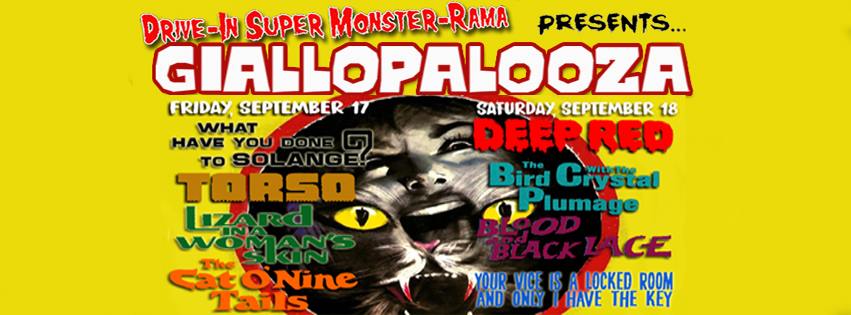
EDITOR’S NOTE: We originally covered this film on March 27, 2019, but want to bring it back to celebrate the Drive-In Super Monster-Rama Giallopalooza on September 17 and 18.
The second in Dario Argento’s “Animal Trilogy” with The Bird with the Crystal Plumageand Four Flies on Grey Velvet, this film isn’t one of the director’s favorites and it failed to follow up on the success of the first film in the United States, although it was very popular in Italy. It’s filled with a lot more humor — it still has plenty of shocking moments — and kind of meanders around. But there’s still so much to enjoy.
Franco “Cookie” Arno (Karl Malden) is a blind man who is obsessed with solving puzzles. One comes to him in real life as he walks at night with his niece Lori. They overhear a man plan to blackmail someone, then that man breaks into the Terzi Institute. We meet our second hero, the reporter Carlo (James Franciscus) when he investigates the affair.
The head of the institute, Dr. Calabresi, looks at his files in his office and phones someone who agrees to meet with him. He tells his fiancee Bianca (Rada Rassimov, the sister of Ivan, which you can tell by her eyes) that whatever was taken could be a big step forward. As the doctor waits on a train platform, he’s pushed off a train platform. This brings the two heroes together and starts a string of murders, as anyone connected to the mystery is quickly killed.
It turns out that the Terzi Institute is able to isolate the chromosomes that point to evil tendencies within people and they have a miracle drug that can change that. Carlo also becomes involved with Professor Terzi’s daughter Anna and they’re followed by both the police and the killer.
From milk being poisoned to dead bodies being searched in the middle of the night inside a crypt, the noose tightens around our heroes’ necks, with even Cookie’s niece being kidnapped and in danger. And oh yeah — his girlfriend and her adoptive father have had an incestuous relationship for years.
There’s a rooftop battle that may or may not take out one of the protagonists — the movie doesn’t even tell us — and finally the killer is knocked down an elevator shaft, his hands bleeding as he tries to grab the cable to stop him. It’s one of the few moments of sheer awesome in this film, but hints that greatness is in the future of Argento’s films.
Drive-In Super Monster-Rama is presenting “Giallopalooza”, two big nights of classic, fully restored giallo thrillers from such maestros as Dario Argento, Mario Bava, Lucio Fulci and Sergio Martino!
Admission is $10 per person each night (children 12 and under FREE with adult guardian). Camping on the premises is available each night for an additional $10 a person, and that includes breakfast.
Advance tickets are available online at the Riverside Drive In’s webpage.
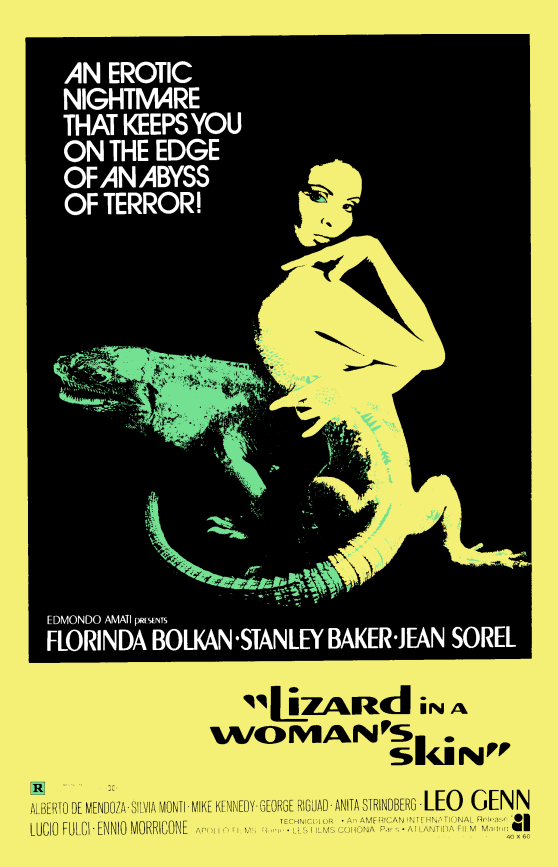
EDITOR’S NOTE: This Lucio Fulci giallo was first on our site all the way back on August 21, 2017. We’re covering it again as its one of eight movies that will be playing at the Drive-In Super Monster-Rama Giallopalooza September 17 and 18.
If you were a well-to-do woman in Italy in the 1970s, chances are — based on the movies that I have seen — that you are about to killed, have killed someone, are having a lesbian affair, are on drugs or all of the above.
Carol (Florinda Bolkan, Don’t Torture a Duckling) is one of those wealthy women. She lives with her father, rich lawyer and politician Edmund Brighton, husband Frank and step-daughter Joan (Edy Gall, Baba Yaga, The Devil is a Woman). Carol’s been having dreams that cause her to see a doctor. It seems next door neighbor, Julia (Anita Strindberg, Your Vice Is a Locked Room and Only I Have the Key, The Antichrist) is having all-night sex and drug orgies that at once repulse and excite Carol.
All sorts of rich people shenanigans are going on — Frank is having an affair with his secretary. And Carol may or may not be having a lesbian affair with her neighbor. Her dreams have become so intense, she can’t tell fact from fiction. What worries her the most is that her latest dream ends with her stabbing Julia in vivid Fulci splendor while two hippies watch. That dream turns out to perhaps be true, as Julia is dead and Scotland Yard is on the case. The room and condition of the dead body match Carol’s dream.
The hippies that she remembers from her dream don’t remember seeing her kill Julia. But Carol’s prints are on the murder weapon. As she waits for her trial in a sanitorium, one of the hippies breaks in and chases her. What follows is an infamous scene where she happens upon a room full of vivisected, still alive dogs. It’s a dream sequence unconnected to the rest of the film, but it landed Fulci in prison. Carlo Rambaldi, the amazing special effects artist of E.T., Alien and more, saved the director from a two-year jail sentence by bringing the fake dog props to the courtroom.
Ready for some of those giallo red herrings? Turns out that Julia had discovered Frank’s affair with his secretary and had been blackmailing him. Carol gets released, but upon meeting a hippy woman at Alexandra Palace, she’s attacked, first by bats (this is Fulci, after all) and then by a hippy man who graphically stabs her before the police save her.
Then, stepdaughter Joan meets with the hippy woman witness but ends up with her throat cut. The hippie witnesses admit to stalking Carol and murdering the stepdaughter, but they know nothing of the night that Julia was killed, only recalling “a woman in a lizard’s skin.” At this point, everyone should scream and jump up and down, as the name of the movie has been said in the body of the film.
Another giallo moment — an action that happens off-screen with a main character. Brighton, Carol’s father, has killed himself, leaving a note that he had killed Julia. At his gravesite, the police ask how Carol knew about Julia calling to blackmail the family when it had never been revealed. Turns out Carol and Julia were in bed together when that call was made, but Julia had also threatened to go public with their lesbian affair.
But what about the hippies? Turns out they were so high on LSD, they remembered nothing. Carol decided that if she combined her crazy dreams with images of the murder, she’d get off because of temporary insanity. So wait — her father didn’t kill the girl? Did she kill her father? Why would she be having such crazy dreams about the neighbor if she’d already indulged in the affair?
If you’re confused by a giallo, sometimes I think it’s doing its job. And after all, this film is all about the visuals, as Fulci does a great job with the hippie sequences and throws some split screens in, pre-DePalma. It may drag in parts, but there are also bravura sequences to make up for that fact.
Drive-In Super Monster-Rama is presenting “Giallopalooza”, two big nights of classic, fully restored giallo thrillers from such maestros as Dario Argento, Mario Bava, Lucio Fulci and Sergio Martino!
Admission is $10 per person each night (children 12 and under FREE with adult guardian). Camping on the premises is available each night for an additional $10 a person, and that includes breakfast.
Advance tickets are available online at the Riverside Drive In’s webpage.




 B&S About Movies
You must be logged in to post a comment.